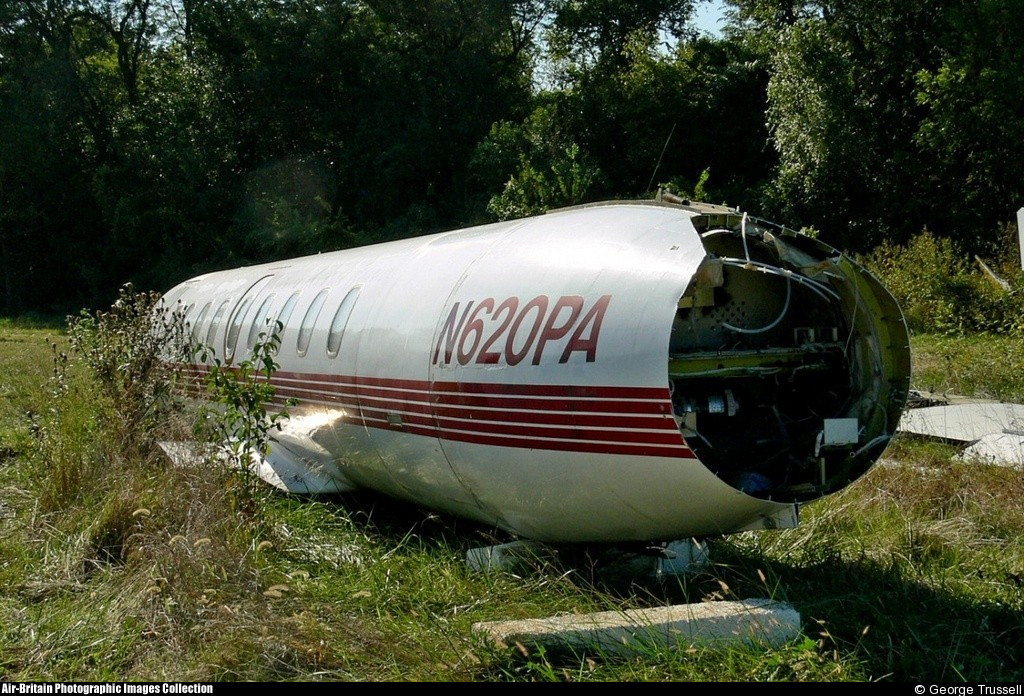
Crash of a Swearingen SA227AC Metro III in Grain Valley

Date & Time: Aug 17, 2006 at 1551 LT
Type of aircraft:
Operator:
Registration:
N620PA
Flight Type:
Survivors:
Yes
Schedule:
Tuscaloosa - Grain Valley
MSN:
AC-533
YOM:
1982
Flight number:
PKW321
Crew on board:
2
Crew fatalities:
Pax on board:
0
Pax fatalities:
Other fatalities:
Total fatalities:
0
Captain / Total flying hours:
1379
Captain / Total hours on type:
188.00
Copilot / Total flying hours:
1127
Copilot / Total hours on type:
165
Aircraft flight hours:
22504
Circumstances:
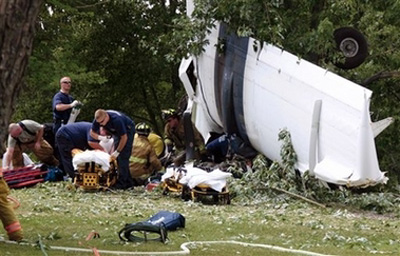
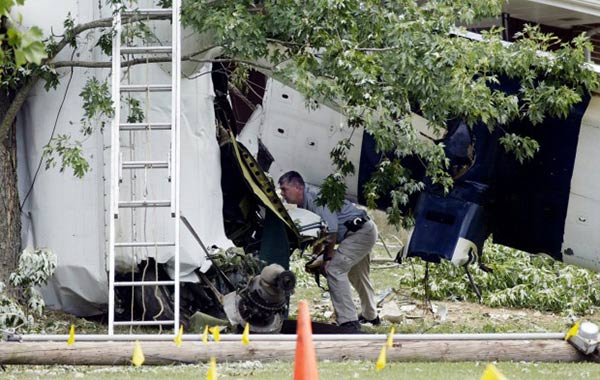
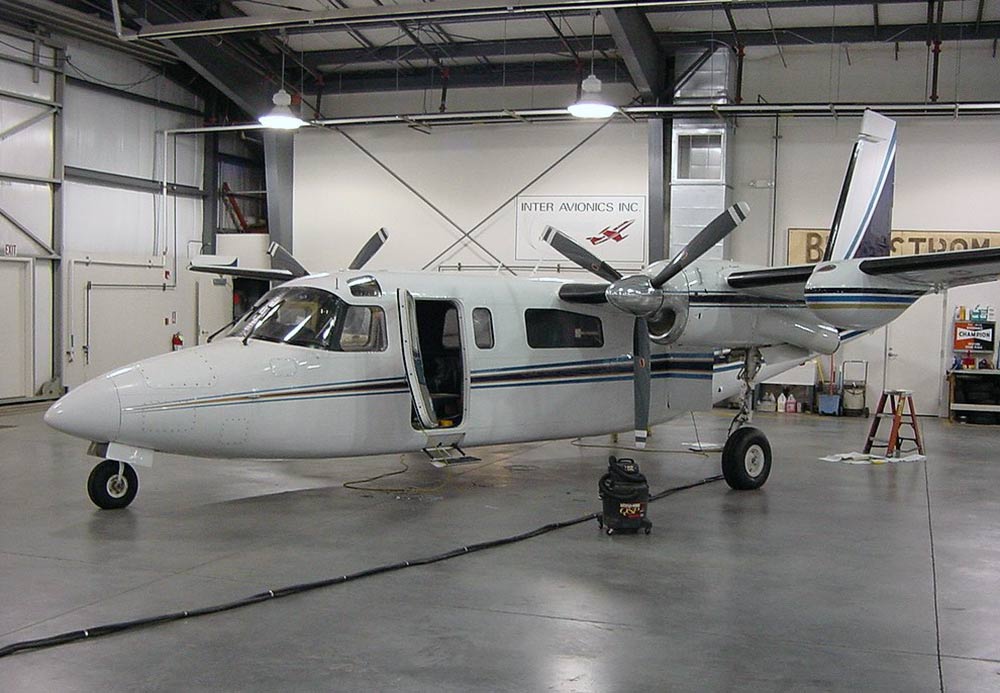
The airplane impacted a fence and terrain on short final during a visual approach to runway 27. The airplane was operated as a cargo airplane with two flight crewmembers by a commercial operator certificated under 14 CFR Part 135. The flightcrew worked approximately 18.75 hours within a 24-hour period leading up to the accident performing flights listed by the operator as either 14 CFR Part 91 or 14 CFR Part 135, all of which were in the conduct of company business. Of this total, 5.9 hours involved flying conducted under 14 CFR Part 135. The flight to the accident airport was for the purposes of picking up repair parts for another company airplane that received minor damage in which the flight crew was previously piloting in the 24- hour period. They were then going to fly back to the operator's home base on the same day, which would have had an estimated flying time of 2:45 hours. The captain said he was tired and that he and the first officer had not slept at any of the stops made during the period. The captain said that the company likes for the airplanes to return to their home base. The captain said that the company prefers an option for pilots to stay overnight if tired and he has stayed overnight on previous trips but only due to maintenance related reasons. The Aeronautical Information Manual states that acute fatigue affects timing and perceptional field performance.
Probable cause:
The pilot not maintaining clearance from the fence. Contributing factors were the pilot's fatigue and the fence.
Final Report:

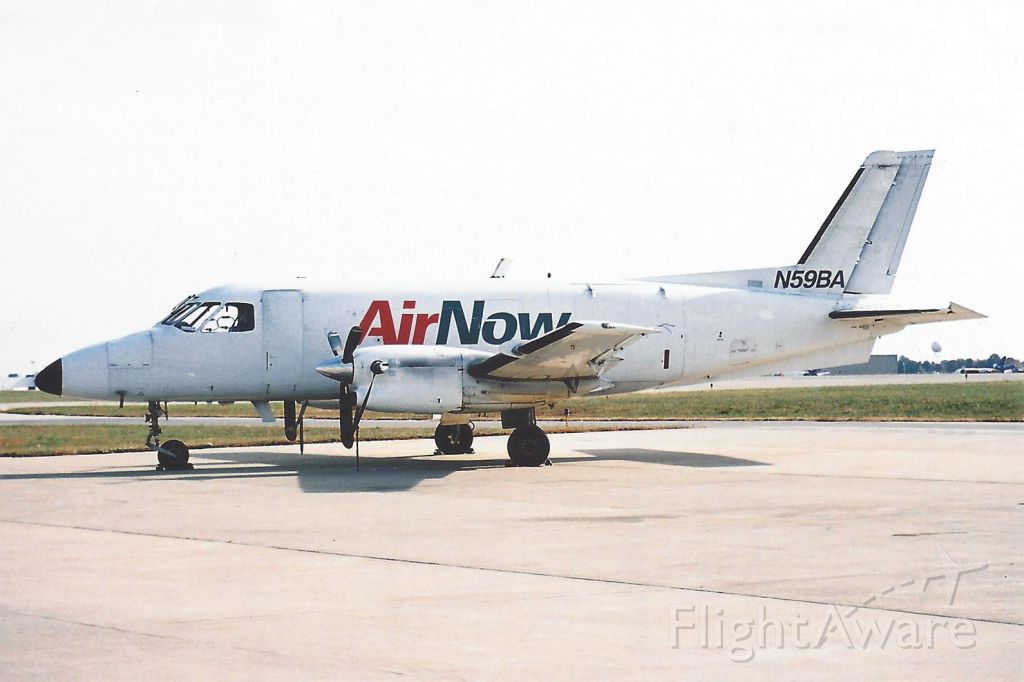
Crash of an Embraer EMB-110P1 Bandeirante in Pownal: 1 killed

Date & Time: Aug 4, 2006 at 0918 LT
Operator:
Registration:
N59BA
Flight Type:
Survivors:
No
Site:
Schedule:
Binghamton - Bennington
MSN:
110-396
YOM:
1982
Flight number:
BEN059
Location:
Crew on board:
1
Crew fatalities:
Pax on board:
0
Pax fatalities:
Other fatalities:
Total fatalities:
1
Captain / Total flying hours:
2877
Captain / Total hours on type:
47.00
Aircraft flight hours:
40043
Circumstances:
The airport's instrument approach procedures included a very high frequency, omnidirectional range (VOR) approach, and a global positioning system (GPS) approach that was not an overlay. The VOR approach procedure included an inbound course to the VOR, and after passage, a descent along the same course to a missed approach point. The missed approach point was defined as 6 nautical miles beyond the VOR, as well as by timing. The pilot twice attempted the VOR approach in instrument meteorological conditions. He flew the first approach to the missed approach point, initiated a missed approach, contacted the controller, and requested a second VOR approach. He then received vectors to rejoin the approach course inbound to the VOR. The airplane subsequently passed over the VOR, on course, about 100 feet above the minimum altitude. However, instead of descending as described in the procedure, the airplane maintained that altitude until reaching the airport, then began a descent. The airplane continued to travel outbound along the same approach course until it impacted rising terrain about 6.5 miles beyond the airport. There was no dedicated distance measuring equipment (DME) onboard the airplane. Instead, distance was determined by the use of an instrument flight rules (IFR)-approved GPS unit. Due to the non-storage capability of the unit, historical waypoint selection could not be determined. The pilot could have selected the airport as a "direct to" waypoint, or, if he had entered flight plan waypoints, the unit would have sequenced from the VOR to the airport during the first approach. In either case, unless the pilot reprogrammed the unit, the last waypoint entered would have remained at the airport, rather than the VOR. The pilot then most likely mistook the airport position for the VOR position, and displaced the beginning of the descent by 6 nautical miles. Also noted, was that once the airplane passed over the VOR en route to the airport, the HSI would have indicated a change of "to" to "from". There were no medical anomalies noted with the pilot and no mechanical anomalies noted with the airplane.
Probable cause:
The pilot's misinterpretation of the airplane's position relative to the final approach fix, which resulted in the displacement of the descent profile by 6 nautical miles and the subsequent controlled flight into rising terrain. Contributing to the accident were the low clouds.
Final Report:

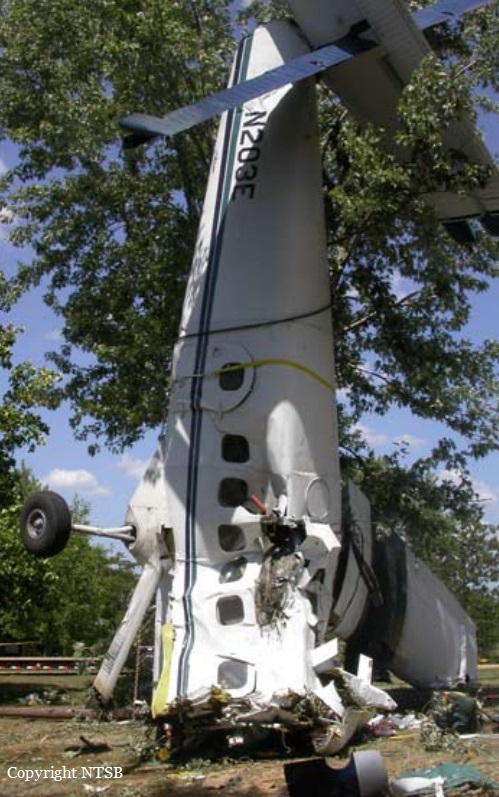
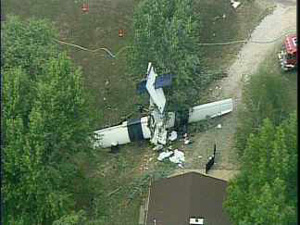
Crash of a De Havilland DHC-6 Twin Otter 100 in Sullivan: 6 killed

Date & Time: Jul 29, 2006 at 1345 LT
Operator:
Registration:
N203E
Flight Phase:
Survivors:
Yes
Site:
Schedule:
Sullivan - Sullivan
MSN:
53
YOM:
1967
Crew on board:
1
Crew fatalities:
Pax on board:
7
Pax fatalities:
Other fatalities:
Total fatalities:
6
Captain / Total flying hours:
6000
Aircraft flight hours:
37434
Circumstances:
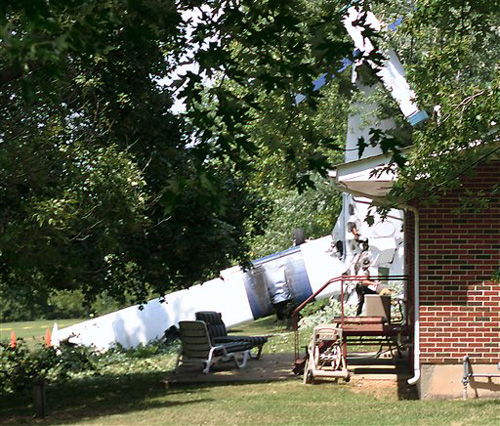
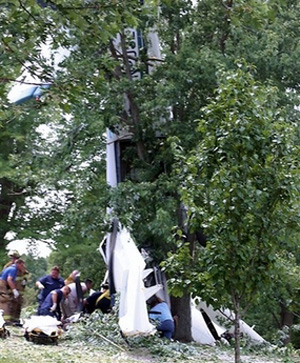
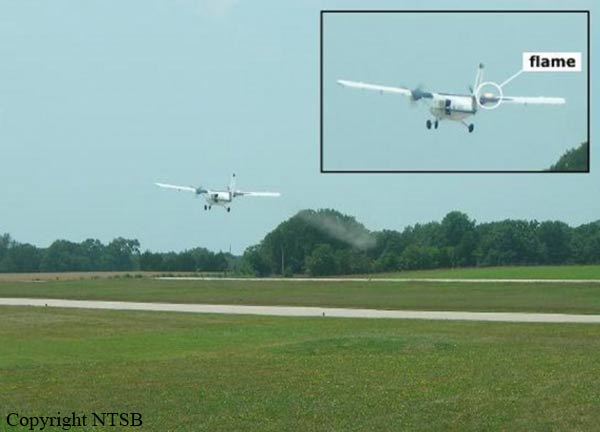
On July 29, 2006, about 1345 central daylight time, a de Havilland DHC-6-100, N203E, registered to Adventure Aviation, LLC, and operated by Skydive Quantum Leap as a local parachute operations flight, crashed into trees and terrain after takeoff from Sullivan Regional Airport (UUV), near Sullivan, Missouri. The pilot and five parachutists were killed, and two parachutists were seriously injured. The flight was operated under 14 Code of Federal Regulations (CFR) Part 91 with no flight plan filed. Visual meteorological conditions prevailed. According to photographic evidence provided by a witness, the pilot taxied the airplane onto runway 24 from the intersecting taxiway, which is about 1,700 feet from the runway’s west end, and began a takeoff roll to the west from that location, rather than using the runway’s entire 4,500-foot length. Photographic evidence depicting the airport windsock shows that the airplane departed into a moderate headwind. Witnesses at the airport reported seeing the airplane take off and climb to about treetop height. Several witnesses reported hearing a “poof” or “bang” noise and seeing flames and smoke coming from the right engine. One witness reported that, after the noise and the emergence of flames, the right propeller was “just barely turning.” Photographic evidence shows that, at one point after the flames occurred, the airplane was about one wingspan (about 65 feet) above the runway. One witness estimated that the airplane climbed to about 150 feet. Witnesses reported that the airplane lost some altitude, regained it, and then continued to fly low above the treetops before turning to the right and disappearing from their view behind the tree line. Another witness in the backyard of a residence northwest of the airport reported that she saw the airplane flying straight and level but very low over the trees before it dived nose first to the ground. She and her father called 911, and she said that local emergency medical service personnel arrived within minutes. The airplane impacted trees and terrain and came to rest vertically, nose down against a tree behind a residence about 1/2 mile northwest of the end of runway 24.
Probable cause:
The pilot’s failure to maintain airspeed following a loss of power in the right engine due to the fracturing of compressor turbine blades for undetermined reasons. Contributing to some parachutists’ injuries was the lack of a more effective restraint system on the airplane.
Final Report:

Crash of a Rockwell Grand Commander 690A off Anchorage: 3 killed

Date & Time: Jul 28, 2006 at 2037 LT
Registration:
N57096
Flight Type:
Survivors:
No
Schedule:
Kenai - Anchorage
MSN:
690-11120
YOM:
1973
Crew on board:
2
Crew fatalities:
Pax on board:
1
Pax fatalities:
Other fatalities:
Total fatalities:
3
Captain / Total flying hours:
4600
Copilot / Total flying hours:
9200
Aircraft flight hours:
11340
Circumstances:
The crew of the missing airplane was conducting a local area familiarization flight under Title 14, CFR Part 91. At the time of the flight, visual meteorological conditions prevailed, with occasional moderate turbulence forecast for the area. The airplane was routinely contracted for animal and bird counts, and the flight was to include low level flight simulating such a mission. The three occupants of the airplane were the pilot, company check pilot, and another company pilot riding along as a passenger. Both the pilot and the check pilot held airline transport certificates, and were experienced in the make and model of the accident airplane. The airplane was equipped with a satellite position reporting device that updated position, groundspeed, and altitude every 2 minutes. Radar and GPS track information indicated the accident airplane was flying low and slow along a peninsula coast over a saltwater inlet, and turned toward the center of the inlet. The track stopped about 3 miles offshore. The data indicated that while flying along the inlet, the airplane descended to 112 feet above ground level (water), and climbed as high as 495 feet, which was the airplane's altitude at the last data point. The airplane's groundspeed varied between 97 and 111 knots. The area of the presumed crash site experiences extreme tides and strong currents, with reduced visibility due to a high glacial silt content. An extensive search was conducted, but the airplane and its occupants have not been located. An examination of the airplane's maintenance logs did not disclose any unresolved maintenance issues.
Probable cause:
Undetermined; the airplane and its occupants are missing.
Final Report:

Crash of a Douglas DC-10-10F in Memphis

Date & Time: Jul 28, 2006 at 1125 LT
Type of aircraft:
Operator:
Registration:
N391FE
Flight Type:
Survivors:
Yes
Schedule:
Seattle - Memphis
MSN:
46625/169
YOM:
1975
Flight number:
FDX630
Crew on board:
3
Crew fatalities:
Pax on board:
0
Pax fatalities:
Other fatalities:
Total fatalities:
0
Captain / Total flying hours:
11262
Captain / Total hours on type:
4402.00
Copilot / Total flying hours:
854
Copilot / Total hours on type:
244
Aircraft flight hours:
73283
Aircraft flight cycles:
27002
Circumstances:
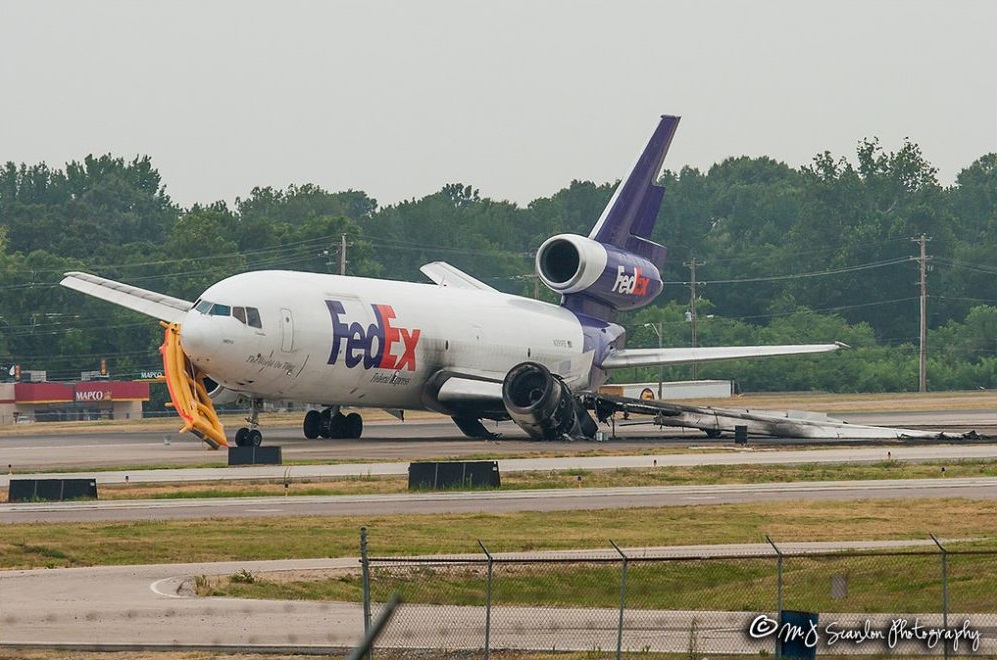
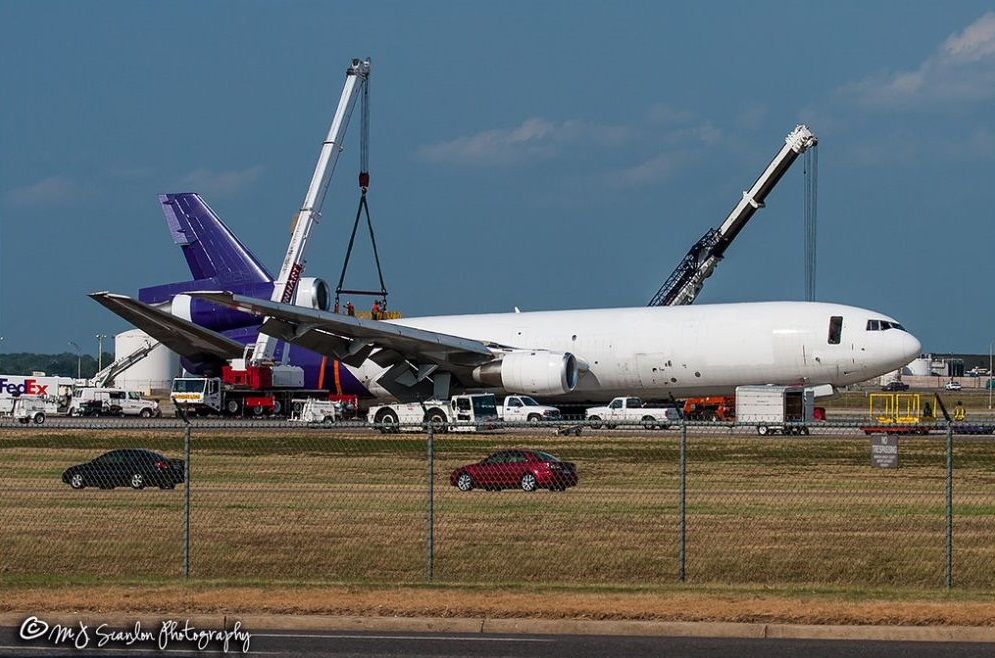
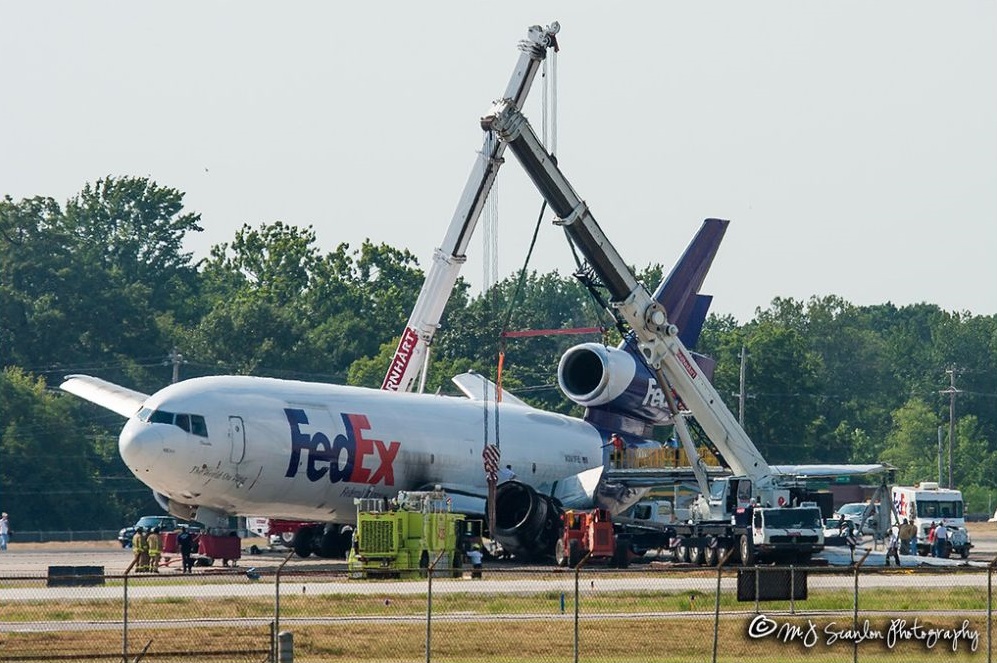
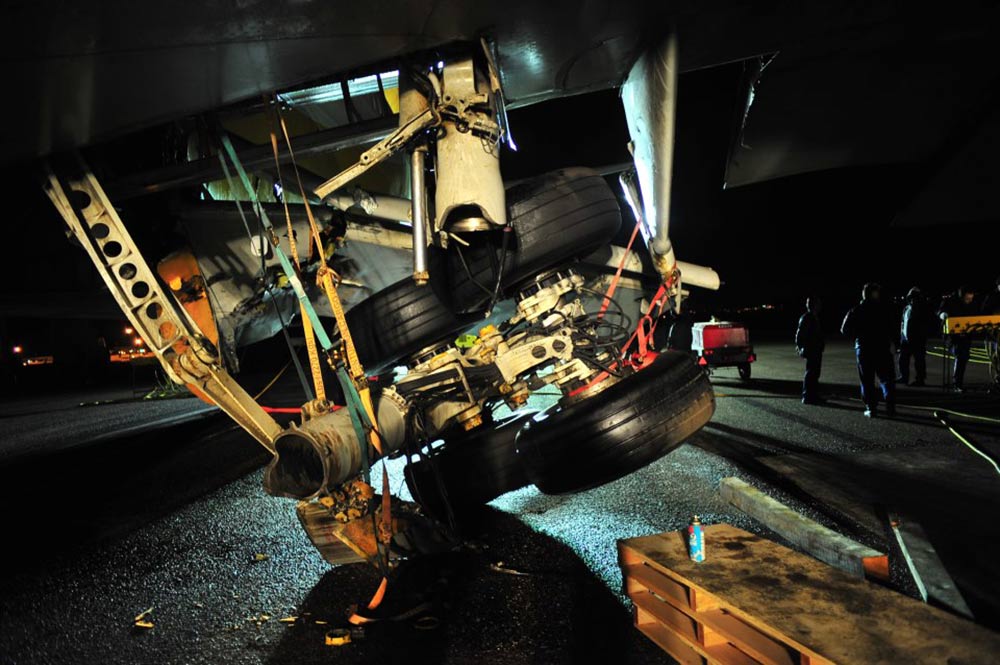
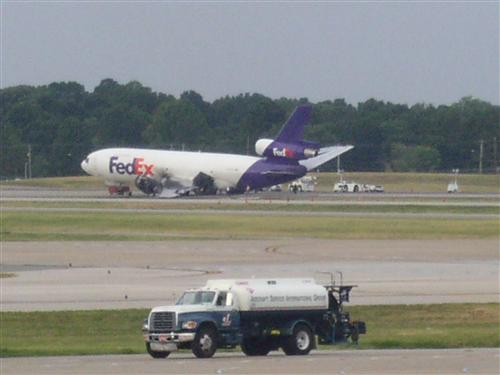
The approach and landing were stabilized and within specified limits. Recorded data indicates that the loads experienced by the landing gear at touchdown were within the certification limits for an intact landing gear without any pre-existing cracks or flaws. The weather and runway conditions did not affect the landing. The application of braking by the accident crew, and the overall effect of the carbon brake modification did not initiate or contribute to the landing gear fracture. Post-accident modifications to the MD-10 carbon brake system were implemented due to investigative findings for the purposes of braking effectiveness and reliability. Post accident emergency response by the flight crew and ARFF was timely and correct. The left main landing gear (LMLG) outer cylinder on the accident airplane had been operated about 8 ½ years since its last overhaul where stray nickel plating likely was introduced in the air filler valve hole. Nickel plating is a permissible procedure for maintaining the tolerances of the inner diameter of the outer gear cylinder, however the plating is not allowed in the air filler valve bore hole. Literature and test research revealed that a nickel plating thickness of 0.008" results in a stress factor increase of 35%. At some point in the life of the LMLG, there was a load event that compressively yielded the material in the vicinity of the air filler valve hole causing a residual tension stress. During normal operations the stress levels in the air filler valve hole were likely within the design envelope, but the addition of the residual stress and the stress intensity factor due to the nickel increased these to a level high enough to initiate and grow a fatigue crack on each side of the air filler valve hole. The stresses at the air filler valve hole were examined via development of a Finite Element Model (FEM) which was validated with data gathered from an instrumented in-service FedEx MD-10 airplane. The in-service data and FEM showed that for all of the conditions, the stress in the air filler valve hole was much higher than anticipated in the design of the outer cylinder. Fatigue analysis of the in service findings and using the nickel plating factor resulted in a significantly reduced fatigue life of the gear cylinder compared with the certification limits. During the accident landing the spring back loads on the LMLG were sufficient to produce a stress level in the air filler valve hole that exceeded the residual strength of the material with the fatigue cracks present.
Probable cause:
The failure of the left main landing gear due to fatigue cracking in the air filler valve hole on the aft side of the landing gear. The fatigue cracking occurred due to the presence of stray nickel plating in the air filler valve hole. Contributing to this was the inadequate maintenance procedures to prevent nickel plating from entering the air filler valve hole during overhaul.
Final Report:

Crash of a Spectrum FJ33 in Spanish Fork: 2 killed

Date & Time: Jul 25, 2006 at 1606 LT
Type of aircraft:
Operator:
Registration:
N322LA
Flight Phase:
Flight Type:
Survivors:
No
Schedule:
Spanish Fork - Spanish Fork
MSN:
01
YOM:
2006
Crew on board:
2
Crew fatalities:
Pax on board:
0
Pax fatalities:
Other fatalities:
Total fatalities:
2
Captain / Total flying hours:
2300
Captain / Total hours on type:
22.00
Copilot / Total flying hours:
3100
Copilot / Total hours on type:
16
Aircraft flight hours:
44
Aircraft flight cycles:
47
Circumstances:
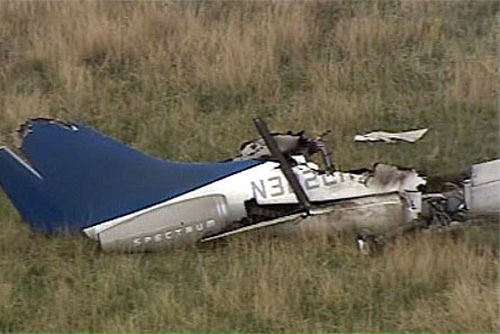
The proto-type experimental light jet airplane was departing on a local maintenance test flight. Witnesses reported that the airplane entered a right roll almost immediately after liftoff. The roll continued to about 90 degrees right wing down at which point the right wingtip impacted the ground. During examination of the wreckage, the aileron control system was found connected such that the airplane rolled in the opposite direction to that commanded in the cockpit. The maintenance performed on the airplane before the accident flight included removal of the main landing gear (MLG) in order to stiffen the MLG struts. Interviews with the mechanics who performed the maintenance revealed that during re-installation and system testing of the MLG, it was discovered that the changes to the MLG struts impacted the Vbracket holding the aileron control system's upper torque tube. The V-bracket was removed and a redesigned V-bracket was installed in its place. This work required the disconnection of a portion of the aileron control system, including the removal of the aft upper torque tube bell crank from the torque tube. The mechanic who reinstalled the aft upper torque tube bell crank was under the incorrect assumption that there was only one way to install the bell crank on the torque tube. However, there are actually two positions in which the bell crank could be installed. The incorrect installation is accomplished by rotating the bell crank 180° about the axis of the torque tube and flipping it front to back, and this is the way the bell crank was found installed. With the bell crank installed incorrectly and the rest of the system installed as designed, there is binding in the system. This binding was noticed on the accident airplane during the inspection after initial installation. However, the mechanic did not recognize that the bell crank was improperly installed on the torque tube. Instead of fixing the problem by removing and correctly reinstalling the bell crank, he fixed the problem by disconnecting the necessary tie rods and rotating the upper torque tube so that the arm of the bell crank pointed up and to the left. This action reversed the movement of the ailerons. According to all of the personnel interviewed, there was no maintenance documentation to instruct mechanics how to perform the work since this was a proof-of-concept airplane. None of the mechanics who performed the work could recall if the position of the ailerons in relation to the position of the control stick was checked. Such a position check, if it had been performed by either the mechanics after the maintenance or by the flight crew during the preflight checks, would assuredly have indicated that the system was installed incorrectly.
Probable cause:
Incorrect installation by company maintenance personnel of the aft upper torque tube bell crank resulting in roll control that was opposite to that commanded in the cockpit. Contributing factors were the lack of maintenance documentation detailing the installation of the bell crank, the installing mechanic's incorrect assumption that the bell crank could only be installed in one position, and the failure of maintenance personnel and the flight crew to check the position of the control stick relative to the ailerons after the maintenance and during the preflight checks.
Final Report:

Crash of a Cessna 560 Citation Encore in Cresco: 2 killed

Date & Time: Jul 19, 2006 at 1104 LT
Type of aircraft:
Operator:
Registration:
N636SE
Flight Type:
Survivors:
Yes
Schedule:
Oxford - Rochester
MSN:
560-0636
YOM:
2003
Location:
Crew on board:
2
Crew fatalities:
Pax on board:
2
Pax fatalities:
Other fatalities:
Total fatalities:
2
Captain / Total flying hours:
11607
Captain / Total hours on type:
557.00
Copilot / Total flying hours:
13312
Copilot / Total hours on type:
833
Aircraft flight hours:
713
Circumstances:
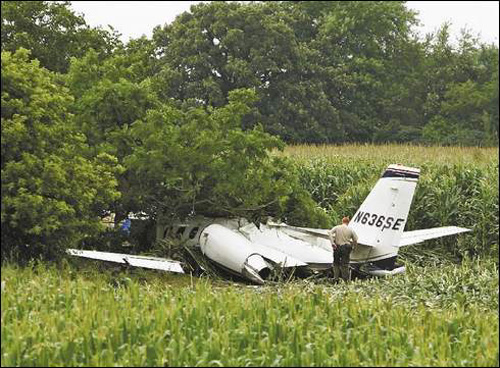
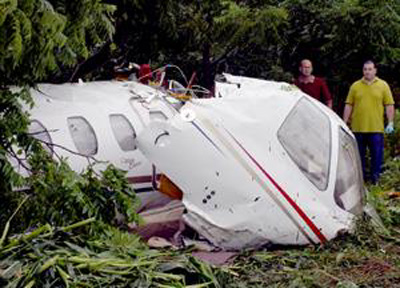
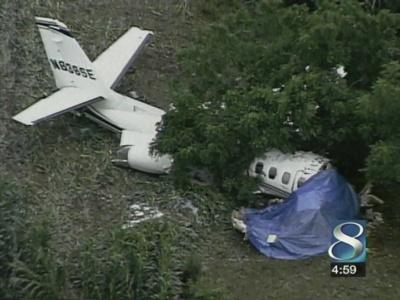
The airplane was managed by and listed on the certificate of Jackson Air Charter, Inc. (JAC), a 14 Code of Federal Regulations (CFR) Part 135 on-demand operator; however, because the owner of the airplane was using it for personal use, the accident flight was flown under 14 CFR Part 91 regulations. The right-seat pilot, who was the chief pilot for JAC, was the flying pilot for the flight. The right-seat pilot had about 13,312 total flight hours, 833 hours of which were in Cessna 560 airplanes. The left-seat pilot, who was the nonflying pilot for the flight and had only worked for JAC for a little over a month, had not yet completed the company's Part 135 training but was scheduled to do so. The left-seat pilot had about 11,607 total flight hours, 557 hours of which were in Cessna 560 airplanes. The flight was planned to land at Rochester International Airport (RST), Rochester, Minnesota. The flight crew attempted to circumnavigate severe weather conditions and continue the planned descent for about 15 minutes even though a Minneapolis Air Route Traffic Control Center controller stated that the flight would have to deviate 100 miles or more to the north or 80 miles to the south to do so. The RST approach controller subsequently told the flight crew that there was "weather," including wind gusts, along the final approach course, and on-board radar and weather advisories also showed severe thunderstorms and wind gusts in the area. Given the overwhelming evidence of severe weather conditions around RST, the flight crew exhibited poor aeronautical decision-making by attempting to continue the preplanned descent to RST despite being aware of the severe weather conditions and by not diverting to a suitable airport earlier in the flight. The cockpit voice recorder (CVR) recorded the flight crew begin discussing an alternate destination airport about 3 minutes after contacting RST approach; however, the CVR did not record the left-seat pilot adequately communicate to air traffic control that the flight was going to divert. CVR evidence also showed that neither pilot took a leadership role during the decision-making process regarding the diversion. As a result, the flight crew chose an alternate airport, Ellen Church Field Airport (CJJ), Cresco, Iowa, from either looking at a map or seeing it out the cockpit window. The flight crew was not familiar with the airport, which did not have weather reporting capabilities. CVR evidence indicates that the flight crew did not use the on-board resources, such as the flight management system and navigational charts, to get critical information about CJJ, including runway direction and length. Further, the flight crew did not use on-airport resources, such as the wind indicator located on the left side of runway 33. During the approach and landing, the enhanced ground proximity warning system (EGPWS) alerted in the cockpit. However, the flight crew did not recognize or respond to the EGPWS warning, which alerted because the EGPWS did not recognize the runway since it was less than 3,500 feet long. CVR evidence indicated that the flight crew incorrectly attributed the warning to the descent rate. Further, the runway was not depicted on an on-board non-navigational publication, which only contained runways that were 3,000 feet or more long, and this was referenced and noted by the flight crew. In addition, the flight crew visually recognized during the final approach that the runway was shorter than the at least 5,000 feet they originally believed it to be (as stated by the right-seat pilot earlier in the flight). Despite all of these indications that the runway was not long enough to land safely, the flight crew continued the descent and landing. (After the accident, Cessna computed the landing distance for the accident conditions, which indicated that about 5,200 feet would have been required to stop the airplane on a wet runway with a 10-knot tailwind. Runway 33 is only 2,949 feet long. Further, the Cessna Aircraft Flight Manual does not recommend landing on precipitation covered runways with any tailwind component.) Because the flight crew did not look up the runway length and did not heed indications that the runway was too short, both of which are further evidence of the flight crew's poor aeronautical decision-making, they landed with inadequate runway length to either land the airplane on the runway or abort the landing. Subsequently, the airplane exited the runway and continued about 1,700 feet beyond its end. The airplane had sufficient fuel to have proceeded to an airport with a suitable runway length. In addition to the poor decision-making, the flight crew did not exhibit adequate crew resource management (CRM) throughout the flight. For example, the flight crew exhibited poor communication and decision-making skills, did not effectively use the available on-board resources to get information about the landing runway, and neither pilot took a leadership role during the flight. JAC did not have and was not required to have an approved CRM training program although, according to company pilots, some CRM training was incorporated into the company's simulator training. On December 2, 2003, the National Transportation Safety Board issued Safety Recommendation A-03-52, which asked the Federal Aviation Administration (FAA) to require that 14 CFR Part 135 on-demand charter operators that conduct dual-pilot operations establish and implement an FAA-approved CRM training program for their flight crews in accordance with 14 CFR Part 121, subparts N and O. On May 2, 2006, Safety recommendation A-03-52 was reiterated and classified "Open-Unacceptable Response" pending issuance of a final rule. Although the accident flight was operated under Part 91, if JAC, as an on-demand Part 135 operator, had provided all of its pilots CRM training, the benefits of such training would extend to the company's Part 91 flights. In November 2007, the Safety Board placed Safety Recommendation A-03-52 on its Most Wanted List of Transportation Safety Improvements because of continued accidents involving accident flight crew members. As a result of this accident, the Safety Board reiterated Safety Recommendation A-03-52 on May 1, 2008. The right-seat pilot had in his possession multiple prescription and nonprescription painkillers, nonprescription allergy and anti-acid medications, and one prescription muscle relaxant. None of these medications are considered illicit drugs and would not have been reportable on drug testing required under 49 CFR Part 40. The right-seat pilot was known to have problems with back pain, although no medical records of treatment for the condition could be located. On his most recent application for airman medical certificate, the pilot had reported no history of or treatment for any medical conditions and no use of any medications. Toxicology testing revealed recent use of a prescription muscle relaxant, which might have resulted in impairment. It is also possible that the right-seat pilot was impaired or distracted by the symptoms for which he was taking the muscle relaxant; however, it could not be determined what role the muscle relaxant or the physical symptoms might have played in this accident.
Probable cause:
The flight crew's inadequate aeronautical decision-making and poor crew resource management (CRM), including the inadequate use of the on-board sources (such as the flight management system and navigation charts), to get critical information about Ellen Church Field Airport, including runway direction and length. Contributing factors to the accident were the flight crew's failure to consider and understand indications that the runway length was insufficient and inadequate CRM training for pilots at Part 135 on-demand operators.
Final Report:

Crash of a Piper PA-31-350 Navajo Chieftain in Easton: 1 killed

Date & Time: Jul 11, 2006 at 1735 LT
Operator:
Registration:
N40ST
Flight Type:
Survivors:
No
Schedule:
Spokane - Seattle
MSN:
31-7405183
YOM:
1974
Crew on board:
1
Crew fatalities:
Pax on board:
0
Pax fatalities:
Other fatalities:
Total fatalities:
1
Captain / Total flying hours:
1430
Captain / Total hours on type:
102.00
Aircraft flight hours:
3646
Circumstances:
While cruising en route in VFR conditions, the aircraft lost power on both engines. The pilot attempted an emergency forced landing at a nearby unpaved State airport, but after encountering a 20 mph tailwind on downwind and a 20 mph headwind on final, the aircraft impacted a tall conifer tree while about one-half mile from the approach end of the runway. The reason for the dual engine power loss was not determined.
Probable cause:
The loss of power in both engines for undetermined reasons while in cruise flight, leading to an attempted forced landing. Factors include unfavorable winds at the site of the forced landing, and trees off the approach end of the grass runway the pilot was attempting to land on.
Final Report:

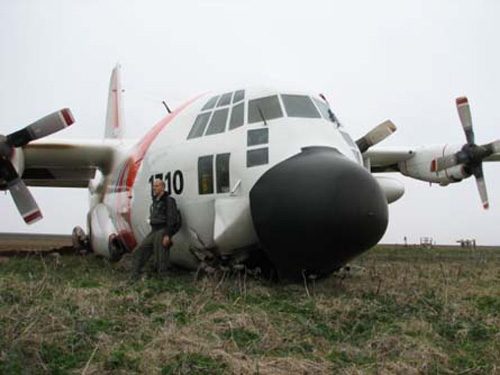
Crash of a Lockheed HC-130H Hercules in Saint Paul Island

Date & Time: Jun 28, 2006
Type of aircraft:
Operator:
Registration:
1710
Flight Type:
Survivors:
Yes
Schedule:
Kodiak - Saint Paul Island
MSN:
5028
YOM:
1985
Crew on board:
9
Crew fatalities:
Pax on board:
0
Pax fatalities:
Other fatalities:
Total fatalities:
0
Circumstances:
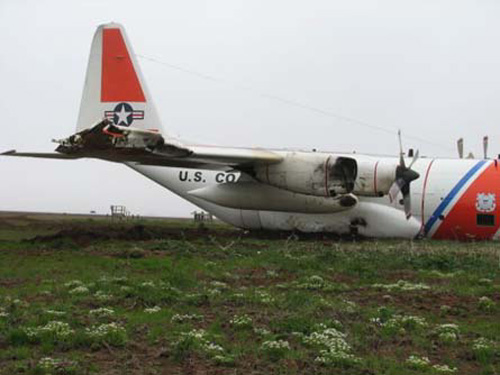
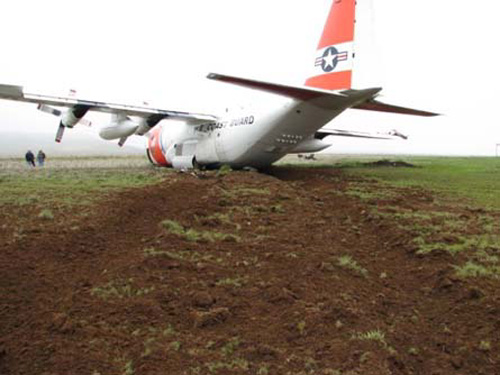
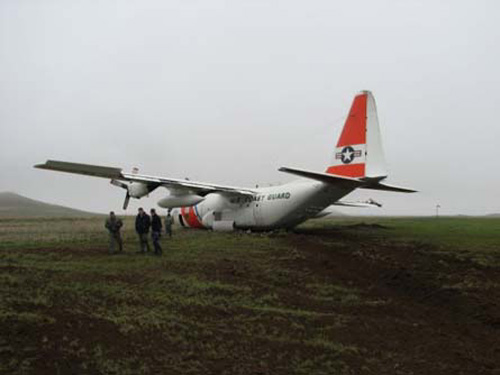
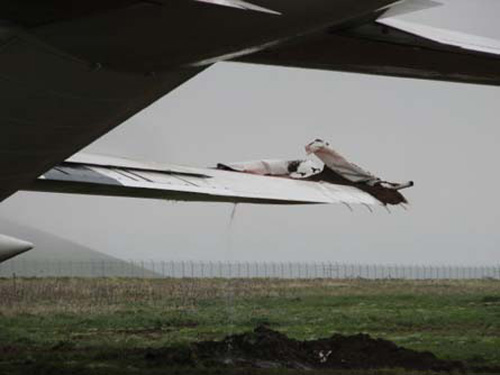
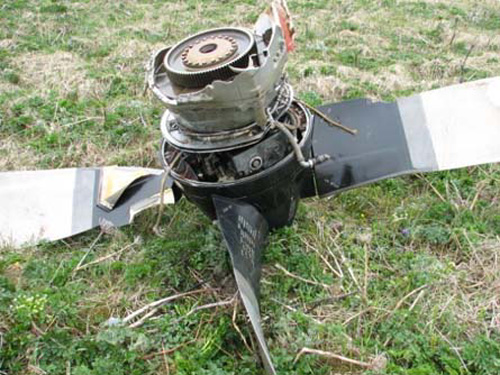
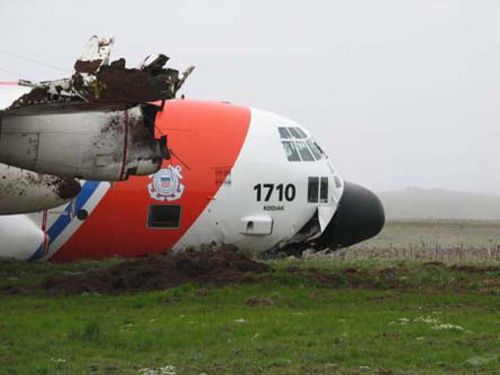
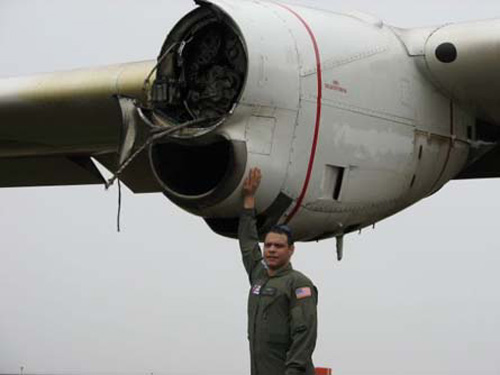
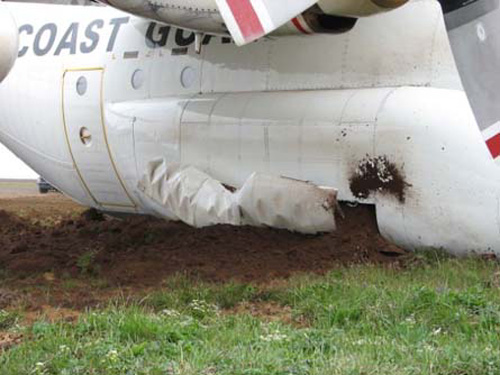
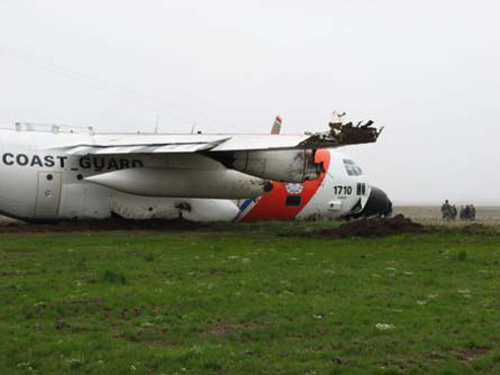
The aircraft departed Kodiak on a cargo flight to Saint Paul Island, carrying nine crew members and a 19,000 litres fuel truck. Upon landing on runway 36, the airplane fish tailed twice, causing the right wing to struck the runway surface. The wingtip was sheared off as well as the engine n°4 propeller. Unable to stop within the remaining distance, the aircraft overrun, lost its undercarriage and came to rest few dozen metres further. All nine occupants escaped uninjured while the aircraft was damaged beyond repair.

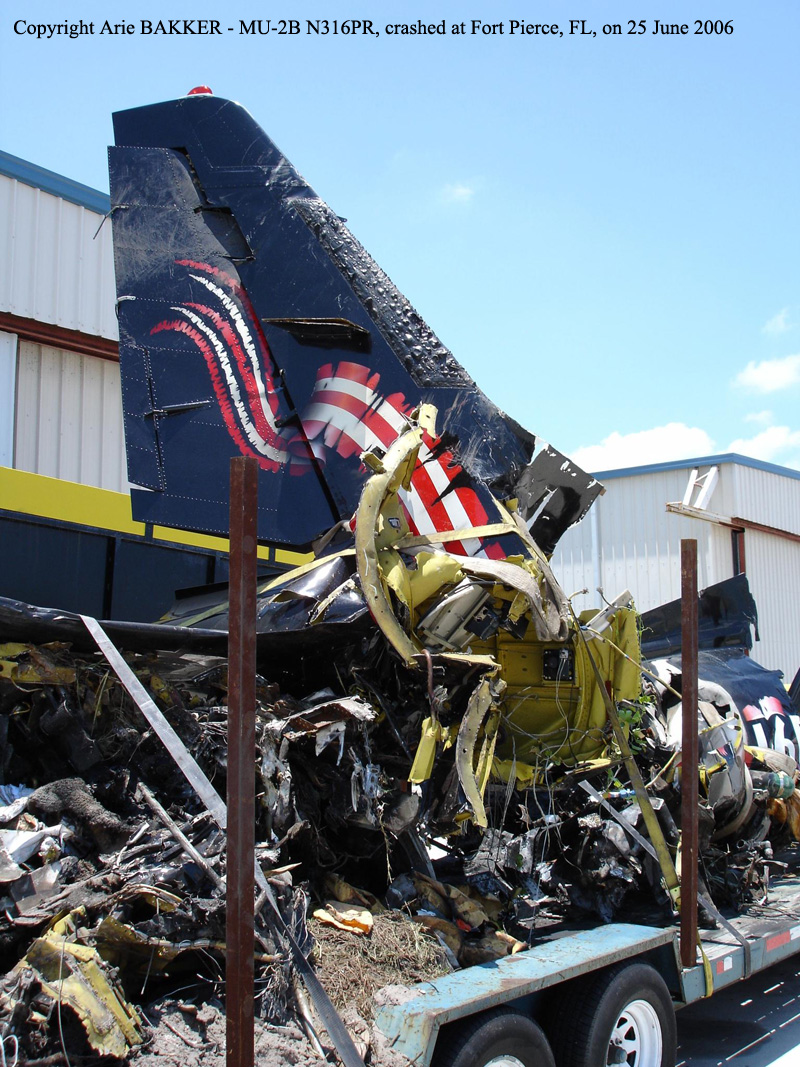
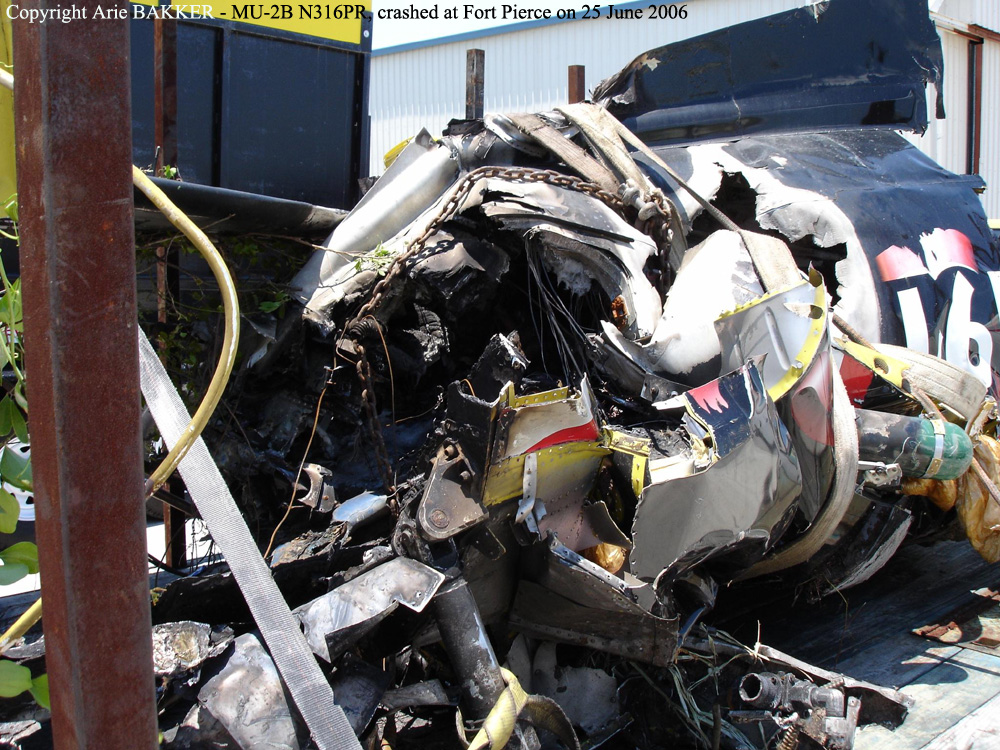
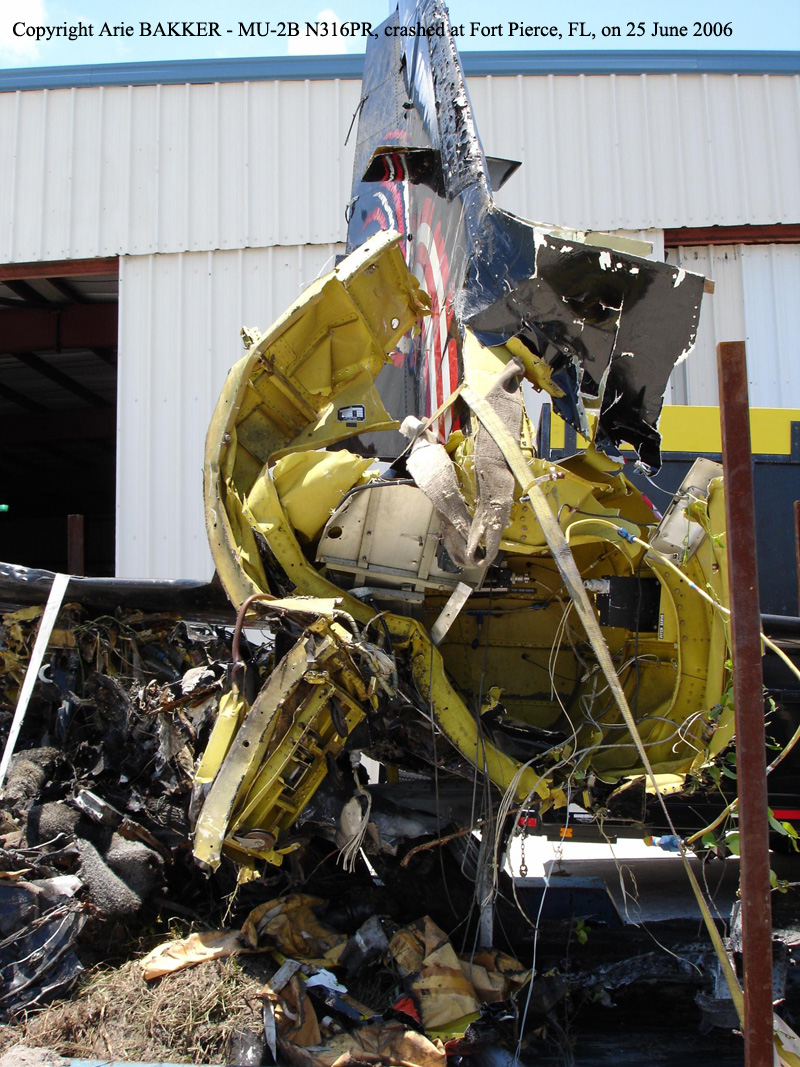
Crash of a Mitsubishi MU-2B-60 Marquise in Fort Pierce: 1 killed

Date & Time: Jun 25, 2006 at 1224 LT
Type of aircraft:
Operator:
Registration:
N316PR
Flight Phase:
Flight Type:
Survivors:
No
Schedule:
Fort Pierce - Murfreesboro
MSN:
761
YOM:
1980
Crew on board:
1
Crew fatalities:
Pax on board:
0
Pax fatalities:
Other fatalities:
Total fatalities:
1
Captain / Total flying hours:
11000
Captain / Total hours on type:
2000.00
Aircraft flight hours:
4073
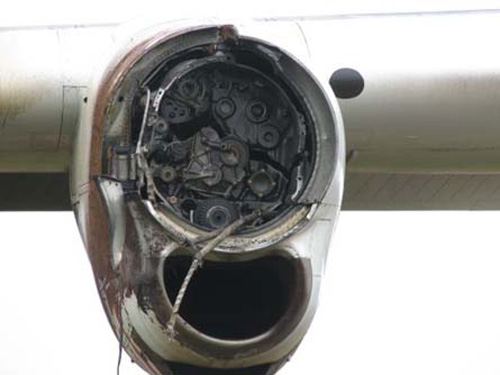
Circumstances:
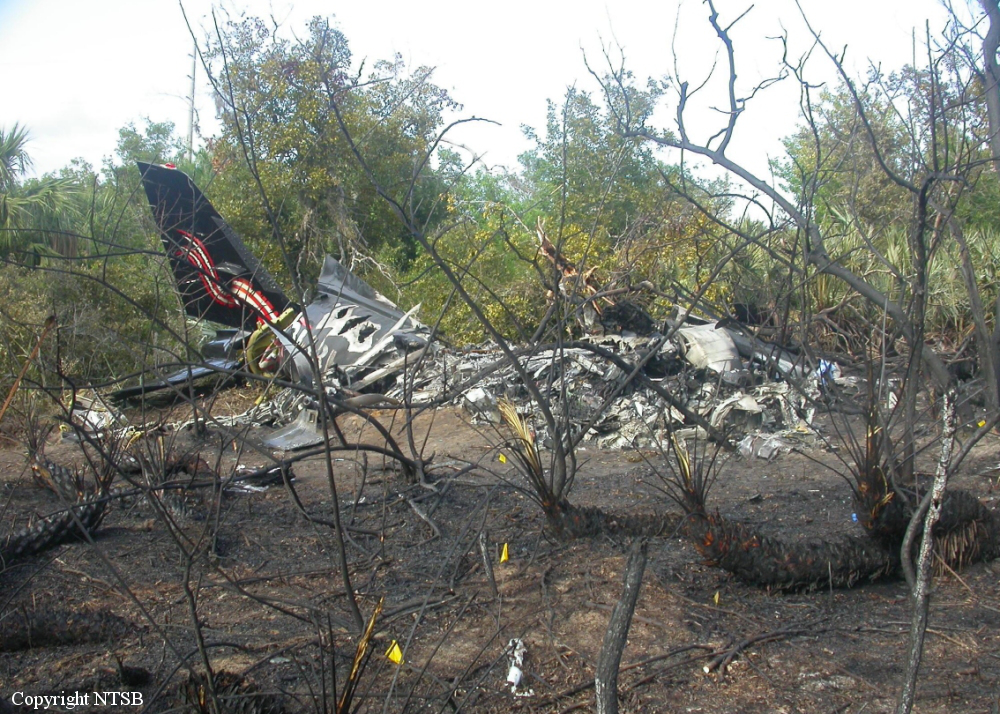
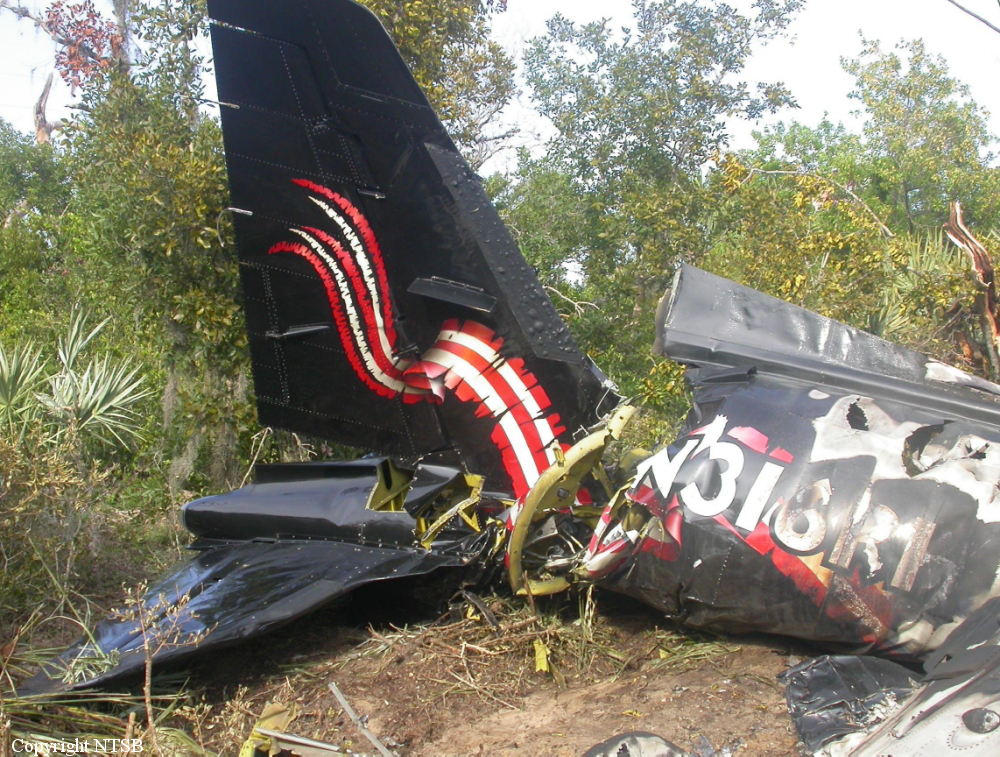
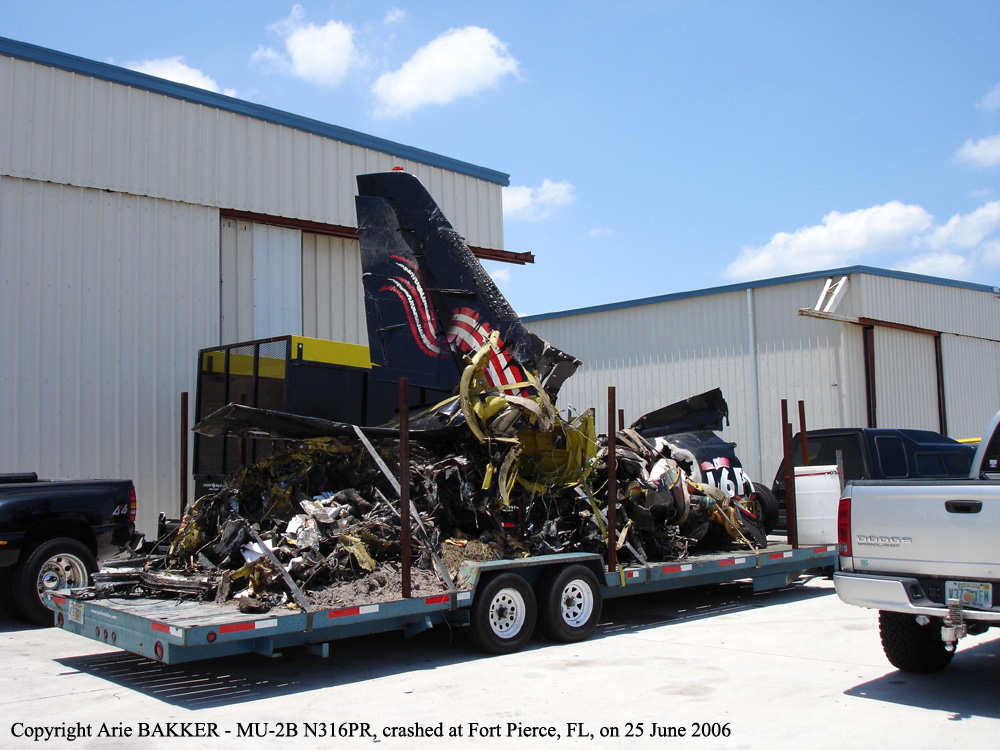
Witnesses stated that they observed the twin-engine airplane roll into a steep right bank and enter a spin at a low altitude (less than 700 feet) during the initial climb. The airplane then descended and impacted terrain about 1.5 miles from the end of the departure runway. Some witnesses reported hearing an unusual engine noise just before the airplane began to roll and spin. Day visual meteorological conditions prevailed. Examination of the right engine revealed that the ring gear support of the engine/propeller gearbox had fractured in flight due to high cycle fatigue originating from the corner radii of the high-speed pinion cutout. The reason for the fatigue could not be determined. The ring gear support disengaged from the ring gear due to this failure, resulting in a disconnection in power being transferred from the engine power section to the propeller. In addition to the ability for a pilot to manually feather the propellers, and an automatic feathering feature, the engine (Honeywell TPE-331) design also includes a “Negative Torque Sensing” (NTS) system that would automatically respond to a typical failed engine condition involving a propeller that is driving the coupled engine. Feathering the propeller reduces drag and asymmetric yawing due to the failed engine. All Federal Aviation Administration (FAA) certification evaluations for one-engine inoperative handling qualities for the airplane type were conducted with the NTS system operational. According to the airplane manufacturer, the NTS system was designed to automatically reduce the drag on the affected engine to provide a margin of safety until the pilot is able to shut down the engine with the condition lever. However, if a drive train disconnect occurs at the ring gear support, the NTS system is inoperable, and the propeller can come out of feather on its own, if the disconnect is followed by a pilot action to retard the power lever on the affected engine. In this scenario, once the fuel flow setting is reduced below the point required to run the power section at 100% (takeoff) rpm, the propeller governor would sense an “underspeed” condition and would attempt to increase engine rpm by unloading the propeller, subsequently driving the propeller out of feather toward the low pitch stop. This flat pitch condition would cause an increase in aerodynamic drag on one side of the airplane, and unanticipated airplane control difficulty could result due to the asymmetry.
Probable cause:
The pilot’s loss of aircraft control during the initial climb which was precipitated by the sudden loss of thrust and increase in drag from the right engine, and the pilot’s failure to adhere to the published emergency procedures regarding the position of the failed engine power lever. Contributing to the accident was the fatigue failure of the right engine’s ring gear support for undetermined reasons, which rendered the propeller’s automatic drag reducing system inoperative.
Final Report: