Crash of a Douglas C-47A-90-DL in McGrath: 2 killed

Date & Time: Jun 3, 1957 at 1730 LT
Operator:
Registration:
43-15995
Flight Type:
Survivors:
Yes
MSN:
20461
YOM:
1944
Location:
Crew on board:
2
Crew fatalities:
Pax on board:
7
Pax fatalities:
Other fatalities:
Total fatalities:
2
Circumstances:
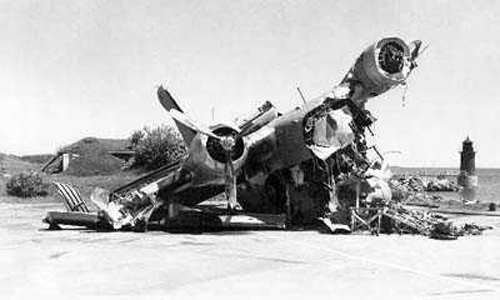
Engine lost power in flight so the crew decided to divert to McGrath Airport. On final, the airplane struck trees and crashed in a wooded area located few miles short of runway. Two passengers were killed while seven other occupants were rescued.
Probable cause:
Loss of power on engine.

Crash of a Lockheed P2V-5F Neptune off Quonset Point NAS

Date & Time: May 29, 1957
Type of aircraft:
Operator:
Registration:
124905
Flight Type:
Survivors:
Yes
Schedule:
Quonset Point - Quonset Point
Crew on board:
6
Crew fatalities:
Pax on board:
0
Pax fatalities:
Other fatalities:
Total fatalities:
0
Circumstances:
The crew was completing a local training sortie out from NAS Quonset Point. On approach, the airplane crashed into the Narragansett Bay about 500 feet short of runway 19. All six crew members were rescued while the aircraft was destroyed.

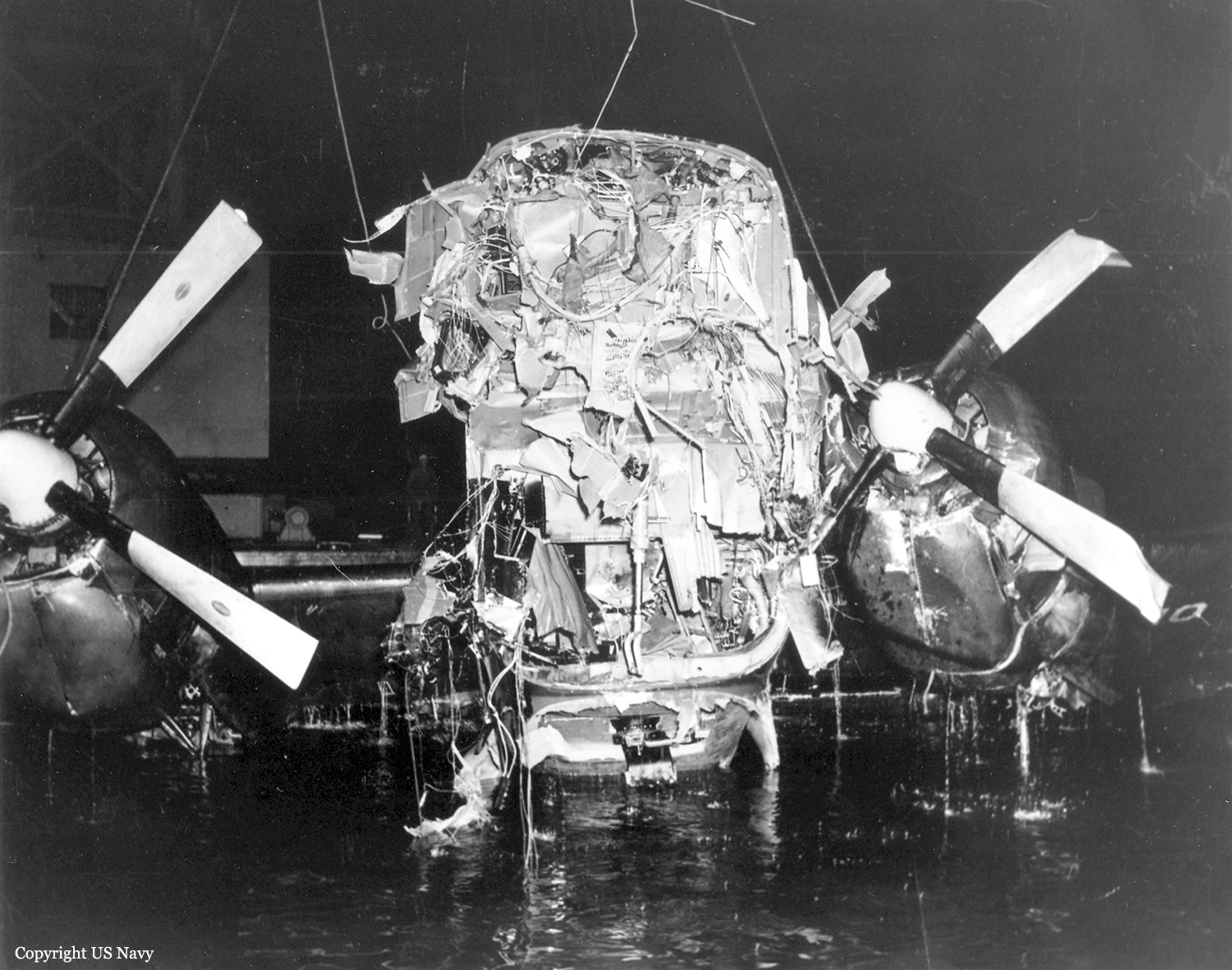
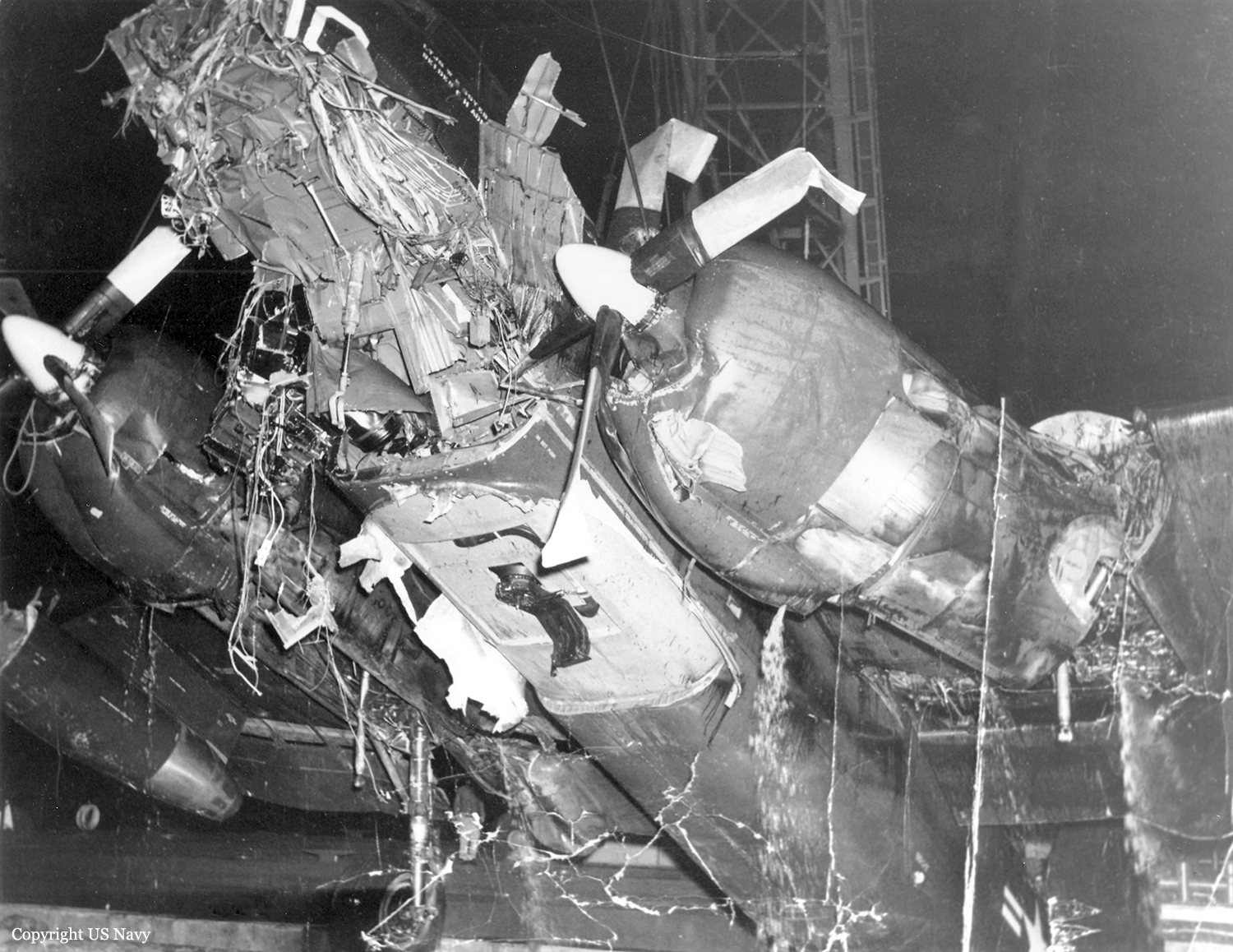
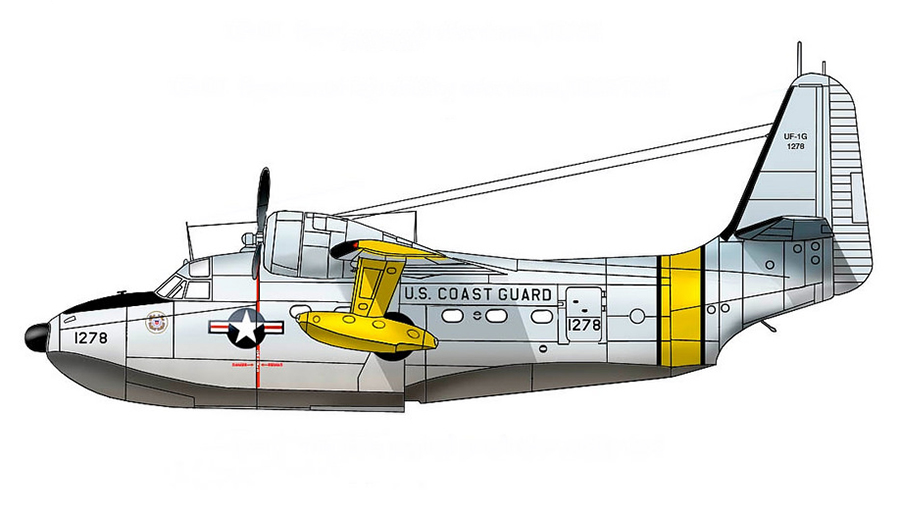
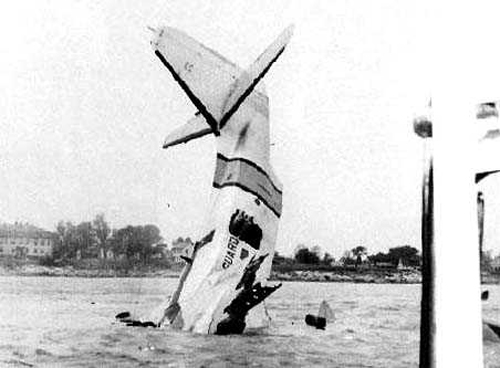
Crash of a Grumman UF-1G Albatross off Salem: 2 killed

Date & Time: May 18, 1957
Operator:
Registration:
1278
Flight Phase:
Flight Type:
Survivors:
Yes
MSN:
G-287
YOM:
1953
Crew on board:
6
Crew fatalities:
Pax on board:
0
Pax fatalities:
Other fatalities:
Total fatalities:
2
Circumstances:
Crashed into the Salem Harbor while performing a JATO system demo flight. Two crew members were killed while four others were rescued. The aircraft was destroyed.
Those killed were:
LCDR Albert P. Hartt Jr.,
AO2 William J. Tarker Jr.

Crash of a Convair R3Y-2 Tradewind off San Francisco

Date & Time: May 10, 1957
Type of aircraft:
Operator:
Registration:
128448
Flight Phase:
Flight Type:
Survivors:
Yes
Crew on board:
0
Crew fatalities:
Pax on board:
0
Pax fatalities:
Other fatalities:
Total fatalities:
0
Circumstances:
The crew was forced to ditch the airplane in the San Francisco bay following an engine failure in flight. There were no casualties but the aircraft sank and was lost. §
Probable cause:
Engine failure in flight.

Crash of a Douglas DC-4 in Pittsburgh

Date & Time: Apr 18, 1957
Type of aircraft:
Operator:
Registration:
N88839
Survivors:
Yes
Schedule:
Buffalo – Pittsburgh
MSN:
3060
YOM:
1942
Crew on board:
4
Crew fatalities:
Pax on board:
51
Pax fatalities:
Other fatalities:
Total fatalities:
0
Circumstances:
The DC-4 was on a simulated ILS approach to Pittsburgh when the copilot established visual reference with the runway. The approach was continued visually but the rate of descent was excessive. The captain applied power, but before recovery was complete, the right main gear struck an embankment short of runway. Full power was applied and a go-around was carried out. Severe buffeting and a number three engine fire were experienced as the DC-4 circled for another approach. The landing was carried out safely and all 55 occupants were evacuated. The aircraft was later considered as damaged beyond repair.
Probable cause:
Wrong approach configuration and lack of crew coordination.

Crash of a Lockheed P2V-5F Neptune in Brunswick: 6 killed

Date & Time: Apr 12, 1957
Type of aircraft:
Operator:
Registration:
131452
Flight Phase:
Flight Type:
Survivors:
Yes
Schedule:
Brunswick - Brunswick
MSN:
426-5333
Location:
Crew on board:
8
Crew fatalities:
Pax on board:
0
Pax fatalities:
Other fatalities:
Total fatalities:
6
Circumstances:
At liftoff, the aircraft went out of control and crashed in flames. Six crew members were killed while two others were rescued.

Crash of a Lockheed P2V-5 Neptune off Chincoteague NAS: 11 killed

Date & Time: Apr 2, 1957
Type of aircraft:
Operator:
Registration:
126518
Flight Phase:
Flight Type:
Survivors:
No
Schedule:
Chincoteague - Chincoteague
Crew on board:
11
Crew fatalities:
Pax on board:
0
Pax fatalities:
Other fatalities:
Total fatalities:
11
Circumstances:
During initial climb, the aircraft exploded in midair and crashed into the sea, killing all 11 crew members.

Crash of a Boeing JB-52C-50-BO Stratofortress in Skiatook: 3 killed

Date & Time: Mar 29, 1957
Type of aircraft:
Operator:
Registration:
54-2676
Flight Phase:
Flight Type:
Survivors:
Yes
Schedule:
Wichita - Wichita
MSN:
17171
YOM:
1954
Crew on board:
4
Crew fatalities:
Pax on board:
0
Pax fatalities:
Other fatalities:
Total fatalities:
3
Circumstances:
While on a test flight out from Wichita, the aircraft suffered a loss of electrical power while flying in negative G conditions. The aircraft went out of control and crashed near Skiatook, about 15 miles north of Tulsa. A crew member was injured while three other were killed.
Probable cause:
Loss of electrical power due to a defective constant speed drive.

Crash of a Martin 404 in Louisville

Date & Time: Mar 10, 1957 at 1138 LT
Type of aircraft:
Operator:
Registration:
N453A
Survivors:
Yes
Schedule:
Chicago – Indianapolis – Louisville – Miami
MSN:
14144
YOM:
1952
Flight number:
EA181
Crew on board:
3
Crew fatalities:
Pax on board:
31
Pax fatalities:
Other fatalities:
Total fatalities:
0
Captain / Total flying hours:
7795
Captain / Total hours on type:
2151.00
Copilot / Total flying hours:
1201
Copilot / Total hours on type:
652
Aircraft flight hours:
15365
Circumstances:
Flight 181 originated at Midway Airport, Chicago, Illinois, for Miami, Florida. Several stops were scheduled including Indianapolis, Indiana, and Louisville, Kentucky, the latter a point of crew change. Departure, scheduled for 0955, was at 1001, with a crew of Captain Clarence G. Chambers, Pilot Harold D. Bingham, and Stewardess Shirley Michael. To Indianapolis the flight was routine, with Captain Chambers flying, and arrival was on schedule. Departure from Indianapolis was on schedule, at 1105, with 31 passengers and 450 gallons of fuel. The aircraft’s gross weight was 41,126 pounds, 3,774 less than the maximum takeoff allowable of 44,900, and its center of gravity was located within prescribed limits. Captain Chambers instructed Pilot Bingham to do the flying and, accordingly, Bingham, seated on the right, made the takeoff and flew this segment of the flight. The aircraft proceeded along V-53 airway at 5,000 feet altitude on a VFR flight plan in clear weather. At 1133 the flight advised Standiford (Louisville) tower that it was over New Albany, Indiana, eight miles to the north-northwest, and requested clearance to the airport. At 1134 the flight asked landing information of its company radio station and was given the Louisville pressure altitude as 340 feet and the Louisville altimeter setting as 30.10 inches. A minute later the flight advised the tower that it was over the city and received clearance to land on runway 11. Wind conditions were given as southeast five to eight knots, variable both sides. Ceiling and visibility were unlimited. The “Fasten Seat Belt” sign had been put on. Pilot Bingham descended from 5,000 feet to 2,000 feet and then reduced both rate of descent and power. An airspeed of 165 knots was established, the landing gear was lowered, and the flaps were placed in takeoff position. Bingham then started a turn for final approach, and the flaps were placed in approach position. Captain Chambers saw that the aircraft was too high and reduced power still further; Bingham lowered the flaps to full down. The pre-landing checklist had been accomplished. At this point (the altitude was then 1,000 to 1,500 feet higher than the runway) the captain took over control. He nosed down sharply, holding as closely as possible to an airspeed of 100 knots. The landing gear remained down, flaps remained fully down, and throttles were pulled fully back. Neither pilot read the rate-of-climb (descent) indicator during the approach. When approximately over the threshold of the runway and while about 100 feet above it, the captain pulled back on the yoke to flare out. No power was used. The aircraft’s attitude was observed to change from nose-down to nose-up but its rate of descent did not seem to lessen markedly. The aircraft struck the runway on its main landing gear, the left wing separated inboard of the left engine nacelle, and the remainder of the aircraft half rolled to an inverted position. It slid along in that attitude, turning and coming to rest headed nearly opposite its direction at touchdown. Two minutes later, by estimate, all occupants were out of their inverted seats, in which they were belted, and away from the wreckage which had developed a small fire. This was confined by a passenger using a hand extinguisher until emergency apparatus, which had been alerted by the tower, arrived quickly and took the necessary steps to prevent further fire.
Probable cause:
The Board determines that the probable cause of this accident was the captain’s faulty landing approach technique, resulting in an excessively high rate of sink at the instant of touchdown imposing load beyond the design strength of the wing stricture. The following findings were reported:
- An approach was started from a paint too close and too high in relation to the approach end of the runway,
- The speed and configuration of the aircraft in conjunction with the retarded throttle during this approach resulted in an inordinately high rate of descent,
- This high descent rate was not sufficiently checked during the attempted flareout,
- Touchdown imposed loads beyond the design strength of the wing structure, which failed.
Final Report:

Crash of a Douglas C-54B-20-DO Skymaster near Blyn: 5 killed

Date & Time: Mar 2, 1957 at 1719 LT
Type of aircraft:
Operator:
Registration:
N90449
Flight Phase:
Survivors:
No
Site:
Schedule:
Fairbanks – Seattle
MSN:
27239
YOM:
1944
Flight number:
AS100
Location:
Crew on board:
3
Crew fatalities:
Pax on board:
2
Pax fatalities:
Other fatalities:
Total fatalities:
5
Captain / Total flying hours:
12033
Captain / Total hours on type:
8023.00
Copilot / Total flying hours:
10791
Copilot / Total hours on type:
4532
Aircraft flight hours:
28835
Circumstances:
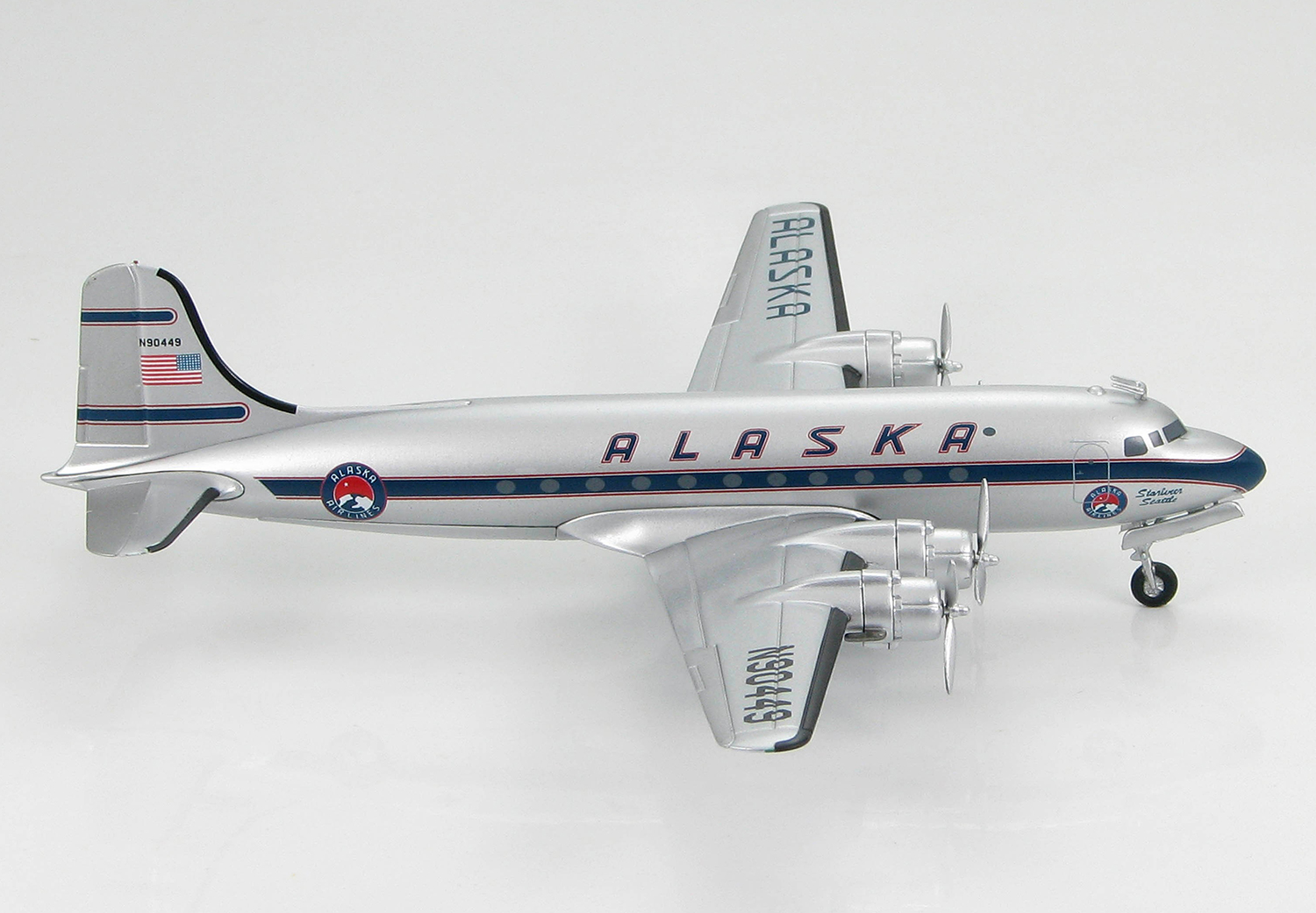
Alaska Airlines, Inc., is an air carrier certificated to conduct scheduled operations within the Territory of Alaska and between Alaska and the continental United States. Flight 100 of March 2 originated at Fairbanks, Alaska, as a regularly scheduled nonstop flight to Seattle, Washington. The aircraft, N 90449, had arrived from Seattle at 0717 March 2 as Trip 101/1. Two minor discrepancies reported by the inbound crew were corrected during a turnaround inspection and by 0930 that morning the aircraft was ready for the return flight to Seattle. The crew assigned to Flight 100, Captain Lawrence F. Currie, Copilot Lyle O. Edwards, and Stewardess Elizabeth Goods, arrived at operations and made the normal routine preparations for the flight. The pilots discussed the flight with the station agent and all necessary flight papers were completed. Weather for the route was given to the pilots. The weight and balance were determined and both were well within allowable limits. The aircraft was serviced with 2,380 gallons of fuel. The following IFR flight plan was filed with Fairbanks ARTC (Air Route Traffic Control): Alaska 100, a DC-4, departing 10,000 feet Amber 2 Snag, 12,000 Blue 79 Haines, 10,000 Blue 79 Annette, 9,500 direct Port Hardy, 10,000 Amber 1 Seattle; airspeed 185; estimating 7 hours, 44 minutes en route; proposing 0955. At 0940 the two passengers and crew boarded the aircraft. Takeoff was made in VFR weather conditions at 0958. Shortly thereafter Fairbanks center called N 90449 and relayed the ATC clearance, approving the flight plan as filed. The weather conditions at Fairbanks and en route were forecast to be generally good and the flight proceeded in the clear as planned, making routine position reports as it progressed. At 1240, when over Haines, Alaska, at 12,000 feet, Flight 100 canceled its instrument flight plan and informed ARTC that they would proceed VFR to Annette and would file DVFR 2 (Defense Visual Flight Rule) after Annette and before entering the CADIZ (Canadian Air Defense Identification Zone). Thereafter the flight proceeded, reporting its position as DVFR at 1,000 feet. The flight was observed at Patricia Bay, British Columbia, at an estimated 3,000 feet m. s. l. by a tower operator. It was also observed leaving the CADIZ. At 1717 the Alaska Airlines Seattle dispatch office received the following position report by radio from Flight 100: "Dungeness at 16 VFR estimating Seattle at 34." This was the last contact with the flight, which crashed shortly thereafter. All five occupants were killed. N 90449 crashed in heavily timbered mountainous terrain March 2 and was not located until March 3, 1957. The crash occurred approximately in the center of the "on course" zone of the northwest leg of the Seattle low frequency radio range, about 11 nautical miles southeast of the Dungeness fan marker. This leg of the Seattle range defines the center of Amber Airway 1 between the Dungeness intersection and the range station. The minimum instrument en route altitude for this segment is 5,000 feet. Because of adverse weather and inaccessibility of the location, CAB investigators were unable to reach the scene until March 6. The investigators noted that the wreckage had been disturbed prior to their arrival; some components were missing, presumably carried away by persons unknown. The path of the aircraft during the final seconds of flight was clearly defined in the heavy timber growing on the steep slope against the aircraft smashed. The aircraft’s first contact with the trees was at a point 650 feet from the wreckage. From this point it cut a level swath on a heading of 106 degrees magnetic, the width of its wing span, into the steeply rising wooded slope at an elevation of approximately 1,500 feet m. s. l. The terrain immediately ahead of the aircraft‘s path rose to an altitude of 2,000. 2,100 feet MSL.
Probable cause:
The Board determines that the probable cause of this accident was a navigational error and poor judgment exhibited by the pilot in entering an overcast in a mountainous area at a dangerously low altitude. The following findings were reported:
- No malfunction or emergency existed and the aircraft was intact prior to its initial contact with the mountain,
- Several errors and omissions in the course of the flight Indicate the crew was lax and not giving proper attention to their duties,
- A navigational error resulted in the aircraft being three to four miles west of the flight path assumed by the crew,
- The pilot flew into instrument weather without obtaining a proper clearance,
- The aircraft crashed in terrain obscured by clouds.
Final Report: