Crash of a Douglas C-53-DO in New Bedford: 12 killed

Date & Time: Sep 15, 1957 at 2046 LT
Operator:

Registration:
N34417
Survivors:
Yes
Schedule:
Boston – Hyannis – Martha’s Vineyard – New Bedford – New York
MSN:
7337
YOM:
1942
Flight number:
NE285
Crew on board:
3
Crew fatalities:
Pax on board:
21
Pax fatalities:
Other fatalities:
Total fatalities:
12
Captain / Total flying hours:
7079
Captain / Total hours on type:
4348.00
Copilot / Total flying hours:
2097
Copilot / Total hours on type:
1522
Aircraft flight hours:
35685
Circumstances:
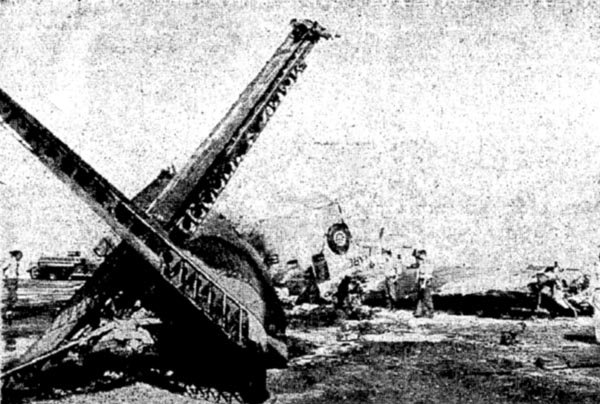
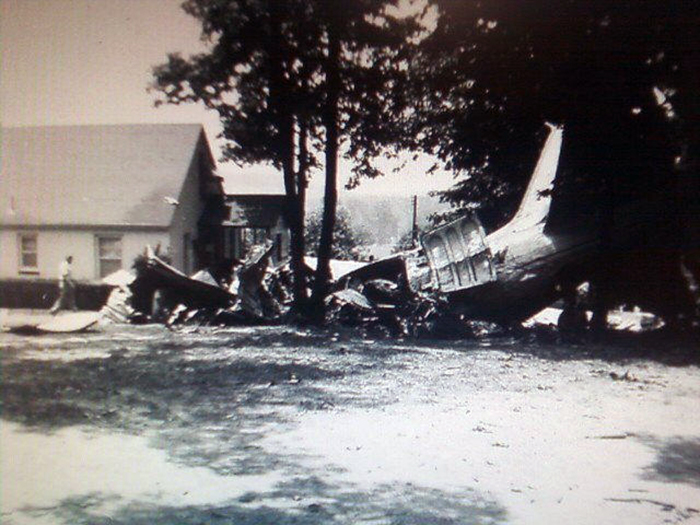
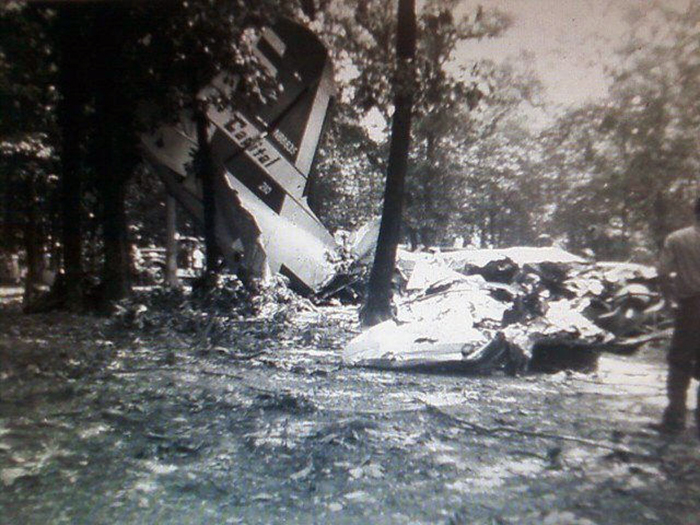
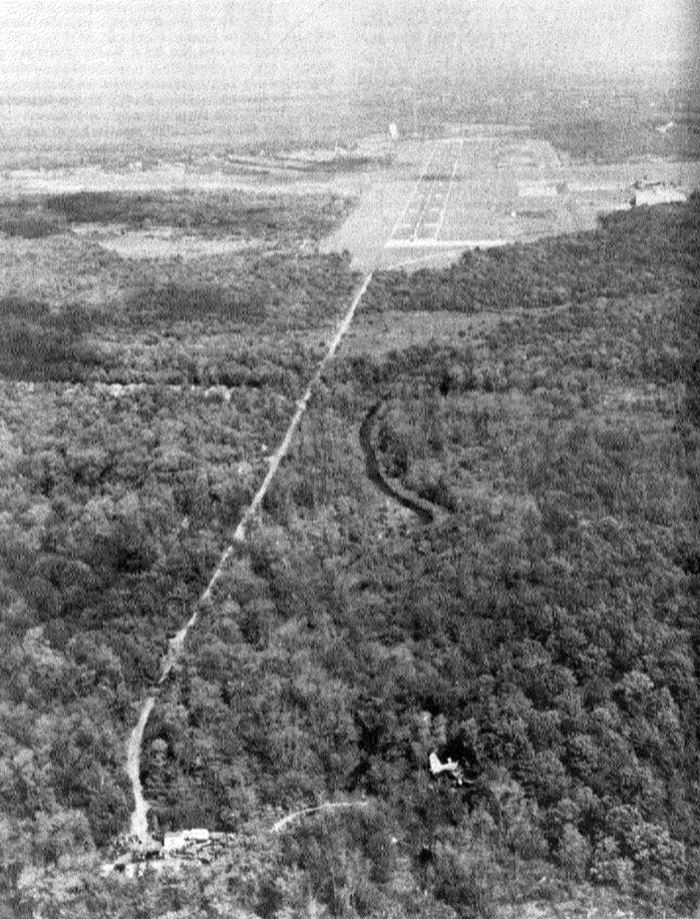
Northeast Airlines Flight 285 is a scheduled passenger operation originating at Boston, Massachusetts, and terminating at New York, New York, with intermediate stops serving Hyannis, Nantucket, Martha's Vineyard, and New Bedford, Massachusetts. On September 15, 1957, the flight originated on schedule, its crew consisting of Captain Vincent L. Pitts, Reserve Captain Roger W. Sweetland, serving as copilot, and Stewardess Nancy J. Lehan. Flight 285 was routine until it reached Martha's Vineyard where it landed at 2007 following a missed approach in poor weather conditions. The flight departed Martha's Vineyard for New Bedford at 2019, about 50 minutes behind schedule, the result of the missed approach, IFR delays, and accumulated minor delays. The flight to New Bedford was in and on top of Instrument weather conditions and was conducted according to an IFR (Instrument Flight Rules) flight plan. The clearance given the flight by ARTC (Air Route Traffic Control) through company radio was as follows. "ATC clears Northeast 285 to the New Bedford middle marker, via direct Otis, Red 94, to maintain 4,000, to make climb to 2,500 at the Martha's Vineyard radio beacon before proceeding on course. Report on course and report the Otis radio beacon." At departure there was sufficient fuel for the flight to New Bedford, and, if necessary to the designated alternate airport, Boston, with the required reserve upon arrival there. Also, at this time, according to the company load manifest, the aircraft was loaded to a gross weight of 22,443 pounds, well under the maximum allowable of 25,346 pounds. The load was distributed within the center of gravity limitations of the aircraft. At 2024 the flight reported to the company radio at Martha's Vineyard that it was over the Martha's Vineyard radio beacon, "2,500 feet on course." At 2029 it again contacted the company at Martha's Vineyard and reported it was then over Otis at 4,000 feet. A few minutes later Flight 285 contacted the New Bedford taper controller and informed him it was unable to give the Otis report to the company at Boston. The controller took the progress report and requested the flight to contact Providence approach control (Providence controls IFR flights in the New Bedford area). The flight immediately contacted Providence approach control and was cleared to maintain 4,000 feet to the compass locater at the New Bedford middle marker and to report over the marker. This was acknowledged. Immediately thereafter Providence cleared Flight 285 for an approach to the New Bedford Airport and requested it to report leaving 4,000 feet and then switch to the New Bedford tower. At 2036 the flight reported leaving 4,000 feet. Flight 285 then contacted the New Bedford tower operator and thereafter, at 2038, according to the controller, stated it was starting an ILS approach. The controller gave the flight the latest weather as follows: Indefinite 200, obscuration; visibility one mile; fog; wind southeast 3; altimeter 30.02. He also cleared the flight to land, ILS approach, straight in to runway 5, and requested that it call the tower when inbound at the outer marker. Following this clearance the captain of another Northeast flight, 275, which had shortly before, at 2031, taken off from runway 23, the reciprocal of 5, gave Flight 285 the following information. "It'll be tight." Flight 285 reported that it had completed the procedure turn and was inbound over the outer marker. The controller acknowledged this report which was the last communication with the flight. He logged the report at 2046, shortly after it was received. The airplane clip trees and crashed in a dense wooded area located 4,000 feet short of runway 05 threshold. Both pilots and ten passengers were killed while 12 other occupants were injured. The aircraft was destroyed.
Probable cause:
The Board determines that the probable cause of this accident ins that the pilot, attempted to make a visual approach by descending prematurely in the approach area without adherence to the prescribed ILS approach procedure which was dictated by existing weather conditions. The following findings were reported:
- Flight to the New Bedford area was made in and on top of instrument weather conditions in accordance with an instrument flight rules flight plan,
- Flight 285 reached the New Bedford area and was cleared for an ILS approach,
- Weather conditions at the airport and the surrounding area clearly dictated an ILS approach,
- Airborne and ground equipment necessary to the ILS approach was functioning normally,
- Flight 285 descended prematurely in the approach area without conformity to the ILS procedure,
- Flight 285 descended to a low and unsafe altitude in an attempt to approach the airport visually, assisted by directional instruments,
- The flight did not conform to the ILS glide path,
- From low altitude a descent occurred which was not recognized by the pilots in time for corrective action to be effective,
- The trees struck were located 165 feet to the right of the localizer centerline, nearly 189 feet below the glide path centerline, and about 4,000 feet short of the runway threshold,
- There was no evidence of malfunction of the aircraft, its systems, or powerplants.
Final Report:
Crash of a Douglas C-124 Globemaster II in Binghamton

Date & Time: Sep 4, 1957
Operator:
Registration:
51-5173
Flight Type:
Survivors:
Yes
Schedule:
Larson - Binghamton
MSN:
43583
YOM:
1951
Crew on board:
9
Crew fatalities:
Pax on board:
0
Pax fatalities:
Other fatalities:
Total fatalities:
0
Circumstances:
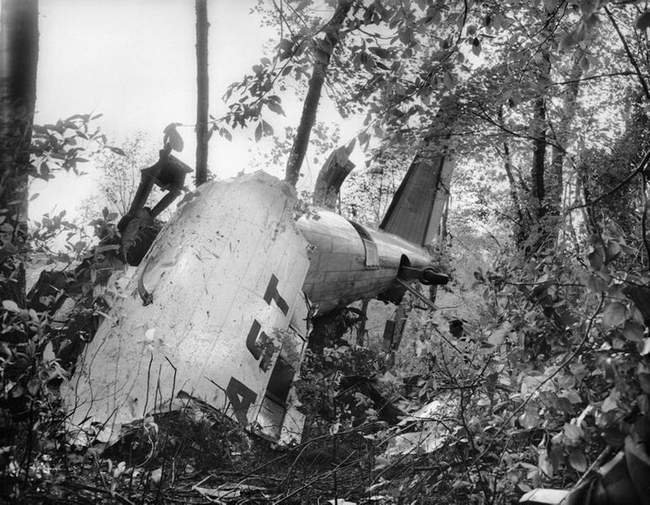
The approach to Binghamton Airport was completed at an insufficient altitude. On short final, the aircraft struck a concrete wall. Upon impact, the undercarriage were torn off and the aircraft crash landed. There were no casualties but the aircraft was written off.

Crash of a Douglas C-124C Globemaster II at Biggs AFB: 5 killed

Date & Time: Aug 31, 1957 at 0145 LT
Operator:
Registration:
52-1021
Flight Type:
Survivors:
Yes
Schedule:
Hunter - Biggs
MSN:
43930
YOM:
1952
Crew on board:
4
Crew fatalities:
Pax on board:
11
Pax fatalities:
Other fatalities:
Total fatalities:
5
Circumstances:
The approach to Biggs AAF was completed by night and poor weather conditions. On final, the four engine aircraft was too low and struck the ground and crashed 2,5 miles short of runway. Five occupants were killed while ten others were evacuated.

Crash of a Grumman HU-16E in Floyd Bennett Field: 4 killed

Date & Time: Aug 22, 1957
Operator:
Registration:
1259
Flight Phase:
Flight Type:
Survivors:
Yes
Schedule:
Floyd Bennett Field - Floyd Bennett Field
MSN:
G-106
YOM:
1952
Crew on board:
6
Crew fatalities:
Pax on board:
0
Pax fatalities:
Other fatalities:
Total fatalities:
4
Circumstances:
The crew was performing a test flight after the aircraft had undergone an intermediate inspection in which the control columns were removed and inspected for fatigue cracks in the bottom casting. The plane was cleared for take-off and instructed to turn right immediately after take-off to avoid other traffic. Take-off was normal but immediately after leaving the runway the plane banked slightly to the left, hesitated, and then banked and then banked very rapidly to the left until it was in a 90° bank. The left wing tip struck the ground and the plane broke in two and crashed. Four crew members were killed while two others were injured.
Those killed were:
Lcdr Claude S. Labaw,
Lt Rolland A. Faucher,
AD3 Matthew R. Ross,
AT3 Gerald R. Fox.
Probable cause:
The Accident Board was not able to determine the cause of this accident but certain items all pointed strongly toward reversed aileron control cable rigging as the most probably cause.

Crash of a Lockheed P2V-5F Neptune off Barbers Point NAS: 10 killed

Date & Time: Jul 23, 1957
Type of aircraft:
Operator:
Registration:
128418
Flight Type:
Survivors:
No
Schedule:
Barbers Point - Barbers Point
MSN:
426-5264
Crew on board:
10
Crew fatalities:
Pax on board:
0
Pax fatalities:
Other fatalities:
Total fatalities:
10
Circumstances:
The crew was completing a local training sortie out from NAS Barbers Point. On final approach, the airplane lost height and crashed into the sea about 1,1 mile short of runway. The aircraft was lost and all ten crew members were killed.

Crash of a Boeing KC-97G-28-BO Stratotanker off Plattsburgh: 5 killed

Date & Time: Jul 18, 1957
Type of aircraft:
Operator:
Registration:
52-2737
Flight Phase:
Flight Type:
Survivors:
Yes
MSN:
16768
YOM:
1952
Crew on board:
8
Crew fatalities:
Pax on board:
0
Pax fatalities:
Other fatalities:
Total fatalities:
5
Circumstances:
Shortly after takeoff from runway 17 at Plattsburgh Airport, while climbing, the airplane lost height, stalled and crashed into Lake Champlin. Three crew members were rescued while five others were killed.
Probable cause:
The accident was the consequence of a loss of power on two engines simultaneously.

Crash of a Lockheed 18-56-23 LodeStar in King Salmon: 6 killed

Date & Time: Jul 10, 1957 at 0642 LT
Type of aircraft:
Registration:
N45378
Flight Phase:
Survivors:
No
Schedule:
King Salmon – Anchorage
MSN:
2506
YOM:
1943
Crew on board:
2
Crew fatalities:
Pax on board:
4
Pax fatalities:
Other fatalities:
Total fatalities:
6
Captain / Total flying hours:
10000
Captain / Total hours on type:
1000.00
Aircraft flight hours:
4181
Circumstances:
At King Salmon on the morning of July 10, 1957, about 0615, following two weeks in Alaska on a combined business and pleasure trip, Mr. C. R. Vose and party boarded N 45376 as its passengers. The flight crew of the executive Lodestar was Pilot Edward Coligny and Mechanic-Fight Engineer Ralph L. Hughes. The Vose party contemplated a flight to Anchorage, Alaska, the first segment of its return trip to Seattle, Washington. Earlier that morning Mr. Hughes had filed a VFR flight plan to Anchorage which proposed a departure time of 0630 and a routing to Anchorage over Airway Green 8 at an altitude of 6,000 feet. The flight plan also showed that the flight duration would be 1 hour and 40 minutes at a cruising speed of 170 knots and that there was sufficient fuel on board for 6 hours and 30 minutes. At 0638, following a period of engine rump on the parking ramp, the flight called the King Salmon tower for taxi and takeoff information. The duty controller cleared it to runway 11 and furnished the latest wind and altimeter conditions: “Wind east-northeast 8; altimeter 29.90.” There being no other traffic, N 45378 was cleared directly onto runway 11 where several persons saw it pause one to two minutes and heard its propellers run through one or two times. The takeoff was started at 0642 and it seemed entirely normal as the aircraft left the runway surface and climbed to between 75 and 100 feet. The landing gear, however, remained extended. The climb continued normally although somewhat steeper to between 150 and 200 feet, at which time the climb of the aircraft steepened rapidly but smoothly until it was nearly vertical. At the peak of the climb the aircraft pivoted counterclockwise, plunged to the group, and exploded. An intense fuel-fed fire followed. The airport traffic controller alerted the U. S. A. F. emergency equipment located on the base and the fire was quickly extinguished; however, not before the aircraft was nearly destroyed. All six occupants were killed.
Probable cause:
The Board determines that the probable cause of this accident was the pilot’s action in taking off with the elevator trim tab positioned for landing. The following findings were reported:
- The aircraft was loaded about 1,000 pounds in excess of the allowable gross takeoff weight; however, the load was properly distributed and the excess weight was not a factor in the accident,
- After becoming airborne the aircraft assumed a normal climb attitude to about 100 feet,
- As airspeed increased the climb steepened smoothly but rapidly until the aircraft was climbing in a near vertical nose-up attitude,
- The aircraft stalled at an altitude of between 500 and 700 feet, pivoted counterclockwise, and plunged to the ground in a vertical nose-down attitude,
- Rumination of the cockpit trim tab control indicator and actuating mechanism of the elevator trim tab revealed the tab was set to 17-1/2 units nose-down,
- The above elevator trim tab position is abnormal for any usual flight condition. especially for takeoff, and resulted from a desperate attempt to relieve yoke pressure,
- The rearward yoke pressure resulted from the elevator trim tab being positioned for landing during the takeoff.
Final Report:

Ground accident of a Lockheed L-1049 Super Constellation in Miami

Date & Time: Jun 28, 1957
Operator:
Registration:
N6212C
Flight Phase:
Survivors:
Yes
MSN:
4012
YOM:
1952
Crew on board:
0
Crew fatalities:
Pax on board:
0
Pax fatalities:
Other fatalities:
Total fatalities:
0
Circumstances:
The Super Constellation was struck by an Eastern Airlines DC-7 while parked at Miami-Intl Airport. Following an uneventful training flight, the DC-7 landed at Miami-Intl Airport, exit via a taxiway and was taxiing to the maintenance hangar when control was lost. It collided with the Super Constellation and both aircraft caught fire and were destroyed. The exact circumstances and causes of the collision remains unclear. As the aircraft was empty, there were no injuries.

Ground accident of a Douglas DC-7B in Miami

Date & Time: Jun 28, 1957
Type of aircraft:
Operator:
Registration:
N808D
Flight Phase:
Flight Type:
Survivors:
Yes
Schedule:
Miami - Miami
MSN:
44859
YOM:
1955
Crew on board:
3
Crew fatalities:
Pax on board:
0
Pax fatalities:
Other fatalities:
Total fatalities:
0
Circumstances:
Following an uneventful training flight, the DC-7 landed at Miami-Intl Airport, exit via a taxiway and was taxiing to the maintenance hangar when control was lost. It collided with a parked Eastern Airlines Super Constellation registered N6212C. On impact, both aircraft caught fire and the crew was able to evacuate the DC-7 before both aircraft would be destroyed by fire. The exact circumstances and causes of the collision remains unclear.

Crash of a Douglas C-47A-75-DL in Clarksburg: 3 killed

Date & Time: Jun 22, 1957 at 0750 LT
Operator:
Registration:
N88835
Flight Type:
Survivors:
No
Schedule:
Washington - Washington
MSN:
19448
YOM:
1944
Flight number:
H-3
Crew on board:
3
Crew fatalities:
Pax on board:
0
Pax fatalities:
Other fatalities:
Total fatalities:
3
Captain / Total flying hours:
4342
Captain / Total hours on type:
961.00
Copilot / Total flying hours:
6248
Copilot / Total hours on type:
3138
Aircraft flight hours:
14168
Circumstances:
Training flight H-3 was scheduled by Capital (Capital Airlines) flight training department for Captain Carl R. Burke, instructor, and two Copilots, Henry A. Podgurski and Robert K. Thomas. This was the second of a series of six flights being made for the purpose of giving Messrs. Podgurski and Thomas flight instruction to prepare them for upgrading from copilot to captain. The flight was dispatched in accordance with visual flight rules to operate in an area northwest, north, and northeast of Washington, D. C. This area was used by Capital as its local practice area for training flights. The aircraft was fully serviced with 820 gallons of fuel. Its gross takeoff weight was less than the max allowable and the center of gravity was within allowable limits. The weather was clear and was not a factor in thin accident. Takeoff was made at 0625. At 0631 the flight advised the company by radio of the trip number, time of takeoff, fuel aboard, and flight duration. There were no other radio contacts with the flight. At approximately 0745, N88835 was observed in the vicinity of Clarksburg, Maryland, by many people who saw it during several tea of flight and in its plunge to the ground.
Probable cause:
The Board determines that the probable cause of this accident was loss of airspeed while executing maneuvers during a training flight, resulting in a stall followed immediately by a spin from an altitude too low to effect recovery. The following findings were reported:
- No malfunctioning of the aircraft, engines, or control systems was evident from the examination of the wreckage,
- The pilots were executing a "canyon approach" maneuver at an altitude approximately 2,500 feet above the terrain (3,000 feet msl),
- During the abandon-approach phase of this maneuver the aircraft was inadvertently stalled from which it entered a spin and crashed,
- Although rotation had stopped before impact occurred there was insufficient altitude to effect a recovery.
Final Report: