Crash of an Avro 652 Anson C.19 at RAF Mildenhall

Date & Time: Nov 21, 1961
Type of aircraft:
Operator:
Registration:
VM372
Flight Phase:
Flight Type:
Survivors:
Yes
Schedule:
Mildenhall - Mildenhall
Region:
Crew on board:
2
Crew fatalities:
Pax on board:
0
Pax fatalities:
Other fatalities:
Total fatalities:
0
Circumstances:
The crew was completing a local training mission at RAF Mildenhall when an engine failed in flight. The airplane lost height, struck trees, a pole and the roof of a house before crashing in a field located one mile southwest of the airbase. Both crew members were rescued and the aircraft was written off.
Probable cause:
Engine failure.

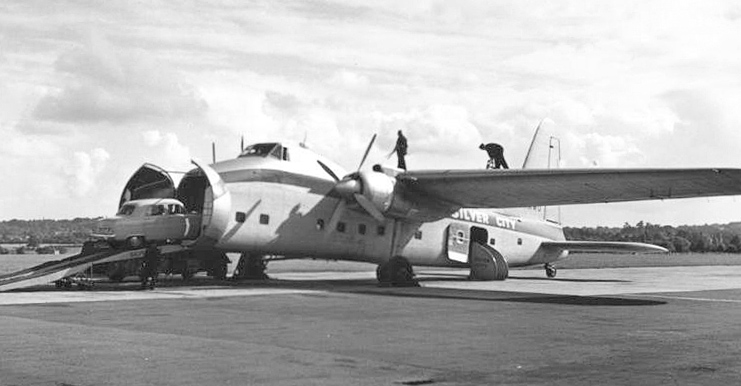
Crash of a Bristol 170 Freighter 31M in Guernsey: 2 killed

Date & Time: Nov 1, 1961 at 1426 LT
Type of aircraft:
Operator:
Registration:
G-ANWL
Survivors:
Yes
Schedule:
Cherbourg – Saint Peter
MSN:
13260
YOM:
1956
Region:
Crew on board:
3
Crew fatalities:
Pax on board:
7
Pax fatalities:
Other fatalities:
Total fatalities:
2
Captain / Total flying hours:
8143
Captain / Total hours on type:
471.00
Copilot / Total flying hours:
3315
Copilot / Total hours on type:
486
Circumstances:
The aircraft was making a daylight scheduled vehicle and passenger public transport flight from Cherbourg, France and during an attempt to land at Guernsey in conditions of low cloud the captain missed his approach. He opened up the engines to go round again, but the aircraft failed to gain height. Veering to the right it flew a short distance with the starboard propeller rotating slowly until the starboard wing struck the ground, and the aircraft cartwheeled. The passenger cabin broke away from the main wreckage which caught fire. Both pilots were killed. The steward and all 7 passengers aboard were seriously injured. The accident occurred at 1416LT.
Probable cause:
The accident was due to the malfunctioning of the automatic pitch coarsening unit of the starboard propeller. This deprived the captain of the necessary degree of control of the aircraft at a critical stage of the flight.
Final Report:

Crash of an Avro 696 Shackleton MR.2 at RAF Ballykelly

Date & Time: Oct 20, 1961
Type of aircraft:
Operator:
Registration:
WR968
Flight Type:
Survivors:
Yes
Schedule:
Ballykelly - Ballykelly
YOM:
1954
Region:
Crew on board:
4
Crew fatalities:
Pax on board:
0
Pax fatalities:
Other fatalities:
Total fatalities:
0
Circumstances:
The crew was completing a local training mission at RAF Ballykelly. The approach was performed with one engine voluntarily inoperative. After touchdown, the airplane rolled over a long distance then veered off runway and came to rest in flames. All four crew members escaped uninjured while the aircraft was destroyed.

Crash of a Douglas C-47B-35-DK on Mt Croglin Fell: 4 killed

Date & Time: Oct 17, 1961 at 0935 LT
Operator:
Registration:
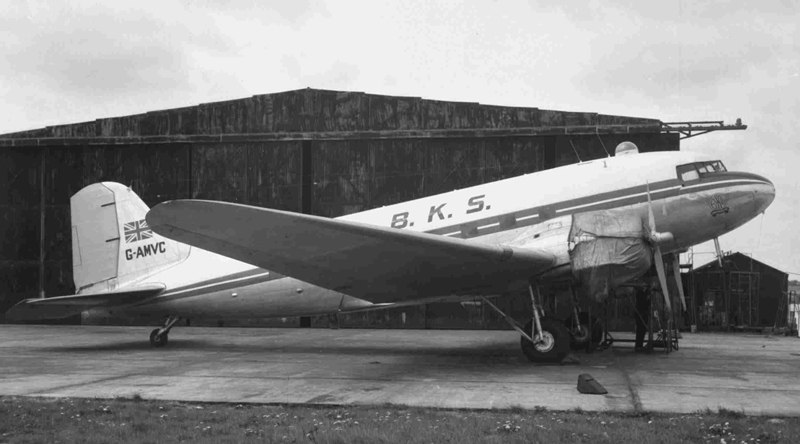
G-AMVC
Flight Type:
Survivors:
No
Schedule:
Leeds - Carlisle
MSN:
16642/33390
YOM:
1945
Region:
Crew on board:
4
Crew fatalities:
Pax on board:
0
Pax fatalities:
Other fatalities:
Total fatalities:
4
Circumstances:
The crew was completing a positioning flight from Leeds-Bradford to Carlisle Airport where a delegation of farmers should be pick up on a charter flight to Hawarden. On descent, the crew encountered poor weather conditions and lost his orientation, passing over RAF Crosby at 0900LT without any visual contact with the ground. Thirty-five minutes later, ATC lost contact with the crew and the aircraft that struck the slope of Mt Croglin Fell located in the North Pennines mountains, about 7 miles southeast of Carlisle Airport. The aircraft was destroyed and all four crew members were killed. At the time of the accident, weather conditions were poor with low clouds, gusty winds and heavy rain falls.
Crew:
H. L. Mose, pilot,
A. Francis, copilot,
C. N. Wildman, pilot
Valerie Christian, stewardess.
Probable cause:
Due to lack of evidences, it was not possible to determine the exact cause of the accident.

Crash of a De Havilland DH.114 Heron in Biggin Hill: 2 killed

Date & Time: Jul 10, 1961
Type of aircraft:
Registration:
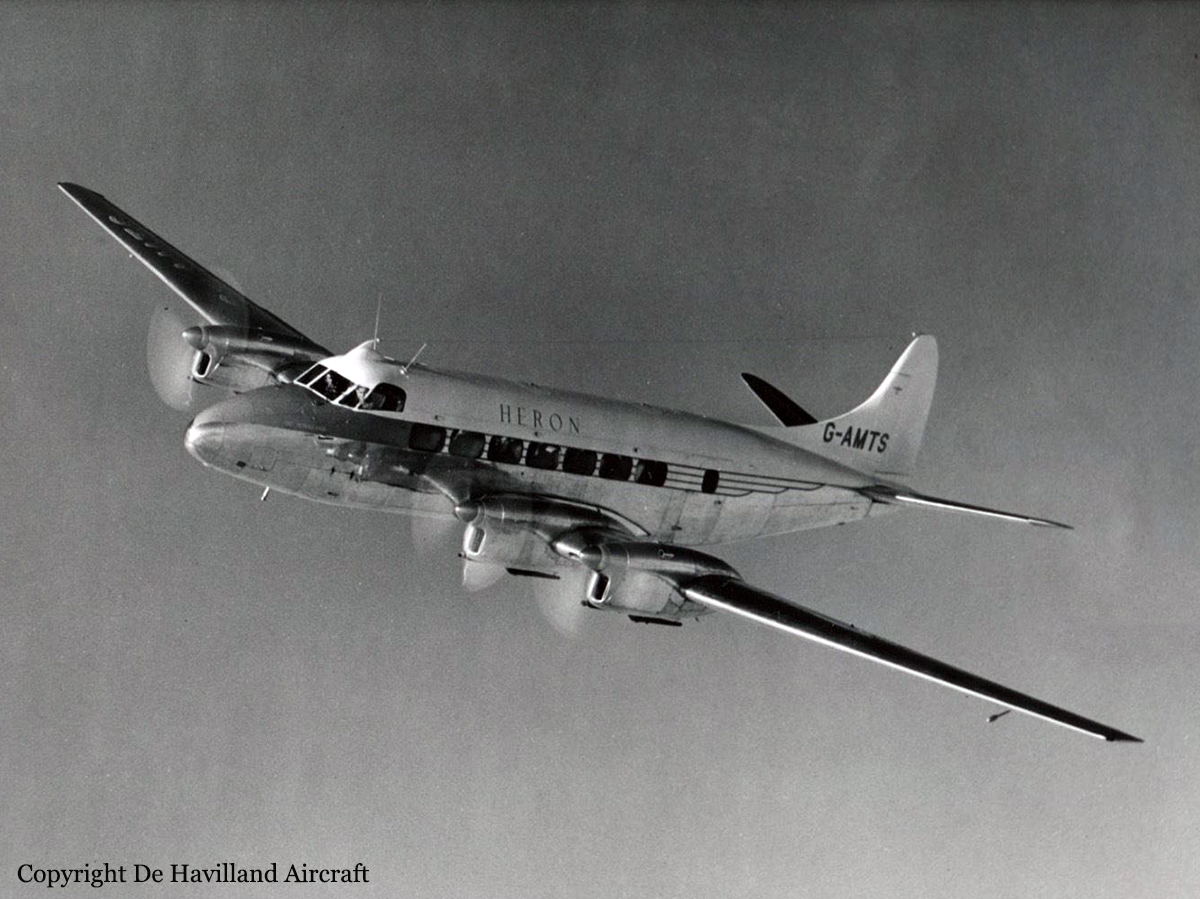
G-AMTS
Flight Phase:
Flight Type:
Survivors:
No
Schedule:
Biggin Hill - Biggin Hill
MSN:
14007
YOM:
1956
Region:
Crew on board:
2
Crew fatalities:
Pax on board:
0
Pax fatalities:
Other fatalities:
Total fatalities:
2
Circumstances:
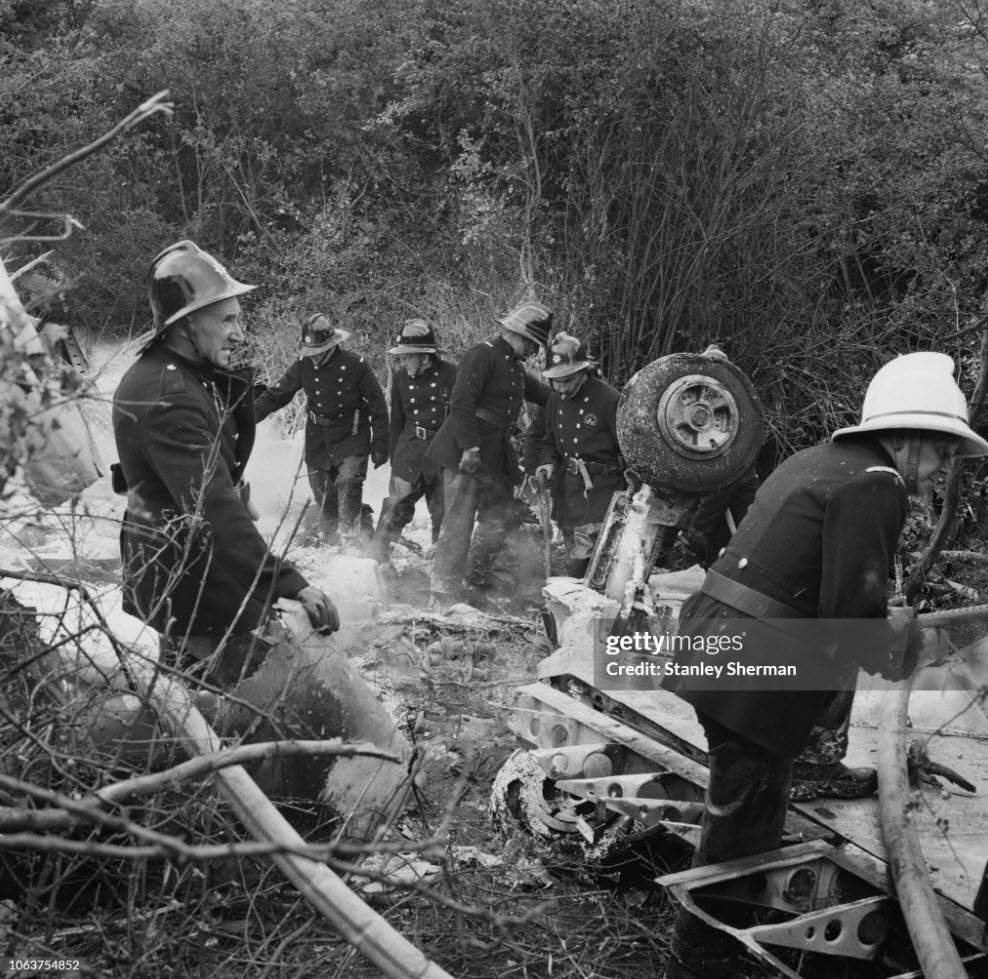
The crew was engaged in a local training flight at Biggin Hill. Following a stabilized approach with the engine number four voluntarily inoperative, the crew landed properly on runway, rolled for few dozen yards and increased power to takeoff. After liftoff, while in initial climb, the aircraft encountered difficulties to gain height and struck several trees and the roof of a house before crashing in flames in a field. The aircraft was destroyed and both crew members were killed.
Probable cause:
It was determined that the loss of control during initial climb was caused by a wrong takeoff configuration on part of the crew who forgot to position the flaps in a correct angle for takeoff. At impact, flaps were in the same full down position than during the landing procedure. As a result, the speed of the aircraft during the initial climb was too low, especially since the number four engine was inoperative.

Crash of Scottish Twin Pioneer in Kinlet

Date & Time: Jun 16, 1961
Operator:
Registration:
XL664
Flight Phase:
Flight Type:
Survivors:
Yes
Schedule:
Prestwick – Boscombe Down
MSN:
135
Region:
Crew on board:
1
Crew fatalities:
Pax on board:
0
Pax fatalities:
Other fatalities:
Total fatalities:
0
Circumstances:
On a delivery flight from Prestwick to RAF Boscombe Down, both engines failed. The pilot elected to restart the engine but without success and eventually decided to attempt an emergency landing in a field located in Kinlet, Shropshire. While descending, the airplane struck trees and crashed. The pilot was uninjured and the airplane was damaged beyond repair.
Probable cause:
It was determined that both engines stopped because the fuel selector was connected to an empty tank while the starboard tank was full. Also, the approach configuration adopted by the pilot was improper, causing the airplane to struck trees.

Crash of a Percival P.66 Pembroke C.1 at RAF East Fortune

Date & Time: May 26, 1961
Type of aircraft:
Operator:
Registration:
WV737
Flight Phase:
Flight Type:
Survivors:
Yes
Schedule:
East Fortune - Leuchars
MSN:
37
YOM:
1956
Region:
Crew on board:
2
Crew fatalities:
Pax on board:
0
Pax fatalities:
Other fatalities:
Total fatalities:
0
Circumstances:
The Pembroke took off from East Fortune to proceed to RAF Leuchars on 26th of May 1961 after flying from a NATO meeting in Paris with Air Vice Marshall R.B. Thompson and Air Vice Marshall R.H. Wright both men had just been set down at East Fortune. Soon after take off at around 2,000 feet that problem started, with North Berwick in view, only a short distance from the airfield, the port engine caught fire and blew up. The pilot, Flt Lt Munn, look out of the cockpit and found that the engine cowling and parts of the engine were missing and the engine was still burning. The pilot decided to crash land as soon as possible and with that he turned the aircraft hard to port to avoid crossing the coast and getting into even more danger. While doing this he closed both throttles (closing the starboard throttle by mistake) and started a rapid descent. The aircraft crash landed in a corn field close to Newhouse farm (near North Berwick) and only minor injuries were received by the pilot and copilot. Five minutes after leaving the aircraft the port inboard fuel tank exploded and the entire fuselage was gutted.
Source: https://aviation-safety.net/wikibase/wiki.php?id=145236
Probable cause:
Prime cause of the accident was Engine failure. This failure was caused by a hydraulic lock which took place only a short time before the failure. This was not found on the ground prior to take off due to a failure by the Pilot to comply with instructions in the relevant Aircraft Procedures. Contributory Hydraulic lock in No. 6 cylinder caused the break up in flight of the port engine.

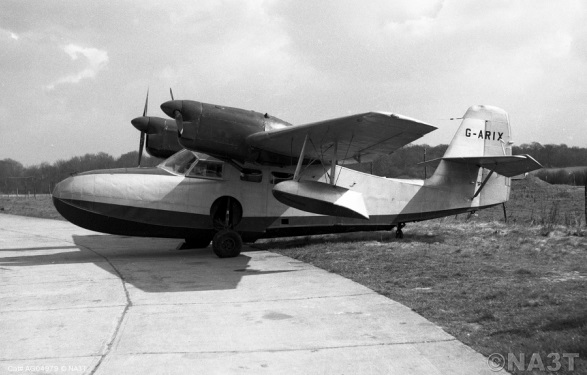
Crash of a SCAN-30 off Calshot

Date & Time: May 19, 1961
Type of aircraft:
Operator:
Registration:
G-ARIX
Flight Type:
Survivors:
Yes
MSN:
30
YOM:
1949
Region:
Crew on board:
0
Crew fatalities:
Pax on board:
0
Pax fatalities:
Other fatalities:
Total fatalities:
0
Circumstances:
Crashed while landing off Calshot. There were no injuries but the aircraft was lost.

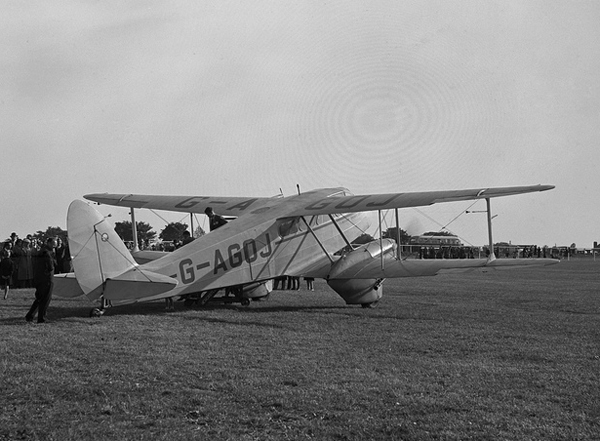
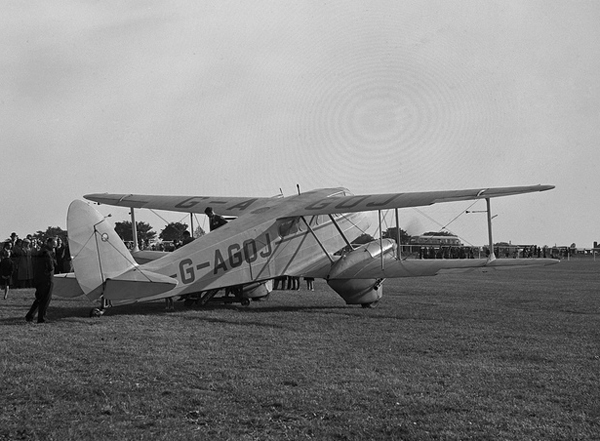
Crash of a De Havilland DH.89A Dragon Rapide in Lympne

Date & Time: May 1, 1961
Operator:
Registration:
G-AGOJ
Survivors:
Yes
MSN:
6850
YOM:
1945
Location:
Region:
Crew on board:
1
Crew fatalities:
Pax on board:
5
Pax fatalities:
Other fatalities:
Total fatalities:
0
Circumstances:
Landed hard, bounced and came to rest at Lympne Aerodrome, Kent. All six occupants were uninjured while the aircraft was damaged beyond repair.

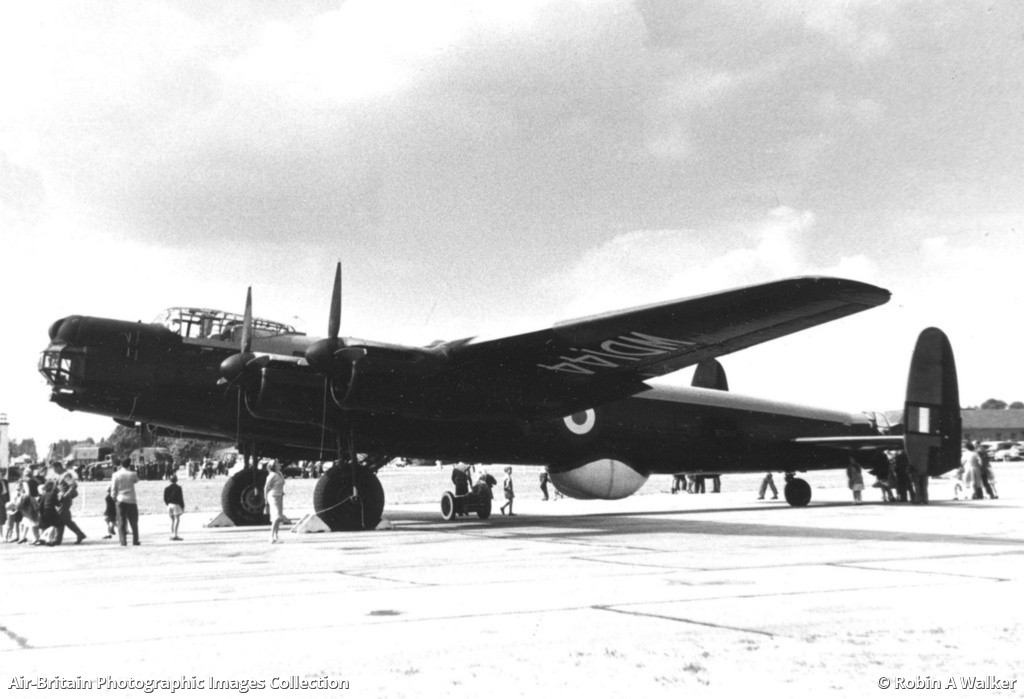
Crash of an Avro 694 Lincoln B.2 in Belfast

Date & Time: Mar 22, 1961
Type of aircraft:
Operator:
Registration:
WD144
Flight Type:
Survivors:
Yes
Schedule:
Belfast - Belfast
Region:
Crew on board:
4
Crew fatalities:
Pax on board:
0
Pax fatalities:
Other fatalities:
Total fatalities:
0
Circumstances:
The crew was completing a local training mission at Belfast-Aldergrove Airport. After several circuits, the crew started a new approach with an engine voluntarily inoperative. On final, height was lost and the airplane clip trees and crashed in a field located five miles short of runway. All four crew members were injured and the aircraft was damaged beyond repair. This was the last accident involving a RAF Avro Lincoln as this aircraft would be definitively retired from service after this accident.