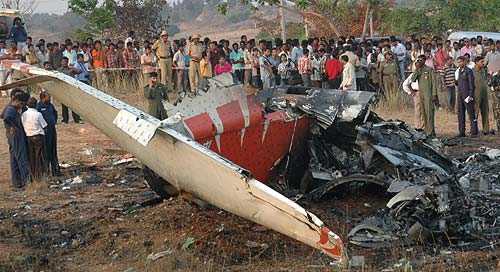
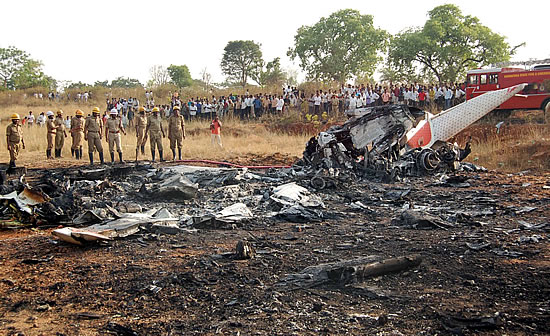
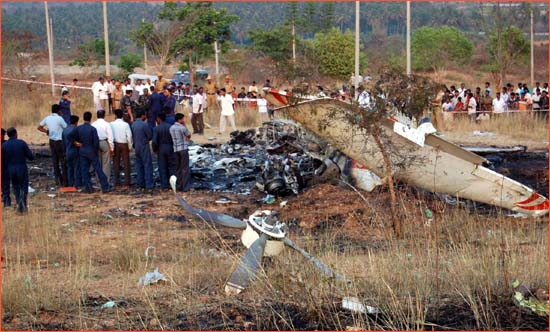
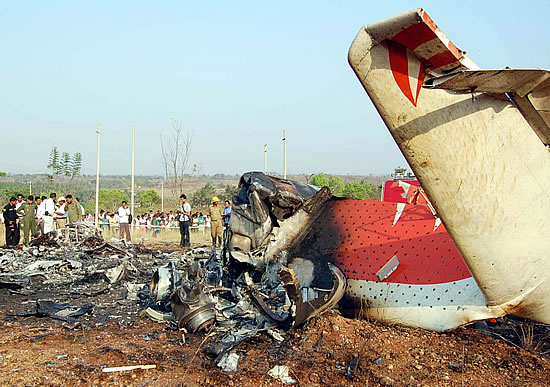
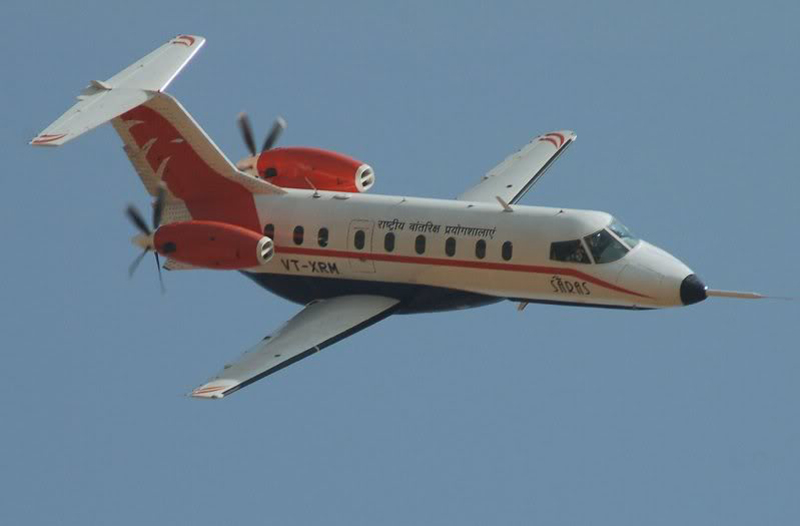
Crash of a NAL Saras near Bangalore: 3 killed

Date & Time: Mar 6, 2009 at 1534 LT
Type of aircraft:
Operator:
Registration:
VT-XRM
Flight Phase:
Flight Type:
Survivors:
No
Schedule:
Bangalore - Bangalore
MSN:
SP002
YOM:
2007
Country:
Region:
Crew on board:
3
Crew fatalities:
Pax on board:
3
Pax fatalities:
Other fatalities:
Total fatalities:
3
Captain / Total flying hours:
2414
Captain / Total hours on type:
310.00
Copilot / Total flying hours:
2080
Copilot / Total hours on type:
315
Aircraft flight hours:
50
Aircraft flight cycles:
49
Circumstances:
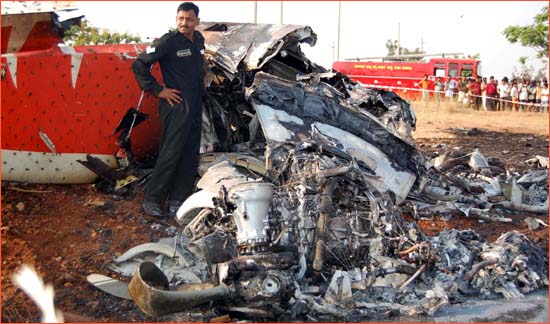
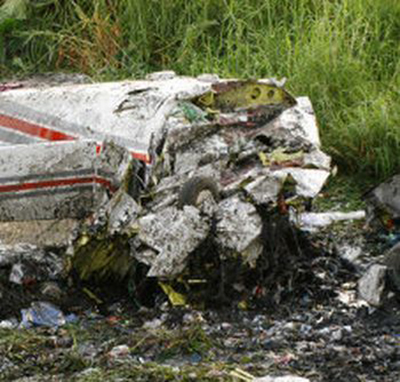
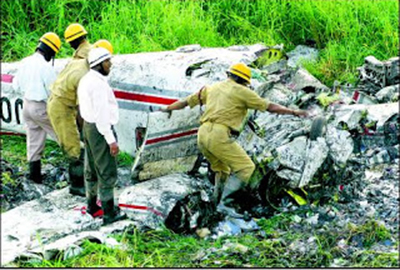
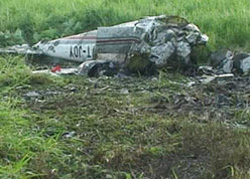
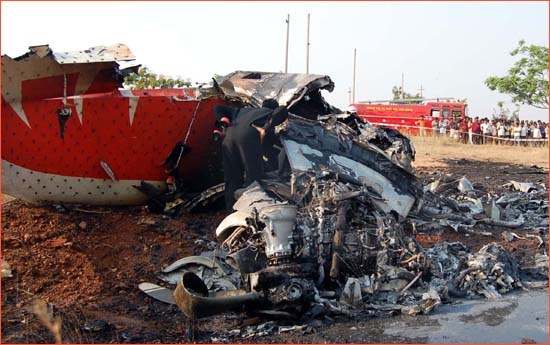
On 06.3.2009 Saras Prototype PT2 aircraft VT-XRM manufactured and owned by National Aerospace Laboratories, Bangalore was scheduled for carrying out its test flight n°49. Test flight programme includes general a ir tests/handling checks to ascertain the aircraft flying characteristics after the 50 hrs Scheduled servicing, dummy approach in simulated single engine configuration at 5000' AMSL, go around at 300' AGL in a simulated one engine inoperative condition, landing in a simulated one engine inoperative condition and to carry out in-flight engine shut down and relight procedure at 10000' AMSL within 130 - 150 kts speed. Tests are to be carried out as per existing SOP and test procedures and limitations and pre flight test briefing meeting. Aircraft was cleared by approved inspectors of NAL after carrying out daily inspection on 6.3.2009 for test flight n°49 and was duly accepted by the Chief test pilot. Preflight briefing was taken by the Wg Cdr (22917-S), F(P), chief test pilot was on commander seat , Wg Cdr (23165-H), F(P) - test pilot was on co-pilot seat and Sqn Ldr (24746-M), AE(M) was on Flight test engineer on board. The test team also accepted flight test schedule of flight n°49. Total duration of the tests was estimated to about 45 minutes. Engines were started at 0913 UTC at ASTE, dispersal area . All engine parameters were reported normal. After carrying out post startup and pre taxi checks, aircraft taxied out for Runway 09 at HAL airport. As pe r departure instructions after departure R/W 09 aircraft to climb on R/W heading 5000’, turn right set course to southwest -2 and in coordination with approach radar to operate upto 10 miles and level 100. Aircraft was cleared for takeoff from R/W 09 with surface wind 090º/06kts. Aircraft took-off at 0925 UTC and changed over to radar at 0926 UTC. There was no event. Aircraft was then cleared to level 100, operating up to 10 miles. After completing general handling checks at 9000’ AMSL without any events, Aircraft was stabilized with simulated single engine approach to the landing r/w 09. Single engine simulated approach was carried out. At about 0941 UTC aircraft was cleared for overshoot, wind 090/06 kts. Aircraft made overshoot at 300’ AGL. Aircraft was then changed over to radar again. At 0942 UTC aircraft was cleared to climb level 100 and proceed sector southwest 2. Aircraft right engine was throttled up to match left engine and aircraft climbed out to 9000’ AMSL in sector southwest. At about 0948 UTC aircraft reported 15 miles and FL90 and reported turning around. But HAL radar as well as BIAL radar showing level was 72 for which aircraft replied that it has descended and climbing back to 9000’ AMSL. At about 0955 UTC aircraft reported “OPS NORMAL” at 20 Nm in sector southwest 2. This was the last contact by aircraft with radar. After 0955 UTC Radar contact with the aircraft was completely lost. As per ASTE Telemetry, after turned round to point towards HAL airfield aircraft was observed about 20 miles at 9000’ AMSL with 140 kts speed. Telemetry link was good at this position Left engine was then shut down and secured following the test procedure at about 10:00:40 UTC. Pilot was in touch with Flight test director on R/T at telemetry desk. After about 47 secs, left engine relight procedure was initiated at around 9200’ AMSL. Pilot also reported to Telemetry the start of relight of the engine. Telemetry indications also showed the rise in Ng and ITT. At about 100 secs prior to crash aircraft went into sudden dive from 9200’ to 7300’ for about 13 secs. Meanwhile During the relighting of left engine, FTD desk also lost RT contact with aircraft about 37 secs prior to crash and telemetry link with the aircraft was also intermittent. At 37 secs prior to crash when Telemetry called aircraft “ can you call up. What is going on”, aircraft replied “Standby” this was the last contact of Telemetry with aircraft. After that there was no contact from the pilot. Just before 7 secs of crash when the telemetry data signal was restored aircraft already lost to the height of 4260’ AMSL(1900’AGL) and in continuous loss of height and Ng was about 31%. There was no response from pilots even after repeated calls from FTD desk. Aircraft was rapidly losing the height without any control. Cockpit voice recording clearly showed that on last moments just 10 secs prior to crash ,commander called out “ Aircraft has departed” indicating aircraft completely gone out of control. During the last moment of crash telemetry recorded Ng : about 54% (63% as per FDR), Engine oil pressure 88, fuel flow 94%,ITT 647 deg C, indicating engine relight was successful. But by the time aircraft was almost on ground. Aircraft crashed at about 1004 UTC (10:03:44). All possible communication means including through en -route traffic to contact the aircraft went in vain. Search operation by ALH helicopter (A67) ,Chetak(T45) and T55 was effected. At about 1033 UTC police control room reported that an aircraft had crashed near Bidadi. After extensive search efforts, at about 1100 UTC, A67 found out the crash site having bearing 251° and 17 Nm from HAL airport. Later it was affirmed that the aircraft crashed at a village called Sehsagirihalli (close to wonderland amusement park) near Bidadi and 37 km by road(off Mysore road) Southwest of HAL airport, Bangalore. The crash site was a wide -open residential plot area of uneven hard terrain surrounded by poles and wild plants. It was on a radial of 251° /17 NM from HAL, Bangalore airport having coordinates LAT : N12° 50’56”, LONG: E077° 23’46”). All the three persons on board were charred to death and were on their seats. There was post impact fire. Aircraft fuselage was broken from rear of the main plane and found in an inverted position. The vertical fin leading edge was facing the ground and the respective tail mounted engines by the side of it. The nose portion of the aircraft was facing East direction. Aircraft was completely destroyed due impact and fire.
Probable cause:
Incorrect relight procedure devised by the designer and adopted by the crew at insufficient height leading to rapid loss of altitude and abnormal behavior of aircraft resulted into accident.
Contributory factors:
a) Lack of crew coordination and cockpit procedures,
b) Handling of the controls,
c) Non-aborting of flight by the crew in coordination with the flight test Director after failure of first relight attempt,
d) Devising engine relight procedures by NAL without consulting the propeller manufacturer.
Final Report:
Crash of a Beechcraft C90 King Air in Chandigarh: 2 killed

Date & Time: Oct 29, 2008 at 1125 LT
Type of aircraft:
Operator:
Registration:
VT-EHY
Flight Type:
Survivors:
No
Schedule:
Chandigarh - Ludhiana
MSN:
LJ-1008
YOM:
1982
Location:
Country:
Region:
Crew on board:
2
Crew fatalities:
Pax on board:
0
Pax fatalities:
Other fatalities:
Total fatalities:
2
Captain / Total flying hours:
3152
Captain / Total hours on type:
9.00
Copilot / Total flying hours:
664
Copilot / Total hours on type:
13
Aircraft flight hours:
6530
Circumstances:
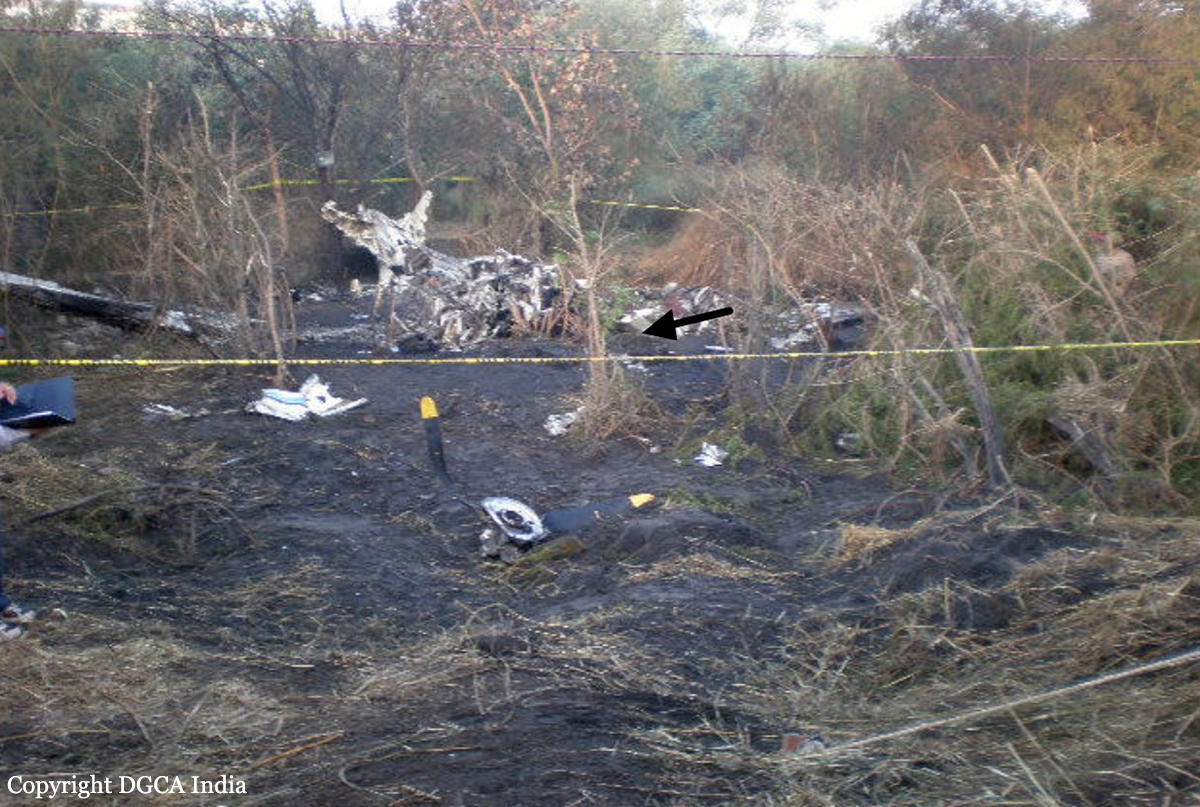
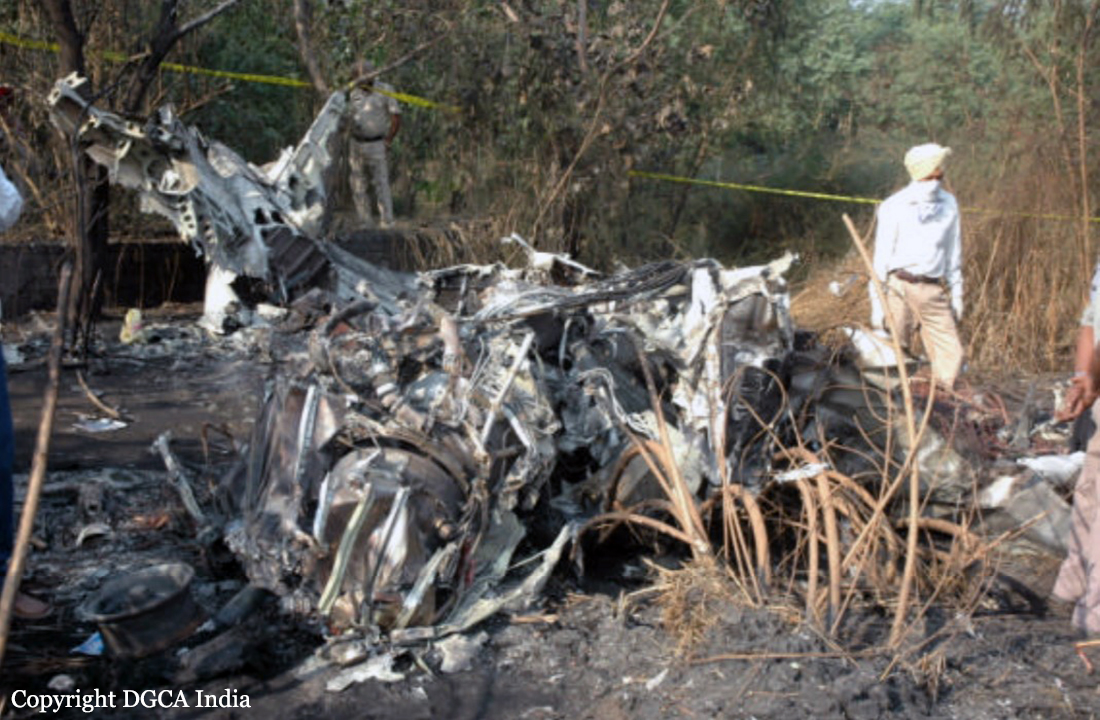
On 29.10.2008 Punjab Government King Air C90 aircraft, VT-EHY met with an accident while operating flight from Chandigarh to Ludhiana. This accident was notified to DGCA by ATC at Ludhiana and Punjab Government officials shortly after the occurrence. The accident occurred when the aircraft was in the process of making second attempt for landing at Ludhiana Airport. The accident was investigated by Inspector of Accident under Rule 71 of Aircraft Rules, 1937. As per the obligations under ICAO Annex 13, notification was sent to USA, the country of aircraft manufacture, Canada, the country of engine manufacture and ICAO. Transport Safety Board Canada appointed an accredited representative and authorized engine manufacturer M/s P&W to associate with investigation of engines. Low visibility conditions were prevailing at Ludhiana at the time of accident. Due to which the crew located the runway late. They were estimating their position based on GPS. Though they did spot the runway at some stage of the approach, they lost sight of it again and were unable to locate it subsequently. They carried out orbits on the right side (East Side) of R/w 12 in an effort to visually locate the runway and then followed non standard procedure to land. Not comfortable with the approach, the crew decided to go around. Due to low visibility and that they probably did not want to lose the sight of the airfield, carried out non-standard go around. In their anxiety not to lose the sight of the field they descended in three orbits in the vicinity of the airfield on the west side of R/w 12, perhaps to land after making the short circuit from the right. However, due to smoke in the cockpit, severe disorientation, lack of qualification & experience on type of aircraft and on sighting the communication tower, the panic gripped the crew. In their anxiety, the control was lost and aircraft impacted the ground in the steep left bank. Aircraft was destroyed in the crash due to impact and post impact fire. Both the occupant on board died due to fire and collapsing aircraft structure.
Probable cause:
The accident occurred due to loss of control while in base leg for landing at R/W 12 after executing go around on R/W 12.
Contributory Factors:
1) Low visibility reduced the margin of safety, may have caused severe disorientation, influenced their decision and played on crew for use of non standard procedures.
2) Both the crew lacked qualification/experience and familiarity with the type of aircraft and terrain.
3) Smoke in the cockpit further reduced the margin of safety and distracted the attention of the crew.
4) Obstruction in the flight path made the crew to take severe action and led to loss of control.
5) Lack of operational control and supervision by the organisation.
Final Report:

Crash of a Raytheon Premier in Udaipur

Date & Time: Mar 19, 2008 at 1507 LT
Type of aircraft:
Registration:
VT-RAL
Survivors:
Yes
Schedule:
Jodhpur - Udaipur
MSN:
RB-23
YOM:
2001
Country:
Region:
Crew on board:
2
Crew fatalities:
Pax on board:
5
Pax fatalities:
Other fatalities:
Total fatalities:
0
Captain / Total flying hours:
2900
Captain / Total hours on type:
40.00
Copilot / Total flying hours:
896
Copilot / Total hours on type:
58
Aircraft flight hours:
989
Aircraft flight cycles:
812
Circumstances:
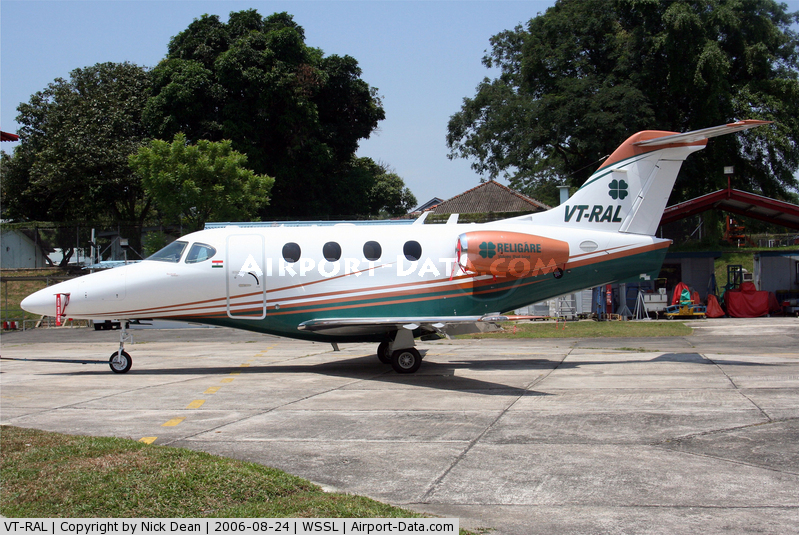
The aircraft, after necessary met and ATC briefing took off at 0940 UTC from Jodhpur on direct route W58 at cruise FL 100 and sector EET 20 minutes as per Flight Plan. No abnormality was reported / recorded by the pilot during take off from Jodhpur. The crewmember of the aircraft while operating Jodhpur–Udaipur were the same who operated flight Delhi-Jodhpur on 18.3.2008. There were five passengers also on board the aircraft. The aircraft climbed to the assigned level where the pilot was experiencing continuous turbulence at FL100. The pilot communicated the same to the ATC Jodhpur and requested for higher level which was not granted and advised to continue at same level and contact ATC Udaipur for level change. It came in contact with Udaipur at 0944 UTC, approx 50 NM from Udaipur. At 0948 the weather passed by ATC was winds 180/07 kts. Vis 6 km. Temp 34, QNH 1006 Hpa and advised for ILS approach on runway 26. Consequently the pilot requested to make right base Rwy 26 visual approach, which was approved by the ATC. Aircraft did not report any defect/snag. Pilot further stated that during approach to land at Udaipur when flap 10 degree was selected, the flap didn’t respond and ‘Flaps-Fail’ message flashed. Thereafter he carried out the check list for flapless landing. At 1004 UTC when the aircraft reported on final the ATC cleared the aircraft to land on runway 26 with prevailing wind 230/10 Kts. The same was acknowledged by the crew and initiated landing. At about 20 to 30 feet above ground the pilot stated to have experienced sudden down-draft thereby the aircraft touched down heavily on the runway. The touch-down was on the centerline, at just before the touchdown Zone (TDZ), on the paved runway, after the threshold point. Consequent to the heavy impact both the main wheel tyre got burst; first to burst was right tyre. The aircraft rolled on the runway centerline for a length of about 1,000 feet in the same condition. Thereafter it gradually veered to the right of the runway 26 at distance of approx 2,200 feet runway length from the threshold of the runway. The aircraft left the runway shoulder and after rolling almost straight for another 90 ft it stopped after impact with the airport boundary wall.
Probable cause:
The approach speed for flapless landing was about 149 knots against the calculated speed 130-135 knots approx. Incident occurred as the aircraft impacted runway with higher speed while carrying out flapless approach and landing.
Final Report:
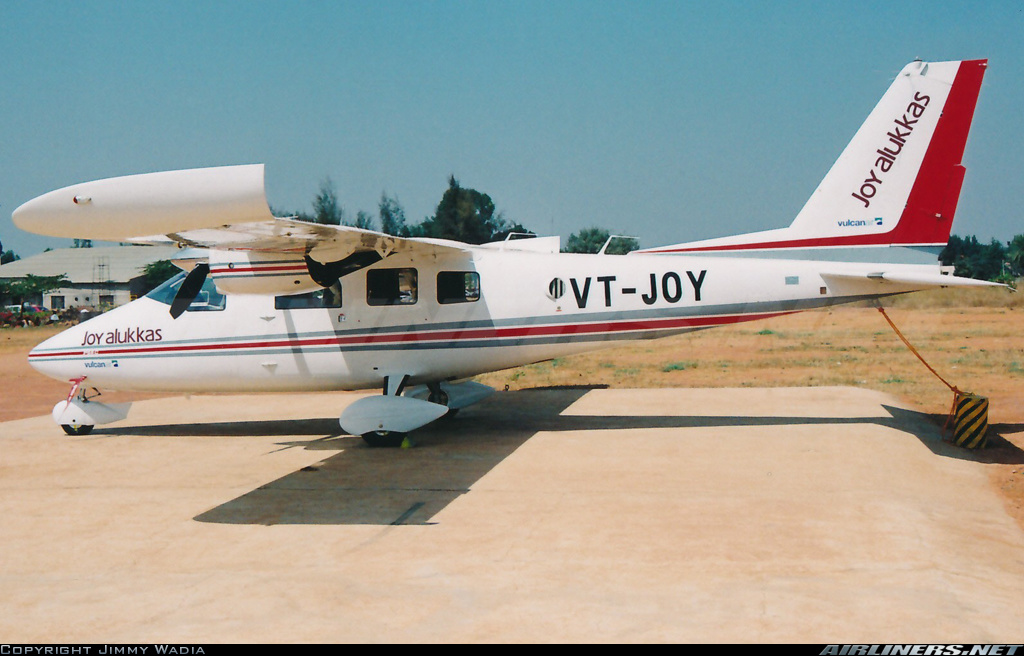
Crash of a Partenavia P.68C Victor in Bangalore: 4 killed

Date & Time: Sep 8, 2007 at 1520 LT
Type of aircraft:
Operator:
Registration:
VT-JOY
Flight Phase:
Survivors:
No
Schedule:
Bangalore – Cochin
MSN:
436
YOM:
2004
Country:
Region:
Crew on board:
1
Crew fatalities:
Pax on board:
3
Pax fatalities:
Other fatalities:
Total fatalities:
4
Captain / Total flying hours:
3140
Circumstances:
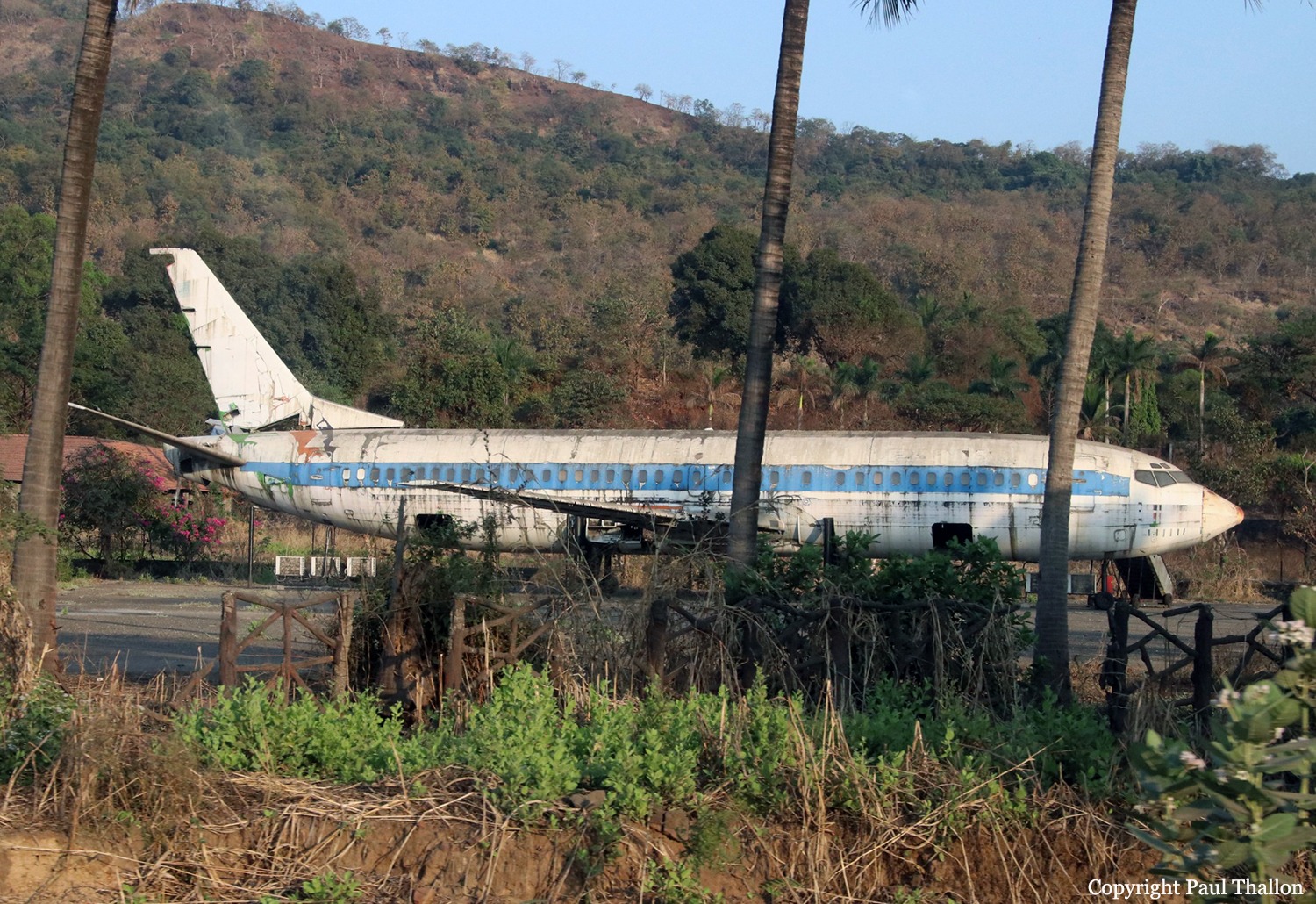
The aircraft departed Bangalore-Hindustan Airport runway 27 at 1514LT on a flight to Cochin with 3 passengers and one pilot on board. Six minutes after takeoff, the pilot reported technical problems and elected to return for an emergency landing. However, the aircraft entered an uncontrolled descent and crashed in the lakebed of the Gawdanapalya Lake located about 9 km southwest of the airport. The aircraft was destroyed and all four occupants were killed.
Probable cause:
Engine power loss during initial climb after the aircraft had been refueled with Jet fuel instead of Avgas 100LL.
The following contributing factors were identified:
- The low experience of the pilot on type,
- The non-compliance of correct refueling procedure and its supervision by IOC personnel and pilot or operator's representative.
Final Report:
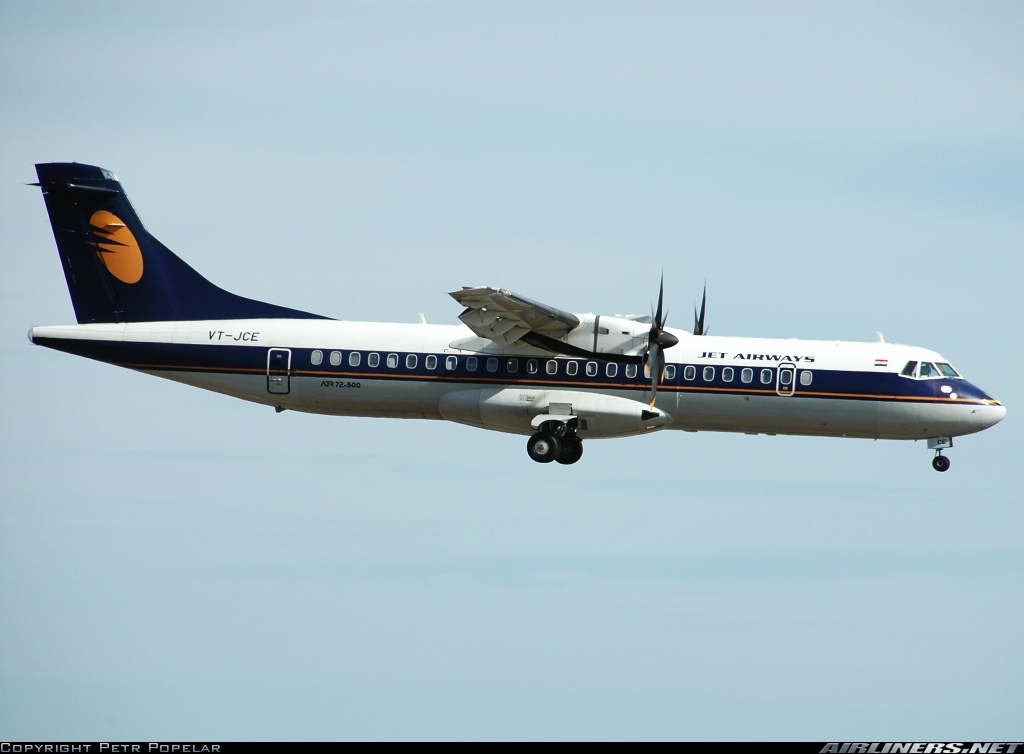
Crash of an ATR72-212A in Indore

Date & Time: Jul 1, 2007 at 1946 LT
Type of aircraft:
Operator:
Registration:
VT-JCE
Survivors:
Yes
Schedule:
Bhopal - Indore
MSN:
640
YOM:
2000
Flight number:
JAI3307
Country:
Region:
Crew on board:
4
Crew fatalities:
Pax on board:
49
Pax fatalities:
Other fatalities:
Total fatalities:
0
Captain / Total flying hours:
10169
Circumstances:
The flight up-till approach to land at Indore was normal. On coming to the runway the aircraft touched down moderately hard and bounced high. The pilots were perhaps determined to salvage the abnormal situation and added power to the engines with intention to cushion the sink-rate and settle the runway. On the contrary, the aircraft came hard on the runway and bounced once again. This got followed with a series of bounces in succession. While bouncing the aircraft migrated from the runway and finally came to full halt on right side close to the airport boundary wall. There was no fire in the accident. All 53 occupants evacuated safely.
Probable cause:
The pilot-in-command in absence of bounce recovery guidance adopted self-perceived technique and kept on adding engine power along with aircraft pitch manipulations to salvage the aircraft from the bounce on landing, and gravely damaged the aircraft structure.
Final Report:

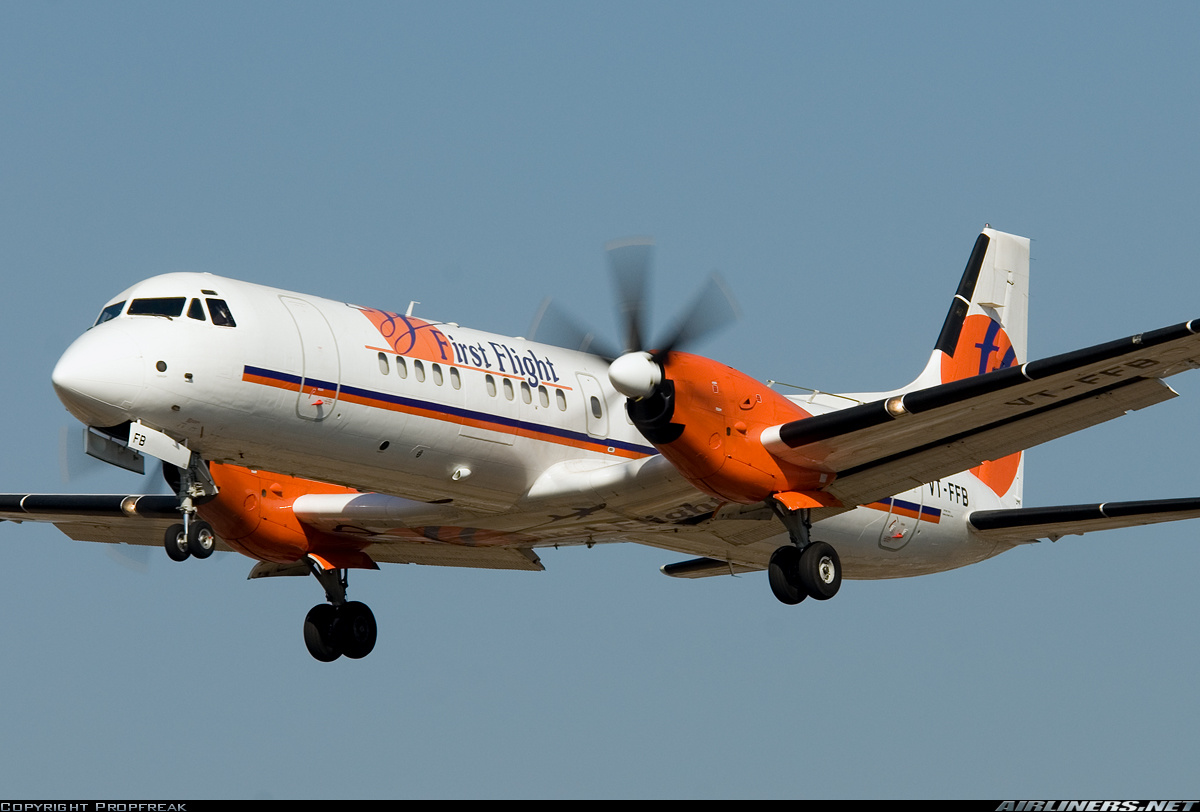
Crash of a BAe ATP in Chennai

Date & Time: Jun 15, 2007 at 0850 LT
Type of aircraft:
Operator:
Registration:
VT-FFB
Flight Type:
Survivors:
Yes
Schedule:
Bombay – Bangalore – Madras
MSN:
2039
YOM:
1991
Country:
Region:
Crew on board:
2
Crew fatalities:
Pax on board:
0
Pax fatalities:
Other fatalities:
Total fatalities:
0
Circumstances:
The crew was completing a cargo flight from Bombay to Madras with an intermediate stop in Bangalore. On final approach to Madras Airport, the aircraft nosed down and landed nose first. Upon impact, the nose gear collapsed and the aircraft slid on its nose for few dozen metres before coming to rest. A fire erupted but was quickly extinguished. Both pilots escaped uninjured while the aircraft was damaged beyond repair.

Crash of a Britten-Norman BN-2T Islander in Veloor

Date & Time: Nov 11, 2006 at 0940 LT
Type of aircraft:
Operator:
Registration:
IN135
Flight Phase:
Flight Type:
Survivors:
Yes
MSN:
888
YOM:
1981
Location:
Country:
Region:
Crew on board:
2
Crew fatalities:
Pax on board:
3
Pax fatalities:
Other fatalities:
Total fatalities:
0
Circumstances:
Few minutes after takeoff from Cochin NAS, the crew encountered engine problems and elected to make an emergency landing when the aircraft crash landed in a marshy field located near Veloor. All five occupants escaped uninjured while the aircraft was damaged beyond repair.

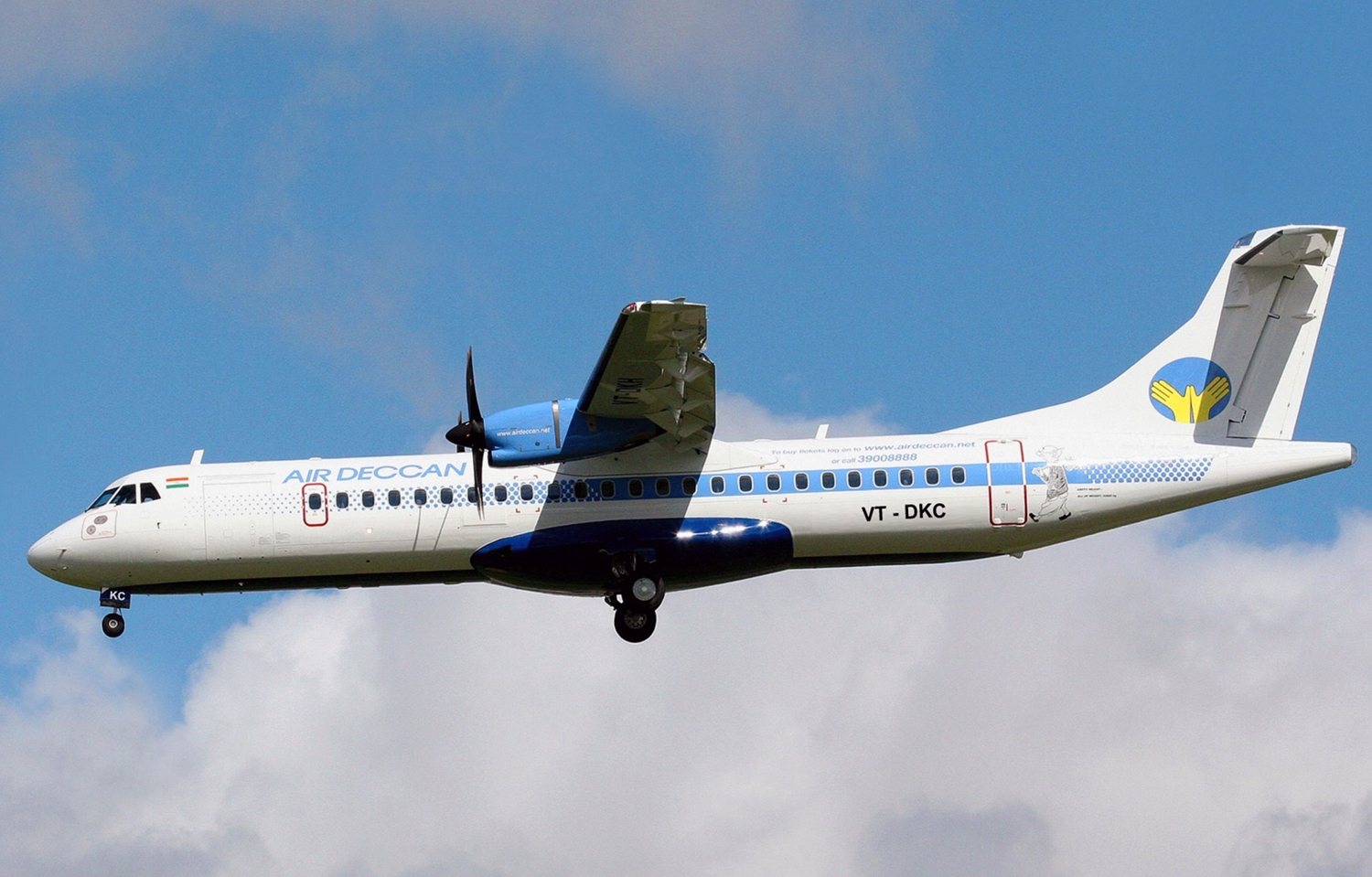
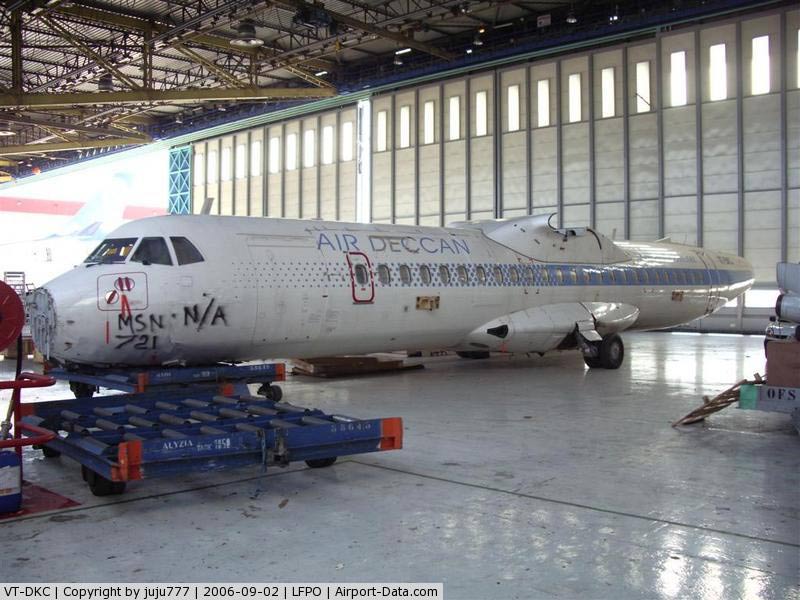
Crash of an ATR72-212A in Bangalore

Date & Time: Mar 11, 2006 at 1017 LT
Type of aircraft:
Operator:
Registration:
VT-DKC
Survivors:
Yes
Schedule:
Coimbatore – Bangalore
MSN:
721
YOM:
2005
Flight number:
DN108
Country:
Region:
Crew on board:
4
Crew fatalities:
Pax on board:
40
Pax fatalities:
Other fatalities:
Total fatalities:
0
Circumstances:
The twin engine aircraft landed hard on runway 27 at Bangalore-Hindustan Airport. After touchdown, it veered off runway and came to rest. All 44 occupants escaped uninjured while the aircraft was damaged beyond repair. Brand new, it was delivered four months ago.

Crash of a Boeing 737-4Q8 in Mumbai

Date & Time: Oct 9, 2005 at 1920 LT
Type of aircraft:
Operator:
Registration:
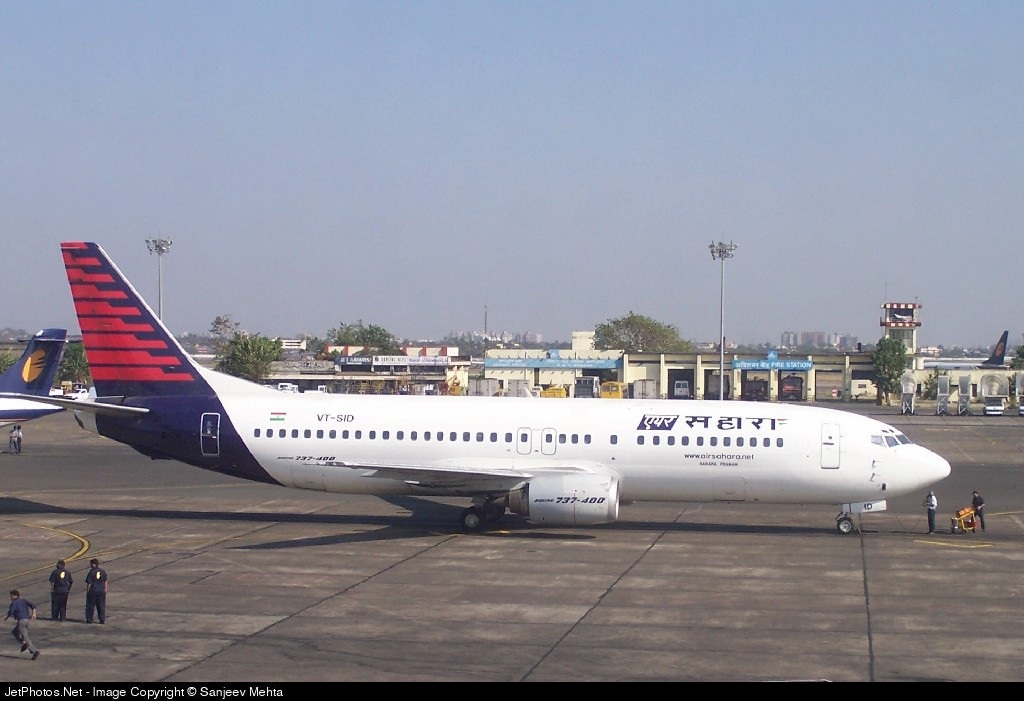
VT-SID
Survivors:
Yes
Schedule:
Calcutta - Mumbai
MSN:
24705
YOM:
1990
Flight number:
RSH117
Country:
Region:
Crew on board:
6
Crew fatalities:
Pax on board:
111
Pax fatalities:
Other fatalities:
Total fatalities:
0
Circumstances:
Following an uneventful flight from Calcutta, the aircraft landed at Mumbai-Chhatrapati Shivaji Airport runway 27. Unable to stop within the remaining distance, the aircraft overran and came to rest few dozen metres further. All 117 occupants evacuated safely while the aircraft was damaged beyond repair.

Crash of a Cessna 340 in Bangalore

Date & Time: Jul 16, 2005 at 1150 LT
Type of aircraft:
Operator:
Registration:
N888HB
Flight Phase:
Flight Type:
Survivors:
Yes
MSN:
340-0101
YOM:
1972
Country:
Region:
Crew on board:
2
Crew fatalities:
Pax on board:
0
Pax fatalities:
Other fatalities:
Total fatalities:
0
Circumstances:
Shortly after takeoff from Bangalore-Jakkur Airport runway 08, while in initial climb, the aircraft suffered an engine failure. It stalled and crashed in shallow water in Jakkur Lake, about one km northeast of the aerodrome. Both pilots were rescued and the aircraft was damaged beyond repair.
Probable cause:
Engine failure for unknown reasons.