Crash of a Beechcraft C90 King Air in Olivar

Date & Time: Sep 13, 2025
Type of aircraft:
Operator:
Registration:
CC-AHN
Flight Phase:
Flight Type:
Survivors:
Yes
Site:
Schedule:
Puerto Montt – Santiago
MSN:
LJ-517
YOM:
1971
Country:
Crew on board:
2
Crew fatalities:
Pax on board:
2
Pax fatalities:
Other fatalities:
Total fatalities:
0
Circumstances:
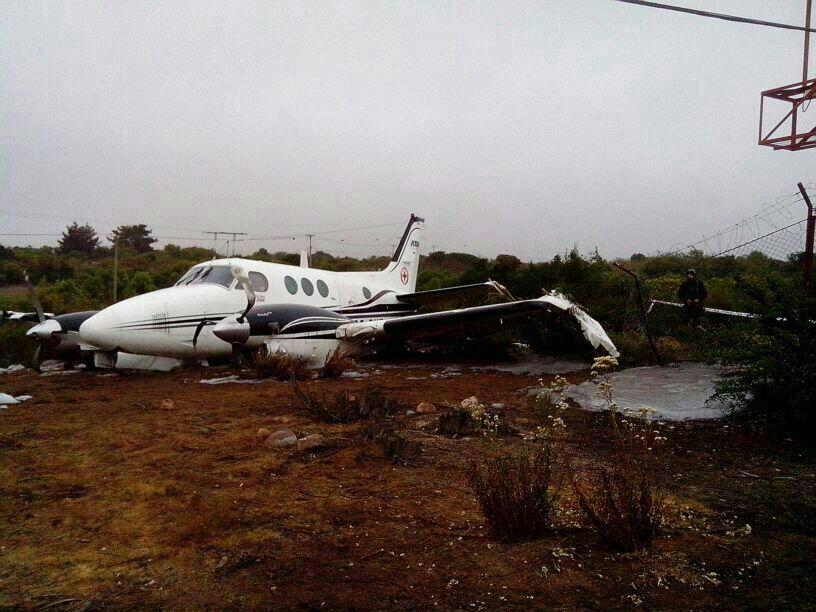
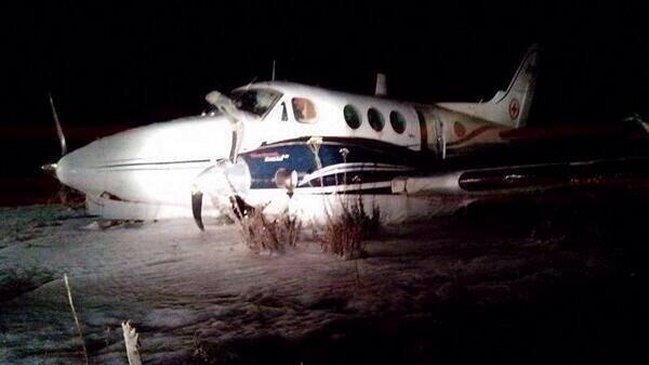
While on an ambulance flight from Puerto Montt to Santiago, the crew encountered an unexpected situation and was forced to attempt an emergency landing. In the early morning, the twin engine airplane collided with a fence and crashed in a private garden located in Olivar, some 93 km south of Santiago-Arturo Merino Benitez Airport. All four occupants were evacuated with various injuries and the airplane was damaged beyond repair.


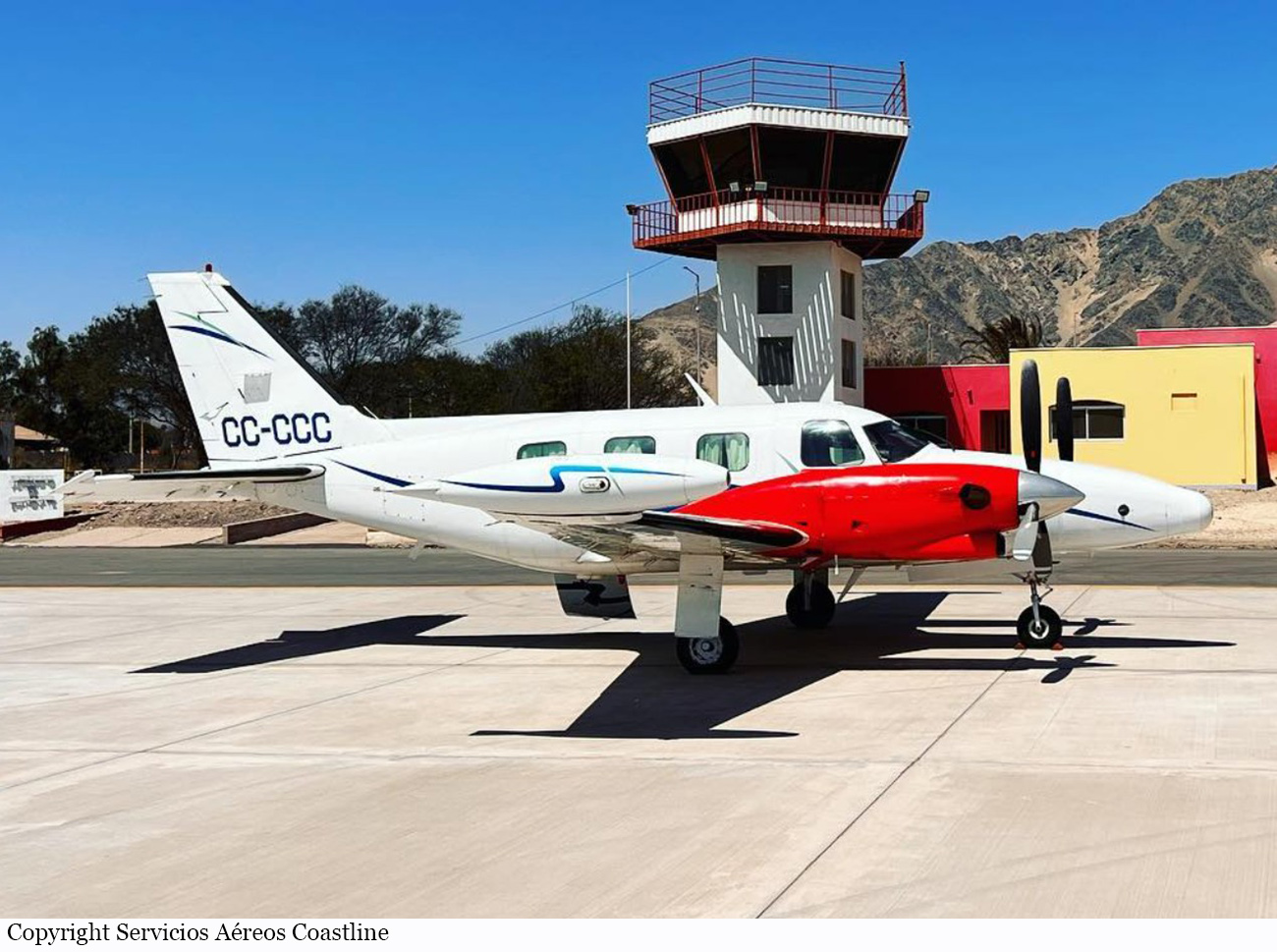
Crash of a Piper PA-31T Cheyenne II near Curacaví: 6 killed

Date & Time: May 7, 2025 at 1929 LT
Type of aircraft:
Operator:
Registration:
CC-CCC
Flight Phase:
Flight Type:
Survivors:
No
Site:
Schedule:
Santiago - Arica
MSN:
31-7920082
YOM:
1979
Country:
Crew on board:
2
Crew fatalities:
Pax on board:
4
Pax fatalities:
Other fatalities:
Total fatalities:
6
Circumstances:
The twin engine airplane departed Santiago-Comodoro Arturo Merino Benítez Airport at 1916LT on an ambulance flight to Arica. On board were one patient, three medics and two pilots. After departure, the airplane continued to the west then headed to the north and climbed to an altitude of 15,000 feet when the crew apparently encountered technical problems. About 13 minutes into the flight, the airplane impacted the slope of a mountain near Curacaví. The wreckage was spotted by the crew of a Chilean Air Force Black Hawk the following afternoon. The airplane was totally destroyed and all six occupants were killed.

Crash of a Beechcraft B90 King Air in Viña del Mar

Date & Time: Dec 19, 2013 at 2100 LT
Type of aircraft:
Operator:
Registration:
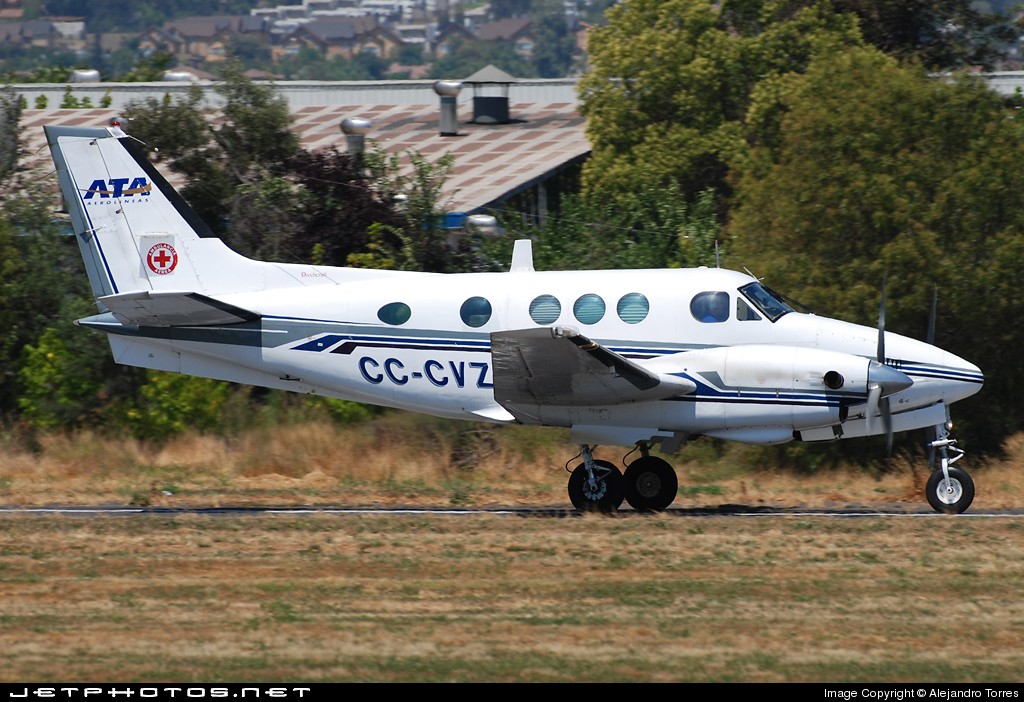
CC-CVZ
Flight Type:
Survivors:
Yes
Schedule:
Viña del Mar - Santiago de Chile
MSN:
LJ-441
YOM:
1969
Country:
Crew on board:
2
Crew fatalities:
Pax on board:
0
Pax fatalities:
Other fatalities:
Total fatalities:
0
Captain / Total flying hours:
15844
Captain / Total hours on type:
4000.00
Copilot / Total flying hours:
10367
Copilot / Total hours on type:
17
Aircraft flight hours:
8870
Circumstances:
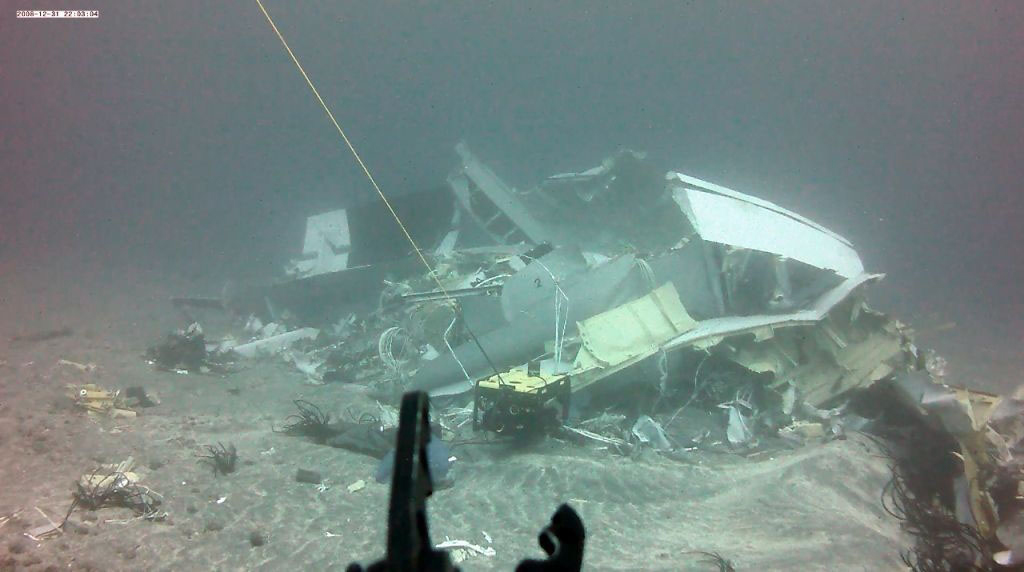
The crew departed Viña del Mar-Torquemada Airport on a positioning flight to Santiago de Chile. Shortly after takeoff, the crew encountered technical problems and elected to return. On approach, both engines failed and on short final by night, the aircraft stalled and crashed 450 metres short of runway 05. Both pilots escaped uninjured and the aircraft was damaged beyond repair.
Probable cause:
Both engines stopped during flight due to fuel exhaustion as the main fuel tanks were empty. It was not possible for the crew to transfer fuel from the auxiliary tanks (wing tips) due to the intermittent function of the fuel pump.
Final Report:

Crash of a Beechcraft 350 Super King Air in Puerto Aguirre: 8 killed

Date & Time: Mar 22, 2012 at 0056 LT
Operator:
Registration:
CC-AEB
Flight Phase:
Flight Type:
Survivors:
No
Site:
Schedule:
Punta Arenas - Santiago
MSN:
FL-128
YOM:
1995
Country:
Crew on board:
2
Crew fatalities:
Pax on board:
6
Pax fatalities:
Other fatalities:
Total fatalities:
8
Captain / Total flying hours:
2578
Captain / Total hours on type:
61.00
Copilot / Total flying hours:
2296
Copilot / Total hours on type:
118
Aircraft flight hours:
6218
Circumstances:
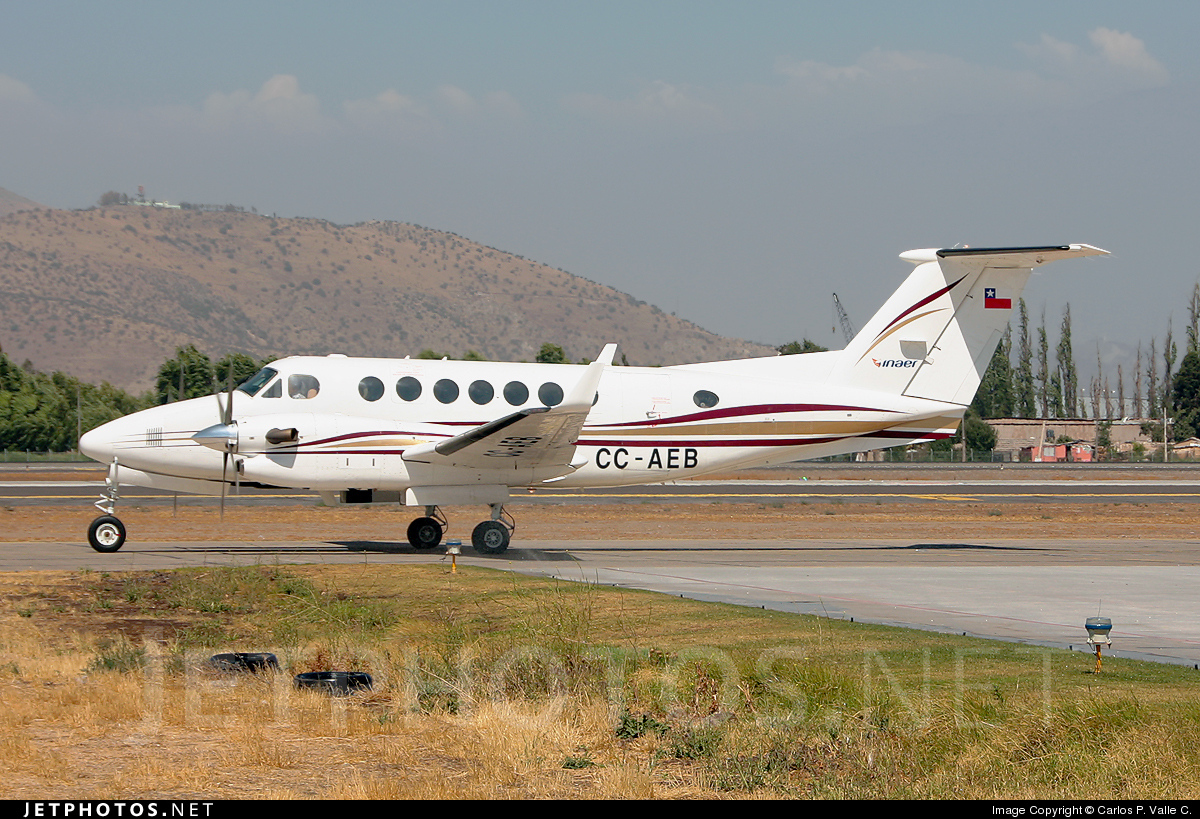
The twin engine aircraft was performing an ambulance flight from Puntas Arenas to Santiago with two pilots on board, one patient, three doctors and two relatives. Following an uneventful flight at FL280, the crew was cleared to descend when the aircraft entered an uncontrolled descent while the crew was in contact with Puerto Montt ATC. The aircraft dove into the ground and crashed on the north slope of the Macá volcano, some 10 km northeast of Puerto Aguirre. The wreckage was found in the morning of March 24 at an altitude of 2,347 metres. The aircraft disintegrated and all 8 occupants were killed.
Probable cause:
The exact cause of the accident could not be determined.
Final Report:

Crash of a Casa 212 Aviocar 300DF off Robinson Crusoe Island: 21 killed

Date & Time: Sep 2, 2011 at 1748 LT
Type of aircraft:
Operator:
Registration:
966
Flight Type:
Survivors:
No
Schedule:
Santiago - Robinson Crusoe Island
MSN:
443
YOM:
1994
Country:
Crew on board:
4
Crew fatalities:
Pax on board:
17
Pax fatalities:
Other fatalities:
Total fatalities:
21
Circumstances:
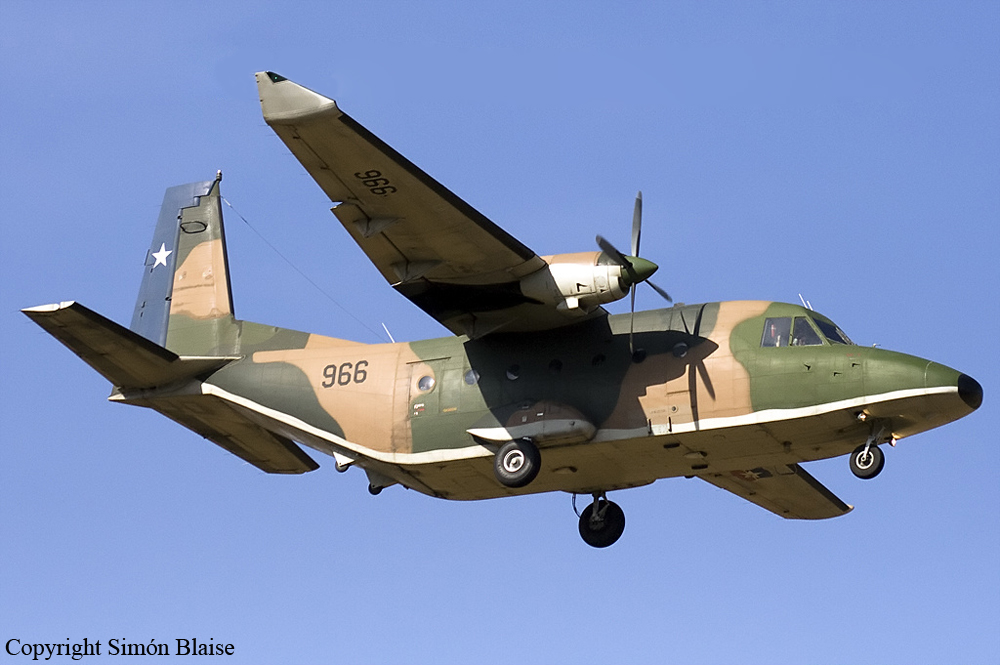
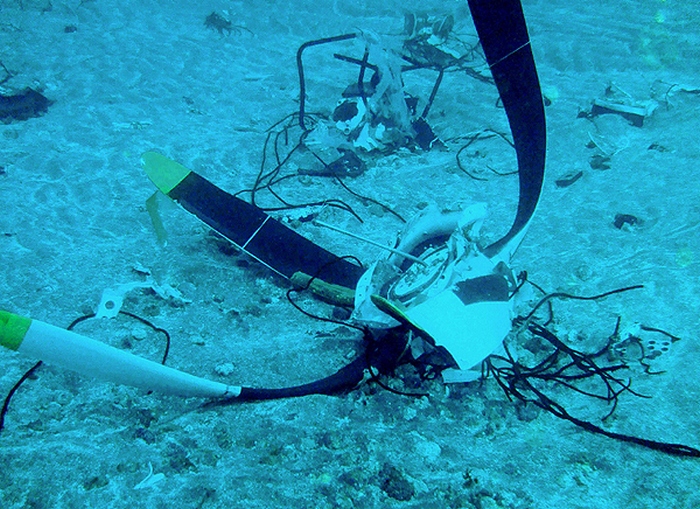
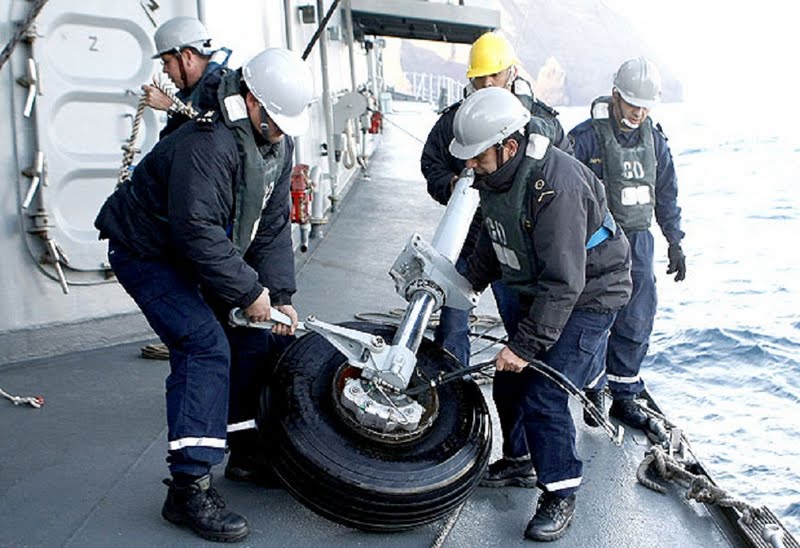
The twin engine aircraft departed Santiago de Chile-Comodoro Arturo Merino Benítez (Pudahuel) Airport on a special flight to Robinson Crusoe Island, carrying 17 passengers and a crew of four. The flight was organized by NGO's in cooperation with the Chilean National Television to see the progress of the reconstruction on the island of Robinson Crusoe following the 2010 earthquake. Among the occupants were members of the National Television and also from the Council of Culture. The famous Chilean television icon Felipe Camiroaga Fernández was among the passengers. Following an almost 3-hour flight, the crew completed a low pass over the runway 14 then started the approach to runway 32 from the sea. At an altitude of about 650 feet, the aircraft entered an uncontrolled descent, rolled to the left to an angle of 90° and impacted the sea. Debris were found floating on water and the main wreckage was later found about one km southeast from the airport. All 21 occupants were killed.

Personnel from the Chilean Air Force:
Lt Carolina Fernández Quinteros,
Lt Juan Pablo Mallea Lagos,
1st Sgt Eduardo Jones San Martín,
1st Cpl Eduardo Estrada Muñoz,
2nd Cpl Flavio Oliva Pino,
2nd Cpl Erwin Núñez Rebolledo,
Cdt Rodrigo Fernández Apablaza,
José Cifuentes Juica.

Council of Culture:
Galia Diaz Riffo,
Romina Irarrázabal Faggiani.

Chilean National Television:
Felipe Camiroaga Fernández,
Roberto Bruce Pruzzo,
Sylvia Slier Munoz,
Caroline Gatica Aburto,
Rodrigo Cabezón de Amesti.

Members of the 'Desafío Levantemos Chile' NGO:
Felipe Cubillos Sigall,
Sebastián Correa Murillo,
Catalina Vela Montero,
Joel Lizama Nahuelhual,
Jorge Palma Calvo,
Joaquín Arnolds Reyes.
Probable cause:
The accident was caused by the loss of control of the airplane while performing the tailwind leg through the channel between the islands of Robinson Crusoe and Santa Clara to an estimated height of 650 feet or less, during the circuit approach to Runway 32 in a very low trajectory (with little height difference above the runway), where very adverse airflow conditions were found, including wind shear, which exposed the crew to extreme flight conditions.
Adverse airflow conditions were the results of a combination of different factors, including:
- Very unstable atmosphere, with strong turbulence and possibly eventually powerful down gusts arising from the presence of open cells after a front passed,
- The presence of the two counter-rotating vortexes in the Santa Clara Island downwind wake,
- The presence of strong and gusty crosswinds that were very variable in strength and direction in a very short time.

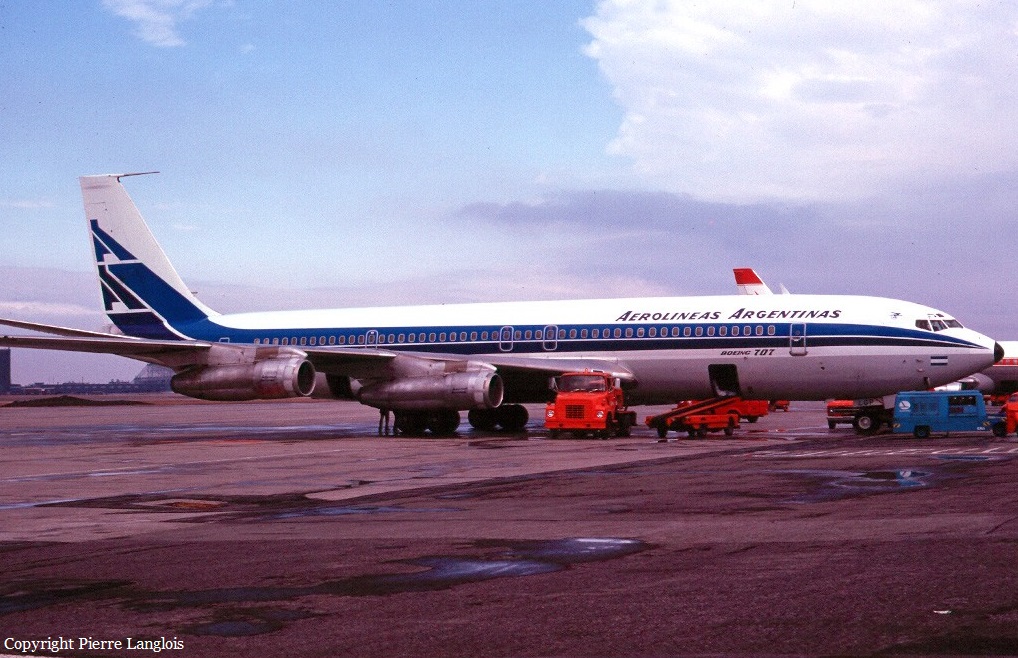
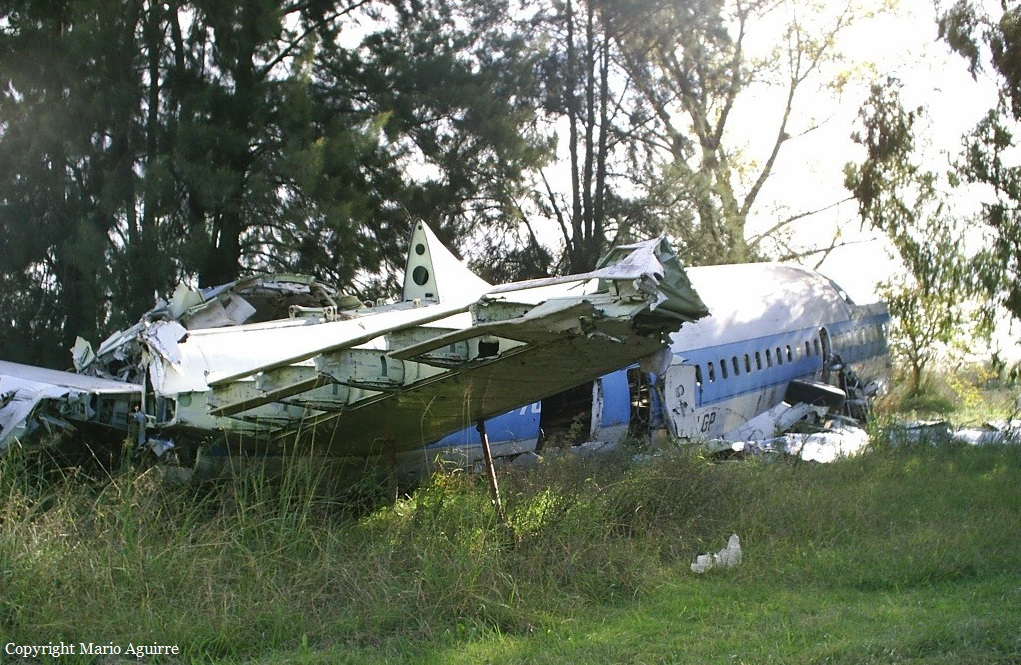
Crash of a Boeing 707-372C in Buenos Aires: 2 killed

Date & Time: Oct 23, 1996 at 1422 LT
Type of aircraft:
Operator:
Registration:
LV-LGP
Flight Type:
Survivors:
Yes
Schedule:
Santiago de Chile - Buenos Aires
MSN:
20077
YOM:
1968
Flight number:
LD5025
Country:
Crew on board:
8
Crew fatalities:
Pax on board:
0
Pax fatalities:
Other fatalities:
Total fatalities:
2
Circumstances:
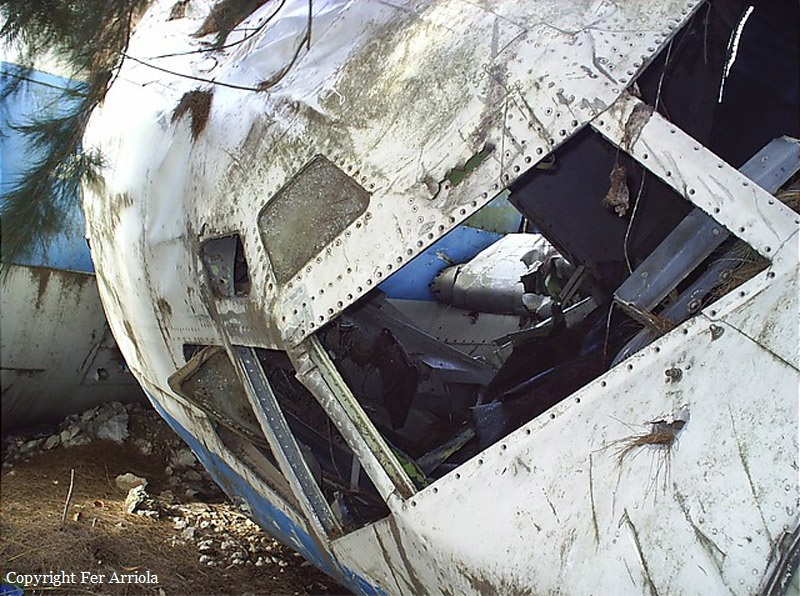
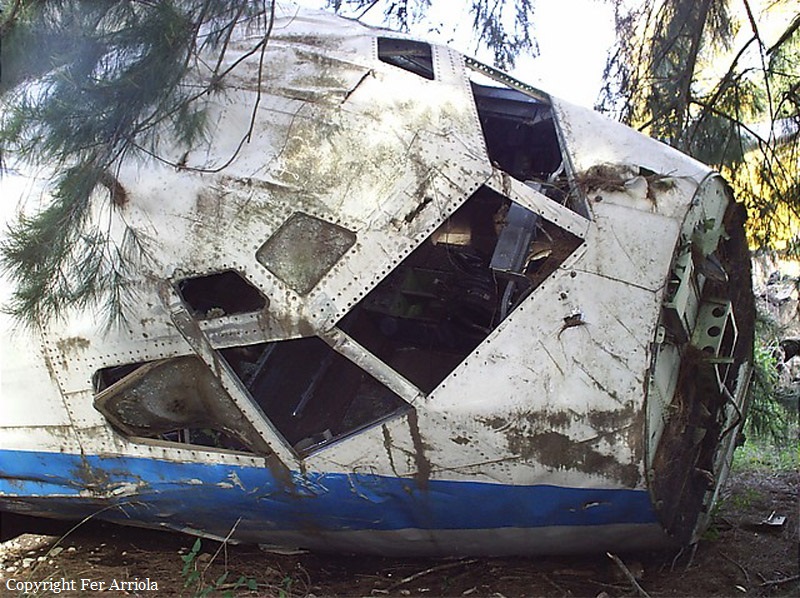
The aircraft was completing a cargo flight from Santiago de Chile to Buenos Aires, carrying eight crew members and a load of 30 tons of fish. On final approach to Buenos Aires-Ezeiza-Ministro Pistarini Airport runway 11, at a speed of 151 knots, the crew quickly extended flaps to 14°, 25°, 40° and finally 50°, causing the aircraft to nose down and enter a rapid descent until it struck the ground 750 metres short of runway threshold. Upon impact, the aircraft broke in three and caught fire. Both pilots were killed while six other occupants were injured.
Probable cause:
The following findings were reported:
- Erroneous setting of the air brakes at the same time as the flaps were fully extended during the short final approach,
- Erroneous planning during the descent and approach,
- Failure to use the experience of a similar previous event,
- Insufficient attention to the critical situation in the aircraft operating documentation,
- Failure to conduct a briefing prior to the approach and descent,
- Non-use of the LCP during the entire approach maneuver,
- Insufficient training in CRM.

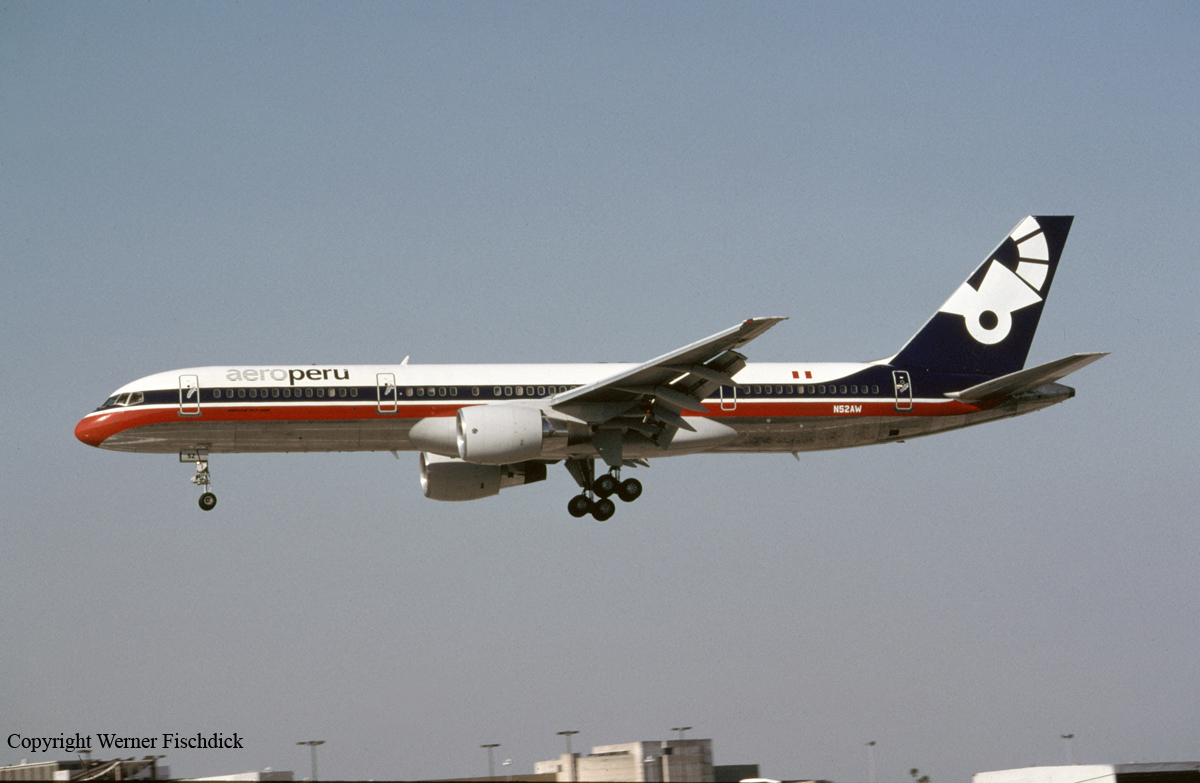
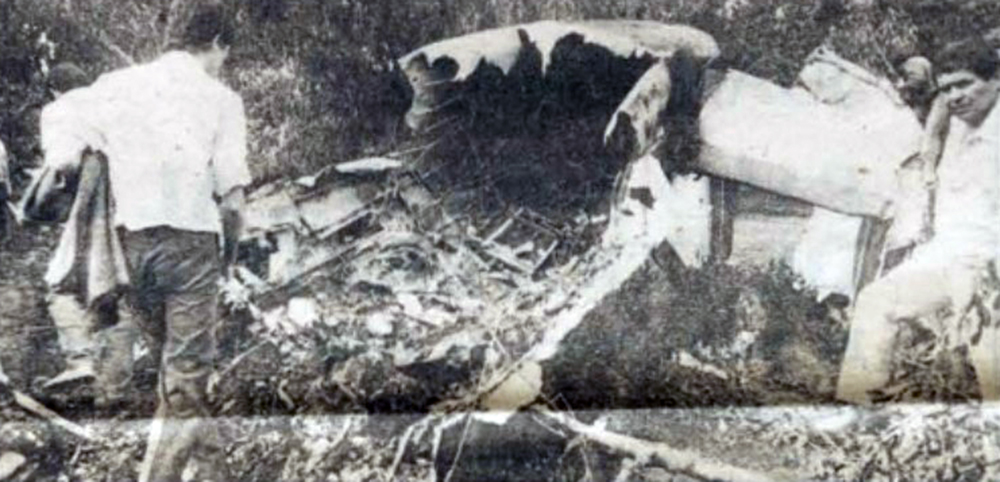
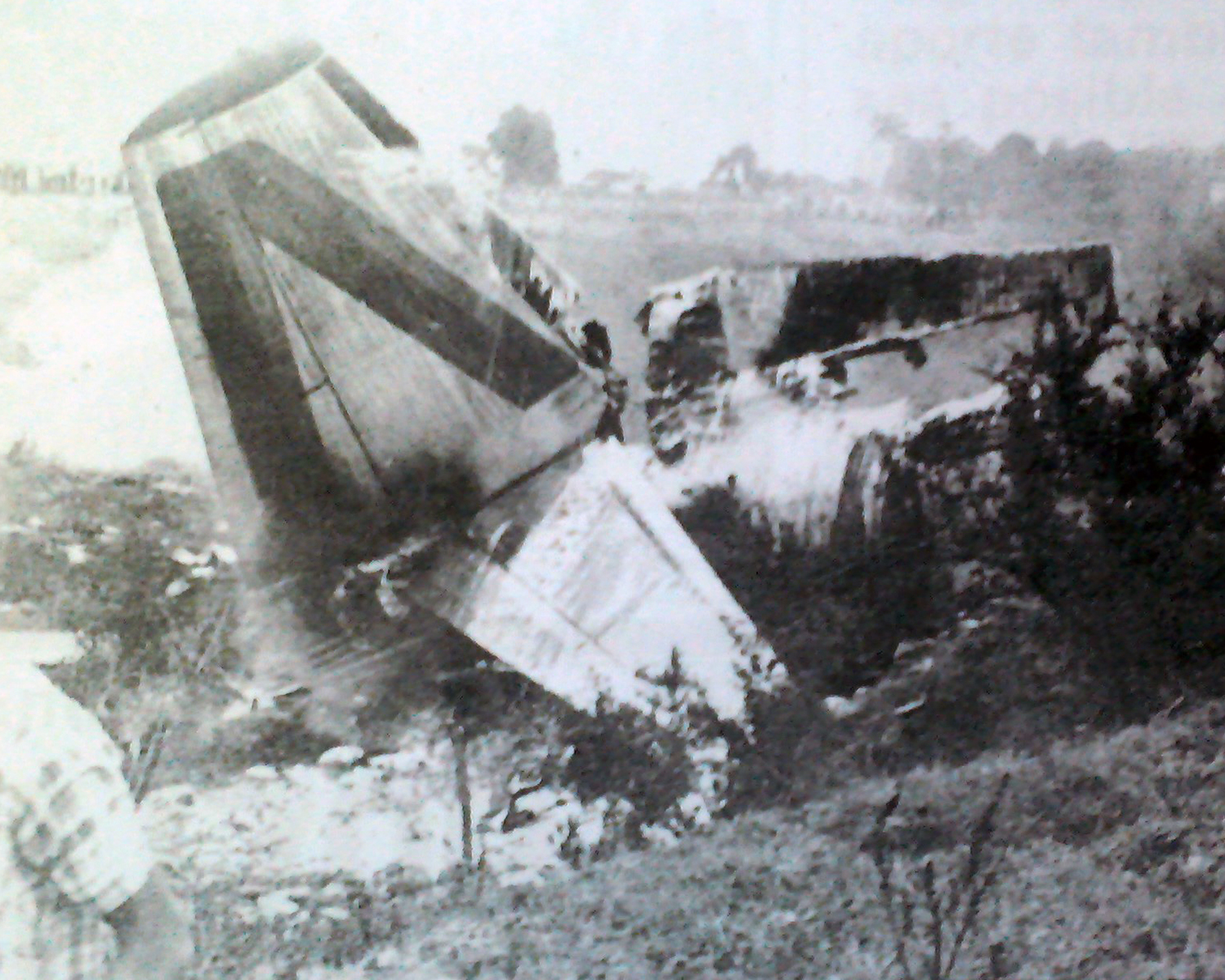
Crash of a Boeing 757-23A off Lima: 70 killed

Date & Time: Oct 2, 1996 at 0111 LT
Type of aircraft:
Operator:
Registration:
N52AW
Flight Phase:
Survivors:
No
Schedule:
Miami - Lima - Santiago
MSN:
25489
YOM:
1992
Flight number:
PL601
Location:
Country:
Crew on board:
9
Crew fatalities:
Pax on board:
61
Pax fatalities:
Other fatalities:
Total fatalities:
70
Captain / Total flying hours:
21955
Captain / Total hours on type:
1520.00
Copilot / Total flying hours:
7954
Copilot / Total hours on type:
719
Aircraft flight hours:
10654
Aircraft flight cycles:
2673
Circumstances:
The aircraft departed Lima-Jorge Chávez Airport at 0042LT on an international regular service to Santiago de Chile, carrying 61 passengers and a crew of nine. When they took off and reached speed V2 + 10, the crew noticed that the altimeters were not responding and that something irregular was occurring. They therefore decided to notify the control tower in Lima to declare an emergency, consulted Lima for confirmation of their altitude by radar, and requested assistance to return via radar vectors. After 29 minutes of flight, while returning to Lima airport and with the crew attempting to control the aircraft, it impacted with the sea 48 nautical miles from the airport, with the total loss of the aircraft and all of its occupants.
Probable cause:
The following findings were reported:
- It can be deduced from the investigation carried out that the maintenance staff did not remove the protective adhesive tape from the static ports. This tape was not detected during the various phases of the aircraft's release to the line mechanic, its transfer to the passenger boarding apron and, lastly, the inspection by the crew responsible for the flight (the walk-around or pre-flight check), which was carried out by the pilot-in-command, according to the mechanic responsible for the aircraft on the day of the accident.
- The pilot-in-command made a personal error by not complying with the procedure for GPWS alarms and not noticing the readings of the radio altimeters in order to discard everything which he believed to be fictitious.
- The copilot made a personal error by not being more insistent, assertive and convincing in alerting the pilot-in-command much more emphatically to the ground proximity alarms.
Final Report:

Crash of a Cessna 650 Citation III in Concepción: 3 killed

Date & Time: Jul 9, 1992
Type of aircraft:
Operator:
Registration:
E-302
Flight Type:
Survivors:
No
Schedule:
Santiago - Concepción
MSN:
650-0033
YOM:
1984
Country:
Crew on board:
3
Crew fatalities:
Pax on board:
0
Pax fatalities:
Other fatalities:
Total fatalities:
3
Circumstances:
On final approach to Concepción-Carriel Sur Airport, the crew encountered poor weather conditions with overcast at 750 metres and broken at 300 metres. On final, the crew informed ATC he just passed over the inner marker when the aircraft struck the slope of a mountain (435 metres high) located 4 km short of runway 20 threshold. All three crew members were killed. At the time of the accident, wind was blowing from the north at 23 knots. For unknown reasons, the crew was completing the approach at an insufficient altitude.

Crash of a Beechcraft B80 Queen Air in San Felipe: 8 killed

Date & Time: Mar 20, 1987 at 1945 LT
Type of aircraft:
Operator:
Registration:
CC-CDW
Survivors:
Yes
Schedule:
La Serena - Santiago
MSN:
LD-126
YOM:
1963
Country:
Crew on board:
2
Crew fatalities:
Pax on board:
7
Pax fatalities:
Other fatalities:
Total fatalities:
8
Circumstances:
The twin engine aircraft departed La Serena-La Florida Airport at 1900LT on a regular schedule service to Santiago de Chile. About 45 minutes into the flight, the crew encountered engine problems, declared an emergency and was cleared to divert to San Felipe Airport. On approach, the aircraft stalled and crashed in a peach plantation located 10 km from the airport, bursting into flames. A passenger was seriously injured while eight other occupants were killed.
Probable cause:
It is believed that the accident was the consequence of a double engine failure caused by fuel exhaustion.

Crash of a Fairchild F27J in La Serena: 46 killed

Date & Time: Dec 9, 1982 at 0927 LT
Type of aircraft:
Operator:
Registration:
CC-CJE
Survivors:
No
Schedule:
Santiago - La Serena
MSN:
63
YOM:
1959
Flight number:
ANS307
Country:
Crew on board:
4
Crew fatalities:
Pax on board:
42
Pax fatalities:
Other fatalities:
Total fatalities:
46
Aircraft flight hours:
47357
Circumstances:
On final approach to La Serena-La Florida Airport, the left engine failed. The crew lost control of the airplane that banked left, lost height and crashed 2 km short of runway 11 threshold, bursting into flames. The aircraft was destroyed and all 46 occupants were killed.
Probable cause:
Inadequate flight planning by the pilot-in-command in coordinating the adoption of measures and applying procedures to successfully remedy a stall condition caused by total loss of power in the left engine when the aircraft was flying at low altitude on final approach to land, in landing configuration.