Crash of a Piper PA-31-350 Navajo Chieftain in Kenai: 6 killed

Date & Time: Dec 23, 1987 at 0611 LT
Operator:

Registration:
N496SC
Flight Phase:
Survivors:
Yes
Schedule:
Kenai - Anchorage
MSN:
31-7752077
YOM:
1977
Location:
Crew on board:
1
Crew fatalities:
Pax on board:
7
Pax fatalities:
Other fatalities:
Total fatalities:
6
Captain / Total flying hours:
14500
Circumstances:
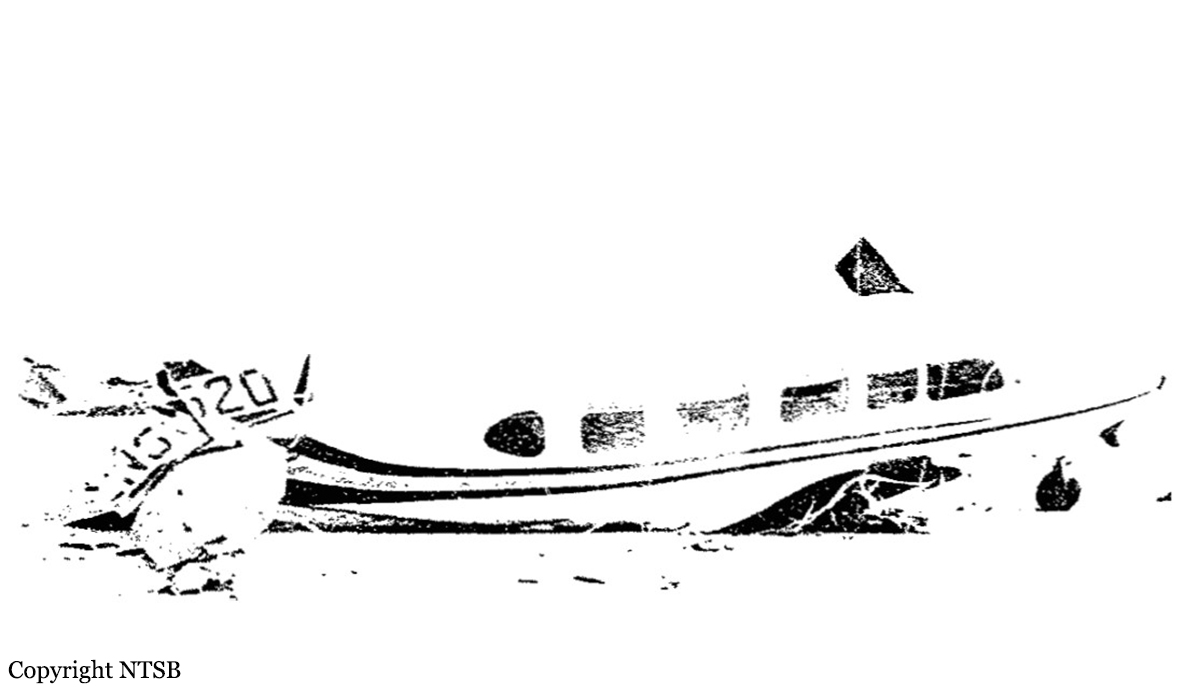
The pilot had just departed the runway when he reported to the flight service station that he had engine problems. The aircraft was observed by witnesses to be about 300 feet on a descending downwind. The pilot stated that he was circling for runway 01. Surviving passengers described the engines as running rough and uneven. The investigation revealed that the aircraft's weight was more than the pilot had calculated and the CofG was 3.4 inches further aft than was calculated. However, the weight and CofG were within limits. Examination of the engine disclosed that the right engine had an extensive cylinder head crack, a partially disconnected intake pipe, and was capable of producing 55% of rated power. The left engine had seven severely worn cam lobes. The rudder trim was deflected full left at impact. The evidence indicated that the pilot had retarded the throttle for the left engine and was using only the right engine to sustain flight. Exam of company checklist usage revealed several different improper versions. The pilot and five passengers were killed. Two others passengers and two people on the ground were injured.
Probable cause:
Occurrence #1: loss of engine power (partial) - mech failure/malf
Phase of operation: takeoff - initial climb
Findings
1. 1 engine - failure, partial
2. (c) engine assembly, cylinder - failure,total
3. (c) engine assembly, cylinder - fatigue
4. (f) induction air control, intake manifold - separation
----------
Occurrence #2: loss of engine power
Phase of operation: maneuvering
Findings
5. (f) 1 engine - failure, partial
6. (f) engine assembly, camshaft - worn
7. (f) maintenance, 100-hour inspection - inadequate - company maintenance personnel
8. (c) emergency procedure - improper - pilot in command
9. (c) throttle/power control - improper use of - pilot in command
----------
Occurrence #3: forced landing
Phase of operation: descent - emergency
----------
Occurrence #4: in flight collision with terrain/water
Phase of operation: descent - emergency
Findings
10. (f) trim setting - improper - pilot in command
11. Lowering of flaps - performed
12. Object - tree(s)
13. Object - residence
Final Report:

Crash of a Cessna 207A Stationair 7 in Anchorage

Date & Time: Jan 28, 1987 at 0515 LT
Operator:
Registration:
N7393U
Flight Type:
Survivors:
Yes
Schedule:
Kenai - Anchorage
MSN:
207-0436
YOM:
1978
Crew on board:
1
Crew fatalities:
Pax on board:
0
Pax fatalities:
Other fatalities:
Total fatalities:
0
Captain / Total flying hours:
1842
Captain / Total hours on type:
557.00
Aircraft flight hours:
10351
Circumstances:
The aircraft crashed one mile short of the runway. The accident occurred during an ILS approach in instrument meteorological conditions. During a post accident interview with the pilot he stated that he did not recognize and react in a timely manner to the gross deviation of the decision height. He continued down until striking the ground short of the runway.
Probable cause:
Occurrence #1: undershoot
Phase of operation: approach - faf/outer marker to threshold (ifr)
Findings
1. (c) weather condition - fog
2. (c) ifr procedure - improper - pilot in command
3. (c) weather condition - low ceiling
4. (c) procedures/directives - not followed - pilot in command
5. (f) overconfidence in personal ability - pilot in command
6. (f) light condition - dark night
7. (c) planned approach - not followed - pilot in command
8. (c) decision height - disregarded - pilot in command
Final Report:

Crash of a Cessna 207A Skywagon near Kenai: 1 killed

Date & Time: Jan 14, 1987 at 1315 LT
Operator:
Registration:
N9395M
Flight Phase:
Survivors:
Yes
Schedule:
Anchorage - Nondalton
MSN:
207-0685
YOM:
1981
Location:
Crew on board:
1
Crew fatalities:
Pax on board:
6
Pax fatalities:
Other fatalities:
Total fatalities:
1
Captain / Total flying hours:
1443
Captain / Total hours on type:
61.00
Aircraft flight hours:
4470
Circumstances:
Weather conditions on the day of the accident were reported to be extremely variable. Initially, when the pilot obtained a weather briefing, VFR flight was not recommended. Later, the weather improved and the pilot elected to proceed on the flight. While en route, he encountered snow showers and descended to 500 feet agl to insure best visibility. The pilot stated that without warning, he encountered a snow squall and whiteout conditions while he was flying over a ridge immediately west of the Kustatan River. He attempted a 180 turn, but the aircraft crashed on snow covered terrain. One occupant, an infant, died from impact injuries. The survivors were located about 21 hours after the accident. The ELT switch was found in the 'off' position; no ELT signal was heard by other pilots. Another pilot who encountered weather at about the same time and place diverted to another airport.
Probable cause:
Occurrence #1: in flight encounter with weather
Phase of operation: cruise - normal
Findings
1. (f) terrain condition - snow covered
2. (f) weather condition - snow
3. (f) weather condition - whiteout
4. (c) vfr flight into imc - continued - pilot in command
----------
Occurrence #2: in flight collision with terrain/water
Phase of operation: maneuvering
Final Report:

Crash of a Piper PA-31-350 Navajo Chieftain in Anchorage

Date & Time: Dec 23, 1983 at 1406 LT
Operator:
Registration:
N35206
Flight Phase:
Survivors:
Yes
Schedule:
Anchorage - Kenai
MSN:
31-7952193
YOM:
1979
Flight number:
XE059
Crew on board:
1
Crew fatalities:
Pax on board:
8
Pax fatalities:
Other fatalities:
Total fatalities:
0
Captain / Total flying hours:
5115
Captain / Total hours on type:
3550.00
Circumstances:
A Piper PA-31, N35206, (South Central Air flight 59) was cleared to taxi to runway 06L. The weather at that time was foggy with about 1/8 mile visibility, but the RVR was improving and the airport was expected soon to be acceptable for takeoffs. The PA-31 crew taxied and waited in the holding area for the visibility to improve. A Douglas DC-10, HL7339, Korean Air Lines flight 084, was cleared to runway 32; however, while taxiing in the fog, the DC-10 crew inadvertently taxied to runway 06L/24R. Tower personnel were unable to see the aircraft in the fog and were unaware of the DC-10's position. The DC-10 was cleared to take-off on runway 32 and the PA-31 was cleared to hold on runway 06L. The DC-10 crew taxied on runway 24R and began taking off toward the PA-31 with 2,400 feet of runway remaining. Its estimated takeoff distance was 8,150 feet. Subsequently, the DC-10 collided with the PA-31, continued off the runway and hit stanchion lights, small trees and rough terrain. An investigation revealed the DC-10 pilot did not confirm his position by using his compass and that there was a lack of legible taxiway and runway signs.
Probable cause:
The failure of the pilot of Korean Air Lines Flight 084 to follow accepted procedures during taxi, which caused him to become disoriented while selecting the runway; the failure of the pilot to use the compass to confirm his position; and the decision of the pilot to take off when he was unsure that the aircraft was positioned on the correct runway. Contributing to the accident was the fog, which reduced visibility to a point that the pilot could not ascertain his position visually and the control tower personnel could not assist the pilot. Also contributing to the accident was a lack of legible taxiway and runway signs at several intersections passed by Flight 084 while it was taxiing.
Final Report:

Crash of a Cessna 207 Skywagon near Kenai

Date & Time: Aug 3, 1982 at 1415 LT
Registration:
N1751U
Flight Phase:
Survivors:
Yes
Schedule:
Kenai - Kenai
MSN:
207-0351
YOM:
1976
Location:
Crew on board:
1
Crew fatalities:
Pax on board:
5
Pax fatalities:
Other fatalities:
Total fatalities:
0
Captain / Total flying hours:
5143
Captain / Total hours on type:
95.00
Aircraft flight hours:
2811
Circumstances:
Several black bears were spotted in a narrow canyon and the pilot began making tight, descending turns so his sightseeing passengers could get photographs. Reportedly, the stall warning horn came on, but the pilot continued the turns. He finally rolled out of the turn, but was headed uphill in the valley. The pilot was unable to maintain airspeed while climbing up the valley. Subsequently, the aircraft crashed and nosed over. The elevation of the crash site was about 3,000 feet and the reported temperature was 62° F. All six occupants were seriously injured.
Probable cause:
Occurrence #1: in flight collision with terrain/water
Phase of operation: climb
Findings
1. (f) terrain condition - mountainous/hilly
2. (c) preflight planning/preparation - improper - pilot in command
3. (c) diverted attention - pilot in command
4. (f) weather condition - high density altitude
5. (f) terrain condition - rising
6. Proper climb rate - not possible - pilot in command
7. Stall/mush - inadvertent - pilot in command
----------
Occurrence #2: nose over
Phase of operation: other
Final Report:

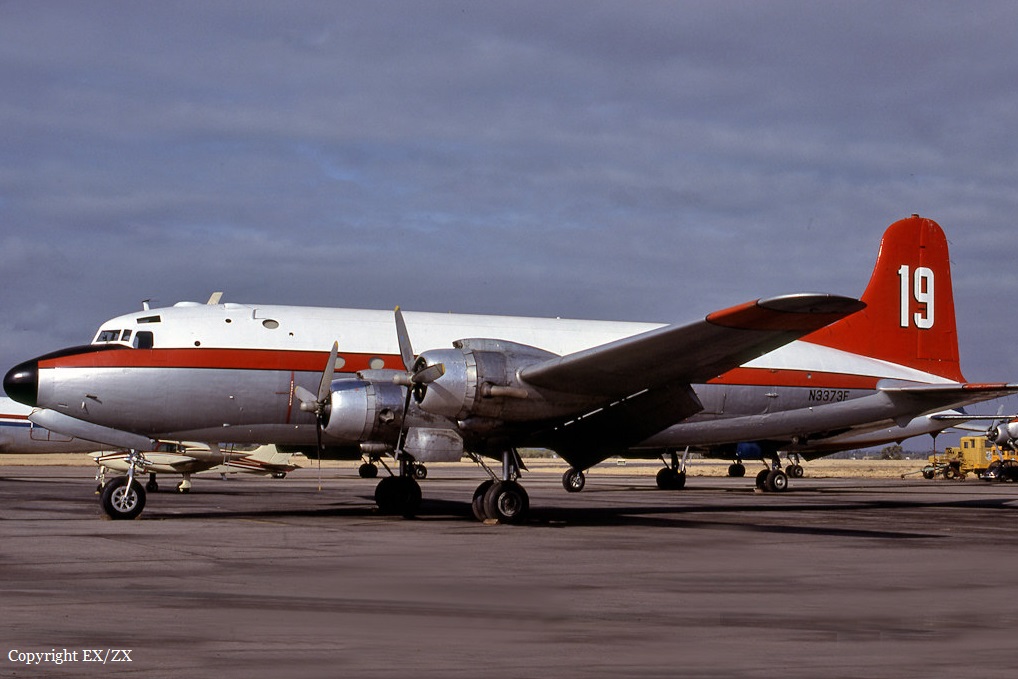
Crash of a Douglas SC-54G Skymaster in Kenai: 3 killed

Date & Time: Jul 14, 1981 at 1739 LT
Type of aircraft:
Operator:
Registration:
N3373F
Flight Type:
Survivors:
No
Schedule:
Kenai - King Salmon
MSN:
36061
YOM:
1945
Location:
Crew on board:
3
Crew fatalities:
Pax on board:
0
Pax fatalities:
Other fatalities:
Total fatalities:
3
Captain / Total flying hours:
9776
Captain / Total hours on type:
276.00
Circumstances:
After takeoff from Kenai Airport, while climbing to an altitude of 2,000 feet, the engine n°1 caught fire and exploded. The crew declared an emergency and elected to return to Kenai when a part of the left wing detached. Out of control, the airplane crashed in a pasture and was destroyed by impact forces and a post crash fire. All three occupants were killed.
Probable cause:
Engine fire and explosion in flight due to engine structure: cylinder assembly material failure. The following contributing factors were reported:
- Overload failure,
- Fire in engine and wing,
- Separation in flight,
- Failure of cylinder n°2 in engine n°1.
Final Report:

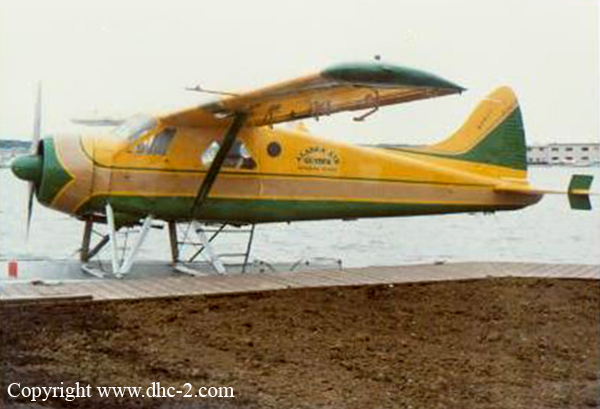
Crash of a De Havilland DHC-2 Beaver in Kenai: 1 killed

Date & Time: Mar 14, 1981 at 1500 LT
Type of aircraft:
Registration:
N6473
Flight Phase:
Survivors:
Yes
Schedule:
Anchorage - East Twin Lake
MSN:
410
YOM:
1952
Location:
Crew on board:
1
Crew fatalities:
Pax on board:
1
Pax fatalities:
Other fatalities:
Total fatalities:
1
Captain / Total flying hours:
2304
Captain / Total hours on type:
702.00
Circumstances:
While completing a turn at low height, the aircraft stalled and crashed near Kenai. The passenger was seriously injured and the pilot was killed.
Probable cause:
Stall after the pilot failed to maintain flying speed. The following contributing factors were reported:
- The pilot exercised poor judgment,
- Inadequate preflight preparation,
- Improperly loaded aircraft,
- Unfavorable wind conditions,
- Low level turn,
- Aircraft at least 1,230 lbs over gross weight,
- CofG 5% aft of rear limits.
Final Report:

Crash of a Fairchild C-119 Flying Boxcar in King Salmon

Date & Time: Jul 5, 1980 at 1208 LT
Operator:
Registration:
N90268
Flight Type:
Survivors:
Yes
Schedule:
Kenai - King Salmon
MSN:
11219
YOM:
1953
Crew on board:
2
Crew fatalities:
Pax on board:
0
Pax fatalities:
Other fatalities:
Total fatalities:
0
Captain / Total flying hours:
3568
Captain / Total hours on type:
37.00
Circumstances:
On landing at King Salmon Airport, the left engine fire warning sounded. In the meantime, an explosion occurred in the left wing tip. The crew lost control of the airplane that veered off runway and came to rest in flames. While both occupants escaped uninjured, the aircraft was damaged beyond repair.
Probable cause:
Fire observed in the left engine nacelle area and the left wing tip exploded for reasons that could not be determined.
Final Report:

Crash of a Cessna 402B near Anchorage: 7 killed

Date & Time: Jul 12, 1979 at 0932 LT
Type of aircraft:
Registration:
N402TH
Flight Phase:
Survivors:
No
Schedule:
Anchorage - Kenai
MSN:
402B-1034
YOM:
1975
Crew on board:
1
Crew fatalities:
Pax on board:
6
Pax fatalities:
Other fatalities:
Total fatalities:
7
Captain / Total flying hours:
7726
Captain / Total hours on type:
1715.00
Circumstances:
After departure from Anchorage Airport, while climbing, the pilot encountered technical problems with his instruments. In zero visibility due to clouds and fog, the aircraft descended until it struck the ground and crashed few miles from Anchorage. The aircraft was destroyed upon impact and all seven occupants were killed.
Probable cause:
Controlled collision with ground following the failure of a fluxgate compass. The following contributing factors were reported:
- Flight and navigation instruments: fluxgate compass,
- Material failure,
- The pilot failed to use or incorrectly used miscellaneous equipment,
- Chafed,
- Airways facilities personnel,
- Failure of ATC to properly identify the aircraft on radar,
- Low ceiling,
- Rain,
- Fog,
- Zero visibility,
- Aircraft observed with IFR arrival transponder code after departure,
- Flux detector wires chafed,
- Ground control cannot communicate directly with departure control.
Final Report:

Crash of a Beechcraft 65-90 King Air off Akutan Island

Date & Time: Apr 17, 1976 at 1020 LT
Type of aircraft:
Registration:
N2400X
Flight Phase:
Survivors:
Yes
Schedule:
Kenai - Dutch Harbor
MSN:
LJ-18
YOM:
1965
Crew on board:
2
Crew fatalities:
Pax on board:
3
Pax fatalities:
Other fatalities:
Total fatalities:
0
Captain / Total flying hours:
6350
Captain / Total hours on type:
61.00
Circumstances:
While flying along the Aleutian Islands on a charter flight from Kenai to Dutch Harbor, the crew realized his fuel reserve was low and decided to reduce his altitude and to ditch the aircraft off Akutan Island. All five occupants were quickly rescued while the aircraft was lost.
Probable cause:
Inadequate preflight preparation on part of the crew. The following contributing factors were reported:
- Improper in-flight decisions,
- Mismanagement of fuel,
- Miscalculation of fuel consumption,
- Airways facilities,
- Pilot ditched the aircraft due to low fuel state,
- Driftwood Bay beacon inoperative due to antenna damage.
Final Report: