
Crash of a Lockheed L-414 Hudson I near Dartmouth: 6 killed

Date & Time: Feb 14, 1943 at 2326 LT
Type of aircraft:
Operator:
Registration:
771
Flight Type:
Survivors:
No
Schedule:
Torbay – Dartmouth
MSN:
414-2853
YOM:
1941
Country:
Crew on board:
3
Crew fatalities:
Pax on board:
3
Pax fatalities:
Other fatalities:
Total fatalities:
6
Circumstances:
The crew departed Torbay on a flight to Darmouth. While on a night approach, the twin engine airplane crashed in unknown circumstances 18 km from its intended destination. SAR operations were initiated but eventually suspended after few days as no trace of the airplane nor the six occupants was found. The wreckage was found on 6 November 1944.
Crew (145th Squadron):
P/O Thomas Albert Kidd Watterson, pilot,
F/Sgt Robert Cecil Rolfe, navigator,
W/O James Robin Stick, wireless operator.
Passengers:
F/Lt John Thomas Hook,
F/O William Hector Thompson,
1st Lt Eugene Estes Snell.
Final Report:
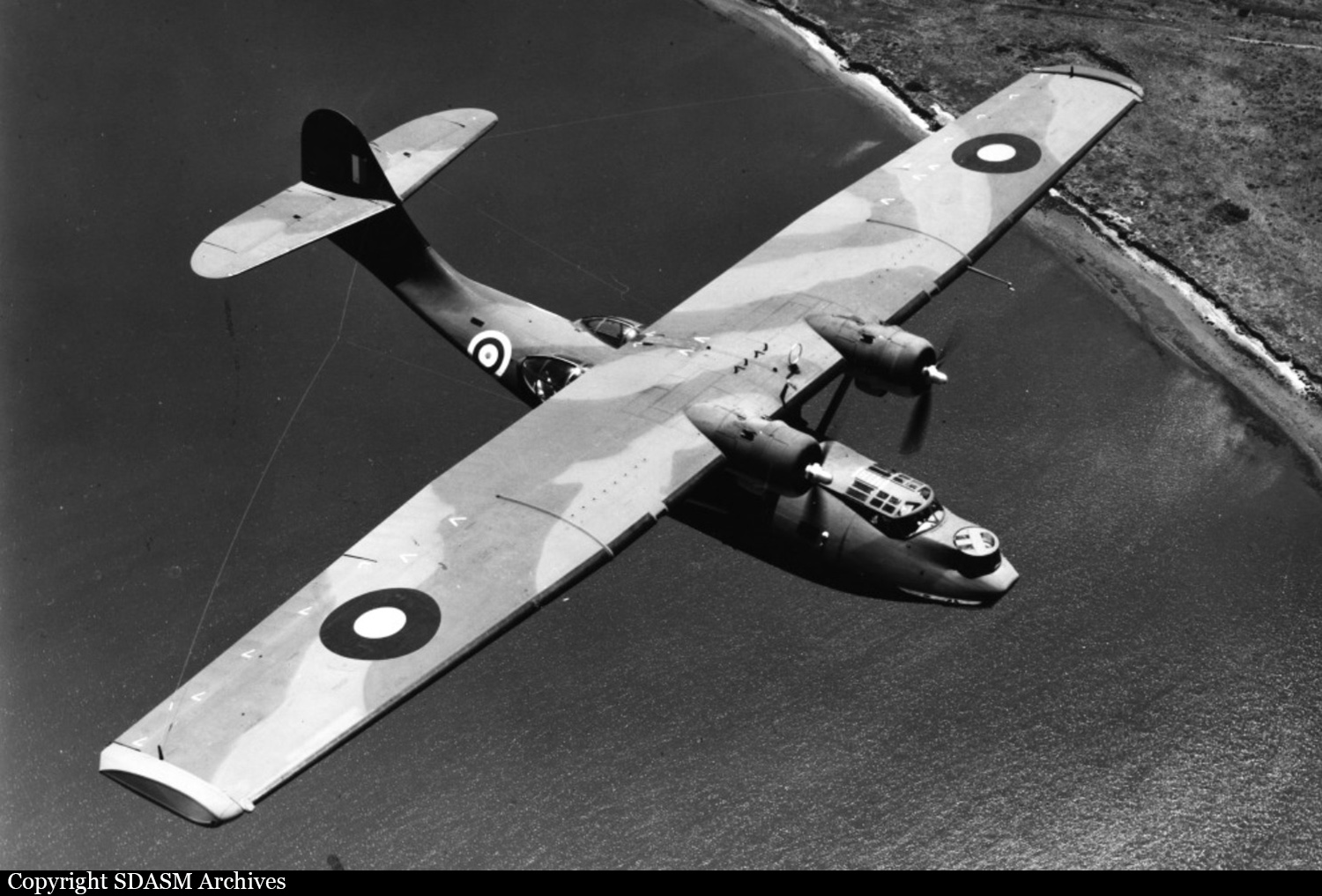

Crash of a Consolidated PBY-5 Catalina I off Dartmouth: 6 killed

Date & Time: Dec 9, 1942
Type of aircraft:
Operator:
Registration:
Z2136
Flight Phase:
Flight Type:
Survivors:
No
Country:
Crew on board:
6
Crew fatalities:
Pax on board:
0
Pax fatalities:
Other fatalities:
Total fatalities:
6
Circumstances:
Just after takeoff from Dartmouth, the seaplane crashed into the sea and was destroyed. All six crew members were killed.
Crew:
P/O Edward Salter Corbett,
F/O John Glenn MacMaster,
F/O Robert Arthur Sharman.
Sgt Fawcett Calvert Dayton,
Sgt Jack Richardson,
Cpl Elmor William Werry.

Crash of a Lockheed PV-1 Ventura II near Caledonia: 3 killed

Date & Time: Nov 20, 1942 at 2130 LT
Type of aircraft:
Operator:
Registration:
AE932
Flight Phase:
Flight Type:
Survivors:
No
Schedule:
Dartmouth – Yarmouth
MSN:
4275
YOM:
1942
Country:
Crew on board:
3
Crew fatalities:
Pax on board:
0
Pax fatalities:
Other fatalities:
Total fatalities:
3
Circumstances:
En route to Yarmouth with a load of hydraulic oil, the crew encountered poor weather conditions with light rain, visibility up to 5 miles and clouds down to 500 feet. For unknown reasons, the twin engine airplane went out of control and crashed in a wooded area located 6 km northeast of Caledonia. The airplane was destroyed and all three crew members were killed.
Crew (34th OTU):
P/O Harold Otto Male, pilot,
Ac1 Thomas Frederick Sargeant, flight engineer,
P/O Stanley Evans Sutherland, wireless operator and air gunner.
Probable cause:
The exact cause of the accident could not be determined. The aircraft was so badly wrecked and scattered that it was impossible to make any observations on the instruments, flying controls, engine controls or fuel tanks.

Crash of a Lockheed L-414 Hudson III into the Atlantic Ocean: 5 killed

Date & Time: Sep 25, 1942
Type of aircraft:
Operator:
Registration:
BW454
Flight Phase:
Survivors:
No
Schedule:
Dartmouth - Dartmouth
MSN:
414-6133
YOM:
1941
Country:
Region:
Crew on board:
5
Crew fatalities:
Pax on board:
0
Pax fatalities:
Other fatalities:
Total fatalities:
5
Copilot / Total flying hours:
964
Copilot / Total hours on type:
964
Circumstances:
The twin engine airplane departed Dartmouth Airport on an anti-submarine patrol mission with a 10-hours endurance. It failed to return to base and probably crashed into the Atlantic Ocean off Nova Scotia. Lost without trace.
Crew:
F/Lt Arthur Roland Booth, pilot,
P/O Walter Lawrence Junge, observer,
P/O David McGillivray Knowles, observer,
P/O Charles Gordon Sawyer, wireless operator,
F/Sgt John Douglas Selig, air gunner.
Final Report:

Crash of a Lockheed L-414 Hudson I in Dartmouth

Date & Time: Jul 30, 1942 at 1930 LT
Type of aircraft:
Operator:
Registration:
785
Flight Type:
Survivors:
Yes
Schedule:
Gander - Dartmouth
MSN:
414-1789
YOM:
1940
Country:
Crew on board:
3
Crew fatalities:
Pax on board:
5
Pax fatalities:
Other fatalities:
Total fatalities:
0
Circumstances:
The aircraft was coming in high and fast so the aerodrome control officer told the pilot to go around again, but the pilot never received this message because after getting clearance he took off his headphones. The visibility was poor due to rain as he came in to land. After touching down he did not apply brakes full but when he was first able to see the end of the runway, he applied full brakes but it was too late. The airplane rolled straight down the runway but slowed down when it rolled over the end of the runway across rocks, crashing into a gully at the end of the runway. Flames broke out and the aircraft was destroyed. All eight occupants were injured, five seriously.
Crew:
F/Sgt C. E. Ross, pilot,
Sgt G. R. C. Harron, navigator,
Sgt J. G. M. La Jambe, wireless operator and air gunner.
Passengers:
F/Sgt E. G. Todd,
F/O N. D. Lindsay,
Lac A. E. Tudor,
Sgt M. L. Dickle,
Lac E. E. Pritchard.
Probable cause:
Error of judgment on the part of the pilot who overshot due to an obscured front windshield which deprived him of forward vision.
Final Report:

Crash of a Douglas Digby I near Port Sounders: 6 killed

Date & Time: Jul 10, 1942 at 2200 LT
Type of aircraft:
Operator:
Registration:
739
Flight Phase:
Survivors:
No
Schedule:
Dartmouth - Dartmouth
MSN:
1631
YOM:
1936
Country:
Crew on board:
6
Crew fatalities:
Pax on board:
0
Pax fatalities:
Other fatalities:
Total fatalities:
6
Captain / Total flying hours:
879
Captain / Total hours on type:
690.00
Circumstances:
The airplane was on a patrol mission out from RCAF Dartmouth when it failed to return to base. SAR operation were unable to find any trace of the airplane nor the crew. In August 1956, the crew of an RCMP Beaver registered CF-MPN located the wreckage 32 km east of Port Saunders, Newfoundland.
Crew:
P/O Edwin Joseph Padden pilot,
P/O Stanley St George Stubbs, pilot,
P/O Douglas Earle Corey, navigator,
P/O George Taylor Crerar, wireless operator,
Sgt Tomas Harold Few, wireless operator and air gunner,
F/Sgt Charles Harold Finniss, wireless operator and air gunner.
Final Report:

Crash of a Lockheed L-414 Hudson in Dartmouth

Date & Time: Oct 15, 1941 at 1345 LT
Type of aircraft:
Operator:
Registration:
777
Flight Phase:
Flight Type:
Survivors:
Yes
Schedule:
Dartmouth - Dartmouth
MSN:
414-1781
YOM:
1940
Country:
Crew on board:
4
Crew fatalities:
Pax on board:
0
Pax fatalities:
Other fatalities:
Total fatalities:
0
Captain / Total flying hours:
329
Captain / Total hours on type:
329.00
Copilot / Total flying hours:
56
Copilot / Total hours on type:
56
Circumstances:
The airplane was engaged in a navigation exercise at RCAF Dartmouth, carrying four crew members. During the takeoff roll, the airplane swung and ground looped, causing the undercarriage to collapse. The airplane came to halt, caught fire and exploded. All four crew members were seriously injured.
Crew:
Sgt D. F. Quirt, pilot,
P/O P. W. Porter, navigator,
LAC G. C. Merrill, wireless operator,
P/O F. H. Lashley, navigator.
Probable cause:
The exact cause of the accident could not be determined as the results of the Court of inquiry was not received.
Final Report:

Crash of a Douglas Digby I off Cape Race

Date & Time: Jun 22, 1941 at 0930 LT
Type of aircraft:
Operator:
Registration:
752
Flight Phase:
Survivors:
Yes
Schedule:
Dartmouth - Dartmouth
MSN:
1644
YOM:
1936
Country:
Crew on board:
4
Crew fatalities:
Pax on board:
0
Pax fatalities:
Other fatalities:
Total fatalities:
0
Circumstances:
The airplane departed Dartmouth on a convoy patrol mission. Due to bad weather conditions and unable to obtain position by wireless, the pilot ditched the airplane off Cape Race. About 10 days later, on early July, the crew was rescued by a schooner. The aircraft was equipped with flotation cells in the wings and did not sink. It was later towed ashore but was damaged beyond repair.
Crew:
F/Lt Ashman, pilot,
F/O Horne, copilot,
Cpl H. W. Stewart, navigator,
AC1 L. W. J. Hanley, navigator,
AC1 I. S. G. Mackie, navigator.
Probable cause:
Precautionary landing at sea due to lack of gas and bad weather.
Final Report:

Crash of a Lockheed L-414 Hudson I in Dartmouth

Date & Time: May 26, 1941 at 1415 LT
Type of aircraft:
Operator:
Registration:
778
Flight Type:
Survivors:
Yes
Schedule:
Dartmouth - Dartmouth
MSN:
414-1783
YOM:
1940
Country:
Crew on board:
3
Crew fatalities:
Pax on board:
0
Pax fatalities:
Other fatalities:
Total fatalities:
0
Captain / Total flying hours:
202
Captain / Total hours on type:
52.00
Circumstances:
The airplane departed RCAF Dartmouth at 1400LT on a low level bombing practice. After circling the field permission was given from the control tower to land. Runway 03 was used. There was a slight port drift which was corrected. After another 150 yards the tail came down and the brakes were applied to slow down. On application of the brakes the aircraft spun around to the left causing the right oleo leg to collapse, causing the aircraft to land heavily on the right wing. It immediately burst into flames and F/Lt Butts worked the starboard extinguisher but to no avail. The crew abandoned the aircraft and two minutes later the aircraft exploded. All three crew members were uninjured.
Crew:
F/O J. H. Crossley, pilot,
F/Lt R. A. Butts, navigator,
LAC G. C. Merril, wireless operator.
Final Report:

Crash of a Lockheed L-414 Hudson I off Dartmouth: 2 killed

Date & Time: Jul 15, 1940 at 0825 LT
Type of aircraft:
Operator:
Registration:
759
Flight Phase:
Flight Type:
Survivors:
No
Schedule:
Dartmouth - Dartmouth
MSN:
414-1740
YOM:
1940
Country:
Crew on board:
2
Crew fatalities:
Pax on board:
0
Pax fatalities:
Other fatalities:
Total fatalities:
2
Circumstances:
The airplane was engaged in a local practice flying exercise out of RCAF Dartmouth for qualification first pilot. After takeoff, at a height of 100 feet, the right engine cut out and the airplane crashed into water off the McNabs Island, about five miles southwest of the airbase. Both crew members were killed.
Crew:
F/O J. J. Lalonde, pilot,
Cpl M. J. Armitage, navigator.
Probable cause:
Failure of the main fuel line on lower left hand side of the right engine. Failure of the left engine due to wrong manipulation of the fuel selector valve. The pilot or crewman turned the engine fuel selector valve to the 'right engine ON' position, thereby cutting off the fuel supply to the good motor (left) and diverting it to the dead motor. This caused the good motor (left) to fail also.
Final Report:

