Crash of a Cessna 340A in Valencia: 2 killed

Date & Time: Jun 11, 1985 at 1156 LT
Type of aircraft:
Operator:
Registration:
EC-DFC
Flight Phase:
Flight Type:
Survivors:
No
MSN:
340A-0270
YOM:
1976
Country:
Region:
Crew on board:
2
Crew fatalities:
Pax on board:
0
Pax fatalities:
Other fatalities:
Total fatalities:
2
Circumstances:
Shortly after takeoff, the aircraft suffered an engine failure. Control was lost and the aircraft crashed, bursting into flames. Both pilots were killed.
Probable cause:
Engine failure during initial climb for unknown reasons.

Crash of a Learjet 24B in Provins: 2 killed

Date & Time: Jun 10, 1985
Type of aircraft:
Operator:
Registration:
F-BSRL
Flight Phase:
Flight Type:
Survivors:
No
Schedule:
Marseille - Paris
MSN:
24-210
YOM:
1969
Country:
Region:
Crew on board:
2
Crew fatalities:
Pax on board:
0
Pax fatalities:
Other fatalities:
Total fatalities:
2
Circumstances:
The crew started the descent to Paris-Le Bourget when the aircraft went out of control, entered a dive and crashed in an open field located in Provins, about 77 km southeast of Le Bourget Airport. The aircraft was destroyed and both occupants were killed.
Probable cause:
The loss of control occurred following an in-flight fire from unknown origin.

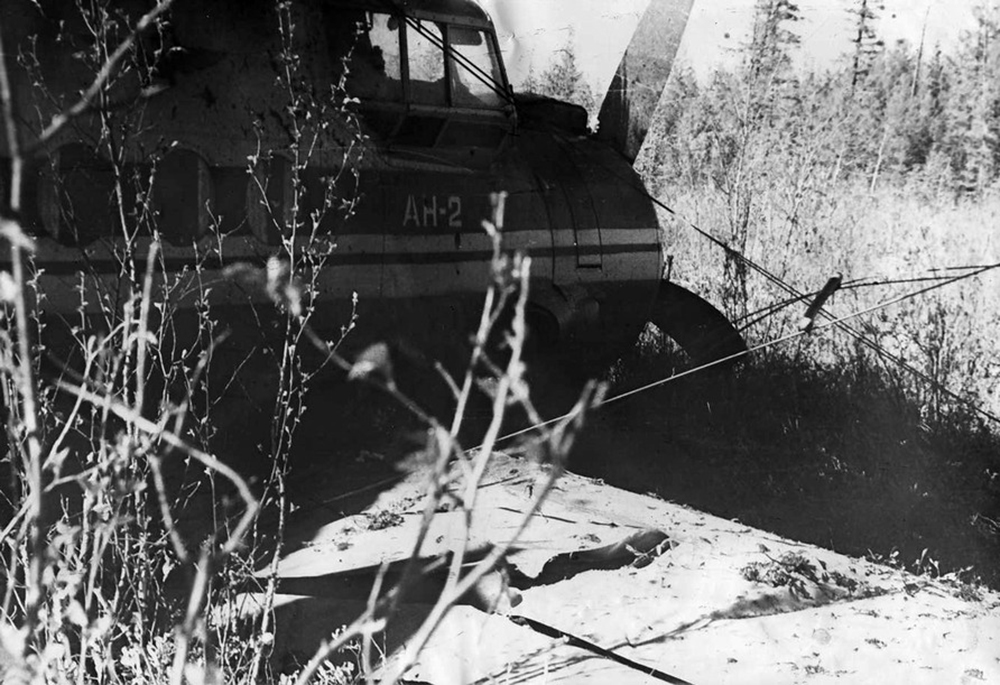
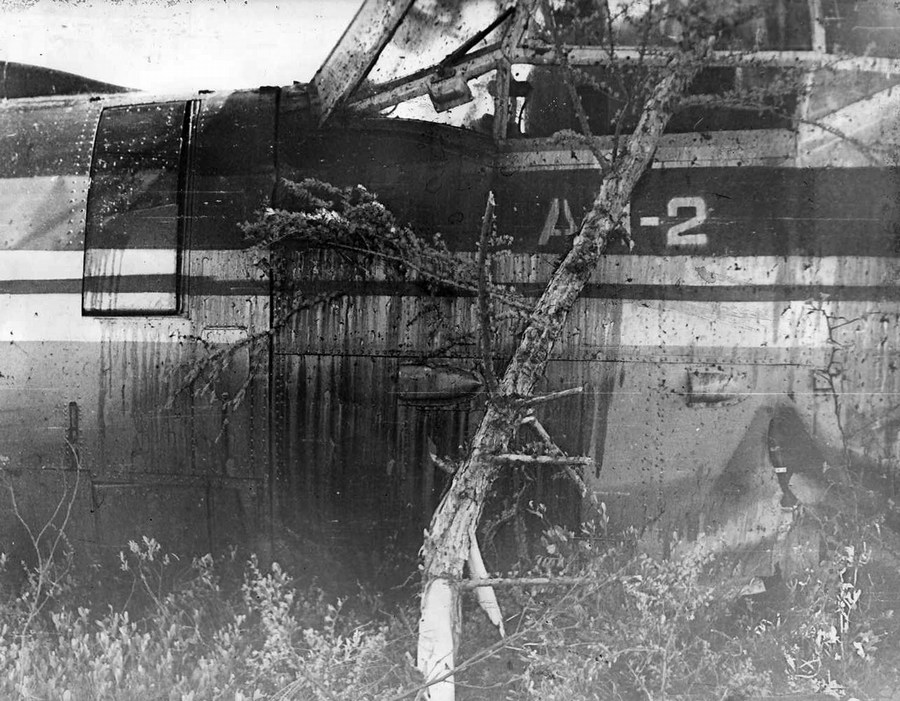
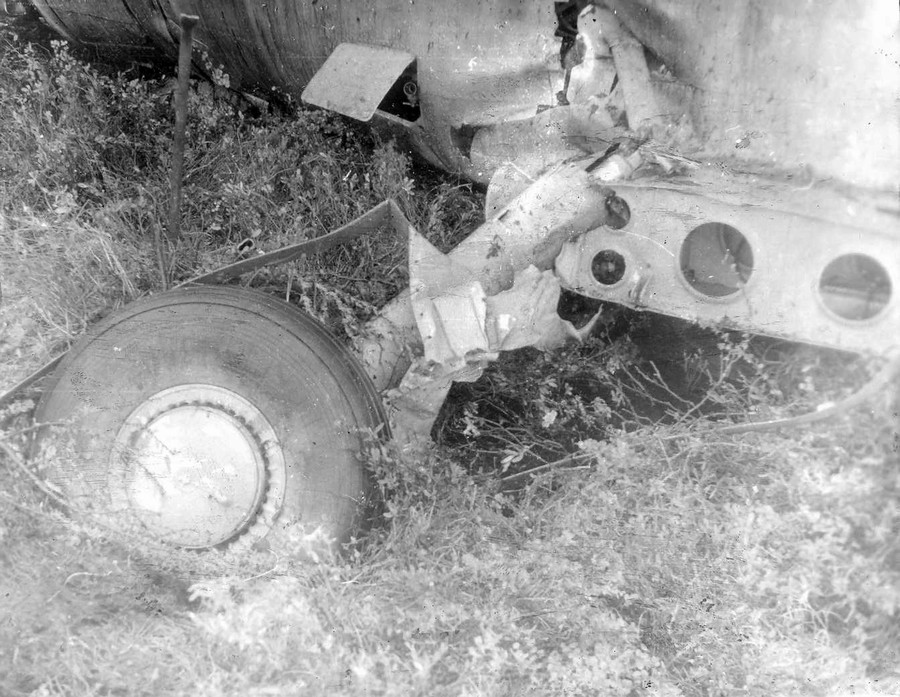
Crash of a PZL-Mielec AN-2TP near Kobyay

Date & Time: Jun 5, 1985 at 1215 LT
Type of aircraft:
Operator:
Registration:
CCCP-29348
Flight Phase:
Survivors:
Yes
Schedule:
Kobyay – Sangar
MSN:
1G77-31
YOM:
1966
Country:
Region:
Crew on board:
2
Crew fatalities:
Pax on board:
8
Pax fatalities:
Other fatalities:
Total fatalities:
0
Aircraft flight hours:
1394
Aircraft flight cycles:
20784
Circumstances:
The single engine airplane departed Kobyay at 1205LT on a regular schedule service to Sangar, carrying eight passengers and two pilots. While cruising at an altitude of 550 meters in good weather conditions, the engine lost power then failed. The crew attempted an emergency landing when the aircraft crashed in a prairie located about 35 km southwest of Sangar. All 10 occupants were uninjured while the aircraft was damaged beyond repair.
Probable cause:
Engine failure in flight following the failure of the cylinder n°7 due to manufacture problems.

Crash of a PZL-Mielec AN-2R in Leningrad: 4 killed

Date & Time: May 29, 1985 at 1023 LT
Type of aircraft:
Operator:
Registration:
CCCP-70218
Flight Phase:
Flight Type:
Survivors:
Yes
Schedule:
Leningrad - Leningrad
MSN:
1G138-36
YOM:
1972
Country:
Region:
Crew on board:
2
Crew fatalities:
Pax on board:
3
Pax fatalities:
Other fatalities:
Total fatalities:
4
Circumstances:
The single engine aircraft was engaged in a local training flight out from Leningrad-Rzhevka Airport, carrying three passengers and two pilots. After takeoff, the aircraft encountered difficulties to gain height. When the crew initiated a 180 turn at an altitude of about 20 meters, the aircraft struck tree tops at a speed of 105 km/h, stalled and crashed in a wooded area located 2 km southeast of the airport, bursting into flames. A passenger was seriously injured while four other occupants were killed.
Probable cause:
It was determined that the total weight of the aircraft was 217 kilos above MTOW while the CofG was within limits. The engine lost power 15 seconds after liftoff for unknown reasons.

Crash of a Britten-Norman BN-2A Islander in Chongoene: 5 killed

Date & Time: May 15, 1985
Type of aircraft:
Operator:
Registration:
C9-AMV
Flight Phase:
Survivors:
No
Schedule:
Vilanculos – Maputo
MSN:
219
YOM:
1970
Location:
Country:
Region:
Crew on board:
1
Crew fatalities:
Pax on board:
4
Pax fatalities:
Other fatalities:
Total fatalities:
5
Circumstances:
The departure from Vilanculos was postponed due to technical problems. An engineer was expected for about 48 hours but failed to come. The pilot decided to conduct the flight despite the problems were not resolved. En route, while cruising along the shore, he encountered technical problems and attempted to make an emergency landing on a beach when the aircraft crashed. All five occupants were killed.

Crash of a Cessna T303 Crusader in Mesa

Date & Time: May 13, 1985 at 1943 LT
Type of aircraft:
Registration:
N4661V
Flight Type:
Survivors:
Yes
Schedule:
Scottsdale - Mesa
MSN:
303-00276
YOM:
1983
Crew on board:
1
Crew fatalities:
Pax on board:
0
Pax fatalities:
Other fatalities:
Total fatalities:
0
Captain / Total flying hours:
2665
Captain / Total hours on type:
32.00
Aircraft flight hours:
59
Circumstances:
Pilot took off from Scottsdale at 1934 mst for a 13 nm flight to reposition the aircraft to home base. Within minutes the pilot advised ATC that he was 6 miles out with minimum fuel and requested no delay. He then asked for clearance to runway 22R and was cleared to land on runway 22R, at 1943 mst the pilot advised the tower that he was not going to make the runway. Both engines had stopped due to fuel exhaustion and the pilot made a forced landing 1/4 mile from the approach end of runway 22R in a level dirt area. The pilot reported the aircraft contained 120 lbs of fuel upon departure from Scottsdale and no low fuel warning was received. The pilot's operating handbook states the low fuel warning light should illuminate when there is less than 60 gallons of fuel in either tank or when there is less than 120 gallons total fuel on board. The manual also stated the aircraft burns 170 gph at 70 percent power. The pilot, sole on board, was seriously injured.
Probable cause:
Occurrence #1: loss of engine power (total) - nonmechanical
Phase of operation: approach - vfr pattern - final approach
Findings
1. (c) preflight planning/preparation - improper - pilot in command
2. (f) fluid, fuel - exhaustion
3. (c) fuel supply - inadequate - pilot in command
----------
Occurrence #2: forced landing
Phase of operation: descent - emergency
----------
Occurrence #3: in flight collision with terrain/water
Phase of operation: landing - flare/touchdown
Findings
4. (f) terrain condition - open field
5. (f) light condition - dusk
Final Report:

Crash of a PZL-Mielec AN-2TP in Kyzyl

Date & Time: May 11, 1985
Type of aircraft:
Operator:
Registration:
CCCP-50553
Flight Type:
Survivors:
Yes
MSN:
1G89-30
YOM:
1968
Country:
Region:
Crew on board:
2
Crew fatalities:
Pax on board:
0
Pax fatalities:
Other fatalities:
Total fatalities:
0
Circumstances:
After landing, the aircraft veered off the runway to the left and came to rest upside down. While both occupants were unhurt, the aircraft was damaged beyond repair.
Probable cause:
The loss of control after landing was the consequence of the failure of the brake systems.

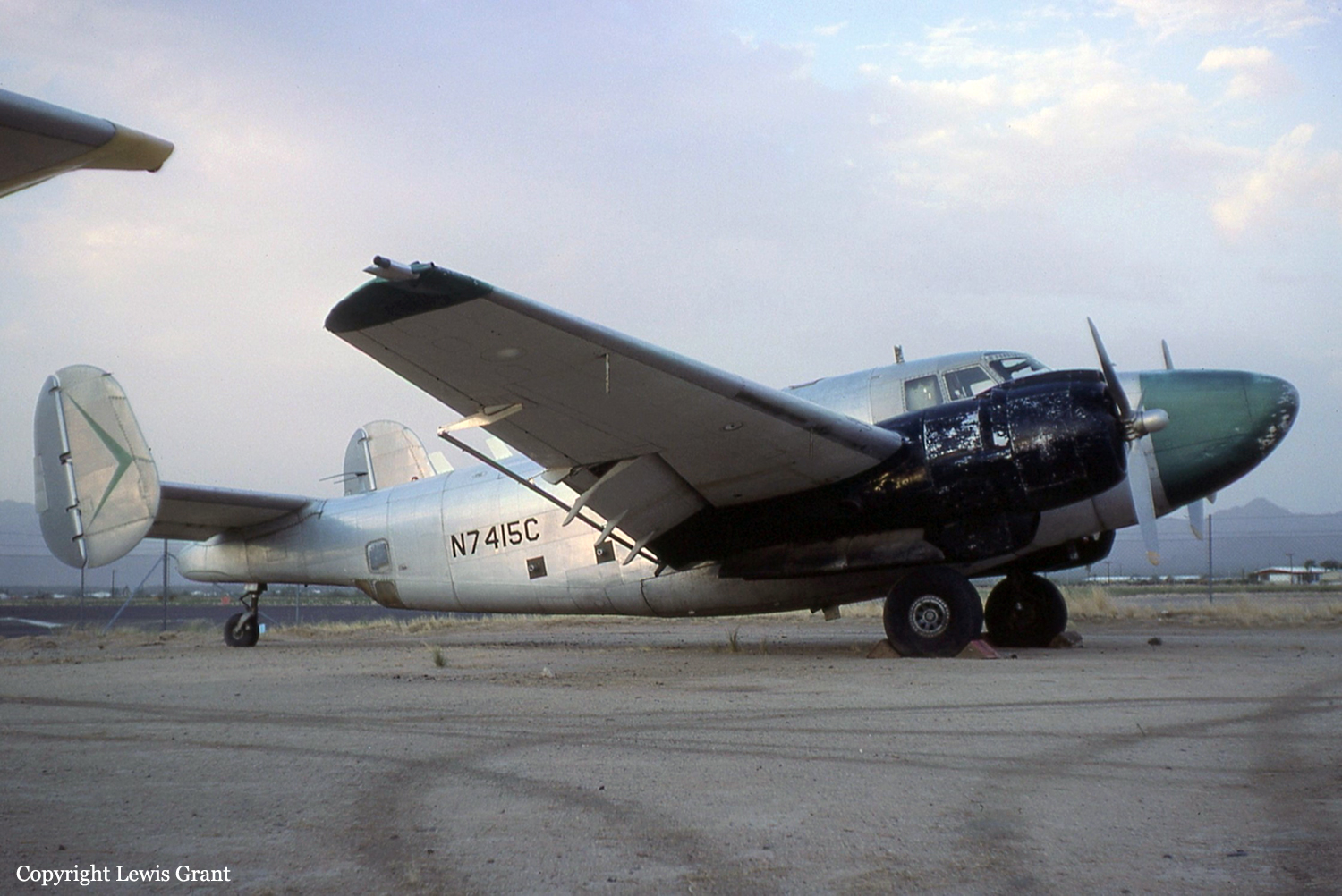
Crash of a Lockheed PV-2D Harpoon in Mesa

Date & Time: May 1, 1985 at 1557 LT
Type of aircraft:
Registration:
N7415C
Flight Phase:
Flight Type:
Survivors:
Yes
Schedule:
Mesa - Mesa
MSN:
15-1608
YOM:
1945
Crew on board:
2
Crew fatalities:
Pax on board:
0
Pax fatalities:
Other fatalities:
Total fatalities:
0
Captain / Total flying hours:
11750
Captain / Total hours on type:
220.00
Circumstances:
Following a dual engine change, the pilot test flew the aircraft. On initial climb, at about 500 feet agl, both engines began backfiring violently and lost power. According to the pilot, power sufficient for flight could not be obtained, and a forced landing was made about 0.75 miles from the airport. The landing occurred in open desert terrain and the aircraft was substantially damaged. The pilot acknowledged that he did not check the position of the control handles for the superchargers during either his preflight or pre-takeoff inspections. And the blowers had been inadvertently left set to the high blower position. According to the pilot, the checklist which he was using for the aircraft did not address the position of the blowers because for the past 15 years it had been company policy to 'wire the blowers to the low blower position.' Both occupants escaped uninjured.
Probable cause:
Occurrence #1: loss of engine power (partial) - nonmechanical
Phase of operation: takeoff - roll/run
Findings
1. (c) checklist - inaccurate - pilot in command
2. (c) powerplant controls - improper - pilot in command
----------
Occurrence #2: forced landing
Phase of operation: descent - emergency
----------
Occurrence #3: in flight collision with terrain/water
Phase of operation: landing - flare/touchdown
Findings
3. Airport facilities,runway/landing area condition - none suitable
4. Terrain condition - rough/uneven
Final Report:

Crash of a Fokker F27 Friendship 100 in Greenland: 2 killed

Date & Time: Apr 20, 1985 at 1932 LT
Type of aircraft:
Operator:
Registration:
YN-BZF
Flight Phase:
Flight Type:
Survivors:
Yes
Schedule:
Keflavik – Sondreströmfjord
MSN:
10118
YOM:
1959
Country:
Region:
Crew on board:
5
Crew fatalities:
Pax on board:
0
Pax fatalities:
Other fatalities:
Total fatalities:
2
Aircraft flight hours:
45111
Aircraft flight cycles:
58384
Circumstances:
The Fokker F-27, registration YN-BZF, was engaged on a delivery flight from North Yemen to Nicaragua. For the purpose of extended range two 200 US gal auxiliary ferry fuel tanks had been installed in the cabin of the aircraft. YN-BZF departed on 11 April 1985 from North Yemen (Sanaa) via Saudi Arabia (Jeddah), Egypt (Cairo) to Greece (Athens). The flight proceeded from Greece on 19 April 1985 via Italy (Genoa) to Scotland (Prestwick). On 20 April 1985 the flight proceeded from Prestwick via Stornoway to Reykjavik (Iceland) where it arrived at 15:48 hours. Since the crew had been unable to retrieve fuel from the auxiliary ferry fuel system during the preceding part of the flight, they checked the system during the stay at Reykjavik, and they found it to be in working order. An additional check was done by experienced Icelandic F-27 engineers. In the opinion of the ground engineers the auxiliary fuel system "was not very professionally looking" and they "got the feeling that the crew was not quite certain of how to operate it". They advised the crew on how to operate the fuel system and do a ground run to see if it worked. After having received weather information and ATC clearance, the crew took off at 17:21 hours, heading for Kangerlussuaq-Søndre Strømfjord Airport. At 18:32 the Pilot-in-Command transmitted a message to Iceland radio, whom he asked to extend his thanks to the Icelandic engineers with the message that the auxiliary ferry fuel system was working correctly. This message was transmitted prior to passage of Kulusuk at 19:35 hours. During the flight from Reykjavík, Iceland to Greenland the crew informed the air traffic control that problems had arisen with retrieving fuel from the auxiliary ferry fuel system. At 19:50, approximately 50 NM west of Kulusuk, the crew radioed to the radar station BIG GUN about fuel problems, as it had been discovered that the auxiliary ferry fuel system did not function after all. Thus encountering a reduction of fuel reserves by approximately 400 US gal together with a ground speed of only 180 knots the crew decided to return for landing at Kulusuk Airport. However, due to deteriorating weather conditions the aerodrome could not be located. The flight diverted hereafter westbound for an emergency landing at a radar station, "SOB STORY", on the icecap. During descent the aircraft collided with the icecap.
Probable cause:
The following findings were reported:
- The crew was properly certified for the flight,
- According to the crew the normal aircraft systems, except for the FDR and the cockpit right front window electrical deicing system, were functioning normally, which was also determined by the on site investigation,
- The auxiliary ferry fuel system was not functioning properly. The cause of this has not been conclusively established,
- The crew did not undertake a satisfactory functional airborne check of the auxiliary ferry fuel system to ensure that it worked prior to the essential appliance of the system for flight, (cause-factor),
- It is the opinion of this department from the evidence available that a deficiency in the procedures applied for operating the auxiliary ferry fuel system may have been a major factor,
- The assistance rendered to the flight of YN-BZF was active and generally professional. However, the AFIS operator erroneously stated the distance from the KK NDB of 3 NM to be 10 NM.,
- Furthermore the bearing from the KK NDB was not stated by the AFIS operator at BGKK on request from the crew of YN-BZF,
- In the opinion of this department the lack of this information does not seem to have had any important bearing on the possibility of locating the aerodrome,
- Weather conditions were a major factor in this accident, at the time of the approach into BGKK, as well as at the accident site, (cause-factor),
- The Search and Rescue operation was anticipated at an early stage and put into effect immediately after the aircraft was considered to have had an accident,
- The conditions offered on the accident site: low visibility approaching darkness, and consequently the inability to evaluate surface conditions, precluded successful rescue in the first attempt.


Crash of a Convair CV-440-35 Metropolitan in Santa Rosa del Sara: 4 killed

Date & Time: Apr 20, 1985
Registration:
CP-1489
Flight Phase:
Flight Type:
Survivors:
No
MSN:
319
YOM:
1956
Country:
Crew on board:
3
Crew fatalities:
Pax on board:
1
Pax fatalities:
Other fatalities:
Total fatalities:
4
Circumstances:
After takeoff, while in initial climb, the airplane banked right, lost height and crashed, bursting into flames. All four occupants were killed.
Probable cause:
Failure of the right engine just after liftoff for unknown reasons.