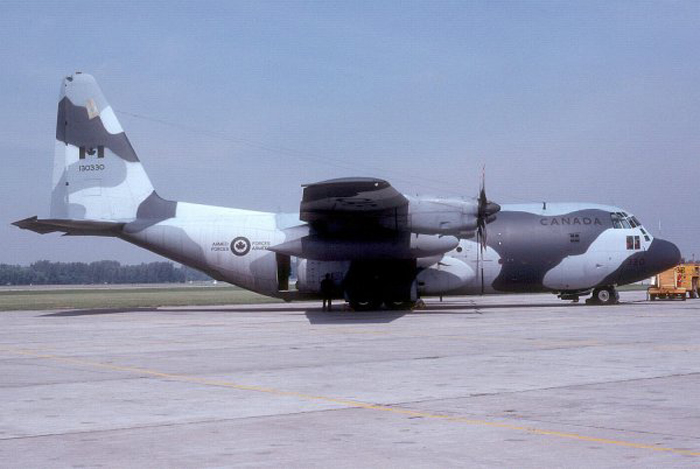
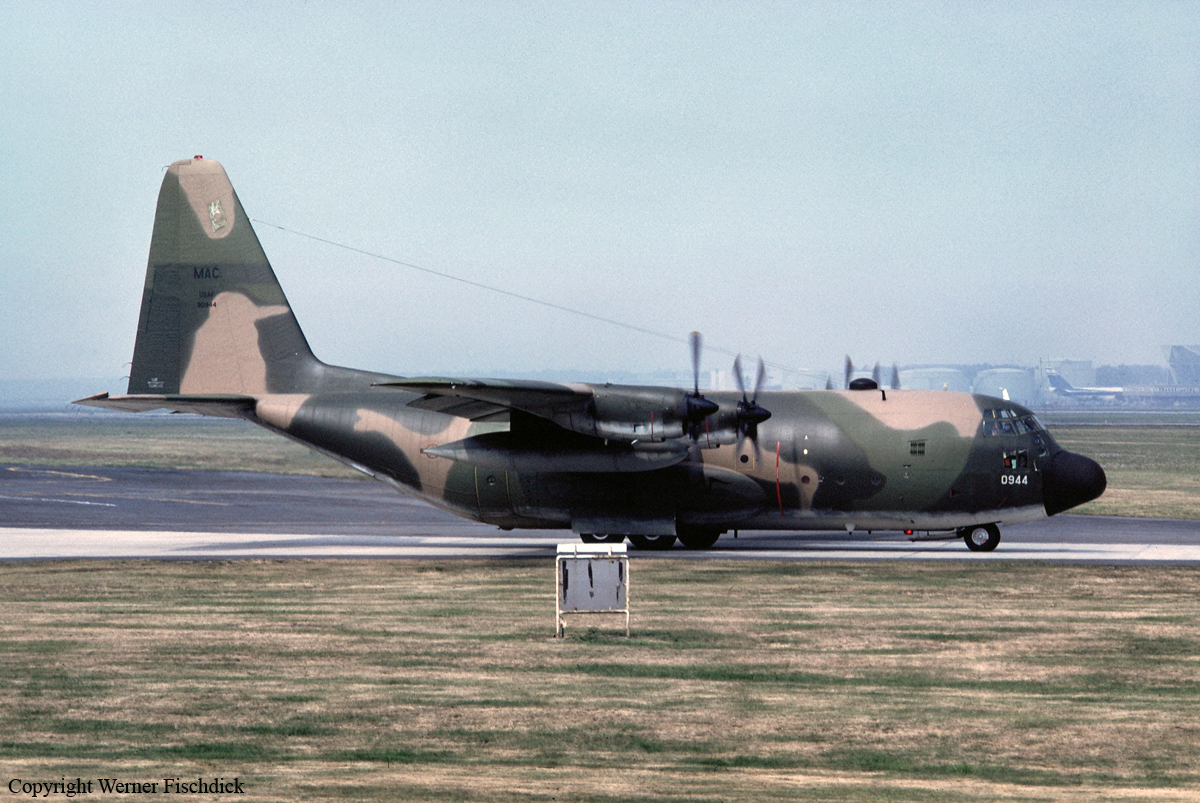
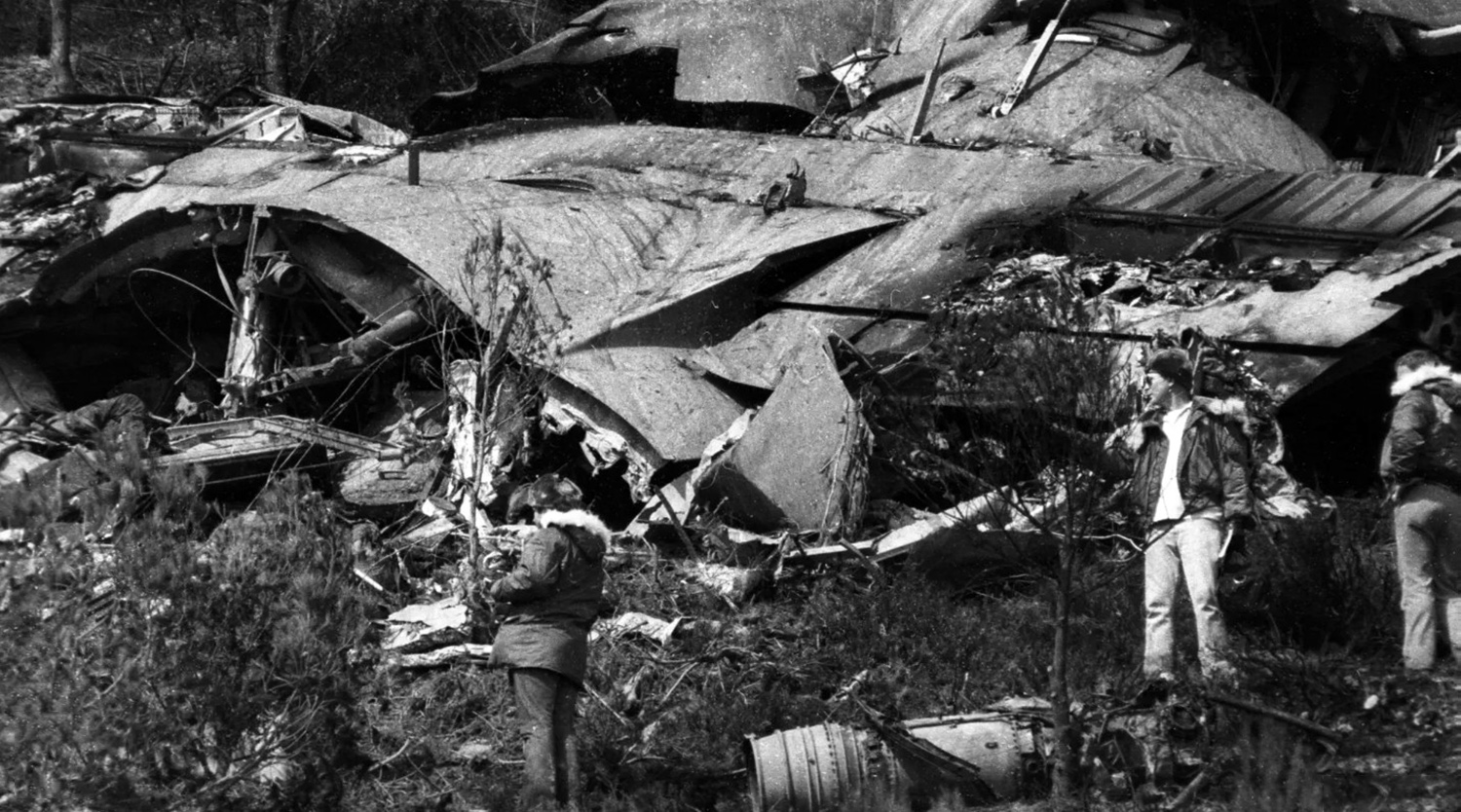
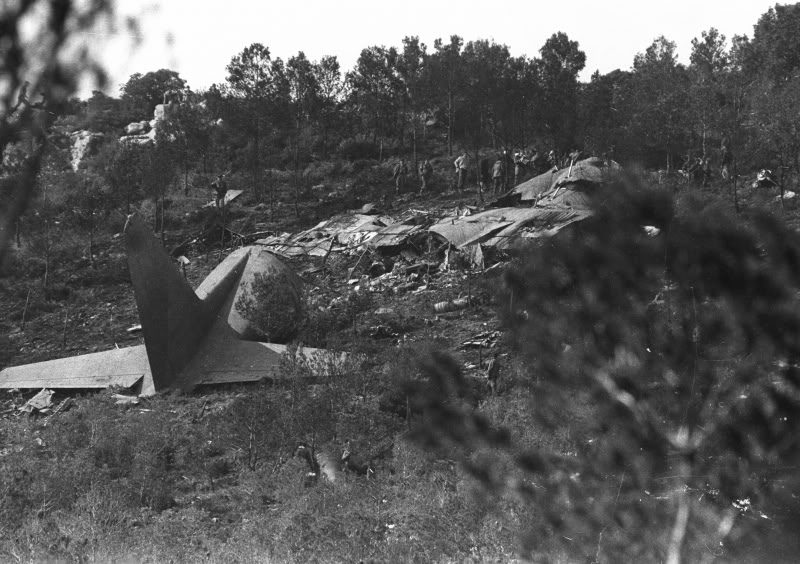
Crash of a Lockheed CC-130H Hercules at Namao AFB: 6 killed

Date & Time: Mar 29, 1985 at 2015 LT
Type of aircraft:
Operator:
Registration:
130331
Flight Phase:
Flight Type:
Survivors:
No
Schedule:
Namao - Namao
MSN:
4559
YOM:
1974
Flight number:
Trucker 2
Country:
Crew on board:
5
Crew fatalities:
Pax on board:
1
Pax fatalities:
Other fatalities:
Total fatalities:
6
Captain / Total flying hours:
3981
Captain / Total hours on type:
1561.00
Copilot / Total flying hours:
3687
Copilot / Total hours on type:
1455
Aircraft flight hours:
11888
Circumstances:
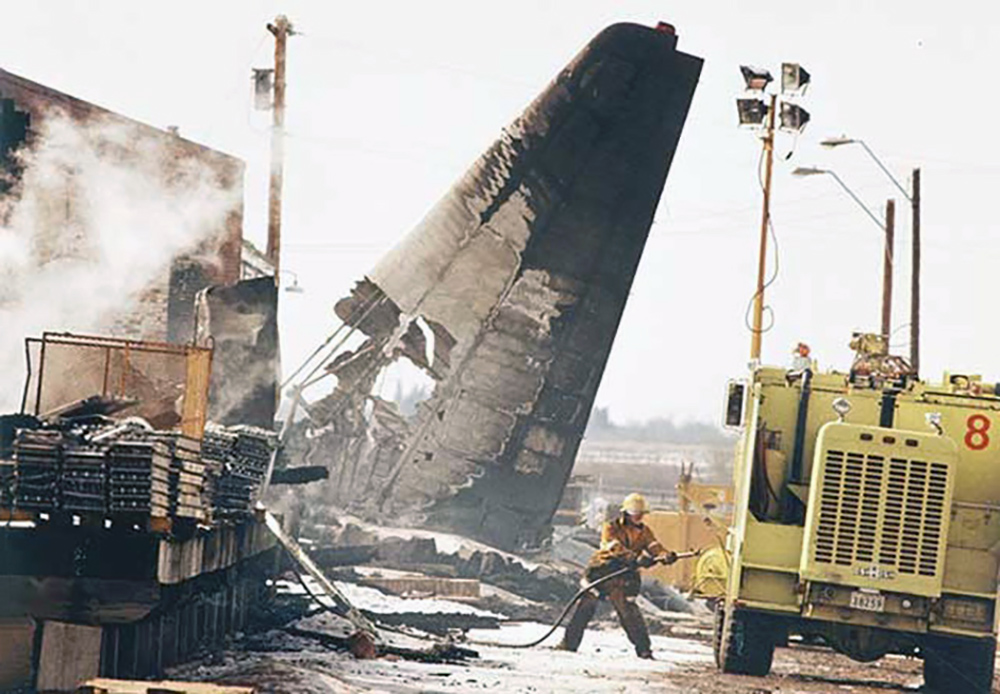
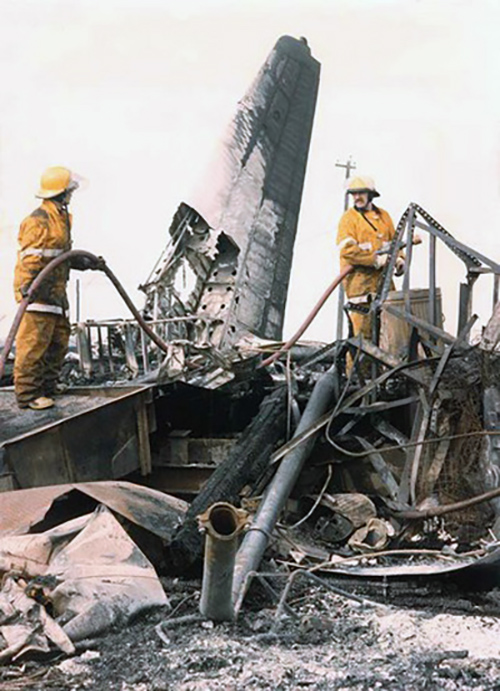
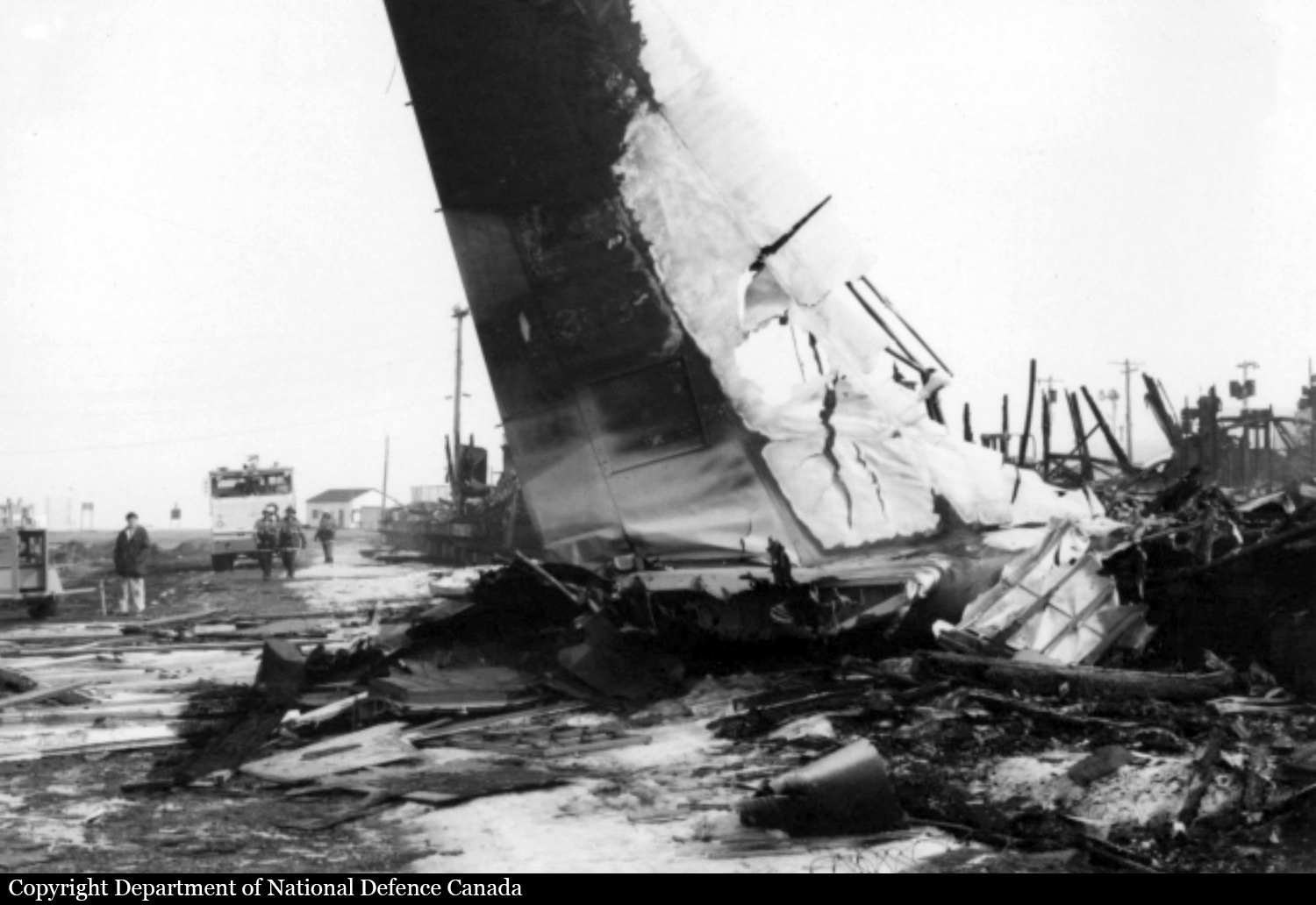
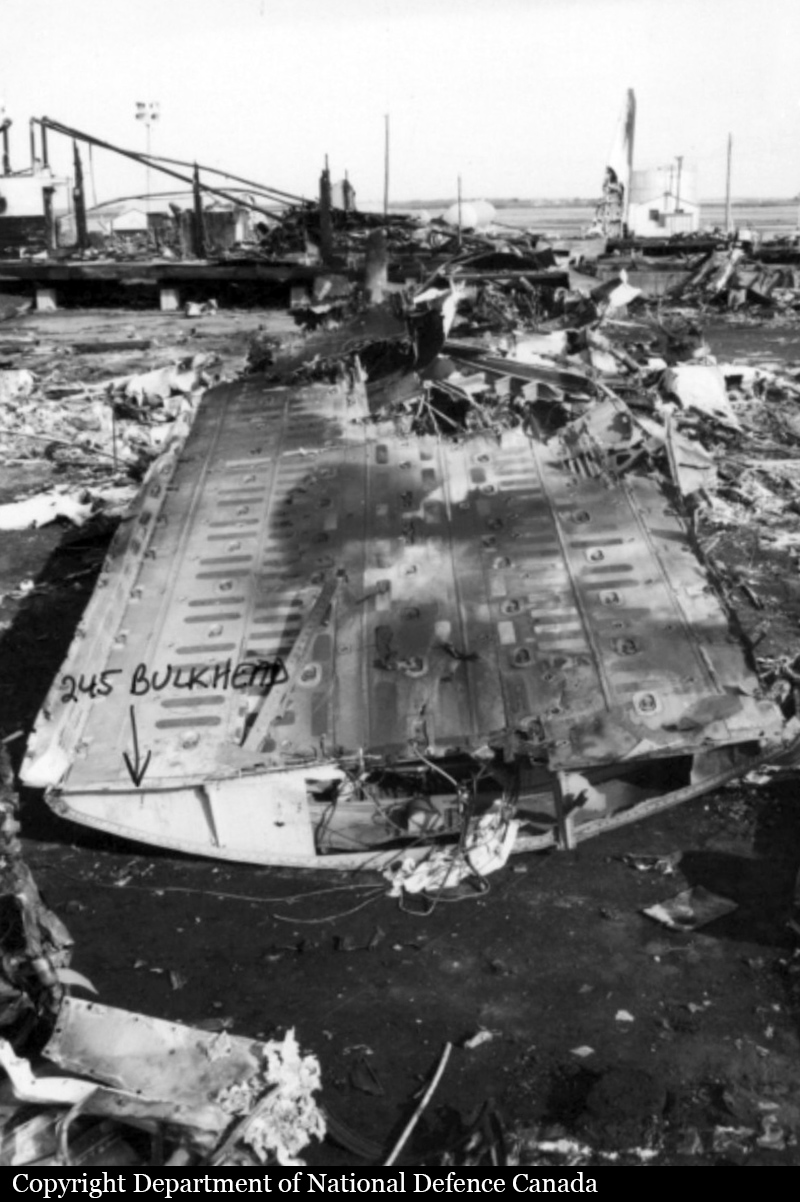
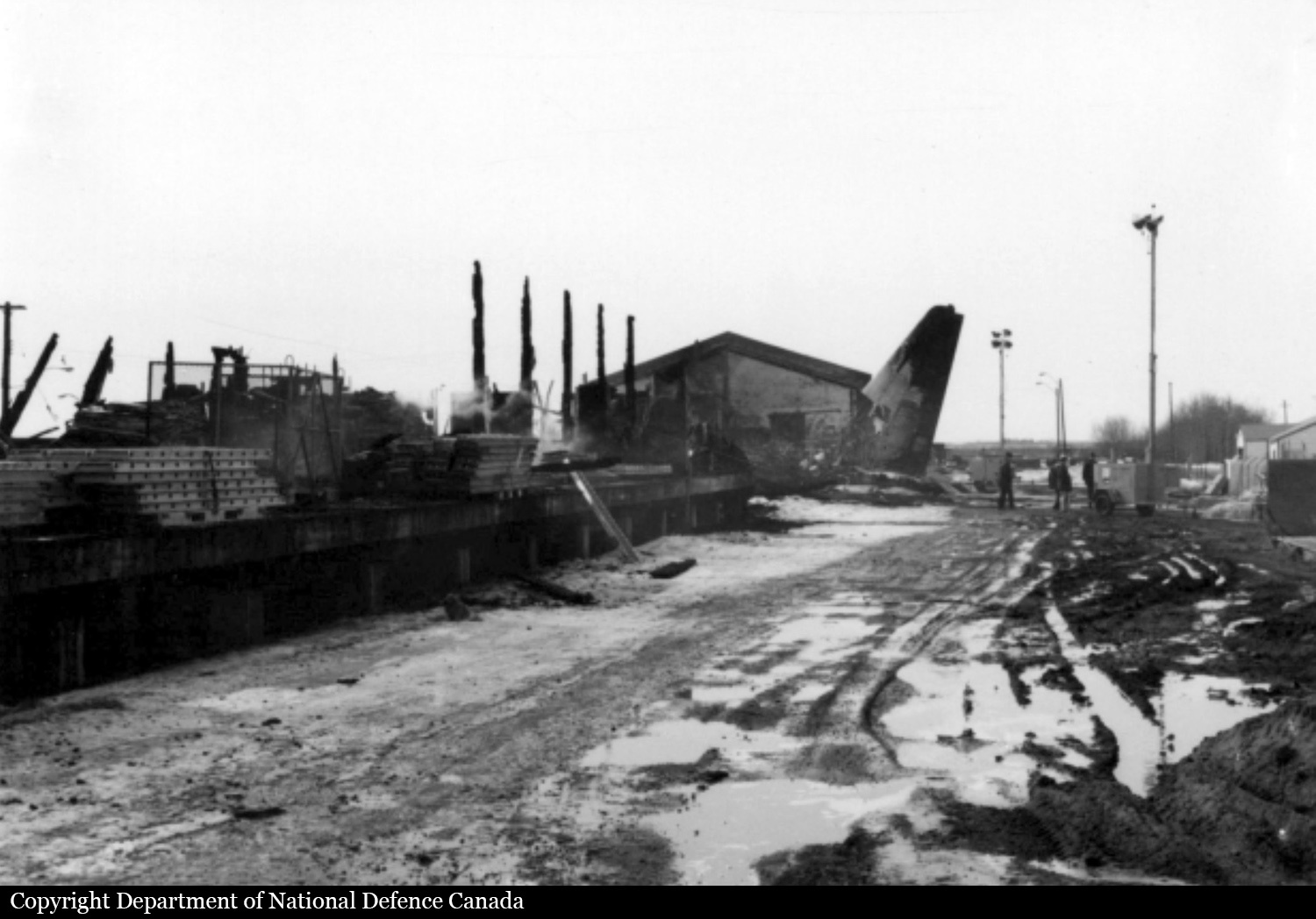
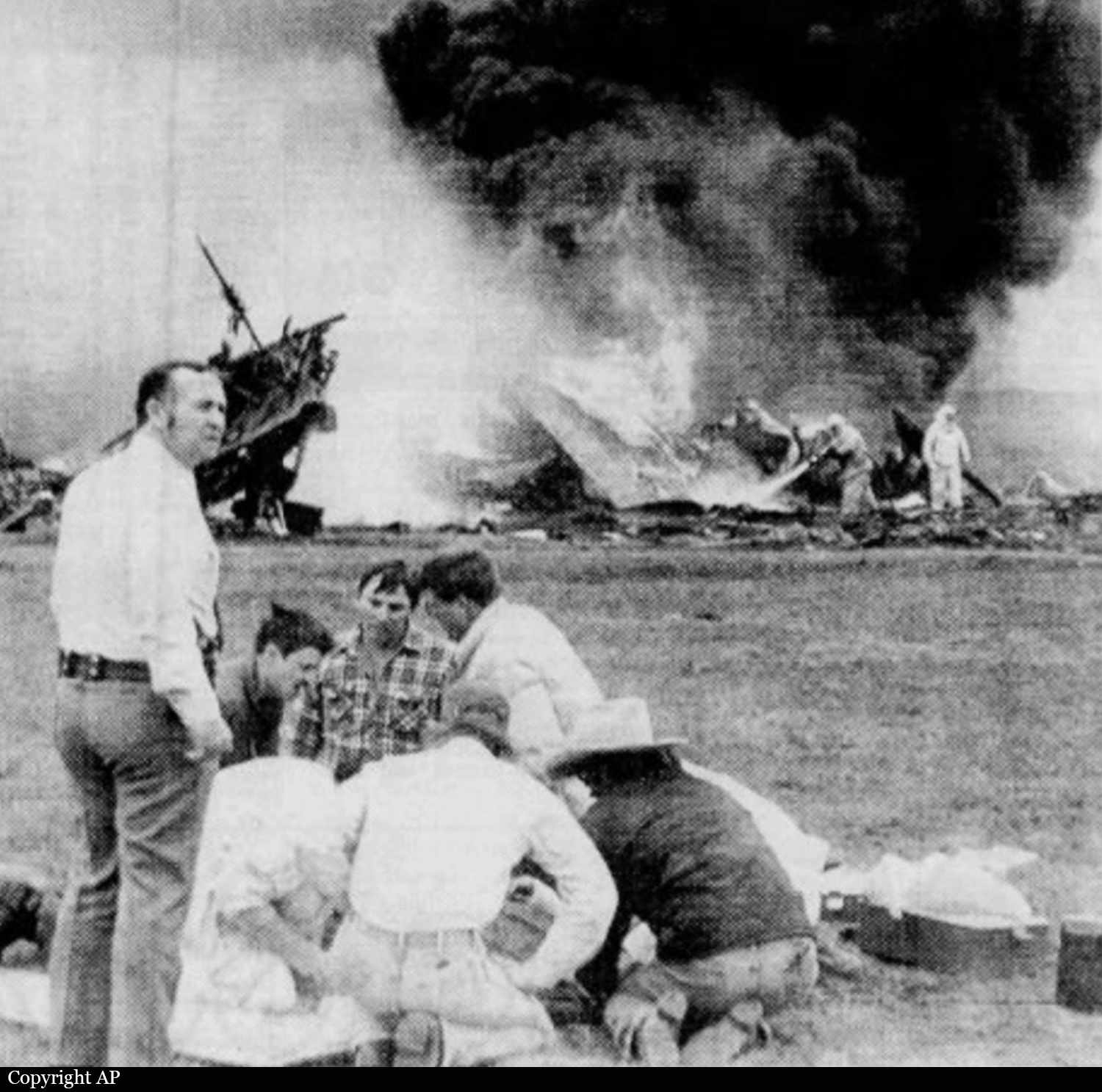
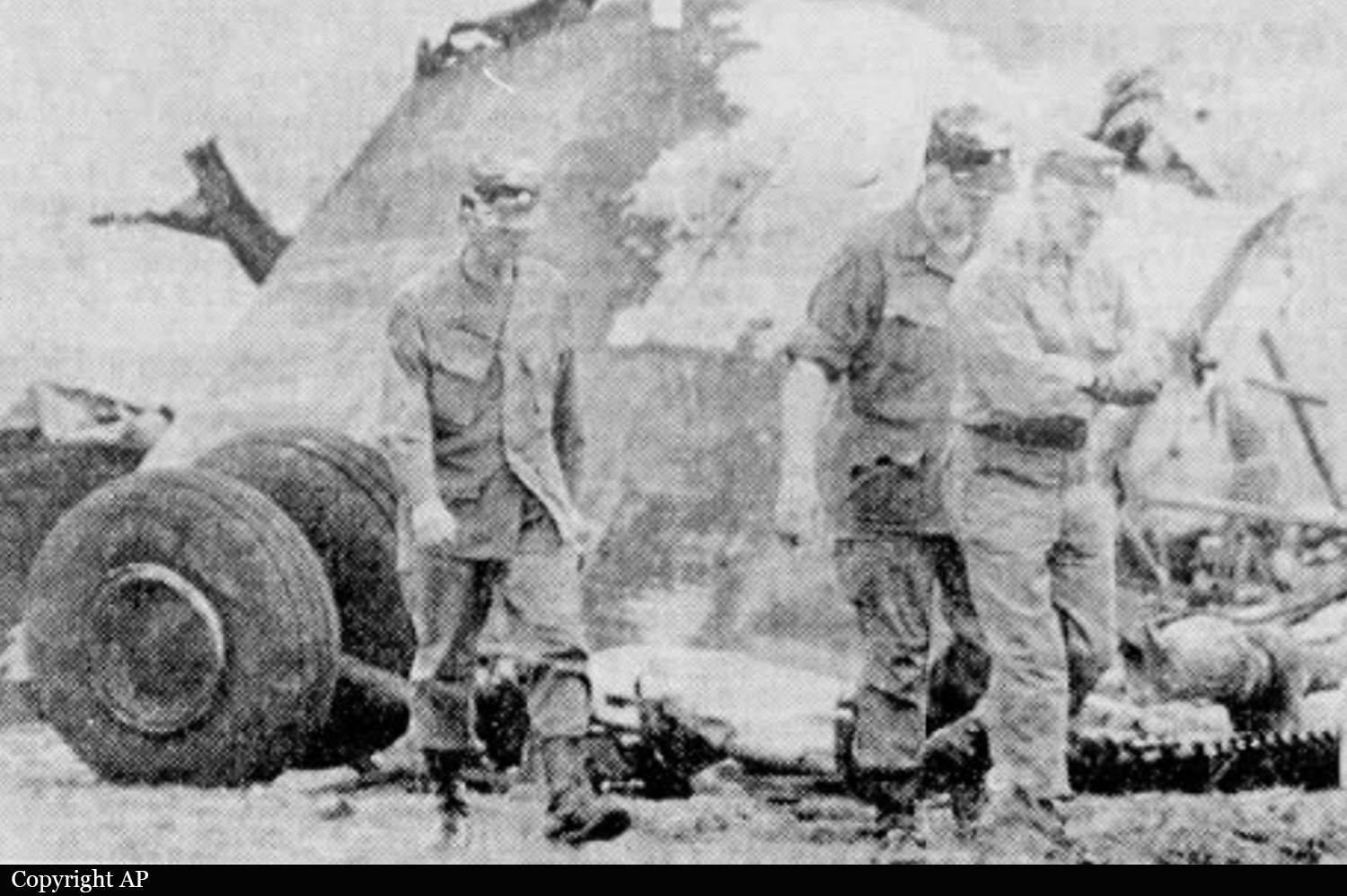
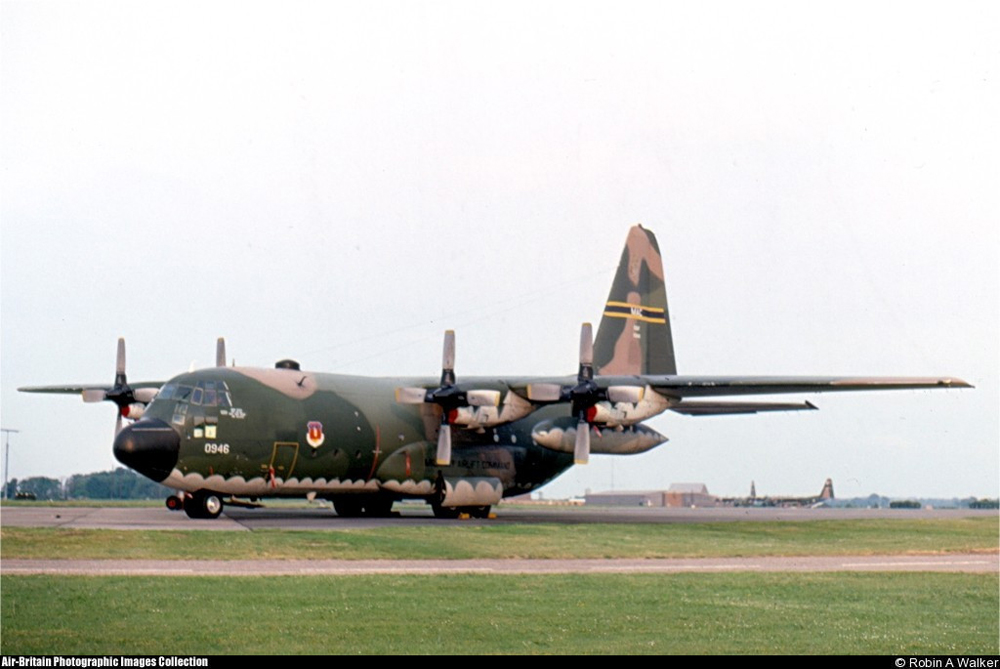
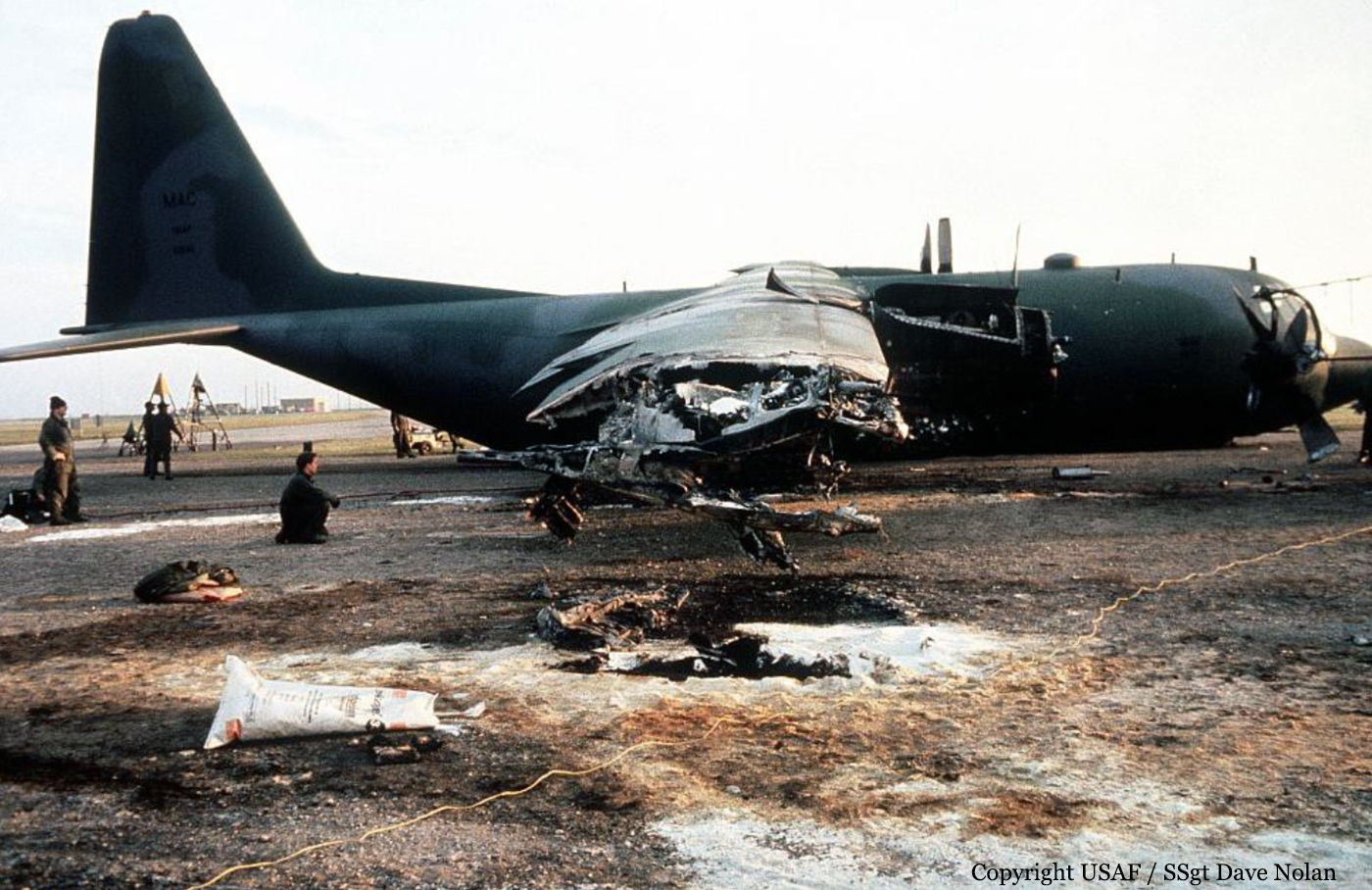
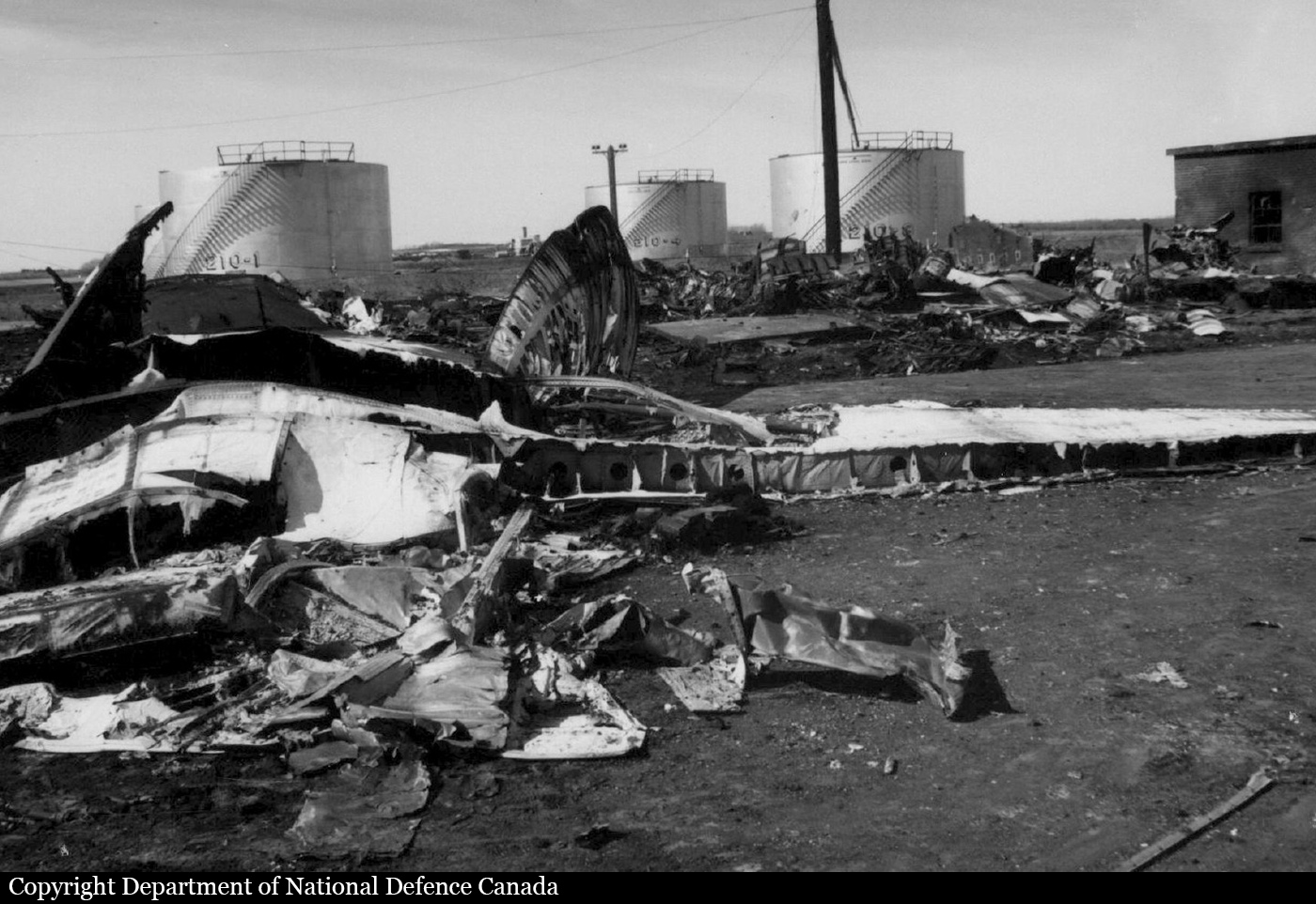
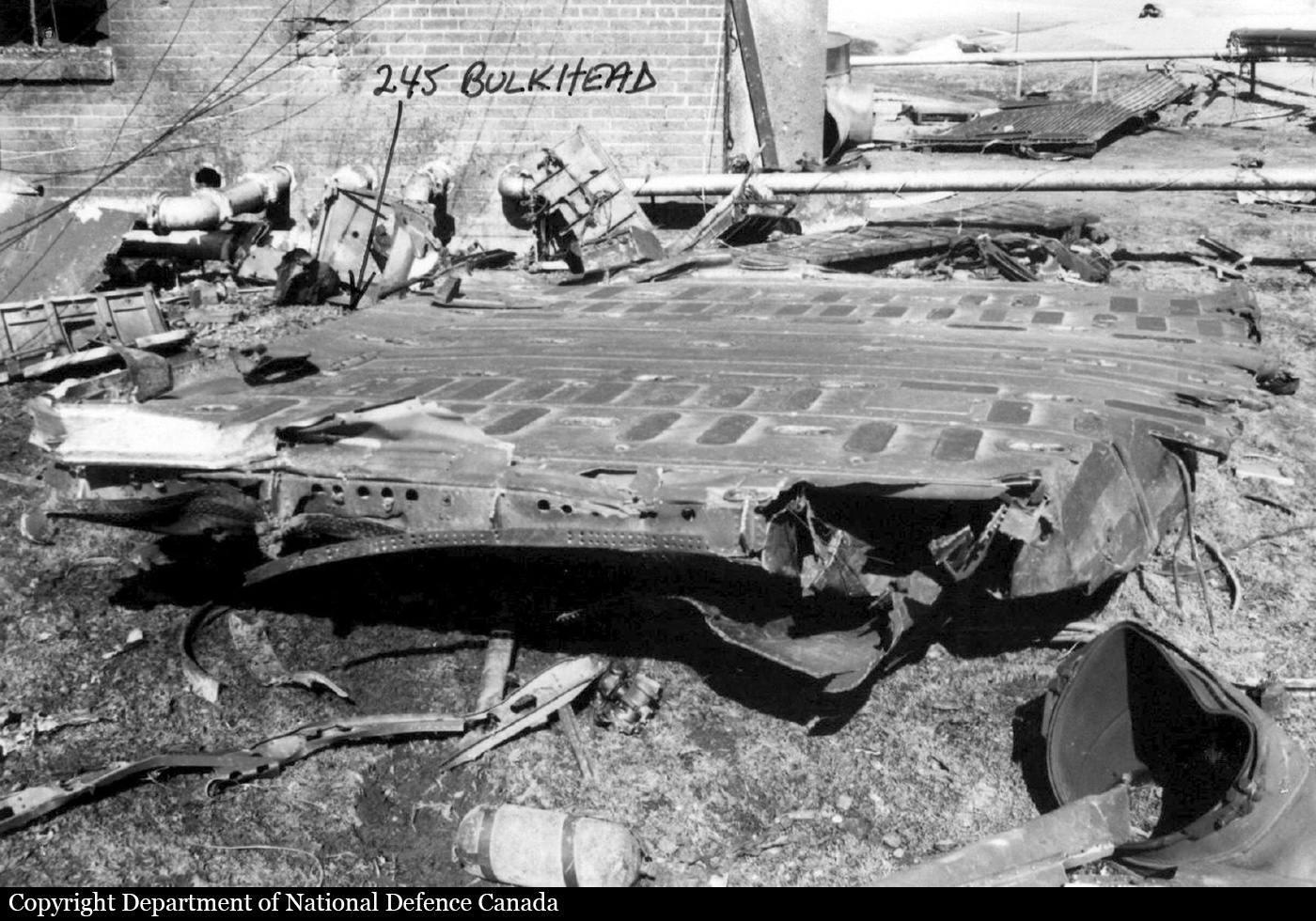
The Squadron was tasked to carry out a fly-past in commemoration of the 61st anniversary of the RCAF in conjunction with other base aircraft. At the conclusion of the fly-past the three CC-130 crews planned to recover on runway 29 utilizing a low level 'battle' break manoeuvre. They positioned themselves in echelon right with wingspan spacing. The briefed procedure was to pull 10° and turn left with 60° of bank maintaining 2 G's, climbing to 1,000 feet AGL to position themselves downwind. Number 2 & 3 would follow each with three seconds spacing. After approximately 50° of turn at 900 feet AGL number 2 collided with the underside of lead forward of the LH main gear, punching a 5 foot square hole in the aircraft floor structure. The number 2 aircraft had its forward fuselage section separate from the aircraft and freefall into a field. The numbers 3 and 4 propellers separated and landed some distance from the main wreckage. The tail section of the lead aircraft also separated prior to ground impact. Control of either aircraft after collision was impossible. The four occupants of the lead aircraft and the six occupants of number 2 all sustained fatal injuries. Both aircraft crashed inverted and a building and several vehicles were destroyed in a very intense fire.
Crew:
Cpt Robert William Drake, pilot,
Cpt Iain David Mahaffey, pilot,
Cpt John Derek Thornton, pilot,
Cpt David Arthur Jon Whalen, pilot,
W/O William Iver Oness, flight engineer.
Passenger:
Cpl J. M. Doucet, ATC.
Probable cause:
The Board assigns cause factors as follows:
a. Personnel - Pilot - Technique. The pilot (Trucker Lead) deviated from the briefed Battle Break profile to the extent that the designed time, vertical and horizontal separation between Lead and Trucker 2 was lost.
b. Personnel - Pilot - Inattention. The pilot (Trucker 2) lost visual contact with Lead and continued the manoeuvre through to impact without reacquiring Lead.
c. Personnel - Supervision/435 Sqn - Inattention. 435 Squadron supervisory personnel assigned pilots to perform a manoeuvre in the CC130 for which they were inadequately trained and in the case of two pilots had no training at all.
d. Personnel - Management/435 Sqn, CFB Edmonton, ATGHQ - Information. The absence of police with respect to Air Display manoeuvres permitted the planning and conduct to and unpublished procedure. There are no written instructions or Standard Operating Procedures describing the CC130 Battle Break. This manoeuvre was widely used and condoned at all levels.
Final Report:
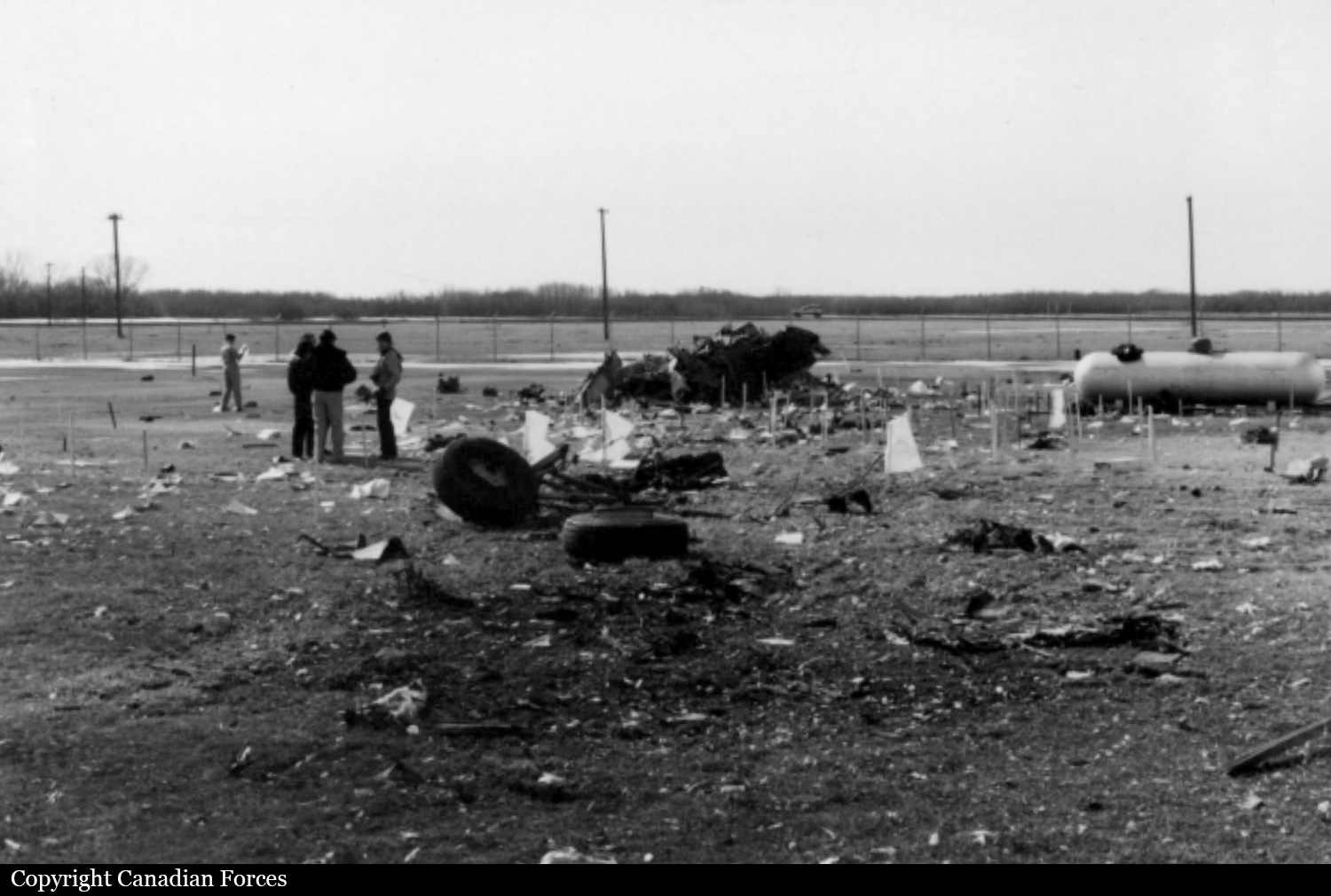
Crash of a Lockheed CC-130H Hercules at Namao AFB: 4 killed

Date & Time: Mar 29, 1985 at 2015 LT
Type of aircraft:
Operator:
Registration:
130330
Flight Phase:
Flight Type:
Survivors:
No
Schedule:
Namao - Namao
MSN:
4555
YOM:
1974
Flight number:
Trucker 1
Country:
Crew on board:
4
Crew fatalities:
Pax on board:
0
Pax fatalities:
Other fatalities:
Total fatalities:
4
Captain / Total flying hours:
3639
Captain / Total hours on type:
3425.00
Copilot / Total flying hours:
2674
Copilot / Total hours on type:
882
Aircraft flight hours:
11771
Circumstances:
The Squadron was tasked to carry out a fly-past in commemoration of the 61st anniversary of the RCAF in conjunction with other base aircraft. At the conclusion of the fly-past the three CC-130 crews planned to recover on runway 29 utilizing a low level 'battle' break manoeuvre. They positioned themselves in echelon right with wingspan spacing. The briefed procedure was to pull 10° and turn left with 60° of bank maintaining 2 G's, climbing to 1,000 feet AGL to position themselves downwind. Number 2 & 3 would follow each with three seconds spacing. After approximately 50° of turn at 900 feet AGL number 2 collided with the underside of lead forward of the LH main gear, punching a 5 foot square hole in the aircraft floor structure. The number 2 aircraft had its forward fuselage section separate from the aircraft and freefall into a field. The numbers 3 and 4 propellers separated and landed some distance from the main wreckage. The tail section of the lead aircraft also separated prior to ground impact. Control of either aircraft after collision was impossible. The four occupants of the lead aircraft and the six occupants of number 2 all sustained fatal injuries. Both aircraft crashed inverted and a building and several vehicles were destroyed in a very intense fire.
Crew:
Cpt Lonnie Benjamin Register Jr., pilot,
Cpt Kevin Ernest Gerald Kennedy, copilot,
Cpt Brian John Tulloch, navigator,
Sgt Robert Harry Brown, flight engineer.
Probable cause:
The Board assigns cause factors as follows:
a. Personnel - Pilot - Technique. The pilot (Trucker Lead) deviated from the briefed Battle Break profile to the extent that the designed time, vertical and horizontal separation between Lead and Trucker 2 was lost.
b. Personnel - Pilot - Inattention. The pilot (Trucker 2) lost visual contact with Lead and continued the manoeuvre through to impact without reacquiring Lead.
c. Personnel - Supervision/435 Sqn - Inattention. 435 Squadron supervisory personnel assigned pilots to perform a manoeuvre in the CC130 for which they were inadequately trained and in the case of two pilots had no training at all.
d. Personnel - Management/435 Sqn, CFB Edmonton, ATGHQ - Information. The absence of police with respect to Air Display manoeuvres permitted the planning and conduct to and unpublished procedure. There are no written instructions or Standard Operating Procedures describing the CC130 Battle Break. This manoeuvre was widely used and condoned at all levels.
Final Report:
Crash of a Lockheed C-130E Hercules in Fort Hood: 8 killed

Date & Time: Mar 12, 1985
Type of aircraft:
Operator:
Registration:
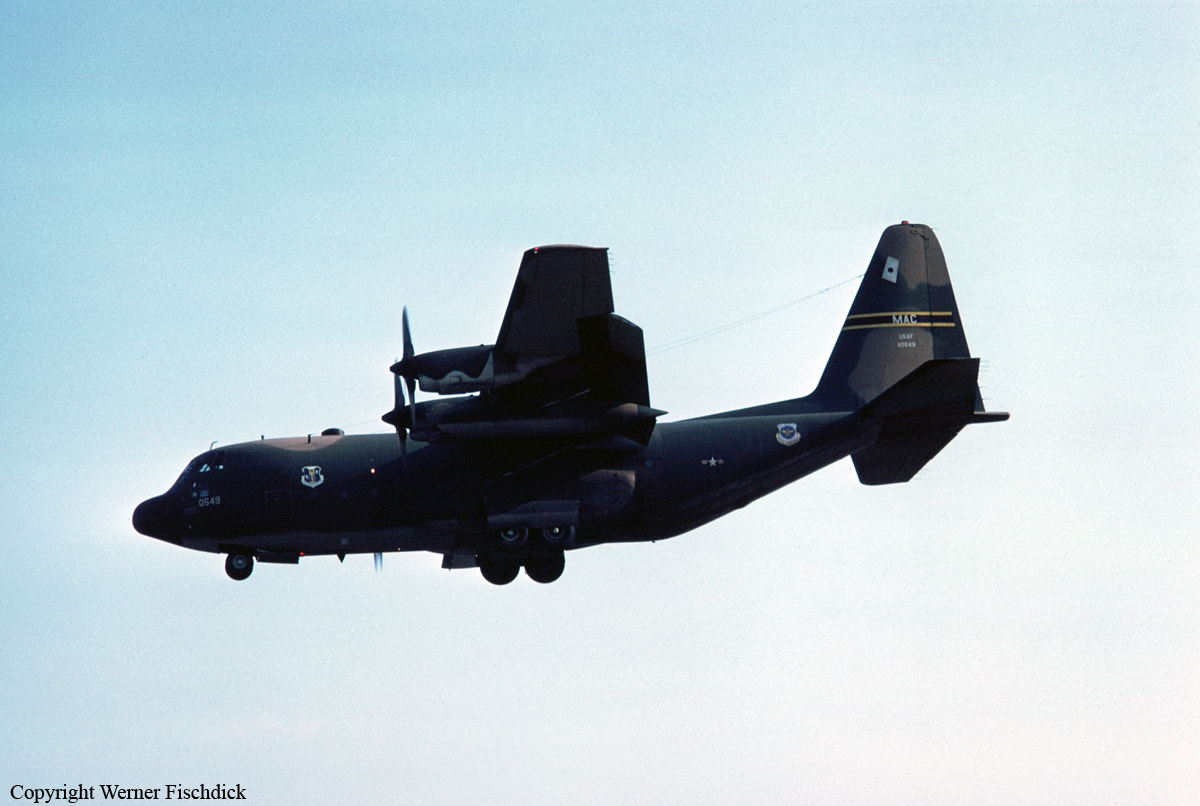
64-0549
Flight Phase:
Flight Type:
Survivors:
No
Schedule:
Dyess AFB - Gray AAF
MSN:
4044
YOM:
1965
Location:
Crew on board:
8
Crew fatalities:
Pax on board:
0
Pax fatalities:
Other fatalities:
Total fatalities:
8
Circumstances:
The four engine aircraft was completing a training mission from Dyess AFB (Abilene) to the Gray AAF near Killeen, carrying eight crew members. En route, while flying at low height and dropping sand bags, the airplane went out of control and crashed near Fort Hood. All eight crew members were killed.

Crash of a Lockheed KC-130H Hercules in Riyadh: 8 killed

Date & Time: Feb 24, 1985
Type of aircraft:
Operator:
Registration:
1620
Flight Type:
Survivors:
No
Schedule:
Riyadh - Riyadh
MSN:
4872
YOM:
1980
Country:
Region:
Crew on board:
8
Crew fatalities:
Pax on board:
0
Pax fatalities:
Other fatalities:
Total fatalities:
8
Circumstances:
The crew was completing a local training mission at Riyadh-King Khaled Airport on behalf of the 16th squadron. On final approach, the aircraft stalled and crashed in a huge explosion few hundred meters short of runway. The aircraft was destroyed and all eight occupants were killed.
Probable cause:
It is believed that the aircraft stalled on short final due to an insufficient speed.

Crash of a Lockheed C-130A Hercules off Trujillo: 21 killed

Date & Time: Jan 22, 1985 at 0935 LT
Type of aircraft:
Operator:
Registration:
56-0501
Flight Type:
Survivors:
No
Schedule:
Howard – Trujillo – Comayagua
MSN:
3109
YOM:
1957
Location:
Country:
Crew on board:
5
Crew fatalities:
Pax on board:
16
Pax fatalities:
Other fatalities:
Total fatalities:
21
Circumstances:
Following an uneventful flight from Howard Airbase in Panama, the crew started the approach to Trujillo Airport in marginal weather conditions. While completing a left turn at low height with gear and flaps retracted, the aircraft struck the water surface with its left wingtip. Out of control, it crashed in the sea about 13 km from the airport. All 21 occupants were killed. At the time of the accident, the visibility was estimated to be 2,500 meters in haze with a 1,500 feet ceiling and a northerly wind gusting to 25 knots.

Crash of a Lockheed C-130E Hercules at Giebelstadt AFB

Date & Time: Nov 2, 1984
Type of aircraft:
Operator:
Registration:
68-10946
Flight Type:
Survivors:
Yes
Schedule:
Giebelstadt AFB - Giebelstadt AFB
MSN:
4326
YOM:
1969
Country:
Region:
Crew on board:
4
Crew fatalities:
Pax on board:
0
Pax fatalities:
Other fatalities:
Total fatalities:
0
Circumstances:
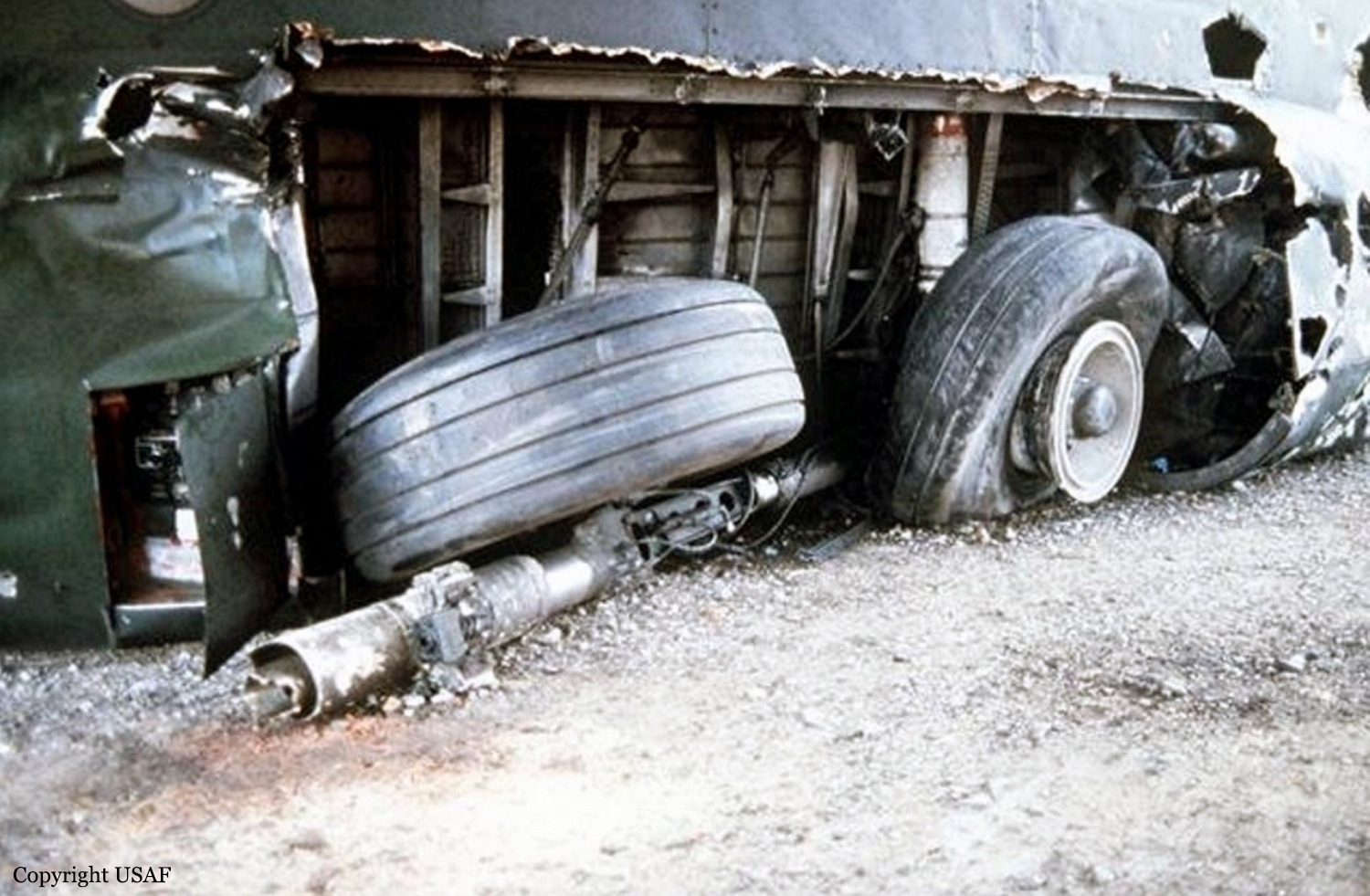
The crew was engaged in a local training flight at Giebelstadt AFB. For unknown reasons, the four engine aircraft landed hard, causing the undercarriage and both right engines n°3 and 4 to be torn off upon landing. The aircraft slid on its belly and came to rest in flames. All four crew members escaped uninjured while the aircraft was damaged beyond repair.

Crash of a Lockheed C-130E Hercules in Lajes

Date & Time: Apr 15, 1984
Type of aircraft:
Operator:
Registration:
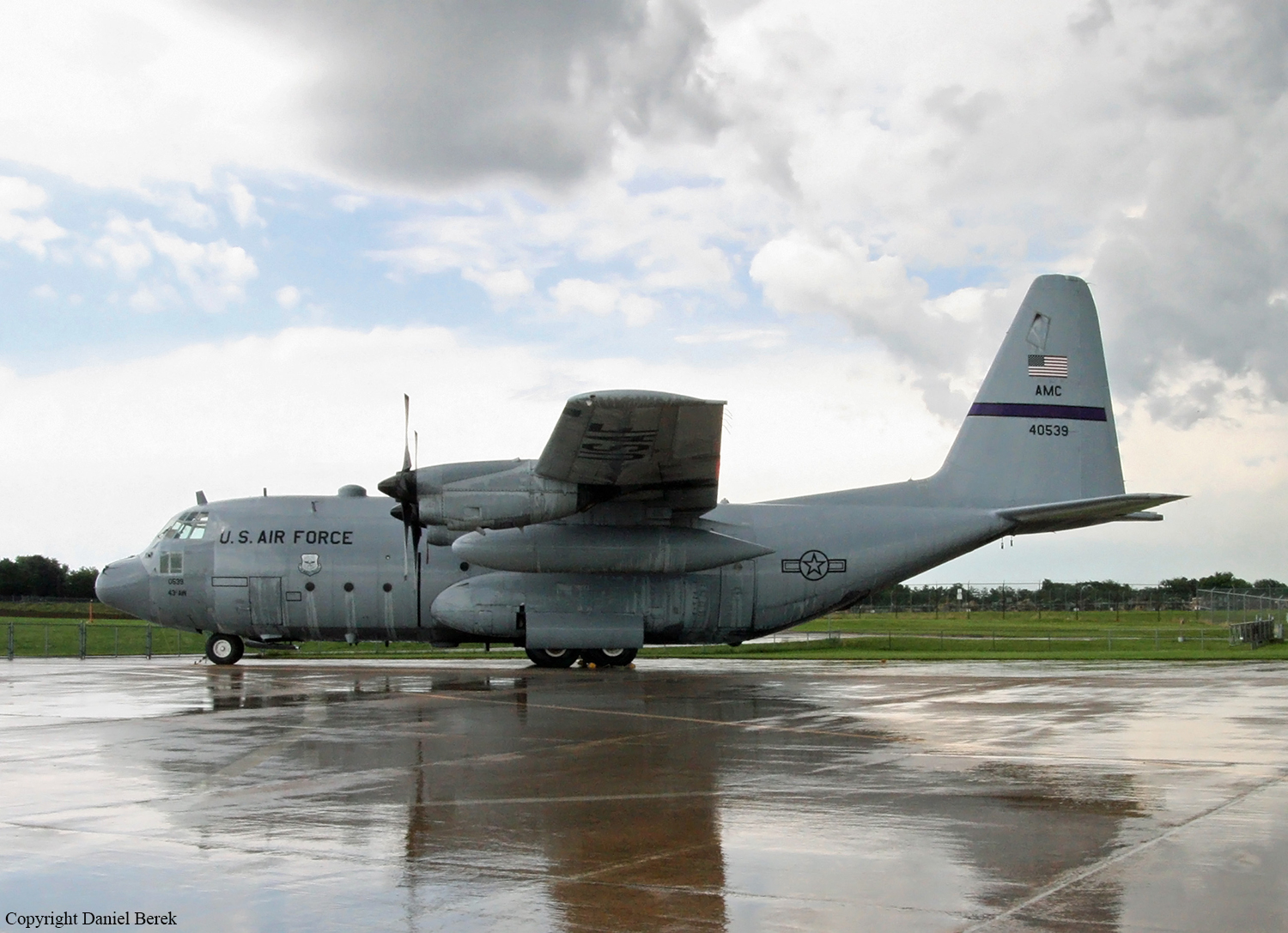
64-0539
Flight Type:
Survivors:
Yes
Schedule:
Lajes - Lajes
MSN:
4029
YOM:
1965
Country:
Region:
Crew on board:
6
Crew fatalities:
Pax on board:
0
Pax fatalities:
Other fatalities:
Total fatalities:
0
Circumstances:
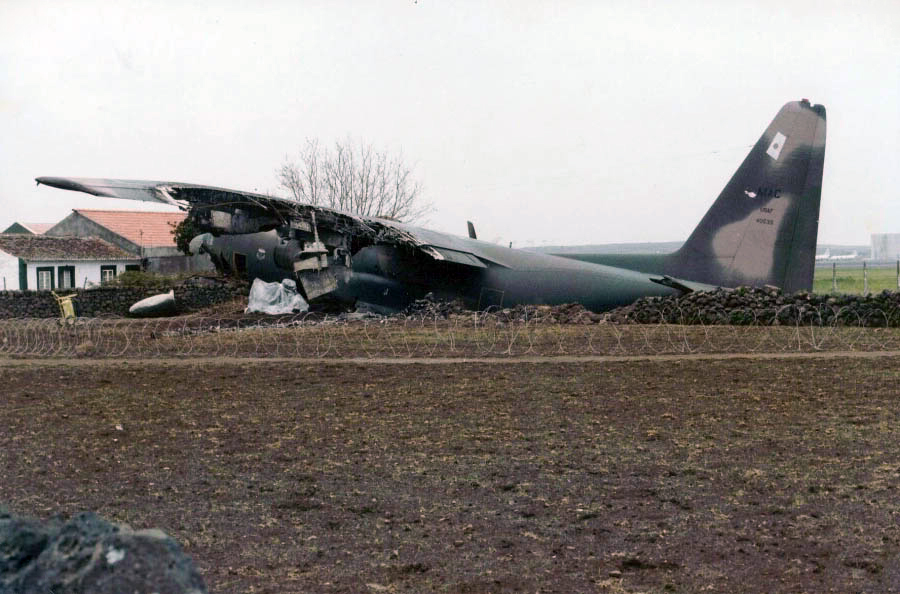
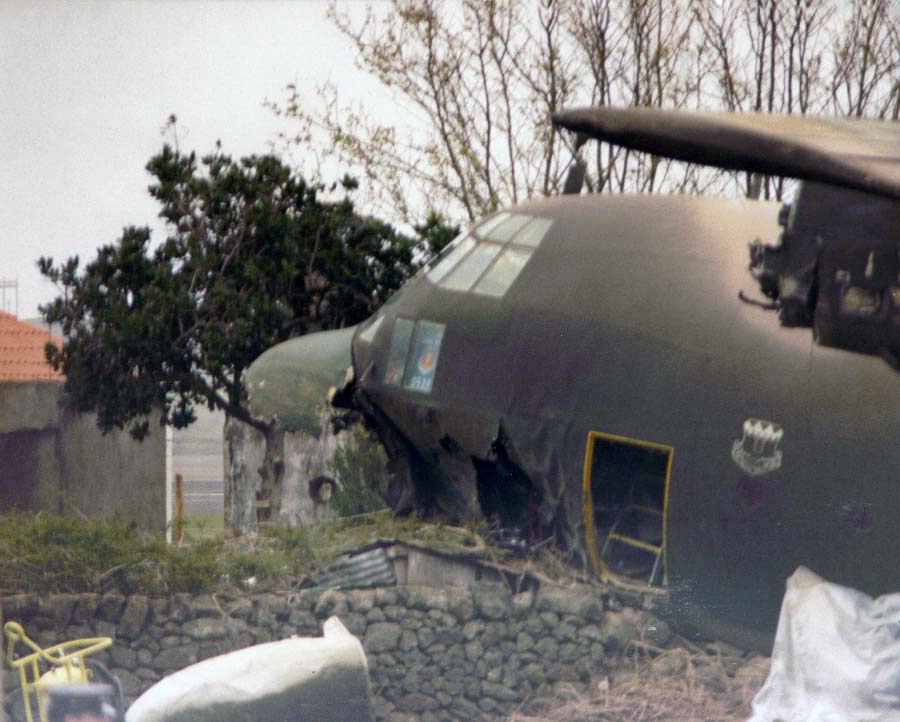
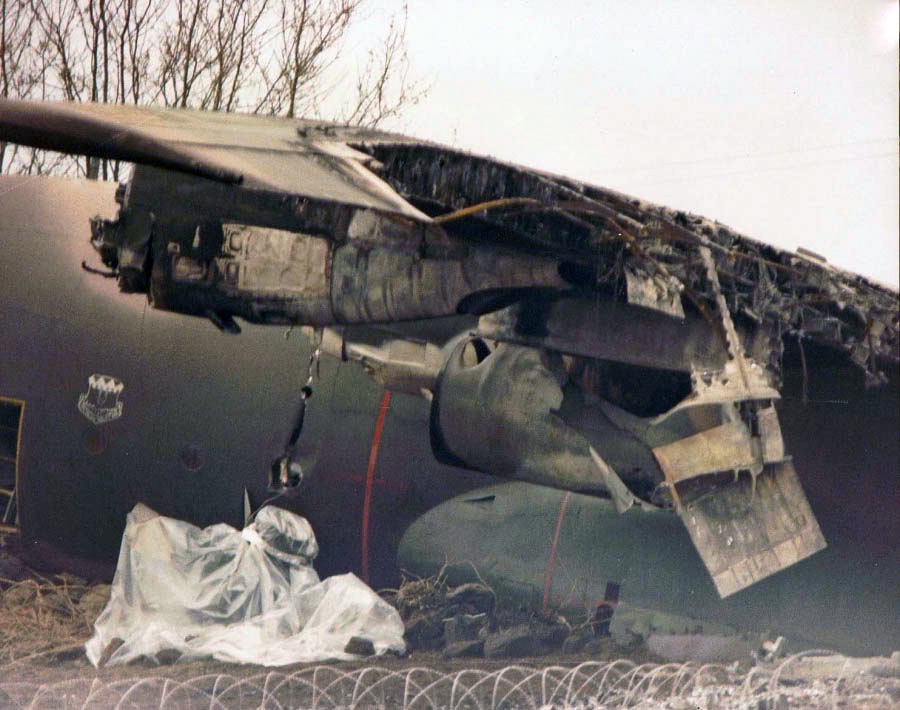
Crash on landing in Lajes in the following circumstances, according to the following testimony:
I was the Maintenance Job Controller on duty when the day this occurred. The incident aircraft had declared an inflight emergency (IFE) for (if I recall correctly) #3 engine shutdown. In any case it was right wing engine that was out of service. Fire trucks were standing by as this was SOP for IFEs. The aircraft came in from south to north. On landing roll the crew reversed all three operating engines instead of only the running symmetrical engines of each wing. Having twice the reverse thrust action exerted on the left wing caused the aircraft to yaw left and depart the runway. After going through the perimeter fence off to the left of the runway, it rode up some rock walls and nearly impacted two dwellings on the other side before coming to rest. The left wing caught on fire. In pictures that are available you can see where one of the propellers that departed on impact sliced a hole in the fuselage just in front of the red prop plane of rotation line on the left hand side. Fortunately, because the fire trucks were already lined up on the runway, the fire was extinguished quickly. The only injury to the aircrew was a broken finger. Some side notes. The aircraft was carrying the produce flown in weekly for the commissary on base, No big deal in the scope of things but fruits and veggies were in short supply unless you went local. Also, in one of those oddities of life that made it all the more surreal, the Line Chief had said over the maintenance radio just before it landed, “I hope he remembers to reverse only one and four when he lands.” The next words I heard from him were, “We have a 130 in the dirt!” “We have a 130 on fire!” You just can’t make that stuff up. It was almost prescient. The aircraft was eventually mated with the cockpit section of C-130 that was written off due to a hard landing in Germany. They flew that in on a C-5 with replacement wings etc. Robbins Depot Maintenance came in and bolted it all together. It eventually flew out on a onetime flight to the depot in Italy.
Thanks to Bill Hewett, maintenance controller on duty when it occurred.

Crash of a Lockheed C-130E Hercules near Borja: 18 killed

Date & Time: Feb 28, 1984 at 1930 LT
Type of aircraft:
Operator:
Registration:
68-10944
Flight Phase:
Flight Type:
Survivors:
No
Site:
Schedule:
Ramstein - Zaragoza
MSN:
4324
YOM:
1969
Location:
Country:
Region:
Crew on board:
9
Crew fatalities:
Pax on board:
9
Pax fatalities:
Other fatalities:
Total fatalities:
18
Circumstances:
Inbound from Ramstein AFB, Germany, the four engine airplane was descending to Zaragoza Airport, carrying nine passengers and nine crew members, among them a high ranking officer from the Spanish Air Force. Arriving in the Spanish Airspace, the crew was supposed to take part to a joined exercise with the Ejército del Aire (Spanish Air Force). While cruising at an altitude of 2,200 feet in marginal weather conditions with flaps down at 50° and at a speed of 250 km/h, the aircraft struck the slope of a mountain located in the Sierra de Moncayo, west of Borja. The aircraft disintegrated on impact and all 18 occupants were killed. At the time of the accident, the visibility was estimated to 6 km with a ceiling at 1,200 feet.
Probable cause:
It is believed that the accident was the consequence of a controlled flight into terrain.

Crash of a Lockheed L-382E-21C Hercules near Dundo: 7 killed

Date & Time: Aug 28, 1983
Type of aircraft:
Operator:
Registration:
N17ST
Flight Type:
Survivors:
No
Site:
MSN:
4333
YOM:
1969
Country:
Region:
Crew on board:
4
Crew fatalities:
Pax on board:
3
Pax fatalities:
Other fatalities:
Total fatalities:
7
Circumstances:
While descending to Dundo Airport, the crew encountered limited visibility due to foggy conditions. At an altitude of 2,650 feet, the aircraft struck the slope of a mountain located 50 km from the airport and disintegrated upon impact. All seven occupants were killed. For unknown reasons, the crew started the descent prematurely, causing the aircraft to continue the approach below MDA.

Crash of a Lockheed C-130H Hercules in Nevada: 6 killed

Date & Time: Jun 28, 1983 at 1210 LT
Type of aircraft:
Operator:
Registration:
74-2068
Flight Phase:
Flight Type:
Survivors:
No
Site:
Schedule:
Nellis - Nellis
MSN:
4694
YOM:
1976
Location:
Crew on board:
5
Crew fatalities:
Pax on board:
1
Pax fatalities:
Other fatalities:
Total fatalities:
6
Circumstances:
The crew departed Nellis AFB in Las Vegas on a training mission consisting of heavy equipment drop. While flying at low height, the pilot initiated a turn when the aircraft stalled and crashed. The wreckage was found in an uninhabited and hilly terrain located about 100 miles northwest of Nellis AFB. All six occupants were killed.