Crash of a Douglas DC-3 in Puebla: 7 killed

Date & Time: Dec 5, 1959
Type of aircraft:
Operator:
Flight Type:
Survivors:
Yes
Schedule:
Mexico City – Chetumal
Country:
Crew on board:
3
Crew fatalities:
Pax on board:
5
Pax fatalities:
Other fatalities:
Total fatalities:
7
Circumstances:
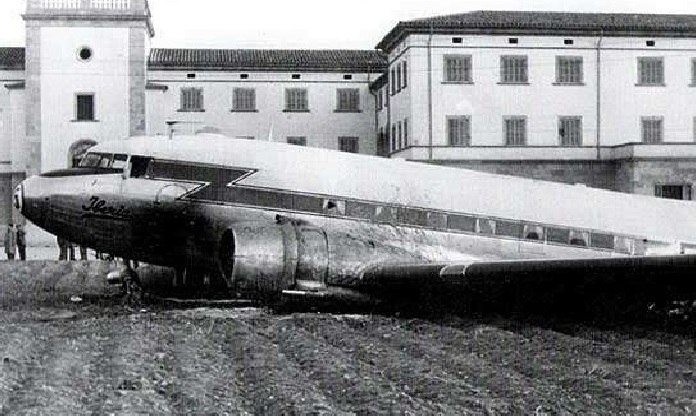
En route from Mexico City to Chetumal, the crew informed ATC about engine problems and elected to divert to Puebla-Hermanos Serdán-Huejotzingo Airport. On approach, the crew encountered poor visibility due to foggy conditions when the airplane struck an antenna and crashed onto a house. A crew member was seriously injured while seven other occupants were killed. There were no injuries on ground.
Crash of a Douglas DC-3 in Santa Maria: 1 killed

Date & Time: Oct 26, 1959 at 2018 LT
Type of aircraft:
Operator:
Registration:
N67589
Flight Phase:
Survivors:
Yes
Schedule:
Los Angeles – Oxnard – Santa Maria – Paso Robles – San Francisco
MSN:
19656
YOM:
1944
Flight number:
PCF308
Crew on board:
3
Crew fatalities:
Pax on board:
17
Pax fatalities:
Other fatalities:
Total fatalities:
1
Captain / Total flying hours:
17467
Captain / Total hours on type:
14467.00
Copilot / Total flying hours:
3951
Copilot / Total hours on type:
3032
Aircraft flight hours:
24805
Circumstances:
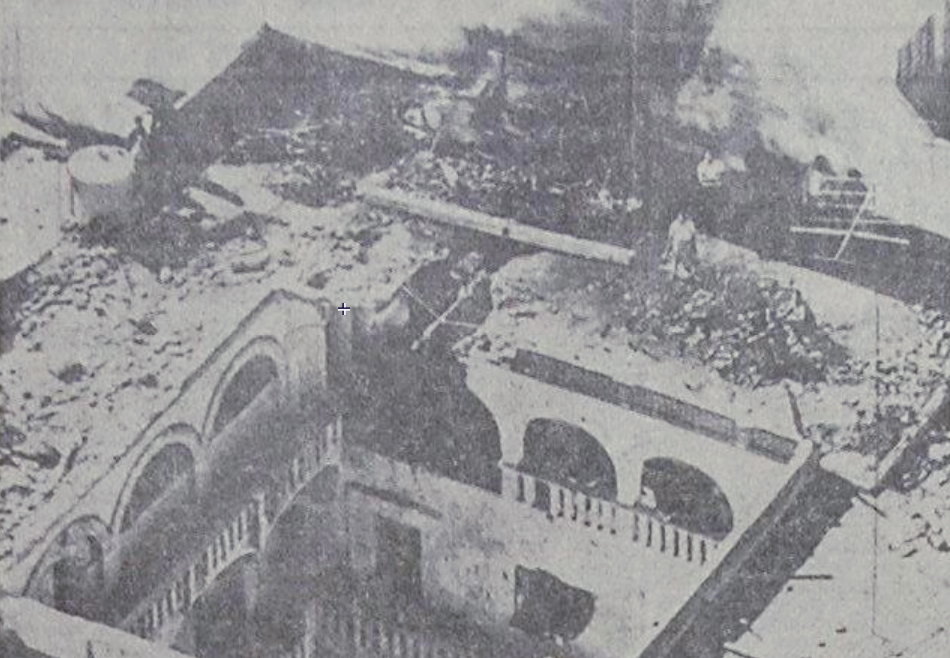
Flight 308 was scheduled between Los Angeles, and San Francisco, with intermediate stops at Oxnard, Santa Maria, and Paso Robles, California. The trip to Oxnard. and Santa Maria was routine. Takeoff from, Santa Maria was made from runway 30 with 17 passengers on board and a crew of three. A few seconds after the first power reduction following takeoff, a loud explosion was heard and fire was seen in the left engine. The left propeller was immediately feathered, the engine was shut off, and appropriate power was applied to the right engine. At the time this happened the aircraft was at an approximate altitude of 550 feet m s.l., or 300 feet above the ground. Shortly after this the fire was observed to be out; however, the airplane began to buffet. This buffeting became so severe that the aircraft lost altitude and the captain was forced to make an emergency landing about 1-1/2 miles north of the airport. The copilot was killed, the captain was seriously injured, and the purser and 17 passengers received injuries of varying degrees.
Probable cause:
The Board determines the probable cause of this accident was that following the failure of the left engine, the left engine's ring cowl was deformed causing a buffeting and drag condition which made sustained flight impossible. A contributing factor was the scheduling of the aircraft by the company when there should have been reasonable doubt concerning the airworthiness of an engine.
Final Report:

Crash of a Douglas R4D-5 in Cape Hallett

Date & Time: Sep 15, 1959
Type of aircraft:
Operator:
Registration:
17163
Flight Type:
Survivors:
Yes
MSN:
12519
YOM:
1944
Country:
Region:
Crew on board:
0
Crew fatalities:
Pax on board:
0
Pax fatalities:
Other fatalities:
Total fatalities:
0
Circumstances:
On touchdown, the right main gear collapsed. The airplane veered off runway and came to rest. There were no casualties but the aircraft was written off.
Probable cause:
Failure of the right main gear on landing.

Crash of a Douglas DC-3A-414A in San Isidro de El General: 1 killed

Date & Time: Aug 15, 1959 at 0645 LT
Type of aircraft:
Operator:
Registration:
TI-1005C
Flight Type:
Survivors:
Yes
Schedule:
San José – San Isidro de El General
MSN:
4959
YOM:
1942
Flight number:
LR019
Country:
Crew on board:
3
Crew fatalities:
Pax on board:
0
Pax fatalities:
Other fatalities:
Total fatalities:
1
Circumstances:
Following an uneventful flight from San José, the crew landed on soggy runway 02 at San Isidro de El General Airport. Unable to stop within the remaining distance, the airplane overran by 20 feet and collided with a house. All three crew members evacuated safely while a baby living in house was killed.
Probable cause:
The crew could not hold back the aircraft on its landing run because of the ineffectiveness of the brakes on an extremely wet runway. This condition was aggravated by the fact that the aircraft was operating with almost maximum landing weight.

Crash of a Douglas DC-3B-202 near Kerrville: 3 killed

Date & Time: Feb 1, 1959 at 2350 LT
Type of aircraft:
Registration:
N17314
Survivors:
Yes
Schedule:
Boise – Pueblo – Kelly
MSN:
1924
YOM:
1937
Location:
Crew on board:
3
Crew fatalities:
Pax on board:
25
Pax fatalities:
Other fatalities:
Total fatalities:
3
Captain / Total flying hours:
15009
Captain / Total hours on type:
9373.00
Copilot / Total flying hours:
3872
Copilot / Total hours on type:
3100
Aircraft flight hours:
49051
Circumstances:
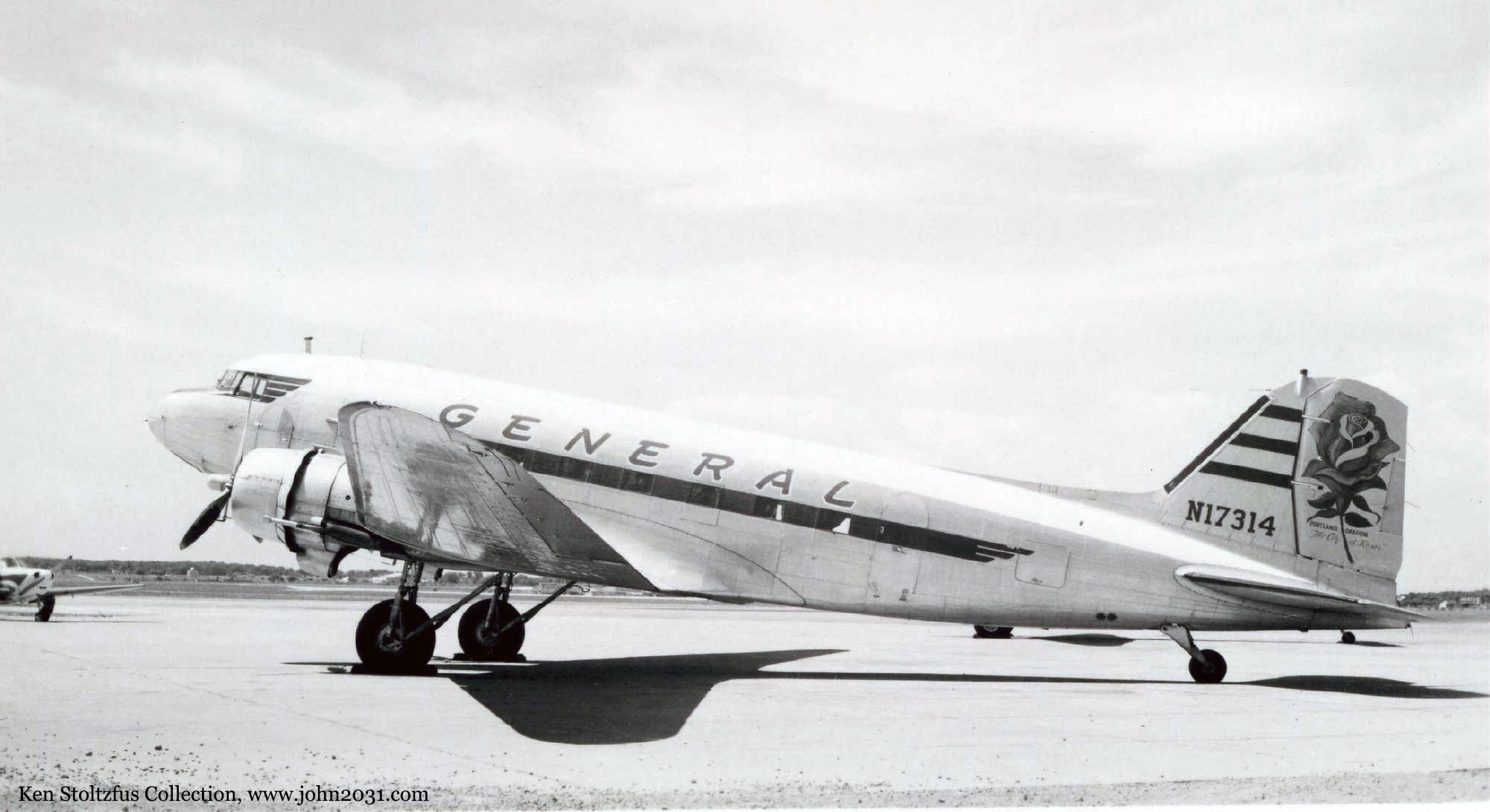
A General Airways DC-3 crashed shortly before midnight near Kerrville, Texas, on February 1, 1959, during a civil air movement (CAM) of 25 military personnel from Boise, Idaho, to Lackland Air Force Base (Kelly AFB), San Antonio, Texas. Three of the 28 occupants, including the captain and the reserve captain, then acting as copilot, were killed, four were seriously injured, and 21 received minor injuries. The final segment of the flight was from Pueblo, Colorado, where the U. S. Weather Bureau Station furnished weather briefing. Icing prevailed and was to continue. An IFR flight plan specifying cruising at 9,000 feet was filed. Departure from Pueblo was at 1800 1 and at 1916 the flight requested an altitude change from 9,000 to 7,000 feet, reporting light icing. ARTC approved at 1945. Shortly thereafter the flight again reported light icing. An involved series of radio contacts ensued as ice accretion became worse, then critical, then incapacitating. A privately used airport at Kerrville, Texas, was staffed and lighted. An attempt to land there failed and the aircraft was crash-landed nearby. Previously alerted fire fighting apparatus and ambulances were sent to the site. Investigation revealed no significant mechanical defect and no unpredicted weather conditions. The Board believes that this accident resulted from the pilot pressing into known and dangerous icing conditions until the aircraft was crash-landed. General Airways, Inc., a CAB certificated supplemental air carrier, surrendered its FAA operating certificate shortly after the accident pending FAA re-evaluation of the carrier's operations. The FAA later restored the certificate.
Probable cause:
The Board determines that the probable cause of this accident was the captain's poor judgment in continuing into known and dangerous icing conditions.
Final Report:

Crash of a Douglas DC-3A-197B on Mt Holston: 10 killed

Date & Time: Jan 8, 1959 at 2032 LT
Type of aircraft:
Operator:
Registration:
N18941
Survivors:
No
Site:
Schedule:
Nashville – Knoxville – Bristol
MSN:
2007
YOM:
1938
Flight number:
SE308
Crew on board:
3
Crew fatalities:
Pax on board:
7
Pax fatalities:
Other fatalities:
Total fatalities:
10
Captain / Total flying hours:
7214
Captain / Total hours on type:
2674.00
Copilot / Total flying hours:
2367
Copilot / Total hours on type:
432
Aircraft flight hours:
5675
Circumstances:
During a night approach to Bristol-Tr-Cities Airport, the airplane was too low and struck the slope of Mt Holston located 15 miles from runway 27 threshold. The airplane was destroyed by impact forces and a post crash fire and all ten occupants were killed. The evidence indicates Flight 308 departed Nashville, Tennessee, with an inoperative radio compass. Although the flight was cleared by way of low frequency airway Green 5, it does not appear that the facilities defining this airway were used. Upon arriving in the Tri-Cities area the aircraft was east of its intended track and erroneously identified the reporting point from which an ILS approach procedure was to be initiated. During the instrument approach, which was conducted in snow showers, the flight missed the outer marker. The approach was continued under instrument conditions without utilizing the VOR facility which would have been of assistance in confirming the flight's position. Without having clearly established his position, the pilot flew 15 miles beyond the outer marker and descended to an altitude too low to clear high terrain in this area.
Probable cause:
The Board determines the probable cause of this accident was the failure of the pilot to identify Gray intersection properly and his decision to continue an ILS approach contrary to company and regulatory procedures.
Final Report:

Crash of a Douglas C-53-DO at Palma de Majorca

Date & Time: Apr 10, 1958
Type of aircraft:
Operator:
Registration:
EC-ABN
Flight Phase:
Survivors:
Yes
Schedule:
Palma de Majorca – Barcelona
MSN:
7346
YOM:
1942
Country:
Region:
Crew on board:
4
Crew fatalities:
Pax on board:
27
Pax fatalities:
Other fatalities:
Total fatalities:
0
Circumstances:
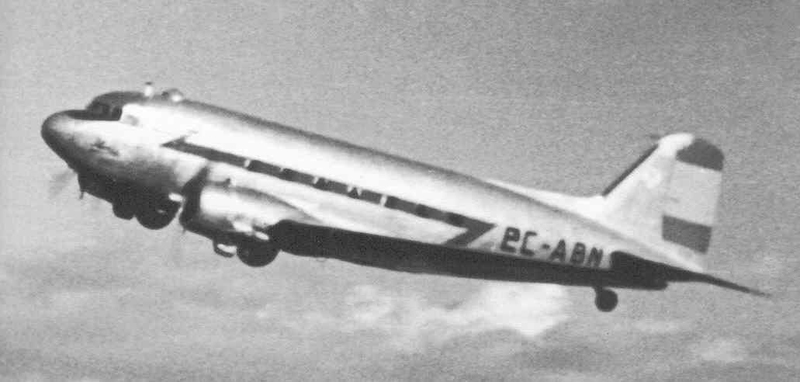
After takeoff from Palma de Mallorca-Son Bonet Airport, while climbing to a height of 1,000 feet, the right engine lost hydraulic pressure. The captain decided to land immediately back onto runway. With its landing gear still retracted, the airplane belly landed less than 100 meters from the runway end. Unable to stop within the remaining distance, the airplane overran and came to rest. All 31 occupants were evacuated safely while the airplane was damaged beyond repair.

Crash of a Douglas DC-3 in Bacolod

Date & Time: Mar 22, 1958 at 1210 LT
Type of aircraft:
Registration:
PI-C626
Flight Phase:
Survivors:
Yes
Schedule:
Manila – Cebu – Marinduque – Iloilo – Bacolod – Manila
Country:
Region:
Crew on board:
3
Crew fatalities:
Pax on board:
37
Pax fatalities:
Other fatalities:
Total fatalities:
0
Captain / Total flying hours:
5000
Circumstances:
PI-C626 departed Manila on a non-scheduled flight to Cebu and return with intermediate stops at Marinduque, Iloilo and Bacolod. The flight as far as Bacolod was uneventful. However, shortly after taking-off from Bacolod at 1210LT, and on reaching the height of 5 to 8 ft from the ground, the aircraft banked to the left. The pilot tried to correct the attitude of the aircraft but was unsuccessful. He, therefore decided to crash land the aircraft. There were no fatalities but the pilot and some passengers suffered minor injuries. Fire broke out on impact which destroyed the main front section of the aircraft.
Probable cause:
The captain prematurely "lifted" the aircraft before attaining the V2 speed. A contributing factor could have teen the presence of the 25 to 30 mph crosswind.
Final Report:

Crash of a Douglas DC-3 in Hato

Date & Time: Feb 15, 1958
Type of aircraft:
Operator:
Registration:
YV-C-AVS
MSN:
4372
YOM:
1942
Location:
Country:
Crew on board:
0
Crew fatalities:
Pax on board:
0
Pax fatalities:
Other fatalities:
Total fatalities:
0
Circumstances:
The airplane christened 'Coco de Mono' crashed in unknown circumstances in Hato. The occupant's fate remains unknown. The accident occurred sometime in February 1958 (exact date unknown).

Crash of a Douglas DC-3A in Poitiers

Date & Time: Jan 8, 1958 at 1415 LT
Type of aircraft:
Operator:
Registration:
F-BAOA
Flight Type:
Survivors:
Yes
Schedule:
Poitiers - Poitiers
MSN:
11708
YOM:
1943
Location:
Country:
Region:
Crew on board:
2
Crew fatalities:
Pax on board:
6
Pax fatalities:
Other fatalities:
Total fatalities:
0
Captain / Total flying hours:
8141
Captain / Total hours on type:
427.00
Copilot / Total flying hours:
6000
Copilot / Total hours on type:
63
Circumstances:
The aircraft was dispatched at Poitiers-Biard Airport for training purposes. The crew (five pilots under supervision, one instructor and two passengers) left the airport at 1245LT for local training mission. While approaching the airfield with one engine voluntarily inoperative, the crew encountered difficulties with the undercarriage that failed to lock down in time. The instructor decided to make a go around when the airplane banked right and crashed on a military building housing ammunition. All eight occupants were injured and evacuated while the aircraft was destroyed. No one on ground was injured.
Probable cause:
The accident was due to the successive appearance of two incidents during a training exercise: slowness of the landing gear to extend; failure of the right engine to pick up power. The crew which included a pilot under training and a mechanic with limited experience, did not properly co-ordinate their actions. The instructor, because of his position in the cockpit, was unable to assist.
Final Report: