Crash of a Douglas C-47 in Rioja: 11 killed

Date & Time: Jan 8, 1958
Operator:
Registration:
FAP484
Flight Phase:
Flight Type:
Survivors:
No
Schedule:
Rioja – Cajamarca
Country:
Crew on board:
4
Crew fatalities:
Pax on board:
7
Pax fatalities:
Other fatalities:
Total fatalities:
11
Circumstances:
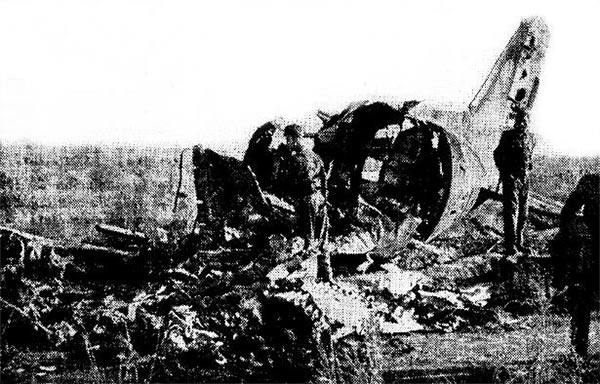
Shortly after takeoff from Rioja Airport, while in initial climb, the airplane went out of control and crashed. All 11 occupants were killed.

Crash of a Douglas C-47B-15-DK in Debre Zeit

Date & Time: Dec 30, 1957
Operator:
Registration:
702
Flight Type:
MSN:
15141/26586
YOM:
1944
Country:
Region:
Crew on board:
0
Crew fatalities:
Pax on board:
0
Pax fatalities:
Other fatalities:
Total fatalities:
0
Circumstances:
Crashed in unknown circumstances at Debre Zeit-Harar Meda Airport located about 40 km southeast of Addis Ababa. The crew fate remains unknown.

Crash of a Douglas C-47A-5-DL at Wiesbaden AFB: 5 killed

Date & Time: Dec 17, 1957
Operator:
Registration:
42-23356
Flight Type:
Survivors:
Yes
MSN:
9218
YOM:
1943
Country:
Region:
Crew on board:
6
Crew fatalities:
Pax on board:
0
Pax fatalities:
Other fatalities:
Total fatalities:
5
Circumstances:
On final approach to Wiesbaden-Erbenheim AFB, the twin engine aircraft struck the ground and crashed 4 km short of runway threshold. Five crew members were killed and a sixth was injured.

Crash of a Douglas C-47D at Yokota AFB: 6 killed

Date & Time: Dec 12, 1957
Operator:
Registration:
43-48603
Flight Phase:
Flight Type:
Survivors:
No
Schedule:
Yokota - Yokota
MSN:
14419/25864
YOM:
1944
Country:
Region:
Crew on board:
6
Crew fatalities:
Pax on board:
0
Pax fatalities:
Other fatalities:
Total fatalities:
6
Circumstances:
Crashed in unknown circumstances near Yokota Airbase, killing all six crew members.

Crash of a Douglas C-47A-30-DK in Jeannine Lake: 3 killed

Date & Time: Dec 10, 1957
Operator:
Registration:
CF-GKV
Survivors:
Yes
Schedule:
Seven Islands - Jeannine Lake
MSN:
13837/25282
YOM:
1944
Country:
Crew on board:
3
Crew fatalities:
Pax on board:
7
Pax fatalities:
Other fatalities:
Total fatalities:
3
Circumstances:
The airplane was performing a flight from Seven Islands to Jeannine Lake. Upon landing on an icy water, the airplane crashed in unclear circumstances. Both pilots and a passenger were killed while seven other occupants were injured. The airplane was lost.

Crash of a Douglas C-47B-15-DK in Gustavus: 4 killed

Date & Time: Nov 23, 1957 at 2000 LT
Operator:
Registration:
43-49403
Flight Type:
Survivors:
Yes
Schedule:
San Francisco – McChord – Annette Island – Anchorage
MSN:
15219/26664
YOM:
1944
Location:
Crew on board:
4
Crew fatalities:
Pax on board:
7
Pax fatalities:
Other fatalities:
Total fatalities:
4
Circumstances:
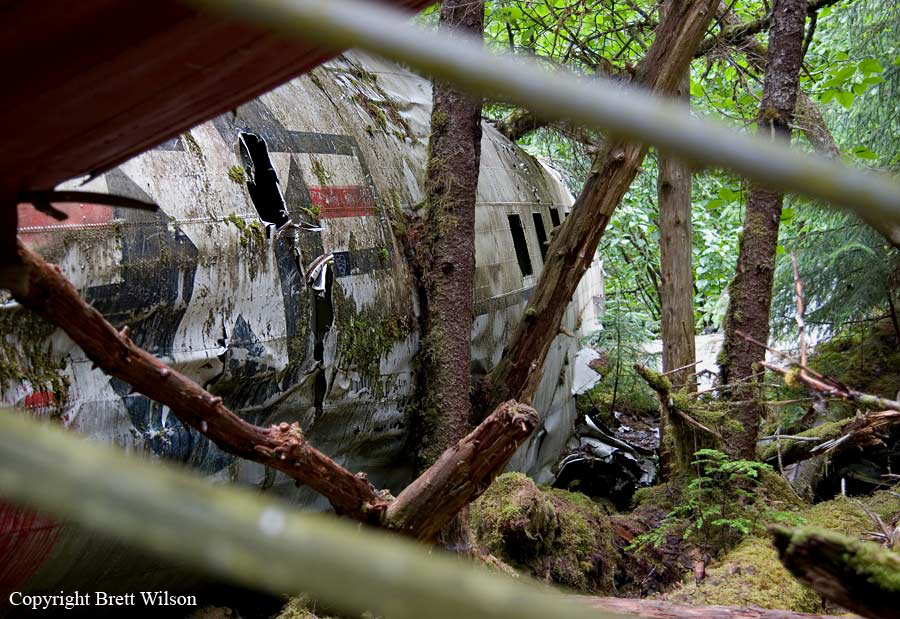
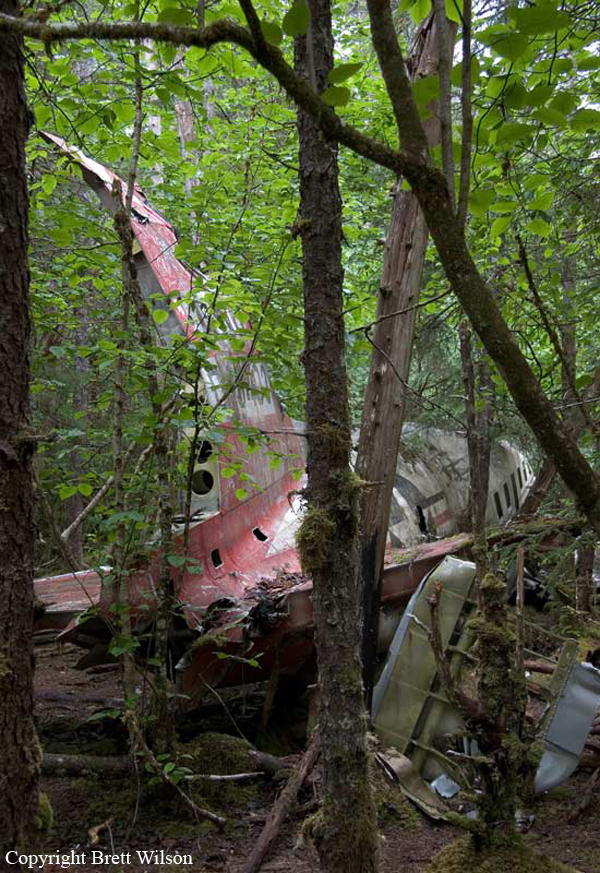
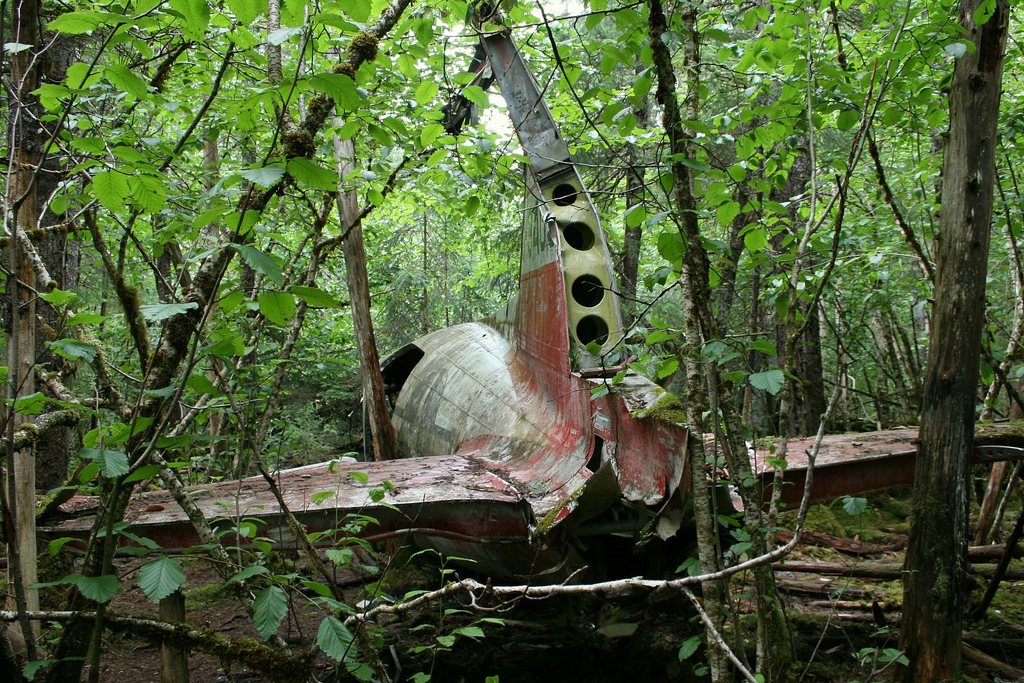
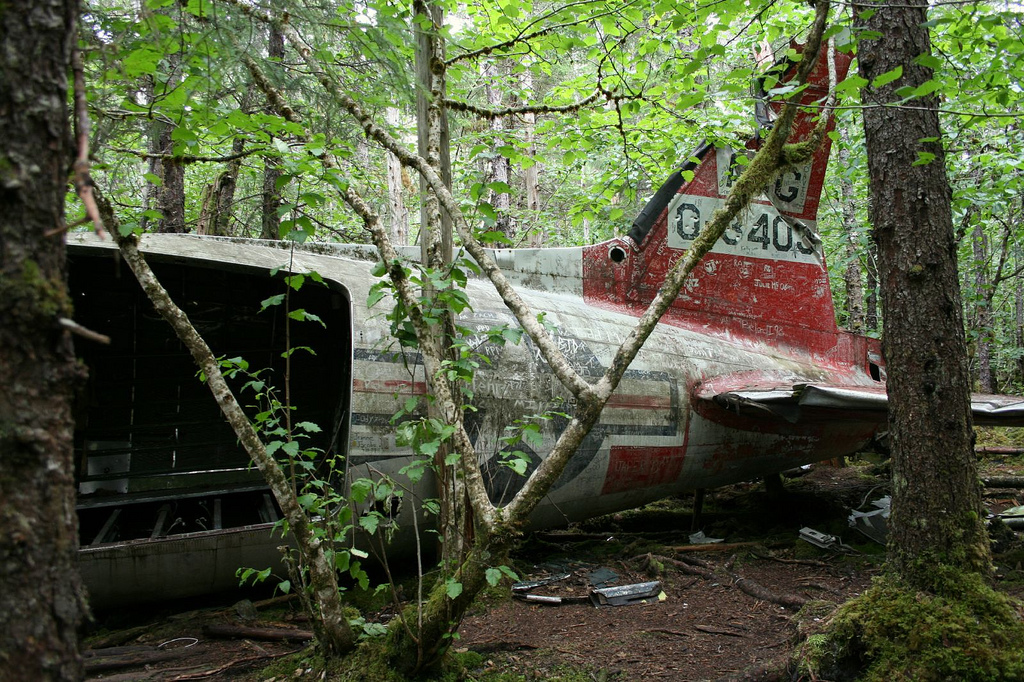
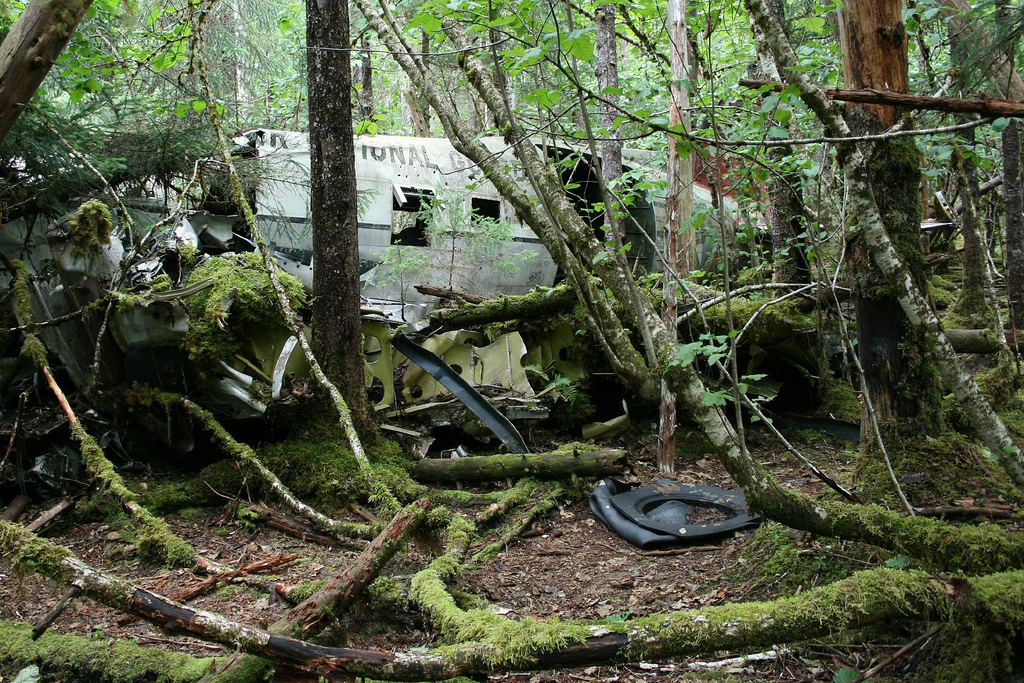
The morning of the crash, the crew departed from McChord Air Force Base near Tacoma, Washington, where they had picked up “hitchhiker” Corporal Timmons and then flew northward. Radio difficulties developed necessitating a return to McChord. Soon remedied, they departed once more for their first fuel stop, Annette Island, near Ketchikan, Alaska, enroute to their final destination, Anchorage, Alaska. High winds and severe turbulence prevented them from landing at Annette Island. The crew was given a choice – either return to a Canadian airport behind them or proceed north to Gustavus where runway lights and equipment for instrument landings offered better facilities for night landings than even Juneau in those days. The weather in Gustavus was reported as “clear and no winds” to “very slight winds”. The crew elected to go to Gustavus. Although the California pilot was well-trained in multi-engine instrument approaches, he was relatively new to Alaskan conditions. As the plane approached Gustavus, it was dark and beginning to snow. The passengers on the plane realized they had arrived in the Gustavus area, momentarily spotting lights through the dark and snow as they anxiously looked out the windows. The fuel supply was very low, so there were no options of returning to Annette or proceeding to Anchorage. The captain was leery of making the standard instrument approach to Gustavus because it would have required him to fly well beyond the airfield, far out over Glacier Bay with an aircraft that was running precariously low on fuel. On the next attempt – now the third time over the airport area in what the locals described as a snow squall, Mr. Aase reported that, “The pilot was in line for the runway, but got a bit low and the right wing caught a tall tree that made the aircraft start to spin and (it) nosed into the ground. “The front of the plane was badly damaged. At the same time the plane was twisting, the tail slowly lowered into the trees which cushioned it. It set down gently into the trees so that the fuselage from the wall aft was just about in perfect condition. So apparently, while attempting to keep the airfield in sight, he elected to circle and make a “short” visual approach to the runway. All four crew members were killed and the seven passengers were injured.
Crew:
Cpt Robert E. Kafader,
1st Lt Dennis V. Stamey,
S/Sgt Floyd S. Porter,
S/Sgt David A. Dial.
Passengers:
Lloyd Timmons,
2nd Lt Harry S. Aase,
Cpt Robert D. Ellis,
W/O Richard J. Mueller,
M/Sgt James E. O’Rourke,
1st Lt Wallace J. Harrison,
2nd Lt William W. Caldwell.
Source and text by Rita Wilson via
http://www.gustavushistory.org/articles/view.aspx?id=10000

Crash of a Douglas C-47A-75-DL in Madrid: 21 killed

Date & Time: Oct 28, 1957 at 1805 LT
Operator:
Registration:
EC-ACH
Survivors:
No
Schedule:
Tangier – Madrid
MSN:
19332
YOM:
1943
Country:
Region:
Crew on board:
4
Crew fatalities:
Pax on board:
17
Pax fatalities:
Other fatalities:
Total fatalities:
21
Circumstances:
At 1759 hours the aircraft was in contact with Barajas Control Tower and reported normal flight and that the airport was in sight. It requested landing data and asked that the ILS be turned onto test the airborne installation in the prevailing visual meteorological conditions. Barajas replied: "Runway 33, wind calm, QNH 30.13, report on reaching base leg, ILS out of order". At 1803 the aircraft called the Paracuellos Area Control Centre asking for emergency entry clearance as its left engine was on fire. It was given absolute priority for the use of any runway. That was the last contact with the aircraft. Shortly thereafter an engine fell clear, and 30 seconds later an intense light was seen caused by a fire accompanied by columns of black smoke. After making a turn the aircraft began to lose height rapidly and fell to the ground near Getafe. The airplane was destroyed by a post crash fire and all 21 occupants have been killed.
Probable cause:
The accident was caused by a fire produced by extraneous objects, which developed in the left nacelle. A different type of fire would have burned the wheel, the magneto couplings and the landing gear leg; fuel combustion alone would not have been sufficient to weaken so rapidly the engine support fittings.
Final Report:

Crash of a Douglas C-47A-80-DL in Porto Alegre: 3 killed

Date & Time: Oct 18, 1957
Operator:
Registration:
PP-VCS
Flight Phase:
Flight Type:
Survivors:
No
Schedule:
Porto Alegre – São Paulo
MSN:
19757
YOM:
1944
Country:
Crew on board:
3
Crew fatalities:
Pax on board:
0
Pax fatalities:
Other fatalities:
Total fatalities:
3
Circumstances:
During the takeoff roll, the airplane started to skid and deviated from the centerline to the right. The pilot-in-command decided to rotate but as the aircraft's speed was too low, it stalled and hit the ground. It then overran and took off again. While facing a hill, the crew attempted a sharp turn to the left when the left wing hit the roof of a house. Out of control, the airplane stalled and crashed in flames. All three crew members were killed.
Probable cause:
Wrong takeoff techniques and configuration on part of the flying crew. The presence of turbulences at low height may have contribute to the accident. Also, the assumption that the left engine failed during takeoff was not ruled out.

Crash of a Douglas C-47A-20-DK at Tachikawa AFB

Date & Time: Oct 11, 1957
Operator:
Registration:
L2-2/90
Flight Phase:
Flight Type:
Survivors:
Yes
Site:
MSN:
12913
YOM:
1944
Flight number:
UNO102
Country:
Region:
Crew on board:
4
Crew fatalities:
Pax on board:
0
Pax fatalities:
Other fatalities:
Total fatalities:
0
Circumstances:
The crew was engaged in a humanitarian mission to South Korea (flight code UNO102) on behalf of the United Nations Organization (UNO). Shortly after takeoff, while in initial climb, the airplane suffered an engine failure, stalled and crashed into houses located in the district of Sunahawa. All four crew members were rescued and there were no injuries on the ground.
Probable cause:
Engine failure just after takeoff.

Crash of a Douglas C-47A-30-DK near Fort McMurray

Date & Time: Oct 4, 1957 at 1352 LT
Operator:
Registration:
CF-DGJ
Flight Phase:
Flight Type:
Survivors:
Yes
Schedule:
Edmonton – Fort Smith – Yellowknife – Port Radium
MSN:
14009/25454
YOM:
1944
Country:
Crew on board:
2
Crew fatalities:
Pax on board:
0
Pax fatalities:
Other fatalities:
Total fatalities:
0
Circumstances:
The aircraft departed Edmonton at 1137LT on a flight to Port Radium, NWT, with refuelling stops at Fort Smith and Yellowknife, NWT. The aircraft climbed to 9,000 feet on a direct route to Fort Smith. Between Edmonton and Fort McMurray, it encountered light rime ice which was easily disposed of by the deicing equipment. At approximately 1320LT, the aircraft was abeam Fort McMurray and encountered freezing rain about five minutes later. The course was altered for Embarras with the intention of joining the airway and following it as far as Fort Smith. The build-up of ice was very rapid at this time and could not be overcome by the deicing equipment. The crew requested permission to descend to 7,000 feet and during the descent additional ice was picked up. The aircraft could not maintain height at 7,000 feet and went down to 5,000 feet, still running through rain squalls. Throttle and propeller settings were for 40" and 2 500 rpm respectively. Further altitude was lost and at about 4,500 feet, severe turbulence was encountered. This together with the accumulation of ice, caused a further loss of height, and the aircraft collided with trees. The pilot closed the throttles and at 1352LT and carried out a forced landing. Both pilots suffered serious injuries and the aircraft was destroyed.
Probable cause:
The aircraft continued its flight into an area of freezing precipitation until the accumulation of ice and severe turbulence resulted in partial loss of control during which the aircraft struck trees. The type of weather encountered was more severe than had been forecast, which was considered as a contributing factor.
Final Report: