Crash of a Douglas C-47A-5-DK in Ennadai Lake: 2 killed

Date & Time: Mar 17, 2000 at 1230 LT
Operator:

Registration:
C-FNTF
Flight Type:
Survivors:
No
Schedule:
Points North Landing - Ennadai Lake
MSN:
12344
YOM:
1944
Country:
Crew on board:
2
Crew fatalities:
Pax on board:
0
Pax fatalities:
Other fatalities:
Total fatalities:
2
Captain / Total flying hours:
8200
Captain / Total hours on type:
840.00
Copilot / Total flying hours:
4300
Copilot / Total hours on type:
85
Circumstances:
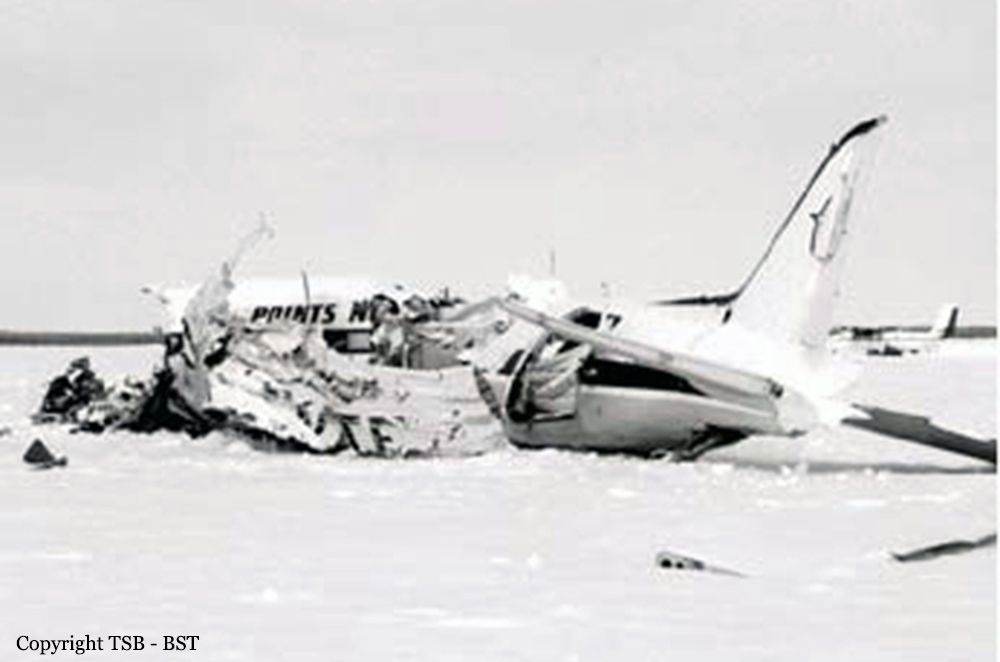
The Douglas DC-3 departed Points North Landing, Saskatchewan, about 1125 central standard time on a visual flight rules flight to Ennadai Lake, Nunavut, with two pilots and 6600 pounds of cargo on board. The flight was one of a series of flights to position building materials for the construction of a lodge. The pilots had completed a similar flight earlier in the day. The runway at Ennadai, oriented northeast/southwest, was an ice strip about 2700 feet long by 150 feet wide marked with small evergreens. The ice strip was constructed on the lake, and the approaches were flat, without obstacles. The snow was cleared so there were no snow ridges on the runway ends. The arrival at Ennadai Lake, toward the southwest, appeared to be similar to previous arrivals. The aircraft was observed to touch down nearly halfway along the ice strip, the tail of the aircraft remained in the air, and the aircraft took off almost immediately. The main landing gear was seen to retract. The aircraft reached the end of the runway then abruptly entered a steep, nose-up attitude, banked sharply to the left, turned left, and descended into the ice. The left wing made first contact with the ice. The aircraft rotated around the left wing and struck the ice in a steep, nose-down attitude about 400 feet from the end of the ice strip. There was no fire. The crew were killed instantly. Canadian Forces rescue specialists were air-dropped to the site on the day of the accident.
Probable cause:
Findings as to Causes and Contributing Factors:
1. The pilot lost control of the aircraft while conducting a go-around from a balked landing on an ice strip.
2. The aircraft's centre of gravity (C of G) on the accident flight was beyond the aft C of G limit.
3. The actual C of G of the aircraft at basic operating weight was 16.7 inches aft of the C of G provided in the weight and balance report.
4. The load sheet index number used by the crew was inaccurate.
5. The stack of 2x4 lumber was inadequately secured and may have shifted rearward during the go-around.
6. The crew did not recalculate the aircraft's weight and balance for the second flight.
7. Leaks in the heater shroud allowed carbon monoxide gas to contaminate cockpit and cabin air.
8. The captain's carboxyhaemoglobin level was 17.9%, which may have adversely affected his performance, especially his decision making and his visual acuity.
Other Findings:
1. The carbon monoxide detector had no active warning system. The user directions for the detector, which are printed on the back of the detector, are obscured when the detector is installed.
2. The company maintenance facility overhauled the heater as required by the Transport Canada-approved inspection program.
3. Although the manufacturer's maintenance instruction manual for the S200 heater, part number 27C56, lists inspection and overhaul procedures, it does not specify their intervals.
4. No maintenance instructions are available for the heater, part number 27C56. The company maintenance facility did not conduct inspections, overhauls, or pressure decay tests as specified for later manufactured heaters.
Final Report:

Crash of a Douglas C-47B-DK in Mexico City

Date & Time: Feb 3, 2000
Operator:
Flight Phase:
Flight Type:
Survivors:
Yes
Schedule:
Mexico City - Mexico City
Country:
Crew on board:
2
Crew fatalities:
Pax on board:
0
Pax fatalities:
Other fatalities:
Total fatalities:
0
Circumstances:
The crew departed Mexico City-Benito Juarez Airport on a local post maintenance test flight. After takeoff, while in initial climb, both engines lost power simultaneously. The crew attempted an emergency landing on a soccer field when the aircraft crash landed near a motorway. Both pilots escaped uninjured while the aircraft was damaged beyond repair.

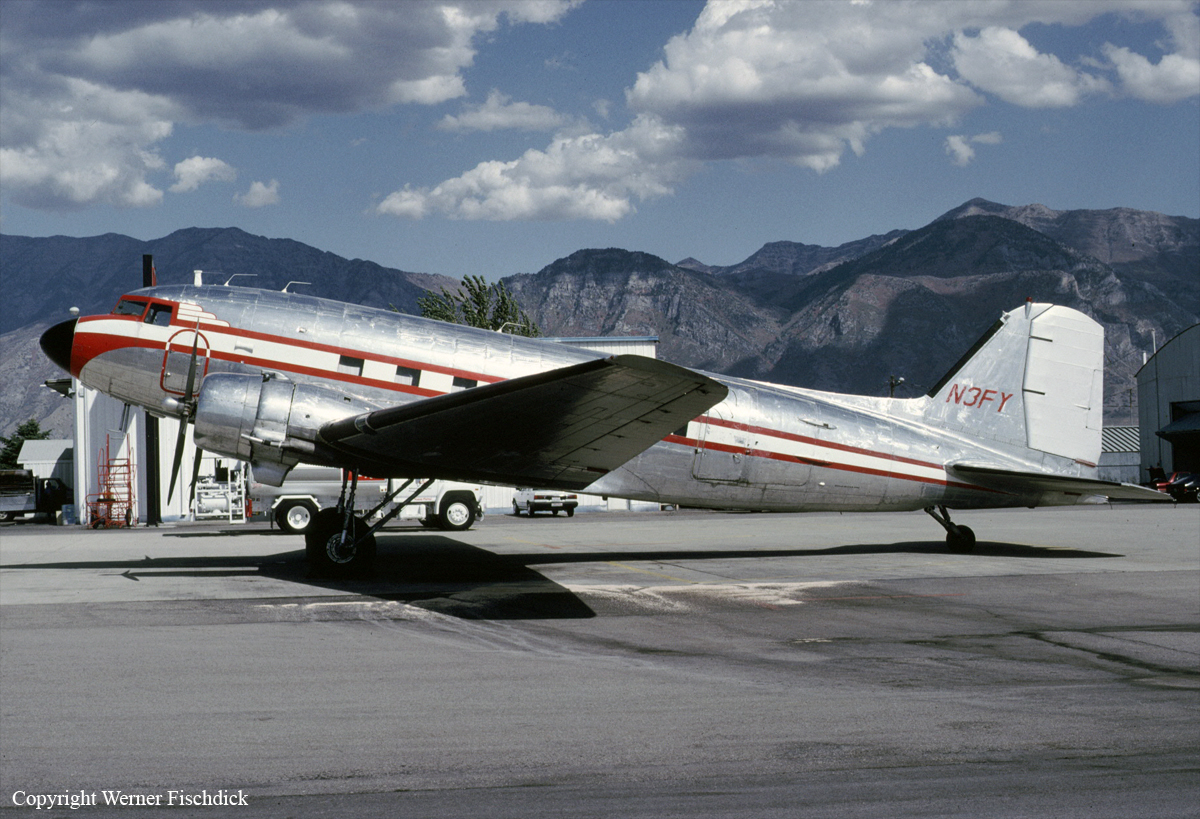
Crash of a Douglas C-47A-90-DL in Quetzaltenango: 11 killed

Date & Time: Nov 1, 1998 at 1430 LT
Operator:
Registration:
N3FY
Flight Type:
Survivors:
Yes
Schedule:
Playa Grande - Quetzaltenango
MSN:
20562
YOM:
1944
Country:
Crew on board:
2
Crew fatalities:
Pax on board:
16
Pax fatalities:
Other fatalities:
Total fatalities:
11
Circumstances:
The aircraft was completing a humanitarian flight from Playa Grande to Quetzaltenango on behalf of the Living Water Teaching Ministries owned by Jim and Marion Zirkle. On board were 16 passengers and two pilots, among them doctors and a load of medicines and first aid kits for the victims of hurricane Mitch. The approach was completed in poor weather conditions with heavy rain falls and thick fog when the aircraft struck the ground few km from the airport. Seven people were rescued while 11 others were killed, among them Jim Zirkle and his son.
Probable cause:
The crew was approaching the airport under VFR mode in IMC conditions.

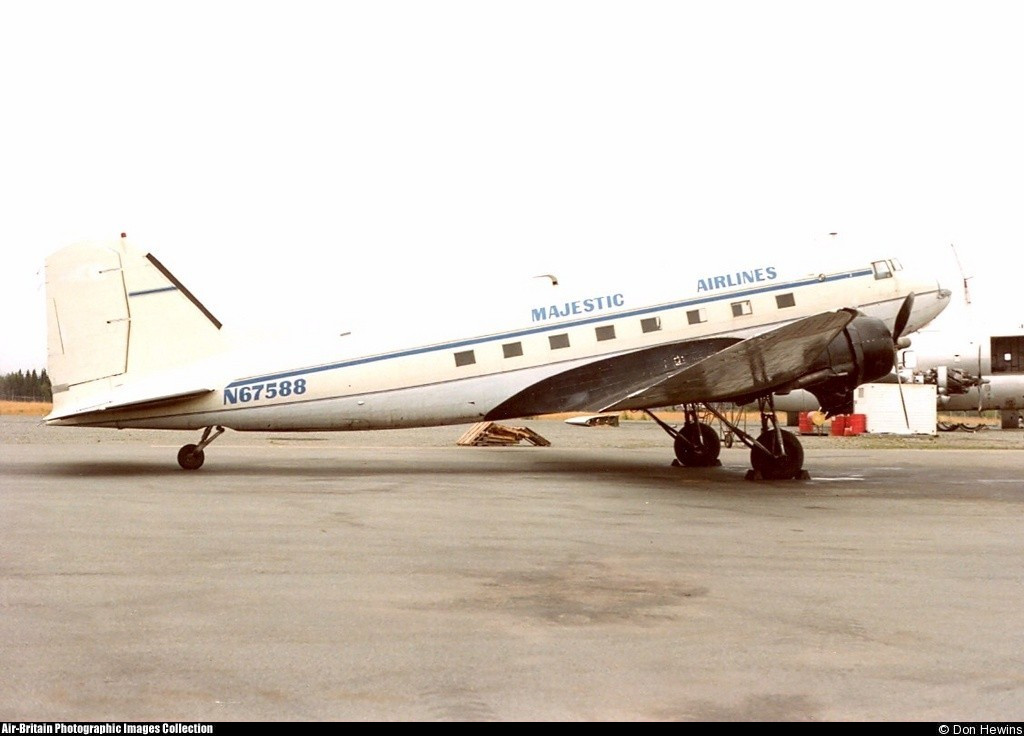
Crash of a Douglas C-47A-90-DL in Point McKenzie

Date & Time: May 24, 1998 at 0024 LT
Registration:
N67588
Flight Type:
Survivors:
Yes
Schedule:
Unalakleet - Anchorage
MSN:
20536
YOM:
1944
Crew on board:
2
Crew fatalities:
Pax on board:
1
Pax fatalities:
Other fatalities:
Total fatalities:
0
Captain / Total flying hours:
14000
Captain / Total hours on type:
7000.00
Aircraft flight hours:
34232
Circumstances:
The captain/operator, the first officer and one passenger, departed on a cross-country positioning flight. The airplane contained about 300 gallons of fuel. After 3.9 hours en route, the flight was cleared for a visual approach to the destination airport. During the approach, both engines lost power about 2,000 feet mean sea level. The pilot stated the right fuel tank was empty. He estimated that 50 to 60 gallons of fuel remained in the left fuel tank. While the airplane was descending toward an area of open water, he attempted to restart the engines without success. He then lowered the landing gear, and made a right turn toward a small airstrip, located about 5 miles northwest of the destination airport. The airplane touched down in an area of soft, marsh covered, terrain. During the landing roll, the airplane nosed down and received damage to the forward, lower portion of the fuselage. An inspection of the airplane by an FAA inspector revealed the left fuel tank contained about 1 inch of fuel. The right fuel selector was positioned on the right auxiliary fuel tank. The left fuel selector was positioned between the left main, and the left auxiliary fuel tanks.
Probable cause:
The pilot's inadequate in-flight planning/decision which resulted in fuel exhaustion and subsequent loss of engine power. A related factor was the soft, marshy terrain at the forced landing area.
Final Report:

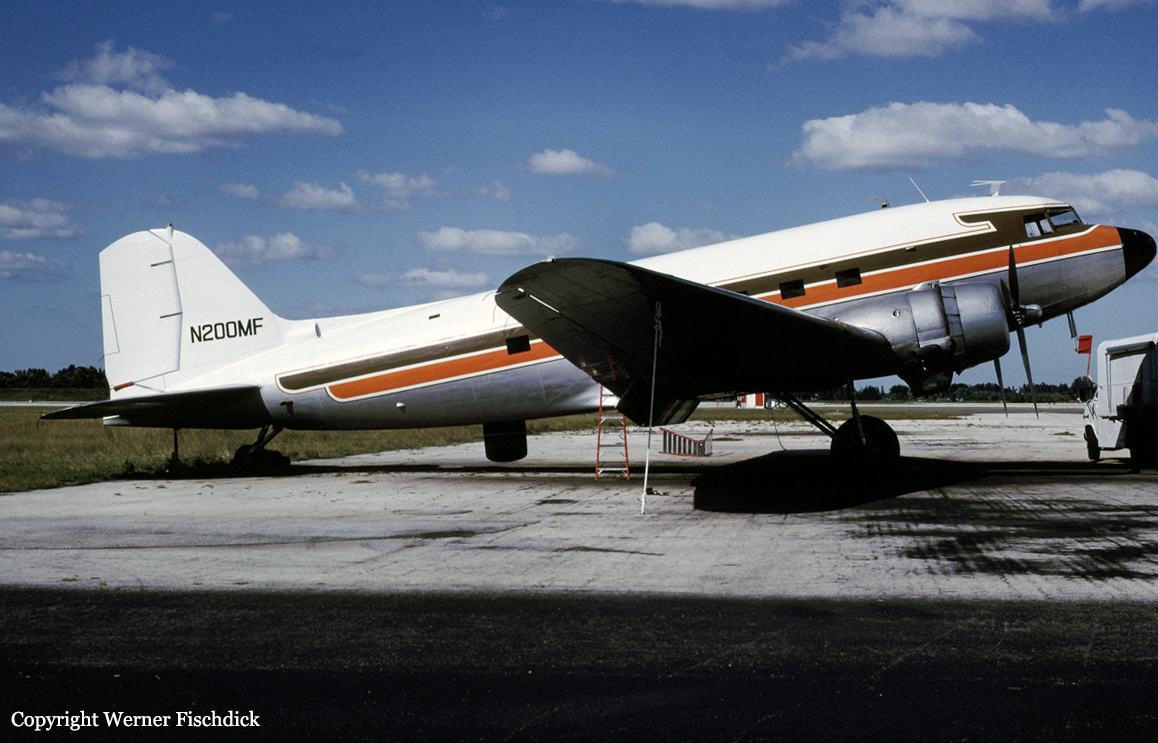
Crash of a Douglas C-47A-45-DL in George Town

Date & Time: Feb 3, 1998 at 1200 LT
Registration:
N200MF
Flight Type:
Survivors:
Yes
Schedule:
George Town – Cap Haïtien
MSN:
9990
YOM:
1943
Country:
Crew on board:
3
Crew fatalities:
Pax on board:
24
Pax fatalities:
Other fatalities:
Total fatalities:
0
Circumstances:
On February 3, 1998 at about 1200 eastern standard time, a Douglas DC3C, N200MF, registered to Missionary Flights International, as a 14 CFR Part 91 passenger flight experienced a total loss of engine power on both engines and made a forced landing 1 mile from the Greater Exuma Airport, Moss Town, Bahamas. Visual meteorological conditions prevailed and an IFR flight plan was filed. The airplane sustained substantial damage. The airline transport pilot-in-command (PIC), commercial pilot first officer, and 24 passengers reported no injuries. The flight originated from Moss Town about 1 hour 52 minutes before the accident.

Crash of a Douglas C-47-DL off Guerrero Negro

Date & Time: Dec 20, 1997 at 1440 LT
Registration:
XA-CUC
Flight Phase:
Survivors:
Yes
Schedule:
Guerrero Negro - Isla de Cedros
MSN:
7377
YOM:
1943
Country:
Crew on board:
2
Crew fatalities:
Pax on board:
3
Pax fatalities:
Other fatalities:
Total fatalities:
0
Circumstances:
Shortly after takeoff from Guerrero Negro Airport, while climbing, the aircraft nosed down and crashed in the San Jose estuary, few hundred metres offshore. All five occupants were rescued while the aircraft was damaged beyond repair.

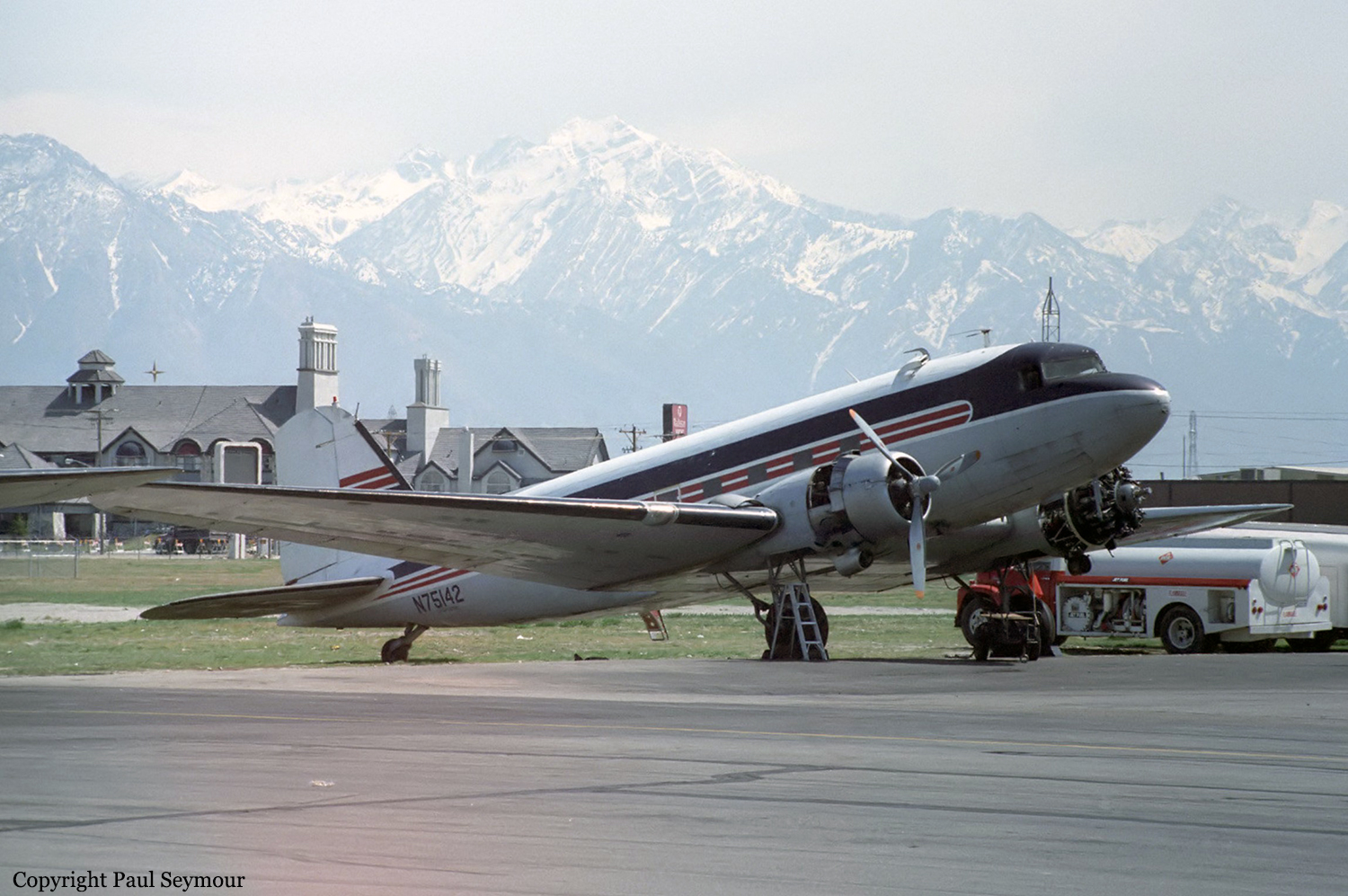
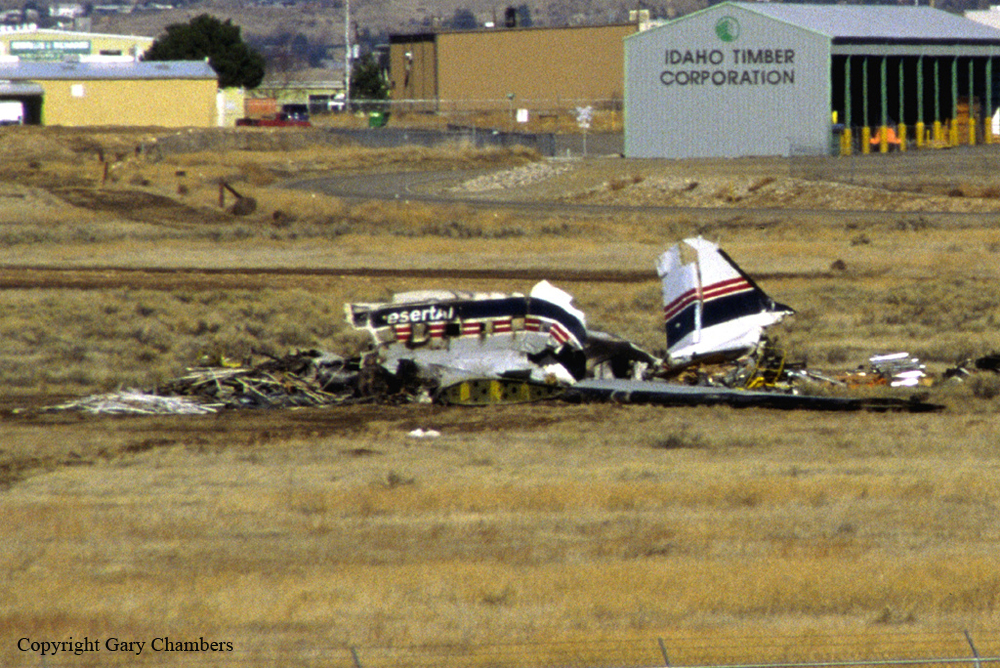
Crash of a Douglas C-47A-1-DL in Boise: 2 killed

Date & Time: Dec 9, 1996 at 1803 LT
Operator:
Registration:
N75142
Flight Phase:
Flight Type:
Survivors:
No
Schedule:
Boise – Salt Lake City
MSN:
9173
YOM:
1943
Location:
Crew on board:
2
Crew fatalities:
Pax on board:
0
Pax fatalities:
Other fatalities:
Total fatalities:
2
Captain / Total flying hours:
15447
Captain / Total hours on type:
5502.00
Aircraft flight hours:
34124
Circumstances:
The DC-3C took off on runway 10L and immediately executed a right turn followed by a left turn back toward the airport declaring a fire aboard. Dark night visual meteorological conditions existed. Witnesses observed 'flames' or an 'orange glow' coming from the right engine. A small number of aluminum fragments identified from the aft edge of the right engine accessory cowling were found along the ground just short of the ground impact site. These fragments displayed signs of heat distress but no significant melting. An examination of the right engine and accessory section revealed no evidence of a preimpact fire, and sooting and metal splatter on the leading edge of the right horizontal stabilizer was minimal. Spectral analysis of radio transmissions revealed no evidence of significant divergence of engine RPM between the two engines. Postcrash propeller examination revealed approximate blade pitch angles of 18-19° and 30-32° for the right and left propellers respectively upon impact. Propeller slash mark dimensions associated with the right propeller resulted in propeller RPM of approximately 1,750 to 2,570 over a range of 68 to 100 knots respectively. The first officer advised the PIC (broadcasting over the tower frequency) 'we're gonna stall' approximately 10 seconds before the impact. The aircraft was in a left turn back toward runways 28 left and right when the right wing struck the ground and the aircraft cartwheeled to a stop. A postcrash fire destroyed the cockpit area and inboard right wing.
Probable cause:
A fire within the right engine compartment of undetermined cause and the pilot-in-command's failure to maintain airspeed above the aircraft's minimum control speed. A factor contributing to the accident was the dark night environmental conditions.
Final Report:

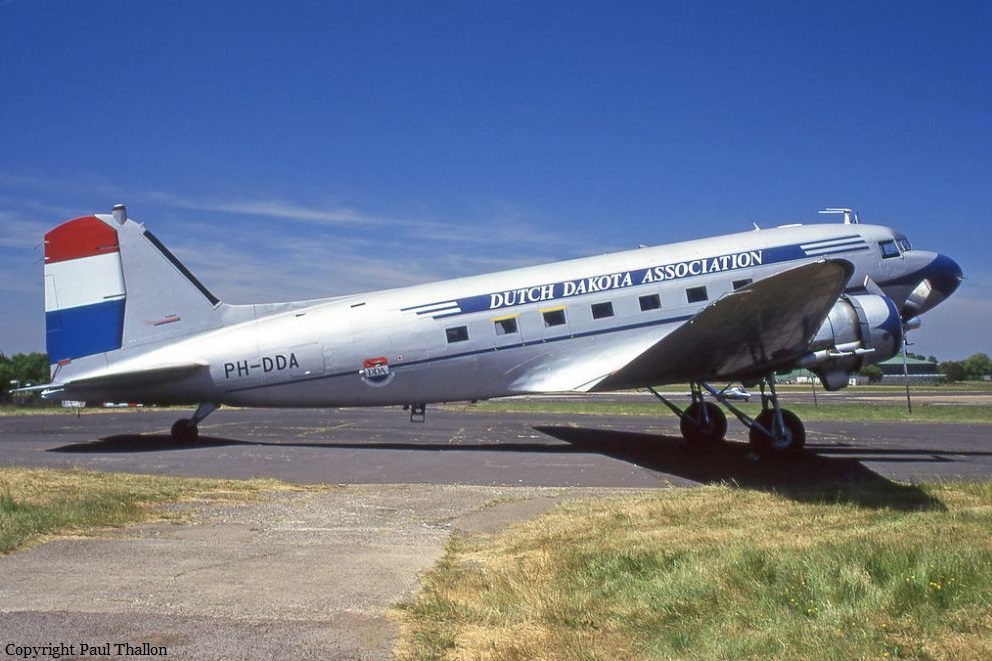
Crash of a Douglas C-47A-70-DL off Den Oever: 32 killed

Date & Time: Sep 25, 1996 at 1637 LT
Operator:
Registration:
PH-DDA
Flight Phase:
Survivors:
No
Schedule:
Texel - Amsterdam
MSN:
19109
YOM:
1943
Country:
Region:
Crew on board:
6
Crew fatalities:
Pax on board:
26
Pax fatalities:
Other fatalities:
Total fatalities:
32
Captain / Total flying hours:
19070
Captain / Total hours on type:
400.00
Copilot / Total flying hours:
20273
Copilot / Total hours on type:
280
Aircraft flight hours:
38388
Circumstances:
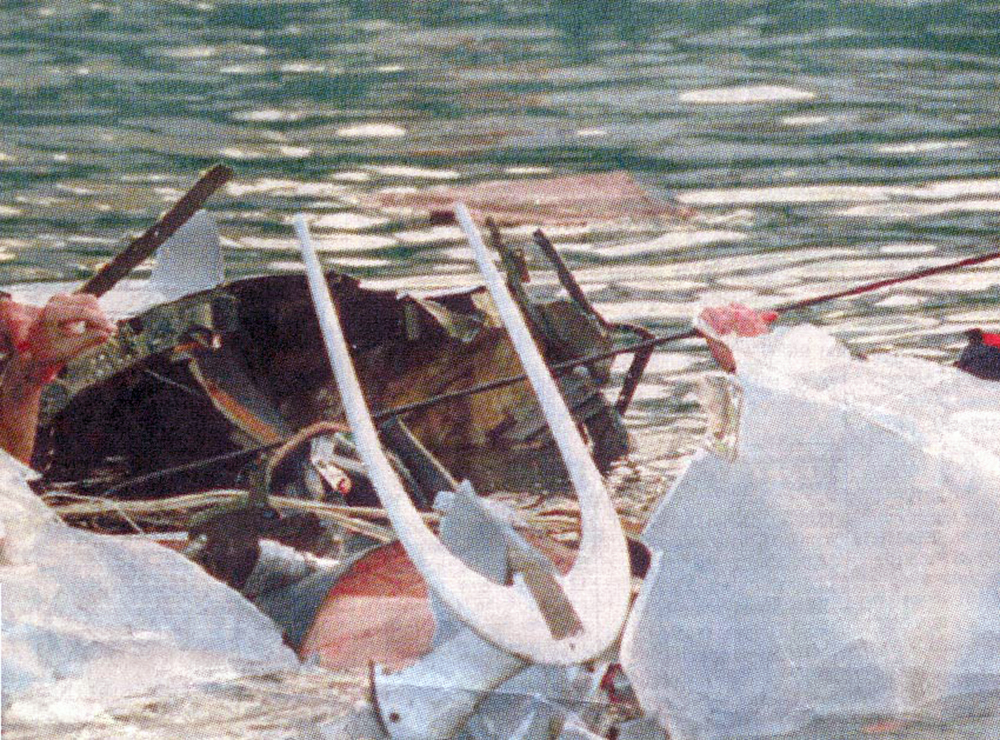
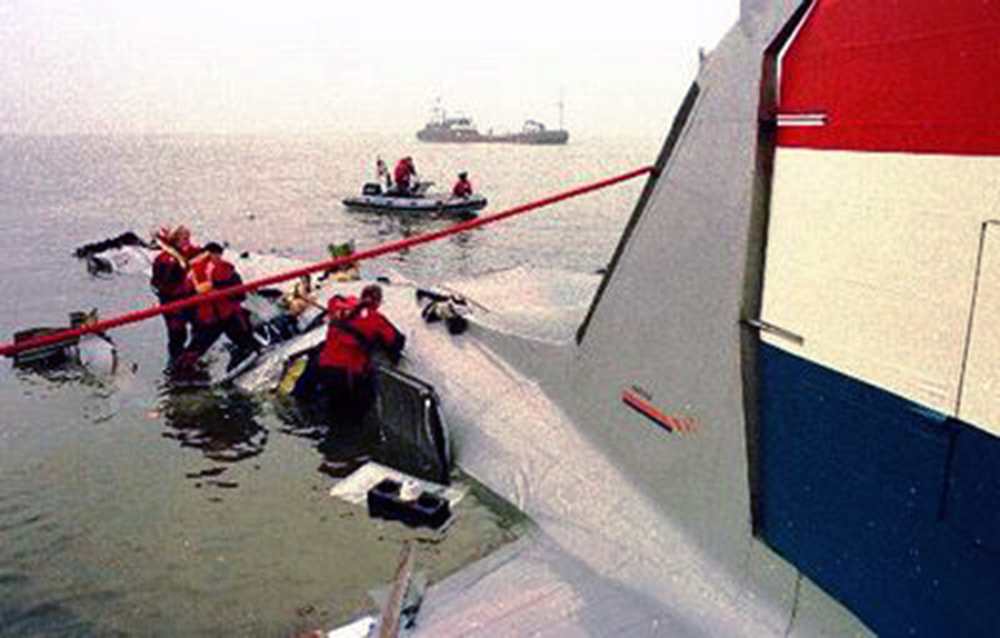
The aircraft took off at 14.28 from Texel International Airport for the return flight to Amsterdam-Schiphol Airport. Before take-off the airport manager of Texel International Airport requested the crew of PH-DDA to squawk transponder-code 0060. The take-off was considered normal by several witnesses, including the Airport Manager, without deviations from what they had seen during previous take-offs from Texel. Several witnesses observed the aircraft passing outbound over the east coast of the island of Texel. One witness reported a short-lived orange colored fire streak emanating from the underside of the left engine, another mentioned a shrieking noise on one engine. The weather situation over the Waddenzee was : a visibility of about 1 .5 km in haze without a distinct horizon. The sun was obscured. There was a glassy smooth water surface without any references. At approximately 14.33, the crew reported to Texel Radio that they had problems with an engine. They were advised to switch over to De Kooy Approach. There is no radio telephony (RT) recording available of this phase of the flight. Naval Air Station (NAS) De Kooy is not equipped with primary radar. No primary radar recordings from other sources were available. The aircraft became visible on the secondary radar of NAS De Kooy at 14.34:33, squawking 0060 and flying at an altitude of 800 feet on a heading of 155°, which changed gradually to 175°. Most likely the transponder had been switched on at that time. Refer to the radar plot in Appendix 1. At 14.35:32 the flight crew reported to De Kooy Approach : "Uh, PDA is uh..., at 600 feet and approaching uh..., De Kooy, we want to make an emergency landing on De Kooy". The position of the aircraft at that moment was approximately 11 mn northeast of NAS De Kooy. Shortly thereafter the aircraft made a sudden left turn to a heading of 110°. The aircraft was then at an altitude of 700 feet. The flight crew reported that they had feathered the left engine. De Kooy Approach instructed to set Secondary Surveillance Radar (SSR) code 4321 instead of the then used VFR code 0060, gave QNH and reported that runway 22 was in use ; the pilot did not respond to this message. De Kooy Approach twice repeated the advise to squawk and advised to proceed inbound runway 22. During the transmission of this message the aircraft was turning to approximately the required heading of 225°, at an altitude of 500 feet. The aircraft maintained heading 225° at 500 feet and the airspeed decreased. After several inquiring calls concerning the correct squawk, at 14.36:52 the pilot confirmed squawking 4321 and asked for a heading. Some parts of the radio communication were hindered by a whistle tone. In response to the question, De Kooy Approach requested the position ; the pilot reported 11 nm out to the northeast. Seven seconds later De Kooy Approach confirmed radar contact and advised a heading of 240° . During this conversation the aircraft turned left to a heading of 180°. At that time the altitude was still 500 feet and the airspeed had further decreased. The crew confirmed the advised heading of 240°, but the aircraft did not turn to this direction. This was the last message from the aircraft. The radar recording showed that at 14.37:28 the aircraft started to turn to the left at an increasing rate. At 14.37:47 the last radar echo showed an altitude of 200 feet. The approach controller stated that the aircraft disappeared from the radar screen. There was no reply on repeated calls from De Kooy Approach, upon which the controller initiated an emergency status. The aircraft crashed onto a flooded sand bank in the Waddenzee, where at that time the water had a depth of about 1.2 meter. Forty seconds after the aircraft had disappeared from the radar, the controller contacted a KLM ERA helicopter, approaching NAS De Kooy, informed the pilot of the situation with the PHDDA and requested the pilot to have a look at the approximate position ; about seven minutes later the helicopter reported the wreckage in sight. That started an extensive rescue action; one severely injured passenger was taken to a hospital by a Naval helicopter, but died the same evening. The other 31 occupants to all probability died instantaneously in the crash. There was no fire.
Probable cause:
The accident was initiated by a combined failure of the left engine and the left feathering system. The accident became inevitable when the flight crew allowed the speed to decrease below stall speed and lost control of the aircraft at an altitude from which recovery was not possible.
The following contributing factors were reported:
- Serious degradation of controllability and performance.
- A high work load imposed on the flight crew by the multiple failure, further increased by unfavourable flight conditions and a suboptimal cockpit lay-out.
- The inadequate level of skill and experience of the flight crew on the DC-3 to be able to cope with this specific emergency situation.
Final Report:

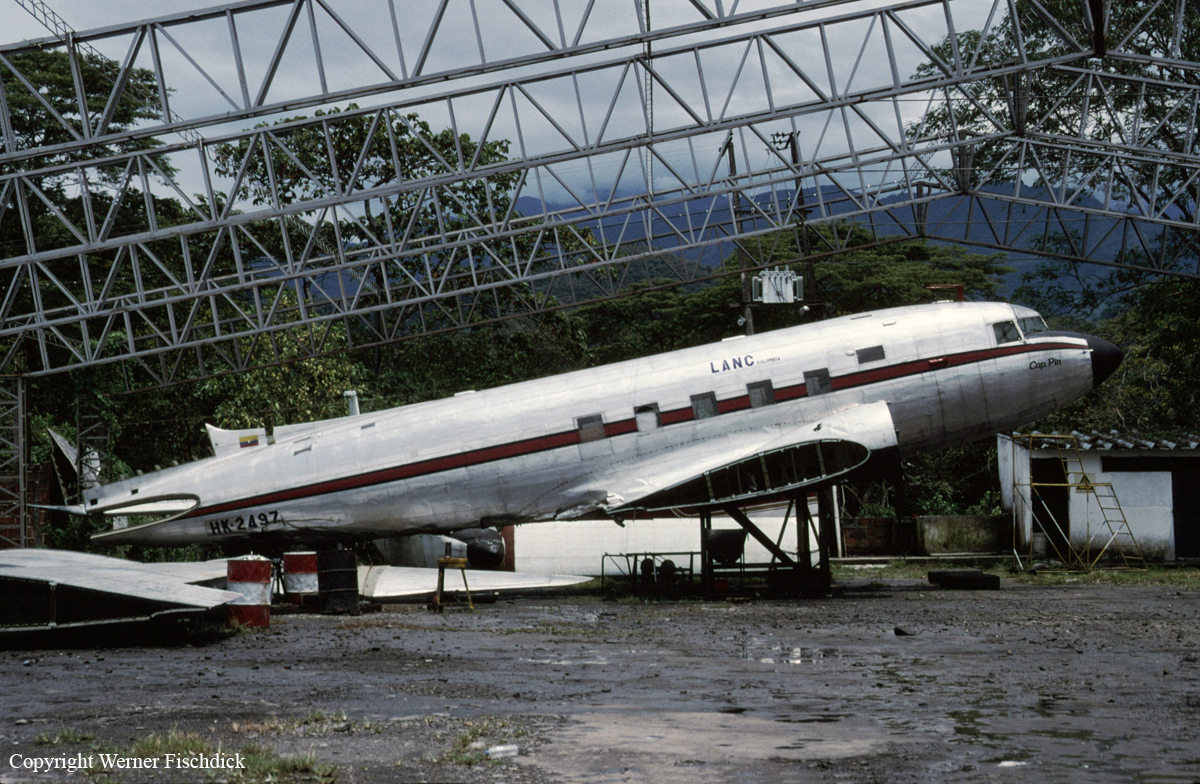
Crash of a Douglas C-47B-20-DK in Villavicencio

Date & Time: Mar 30, 1996 at 0835 LT
Registration:
HK-2497
Survivors:
Yes
Schedule:
Villavicencio - La Macarena
MSN:
15634/27079
YOM:
1945
Country:
Crew on board:
2
Crew fatalities:
Pax on board:
18
Pax fatalities:
Other fatalities:
Total fatalities:
0
Copilot / Total flying hours:
2107
Copilot / Total hours on type:
353
Aircraft flight hours:
20486
Circumstances:
After takeoff from Villavicencio-La Vanguardia Airport, while climbing to an altitude of 1,900 feet, the captain reported severe vibrations with the left engine and was cleared to return. The crew shut down the left engine and started the approach to runway 22. But on final, he realized he could reach the airport so he completed a belly landing one km short of runway threshold. The aircraft came to rest in a field and was damaged beyond repair. All 20 occupants escaped uninjured.
Probable cause:
It was determined that the vibrations and the subsequent failure of the left engine was the consequence of a bad adjustment of the intake valves on cylinders n°8 and 9, which remained stuck in open position, causing high temperature and a loss of power.
Final Report:

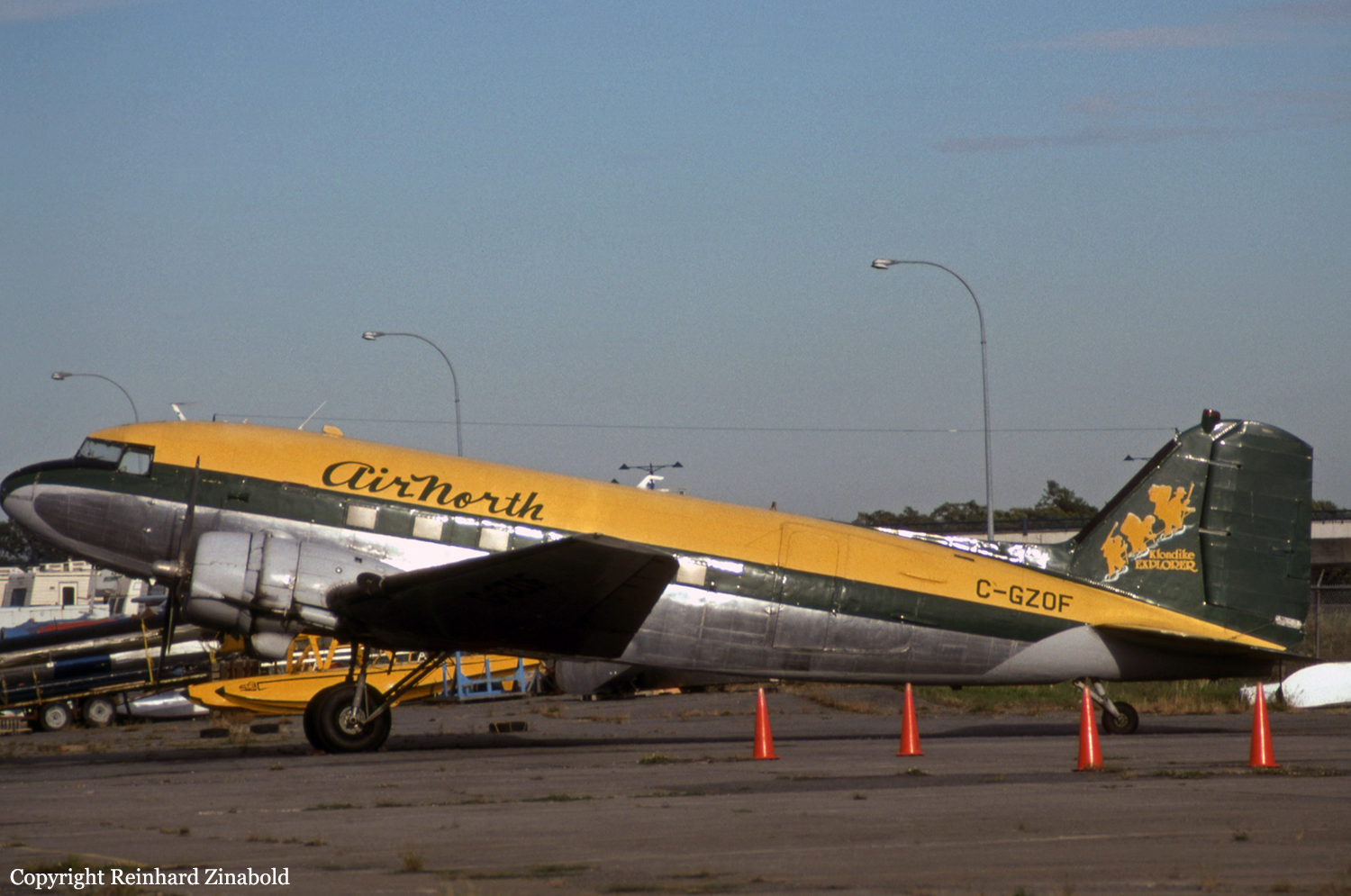
Crash of a Douglas C-47B-1-DL in Vancouver: 1 killed

Date & Time: Aug 19, 1995 at 0906 LT
Operator:
Registration:
C-GZOF
Flight Phase:
Flight Type:
Survivors:
Yes
Schedule:
Vancouver – Whitehorse
MSN:
20833
YOM:
1944
Country:
Crew on board:
3
Crew fatalities:
Pax on board:
0
Pax fatalities:
Other fatalities:
Total fatalities:
1
Circumstances:
The DC-3 aircraft, with the captain, first officer, and an apprentice aircraft maintenance engineer on board, was to be ferried from Vancouver, British Columbia, to Whitehorse, Yukon. Just after take-off from runway 08, as the first officer was setting the engine power, the right propeller began to over-speed. The captain told the first officer to shut down and feather the right engine. The first officer did as instructed, and advised the Vancouver tower controller of the engine problem and that they would return to the airport to land on runway 08. The captain turned the aircraft to the right, onto downwind for runway 08; however, because the aircraft's altitude and airspeed were decreasing, the first officer advised the tower controller that they would land on runway 30. The aircraft continued to lose height, narrowly avoiding buildings in its path, and crashed to the ground, one mile short of runway 30. The three occupants were seriously injured during the impact and the post-crash fire; the captain died of his injuries eight days after the accident.
Probable cause:
The aircraft's right engine oil system malfunctioned for reasons that were not determined, and the right propeller did not completely feather during the emergency shutdown. The aircraft was unable to maintain flight because of the drag generated by the windmilling right propeller.