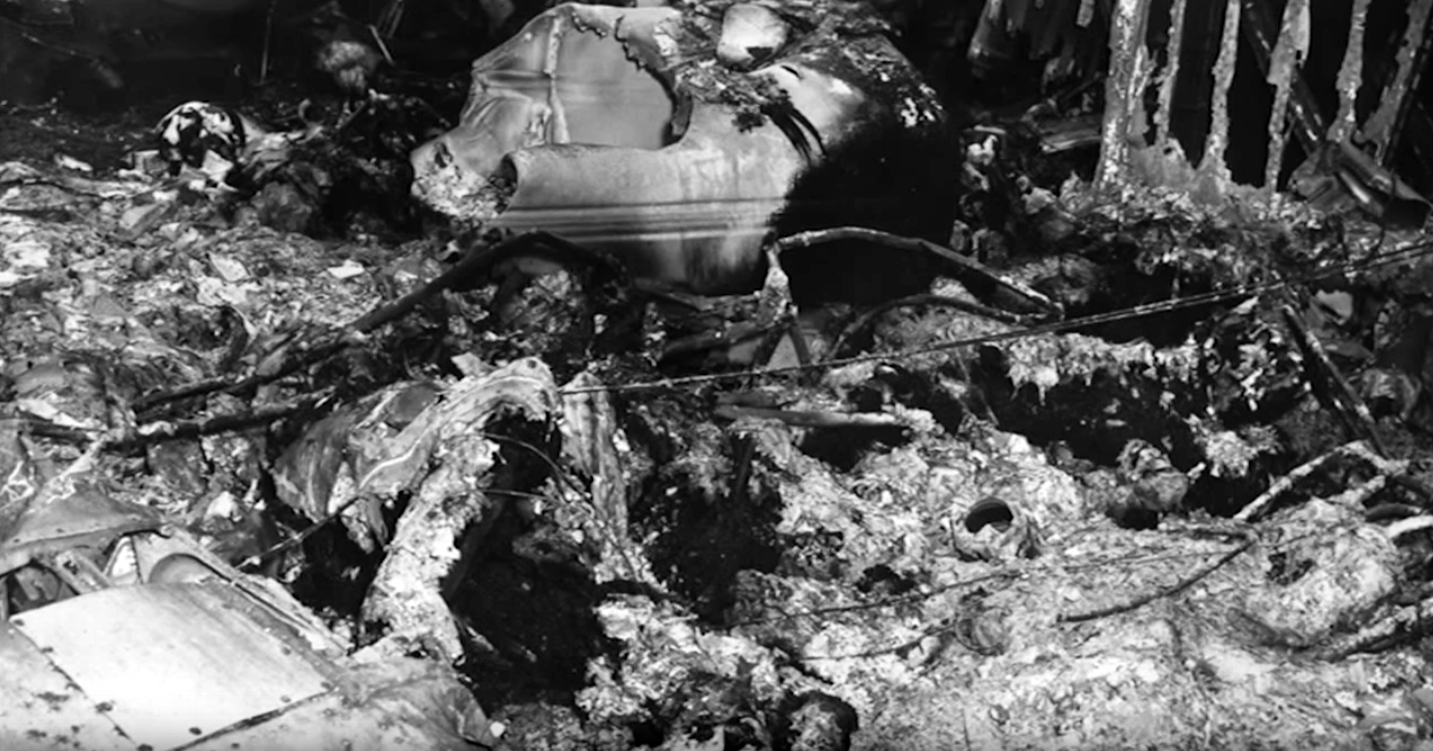
Crash of a Curtiss C-46D-15-CU Commando off Gangneung: 11 killed

Date & Time: Nov 15, 1952
Type of aircraft:
Operator:
Registration:
44-78114
Flight Phase:
Flight Type:
Survivors:
Yes
Schedule:
Gangneung – Pohang
MSN:
33510
YOM:
1945
Country:
Region:
Crew on board:
2
Crew fatalities:
Pax on board:
16
Pax fatalities:
Other fatalities:
Total fatalities:
11
Circumstances:
Shortly after takeoff from Gangneung Airport, while in initial climb, the airplane crashed into the sea. Seven occupants were rescued while eleven other occupants were killed.
Crew:
Cpt Roy Anthony, †
Pfc Leroy Crowell,
1st Lt Charles W. Difalco,
2nd Lt John B. Emerson,
S/Sgt Sigurd L. Erlandsen,
A3c Alonzo J. Haugh Jr., †
A1c Lewis J. Holmes,
T/Sgt Raymond H. Johnson, †
W/O Jung Pyun Kim, †
A2c Duane W. Larson, †
A2c James C. Newell, †
A2c William H. Pate, †
1st Lt Vaughn D. Prunier, †
A2c Gary Richard,
A3c Terumi Shoda,
A2c Luke J. Tucker Jr., †
A2c Clifton N. Watson, †
Maj William P. Windus Jr. †

Crash of a Curtiss C-46D-10-CU Commando off Gangneung: 25 killed

Date & Time: Oct 16, 1952
Type of aircraft:
Operator:
Registration:
44-77538
Flight Phase:
Flight Type:
Survivors:
No
Schedule:
Gangneung – Pohang
MSN:
32934
YOM:
1944
Country:
Region:
Crew on board:
4
Crew fatalities:
Pax on board:
21
Pax fatalities:
Other fatalities:
Total fatalities:
25
Circumstances:
Shortly after takeoff from runway 08, while in initial climb, the Commando went out of control and crashed into the sea few km off shore. SAR operations were immediately dispatched on the scene but two dead bodies were found two days later and no trace of the aircraft that sank. The exact circumstances and caused of this accident remains unknown. USAF reported that both dead bodies they found were wearing a life jacket.
Crew:
A1c Alfred W. Arrington,
S/Sgt Vincent J. Bevilacqua,
A2c Billy R. Bishop,
Aoan Carnell E. Booth,
1st Lt Robert C. Bowerman,
Lt Fred V. Bryan,
A3c Lemon Butts Jr.,
1st Lt Thomas L. Davidson,
Sgt Robert A. Deeter Jr.,
Ad3 Oliver P. Dehart,
A3c George A. Freeman,
A2c Harry C. Gammage,
Cpt Victor B. Graper,
A3c Norman C. Harmon,
T/Sgt Paul J. Hicks,
Ad3 James P. King,
A3c James A. Kyle,
A2c Daniel G. Ruby Jr.,
1st Lt Richard G. L. Rusk,
A3c Walter K. Rutledge,
T/Sgt Melvin E. Sarkilahti,
A2c John E. Thurman,
A3c Valerian Ulinski,
Ae3 Bobby R. Wilson,
A1c William H. Wimbish.

Crash of a Curtiss C-46 in Panama: 46 killed

Date & Time: Sep 10, 1952
Type of aircraft:
Operator:
Flight Phase:
Survivors:
No
Site:
Schedule:
San Andrés - Cartagena
Country:
Crew on board:
4
Crew fatalities:
Pax on board:
42
Pax fatalities:
Other fatalities:
Total fatalities:
46
Circumstances:
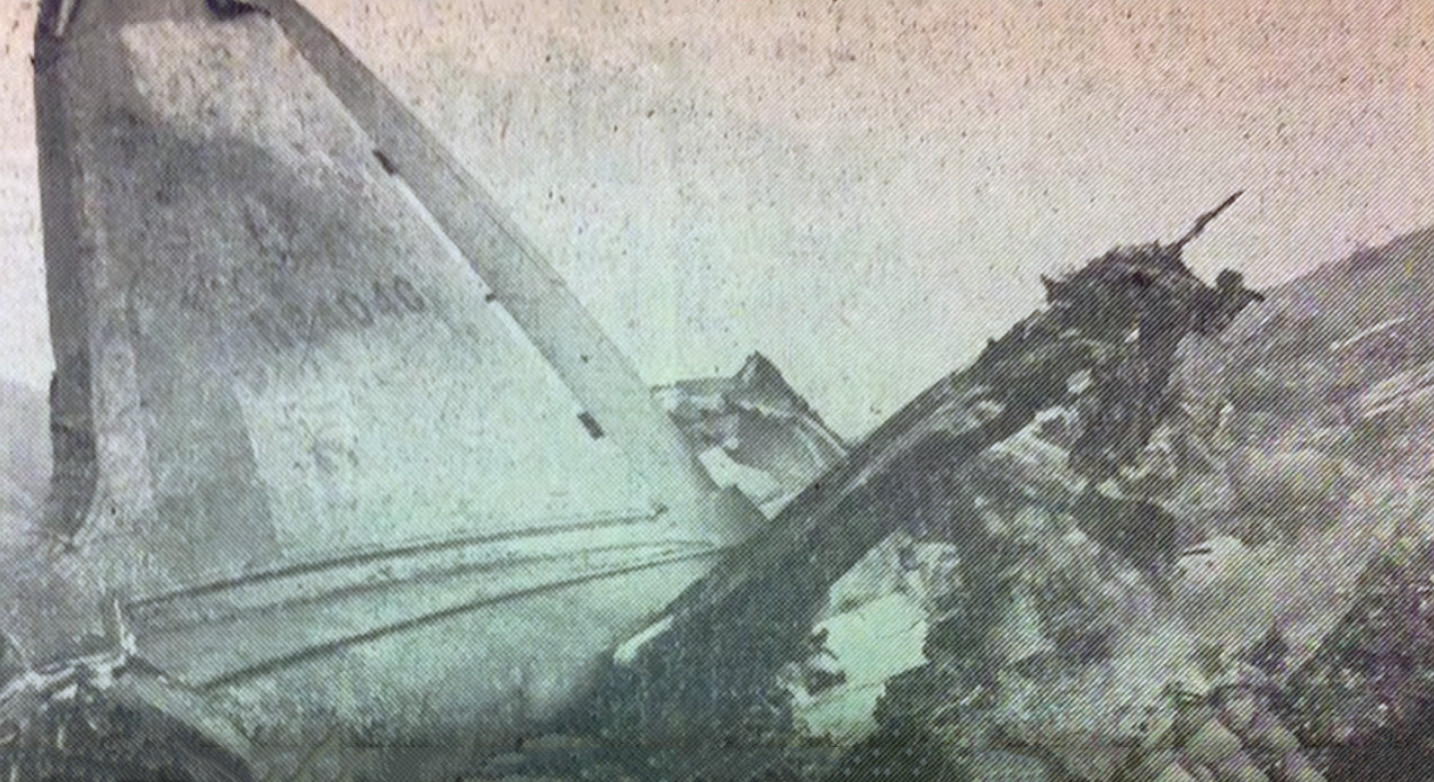
On a flight from San Andrés Island to Cartagena, the crew encountered poor weather conditions and lost his route. The aircraft hit the slope of a mountain located in the San Blas Province, Panama. All 46 occupants were killed.

Crash of a Curtiss C-46A-40-CU Commando in Miami: 4 killed

Date & Time: Aug 4, 1952 at 0030 LT
Type of aircraft:
Operator:
Registration:
N79096
Flight Type:
Survivors:
No
Schedule:
Burbank – San Antonio – Miami
MSN:
27038
YOM:
1944
Location:
Crew on board:
2
Crew fatalities:
Pax on board:
2
Pax fatalities:
Other fatalities:
Total fatalities:
4
Captain / Total flying hours:
5823
Captain / Total hours on type:
1412.00
Circumstances:
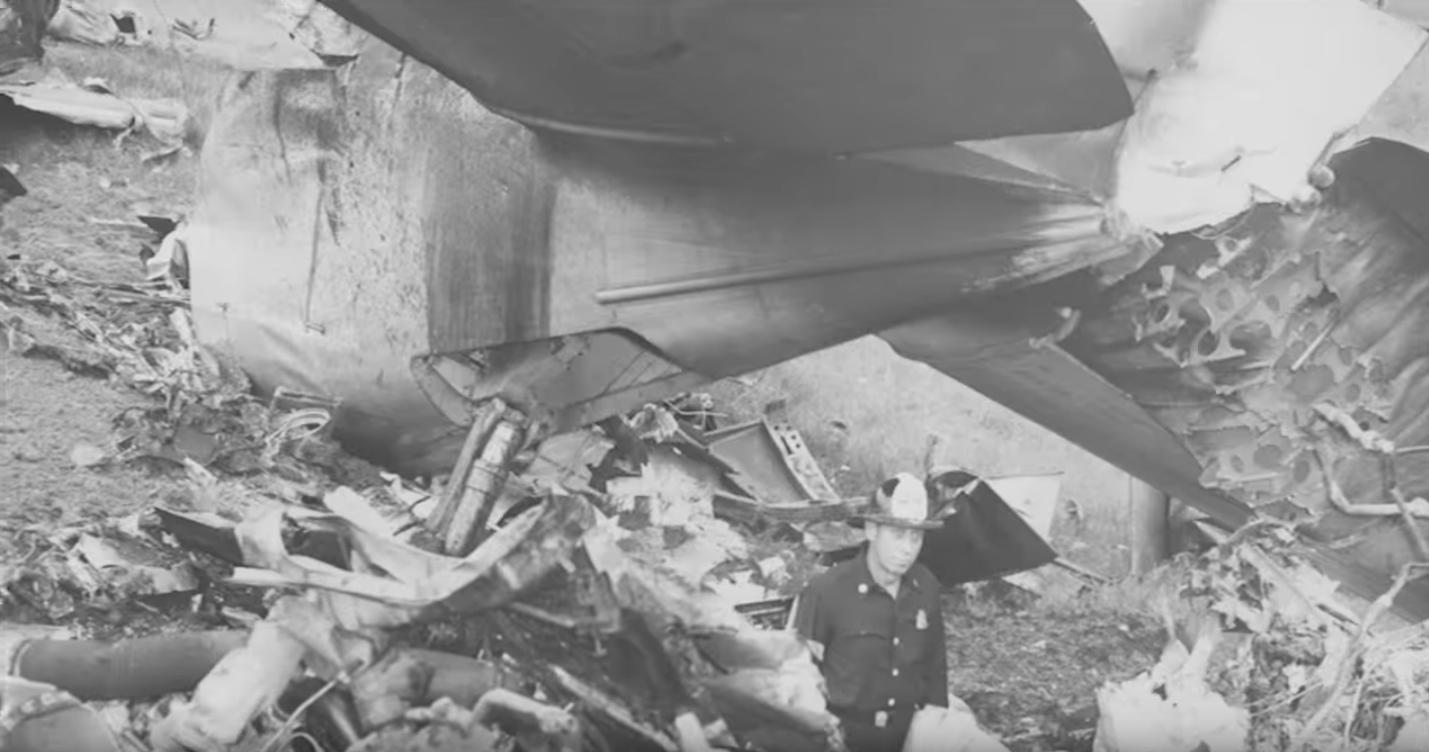
The aircraft departed Burbank August 3 on a nonstop ferry flight to San Antonio, Texas. The aircraft, piloted by Douglas T. Dell, Chief Pilot of Resort Airlines, arrived at its destination at 2345 following an uneventful flight VFR direct. Two minor discrepancies were reported by the pilot on arrival at San Antonio; that the hydraulic system cycle every one minute and 20 seconds, and that the left engine dropped 100 RPM'S on the left magneto. These discrepancies were corrected y Slick Airways' maintenance crew at San Antonio, and at 1653, August 4, the aircraft departed for Miami, Florida, nonstop on a VFR flight plan to cruise at 10,000 feet. The crew on this flight consisted of Captain Robert E. Smith and Copilot John N. Goodman. Two non revenue passengers boarded the plane at San Antonio for the flight to Miami. The cabin of the aircraft contained no passenger seats. This equipment was to have been installed at Miami prior to placing the aircraft in service. The cockpit was equipped to accommodate a crew of three. One safety belt had been installed to accommodate one person riding in the cabin; however, no approved type seat was provided. The aircraft and engine log covering the flight from San Antonio to Miami, as well as a mutilated flight plan and log sheet recovered from the wreckage, indicated that the flight was made at an altitude of 10,000 feet. All entries in the flight plan and log sheet covering check points between San Antonio and Miami were completed up to and including Cross City, Florida, the last check point before reaching Miami. The last entry gave the estimated time of arrival at Miami as 2324. The estimated and actual time over the various cheek points along the route as reflected in the flight log indicated that the flight had progressed very nearly as estimated. On the recovered aircraft and engine log covering the San Antonio-Miami flight under heading entitled "Difficulties Noted During Flight," there was found this entry, "EXCESSIVE PLAY ON ELE." The log sheet had been signed by both the captain and the copilot. At approximately 2317 the Miami tower operator received a broken radio transmission from which he was unable to identify either the aircraft or the nature of the call. An attempt to establish contact was unsuccessful until the following message was received. "Miami tower - NAN 79096 requesting emergency landing." Two-way contact was established and at approximately 2318 the flight was cleared to land on Runway 27L (preferential runway for calm wind) and the pilot was advised that if this runway was not satisfactory any runway was available. In the next transmission, the pilot advised the tower that the elevator control linkage was broken and he would attempt to bring the aircraft in, using trim tabs only. His position was given as high over the west boundary of the airport at an altitude estimated by the tower operator as 3,000 feet. Since the use of Runway 9R would permit an approach to be made over very thinly populated areas, it was suggested to the pilot that if it was satisfactory with him, Runway 9R be used. The pilot advised the tower that the change of runways was satisfactory. The area was cleared of all traffic while the aircraft made a circuit of the field, letting down slowly with a wide approach to a long final. As the aircraft neared the approach end of the runway, it appeared to tower personnel to be lined up properly. The following is quoted from testimony of the tower operator: "As the aircraft neared the approach end of the runway and at an altitude of approximately 150 feet, the nose of the aircraft appeared to come up slightly, then crop about the same degree below the horizon. This was repeated several times, each time two maneuver becoming more violent, with the last pull-up very stoop. At an altitude of approximately 150 feet the aircraft appeared to fall off slightly on the left wing, the nose dropped, and the aircraft struck the ground almost vertically." The fire which followed the crash was quickly extinguished by the airport fire-fighting equipment, the crews of which had been altered and were in standby position prior to the crash. The aircraft was destroyed and all four occupants were killed.
Probable cause:
The Board finds that the probable cause of this accident was failure of the elevator control system in flight, resulting in loss of control of the aircraft during landing. The failure of the elevator control system was the result of poor workmanship and inadequate inspection during overhaul and modification. The following findings were pointed out:
- Weather was not considered a factor in this accident,
- Total flight time on the aircraft since overhaul and modification was approximately 13 hours 27 minutes,
- At 2318 the flight advised the Miami tower that the elevator control linkage was broken and elevators functioning by use of trim tabs only,
- The aircraft became uncontrollable and crashed during an attempted landing on Runway 09R,
- The push-pull tube was found disconnected from its point of attachment on the elevator bellerrank.
Final Report:

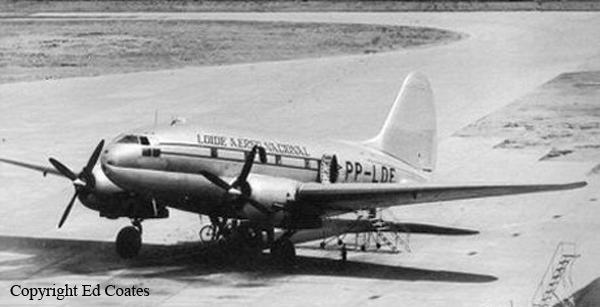
Crash of a Curtiss C-46A-60-CK Commando off Manaus: 6 killed

Date & Time: May 24, 1952
Type of aircraft:
Operator:
Registration:
PP-LDE
Flight Phase:
Flight Type:
Survivors:
No
Schedule:
Manaus – Rio de Janeiro
MSN:
446
YOM:
1945
Country:
Crew on board:
6
Crew fatalities:
Pax on board:
0
Pax fatalities:
Other fatalities:
Total fatalities:
6
Circumstances:
After takeoff, during the initial climb, an engine failed. The pilot-in-command elected to return for an emergency landing but the aircraft stalled and crashed into the Río Negro. The airplane sank and all six crew members were killed.
Probable cause:
Engine failure shortly after rotation for undetermined reason.

Crash of a Curtiss C-46F-1-CU Commando near Whittier: 29 killed

Date & Time: Apr 18, 1952 at 0334 LT
Type of aircraft:
Operator:
Registration:
N8404C
Survivors:
No
Site:
Schedule:
New York – Chicago – Kansas City – Phoenix – Hollywood
MSN:
22466
YOM:
1945
Flight number:
RBN416W
Crew on board:
3
Crew fatalities:
Pax on board:
26
Pax fatalities:
Other fatalities:
Total fatalities:
29
Captain / Total flying hours:
7913
Captain / Total hours on type:
600.00
Copilot / Total flying hours:
3000
Copilot / Total hours on type:
495
Circumstances:
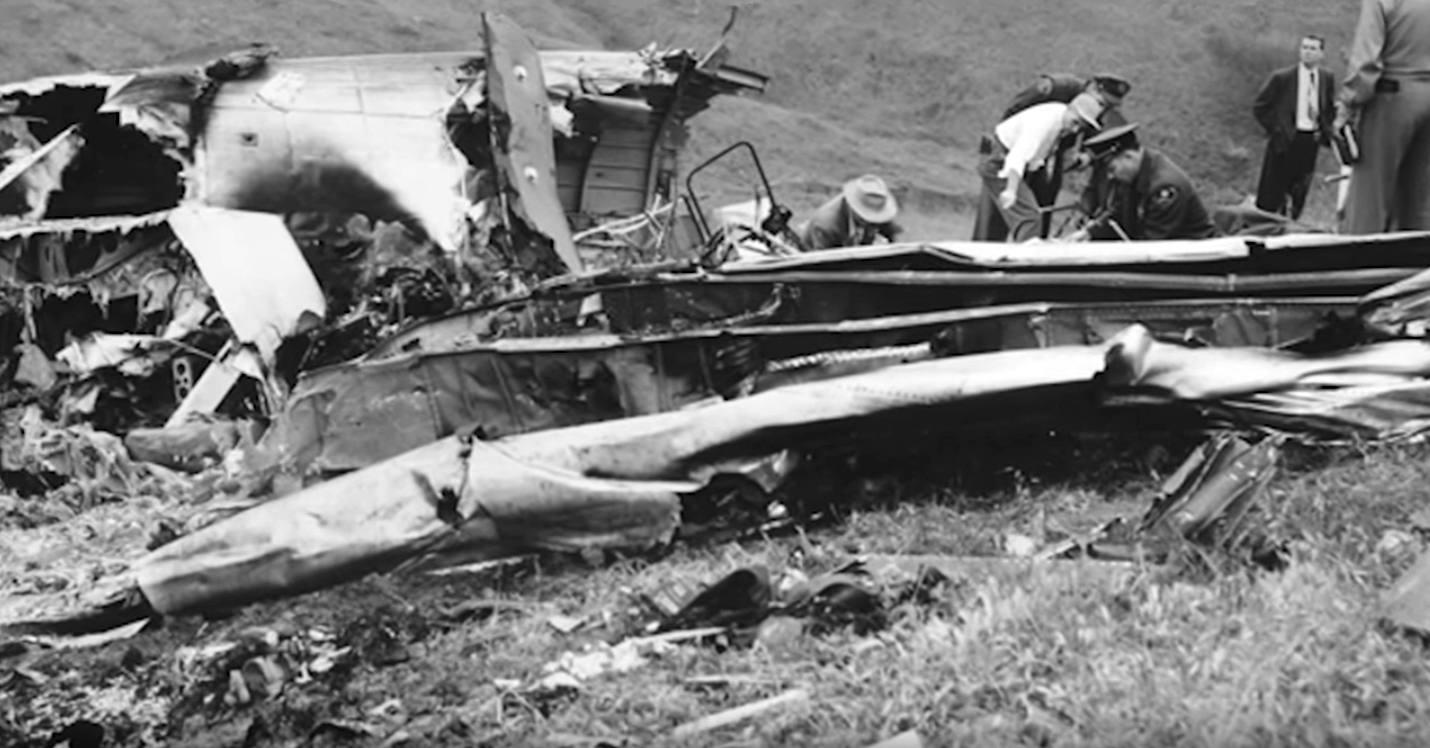
The crew started the descent to Hollywood-Burbank Airport at night and in marginal weather conditions (low clouds) when he was instructed by ATC to divert to Los Angeles for a safe ILS approach. While descending in dark conditions, the aircraft impacted the slope of Mt Puente located two miles east of Whittier. The wreckage was found few hours later. All 29 occupants have been killed.
Probable cause:
The Board determines that the probable cause of this accident was the action of the pilot in voluntarily descending below the minimum altitude for which he was cleared, and attempting an approach at an altitude too low to clear the terrain. The following findings were pointed out:
- Captain Lewis R. Powell served as command pilot on this flight and on previous ones, contrary to the limitation imposed by his medical certificate, although he was fully aware that this limitation restricted his flying activities to company check pilot duties only,
- Copilot Charles K. Waldron was properly certificated for the flight involved, but during this flight exceeded the flight time limitations prescribed under Section 42.48 of the Civil Air Regulations,
- The flight was not conducted in accordance with the ARTC approach clearance, in that it descended considerably lower than the minimum altitude prescribed between Riverside range and Downey fan marker,
- The flight was in clear weather until reaching the Puente Hills, which were clear on the east slope but in fog to the west,
- Weather conditions at Los Angeles International Airport were satisfactory for the ILS approach for which the flight had been cleared, but were not satisfactory for a visual approach.
Final Report:

Crash of a Curtiss C-46F-1-CU Commando in Jamaica: 5 killed

Date & Time: Apr 5, 1952 at 0827 LT
Type of aircraft:
Operator:
Registration:
N1911M
Flight Type:
Survivors:
No
Site:
Schedule:
Fort Lauderdale – Charleston – Raleigh – Teterboro
MSN:
22464
YOM:
1945
Flight number:
US4-2
Crew on board:
2
Crew fatalities:
Pax on board:
0
Pax fatalities:
Other fatalities:
Total fatalities:
5
Captain / Total flying hours:
4760
Captain / Total hours on type:
2225.00
Copilot / Total flying hours:
2000
Copilot / Total hours on type:
246
Aircraft flight hours:
4293
Circumstances:
The flight was designated as No. 4-2 because it was being operated as the second section of a regularly scheduled cargo flight that left Fort Lauderdale, Florida, on April 4. Flight 4-2 departed Fort Lauderdale April 5, 1952, at 0055, with a crew consisting of Captain William B. Crockett, Jr., and Copilot Jack L. Woerderhoff. The destination was Teterboro, New Jersey, with intermediate stops at Charleston. South Carolina, and Raleigh-Durham, North Carolina. The gross weight of the aircraft upon departure was less than the maximum of 48,000 pounds permitted in cargo operations, and the load was placed so that the aircraft's center of gravity was within prescribed limits. This first segment of the flight was conducted according to visual flight rules. It was entirely routine with a landing at Charleston at 0328. Fuel was added but no cargo was loaded or discharged at Charleston. Takeoff from Charleston was at 0410, with a flight plan calling for instrument flight rules. Again the gross weight was less than the allowable and the center of gravity was within prescribed limits. This segment of the flight was also routine, with a landing at Raleigh-Durham at 0524. Again the cargo remained unchanged although 284 gallons of fuel were added. At Rale-gh-Durhan the pilots were briefed at the office of the U. S. Weather Bureau on current and forecast weather conditions over the route. It was indicated that no difficulty should be encountered en route to the New York area, but the ceilings and visibilities there and at Philadelphia, the alternate, would be 800 feet and live miles with heavy rain upon arrival. At 0554 the crew filed a flight plan according to instrument flight rules to cruise from Raleigh-Durham to new York International Airport (Idlewild) at 3,000 feet. The original destination, Teterboro, was changed because of worsening weather there, and the alternate was Philadelphia International Airport. The estimated time en route was two hours and ten minutes. The aircraft carried fuel for four hours' flight. The 0528 weather sequence reported Idlewild, the destination, as 2,100 feet ceiling and 4-mile visibility, and Philadelphia, the alternate, as also above minimums. Upon departure from Raleigh-Durham at 0608 the aircraft's gross weight was about 172 pounds less than its maximum allowable of 48,000 pounds, and its center of gravity was within prescribed limits. The flight proceeded uneventfully at its planned altitude of 3,000 feet. Routine position reports were made through Air Route Traffic Control and arrival over the Idlewild range station was estimated at 0810. At 0809 the flight was instructed by ARTC (Air Route Traffic Control) to climb to 3,500 feet and to contact Idlewild Approach Control when over Scotland Intersection (where the south-west leg of the Idlewild range intersects the southeast leg of the Newark range). The next instruction to the flight was from Idlewild Approach Control and directed it to hold at Scotland at 3,500 feet, and to expect approach clearance at 0828. The flight reported over Scotland at 3,500 feet at 0817. Immediately following the flight was given Idlewild weather as follows: "Weather 0804 time now 0817, measured 500 broken, 1800 overcast, visibility 1 1/2 miles in heavy rain, the altimeter 29.82." The approach controller first saw the flight on the airport surveillance radar (ASR) when it was approaching Scotland. He asked the flight if it could make a straight-in approach from its present position and the flight replied affirmatively. It was then cleared for a straight-in approach, instructed to descend immediately, and to report passing through 2,500 feet. The flight acknowledged and subsequently reported leaving 2,500 feet, and then leaving 2,000 feet. The controller then cleared the flight to continue descent, to advise upon reaching 1,500 feet, and then cleared it to "pass over Runway 4 and make left turn into Runway 13 left." The next contact with the flight was at 0825, when it reported "contact" over the outer marker, located at the Idlewild range station, 2.9 miles from the approach end of Runway No. 4. The local controller then took over control of the flight and advised it to "bear left and make a right turn into Runway 13L, that's the big runway on the north side of the airport, and call base leg coming up on the Federal Building. Go ahead and you'll probably De west of the Federal Building when you call." This was acknowledged by the flight, which presumably intended to comply because the message was not questioned. At 0827 the local controller saw the aircraft below the overcast and at an estimated altitude of 500 feet, between the tower and Runway 4. 2 He at once transmitted, "Just saw you pass over the airport. You should be passing those hangars now. If you start your left turn and watch the hangers on your left wing, you'll be able to make a left turn into Runway One Three. Go ahead, sir." The landing gear appeared to be fully extended, but the flap position was not noticed. A few seconds later the aircraft disappeared from view on a northerly heading and still at an estimated altitude of 500 feet. The local controller at once asked the flight if it had started the left turn, and the flight replied that it was pilling up to execute a missed approach. The tower gave immediate instruction to turn right and proceed to Long Beach intersection (the SE leg of the Idlewild Range and the SW leg of the Hempstead Range, about 10 miles SE of Idlewild) at 1,500 feet altitude. This transmission was acknowledged. This was the last communication from the flight. A very short time later the aircraft crashed at the intersection of 169th Street and 89th Avenue, Jamaica, New York, about 4.4 miles north of the Idlewild control tower.
Probable cause:
The Board determines that the probable cause of this accident was loss of control following sudden engine failure caused by a deteriorated fuel feed valve diaphragm during an attempted missed approach. The following findings were pointed out:
- As the flight approached Idlewild it was given the local weather including a measured ceiling of 500 feet and a visibility of one and one-half miles,
- This ceiling and visibility were the minimums for the subject flight,
- The captain elected not to follow the tower's suggestions due to limited forward visibility at his altitude,
- During power application for a missed approach the fuel feed valve diaphragm of the left engine either completely failed or an existing failure became worse, this diaphragm had not been replaced at the time of engine over-haul, as required,
- The left engine then acted erratically with surging, intermittently cutting out,
- At the time the flight was on instruments in turbulent air,
- Control was lost and the aircraft descended rapidly in a sharply nose-down right slip taking on aspects of a spin, and crashed.
Final Report:

Crash of a Curtiss C-46D-15-CU Commando in North Korea: 9 killed

Date & Time: Feb 19, 1952 at 0202 LT
Type of aircraft:
Operator:
Registration:
44-78038
Flight Phase:
Flight Type:
Survivors:
No
MSN:
33434
YOM:
1945
Country:
Region:
Crew on board:
10
Crew fatalities:
Pax on board:
0
Pax fatalities:
Other fatalities:
Total fatalities:
9
Circumstances:
The crew was performing a night intrusion mission. The last radio contact was at 0202LT when the airplane disappeared in unknown circumstances. While nine crew members appears to be killed, Sgt Leo A. Poldervaart survived and became PoW. He was repatriated on 31 August 1953. It is believed that a double agent detonated a grenade before bail out.
Crew:
Cpt Lawrence E. Burger, †
Cpl Dean R. Crabb, †
1st Lt John F. Dick, †
1st Lt Dennis F. Haley, †
M/Sgt David T. Harrison, †
Cpt Guy O. King, †
1st Lt Eugene E. Layer, †
Sgt Leo A. Poldervaart,
S/Sgt Thomas W. Rowden, †
Cpl George G. Tatarakis. †

Crash of a Curtiss C-46D-10-CU Commando in Wheeler-Sack AAF: 4 killed

Date & Time: Feb 10, 1952
Type of aircraft:
Operator:
Registration:
44-77508
Flight Phase:
Flight Type:
Survivors:
Yes
Schedule:
Wheeler-Sack - Wheeler-Sack
MSN:
32904
YOM:
1944
Crew on board:
4
Crew fatalities:
Pax on board:
32
Pax fatalities:
Other fatalities:
Total fatalities:
4
Circumstances:
The aircraft and its crew were taking part to a combined training mission out of Wheeler-Sack AAF and was the ninth airplane to depart in a formation of 17 similar aircraft. Shortly after takeoff, while in initial climb, the aircraft went out of control and crashed on the apron, damaging two other aircraft, a Fairchild C-82A Packet registered 44-23017 and a Ryan L-17B Navion registered 48-1064. The C-46 was destroyed and all four crew members were killed while the other occupants were injured.