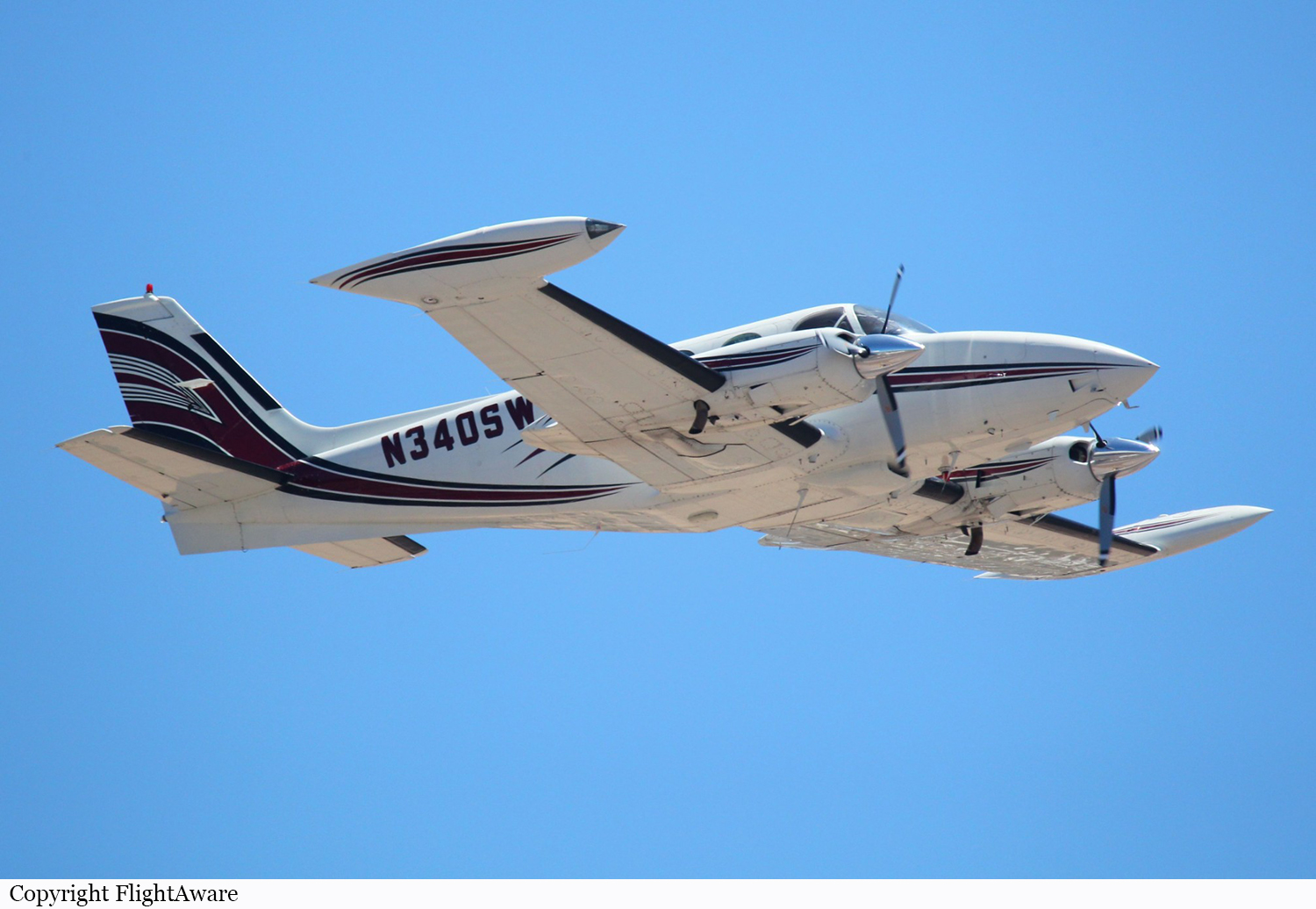
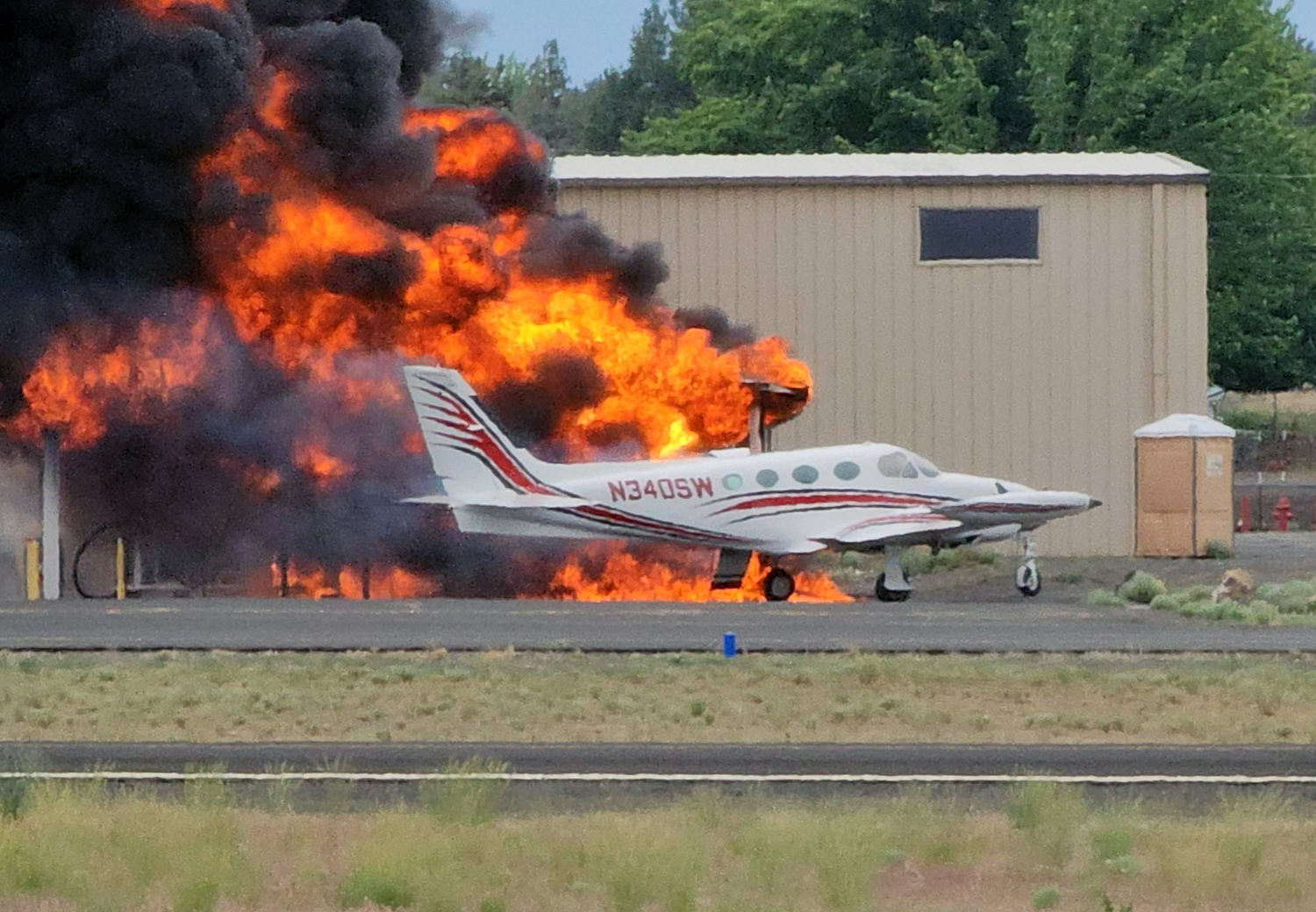
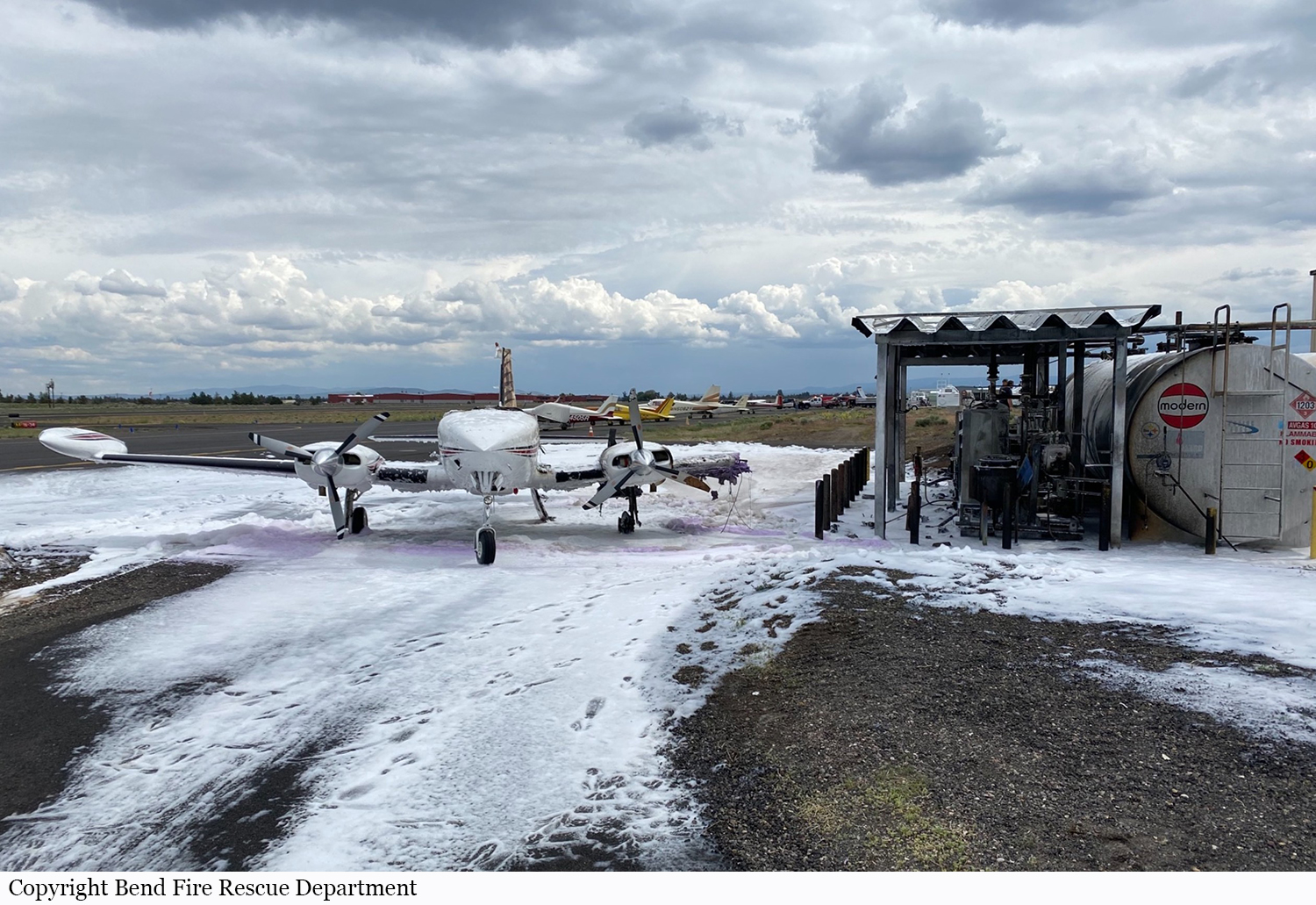
Ground accident of a Cessna 340A in Bend

Date & Time: Jun 8, 2023 at 1400 LT
Type of aircraft:
Operator:
Registration:
N340SW
Flight Phase:
Flight Type:
Survivors:
Yes
Schedule:
Bend - Bend
MSN:
340A-0531
YOM:
1978
Location:
Crew on board:
1
Crew fatalities:
Pax on board:
1
Pax fatalities:
Other fatalities:
Total fatalities:
0
Captain / Total flying hours:
3300
Captain / Total hours on type:
2200.00
Aircraft flight hours:
3230
Circumstances:
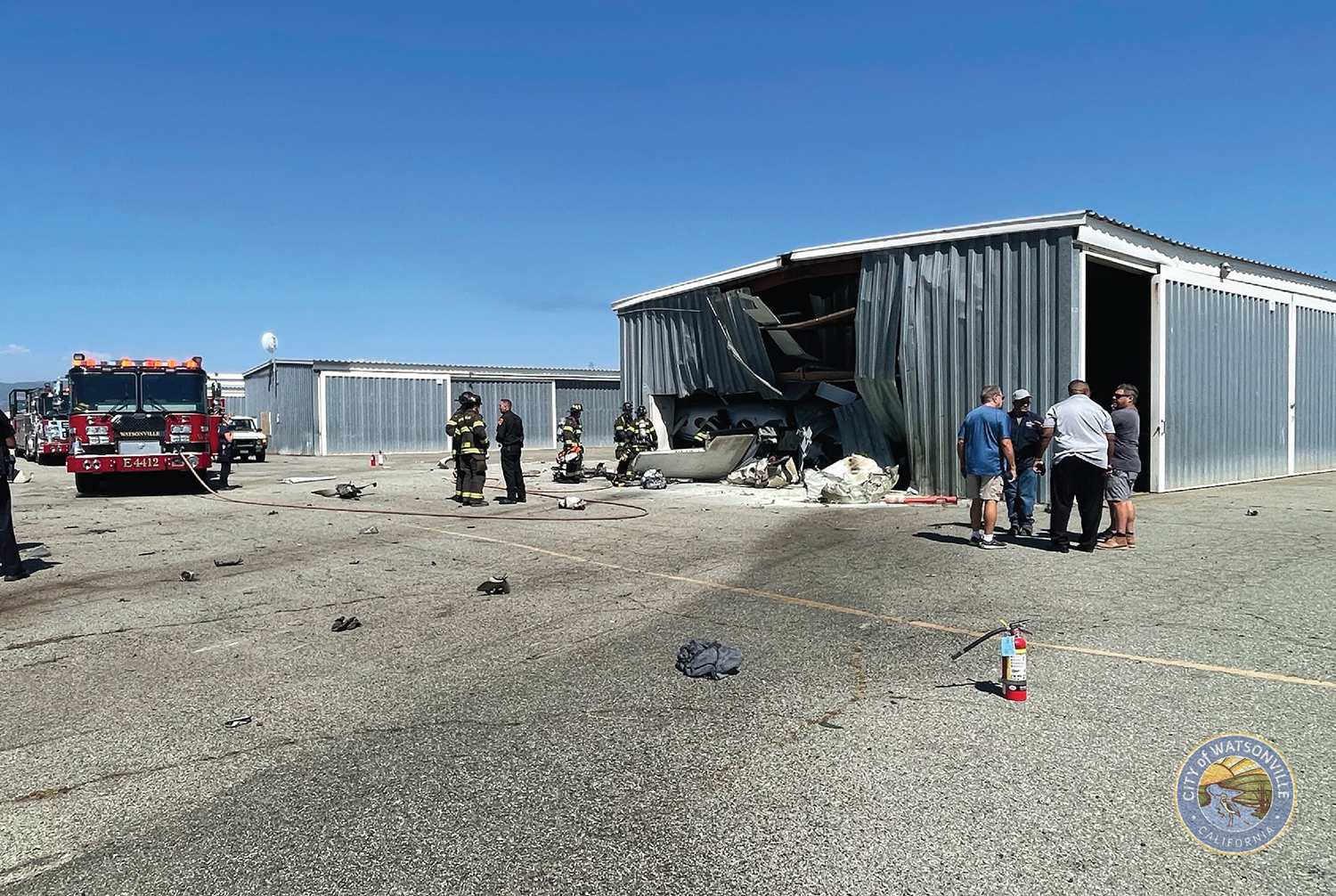
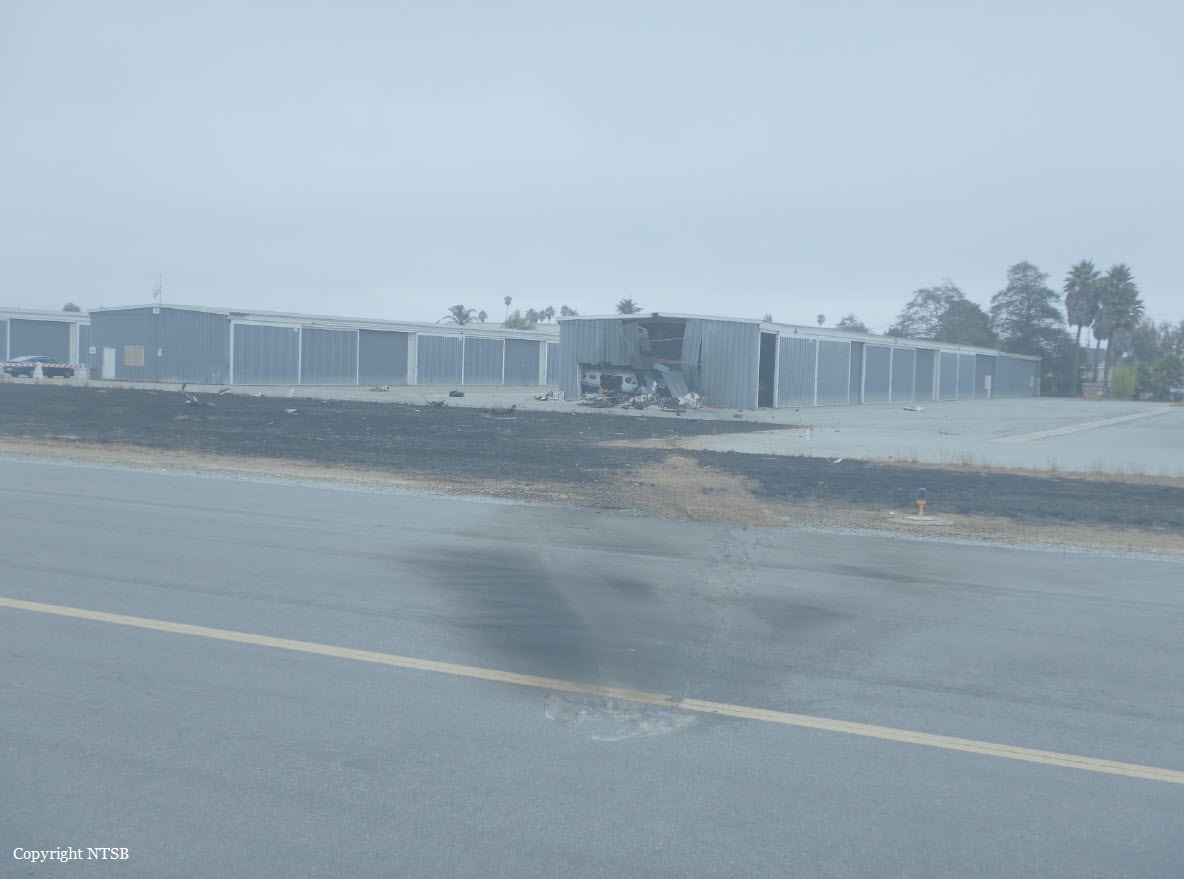
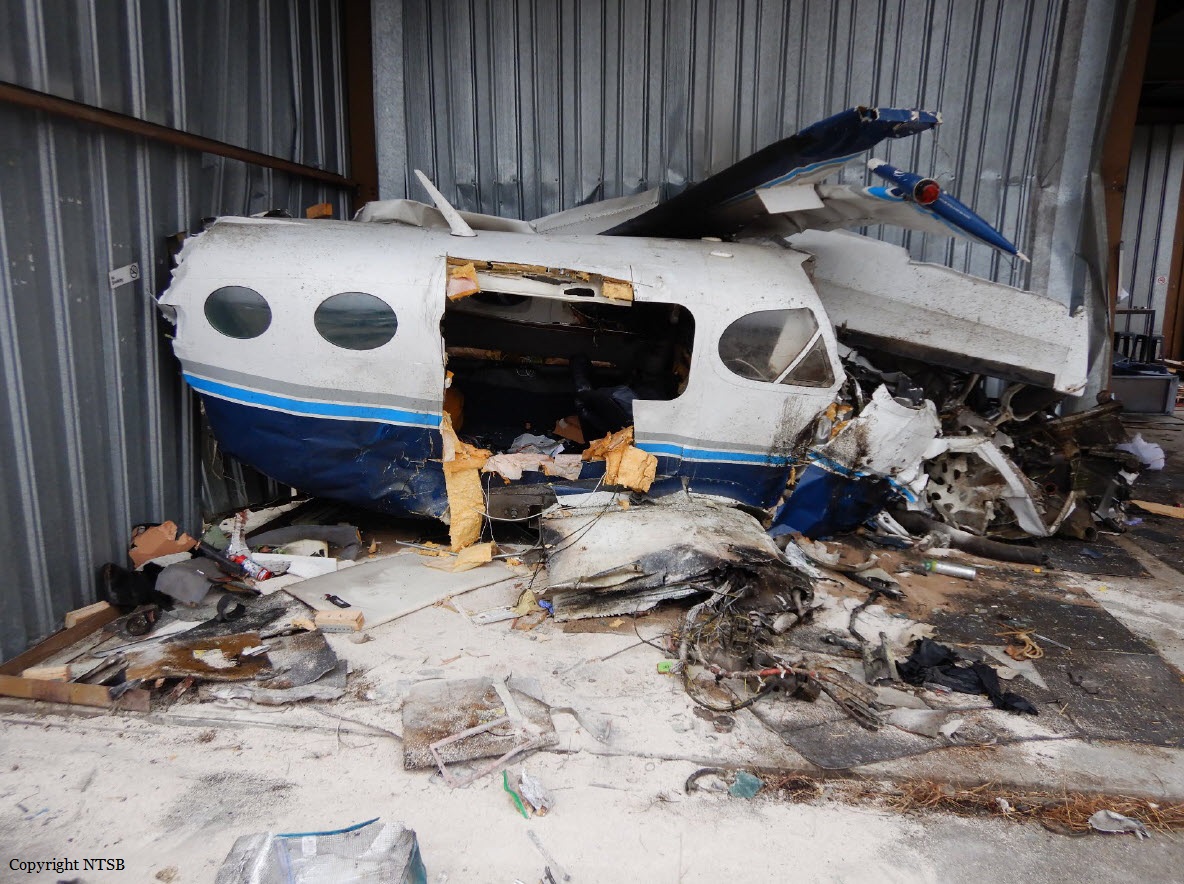
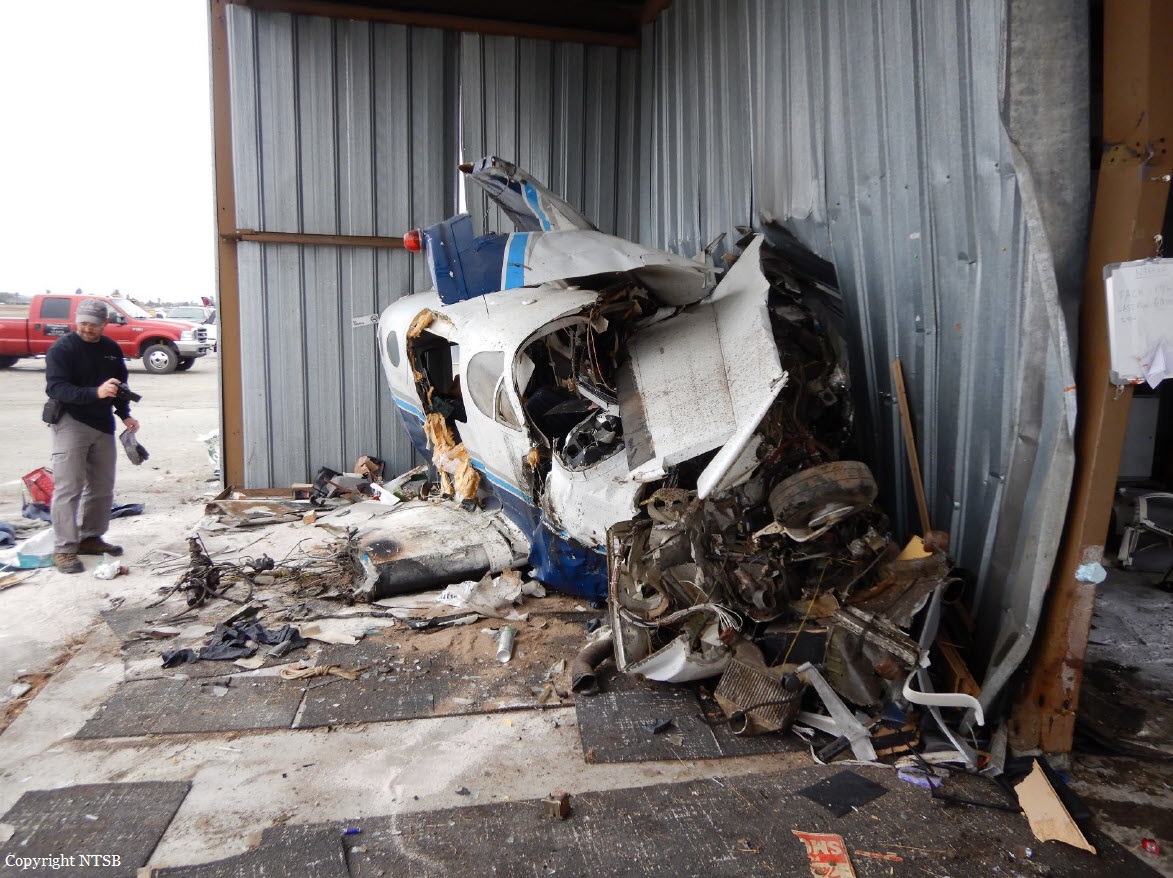
The pilot reported that while taxiing, after using a self-serve fuel station, the airplane’s left wing-tip fuel tank struck a post at the fuel station and a fire ignited. The pilot shut down the airplane’s engines and disembarked the airplane with his passenger. The left wing and fuselage were substantially damaged. The pilot reported that there were no preaccident mechanical malfunctions or failures that would have precluded normal operation.
Probable cause:
The pilot’s failure to maintain clearance from the fuel station, resulting in a ground collision and fire.
Final Report:

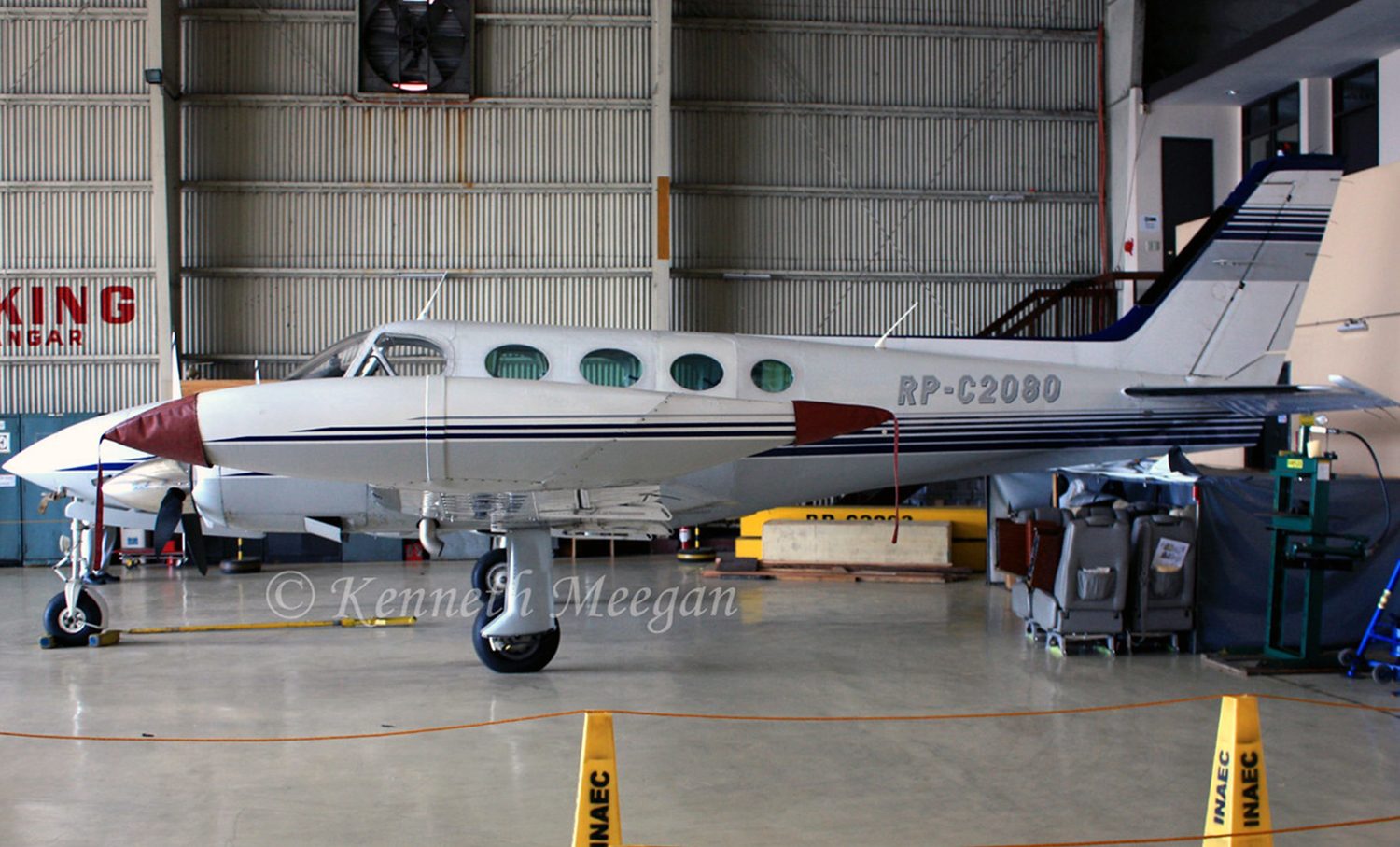
Crash of a Cessna 340A on Mt Mayon: 4 killed

Date & Time: Feb 18, 2023 at 0650 LT
Type of aircraft:
Operator:
Registration:
RP-C2080
Flight Phase:
Survivors:
No
Site:
Schedule:
Legazpi - Manila
MSN:
340A-0917
YOM:
1979
Location:
Country:
Region:
Crew on board:
2
Crew fatalities:
Pax on board:
2
Pax fatalities:
Other fatalities:
Total fatalities:
4
Circumstances:
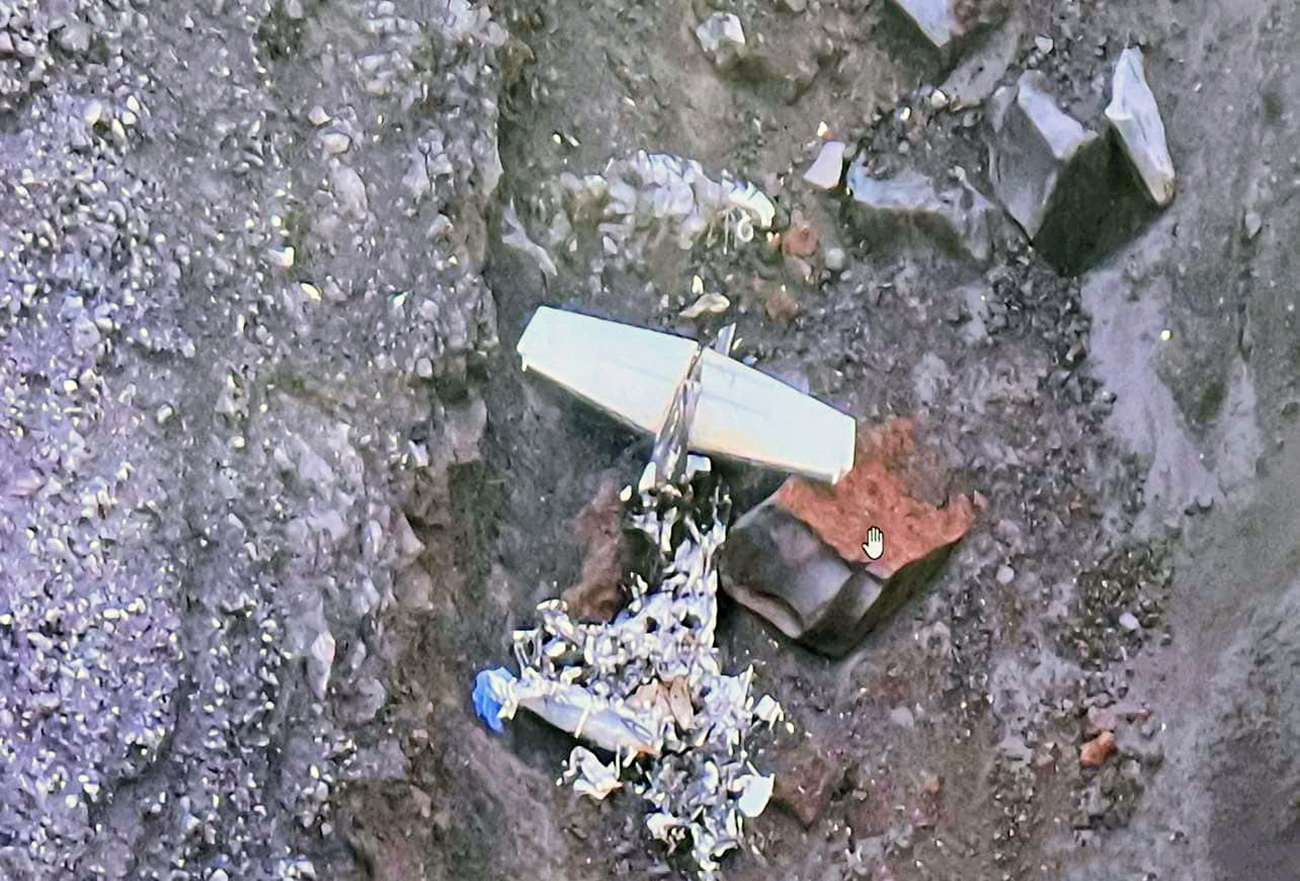
The flight was bound for Manila with one pilot, one aircraft mechanic, and two passengers on board. The aircraft was reported missing after it took off from Bicol International Airport (RPLK) at Daraga, Albay. The aircraft is being operated by the Energy Development Corporation (EDC) and was on a routine general aviation flight. All aircraft occupants were fatally injured in this accident. The pilot submitted a VFR to IRF flight plan that will utilize standard departure on RWY 05 of RPLK. According to the flight plan, it will be transitioning to IFR and intercepting NAGA VOR. It will further continue W9 airway and proceed to ALABAT for the arrival procedure in Manila. The flight departed from RWY 05, made a procedural right upwind turn, and crossed the final approach of RWY 05. At 0647LT, ATC established contact with the aircraft while passing 2,600 ft. The ATC inquired if the flight had already passed Camalig by-pass, and the pilot responded "We're passing Camalig by-pass now". The pilot was instructed by ATC to continue climbing and report twenty nautical miles out of RPLK, which was acknowledged by the pilot. At 0650LT, no position report was received from the aircraft. The ATC initiated contact with the aircraft several times, but no response was received. The duty ATC contacted the Manila Area Control Center (MACC) for any signatures of the aircraft that they might have picked up. The MACC informed the ATC that there was an initial signature contact that later disappeared on the radar monitor. At about 0900LT, the Philippine Aeronautical Rescue Coordinating Center (PARCC) elevated the alert to a DETRESFA on the missing aircraft. On the next day, February 19, 2023, the operator launched their own search operation using an AW139 helicopter, which was able to locate the missing aircraft at about 6,300 feet on the south-west slope of Mt Mayon Volcano with grid coordinates of 13°14'56.45 N and 123°40'57.79 E. An aerial reconnaissance by CAAP-AAIIB investigators and EDC using a helicopter was conducted on 20 February 2023. The general impact area shows the scattered wreckage of aircraft debris and signs of post-impact fire. All four occupants were killed.
Probable cause:
The pilot failed to follow the flight plan and made an unauthorized deviation. The pilot lack of situational awareness was considered as a contributing factor.
Final Report:

Crash of a Cessna 340A off Providenciales

Date & Time: Jan 3, 2023 at 1122 LT
Type of aircraft:
Registration:
N824BC
Flight Phase:
Flight Type:
Survivors:
Yes
Schedule:
Basseterre – Providenciales
MSN:
340A-0306
YOM:
1977
Crew on board:
1
Crew fatalities:
Pax on board:
3
Pax fatalities:
Other fatalities:
Total fatalities:
0
Captain / Total flying hours:
288
Aircraft flight hours:
4795
Circumstances:
The pilot reported that he began the accident flight with 160 gallons of fuel on board. The airplane was equipped with two main wingtip fuel tanks, two in-wing auxiliary fuel tanks, and one engine nacelle locker fuel tank. His normal procedure was to operate for 50 minutes out of the main tanks, then use most of the fuel in the auxiliary tanks, then transfer fuel out of the locker tank and use all of that fuel. While approaching the destination airport, he attempted to transfer fuel from the locker tank; however, he later noticed that fuel was not transferring from that tank. Later, the right engine lost all power, followed by the left. He subsequently ditched the airplane in the ocean about 17 miles from of the destination airport. The airplane landed on the water, and the pilot and his passengers donned life vests and egressed before the airplane sank. The occupants were rescued about 4 hours later. The airplane was not recovered from the ocean and was presumed substantially damaged. A postaccident examination of the fuel system could not be performed and the reason for the pilot’s inability to transfer fuel from the engine nacelle locker tank could not be determined.
Probable cause:
A fuel system malfunction for reasons that could not be determined, which resulted in fuel starvation to both engines.
Final Report:

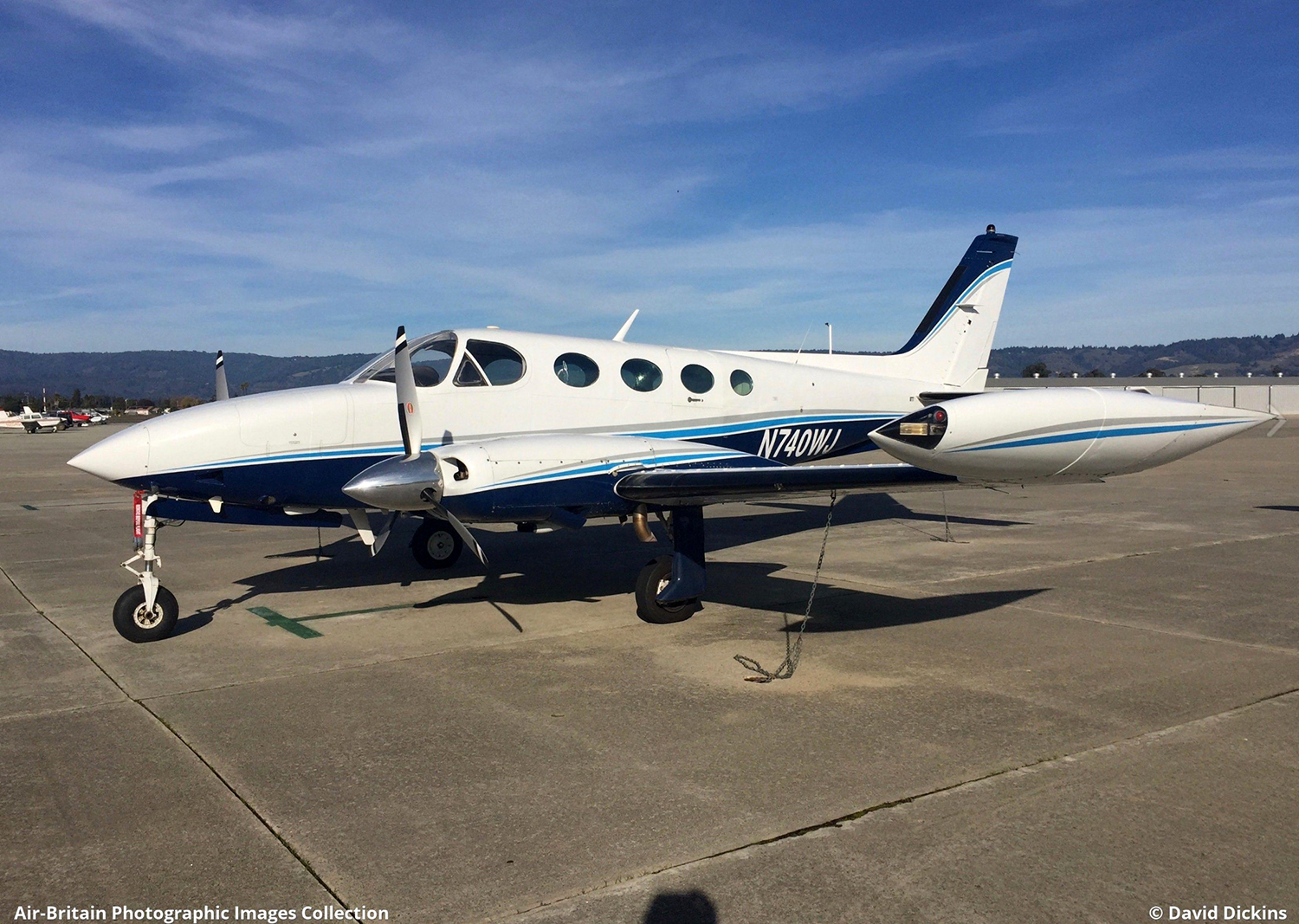
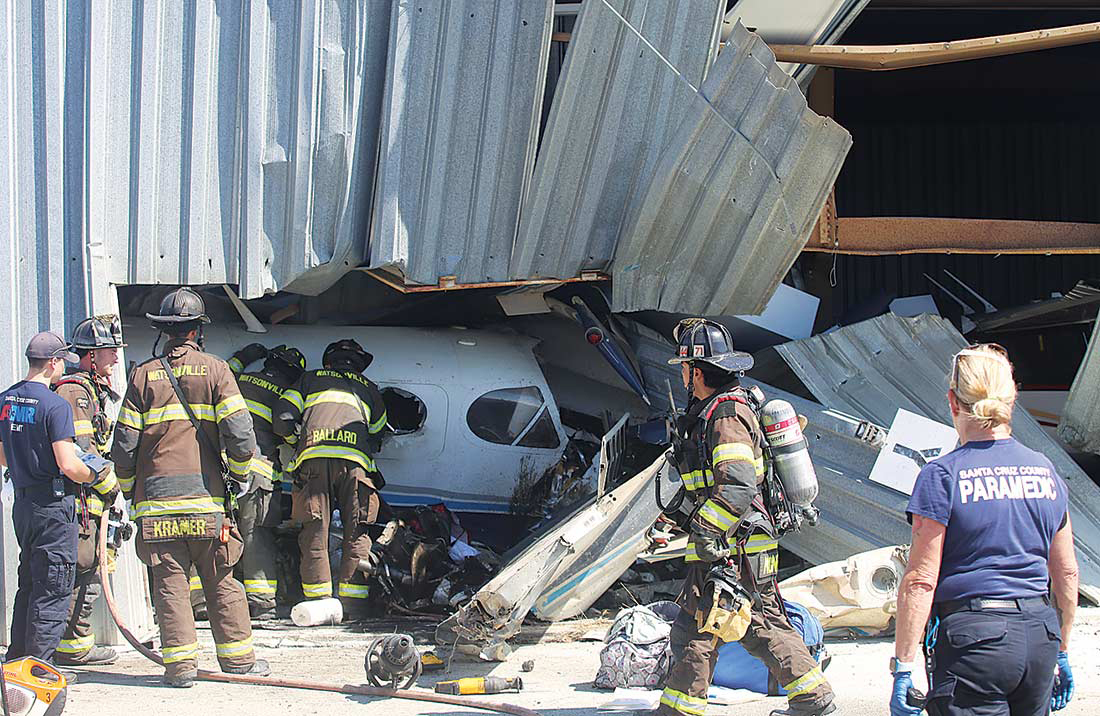
Crash of a Cessna 340A in Watsonville: 2 killed

Date & Time: Aug 18, 2022 at 1455 LT
Type of aircraft:
Operator:
Registration:
N740WJ
Flight Type:
Survivors:
No
Schedule:
Turlock – Watsonville
MSN:
340A-0740
YOM:
1979
Crew on board:
2
Crew fatalities:
Pax on board:
0
Pax fatalities:
Other fatalities:
Total fatalities:
2
Captain / Total flying hours:
111
Captain / Total hours on type:
77.00
Copilot / Total flying hours:
1200
Copilot / Total hours on type:
744
Circumstances:
The pilot of the single-engine airplane was operating in the airport traffic pattern and had been making position reports on the airport’s common traffic advisory frequency (CTAF). The pilot of the multi-engine airplane made an initial radio call on the CTAF 10 miles from the airport, announcing his intention to perform a straight-in approach for landing. Both pilots continued to make appropriate position reports, but did not communicate with each other until the multi engine airplane was about one mile from the airport and the single-engine airplane had turned onto the base leg of the traffic pattern for landing. Realizing that the multi-engine airplane was converging upon him, the pilot of the single-engine airplane announced a go-around, and the airplanes collided on final approach for the runway about 150 ft above ground level (agl). Examination of the airplanes revealed no evidence of mechanical malfunctions or anomalies that would have precluded normal operation. The multi-engine airplane’s wing flaps and landing gear were both retracted at the accident site, consistent with the pilot’s failure to configure the airplane for landing, and flight track information indicated that the pilot maintained a ground speed of about 180 knots throughout the approach until the collision occurred, which may have reduced the time available for him to see and avoid the single engine airplane. The toxicology report for the pilot of the single-engine airplane revealed THC, metabolites for THC, metabolites for cocaine, and ketamine; the low amounts of each drug were not considered causal to the accident. The toxicology report for the multi-engine airplane pilot revealed THC, and metabolites of THC; the low amounts of each drug were not considered causal to the accident.
Probable cause:
The failure of the pilot of the multi-engine airplane to see and avoid the single-engine airplane while performing a straight-in approach for landing.
Final Report:

Crash of a Cessna 340 in Covington: 2 killed

Date & Time: Apr 21, 2022 at 1844 LT
Type of aircraft:
Operator:
Registration:
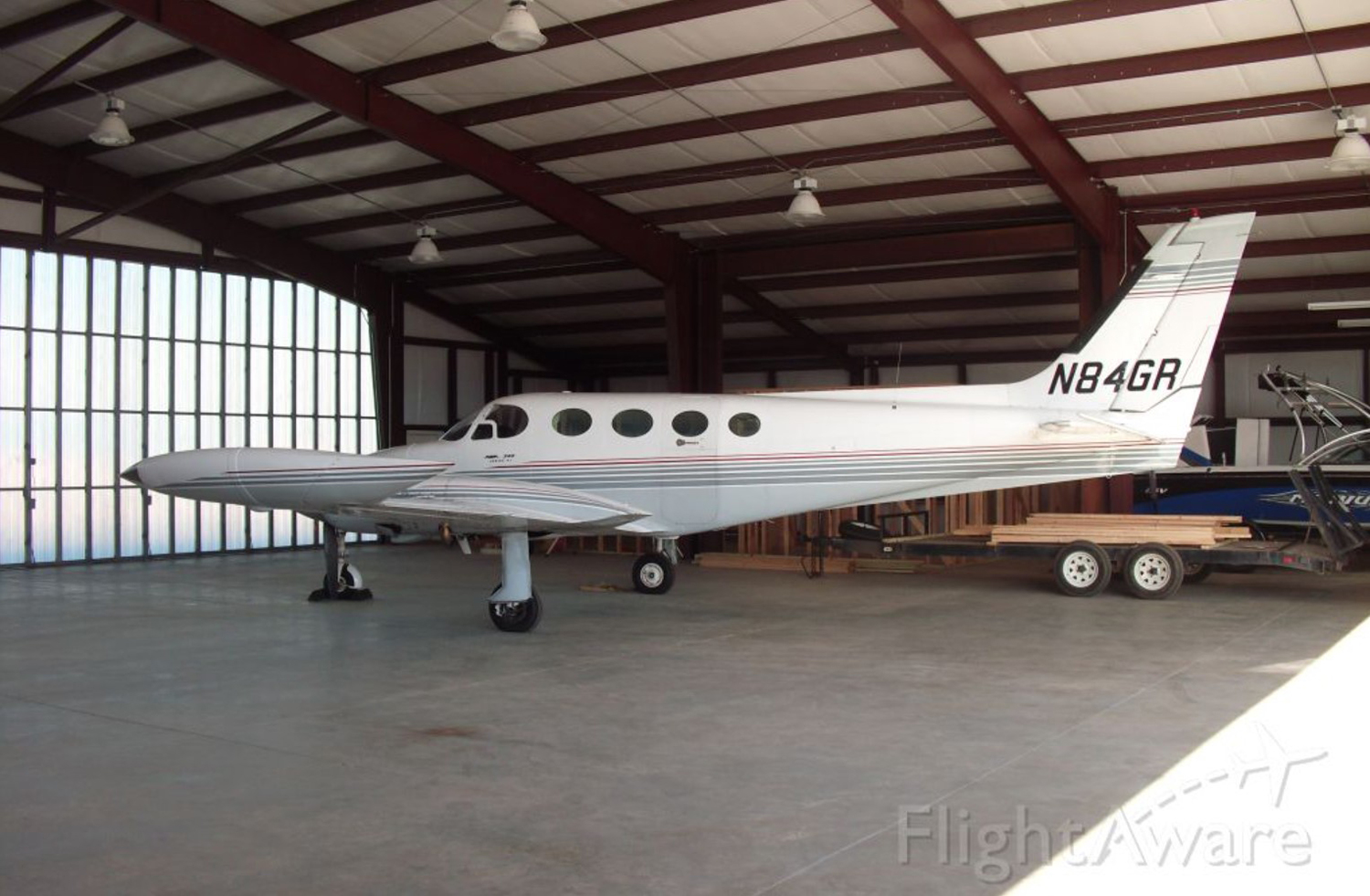
N84GR
Flight Phase:
Flight Type:
Survivors:
No
Site:
Schedule:
Covington - Covington
MSN:
340-0178
YOM:
1973
Crew on board:
2
Crew fatalities:
Pax on board:
0
Pax fatalities:
Other fatalities:
Total fatalities:
2
Captain / Total flying hours:
0
Captain / Total hours on type:
0.00
Copilot / Total flying hours:
3148
Copilot / Total hours on type:
0
Aircraft flight hours:
7581
Circumstances:
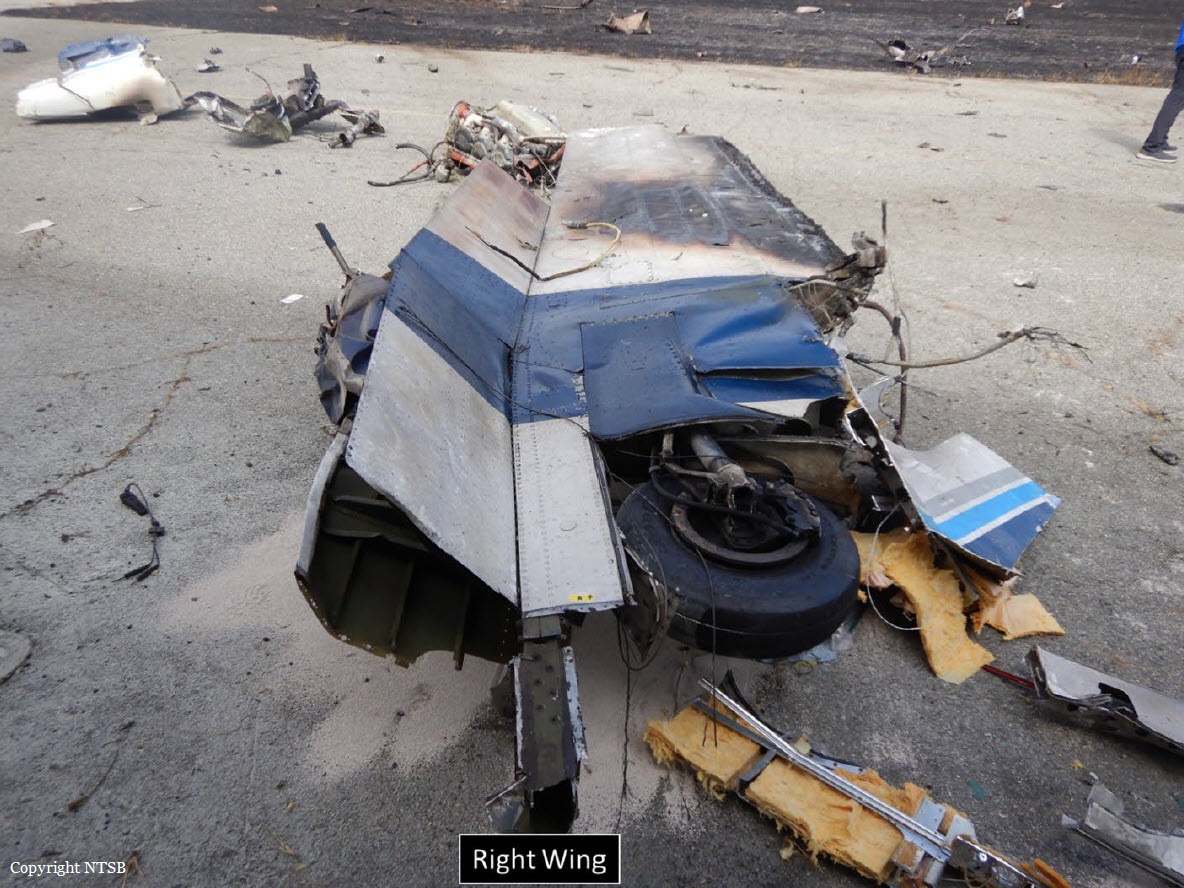
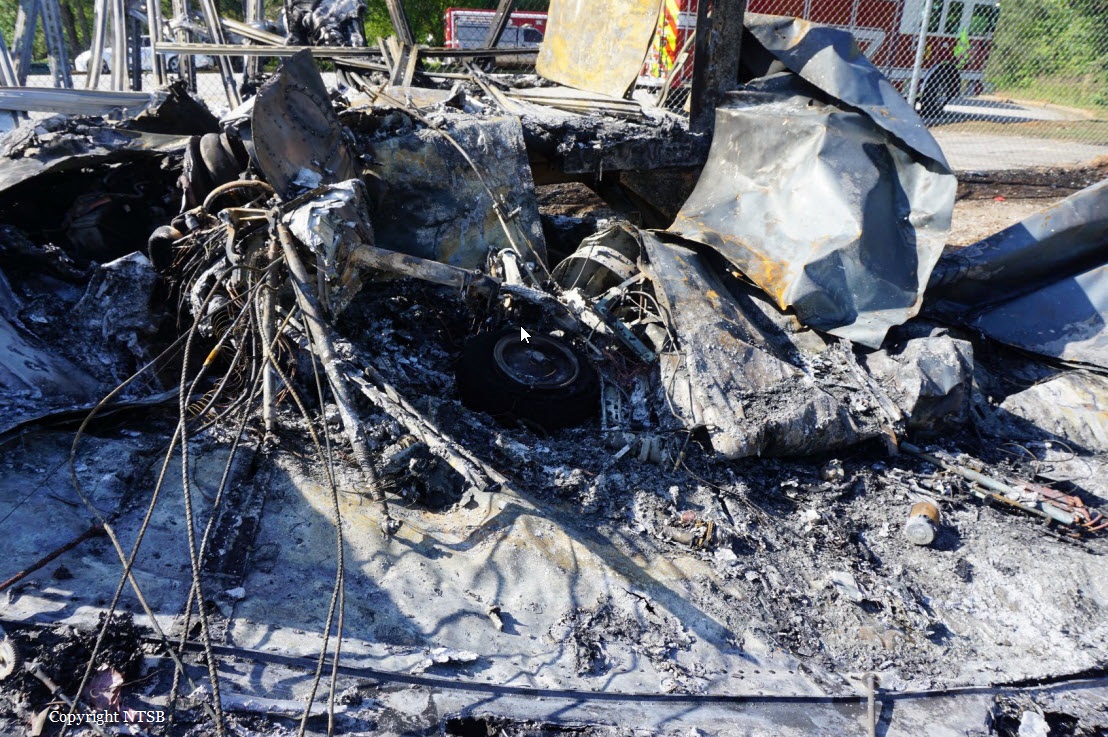
The student pilot, who was the new owner of the multi-engine airplane, and a private pilot flew commercially to Lubbock, Texas, utilized a ride-hailing service to drive to Portales, New Mexico; they met with the former owner of the airplane to finalize the purchase of the airplane and flew it back to Georgia the same day. The next day, the student pilot commenced flight training with the private pilot who offered to provide flight instruction to the student pilot in the student pilot’s newly acquired multi-engine airplane, even though he did not possess a flight instructor’s rating or a multi-engine airplane rating. Radar data showed that the track of the accident airplane's route consisted of their departure airport, a midway stop, and the third leg of the flight, where it crashed during the approach to their destination airport. Witnesses observed a sharp right turn before the airplane’s spiraling descent and impact with terrain and unoccupied semi-trailers. Surveillance footage from a parking lot security camera captured the airplane in a right spiral turn just before the accident. The airplane was destroyed by impact forces and the postimpact fire. The postaccident examination of the airframe, engines, and propellers revealed no anomalies that would preclude normal engine and airplane performance. Additionally, a review of the maintenance logbook revealed that the airplane was overdue for its annual maintenance inspection; no special flight permit (ferry permit) was obtained from the Federal Aviation Administration (FAA) for its return flight to Georgia. Toxicological testing of the student pilot revealed the presence amphetamine, a prescription Schedule II controlled substance that may result in cognitive deficits that pose a risk to aviation safety; however, its effect, if any on the accident flight could not be determined. It is likely that the private pilot’s failure to maintain aircraft control was exacerbated by his lack of a multi-engine airplane rating, his lack of a flight instructor rating, and his poor decision making.
Probable cause:
The private pilot’s loss of control in flight, which resulted in a collision with terrain. Contributing to the accident was the student pilot’s decision to obtain flight instruction from the private pilot and the private pilot's insufficient qualifications to fly or to provide flight instruction in a multi-engine airplane.
Final Report:

Crash of a Cessna 340A in Los Mochis

Date & Time: Apr 6, 2022 at 1748 LT
Type of aircraft:
Operator:
Registration:
XB-GHU
Flight Type:
Survivors:
Yes
Schedule:
Los Mochis - Club Aéreo Nuevo Santa Rosa
MSN:
340A-0506
YOM:
1978
Country:
Crew on board:
1
Crew fatalities:
Pax on board:
0
Pax fatalities:
Other fatalities:
Total fatalities:
0
Circumstances:
The pilot, sole on board, departed Los Mochis International Airport on a flight to the Club Aéreo Nuevo Santa Rosa located east-northeast of the city. After landing on a road, the airplane suffered an apparent undercarriage failure, veered to the right and came to rest in a grassy area, bursting into flames. The pilot evacuated safely while the aircraft suffered serious damages due to fire.

Crash of a Cessna 340A in Santee: 2 killed

Date & Time: Oct 11, 2021 at 1214 LT
Type of aircraft:
Registration:
N7022G
Flight Type:
Survivors:
No
Site:
Schedule:
Yuma – San Diego
MSN:
340A-0695
YOM:
1979
Crew on board:
1
Crew fatalities:
Pax on board:
0
Pax fatalities:
Other fatalities:
Total fatalities:
2
Captain / Total flying hours:
1566
Circumstances:
The pilot was on a cross-country flight, receiving vectors for an instrument approach while in instrument meteorological conditions (IMC). The approach controller instructed the pilot to descend to 2,800 ft mean sea level (msl) until established on the localizer, and subsequently cleared the flight for the instrument landing system (ILS) approach to runway 28R, then circle to land on runway 23. About 1 minute later, the controller told the pilot that it looked like the airplane was drifting right of course and asked him if he was correcting back on course. The pilot responded “correcting, 22G.” About 9 seconds later, the pilot transmitted “SoCal, is 22G, VFR runway 23” to which the controller told the pilot that the airplane was not tracking on the localizer and subsequently canceled the approach clearance and instructed the pilot to climb and maintain 3,000 ft. As the pilot acknowledged the altitude assignment, the controller issued a low altitude alert, and provided the minimum vectoring altitude in the area. The pilot acknowledged the controller’s instructions shortly after. At this time, recorded advanced dependent surveillance-broadcast (ADS-B) data showed the airplane on a northwesterly heading at an altitude of 2,400 ft msl. Over the course of the following 2 minutes, the controller issued multiple instructions for the pilot to climb to 4,000 ft, which the pilot acknowledged; however, ADS-B data showed that the airplane remained between 2,500 ft and 3,500 ft. The controller queried the pilot about his altitude and the pilot responded, “2,500 ft, 22G.” The controller subsequently issued a low altitude alert and advised the pilot to expedite the climb to 5,000 ft. No further communication was received from the pilot despite multiple queries from the controller. ADS-B data showed that the airplane had begun to climb and reached a maximum altitude of 3,500 ft before it began a descending right turn. The airplane remained in the right descending turn at a descent rate of about 5,000 ft per minute until the last recorded target at 900 ft msl, located about 1,333 ft northwest of the accident site. The airplane and two houses were destroyed. The pilot and the driver of a UPS truck were killed. Two other people on the ground were injured.
Probable cause:
Loss of control due to spatial disorientation.
Final Report:

Crash of a Cessna 340A in Tatum: 1 killed

Date & Time: Apr 19, 2021 at 1346 LT
Type of aircraft:
Registration:
N801EC
Flight Phase:
Flight Type:
Survivors:
No
Schedule:
Longview - Tatum
MSN:
340A-0312
YOM:
1977
Location:
Crew on board:
1
Crew fatalities:
Pax on board:
0
Pax fatalities:
Other fatalities:
Total fatalities:
1
Captain / Total flying hours:
28665
Captain / Total hours on type:
120.00
Aircraft flight hours:
6500
Circumstances:
The pilot was planning to perform a functional test of the airplane’s newly upgraded autopilot system. Automatic dependent surveillance-broadcast data showed that, after takeoff, the airplane turned east and climbed to 2,750 ft. Air traffic control information indicated that the controller cleared the pilot to operate under visual flight rules to the east of the airport. Communications between ground control, tower control, and the pilot were normal during the ground taxi, takeoff, and climb. Radio and radar communications were lost 6 minutes after takeoff, and no radio distress calls were received from the pilot. The airplane impacted wooded terrain about 3/4 mile to the east of the last recorded radar data point. Groundspeeds and headings were consistent throughout the flight with no abrupt deviations. The airplane impacted the wooded terrain in a nose-down, near-vertical flight attitude. Most of the airplane, including the fuselage, wings, and empennage, were consumed by a postimpact fire. Both engines and propellers separated from the airplane at impact with the ground. Examination of the engines revealed no preaccident failures or malfunctions that would have precluded normal operations. Both propellers showed signs of normal operation. Flight control continuity was confirmed. The elevator trim cables stop blocks were secured to the cables and undamaged. They were found against the forward stop meaning the trim tab was at full down travel (elevator leading edge full down) which indicated that the airplane was trimmed full nose up at impact. The airplane’s cabin sustained fragmentation from impact and was consumed by fire; as a result, the autopilot system could not be examined. The investigation was unable to determine why the pilot lost control of the airplane.
Probable cause:
The pilot’s loss of airplane control for undetermined reasons.
Final Report:

Crash of a Cessna 340A in Orléans

Date & Time: Aug 10, 2020 at 1355 LT
Type of aircraft:
Operator:
Registration:
N413JF
Flight Type:
Survivors:
Yes
Schedule:
Perpignan – Orléans
MSN:
340A-0746
YOM:
1979
Country:
Region:
Crew on board:
1
Crew fatalities:
Pax on board:
1
Pax fatalities:
Other fatalities:
Total fatalities:
0
Captain / Total flying hours:
2635
Captain / Total hours on type:
41.00
Circumstances:
Then twin engine airplane departed Perpignan-La Llabanère Airport on a private flight to Orléans, carrying one passenger and one pilot. On final approach to Orléans-Loiret Airport (ex Saint-Denis-de-l’Hôtel), the pilot encountered a loss of power on the left engine. He attempted an emergency landing when the airplane impacted trees and crash landed in a wooded area located about 3 km short of runway 23, bursting into flames. Both occupants escaped uninjured while the airplane was totally destroyed by a post crash fire.
Probable cause:
The exact cause of the loss of power on the left engine could not be determined. The pilot, concentrating on monitoring the approach parameters, did not immediately realize the left engine malfunction. He noticed that the aircraft's rate of descent was too high to follow the standard approach slope. The pilot first attempted to go around and reconfigured the aircraft to do so by retracting the landing gear and flaps. In spite of these actions, the pilot noticed that the power delivered by the aircraft's engines did not allow him to recover the plane and understood, by being aware of the action of his right foot on the rudder pedal, that the power delivered by the left engine was abnormally low. Given the low height of the plane at the time of this observation, the pilot decided to land in the country. Contributing to the high rate of descent after the occurrence of the left engine malfunction was the fact that the drags were extended at the time the engine power decreased and the fact that the left propeller probably windmilling until the landing.
Final Report: