Crash of a Cessna 207 Skywagon in Ocumare del Tuy: 3 killed

Date & Time: Nov 17, 2006 at 1143 LT
Registration:
YV-1220
Flight Phase:
Flight Type:
Survivors:
No
Site:
Schedule:
Ocumare del Tuy - Puerto Ayacucho
Country:
Crew on board:
1
Crew fatalities:
Pax on board:
0
Pax fatalities:
Other fatalities:
Total fatalities:
3
Circumstances:
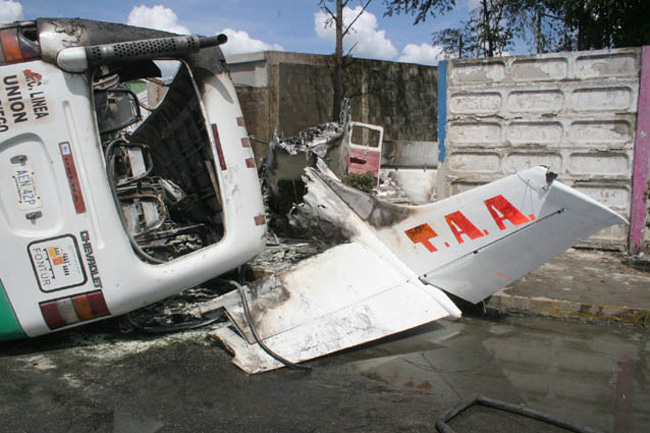
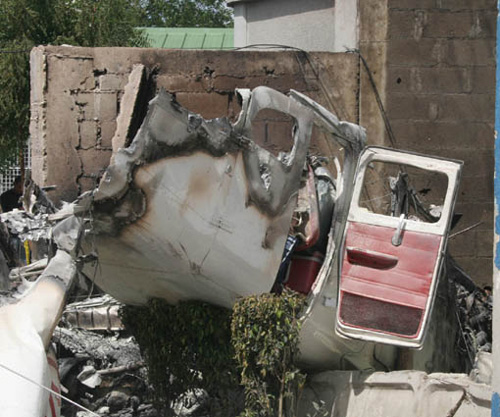
After takeoff from Ocumare del Tuy Airport, while climbing, the pilot encountered engine problems and elected to make an emergency landing in a city center's avenue. Just prior to landing, the single engine aircraft collided with a telephone line and crashed on an autobus. The pilot, the bus driver and a bus passenger were killed. The pilot departed Ocumare del Tuy Airport on a cargo flight to Puerto Ayacucho.

Crash of a Cessna 207A Stationair 8 II off High Bluff

Date & Time: Nov 7, 2006 at 0715 LT
Operator:
Registration:
V3-HDT
Flight Phase:
Survivors:
Yes
Schedule:
Orange Walk – Corozal
MSN:
207-0716
YOM:
1981
Country:
Crew on board:
1
Crew fatalities:
Pax on board:
5
Pax fatalities:
Other fatalities:
Total fatalities:
0
Circumstances:
The single engine aircraft departed Orange Walk Airport at 0700LT for a 30 miles flight to Corozal, North Belize. After 15 minutes, the pilot encountered engine problems and elected to ditch the aircraft about 4 miles south of High Bluff. The aircraft sank in shallow water (about 5 feet deep). All 6 occupants were rescued by the crew of a boat.
Probable cause:
Engine failure in flight for unknown reasons. The engine was recently overhauled.

Crash of a Cessna 207 Skywagon in Tuntutuliak

Date & Time: Oct 13, 2006 at 1512 LT
Operator:
Registration:
N7336U
Flight Type:
Survivors:
Yes
Schedule:
Bethel - Tuntutuliak
MSN:
207-0405
YOM:
1977
Crew on board:
1
Crew fatalities:
Pax on board:
0
Pax fatalities:
Other fatalities:
Total fatalities:
0
Captain / Total flying hours:
5700
Captain / Total hours on type:
1000.00
Aircraft flight hours:
21781
Circumstances:
The commercial certificated pilot was attempting to land on a remote runway during a Title 14, CFR Part 135, cargo flight. The approach end of the runway is located at the edge of a river. During the pilot's fourth attempt to land, the airplane collided with the river embankment, and sustained structural damage. The director of operations for the operator reported that he interviewed several witnesses to the accident. They told him that the weather conditions in the area had been good VFR, but as the pilot was attempting to land, rain and mist moved over the area, reducing the visibility to about 1/4 mile. Within 30 minutes of the accident, the weather conditions were once again VFR. The pilot told an FAA inspector that the weather conditions consisted of a 500 foot ceiling and 2 miles of visibility. The pilot reported that he made 3 passes over the runway before attempting to land. On the last landing approach, while maintaining 80 knots airspeed, the pilot said the nose of the airplane dropped, he applied full power and tried to raise the nose, but the airplane collided with the river bank.
Probable cause:
The pilot's misjudgment of distance/altitude during the landing approach, which resulted in an undershoot and in-flight collision with a river embankment. Factors contributing to the accident were reduced visibility due to rain and mist.
Final Report:

Crash of a Cessna 207A Skywagon in Caño Negro: 2 killed

Date & Time: Aug 11, 2006 at 1700 LT
Registration:
YV-492C
Flight Phase:
Survivors:
No
Schedule:
Caño Negro – Puerto Ayacucho
MSN:
207-0260
YOM:
1974
Country:
Crew on board:
1
Crew fatalities:
Pax on board:
1
Pax fatalities:
Other fatalities:
Total fatalities:
2
Circumstances:
Shortly after takeoff from Caño Negro Airport, while climbing, the single engine aircraft entered an uncontrolled descent and crashed. Both occupants were killed.

Crash of a Cessna T207A Turbo Stationair 7 II in Pemberton: 1 killed

Date & Time: May 18, 2006 at 1506 LT
Operator:
Registration:
C-GGQR
Flight Phase:
Flight Type:
Survivors:
No
Site:
Schedule:
Pemberton – Edmonton
MSN:
207-0499
YOM:
1979
Country:
Crew on board:
1
Crew fatalities:
Pax on board:
0
Pax fatalities:
Other fatalities:
Total fatalities:
1
Captain / Total flying hours:
1500
Circumstances:
The aircraft departed from Pemberton Airport, British Columbia, at about 1500 Pacific daylight time on a visual flight rules flight to Edmonton, Alberta. The aircraft initially climbed out to the east and subsequently turned northeast to follow a mountain pass route. The pilot was alone on this aircraft repositioning flight. The pilot had been conducting air quality surveys for Environment Canada’s Air Quality Research Section in the Pemberton area. The aircraft was operating on a flight permit and was highly modified to accept various types of probes in equipment pods suspended under the wings, a camera hatch type provision in the centre belly area, and carried internal electronic equipment. About 30 minutes after the aircraft took off, the Coastal Fire Service responded to a spot fire and discovered the aircraft wreckage in the fire zone. A post-crash fire consumed most of the airframe, and the pilot was fatally injured. The accident occurred at about 1506 Pacific daylight time.
Probable cause:
Findings as to Causes and Contributing Factors:
1. The pilot entered the valley at an altitude above ground that did not provide sufficient terrain clearance given the aircraft’s performance.
2. The pilot encountered steeply rising terrain, where false horizon and relative scale illusions in the climb are likely. Realizing that the aircraft would not likely be able to out-climb the approaching terrain, he turned to reverse his course.
3. The aircraft’s configuration, relatively high weight, combined with the effects of increased drag from the equipment, density altitude, down-flowing winds, and manoeuvring resulted in the aircraft colliding with terrain during the turn.
Findings as to Risk:
1. A detailed flight plan was not filed and special equipment, such as laser radiation emitting devices and/or hazardous substances were not reported. The absence of flight plan information regarding these devices could delay search and rescue efforts and expose first responders to unknown risks.
2. Transport Canada (TC) does not issue a rating/endorsement for mountain flying training. There are no standards established to ascertain the proficiency of a pilot in this environment. Pilots who complete a mountain flying course may not acquire the required skill sets.
3. There was no emergency locator transmitter (ELT) signal received. The ELT was destroyed in the impact and subsequent fire. Present standards do not require that ELTs resist crash damage.
4. “Flight permits – specific purpose” are issued for aircraft that do not perform as per the original type design but are deemed capable of safe flight. Placards are not required; therefore, pilots and observers approved to board may be unaware of the limitations of the aircraft and the associated risks.
5. The TC approval process allowed the continued operation of this modified aircraft for sustained environmental research missions under a flight permit authority. This circumvented the requirement to meet the latest airworthiness standards and removed the risk mitigation built into the approval process for a modification to a type design.
Other Findings:
1. The fuel system obstruction found during disassembly was a result of the post-crash fire.
2. The aircraft was operated at an increased weight allowance proposed by the design approval representative (DAR). Such operation was to be approved only in accordance with a suitably worded flight permit and instructions contained in the proposed document CN-MSC-011; however, this increased weight allowance was not incorporated to any flight authority issued by TC.
Final Report:

Crash of a Cessna 207 Skywagon in San Juan de Manapiare: 4 killed

Date & Time: Sep 16, 2005 at 1600 LT
Registration:
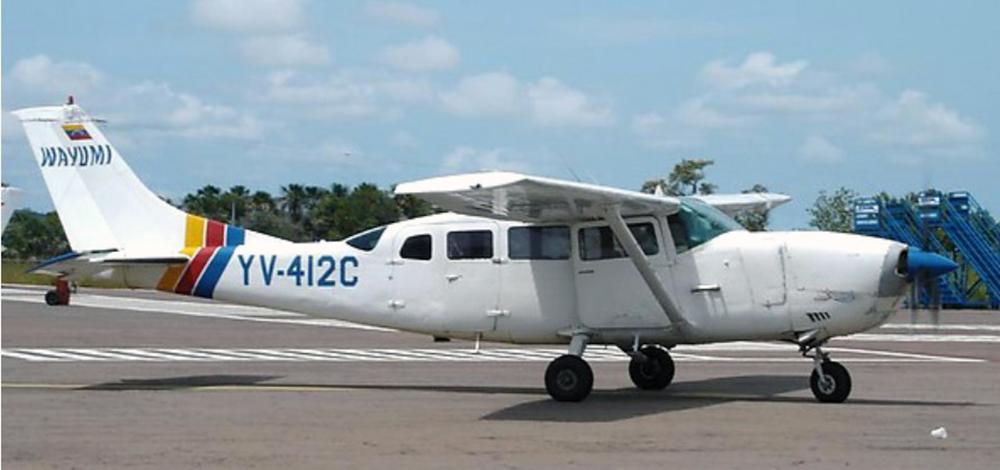
YV-412C
Flight Phase:
Survivors:
No
Site:
Schedule:
San Juan de Manapiare – Puerto Ayacucho
MSN:
207-0508
YOM:
1979
Country:
Crew on board:
1
Crew fatalities:
Pax on board:
3
Pax fatalities:
Other fatalities:
Total fatalities:
4
Circumstances:
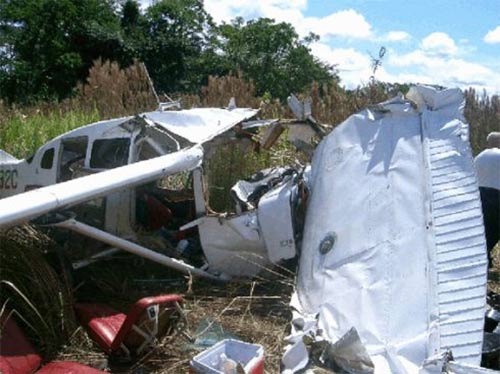
Few minutes after takeoff from San Juan de Manapiare, while flying in marginal weather conditions, the single engine aircraft impacted a rocky face of Mt Morrocoy located about 8 km west of San Juan de Manapiare. The aircraft was totally destroyed by impact forces and all four occupants were killed.
Probable cause:
Controlled flight into terrain.

Crash of a Cessna T207 Turbo Skywagon on West Amatuli Island: 3 killed

Date & Time: Jul 1, 2005 at 1200 LT
Operator:
Registration:
N1621U
Flight Phase:
Flight Type:
Survivors:
No
Site:
Schedule:
Homer - Homer
MSN:
207-0221
YOM:
1973
Crew on board:
1
Crew fatalities:
Pax on board:
2
Pax fatalities:
Other fatalities:
Total fatalities:
3
Captain / Total flying hours:
8432
Aircraft flight hours:
7416
Circumstances:
The airline transport certificated pilot and the two pilot-rated passengers traveled to Alaska for a Title 14, CFR Part 91 personal flying vacation. The pilot received a VFR check-out in a rented airplane, and was the only person authorized by its owner to fly it. The pilot obtained a weather briefing for the day of the accident flight, and queried an FAA automated flight service station (AFSS) specialist about VFR conditions for a sightseeing flight. The FSS specialist stated, in part, "Well, it doesn't really look good probably anywhere today..." The area forecast included areas of marginal VFR and IFR conditions, and an AIRMET for mountain obscuration. The cloud and sky conditions included scattered clouds at 1,500 feet in light rain showers, with areas of isolated ceilings below 1,000 feet, and visibility below 3 statute miles in rain showers and mist. The weather briefing included a report from a pilot who was about 23 miles north of the accident scene about 2 hours before the accident airplane departed. The pilot reported fog and mist to the water, and said he was unable to maintain VFR. Five minutes after receiving the weather briefing, the accident pilot again called the AFSS and requested the telephone number to an automated weather observing system, located south of the point of departure, where VFR conditions were forecast. Local fishing charter captains reported fog in the area of the islands where the accident occurred. One vessel captain reported hearing an airplane in the vicinity of the islands, but could not see it because of the fog. The pilot did not file a flight plan, nor did he indicate any planned itinerary. The airplane was reported overdue two days after departure. The accident wreckage was located an additional two days later on the north cliff face of a remote island. The airplane had collided with the island at high speed, about 800 feet mean sea level, and a post crash fire had incinerated the cockpit and cabin area.
Probable cause:
The pilot's continued VFR flight into instrument meteorological conditions, which resulted in an in-flight collision with an island cliff during cruise flight. A factor contributing to the accident was fog in the area of the accident.
Final Report:

Crash of a Cessna 207 Skywagon in Barradas: 4 killed

Date & Time: May 8, 2005 at 1100 LT
Operator:
Registration:
RP-C3216
Flight Phase:
Survivors:
Yes
Schedule:
Barradas - Barradas
MSN:
207-0333
YOM:
1976
Country:
Region:
Crew on board:
1
Crew fatalities:
Pax on board:
5
Pax fatalities:
Other fatalities:
Total fatalities:
4
Circumstances:
Shortly after takeoff from Barradas Airport located near Tanauan (Batangas), while in initial climb, the aircraft suffered an engine failure. It stalled and crashed in a coconut grove located in the village of Santor, near the airfield. The pilot and three passengers were killed while two others were seriously injured. All occupants were completing a local skydiving mission. Witnesses reported that the engine emitted white smoke shortly after rotation.
Probable cause:
Engine failure for unknown reasons.

Crash of a Cessna T207A Skywagon near Henderson: 1 killed

Date & Time: Dec 8, 2004 at 1031 LT
Operator:
Registration:
N1783U
Flight Phase:
Survivors:
No
Site:
Schedule:
Henderson - Henderson
MSN:
207-0383
YOM:
1977
Crew on board:
1
Crew fatalities:
Pax on board:
0
Pax fatalities:
Other fatalities:
Total fatalities:
1
Captain / Total flying hours:
1209
Captain / Total hours on type:
117.00
Aircraft flight hours:
12616
Circumstances:
The airplane impacted mountainous terrain in an extreme nose-down attitude following a departure from controlled flight. The purpose of the flight was to check the weather conditions for passenger tour flights that day. The pilot reported about 20 minutes prior to the accident that the ceiling was 6,500 feet mean sea level (msl). Radar data showed that following this weather report, the airplane's radar track continued eastbound and upon its return westbound, at an altitude of about 6,000 feet msl, the airplane entered a series of altitude fluctuations approximately 1 mile west of a ridge that was the location of the accident, descending at 4,000 feet per minute while turning northbound, and then climbing at 3,900 feet per minute while traveling eastbound, prior to disappearing from the radar. The airplane impacted on the eastern side of the ridge. There were no monitored distress calls from the aircraft and no known witnesses to the accident. Prior to the accident, there were reports of vibrations during flight on this aircraft, although many went unreported to maintenance personnel. The day (and flight) prior to the accident, a pilot experienced a vibration during flight with passengers and it was not reported to maintenance personnel because it was logged improperly in the operator's maintenance tracking system. No corrective actions were taken. During the post accident examinations, no portions of the right elevator and trim tab were identified in the wreckage, or at the accident site. The bracket attachment to the right elevator was found loose within the wreckage and was torsionally twisted counterclockwise (aft). Ground and aerial searches for the missing parts based on a trajectory study were unsuccessful. This aircraft was equipped with a foam cored elevator trim tab that was installed during aircraft manufacture. A service difficulty report (SDR) query showed that 47 reports had been issued on elevator trim tab corrosion and many included reports of vibrations during flight. On January 20, 2005, the Federal Aviation Administration (FAA) issued Special Airworthiness Information Bulletin (SAIB) CE-05-27, which addressed potential problems with foam-filled elevator trim tabs in the accident make/model airplane, and Cessna 206 and 210 series airplanes. The SAIB indicated that the foam-filled elevator trim tabs, manufactured until 1985, were reported to have corrosion between the tab and the foam. The SAIB further said, in part, "When the skin of the trim tab becomes thin enough due to the corrosion, the actuator can pull the fasteners through the skin and disconnect. When this occurs, the tab can flutter." Some reports indicated prior instances of "vibrations in the tail section and portions of the elevator tearing away with the trim tab." Prior to the issuance of the SAIB, Cessna Aircraft Company issued a Service Bulletin (SB) SEB85-7 on April 5, 1985, that addressed elevator and trim tab inspection due to corrosion from moisture trapped in the foam cored trim tabs. Based on a review of the airplane's logbooks, the SB was not complied with, nor was the operator required to do so based on the FAA approved maintenance specifications.
Probable cause:
A loss of control due to the in-flight separation of the right elevator and elevator trim tab control surfaces. The precipitating reason for the elevator separation could not be resolved as related to the tab foam core issue with the available evidence.
Final Report:

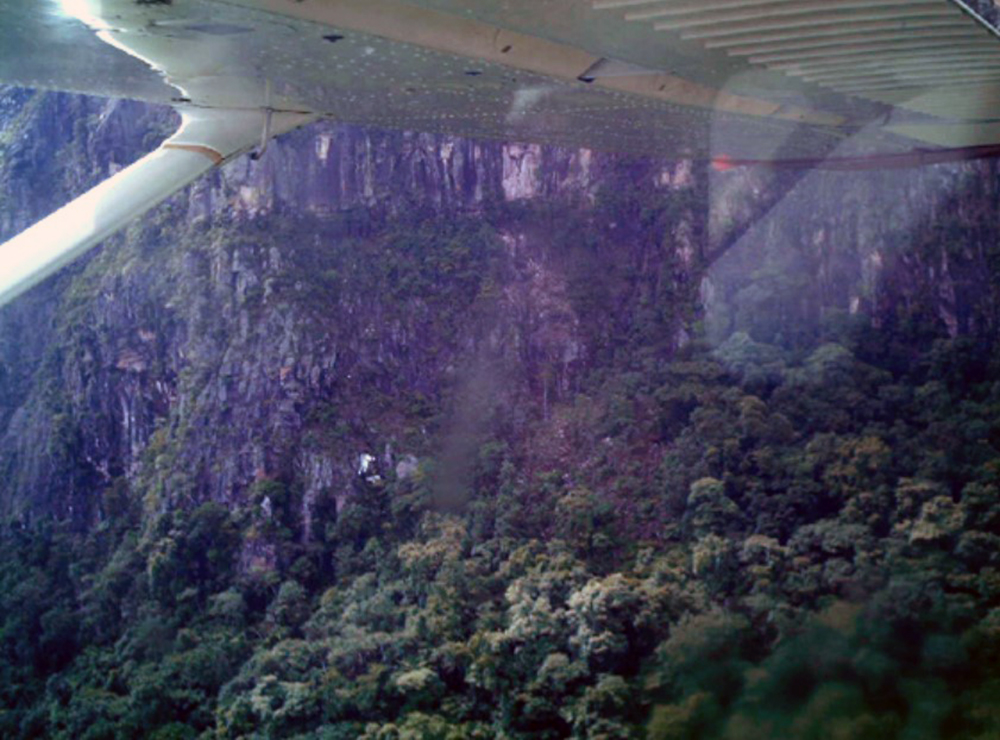
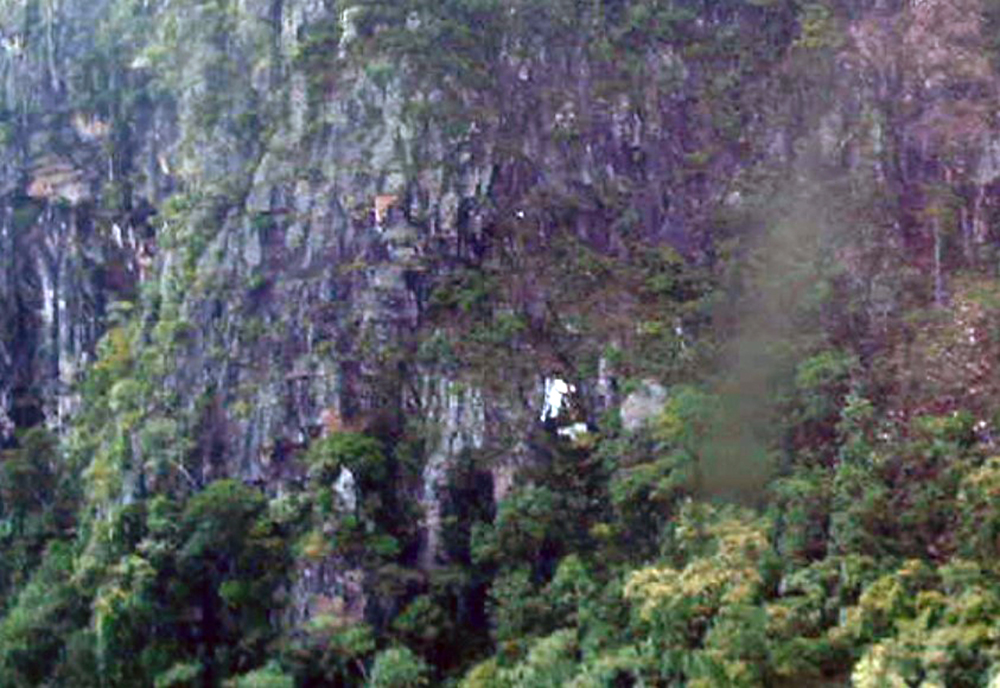
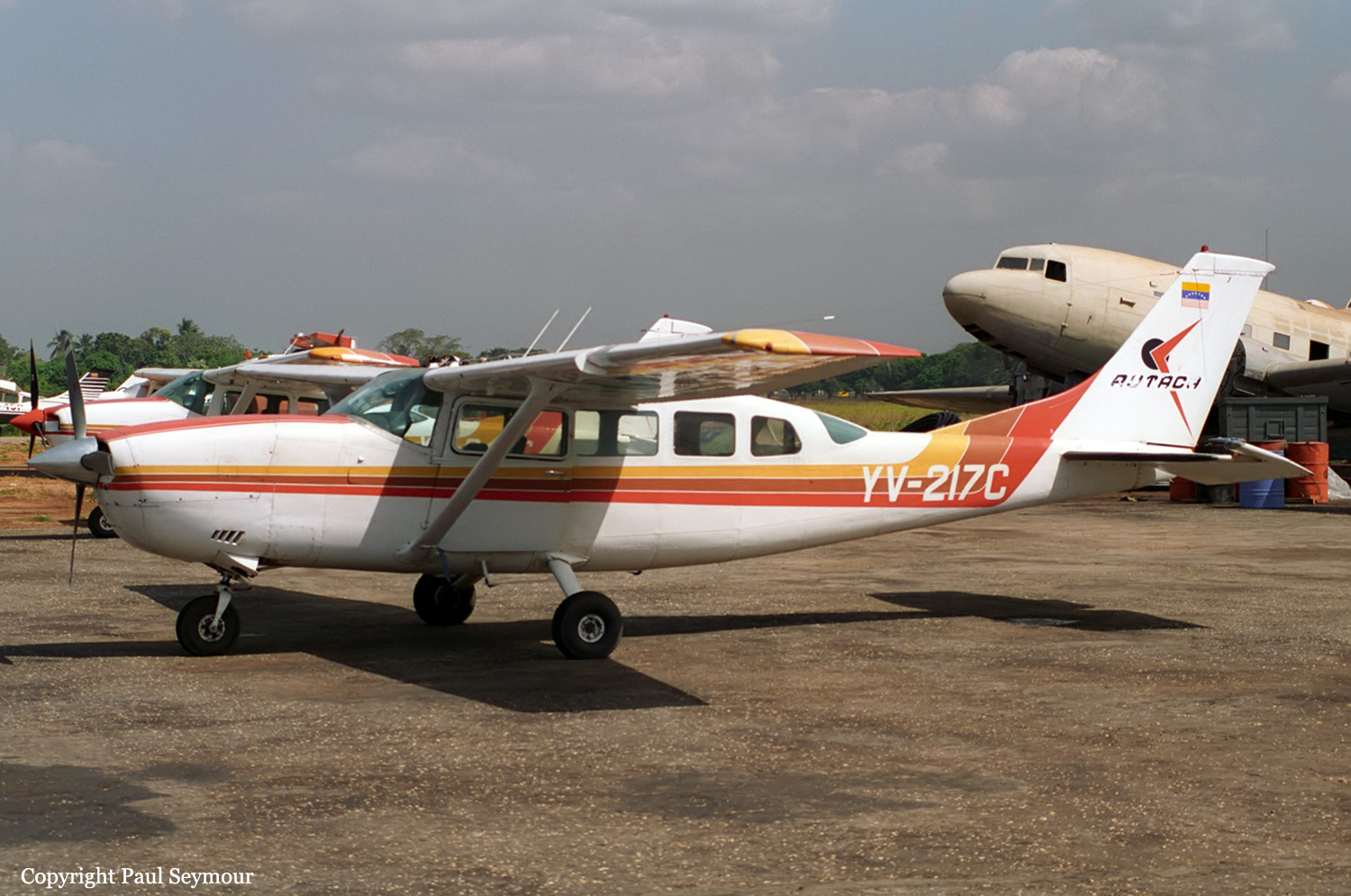
Crash of a Cessna 207 Skywagon in Urimán

Date & Time: Oct 6, 2004
Operator:
Registration:
YV-217C
Survivors:
Yes
Site:
MSN:
207-0440
YOM:
1978
Country:
Crew on board:
1
Crew fatalities:
Pax on board:
1
Pax fatalities:
Other fatalities:
Total fatalities:
0
Circumstances:
On approach to Urimán, the single engine aircraft crashed in a wooded area located few km from the destination airport. Both occupants were rescued a day later. The passenger was injured and the pilot was unhurt.