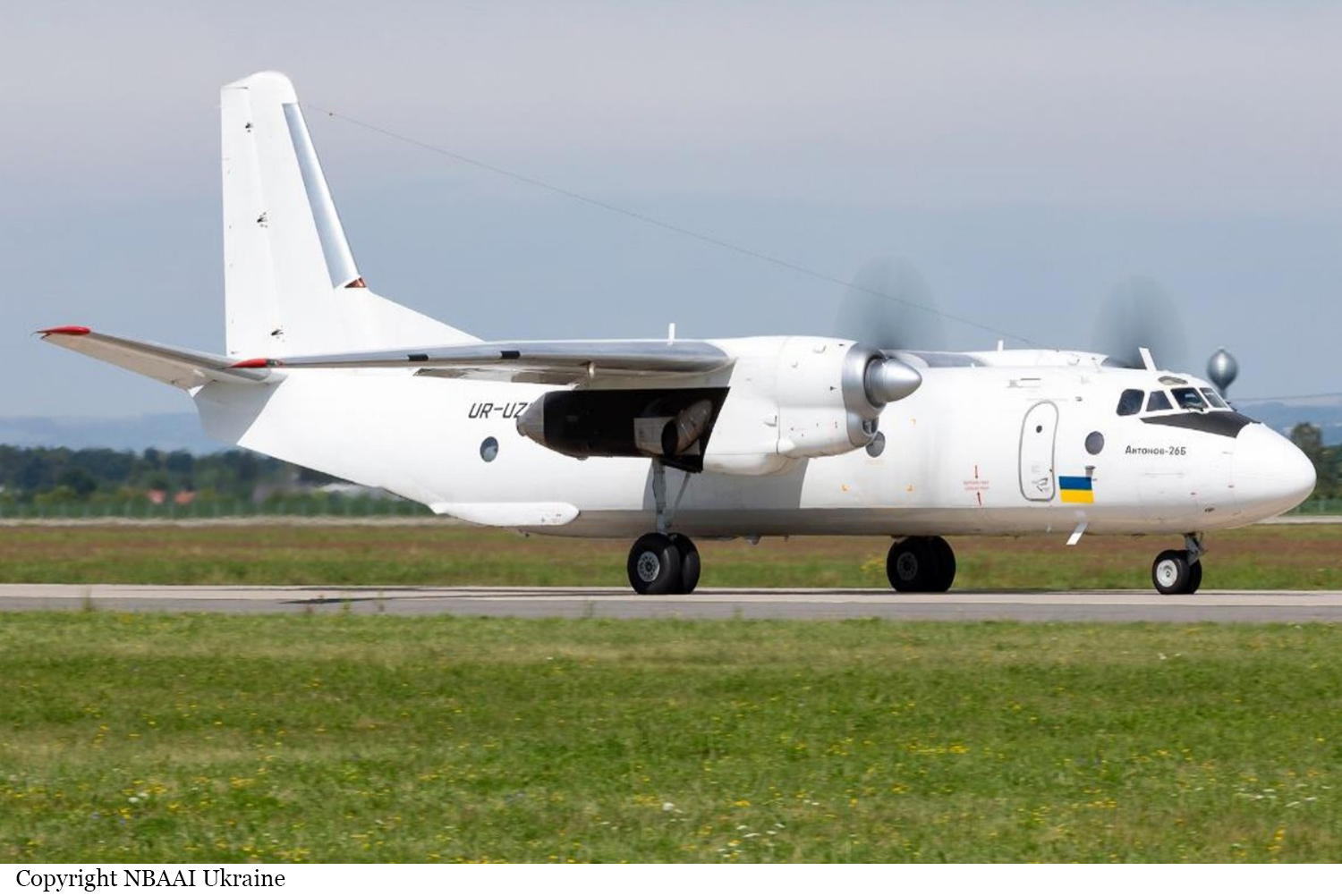
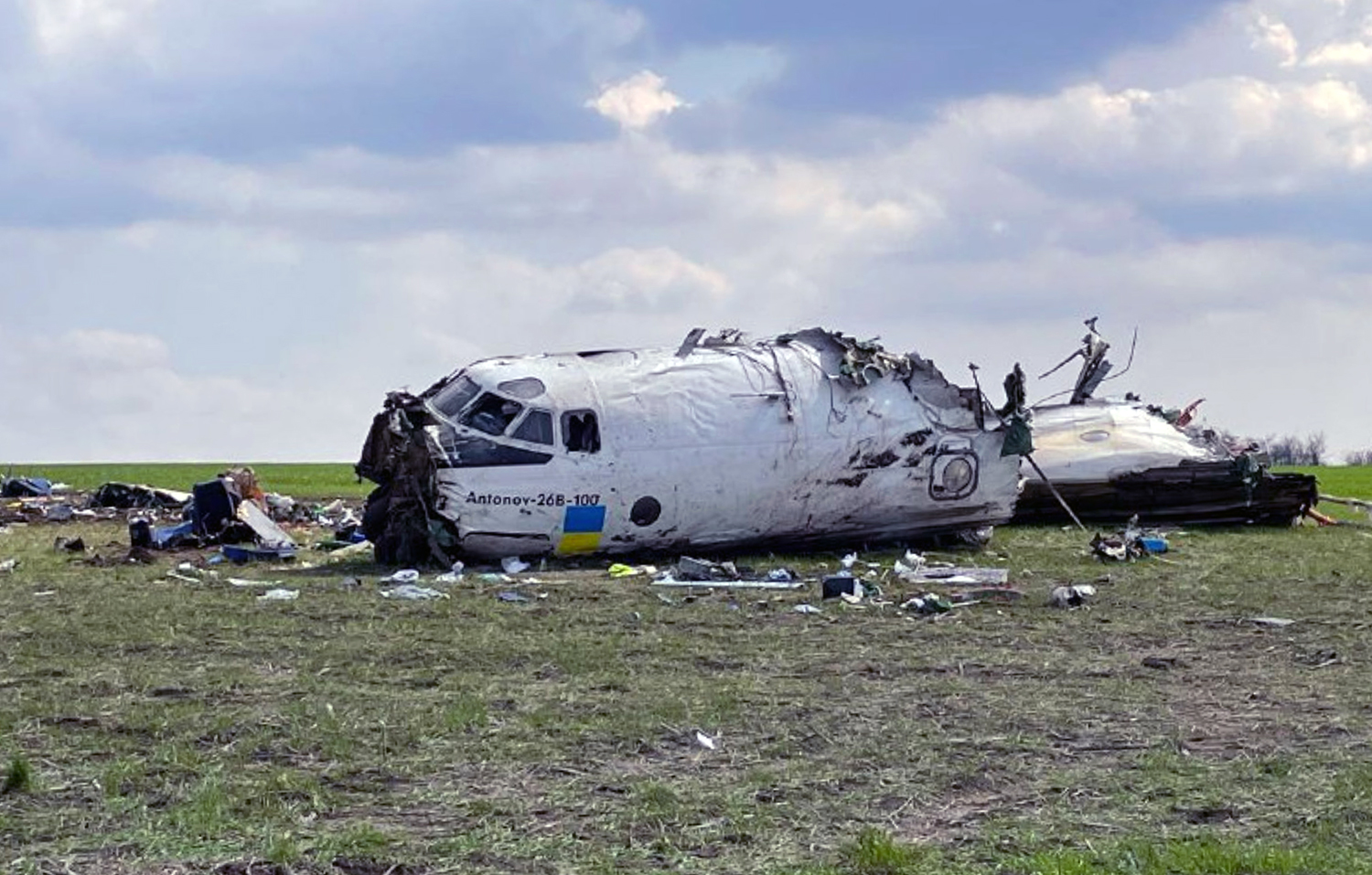
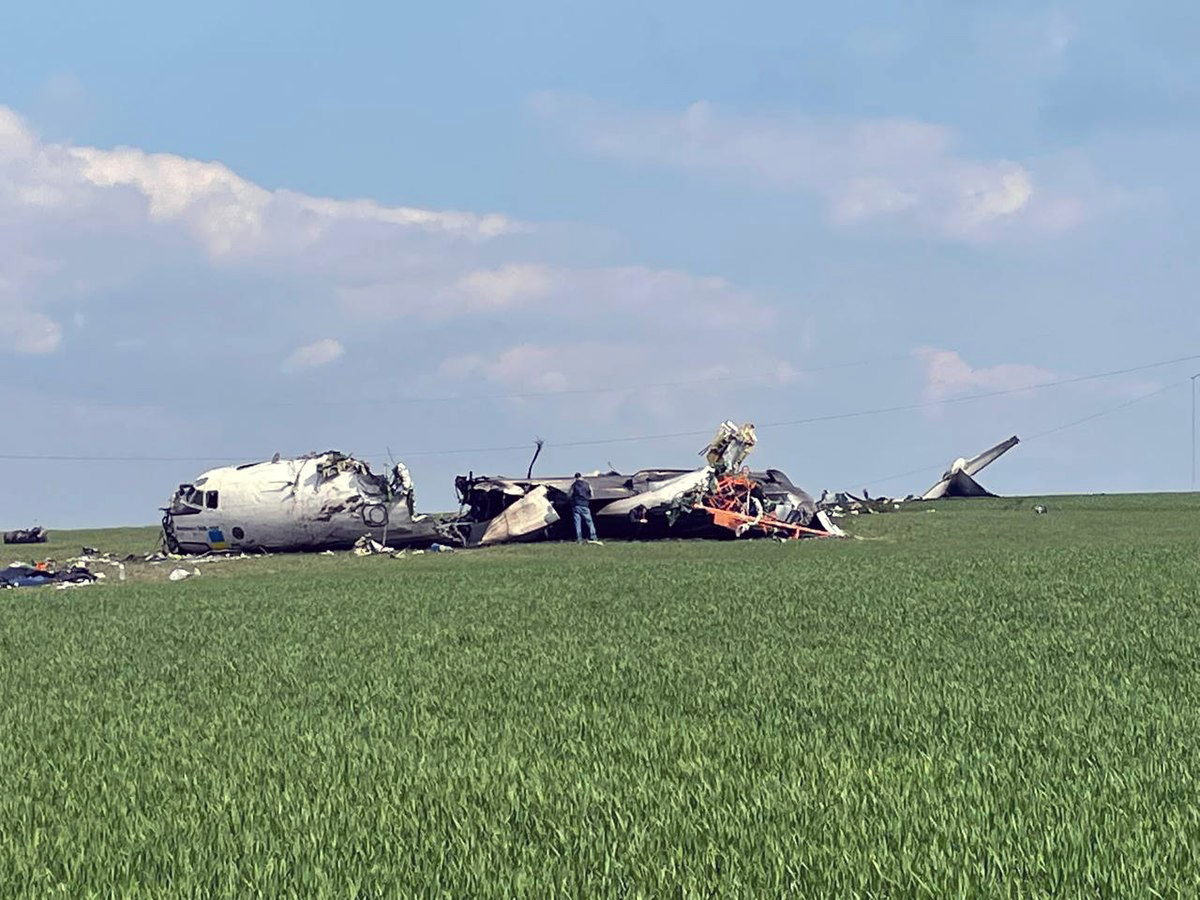
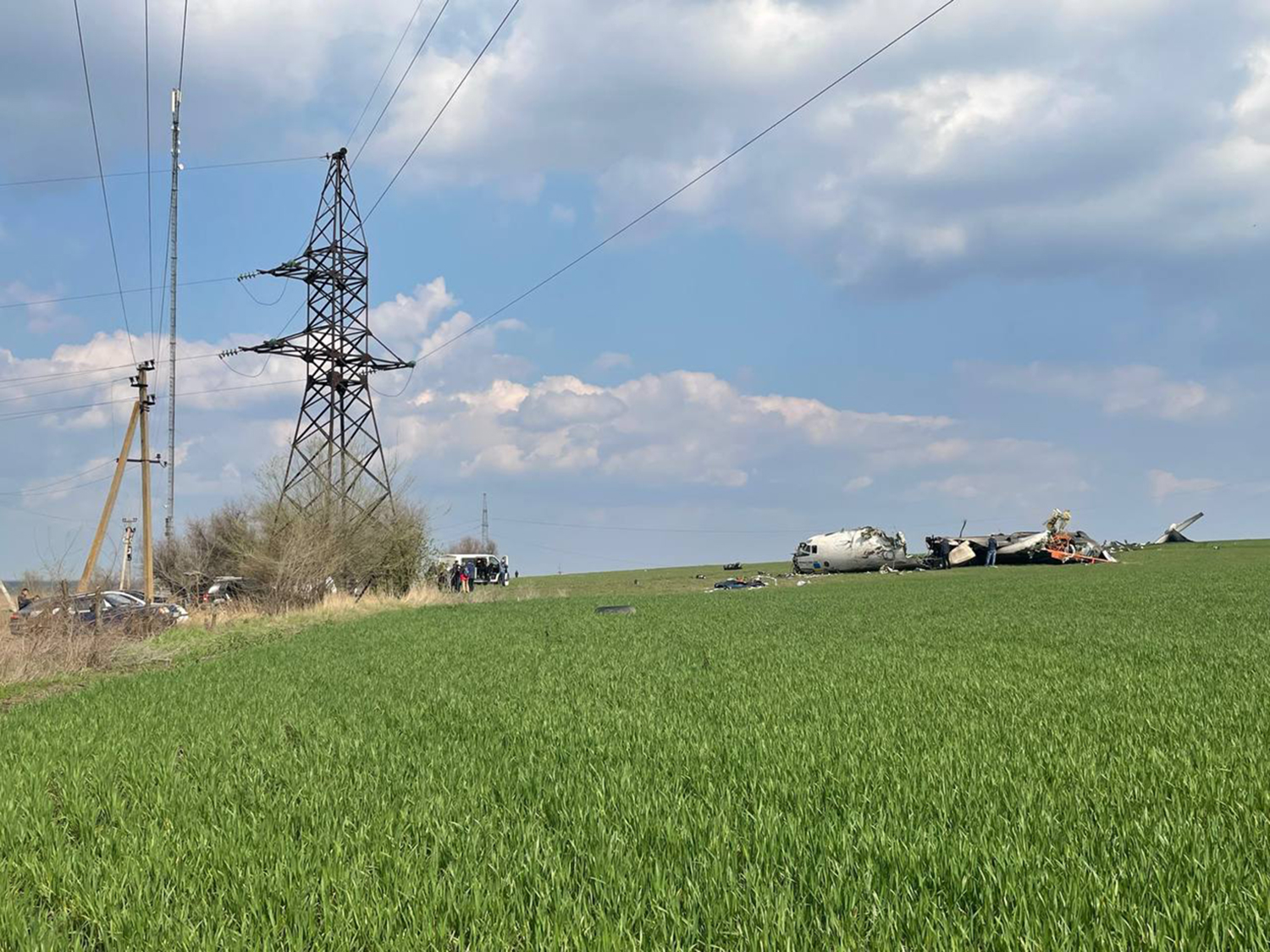
Crash of an Antonov AN-26 in Ostrogozhsk: 9 killed

Date & Time: Feb 24, 2022
Type of aircraft:
Operator:
Registration:
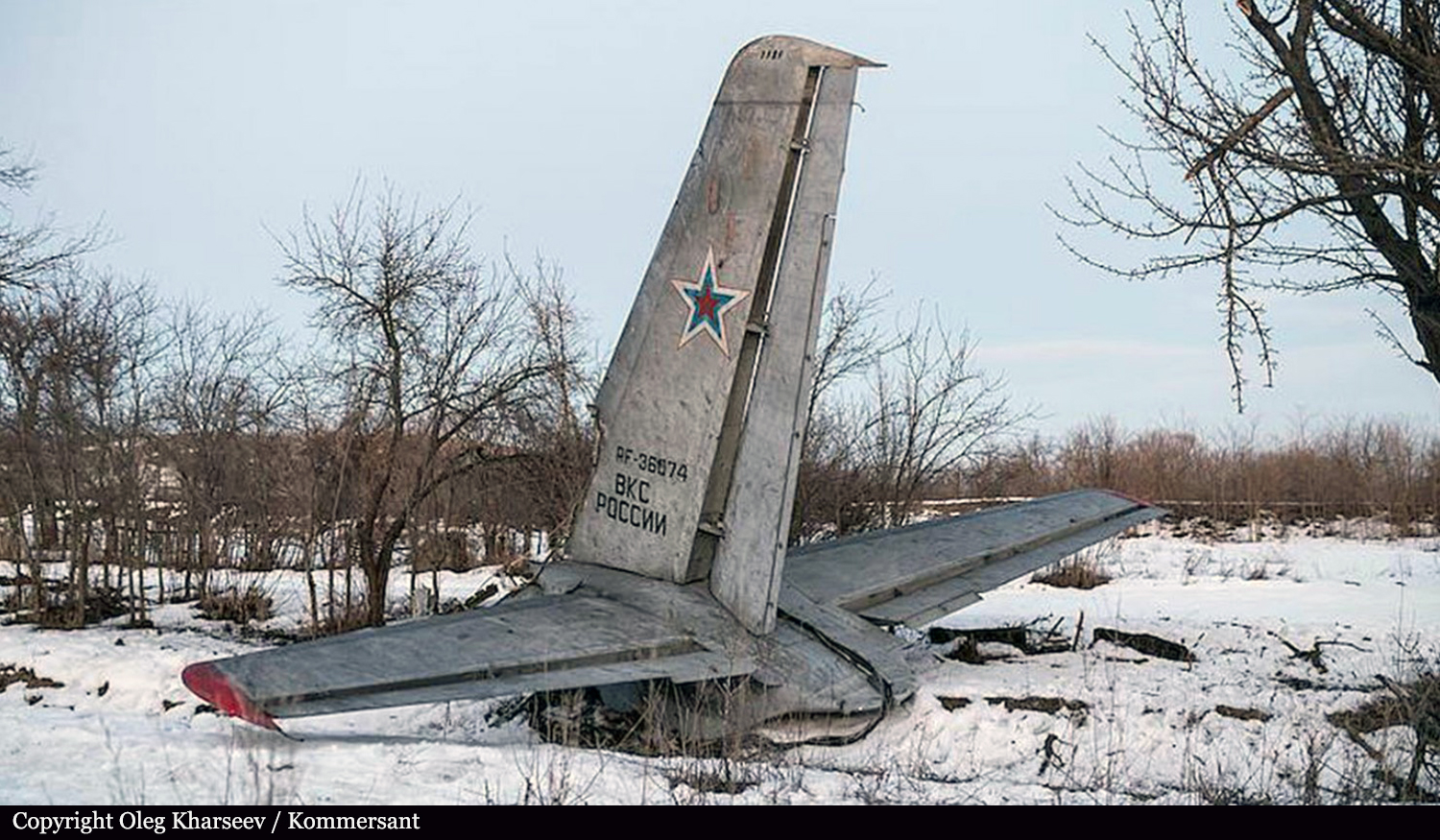
RF-36074
Flight Phase:
Flight Type:
Survivors:
No
MSN:
75 10
YOM:
1979
Country:
Region:
Crew on board:
9
Crew fatalities:
Pax on board:
0
Pax fatalities:
Other fatalities:
Total fatalities:
9
Circumstances:
The aircraft crashed in unknown circumstances in a snow covered field located in Ostrogozhsk. All nine crew members were killed. The airplane had the dual registration RF-36074 and 19 Blue.
Crew:
Cpt Anton Sergeyevitch Pimachov,
Cpt Igor Igorevitch Rbilbsky,
Cpt Aleksey Dmitriyevitch Belbkov,
F/Lt Oleg Andreyevitch Dolya,
F/Lt Rostislav Aleksandrovitch Eremenko,
F/Lt Pavel Vladimirovitch Rusakov,
F/Sgt Aleksandr Alekseyevitch Michurko,
Sgt Artiem Aleksandrovitch Tarasov,
Pvt Vladimir Nikolayevitch Temchenko.

Crash of an Antonov AN-26 in Zhukivtsi: 5 killed

Date & Time: Feb 24, 2022
Type of aircraft:
Operator:
Registration:
59 blue
Flight Phase:
Flight Type:
Survivors:
Yes
MSN:
50-03
YOM:
1977
Country:
Region:
Crew on board:
14
Crew fatalities:
Pax on board:
0
Pax fatalities:
Other fatalities:
Total fatalities:
5
Circumstances:
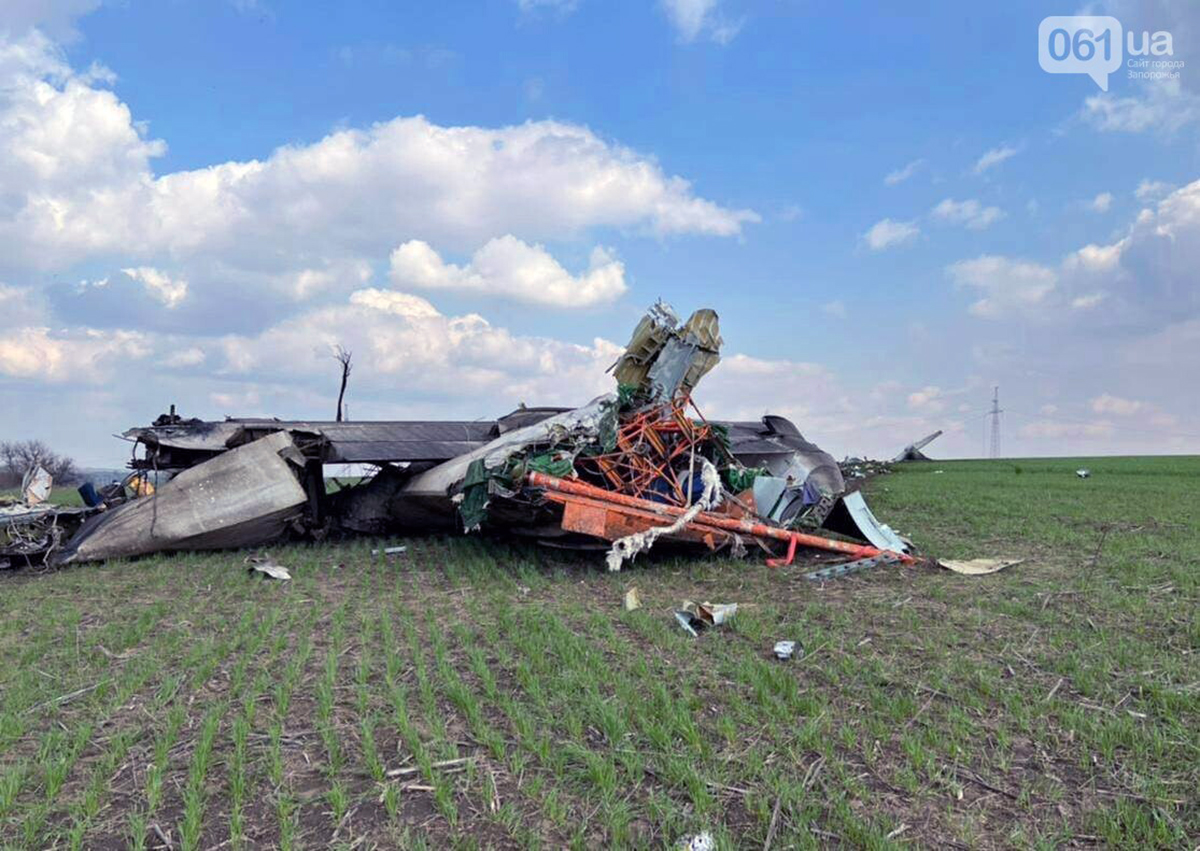
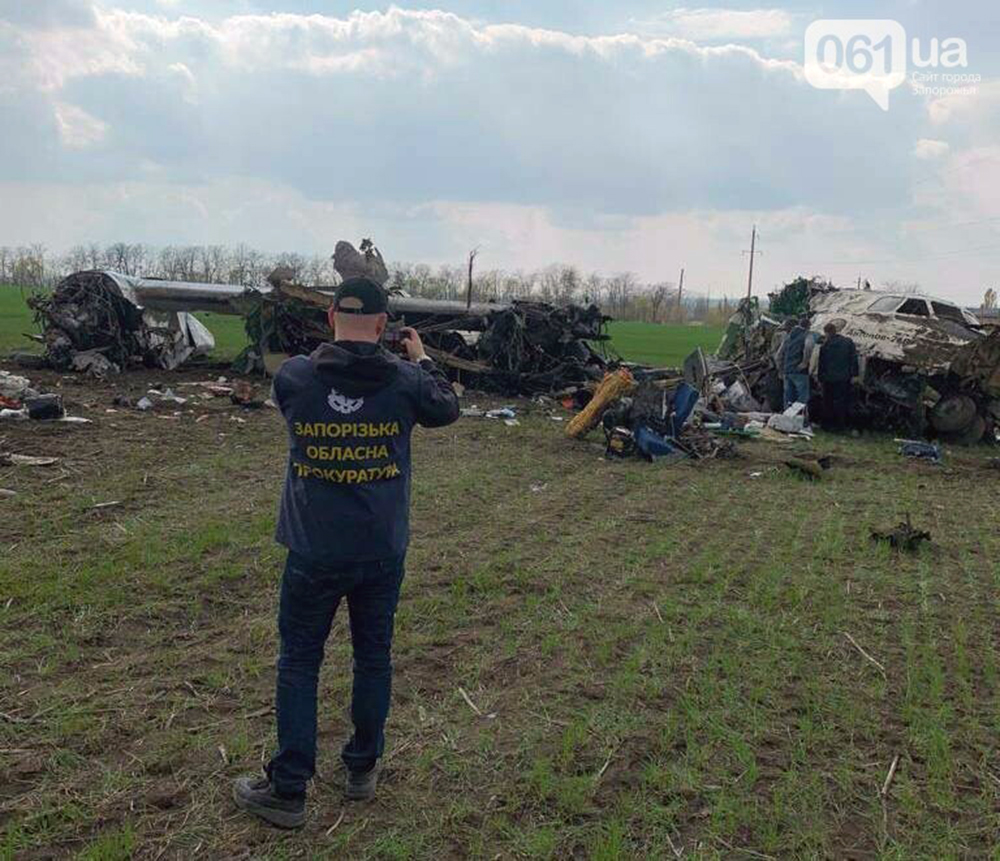
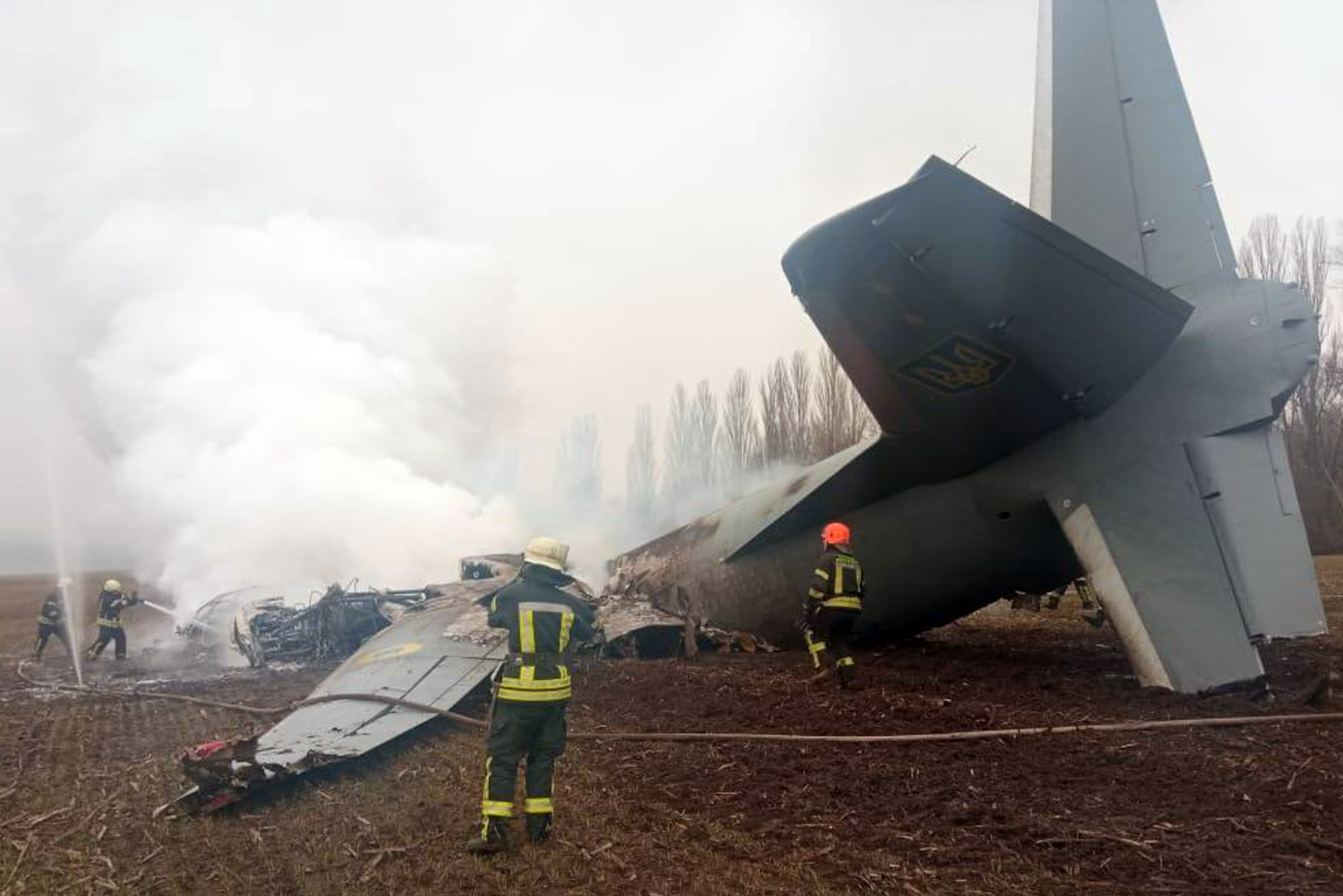
The aircraft crashed in an open field located in Zhukivtsi, about 30 km south of Kiev-Borispol Airport. It is believed there were 14 people on board and that five of them were killed. Maybe the aircraft was shot down by Russian Forces that entered Ukraine territory few hours earlier.

Crash of an Antonov AN-26 in Juba: 5 killed

Date & Time: Nov 2, 2021 at 1237 LT
Type of aircraft:
Operator:
Registration:
TR-NGT
Flight Phase:
Flight Type:
Survivors:
No
Schedule:
Juba - Maban
Country:
Region:
Crew on board:
5
Crew fatalities:
Pax on board:
0
Pax fatalities:
Other fatalities:
Total fatalities:
5
Circumstances:
The airplane departed Juba Airport Runway 13 at 1233LT on a cargo flight to Maban, carrying five crew members and a load consisting of 28 drums of diesel. Three minutes after takeoff, while climbing, the crew declared an emergency. One minute later, the entered an uncontrolled descent and crashed less than 2 km past the runway end, bursting into flames. The aircraft was destroyed and all five occupants were killed. Registration and MSN to be confirmed. It is believed that the aircraft was operated on behalf of Euro Airlines.

Crash of an Antonov AN-26KPA near Khabarovsk: 6 killed

Date & Time: Sep 22, 2021 at 1811 LT
Type of aircraft:
Operator:
Registration:
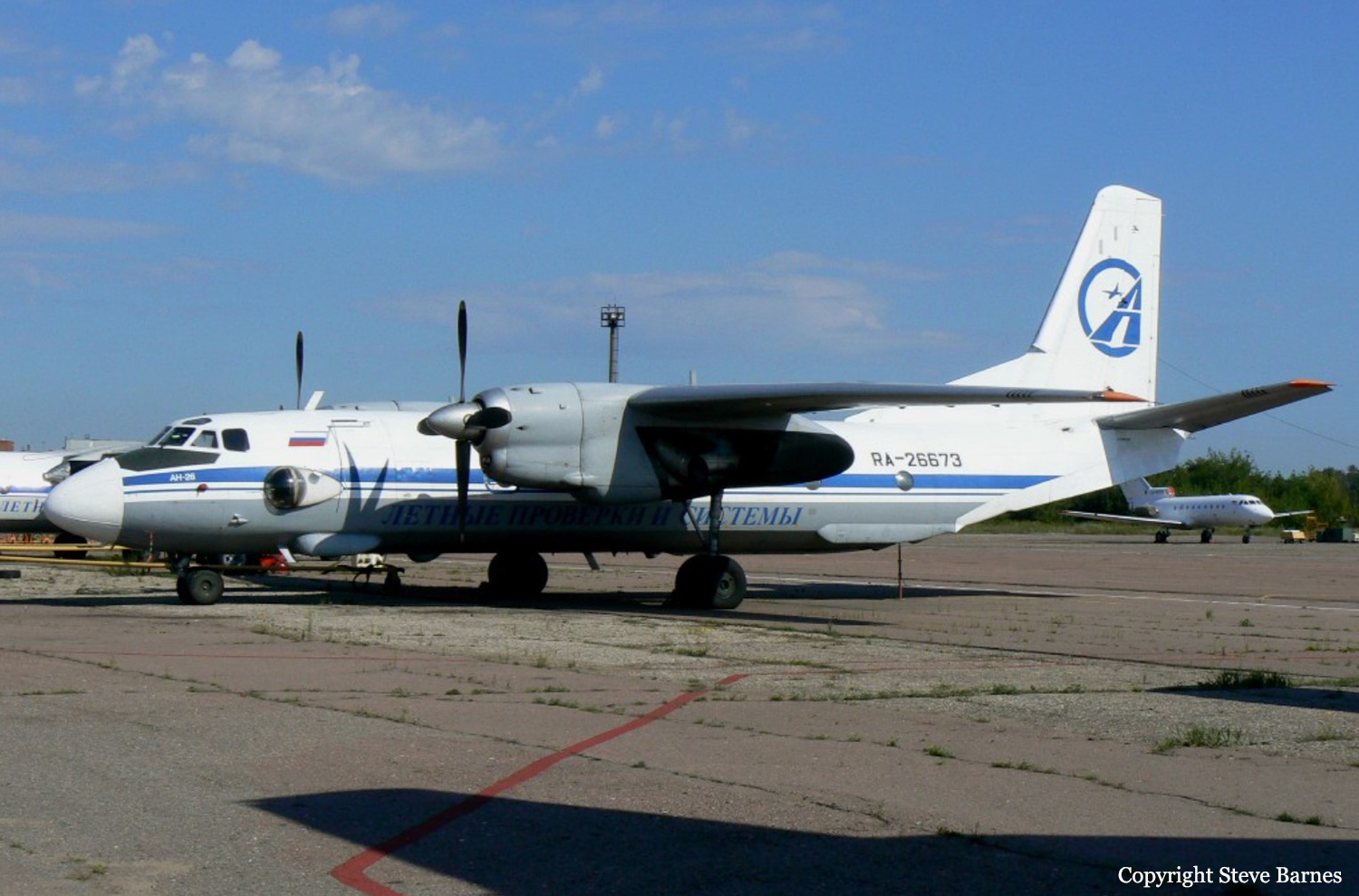
RA-26673
Flight Phase:
Flight Type:
Survivors:
No
Site:
Schedule:
Khabarovsk - Khabarovsk
MSN:
84 08
YOM:
1979
Country:
Region:
Crew on board:
6
Crew fatalities:
Pax on board:
0
Pax fatalities:
Other fatalities:
Total fatalities:
6
Captain / Total flying hours:
11990
Captain / Total hours on type:
3276.00
Copilot / Total flying hours:
530
Copilot / Total hours on type:
390
Aircraft flight hours:
36881
Circumstances:
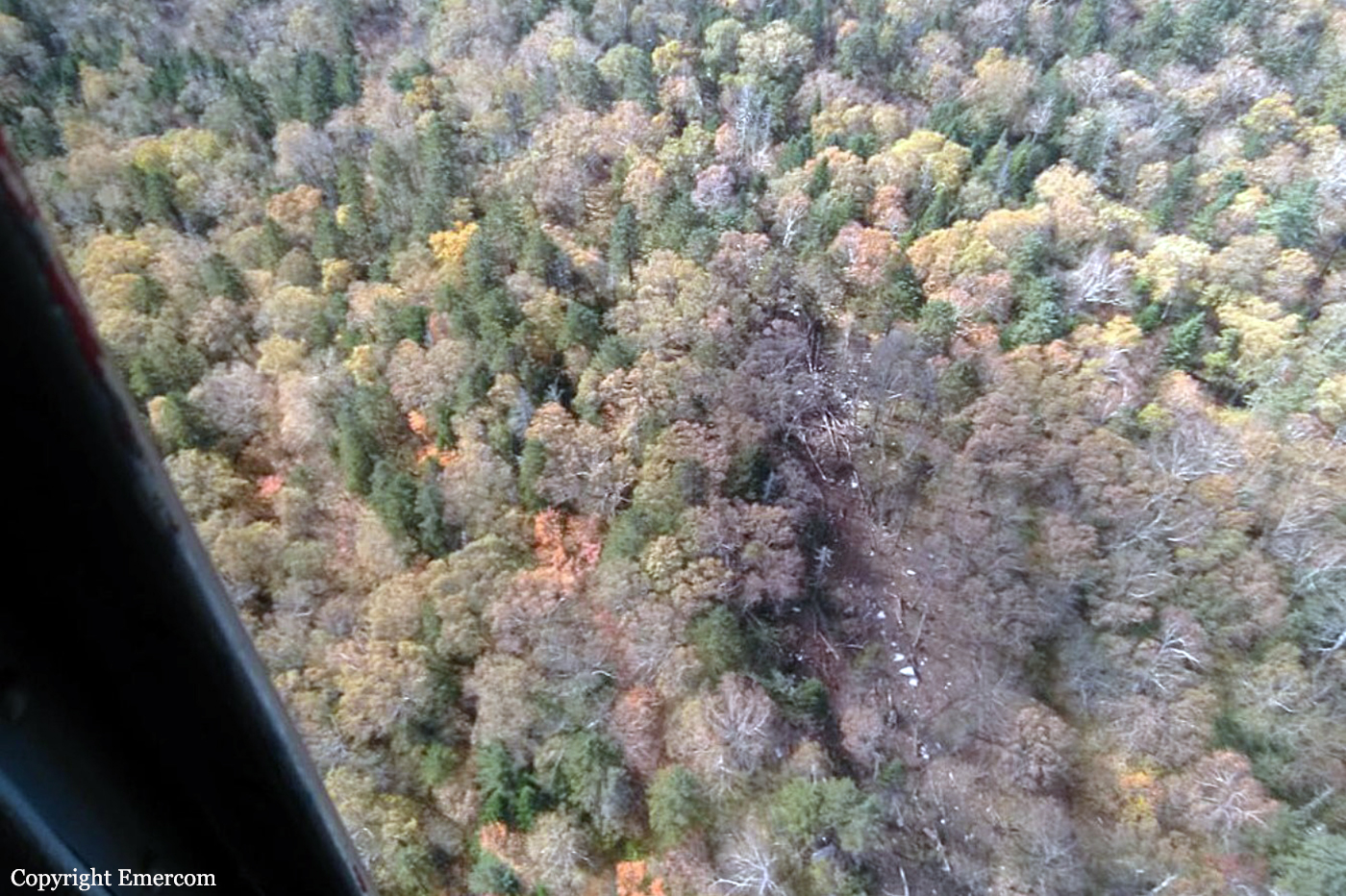
The airplane was engaged in a calibration mission at Khabarovsk-Novy Airport, carrying six crew members. The goal of the flight was to caliber the ILS system of runway 05R. In the afternoon, the airplane departed Khabarovsk-Novy Airport and completed several circuits over the aerodrome and the area. The crew was instructed to climb away from the airport to an altitude of 600 metres and to turn to follow the reverse approach course. However, the minimum published altitude for that sector up to a distance of 46 km was fixed to 1,200 metres. The crew continued at an altitude of 600 metres with a heading of 220° for few minutes. While initiating a slight climb and while flying at an altitude of 742 metres in poor visibility due to marginal weather conditions, the airplane impacted trees and crashed on the wooded slope of Mt Khrebtovaya (793 metres high) located in the Bolchoï Khekhtsir Mountain Range, some 40 km southwest of Khabarovsk Airport. The aircraft was totally destroyed by impact forces and all six occupants were killed.
Probable cause:
The cause of the accident was that the airplane was flying over the radio beacons of runway 05R of Khabarovsk-Novy) Airport in instrumental meteorological conditions (IMC) at an altitude of 600 metres QFE, which was significantly lower than the established minimum safe altitude of 1,200 metres QFE in the sector where the accident occurred, which led to a collision with the mountain slope and resulted in a controlled flight into terrain (CFIT).

The following contributing factors were identified:
- Lack of current regulatory documents governing the conduct of flight inspections of ground-based flight support equipment, avionics, and civil aviation lighting equipment systems, including for airfields whose topographical features do not allow inspections to be conducted according to standard procedure;
- Unreasonable establishment of a continuous exclusion zone from 0 m to 6000 m by altitude within a radius of 99900 m from KTA for the function of signaling aircraft descent below the minimum safe altitude (MSAW), which excluded issuing a corresponding warning to a DPC dispatcher;
- Absence of the ATC Dispatcher's Work Procedure at the ATC and other documents of the ATC of EU ATS (Khabarovsk):
- procedure for ATC specialists when flying over the aerodrome's RMS;
- procedure for practical training of ATC specialist performing direct ATC under the control of ATC instructor, including their interaction and responsibility for ensuring flight safety.
- Making a decision to combine two sections of trainee navigator training without the necessary risk analysis and risk mitigation measures;
- Insufficient preliminary preparation of the crew for the overflight, including failure to take into account the terrain features (presence of zones with considerable elevation) and geographical features (proximity to the state border) of the airfield, as well as the presence in the crew of a trainee navigator not admitted to independent flights and to this particular type of work;
- Insufficient cooperation between the crew and ATC specialists when preparing and performing the overflight, including coordination by the crew and ATC specialists during the flight of the maneuver with violation of the established minimum safe altitude when performing a flight under instrumental weather conditions;
- Interference of the instructor navigator in the flight procedure (route change) without assessing the relevant risks in the absence of the pilot's control;
- Failure of the trainee navigator to comply with the operating procedures in terms of comprehensive use of aircraft equipment for precise piloting, maintenance of safe altitudes and timely informing the crew about turns, as well as lack of proper control over his actions on the part of the instructor navigator;
- Lack of control over the aircraft flight by the trainee controller and instructor controller at their minimum workload (controlling only the aircraft which had suffered a crash).
- The Operator's Flight Operations Manual lacked standard operating procedures for crew operation regarding the EGPWS Mark VIII system installed on board the aircraft. There were no warnings of this system during the flight. Probably, the system was not activated by the crew prior to the flight, maybe to avoid frequent activation during the flight. Due to the complete destruction of the system as a result of the crash, it was impossible to determine the cause of its failure. A proper use of this system may have prevent the accident.
Final Report:
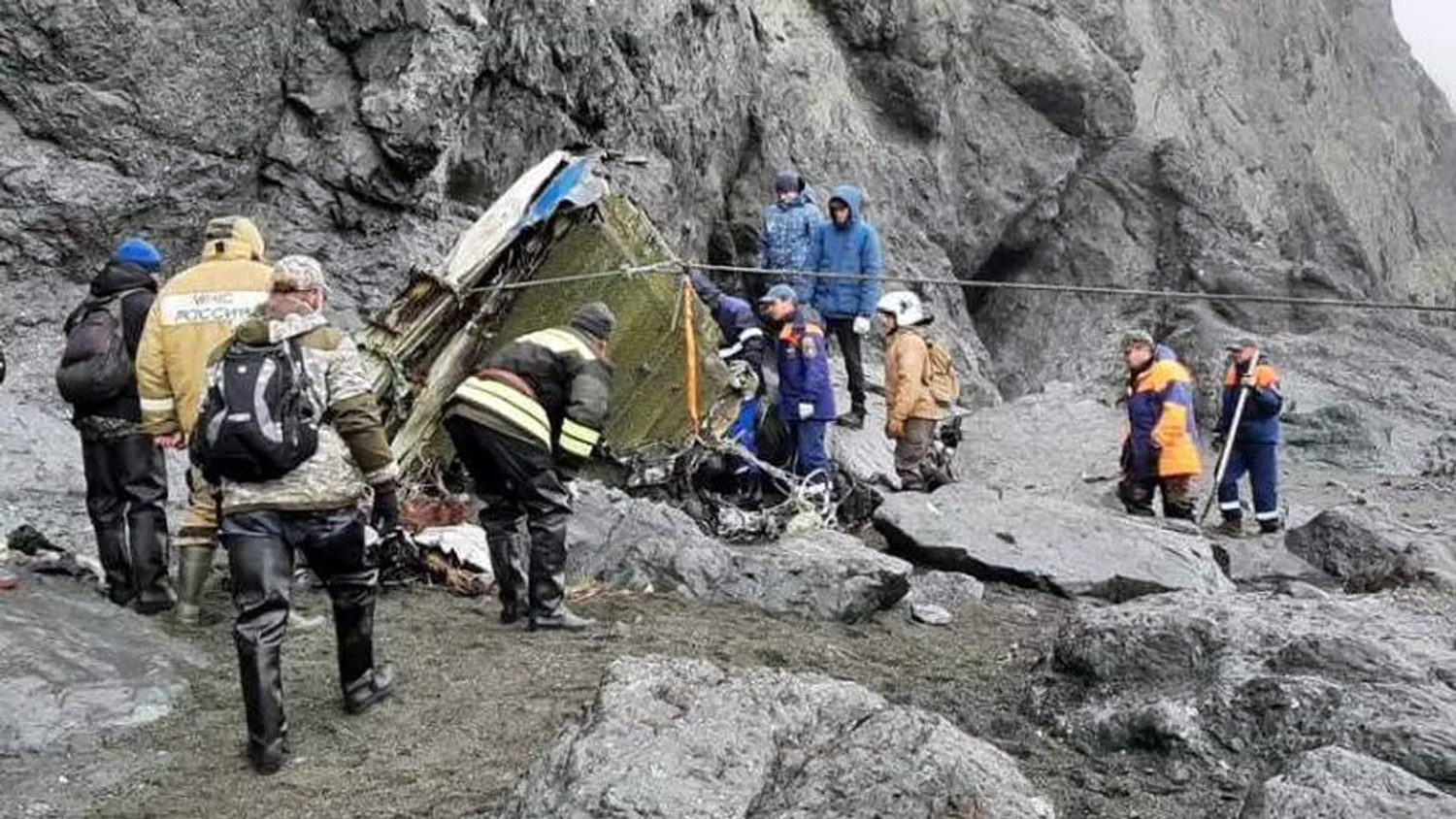
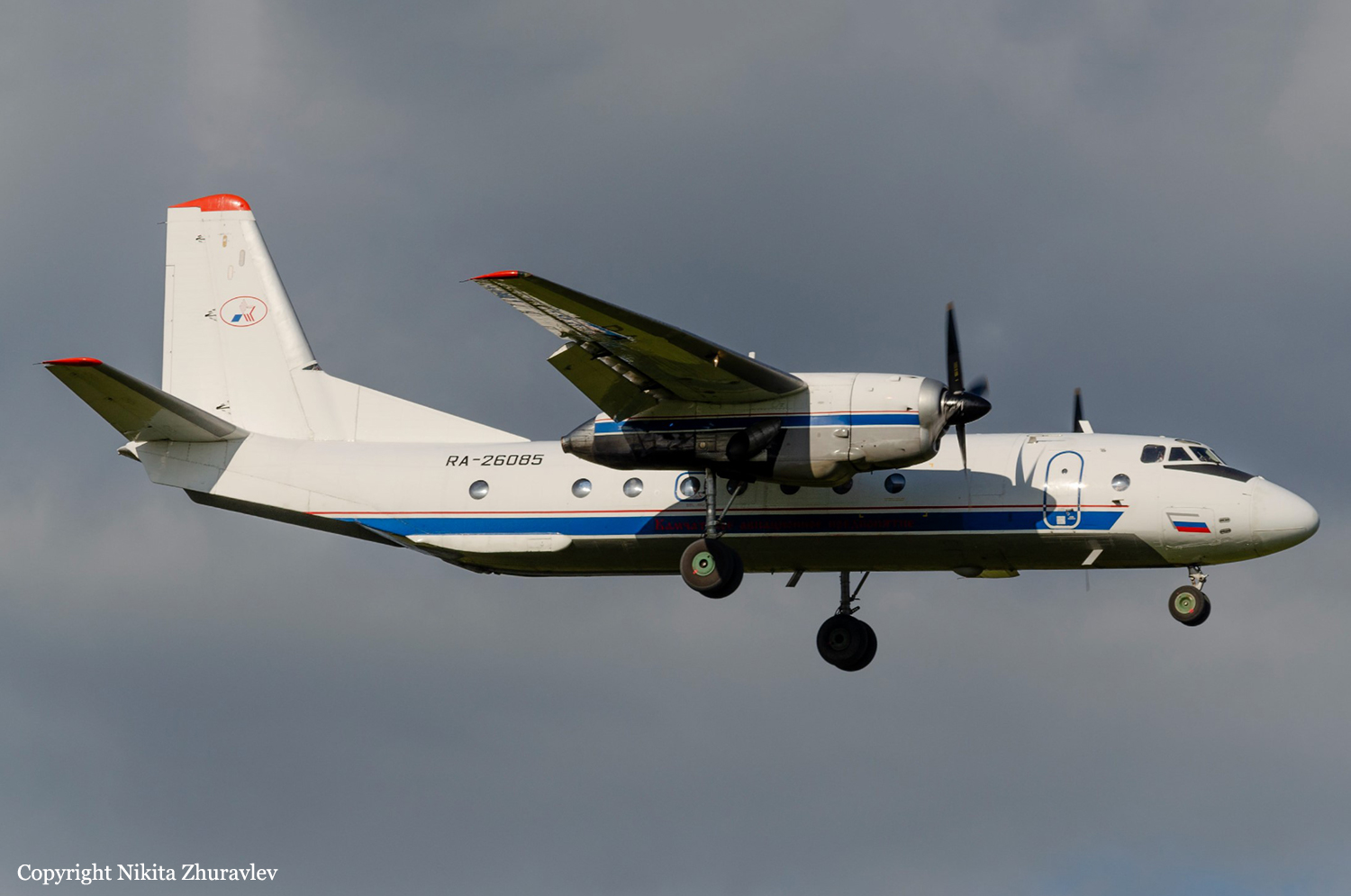
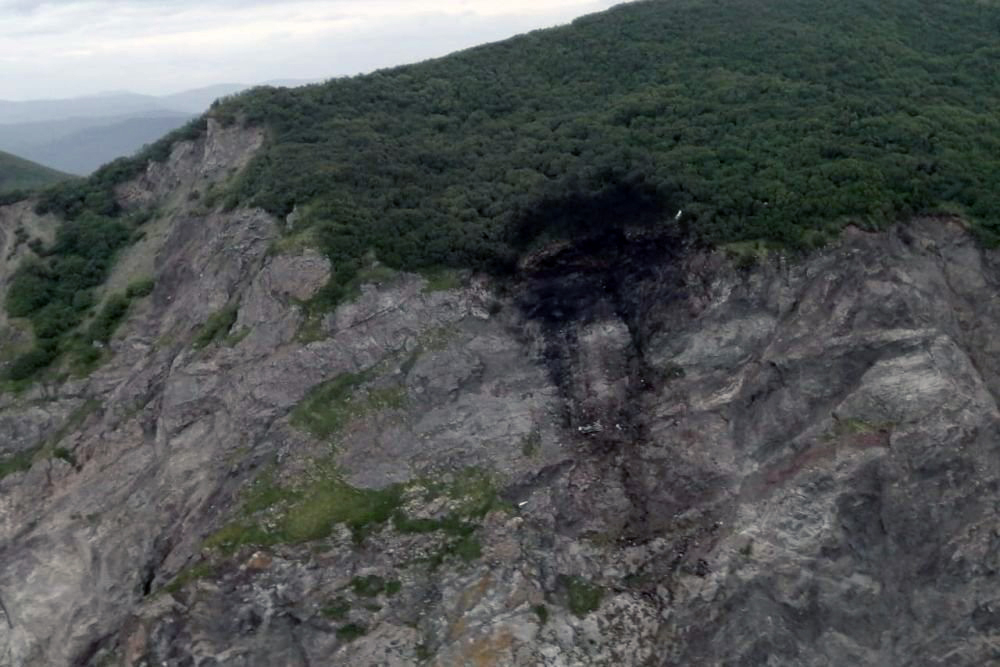
Crash of an Antonov AN-26B-100 in Palana: 28 killed

Date & Time: Jul 6, 2021 at 1450 LT
Type of aircraft:
Operator:
Registration:
RA-26085
Survivors:
No
Schedule:
Petropavlovsk-Kamchatsky – Palana
MSN:
123 10
YOM:
1982
Flight number:
PTK251
Country:
Region:
Crew on board:
6
Crew fatalities:
Pax on board:
22
Pax fatalities:
Other fatalities:
Total fatalities:
28
Captain / Total flying hours:
3340
Captain / Total hours on type:
2885.00
Copilot / Total flying hours:
1253
Copilot / Total hours on type:
1091
Aircraft flight hours:
21492
Aircraft flight cycles:
10498
Circumstances:
The aircraft departed Petropavlovsk-Kamchatsky Airport at 1257LT on a schedule service (flight PTK251) to Palana, carrying 22 passengers and a crew of six, among them Olga Mokhiriova, chief of the municipality of Palana. At 1439LT, the crew contacted Palana ATC and was cleared to start the descent. While completing an NDB approach to runway 29, the crew encountered marginal weather conditions with fog and ceiling at 300 metres. Too low, the aircraft impacted terrain about 4 km northwest of the airport. The wreckage was found in the evening on the top of a rocky wall. The aircraft disintegrated on impact and debris fall down on the sea bank. All 28 occupants were killed.
Probable cause:
The cause of the An-26B-100 RA-26085 aircraft crash was the crew's violation of the established instrument approach procedure to Palana aerodrome, which was manifested in flying with significant deviation from the set route and descent well below the established minimum descent height (MDH) under weather conditions that excluded stable visual contact with ground landmarks, leading to the collision of the aircraft with a coastal cliff in controlled flight, its destruction, and the death of the crew and passengers.
The following contributing factors were identified:
- The crew's failure to execute a missed approach with the acquisition of the established minimum safety altitude (MSA) when information about the bearing indicated a significant deviation of the aircraft from the established approach procedure;
- The absence in the Palana aerodrome dispatcher's work technology of actions in the presence of information about the bearing indicating a significant deviation of the aircraft from the established approach scheme, as well as the dispatcher's passivity when such information was available;
- The lack of warning signals from the early ground proximity warning system under conditions that should have triggered it. It is not possible to determine the reason for the absence of the warning signals;
- The overestimation of the barometric altimeter readings in the final phase of the flight due to the specific airflow around the steep coastline creating a low-pressure zone and the overestimation of the variometer readings, the cause of which cannot be determined.
Final Report:
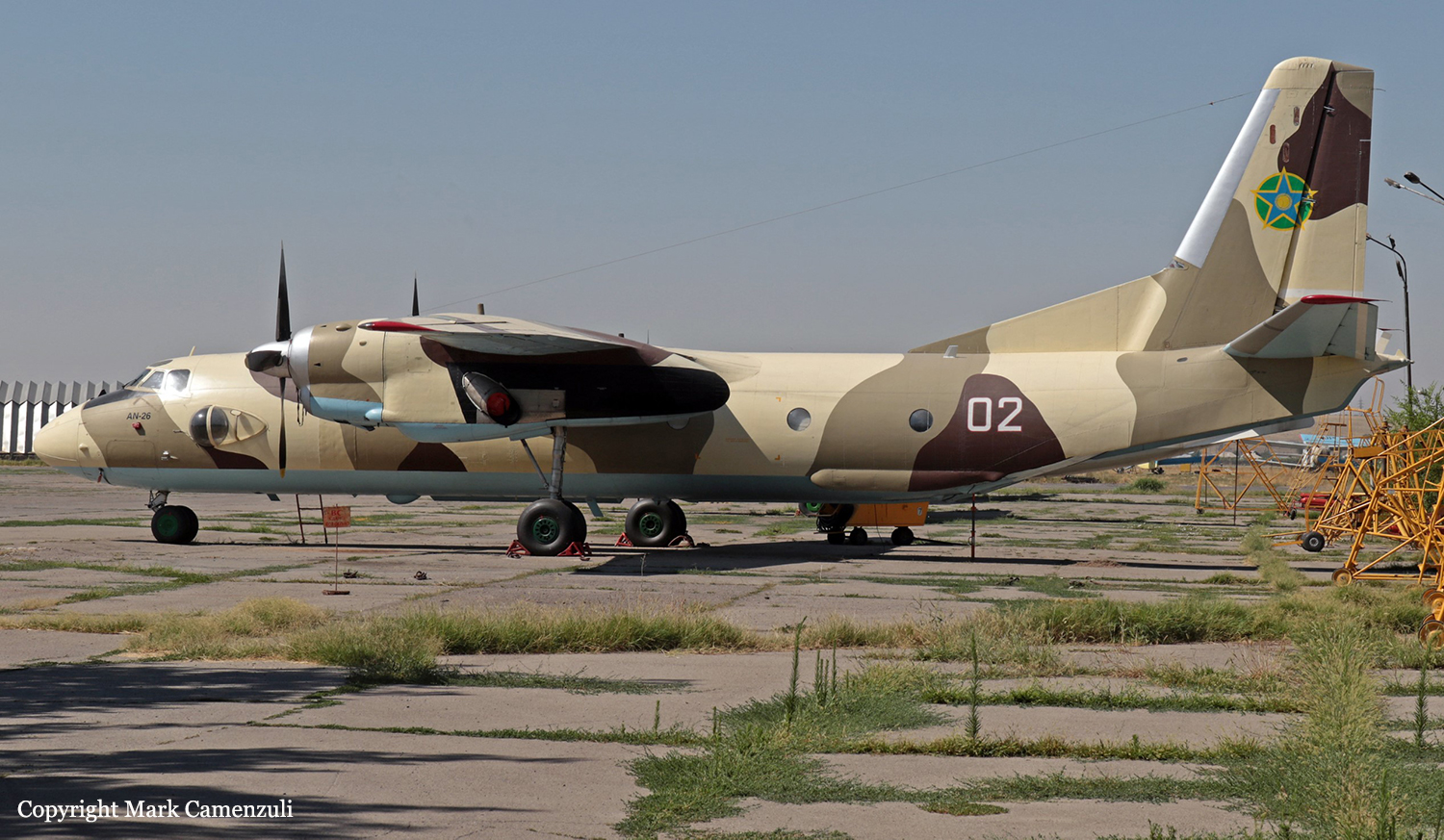
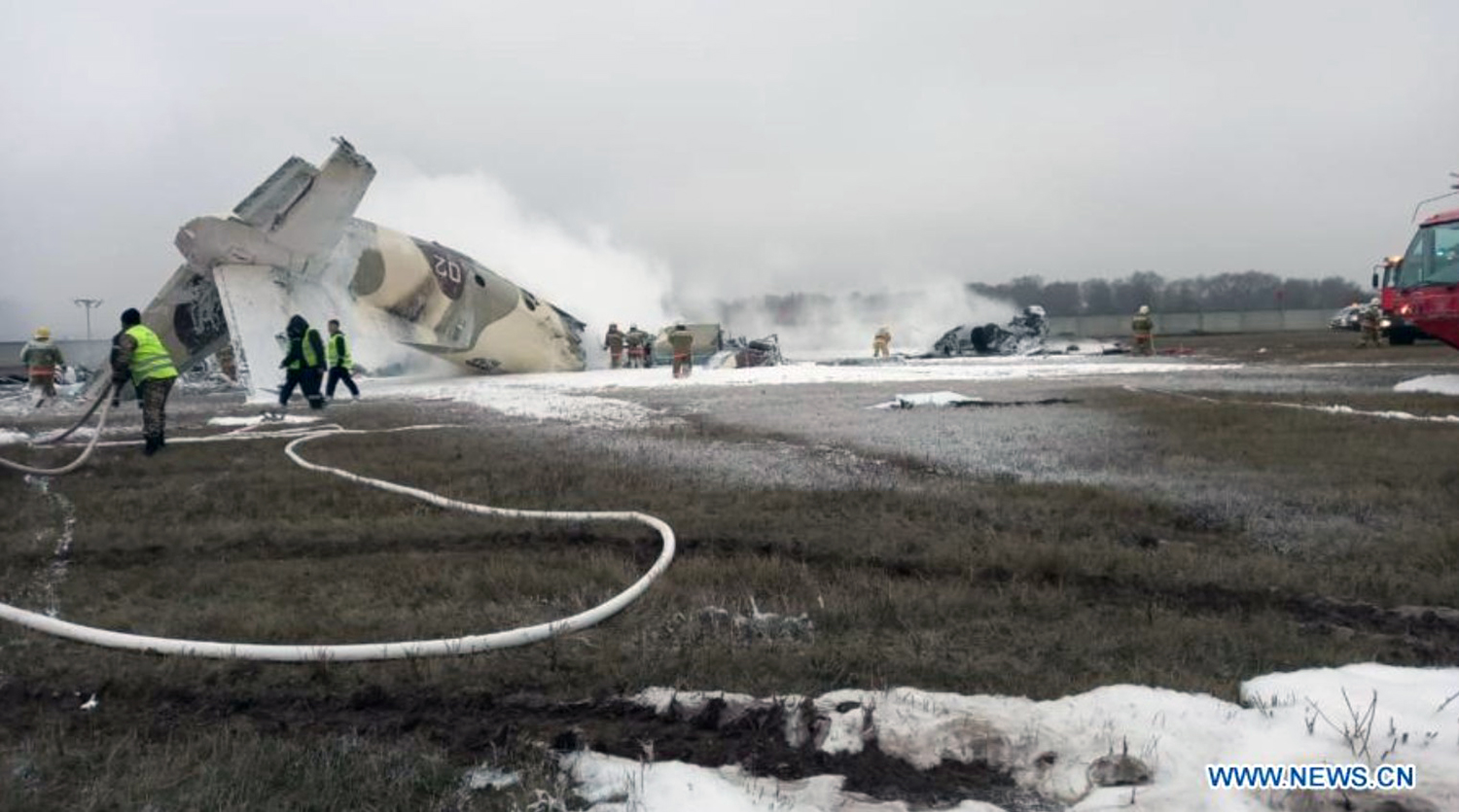
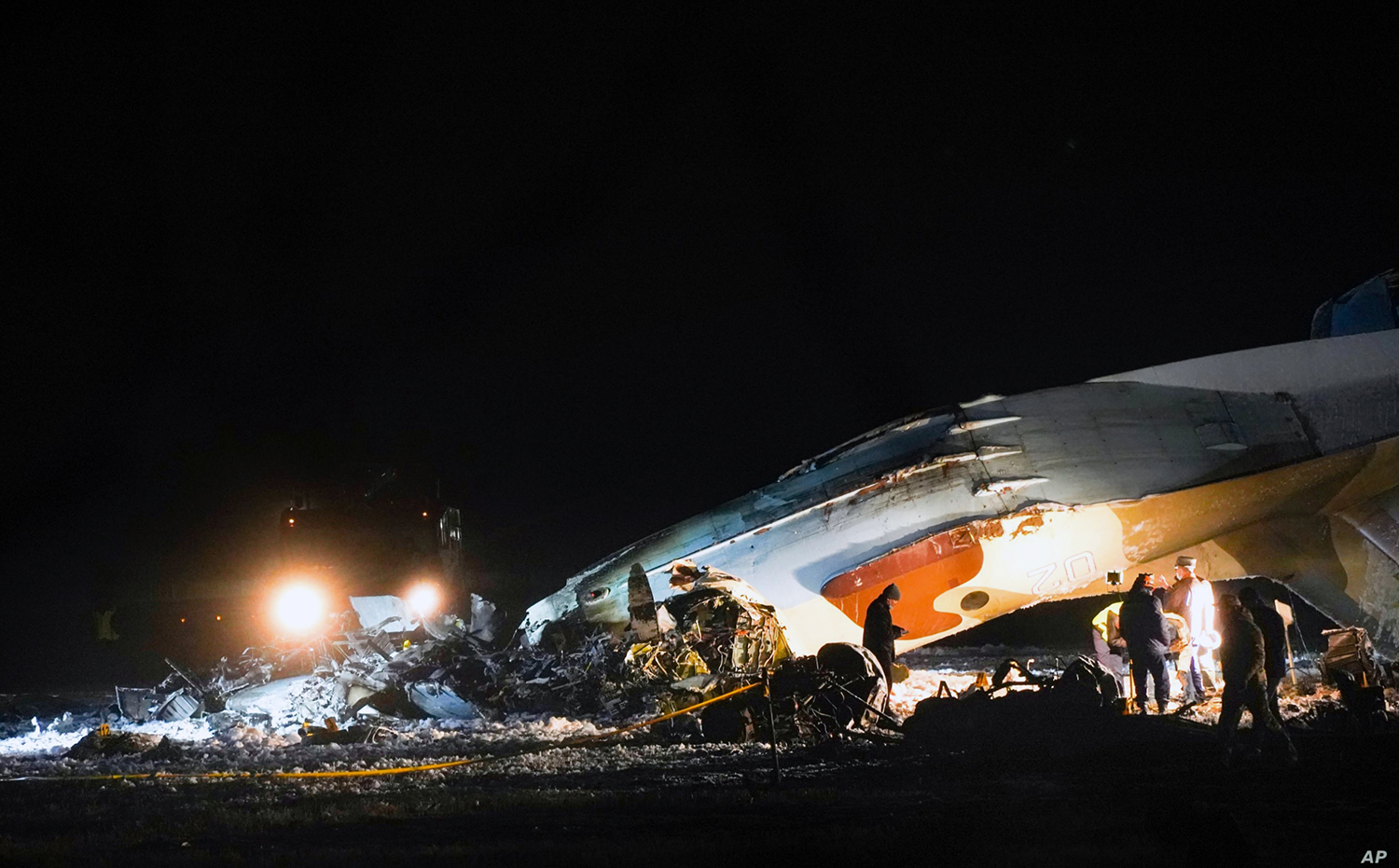
Crash of an Antonov AN-26 in Almaty: 4 killed

Date & Time: Mar 13, 2021 at 1722 LT
Type of aircraft:
Registration:
02 white
Flight Type:
Survivors:
Yes
Schedule:
Nursultan - Almaty
MSN:
72 01
YOM:
1978
Country:
Region:
Crew on board:
6
Crew fatalities:
Pax on board:
0
Pax fatalities:
Other fatalities:
Total fatalities:
4
Circumstances:
Following an uneventful flight from Nursultan Nazarbayev Airport on behalf of the National Security Committee of the Republic of Kazakhstan, the crew was approaching Almaty Airport runway 23R in marginal weather conditions with a ceiling at 300 feet and a visibility limited to 5 km in freezing drizzle. On short final, the aircraft struck the ground and crashed 600 metres short of runway, bursting into flames. Two crew members were rescued while four others were killed.
Those killed were:
Major Gabit Esimdaevich Barlykbayev,
Captain Doszhan Galymbekovich Baimuratov,
1st Lt Mukhtar Hadzhimukanovich Sagimbayev,
Sgt Vasilkov Evgeny Borisovich.

Crash of an Antonov AN-26Sh at Chuhuiv AFB: 26 killed

Date & Time: Sep 25, 2020 at 2050 LT
Type of aircraft:
Operator:
Registration:
76 yellow
Flight Type:
Survivors:
Yes
Schedule:
Chuhuiv AFB - Chuhuiv AFB
MSN:
56 08
YOM:
1977
Country:
Region:
Crew on board:
7
Crew fatalities:
Pax on board:
20
Pax fatalities:
Other fatalities:
Total fatalities:
26
Circumstances:
The aircraft was engaged in a local training flight at Chuhuiv AFB, carrying 7 crew members and 20 cadets. On approach to runway 16, the crew apparently encountered engine problems when the aircraft lost height and crashed 2 km short of runway threshold near motorway E40, bursting into flames. Two passengers were seriously injured while 25 other occupants were killed. Few hours later, one of the survivors died from his injuries.