Crash of a Swearingen SA227CC Metro 23 in Sioux Lookout: 3 killed

Date & Time: May 1, 1995 at 1330 LT
Type of aircraft:
Operator:
Registration:
C-GYYB
Survivors:
No
Schedule:
Red Lake - Sioux Lookout
MSN:
CC-827B
YOM:
1993
Flight number:
BLS362
Country:
Crew on board:
2
Crew fatalities:
Pax on board:
1
Pax fatalities:
Other fatalities:
Total fatalities:
3
Captain / Total flying hours:
7330
Captain / Total hours on type:
580.00
Copilot / Total flying hours:
2810
Copilot / Total hours on type:
355
Aircraft flight hours:
3200
Circumstances:
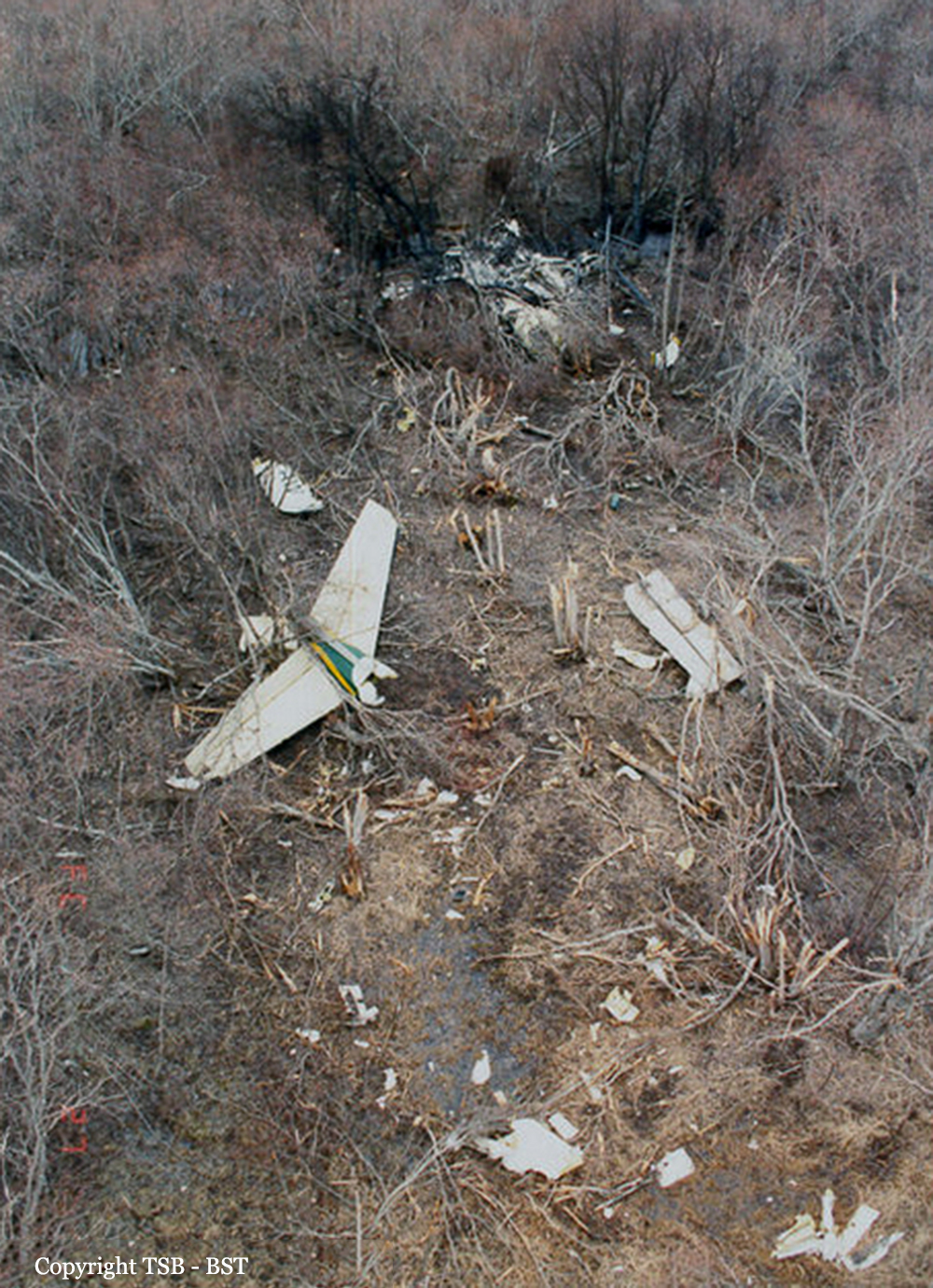
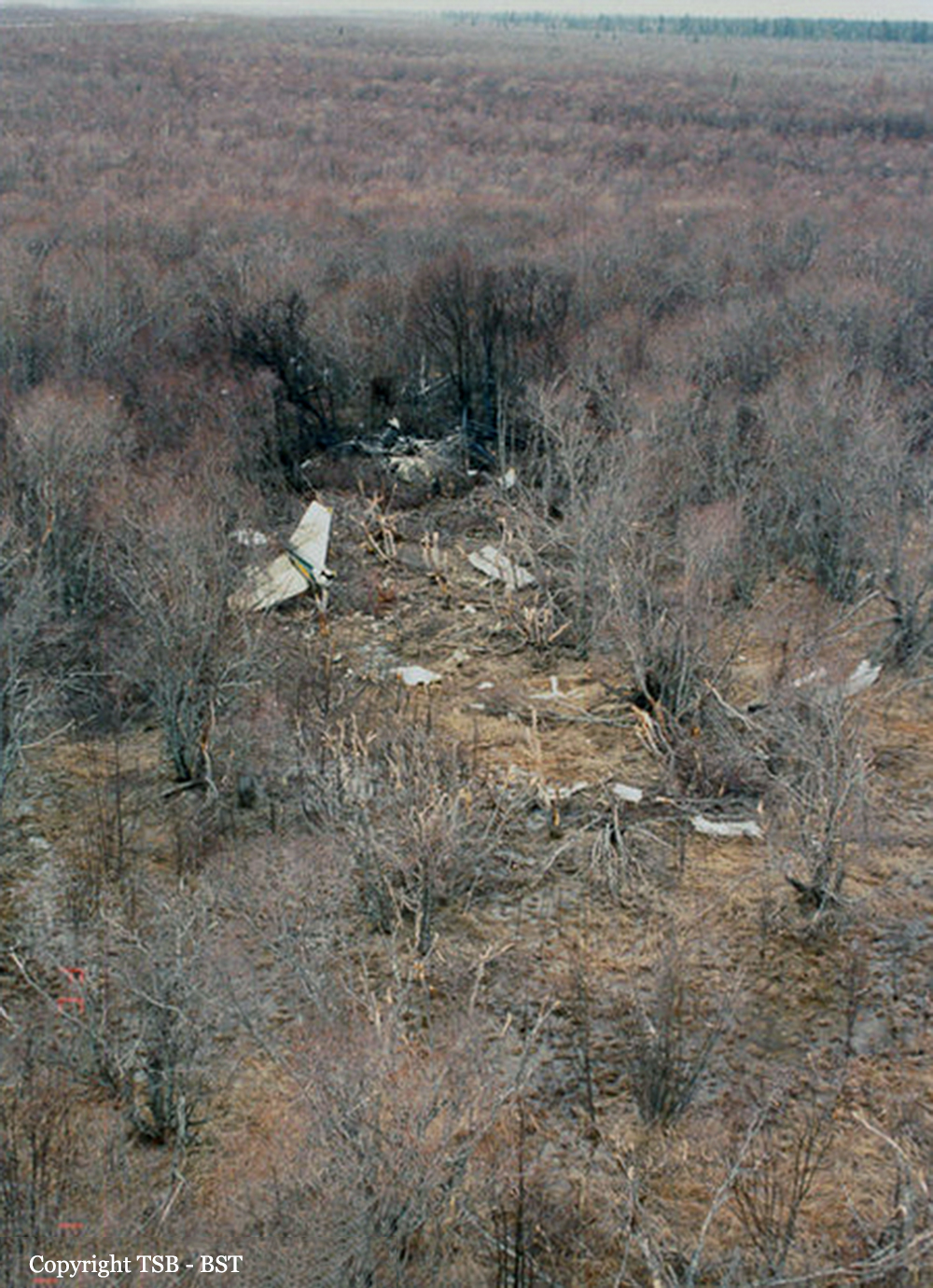
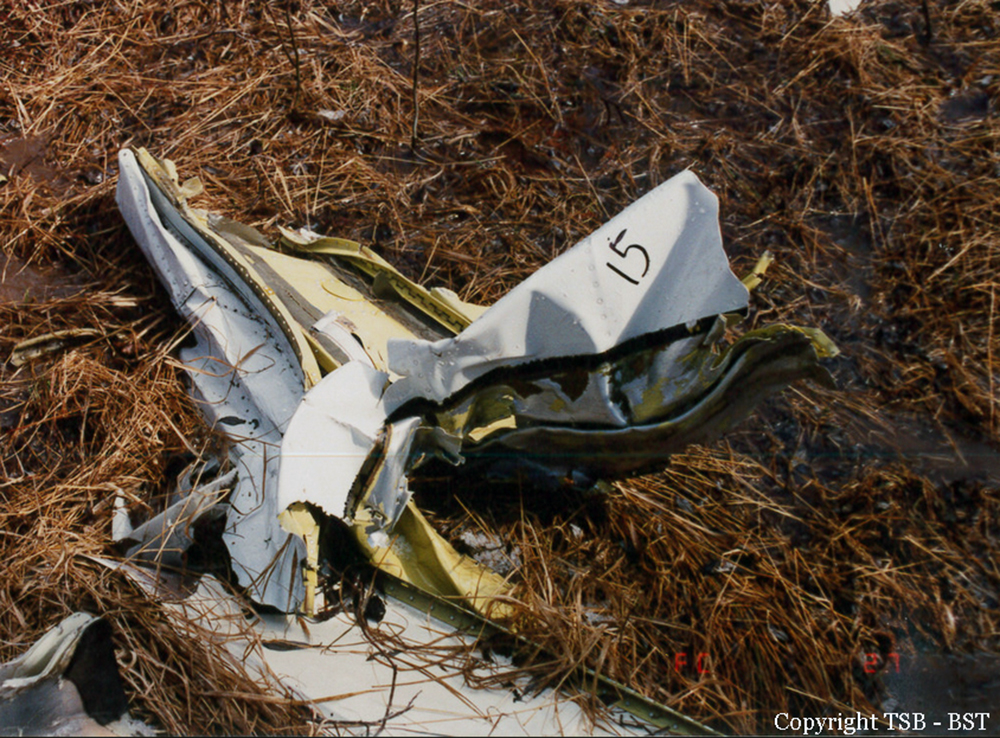
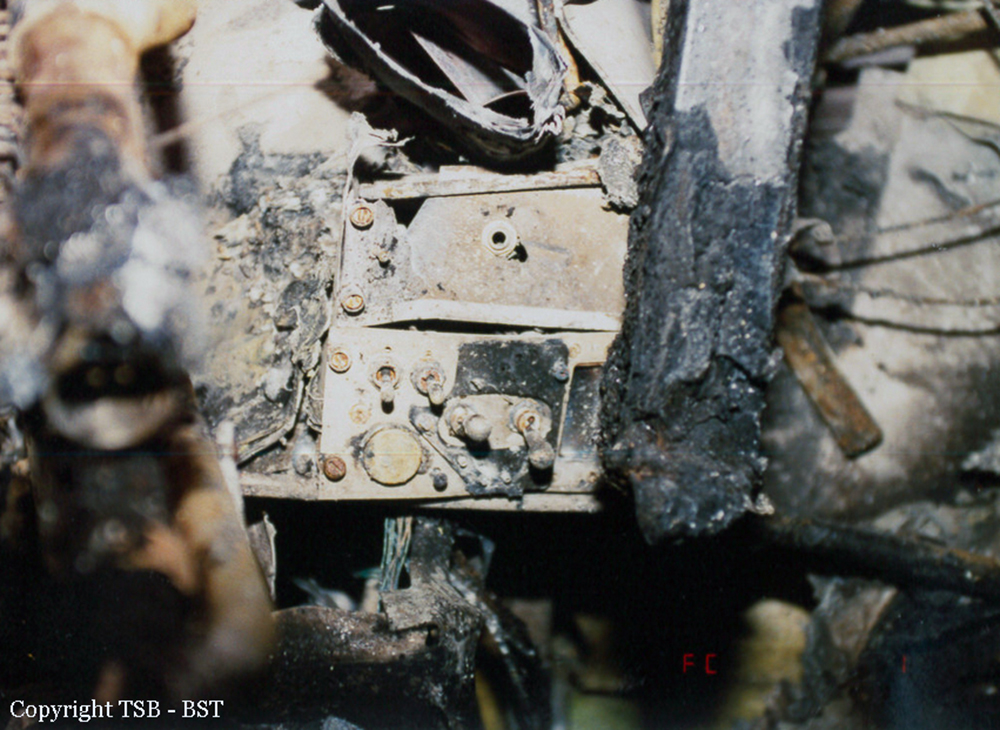
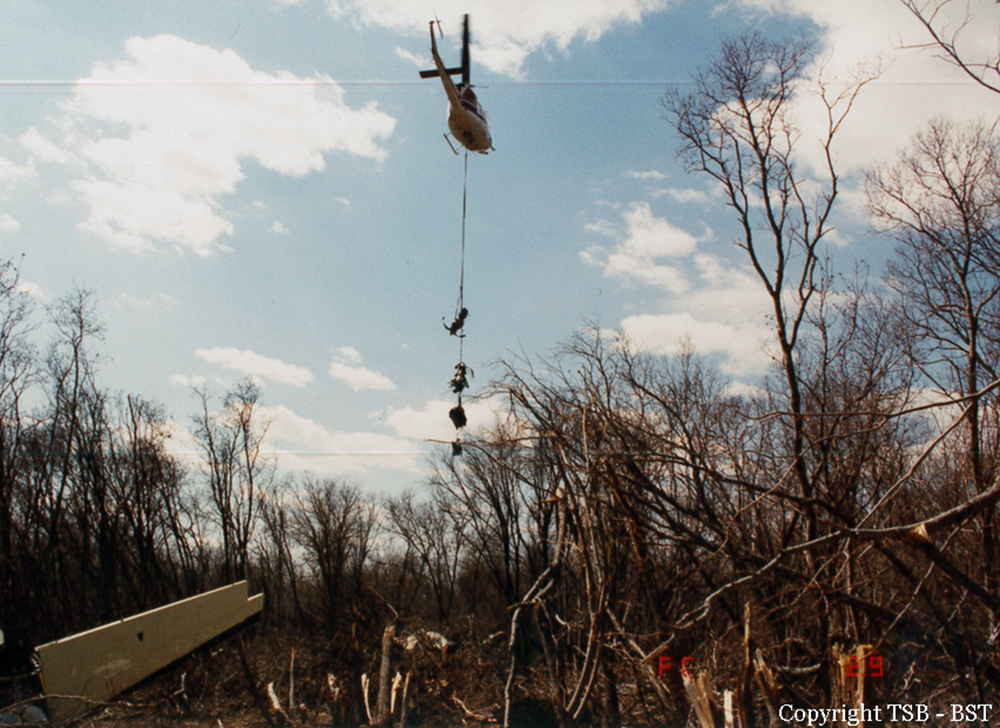
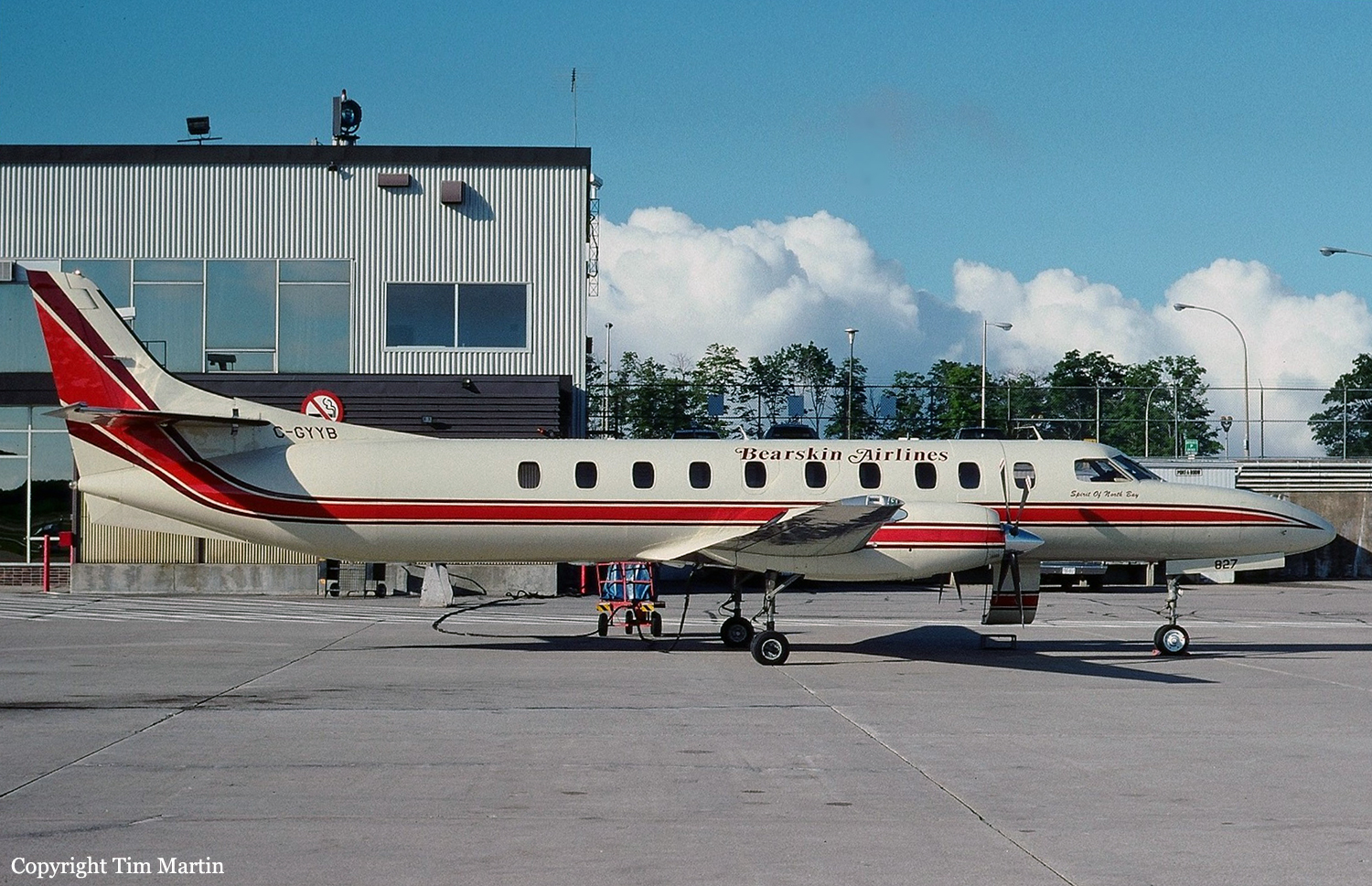
Bearskin flight 362, a Fairchild Swearingen Metro 23, departed Red Lake, Ontario, at 1300 central daylight saving time (CDT), with two pilots and one passenger on board, en route to Sioux Lookout on an instrument flight rules (IFR) flight plan. At approximately 30 nautical miles (nm) north of Sioux Lookout, the flight was cleared by the Winnipeg area control centre (ACC) for an approach to the Sioux Lookout airport. Air Sandy flight 3101, a Piper Navajo PA-31, departed Sioux Lookout at 1323 with one pilot and four passengers on board en route to Red Lake on a visual flight rules (VFR) flight. The pilot of Air Sandy 3101 reported clear of the Sioux Lookout control zone at 1326. No other communication was heard from the Air Sandy flight. At 1315 the Winnipeg ACC controller advised the Sioux Lookout Flight Service specialist that Bearskin 362 was inbound from Red Lake, estimating Sioux Lookout at 1332. At 1327, Bearskin 362 called Sioux Lookout Flight Service Station (FSS) and advised them they had been cleared for an approach and that they were cancelling IFR at 14 nm from the airport. At 1328, as Sioux Lookout FSS was giving an airport advisory to Bearskin 362, the specialist heard an emergency locator transmitter (ELT) emit a signal on the emergency frequencies. Moments later, the pilot of Bearskin 305, a Beechcraft B-99 in the vicinity of Sioux Lookout, advised the specialist that he had just seen a bright flare in the sky and that he was going to investigate. The pilot of Bearskin 305 stated that the flare had fallen to the ground and a fire was burning in a wooded area. A communications search was initiated to locate Bearskin 362, but the aircraft did not respond. A Search and Rescue aircraft from Trenton, Ontario, and an Ontario Ministry of Natural Resources (MNR) helicopter were dispatched to the site. The source of the fire was confirmed to be the Air Sandy aircraft. The MNR helicopter noticed debris and a fuel slick on a nearby lake, Lac Seul. It was later confirmed that Bearskin 362 had crashed into the lake. (See Appendix A.) The two aircraft collided in mid-air at 1328 during the hours of daylight at latitude 50º14'N and longitude 92º07'W, in visual meteorological conditions (VMC). All three persons on board the Bearskin aircraft and all five persons on board the Air Sandy aircraft were fatally injured.
Probable cause:
Neither flight crew saw the other aircraft in time to avoid the collision. Contributing to the occurrence were the inherent limitations of the see-and-avoid concept which preclude the effective separation of aircraft with high closure rates, the fact that neither crew was directly alerted to the presence of the other aircraft by the Flight Service specialist or by onboard electronic equipment, and an apparent lack of pilot understanding of how to optimize avoidance manoeuvring.
Final Report:
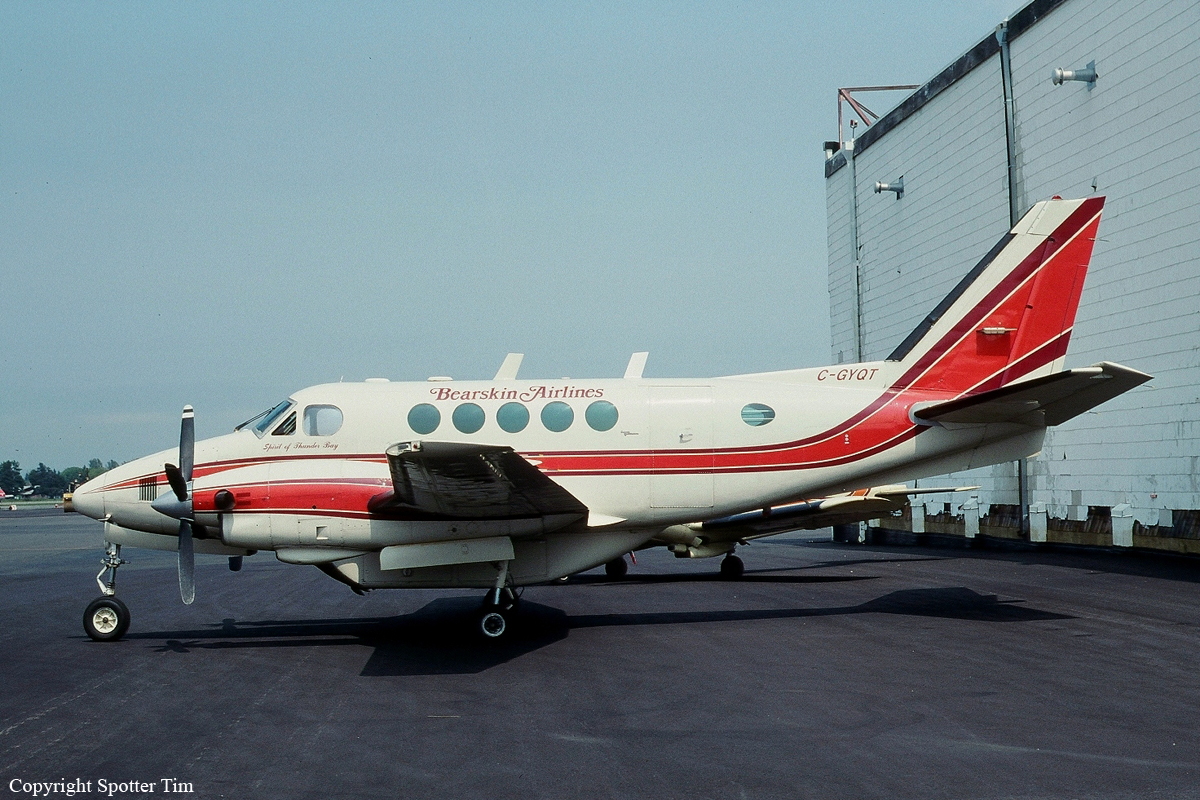
Crash of a Beechcraft A100 King Air in Big Trout Lake

Date & Time: Feb 21, 1995 at 1248 LT
Type of aircraft:
Operator:
Registration:
C-GYQT
Survivors:
Yes
Schedule:
Sioux Lookout - Big Trout Lake
MSN:
B-189
YOM:
1974
Flight number:
BLS324
Country:
Crew on board:
2
Crew fatalities:
Pax on board:
9
Pax fatalities:
Other fatalities:
Total fatalities:
0
Captain / Total flying hours:
5000
Captain / Total hours on type:
1500.00
Copilot / Total flying hours:
2300
Copilot / Total hours on type:
800
Aircraft flight hours:
13739
Circumstances:
The crew of the Beechcraft A100, C-GYQT, were conducting a scheduled flight from Sioux Lookout, Ontario, to Big Trout Lake, Ontario, as Bearskin (BLS) 324. BLS324 departed Sioux Lookout with nine passengers and a crew of two at 1133 central standard time (CST) and arrived in the vicinity of Big Trout Lake at approximately 1240. The captain briefed an instrument approach with a circling procedure to runway 14. On descent to the radio beacon, the crew reportedly encountered flight visibilities of one mile and were in visual contact with the ground. When the aircraft was less than five miles from the airport, the crew heard a position report from another aircraft completing an approach to the airport. To ensure safe separation from the aircraft ahead, the captain elected to fly under visual flight rules to the southwest of the airport. Air Traffic Services radar data was obtained from the Big Trout Lake radar source. The radar data indicated that the crew descended to about 150 feet above ground level (agl) approximately 4.5 miles from the end of the landing runway and maintained 200 to 300 feet agl for some 50 seconds prior to impact. Immediately prior to impact, the radar data indicated that the aircraft was about 3 1/2 miles from the runway at about 300 feet agl and descending at more than 1,200 feet per minute. Throughout the approach, the first officer flew the aircraft visually with occasional reference to his instruments, while the captain navigated and maintained terrain clearance by visual reference to the terrain and issued instructions to the first officer. At approximately five miles from the runway, the crew turned onto the extended centre line of the runway and received a radio report from the other aircraft of local visibilities of less than 1/2 mile. The aircraft flew inbound over a wide expanse of lake, and the captain lowered the flaps in preparation for landing. Shortly thereafter, the captain became concerned with the reducing visibility and looked in the Company Approach Procedures binder that he held on his lap. The captain was aware of the danger of whiteout and intended to revert to instrument flight if whiteout were encountered. He had not previously removed the approach chart for Big Trout Lake and clipped it in the approach chart holder because he had discovered that the binder rings were broken and taped shut when he had performed his initial approach briefing. He intended to provide new approach information to the first officer so that a full instrument approach could be initiated from their current position. When the captain looked up from the binder, he observed the altimeter indicating a descent through 1,000 feet above sea level (asl) and called to the first officer, "Watch your altitude." Before a recovery could be initiated, the aircraft struck the frozen surface of the lake and bounced into the air. The captain initiated a recovery and then, concerned with the airworthiness of the aircraft, reduced power and attempted to land straight ahead. The aircraft crashed onto the frozen surface of the lake about 3/4 mile beyond the initial impact location. All passengers and crew survived the accident. However, the crew and several passengers sustained serious injuries. Rescuers from the local community reached the aircraft about two hours after the crash and all survivors were rescued within four hours. The more seriously injured were experiencing the effects of hypothermia when rescued. The accident occurred at 1248 CST, approximately three miles northwest of Big Trout Lake Airport, at latitude 53°49'N, longitude 089°53'W, at an elevation of 690 feet asl.
Probable cause:
While the crew were manoeuvring the aircraft to land and attempting to maintain visual flying conditions in reduced visibility, their workload was such that they missed, or unknowingly discounted, critical information provided by the altimeters and vertical speed indicators. Contributing factors were the whiteout conditions and the crew's decision to fly a visual approach at low altitude over an area where visual cues were minimal and visibility was reduced.
Final Report:

Crash of a Piper PA-46-310P Malibu in Killarney: 6 killed

Date & Time: Aug 19, 1994 at 1230 LT
Operator:
Registration:
C-GSEV
Flight Type:
Survivors:
No
Schedule:
Windsor – Killarney
MSN:
46-8408035
YOM:
1984
Country:
Crew on board:
1
Crew fatalities:
Pax on board:
5
Pax fatalities:
Other fatalities:
Total fatalities:
6
Captain / Total flying hours:
1322
Captain / Total hours on type:
122.00
Aircraft flight hours:
2019
Circumstances:
The flight was a private pleasure/travel flight for the purpose of transporting the pilot, his wife, and two other couples from Windsor to Killarney, Ontario, where they were to spend the weekend with friends. The flight had been planned in advance of the departure date. The pilot commenced taxiing at 1058 eastern daylight saving time (EDT), and was issued an instrument flight rules (IFR) clearance to Killarney via the routing "Windsor, radar vectors Sarnia, direct Wiarton, direct Killarney, to maintain 3,000" feet asl. The pilot took off at 1105. After take-off, the flight proceeded in a routine manner in accordance with the IFR clearance and was issued a final cruise altitude of 9,000 feet asl. The pilot reported level at 9,000 feet asl at 1125. At 1137, while the flight was 65 to 70 nm southwest of Wiarton, Ontario, the pilot was issued and acknowledged a clearance to fly direct to Killarney. At 1151, he requested and was issued a clearance to climb to 12,000 feet asl to get above a cloud layer, and reported level at 12,000 feet asl at 1155. The flight passed 20 nm to the west of Wiarton at 1203. At 1206, the pilot was given the Sudbury altimeter setting of 29.913 and was cleared to maintain 4,000 feet asl at his convenience. He acknowledged the clearance and commenced descent from 12,000 feet asl, 62 nm south of Killarney. Shortly after issuing the descent clearance, the air traffic services (ATS) controller advised the pilot that the IFR flight plan could be cancelled with the controller on his frequency while still airborne or with the Sault Ste. Marie flight service station (FSS) on the ground by a toll free telephone number. The ATS controller asked the flight crew of another aircraft on the same frequency to listen for an IFR cancellation from C-GSEV and to relay the cancellation to the controller. At 1221, the pilot of C-GSEV advised the ATS controller that he would be descending to 2,000 feet asl. The controller advised the pilot that the flight was in uncontrolled airspace and descent would be at the pilot's discretion. The pilot acknowledged the message, and this was the last direct controller/pilot communication (DCPC) between ATS and the aircraft. The last recorded radar position of the aircraft was at 1223:43, when it slowed to 180 knots ground speed and was descending out of 3,000 feet asl, 3 1/2 to 4 nm south of the Killarney airport. At about 1224, the flight crew from another aircraft on the frequency advised the ATS controller that C-GSEV had cancelled the IFR flight plan. There was no further communication with the flight after the pilot cancelled the IFR flight plan. The aircraft was reported missing to officials of the pilot's company the following morning by friends and family of the passengers. Search and rescue authorities were notified at approximately 0930, and the wreckage was located by search and rescue late that afternoon. The aircraft struck the rock face of a mountain at 1,321 feet asl in near level flight, on a northeast heading. The top of the mountain was 1,408 feet asl. The six occupants were fatally injured, and the aircraft was destroyed on impact. The accident occurred at about 1230 EDT during the hours of daylight, at latitude 46°02'N and longitude 081°26'W.
Crew:
Emidio Simone, pilot.
Passengers:
Laila Simone,
William and Lynne Bolton,
David and Pauline Moore.
Probable cause:
The pilot was operating the aircraft in instrument meteorological conditions and uncontrolled airspace while below a safe terrain clearance altitude, and the aircraft struck a mountain.
Final Report:

Crash of a Cessna 441 Conquest in Fort Frances

Date & Time: Jun 18, 1994 at 0425 LT
Type of aircraft:
Operator:
Registration:
N441CA
Flight Phase:
Survivors:
Yes
Schedule:
Milwaukee – Fort Frances – God’s Lake Narrows
MSN:
441-0046
YOM:
1978
Country:
Crew on board:
1
Crew fatalities:
Pax on board:
5
Pax fatalities:
Other fatalities:
Total fatalities:
0
Captain / Total flying hours:
4800
Captain / Total hours on type:
40.00
Aircraft flight hours:
2447
Circumstances:
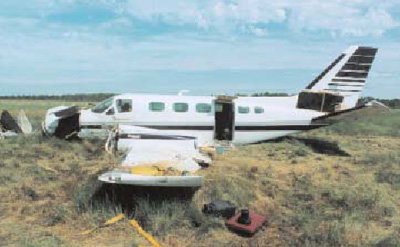
The pilot of the Cessna 441 Conquest was conducting an international charter flight from General Mitchell International Airport in Milwaukee, Wisconsin, to Gods Lake Narrows, Manitoba. The pilot landed the aircraft at Fort Frances, Ontario, to clear customs and refuel, and then continued his visual flight rules (VFR) flight to Gods Lake Narrows. During the take-off at Fort Frances, the aircraft experienced a power loss in the left engine. The pilot elected to continue the take-off but was unable to control the aircraft after it became airborne. The aircraft veered to the left and crashed on the airfield. The accident occurred at 0425 central daylight time (CDT), at night, on the Fort Frances Municipal Airport. All seven occupants sustained minor injuries and the aircraft was damaged beyond repair.
Probable cause:
The pilot lost control of the aircraft during take-off when the left engine lost power as a result of bird ingestion. Contributing to the loss of aircraft control were a take-off weight in excess of the maximum allowable, and a centre of gravity aft of the centre of gravity limit.
Final Report:

Crash of an Avro 748-234-2A in Sandy Lake: 7 killed

Date & Time: Nov 10, 1993 at 1805 LT
Type of aircraft:
Operator:
Registration:
C-GQTH
Flight Phase:
Survivors:
No
Schedule:
Winnipeg – Sandy Lake – Saint Theresa Point – Island Lake – Winnipeg
MSN:
1617
YOM:
1967
Flight number:
7N205
Country:
Crew on board:
3
Crew fatalities:
Pax on board:
4
Pax fatalities:
Other fatalities:
Total fatalities:
7
Captain / Total flying hours:
16000
Captain / Total hours on type:
4500.00
Copilot / Total flying hours:
6500
Copilot / Total hours on type:
1100
Aircraft flight hours:
29284
Circumstances:
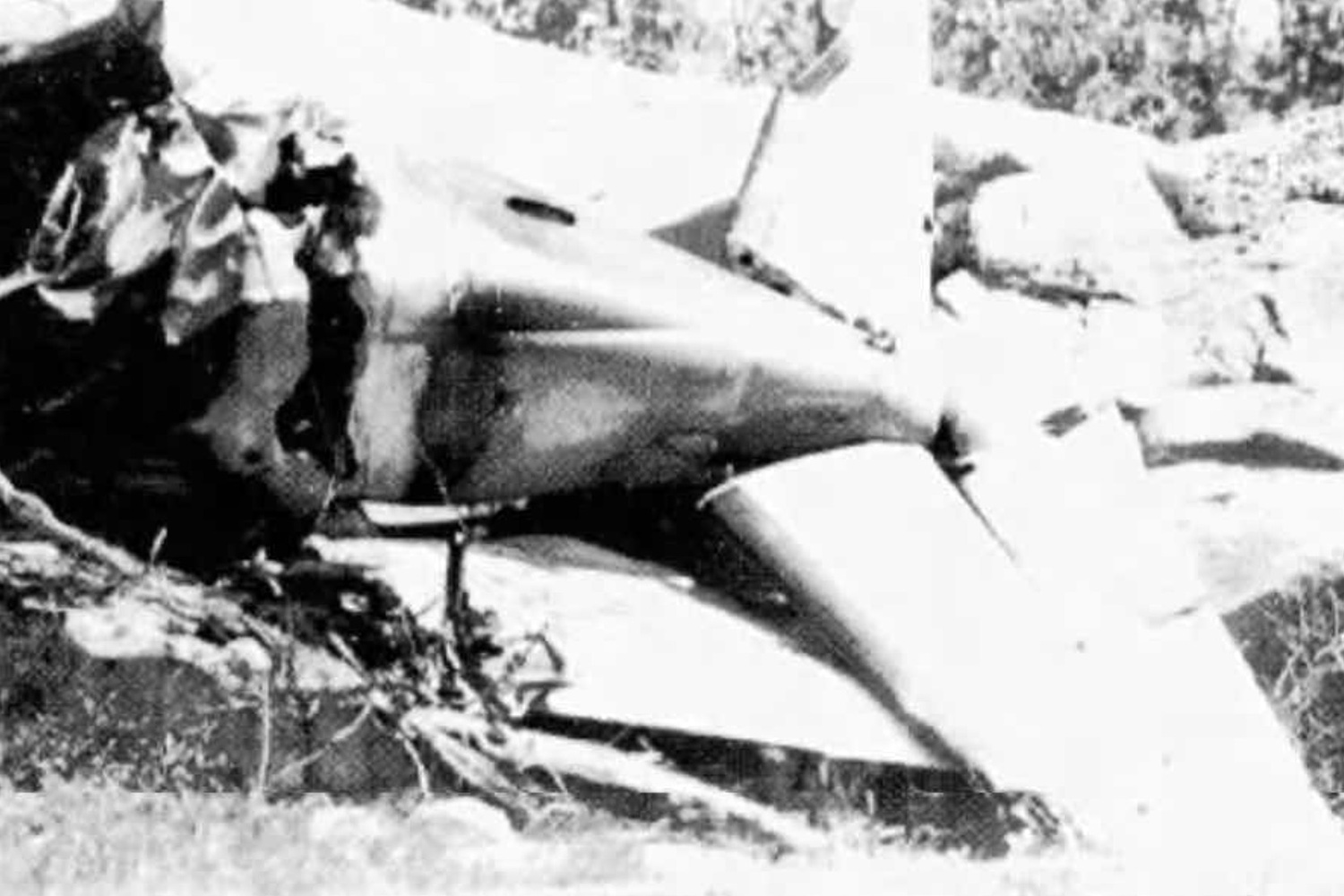
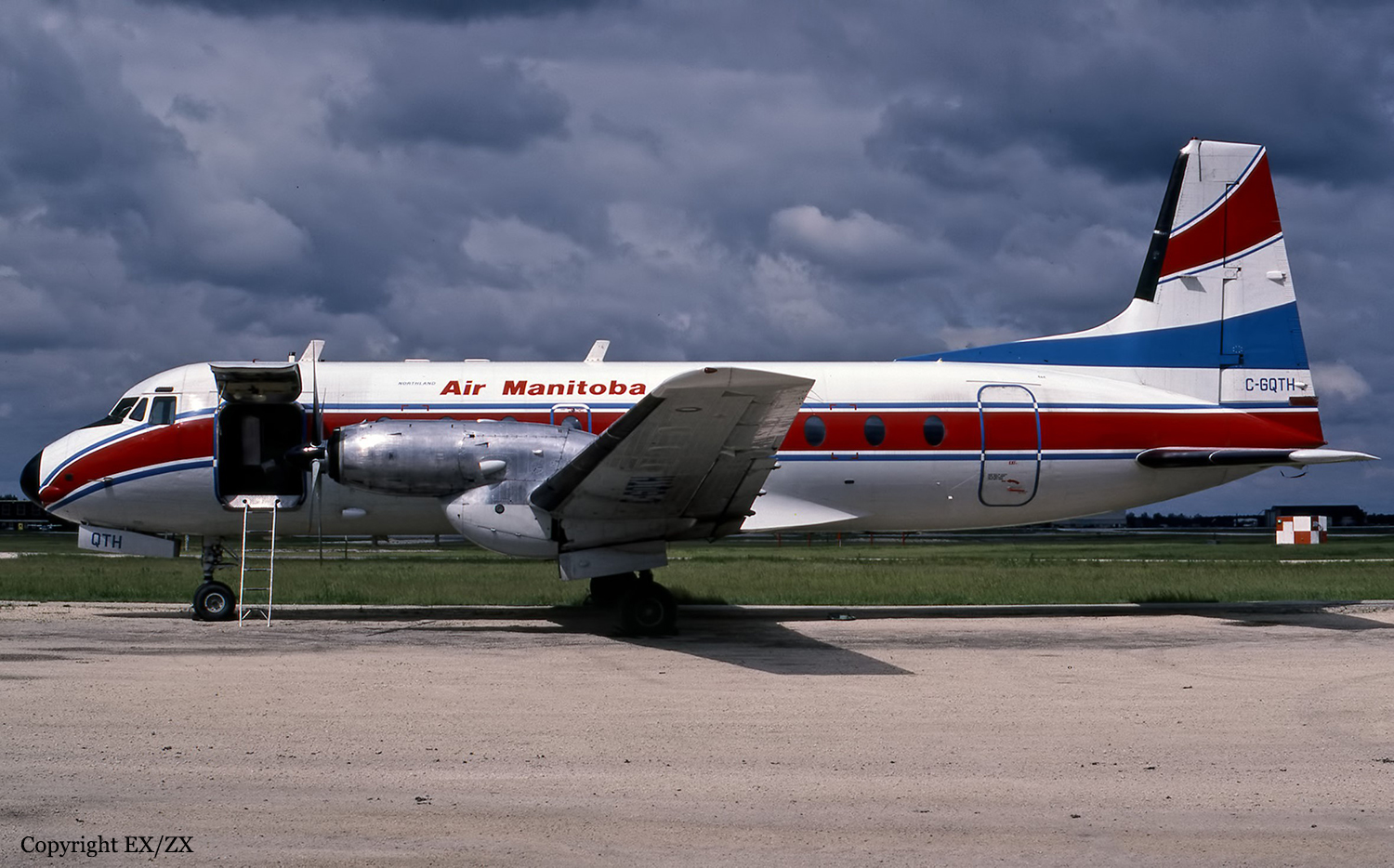
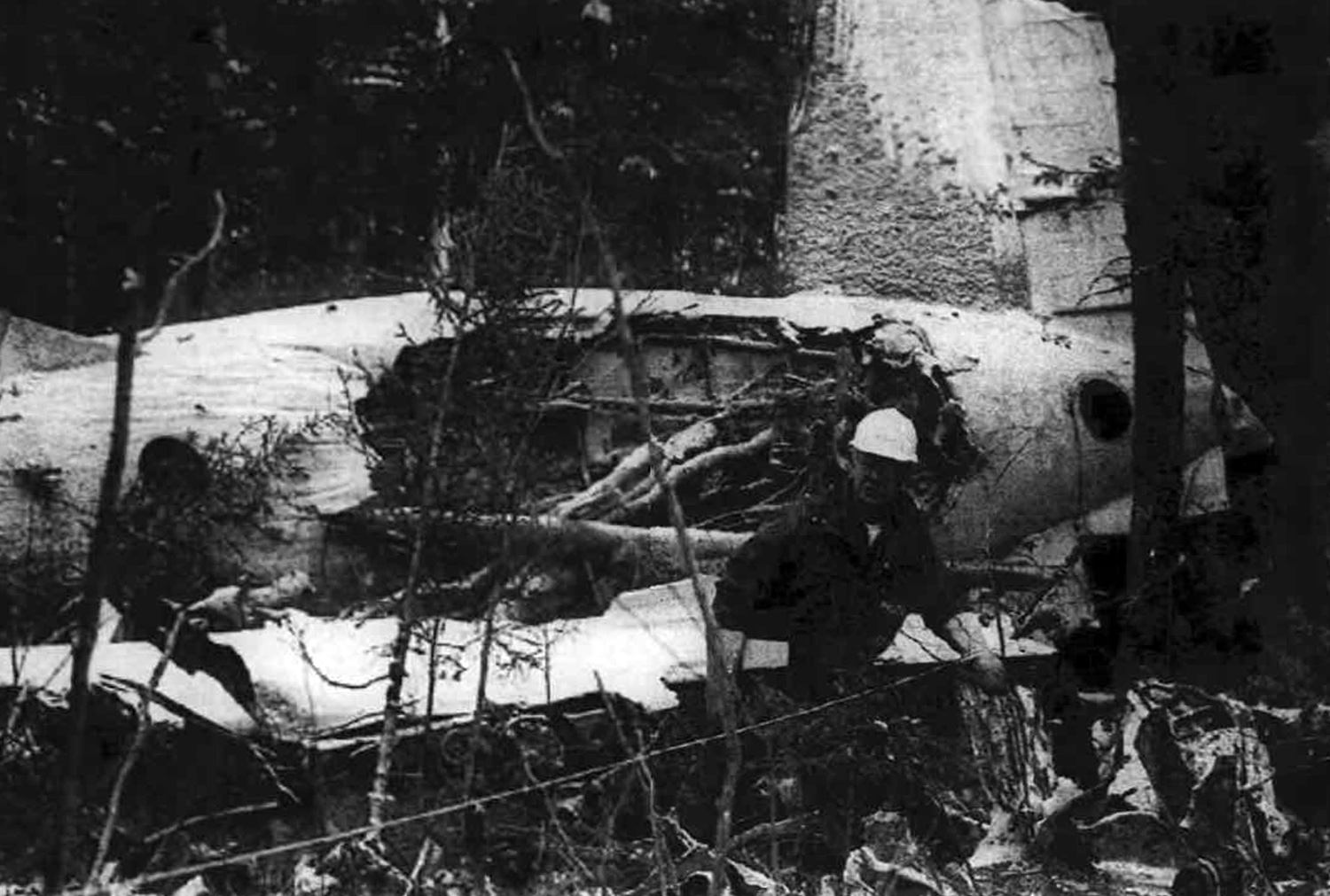
The aircraft, a Hawker Siddeley 748 Series 2A Model 234 (HS 748) owned and operated by Air Manitoba Ltd. (Air Manitoba), took off from Winnipeg at 1438 central standard time (CST) , 10 November 1993, on scheduled flight NAM 205/ 206 that included stops at Sandy Lake, Ontario; St. Theresa Point, Manitoba; Island Lake, Manitoba; and return to Winnipeg, Manitoba. The flight was conducted in accordance with an instrument flight rules (IFR) flight plan and flight notification. On arrival at Sandy Lake at approximately 1549, the crew attempted to land but were unable to because of the low ceiling and visibility. They then diverted to St. Theresa Point, landing at 1630. A normal turnaround was completed; the number of passengers on departure was 26, and 2,086 pounds of fuel was uploaded to an estimated total of 6,700 pounds on board. The flight departed St. Theresa Point for Sandy Lake at 1720. The aircraft landed at approximately 1745 at Sandy Lake, where 22 passengers deplaned while four remained on board; the aircraft was not refuelled or otherwise serviced at Sandy Lake. During the stop, both engines were shut down. On take-off from Sandy Lake, there were two pilots, a flight attendant, and four passengers on board. The aircraft took off from runway 29 at Sandy Lake at approximately 1805 and entered a right turn. Witnesses indicate that the aircraft appeared to fly at a lower than normal height throughout the turn. After turning through approximately 120 degrees(°), the aircraft descended into 100-foot trees and crashed. The aircraft struck the ground about one nautical mile (nm) northwest of the airport. All seven occupants of the aircraft were fatally injured in the crash. The accident occurred during the hours of darkness. The wreckage was located at position latitude 53°04'71"N, longitude 93°21'38"W, at an elevation of approximately 940 feet above sea level (asl).
Probable cause:
After take-off, the crew most likely lost situational awareness and, as a result, did not detect the increasing deviation from their intended flight path. Contributing to the loss of situational awareness was the lack of AC power to some of the flight instruments; the reason for the lack of AC power could not be determined.
Final Report:

Crash of a Piper PA-31-310 Navajo near Nibinamik: 2 killed

Date & Time: Sep 15, 1993 at 2015 LT
Type of aircraft:
Registration:
C-GSWG
Flight Phase:
Survivors:
No
Schedule:
Steinbach - Webequie
MSN:
31-492
YOM:
1969
Country:
Crew on board:
1
Crew fatalities:
Pax on board:
1
Pax fatalities:
Other fatalities:
Total fatalities:
2
Circumstances:
En route from Steinbach to Webequie, the pilot informed ATC about his position some 64 km north of Pickle Lake. Few minutes later, the twin engine aircraft crashed in unknown circumstances in the region of Nibinamik, southwest of Webequie. The wreckage was found on September 23 in an isolated area. Both occupants were killed.

Crash of a Pilatus PC-6/C-H2 Turbo Porter in Ottawa

Date & Time: Jul 16, 1991
Operator:
Registration:
N285L
Flight Type:
Survivors:
Yes
MSN:
565
YOM:
1964
Country:
Crew on board:
1
Crew fatalities:
Pax on board:
0
Pax fatalities:
Other fatalities:
Total fatalities:
0
Aircraft flight hours:
13463
Circumstances:
Crashed in unknown circumstances while on approach to Ottawa Airport. The pilot, sole on board, was injured. The aircraft was on a delivery flight.

Crash of a De Havilland DHC-2 Beaver in Sandridge Lake: 4 killed

Date & Time: Jun 16, 1991
Type of aircraft:
Registration:
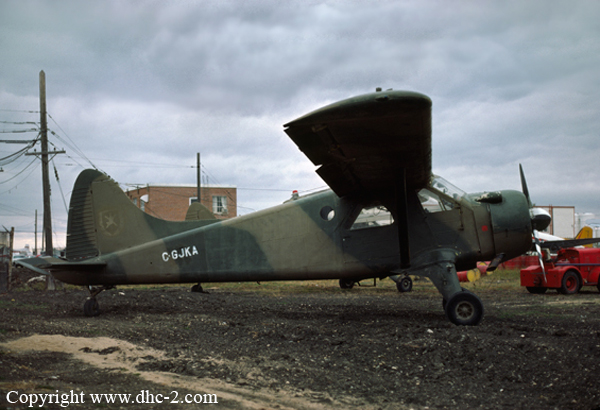
C-GJKA
Flight Phase:
Survivors:
No
MSN:
1481
YOM:
1961
Country:
Crew on board:
1
Crew fatalities:
Pax on board:
3
Pax fatalities:
Other fatalities:
Total fatalities:
4
Circumstances:
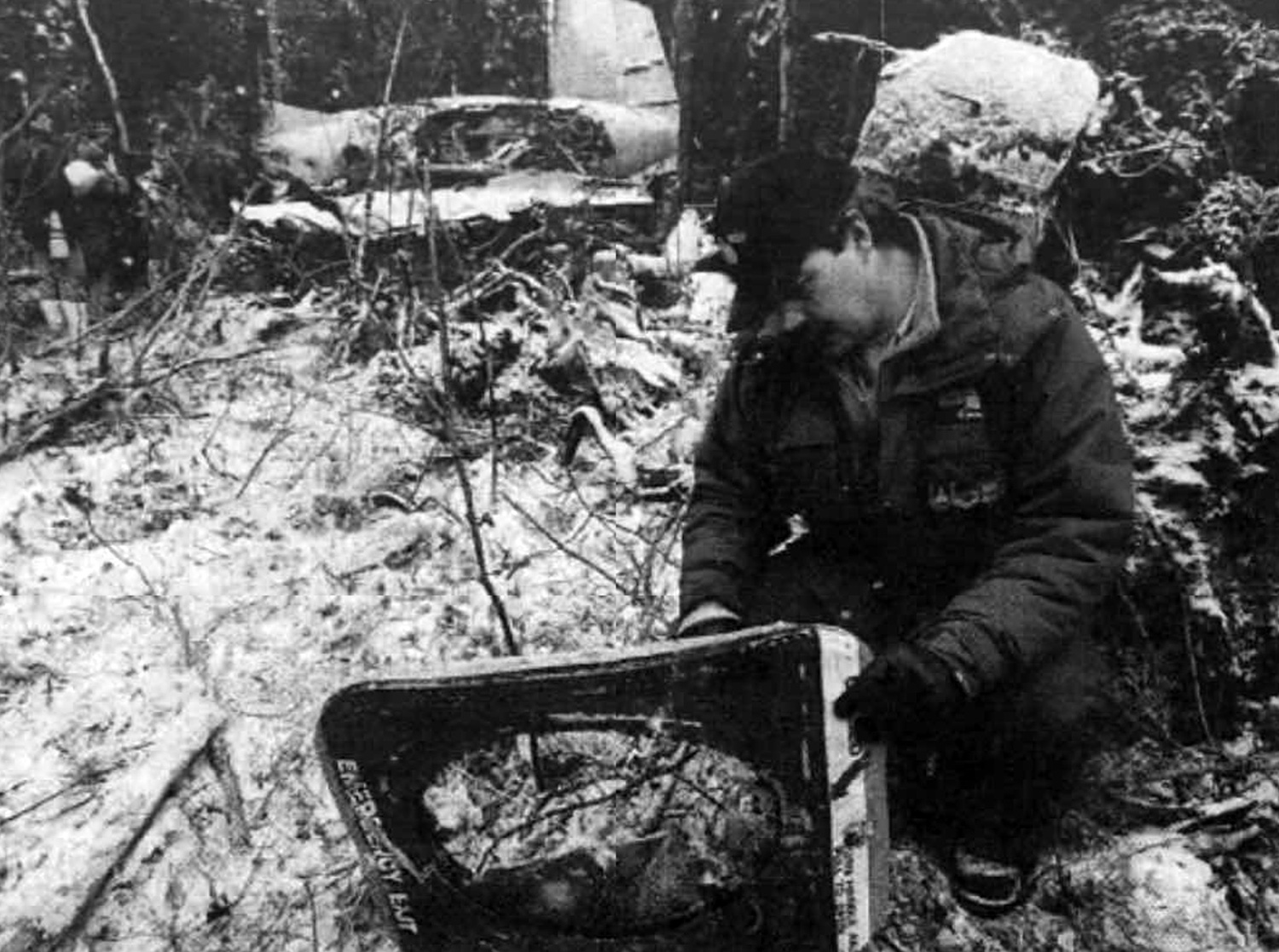
Crashed in unknown circumstances shortly after takeoff from Sandridge Lake. The aircraft was destroyed by a post crash fire and all four occupants were killed.

Crash of a Beechcraft C99 Airliner in Moosonee: 1 killed

Date & Time: Apr 30, 1990 at 2138 LT
Type of aircraft:
Operator:
Registration:
C-GFAW
Survivors:
Yes
Schedule:
Timmins - Moosonee
MSN:
U-197
YOM:
1982
Flight number:
4F1602
Country:
Crew on board:
2
Crew fatalities:
Pax on board:
2
Pax fatalities:
Other fatalities:
Total fatalities:
1
Captain / Total flying hours:
2423
Captain / Total hours on type:
298.00
Copilot / Total flying hours:
1038
Copilot / Total hours on type:
102
Aircraft flight hours:
14766
Circumstances:
At 2043 eastern daylight time (EDT), Frontier Air Flight 1602, C-GFAW, a Beechcraft C99 Airliner, took off from Timmins, Ontario, on a scheduled domestic flight to Moosonee, Ontario. The aircraft carried a two-pilot crew, two passengers, and approximately 60 pounds of freight and baggage. The flight proceeded, via airways, to Moosonee at 7,000 feet above sea level. At 2121 EDT, the flight was cleared for an approach at Moosonee with a temporary altitude restriction of 5,000 feet. The crew elected to fly the very high frequency omnidirectional range (VOR) runway 24 approach. At 2129 EDT, the crew reported on the 061° radial of the VOR at five nautical miles (nm) outbound. Shortly after intercepting the 061° radial inbound, the crew initiated a descent to the 440-foot minimum descent altitude (MDA). While in the descent, the aircraft broke through the lowest cloud layer at 900 feet asl, approximately 9.2 nm from the VOR. At this point, both pilots had the runway lights in sight, and the captain decided to change to a visual approach and proceed inbound at 700 feet asl. Shortly after advising the co-pilot of his intentions, the captain initiated the before-landing cockpit check and selected the landing gear lever to the DOWN position. Immediately thereafter, the aircraft struck trees and crashed seven miles east-northeast of the Moosonee Airport. One of the pilot was killed while three other occupants were injured.
Probable cause:
It was determined that the captain inadvertently flew the aircraft into trees, during a condition of visual illusion, as a result of inadequate crew coordination in that neither pilot effectively monitored the altimeter. Contributing to the occurrence were the absence of approach lighting, the lack of company crew pairing policy, the captain’s unfamiliarity with black-hole illusion and the seating position of the captain.
Final Report:

Crash of a Piper PA-31-350 Navajo Chieftain off Pelée Island: 3 killed

Date & Time: Jun 24, 1989 at 2300 LT
Registration:
C-GSWC
Flight Phase:
Flight Type:
Survivors:
Yes
Schedule:
Pelée Island - Windsor
MSN:
31-7305067
YOM:
1973
Country:
Crew on board:
2
Crew fatalities:
Pax on board:
3
Pax fatalities:
Other fatalities:
Total fatalities:
3
Circumstances:
The twin engine aircraft was dispatched at Pelée Airport to evacuate to Windsor a patient. On board were one patient, his spouse, one ambulance officer and two pilots. Shortly after a night takeoff from runway 28, while climbing, the aircraft went out of control and crashed in Lake Erie. The copilot and the patient survived while three other occupants were killed.