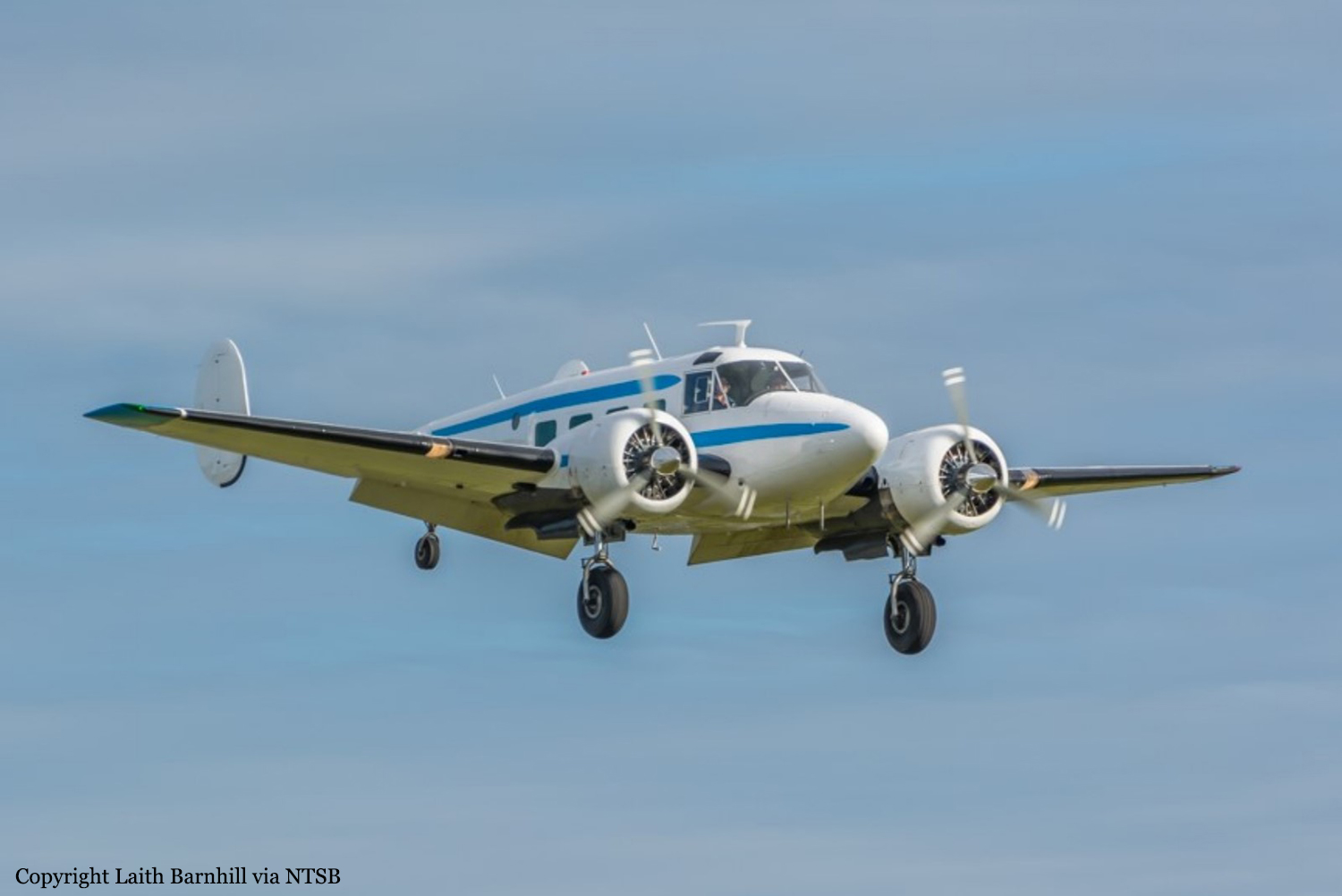
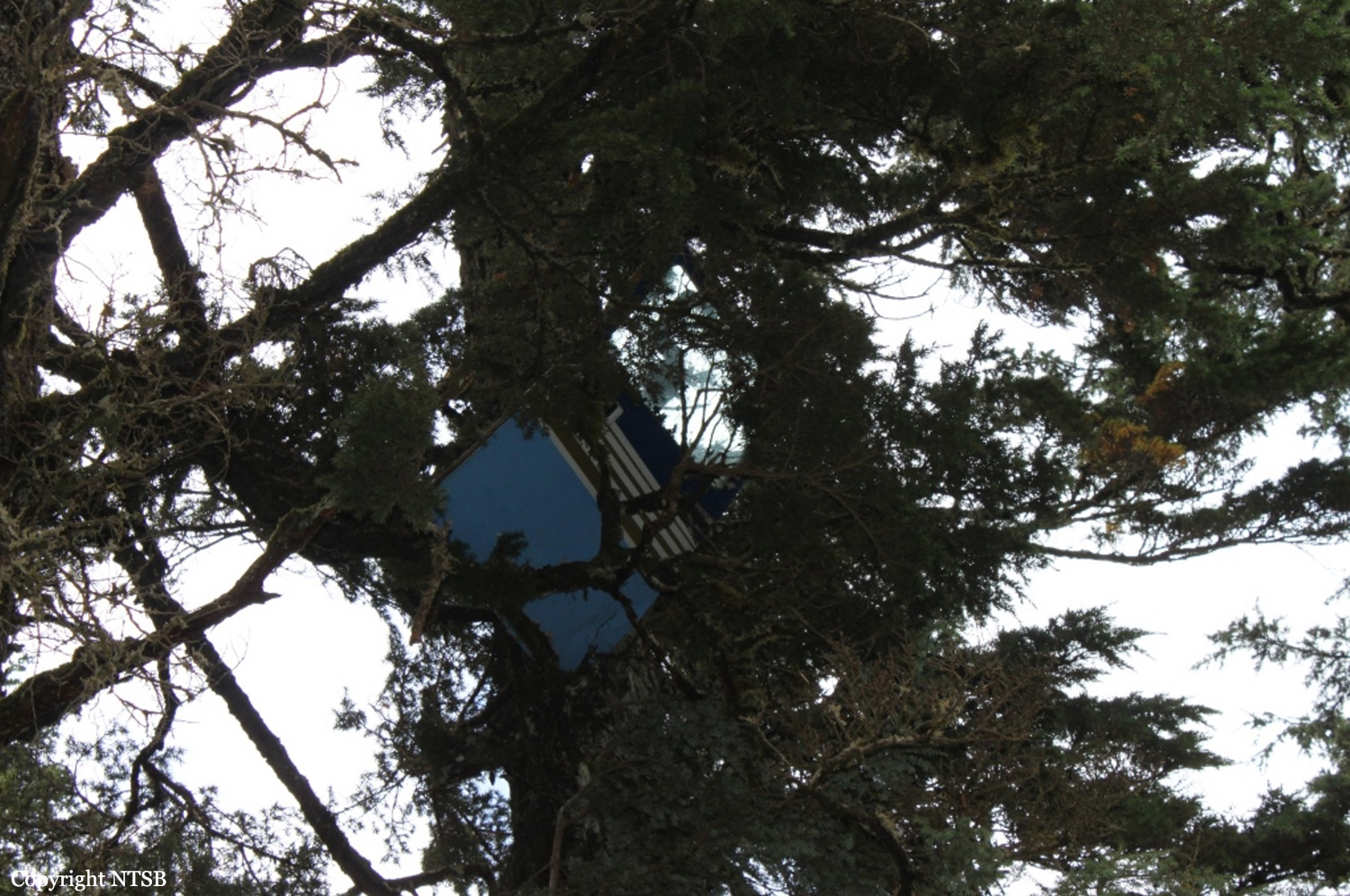
Crash of a Beechcraft G18S off Metlakatla

Date & Time: Mar 3, 2017 at 0815 LT
Type of aircraft:
Operator:
Registration:
N103AF
Flight Type:
Survivors:
Yes
Schedule:
Klawock – Ketchikan
MSN:
BA-526
YOM:
1960
Crew on board:
2
Crew fatalities:
Pax on board:
0
Pax fatalities:
Other fatalities:
Total fatalities:
0
Captain / Total flying hours:
10308
Captain / Total hours on type:
330.00
Aircraft flight hours:
17646
Circumstances:
The pilot of the twin-engine airplane and the pilot-rated passenger reported that, during a missed approach in instrument meteorological conditions, at 2,000 ft mean sea level, the right engine seized. The pilot attempted to feather the right engine by pulling the propeller control to the feather position; however, the engine did not feather. The airplane would not maintain level flight, so the pilot navigated to a known airport, and the passenger made emergency communications with air traffic control. The pilot was unable to maintain visual reference with the ground until the airplane descended through about 100 to 200 ft and the visibility was 1 statute mile. The pilot stated that he was forced to ditch the airplane in the water about 5 miles short of the airport. The pilot and passenger egressed the airplane and swam ashore before it sank in about 89 ft of water. Both the pilot and passenger reported that there was postimpact fire on the surface of the water. The airplane was not recovered, which precluded a postaccident examination. Thus, the reason for the loss of engine power could not be determined.
Probable cause:
An engine power loss for reasons that could not be determined because the airplane was not recovered.
Final Report:

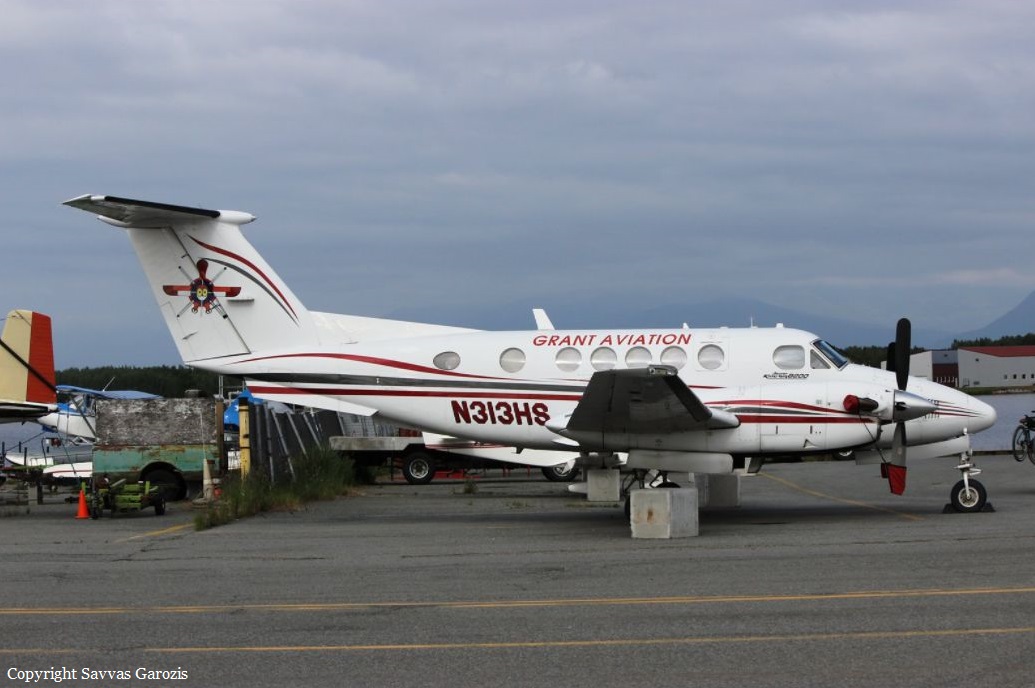
Crash of a Beechcraft B200 Super King Air in Unalaska

Date & Time: Feb 14, 2017 at 1323 LT
Operator:
Registration:
N313HS
Survivors:
Yes
MSN:
BB-1300
YOM:
1988
Crew on board:
2
Crew fatalities:
Pax on board:
1
Pax fatalities:
Other fatalities:
Total fatalities:
0
Circumstances:
Following an uneventful flight, the aircraft belly landed at Unalaska-Tom Madsen Airport runway 13/31. The airplane slid for few dozen metres before coming to rest and was damaged beyond repair. All three occupants evacuated safely.
Probable cause:
There were no investigations about this event. Nevertheless, it was reported that the pilot was distracted and forgot to lower the landing gear on final approach.

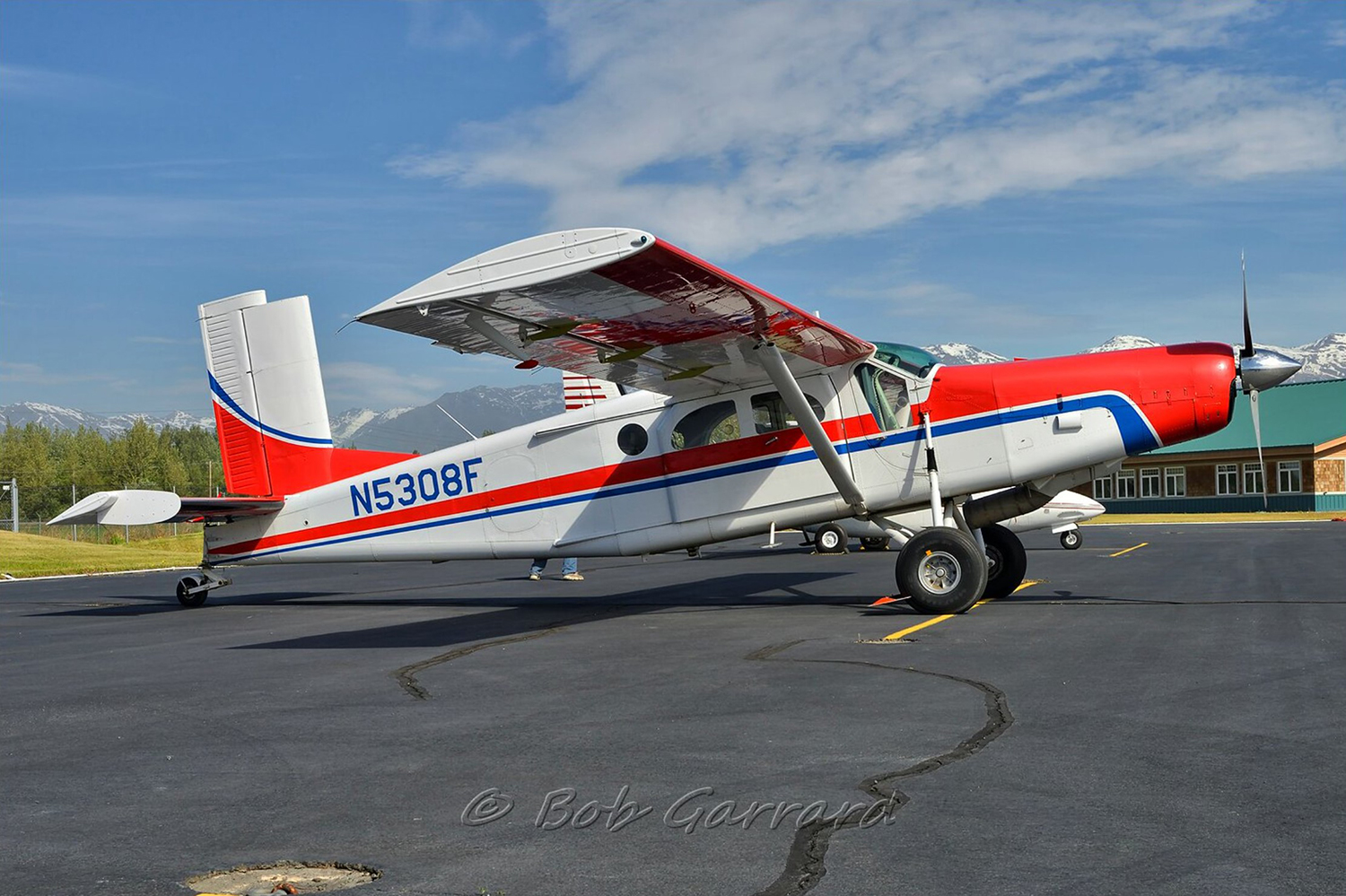
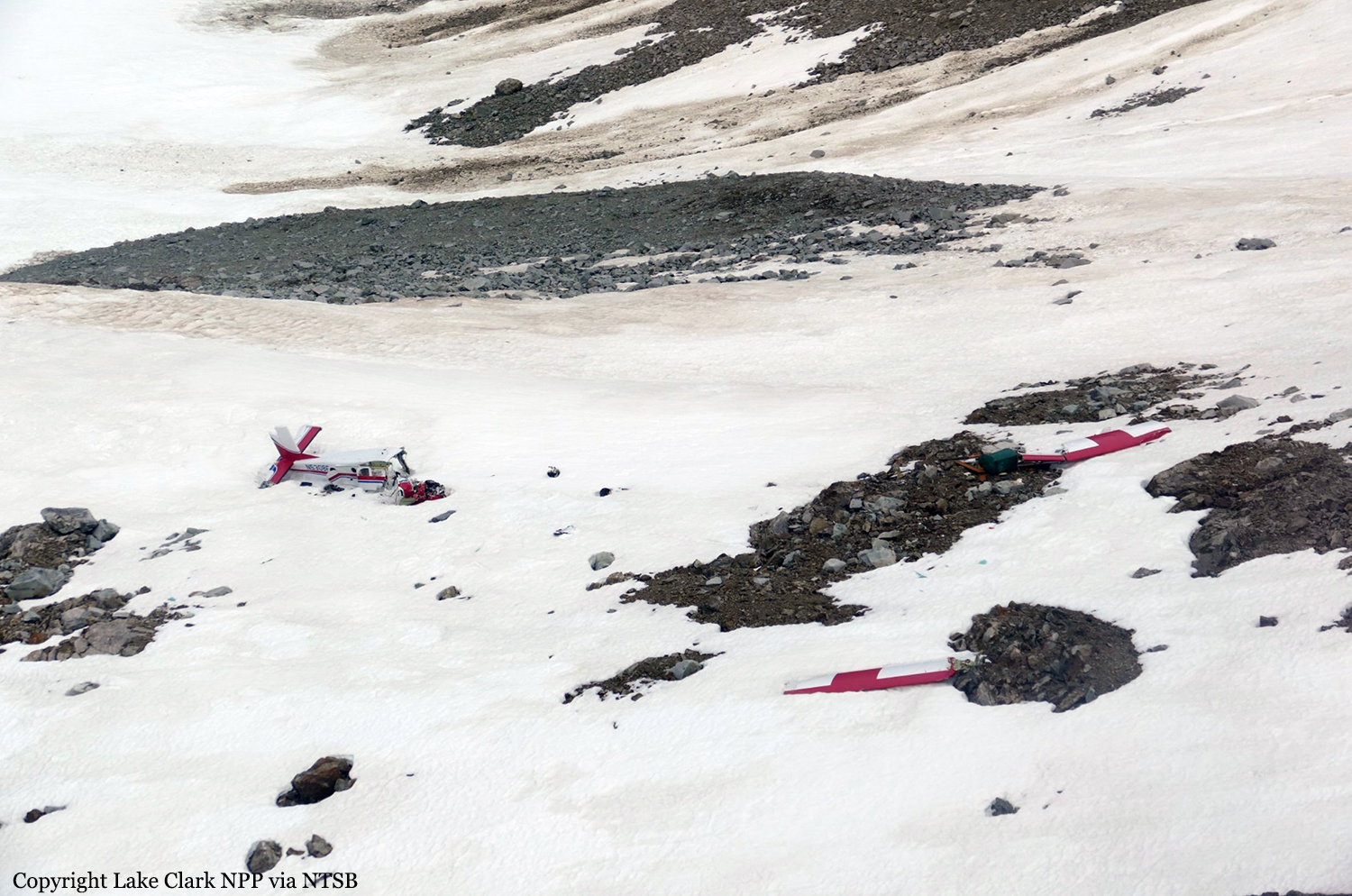
Crash of a Pilatus PC-6/C-H2 Turbo Porter near Port Alsworth: 1 killed

Date & Time: Oct 28, 2016 at 1828 LT
Operator:
Registration:
N5308F
Flight Phase:
Flight Type:
Survivors:
No
Site:
Schedule:
Anchorage – Port Alsworth
MSN:
2068
YOM:
1975
Crew on board:
1
Crew fatalities:
Pax on board:
0
Pax fatalities:
Other fatalities:
Total fatalities:
1
Captain / Total flying hours:
6400
Circumstances:
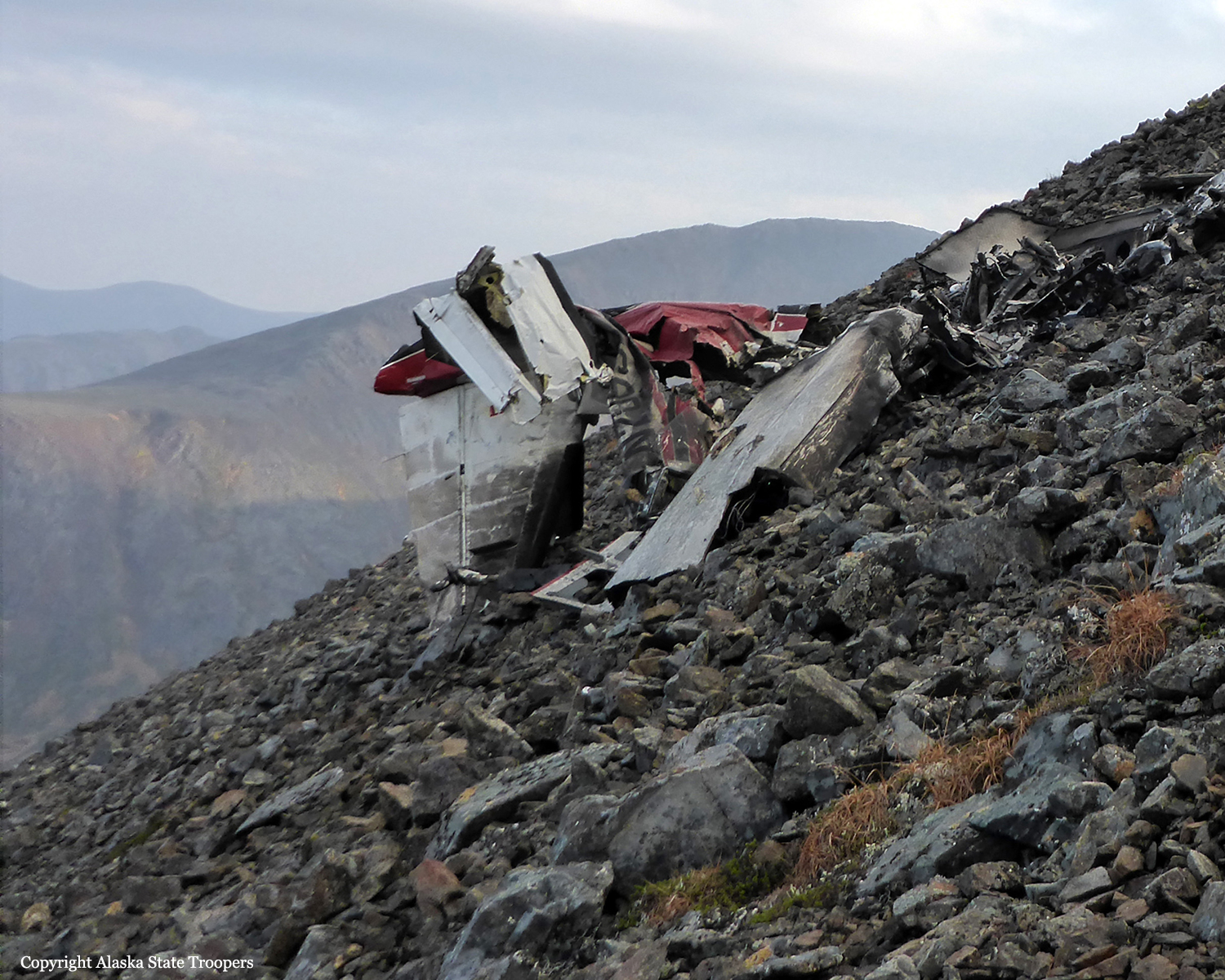
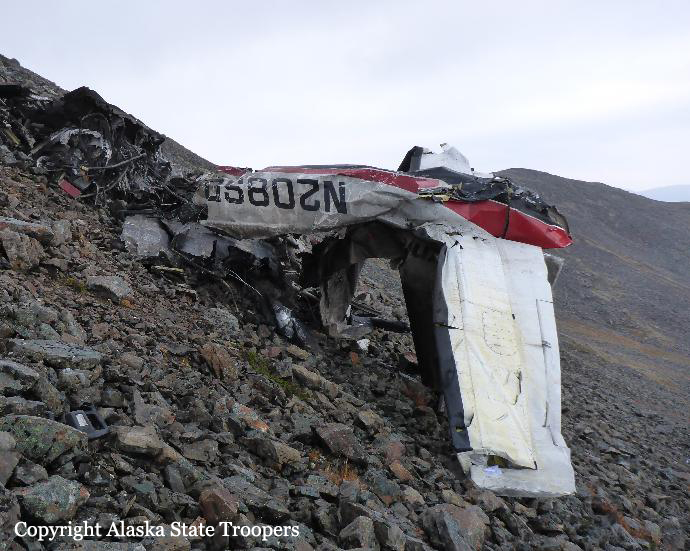
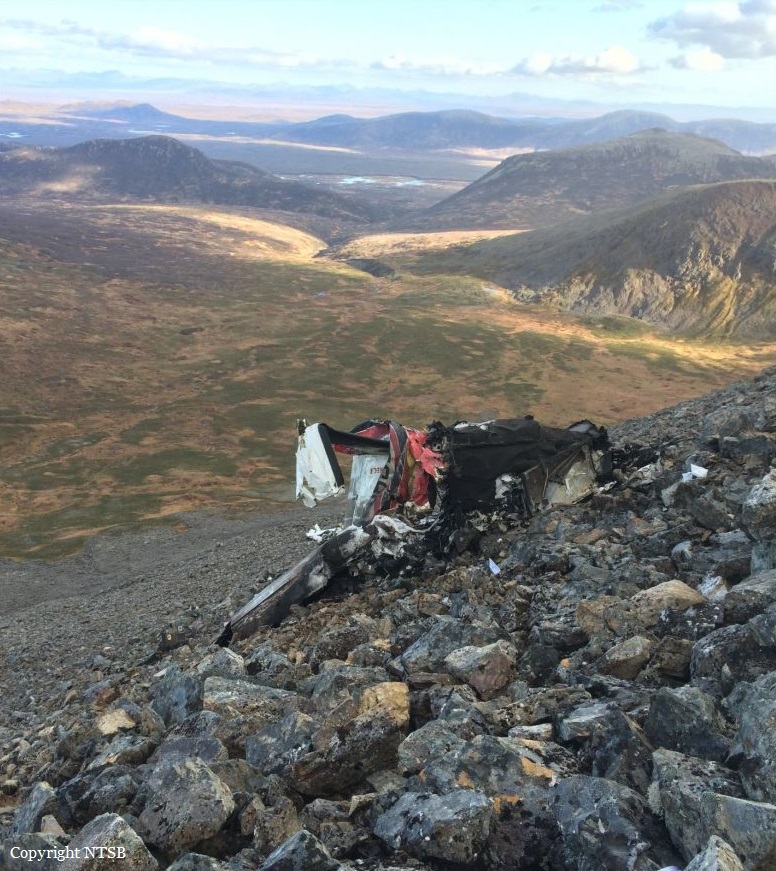
The commercial pilot was conducting a cross-country flight to a family residence in the turbinepowered, single-engine airplane. The pilot was familiar with the route, which traversed a mountain pass and remote terrain. Before departing on the flight, the pilot communicated with a family member at the residence via text messages and was aware the weather was windy but that the mountain tops were clear. There was no record of the pilot obtaining a preflight weather briefing from an official, accesscontrolled source, and the pilot indicated to a friend before departure that he had not accessed weather cameras. Weather forecast products that were available to the pilot revealed possible turbulence at low altitudes and icing at altitudes above 12,000 ft along the route of flight, and weather cameras along the planned route and near the destination would have indicated deteriorating visibility in snow showers and mountain obscuration starting about 1.5 hours before departure. The airplane departed and proceeded toward the destination; radar data correlated to the accident flight indicated that the airplane climbed from 4,600 ft to 14,700 ft before turning west over the mountains. Text messages that the pilot sent during the initial climb revealed that the mountain pass he planned to fly through was obscured, and he intended to climb over the mountains and descend through holes in the clouds as he neared the destination. Radar data also indicated that the airplane operated above 12,500 ft mean sea level (msl) for about 30 minutes, and above 14,000 msl for an additional 14 minutes before entering a gradual descent during the last approximate 20 minutes of flight. Review of weather information indicated that cloud layers over the accident area increased during the 30 minutes before the accident, and it is likely that the airplane was operating in icing conditions, although it was not certified for flight in such conditions, which may have resulted in structural or induction icing and an uncontrolled loss of altitude. The airplane wreckage came to rest on the steep face of a snow-covered mountain in a slight nose-down, level attitude. The empennage was intact, the right wing was completely separated, and the forward fuselage and cockpit were partially separated and displaced from the airframe with significant crush damage, indicative of impact with terrain during forward flight. Page 2 of 10 ANC17FA004 There was no indication that the airplane was equipped with supplemental oxygen; pilots are required to use oxygen when operating at altitudes above 12,500 ft for more than 30 minutes, and anytime at altitudes above 14,000 ft. It could not be determined if, or to what extent, the pilot may have experienced symptoms of hypoxia that would have affected his decision-making. The airplane wreckage was not recovered or examined due to hazardous terrain and environmental conditions, and the reason for the impact with terrain could not be determined; however, it is likely that deteriorating enroute weather and icing conditions contributed to the outcome of the accident.
Probable cause:
The airplane's collision with mountainous terrain while operating in an area of reduced visibility and icing conditions. Contributing to the accident was the pilot's inadequate preflight planning, which would have identified deteriorating weather conditions along the planned route of flight.
Final Report:

Crash of a Cessna 208B Grand Caravan near Togiak: 3 killed

Date & Time: Oct 2, 2016 at 1157 LT
Type of aircraft:
Operator:
Registration:
N208SD
Flight Phase:
Survivors:
No
Site:
Schedule:
Quinhagak – Togiak
MSN:
208B-0491
YOM:
1995
Flight number:
HAG3153
Location:
Crew on board:
2
Crew fatalities:
Pax on board:
1
Pax fatalities:
Other fatalities:
Total fatalities:
3
Captain / Total flying hours:
6481
Captain / Total hours on type:
781.00
Copilot / Total flying hours:
273
Copilot / Total hours on type:
84
Aircraft flight hours:
20562
Circumstances:
On October 2, 2016, about 1157 Alaska daylight time, Ravn Connect flight 3153, a turbine powered Cessna 208B Grand Caravan airplane, N208SD, collided with steep, mountainous terrain about 10 nautical miles northwest of Togiak Airport (PATG), Togiak, Alaska. The two commercial pilots and the passenger were killed, and the airplane was destroyed. The scheduled commuter flight was operated under visual flight rules by Hageland Aviation Services, Inc., Anchorage, Alaska, under the provisions of Title 14 Code of Federal Regulations Part 135. Visual meteorological conditions prevailed at PATG (which had the closest weather observing station to the accident site), but a second company flight crew (whose flight departed about 2 minutes after the accident airplane and initially followed a similar route) reported that they observed unexpected fog, changing clouds, and the potential for rain along the accident route. Company flight-following procedures were in effect. The flight departed Quinhagak Airport, Quinhagak, Alaska, about 1133 and was en route to PATG.
Probable cause:
The flight crew's decision to continue the visual flight rules flight into deteriorating visibility and their failure to perform an immediate escape maneuver after entry into instrument meteorological conditions, which resulted in controlled flight into terrain (CFIT). Contributing to the accident were:
- Hageland's allowance of routine use of the terrain inhibit switch for inhibiting the terrain awareness and warning system alerts and inadequate guidance for uninhibiting the alerts, which reduced the margin of safety, particularly in deteriorating visibility;
- Hageland's inadequate crew resource management (CRM) training;
- The Federal Aviation Administration's failure to ensure that Hageland's approved CRM training contained all the required elements of Title 14 Code of Federal Regulations 135.330;
- Hageland's CFIT avoidance ground training, which was not tailored to the company's operations and did not address current CFIT-avoidance technologies.
Final Report:

Crash of a Cessna 208B Grand Caravan in Russian Mission: 3 killed

Date & Time: Aug 31, 2016 at 1001 LT
Type of aircraft:
Operator:
Registration:
N752RV
Flight Phase:
Survivors:
No
Schedule:
Russian Mission – Marshall
MSN:
208B-5088
YOM:
2014
Flight number:
HAG3190
Crew on board:
1
Crew fatalities:
Pax on board:
2
Pax fatalities:
Other fatalities:
Total fatalities:
3
Captain / Total flying hours:
18810
Captain / Total hours on type:
12808.00
Aircraft flight hours:
3559
Circumstances:
The Cessna had departed about 3 minutes prior on a scheduled passenger flight and the Piper was en route to a remote hunting camp when the two airplanes collided at an altitude about 1,760 ft mean sea level over a remote area in day, visual meteorological conditions. The airline transport pilot and two passengers onboard the Cessna and the commercial pilot and the passenger onboard the Piper were fatally injured; both airplanes were destroyed. Post accident examination revealed signatures consistent with the Cessna's outboard left wing initially impacting the Piper's right wing forward strut while in level cruise flight. Examination revealed no mechanical malfunctions or anomalies that would have precluded normal operation of either airplane. Neither pilot was in communication with an air traffic control facility and they were not required to be. A performance and visibility study indicated that each airplane would have remained a relatively small, slow-moving object in the other pilot's window (their fuselages spanning less than 0.5° of the field of view, equivalent to the diameter of a penny viewed from about 7 ft away) until about 10 seconds before the collision, at which time it would have appeared to grow in size suddenly (the "blossom" effect). From about 2 minutes before the collision, neither airplane would have been obscured from the other airplane pilot's (nominal) field of view by cockpit structure, although the Cessna would have appeared close to the bottom of the Piper's right wing and near the forward edge of its forward wing strut. The Cessna was Automatic Dependent Surveillance-Broadcast (ADS-B) Out equipped; the Piper was not ADS-B equipped, and neither airplane was equipped with any cockpit display of traffic information (CDTI). CDTI data would have presented visual information regarding the potential conflict to both pilots beginning about 2 minutes 39 seconds and auditory information beginning about 39 seconds before the collision, providing adequate time for the pilots to react. The see-and-avoid concept requires a pilot to look through the cockpit windows, identify other aircraft, decide if any aircraft are collision threats, and, if necessary, take the appropriate action to avert a collision. There are inherent limitations of this concept, including limitations of the human visual and information processing systems, pilot tasks that compete with the requirement to scan for traffic, the limited field of view from the cockpit, and environmental factors that could diminish the visibility of other aircraft. Given the remote area in which the airplanes were operating, it is likely that the pilots had relaxed their vigilance in looking for traffic. The circumstances of this accident underscore the difficultly in seeing airborne traffic by pilots; the foundation of the "see and avoid" concept in VMC, even when the cockpit visibility offers opportunities to do so, and particularly when the pilots have no warning of traffic in the vicinity. Due to the level of trauma sustained to the Cessna pilot, the autopsy was inconclusive for the presence of natural disease. It was undetermined if natural disease could have presented a significant hazard to flight safety.
Probable cause:
The failure of both pilots to see and avoid each other while in level cruise flight, which resulted in a midair collision.
Final Report:

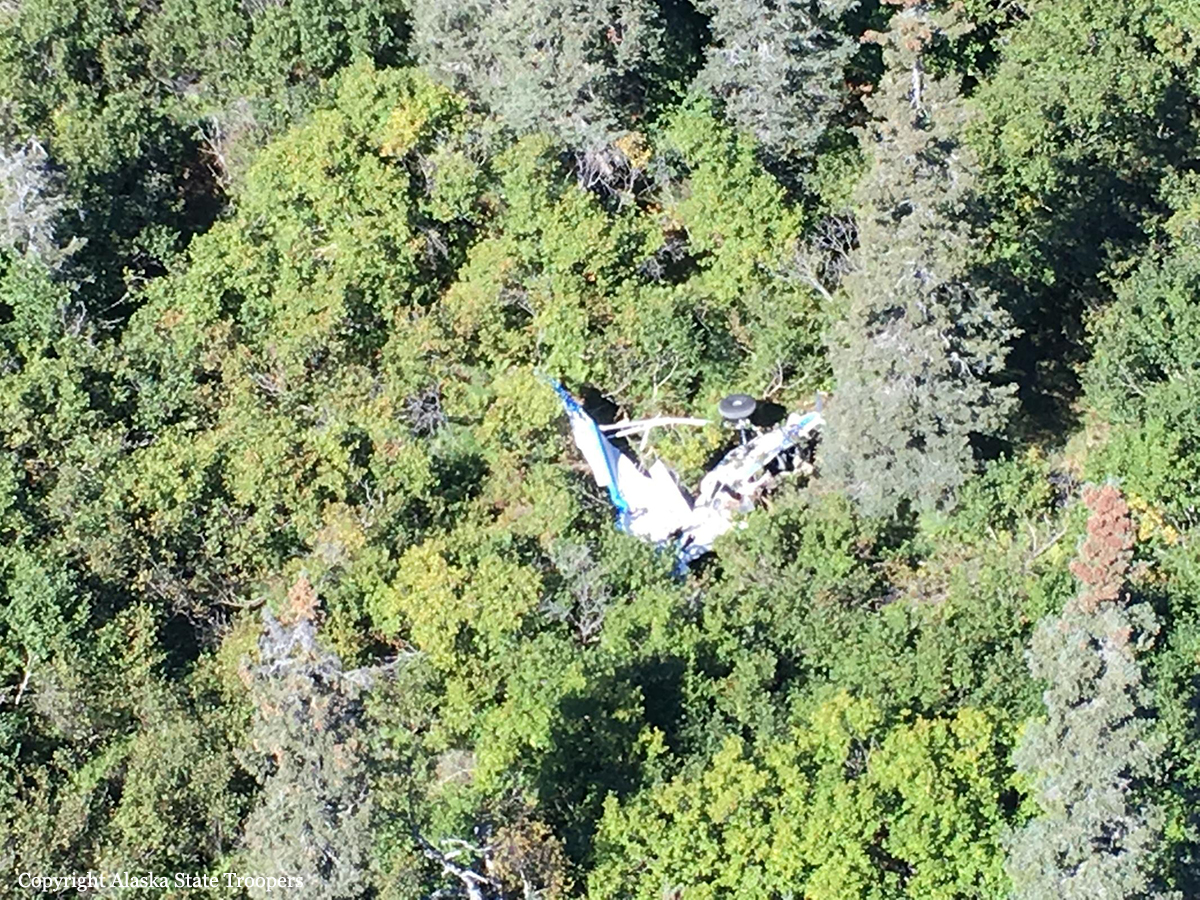
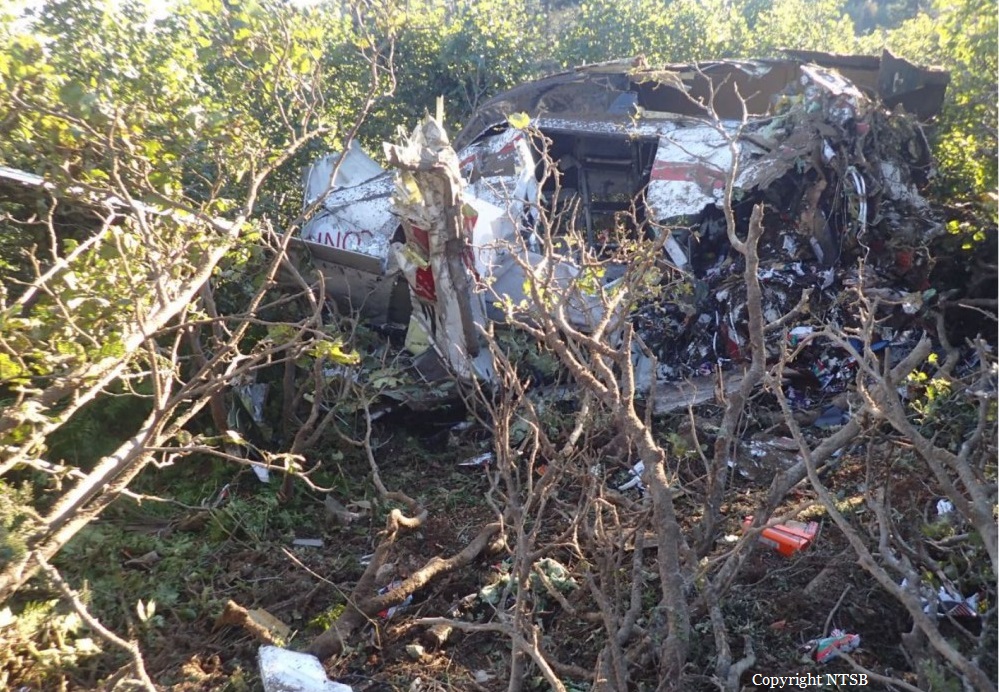
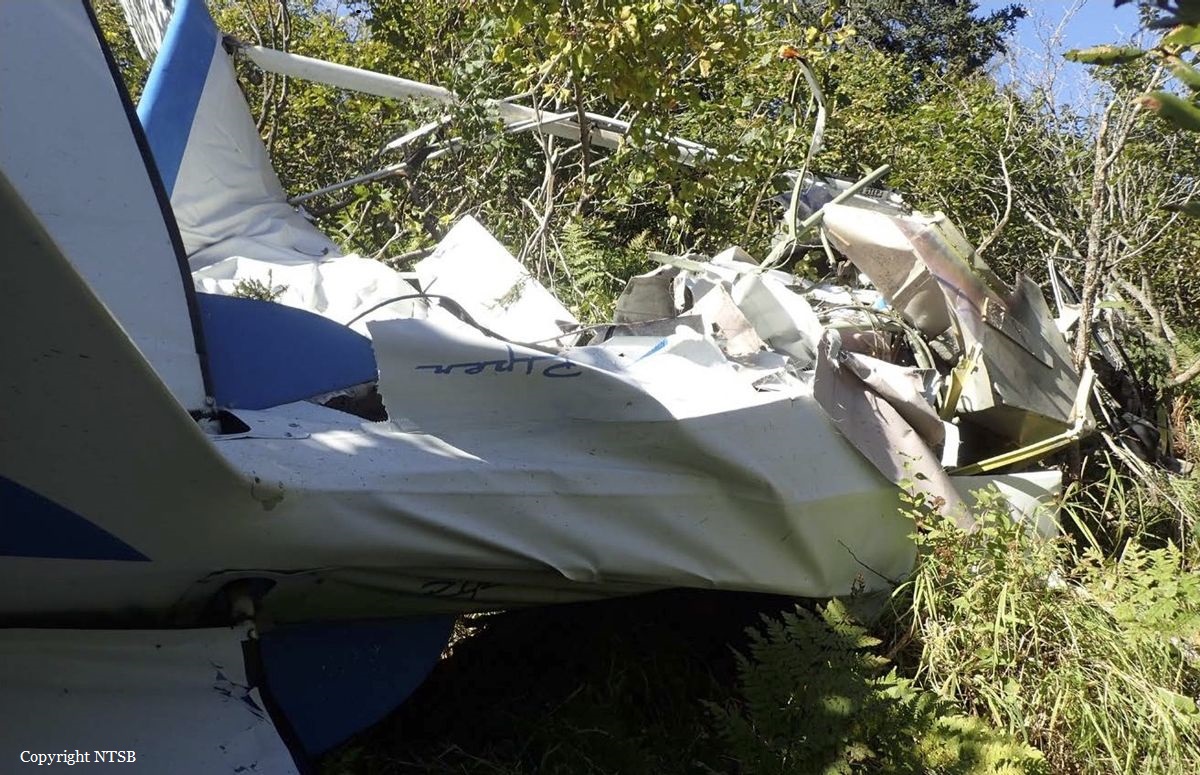
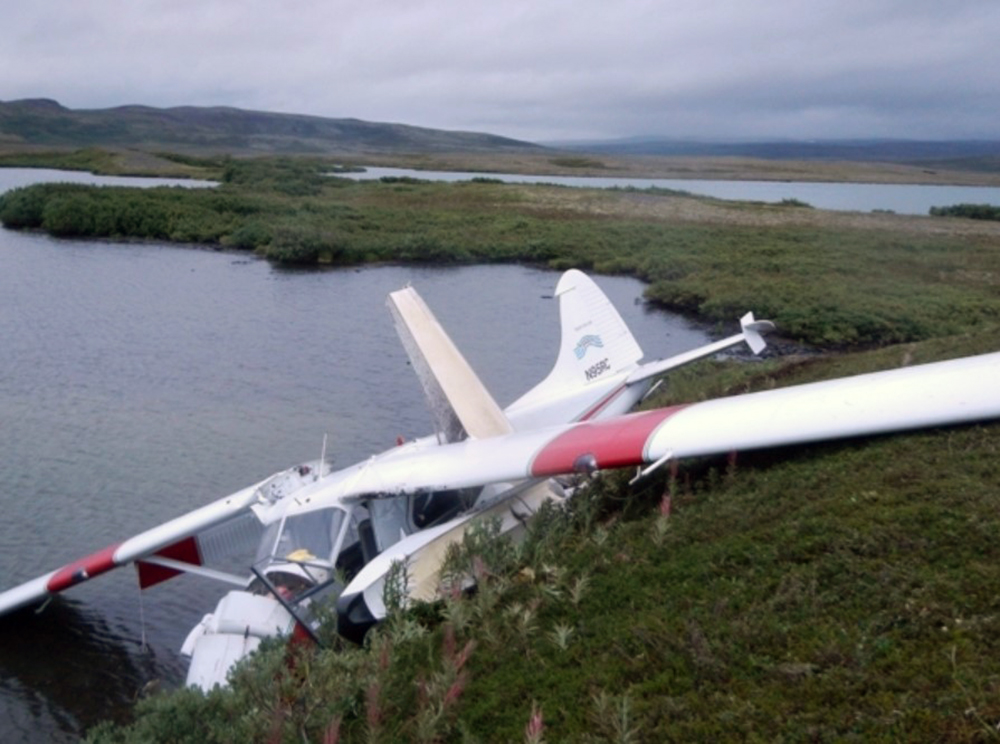
Crash of a De Havilland DHC-2 Beaver near Iliamna

Date & Time: Aug 8, 2016 at 1651 LT
Type of aircraft:
Operator:
Registration:
N95RC
Flight Phase:
Survivors:
Yes
Schedule:
Crosswind Lake - King Salmon
MSN:
970
YOM:
1956
Location:
Crew on board:
1
Crew fatalities:
Pax on board:
6
Pax fatalities:
Other fatalities:
Total fatalities:
0
Captain / Total flying hours:
9780
Captain / Total hours on type:
535.00
Aircraft flight hours:
7632
Circumstances:
The airline transport pilot of the float-equipped airplane was attempting a takeoff with the load of passengers that he had flown to the lake earlier in the day. The pilot's calculated takeoff distances for the water run and over a 50-ft obstacle were 1,050 ft and 2,210 ft, respectively. The pilot did not add a safety margin to his takeoff distance calculations. The approximate shore-to-shore distance of the takeoff path was 1,800 ft. During taxi, the pilot retracted the wing flaps, where they remained for the takeoff. GPS data showed that the airplane attained a speed of about 49 knots before impacting terrain just beyond the shoreline. The airplane's stall speed with flaps retracted was about 52 knots. Postaccident examination revealed that the left wing flap was in the fully retracted position; the right wing flap assembly was damaged. The airplane flight manual takeoff checklist stated that flaps were to be selected to the "TAKE-OFF" position before takeoff. Additionally, the takeoff performance data contained in the flight manual was dependent upon the use of "TAKE-OFF" flaps and did not account for no-flaps takeoffs. Even if the pilot had used the correct flap setting for takeoff, the calculated takeoff distances were near the available takeoff distance, and it is likely that the airplane would still not have been able to avoid a collision with terrain. The pilot stated that there was no mechanical malfunction/failure with the airplane, and he should have "done the right thing," which was to conduct two flights, each with a half load of passengers.
Probable cause:
The pilot's decision to perform the takeoff despite calculations showing that the distance available was inadequate, which resulted in impact with terrain.
Final Report:

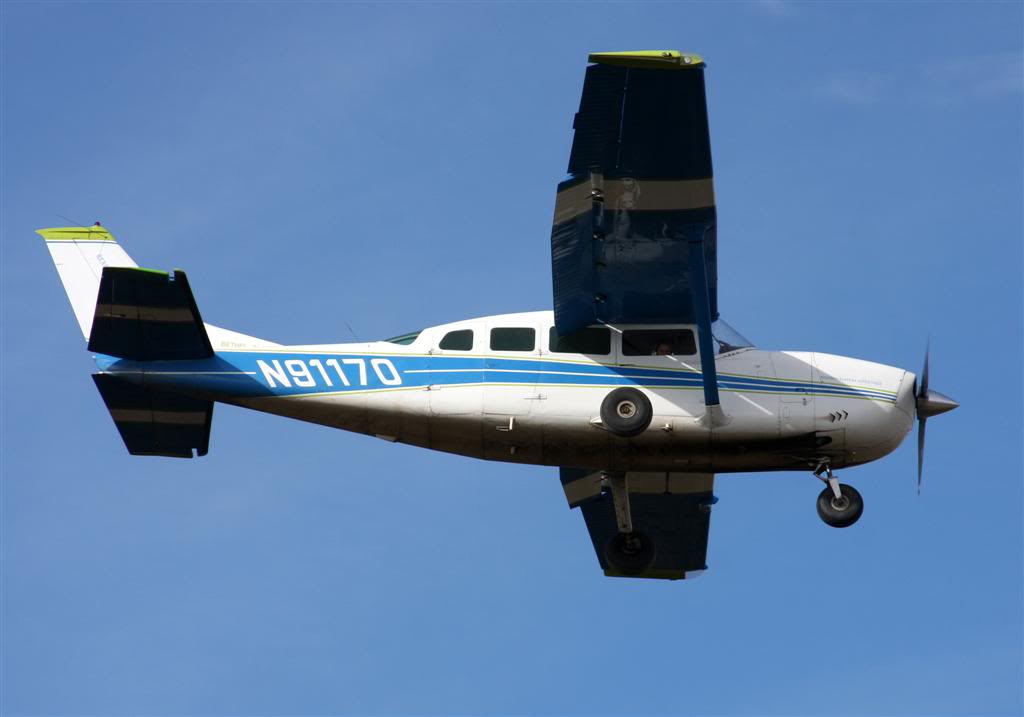
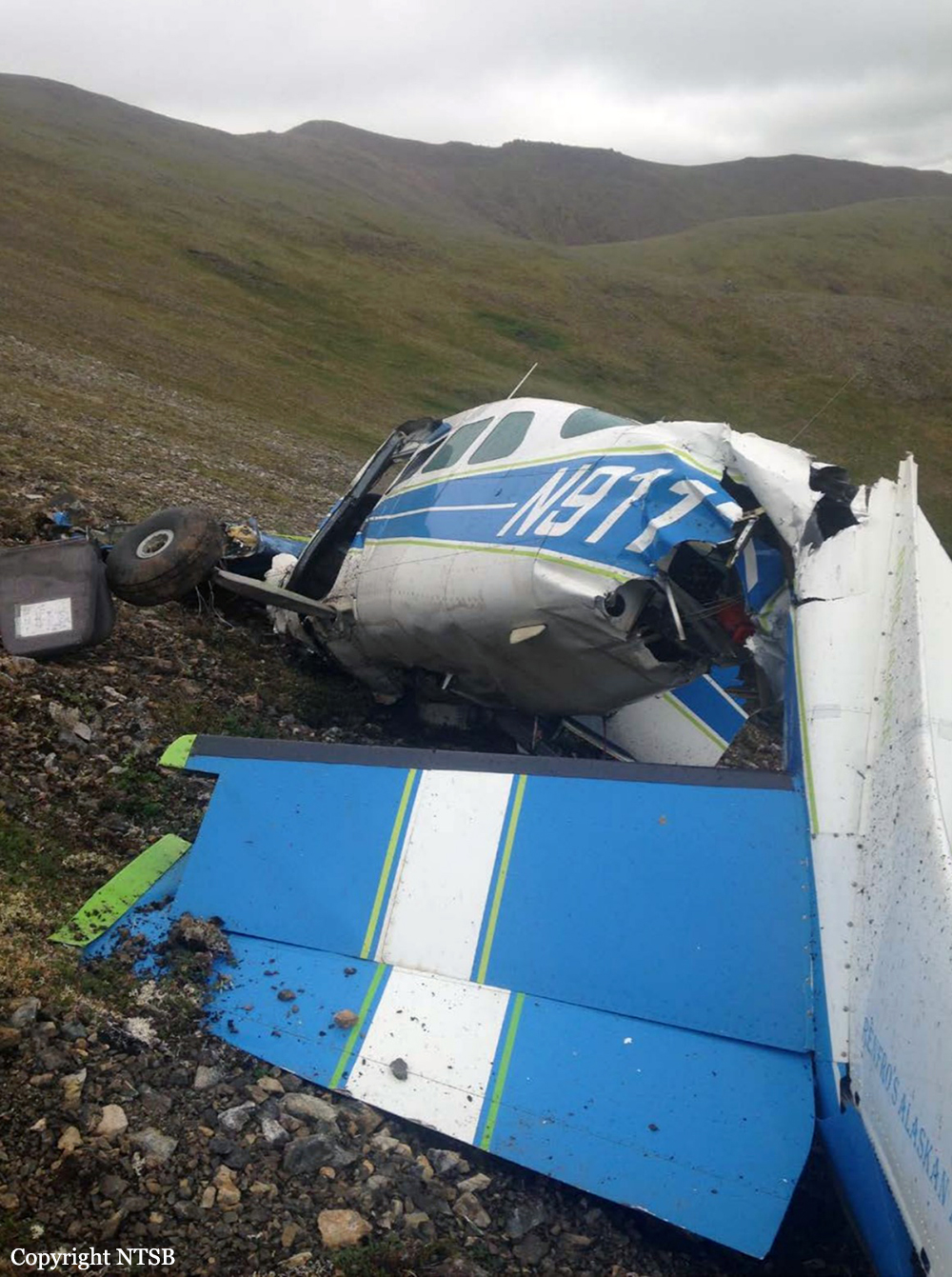
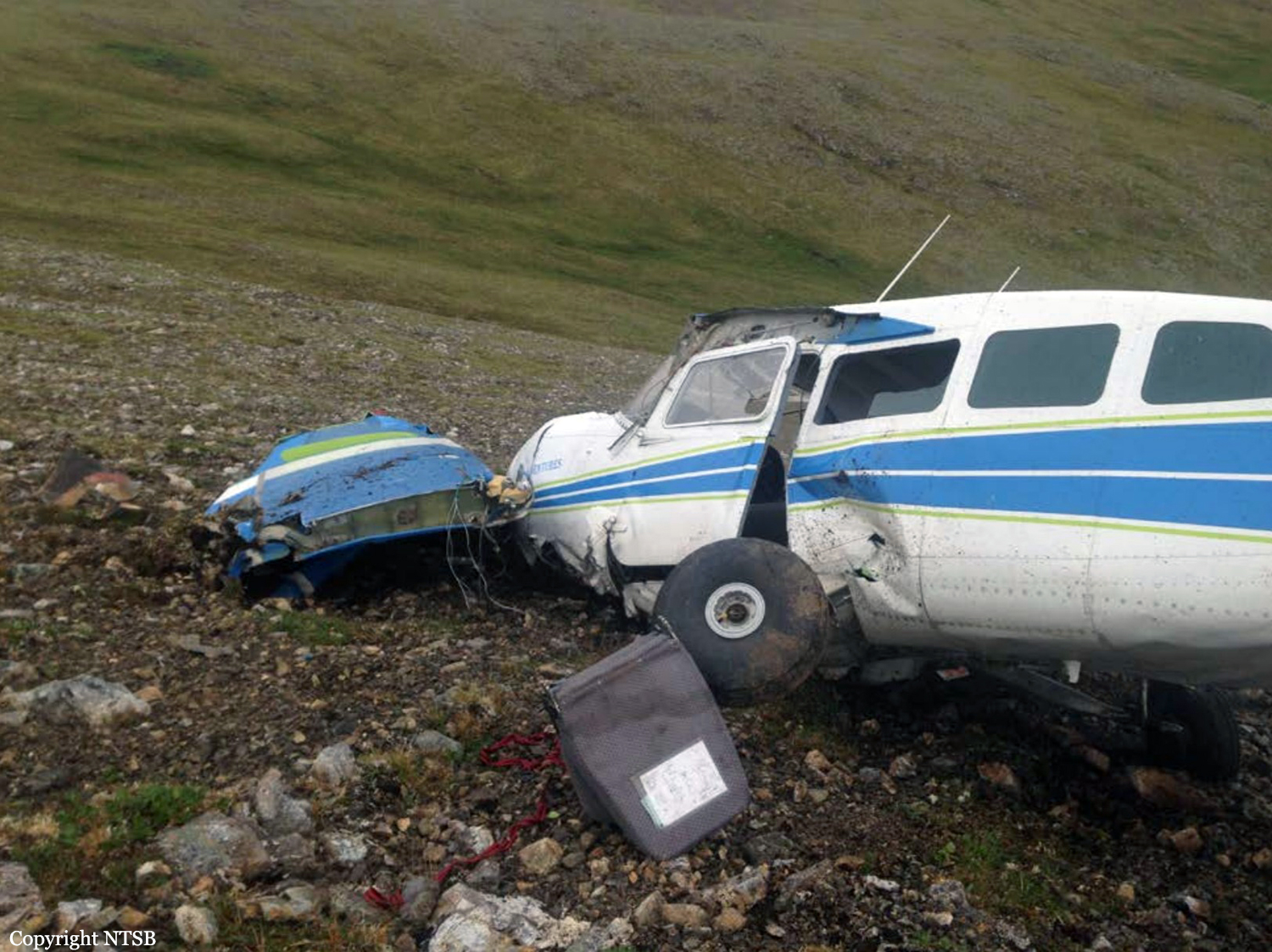
Crash of a Cessna 207 Stationair 7 near Goodnews Bay

Date & Time: Jun 17, 2016 at 1200 LT
Operator:
Registration:
N91170
Flight Phase:
Flight Type:
Survivors:
Yes
Site:
Schedule:
Quinhagak - Goodnews Bay
MSN:
207-00101
YOM:
1969
Crew on board:
1
Crew fatalities:
Pax on board:
0
Pax fatalities:
Other fatalities:
Total fatalities:
0
Captain / Total flying hours:
1150
Captain / Total hours on type:
78.00
Aircraft flight hours:
15089
Circumstances:
During cruise flight through an area of mountainous terrain, the commercial pilot became geographically disoriented and selected the incorrect route through the mountains. Upon realizing it was the incorrect route, he initiated a steep climb while executing a 180° turn. During the steep climbing turn, the airplane inadvertently entered instrument meteorological conditions, and the airplane subsequently impacted an area of rocky, rising terrain. The pilot reported there were no mechanical malfunctions or anomalies that would have precluded normal operation of the airplane.
Probable cause:
The pilot's failure to select the correct route through the mountains as a result of geographic disorientation, and his subsequent visual flight into instrument meteorological conditions, which resulted in collision with terrain.
Final Report:

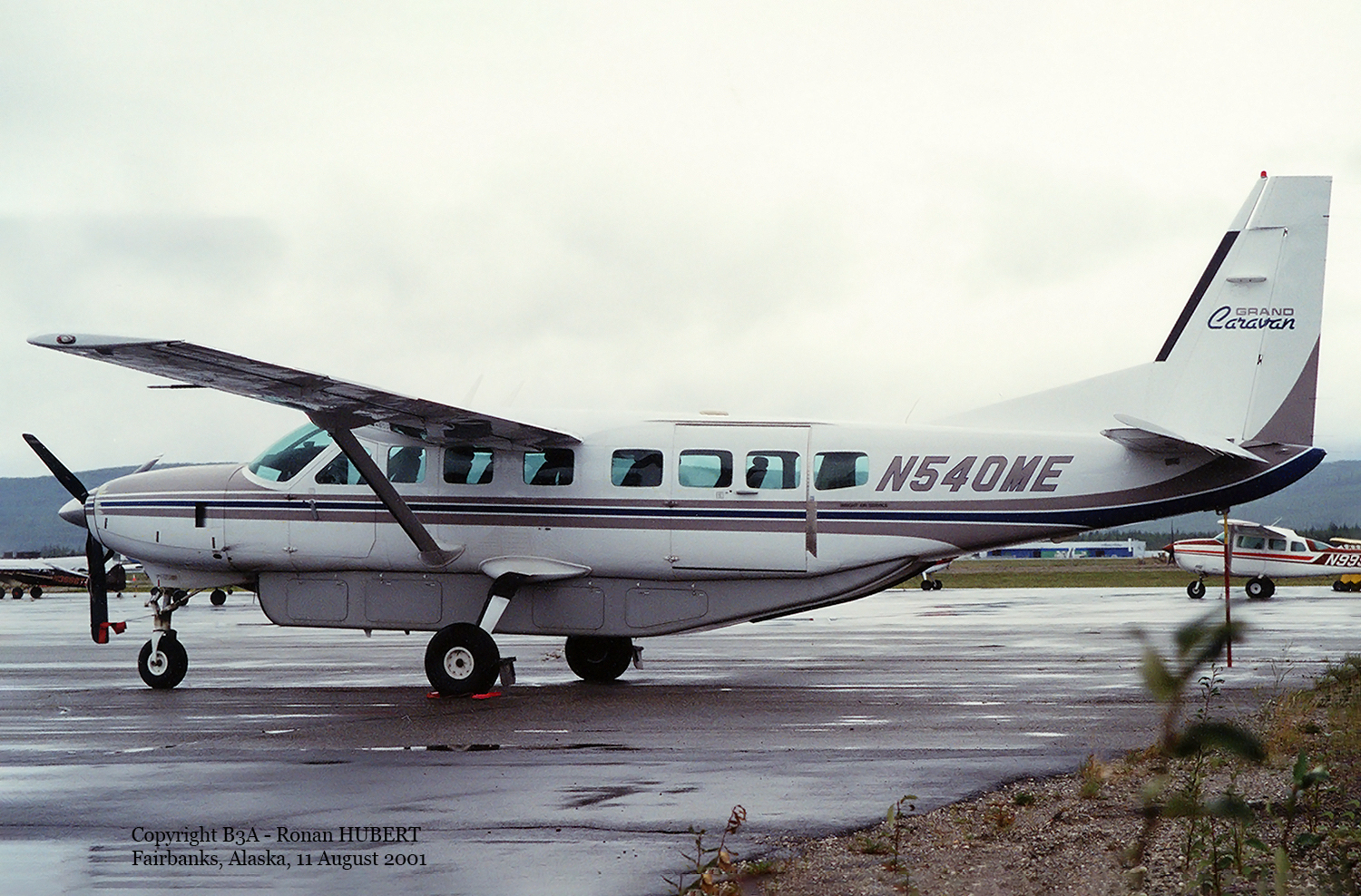
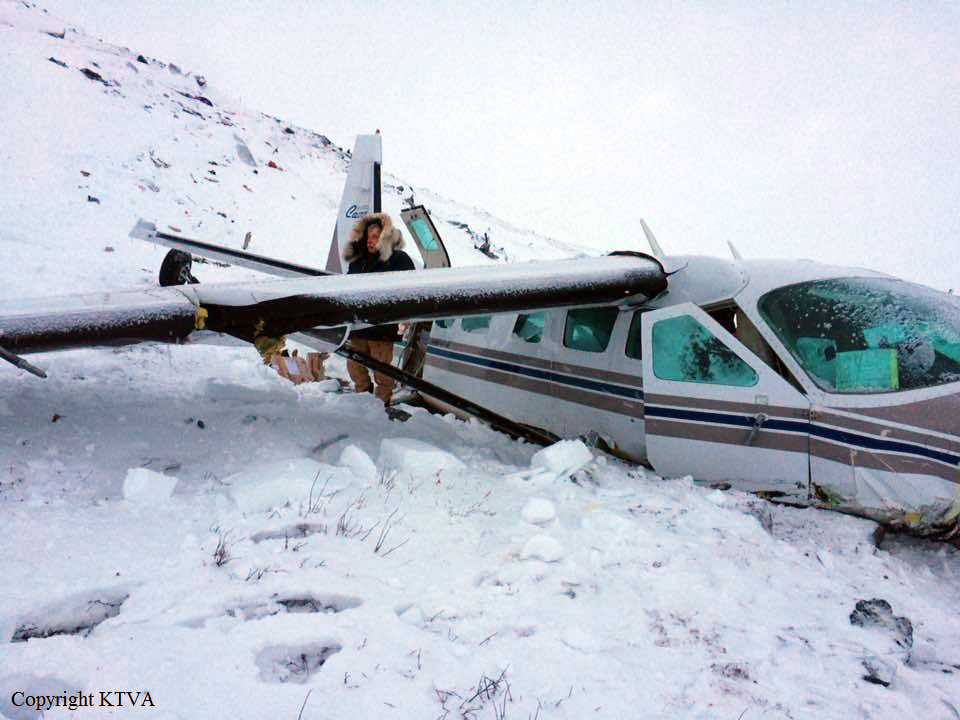
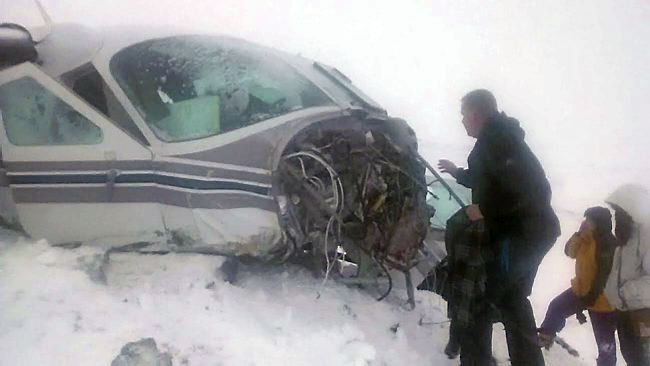
Crash of a Cessna 208B Grand Caravan near Anaktuvuk Pass

Date & Time: Jan 2, 2016 at 1205 LT
Type of aircraft:
Operator:
Registration:
N540ME
Flight Phase:
Survivors:
Yes
Site:
Schedule:
Fairbanks - Anaktuvuk Pass
MSN:
208B-0540
YOM:
1996
Crew on board:
1
Crew fatalities:
Pax on board:
7
Pax fatalities:
Other fatalities:
Total fatalities:
0
Captain / Total flying hours:
8854
Captain / Total hours on type:
4142.00
Aircraft flight hours:
19555
Circumstances:
The airline transport pilot was conducting a scheduled passenger flight in an area of remote, snow-covered, mountainous terrain with seven passengers on board. The pilot reported that, after receiving a weather briefing, he chose to conduct the flight under visual flight rules (VFR). While en route about 10,000 ft mean sea level (msl), the visibility began "getting fuzzy." The pilot then descended the airplane to 2,500 ft msl (500 ft above ground level) to fly along a river. When the airplane was about 10 miles southwest of the airport, he climbed the airplane to about 3,000 ft msl in order to conduct a straight-in approach to the runway. He added that the visibility was again a little "fuzzy" due to snow and clouds, and that he never saw the airport. The pilot also noted that the flat light conditions limited his ability to determine his distance from the surrounding mountainous, snow-covered terrain. Shortly after climbing to 3,000 ft msl, the airplane collided with the rising terrain about 6 miles southwest of the airport. Another pilot, who had just departed from the airport, confirmed that flat light and low-visibility conditions existed in the area at the time of the accident. Further, camera images of the weather conditions recorded at the airport showed that, although conditions were marginal VFR at the surface at the time of the accident, there was mountain obscuration and reduced visibility due to light snow and clouds along the accident flight path and that the worst conditions were located along and near the higher terrain. The pilot reported no preimpact mechanical malfunctions or failures with the airplane that would have precluded normal operation. It is likely that that the pilot encountered flat light and low-visibility conditions as he neared the airport at 3,000 ft msl while operating under VFR and that he did not see the rising, snow-covered mountainous terrain and subsequently failed to maintain clearance from it.
Probable cause:
The pilot's continued flight into deteriorating, flat light weather conditions, which resulted in impact with mountainous, snow-covered terrain.
Final Report:

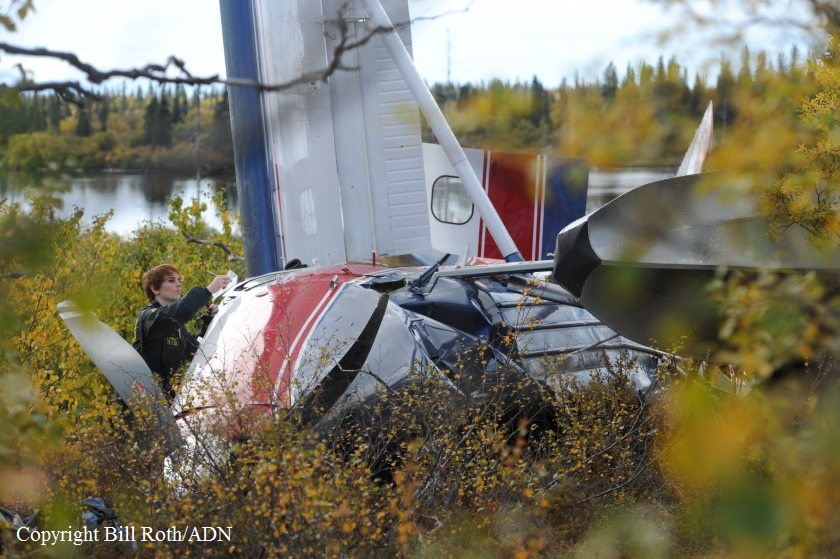
Crash of a De Havilland DHC-3T Turbo Otter in Iliamna: 3 killed

Date & Time: Sep 15, 2015 at 0606 LT
Type of aircraft:
Operator:
Registration:
N928RK
Flight Phase:
Survivors:
Yes
Schedule:
Iliamna - Swishak River
MSN:
61
YOM:
1954
Location:
Crew on board:
1
Crew fatalities:
Pax on board:
9
Pax fatalities:
Other fatalities:
Total fatalities:
3
Captain / Total flying hours:
11300
Captain / Total hours on type:
450.00
Aircraft flight hours:
15436
Circumstances:
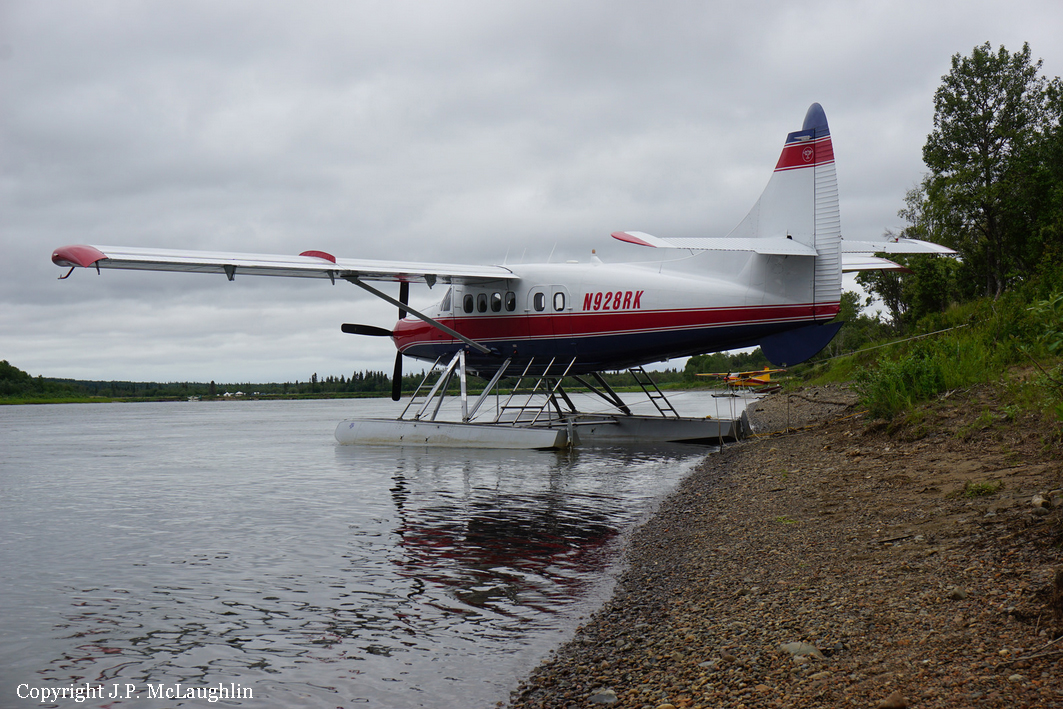
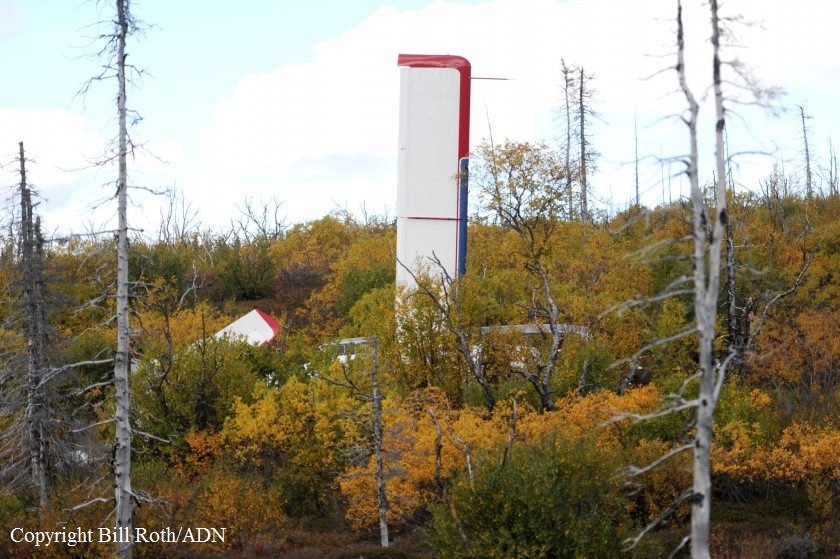
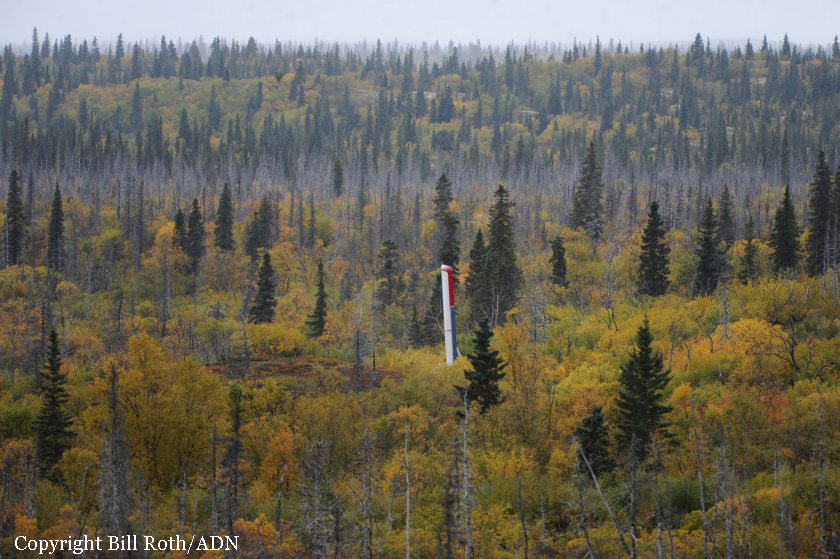
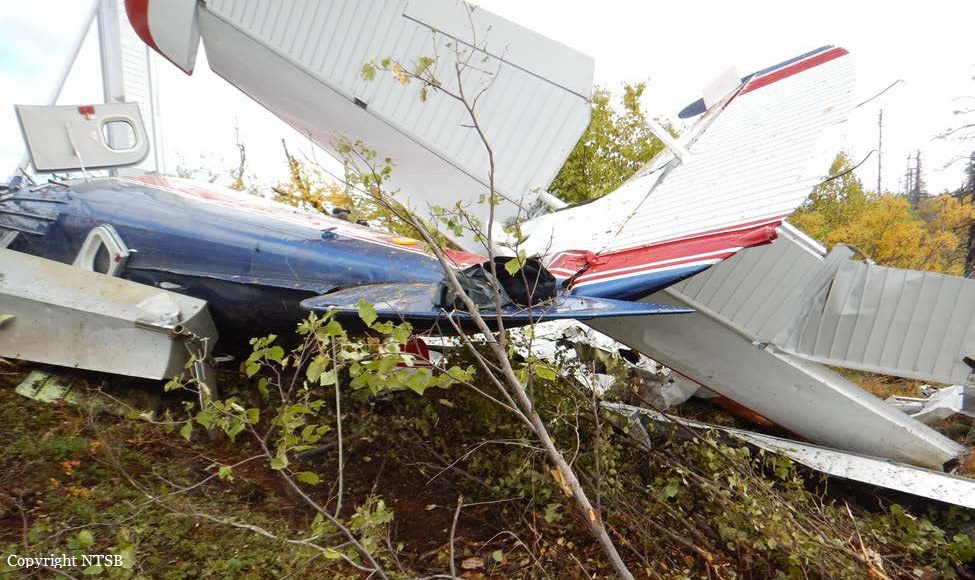
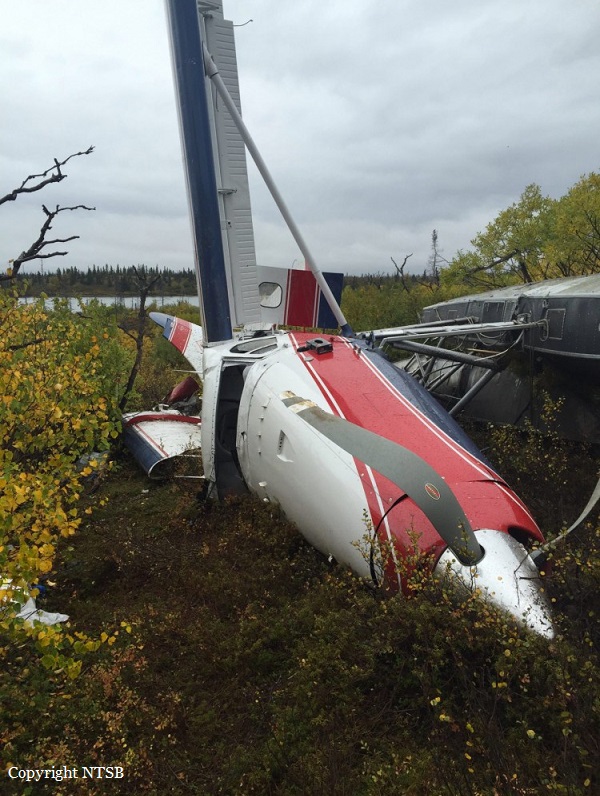
On September 15, 2015, about 0606 Alaska daylight time, a single-engine, turbine-powered, float-equipped de Havilland DHC-3T (Otter) airplane, N928RK, impacted tundra-covered terrain just after takeoff from East Wind Lake, about 1 mile east of the Iliamna Airport, Iliamna, Alaska. Of the 10 people on board, three passengers died at the scene, the airline transport pilot and four passengers sustained serious injuries, and two passengers sustained minor injuries. The airplane sustained substantial damage. The airplane was registered to and operated by Rainbow King Lodge, Inc., Lemoore, California, as a visual flight rules other work use flight under the provisions of 14 Code of Federal Regulations (CFR) Part 91. Dark night, visual meteorological conditions existed at the departure point at the time of the accident, and no flight plan was filed for the flight. At the time of the accident, the airplane was en route to a remote fishing site on the Swishak River, about 75 miles northwest of Kodiak, Alaska.
Probable cause:
The pilot's decision to depart in dark night, visual meteorological conditions over water, which resulted in his subsequent spatial disorientation and loss of airplane control. Contributing to the accident was the pilot's failure to determine the airplane's actual preflight weight and balance and center of gravity (CG), which led to the airplane being loaded and operated outside of the weight and CG limits and to a subsequent aerodynamic stall.
Final Report:

Crash of a Cessna 207A Skywagon near Point Howard: 1 killed

Date & Time: Jul 17, 2015 at 1318 LT
Operator:
Registration:
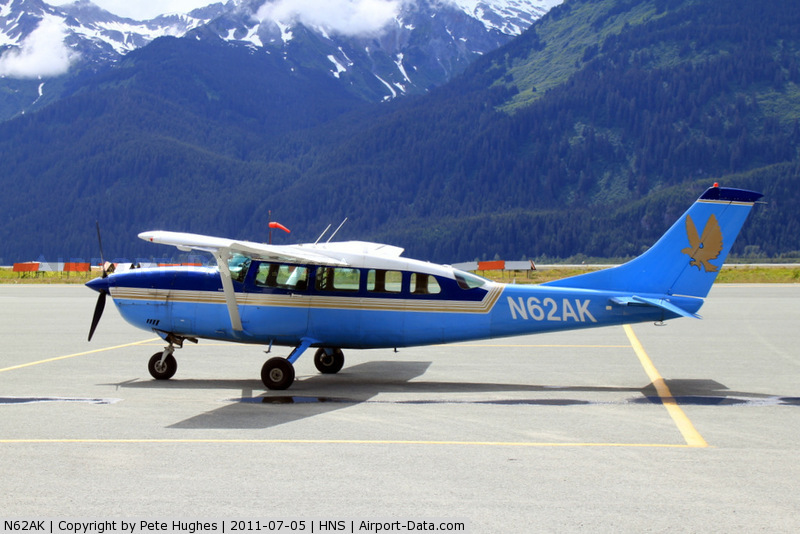
N62AK
Flight Phase:
Survivors:
Yes
Site:
Schedule:
Juneau – Hoonah
MSN:
207-0780
YOM:
1984
Flight number:
K5202
Crew on board:
1
Crew fatalities:
Pax on board:
4
Pax fatalities:
Other fatalities:
Total fatalities:
1
Captain / Total flying hours:
845
Captain / Total hours on type:
48.00
Aircraft flight hours:
26613
Circumstances:
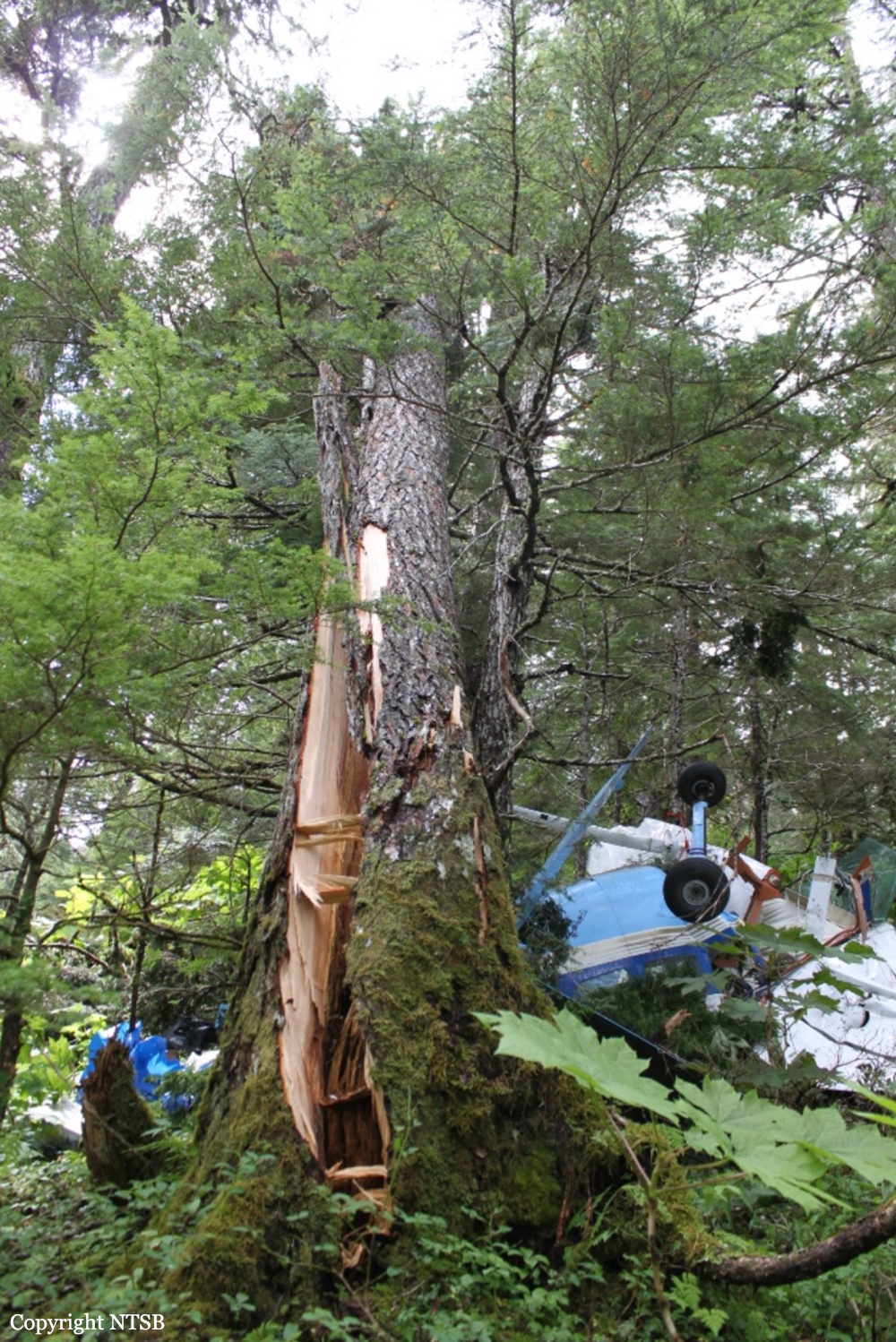
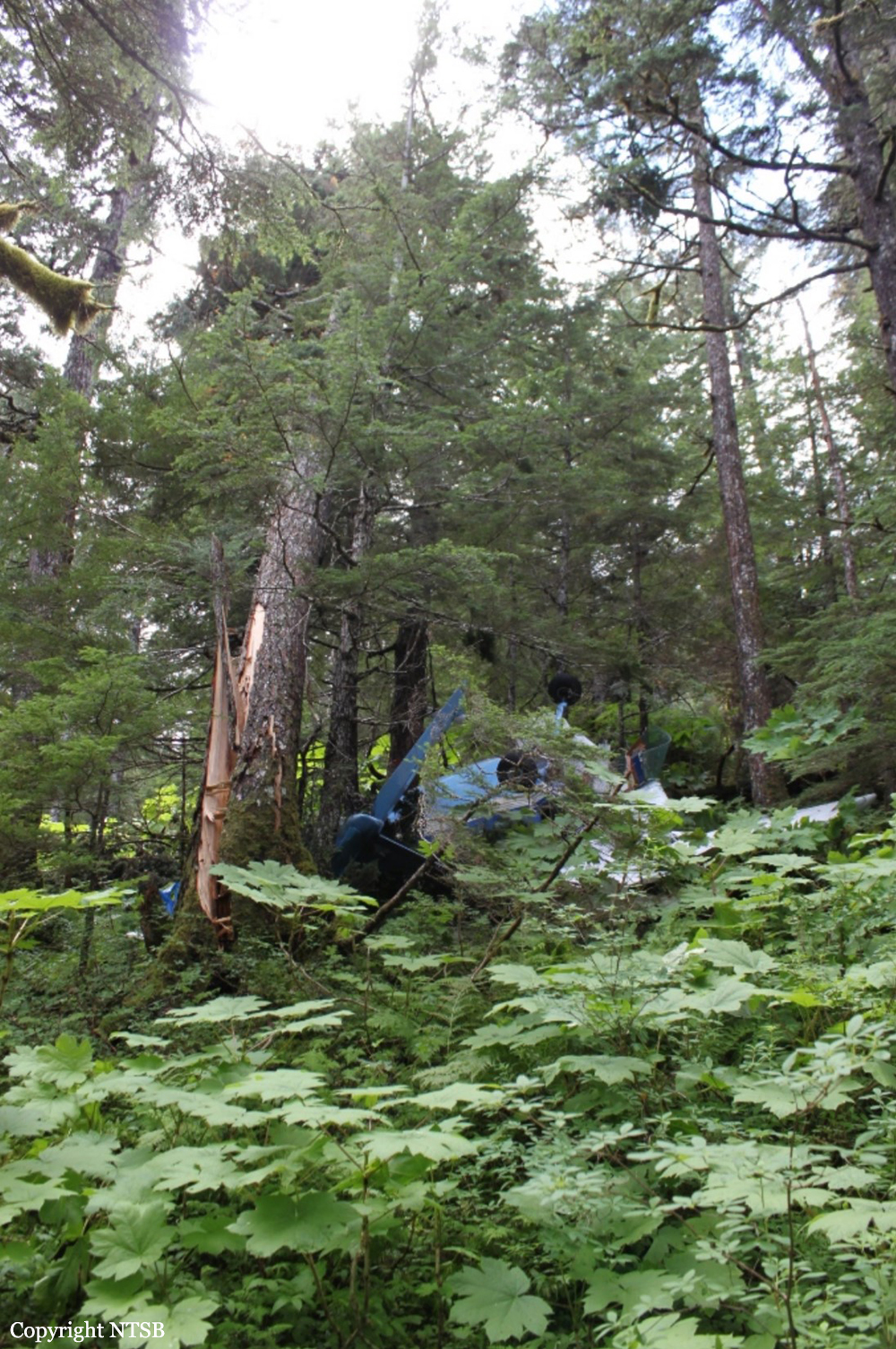
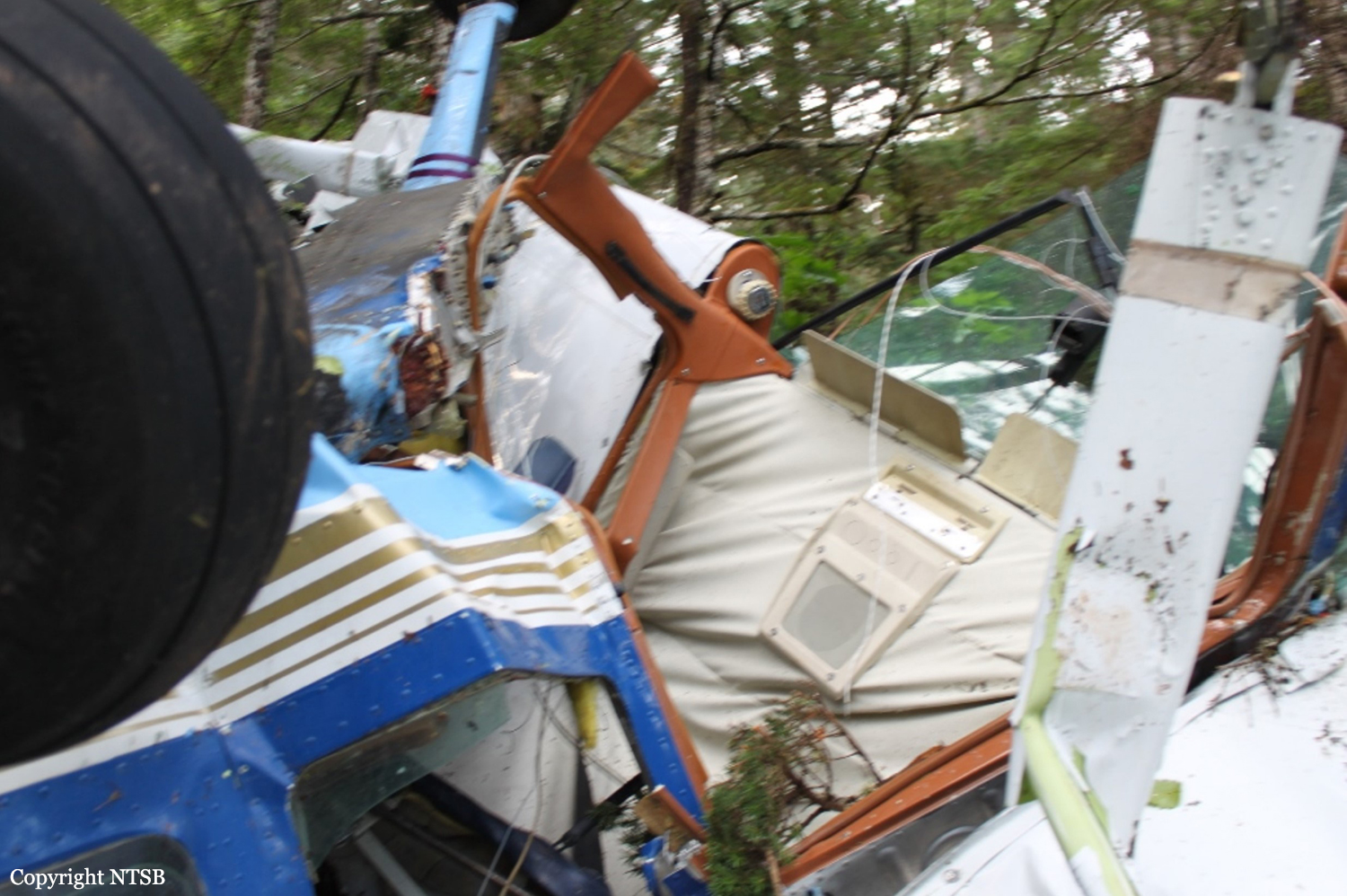
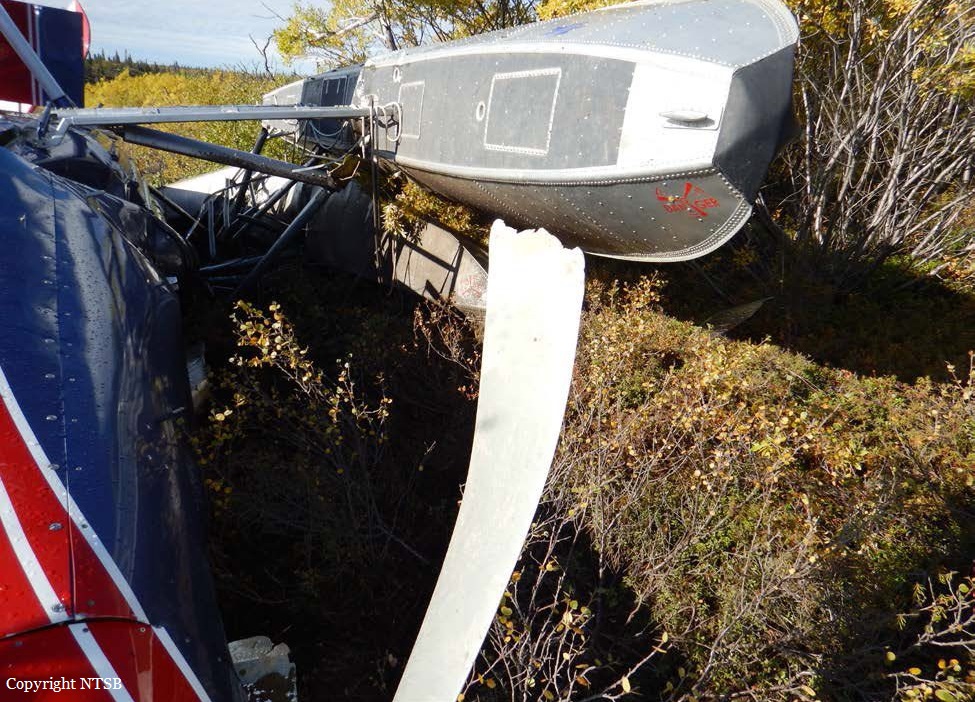
The company flight coordinator on duty when the pilot got her "duty-on" briefing reported that, during the "duty-on" briefing, he informed the commercial pilot that most flights to the intended destination had been cancelled in the morning due to poor weather conditions and that one pilot had turned around due to weather. No record was found indicating that the pilot used the company computer to review weather information before the flight nor that she had received or retrieved any weather information before the flight. If she had obtained weather information, she would have seen that the weather was marginal visual flight rules to instrument flight rules conditions, which might have affected her decision to initiate the flight. The pilot subsequently departed for the scheduled commuter flight with four passengers on board; the flight was expected to be 20 minutes long. Review of automatic dependent surveillance-broadcast data transmitted by the airplane showed that the airplane's flight track was farther north than the typical track for the destination and that the airplane did not turn south toward the destination after crossing the channel. Data from an on board multi-function display showed that, as the airplane approached mountainous terrain on the west side of the channel, the airplane made a series of erratic pitch-and-roll maneuvers before it impacted trees and terrain. Post-accident examination of the airframe and engine revealed no mechanical malfunctions or anomalies that would have precluded normal operation. One of the passengers reported that, after takeoff, the turbulence was "heavy," and there were layers of fog and clouds and some rain. Based on the weather reports, the passenger statement regarding the weather, and the flight's erratic movement just before impact, it is likely that the flight encountered instrument meteorological conditions as it approached the mountainous terrain and that the pilot then lost situational awareness and flew into trees and terrain. According to the company's General Operations Manual (GOM), operational control was delegated to the flight coordinator for the accident flight, and the flight coordinator and pilot-in-command (PIC) were jointly responsible for preflight planning, flight delay, and flight release, which included completing the flight risk assessment (FRA) process. This process required the PIC to fill out an FRA form and provide it to the flight coordinator before flight. However, the pilot did not fill out the form. The GOM stated that one of the roles of the flight dispatcher (also referred to as "flight coordinator") was to assist the pilot in flight preparation by gathering and disseminating pertinent information regarding weather and any information deemed necessary for the safety of flight. It also stated that the dispatcher was to assist the PIC as necessary to ensure that all items required for flight preparation were accomplished before each flight. However, the flight coordinator did not discuss all the risks and weather conditions associated with the flight with the pilot, which was contrary to the GOM. When the flight coordinator who was on duty at the time the airplane was ready to depart did not receive a completed FRA, he did not stop the flight from departing, which was contrary to company policy. By not completing an FRA, it is likely the total risks associated with the accident flight were not adequately assessed. Neither the pilot nor the flight coordinator should have allowed the flight to be released without having completed an FRA form, which led to a loss of operational control and the failure to do so likely contributed to the accident. Interviews with company personnel and a review of a sampling of FRA forms revealed that company personnel, including the flight coordinators, lacked a fundamental knowledge of operational control theory and practice and operational practices (or lack thereof), which led to a loss of operational control for the accident flight. The company provided no formal flight coordinator training nor was a formal training program required. All of the company's qualified flight coordinators were delegated operational control and, thus, were required by 14 Code of Federal Regulations Section 119.69 to be qualified through training, experience, and expertise and to fully understand aviation safety standards and safe operating practice with respect to the company's operation and its GOM. However, the company had no formal method of documenting these requirements; therefore, it lacked a method of determining its flight coordinators' qualifications. In post-accident interviews, the previous Federal Aviation Administration (FAA) principal operations inspector (POI), who became the frontline manager over the certificate, stated that the company used the minimum regulatory standard when it came to ceiling and visibility requirements and that the company did not have any company minimums in place. He further stated that a cloud ceiling of 500 ft and 2 miles visibility would not allow for power-off glide to land even though the company was required to meet this regulation. When asked if he believed the practice of allowing the pilot to decide when to fly was adequate, he said it was not and there should have been route altitudes. However, no action was taken to change SeaPort's operations. The POI at the time of the accident stated that she was also aware that the company was operating contrary to federal regulatory standards for gliding distance to shore. A review of FAA surveillance activities of the company revealed that the POI provided surveillance of the company following the accident, including an operational control inspection, and noted deficiencies with the company's operational procedures; however, the FAA did not hold the company accountable for correcting the identified operational deficiencies. If the FAA had conducted an investigation or initiated an enforcement action pertaining to the company's apparent disregard of the regulatory standard for maintaining glide distance before the accident similar to the inspection conducted following the accident, it is plausible the flight would not have departed or continued when glide distance could not be maintained. The FAA's failure to ensure that the company corrected these deficiencies likely contributed to this accident which resulted, in part, from the company's failure to comply with its GOM and applicable federal regulations, including required glide distance to shore. The company was the holder of a Medallion Shield until they voluntarily suspended the Shield status but retained the "Star" status and continued advertising as a Shield carrier. Medallion stated in an email "With this process of voluntarily suspension, there will be no official communication to the FAA…" Given that Medallion advertises that along with the Shield comes recognition by the FAA as an operator who incorporates higher standards of safety, it seems contrary to safety that they would withhold information pertaining to a suspension of that status.
Probable cause:
The pilot's decision to initiate and continue visual flight into instrument meteorological conditions, which resulted in a loss of situational awareness and controlled flight into terrain.
Contributing to the accident were the company's failure to follow its operational control and flight release procedures and its inadequate training and oversight of operational control
personnel. Also contributing to the accident was the Federal Aviation Administration's failure to hold the company accountable for correcting known regulatory deficiencies and ensuring that it complied with its operational control procedures.
Final Report: