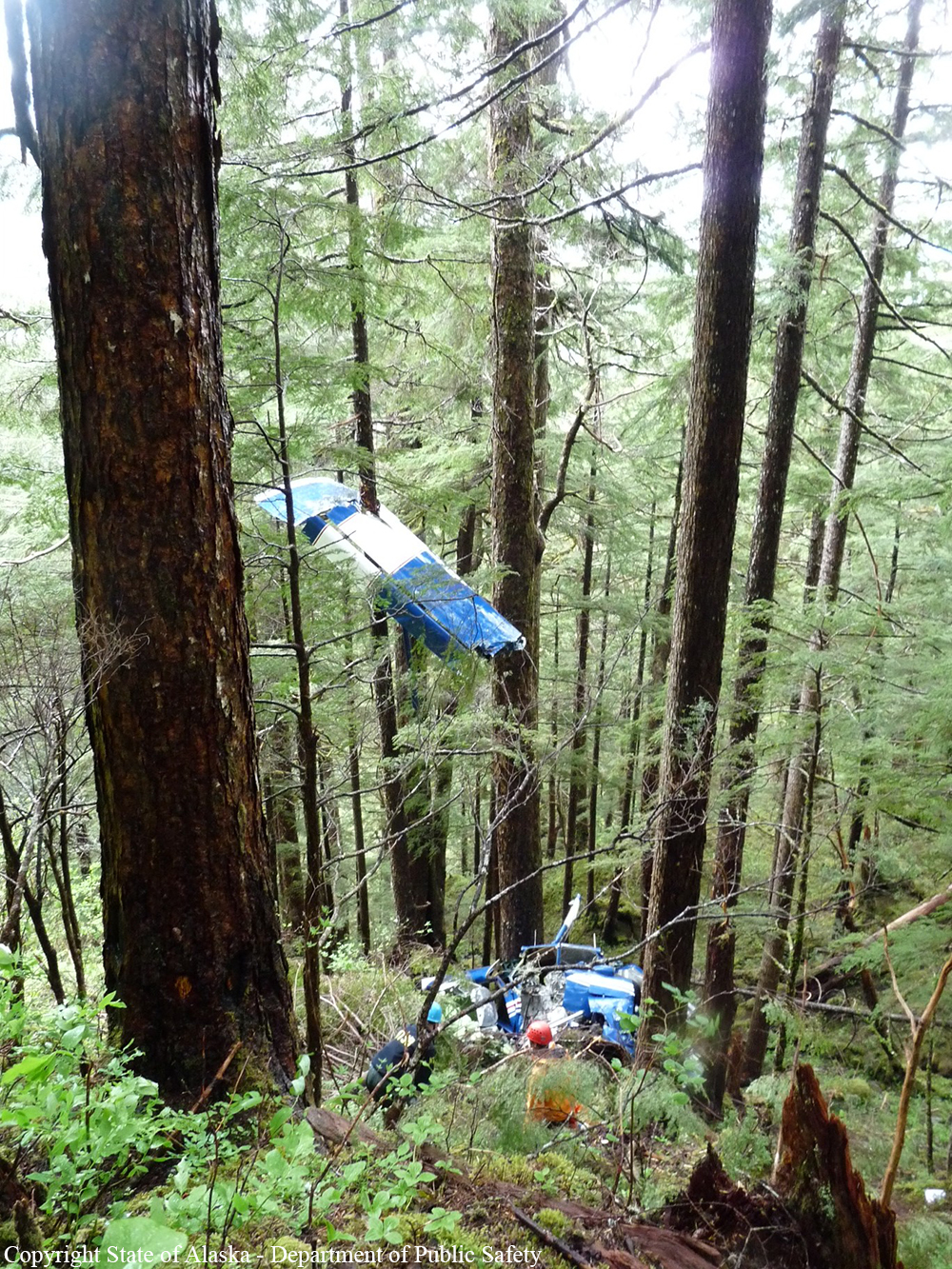
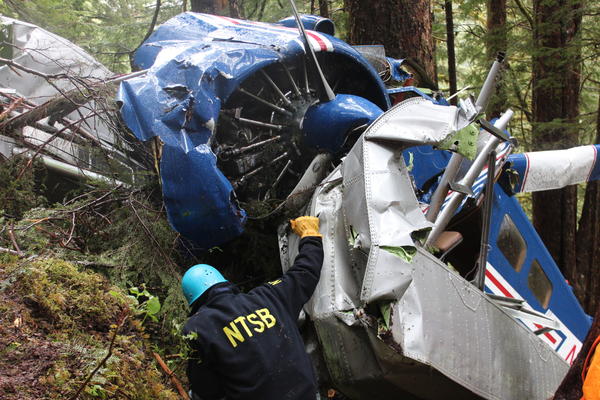
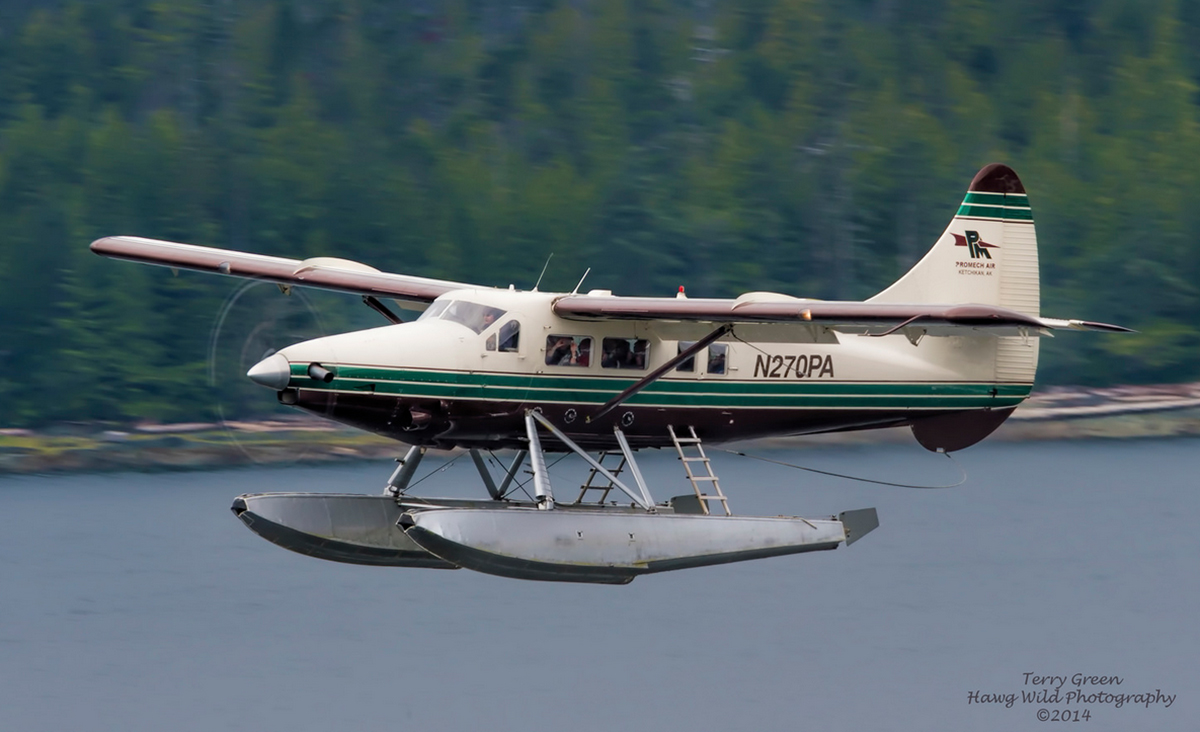
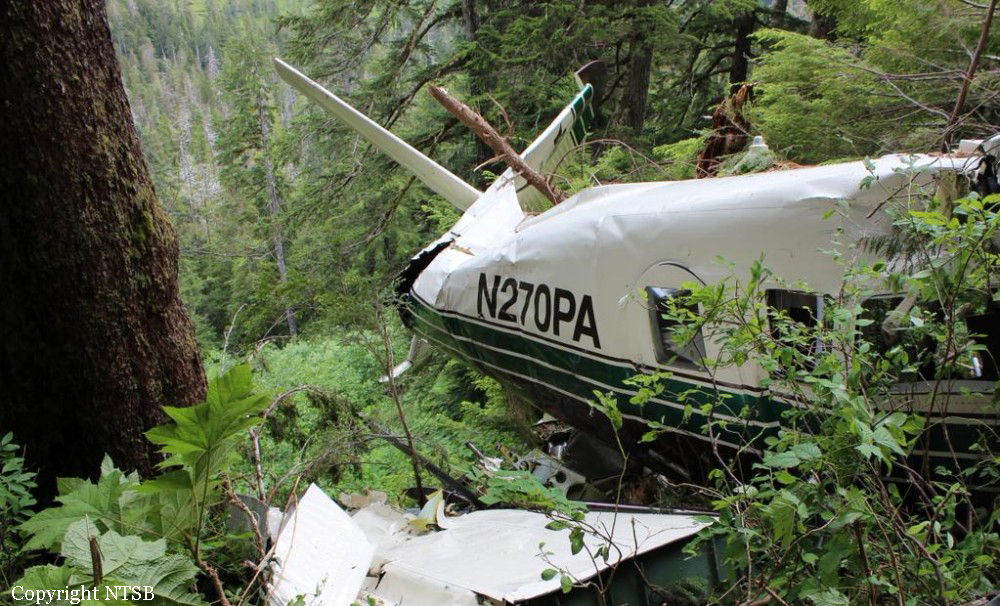
Crash of a De Havilland DHC-3T Turbo Otter near Ella Lake: 9 killed

Date & Time: Jun 25, 2015 at 1215 LT
Type of aircraft:
Operator:
Registration:
N270PA
Flight Phase:
Survivors:
No
Site:
Schedule:
Ketchikan - Ketchikan
MSN:
270
YOM:
1958
Crew on board:
1
Crew fatalities:
Pax on board:
8
Pax fatalities:
Other fatalities:
Total fatalities:
9
Captain / Total flying hours:
4070
Captain / Total hours on type:
40.00
Aircraft flight hours:
24439
Circumstances:
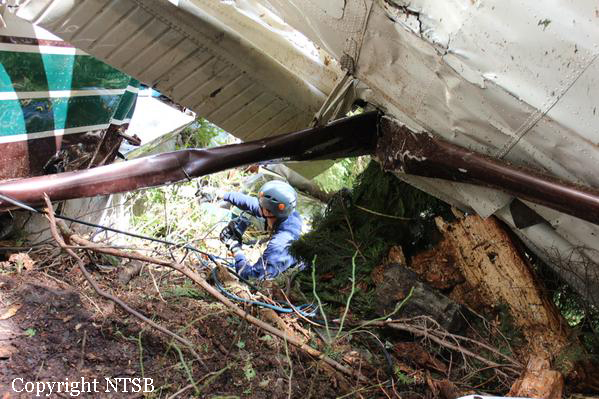
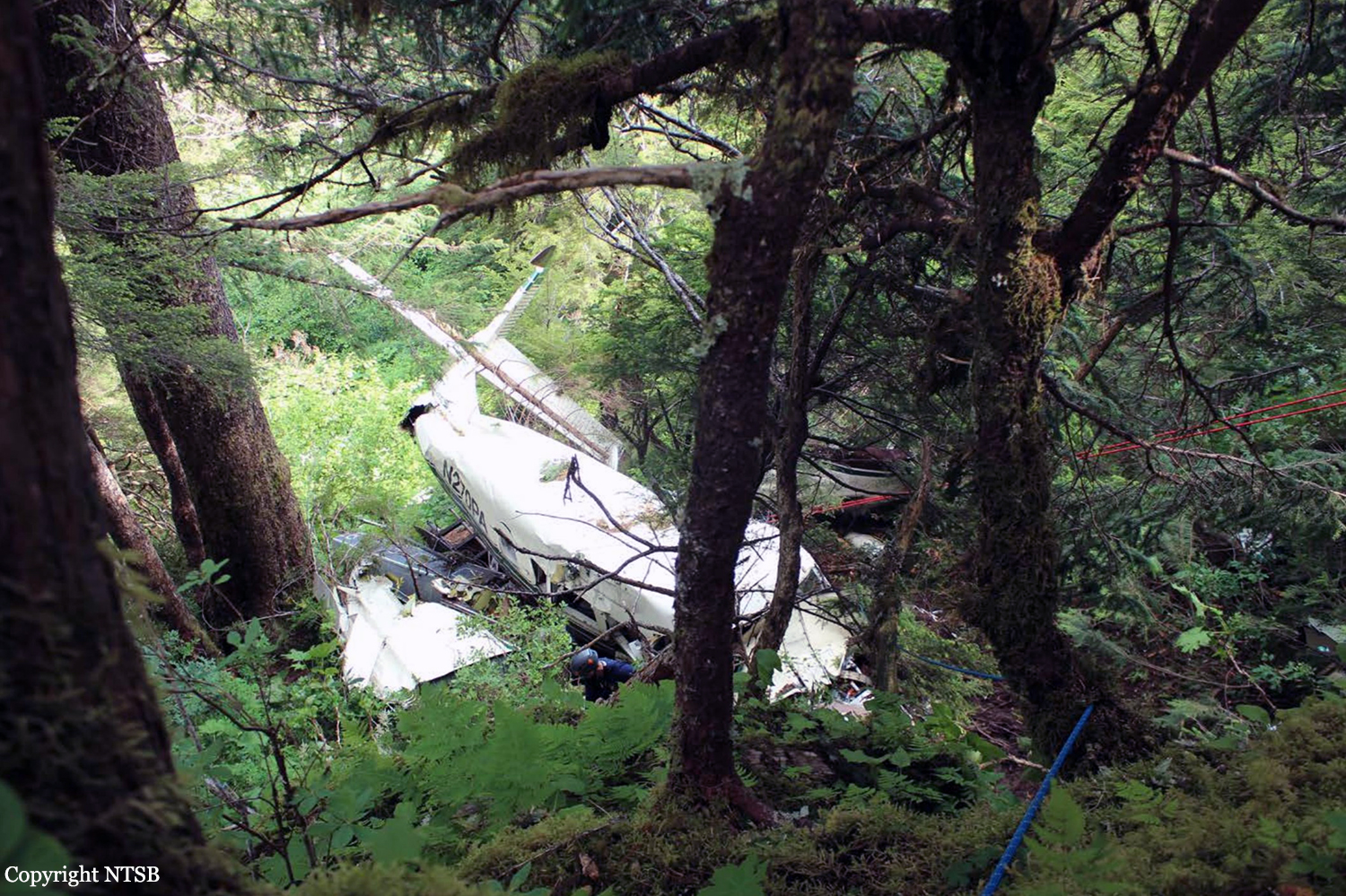
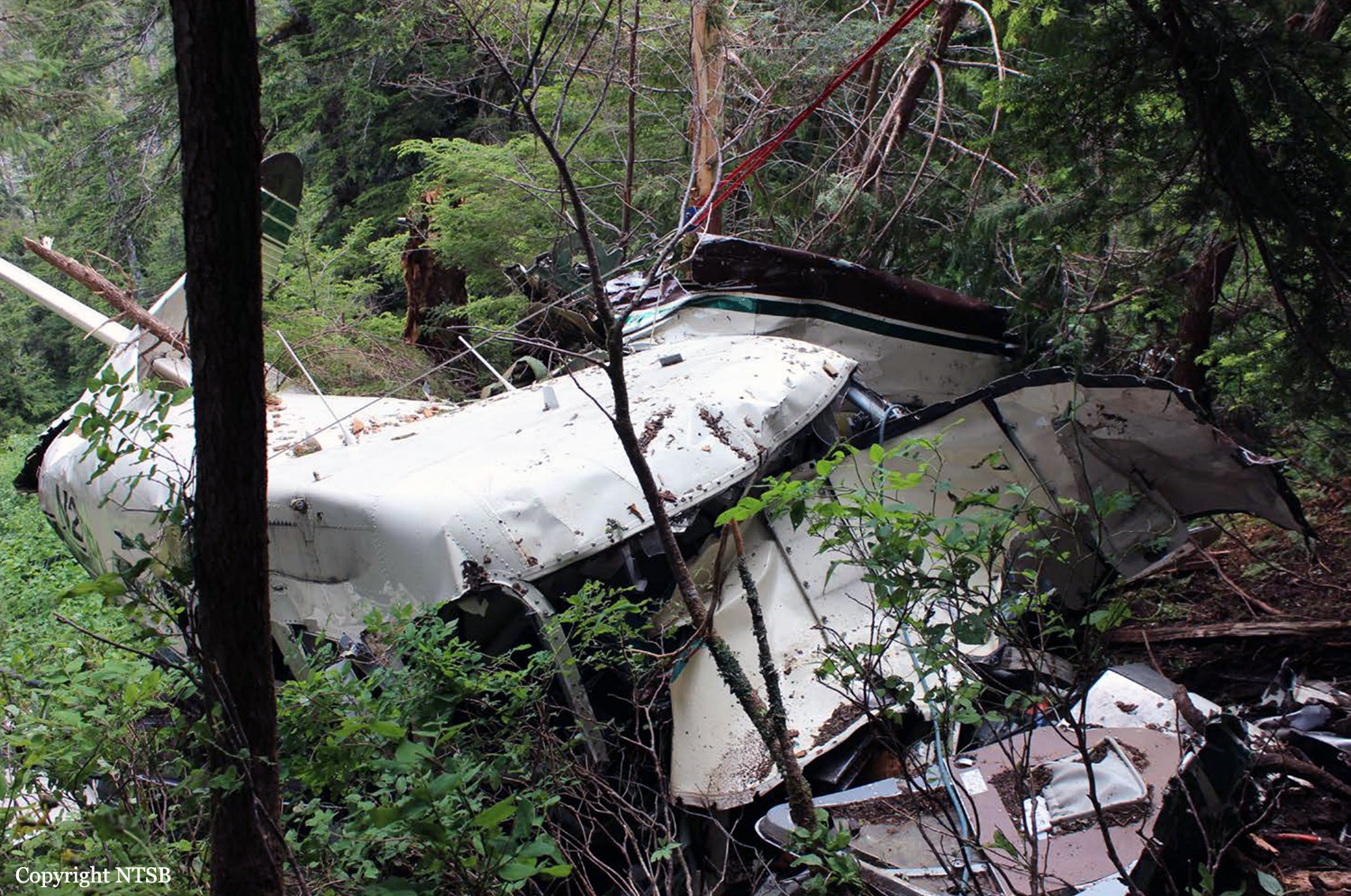
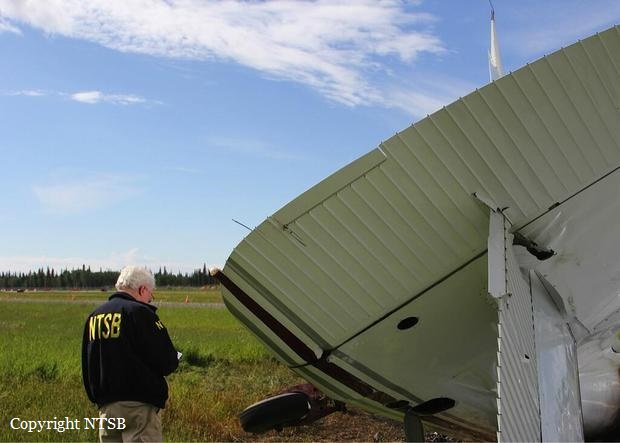
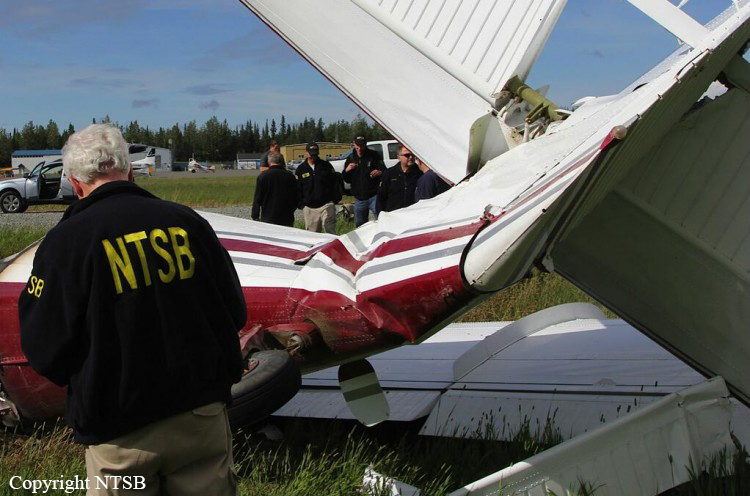
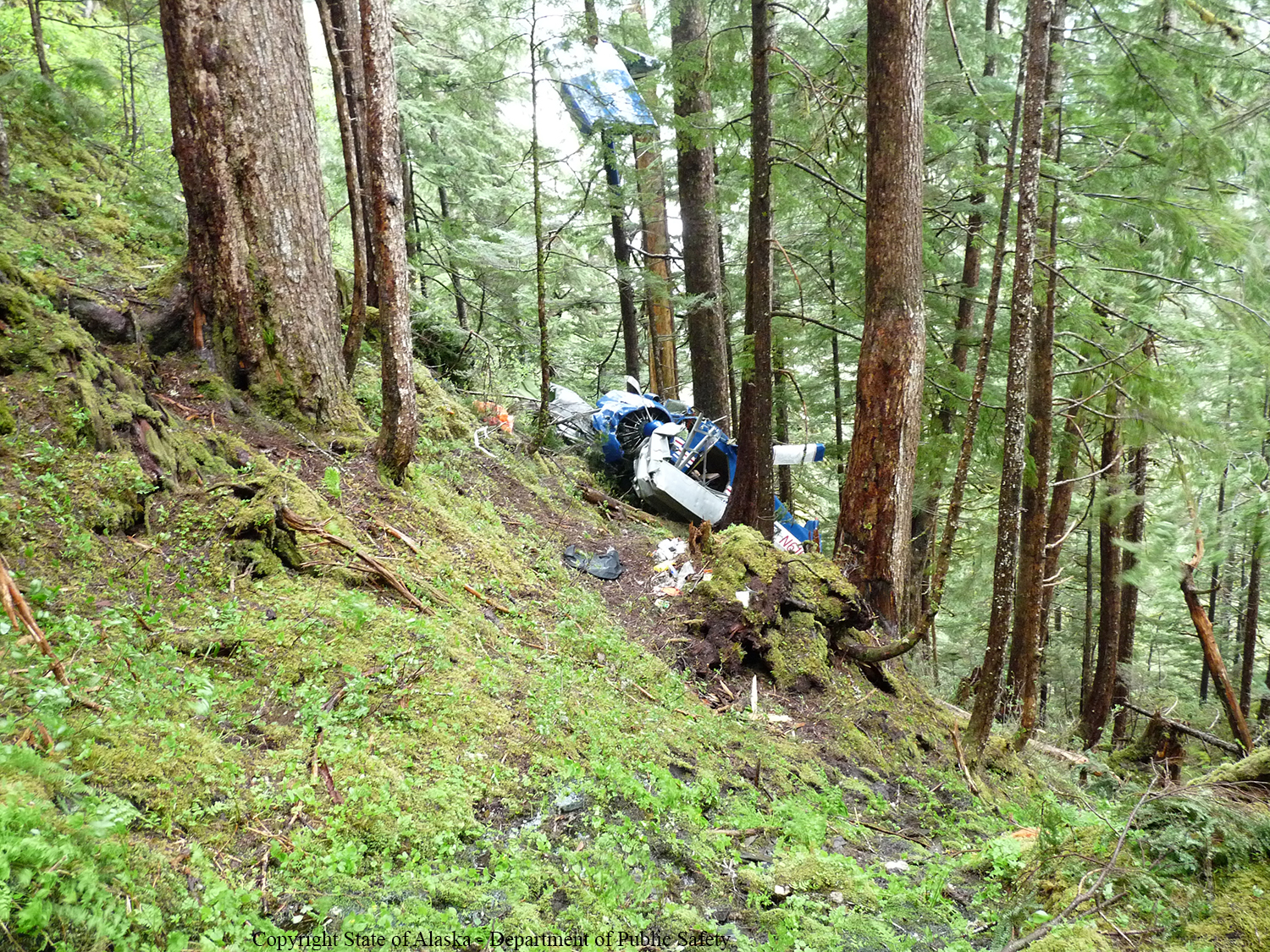
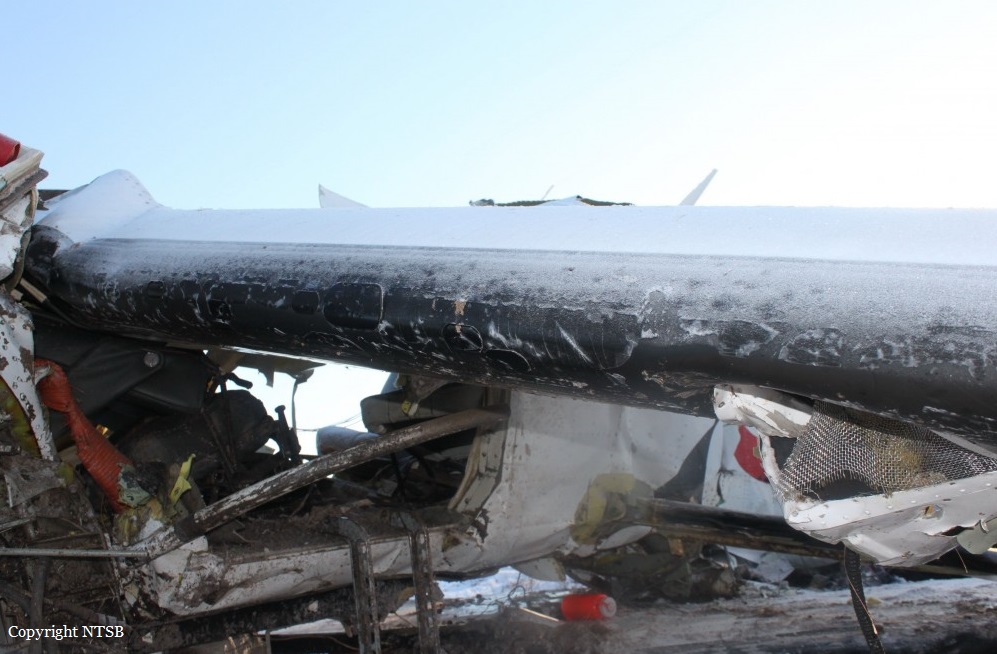
The airplane collided with mountainous, tree-covered terrain about 24 miles east-northeast of Ketchikan, Alaska. The commercial pilot and eight passengers sustained fatal injuries, and the airplane was destroyed. The airplane was owned by Pantechnicon Aviation, of Minden, Nevada, and operated by Promech Air, Inc., of Ketchikan. The flight was conducted under the provisions of 14 Code of Federal Regulations (CFR) Part 135 as an on-demand sightseeing flight; a company visual flight rules flight plan (by which the company performed its own flight-following) was in effect. Marginal visual flight rules conditions were reported in the area at the time of the accident. The flight departed about 1207 from Rudyerd Bay about 44 miles east-northeast of Ketchikan and was en route to the operator’s base at the Ketchikan Harbor Seaplane Base, Ketchikan. The accident airplane was the third of four Promech-operated float-equipped airplanes that departed at approximate 5-minute intervals from a floating dock in Rudyerd Bay. The accident flight and the two Promech flights that departed before it were carrying cruise-ship passengers who had a 1230 “all aboard” time for their cruise ship that was scheduled to depart at 1300. (The fourth flight had no passengers but was repositioning to Ketchikan for a tour scheduled at 1230; the accident pilot also had his next tour scheduled for 1230.) The sightseeing tour flight, which the cruise ship passengers had purchased from the cruise line as a shore excursion, overflew remote inland fjords; coastal waterways; and mountainous, tree-covered terrain in the Misty Fjords National Monument Wilderness. Promech pilots could choose between two standard tour routes between Rudyerd Bay and Ketchikan, referred to as the “short route” (which is about 52 nautical miles [nm], takes about 25 minutes to complete, and is primarily over land) and the “long route” (which is about 63 nm, takes about 30 minutes to complete, and is primarily over seawater channels). Although the long route was less scenic, it was generally preferred in poor weather conditions because it was primarily over water, which enabled the pilots to fly at lower altitudes (beneath cloud layers) and perform an emergency or precautionary landing, if needed. Route choice was at each pilot’s discretion based on the pilot’s assessment of the weather. The accident pilot and two other Promech pilots (one of whom was repositioning an empty airplane) chose the short route for the return leg, while the pilot of the second Promech flight to depart chose the long route. Information obtained from weather observation sources, weather cameras, and photographs and videos recovered from the portable electronic devices (PEDs) of passengers on board the accident flight and other tour flights in the area provided evidence that the accident flight encountered deteriorating weather conditions. Further, at the time of the accident, the terrain at the accident site was likely obscured by overcast clouds with visibility restricted in rain and mist. Although the accident pilot had climbed the airplane to an altitude that would have provided safe terrain clearance had he followed the typical short route (which required the flight to pass two nearly identical mountains before turning west), the pilot instead deviated from that route and turned the airplane west early (after it passed only the first of the two mountains). The pilot’s route deviation placed the airplane on a collision course with a 1,900-ft mountain, which it struck at an elevation of about 1,600 ft mean sea level. In the final 2 seconds of the flight, the airplane pitched up rapidly before colliding with terrain. The timing of this aggressive pitch-up maneuver strongly supports the scenario that the pilot continued the flight into near-zero visibility conditions, and, as soon as he realized that the flight was on a collision course with the terrain, he pulled aggressively on the elevator flight controls in an ineffective attempt to avoid the terrain. Although Promech’s General Operations Manual specified that both the pilot and the flight scheduler must jointly agree that a flight can be conducted safely before it is launched, no such explicit concurrence occurred between the accident pilot and the flight scheduler (or any member of company management) before the accident flight. As a result, the decision to initiate the accident tour rested solely with the accident pilot, who had less than 2 months’ experience flying air tours in Southeast Alaska and had demonstrated difficulty calibrating his own risk tolerance for conducting tour flights in weather that was marginal or below Federal Aviation Administration (FAA) minimums. Further, evidence from the accident tour flight and the pilot’s previous tour flights support that the pilot’s decisions regarding his tour flights were influenced by schedule pressure; his attempt to emulate the behavior of other, more experienced pilots whose flights he was following; and Promech’s organizational culture, which tacitly endorsed flying in hazardous weather conditions, as evidenced (in part) by the company president/chief executive officer’s own tour flight below FAA minimums on the day of the accident.
Probable cause:
The National Transportation Safety Board determines that the probable cause of this accident was
(1) the pilot’s decision to continue visual flight into an area of instrument meteorological conditions, which resulted in his geographic disorientation and controlled flight into terrain; and
(2) Promech’s company culture, which tacitly endorsed flying in hazardous weather and failed to manage the risks associated with the competitive pressures affecting Ketchikan-area air tour operators; its lack of a formal safety program; and its inadequate operational control of flight releases.
Final Report:
Crash of a Cessna 207 Skywagon near Bethel: 1 killed

Date & Time: May 30, 2015 at 1130 LT
Operator:
Registration:
N1653U
Flight Phase:
Flight Type:
Survivors:
No
Schedule:
Bethel - Bethel
MSN:
207-0253
YOM:
1974
Location:
Crew on board:
1
Crew fatalities:
Pax on board:
0
Pax fatalities:
Other fatalities:
Total fatalities:
1
Captain / Total flying hours:
7175
Captain / Total hours on type:
6600.00
Aircraft flight hours:
28211
Circumstances:
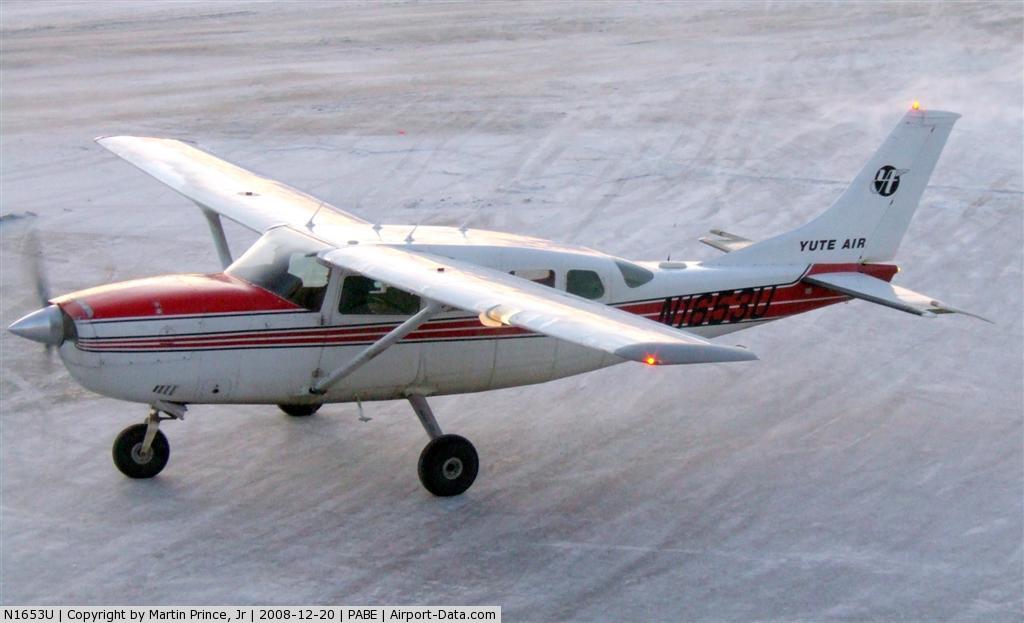
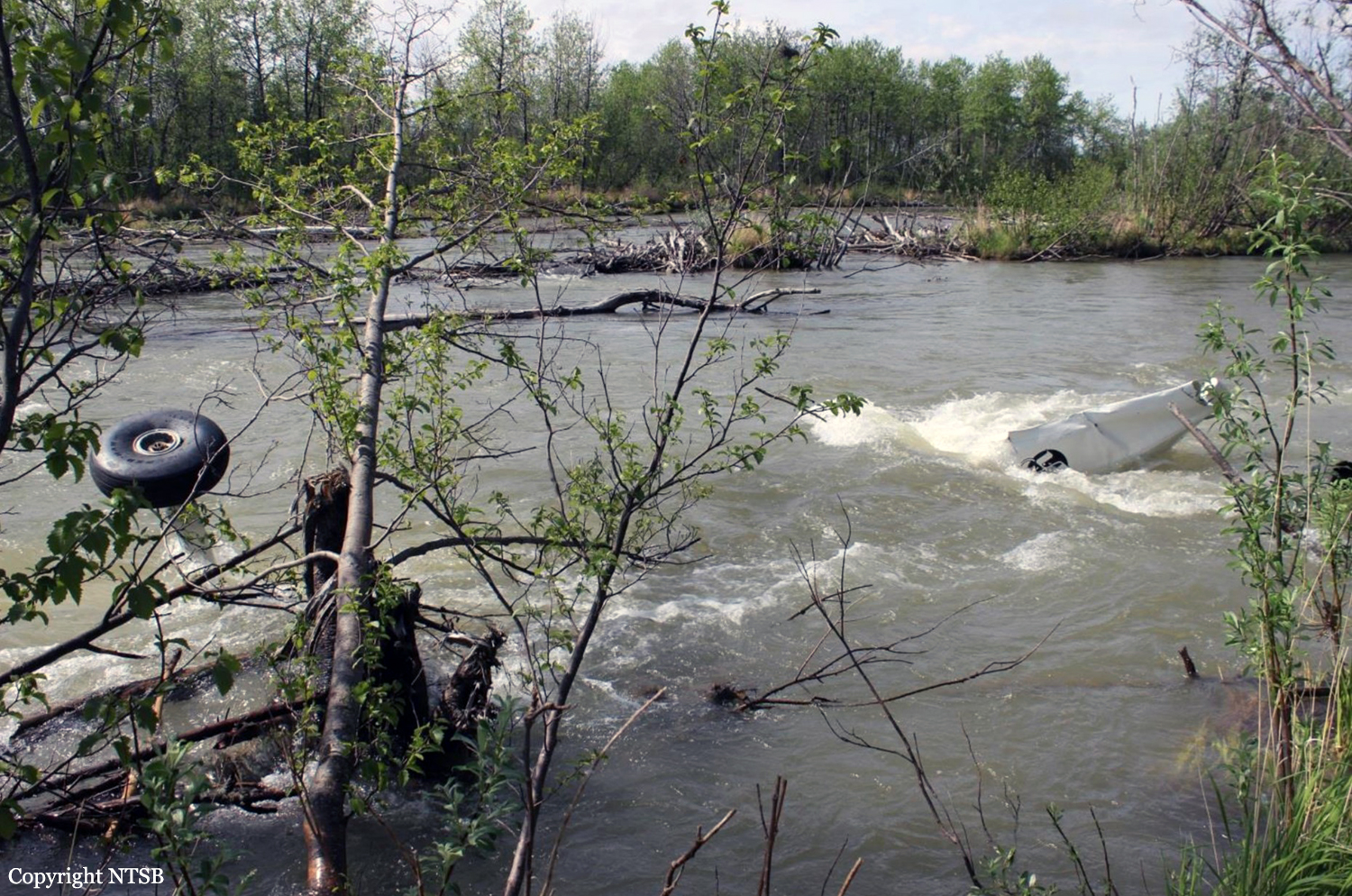
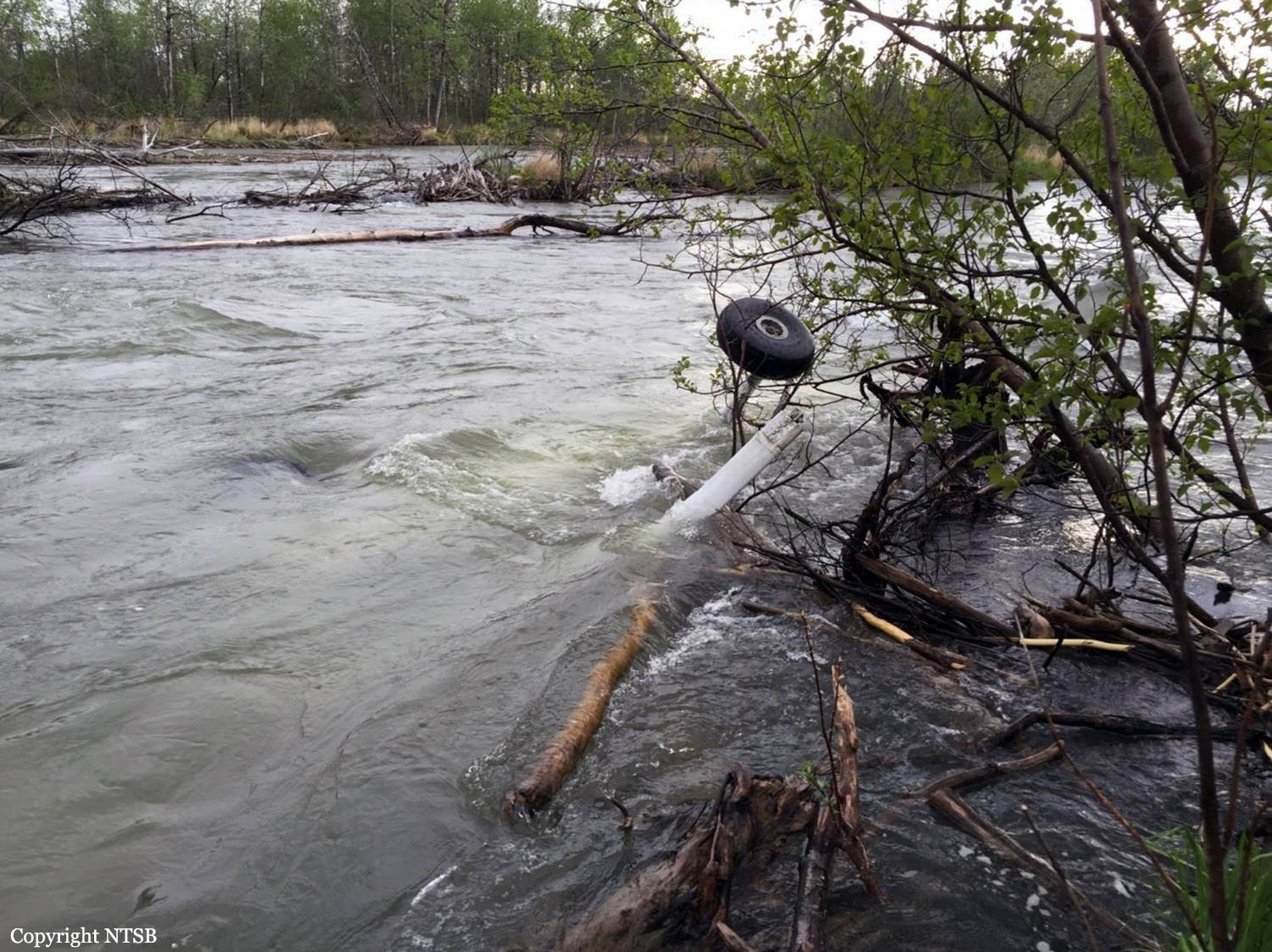
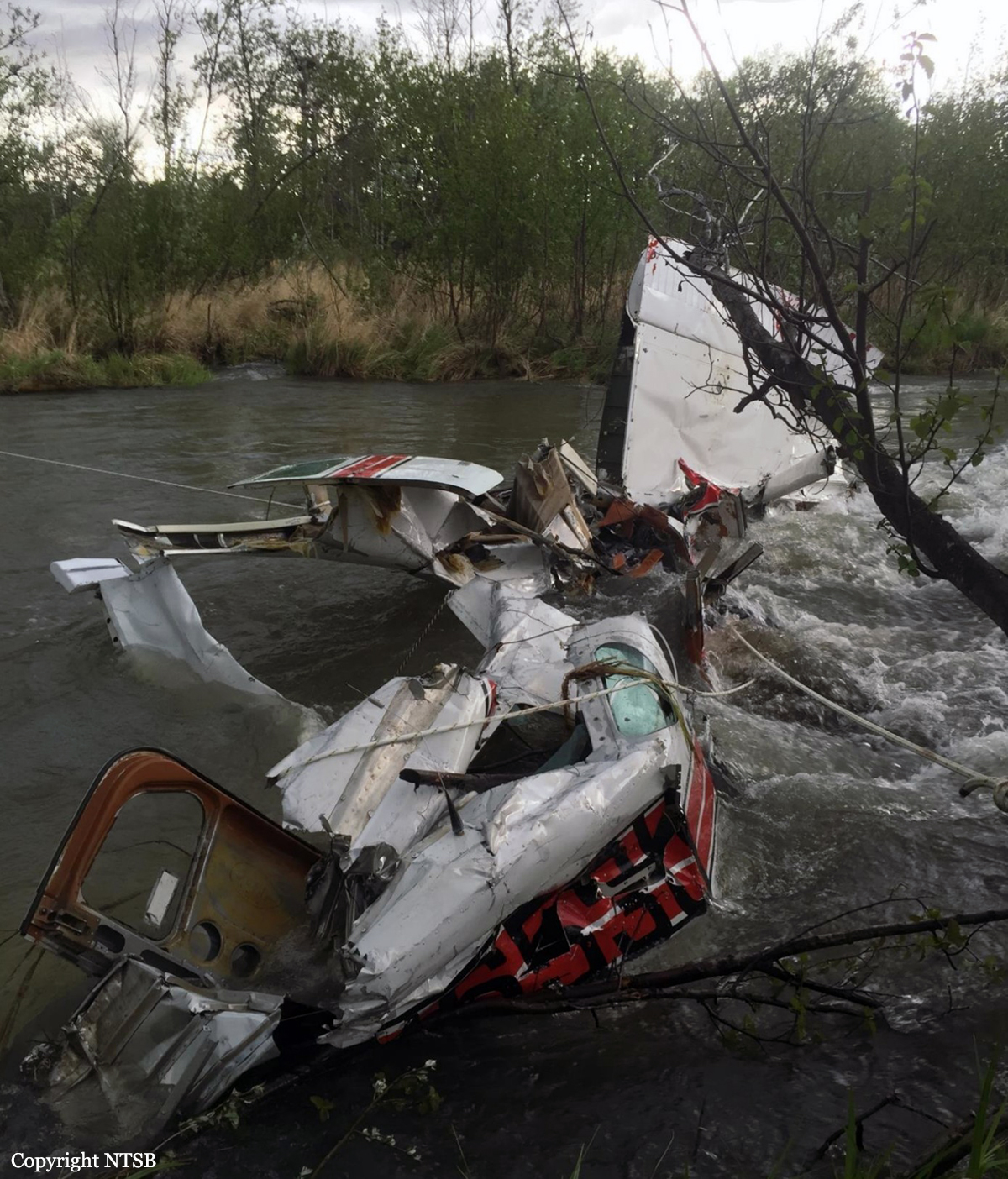
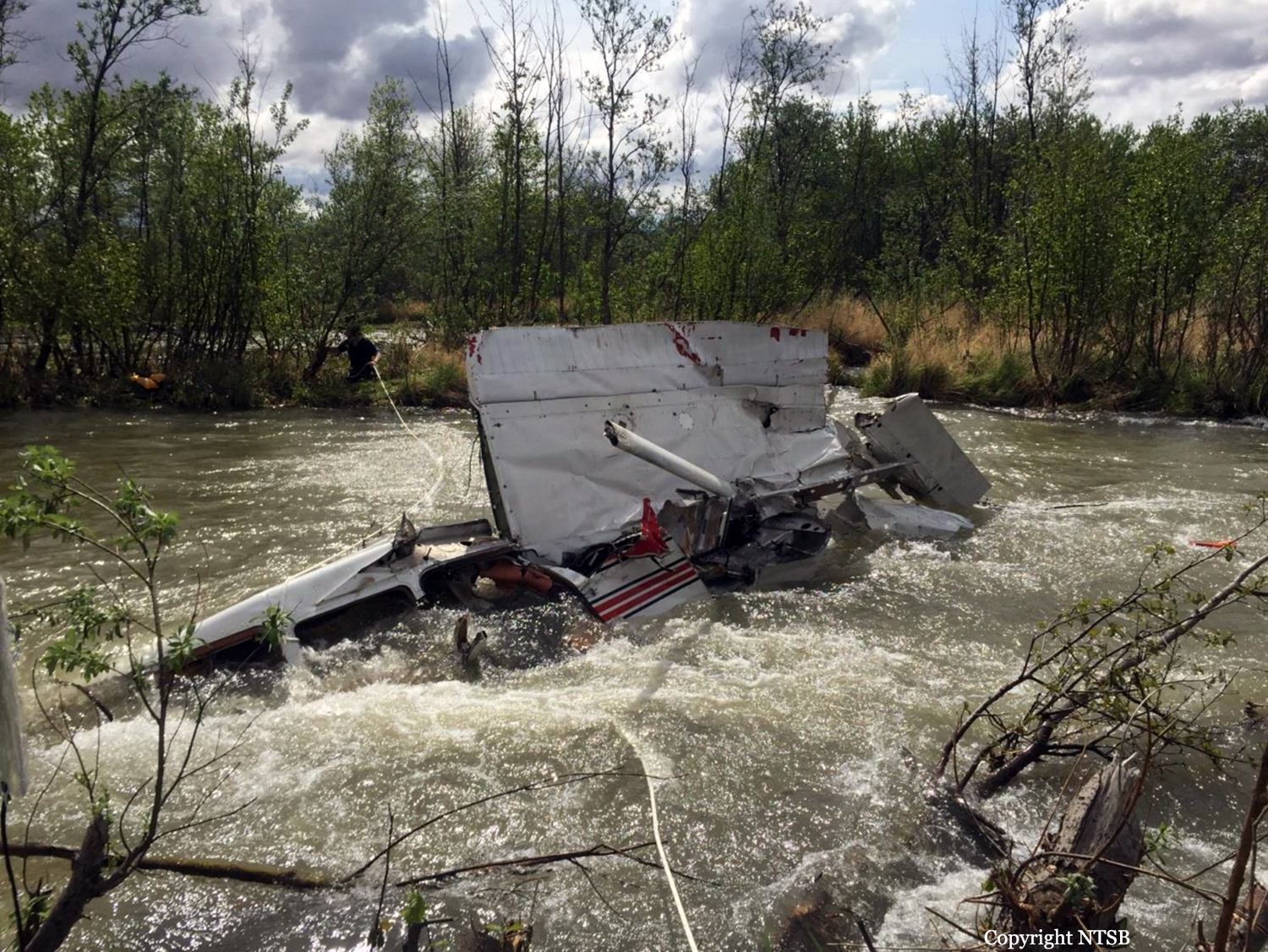
The pilot departed on a postmaintenance test flight during day visual meteorological conditions. According to the operator, the purpose of the flight was to break in six recently installed engine cylinders, and the flight was expected to last 3.5 hours. Recorded automatic dependent surveillance-broadcast data showed that the airplane was operating at altitudes of less than 500 ft mean sea level for the majority of the flight. The data ended about 3 hours after takeoff with the airplane located about 23 miles from the accident site. There were no witnesses to the accident, which occurred in a remote area. When the airplane did not return, the operator reported to the Federal Aviation Administration that the airplane was overdue. Searchers subsequently discovered the fragmented wreckage submerged in a swift moving river, about 40 miles southeast of the departure/destination airport. Postmortem toxicology tests identified 21% carboxyhemoglobin (carbon monoxide) in the pilot's blood. The pilot was a nonsmoker, and nonsmokers normally have no more than 3% carboxyhemoglobin. There was no evidence of postimpact fire; therefore, it is likely that the pilot's elevated carboxyhemoglobin level was from acute exposure to carbon monoxide during the 3 hours of flight time before the accident. As the pilot did not notify air traffic control or the operator's home base of any problems during the flight, it is unlikely that he was aware that there was carbon monoxide present. Early symptoms of carbon monoxide exposure may include headache, malaise, nausea, and dizziness. Carboxyhemoglobin levels between 10% and 20% can result in confusion, impaired judgment, and difficulty concentrating. While it is not possible to determine the exact symptoms the pilot experienced, it is likely that the pilot had symptoms that may have been distracting as well as some degree of impairment in his judgment and concentration. Given the low altitudes at which he was operating the airplane, he had little margin for error. Thus, it is likely that the carbon monoxide exposure adversely affected the pilot's performance and contributed to his failure to maintain clearance from the terrain. According to the operator, the airplane had a "winter heat kit" installed, which modified the airplane's original cabin heat system. The modification incorporated an additional exhaust/heat shroud system designed to provide increased cabin heat during wintertime operations. Review of maintenance records revealed that the modification had not been installed in accordance with Federal Aviation Administration field approval procedures. Examination of the recovered wreckage did not reveal evidence of any preexisting mechanical anomalies that would have precluded normal operation of the airplane. Examination of the airplane's right side exhaust/heat exchanger did not reveal any leaks or fractures that would have led to carbon monoxide in the cabin. Because the left side exhaust/heat exchanger was
not recovered, it was not possible to determine whether it was the source of the carbon monoxide.
Probable cause:
The pilot's failure to maintain altitude, which resulted in collision with the terrain. Contributing to the accident was the pilot's impairment from carbon monoxide exposure in flight. The source of the carbon monoxide could not be determined because the wreckage could not be completely recovered.
Final Report:

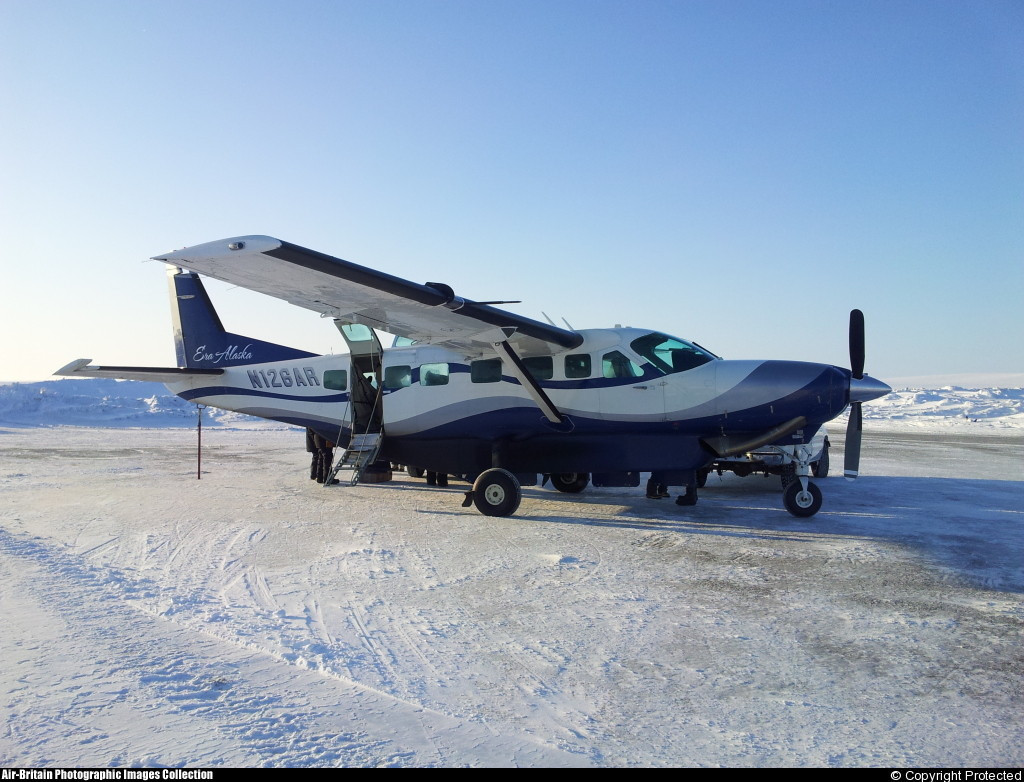
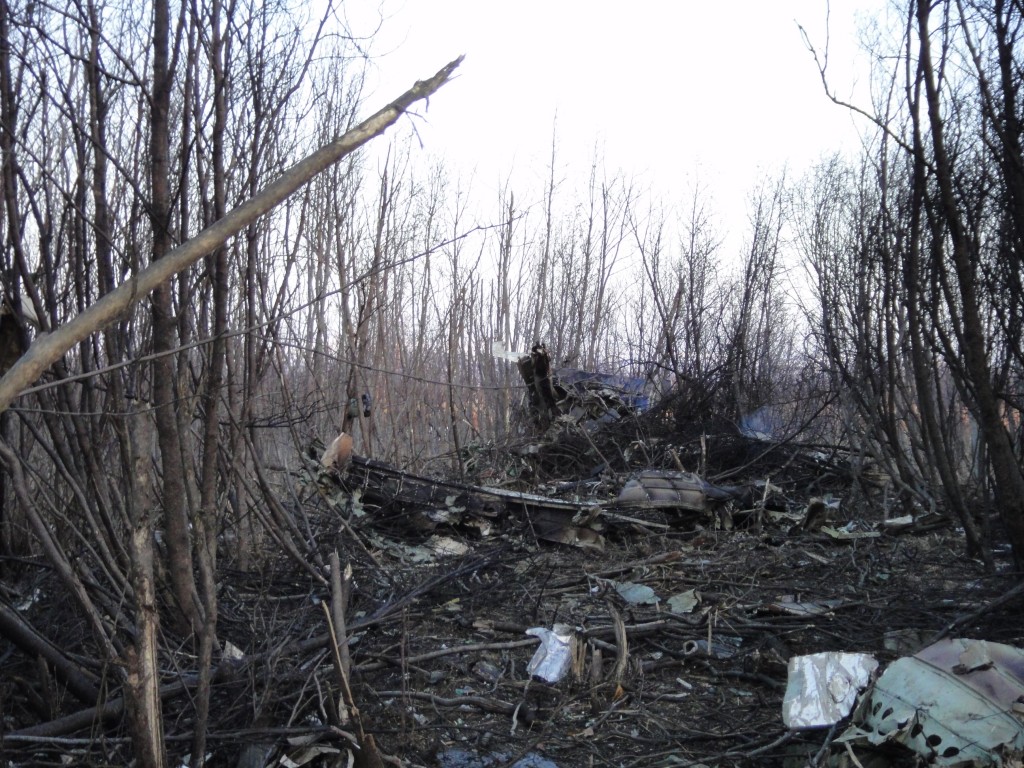
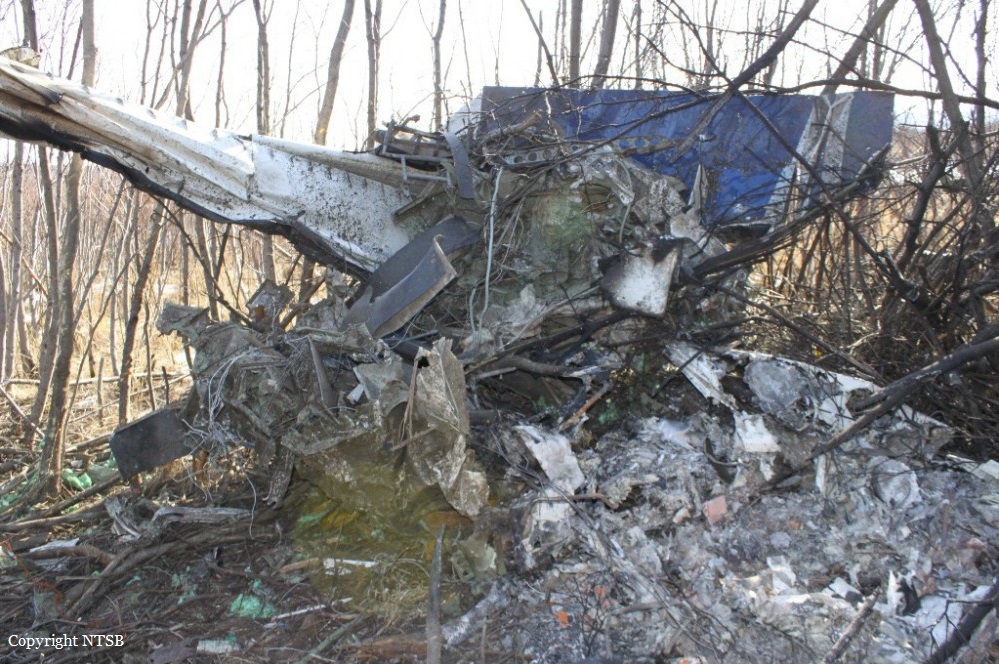
Crash of a Cessna 208B Grand Caravan near Kwethluk: 2 killed

Date & Time: Apr 8, 2014 at 1557 LT
Type of aircraft:
Operator:
Registration:
N126AR
Flight Phase:
Flight Type:
Survivors:
No
Schedule:
Bethel - Bethel
MSN:
208B-1004
YOM:
2002
Location:
Crew on board:
2
Crew fatalities:
Pax on board:
0
Pax fatalities:
Other fatalities:
Total fatalities:
2
Captain / Total flying hours:
593
Captain / Total hours on type:
1.00
Copilot / Total flying hours:
14417
Copilot / Total hours on type:
5895
Aircraft flight hours:
11206
Circumstances:
The check airman was conducting the first company training flight for the newly hired second-in-command (SIC). Automatic Dependent Surveillance-Broadcast (ADS-B) data showed that, after departure, the airplane began a series of training maneuvers, consistent with normal operations. About 21 minutes into the flight, when the airplane was about 3,400 ft mean sea level, it began a steep descent and subsequently impacted terrain. An airplane performance study showed that the airplane reached a nose-down pitch of about -40 degrees and that the descent rate reached about 16,000 ft per minute. Numerous previous training flights conducted by the check airman were reviewed using archived ADS-B data and interviews with other pilots. The review revealed that the initial upset occurred during a point in the training when the check airman typically simulated an in-flight emergency and descent. Postaccident examination for the airframe and control surfaces showed that the airplane was configured for cruise flight at the time of the initial upset. Examination of the primary and secondary flight control cables indicated that the cables were all intact at the time of impact. Trim actuator measurements showed an abnormal trailing-edge-up, nose-down configuration on both trim tabs. The two elevator trim actuator measurements were inconsistent with each other, indicating that one of the actuators was likely moved during the wreckage recovery. Based on the supporting data, it is likely that one of the actuators indicated the correct trim tab position at the time of impact. Simulated airplane performance calculations showed that, during a pitch trim excursion, the control forces required to counter an anomaly increases to unmanageable levels unless the appropriate remedial procedures are quickly applied. Given the simulated airplane performance calculations, the trim actuator measurements, and the check airman's known training routine, it is likely that the check airman simulated a pitch trim excursion and that the SIC, who lacked experience in the airplane type, did not appropriately respond to the excursion. The check airman did not take remedial action and initiate the recovery procedure in time to prevent the control forces from becoming unmanageable and to ensure that recovery from the associated dive was possible.
Probable cause:
The check airman's delayed remedial action and initiation of a recovery procedure after a simulated pitch trim excursion, which resulted in a loss of airplane control.
Final Report:

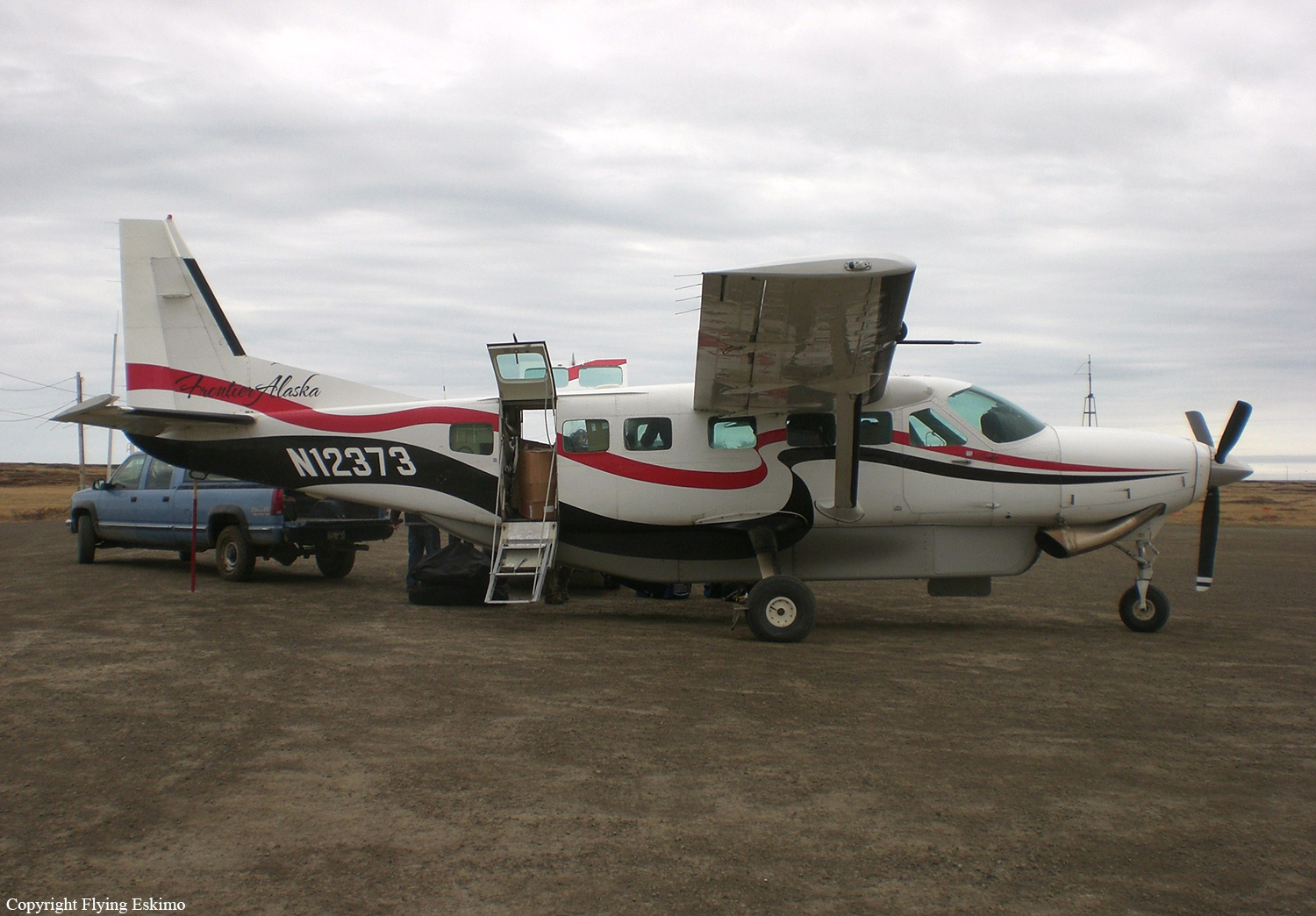
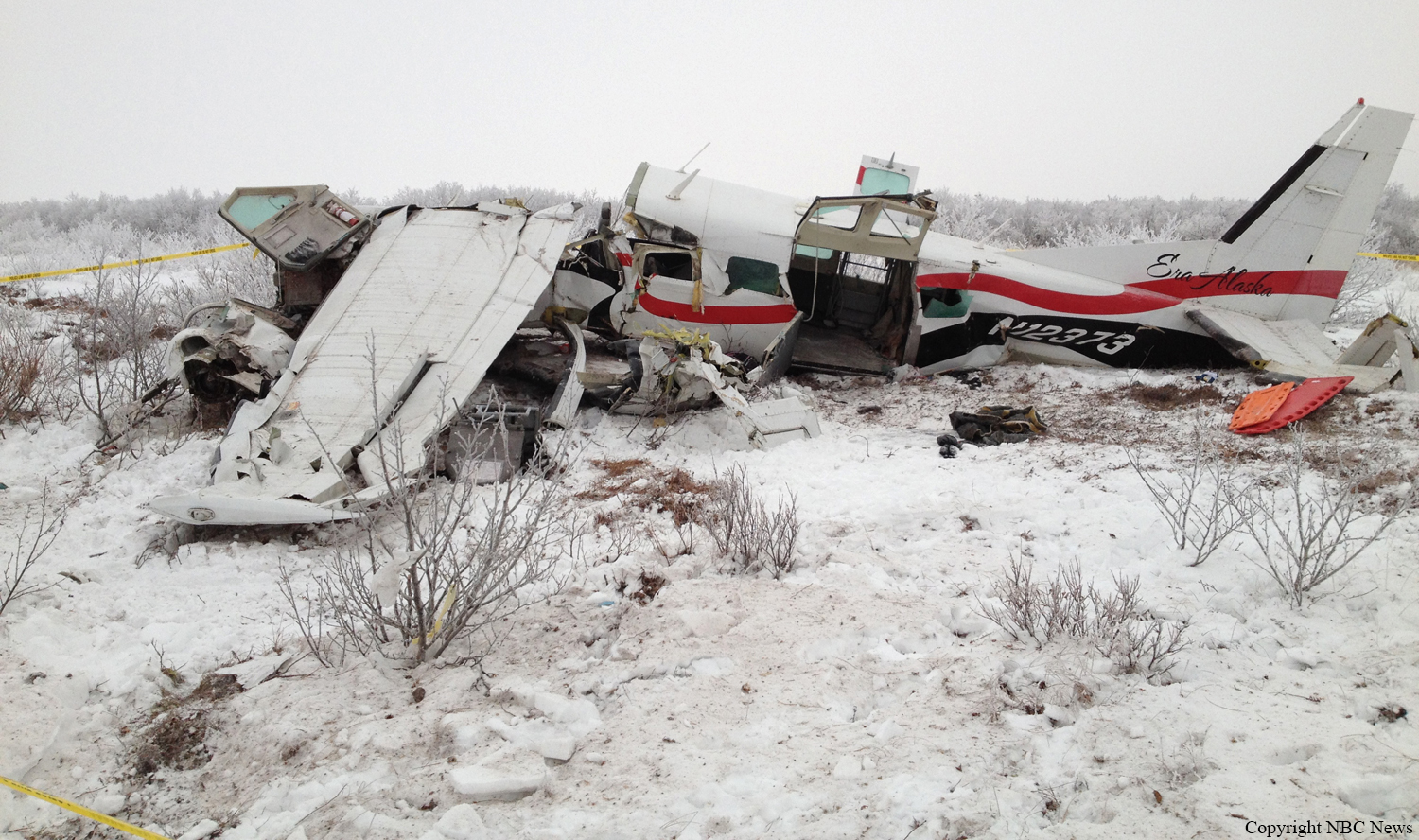
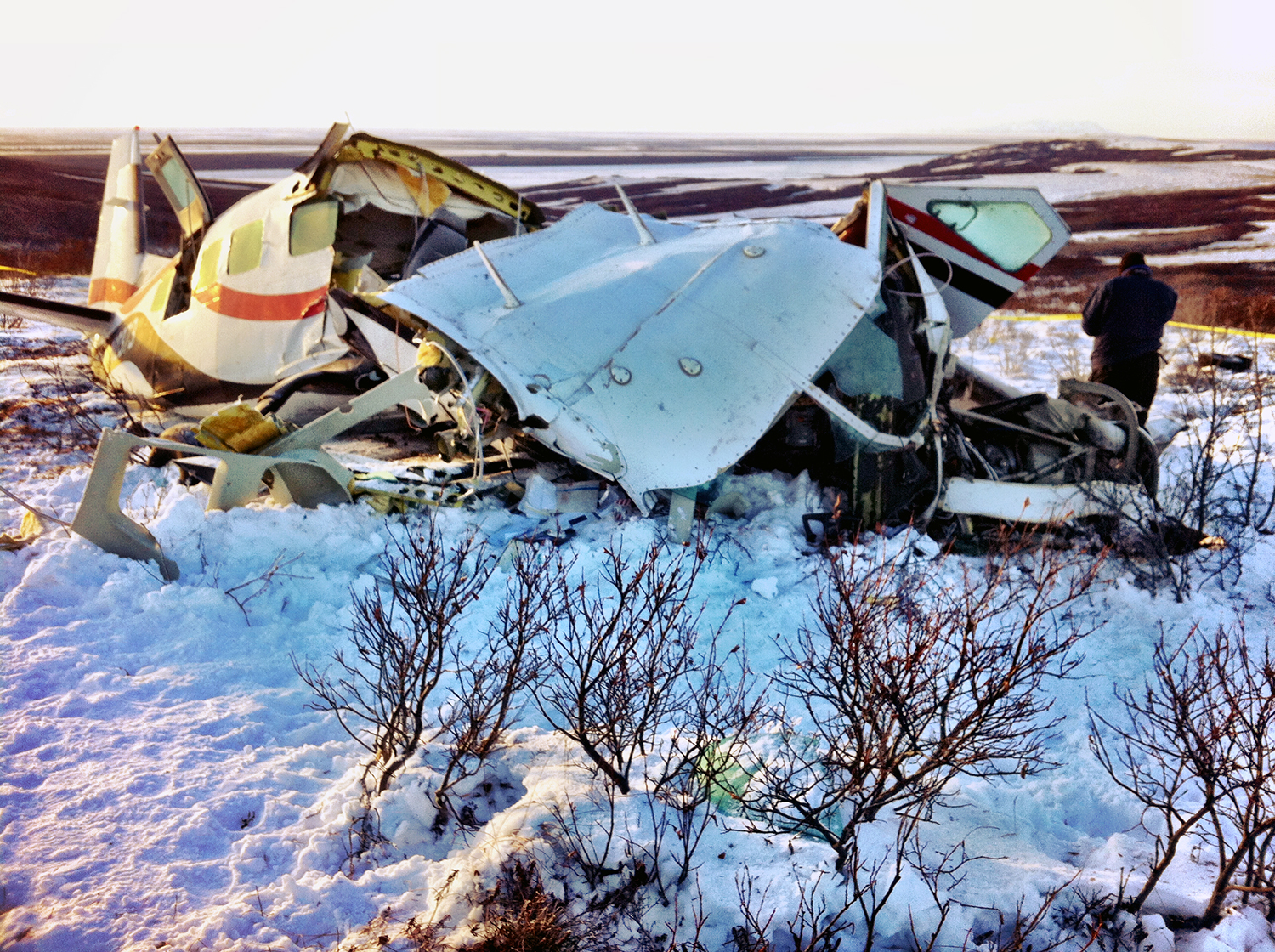
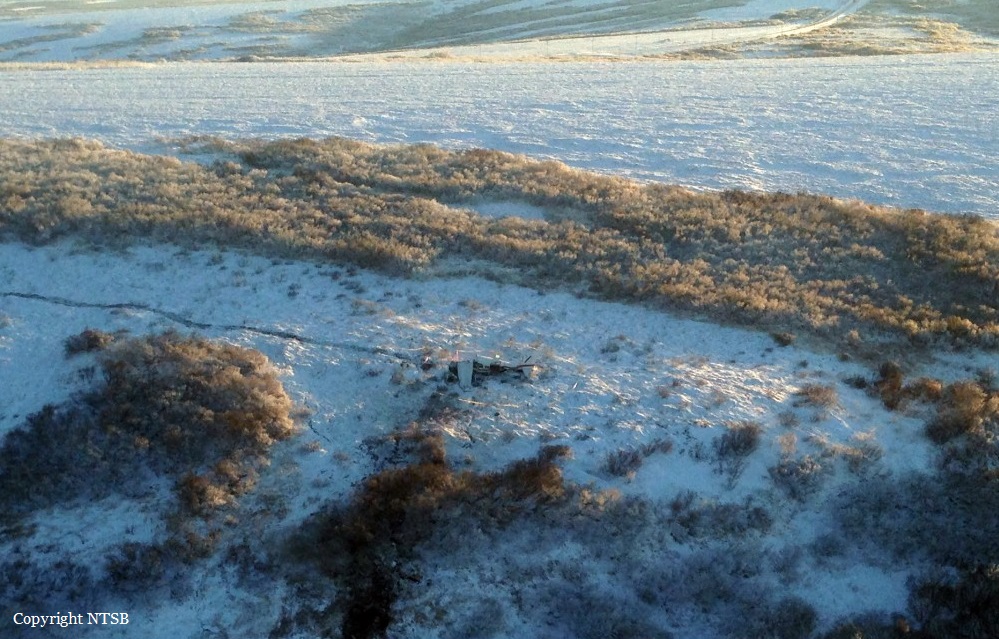
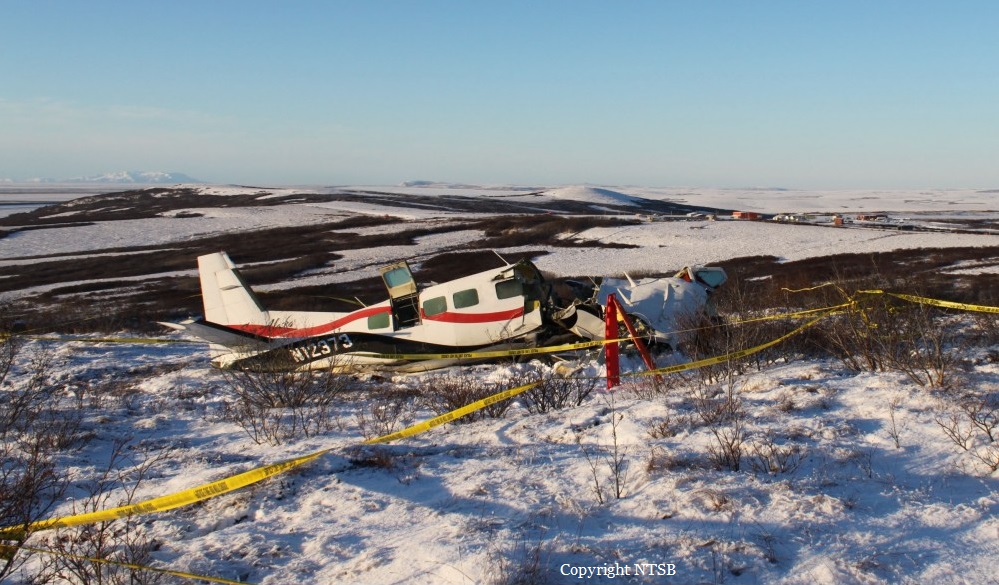
Crash of a Cessna 208B Grand Caravan in Saint Mary's: 4 killed

Date & Time: Nov 29, 2013 at 1824 LT
Type of aircraft:
Operator:
Registration:
N12373
Survivors:
Yes
Schedule:
Bethel - Mountain Village - Saint Mary's
MSN:
208B-0697
YOM:
1998
Flight number:
ERR1453
Crew on board:
1
Crew fatalities:
Pax on board:
9
Pax fatalities:
Other fatalities:
Total fatalities:
4
Captain / Total flying hours:
25000
Captain / Total hours on type:
1800.00
Aircraft flight hours:
12653
Circumstances:
The scheduled commuter flight departed 40 minutes late for a two-stop flight. During the first leg of the night visual flight rules (VFR) flight, weather at the first destination airport deteriorated, so the pilot diverted to the second destination airport. The pilot requested and received a special VFR clearance from an air route traffic controller into the diversion airport area. Review of automatic dependent surveillance-broadcast data transmitted by the airplane showed that, after the clearance was issued, the airplane's track changed and proceeded in a direct line to the diversion airport. Postaccident examination of the pilot's radio showed that his audio panel was selected to the air route traffic control (ARTCC) frequency rather than the destination airport frequency; therefore, although the pilot attempted to activate the pilot-controlled lighting at the destination airport, as heard on the ARTCC frequency, it did not activate. Further, witnesses on the ground at St. Mary's reported that the airport lighting system was not activated when they saw the accident airplane fly over, and then proceed away from the airport. Witnesses in the area described the weather at the airport as deteriorating with fog and ice. About 1 mile from the runway, the airplane began to descend, followed by a descending right turn and controlled flight into terrain. The pilot appeared to be in control of the airplane up to the point of the right descending turn. Given the lack of runway lighting, the restricted visibility due to fog, and the witness statements, the pilot likely lost situational awareness of the airplane's geographic position, which led to his subsequent controlled flight into terrain. After the airplane proceeded away from the airport, the witnesses attempted to contact the pilot by radio. When the pilot did not respond, they accessed the company's flight tracking software and noted that the airplane's last reported position was in the area of the airplane's observed flightpath. They proceeded to search the area where they believed the airplane was located and found the airplane about 1 hour later. Postaccident examination of the airframe and engine revealed no mechanical malfunctions or anomalies that would have precluded normal operation. About 3/4 inch of ice was noted on the nonprotected surfaces of the empennage. However, ice formation on the airplane's inflatable leading edge de-ice boots was consistent with normal operation of the de-ice system, and structural icing likely was not a factor in the accident. According to the company's General Operations Manual (GOM), operational control was held by the flight coordinator for the accident flight, and the flight coordinator and pilot-in-command (PIC) were jointly responsible for preflight planning, flight delay, and release of the flight, which included the risk assessment process. The flight coordinator assigned the flight a risk level of 2 (on a scale of 1 to 4) due to instrument meteorological and night conditions and contaminated runways at both of the destination airports. The first flight coordinator assigned another flight coordinator to create the manifest, which listed eight passengers and a risk assessment level of 2. According to company risk assessment and operational control procedures, a risk level of 2 required a discussion between the PIC and flight coordinator about the risks involved. However, the flight coordinators did not discuss with the pilot the risks and weather conditions associated with the flight. Neither of the flight coordinators working the flight had received company training on the risk assessment program. At the time of the accident, no signoff was required for flight coordinators or pilots on the risk assessment form, and the form was not integrated into the company manuals. A review of Federal Aviation Administration (FAA) surveillance activities revealed that aviation safety inspectors had performed numerous operational control inspections and repeatedly noted deficiencies within the company's training, risk management, and operational control procedures. Enforcement Information System records indicated that FAA inspectors observed multiple incidences of the operator's noncompliance related to flight operations and that they opened investigations; however, the investigations were closed after only administrative action had been taken. Therefore, although FAA inspectors were providing surveillance and noting discrepancies within the company's procedures and processes, the FAA did not hold the operator sufficiently accountable for correcting the types of operational deficiencies evident in this accident, such as the operator's failure to comply with its operations specifications, operations training manual, and GOM and applicable federal regulations.
Probable cause:
The pilot's decision to initiate a visual flight rules approach into an area of instrument meteorological conditions at night and the flight coordinators' release of the flight without discussing the risks with the pilot, which resulted in the pilot experiencing a loss of situational awareness and subsequent controlled flight into terrain. Contributing to the accident were the operator's inadequate procedures for operational control and flight release and its inadequate training and oversight of operational control personnel. Also contributing to the accident was the Federal Aviation Administration's failure to hold the operator accountable for correcting known operational deficiencies and ensuring compliance with its operational control procedures.
Final Report:
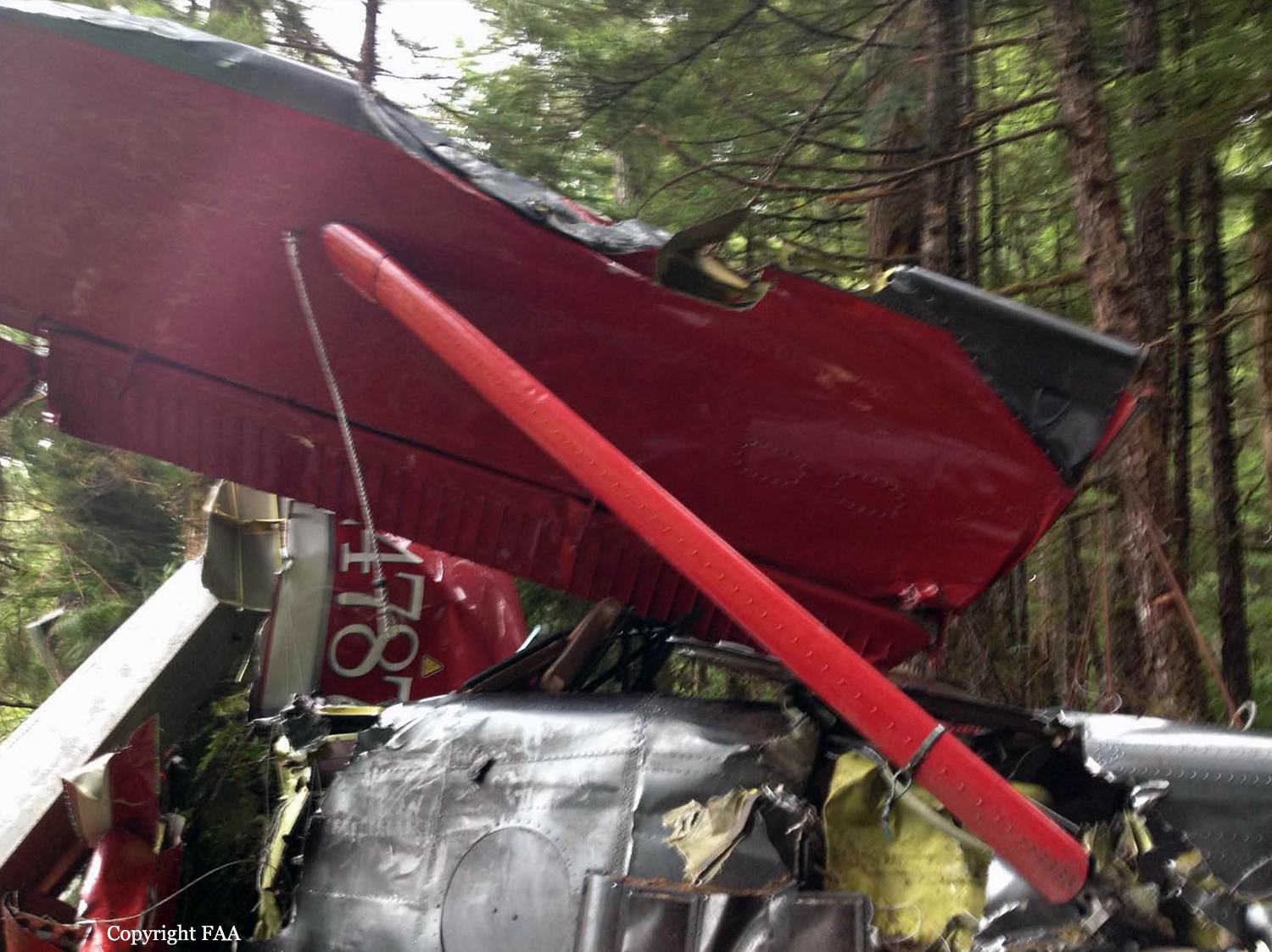
Crash of a De Havilland DHC-2 Beaver in Thorne Bay

Date & Time: Jul 24, 2013 at 1140 LT
Type of aircraft:
Operator:
Registration:
N4787C
Flight Phase:
Survivors:
Yes
Schedule:
Ketchikan – Shipley Bay
MSN:
1330
YOM:
1959
Crew on board:
1
Crew fatalities:
Pax on board:
3
Pax fatalities:
Other fatalities:
Total fatalities:
0
Captain / Total flying hours:
19500
Captain / Total hours on type:
600.00
Aircraft flight hours:
33326
Circumstances:
The pilot reported that, while the float-equipped airplane was in cruise flight about 1,200 ft above ground level, the engine made a loud noise and lost partial power, so he maneuvered the airplane to land on a nearby lake. During the approach, the engine lost total power, and the airplane descended into an area of trees before reaching the lake, which resulted in substantial damage to the wings, fuselage, and empennage. The operator reported that the engine had been overhauled (zero-timed) 31 hours before the accident. A postaccident engine examination revealed metal fragments and heavy gouging damage to the rotating components within the crankcase. The bottom portion (crankshaft end) of the n°1 linkrod and its respective bushing were missing from the n°1 linkpin; the oil sump contained metal debris consistent with heavily damaged remnants of these (and other) components. The n°2 cylinder barrel and linkrod and the n°3 linkrod showed deformation to the left (in the direction of engine rotation). Based on the damage observed in the engine, it is likely that the event that initiated the engine failure involved either the the n°1 linkrod bushing or the bottom portion of the n°1 linkrod; however, the extensive damage to these components precluded determination of the failure mode.
Probable cause:
The failure of the n°1 linkrod bushing or the bottom portion of the linkrod, which resulted in a total loss of engine power.
Final Report:

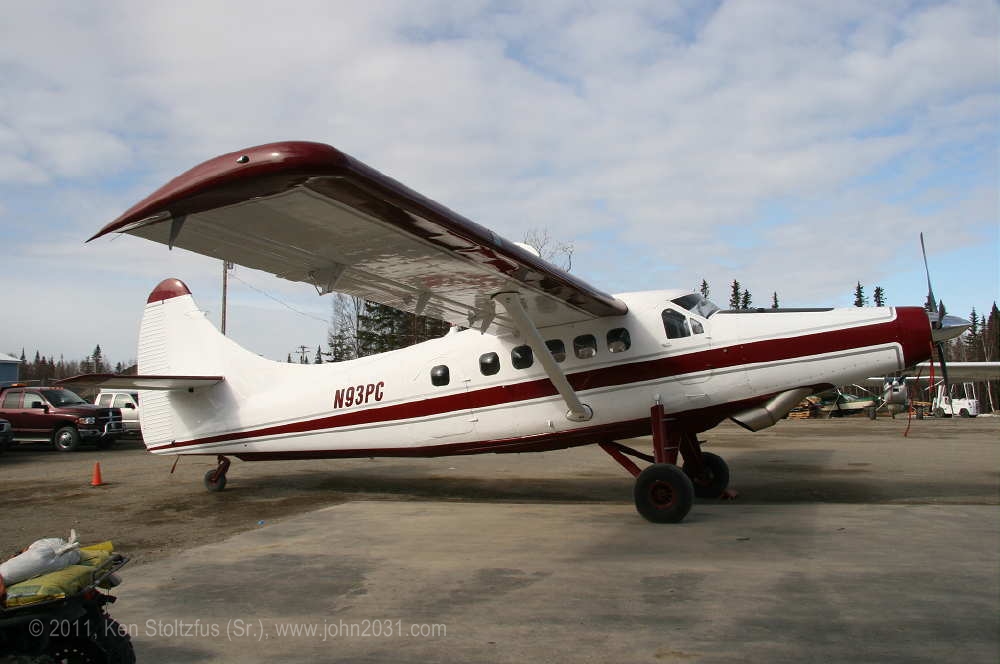
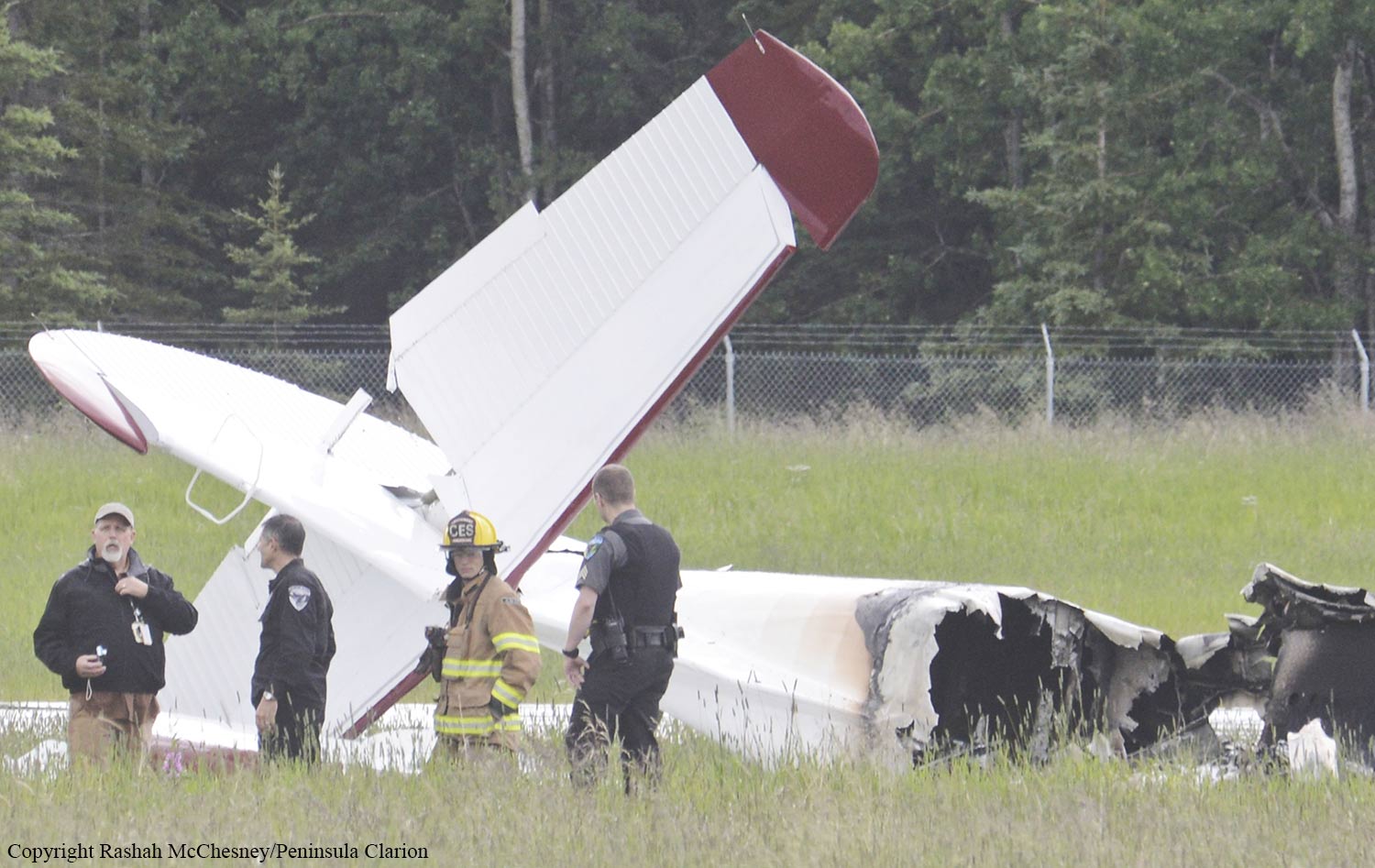
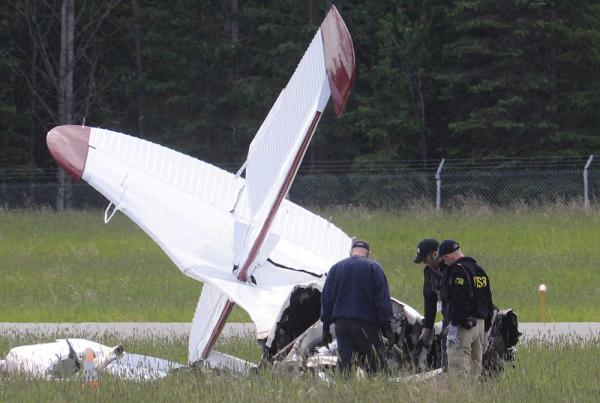
Crash of a De Havilland DHC-3T Turbo Otter in Soldotna: 10 killed

Date & Time: Jul 7, 2013 at 1120 LT
Type of aircraft:
Operator:
Registration:
N93PC
Flight Phase:
Survivors:
No
Schedule:
Soldotna - Bear Mountain Lodge
MSN:
280
YOM:
1958
Location:
Crew on board:
1
Crew fatalities:
Pax on board:
9
Pax fatalities:
Other fatalities:
Total fatalities:
10
Captain / Total flying hours:
7765
Captain / Total hours on type:
155.00
Aircraft flight hours:
22831
Circumstances:
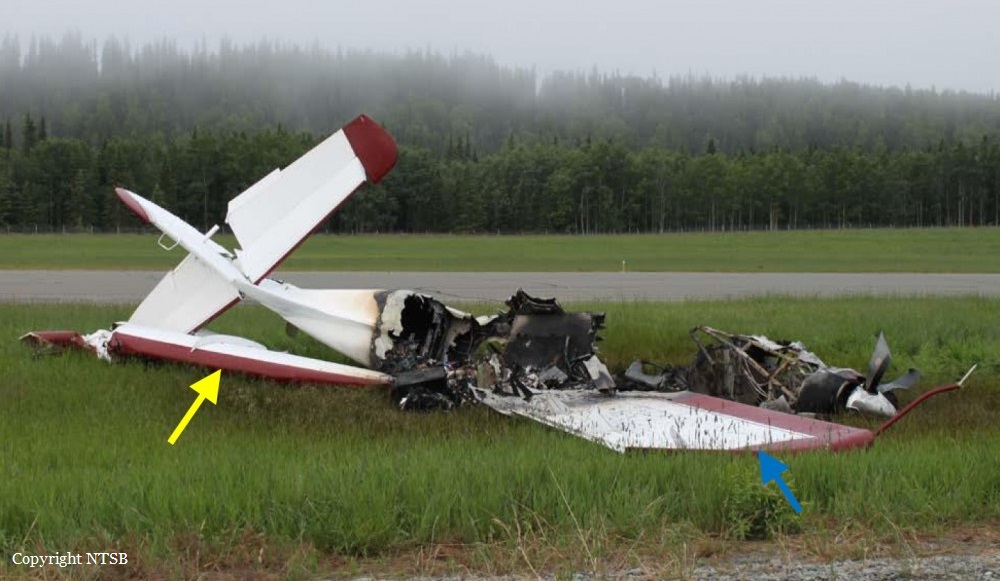
Before picking up the nine passengers, the pilot loaded the accident airplane at the operator's base in Nikiski with cargo (food and supplies for the lodge). The operator of the lodge where the passengers were headed estimated the cargo weighed about 300 pounds (lbs) and that the passengers' baggage weighed about 80 lbs. Estimates of the passengers' weights were provided to the lodge operator in preparation for the trip, which totaled 1,350 lbs. The load manifest listed each of these weight estimates for a total weight of 1,730 lbs and did not contain any balance data. The cargo was not weighed, and the pilot did not document any weight and balance calculations nor was he required to do so. The airplane operator did not keep fueling records for each flight. A witness who was present during the fueling operations at the operator's base reported that he saw the pilot top off the front tank then begin fueling the center tank. The first leg of the trip from the operator's base to pick up the passengers was completed uneventfully. According to witnesses at Soldotna Airport, after loading the passengers and their baggage, the pilot taxied for departure. There were no witnesses to the accident. The airplane impacted the ground about 2,320 feet from the threshold of the departure runway and about 154 feet right of the runway centerline. An extensive postcrash fire consumed most of the airplane's cockpit and cabin area, including an unknown quantity of the baggage and cargo. Impact signatures were consistent with a nose- and right-wing-low attitude at impact. The entire airplane was accounted for at the wreckage site. Disassembly and examination of the engine and propeller revealed that both were operating during impact. Examination of the structure and flight control systems found no preimpact malfunctions or failures that would have precluded normal operation. The pilot was properly certificated and qualified in accordance with applicable federal regulations. Toxicological testing of specimens from the pilot was negative for any carbon monoxide, alcohol, or drugs. The airplane was not equipped, and was not required to be equipped, with any type of crashresistant recorder. A video recovered from a passenger's smartphone showed the accident sequence looking out of the row 4 left seat window; the left wing and flaps are in view for most of the sequence and the flap position does not change. The investigation found that the flaps were set to the full-down (or landing) position during takeoff, contrary to recommended procedures in the airplane flight manual (AFM). The recovered video was used to estimate the airplane speed, altitude, and orientation for the portion of the flight where ground references were visible, about 22.5 seconds after the start of the takeoff roll. For the first 12 seconds, the airplane accelerated linearly from the beginning of the takeoff roll through liftoff. The pitch angle decreased slightly in the first 8 seconds as the tail lifted, remained essentially constant for about 4 seconds, and began to slightly increase as the airplane lifted off. Beginning about 14 seconds after the start of the takeoff roll, the speed began decreasing and the pitch angle began increasing. The pitch angle increased at a constant rate (about 2.8 degrees/second), reaching a maximum value of about 30 degrees, and the ground speed decreased from its maximum of about 68 mph to about 44 mph at the end of the analyzed time. The ground references disappeared from the video frame as the airplane experienced a sharp right roll before impacting the ground several seconds later. The low speed, rapid right roll, and pitch down of the airplane is consistent with an aerodynamic stall. The constant pitch rate before the stall is consistent with an aft center of gravity (CG) condition of sufficient magnitude that the elevator pitch down authority was insufficient to overcome the pitching moment generated by the aft CG. Additionally, the flaps setting at the full-down (or landing) position, contrary to procedures contained in the AFM, would have exacerbated the nose-up pitching moment due to the increased downwash on the tail and aft shift of the center of pressure; the additional aerodynamic drag from the fully extended flaps would have altered the airplane's acceleration. Using the data available, the airplane was within weight and balance limitations for the first leg of the trip. However, the cargo loaded was about 2.4 times the weight indicated on the load manifest. Further, the total weight of cargo and baggage in the cargo area, as estimated during the investigation, exceeded the installed cargo net's load limit of 750 lbs by more than 50 lbs. Although the loaded cargo actual weight was higher than indicated on the load manifest, the flight from Nikiski to Soldotna was completed without any concerns noted by the pilot, indicating that even with the higher cargo load, the airplane was within the normal CG range for that leg of the flight. Thus, based on the investigation's best estimate and a calculation of the airplane's weight and balance using the recovered passenger weights, weights and location of the luggage recovered on scene, weight of the cargo recovered on scene, and weights accounting for the liquid cargo destroyed in the postimpact fire, once the passengers were loaded, the airplane weight would have exceeded the maximum gross weight of 8,000 lbs by about 21 lbs and the CG would have been at least 5.5 inches aft of the 152.2-inch limit (a more definitive calculation could not be performed because the exact location of the cargo was not known). Additionally, the kinematics study of the accident airplane's weight and motion during initial climb and up to the point of stall found that with the pilot applying full pitch-down control input, the CG required to produce the motion observed in the video was likely just past 161 inches. Thus, the only way for the airplane motion to match the motion observed in the video was for the CG to be considerably aft of the 152.2-inch limit, which provides additional support to the results from the weight and balance study. Based on the video study, the weight and balance study constructed from available weight and balance information, and the kinematics study, the airplane exceeded the aft CG limit at takeoff, which resulted in an uncontrollable nose-up pitch leading to an aerodynamic stall. The CG was so far aft of the limit that the airplane likely would have stalled even with the flaps in the correct position. Neither 14 CFR Part 135 nor the operator's operations specifications (OpSpec) require that the aircraft weight and balance be physically documented for any flights. However, according to Section A096 of the OpSpec, when determining aircraft weight and balance, the operator should use either the actual measured weights for all passengers, baggage, and cargo or the solicited weights for passengers plus 10 lbs and actual measured weights for baggage and cargo. The operator did not comply with federal regulations that require adherence to the weighing requirements or the takeoff weight limitations in the AFM. Additionally, although the inaccurate estimate of 300 lbs for the cargo resulted in a calculated CG that was within limits for both legs of the flight, the actual weight of the cargo was significantly higher. Once loaded in Soldotna, the combination of the passengers, their baggage, and the actual cargo weight and its location resulted in the CG for the accident flight being significantly aft of the limit. With the CG so far aft, even with full nose-down input from the pilot, the nose continued to pitch up until the airplane stalled. For each flight in multiengine operations, 14 CFR 135.63(c) requires the preparation of a load manifest that includes, among other items the number of passengers, total weight of the loaded aircraft, the maximum allowable takeoff weight, and the CG location of the loaded aircraft; one copy of the load manifest should be carried in the airplane and the operator is required to keep the records for at least 30 days. Single-engine operations are excluded from this requirement. The NTSB attempted to address this exclusion with the issuance of Safety Recommendations A-89-135 and A-99-61, which asked the Federal Aviation Administration (FAA) to amend the record-keeping requirements of 14 [CFR] 135.63(c) to apply to single-engine as well as multiengine aircraft. The FAA did not take the recommended action in either instance, and the NTSB classified Safety Recommendations A-89-135 and A-99-61 "Closed—Unacceptable Action" in 1990 and 2014, respectively.
Probable cause:
The operator's failure to determine the actual cargo weight, leading to the loading and operation of the airplane outside of the weight and center of gravity limits contained in the airplane flight manual, which resulted in an aerodynamic stall. Contributing to the accident was the Federal Aviation Administration's failure to require weight and balance documentation for each flight in 14 Code of Federal Regulations Part 135 single-engine operations.
Final Report:

Crash of a De Havilland DHC-2 Beaver I near Petersburg: 1 killed

Date & Time: Jun 4, 2013 at 1531 LT
Type of aircraft:

Operator:
Registration:
N616W
Flight Phase:
Survivors:
Yes
Site:
Schedule:
Petersburg - Petersburg
MSN:
1290
YOM:
1958
Crew on board:
1
Crew fatalities:
Pax on board:
6
Pax fatalities:
Other fatalities:
Total fatalities:
1
Captain / Total flying hours:
4841
Captain / Total hours on type:
1465.00
Aircraft flight hours:
34909
Circumstances:
The pilot reported that the accident flight was his fourth flight and the third tour flight of the day in a float-equipped airplane. The weather had deteriorated throughout the day with lowering ceilings, light rain, and fog on the mountain ridges. The pilot said that when approaching a mountain pass, he initiated a climb by adding a “little bit” of flap (about 1 pump of the flap handle actuator) but did not adjust the engine power from the cruise power setting. He noted his airspeed at 80 knots, with a 200-feet-per-minute climb on the vertical speed indicator. He was having difficulty seeing over the cowling due to the nose-high attitude, when he suddenly noticed trees in his flight path. He initiated an immediate left turn; the airplane stalled, and began to drop, impacting the mountainous, tree-covered terrain. A passenger reported that the weather conditions at the time of the accident consisted of tufts of low clouds, and good visibility. They did not enter the clouds at any time during the flight. He reported that the airplane made a left turn, stalled, and then made a sharp left turn right before impact. The airplane seemed to be operating fine, and he heard no unusual sounds, other than the engine speed seemed to increase significantly right before impact. The pilot reported that there were no preaccident mechanical anomalies that would have precluded normal operation, and the postaccident examination of the airframe and engine revealed no evidence of mechanical malfunctions or failures that would have precluded normal operation.
Probable cause:
The pilot’s failure to maintain adequate altitude above the trees, and his subsequent failure to maintain adequate airspeed while maneuvering to avoid the trees, which resulted in an
inadvertent aerodynamic stall/spin and an uncontrolled descent.
Final Report: