Crash of a Grumman S-2E Tracker in Bahía Blanca: 3 killed

Date & Time: Nov 26, 1990
Type of aircraft:
Operator:
Registration:
0705/2-AS-26
Flight Type:
Survivors:
No
MSN:
337
YOM:
1957
Country:
Crew on board:
3
Crew fatalities:
Pax on board:
0
Pax fatalities:
Other fatalities:
Total fatalities:
3
Circumstances:
Crashed on approach to Bahía Blanca-Comandante Espora Airport after the crew attempted an emergency landing for unknown reasons. All three crew members were killed.
Crew:
Lt Javier Diamante,
Lt José Gahn,
Cpl Gustavo Marquez.

Crash of an Antonov AN-12 in Almaty: 8 killed

Date & Time: Nov 26, 1990
Type of aircraft:
Operator:
Flight Type:
Survivors:
No
Schedule:
Tashkent - Almaty
Country:
Region:
Crew on board:
8
Crew fatalities:
Pax on board:
0
Pax fatalities:
Other fatalities:
Total fatalities:
8
Circumstances:
On final approach to Almaty Airport, the crew decided to initiate a go-around for unknown reasons when the aircraft lost height and crashed. All eight occupants were killed. There were low clouds and rain falls at the time of the accident.

Crash of a Cessna 414A Chancellor in Atlantic City: 1 killed

Date & Time: Nov 23, 1990 at 2135 LT
Type of aircraft:
Registration:
N2693F
Flight Type:
Survivors:
No
Schedule:
Wilmington - Atlantic City
MSN:
414A-0423
YOM:
1979
Crew on board:
1
Crew fatalities:
Pax on board:
0
Pax fatalities:
Other fatalities:
Total fatalities:
1
Captain / Total flying hours:
5000
Circumstances:
The pilot was approaching Atlantic City Airport by night and poor weather conditions when the twin engine aircraft struck the ground and crashed few miles short of runway. The aircraft was destroyed and the pilot, sole on board, was killed.
Probable cause:
Failure of the pilot to follow the published ILS procedure and his continued descent below the decision height. Darkness and the adverse weather conditions were related factors.
Final Report:

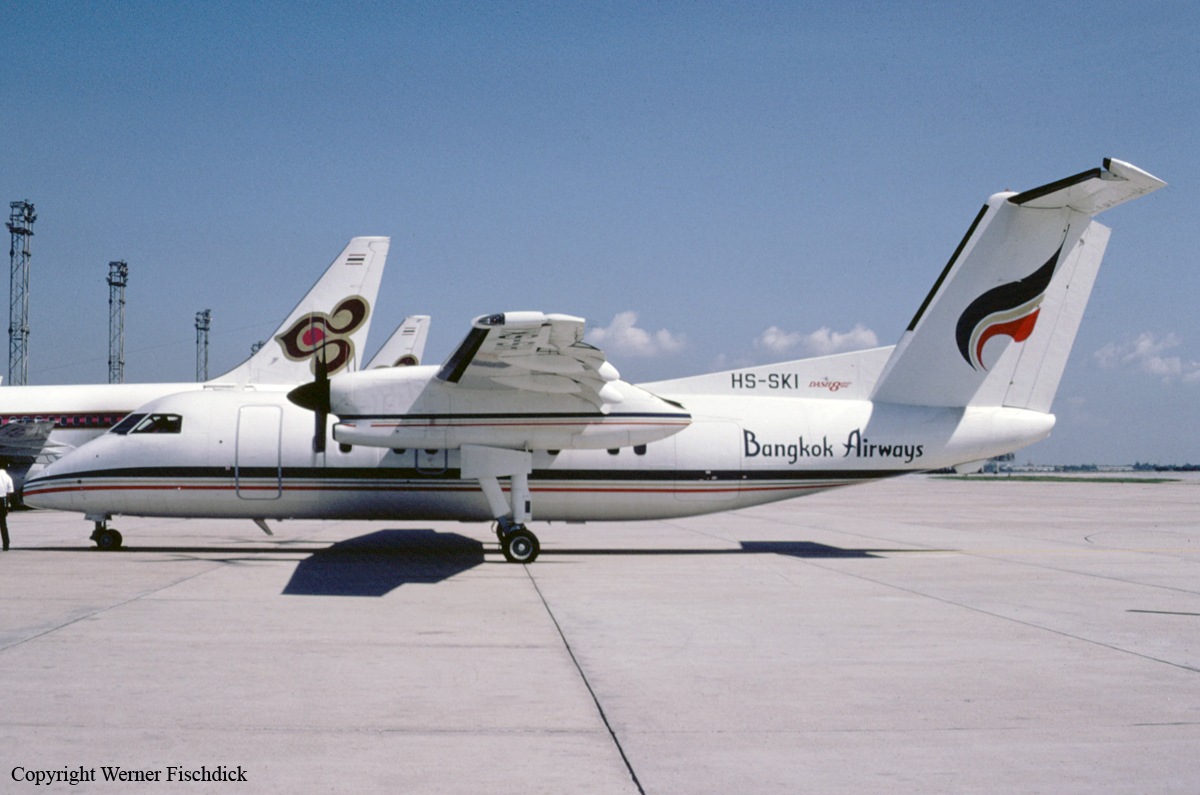
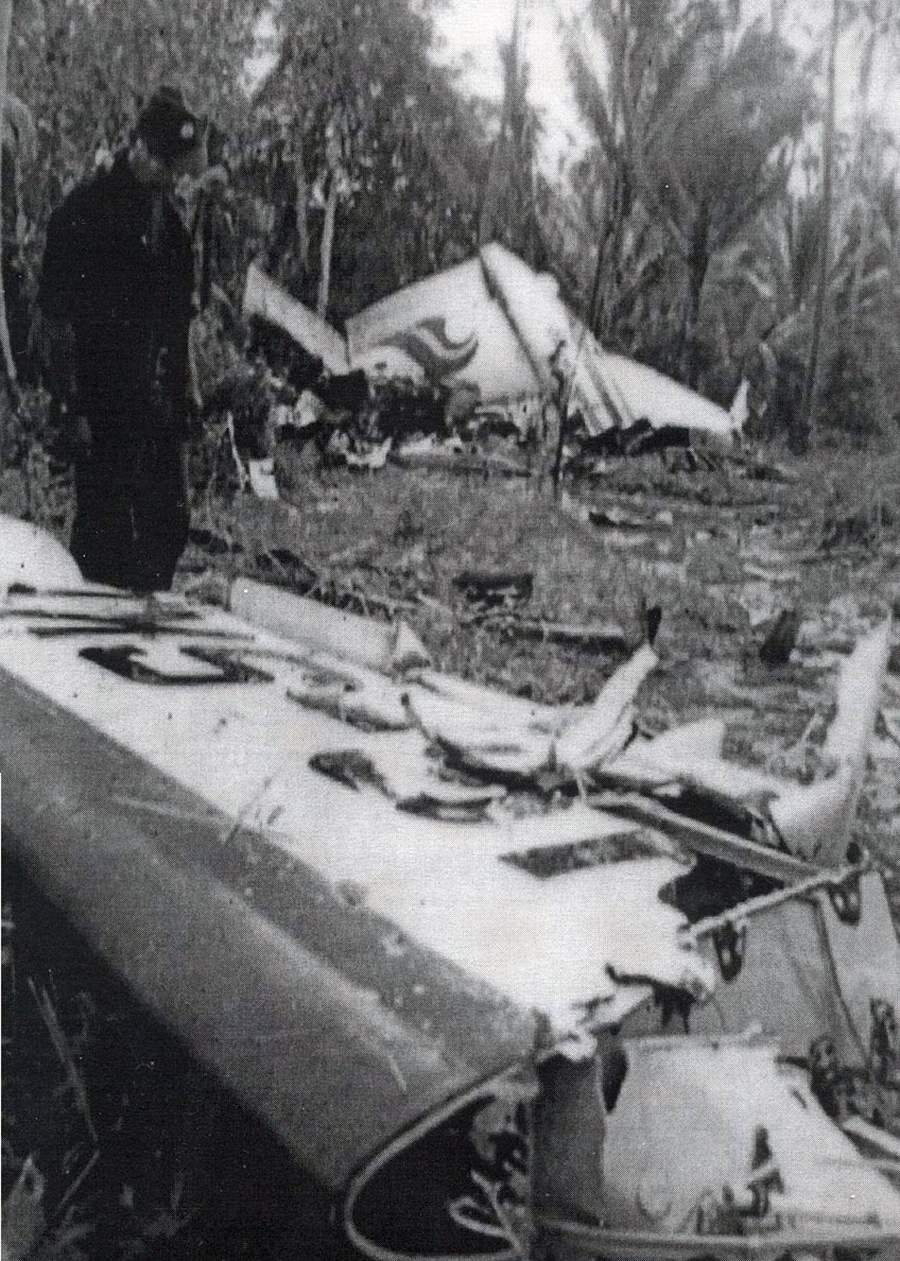
Crash of a De Havilland Dash-8-103 in Koh Samui: 38 killed

Date & Time: Nov 21, 1990 at 1815 LT
Operator:
Registration:
HS-SKI
Survivors:
No
Schedule:
Bangkok - Koh Samui
MSN:
172
YOM:
1989
Flight number:
PG125
Country:
Region:
Crew on board:
5
Crew fatalities:
Pax on board:
33
Pax fatalities:
Other fatalities:
Total fatalities:
38
Captain / Total flying hours:
14764
Captain / Total hours on type:
521.00
Copilot / Total flying hours:
674
Copilot / Total hours on type:
235
Aircraft flight hours:
3416
Aircraft flight cycles:
2998
Circumstances:
On final approach to Koh Samui Airport runway 35, the aircraft entered an area of heavy rain falls. As the crew was unable to locate the runway, the captain decided to initiate a go-around procedure. With flaps fully extended, the crew increased power and started to gain height when the aircraft rolled to the left to an angle of 75° then entered an uncontrolled descent and crashed at a speed of 147 knots about 5 km short of runway threshold. The aircraft disintegrated on impact and all 38 occupants were killed.
Probable cause:
The pilot suffered a spatial disorientation which resulted in an improper control of the aircraft. The following contributing factors were reported:
- The pilot continued the approach in bad weather conditions with limited or no visual reference with the ground.
- Both pilots attention was focused on trying to locate the runway, neglecting the standard cross checks and mutual checks on approach and failing to monitor the aircraft attitude.
- Poor crew coordination,
- Lack of teamwork,
- Poor flight monitoring that contributed to the loss of situational awareness and improper control of the aircraft.

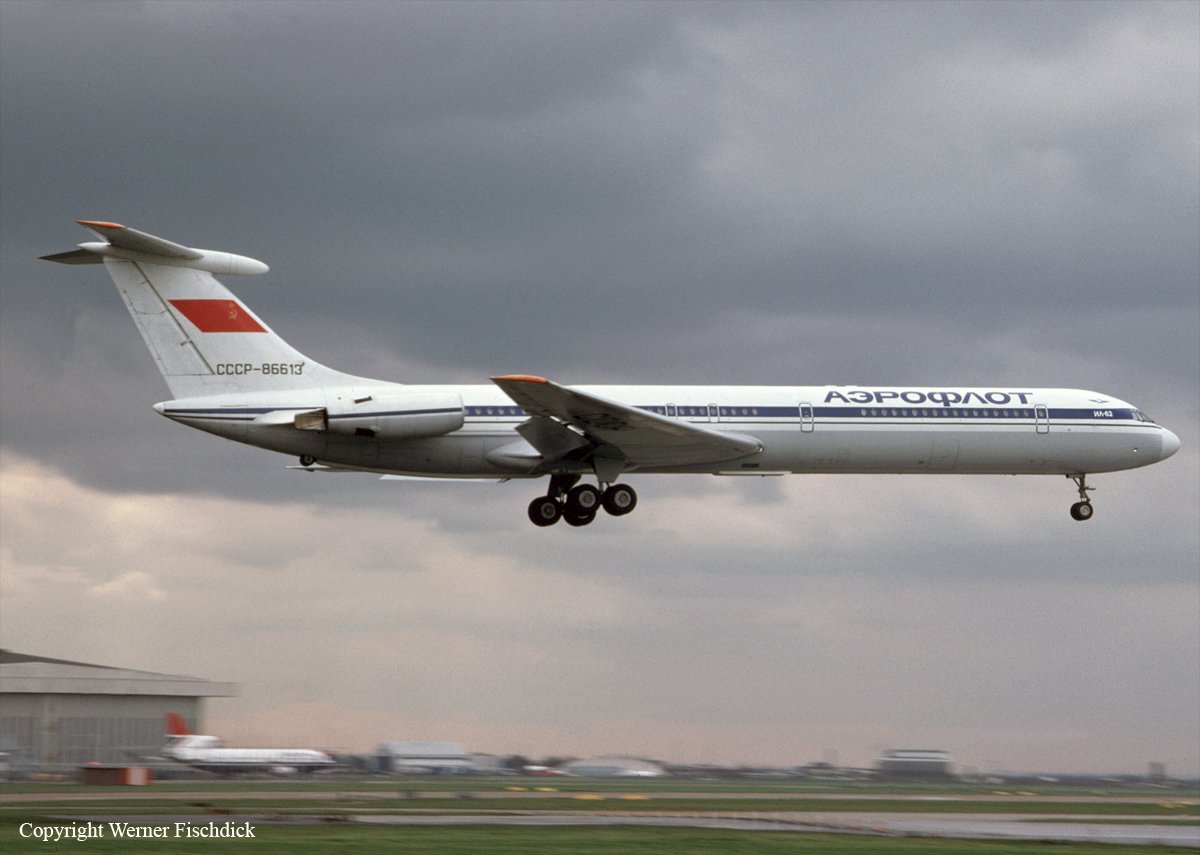
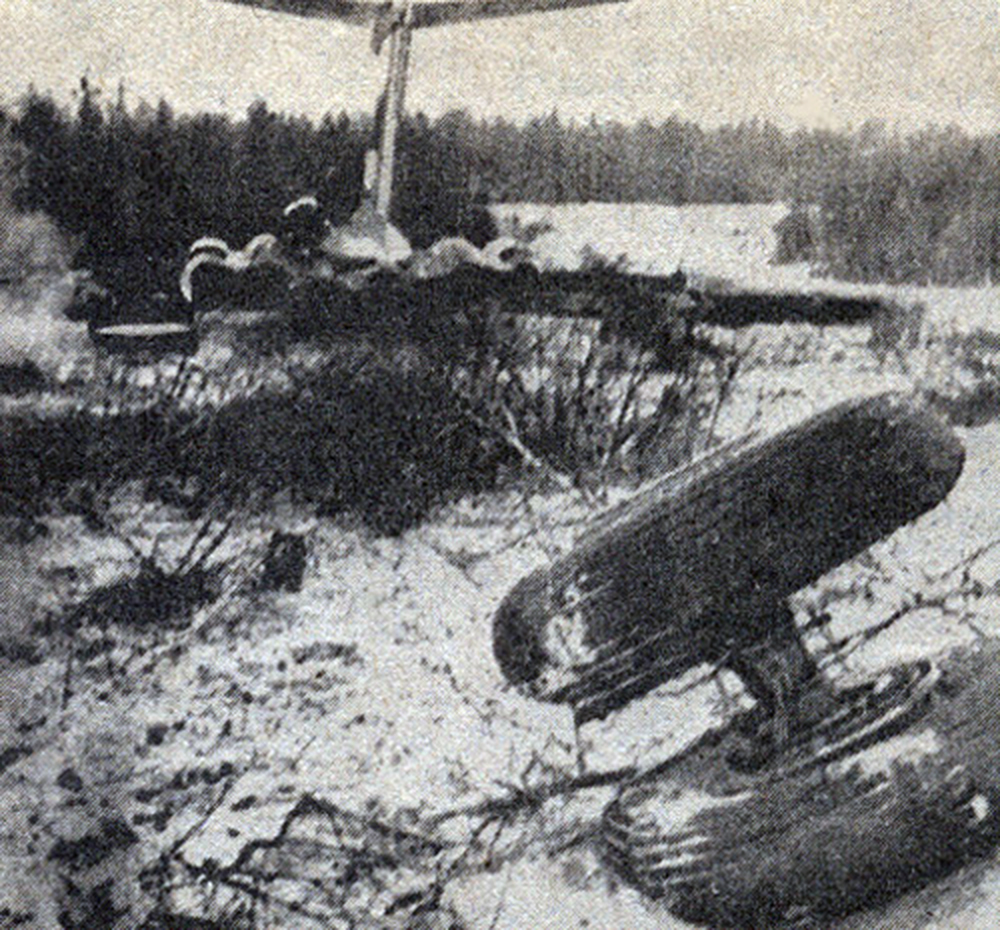
Crash of an Ilyushin II-62 in Yakutsk

Date & Time: Nov 21, 1990 at 1245 LT
Type of aircraft:
Operator:
Registration:
CCCP-86613
Survivors:
Yes
Schedule:
Moscow - Yakutsk
MSN:
1901
YOM:
1975
Flight number:
SU95
Country:
Region:
Crew on board:
10
Crew fatalities:
Pax on board:
179
Pax fatalities:
Other fatalities:
Total fatalities:
0
Circumstances:
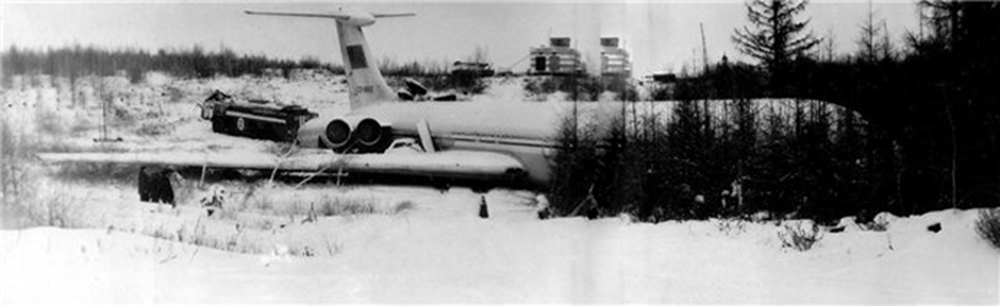
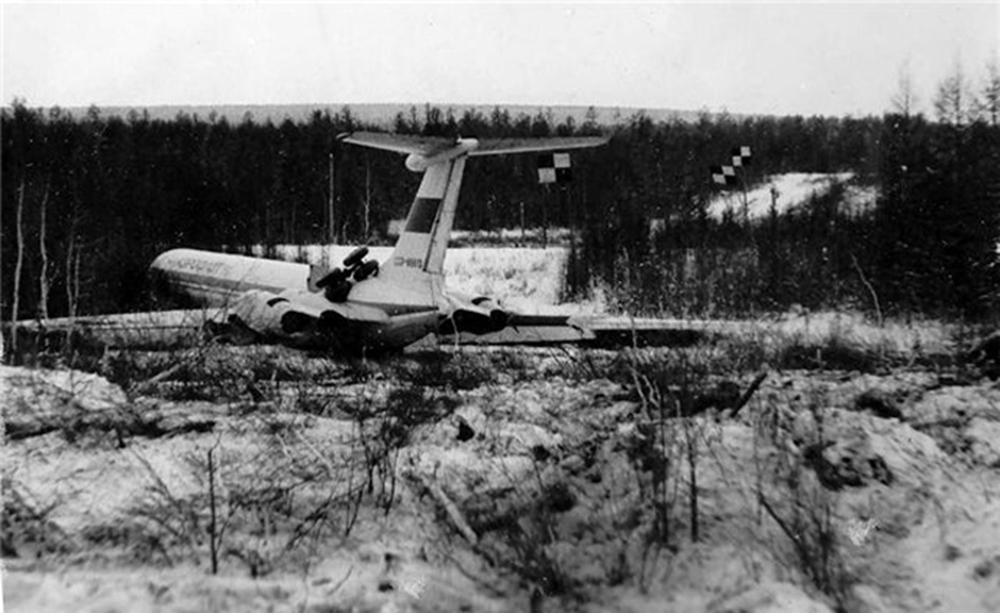
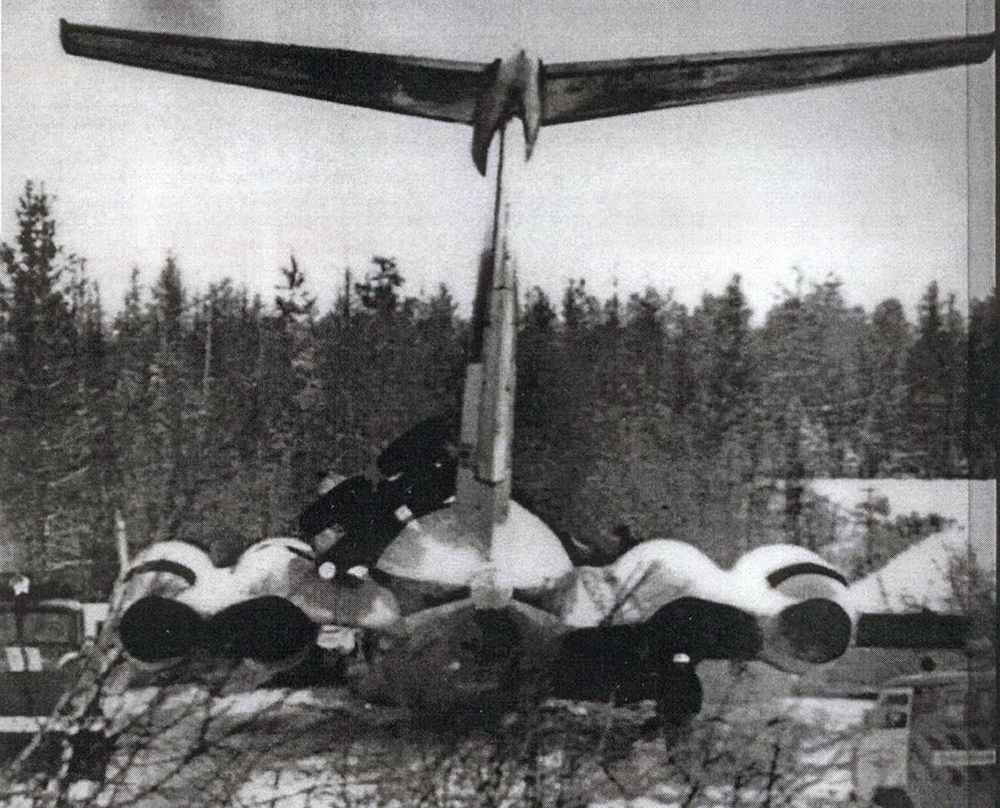
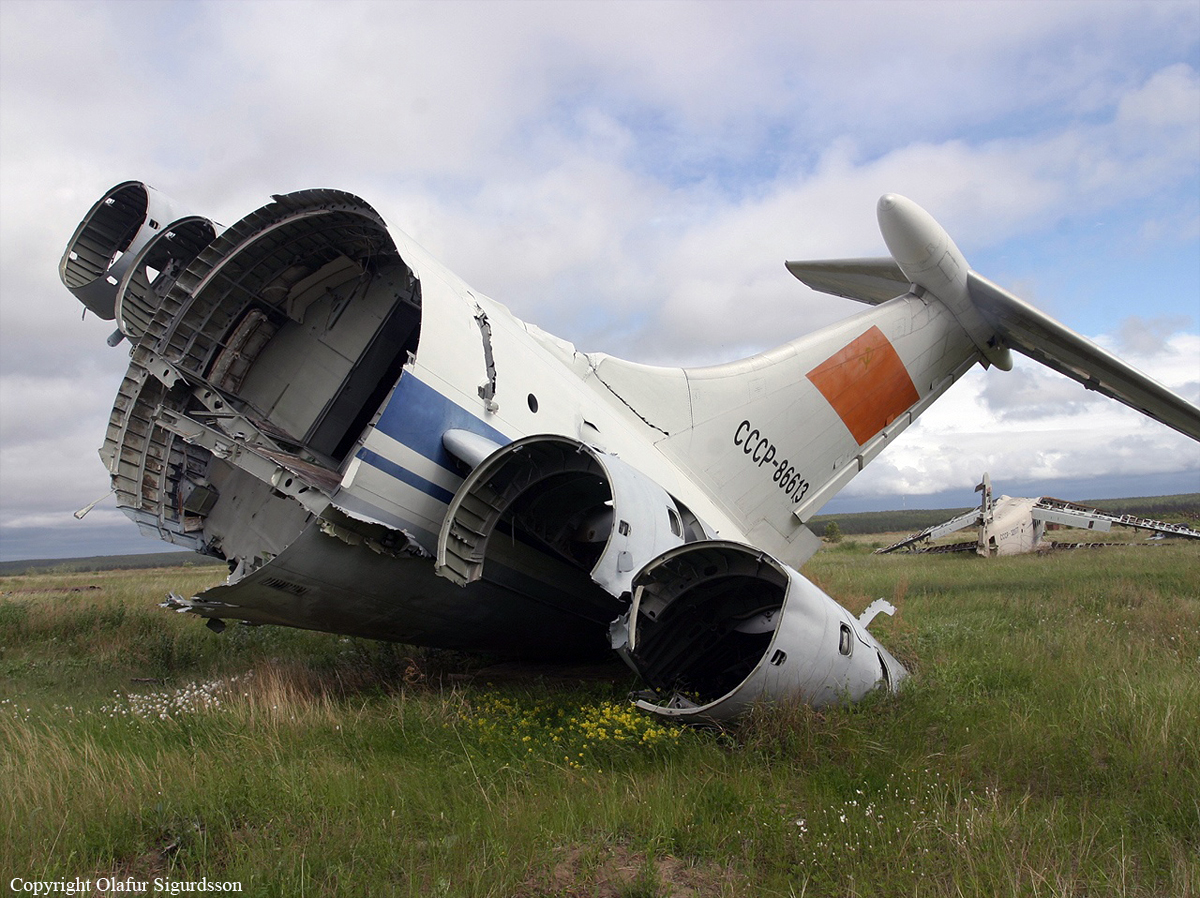
Following an uneventful flight from Moscow-Domodedovo Airport, the crew started the approach to Yakutsk-Intl Airport. Due to poor weather conditions and a visibility below minima, the crew diverted to Magan Airport. The aircraft overflew the runway threshold at a height of 22 meters and a speed of 297 km/h. It 'floated' for 22 seconds and eventually landed 1,647 meters past the runway threshold. For unknown reasons, the captain maintained the aircraft in a nose-up attitude and the nose gear landed nine seconds after the first touchdown only. Reverse thrust were not activated and the spoilers were finally deployed but too late. At a distance of 47 meters from the runway end, the captain shut down all four engine when the aircraft overran at a speed of 167 km/h. It went down an embankment, lost its undercarriage and came 538 meters past the runway end, 3,978 meters from the runway threshold and 2,331 meters from the touchdown point. Four passengers were injured and 185 other occupants were evacuated safely. The aircraft was damaged beyond repair.
Probable cause:
The accident was the consequence of a poor planned approach and a wrong approach configuration. The following contributing factors were reported:
- Lack of crew training,
- It was the first time (except for one crew member) that the crew was landing at Yakutsk-Magan Airport,
- Marginal weather conditions (visibility below minimums at the initial destination airport),
- Failure to comply with flight crew recommandations,
- Poor crew instructions and interaction,
- The crew failed to follow the published procedures for a standard approach and landing,
- Deviations in aircraft piloting during approach and landing, causing the aircraft to land too far down the runway,
- The pilot-in-command maintained the aircraft in a nose-up attitude for a period of 9 seconds between the main gear touchdown and the nose gear landing,
- The reverse thrust systems were not activated,
- The spoilers were deployed too late,
- Lack of leadership on part of the captain during the approach and landing,
- The crew did not make the decision to initiate a go-around procedure when the landing maneuver was obviously missed.

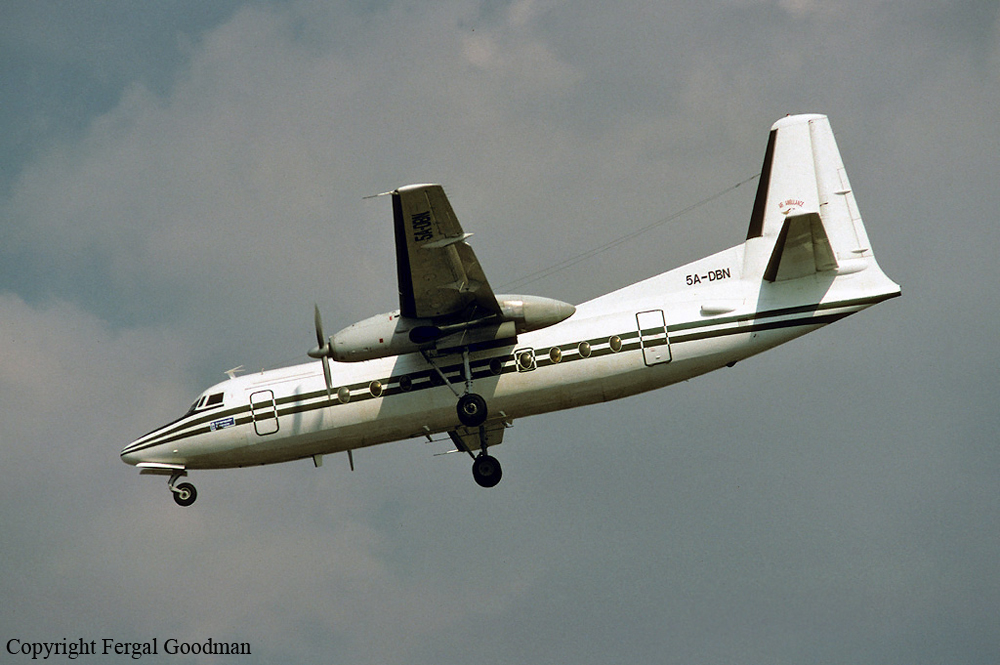
Crash of a Fokker F27 Friendship 600 in Al Abraq

Date & Time: Nov 21, 1990
Type of aircraft:
Operator:
Registration:
5A-DBN
Flight Type:
Survivors:
Yes
MSN:
10436
YOM:
1970
Country:
Region:
Crew on board:
2
Crew fatalities:
Pax on board:
3
Pax fatalities:
Other fatalities:
Total fatalities:
0
Circumstances:
The aircraft was completing a special flight on behalf of the Libyan Red Crescent. On approach, the crew was instructed to follow a holding circuit of 40 minutes because a landing was not possible due to poor weather conditions. When the circuit was completed, the crew initiated the approach but the visibility was still poor as the weather did not improve. The aircraft landed hard, causing the left main gear to collapse. The left wing struck the ground and was torn off till the engine. Out of control, the aircraft veered off runway to the left and came to rest, bursting into flames. All five occupants were injured and the aircraft was destroyed.

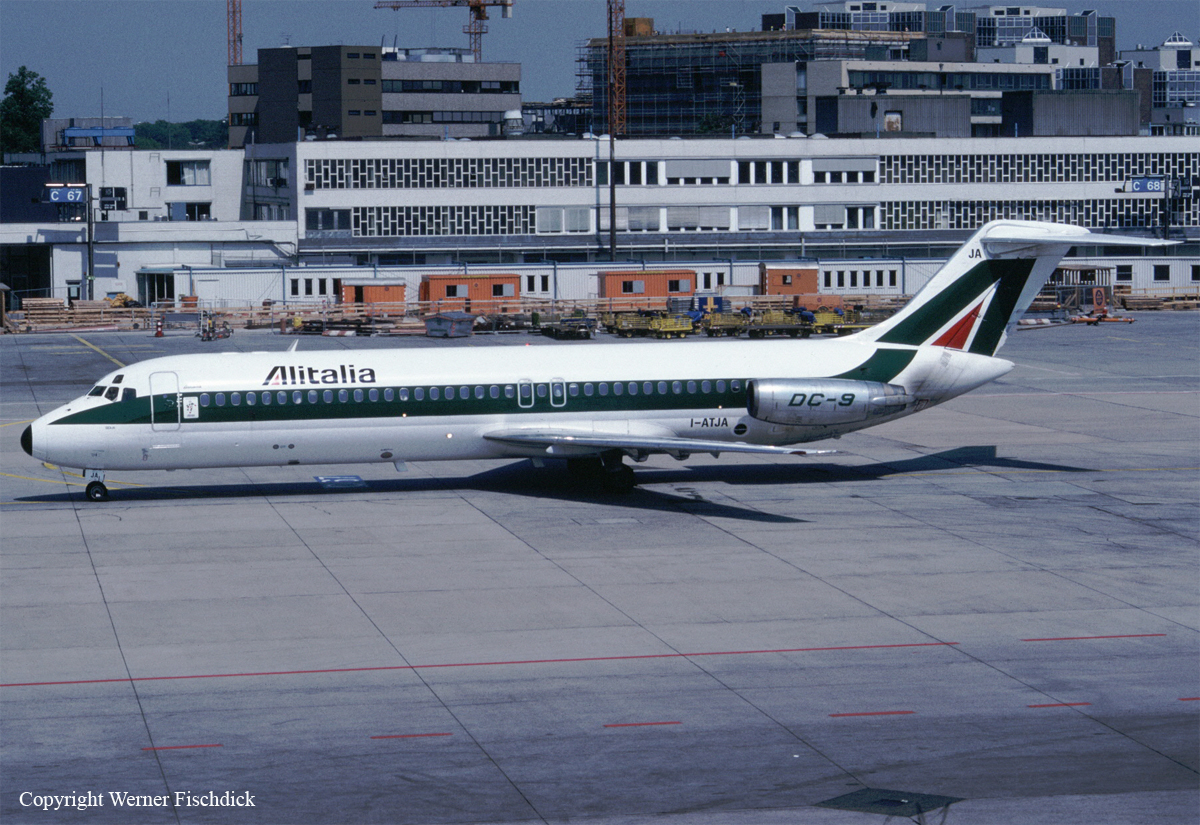
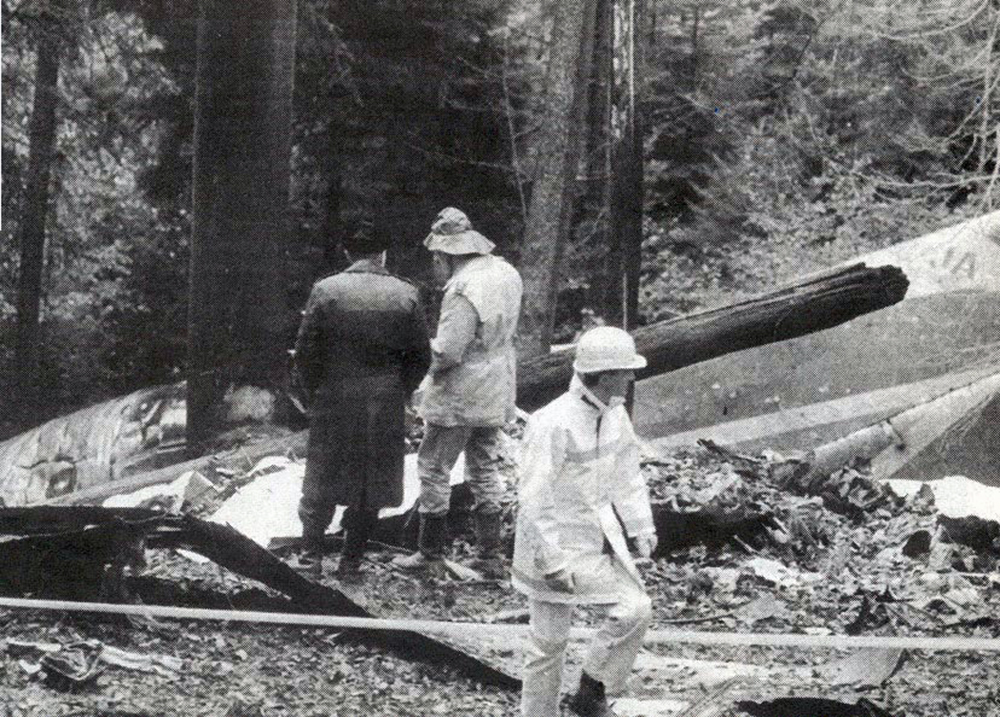
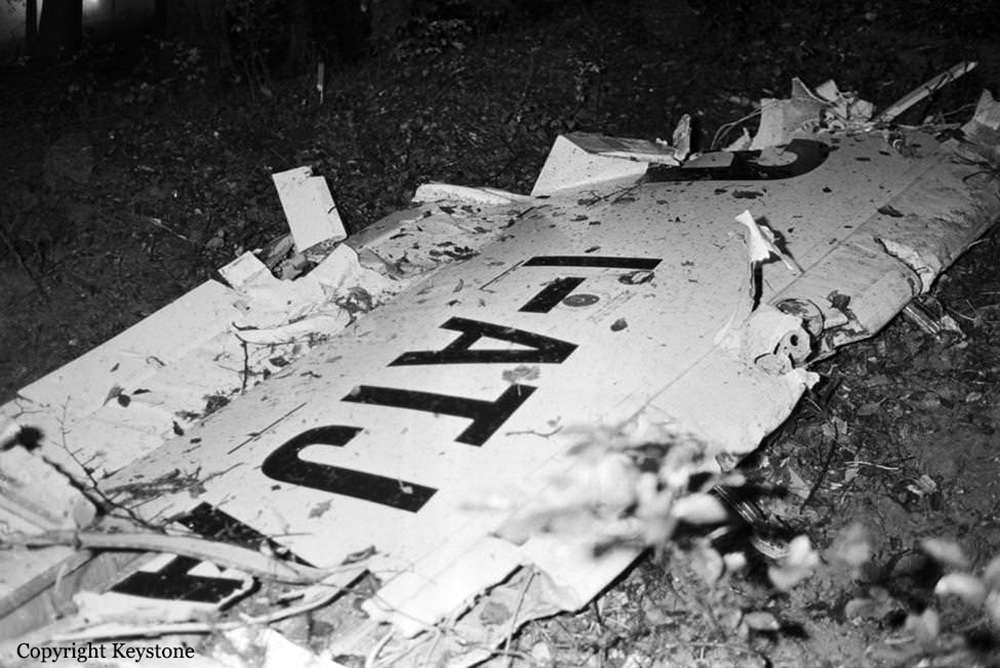
Crash of a Douglas DC-9-32 in Zurich: 46 killed

Date & Time: Nov 14, 1990 at 2011 LT
Type of aircraft:
Operator:
Registration:
I-ATJA
Survivors:
No
Schedule:
Milan - Zurich
MSN:
47641
YOM:
1974
Flight number:
AZ404
Country:
Region:
Crew on board:
6
Crew fatalities:
Pax on board:
40
Pax fatalities:
Other fatalities:
Total fatalities:
46
Captain / Total flying hours:
10193
Captain / Total hours on type:
3194.00
Copilot / Total flying hours:
831
Copilot / Total hours on type:
621
Aircraft flight hours:
43894
Aircraft flight cycles:
43452
Circumstances:
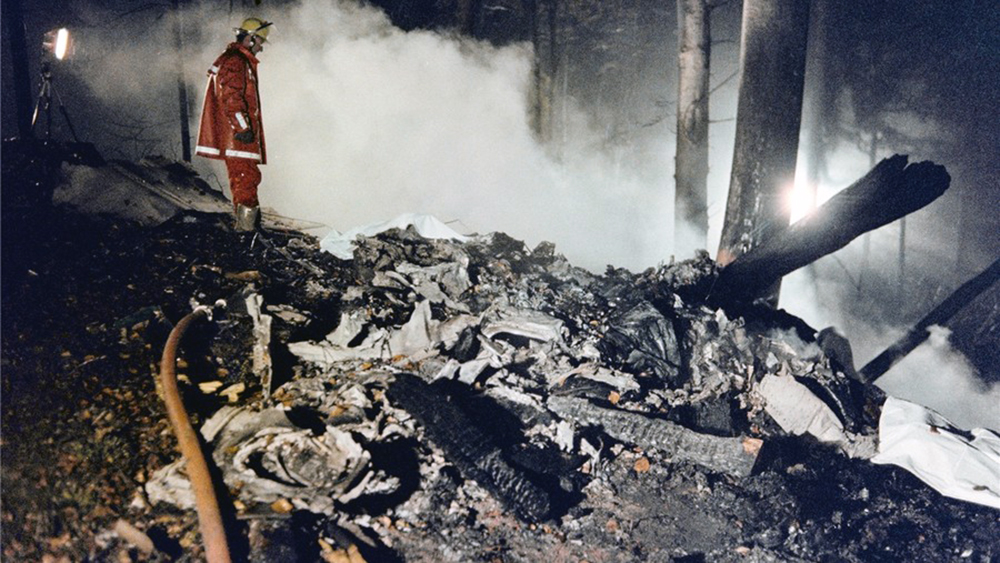
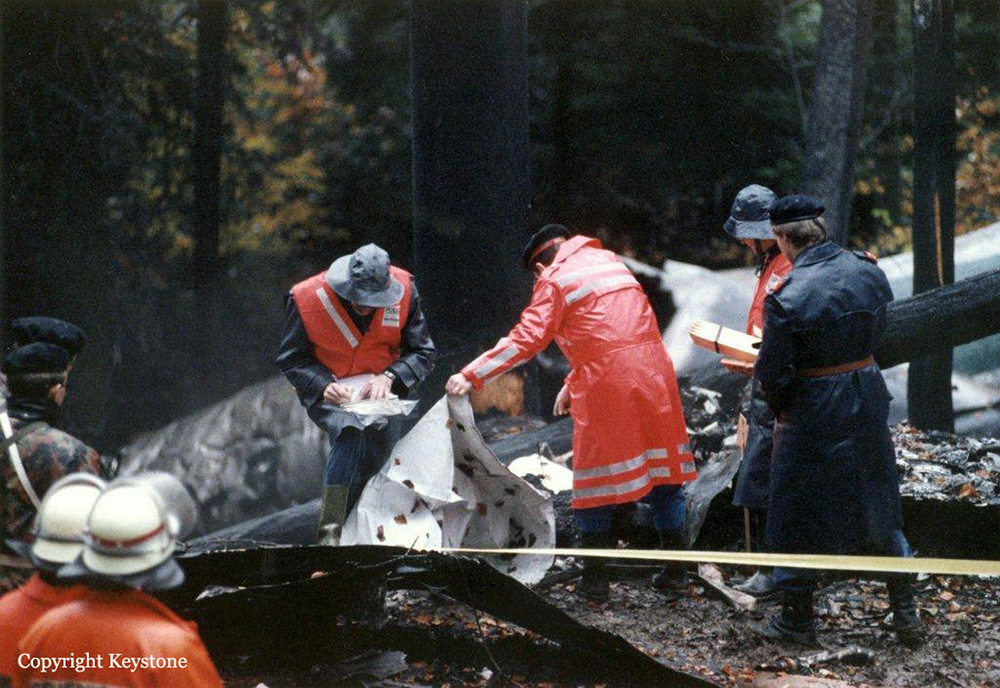
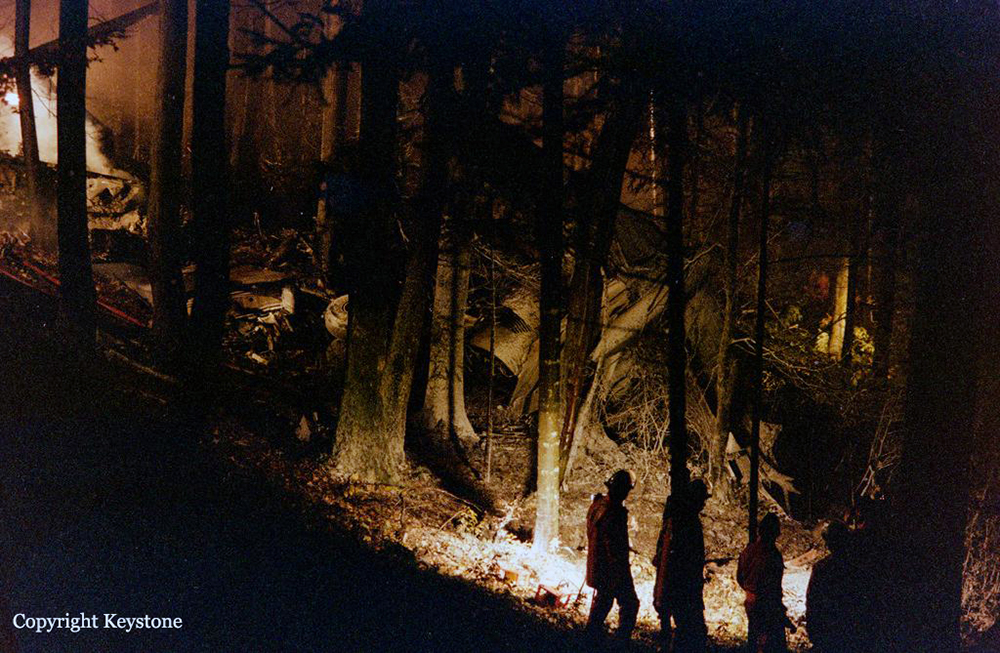
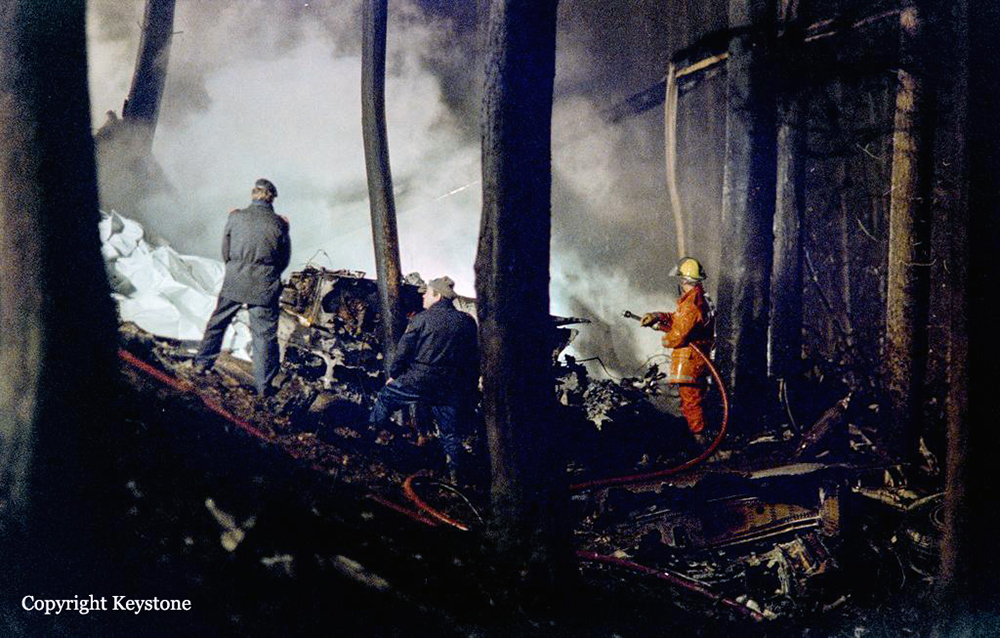
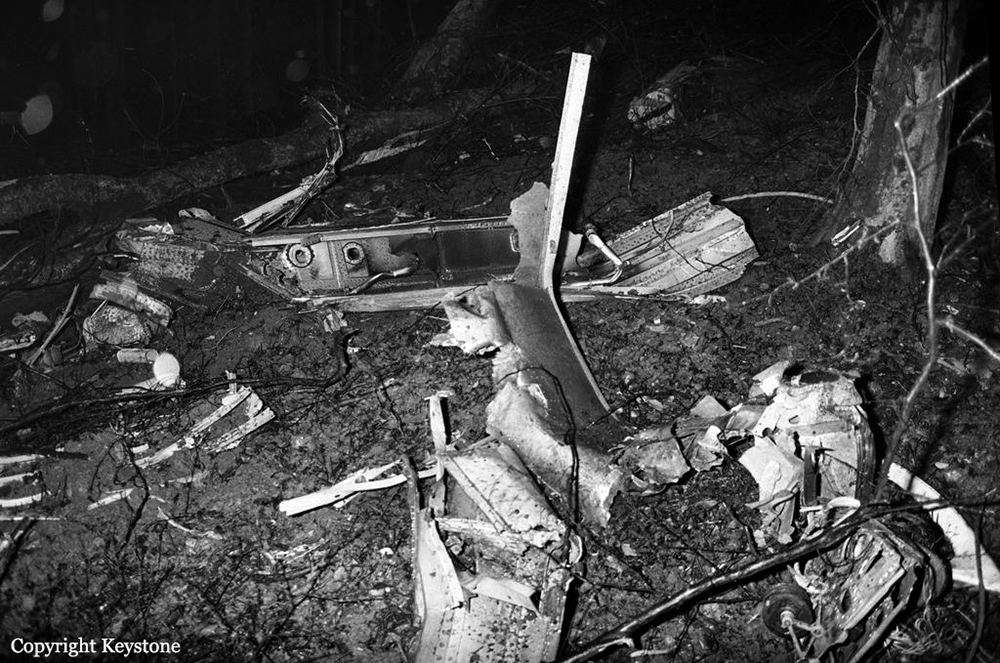
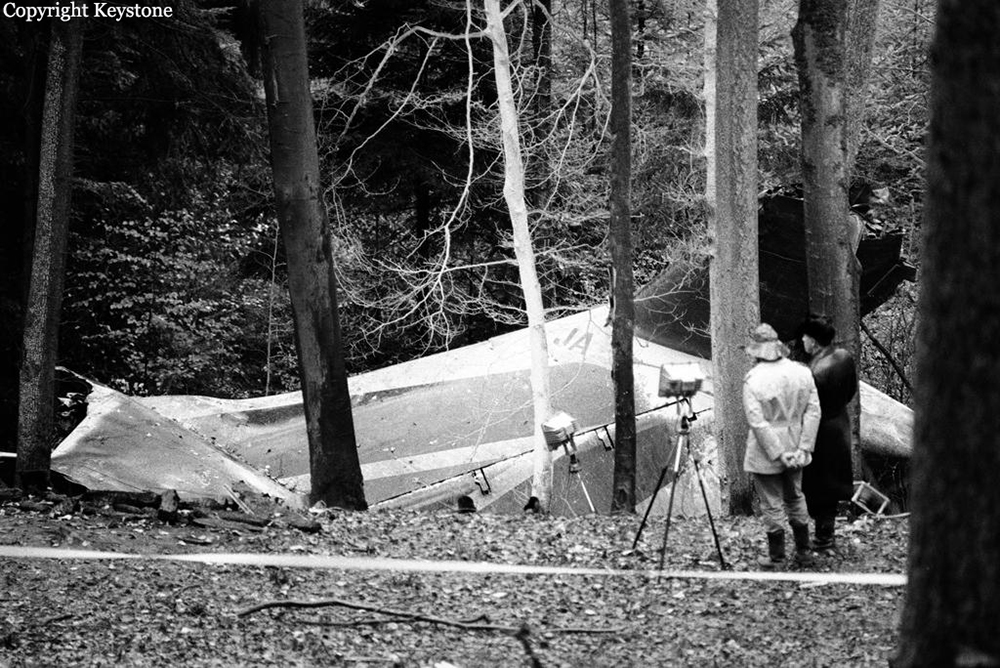
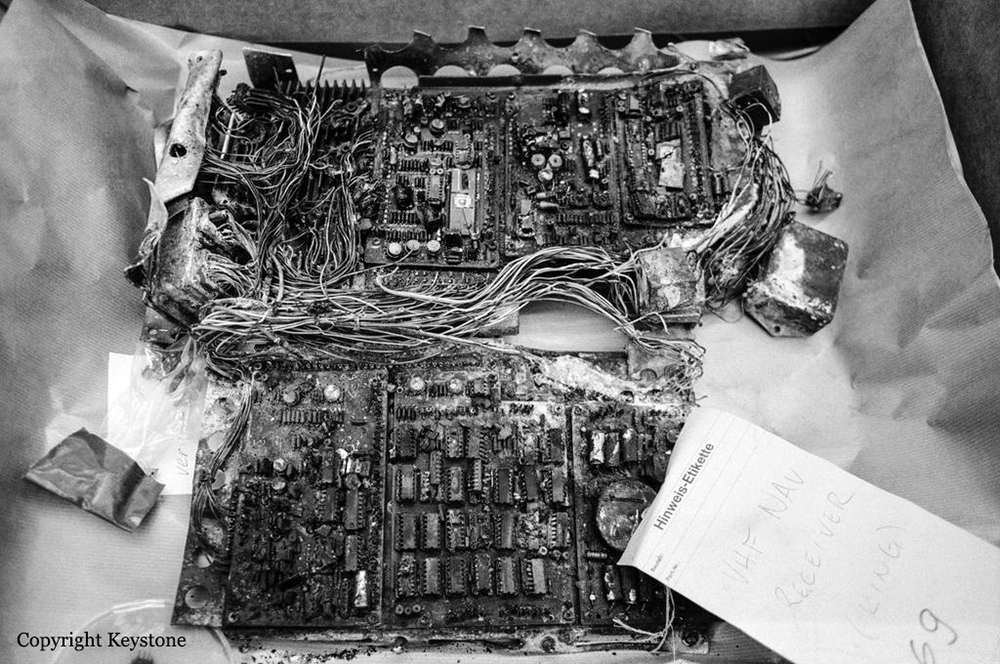
On the 14th November 1990 ALITALIA flight 404, aircraft type DC-9-32 registration I-ATJA, took off from runway 36R at LIN bound for ZRH. The flight was a scheduled commercial flight. The clearance was to the destination airport Zürich, via a CANNE IC departure to Flight Level 120, the transponder code 0302. The PIC assumed the duties of assisting pilot and dealt with the radio-telephony. The First Officer was the handling pilot. The take-off was at 1836 hrs. The standard climb via CANNE towards Airway A9 to the cruising flight level of 200 was trouble free. About 2 minutes after reaching Flight Level 200 the crew listened to Zürich VOLMET. From this they gathered that the surface wind at Zürich was 240/08 kt. This led the PIC forsee a landing on runway 28. Having heard from the ATIS that the landing runway was 14, the crew still discussed a right hand circling approach for a landing on runway 28. The discussion continued considering a left hand circling to runway 28. At 1852.53 hrs, from a QNH of 1019 hPa the crew worked out a QFE of 970 hPa. During the descent, the crew discussed the approach procédure for runway 14, where the Copilot mentioned the Outer Marker height for runway 16. After the discussion about the setting of the navigation aids, they also discussed the procédure to be followed in the event of a communications failure. The crew were instructed that following radar vectors they should fly an ILS approach to runway 14. At 1900.01 hrs the Copilot said "We perform a CAT JJ (approach)". The PIC was in agreement because the navigation equipment had to be checked. Whilst verifying the décision height, it transpired that the Copilot was still Consulting the approach chart for runway 16. Further lengthy discussions about the setting of the required navigation aids followed. As the aircraft passed abeam Zürich descending to Flight Level 90, the PIC noted: "We are by KLOTEN, FL 90. He is bringing us in high". Clearance to descend to Flight Level 60 followed at 1902.28 hrs. At 1902.50 hrs ALITALIA 404 was instructed to fly heading 325. VHF NAV 1 was tuned to Trasadingen VOR (TRA), VHF NAV 2 to Kloten VOR (KLO). To define the fix at EKRON, the course 068 was also set. At 1904.32 hrs the PIC repeated "The outer marker is at 1200 ft (QFE), it can be verified by 3.8 [NM] from Kloten. Rhein (RHI NDB) 5.6 [NM]...". At 1905.15 hrs a new heading was required which the PIC confirmed. The identification of the ILS - 14 was registered on the CVR at 1905.32 hrs. At 1906.20 hrs, together with the approach clearance to runway 14, a new heading of 110, descent to 4000 ft and the QNH of 1019 hPa was given. The PIC confirmed this clearance, however the heading was read back as 120. The incorrect readback of the clearance by the PIC caused the Copilot some uncertainty of the required heading to be flown. The PIC confirmed the approach clearance and the cleared altitude 4000 ft to the COPI, whereby the COPI ordered "RADIO APPROACH...". At this point an altitude of about 5000 ft (QNH) was passed. One of the pilots asked the other whether he had a Glide Path indication. The aircraft position was just before interception of the Localiser passing an altitude of about 4700 ft (QNH) (according to radar and DFDR). It was already about 1300 ft below the Glide Path. Answering the question about the Glide Path, the other pilot replied (hardly understandable) "On 1...I don't have...." Consequently the PIC said: "Good, so let's do it on 1". The COPI then ordered "RADIO 1". The flaps were probably set to 15°. In the meantime, the aircraft had passed through the localiser and was now slightly east of it. About the same time as the PIC said "Capture LOC capture glide path capture - so we are on the localiser, a little off track but..." (translated from Italian) the aircraft descended through 4000 ft (QNH) (about 11.5 NM from the threshold runway 14). It was thus about 1200 ft below the glide path. The QFE 970 hPa was also set by the COPI. About 5 seconds later the Altitude Exit Alert was heard (Descent through 3700 ft [QNH]). The PIC cancelled the warning by setting 5000 ft (Go Around Altitude) on the Altitude Preselect. The PIC said to the COPI: "There is another one (Finnair 863) in front quite close. You can reduce even further to 150 (kt) otherwise we'll end up with a "go around". A discussion followed about possible icing. After this the flaps were set to 25 during which no Landing Gear horn was heard. At this point the aircraft was established on the localiser. The altitude was about 3000 ft QNH - ca. 1200 feet below the glide path. The PIC: "Outer Marker check is at 1250 ft [QFE]". The height was now about 1600 ft QFE. 10 seconds after Flaps 25, the flaps were set to 50. The Outer Marker height of 1250 ft QFE was now passed. The PIC said "Bravo" followed by sounds of switching. At 8 NM final the PIC mentioned "3.8 almost 4 miles". At about 7 NM final, (15 seconds after the PIC's words "Almost 4 miles") the COPI asked "... haven't we passed it?". After a further 12 seconds the COPI asked once again "Didn't we pass the outer marker?" The height was now 670 ft QFE. The PIC's answer was "No no it hasn't changed yet. At 6.6 NM final the PIC said "Oh it shows 7 The crew was now ordered by Zürich ARR to change frequency to Zürich TWR. At 6.25 NM final the pilots conversed as follows: "... That doesn't make sense to me "Nor to me ...". 2 seconds after this conversation the PIC called out "Pull, pull, pull, pull! ". Simultaneously autopilot disconnection could be heard. The position was now about 500 ft AGL overhead Weiach - about 350 ft QFE. 2 seconds later the COPI called out "GO AROUND" the PIC responded with "No no no no ... catch the glide". At this point the DFDR shows a pitch change from -2° [AND] to +5.4° [ANU]. At the same time the thrust was increased from 1.3 to 1.7 EPR. The sink rate decreased from 1100 ft/min. to 190 ft/min. After 11 seconds (the pitch oscillated at +1° [ANU]) the PIC asked "Can you hold it?" to which the COPI replied "Yes". One second after the COPI's answer the Radio Altimeter warning (pip pip pip) indicating 200 ft/AGL could be heard. During this, the PIC said "Hold on let's try to At 1911.18 hrs the aircraft Struck the north em slope of the Stadlerberg at a altitude of 1660 ft QNH. All 46 occupants were killed.
Probable cause:
The accident was the consequence of the combination of the following factors:
- False indication of VHF NAV unit n°1 in the cockpit,
- Probable altimeter misreading by the PIC,
- No GPWS warning in the cockpit,
- Pilots not aware of the possibility of incorrect indications in the NAV equipment in use (without flag-alarm),
- Inadequate failure analysis by the pilots,
- Non-compliance by the pilots with basic procedural instructions during the approach,
- Unsuitable cooperation between the pilots during the approach,
- COPI's initiated go around procedure aborted by the PIC,
- The Approach Controller not observing the leaving of the cleared altitude of 4000 ft QNH before the FAP.
Final Report:

Crash of a Beechcraft A90 King Air in Crestview: 3 killed

Date & Time: Nov 13, 1990 at 0831 LT
Type of aircraft:
Operator:
Registration:
N2EP
Flight Type:
Survivors:
No
Schedule:
Crestview - Crestview
MSN:
LJ-284
YOM:
1967
Crew on board:
3
Crew fatalities:
Pax on board:
0
Pax fatalities:
Other fatalities:
Total fatalities:
3
Captain / Total flying hours:
9726
Captain / Total hours on type:
135.00
Circumstances:
The pic/cfi was conducting a public use instructional flight with two military rated student pilots. The airplane was observed at about 60 to 80 feet agl south of the approach end of an active runway. It yawed to the right, and back to the left, colliding with the terrain in a 45° leftwing-low attitude, and disappeared from view. He flight had been in the pattern making touch-and-go's, and had earlier reported a single engine approach. This landing was to be a full-stop. All three occupants were killed.
Probable cause:
The pilot-in-command/cfi improper supervision of the dual student. This resulted in an in flight loss of control, and collision with terrain for failure to maintain minimum control airspeed (VMC) while conducting a simulated emergency procedure.
Final Report:

Crash of a De Havilland CC-115 Buffalo in Rio de Janeiro: 9 killed

Date & Time: Nov 12, 1990 at 0920 LT
Type of aircraft:
Operator:
Registration:
2350
Flight Phase:
Flight Type:
Survivors:
Yes
Schedule:
Rio de Janeiro – Campo de Marte – Anápolis – Brasília
MSN:
15
YOM:
1968
Country:
Crew on board:
10
Crew fatalities:
Pax on board:
0
Pax fatalities:
Other fatalities:
Total fatalities:
9
Circumstances:
Shortly after takeoff from runway 15, while in initial climb, the aircraft banked right and crashed about 300 meters from the apron, bursting into flames. A crew member was injured while nine other occupants were killed.

Crash of a Beechcraft C90 King Air in Blantyre: 1 killed

Date & Time: Nov 9, 1990
Type of aircraft:
Operator:
Registration:
7Q-YMM
Flight Type:
Survivors:
Yes
Schedule:
Blantyre - Blantyre
MSN:
LJ-880
YOM:
1980
Country:
Region:
Crew on board:
2
Crew fatalities:
Pax on board:
0
Pax fatalities:
Other fatalities:
Total fatalities:
1
Circumstances:
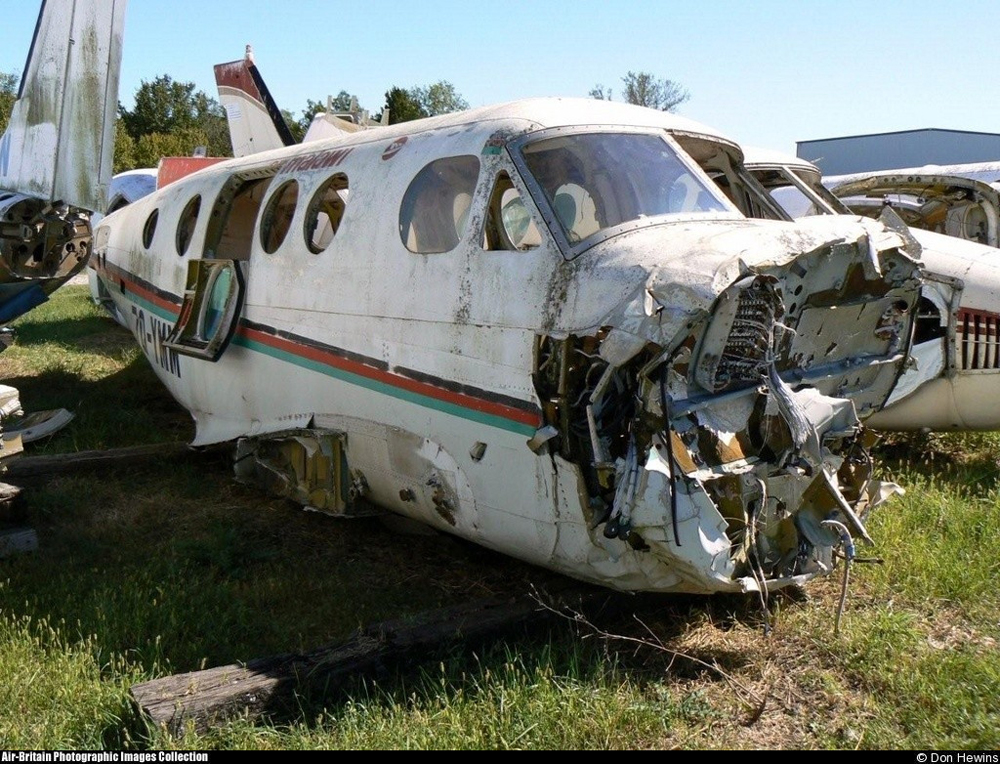
The crew (one instructor and one pilot under training) departed Blantyre-Chileka Airport on a local training flight. Few minutes after takeoff, the instructor shut down the right engine to simulate a failure and the crew continued the flight when, shortly later, the left engine lost power and failed. The crew elected to restart the right engine but without success. In a such situation, the pilots decided to return to Blantyre Airport when, on final approach, the aircraft stalled and crashed 1,300 meters short of runway. One pilot was killed while the second occupant was seriously injured.
Probable cause:
Failure of the left engine for unknown reasons.