



Date & Time:
Nov 21, 1990 at 1815 LT
Type of aircraft:
De Havilland DHC-8-100 (Dash-8)
Operator:

Registration:
HS-SKI
Flight Phase:
Landing (descent or approach)
Flight Type:
Scheduled Revenue Flight
Survivors:
No
Schedule:
Bangkok - Koh Samui
MSN:
172
YOM:
1989
Flight number:
BKP125
Country:
Thailand
Region:
Asia
Crew on board:
5
Crew fatalities:
5
Pax on board:
33
Pax fatalities:
33
Other fatalities:
0
Total fatalities:
38
Captain / Total hours on type:
521
Copilot / Total hours on type:
235
Aircraft flight hours:
3416
Aircraft flight cycles:
2998
Circumstances:
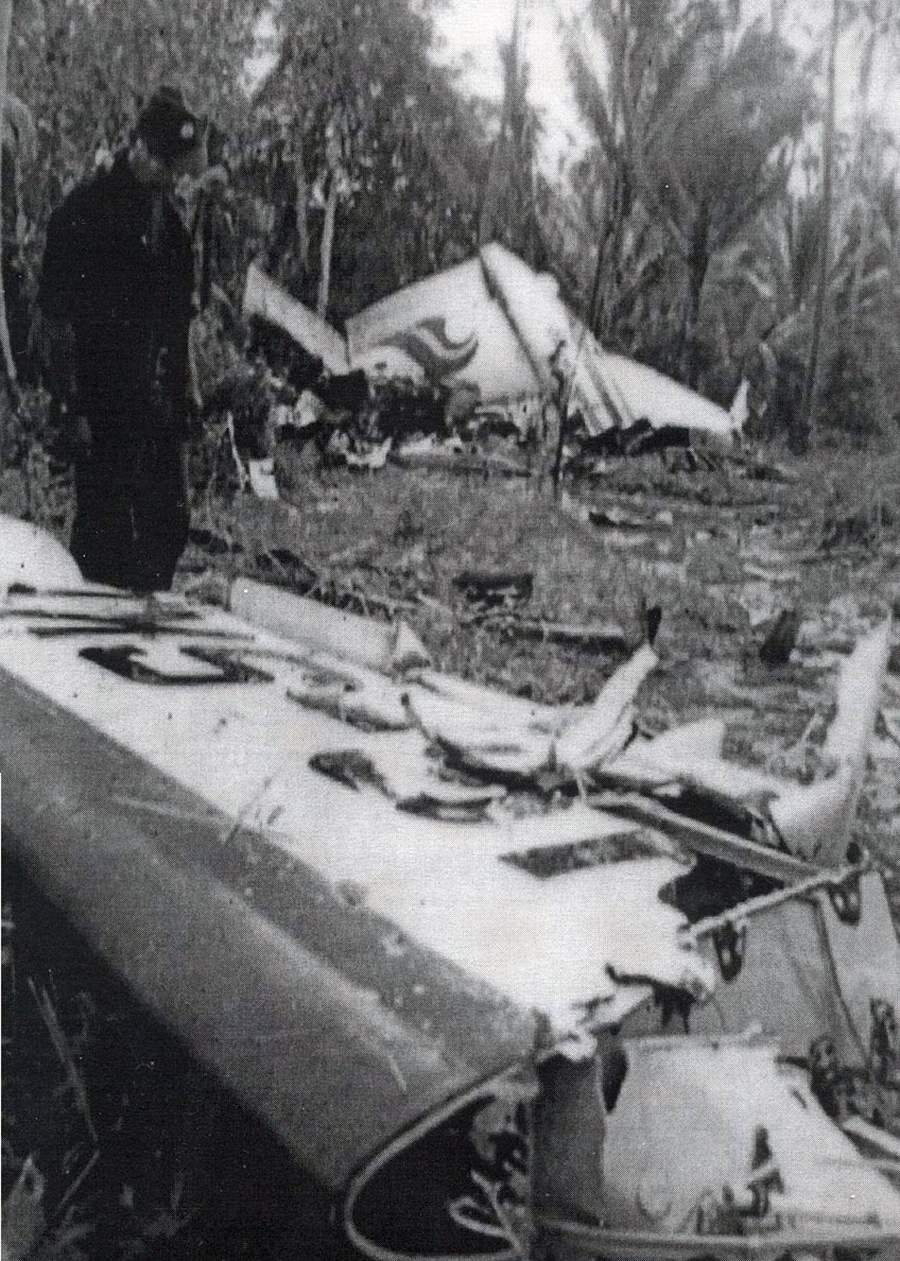
On final approach to Koh Samui Airport runway 35, the aircraft entered an area of heavy rain falls. As the crew was unable to locate the runway, the captain decided to initiate a go-around procedure. With flaps fully extended, the crew increased power and started to gain height when the aircraft rolled to the left to an angle of 75° then entered an uncontrolled descent and crashed at a speed of 147 knots about 5 km short of runway threshold. The aircraft disintegrated on impact and all 38 occupants were killed.
Probable cause:
The Aircraft Accident Investigation Committee of the Government of Thailand determines the probable cause of accident to be the pilot experienced spatial disorientation which resulted in improper control of the aircraft.
Factors which contributed to accident were as follows:
- The pilot flew the aircraft into bad weather condition which had very little or no visual reference.
- Channelized attention occurred when all of the pilots concentration were focused on looking for the airport and neglecting to do proper cross checking or monitoring the aircraft attitude.
- Confusion of pilots, poor teamwork or poor cockpit co-ordination in monitoring the flight instruments might contribute to loss of situational awareness and improper control of the aircraft through their false senses.
Factors which contributed to accident were as follows:
- The pilot flew the aircraft into bad weather condition which had very little or no visual reference.
- Channelized attention occurred when all of the pilots concentration were focused on looking for the airport and neglecting to do proper cross checking or monitoring the aircraft attitude.
- Confusion of pilots, poor teamwork or poor cockpit co-ordination in monitoring the flight instruments might contribute to loss of situational awareness and improper control of the aircraft through their false senses.
Final Report:
HS-SKI.pdf1.39 MB

