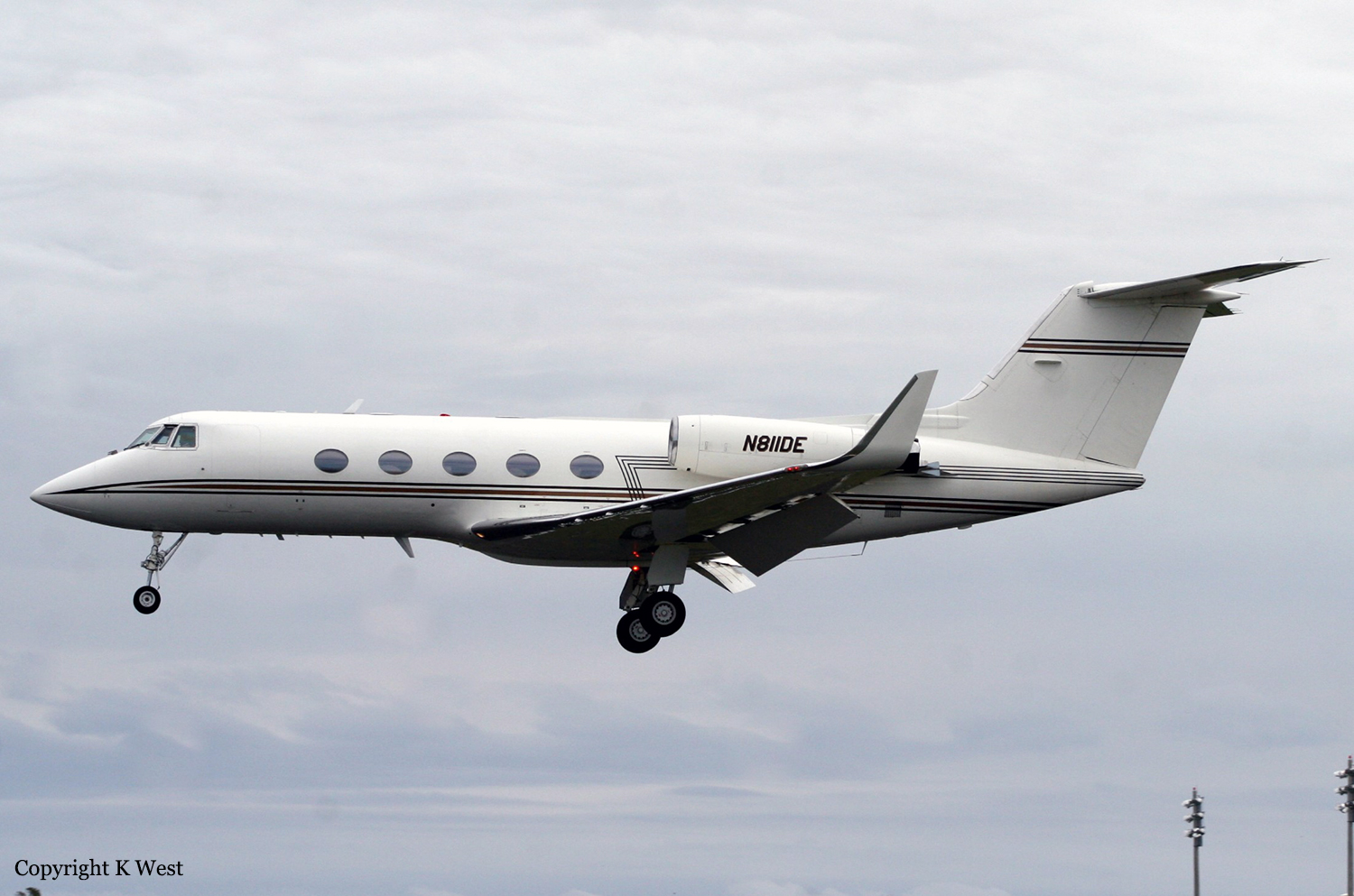
Crash of a Gulfstream GII in Huambo

Date & Time: Nov 26, 2011
Type of aircraft:
Registration:
N811DE
Flight Phase:
Flight Type:
Survivors:
Yes
Schedule:
Huambo – Saurimo
MSN:
244
YOM:
1979
Country:
Region:
Crew on board:
3
Crew fatalities:
Pax on board:
7
Pax fatalities:
Other fatalities:
Total fatalities:
0
Circumstances:
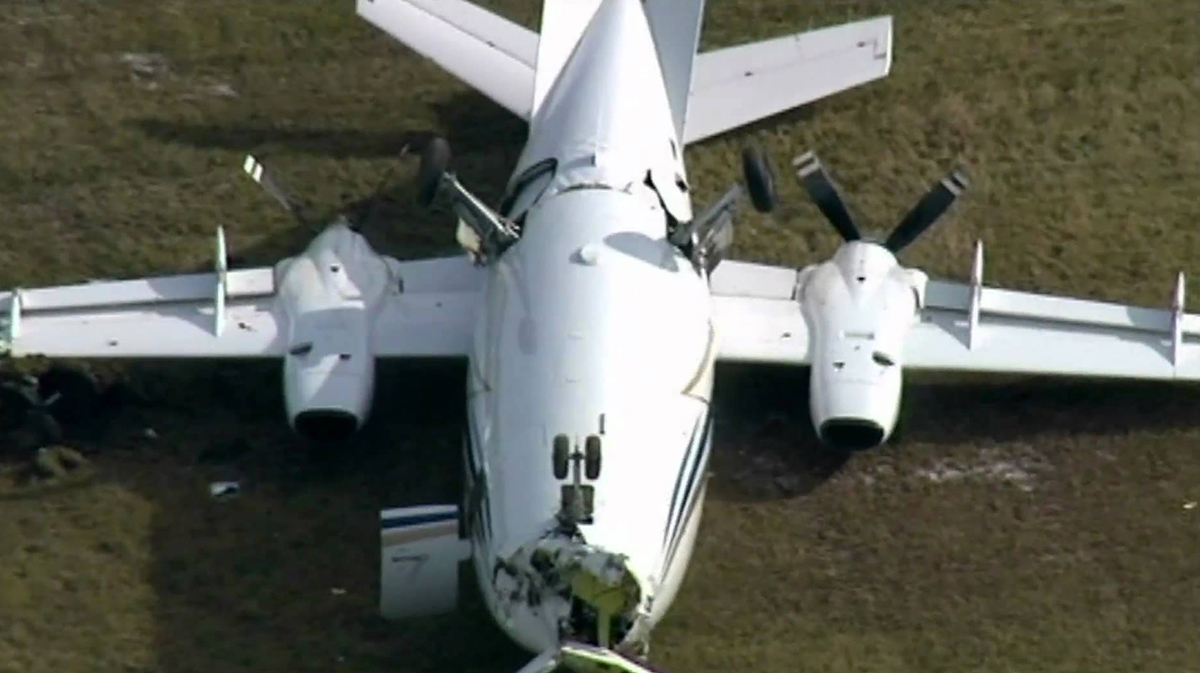
During the takeoff roll at Huambo-Albano Machado Airport, the crew decided to reject takeoff for unknown reasons. The aircraft veered off runway and came to rest. All 10 occupants escaped uninjured while the aircraft was damaged beyond repair.

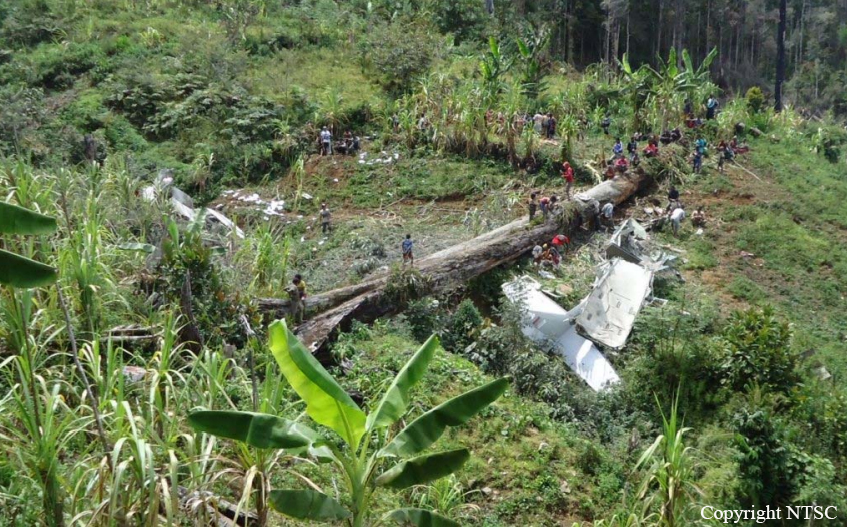
Crash of a Cessna 208B Grand Caravan in Bilogai-Sugapa: 1 killed

Date & Time: Nov 23, 2011 at 0942 LT
Type of aircraft:
Operator:
Registration:
PK-VVG
Flight Type:
Survivors:
Yes
Schedule:
Nabire - Bilogai-Sugapa
MSN:
208B-1308
YOM:
2007
Country:
Region:
Crew on board:
2
Crew fatalities:
Pax on board:
0
Pax fatalities:
Other fatalities:
Total fatalities:
1
Captain / Total flying hours:
1859
Captain / Total hours on type:
1550.00
Copilot / Total flying hours:
690
Copilot / Total hours on type:
231
Aircraft flight hours:
4331
Aircraft flight cycles:
5375
Circumstances:
The flight route was Nabire to Bilogai as an unscheduled cargo flight. There were two pilots on board and the freight load was a mixture of food, palm oil, and cement. The aircraft departed from Nabire at 2355 UTC (0855 LT), the estimate time of arrival of Bilogai was 0045 UTC. At 0042 UTC the aircraft was reported above touchdown zone and the altitude recorded of 6,960 feet, direction 277 degrees and air speed 94 knots. The aircraft executed a go around due to an unauthorized person entering the shoulder of the runway 27, the aircraft then continued to climb and headed left. It was reported while the aircraft initially was climbing with the nose up but following lost altitude. During go around manoeuvre the aircraft attitude was in high nose up position, caused the angle of attack was too high and beyond a stall margins caused the aircraft stall. The aircraft bank to the right and crashed on a corn farm at coordinate S 03 44.58 E 137 0.96 and altitude about 6,550 feet with heading about 260 degrees. The aircraft was destroyed on impact with the ground. The captain seriously injured and still on seat in the aircraft wearing the shoulder harness. The second in command was fatally injured outside of the aircraft at the crashed site.
Probable cause:
FINDINGS :
• The aircraft was airworthy prior the accident and there was no evidence of system malfunction during the flight.
• The crew had valid license and medical certificate.
• There were no fences at the airport perimeter.
• There was a local plantation area nearby the runway.
• Unauthorized person entering the shoulder of the runway 27.
• There was no warning signal to alert if unauthorized persons entering the runway, especially during any aircraft Takeoff and Landing.
• The valley (gap) on the south side of the runway was too narrow for successful go around manoeuvre by a caravan aircraft.
• The aircraft most probably stalled due to very high angle of attack, when the aircraft was manoeuvre to avoid the surrounding terrain and bank to the right.
• The communication of incoming and outgoing Susi Air aircraft from and to Bilogai was only to Susi Air ground handling Agent at Sugapa.
CAUSES :
The aircraft was executed a Go Around due to a unauthorized person entering the shoulder of the runway 27, after go around, crew tried to avoid terrain impact, increasing the aircraft attitude more pitching up caused the angle of attack was higher and beyond a stall margins , finally stall just before impact.
Final Report:

Crash of a Cessna 208B Grand Caravan in Talcha

Date & Time: Nov 21, 2011 at 1600 LT
Type of aircraft:
Operator:
Registration:
9N-AJM
Survivors:
Yes
Schedule:
Nepalgunj – Talcha
MSN:
208B-0561
YOM:
1996
Location:
Country:
Region:
Crew on board:
3
Crew fatalities:
Pax on board:
9
Pax fatalities:
Other fatalities:
Total fatalities:
0
Circumstances:
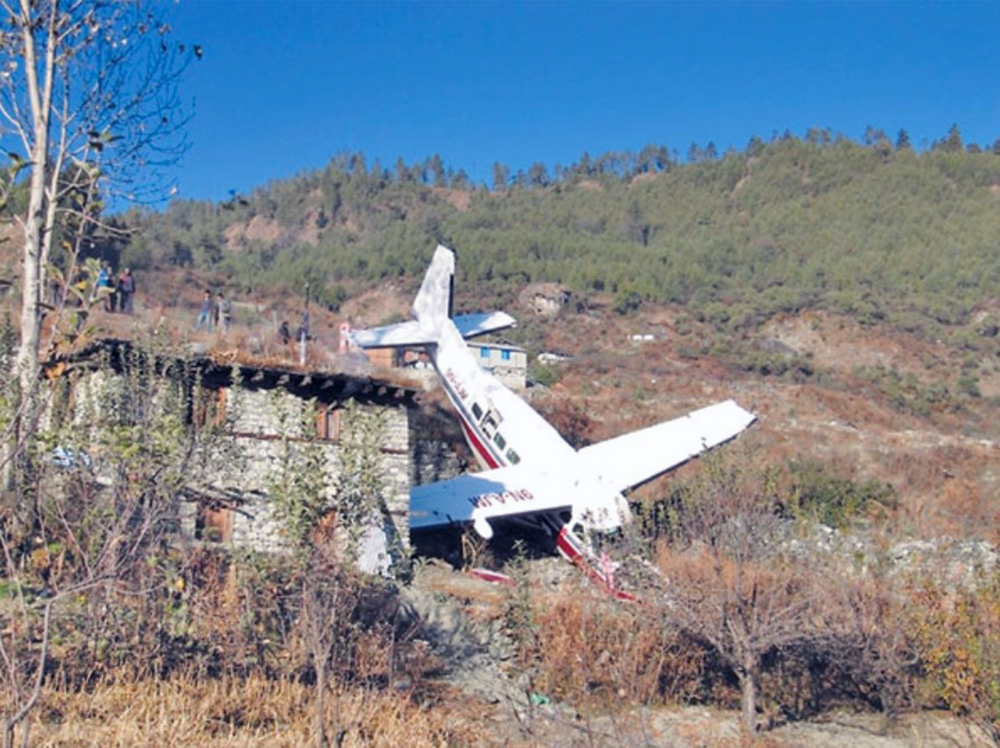
After landing on runway 36 at Talcha Airport, the single engine aircraft veered off runway, went down an embankment and came to rest against a house down the runway. All 12 occupants escaped uninjured while the aircraft was damaged beyond repair. Downdrafts on final approach were reported, and the aircraft seemed to be unstable prior to landing.

Crash of a Piaggio P.180 Avanti II in Flint

Date & Time: Nov 16, 2011 at 0940 LT
Type of aircraft:
Operator:
Registration:
N168SL
Survivors:
Yes
Schedule:
Detroit - West Bend
MSN:
1139
YOM:
2007
Flight number:
VNR168
Crew on board:
2
Crew fatalities:
Pax on board:
2
Pax fatalities:
Other fatalities:
Total fatalities:
0
Captain / Total flying hours:
3851
Captain / Total hours on type:
2023.00
Copilot / Total flying hours:
3957
Copilot / Total hours on type:
259
Aircraft flight hours:
4422
Circumstances:
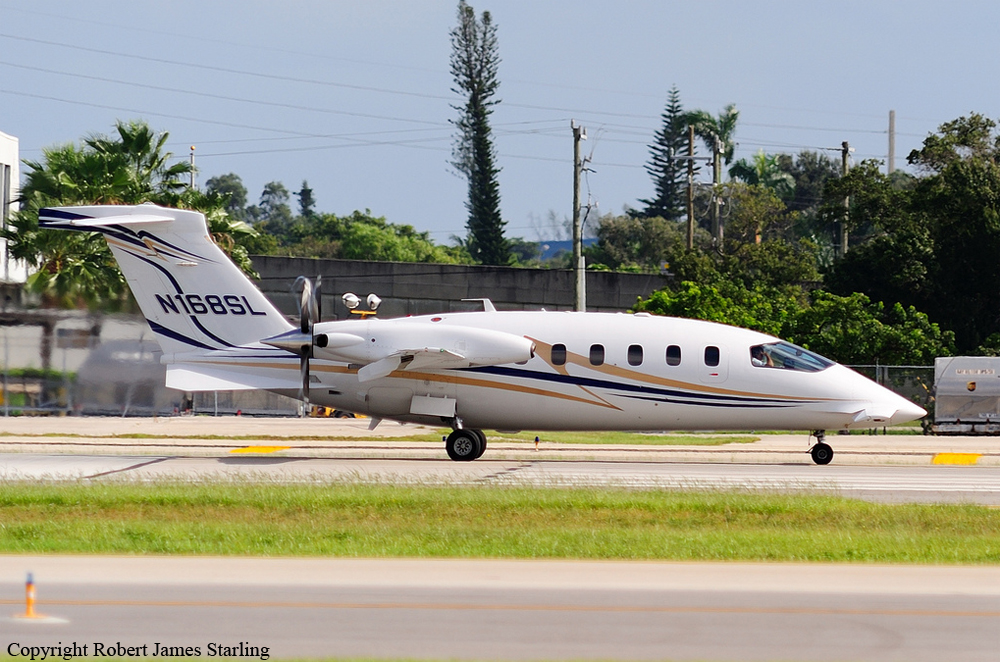
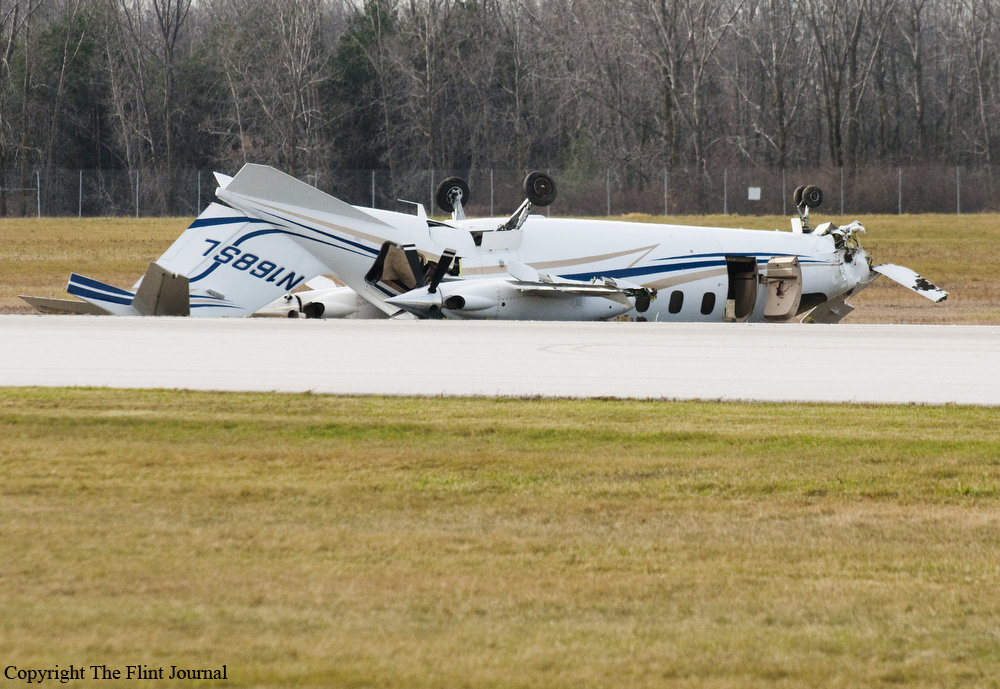
During climb to cruise, the captain increased left engine power and the engine power lever became jammed in the full forward position. This condition resulted in an engine overtorque and overtemperture condition, and the captain shut down the left engine. After the engine shutdown, both primary flight display screens went blank. The captain reset the right generator and the flight displays regained power and display. Due to the engine shutdown, the captain diverted to a nearby airport and attempted a single-engine precautionary landing in visual flight rules conditions. Based on wind conditions at the airport (290 degrees at 18 knots), runway 27 was being used for operations. During the descent, the crew became confused as to their true heading and were only able to identify runway 27 about a minute before touching down due to a 50-degree difference in heading indications displayed to the crew as a result of the instrument gyros having been reset. Accurate heading information would have been available to the crew had they referenced the airplane’s compass. Having declared an emergency, the crew was cleared to land on any runway and chose to land on runway 18. After touchdown, the captain applied reverse thrust on the right engine and the airplane veered to the right. The airplane flight manual’s single-engine approach and landing checklist indicates that after landing braking and reverse thrust are to be used as required to maintain airplane control. The airplane continued to the right, departed the runway surface, impacted terrain, flipped over, and came to rest inverted. At the point of touchdown, there was about 5,000 feet of runway remaining for the landing roll. The loss of directional control was likely initiated when the captain applied reverse thrust shortly after touchdown, and was likely aggravated by the strong crosswind. Postaccident examination of the airplane showed a clevis pin incorrectly installed by unknown maintenance personnel that resulted in a jammed left engine power lever. No additional anomalies were noted with the airplane or engines that would have precluded normal operation.
Probable cause:
The captain's failure to maintain directional control during landing with one engine inoperative. Contributing to the accident was an improperly installed clevis pin in the left engine power lever, the crew’s delay in accurately identifying their heading, and their subsequent selection of a runway with a strong crosswind.
Final Report:

Crash of a Cessna 401A in Gladewater

Date & Time: Nov 12, 2011 at 1635 LT
Type of aircraft:
Registration:
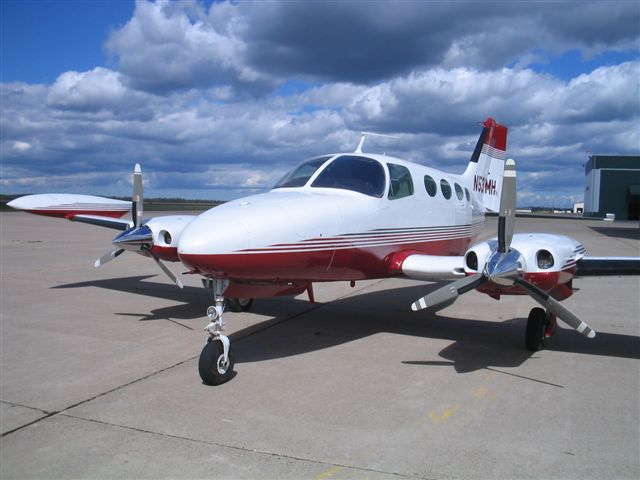
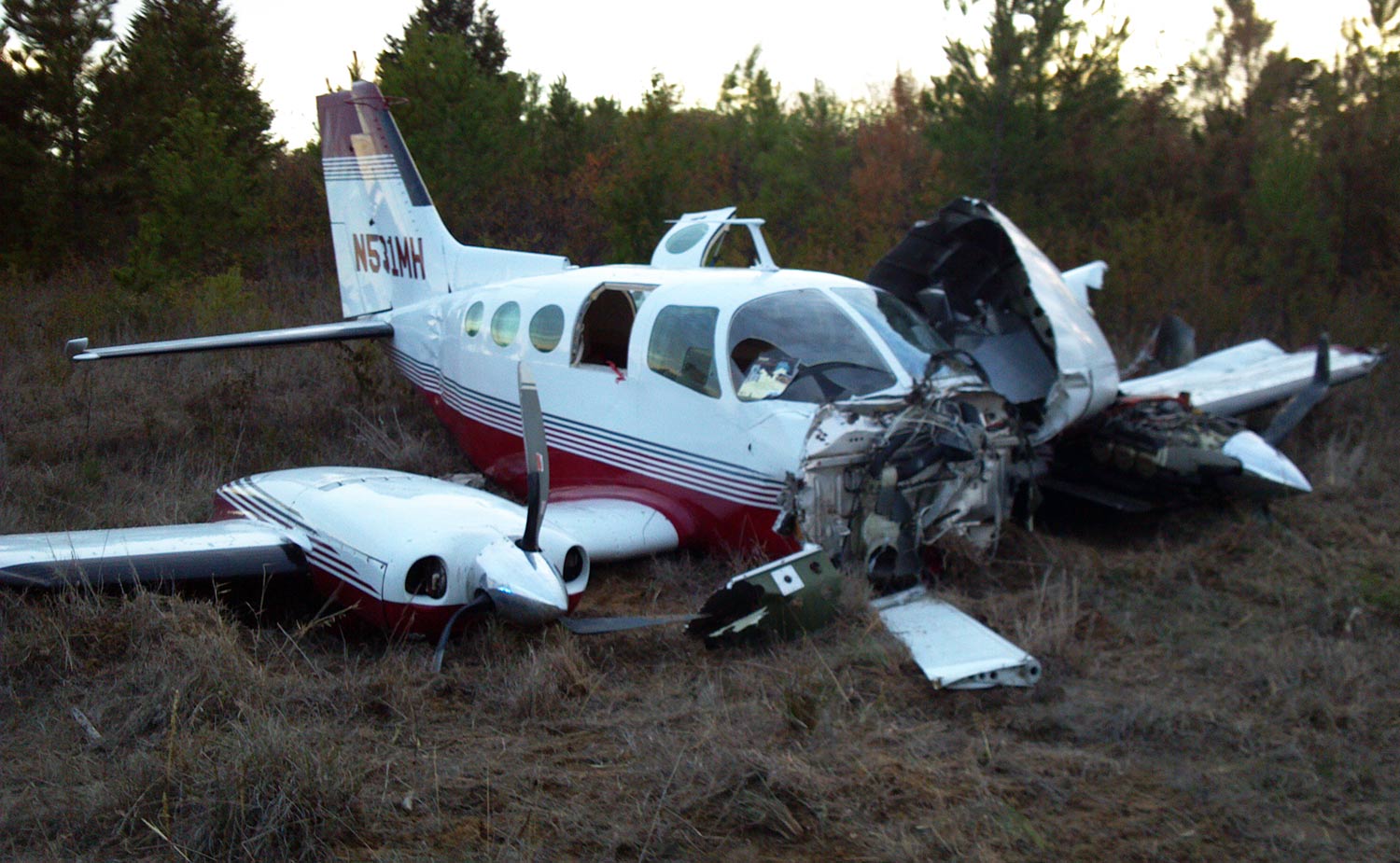
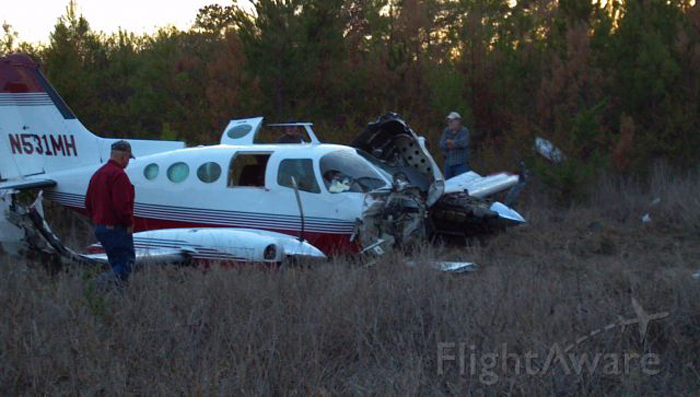
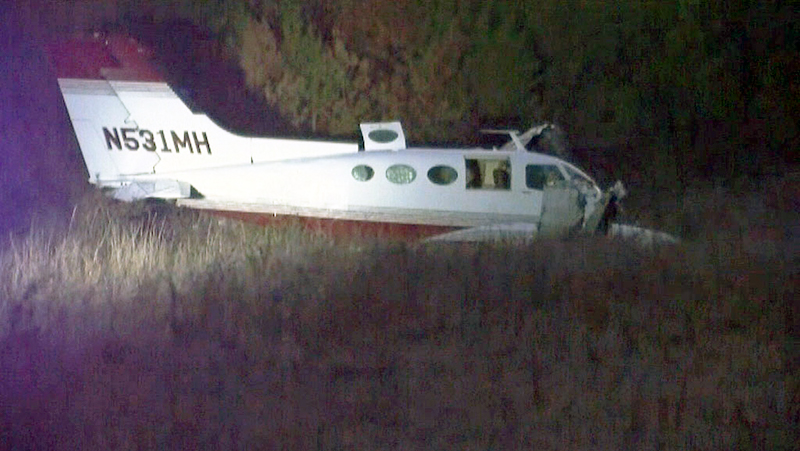
N531MH
Flight Type:
Survivors:
Yes
Schedule:
Natchitoches - Gladewater
MSN:
401-0097
YOM:
1969
Crew on board:
1
Crew fatalities:
Pax on board:
4
Pax fatalities:
Other fatalities:
Total fatalities:
0
Captain / Total flying hours:
1241
Captain / Total hours on type:
468.00
Circumstances:
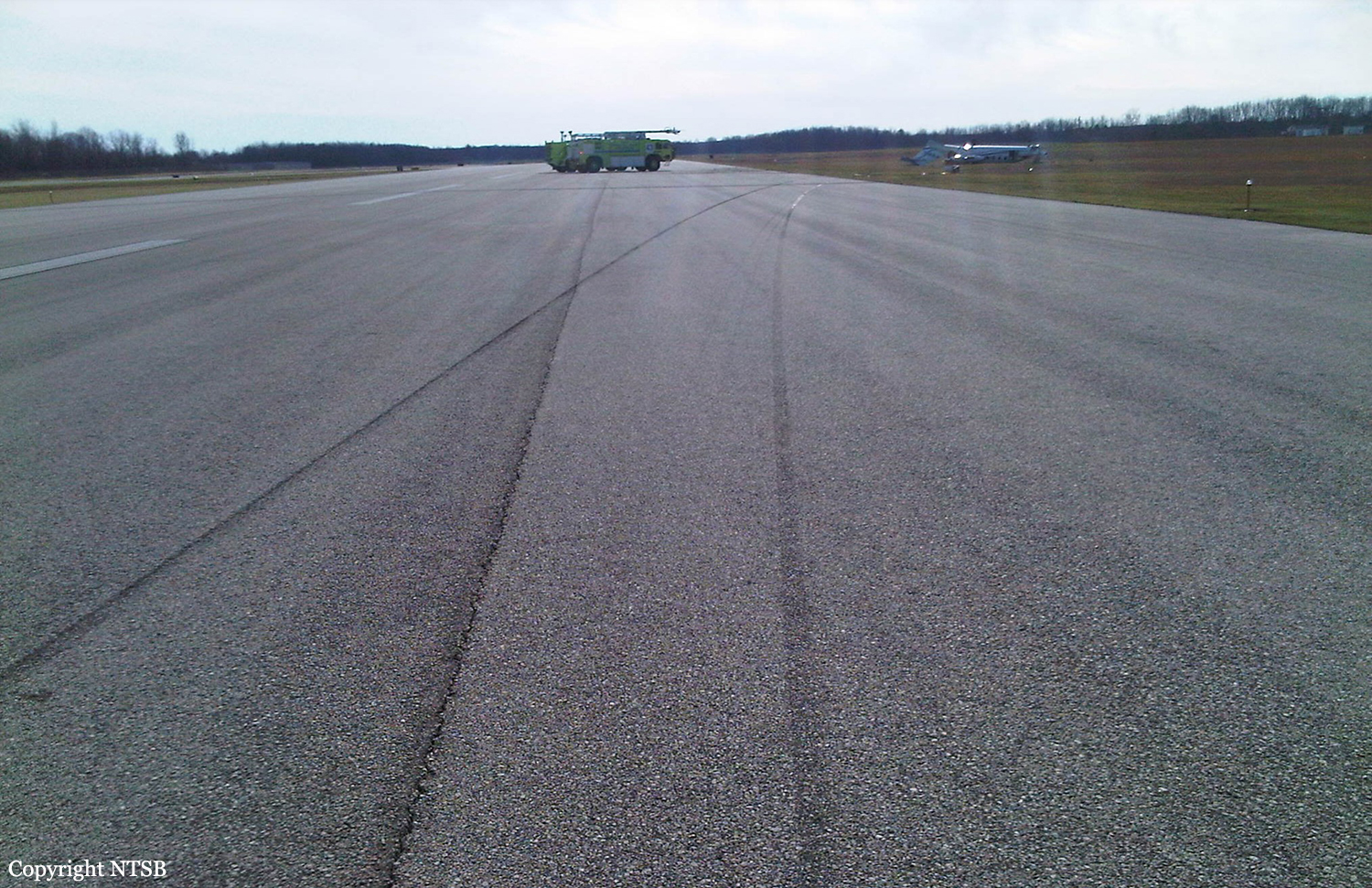
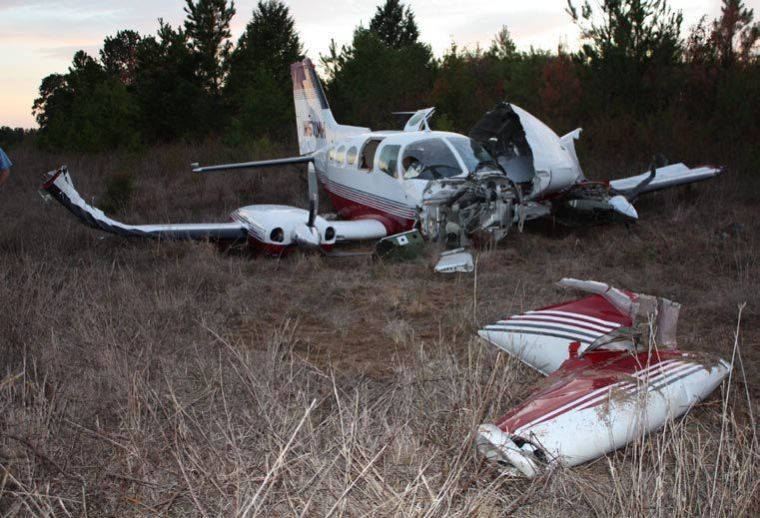
The aircraft was substantially damaged while landing at the Gladewater Municipal Airport (07F), Gladewater, Texas. The private pilot and three passengers received minor injuries, and the forth passenger was seriously injured. The airplane was registered to and operated by the pilot. Visual meteorological conditions prevailed and a visual flight rules (VFR) flight plan was filed for the 14 Code of Federal Regulations Part 91 personal flight. The cross-country flight originated from the Natchitoches Regional Airport (IER), Natchitoches, Louisiana, around 1550. While preparing to enter the traffic pattern at 1,800 feet above ground level, the pilot checked the wind on his Garmin 696 with NEXRAD and also heard a wind update on the radio for the nearest weather facility. The current wind was understood to be from 170 degrees between 20 and 25 knots. The pilot entered the pattern in a left downwind for runway 14 and began to slow the airplane down. The pilot stated he was on short final and at an airspeed of about 120 knots when a gusting crosswind pushed the airplane 30 feet right of the runway centerline and began to descend very quickly. The pilot decided to perform a go-around maneuver and added full engine power. As engine power was added, the twin-engine airplane began to roll to the right. The pilot then elected to reduce engine power and land. The airplane impacted and exited the runway before coming to rest in an upright position. Investigators from the National Transportation Safety Board, the Federal Aviation Administration, Cessna Aircraft Co., and Continental Motors, Inc. performed a post accident examination of the airplane and the engines. Examination of the airplane revealed substantial damage to the fuselage, empennage, wings, and landing gear. No preaccident mechanical malfunctions or failures were found that would have precluded normal operation. At 1553, the aviation routine weather report at East Texas Regional Airport in Longview, Texas, about 16 nautical miles southeast of the accident location was: wind 170 degrees and 16 knots gusting to 23 knots; visibility 10sm; few clouds at 4,900 feet above ground level; temperature 23 degrees Celsius and dew point 13 degrees Celsius; altimeter 29.92 inches of mercury. At 1530, the weather station reported a peak wind gust of 27 knots from 190 degrees.
Probable cause:
The pilot’s failure to maintain control of the airplane during the landing and attempted go-around in a gusty crosswind.
Final Report:

Crash of a Cessna S550 Citation S/II in Warroad

Date & Time: Nov 11, 2011 at 2130 LT
Type of aircraft:
Registration:
N600KM
Survivors:
Yes
MSN:
S550-0008
YOM:
1984
Crew on board:
0
Crew fatalities:
Pax on board:
0
Pax fatalities:
Other fatalities:
Total fatalities:
0
Circumstances:
After a night landing on runway 13 at Warroad Airport, the aircraft collided with a White-tailed deer. The crew was able to stop the aircraft that suffered structural damages to the left wing. There were no injuries but the aircraft was damaged beyond repair.
Probable cause:
No investigation was conducted by NTSB.

Crash of a Piper PA-31-310 Navajo B in Ecuvillens: 1 killed

Date & Time: Nov 10, 2011 at 1414 LT
Type of aircraft:
Registration:
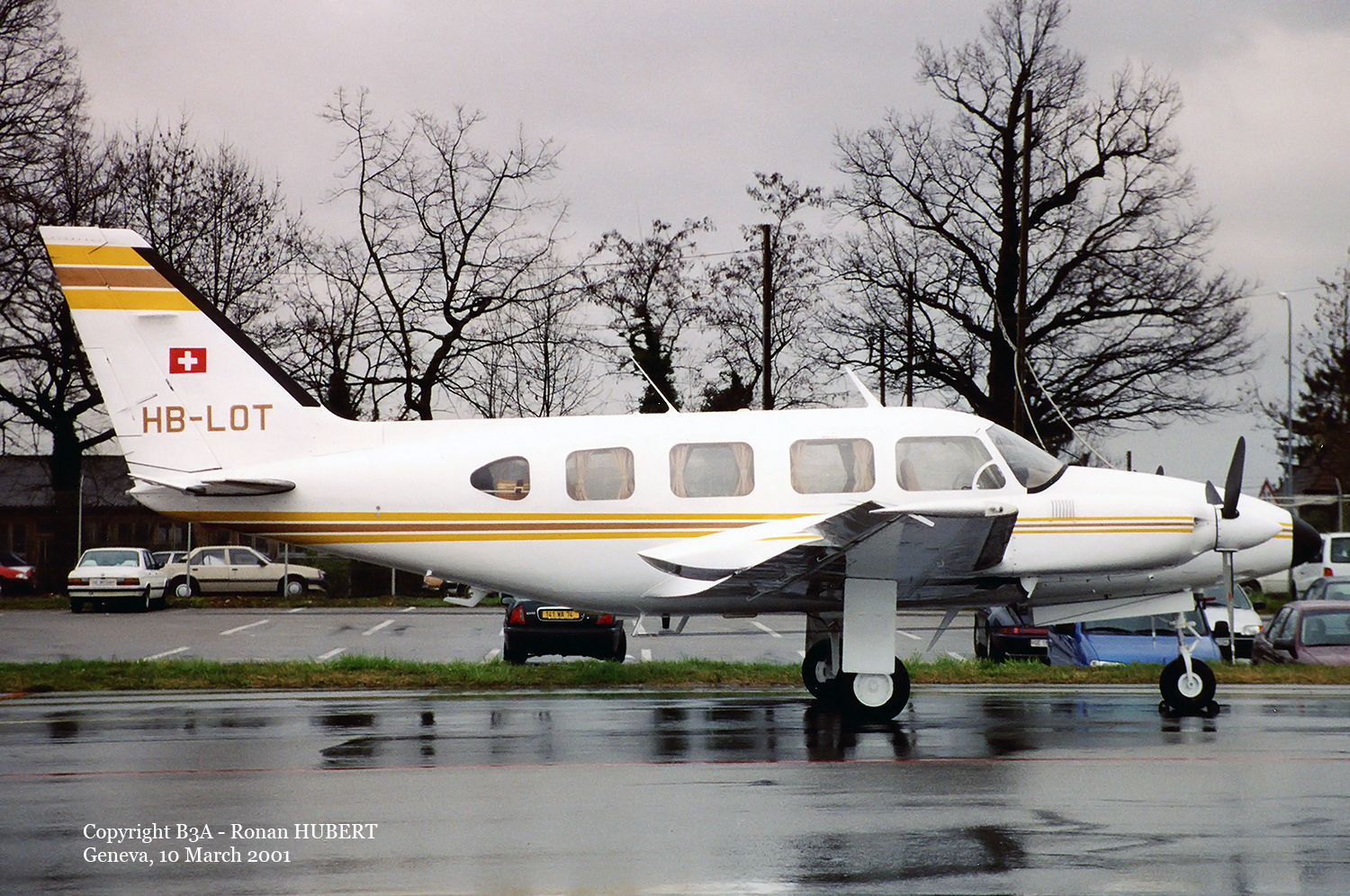
HB-LOT
Flight Phase:
Flight Type:
Survivors:
No
Schedule:
Ecuvillens - Geneva
MSN:
31-7400981
YOM:
1974
Country:
Region:
Crew on board:
1
Crew fatalities:
Pax on board:
0
Pax fatalities:
Other fatalities:
Total fatalities:
1
Captain / Total flying hours:
2458
Captain / Total hours on type:
1282.00
Aircraft flight hours:
4991
Aircraft flight cycles:
4981
Circumstances:
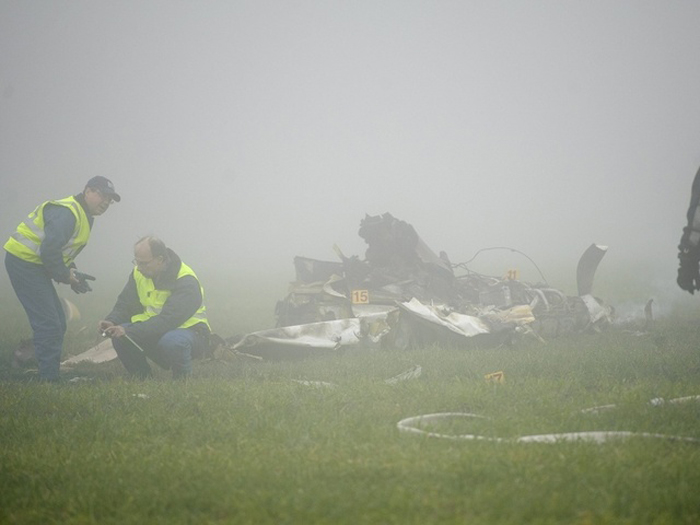
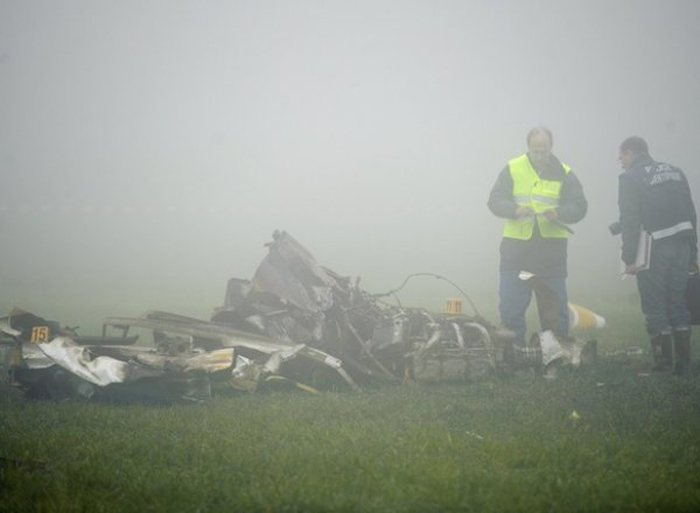
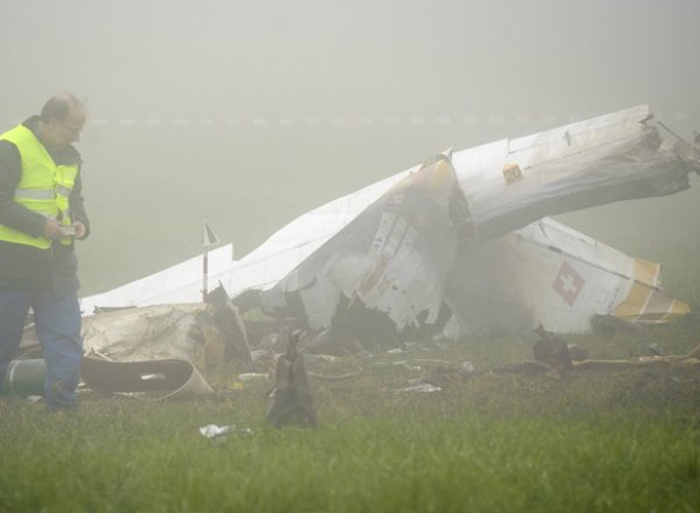
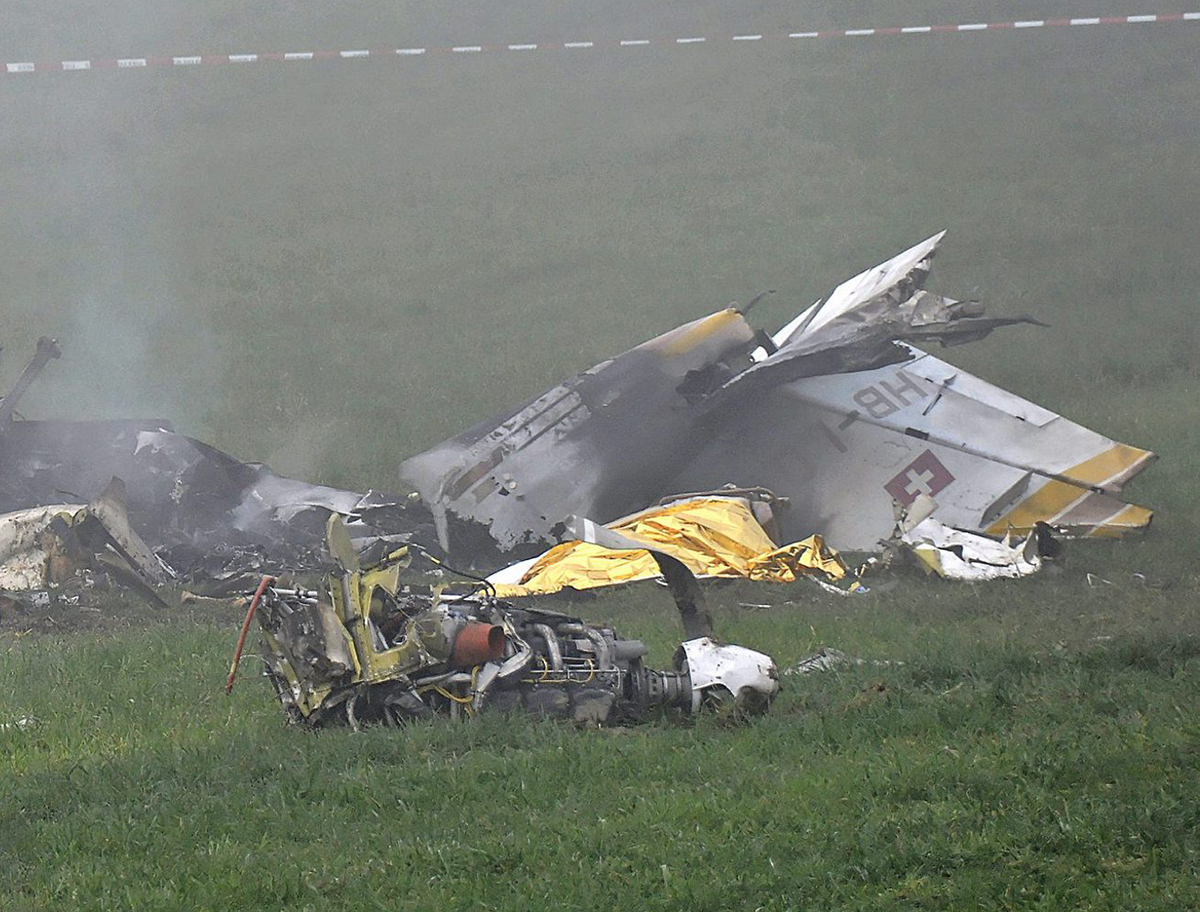
Forty seconds after its take off from Ecuvillens Airport runway 28, while flying at a speed of 120 knots, the aircraft slightly turned to the right without gaining sufficient altitude. Then, its altitude fluctuated and it descended and climbed again. Suddenly, the aircraft hit tree tops, lost some wing's and empennage elements while all engine cowlings separated. The fuel tanks were spoiled and the aircraft caught fire. It overflew the wooded area for a distance of 120 metres then impacted a powerline before crashing in an open field located 275 metres after the initial impact, bursting into flames. The pilot, sole on board, was killed.
Probable cause:
The accident was caused by a collision with trees due to an inadequate flight path after takeoff in weather conditions that not allow a VFR flight. An irregular and intermittent operation of an engine probably focused the attention of the pilot to the engine to the detriment of the flight path.
Final Report:

Crash of a Fokker 50 in Guriceel

Date & Time: Nov 10, 2011
Type of aircraft:
Operator:
Registration:
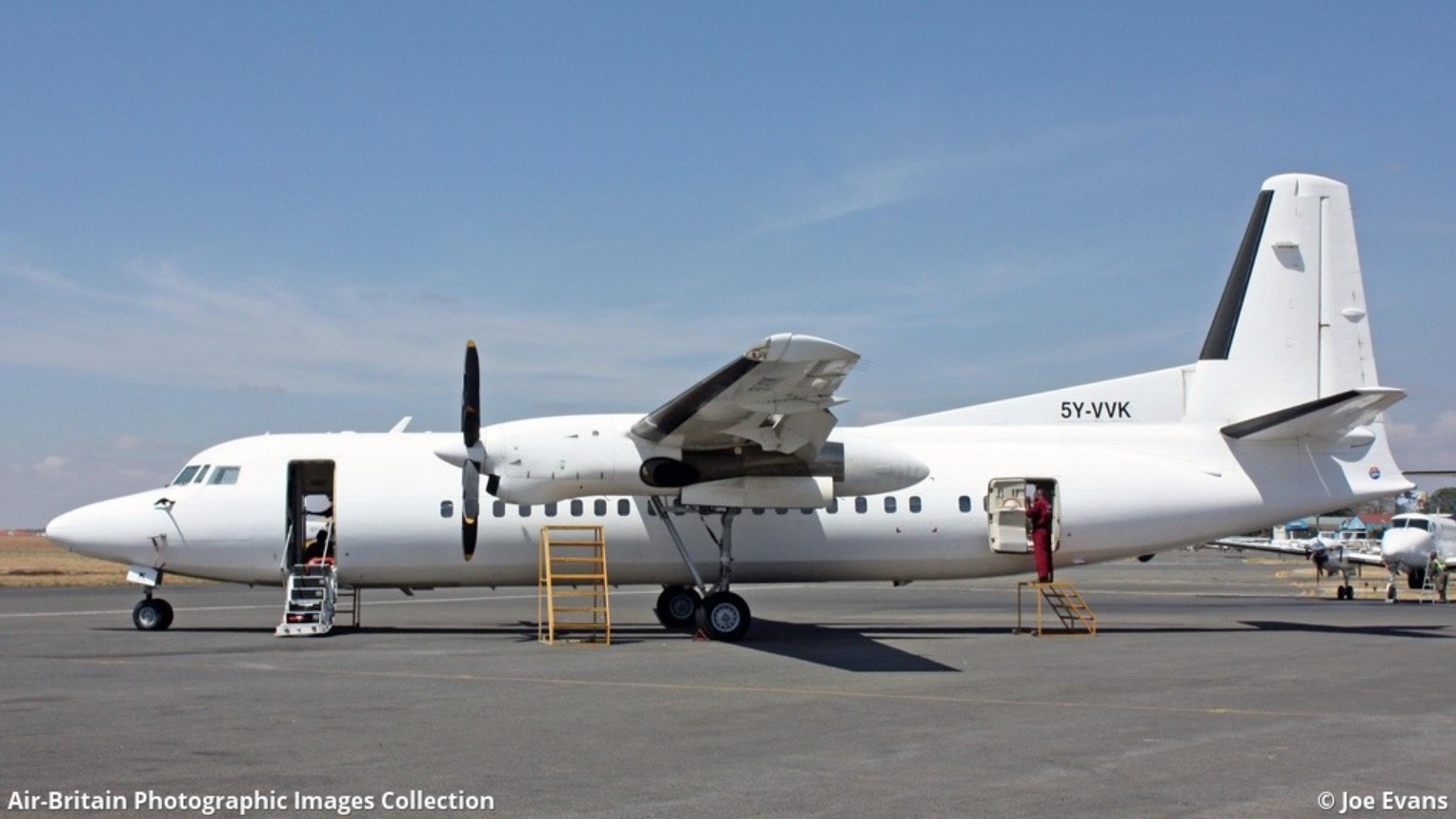
5Y-VVK
Flight Type:
Survivors:
Yes
Schedule:
Nairobi – Guriceel
MSN:
20213
YOM:
1991
Country:
Region:
Crew on board:
3
Crew fatalities:
Pax on board:
0
Pax fatalities:
Other fatalities:
Total fatalities:
0
Circumstances:
The aircraft departed Nairobi-Wilson Airport on a cargo flight to Guriceel, Somalia, carrying three crew members and a load of khat. After landing, the airplane encountered difficulties to decelerate properly and was unable to stop within the remaining distance. It overran, contacted rough terrain, lost its nose and left main gear before coming to rest. There was no fire. All three occupants escaped uninjured and the aircraft was damaged beyond repair.

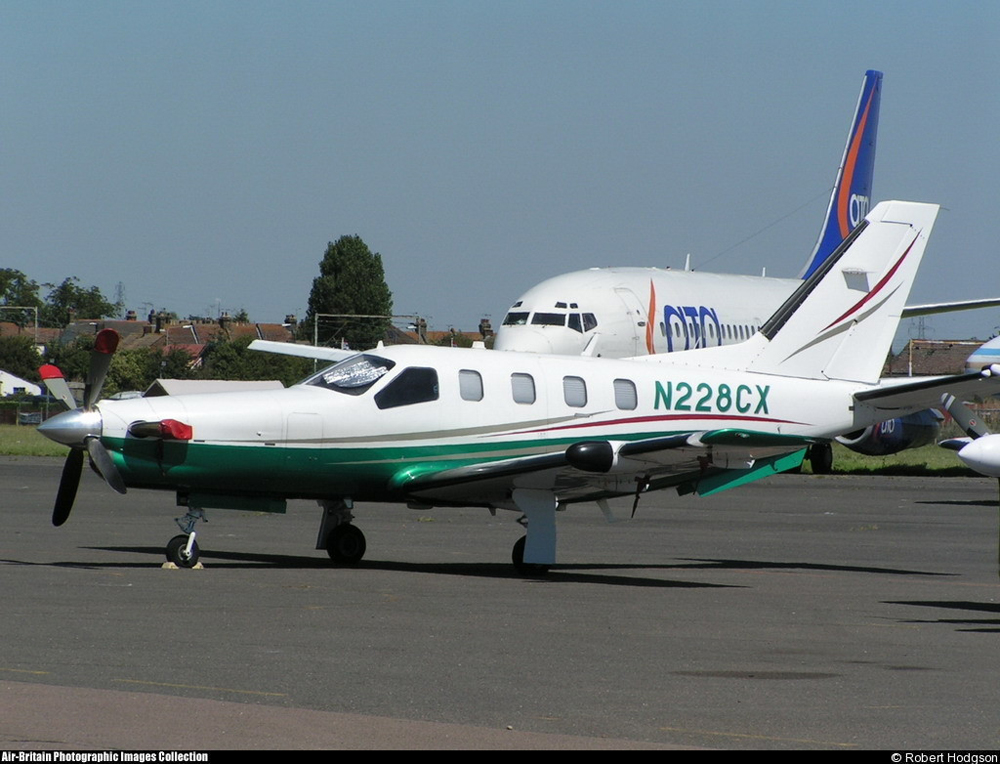
Crash of a Socata TBM-700 in Lyon: 1 killed

Date & Time: Nov 9, 2011 at 0912 LT
Type of aircraft:
Operator:
Registration:
N228CX
Flight Type:
Survivors:
No
Schedule:
Toussus-le-Noble - Lyon
MSN:
84
YOM:
1993
Country:
Region:
Crew on board:
1
Crew fatalities:
Pax on board:
0
Pax fatalities:
Other fatalities:
Total fatalities:
1
Captain / Total flying hours:
2000
Circumstances:
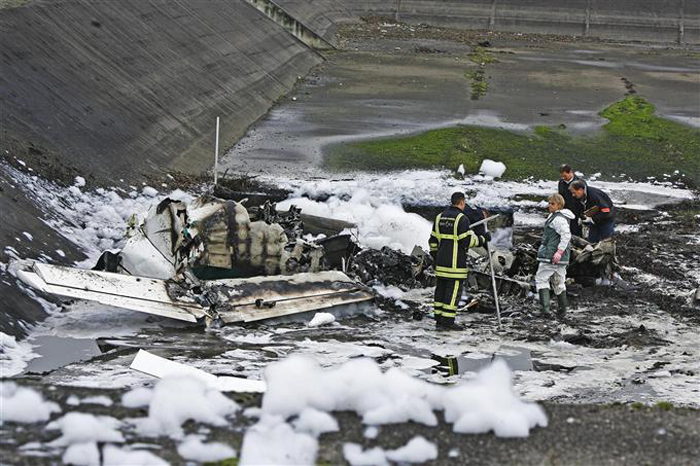
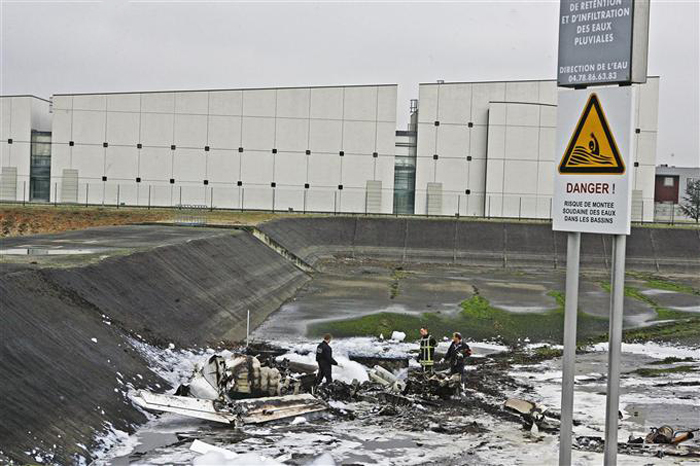
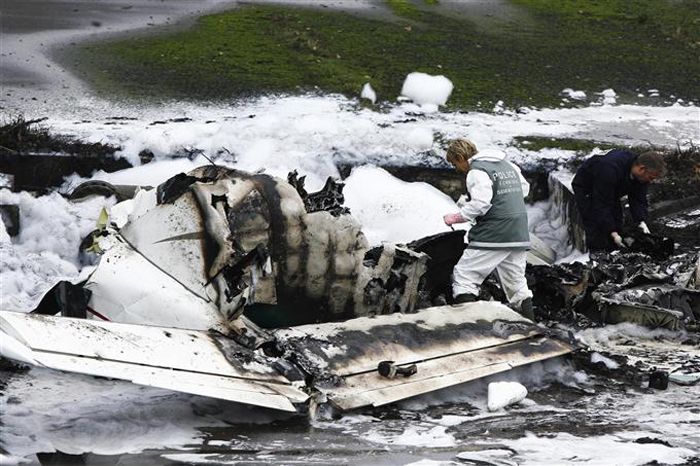
The pilot departed Toussus-le-Noble Airport at 0810LT on an IFR flight to Lyon. After contacting ATC, the pilot was vectored for a LOC DME approach to runway 16 at Lyon-Bron Airport. He reported being established on localizer at 0907LT, then was transferred to the tower and was cleared to land. At 0910LT, he reported he was initiating a go-around procedure and was instructed to climb to 3,000 feet maintaining a straight-in path. ATC requested twice the pilot to confirm the approach interruption but he failed to respond. A few moments later, the pilot reported 'Now, I'm not good at all'. The airplane crashed in a retention basin located 1,500 meters short of runway 16 threshold, bursting into flames. The aircraft was destroyed and the pilot, sole on board, was killed.
Probable cause:
Loss of control while approaching at a speed close to stall speed in clouds without any external visual references, in a phase of flight where the pilot encountered difficulties. Investigations were unable to determine the exact cause of the loss of control and the reason why the pilot was unable to regain control.
Final Report:

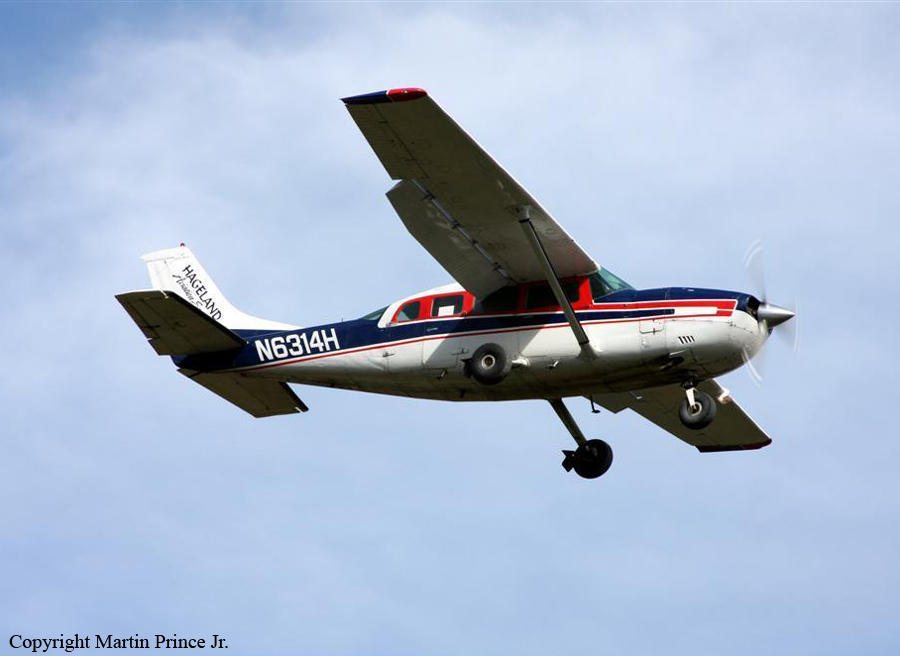
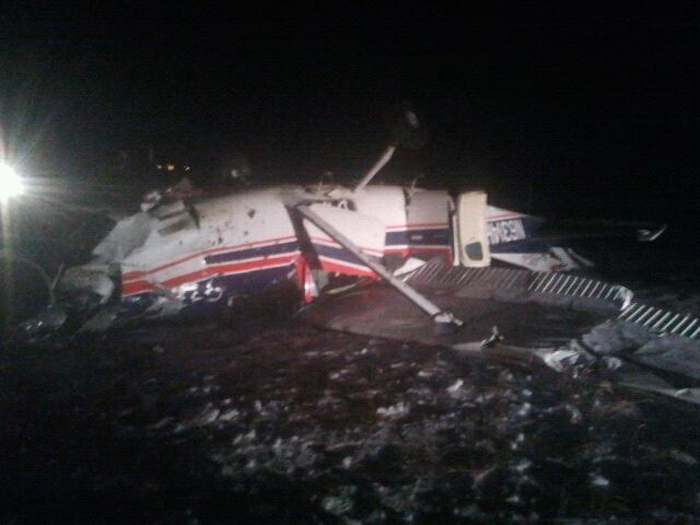
Crash of a Cessna 207A Stationair 7 II in Kwigillingok

Date & Time: Nov 7, 2011 at 1830 LT
Operator:
Registration:
N6314H
Flight Phase:
Survivors:
Yes
Schedule:
Kwigillingok – Bethel
MSN:
207-0478
YOM:
1978
Crew on board:
1
Crew fatalities:
Pax on board:
5
Pax fatalities:
Other fatalities:
Total fatalities:
0
Captain / Total flying hours:
1833
Captain / Total hours on type:
349.00
Circumstances:
The pilot departed on a scheduled commuter flight at night from an unlit, rough and uneven snow-covered runway with five passengers and baggage. During the takeoff roll, the airplane bounced twice and became airborne, but it failed to climb. As the airplane neared the departure end of the runway, it began to veer to the left, and the pilot applied full right aileron, but the airplane continued to the left as it passed over the runway threshold. The airplane subsequently settled into an area of snow and tundra-covered terrain about 100 yards south of the runway threshold and nosed over. Official sunset on the day of the accident was 48 minutes before the accident, and the end of civil twilight was one minute before the accident. The Federal Aviation Administration's (FAA) Airport/Facility Directory, Alaska Supplement listing for the airport, includes the following notation: "Airport Remarks - Unattended. Night operations prohibited, except rotary wing aircraft. Runway condition not monitored, recommend visual inspection prior to using. Safety areas eroded and soft. Windsock unreliable." A postaccident examination of the airplane and engine revealed no mechanical anomalies that would have precluded normal operation. Given the lack of mechanical deficiencies with the airplane's engine or flight controls, it is likely the pilot failed to maintain control during the takeoff roll and initial climb after takeoff.
Probable cause:
The pilot's failure to abort the takeoff when he realized the airplane could not attain sufficient takeoff and climb performance and his improper decision to depart from an airport where night operations were prohibited.
Final Report: