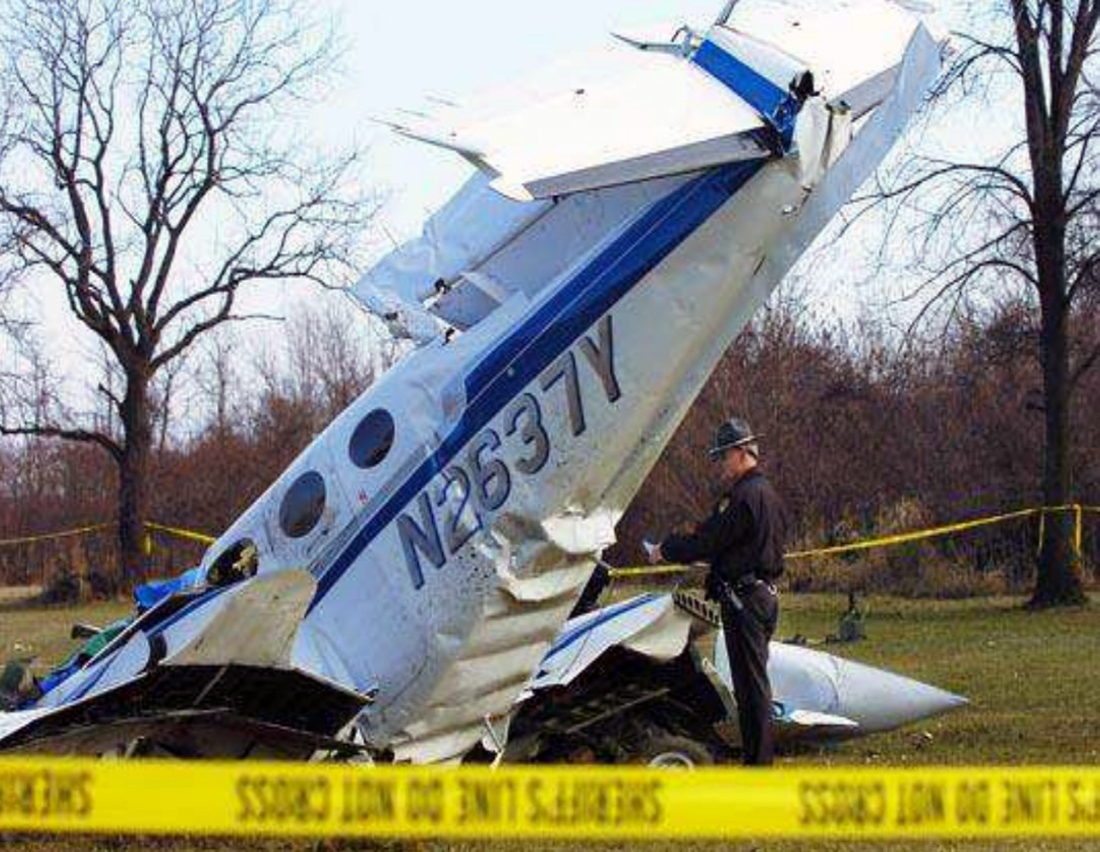
Crash of a Cessna 340 in Port Clinton: 4 killed

Date & Time: Jan 12, 2008 at 1239 LT
Type of aircraft:
Operator:
Registration:
N2637Y
Flight Type:
Survivors:
No
Schedule:
Mansfield - Port Clinton
MSN:
340-0013
YOM:
1971
Crew on board:
1
Crew fatalities:
Pax on board:
3
Pax fatalities:
Other fatalities:
Total fatalities:
4
Captain / Total flying hours:
1160
Captain / Total hours on type:
13.00
Aircraft flight hours:
6820
Circumstances:
During the landing approach, a witness saw the twin-engine airplane slow and stall. The airplane crashed short of the runway, in a residential backyard. An airport manager flew with the pilot 8 days before the accident. The manager reported that during his flight the pilot flew the approach and landing with the aural stall warning horn activated. The manager advised the pilot of the aural warning, however no corrective action was taken by the pilot during that flight. An on-scene investigation revealed no preimpact mechanical anomalies. The pilot had about 12.6 hours of flight time in the accident airplane, of which 7.7 hours were dual instruction. Due to the lack of any mechanical problems with the airplane, the pilot's minimal experience in twin-engine airplanes, and his history of flying the airplane too slow, it is probable that he allowed the airspeed to decay below a safe speed, and inadvertently stalled it.
Probable cause:
The pilot's failure to maintain sufficient airspeed to avoid a stall during the landing approach.
Final Report:

Crash of a Piper PA-31-350 Navajo Chieftain off Kodiak: 6 killed

Date & Time: Jan 5, 2008 at 1343 LT
Operator:
Registration:
N509FN
Flight Phase:
Survivors:
Yes
Schedule:
Kodiak - Homer
MSN:
31-7952162
YOM:
1979
Location:
Crew on board:
1
Crew fatalities:
Pax on board:
9
Pax fatalities:
Other fatalities:
Total fatalities:
6
Captain / Total flying hours:
9437
Captain / Total hours on type:
400.00
Aircraft flight hours:
13130
Circumstances:
The airline transport pilot and nine passengers were departing in a twin-engine airplane on a 14 Code of Federal Regulations Part 135 air taxi flight from a runway adjacent to an ocean bay. According to the air traffic control tower specialist on duty, the airplane became airborne about midway down the runway. As it approached the end of the runway, the pilot said he needed to return to the airport, but gave no reason. The specialist cleared the airplane to land on any runway. As the airplane began a right turn, it rolled sharply to the right and began a rapid, nose- and right-wing-low descent. The airplane crashed about 200 yards offshore and the fragmented wreckage sank in the 10-foot-deep water. Survivors were rescued by a private float plane. A passenger reported that the airplane's nose baggage door partially opened just after takeoff, and fully opened into a locked position when the pilot initiated a right turn towards the airport. The nose baggage door is mounted on the left side of the nose, just forward of the pilot's windscreen. When the door is opened, it swings upward, and is held open by a latching device. To lock the baggage door, the handle is placed in the closed position and the handle is then locked by rotating a key lock, engaging a locking cam. With the locking cam in the locked position, removal of the key prevents the locking cam from moving. The original equipment key lock is designed so the key can only be removed when the locking cam is engaged. Investigation revealed that the original key lock on the airplane's forward baggage door had been replaced with an unapproved thumb-latch device. A Safety Board materials engineer's examination revealed evidence that a plastic guard inside the baggage compartment, which is designed to protect the door's locking mechanism from baggage/cargo, appeared not to be installed at the time of the accident. The airplane manufacturer's only required inspection of the latching system was a visual inspection every 100 hours of service. Additionally, the mechanical components of the forward baggage door latch mechanism were considered "on condition" items, with no predetermined life-limit. On May 29, 2008, the Federal Aviation Administration issued a safety alert for operators (SAFO 08013), recommending a visual inspection of the baggage door latches and locks, additional training of flight and ground crews, and the removal of unapproved lock devices. In July 2008, Piper Aircraft issued a mandatory service bulletin (SB 1194, later 1194A), requiring the installation of a key lock device, mandatory recurring inspection intervals, life-limits on safety-critical parts of forward baggage door components, and the installation of a placard on the forward baggage door with instructions for closing and locking the door to preclude an in-flight opening. Post accident inspection discovered no mechanical discrepancies with the airplane other than the baggage door latch. The airplane manufacturer's pilot operating handbook did not contain emergency procedures for an in-flight opening of the nose baggage door, nor did the operator's pilot training program include instruction on the proper operation of the nose baggage door or procedures to follow in case of an in-flight opening of the door. Absent findings of any other mechanical issues, it is likely the door locking mechanism was not fully engaged and/or the baggage shifted during takeoff, and contacted the exposed internal latching mechanism, allowing the cargo door to open. With the airplane operating at a low airspeed and altitude, the open baggage door would have incurred additional aerodynamic drag and further reduced the airspeed. The pilot's immediate turn towards the airport, with the now fully open baggage door, likely resulted in a sudden increase in drag, with a substantive decrease in airspeed, and an aerodynamic stall.
Probable cause:
The failure of company maintenance personnel to ensure that the airplane's nose baggage door latching mechanism was properly configured and maintained, resulting in an inadvertent opening of the nose baggage door in flight. Contributing to the accident were the lack of information and guidance available to the operator and pilot regarding procedures to follow should a baggage door open in flight and an inadvertent aerodynamic stall.
Final Report:

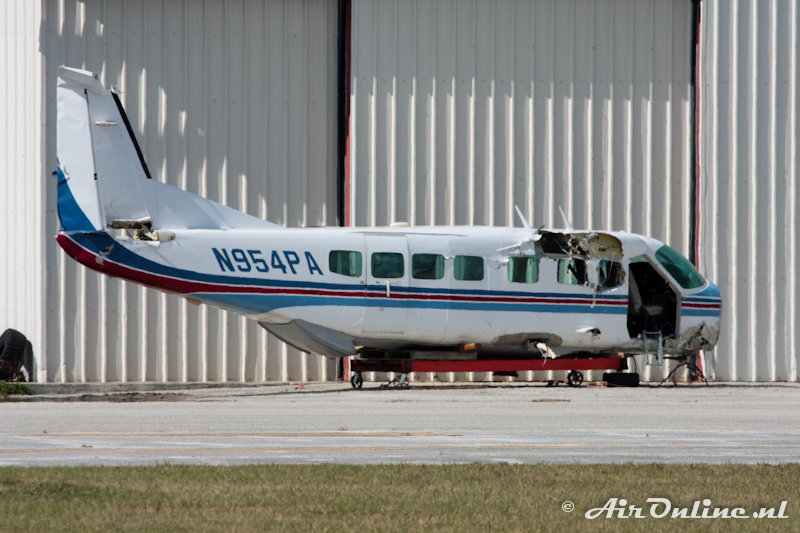
Crash of a Cessna 208B Grand Caravan off Chub Cay

Date & Time: Dec 20, 2007 at 1700 LT
Type of aircraft:
Operator:
Registration:
N954PA
Flight Phase:
Flight Type:
Survivors:
Yes
Schedule:
La Isabela - West Palm Beach
MSN:
208B-0556
YOM:
1996
Country:
Crew on board:
2
Crew fatalities:
Pax on board:
0
Pax fatalities:
Other fatalities:
Total fatalities:
0
Aircraft flight hours:
7390
Circumstances:
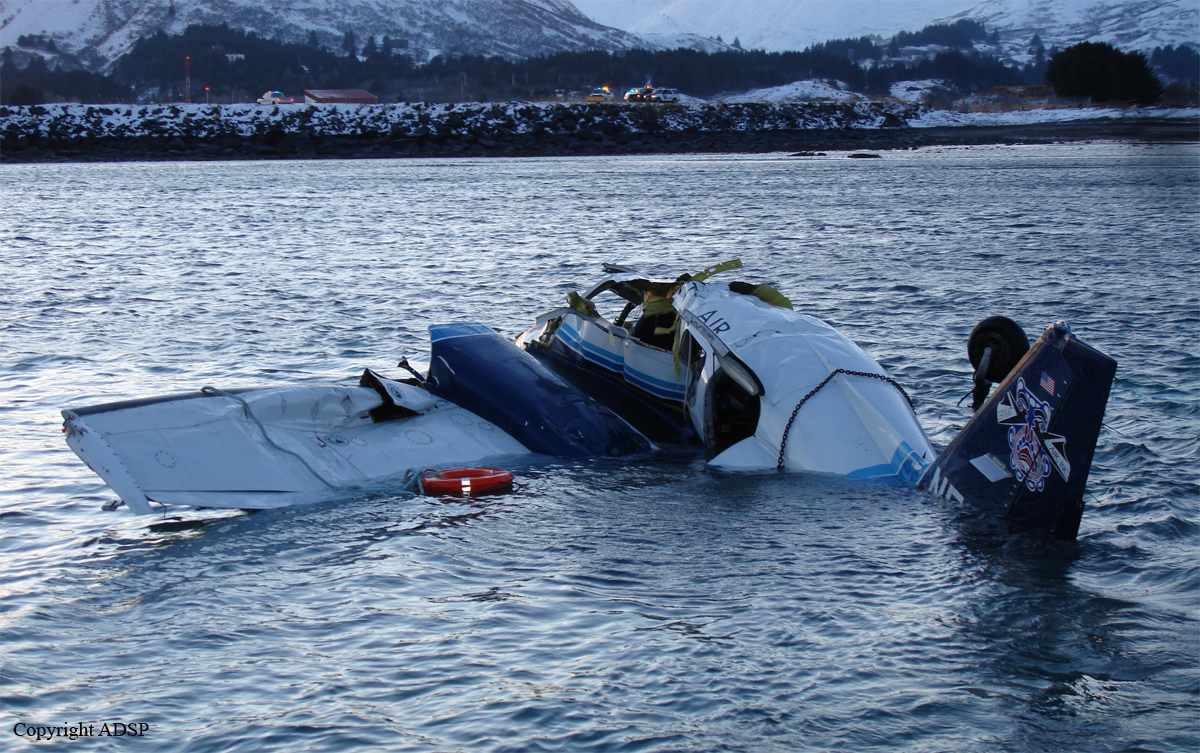
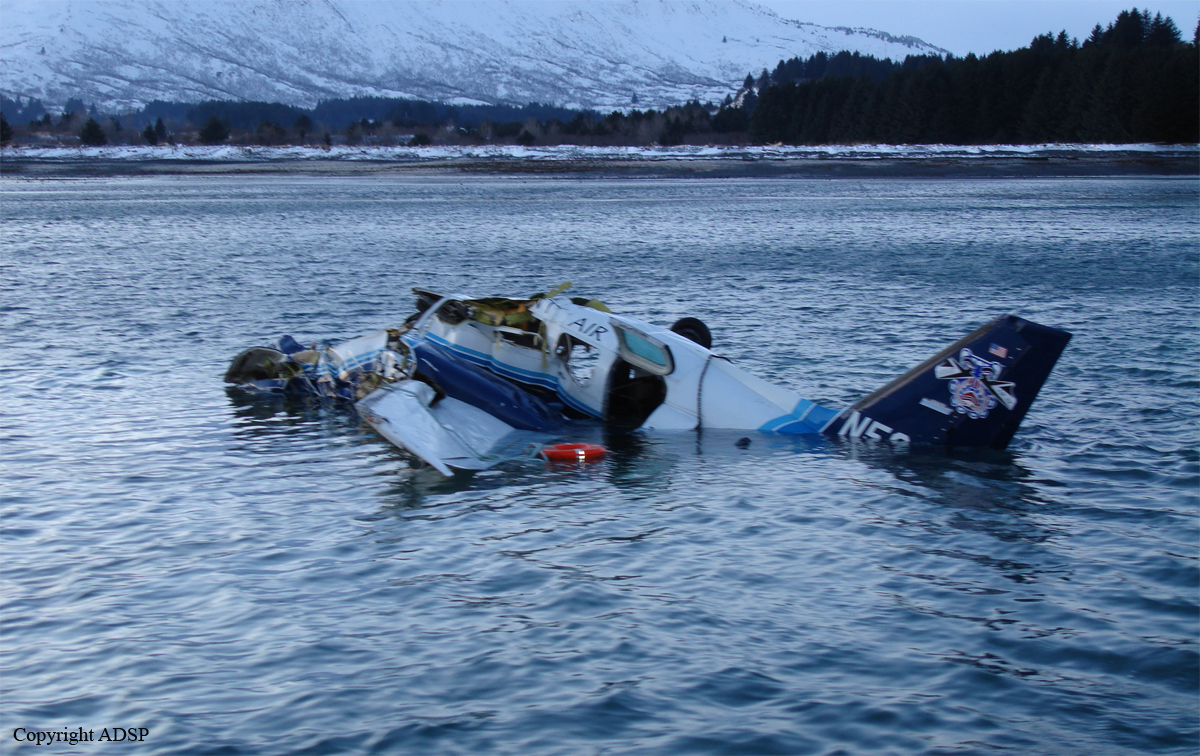
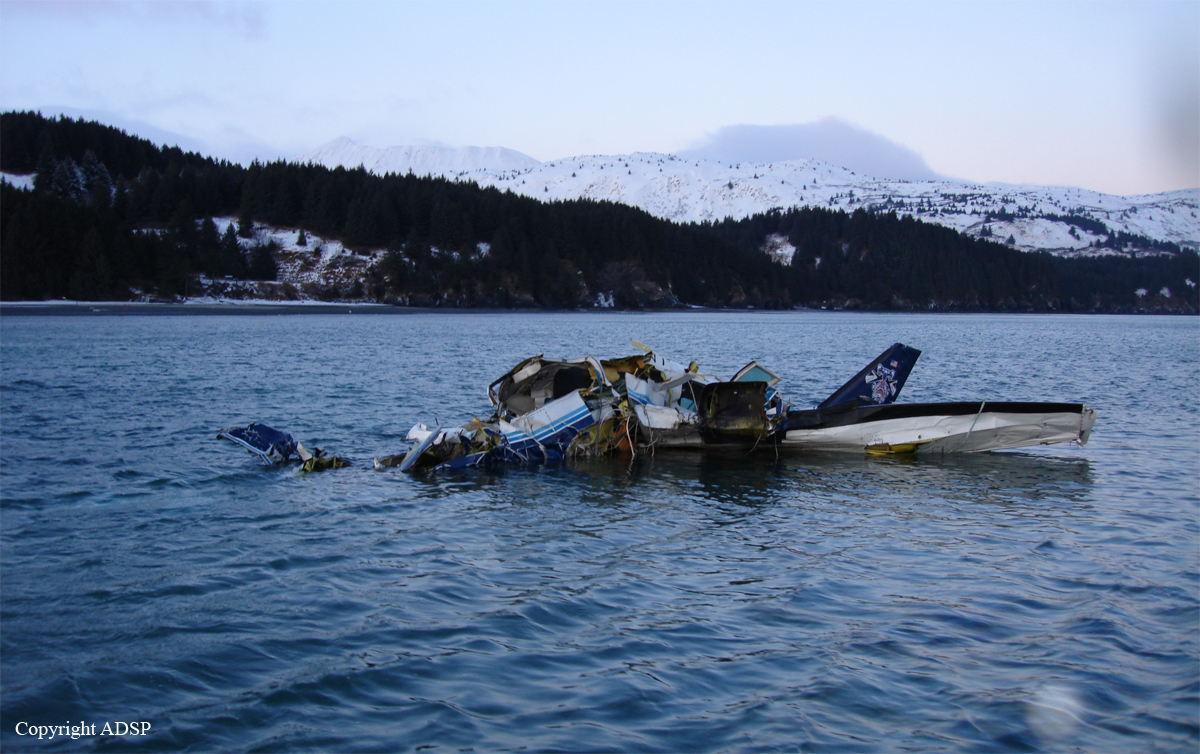
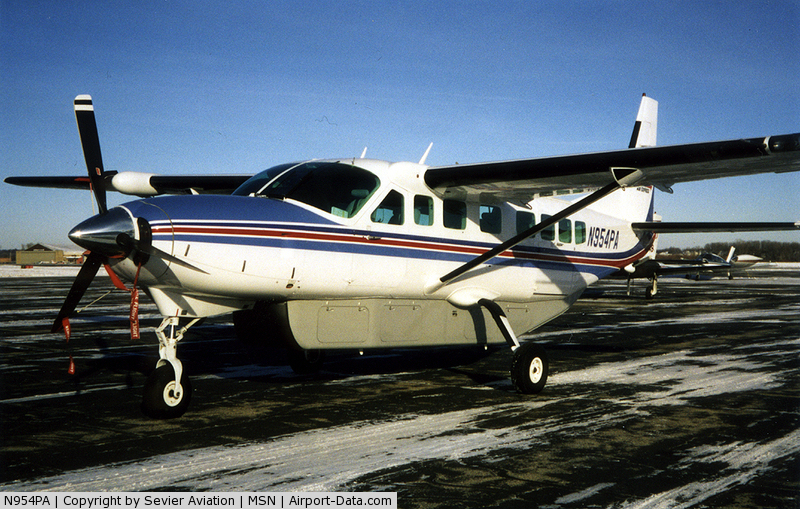
On December 20, 2007 at approximately 1630EST, N954PA a Cessna 208B Caravan aircraft, owned and operated by Agape Flight Inc [United States FAR Part 91 Operator] enroute from Santo Domingo, Dominican Republic to West Palm Beach, Florida incurred sudden engine stoppage. At the time N954PA was flying at 12,000 ft. The aircraft was diverted to the nearest airport but was unable to glide the required distance and landed 30 nautical miles (NM) West North West (WNW) of Chub Cay. There were 2 crew members on board the aircraft. No injuries were reported by the crew. The aircraft is submerged in approximately eighteen to twenty feet of water, with the aircraft tail being visible at low tide. Both crews were qualified in accordance with the United States Code of Federal Regulations.
Probable cause:
The engine power loss was caused by a loss of fuel pressure resulting from a loss of drive to the fuel pump. The drive loss was caused by worn and cracked splines on the drive shaft. The damage to the splines of the fuel pump drive shaft was likely caused by cracking below the chrome plating covering the splines, which deteriorated into spalling and wear leading to decouple between the
accessories gearbox and fuel pump. The remaining engine damage was caused by exposure to salt water.
Contributing factors:
Maintenance changed the fuel control unit and coupling shaft on July 17, 2007 due to original FCU failing emergency power checks. However there is no record to show whether or not the splines of fuel pump drive shaft inspection as per P&WC’s applicable Maintenance Manual has been accomplished.
Final Report:

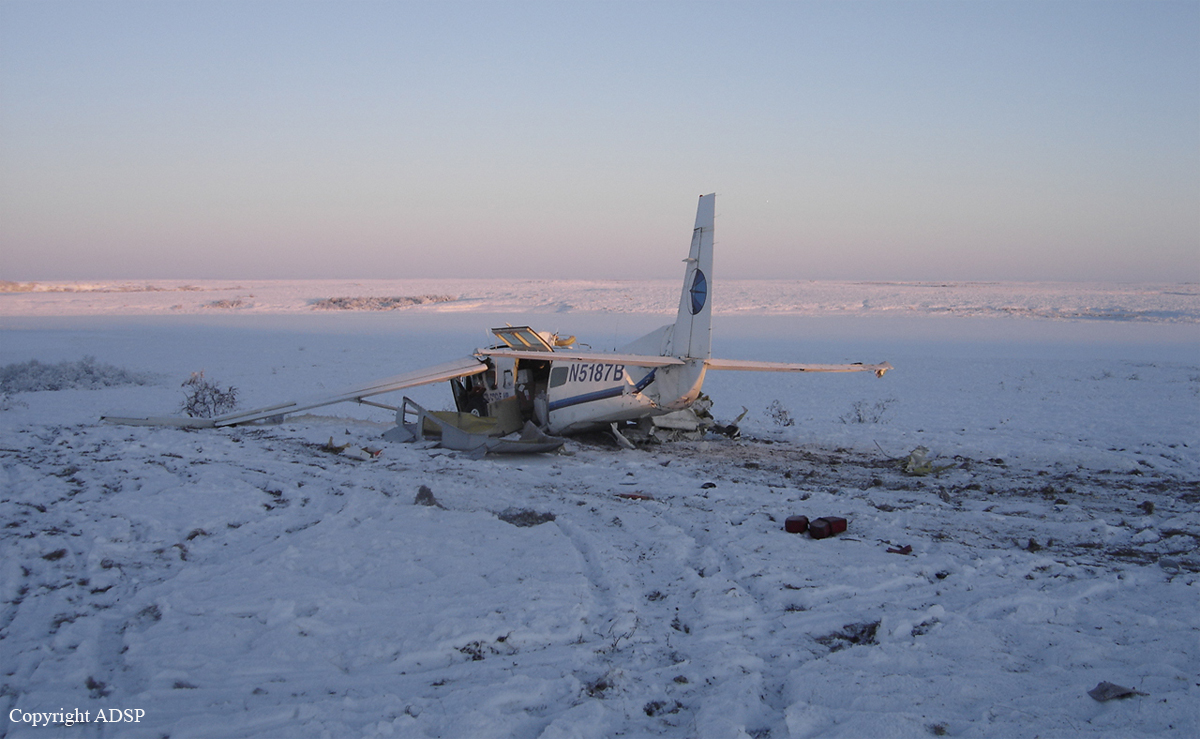
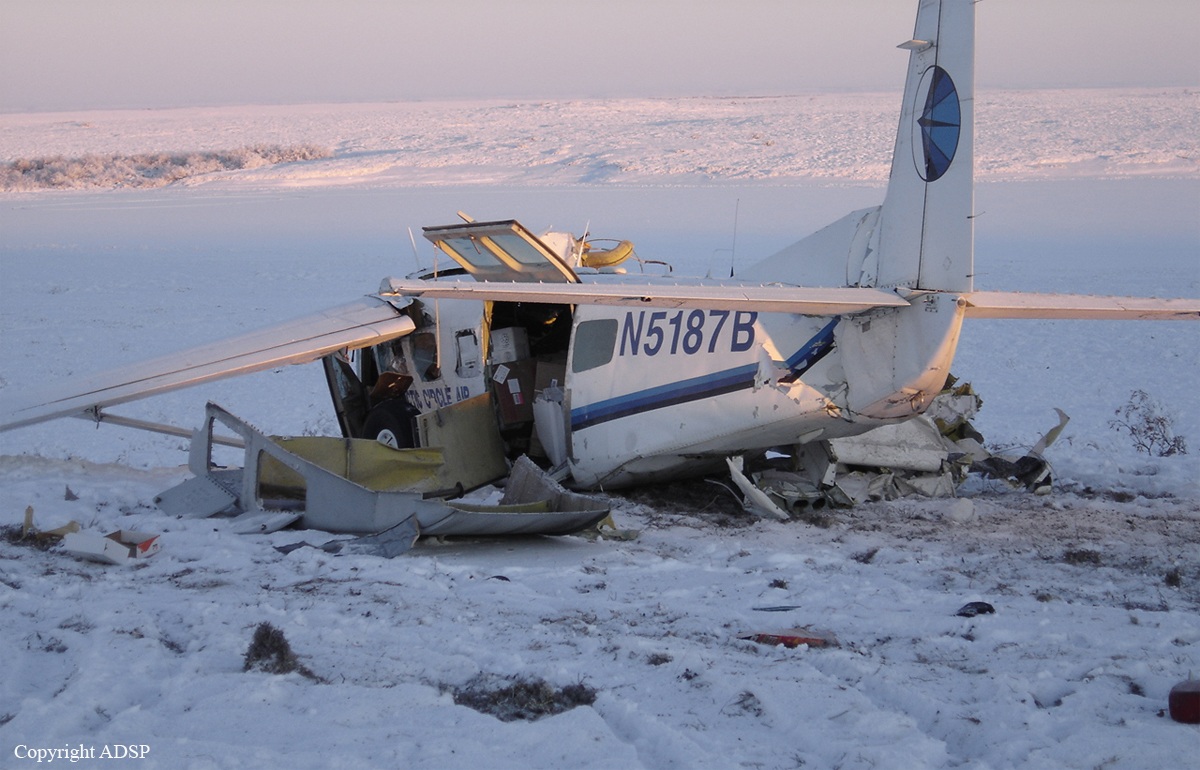
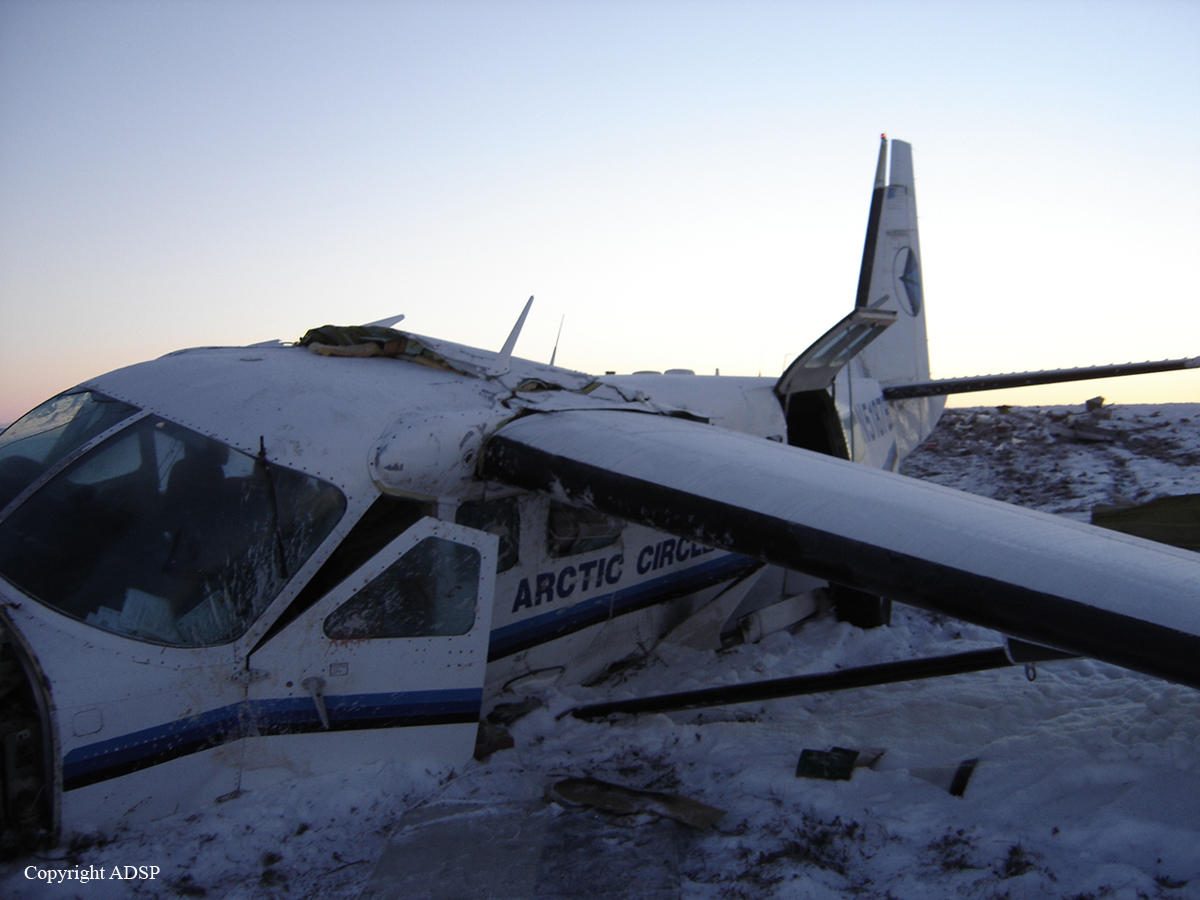
Crash of a Cessna 208B Grand Caravan in Bethel

Date & Time: Dec 18, 2007 at 0856 LT
Type of aircraft:
Operator:
Registration:
N5187B
Flight Phase:
Flight Type:
Survivors:
Yes
Schedule:
Bethel - Hooper Bay - Scammon Bay
MSN:
208B-0270
YOM:
1991
Flight number:
CIR218
Location:
Crew on board:
1
Crew fatalities:
Pax on board:
1
Pax fatalities:
Other fatalities:
Total fatalities:
0
Captain / Total flying hours:
4054
Captain / Total hours on type:
190.00
Aircraft flight hours:
12204
Circumstances:
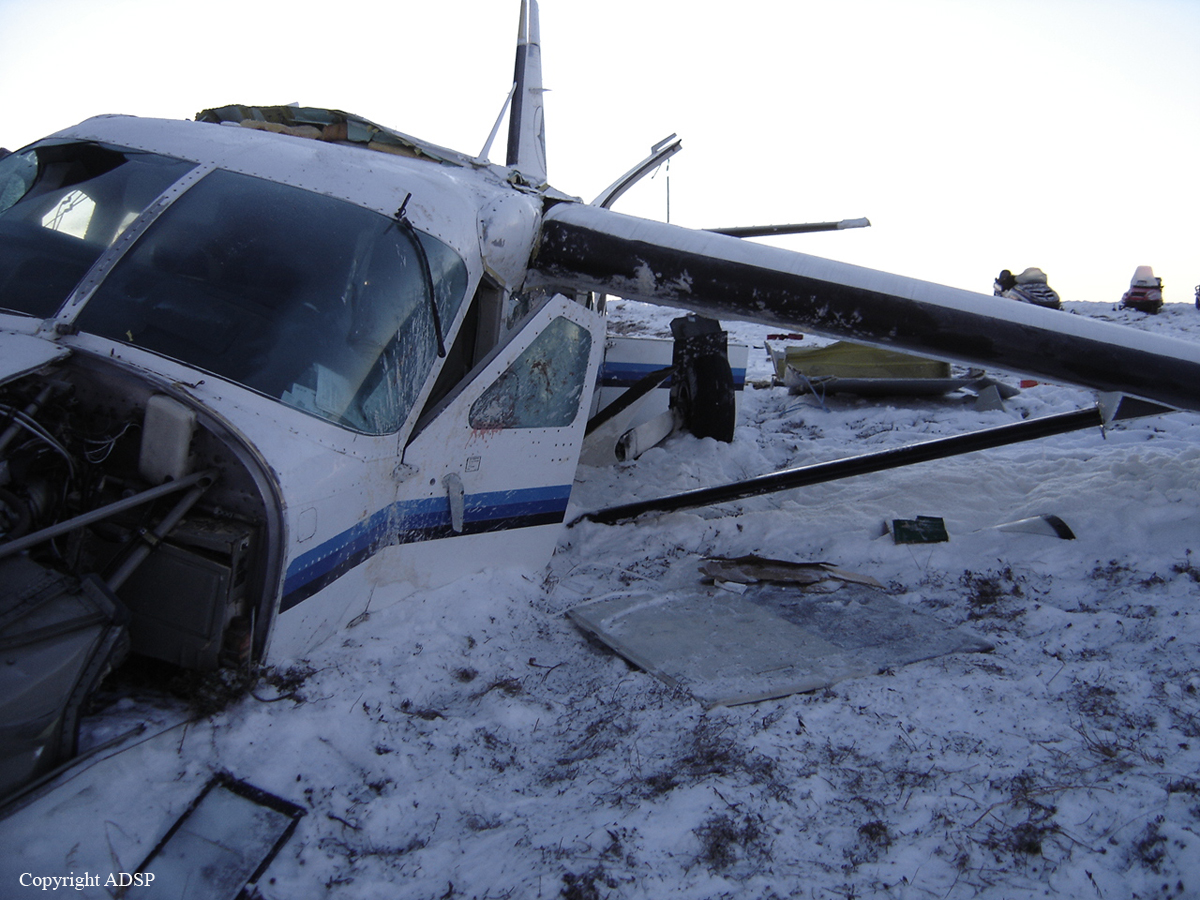
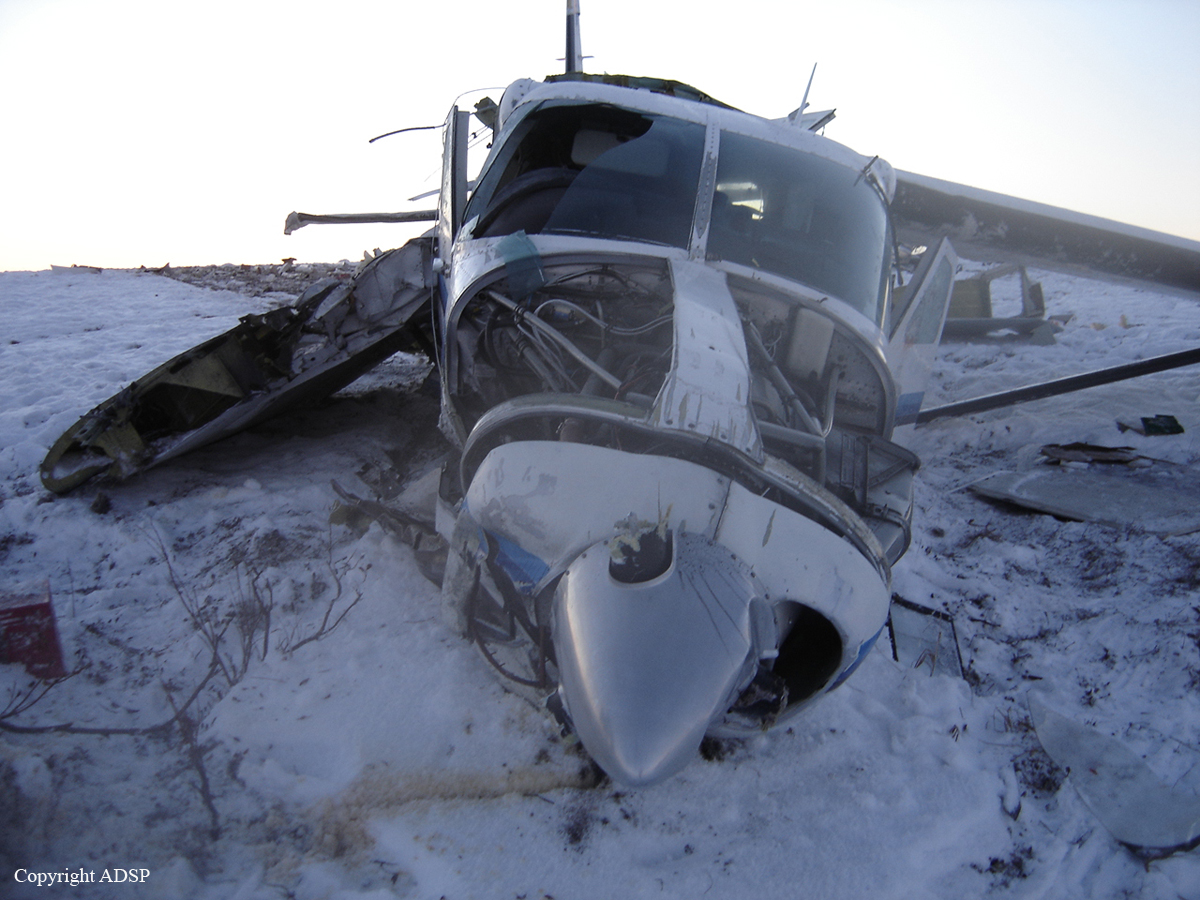
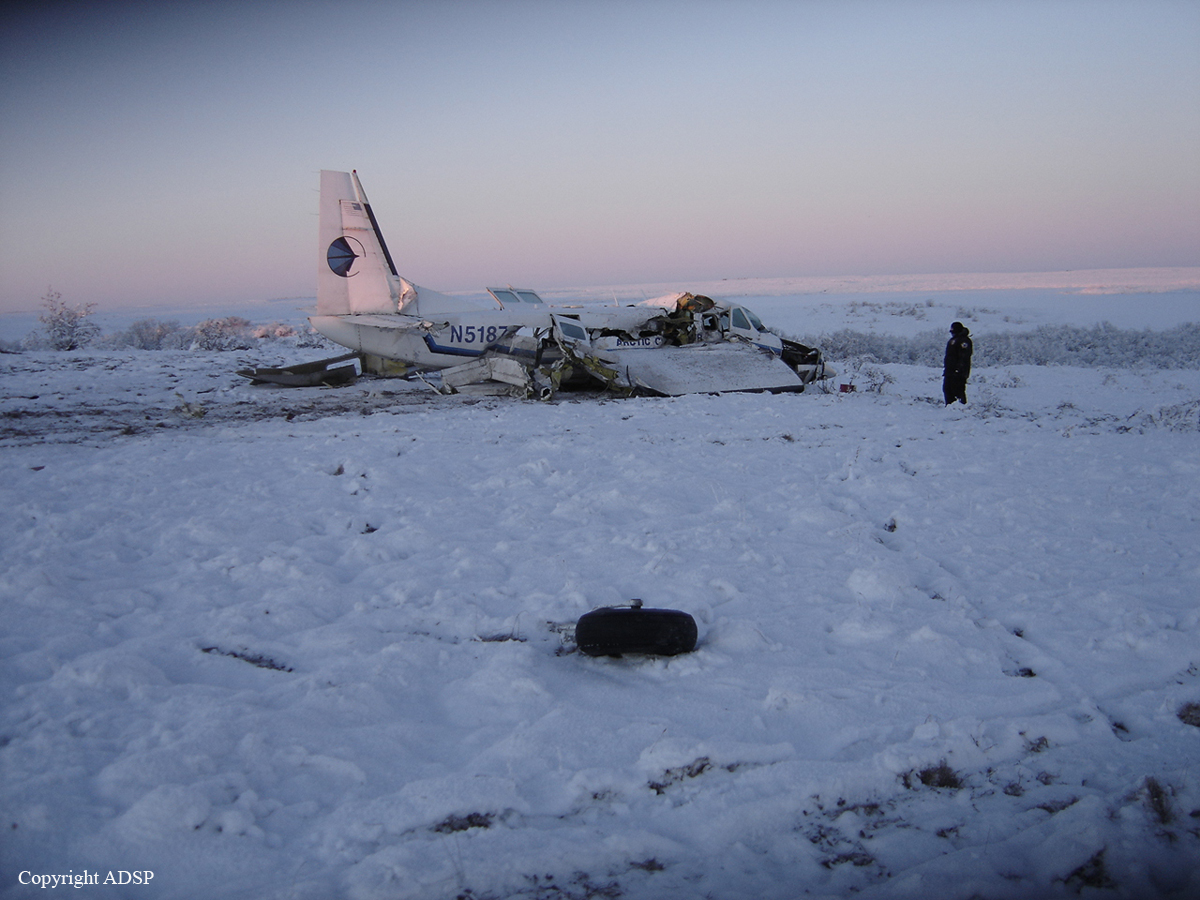
About 0800, the commercial pilot did a preflight inspection of the accident airplane, in preparation for a cargo flight. Dark night, visual meteorological conditions prevailed. He indicated that the weather conditions were clear and cold, and frost was on the airplane. He said the frost was not bonded to the skin of the airplane, and he was able to use a broom to clean off the frost, resulting in a clean wing and tail surface. He reported that no deicing fluid was applied. After takeoff, he retracted the flaps to about 5 degrees at 110 knots of airspeed. The airplane then rolled to the right about three times in a manner he described as a wave, or vortex-like movement. He applied left aileron and lowered the flaps to 20 degrees, but the roll to the right was more severe. The pilot said the engine power was "good." He then noticed that the airplane was descending toward the ground, so he attempted to put the flaps completely down. His next memory was being outside the airplane after it collided with the ground. The airplane's information manual contains several pages of limitations and warnings about departing with even small amounts of frost, ice, snow, or slush on the airplane, as it adversely affects the airplane's flight characteristics. The manufacturer requires a visual or tactile inspection of the wings, and horizontal stabilizer to ensure they are free of ice or frost if the outside air temperature is below 10 degrees C, (50 degrees F), and notes that a heated hangar or approved deicing fluids should be used to remove ice, snow and frost accumulations. The weather conditions included clear skies, and a temperature of -11 degrees F. Post accident examination of the airplane revealed no observed mechanical malfunction. An examination of the engine revealed internal over-temperature damage, and minor external fire damage consistent with a massive spike of fuel flow at the time of ground impact. Damage to the propeller blades was consistent with high power at the time of ground impact. The rolling/vortex motion of the airplane was consistent with airframe contamination due to frost.
Probable cause:
The pilot's failure to adequately remove frost contamination from the airplane, which resulted in a loss of control and subsequent collision with terrain during an emergency landing after takeoff.
Final Report:

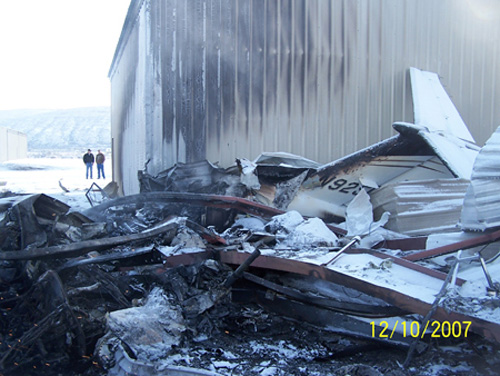
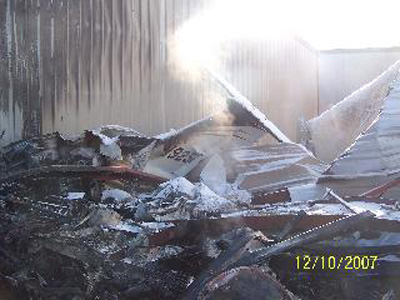
Crash of a Beechcraft 200 Super King Air in Salmon: 2 killed

Date & Time: Dec 10, 2007 at 0755 LT
Operator:
Registration:
N925TT
Survivors:
Yes
Schedule:
Salmon - Boise
MSN:
BB-746
YOM:
1981
Location:
Crew on board:
1
Crew fatalities:
Pax on board:
3
Pax fatalities:
Other fatalities:
Total fatalities:
2
Captain / Total flying hours:
14500
Captain / Total hours on type:
75.00
Aircraft flight hours:
10885
Circumstances:
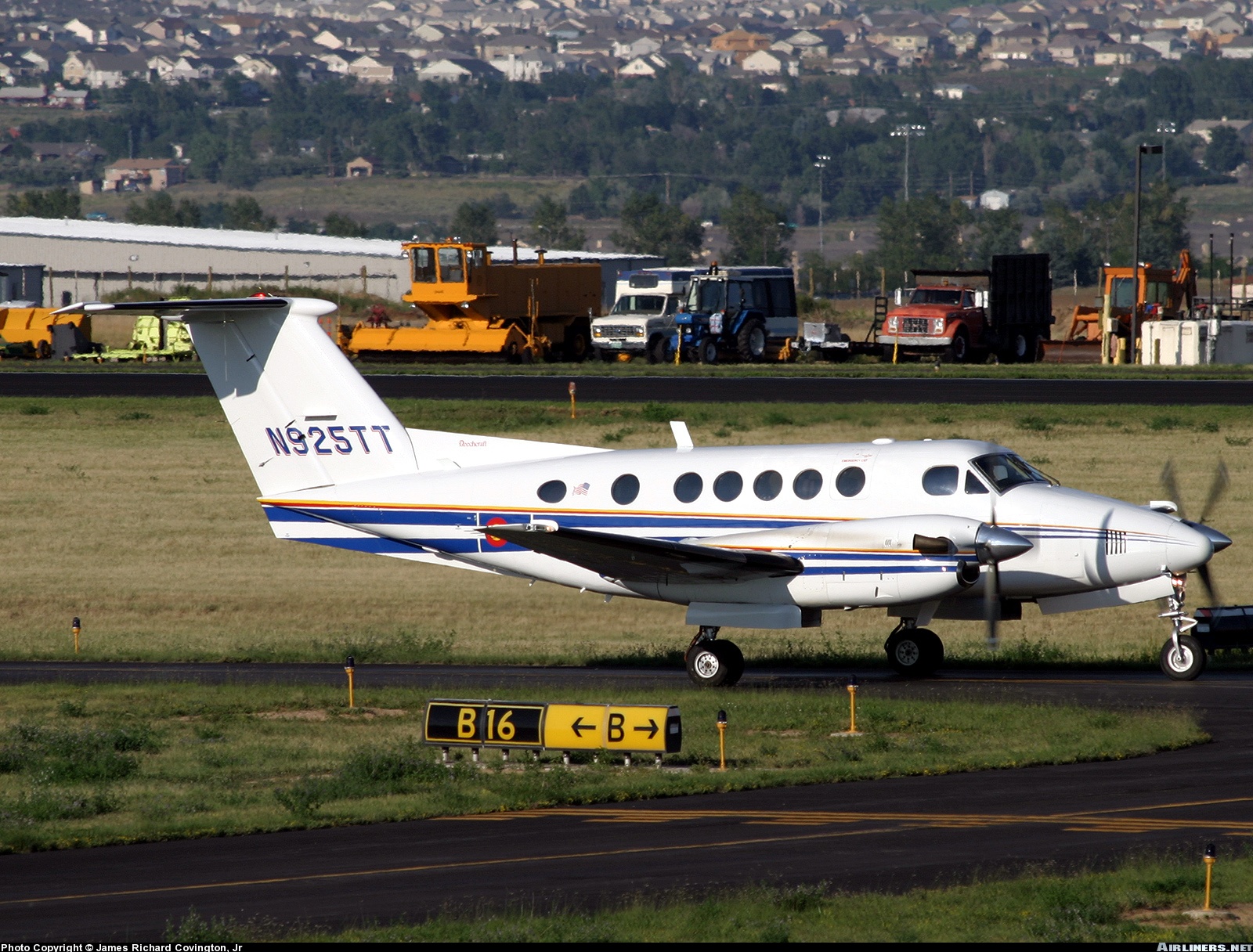
The pilot removed the airplane from a hangar that was kept heated to about 60 degrees Fahrenheit, and parked it on the ramp while awaiting the arrival of the passengers. The outside temperature was below freezing, and a steady light to moderate snow was falling. The airplane sat in the aforementioned ambient conditions for at least 45 minutes before the initiation of the takeoff roll. Prior to attempting the takeoff, the pilot did not remove the accumulated snow or the snow that had melted on the warm airframe and then refroze as ice. The surviving passengers said that the takeoff ground run was longer than normal and the airplane lifted off at 100 knots indicated and momentarily touched back down, and then lifted off again. Almost immediately after it lifted off the second time, the airplane rolled into a steep right bank severe enough that the surviving passengers thought that the wing tip might contact the ground. As the pilot continued the takeoff initial climb, the airplane repeatedly rolled rapidly to a steep left and right bank angle several times and did not seem to be climbing. The airplane was also shuddering, and to the passengers it felt like it may have stalled or dropped. The pilot then lowered the nose and appeared to attain level flight. The pilot made a left turn of about 180 degrees to a downwind for the takeoff runway. During this turn the airplane reportedly again rolled to a steeper than normal bank angle, but the pilot successfully recovered. When the pilot initiated a left turn toward the end of the runway, the airplane again began to shake, shudder, and yaw, and started to rapidly lose altitude. Although the pilot appeared to push the throttles full forward soon after initiating the turn, the airplane began to sink at an excessive rate, and continued to do so until it struck a hangar approximately 1,300 feet southwest of the approach end of runway 35. No pre-impact mechanical malfunctions or failures were identified in examinations of the wreckage and engines.
Probable cause:
An in-flight loss of control due to the pilot's failure to remove ice and snow from the airplane prior to takeoff. Contributing to the accident were the pilot's improper preflight preparation/actions, falling snow, and a low ambient temperature.
Final Report:

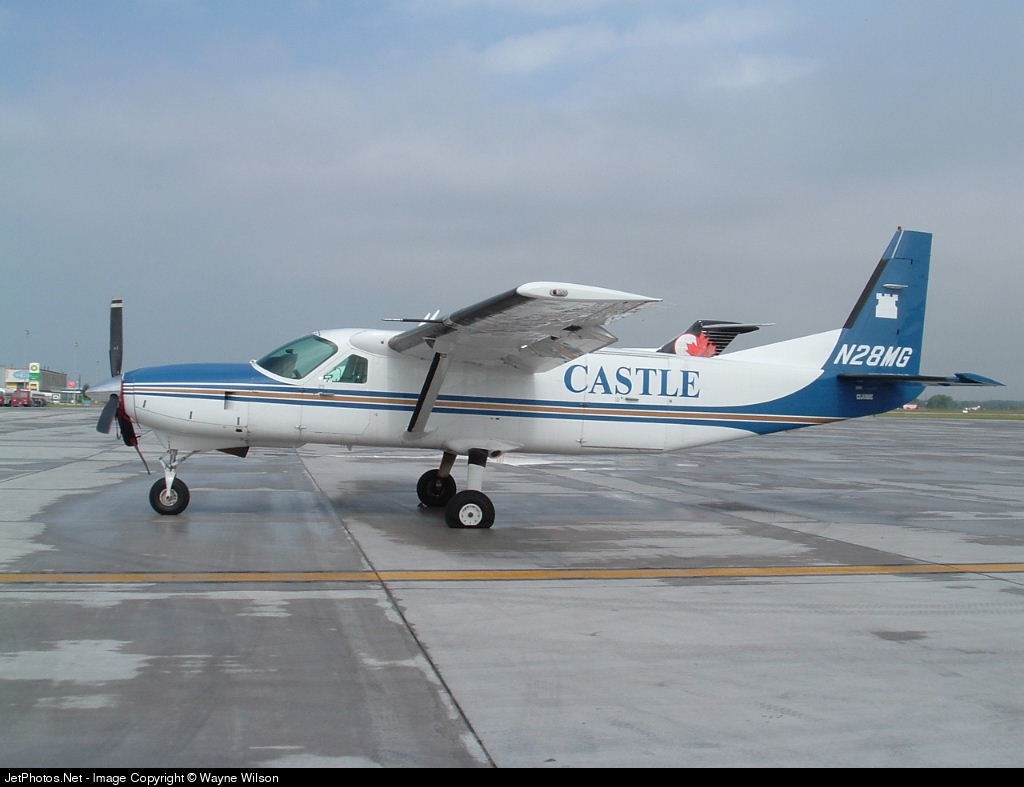
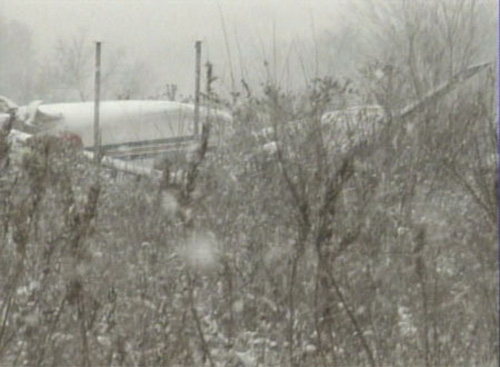
Crash of a Cessna 208B Super Cargomaster in Columbus: 2 killed

Date & Time: Dec 5, 2007 at 0651 LT
Type of aircraft:
Operator:
Registration:
N28MG
Flight Phase:
Flight Type:
Survivors:
No
Schedule:
Columbus - Buffalo
MSN:
208B-0732
YOM:
1999
Crew on board:
1
Crew fatalities:
Pax on board:
1
Pax fatalities:
Other fatalities:
Total fatalities:
2
Captain / Total flying hours:
1310
Captain / Total hours on type:
200.00
Aircraft flight hours:
9936
Aircraft flight cycles:
9033
Circumstances:
The cargo flight was departing on its fourth flight leg of a five-leg flight in night instrument conditions, which included a surface observation of light snow and a broken ceiling at 500 feet above ground level (agl). One pilot who departed just prior to the accident flight indicated that moderate snow was falling and that he entered the clouds about 200 feet agl. The accident airplane's wings and tail were de-iced prior to departure. Radar track data indicated the accident flight was about 45 seconds in duration. An aircraft performance radar study indicated that the airplane reached an altitude of about 1,130 feet mean sea level (msl), or about 400 feet above ground level, about 114 knots with a left bank angle of about 29 degrees. The airplane descended and impacted the terrain at an airspeed of about 155 knots, a pitch angle of -16 degrees, a left roll angle of 22 degrees, and a descent rate of 4,600 feet per minute. The study indicated that the engine power produced by the airplane approximately matched the engine power values represented in the pilot's operating handbook. The study indicated that the required elevator deflections were within the available elevator deflection range, and that the center-of-gravity (CG) position did not adversely affect the controllability of the airplane. The study indicated that the load factor vectors, the forces felt by the pilot, could have produced the illusion of a climb, even when the airplane was in a descent. The inspection of the airframe and engine revealed no anomalies that would have precluded normal operation.
Probable cause:
The pilot's failure to maintain aircraft control and collision avoidance with terrain due to spatial disorientation. Contributing to the accident were the low cloud ceiling and night conditions.
Final Report:

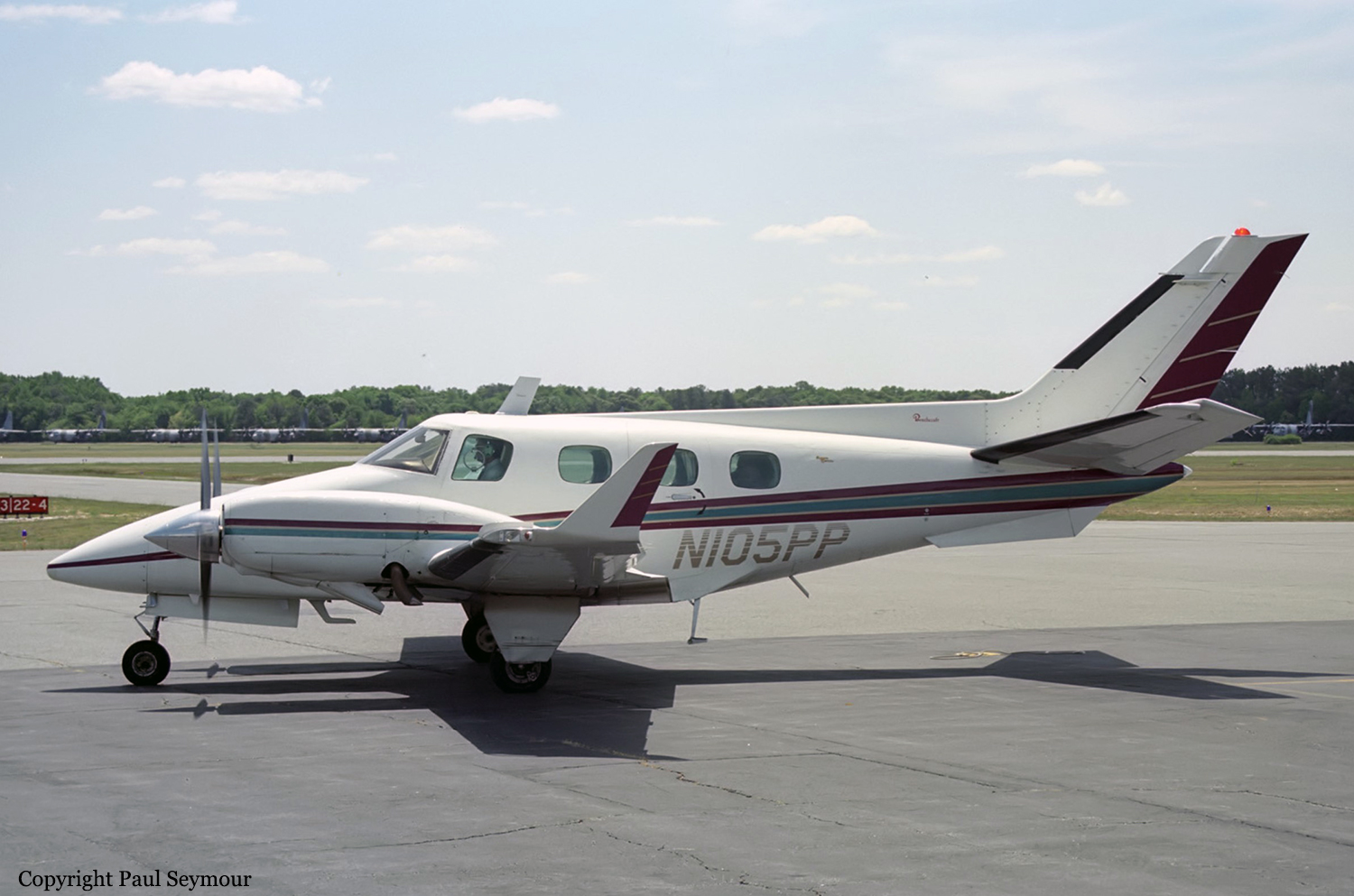
Crash of a Beechcraft 60 Duke in Wilmington: 1 killed

Date & Time: Dec 4, 2007 at 0722 LT
Type of aircraft:
Operator:
Registration:
N105PP
Flight Phase:
Flight Type:
Survivors:
No
Schedule:
Wilmington – Allentown
MSN:
P-105
YOM:
1969
Crew on board:
1
Crew fatalities:
Pax on board:
0
Pax fatalities:
Other fatalities:
Total fatalities:
1
Captain / Total flying hours:
1080
Circumstances:
According to a witness, prior to arriving in the run-up area the pilot lowered the airplane's flaps. After the right flap fully extended, the flap key on the drive shaft inside the 90-degree drive assembly adapter fractured, in overload, in the direction of flap extension. Before takeoff, the pilot raised the flaps; however, with the fractured key, the right flap would have remained fully extended. The pilot could have identified this condition prior to takeoff, either visually or by means of the flap indicator, which received its input from the right flap actuator. The pilot subsequently took off, and the airplane turned left, but it is unknown at what point the pilot would have noted a control problem. The pilot climbed the airplane to 250 to 300 feet and allowed the airspeed to bleed off to where the airplane stalled and subsequently spun into the ground. Airplane manufacturer calculations revealed that the pilot should have been able to maintain control of the airplane at airspeeds over 70 knots. According to the pilot's operating handbook, the best two-engine angle of climb airspeed was 99 knots and the best two-engine rate of climb airspeed was 120 knots.
Probable cause:
The pilot's failure to maintain adequate airspeed during a split flap takeoff, which resulted in an aerodynamic stall. Contributing to the accident were the failure of the right flap drive mechanism and the pilot's failure to verify that both flaps were retracted prior to takeoff.
Final Report:

Crash of a Piper PA-60 Aerostar (Ted Smith 602P) in McFarland: 3 killed

Date & Time: Nov 9, 2007 at 1200 LT
Registration:
N6895Z
Flight Phase:
Flight Type:
Survivors:
No
Schedule:
Roseburg – Bakersfield
MSN:
62-0918-8165043
YOM:
1981
Crew on board:
1
Crew fatalities:
Pax on board:
2
Pax fatalities:
Other fatalities:
Total fatalities:
3
Captain / Total flying hours:
1500
Captain / Total hours on type:
15.00
Aircraft flight hours:
3780
Circumstances:
The accident flight was the pilot's first 700 nm cross-country flight in the newly purchased airplane. Prior to departing he had the airplane refueled with the airplane on a slope. The individual who refueled the airplane estimated that the left wing tip was 12 to 14 inches lower than the right wing tip. He stated that the pilot was very concerned about getting as much fuel in the airplane as possible because of his up-coming flight. After climbing to his assigned cruising altitude of 21,000 feet and about two hours into the flight the pilot reported to ATC that he needed to divert. During the descent the pilot reported that he was experiencing a fuel problem and that one engine was sputtering. Two minutes later the pilot declared an emergency and reported that both engines were sputtering. The pilot reported at that time that he had 15 total gallons of fuel remaining A witness to the accident reported that he saw the airplane flying southbound and that the wings were rocking side-to-side. The airplane then rolled to the right before crashing into the citrus grove. Examination of the airframe revealed no pre-impact failure to any flight control surface or control system component. The power plant investigation did not disclose any pre-impact mechanical failure of any rotating or reciprocating component of the engine. Interviews with pilots who had flown with the accident pilot indicated that this was his first flight above 13,000 feet in the accident airplane, and was probably his longest distance attempted flight since he had purchased the airplane. According to information contained within the Pilot's Operating Handbook and FAA Approved Airplane Flight Manual (VB-1190), "The full amount of usable fuel is based on the airplane sitting on a level ramp, laterally level, and longitudinally (approximately 1 1/2 degree nose up) with each tank fueled to 0.6 inches below filler neck. The wing tanks are extremely sensitive to attitude and if not level, they cannot be fueled to the full usable capacity." This information is also included in the FAA Type Certificate Data Sheet No. A17WE under the section Data Pertinent to All Models, Note 1.
Probable cause:
The pilot's inadequate preflight preparation and improper fueling procedures that led to fuel exhaustion.
Final Report: