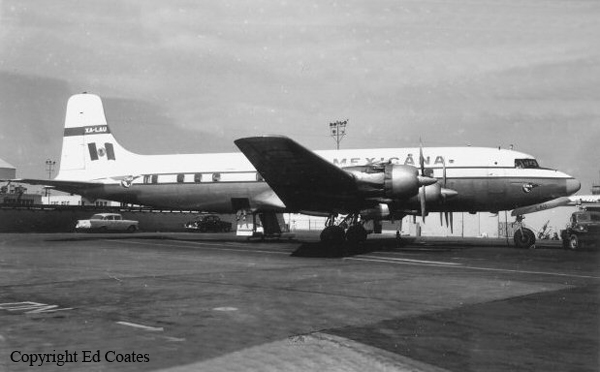
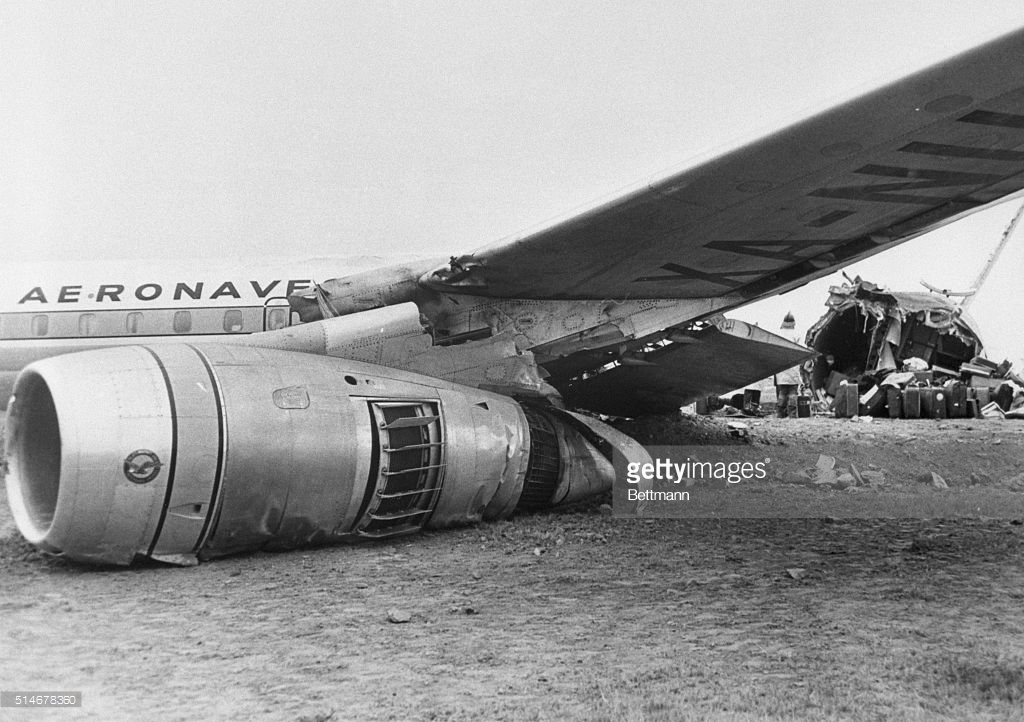
Crash of a Lockheed P-2H Neptune at Roosevelt Roads NAS

Date & Time: Feb 19, 1967
Type of aircraft:
Operator:
Registration:
147955
Survivors:
Yes
MSN:
726-7205
YOM:
1958
Country:
Crew on board:
0
Crew fatalities:
Pax on board:
0
Pax fatalities:
Other fatalities:
Total fatalities:
0
Circumstances:
After landing at Roosevelt Roads NAS, failed to stop within the remaining distance and overran. There were no injuries but the aircraft was damaged beyond repair.

Crash of a Beechcraft AT-11 Kansan in Yucatán: 3 killed

Date & Time: Feb 13, 1967
Type of aircraft:
Operator:
Registration:
BHB-1520
Flight Phase:
Flight Type:
Survivors:
No
MSN:
3934
YOM:
1943
Country:
Crew on board:
3
Crew fatalities:
Pax on board:
0
Pax fatalities:
Other fatalities:
Total fatalities:
3
Circumstances:
Crashed in unknown circumstances in Yucatán while on a flight from Santa Lucía Airbase to Cozumel. All three crew members were killed.

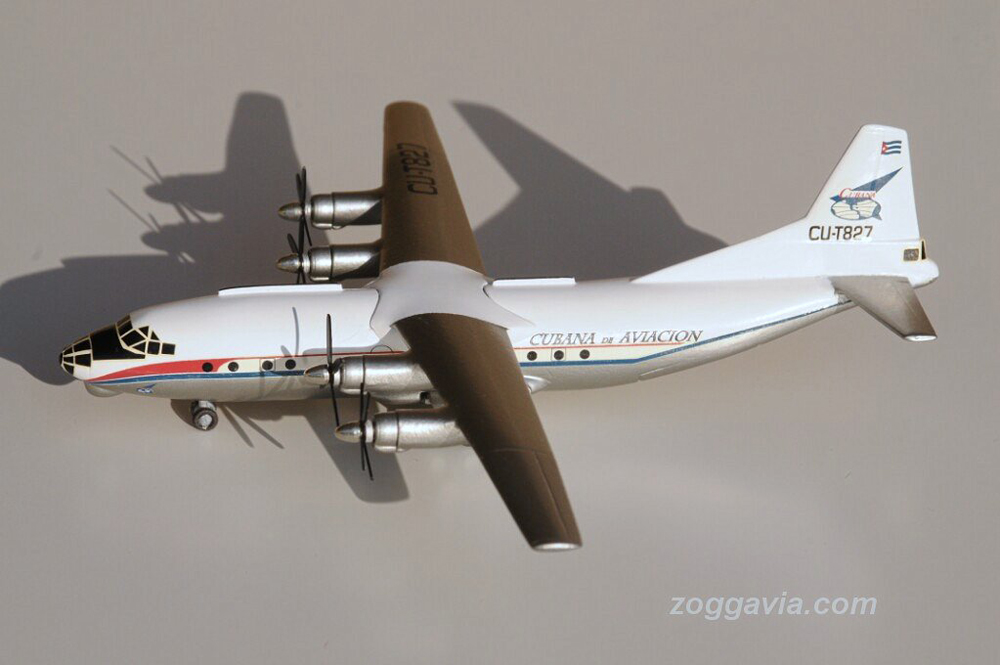
Crash of an Antonov AN-12BP in Mexico City: 10 killed

Date & Time: Feb 9, 1967 at 0516 LT
Type of aircraft:
Operator:
Registration:
CU-T827
Flight Type:
Survivors:
No
Schedule:
Havana - Mexico City
MSN:
4 015 04
YOM:
1964
Country:
Crew on board:
4
Crew fatalities:
Pax on board:
6
Pax fatalities:
Other fatalities:
Total fatalities:
10
Captain / Total flying hours:
10830
Captain / Total hours on type:
701.00
Copilot / Total flying hours:
15240
Copilot / Total hours on type:
153
Aircraft flight hours:
993
Circumstances:
The aircraft was carrying out a non-scheduled international cargo flight from Rancho Boyeros Airport, Havana, Cuba, to Mexico City International Airport, Mexico. It departed Rancho Boyeros Airport at approximately 0100 hours Mexico time and its estimated time of arrival at Mexico was 0450 hours. At 0400 hours, when reaching the BX intersection, the aircraft contacted the Mexico Control Centre and requested authorization to enter the control area. This was granted and the latest weather information for Mexico Airport was transmitted to the aircraft but no acknowledgement was received. Subsequent transmissions from the aircraft on 118.7 MHz were unintelligible and it was instructed to change to 120.1 MHz. The c clearance and weather information were again passed to the aircraft on that frequency. The aircraft reported over Nautla and Tulanciago and was informed that visibility at Mexico City was 14 miles because of fog. It was then instructed to descend from 18 000 to 12 000 ft and change to approach frequency 119.7 MHz. It was also advised that the runway would be 23L and that the wind was calm. At 0458 hours the aircraft reported over Tepexpan and was instructed to descend to 11 000 ft and report over the VOR where it could initiate a standard descent. At 0500 hours the aircraft reported over the VOR leaving 11 000 ft and was instructed to change to 118.1 MHz, the control tower frequency. This was the last contact with the aircraft. It did not establish contact on the tower frequency. The aircraft crashed in flames 18 km from runway threshold and 400 meters to the right of its extended centerline. The aircraft was destroyed and all 10 occupants were killed.
Probable cause:
The probable cause of the accident was pilot error in that:
- He executed an IFR descent procedure other than that which was established for Mexico City International Airport; and
- He discontinued IFR flight during the descent outside the area protected for VFR flight at that time of day and in the reported weather conditions, below the absolute minima established for descent.
The following findings were reported:
- The aircraft struck the ground nose first in an almost 24° nose down attitude and with a left bank of approximately 25°,
- No evidence of fire or explosion prior to impact was found,
- Fire occurred when the left wing broke and fuel came in contact with the exhaust of No. 1 and No. 2 engines,
- There was no evidence of the aircraft being out of control during the procedure turn and descent,
- The aircraft was not in the landing configuration,
- Communications between the aircraft and the Control Centre were normal up to fixing on the Mexico City VOR,
- The aircraft never contacted the control Tower on the frequency indicated (118.1 MHz),
- Although the weather conditions were not good at the time of the accident, the crew apparently discontinued instrument flight and tried to make a visual approach.
- The aircraft did not follow the procedure established for instrument descent at Mexico City International Airport and at the moment of impact it was effecting an approach descent and attempting to intercept QDM 228° for final approach to runway 23 left.
Final Report:
Crash of a Douglas DC-6 in Mérida

Date & Time: Jan 30, 1967
Type of aircraft:
Operator:
Registration:
XA-LAU
Survivors:
Yes
Schedule:
Mexico City – Mérida
MSN:
43059/96
YOM:
1948
Country:
Crew on board:
3
Crew fatalities:
Pax on board:
26
Pax fatalities:
Other fatalities:
Total fatalities:
0
Circumstances:
On final approach to Mérida-Licenciado Manuel Crecencio Rejon Airport, the four engine aircraft stalled and crashed few dozen yards short of runway threshold. All 29 occupants were injured and the aircraft was destroyed.
Probable cause:
Due to poor crew coordination during the final approach, they failed to follow the approach checklist and one of the pilot inadvertently set up the reverse thrust system. Due to low speed, the airplane stalled and crashed. The distance between the aircraft and the ground was insufficient to expect recovery.

Crash of a Convair CV-640 in San Juan

Date & Time: Jan 23, 1967 at 0901 LT
Type of aircraft:
Operator:
Registration:
N3408
Survivors:
Yes
MSN:
21
YOM:
1952
Flight number:
CRB101
Country:
Crew on board:
3
Crew fatalities:
Pax on board:
25
Pax fatalities:
Other fatalities:
Total fatalities:
0
Captain / Total flying hours:
7084
Captain / Total hours on type:
670.00
Circumstances:
On final approach to San Juan-Luis Muñoz Marin Airport (Island Grande), the airplane struck the ground 250 feet short of runway threshold. Upon impact, the right wing was torn off and the airplane came to rest. All 28 occupants were evacuated safely while the aircraft was damaged beyond repair.
Probable cause:
The pilot-in-command misjudged distance, speed and altitude on final approach. Last 15 seconds of flight, the crew adopted a rate of descent of 1,600 feet per minute.
Final Report:

Crash of a Chase C-122C Avitruc off Bimini: 4 killed

Date & Time: Jan 11, 1967 at 0937 LT
Type of aircraft:
Operator:
Registration:
N122E
Flight Phase:
Flight Type:
Survivors:
No
Schedule:
Fort Lauderdale - Bimini
MSN:
CY-879
YOM:
1954
Location:
Country:
Crew on board:
4
Crew fatalities:
Pax on board:
0
Pax fatalities:
Other fatalities:
Total fatalities:
4
Captain / Total flying hours:
4042
Circumstances:
The crew was completing a flight from Fort Lauderdale to Bimini, carrying various equipment for a movie. While approaching Bimini Island, the aircraft crashed in unknown circumstances into the sea. SAR operations were conducted but eventually suspended few days later asa no trace of the aircraft nor the four crew members was found. Some debris were eventually spotted few days later floating on water northwest of Bimini Island.
Probable cause:
Due to lack of evidence, the cause of the accident could not be determined.
Final Report:

Crash of an Antonov AN-2 in Pinar del Río: 5 killed

Date & Time: Jan 10, 1967
Type of aircraft:
Operator:
Flight Phase:
Survivors:
No
Schedule:
Pinar del Río - Pinar del Río
Country:
Crew on board:
2
Crew fatalities:
Pax on board:
3
Pax fatalities:
Other fatalities:
Total fatalities:
5
Circumstances:
The aircraft was engaged in a local crop spraying mission, carrying three passengers and a crew of two. Shortly after takeoff from Pinar del Río-La Coloma Airport, while climbing in a limited visibility due to fog conditions, the single engine aircraft struck a water tower and crashed. All five occupants were killed.

Crash of a Douglas DC-8-51 in Mexico City

Date & Time: Dec 24, 1966 at 0430 LT
Type of aircraft:
Operator:
Registration:
XA-NUS
Survivors:
Yes
Schedule:
New York - Mexico City
MSN:
45633
YOM:
1962
Country:
Crew on board:
8
Crew fatalities:
Pax on board:
101
Pax fatalities:
Other fatalities:
Total fatalities:
0
Circumstances:
The approach to Mexico City-Benito Juárez Airport was completed by night. In poor visibility, the pilot-in-command failed to realize his altitude was too low and led the aircraft pass below the glide until it struck the ground. At impact, the undercarriage were torn off and the airplane broke in two before coming to rest in the Texcoco dry lake. All 109 occupants were rescued, 28 of them were injured. The aircraft was destroyed.
Probable cause:
Wrong approach configuration.

Crash of a Lockheed 18-56-23 LodeStar near La Paz: 10 killed

Date & Time: Dec 20, 1966
Type of aircraft:
Registration:
N2222B
Flight Phase:
Flight Type:
Survivors:
No
Schedule:
San Diego – La Paz
MSN:
18-2558
YOM:
1943
Country:
Crew on board:
2
Crew fatalities:
Pax on board:
8
Pax fatalities:
Other fatalities:
Total fatalities:
10
Circumstances:
The twin engine aircraft departed San Diego Airport on a private flight to La Paz, Baja California del Sur, with eight passengers and two pilots on board. In unknown circumstances, the airplane crashed in an isolated area located few dozen km north of La Paz. The wreckage was found two days later and all 10 occupants were killed, among them people who were interested to buy the aircraft.
Final Report:

Crash of a Beechcraft C18S in Beef Island

Date & Time: Nov 24, 1966 at 1455 LT
Type of aircraft:
Operator:
Registration:
N6402C
Flight Type:
Survivors:
Yes
MSN:
4354
YOM:
1943
Crew on board:
1
Crew fatalities:
Pax on board:
1
Pax fatalities:
Other fatalities:
Total fatalities:
0
Captain / Total flying hours:
4200
Captain / Total hours on type:
308.00
Circumstances:
After touchdown at Beef Island Airport, the twin engine airplane was unable to stop within the remaining distance, overran and came to a halt. While both occupants were slightly injured, the airplane was damaged beyond repair. It was owned by Jose F. Jimenez.
Final Report: