Crash of a Cessna 208B Grand Caravan in Canaima: 1 killed

Date & Time: Apr 17, 2009 at 1545 LT
Type of aircraft:
Operator:
Registration:
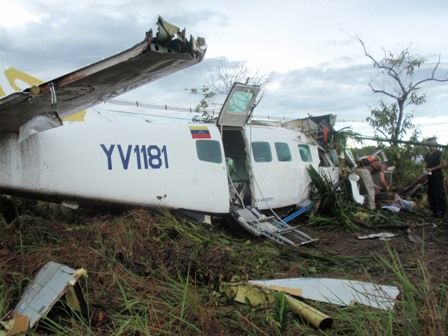
YV1181
Flight Phase:
Survivors:
Yes
Schedule:
Canaima – Ciudad Bolívar
MSN:
208B-0695
YOM:
1998
Country:
Crew on board:
2
Crew fatalities:
Pax on board:
10
Pax fatalities:
Other fatalities:
Total fatalities:
1
Captain / Total flying hours:
3404
Captain / Total hours on type:
1021.00
Copilot / Total flying hours:
269
Copilot / Total hours on type:
59
Aircraft flight hours:
15753
Circumstances:
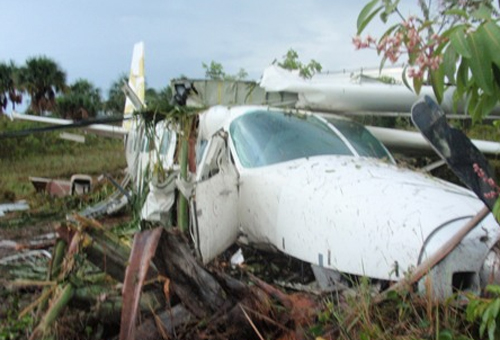
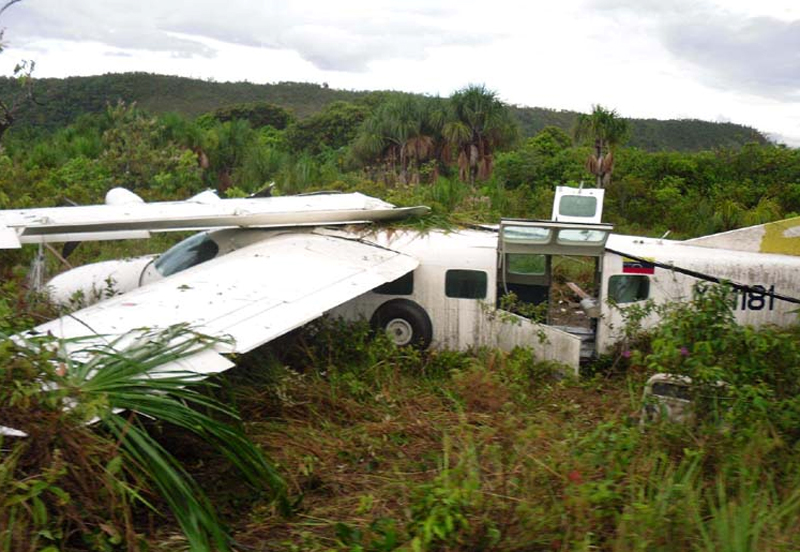
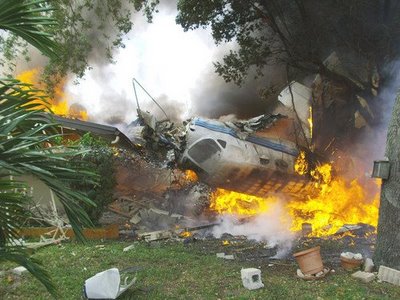
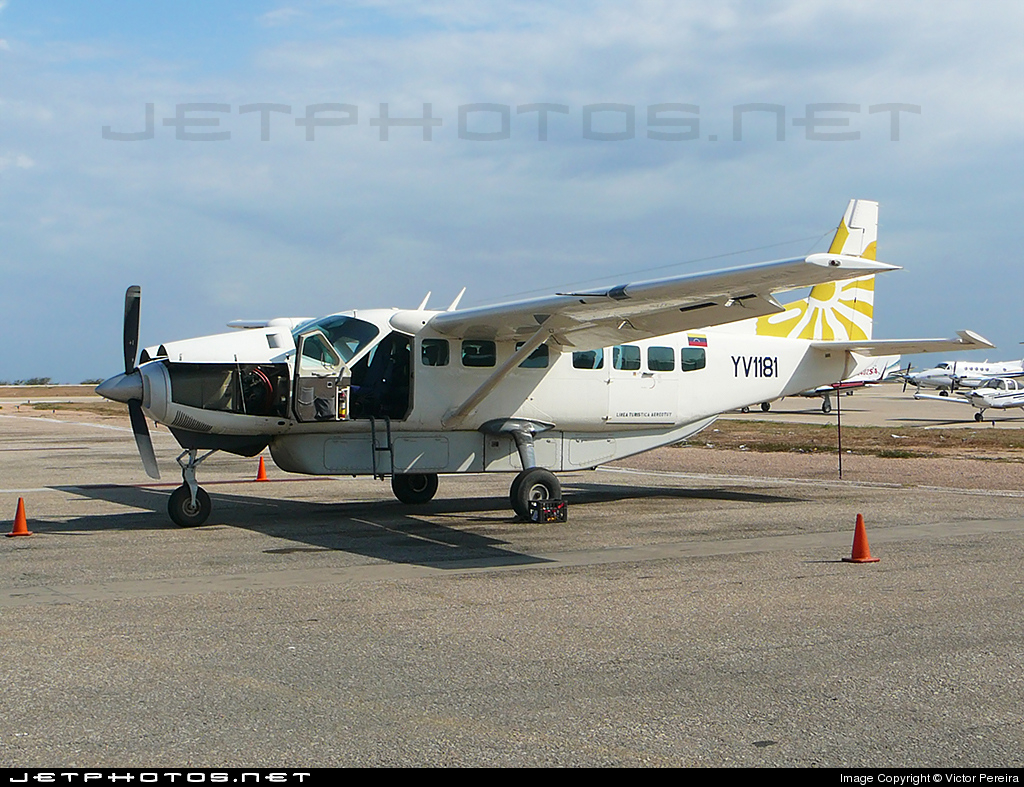
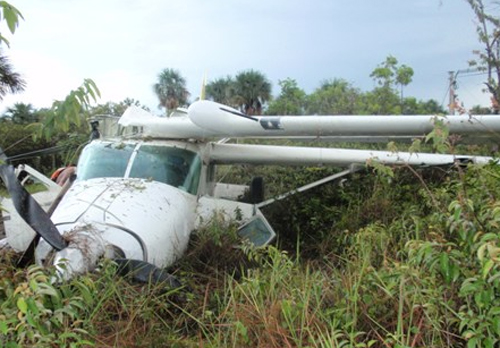
After takeoff from runway 36 at Canaima Airport, while in initial climb, the single engine aircraft encountered difficulties to gain height. It collided with power lines and crashed in bushes located 80 metres past the runway end. A young boy aged 6 was killed while all other occupants were injured, seven seriously. The aircraft was destroyed.
Probable cause:
The accident occurred as a result of the inability of the aircraft to take off, affected by the tailwind and water puddles that covered part of the runway, which did not allow speed to build up, crashing into the ground. It is considered that the most likely cause of the accident was mismanagement by the crew, in the sense of failing to make adequate planning and analysis, coupled with overconfidence and lack of identification of hazardous conditions at that time of takeoff. Based on our [JIAAC] investigations, we can infer that there were several contributing causes for the occurrence of this accident. In this order, we can state the following:
- Adverse weather and tailwind conditions associated with the phenomenon.
- Incorrect management by the crew to use only the last third of the runway with the meteorological conditions prevailing at that time.
- Failure of the aerodrome administration to identify and correct poor drainage of the runway.
- Failure of the Autoridad Aeronáutica to monitor safety.
- Rejection by the crew of the concatenated form in which the factors involved in this event developed.
After all the analysis to different causes involved in this accident, we can point to as the main Causal Factor: Human Factor, due to the mismanagement by the flight crew upon takeoff in these conditions. Physical and Material factors included everything related to the prevailing weather conditions, road conditions and lack of services at the aerodrome by the authorities; all of them are considered Contributing Factors.
Final Report:
Crash of a Cessna 421B Golden Eagle II in Fort Lauderdale: 1 killed

Date & Time: Apr 17, 2009 at 1115 LT
Operator:
Registration:
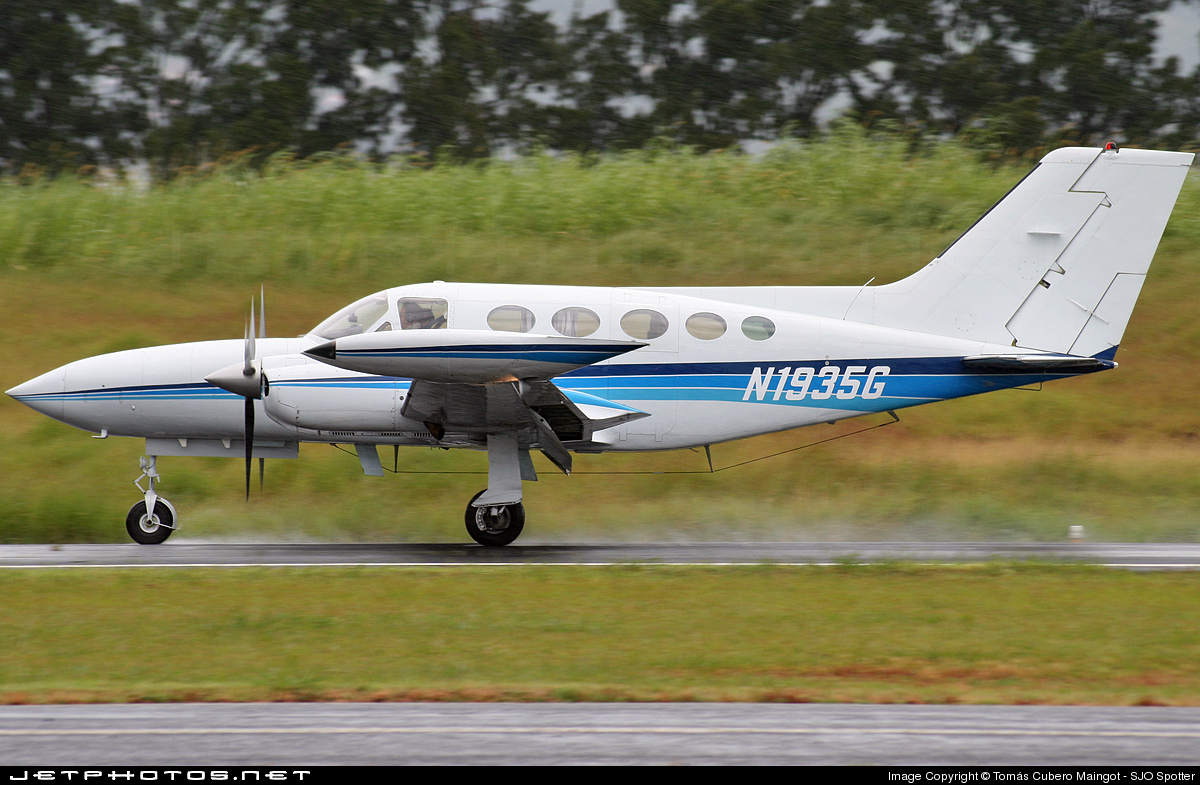
N1935G
Flight Phase:
Flight Type:
Survivors:
No
Site:
Schedule:
Fort Lauderdale - Fernandina Beach
MSN:
421B-0836
YOM:
1974
Crew on board:
1
Crew fatalities:
Pax on board:
0
Pax fatalities:
Other fatalities:
Total fatalities:
1
Captain / Total flying hours:
23000
Captain / Total hours on type:
5000.00
Circumstances:
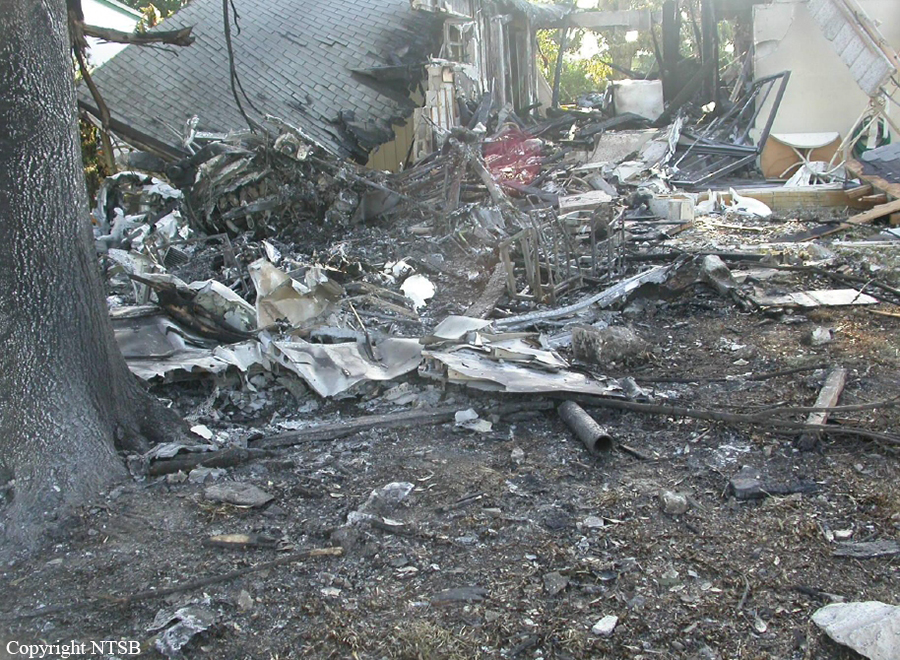
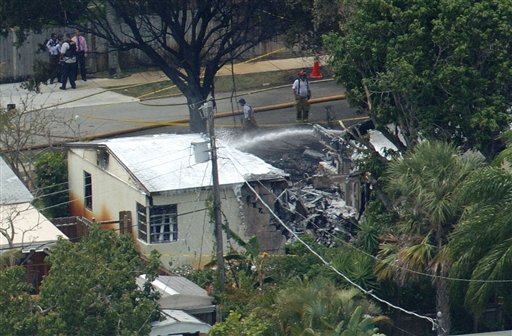
Prior to the accident flight witnesses observed the pilot "haphazardly" pouring oil into the right engine. The pilot then ran the engines at mid-range power for approximately 20 minutes. The airplane subsequently taxied out of the ramp area and departed. Fire was observed emanating from the right engine after rotation. The airplane continued in a shallow climb from the runway, flying low, with the right engine on fire. The airplane then banked right to return to the airport and descended into a residential area. Examination of the right engine revealed an exhaust leak at the No. 4 cylinder exhaust riser flange. Additionally, one of the flange boltholes was elongated, most likely from the resulting vibration. The fuel nozzle and B-nut were secure in the No. 4 cylinder; however, its respective fuel line was separated about 8 inches from the nozzle. No determination could be made as to when the fuel line separated (preimpact or postimpact) due to the impact and postcrash fire damage. Examination of the right engine turbocharger revealed that the compressor wheel exhibited uniform deposits of an aluminum alloy mixture, consistent with ingestion during operation, and most likely from the melting of the aluminum fresh air duct. Additionally, the right propeller was found near the low pitch position, which was contrary to the owner's manual emergency procedure to secure the engine and feather the propeller in the event of an engine fire.
Probable cause:
The pilot's failure to maintain aircraft control and secure the right engine during an emergency return to the airport after takeoff. Contributing to the accident was an in-flight fire of the right engine for undetermined reasons.
Final Report:

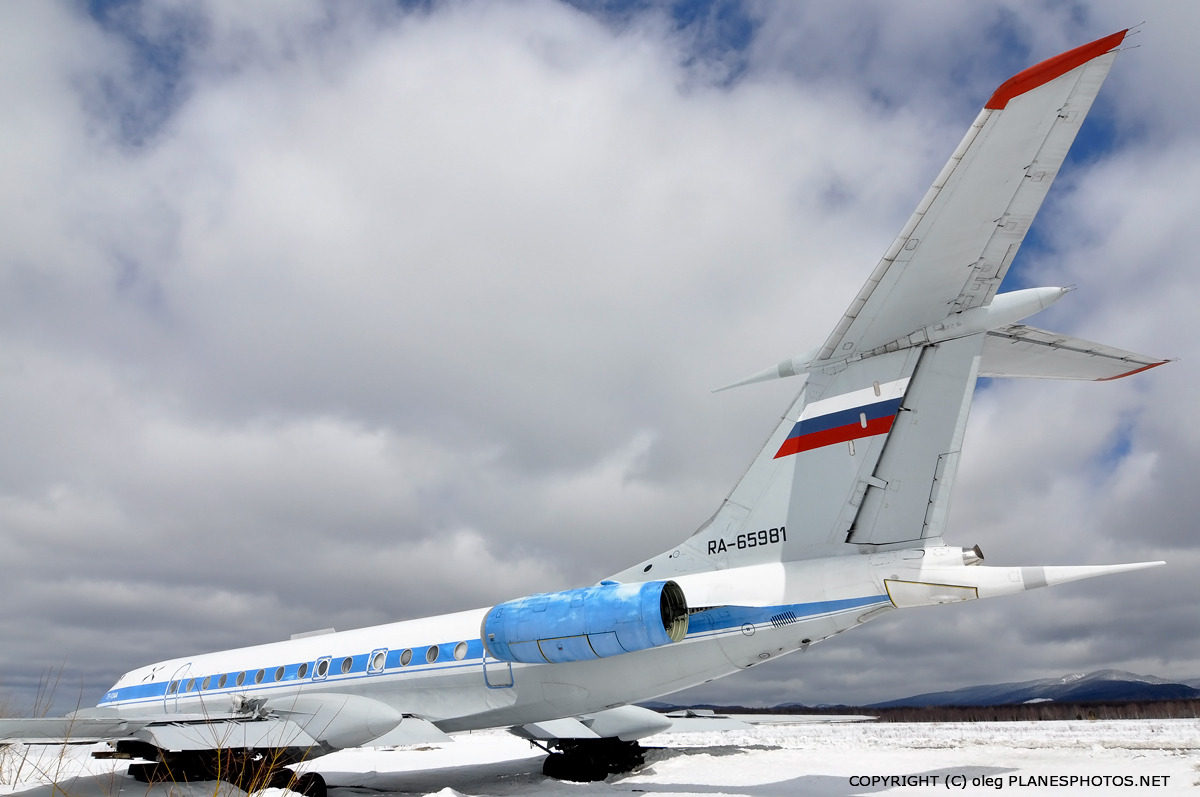
Crash of a Tupolev TU-134AK at Dolinsk-Sokol AFB

Date & Time: Mar 26, 2009
Type of aircraft:
Operator:
Registration:
RA-65981
Flight Phase:
Flight Type:
Survivors:
Yes
MSN:
63250
YOM:
1980
Country:
Region:
Crew on board:
0
Crew fatalities:
Pax on board:
0
Pax fatalities:
Other fatalities:
Total fatalities:
0
Circumstances:
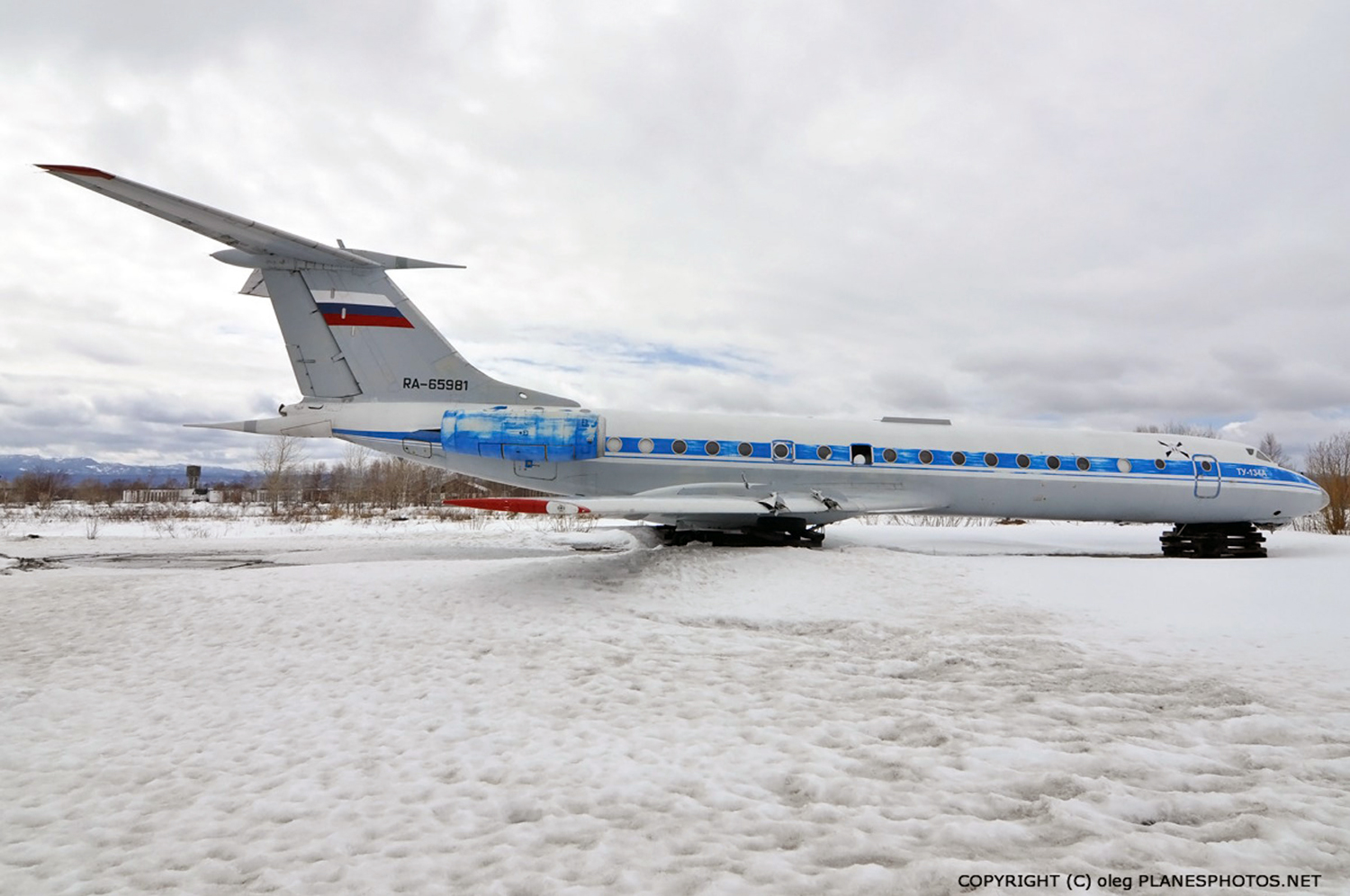
On take off roll at dusk during heavy snow falls, the aircraft veered off runway to the left and collided with a snow mound (1,2 meter high). The nose gear was torn off while both main gears collapsed. All occupants escaped uninjured while the aircraft was damaged beyond repair. It was used for the Far East Command.
Probable cause:
It appears that runway was not properly cleaned from snow prior to takeoff.

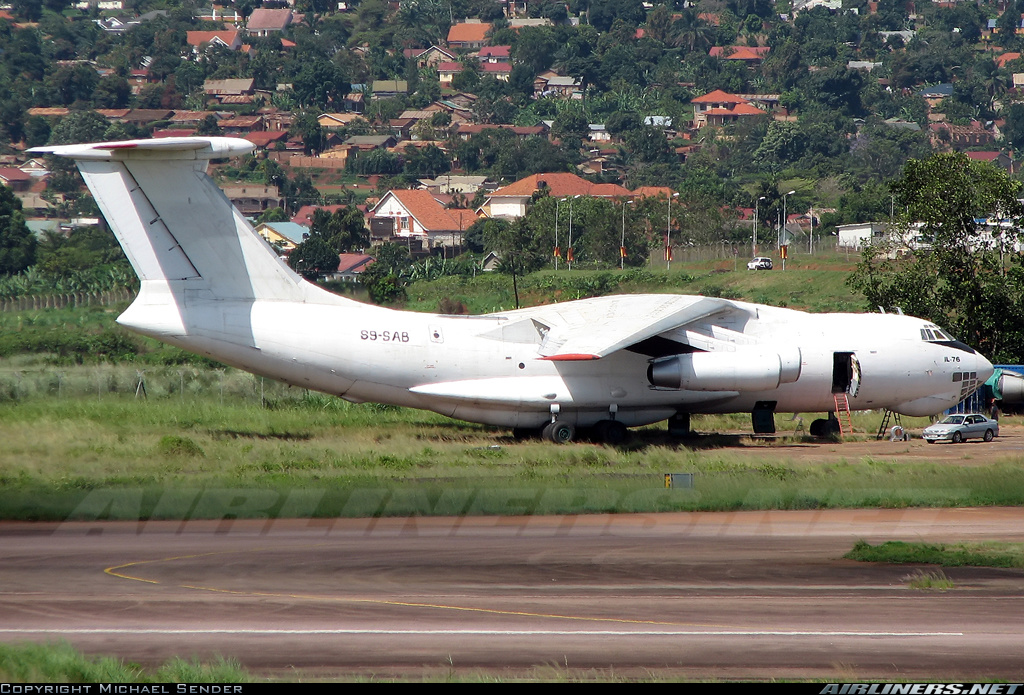
Crash of an Ilyushin II-76T off Entebbe: 11 killed

Date & Time: Mar 9, 2009 at 0515 LT
Type of aircraft:
Operator:
Registration:
S9-SAB
Flight Phase:
Flight Type:
Survivors:
No
Schedule:
Entebbe - Mogadishu
MSN:
0734 10301
YOM:
1977
Location:
Country:
Region:
Crew on board:
4
Crew fatalities:
Pax on board:
7
Pax fatalities:
Other fatalities:
Total fatalities:
11
Circumstances:
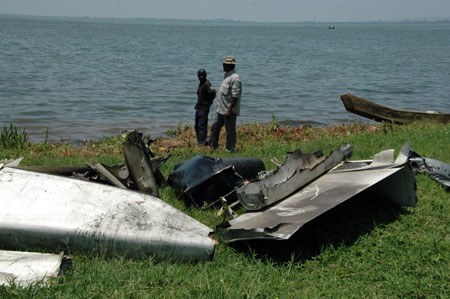
Shortly after takeoff from Entebbe Airport runway 17, while climbing by night, the aircraft entered an uncontrolled descent and crashed in the Lake Victoria, some 10 km south from Entebbe airport. The aircraft disintegrated on impact and all 11 occupants were killed, among them 3 Army Officer from Burundi and one Army Officer from Uganda. They were flying to Mogadishu on behalf of the Amisom, the African Union Mission In Somalia. The aircraft was chartered by the US Company Dynacorp to carry tents and water purification equipments.

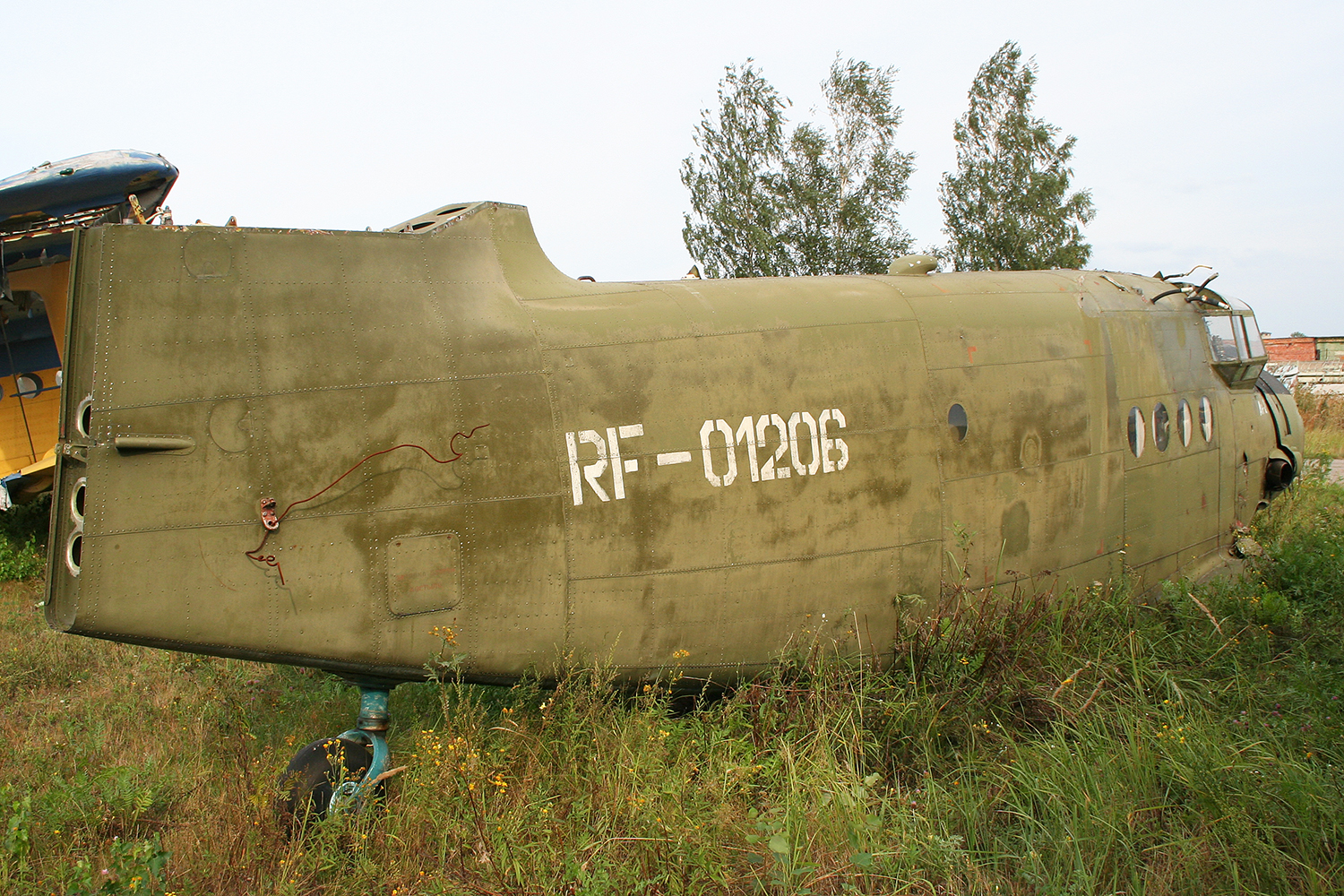
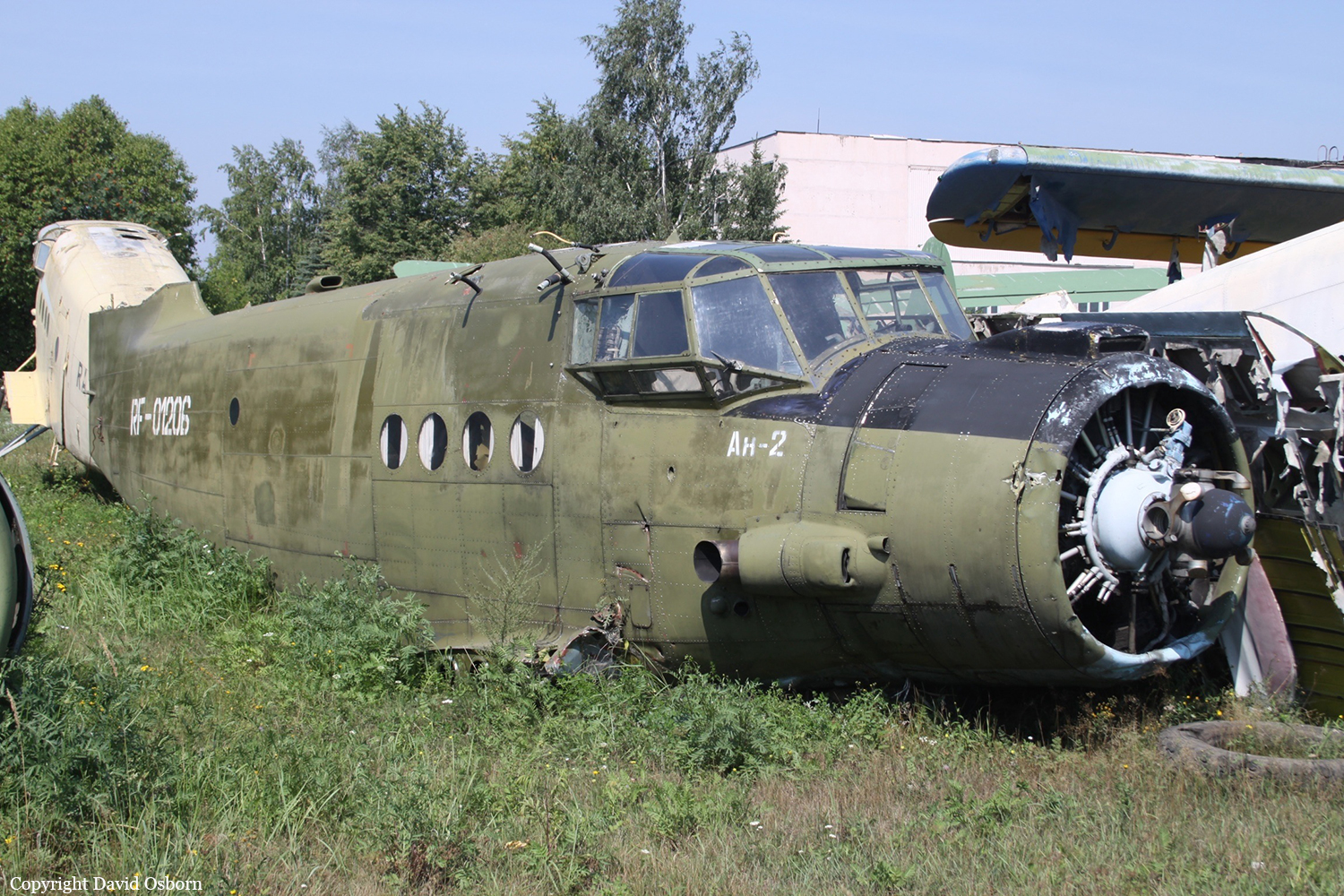
Crash of a PZL-Mielec AN-2T in Volosovo

Date & Time: Mar 7, 2009
Type of aircraft:
Operator:
Registration:
RF-01206
Flight Phase:
Survivors:
Yes
Schedule:
Volosovo - Volosovo
MSN:
1G98-22
YOM:
1968
Country:
Region:
Crew on board:
1
Crew fatalities:
Pax on board:
10
Pax fatalities:
Other fatalities:
Total fatalities:
0
Circumstances:
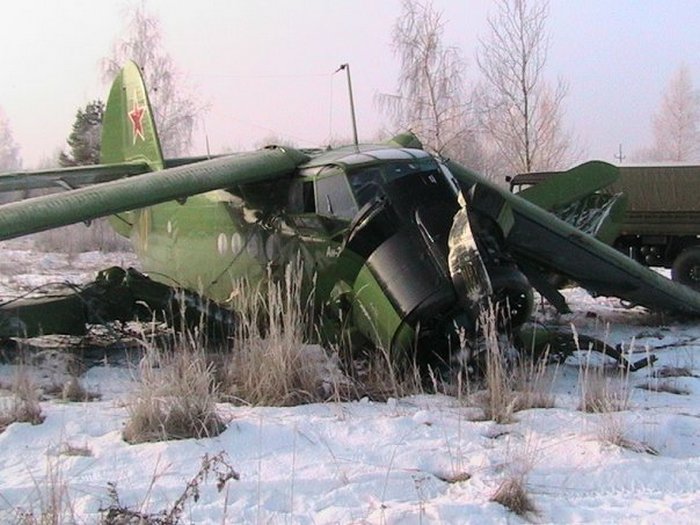
45 seconds after takeoff, while climbing, the aircraft stalled and crashed in a snow covered field. The pilot and all 10 skydivers escaped uninjured while the aircraft was damaged beyond repair.

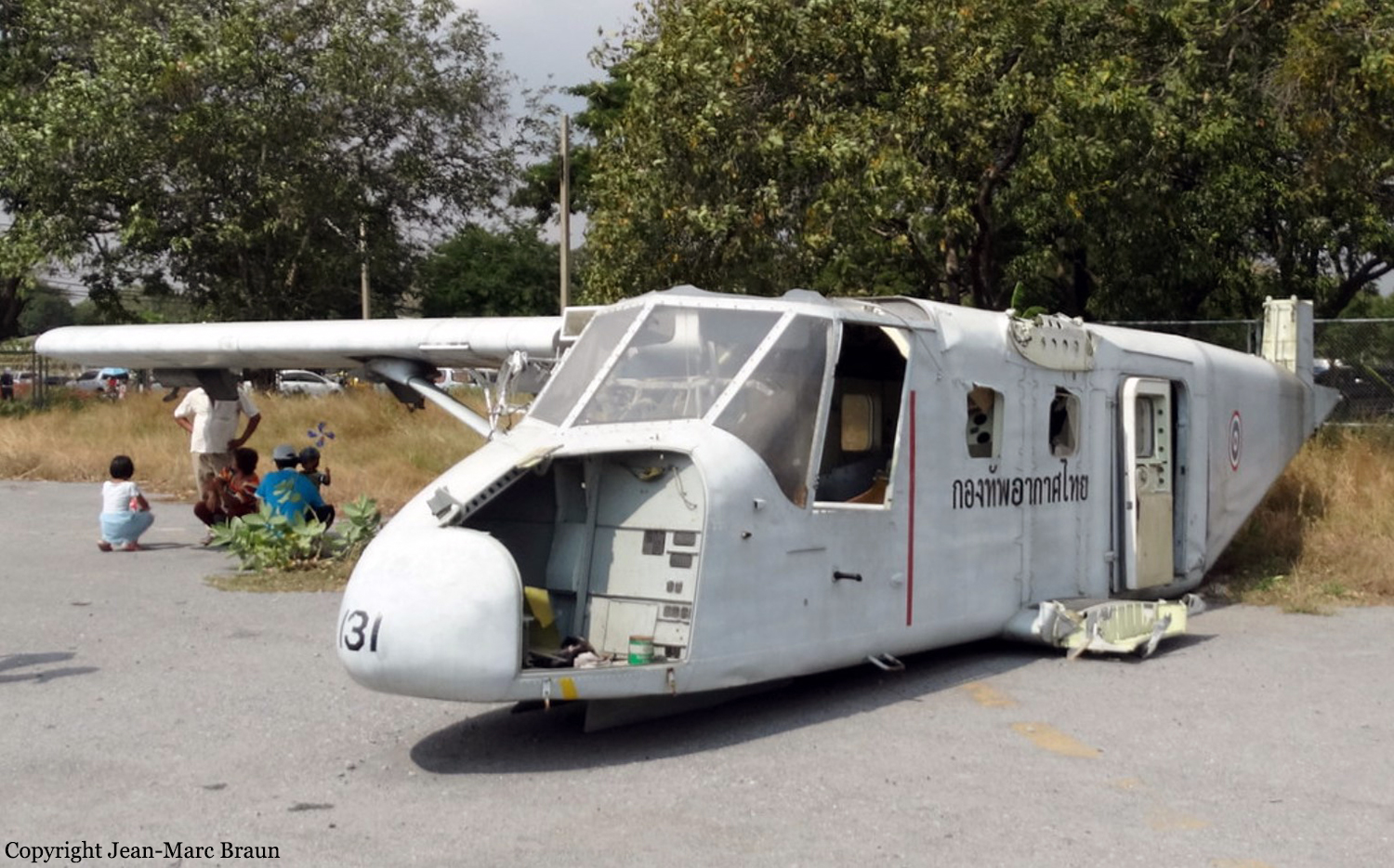
Crash of a GAF Nomad N.22B at Lop Buri AFB: 1 killed

Date & Time: Mar 6, 2009 at 1000 LT
Type of aircraft:
Operator:
Registration:
L9-5/25
Flight Phase:
Flight Type:
Survivors:
Yes
Schedule:
Lop Buri – Phitsanulok
MSN:
137
YOM:
1982
Country:
Region:
Crew on board:
5
Crew fatalities:
Pax on board:
0
Pax fatalities:
Other fatalities:
Total fatalities:
1
Circumstances:
Shortly after takeoff from Lop Buri AFB, the left engine failed. The aircraft rolled to the left, causing the left wing to struck the runway surface. The aircraft went out of control and crashed few dozen metres further. Four crew members were seriously injured while the fifth occupant was killed.
Probable cause:
Failure of the left engine just after liftoff for unknown reasons.

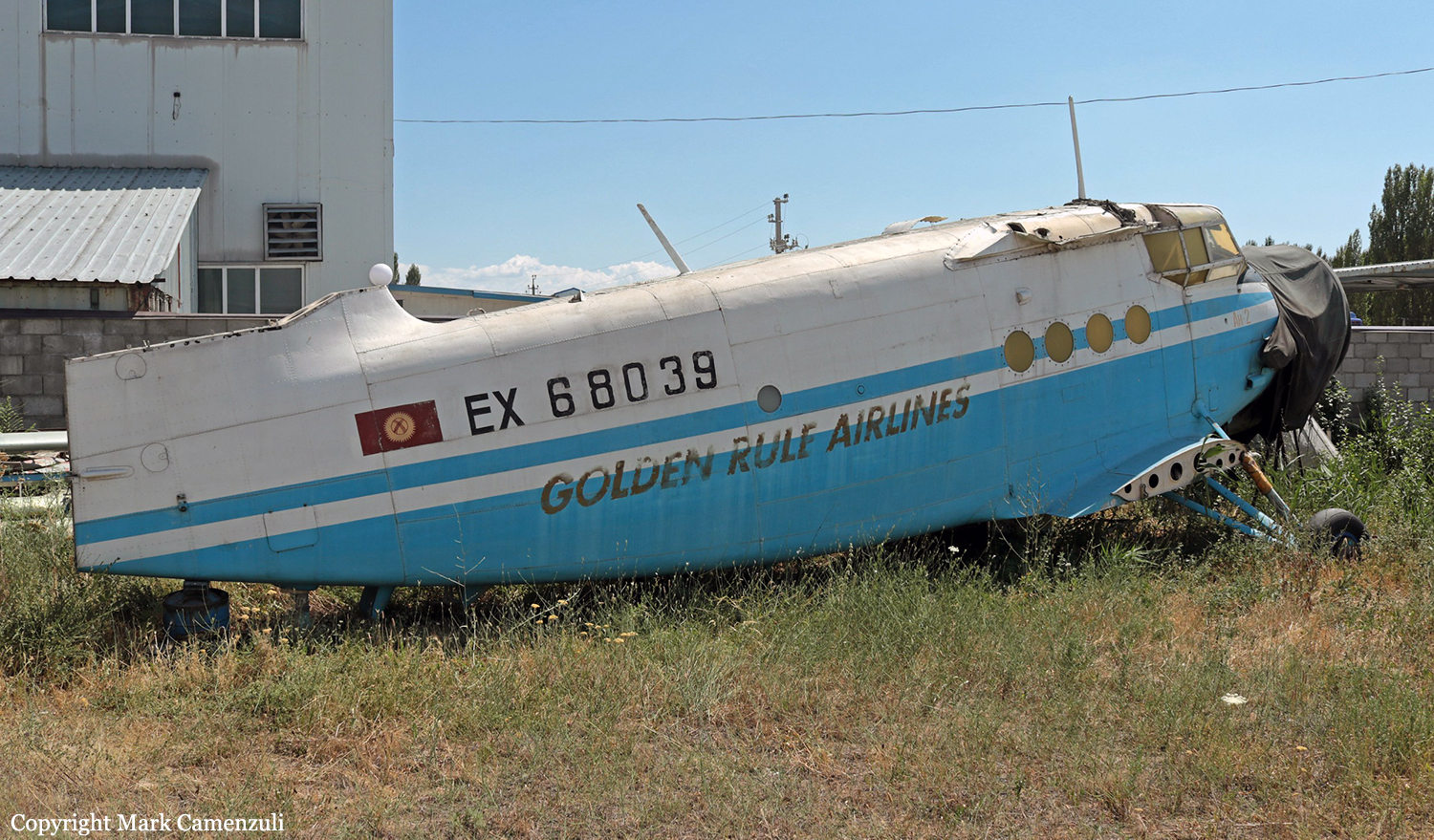
Crash of a PZL-Mielec AN-2SX in Bishkek

Date & Time: Feb 22, 2009 at 1249 LT
Type of aircraft:
Operator:
Registration:
EX-68039
Flight Phase:
Survivors:
Yes
Schedule:
Bishkek - Bukhara
MSN:
1G193-11
YOM:
1981
Flight number:
GRA4571
Country:
Region:
Crew on board:
2
Crew fatalities:
Pax on board:
2
Pax fatalities:
Other fatalities:
Total fatalities:
0
Captain / Total flying hours:
8215
Captain / Total hours on type:
7362.00
Copilot / Total flying hours:
7613
Copilot / Total hours on type:
4985
Aircraft flight hours:
6132
Circumstances:
The single engine aircraft departed from a small airstrip in Bishkek on a charter service (flight GRA4571) to Bukhara with two passengers and two pilots on board. About a minute after takeoff, while in initial climb, the engine lost power. The crew informed ATC about the situation and was cleared for an immediate return. Shortly later, the engine failed and the crew attempted an emergency landing in an open field located near the aerodrome. Upon landing, the aircraft collided with a small drainage ditch, lost its left main gear and both left wings before coming to rest. All four occupants escaped with minor injuries and the aircraft was damaged beyond repair.
Probable cause:
The reason for the loss of engine power in flight, most likely, was a reduction in the filing of the gasoline due to clogging of fuel filters. The appearance, structure and nature of the impurities found in the fuel on the aircraft were not characteristic of impurities accumulated in the fuel supply system in normal operating conditions. The source of the impurities in aircraft fuel system could not be found.
Final Report:

Crash of a De Havilland DHC-2 Beaver near Kenai

Date & Time: Feb 20, 2009 at 1515 LT
Type of aircraft:
Operator:
Registration:
N5342G
Flight Phase:
Flight Type:
Survivors:
Yes
Schedule:
Kenai - Kenai
MSN:
854
YOM:
1956
Location:
Crew on board:
3
Crew fatalities:
Pax on board:
0
Pax fatalities:
Other fatalities:
Total fatalities:
0
Captain / Total flying hours:
14300
Captain / Total hours on type:
9000.00
Copilot / Total flying hours:
799
Copilot / Total hours on type:
30
Aircraft flight hours:
9483
Circumstances:
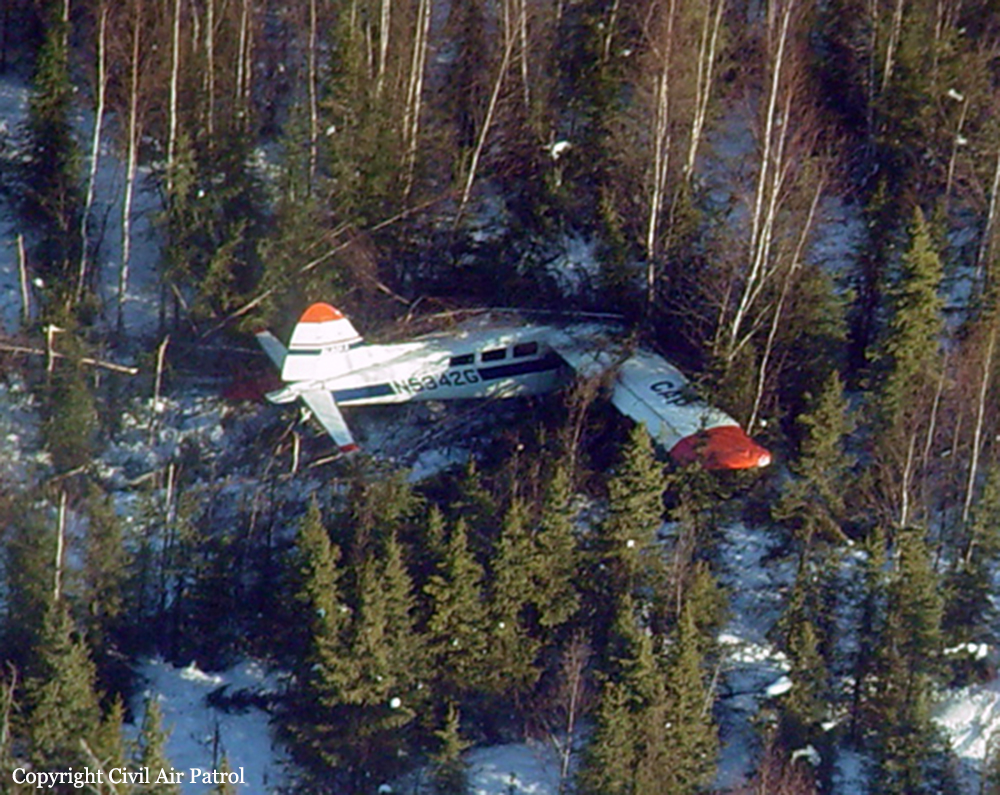
The certificated flight instructor was familiarizing the second pilot with ski operations in a ski-equipped airplane during an instructional flight. The flight instructor reported that he took the flight controls from the second pilot to demonstrate a touch-and-go landing on a frozen, snow-covered lake. After landing to the east, the instructor said that he kept the tail of the airplane up and the airspeed just below flying speed in order to make ski tracks on the lake to check the snow conditions. About midway along the lake the instructor added full engine power and the airplane became airborne but failed to climb sufficiently to avoid colliding with an area of rising, tree-covered terrain at the departure end of the lake. The airplane sustained substantial damage to the wings, fuselage, and empennage. Postaccident examination revealed no preaccident mechanical anomalies. The instructor noted that after the accident he noticed occasional strong gusts of wind from the west.
Probable cause:
The flight instructor’s decision to attempt a touch-and-go landing toward rising terrain and with a tailwind, resulting in an in-flight collision with terrain during takeoff.
Final Report:
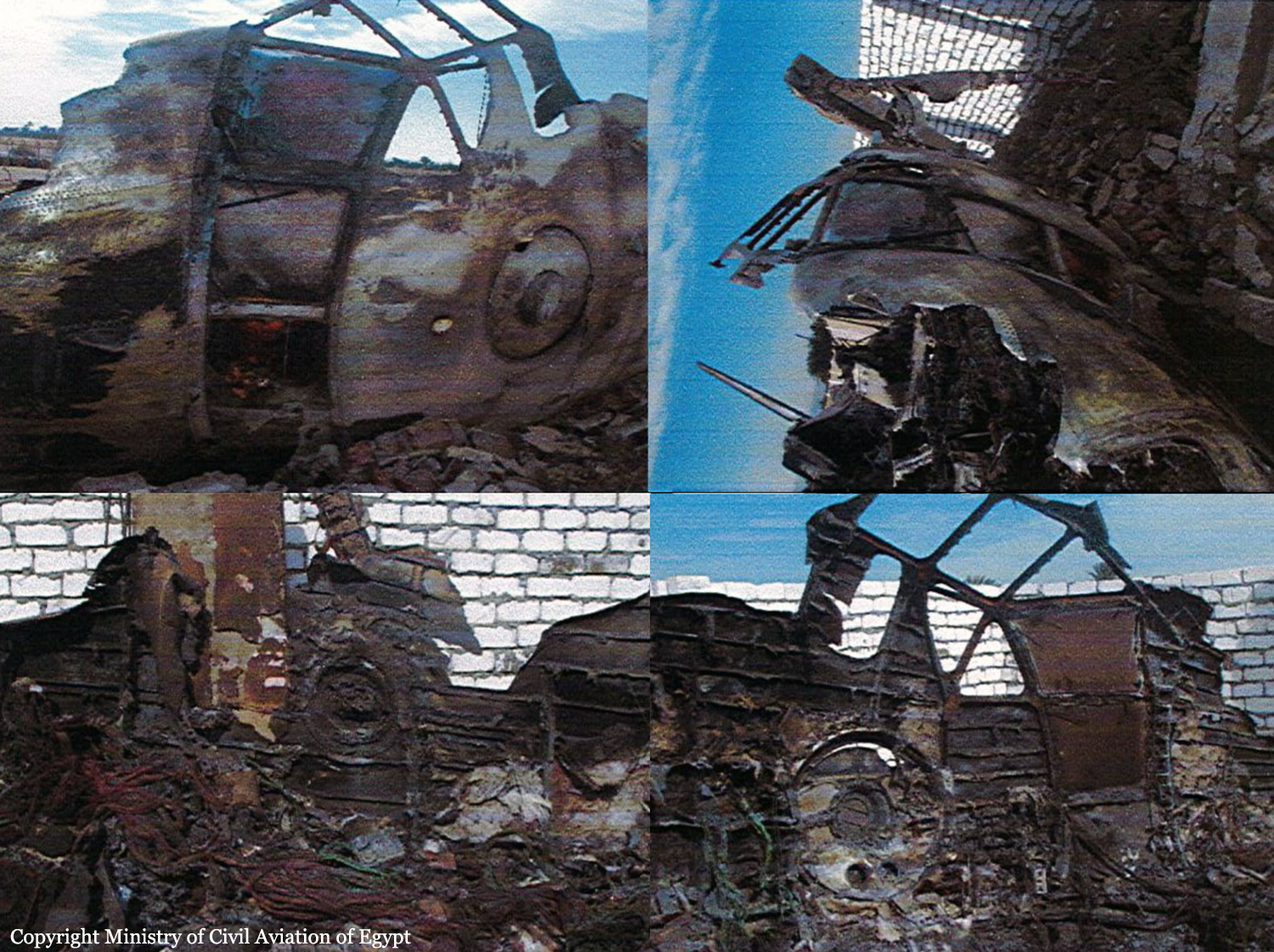
Crash of an Antonov AN-12B in Luxor: 5 killed

Date & Time: Feb 20, 2009 at 0418 LT
Type of aircraft:
Operator:
Registration:
S9-SVN
Flight Phase:
Flight Type:
Survivors:
No
Schedule:
Kisangani – Entebbe – Luxor – Mykolaiv
MSN:
6 3 443 10
YOM:
1966
Flight number:
LFT1015
Location:
Country:
Region:
Crew on board:
5
Crew fatalities:
Pax on board:
0
Pax fatalities:
Other fatalities:
Total fatalities:
5
Captain / Total flying hours:
20000
Copilot / Total flying hours:
6397
Aircraft flight hours:
11692
Aircraft flight cycles:
6451
Circumstances:
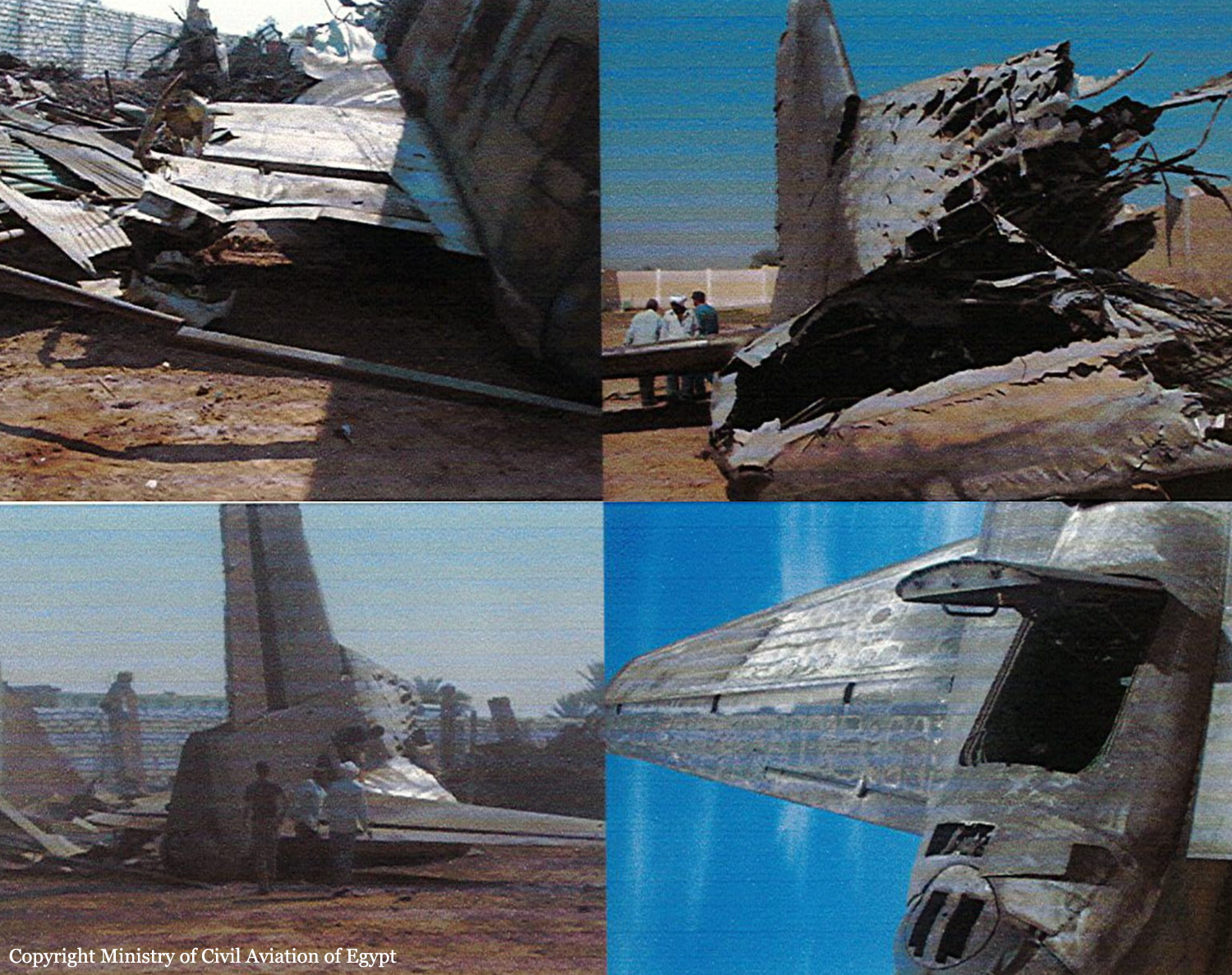
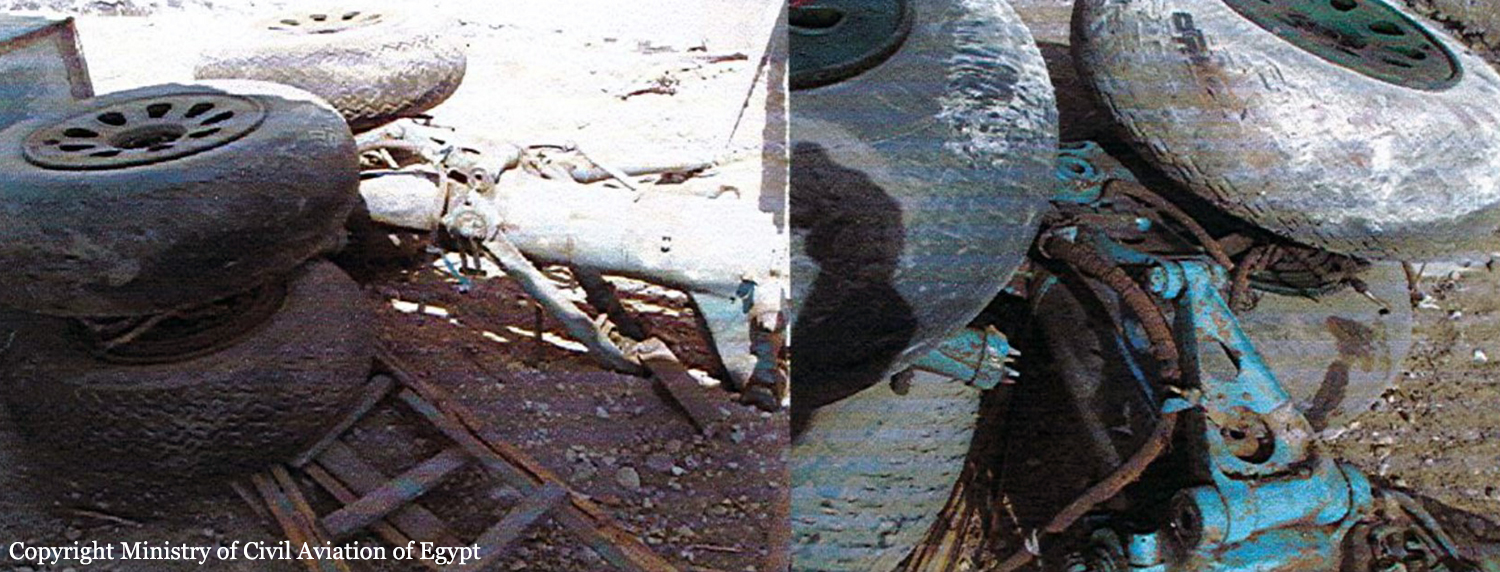
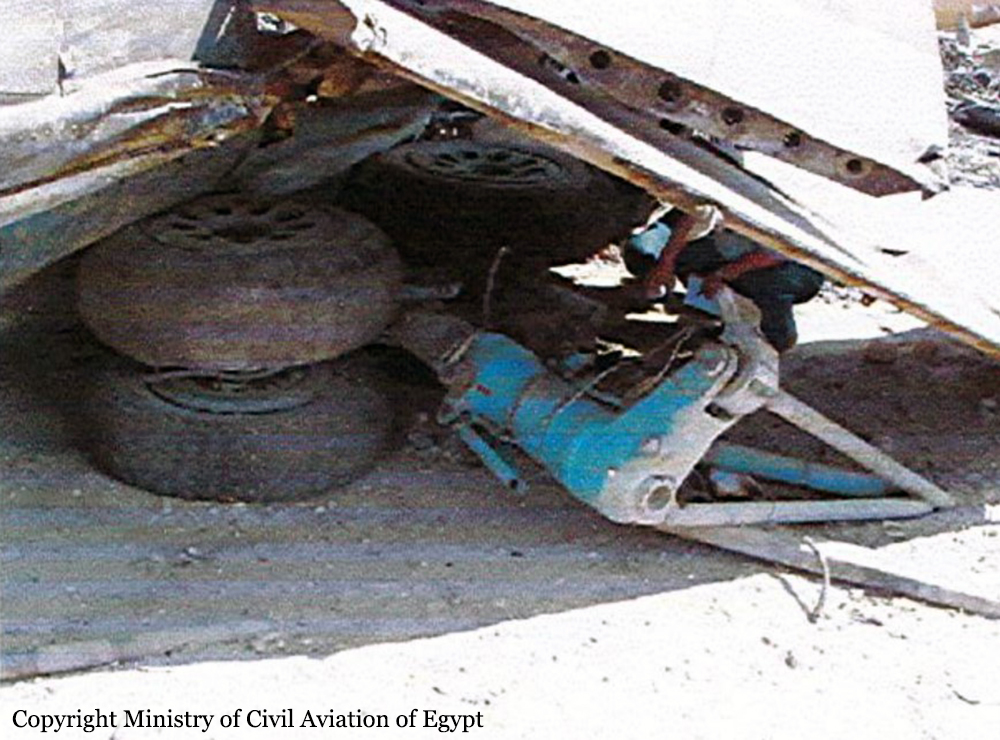
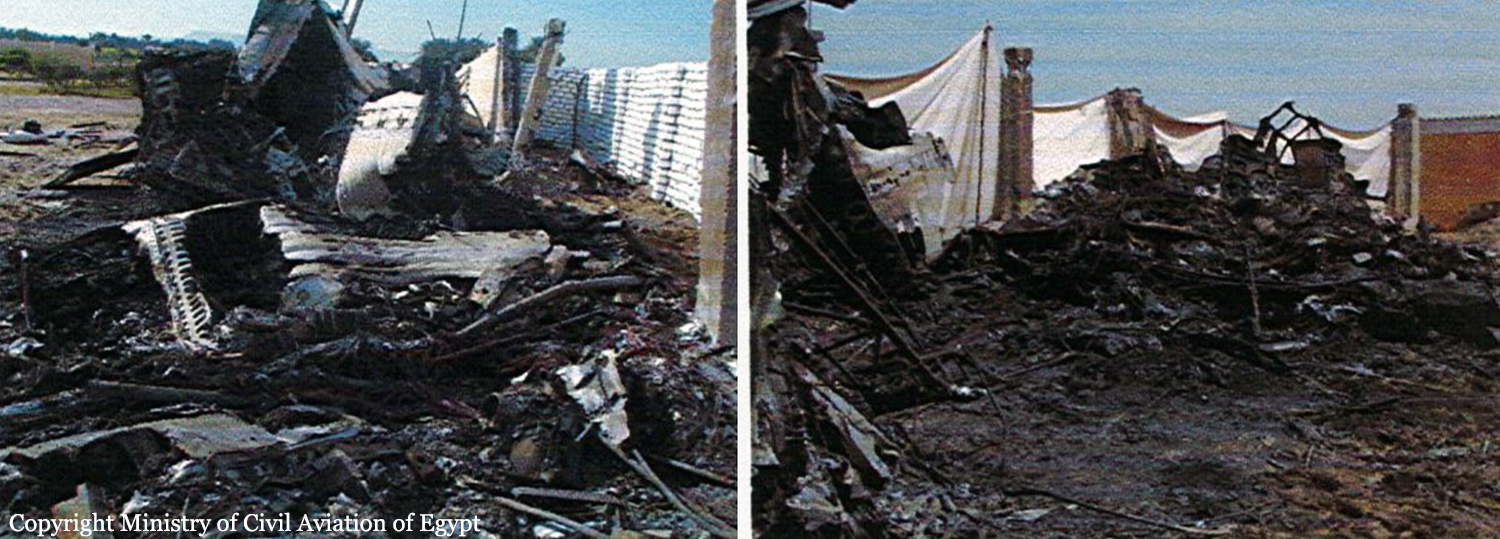
The four engine aircraft was transferred from Kisangani to Mykolaiv, Ukraine, for maintenance purposes. Two enroute stops were scheduled in Entebbe and Luxor. Ar 0417LT, the crew was cleared for takeoff. The aircraft started rolling on runway 02 for takeoff but it kept rolling on it till it reached its end. The aircraft continued rolling in the sand drifting from the runway centerline to the right, crossing a service road and eventually crashing into a military zone located 500 metres from the runway end. The aircraft crashed into one of the buildings inside the military unit causing complete destruction of the building. The right wing also crashed into another building putting the aircraft on fire and forcing the aircraft to turn right. The aircraft kept moving forward the military unit fence (next to Tiba-Luxor road) and stopped there, crashing in its way into oil barrel. The accident resulted in the total destruction and fire of the aircraft and the fatality of its crew but no further injuries.
Probable cause:
The following factors were identified:
- Lack of available thrust which corresponded to the power of only two engines running during take off run,
- Lack of authorized maintenance of the aircraft,
- The uncoordinated crew actions in the critical situation (both pilots had previously flown as captains). The lack of coordination is confirmed by the braking trails left by the main landing gear at the end of RWY -02, based on FCOM instructions, and in case of rejected takeoff attempt, the crew had to set the throttles to idle, lower the nose gear to reach the runway and then use the propellers for braking (releasing them from the stops). Also, to reduce the roll and to maintain the direction they were to use the nose wheel steering and wheel brakes as well as emergency braking if needed. Actually the crew did neither of the above procedures, except using the main wheel brakes.
Final Report:
Crash of an Antonov AN-2 in Pskov

Date & Time: Feb 11, 2009 at 1030 LT
Type of aircraft:
Operator:
Registration:
10 yellow
Flight Phase:
Survivors:
Yes
Schedule:
Pskov - Pskov
Country:
Region:
Crew on board:
3
Crew fatalities:
Pax on board:
10
Pax fatalities:
Other fatalities:
Total fatalities:
0
Circumstances:
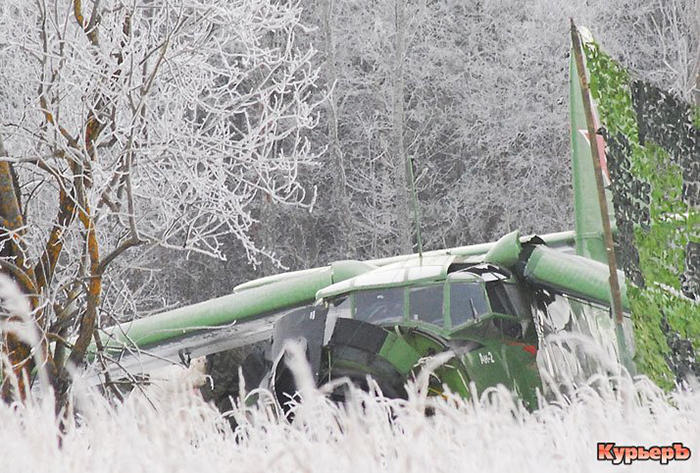
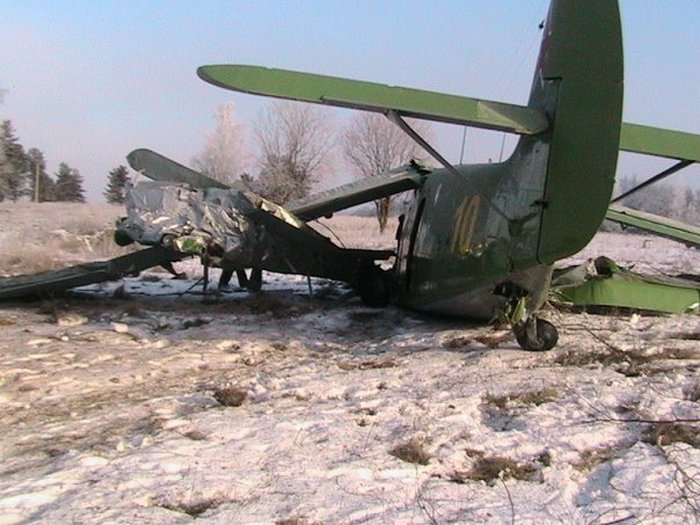
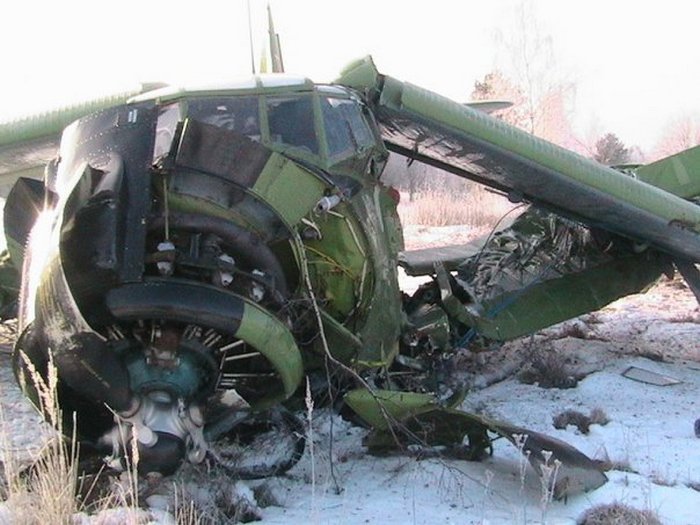
Shortly after take off from Pskov Airport, while climbing to a height of about 50-70 metres, the crew encountered engine problems and elected to make an emergency landing. The aircraft lost height and crashed in a snow covered field located near the airport and came to rest. All 13 occupants escaped uninjured while the aircraft was damaged beyond repair. All passengers were skydivers (paratroopers) from the Marine Corps.
Probable cause:
Engine failure for unknown reasons.