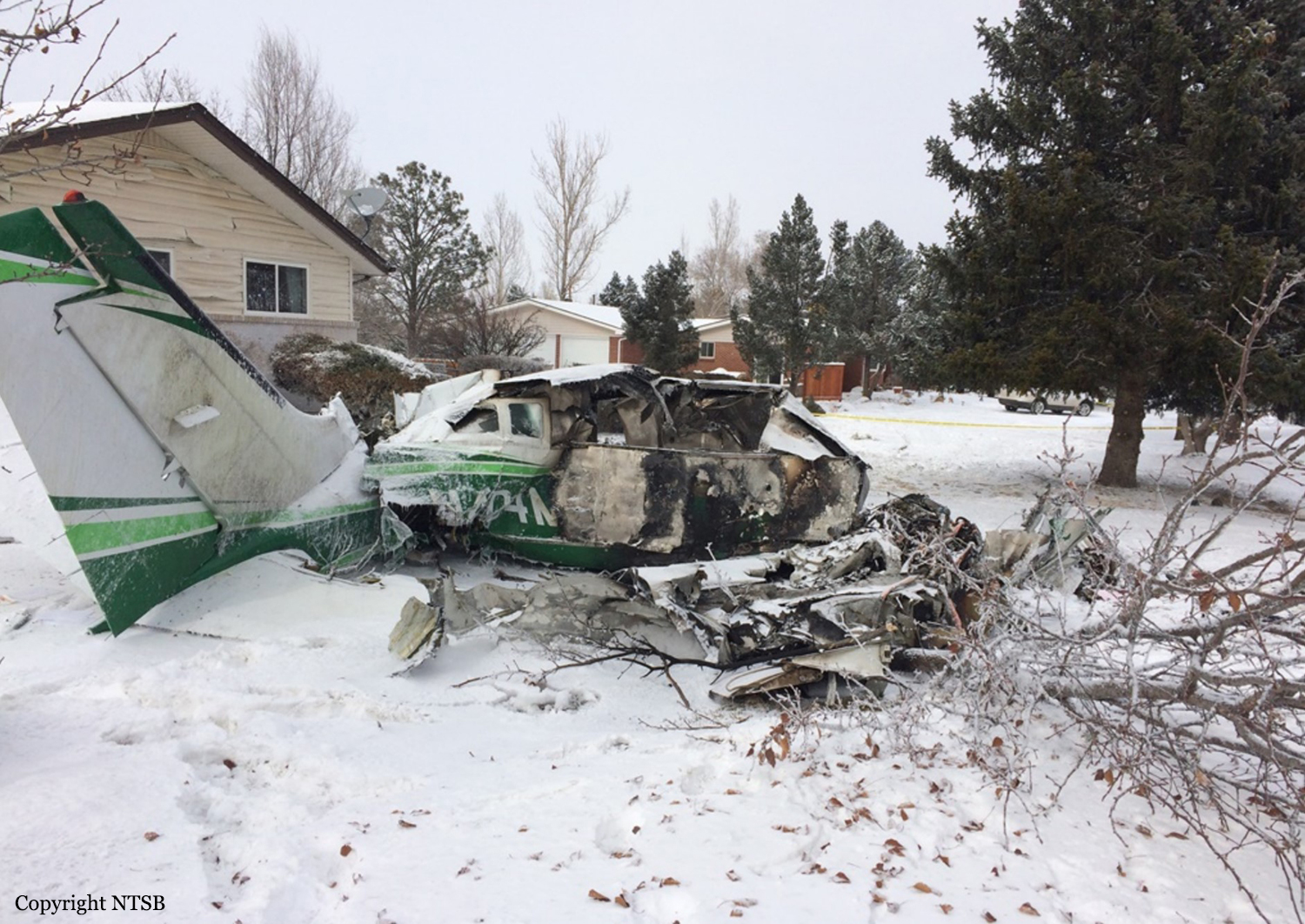
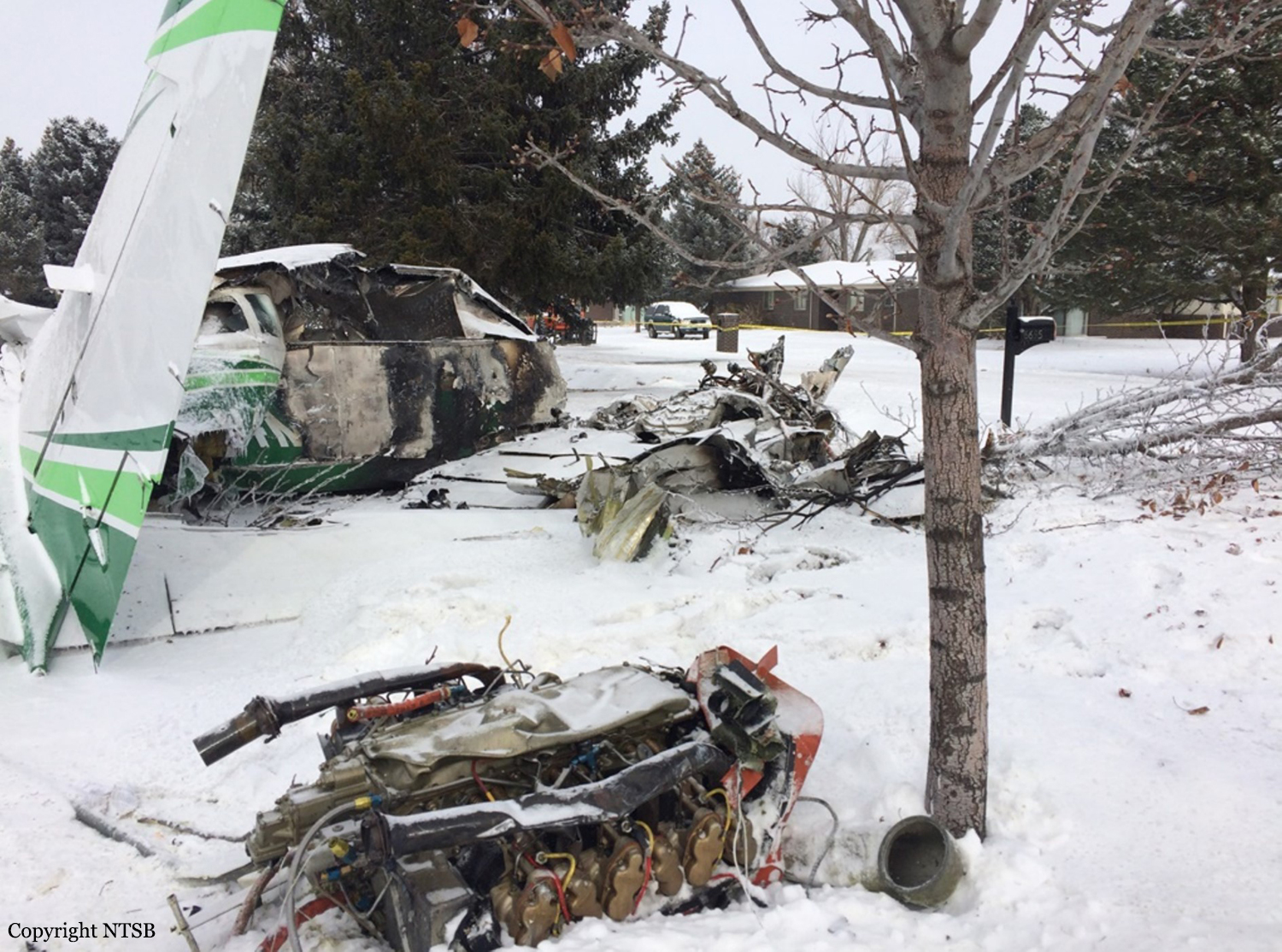
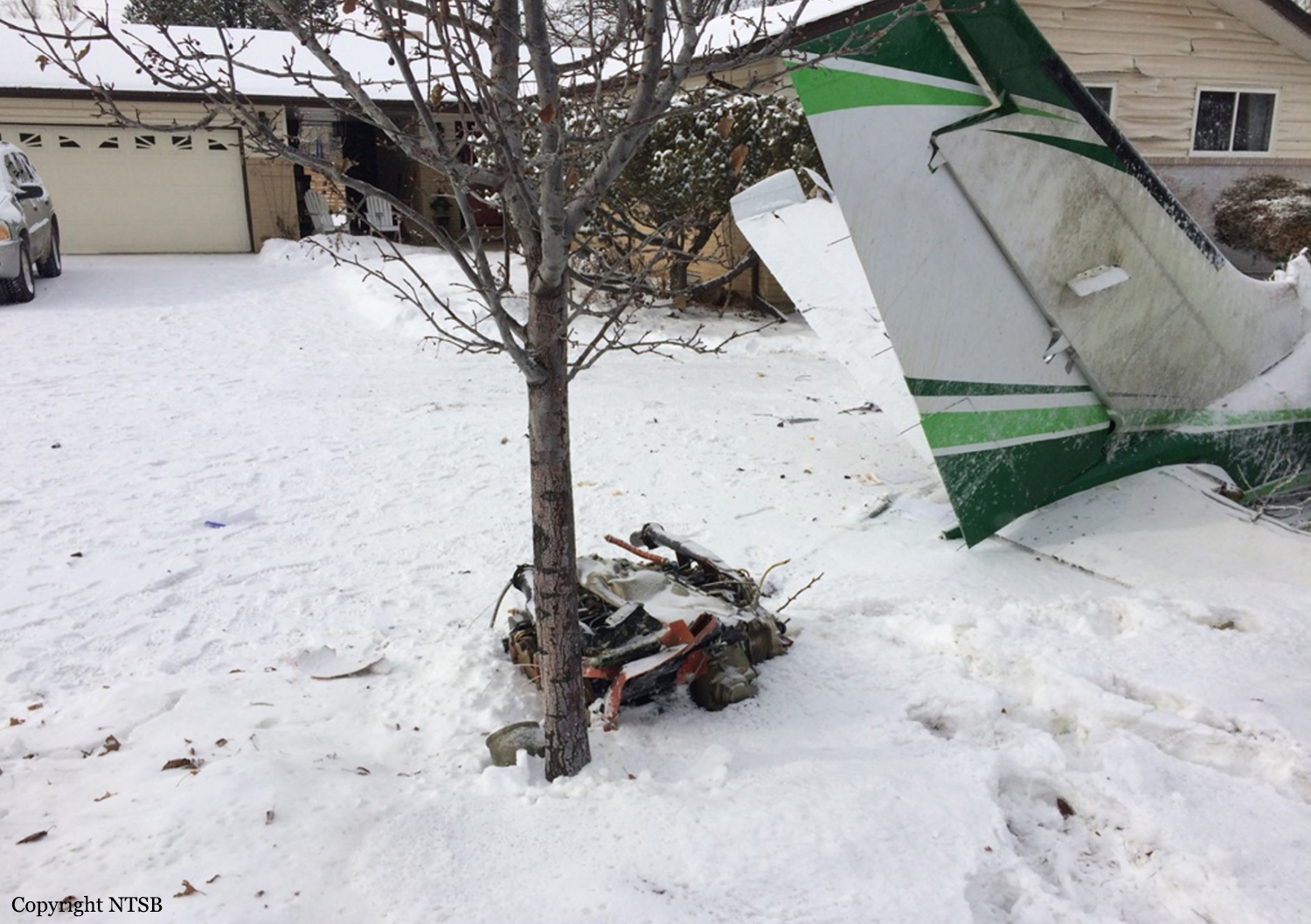
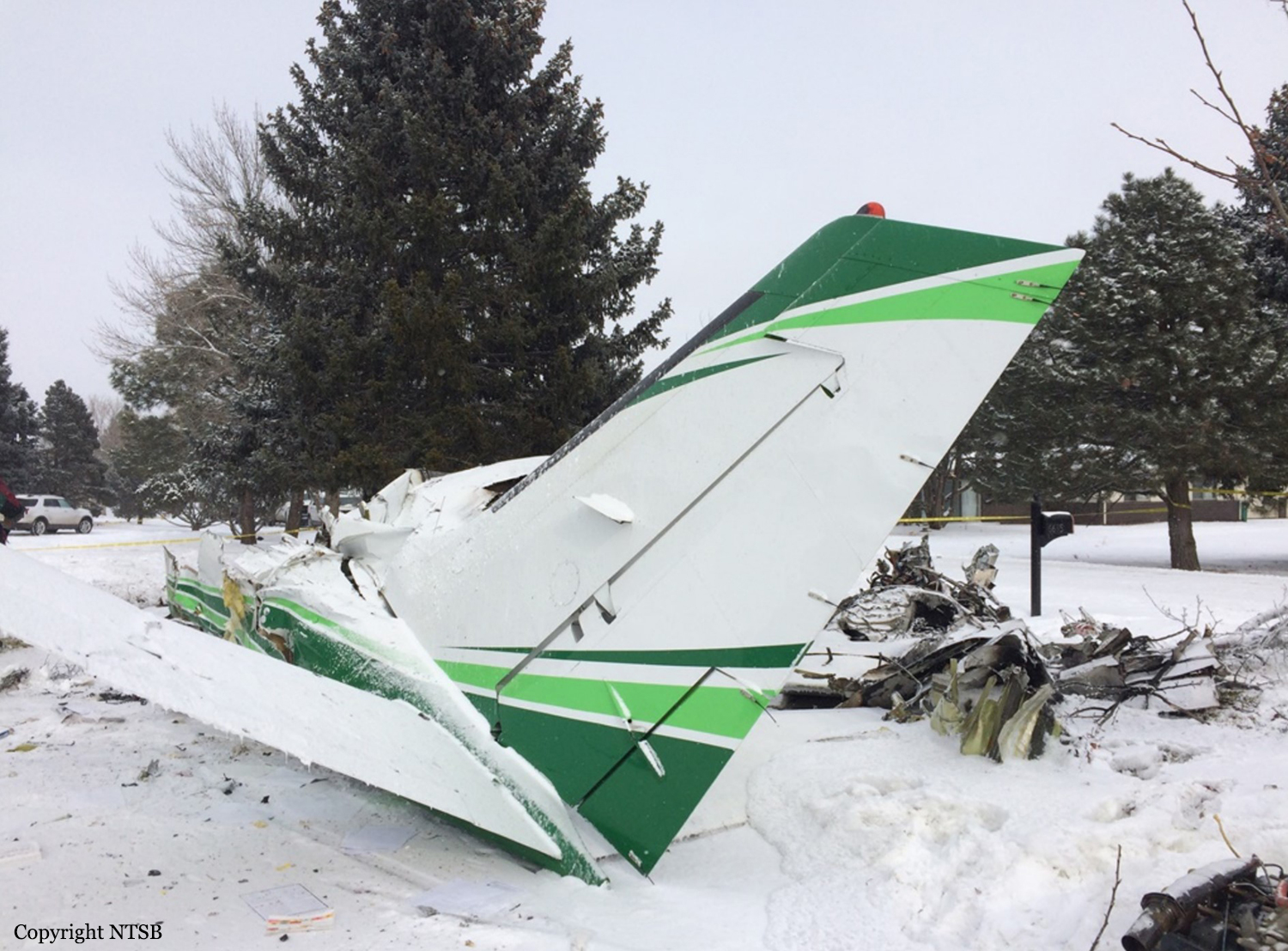
Crash of a Beechcraft 1900C in Kendall: 4 killed

Date & Time: Feb 11, 2015 at 1439 LT
Type of aircraft:
Registration:
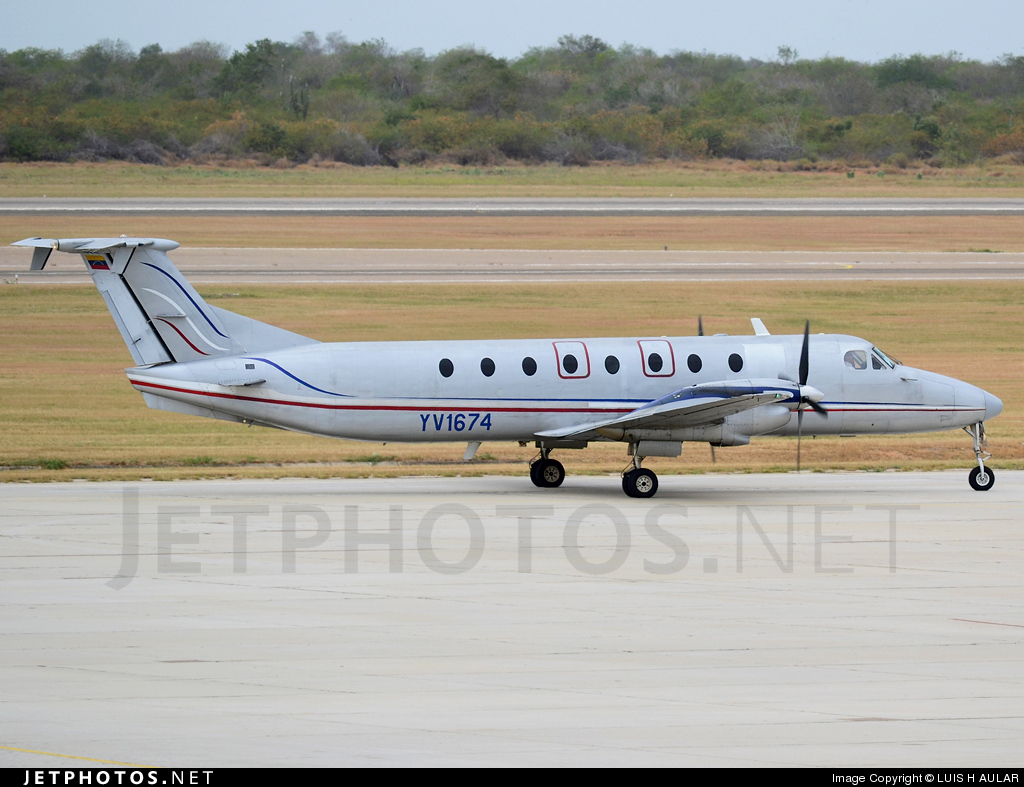
YV1674
Flight Phase:
Flight Type:
Survivors:
No
Schedule:
Kendall - Procidenciales
MSN:
UC-47
YOM:
1988
Crew on board:
2
Crew fatalities:
Pax on board:
2
Pax fatalities:
Other fatalities:
Total fatalities:
4
Captain / Total flying hours:
19053
Captain / Total hours on type:
1476.00
Copilot / Total flying hours:
9529
Copilot / Total hours on type:
152
Aircraft flight hours:
35373
Circumstances:
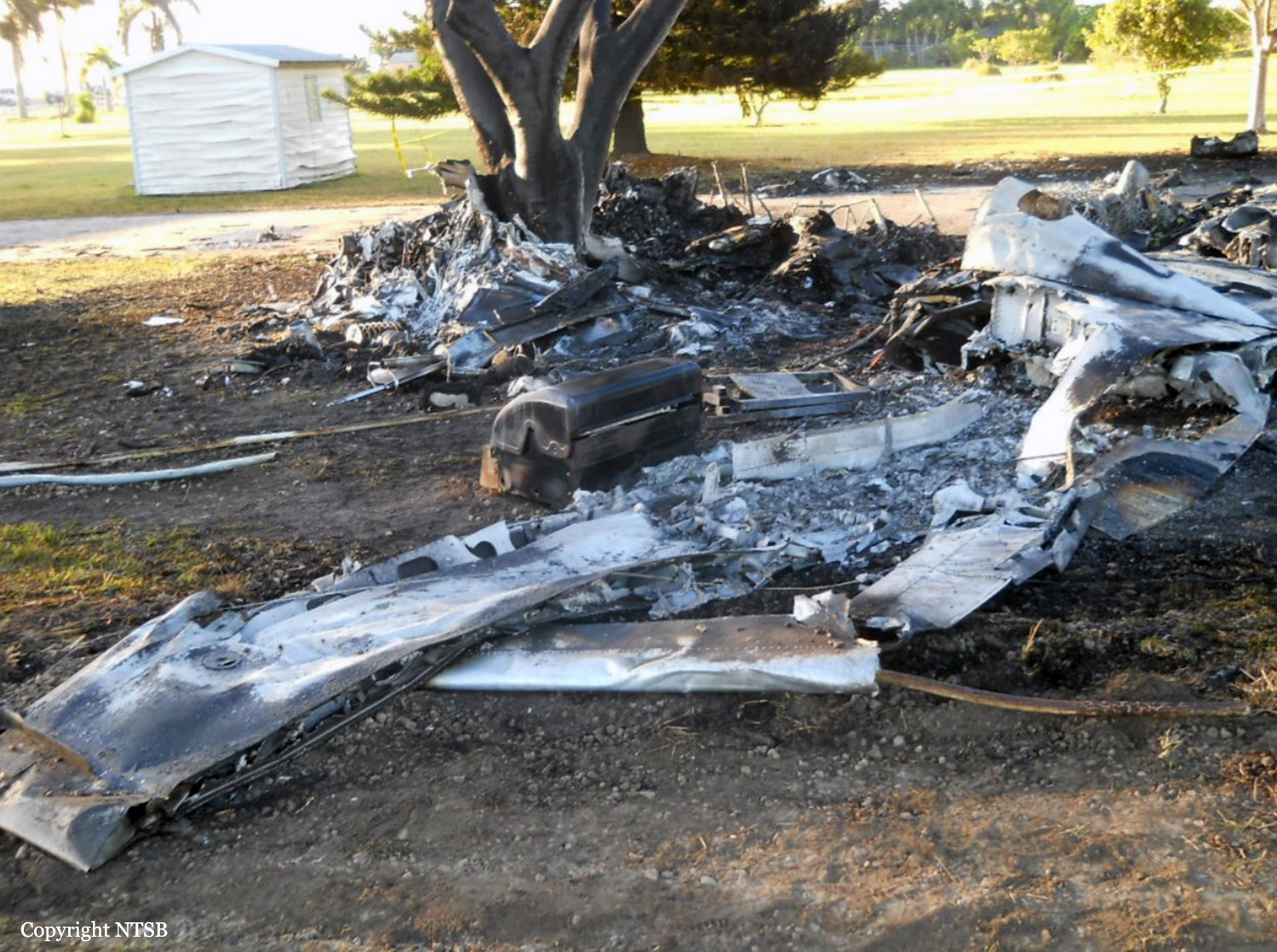
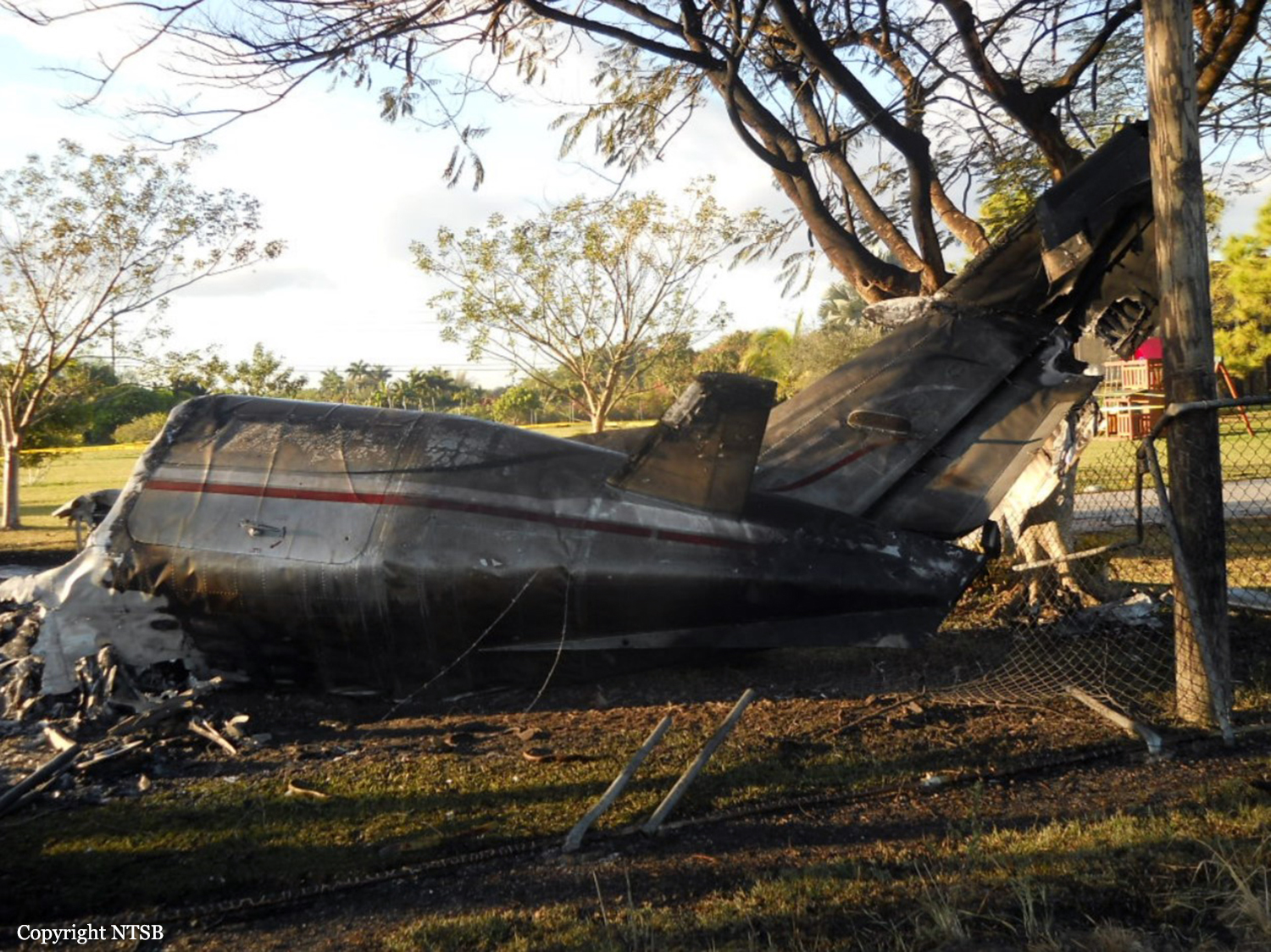
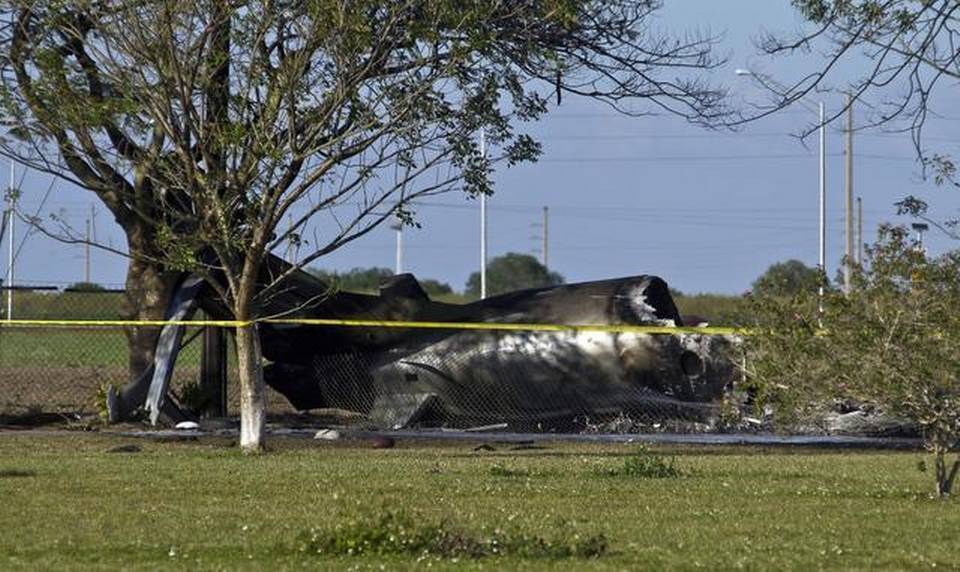
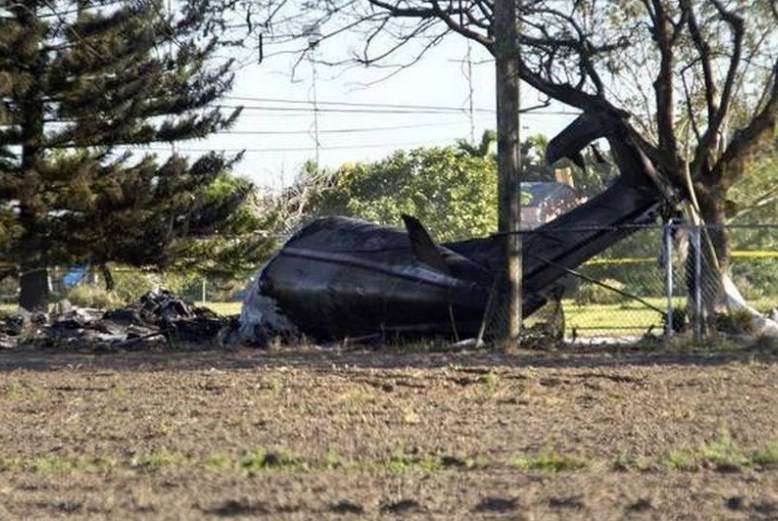
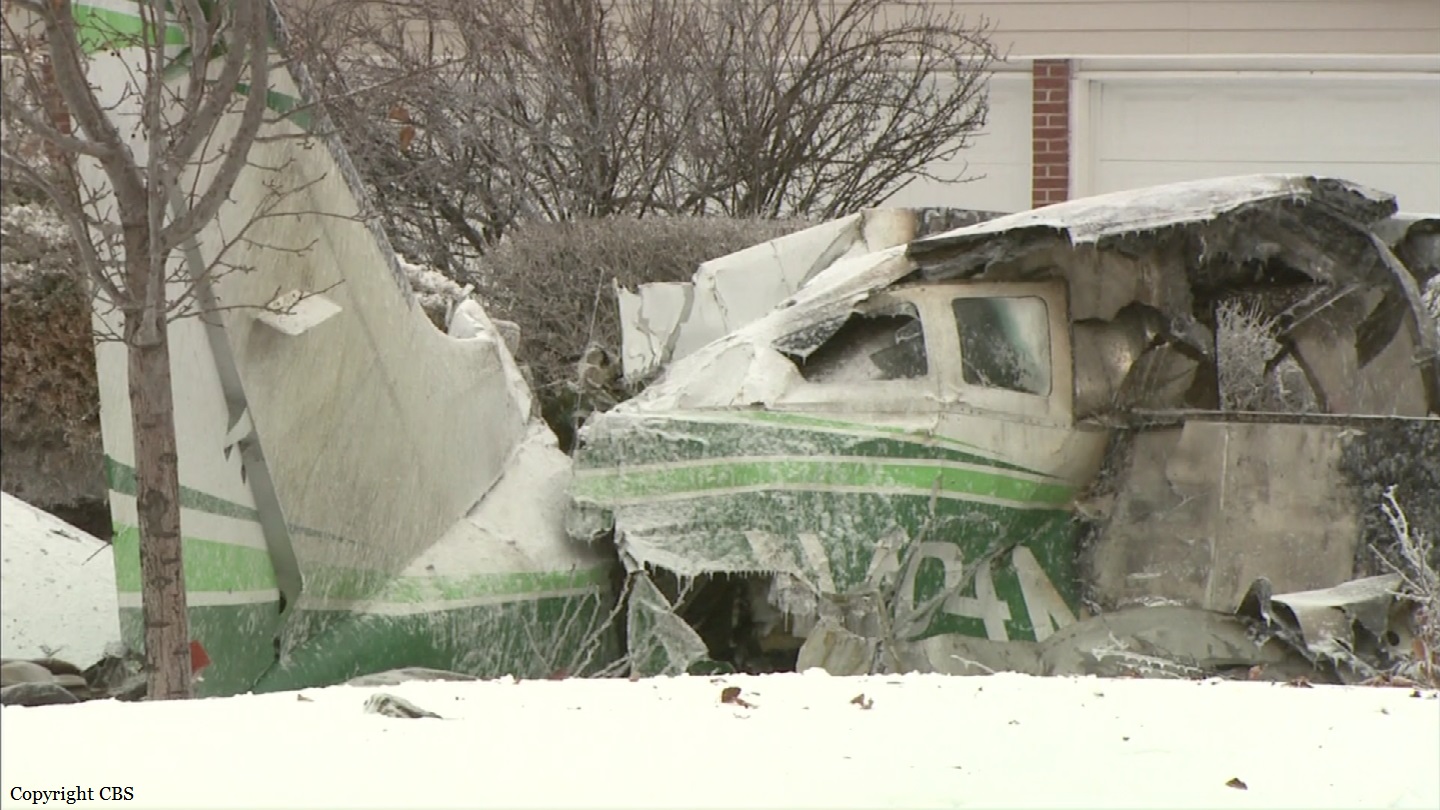
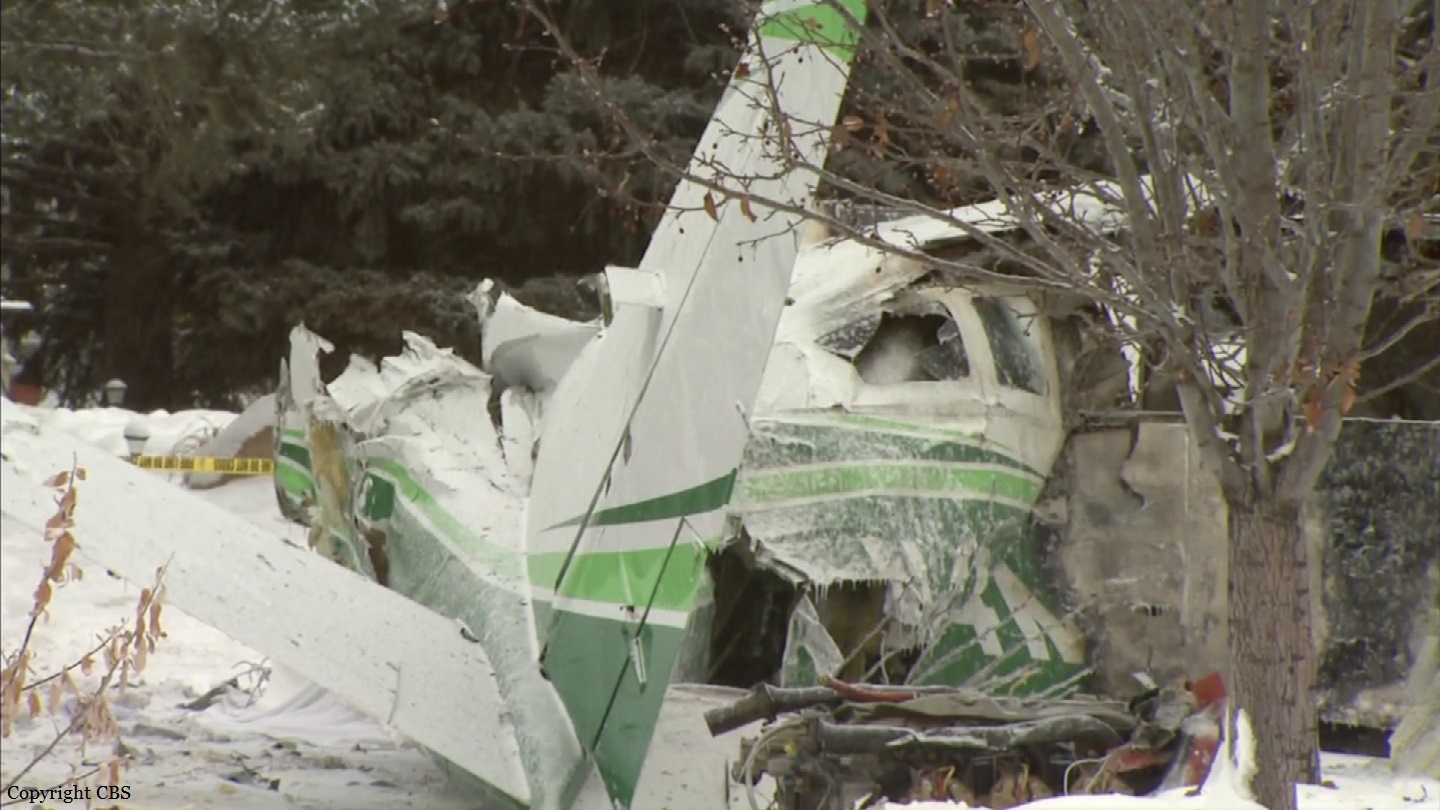
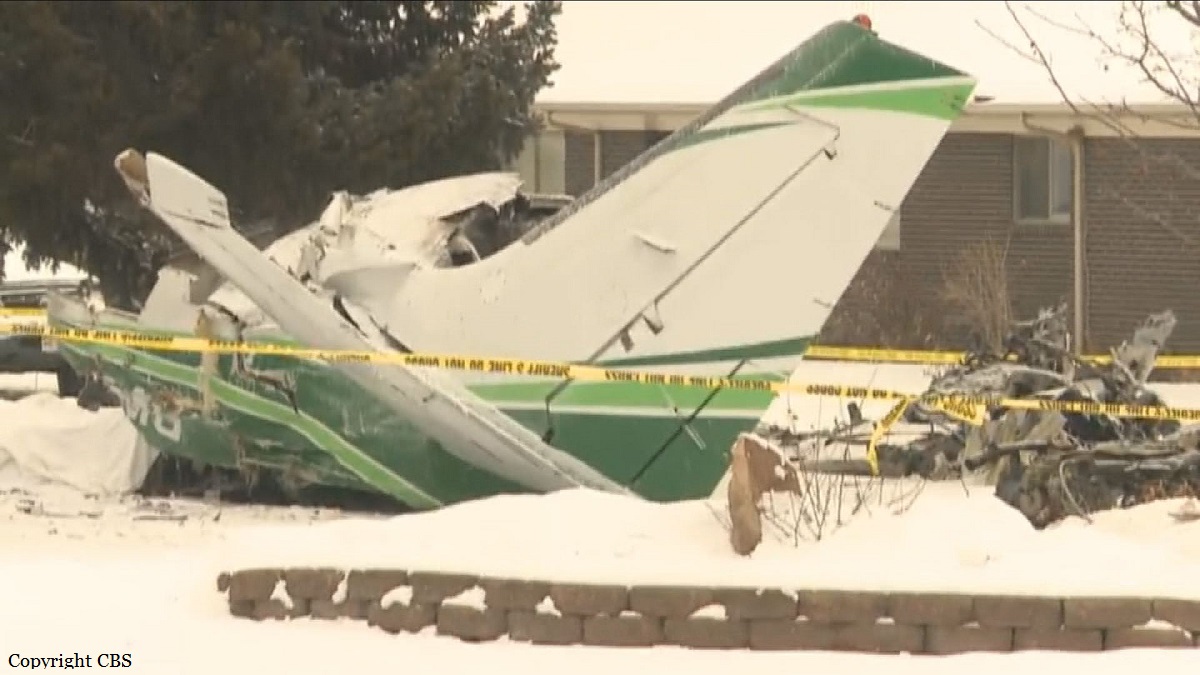
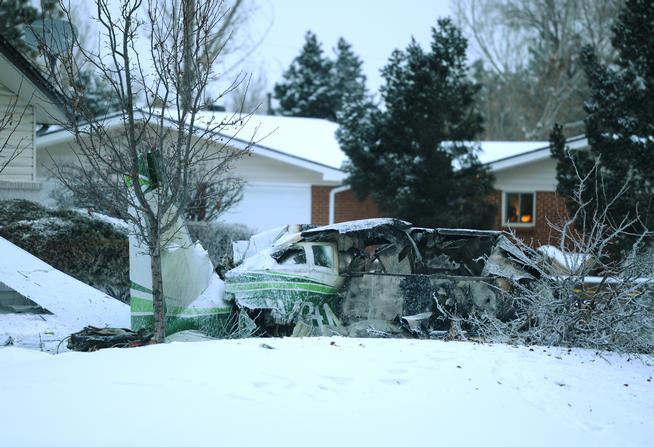
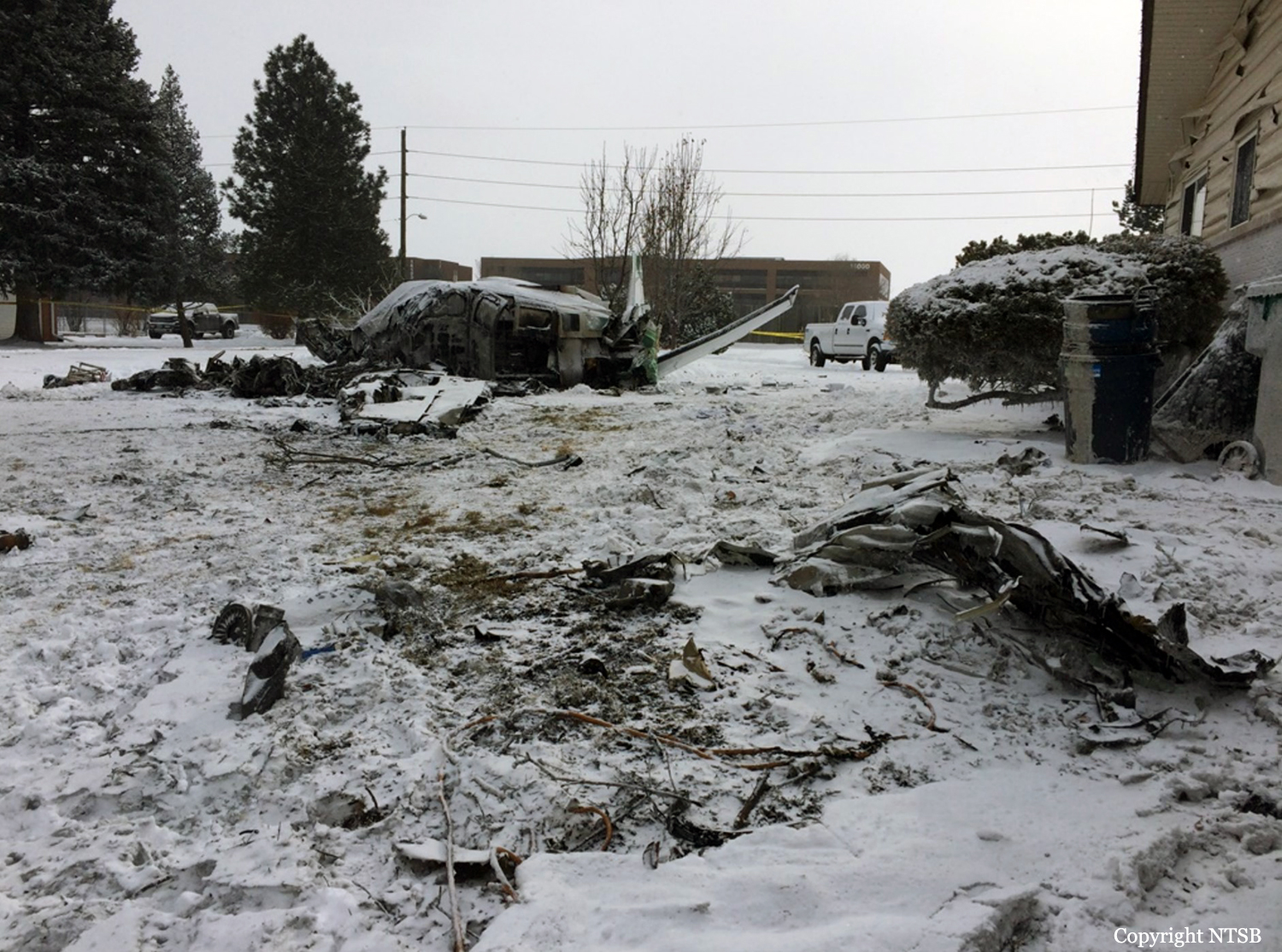
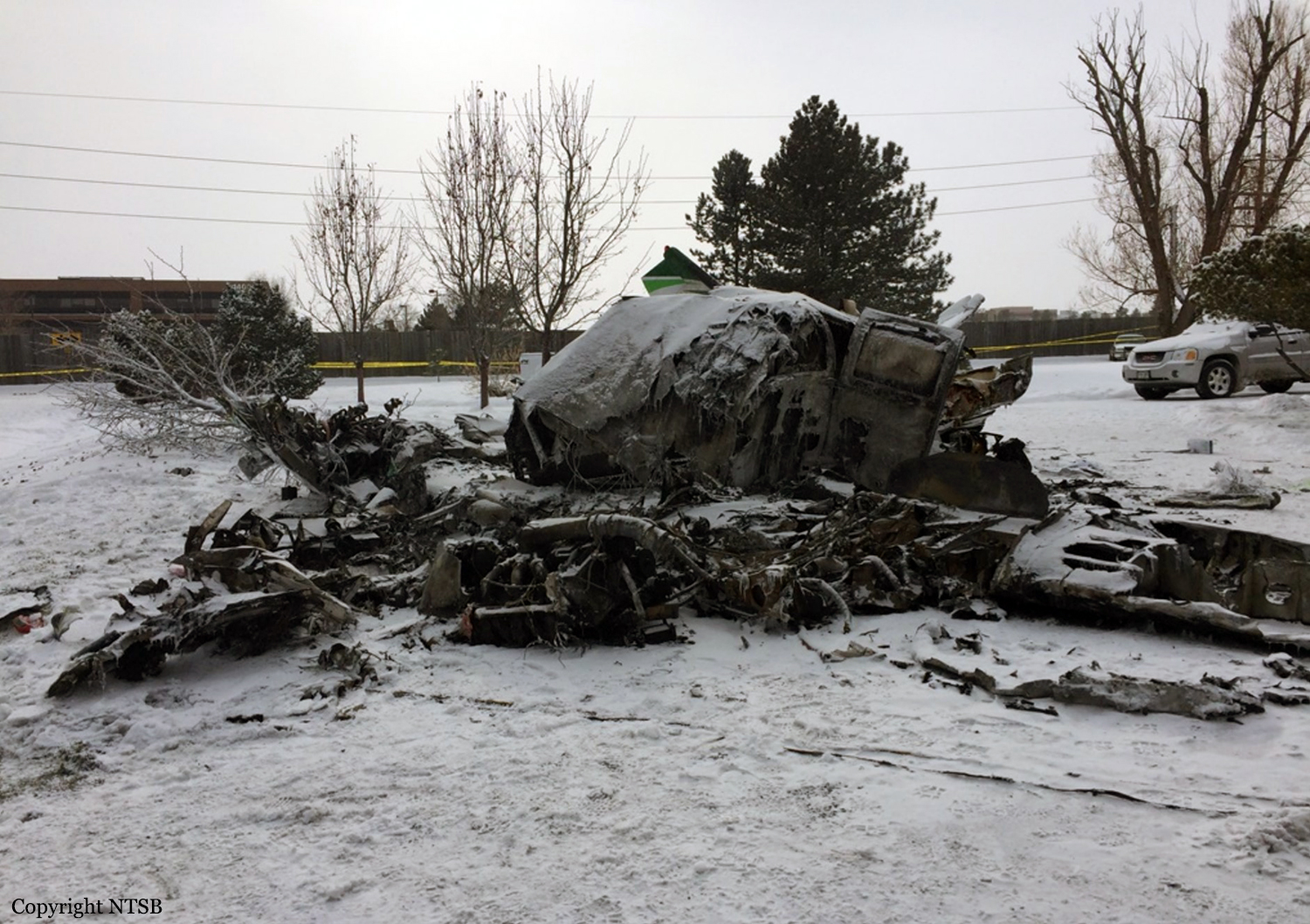
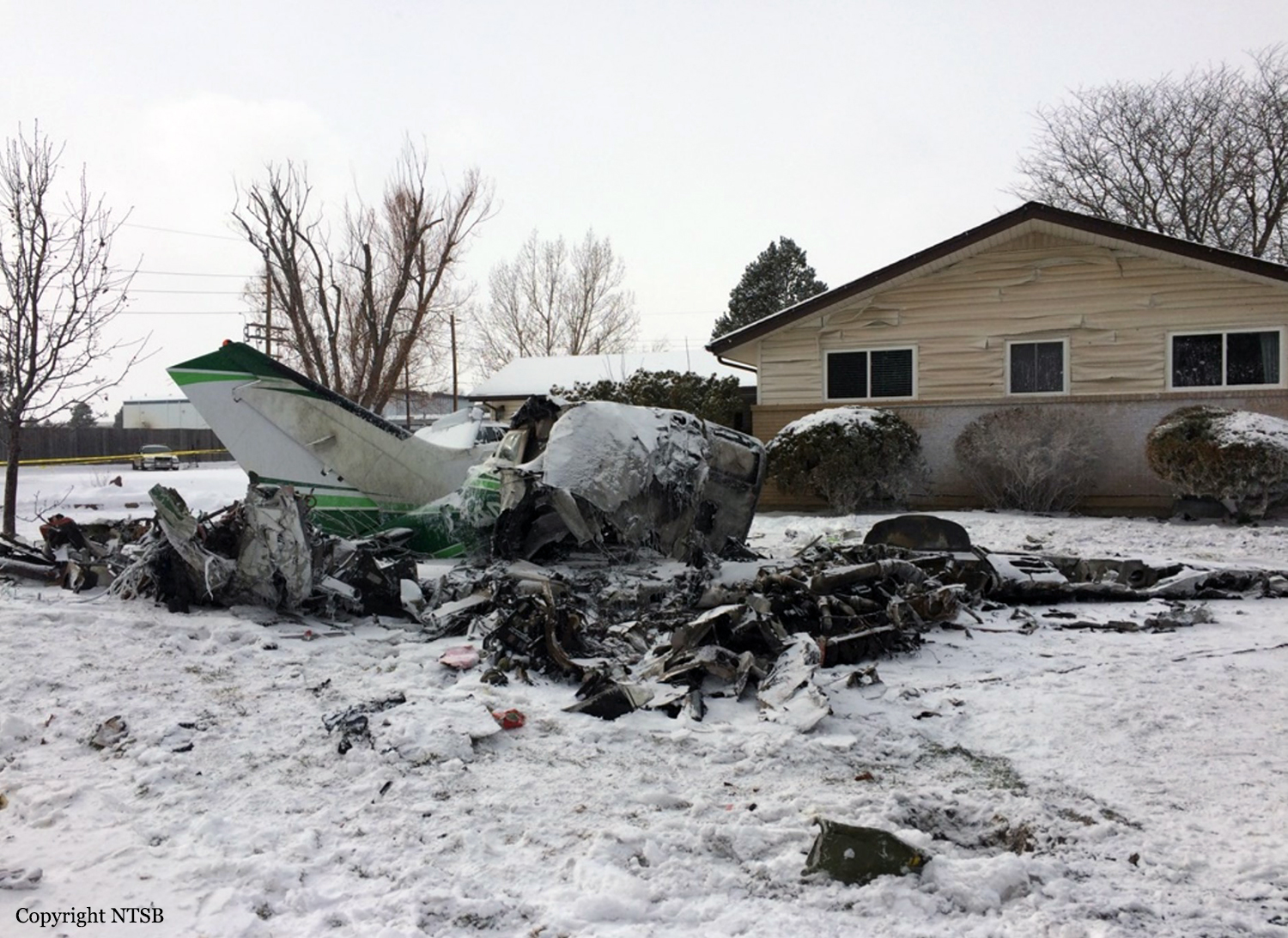
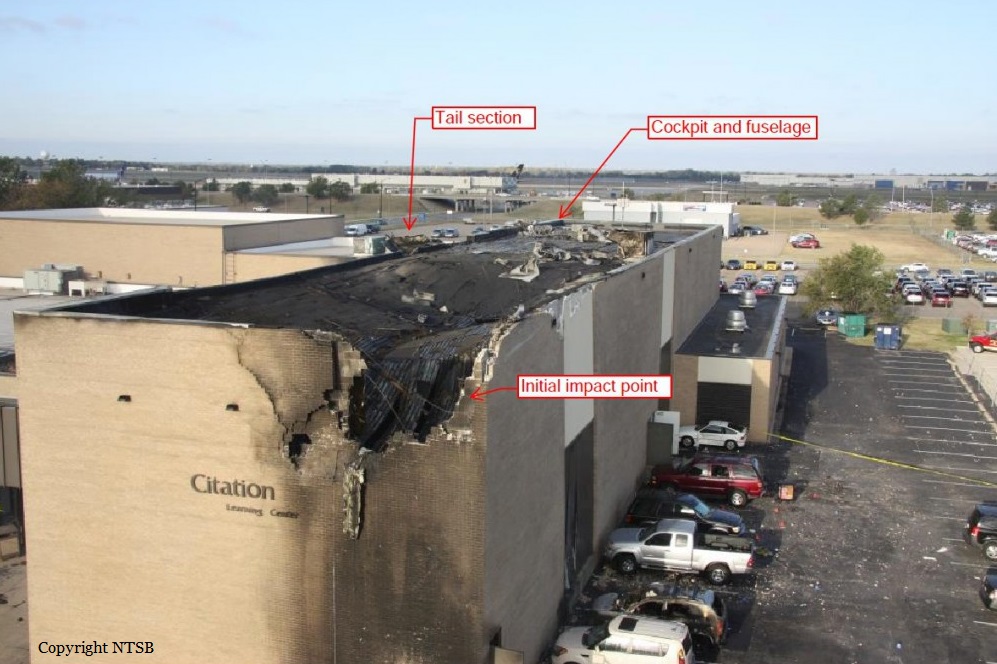
The accident flight was a repositioning flight being operated by two airline transport pilots, and it was the multiengine turboprop airplane's first flight after an aviation maintenance technician (AMT) had replaced the left engine propeller with an overhauled propeller. The AMT subsequently performed an engine run, which included verifying correct power settings and corresponding blade angles. A review of flight data recorder (FDR) data revealed that, about 2 seconds after rotation, the left engine propeller rpm decreased to 60 percent, and the left engine torque increased off-scale (beyond 5,000 ft lbs), which is consistent with the left propeller traveling to the feathered position and the engine torque increasing in an attempt to maintain propeller rpm. About 30 seconds later, the flight crew shut down the left engine and attempted to return to the departure airport. Postaccident examination of the rudder trim actuator revealed that the rudder trim was at its full-right limit, which would have occurred to counteract the left engine drag before its shutdown. Based on this evidence, it is likely that the flight crew did not readjust the trim when the drag was alleviated, which resulted in the airplane being operated in a crosscontrolled attitude for about 50 seconds with a left bank and full-right rudder trim. Although the airplane should have been able to climb about 500 ft per minute with one engine operating, it slowed and descended from 300 ft in the cross-controlled attitude until it stalled, as indicated by a stall warning recorded by the cockpit voice recorder, and subsequently impacted terrain. Examination of the wreckage, including teardown examination of the left engine and propeller, did not reveal any preimpact mechanical anomalies. Review of the airplane maintenance manual revealed instructions to check the propeller reversing linkage on the front end of the engine, which controlled the beta valve, for proper rigging during propeller installation. The manual also contained a warning that misadjustment of the beta valve can cause unplanned feathering of the propeller and result in a possible hazard to airplane operation and over torque damage to the engine; however, the beta valve rigging could not be verified postaccident due to impact damage. Additionally, the ground/flight idle solenoid energizes when weight becomes off wheels and further opens the beta valve, which could exacerbate an existing misrigged condition as soon as the airplane becomes airborne, which is when the airplane experienced the uncommanded propeller feathering. The FDR data were consistent with the flight crew not performing the Before Takeoff (Runup) checklist. One of the items on that checklist was a low-pitch solenoid test, which would have energized the solenoid and possibly driven the left propeller uncommanded to feather during ground operations rather than in flight. A similar test during the post maintenance engine-run would have had the same results.
Probable cause:
The left engine propeller's uncommanded travel to the feathered position during takeoff for reasons that could not be determined due to impact damage. Contributing to the accident was the flight crew's failure to establish a coordinated climb once the left engine was shut down and the left propeller was in the feathered position.
Final Report:
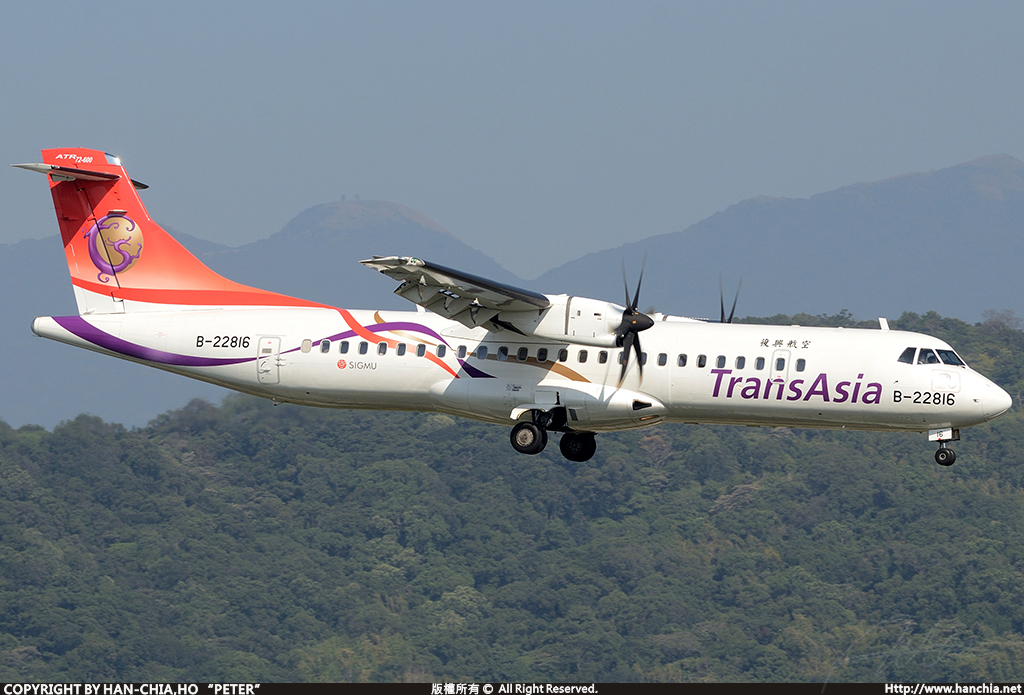
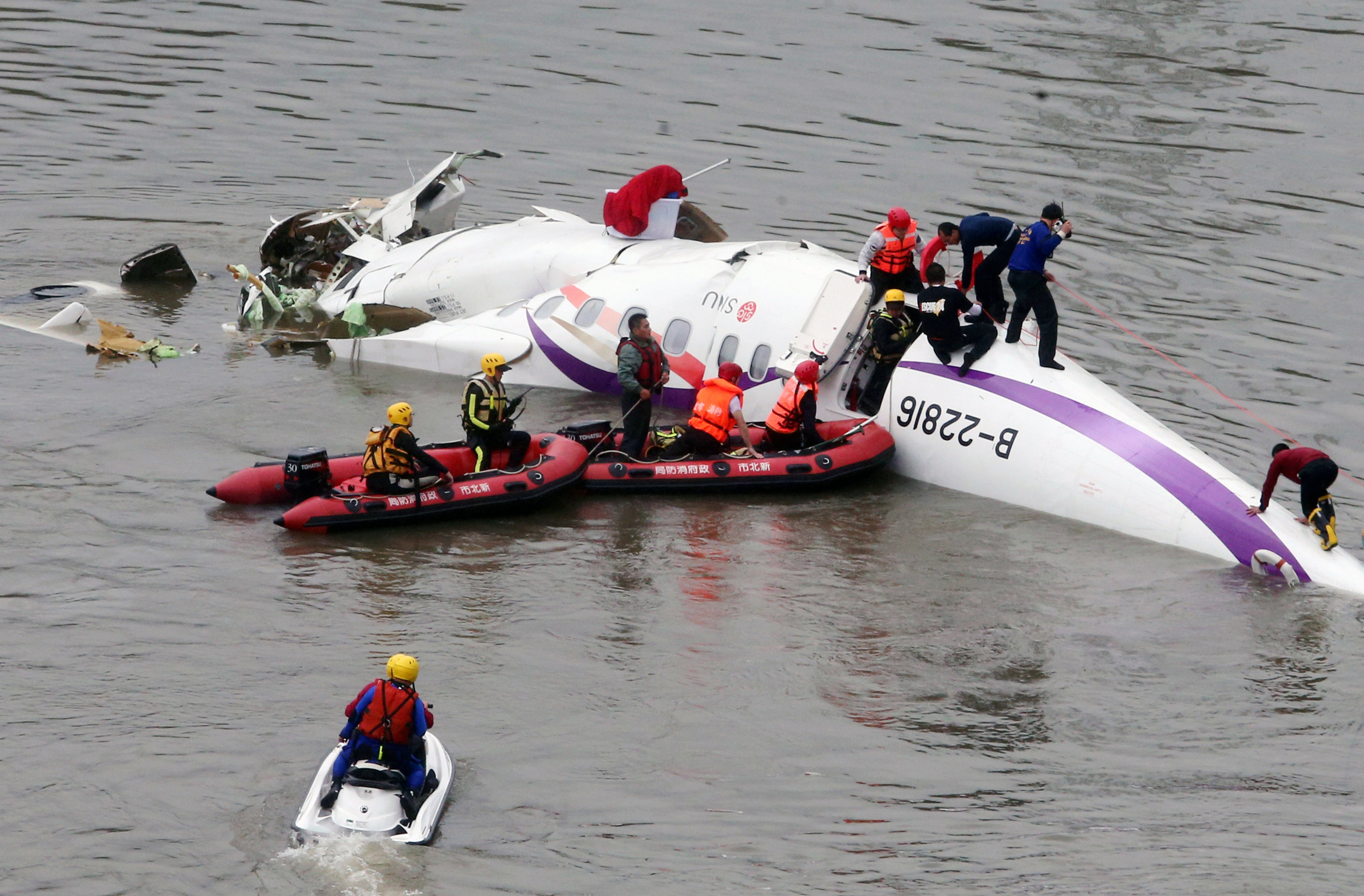
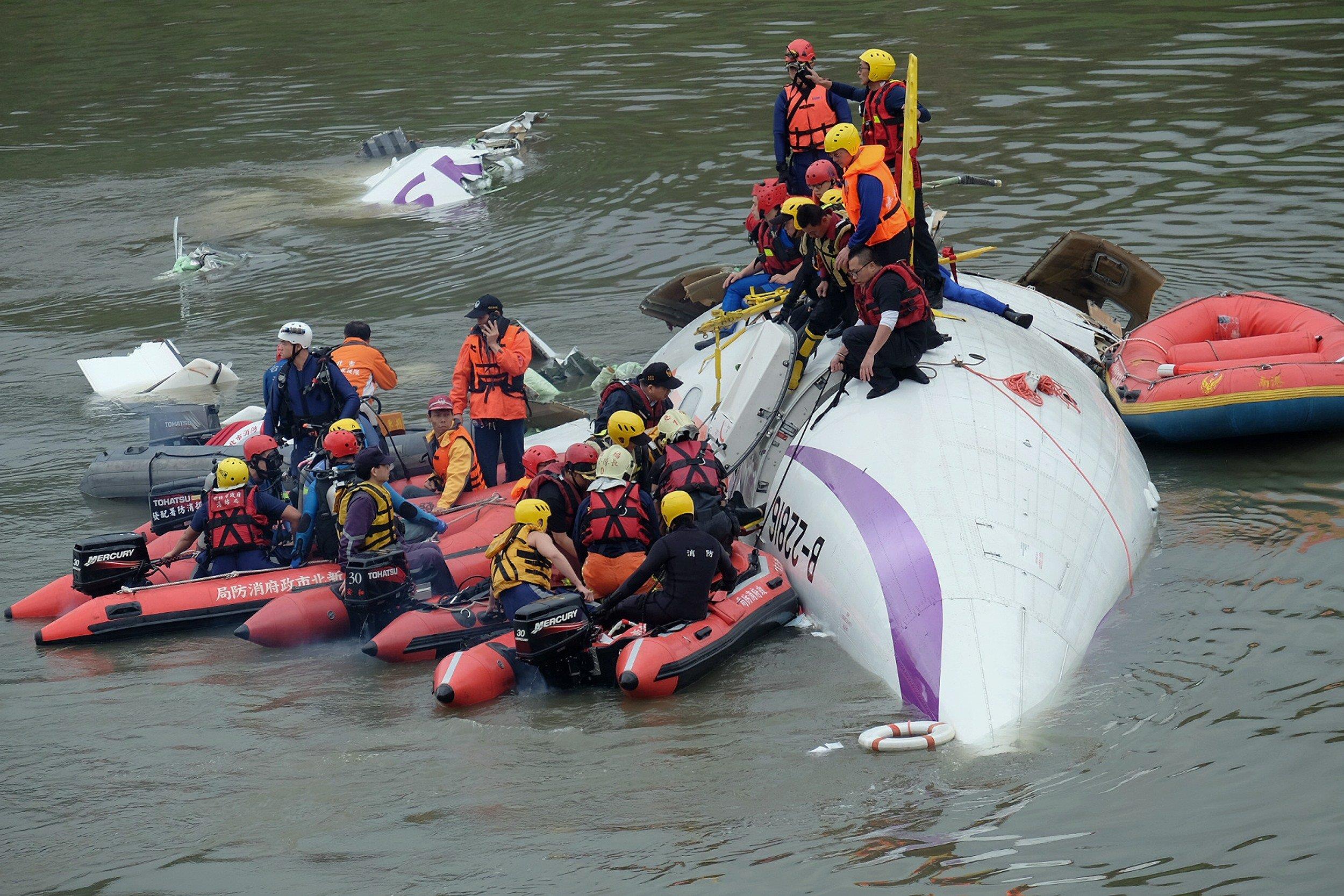
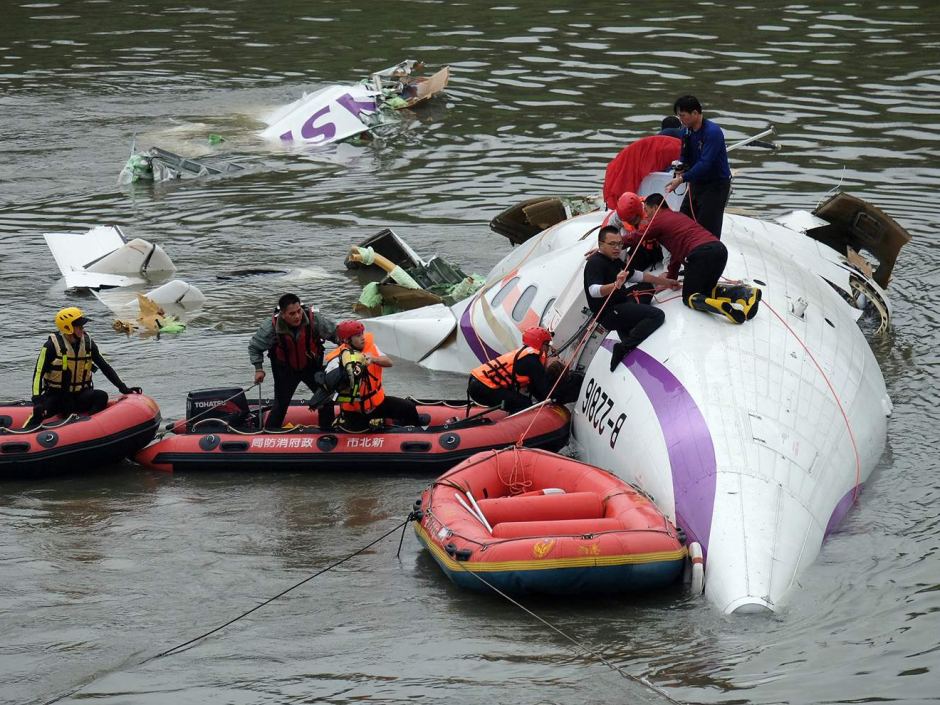
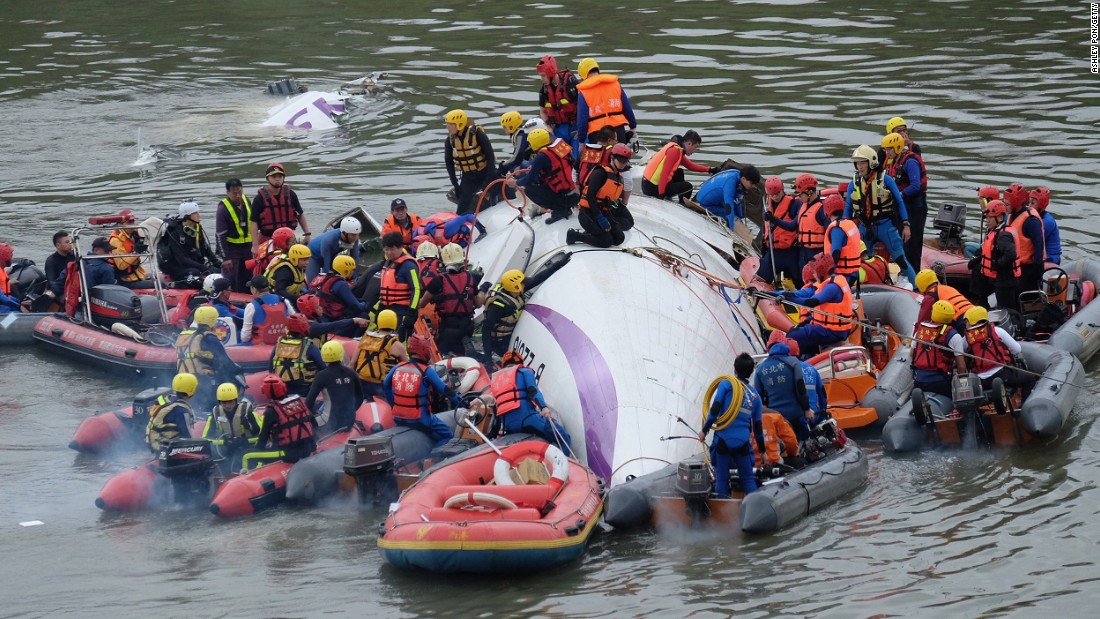
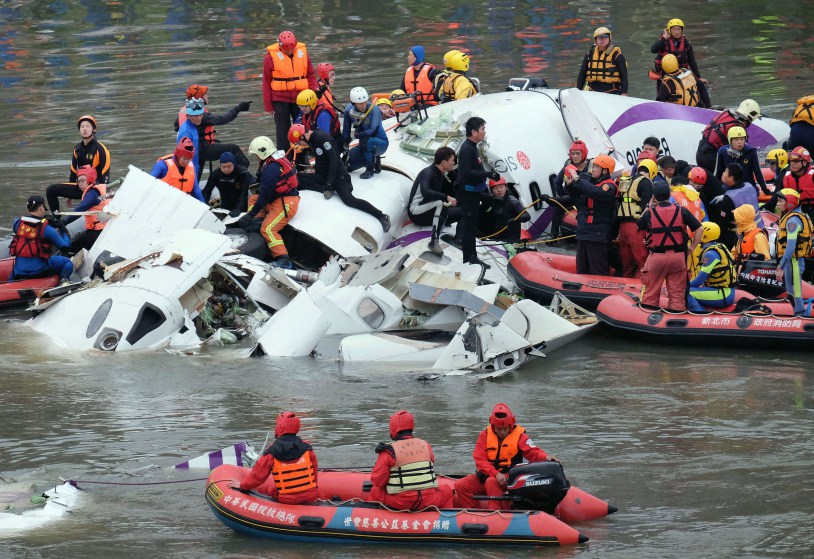
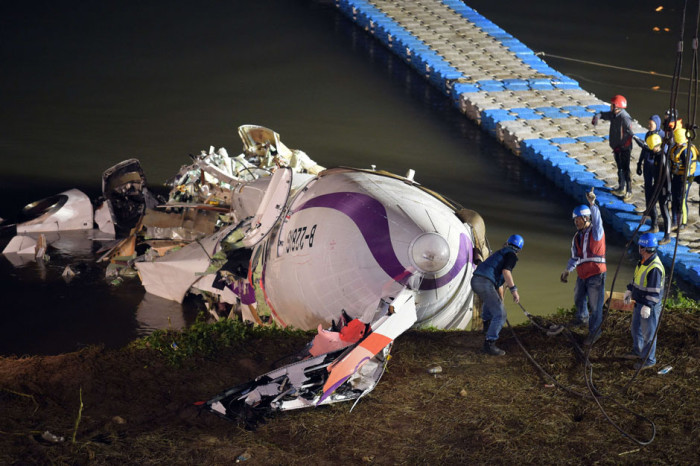
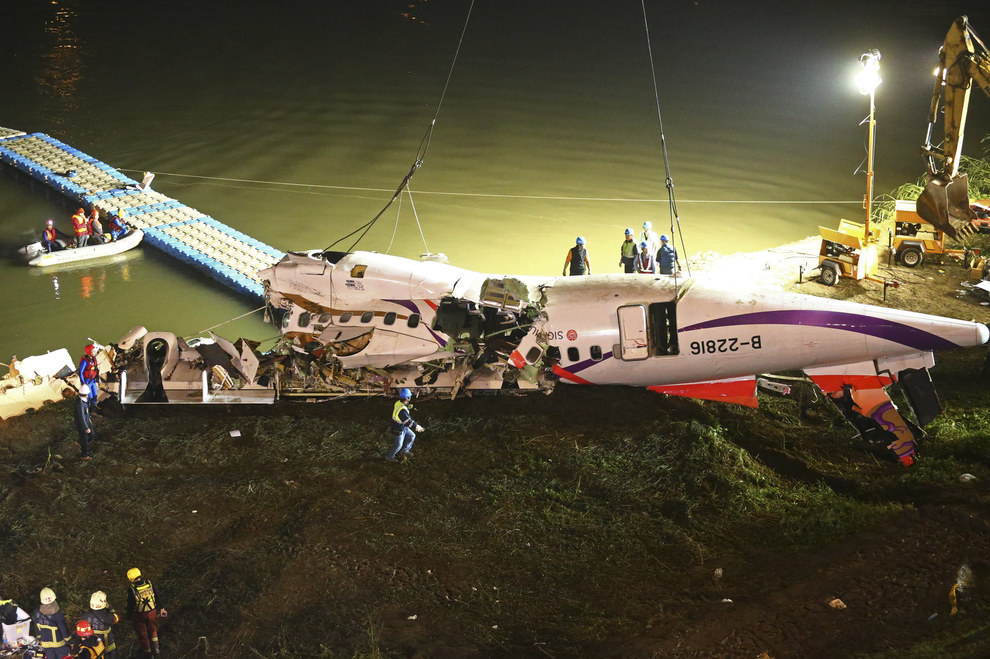
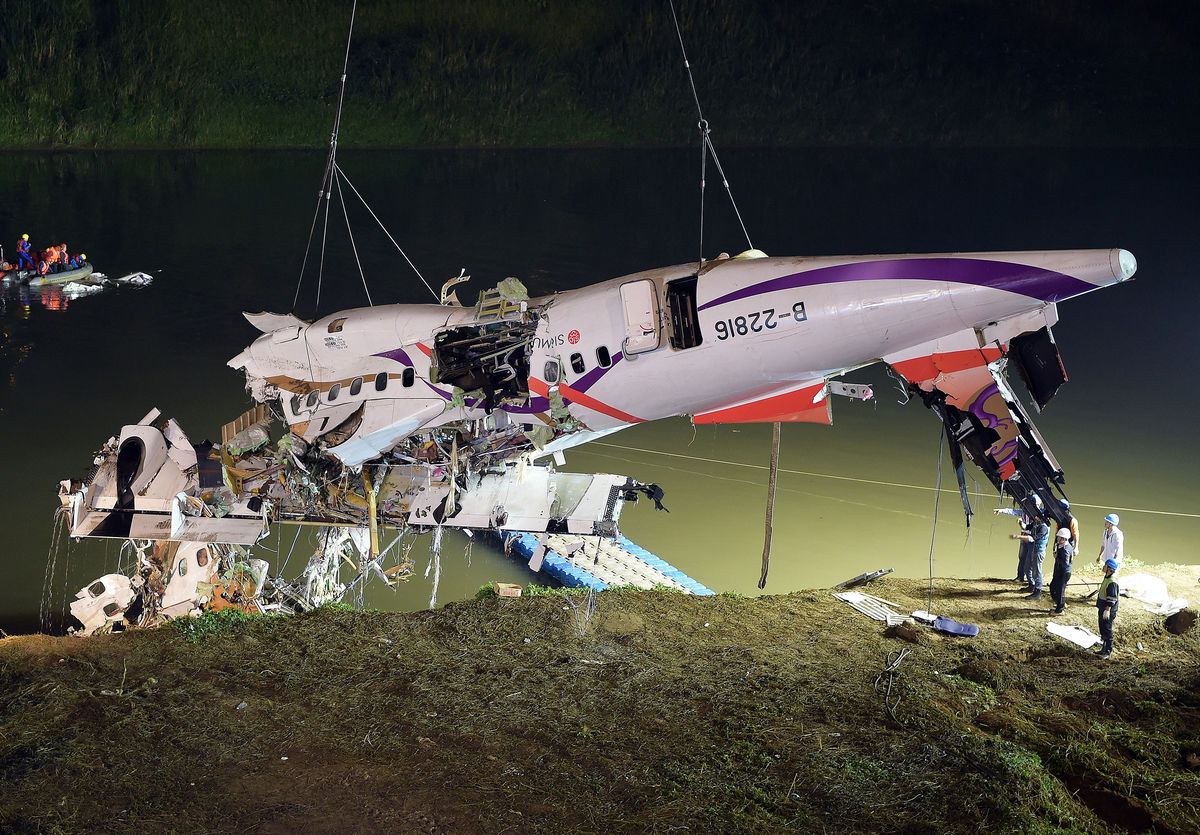
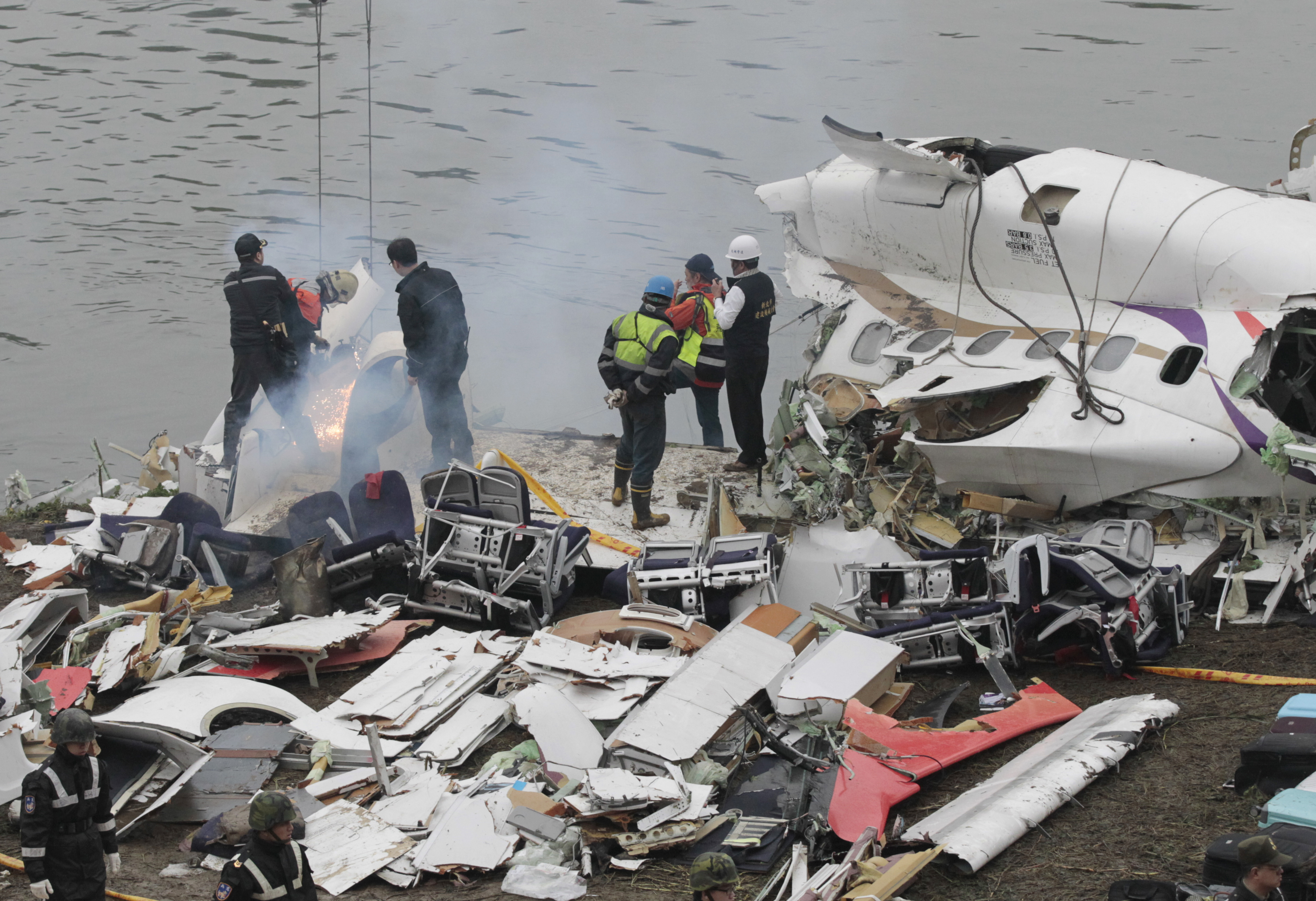
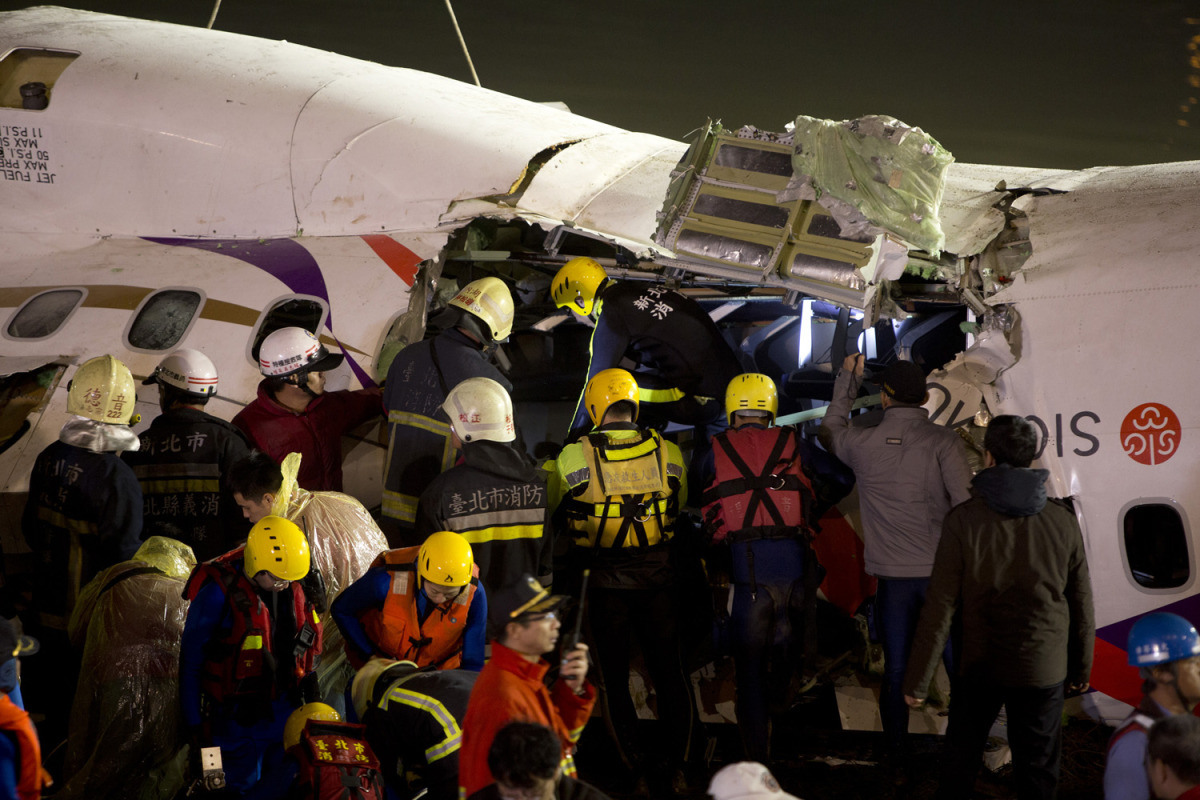
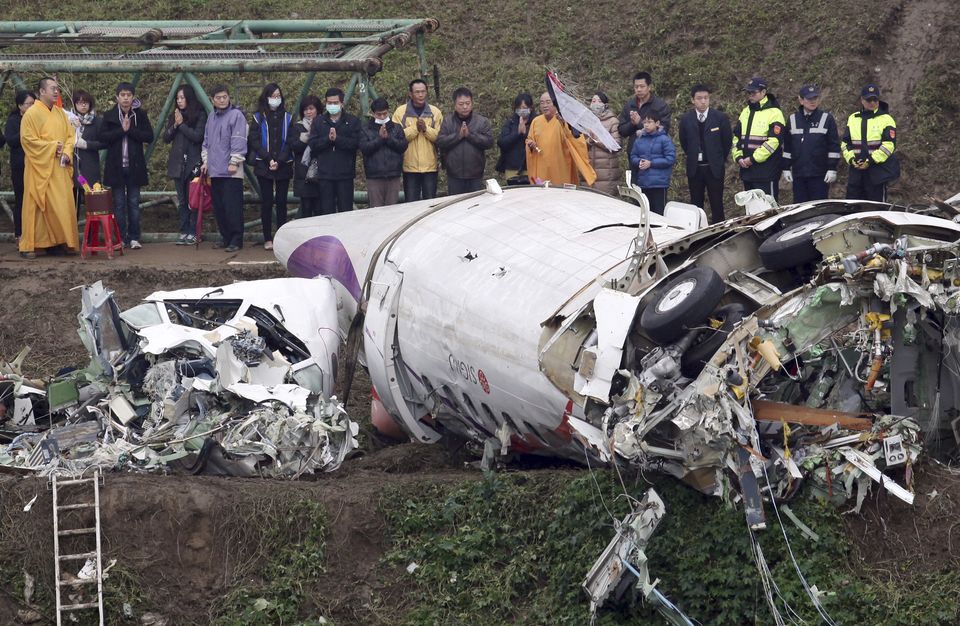
Crash of an ATR72-600 in Taipei: 43 killed

Date & Time: Feb 4, 2015 at 1054 LT
Type of aircraft:
Operator:
Registration:
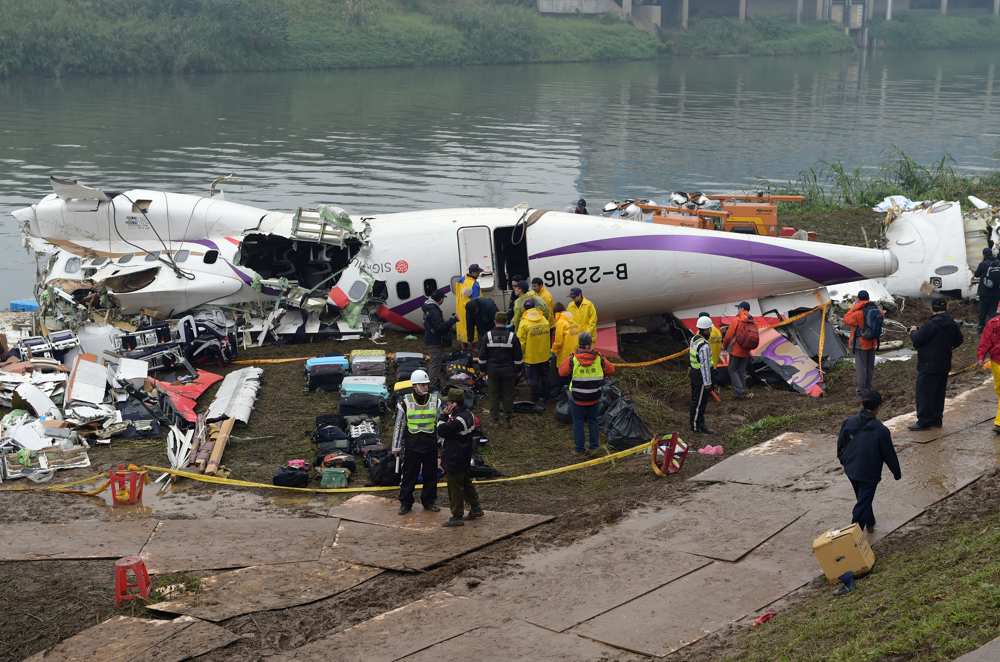
B-22816
Flight Phase:
Survivors:
Yes
Schedule:
Taipei - Kinmen
MSN:
1141
YOM:
2014
Flight number:
GE235
Country:
Region:
Crew on board:
5
Crew fatalities:
Pax on board:
53
Pax fatalities:
Other fatalities:
Total fatalities:
43
Captain / Total flying hours:
4914
Captain / Total hours on type:
3151.00
Copilot / Total flying hours:
6922
Copilot / Total hours on type:
5687
Aircraft flight hours:
1627
Aircraft flight cycles:
2356
Circumstances:
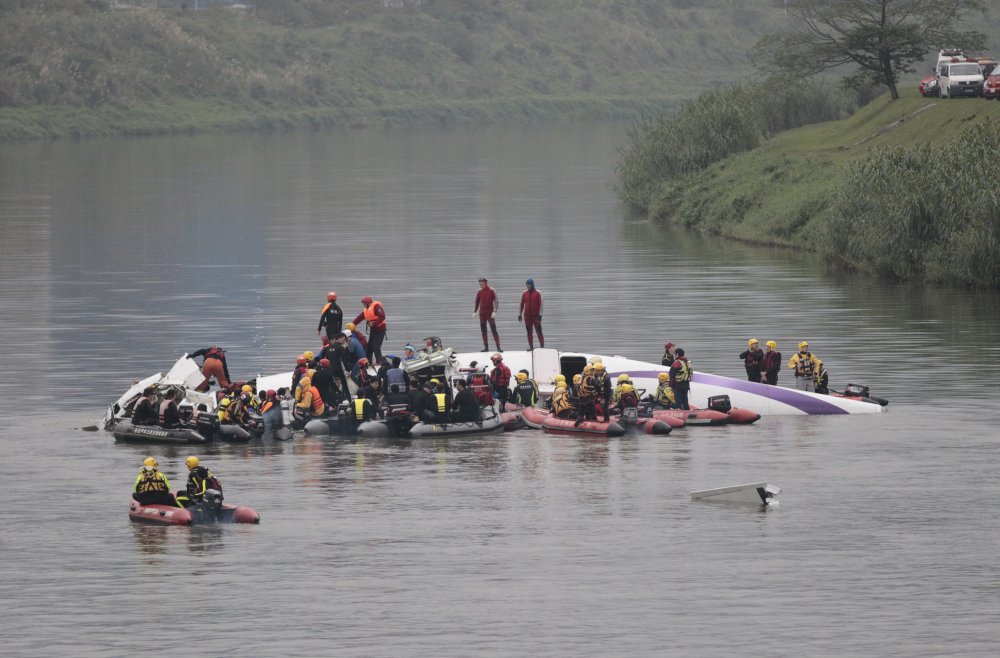
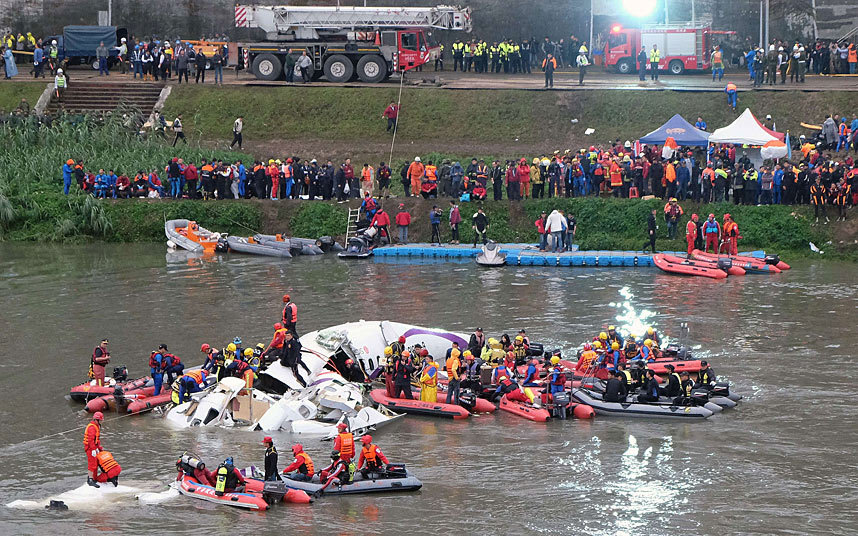
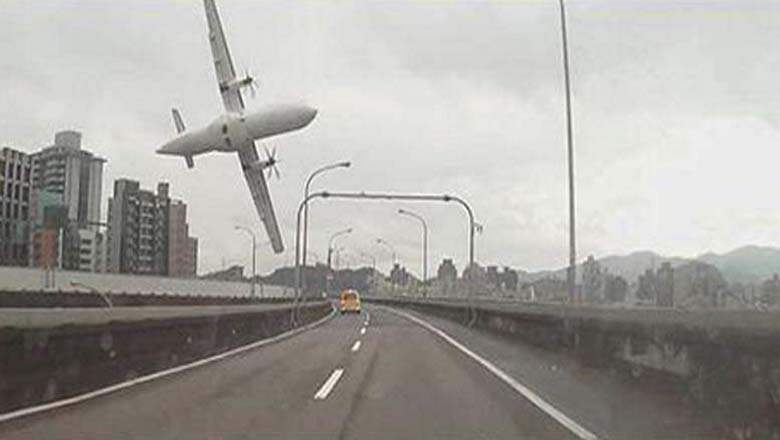
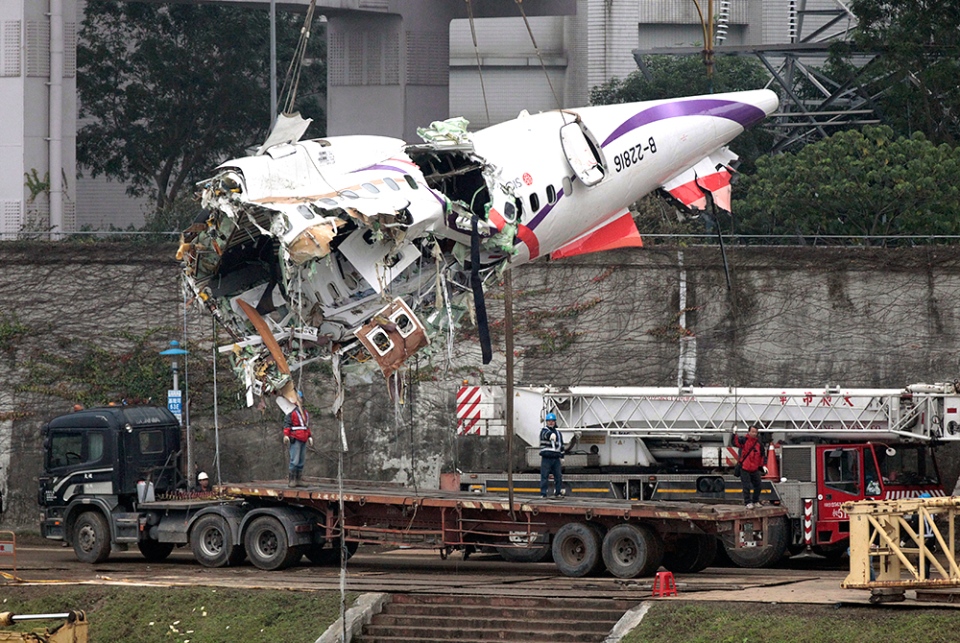
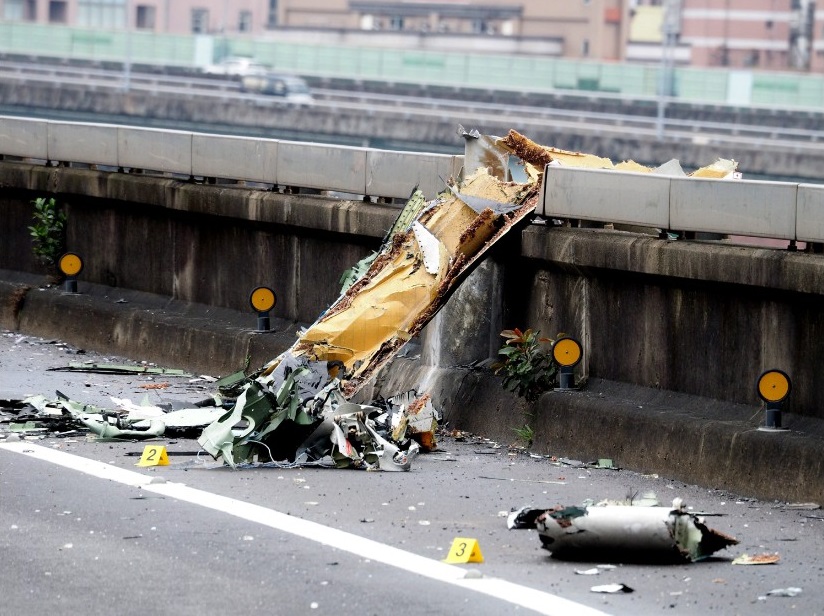
The twin turboprop took off from runway 10 at 1052LT. While climbing to a height of 1,200 feet, the crew sent a mayday message, stating that an engine flamed out. Shortly later, the aircraft stalled and banked left up to an angle of 90° and hit the concrete barrier of a bridge crossing over the Keelung River. Out of control, the aircraft crashed into the river and was destroyed. It has been confirmed that 40 occupants were killed while 15 others were rescued. Three occupants remains missing. A taxi was hit on the bridge and its both occupants were also injured. According to the images available, it appears that the left engine was windmilling when the aircraft hit the bridge. First investigations reveals that the master warning activated during the initial climb when the left engine was throttled back. Shortly later, the right engine auto-feathered and the stall alarm sounded.
Probable cause:
The accident was the result of many contributing factors which culminated in a stall-induced loss of control. During the initial climb after takeoff, an intermittent discontinuity in engine number 2’s auto feather unit (AFU) may have caused the automatic take off power control system (ATPCS) sequence which resulted in the uncommanded autofeather of engine number 2 propellers. Following the uncommanded autofeather of engine number 2 propellers, the flight crew did not perform the documented abnormal and emergency procedures to identify the failure and implement the required corrective actions. This led the pilot flying (PF) to retard power of the operative engine number 1 and shut down it ultimately. The loss of thrust during the initial climb and inappropriate flight control inputs by the PF generated a series of stall warnings, including activation of the stick shaker and pusher. After the engine number 1 was shut down, the loss of power from both engines was not detected and corrected by the crew in time to restart engine number 1. The crew did not respond to the stall warnings in a timely and effective manner. The aircraft stalled and continued descent during the attempted engine restart. The remaining altitude and time to impact were not enough to successfully restart the engine and recover the aircraft.
The following findings related to probable causes were noted:
An intermittent signal discontinuity between the auto feather unit (AFU) number 2 and the torque sensor may have caused the automatic take off power control system (ATPCS):
- Not being armed steadily during takeoff roll,
- Being activated during initial climb which resulted in a complete ATPCS sequence including the engine number 2 autofeathering.
The available evidence indicated the intermittent discontinuity between torque sensor and auto feather unit (AFU) number 2 was probably caused by the compromised soldering joints inside the AFU number 2.
The flight crew did not reject the take off when the automatic take off power control system ARM pushbutton did not light during the initial stages of the take off roll.
TransAsia did not have a clear documented company policy with associated instructions, procedures, and notices to crew for ATR72-600 operations communicating the requirement to reject the take off if the automatic take off power control system did not arm.
Following the uncommanded autofeather of engine number 2, the flight crew failed to perform the documented failure identification procedure before executing any actions. That resulted in pilot flying’s confusion regarding the identification and nature of the actual propulsion system malfunction and he reduced power on the operative engine number 1.
The flight crew’s non-compliance with TransAsia Airways ATR72-600 standard operating procedures - Abnormal and Emergency Procedures for an engine flame out at take off resulted in the pilot flying reducing power on and then shutting down the wrong engine.
The loss of engine power during the initial climb and inappropriate flight control inputs by the pilot flying generated a series of stall warnings, including activation of the stick pusher. The crew did not respond to the stall warnings in a timely and effective manner.
The loss of power from both engines was not detected and corrected by the crew in time to restart an engine. The aircraft stalled during the attempted restart at an altitude from which the aircraft could not recover from loss of control.
Flight crew coordination, communication, and threat and error management (TEM) were less than effective, and compromised the safety of the flight. Both operating crew members failed to obtain relevant data from each other regarding the status of both engines at different points in the occurrence sequence. The pilot flying did not appropriately respond to or integrate input from the pilot monitoring.
The engine manufacturer attempted to control intermittent continuity failures of the auto feather unit (AFU) by introducing a recommended inspection service bulletin at 12,000 flight hours to address aging issues. The two AFU failures at 1,624 flight hours and 1,206 flight hours show that causes of intermittent continuity failures of the AFU were not only related to aging but also to other previously undiscovered issues and that the inspection service bulletin implemented by the engine manufacturer to address this issue before the occurrence was not sufficiently effective. The engine manufacturer has issued a modification addressing the specific finding of this investigation. This new modification is currently implemented in all new production engines, and another service bulletin is available for retrofit.
Pilot flying’s decision to disconnect the autopilot shortly after the first master warning increased the pilot flying’s subsequent workload and reduced his capacity to assess and cope with the emergency situation.
The omission of the required pre-take off briefing meant that the crew were not as mentally prepared as they could have been for the propulsion system malfunction they encountered after takeoff.
Final Report:
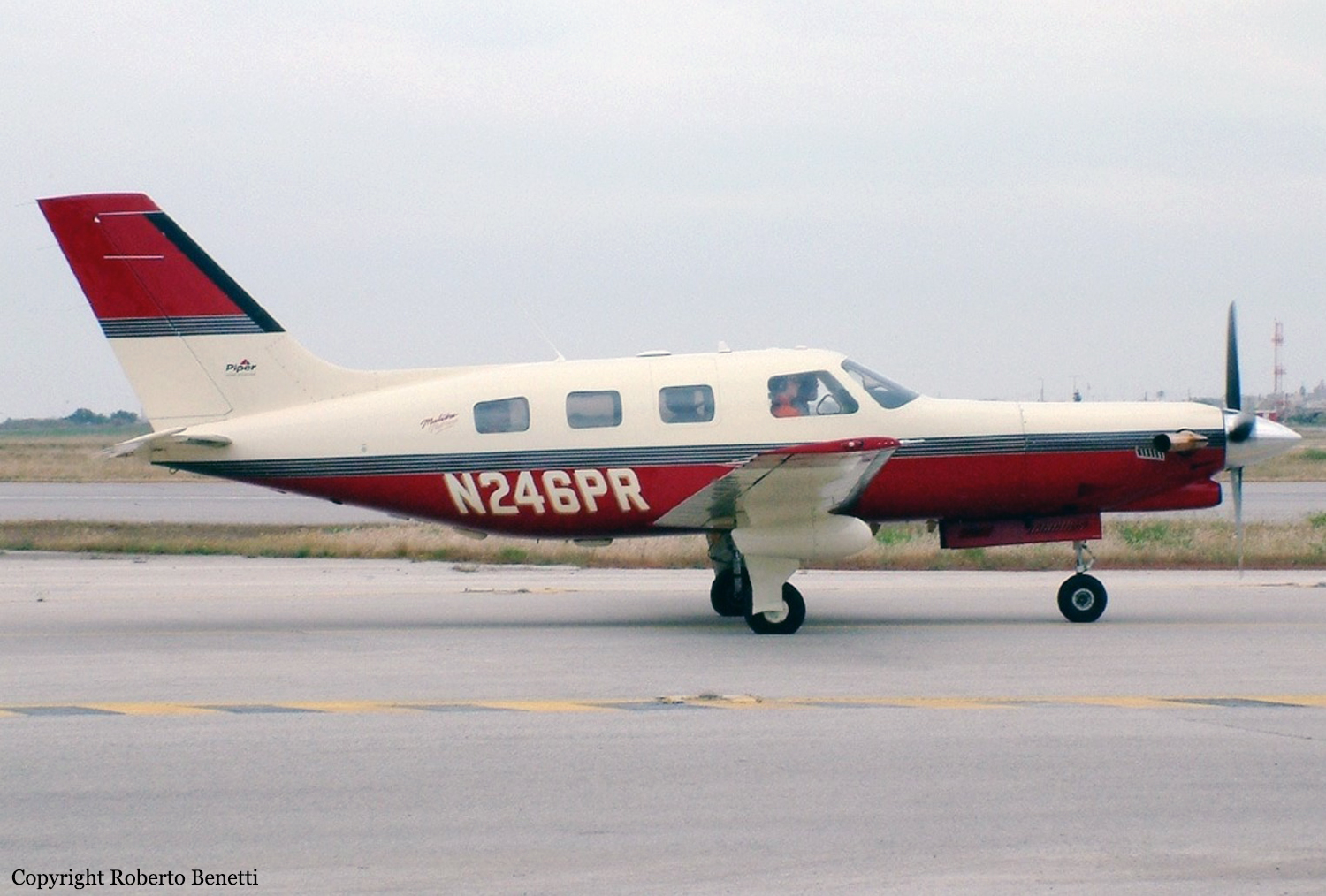
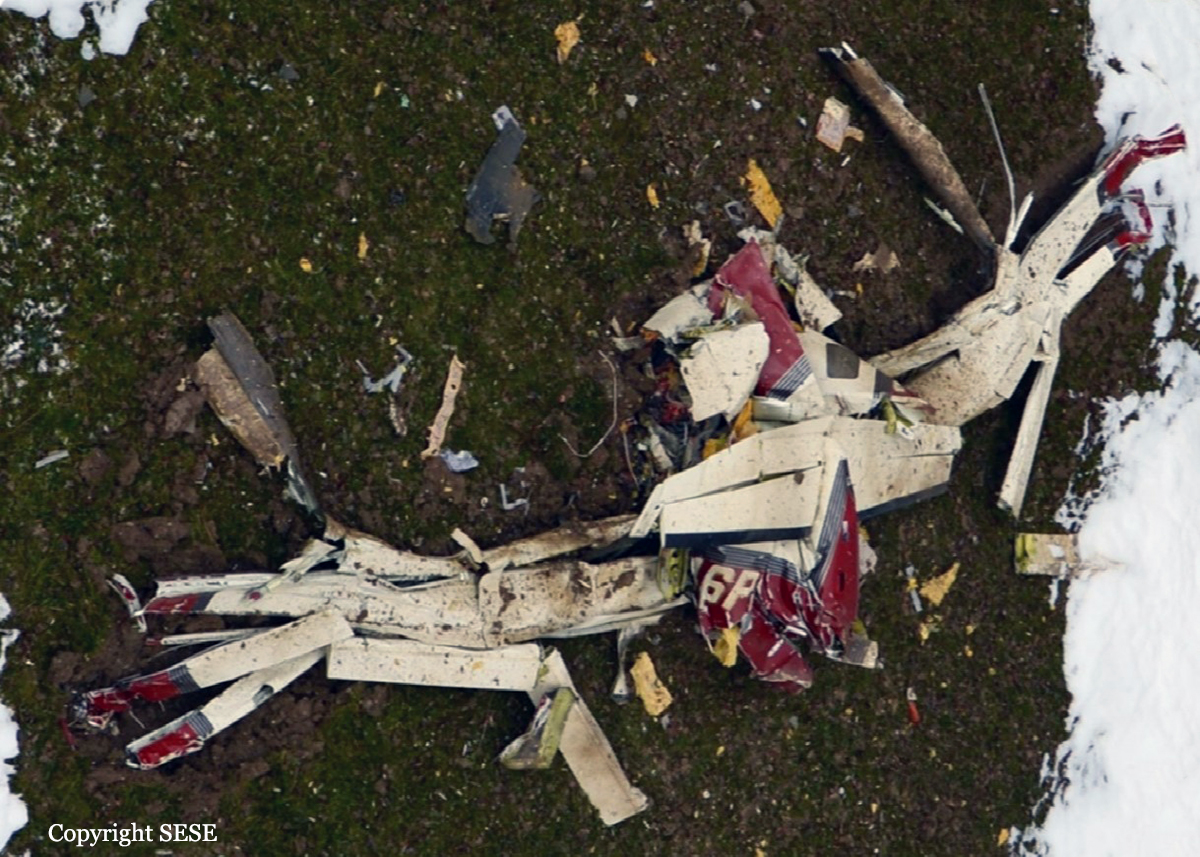
Crash of a Piper PA-46-350P Malibu Mirage JetProp DLX in Sézenove: 1 killed

Date & Time: Jan 30, 2015 at 1201 LT
Operator:
Registration:
N246PR
Flight Phase:
Flight Type:
Survivors:
No
Schedule:
Geneva - Genk
MSN:
46-36063
YOM:
1996
Country:
Region:
Crew on board:
1
Crew fatalities:
Pax on board:
0
Pax fatalities:
Other fatalities:
Total fatalities:
1
Captain / Total flying hours:
1073
Captain / Total hours on type:
89.00
Aircraft flight hours:
1997
Circumstances:
The pilot, sole on board, departed Geneva-Cointrin Airport on a private flight to Genk-Zwartberg Airport where the aircraft was supposed to follow a maintenance program. The single engine aircraft departed runway 23 at 1157LT and continued to climb in IMC conditions. About 30 seconds after he was transferred to the departure frequency, the pilot was cleared to climb to FL090. At an altitude of 4,200 feet and at a speed of 142 knots, the aircraft climbed steeply then veered to the left. About 12 seconds later, the aircraft stopped to climb and another period of 8 seconds was necessary to stabilize and to follow the route. At 1159LT, the aircraft deviated to the left during 20 seconds, drifting about 555 metres from the runway axis. After following various headings with huge variations in ground speed and altitude, the aircraft entered an uncontrolled descent and crashed in an open field located in Sézenove, about 7,8 km southwest from Geneva-Cointrin Airport runway 05 threshold. The aircraft disintegrated on impact and the pilot was killed.
Probable cause:
The accident was due to a loss of control that brought the aircraft into unusual attitudes, which the pilot was unable to restore and which led to his fall. The insufficient skills of the pilot when faced with a high performance aircraft, whose systems are complex, contributed to the occurrence of the accident.
Final Report:
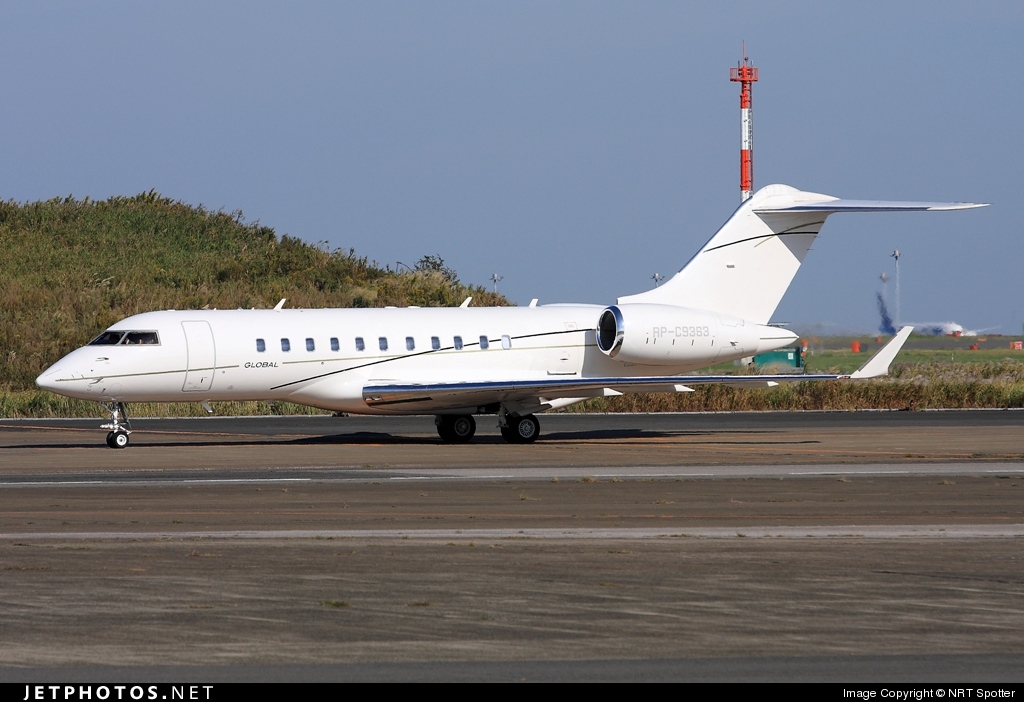
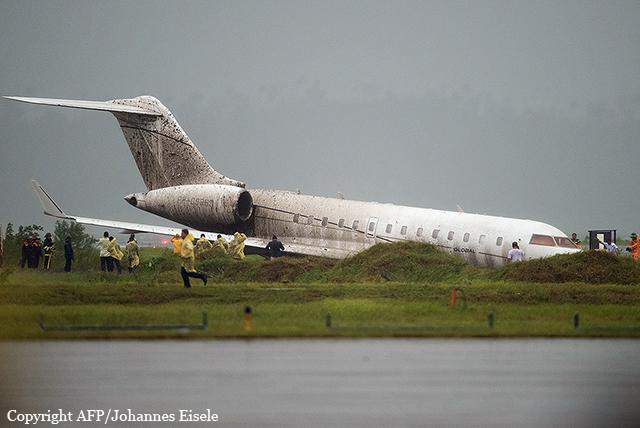
Crash of a Canadair BD-700-1A11 Global 5000 in Tacloban

Date & Time: Jan 17, 2015 at 1345 LT
Type of aircraft:
Registration:
RP-C9363
Flight Phase:
Survivors:
Yes
Schedule:
Tacloban - Manila
MSN:
9363
YOM:
2009
Location:
Country:
Region:
Crew on board:
2
Crew fatalities:
Pax on board:
14
Pax fatalities:
Other fatalities:
Total fatalities:
0
Circumstances:
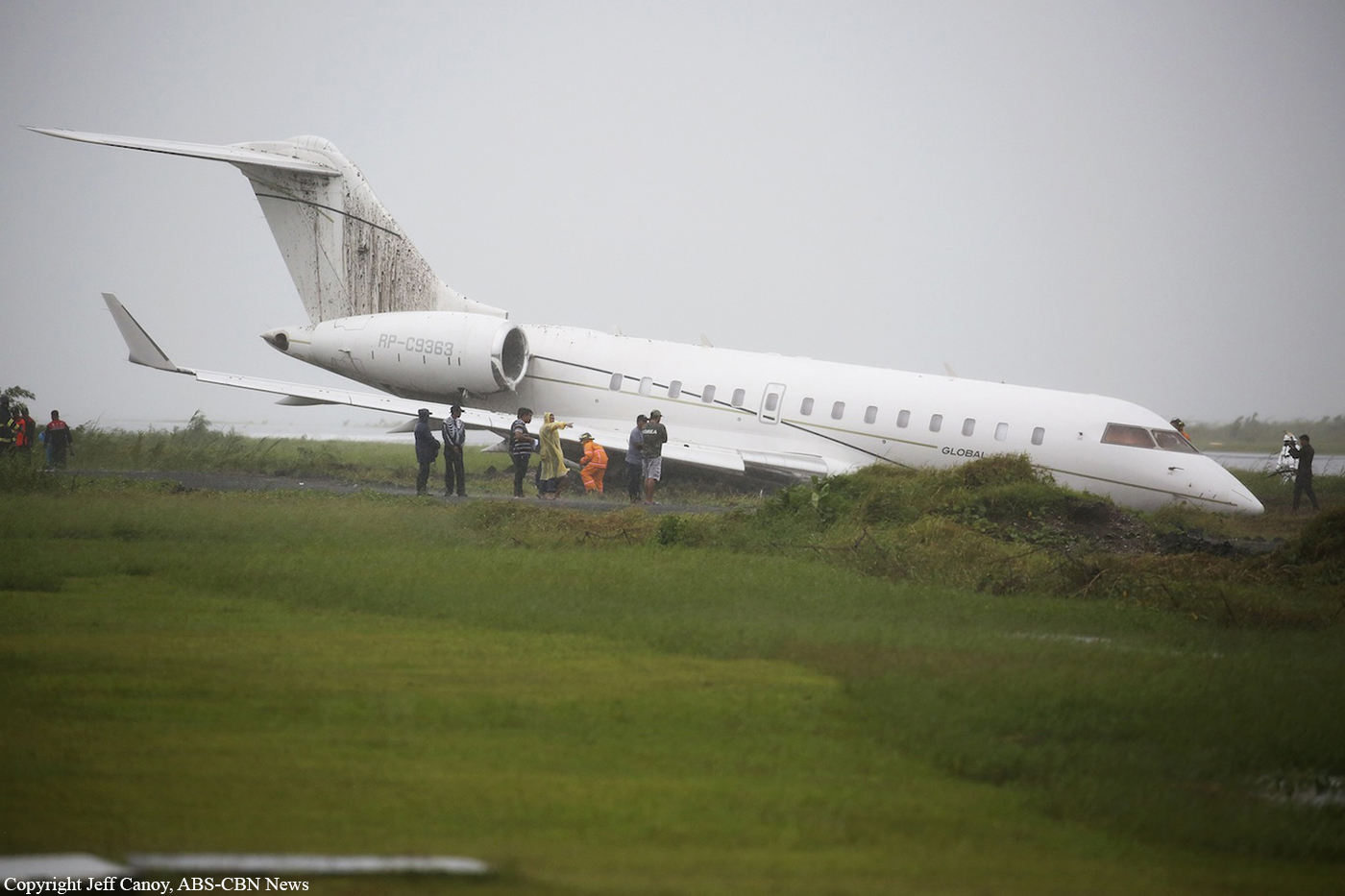
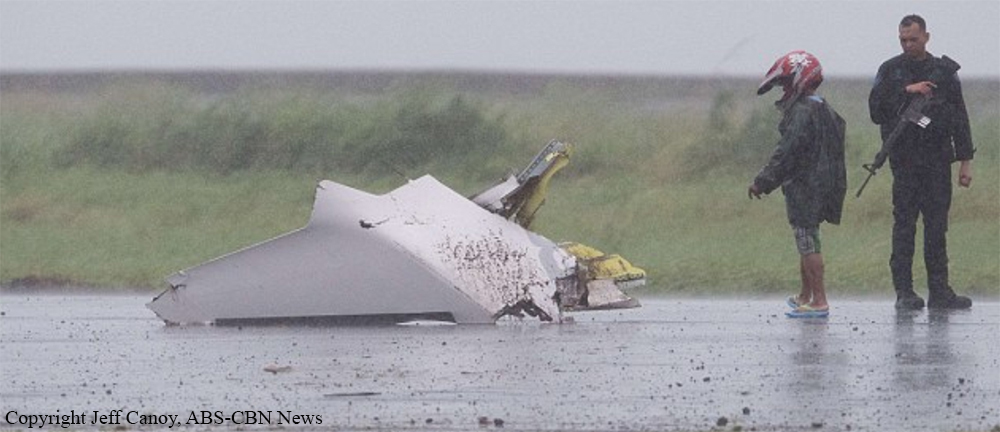
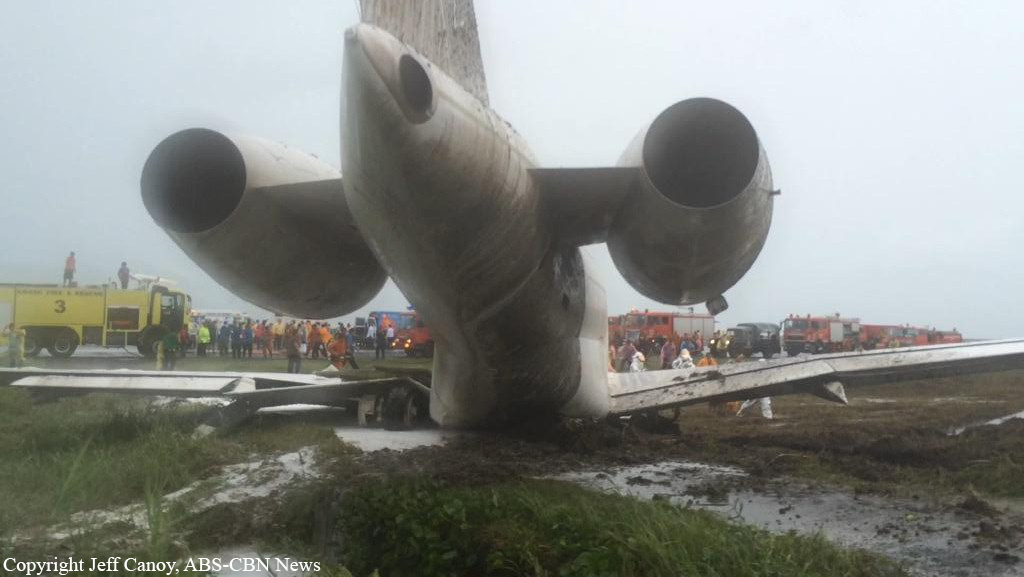
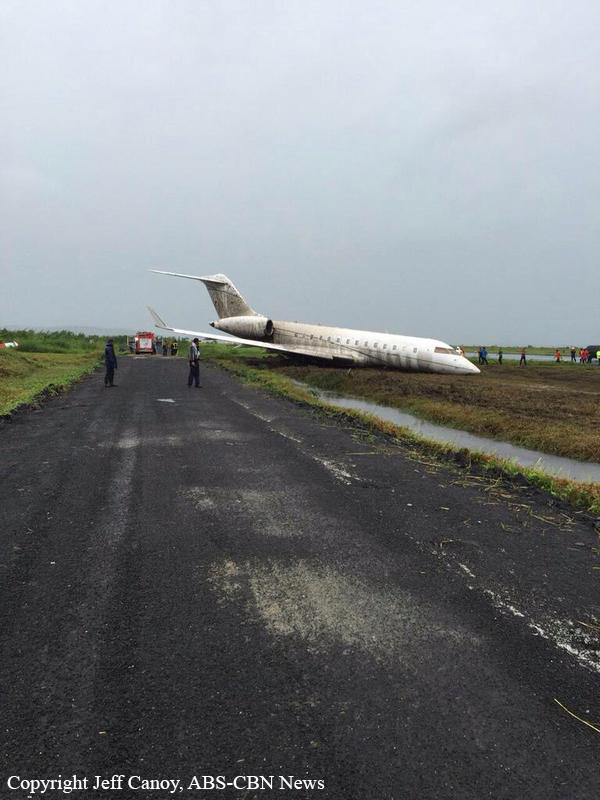
On or about 1000H January 17, 2015, the Holy Father “Pope Francis” visited the typhoon-devastated province of Leyte and utilized an Airbus 320 aircraft for Tacloban airport, and Bombardier Global 5000 RP-C9363 aircraft was part of the Papal entourage with passengers on board. The weather condition was worsening and the visit of the Pope had to cut short due to approaching tropical storm code named “AMANG”, with strong winds of up to 130km/h(80mph) according to PAGASA and moderate rain as signal n°2 was already forecasted at the province of Leyte. At 1304H, the Global 5000 RP-C9363 was given start up clearance by tower controller and subsequently a taxi clearance at 1308H to exit via south taxiway next to the departing Airbus320 PAL8010. At 1306H, the First Airbus 320 PAL8010 aircraft carrying the Papal entourage took-off utilizing RWY 36 with prevailing wind condition of 290̊/18 knots crosswind and temperature of 24°. At 1311H, RP-C 9363 was not allowed to move from present position to proceed to the active runway via south taxiway by the military ground marshaller. At 1322H, the 2nd Airbus 320 PAL8191 took-off with prevailing wind conditions of 290°/23 kts crosswind. The separation time between the Global 5000 to the first and second aircraft were 29 minutes and 13 minutes respectively. At 1335H, finally RP-C9363 Global 5000 was cleared for take-off at runway 36 bound for Ninoy Aquino International Airport (RPLL) with two (2) pilots and 14 passengers on board. The wind condition at that time was 300°/18 kts with gustiness and temperature of 24°. The aircrew performed rolling take-off and the acceleration was normal, the pilot nonflying (NPF) called for air speed alive, 80 knots, V1 and Rotate. Before approaching south taxiway abeam the terminal building, the aircraft started to veer to the left side of the runway centerline. The aircraft continued to roll veering to the left side of the runway and the left hand main landing gear was already out of the runway after the north taxiway. The aircraft underwent runway excursion and sustained substantial damage after simultaneous collision with the concrete bases of runway edge lights and to the concrete culvert before it came to a complete stop at approximately 1500 meters from the take-off point. Immediate evacuation was performed to all passengers. The crash and fire rescue personnel arrived at the area and assisted the passengers and aircrew.
Probable cause:
The Aircraft Accident Investigation and Inquiry Board determined that the probable cause of this accident was:
- Lack of recurrent training of the flight crew:
Routine flights do not prepare a pilot for unusual situations, whether they are unexpected crosswinds or systems/engine anomalies. Pilots should receive regular recurrent training to include abnormal and emergency procedures.
- The existing runway edge light design:
The PIC tried to recover the aircraft back to the runway but apparently the aircraft left main landing gears already hit or bumped the concrete base of runway edge lights. The design of runway strips or shoulder must be free from fixed objects other than frangible visual aids provided for the guidance of aircraft and must not be constructed
with sharp edges; and where the lights will not normally come into contact with aircraft wheels, such as threshold lights, runway end lights and runway edge lights;
- Human Factors:
Due to deteriorating adverse weather conditions and due to the delay of their initial request for take-off clearance plus the sudden change of flight plan affected the Captain’s ability to perform a take-off procedure as recommended in the aircraft flight manual and instead delegated flight control duties to the F/O resulting in the loss of coordination between the light crew.
Final Report:

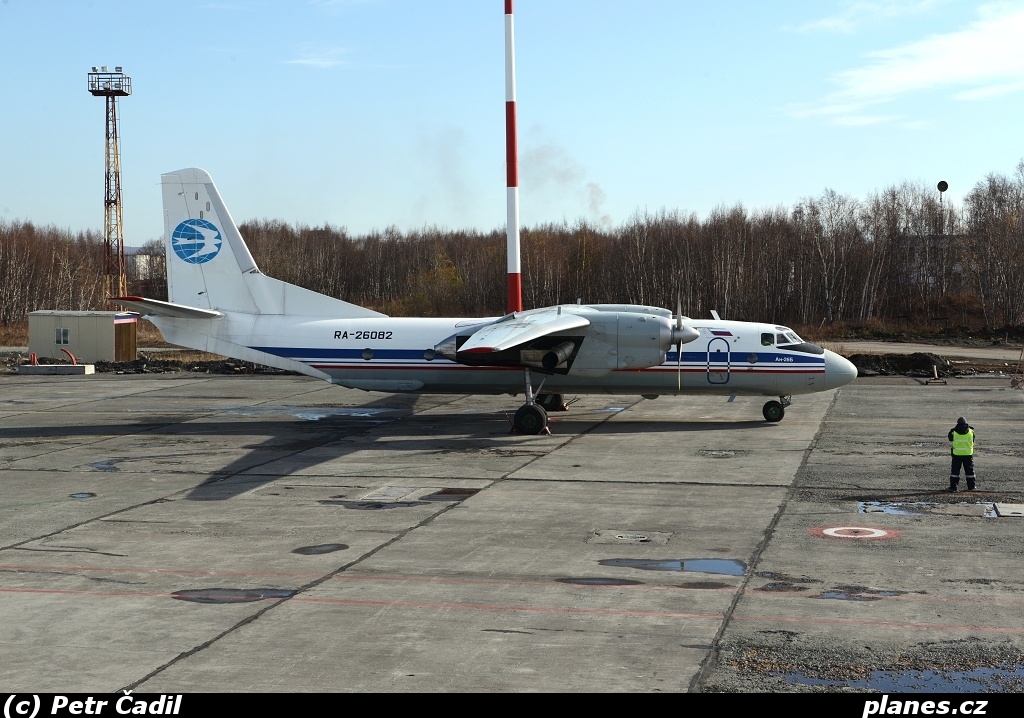
Crash of an Antonov AN-26B in Magadan

Date & Time: Jan 3, 2015 at 1119 LT
Type of aircraft:
Operator:
Registration:
RA-26082
Flight Phase:
Flight Type:
Survivors:
Yes
Schedule:
Petropavlovsk-Kamchatsky – Magadan – Mirny – Nizhnevartovsk
MSN:
117 05
YOM:
1981
Country:
Region:
Crew on board:
8
Crew fatalities:
Pax on board:
0
Pax fatalities:
Other fatalities:
Total fatalities:
0
Captain / Total flying hours:
3783
Captain / Total hours on type:
2240.00
Copilot / Total flying hours:
11986
Copilot / Total hours on type:
94
Aircraft flight hours:
13698
Aircraft flight cycles:
6810
Circumstances:
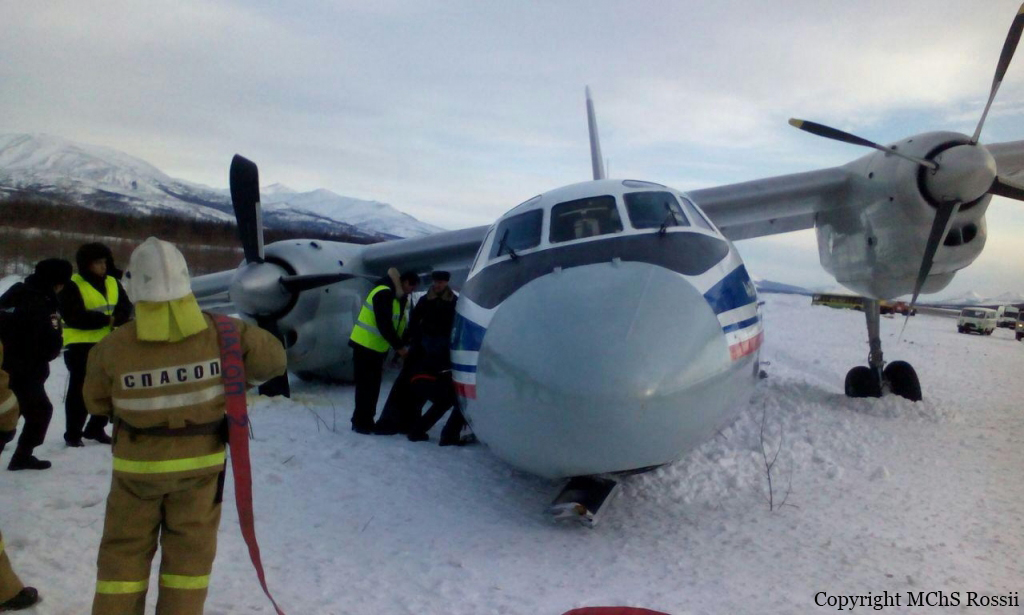
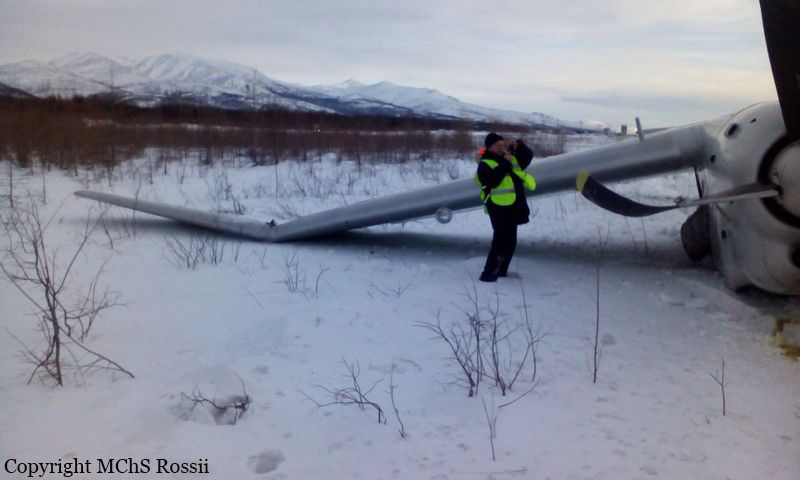
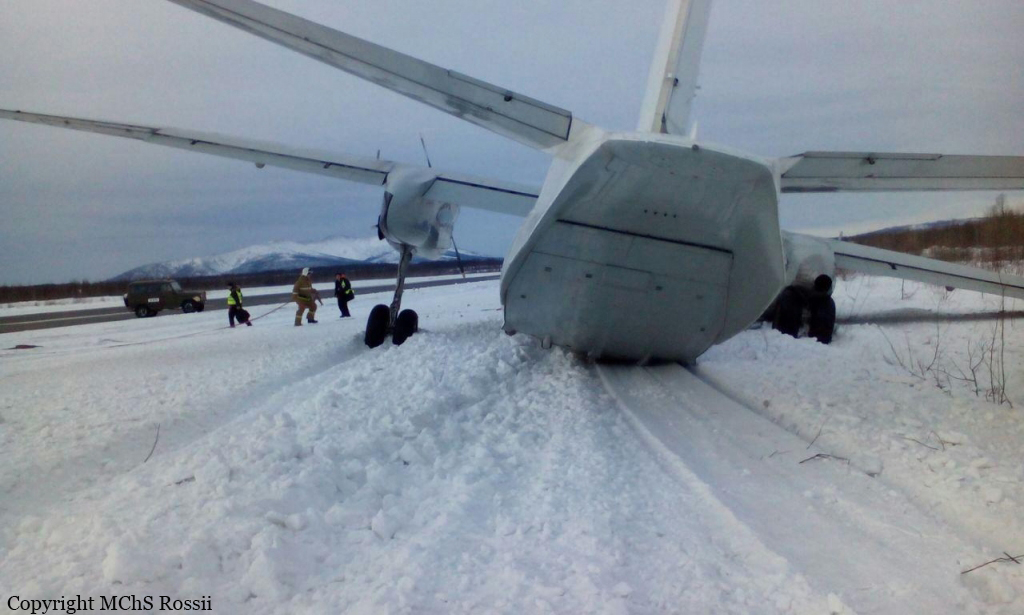
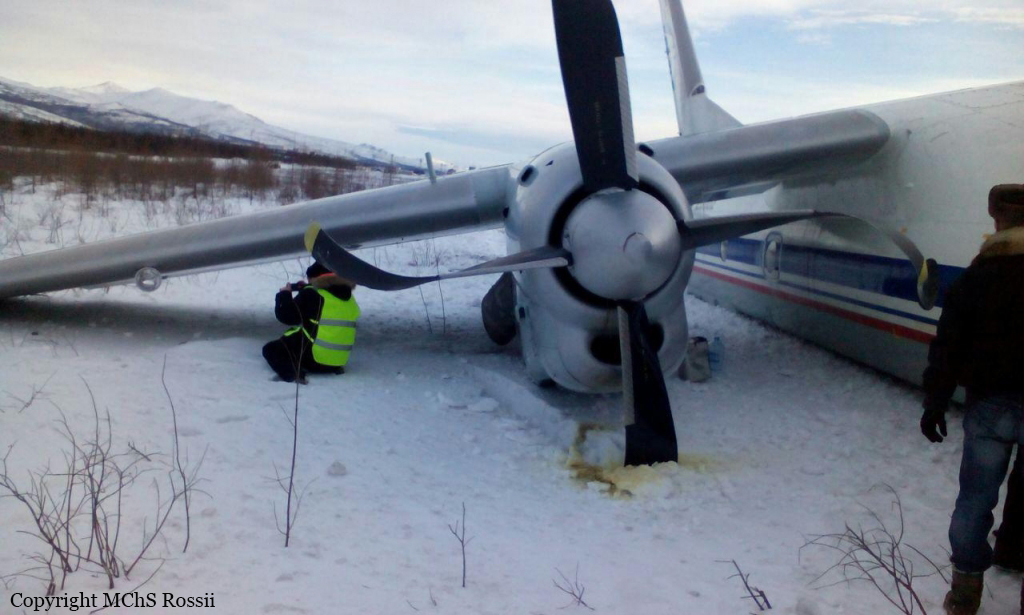
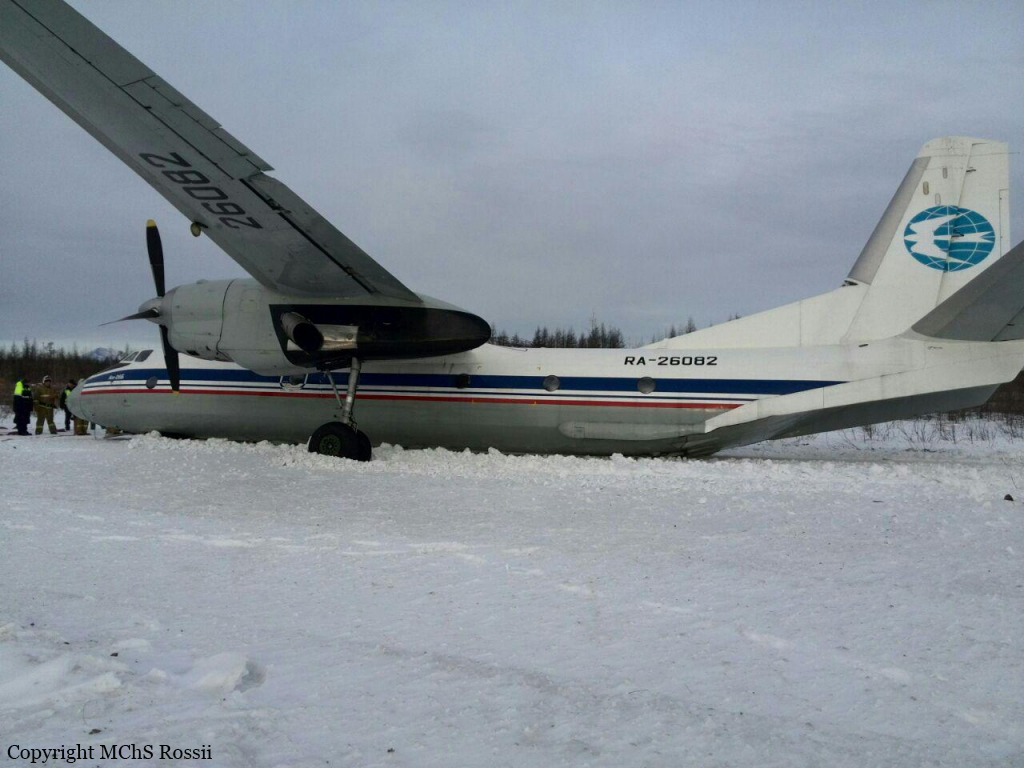
During the take off run, at a speed of 250 km/h, the crew initiated the rotation when the aircraft failed to lift off. The captain decided to abandon the take off and started an emergency braking. The aircraft veered off runway to the right, went through a snow covered terrain, lost its nose and right main gear before coming to rest 490 meters further, with the right wing bent. The aircraft was considered as damaged beyond repair while all eight occupants were unhurt.
Probable cause:
The accident occurred as result of the aircraft departing the side of the runway after the commander rejected takeoff after having been unable to use the elevator because of the yoke's locked position. The roll beyond the edge of the runway was likely caused by the flight engineer while attempting to operate the handle to release the flight controls lock while the aircraft was already accelerating for takeoff. The accident was thus caused by this combination of factors:
- violation of requirements by FCOM to ascertain the flight controls were free and usable before engine start,
- failure by the crew to execute the checklists to check elevator, rudder and ailerons were free to move before takeoff,
- flight crew receives insufficient practice in real flight to maintain skills acquired during simulator training in the management of the aircraft and its systems resulting in negative impact during emergency situations.
Final Report:
Crash of a Saab 340B in Stornoway

Date & Time: Jan 2, 2015 at 0833 LT
Type of aircraft:
Operator:
Registration:
G-LGNL
Flight Phase:
Survivors:
Yes
Schedule:
Stornoway – Glasgow
MSN:
246
YOM:
23
Flight number:
BE6821
Region:
Crew on board:
3
Crew fatalities:
Pax on board:
26
Pax fatalities:
Other fatalities:
Total fatalities:
0
Captain / Total flying hours:
3880
Captain / Total hours on type:
3599.00
Circumstances:
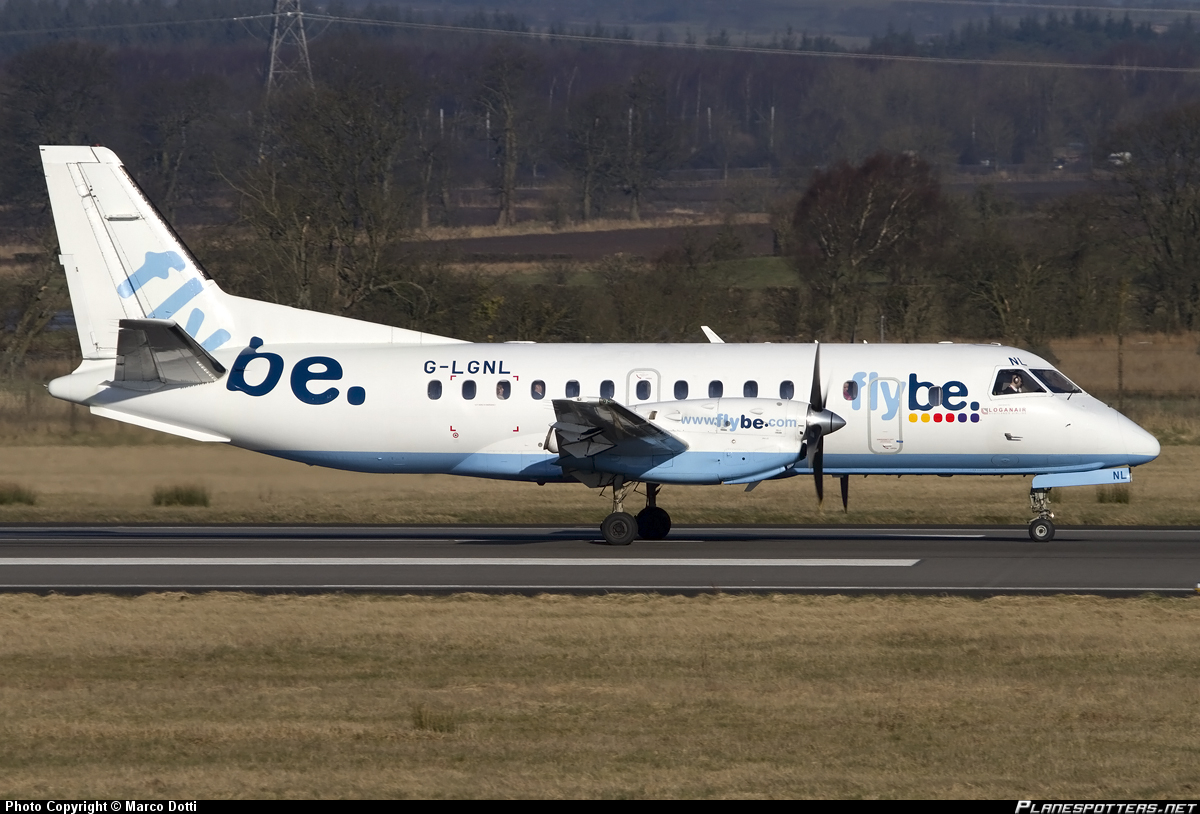
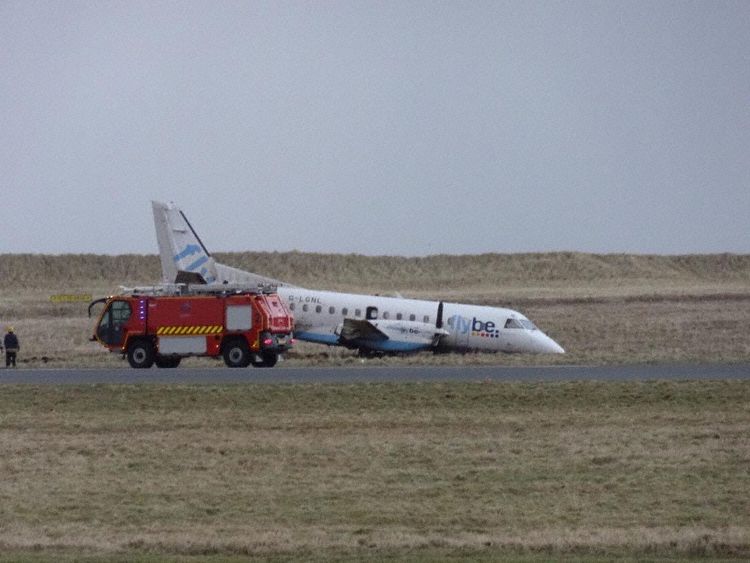
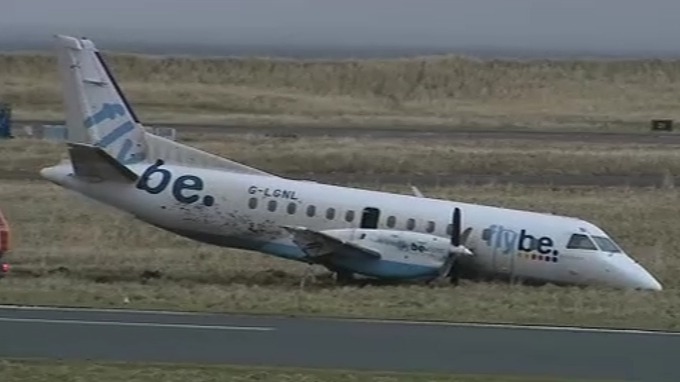
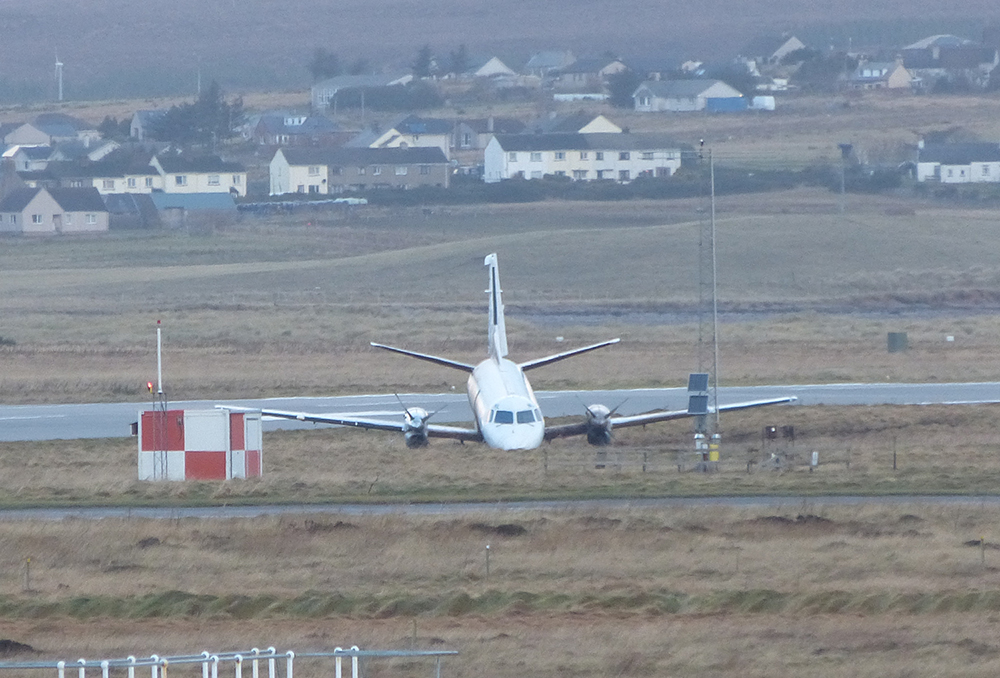
The aircraft had been prepared for a Commercial Air Transport flight from Stornoway Airport to Glasgow Airport with 26 passengers and three crew on board; the commander was the Pilot Flying (PF) and the co-pilot was the Pilot Monitoring (PM). At 0825 hrs the aircraft was taxied towards Holding Point A1 for a departure from Runway 18. At 0832 hrs G-LGNL was cleared to enter the runway from Holding Point A1 and take off, and the ATC controller transmitted that the surface wind was from 270° at 27 kt. The commander commented to the co-pilot that the wind was across the runway and that there was no tailwind. As the aircraft taxied onto the runway, the co-pilot applied almost full right aileron input consistent with a cross-wind from the right, and the commander said to the co-pilot “charlie1, one hundred, strong wind from the right”. The commander advanced the power levers, the co-pilot said “autocoarsen high” and the engine torques increased symmetrically. The commander instructed the co-pilot to “set takeoff power” to which the co-pilot replied “apr armed”. Approximately one second after this call, the engine torques began to increase symmetrically, reaching 100% as the aircraft accelerated through 70 kt. During the early stages of the takeoff, left rudder was applied and the aircraft maintained an approximately constant heading. As the aircraft continued accelerating, the rudder was centralised, after which there was a small heading change to the left, then to the right, then a rapid heading change to the left causing the aircraft to deviate to the left of the runway centreline. The pilot applied right rudder but although the aircraft changed heading to the right in response, it did not alter the aircraft’s track significantly and the aircraft skidded to the left, departing the runway surface onto the grass at an IAS of 80 kt. The power levers remained at full power as the aircraft crossed a disused runway and back onto grass. During this period the nose landing gear collapsed before the aircraft came to a halt approximately 38 m left of the edge of the runway and 250 m from where it first left the paved surface. After the aircraft came to a halt, the captain saw that the propellers were still turning and so called into the cabin for the passengers to remain seated. One of the passengers shouted for someone to open the emergency exit but the cabin crew member instructed the passengers not to do so because the propellers were still turning. The co-pilot observed that the right propeller was still turning so operated the engine fire extinguishers to shut down both engines. When the passenger seated in the emergency exit row on the right of the aircraft saw that the right propeller had stopped, he decided to open the exit. He climbed out onto the wing and helped the remaining passengers leave the aircraft through the same exit, instructing them to slide off the rear of the wing onto the ground. The left propeller was still turning at the time the right over-wing exit was opened and the passenger seated in the left-side emergency exit row decided not to open the left exit. The crash alarm was activated by ATC at 0833 hrs. An aircraft accident was declared and the aerodrome emergency plan was put into action. When the Rescue and Fire Fighting Services (RFFS) arrived at the scene, passengers were still exiting the aircraft and the left propeller was still turning. After leaving the aircraft, the cabin crew member confirmed to the RFFS that all passengers had exited the cabin and had been accounted for outside. The passengers were taken to the fire station and then on to the passenger terminal. There were no injuries.
Probable cause:
During the attempted takeoff, the rudder was central from 40 kt and remained so until approximately 65 kt. Between approximately 52 and 65 kt, the aircraft turned right slightly before it turned left sharply at approximately 65 kt. Given that the rudder was central, this change of direction might have been caused by one, or a combination of the following factors:
a. Differential braking
b. Asymmetric thrust
c. A change in wind speed and direction
d. A nose wheel steering input
Data from the FDR showed that thrust was applied symmetrically throughout the takeoff run, and the manufacturer did not consider that the data for longitudinal acceleration and indicated airspeed supported the use of differential braking.
Final Report:
Crash of a Cessna 404 Titan II in Englewood: 1 killed

Date & Time: Dec 30, 2014 at 0429 LT
Type of aircraft:
Operator:
Registration:
N404MG
Flight Phase:
Flight Type:
Survivors:
No
Schedule:
Denver - Denver
MSN:
404-0813
YOM:
1981
Flight number:
LYM182
Crew on board:
1
Crew fatalities:
Pax on board:
0
Pax fatalities:
Other fatalities:
Total fatalities:
1
Captain / Total flying hours:
2566
Captain / Total hours on type:
624.00
Aircraft flight hours:
16681
Circumstances:
The pilot was conducting an early morning repositioning flight of the cargo airplane. Shortly after takeoff, the pilot reported to air traffic control that he had “lost an engine” and would return to the airport. Several witnesses reported that the engines were running rough and one witness reported that he did not hear any engine sounds just before the impact. The airplane impacted trees, a wooden enclosure, a chain-linked fence, and shrubs in a residential area and was damaged by the impact and postimpact fire. The airplane had been parked outside for 5 days before the accident flight and had been plugged in to engine heaters the night before the flight. It was dark and snowing lightly at the time of the accident. The operator reported that no deicing services were provided before the flight and that the pilot mechanically removed all of the snow and ice accumulation. The wreckage and witness statements were consistent with the airplane being in a right-winglow descent but the airplane did not appear to be out of control. Neither of the propellers were at or near the feathered position. The emergency procedures published by the manufacturer for a loss of engine power stated that pilots should first secure the engine and feather the propeller following a loss of engine power and then turn the fuel selector for that engine to “off.” The procedures also cautioned that continued flight might not be possible if the propeller was not feathered. The right fuel selector valve and panel were found in the off position. Investigators were not able to determine why an experienced pilot did not follow the emergency procedures and immediately secure the engine following the loss of engine power. It is not known how much snow and ice had accumulated on the airplane leading up to the accident flight or if the pilot was successful in removing all of the snow and ice with only mechanical means. The on-scene examination of the wreckage and the teardown of both engines did not reveal any preimpact mechanical malfunctions or failures. While possible, it could not be determined if water or ice ingestion lead to the loss of engine power at takeoff.
Probable cause:
The loss of power to the right engine for reasons that could not be determined during postaccident examination and teardown and the pilot’s failure to properly configure the
airplane for single-engine flight.
Final Report:
Crash of a Gulfstream GIII in Biggin Hill

Date & Time: Nov 24, 2014 at 2030 LT
Type of aircraft:
Operator:
Registration:
N103CD
Flight Phase:
Flight Type:
Survivors:
Yes
Schedule:
Biggin Hill - Gander
MSN:
418
YOM:
1984
Region:
Crew on board:
2
Crew fatalities:
Pax on board:
5
Pax fatalities:
Other fatalities:
Total fatalities:
0
Captain / Total flying hours:
4120
Captain / Total hours on type:
3650.00
Circumstances:
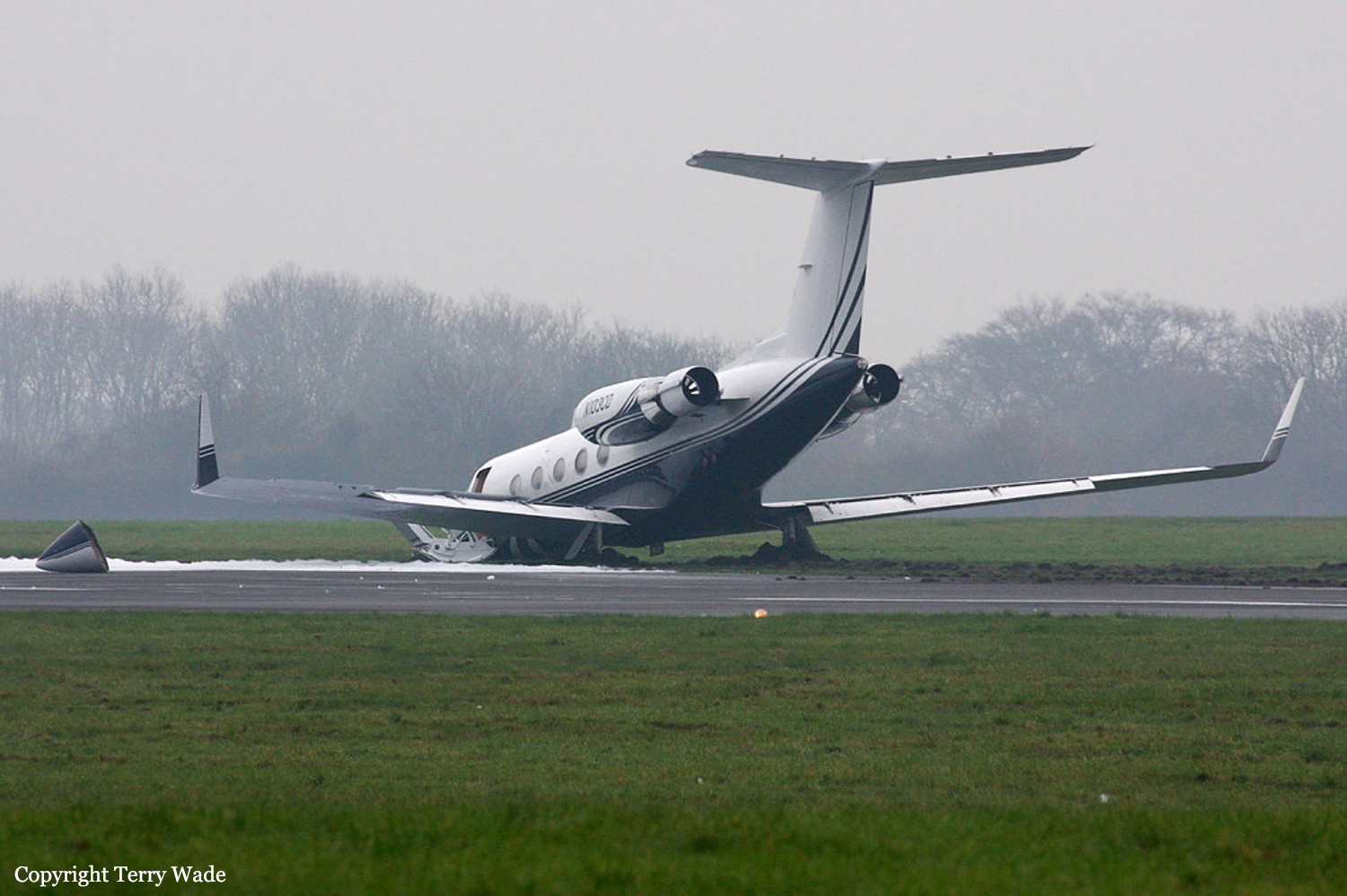
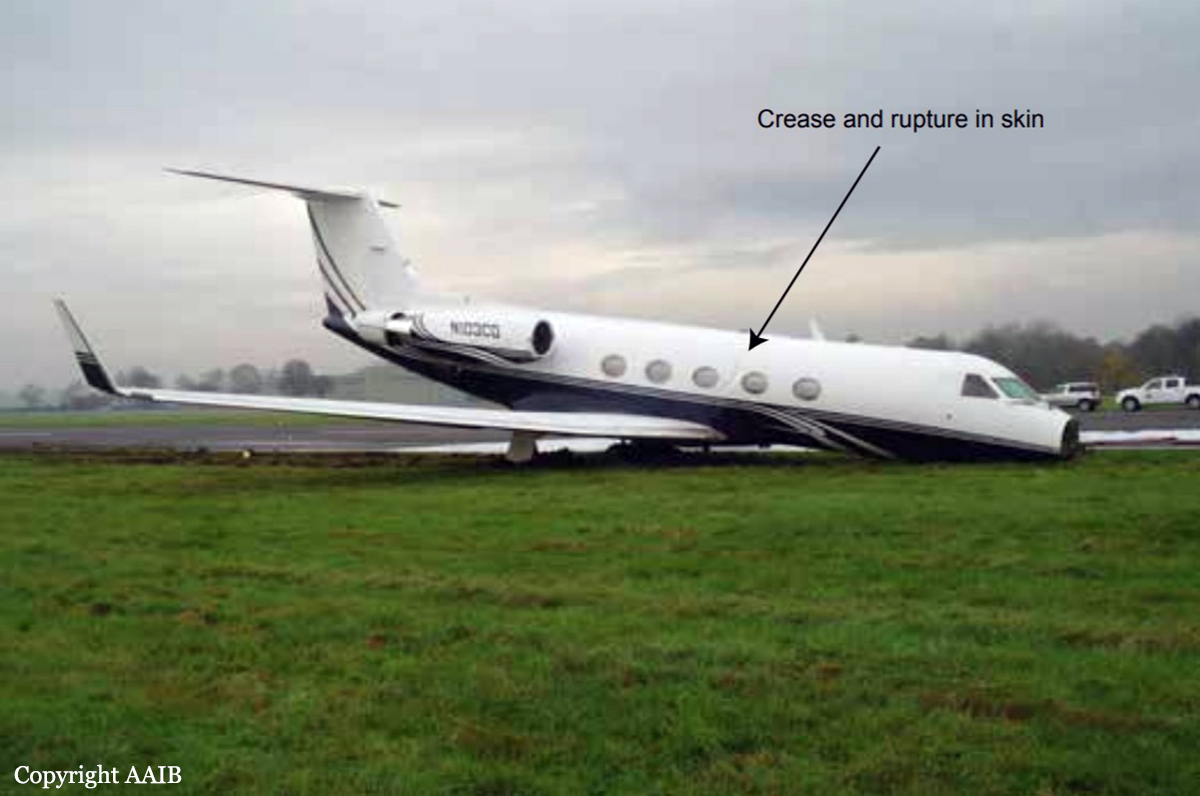
On 24 November 2014 the crew of Gulfstream III N103CD planned for a private flight from Biggin Hill Airport to Gander International Airport in Canada. The weather reported at the airport at 2020 hrs was wind ‘calm’, greater than 10 km visibility with fog patches, no significant cloud, temperature 5°C, dew point 4°C and QNH 1027 hPa. At 2024 hrs, the crew was cleared to taxi to Holding Point J1 for a departure from Runway 03. After the crew read back the taxi clearance, the controller transmitted: “we are giving low level fog patches on the airfield, general visibility in excess of 10 km but visibility not measured in the fog patches. it seems to be very low, very thin fog from the zero three threshold to approximately half way down the runway then it looks completely clear”. The crew acknowledged the information. At 2028 hrs, the aircraft was at the holding point and was cleared for takeoff by the controller. The aircraft taxied towards the runway from J1 but lined up with the runway edge lights, which were positioned 3 m to the right of the edge of the runway. The aircraft began its takeoff run at 2030 hrs, passing over paved surface for approximately 248 m before running onto grass which lay beyond. The commander, who was the handling pilot, closed the thrust levers to reject the takeoff when he realized what had happened and the aircraft came to a halt on the grass having suffered major structural damage. The crew shut down the engines but were unable to contact ATC on the radio to tell the controller what had happened. The co-pilot moved from the flight deck into the passenger cabin and saw that no one had been injured. He vacated the aircraft through the rear baggage compartment and then helped the commander, who was still inside, to open the main exit door. The commander and the five passengers used the main exit to vacate the aircraft. The controller saw that the aircraft had stopped but did not realize that it was not on the runway. He attempted to contact the crew on the radio but, when he saw the lights of the aircraft switch off, he activated the crash alarm, at 2032 hrs, declaring an aircraft ground incident. At 2034 hrs the airport fire service reached the aircraft and declared an aircraft accident, after which the airport emergency plan was activated.
Probable cause:
This was a private flight which could not depart in conditions of less than 400 m RVR. RVR cannot be measured at the threshold end of Runway 03 but the prevailing visibility was reported as being more than 10 km. The crew reported that there was moisture on the windscreen from the mist and they could see a “glow” around lights which were visible to them. They were also aware while taxiing that there was some patchy ground fog on the airfield. The ATC controller transmitted that visibility had not been measured in the fog patches but there seemed to be ‘very low, very thin fog from the zero three threshold to approximately half way down the runway’. With hindsight, this piece of information is significant but, at the time, the crew did not consider the fog to be widespread or thick; operating under FAR Part 91 in the United States, they were used to making their own judgments as to whether the visibility was suitable for a takeoff. However, after the aircraft came to a halt following its abortive takeoff attempt, the controller could only see the top of the fuselage and tail above the layer of fog. It is likely, therefore, that the visibility was worse than the crew appreciated at the time N103CD taxied from Holding Point J1. The route from J1 to the runway The information on the aerodrome chart used by the crew, and the source of information in the UK AIP, suggested that the aircraft would be required to taxi in a straight line from J1 to the runway and then make a right turn onto the runway heading. In fact, in order to taxi from J1 onto the runway, an aircraft must: taxi in a straight line; follow a curve to the right onto runway heading but still displaced to the right of the runway itself; turn left towards the runway; and then turn right again onto runway heading. The UK AIP states that there is no centreline lighting on Runway 03, and that the pavement width at the beginning of the runway is twice the normal runway width. It recognizes the potential for confusion and urges crews to ensure that they have lined up correctly. This information was not available to the crew on their aerodrome charts and both crew members believed that the runway had centreline lighting. Further, the light from those left-side runway edge lights covered in fog would have been scattered, making it harder for the crew to perceive them as a distinct line of lights. The situation is likely to have been made worse by the bright lights reflecting off the top of the fog layer, making the underlying runway lights even harder to see, or swamping them completely as shown in Figure 5. The CCTV images in Figure 5 show that peripheral lighting can interact with low fog layers to reduce the visibility of underlying aerodrome lighting. Current standards associated with apron lighting only address the minimum light levels required to make the areas safe and there are no standards relating to light spilling into other areas.
Human and environmental factors Five of the factors identified by the ATSB as being present in misaligned takeoffs were present in this accident:
1. It was dark.
2. It was potentially a confusing taxiway environment given that the aerodrome chart did not reflect the actual layout of the taxiways. Pilots had previously reported having difficulty when vacating the runway near the Runway 03 threshold because of a lack of taxiway lighting.
3. There was an additional paved area (the ORP) near the runway.
4. There was no runway centreline lighting and the runway edge lights before the displaced threshold were recessed.
5. There was reduced visibility.
It appeared that the information available to the crew caused them to develop an incorrect expectation of their route to the runway. Both crew members believed that the runway had centreline lighting and, when the first right turn almost lined the aircraft up with some lights, their incorrect expectation was reinforced and they believed that the aircraft was lined up correctly. Cues to the contrary, such as runway edge lights on the other side of the runway, or the fact that the first three lights ahead of the aircraft were red (indicating that they were edge lights before the displaced threshold), did not appear to have been strong enough to make the crew realize that they had lost situational awareness. Figure 8 indicates that the apparent intensity of the white left-side runway edge lights was significantly less than that of the right-side lights, when viewed from the position where the aircraft lined up. This, along with other visual issues relating to contrast and the fog, is a plausible explanation as to why they were not noticed by the crew. The aircraft began its takeoff roll from a location beyond the first red runway edge light and approximately 46 m short of the next light, as shown in Figure 1. Aircraft structure only obscures approximately the first 13 m of pavement ahead of pilots within a Gulfstream III aircraft and therefore these lights would not have been obscured by the aircraft. However, it is likely that the recessed nature of the red edge lights before the displaced threshold made them less compelling than the elevated white edge lights beyond, which would explain why their significance – that they could only have been runway edge lights – was not appreciated by the flight crew.
Final Report:
Crash of a Cessna 401A in Fulton

Date & Time: Nov 17, 2014 at 1720 LT
Type of aircraft:
Operator:
Registration:
N401ME
Flight Phase:
Survivors:
Yes
Schedule:
Fulton – Little Rock
MSN:
401A-0085
YOM:
1969
Location:
Crew on board:
2
Crew fatalities:
Pax on board:
1
Pax fatalities:
Other fatalities:
Total fatalities:
0
Captain / Total flying hours:
2949
Captain / Total hours on type:
304.00
Copilot / Total flying hours:
8675
Copilot / Total hours on type:
1850
Aircraft flight hours:
6434
Circumstances:
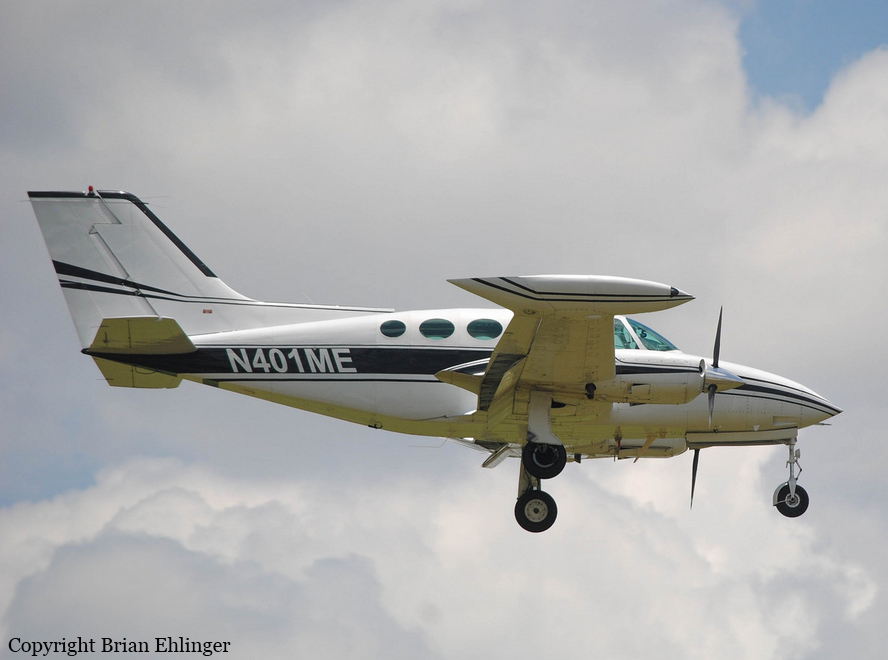
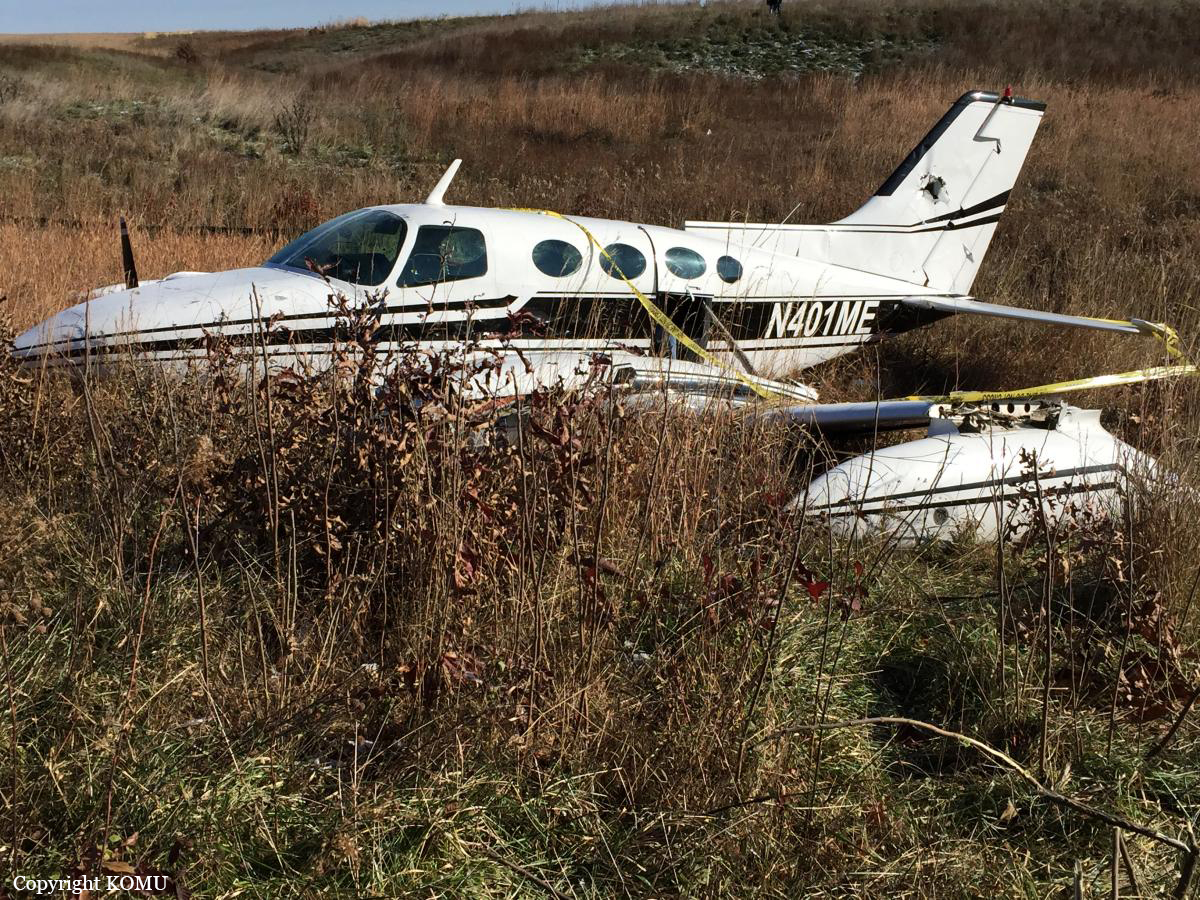
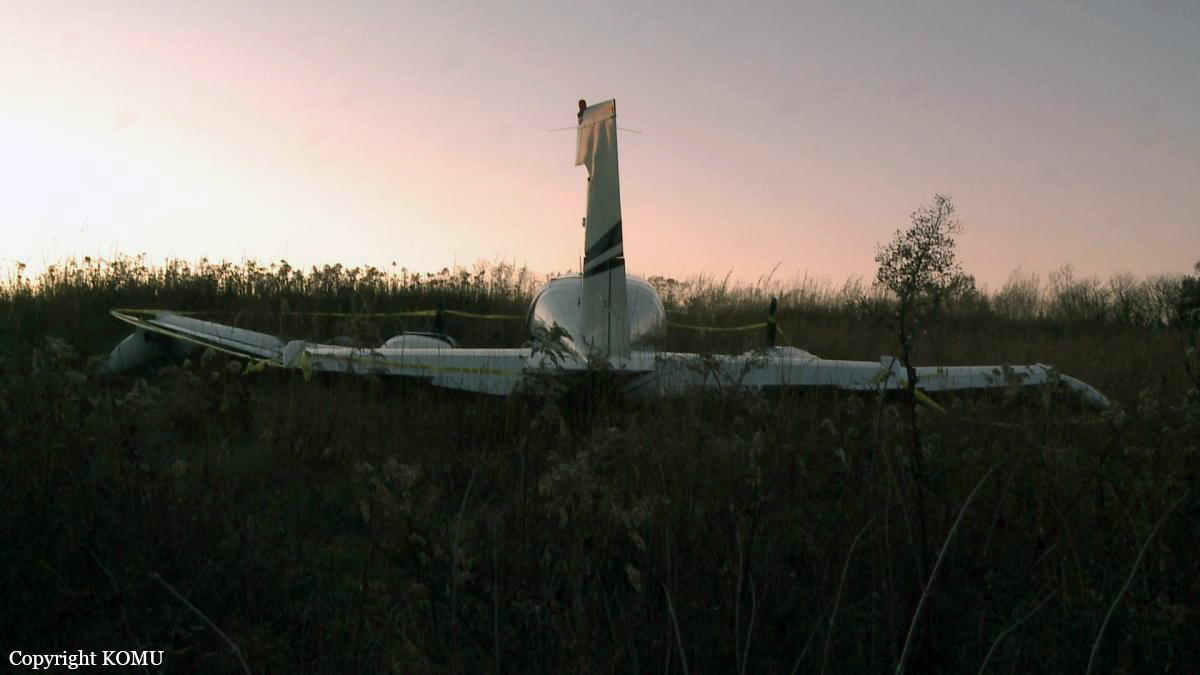
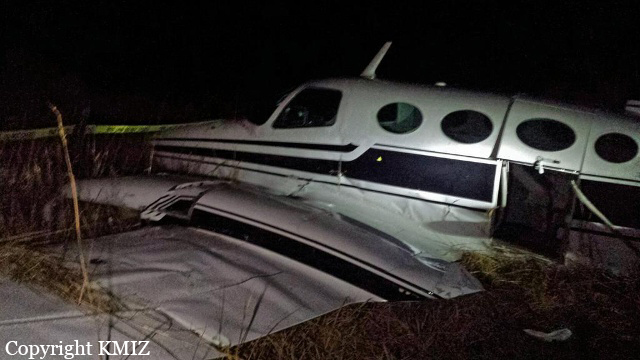
The private pilot reported that, immediately after takeoff in the multi-engine airplane, the right engine experienced a total loss of power. The pilot aborted the takeoff; the airplane exited the end of the runway surface, impacted rough terrain, and came to rest upright. Examination of the right engine showed that the magneto distributor drive gears were not turning. Both damaged magnetos were removed and replaced with a slave set of magnetos. The right engine was installed in an engine test cell, and subsequently started and performed normally throughout the test cell procedure. The damaged magnetos from the right engine were disassembled. Both nylon magneto distributor gears exhibited missing gear teeth and brown discoloration. A review of maintenance records showed that the right engine had been operated for about 8 years and an estimated 697 hours since the most recent magneto overhauls had been completed. According to maintenance instructions from the engine manufacturer, the magnetos should be inspected every 500 hours and should be overhauled or replaced at the expiration of five years since the last overhaul. Guidance also indicated that discoloration of the drive gear is an indication that the gear had been exposed to extreme heat and should be replaced.
Probable cause:
A failure of the right engine magneto distributor drive gears, which resulted in a total loss of engine power during takeoff. Contributing to the accident was the operator's failure to inspect and maintain the magnetos in accordance with the engine manufacturer's specifications.
Final Report:

Crash of a Beechcraft B200 Super King Air in Wichita: 4 killed
Date & Time: Oct 30, 2014 at 0948 LT
Registration:
N52SZ
Flight Phase:
Flight Type:
Survivors:
No
Schedule:
Wichita – Mena
MSN:
BB-1686
YOM:
1999
Crew on board:
1
Crew fatalities:
Pax on board:
0
Pax fatalities:
Other fatalities:
Total fatalities:
4
Captain / Total flying hours:
3139
Aircraft flight hours:
6314
Aircraft flight cycles:
7257
Circumstances:
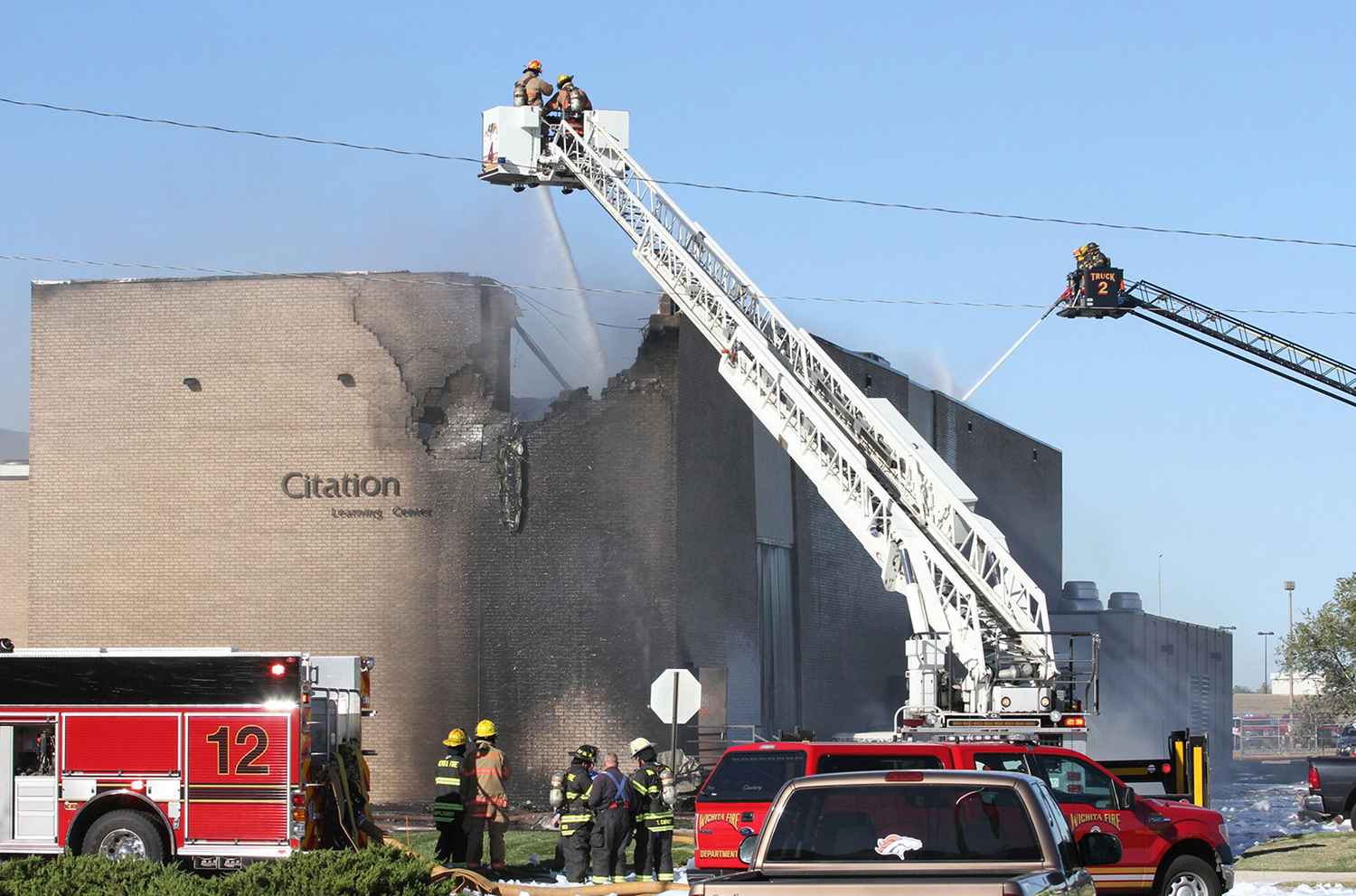
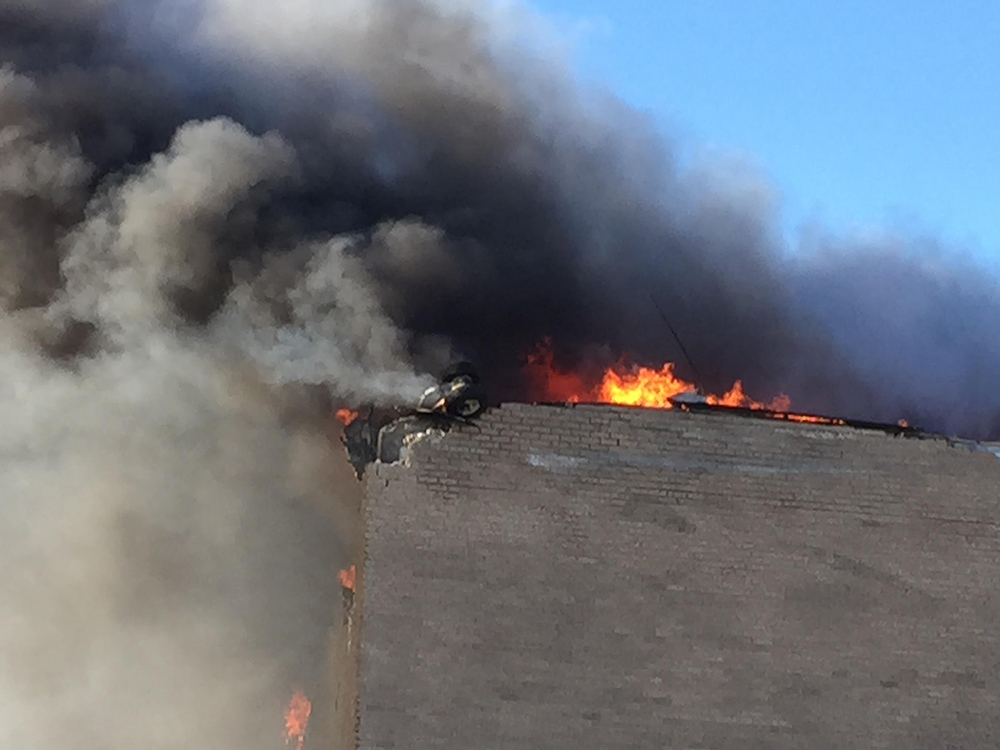
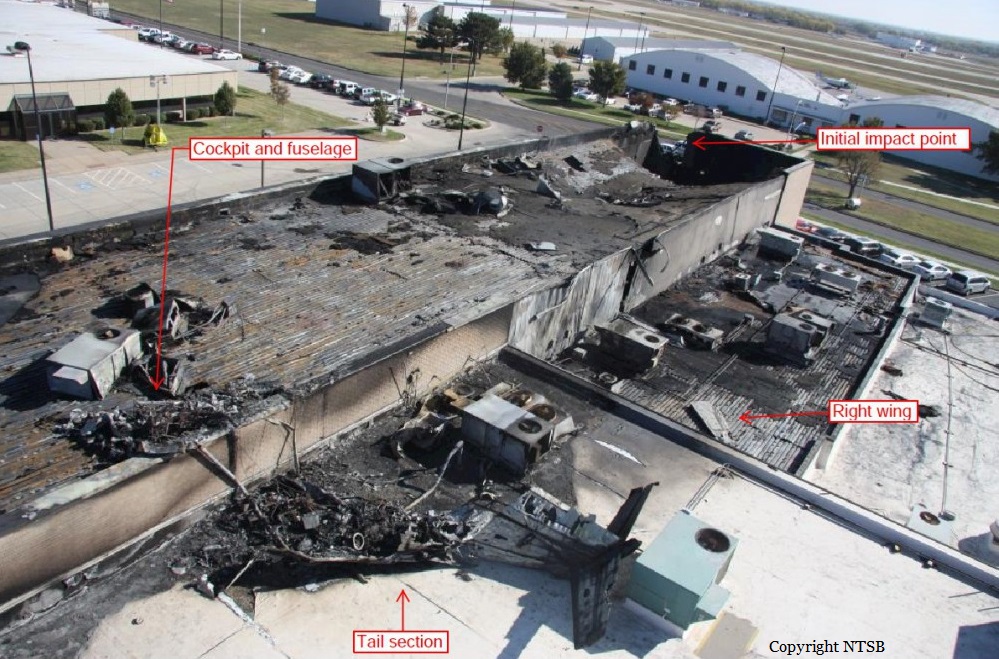
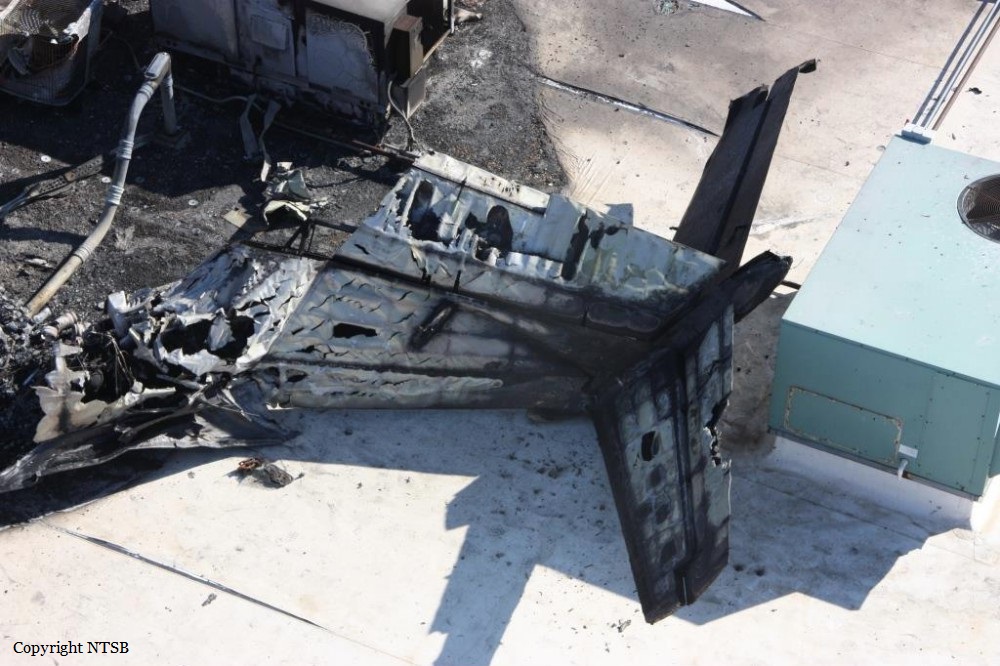
The airline transport pilot was departing for a repositioning flight. During the initial climb, the pilot declared an emergency and stated that the airplane "lost the left engine." The airplane climbed to about 120 ft above ground level, and witnesses reported seeing it in a left turn with the landing gear extended. The airplane continued turning left and descended into a building on the airfield. A postimpact fired ensued and consumed a majority of the airplane. Postaccident examinations of the airplane, engines, and propellers did not reveal any anomalies that would have precluded normal operation. Neither propeller was feathered before impact. Both engines exhibited multiple internal damage signatures consistent with engine operation at impact. Engine performance calculations using the preimpact propeller blade angles (derived from witness marks on the preload plates) and sound spectrum analysis revealed that the left engine was likely producing low to moderate power and that the right engine was likely producing moderate to high power when the airplane struck the building. A sudden, uncommanded engine power loss without flameout can result from a fuel control unit failure or a loose compressor discharge pressure (P3) line; thermal damage prevented a full assessment of the fuel control units and P3 lines. Although the left engine was producing some power at the time of the accident, the investigation could not rule out the possibility that a sudden left engine power loss, consistent with the pilot's report, occurred. A sideslip thrust and rudder study determined that, during the last second of the flight, the airplane had a nose-left sideslip angle of 29°. It is likely that the pilot applied substantial left rudder input at the end of the flight. Because the airplane's rudder boost system was destroyed, the investigation could not determine if the system was on or working properly during the accident flight. Based on the available evidence, it is likely that the pilot failed to maintain lateral control of the airplane after he reported a problem with the left engine. The evidence also indicates that the pilot did not follow the emergency procedures for an engine failure during takeoff, which included retracting the landing gear and feathering the propeller. Although the pilot had a history of anxiety and depression, which he was treating with medication that he had not reported to the Federal Aviation Administration, analysis of the pilot's autopsy and medical records found no evidence suggesting that either his medical conditions or the drugs he was taking to treat them contributed to his inability to safely control the airplane in an emergency situation.
Probable cause:
The pilot's failure to maintain lateral control of the airplane after a reduction in left engine power and his application of inappropriate rudder input. Contributing to the accident was the pilot's failure to follow the emergency procedures for an engine failure during takeoff. Also contributing to the accident was the left engine power reduction for reasons that could not be determined because a postaccident examination did not reveal any anomalies that would have precluded normal operation and thermal damage precluded a complete examination.
Final Report: