Country
Operator Image

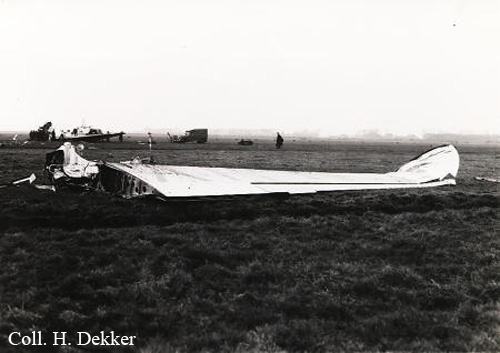
Crash of a Douglas C-47A-5-DK in Leeuwarden

Date & Time: Dec 27, 1947 at 1240 LT
Operator:
Registration:
PH-TCV
Survivors:
Yes
Schedule:
Amsterdam – Leeuwarden – Groningen
MSN:
12309
YOM:
1944
Country:
Region:
Crew on board:
5
Crew fatalities:
Pax on board:
10
Pax fatalities:
Other fatalities:
Total fatalities:
0
Circumstances:
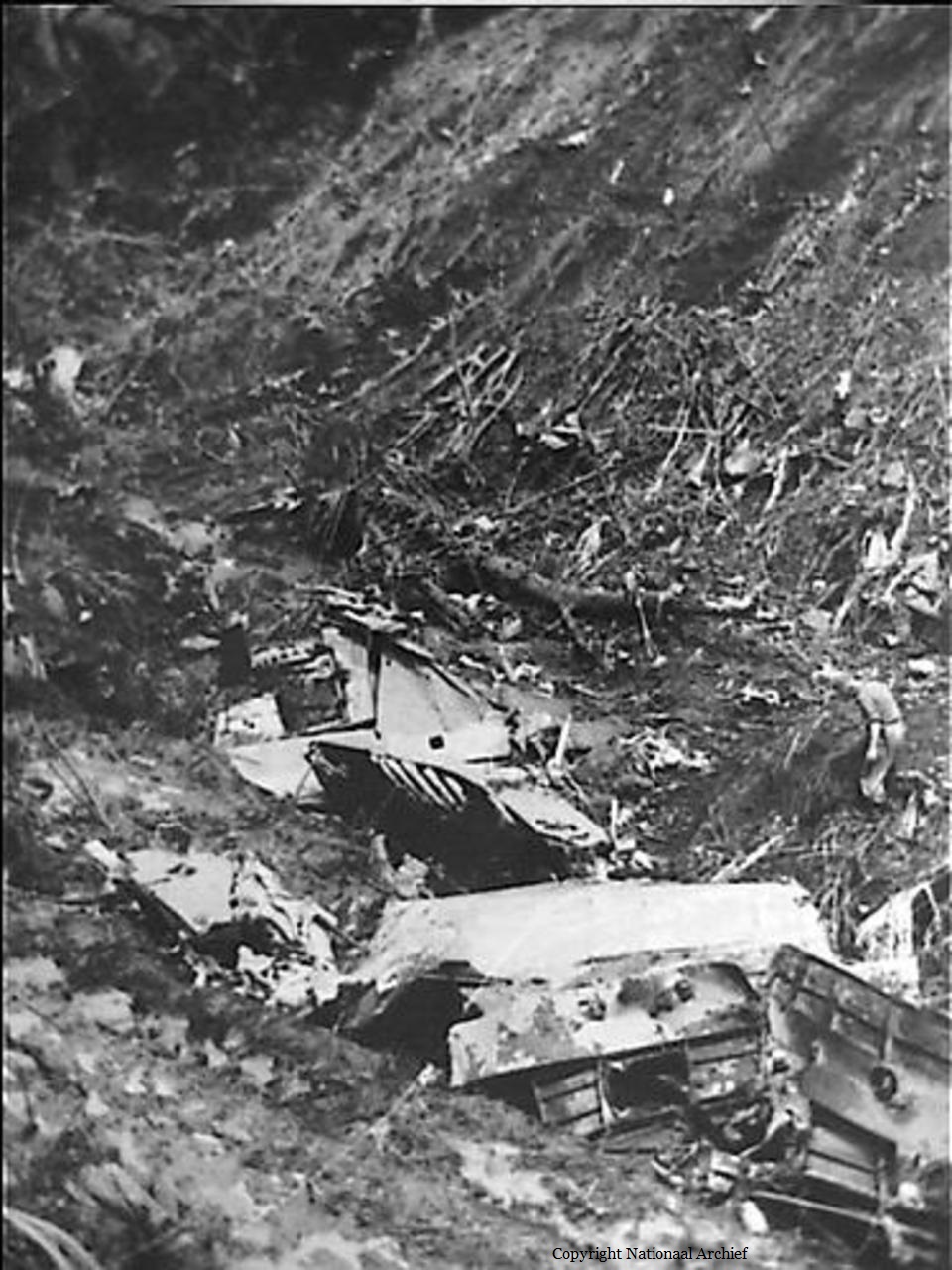
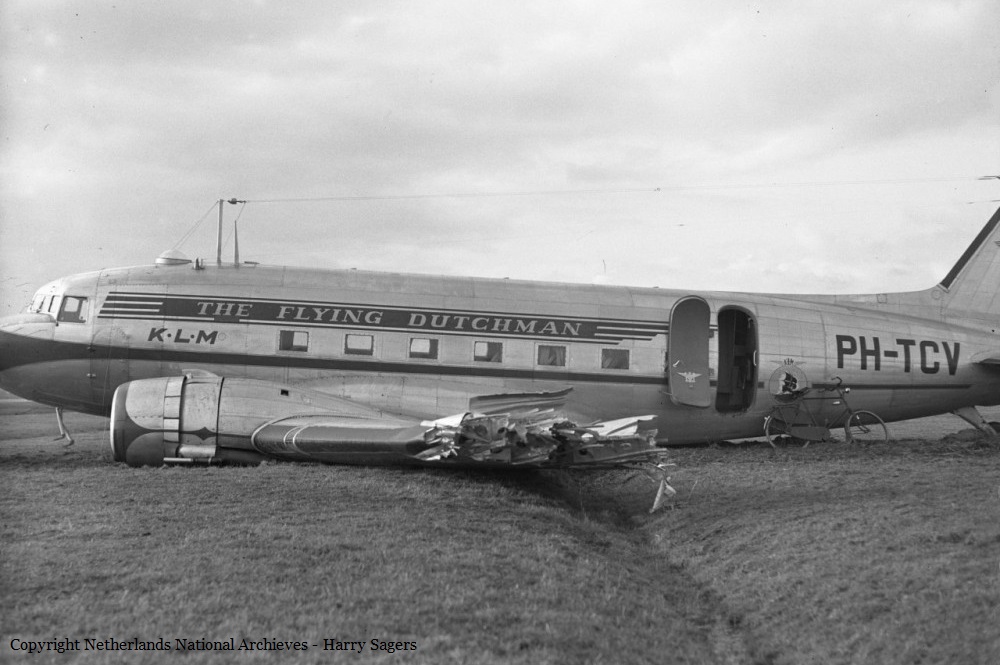
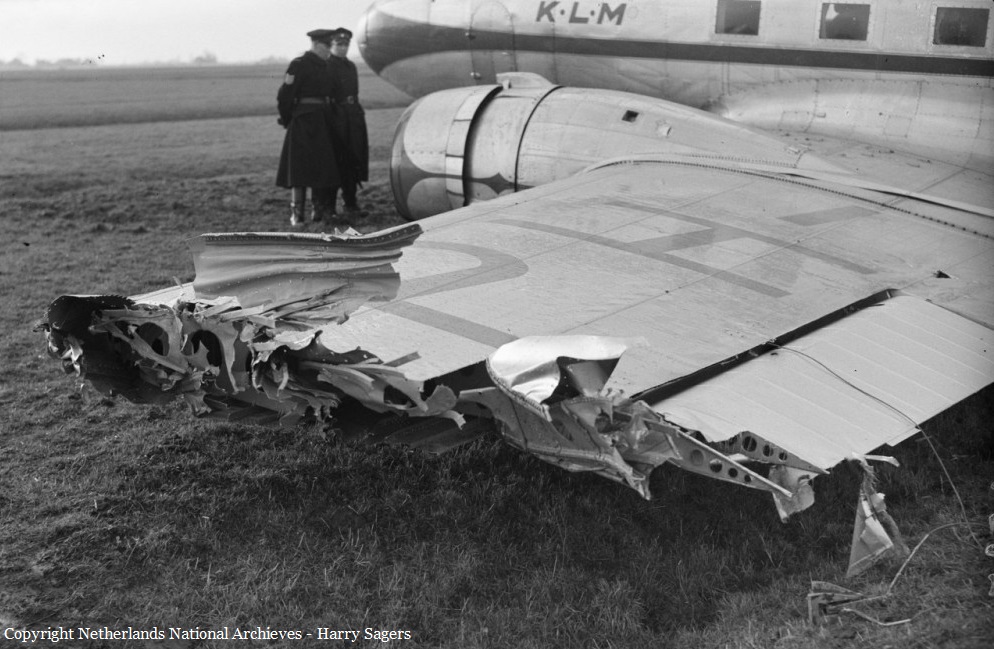
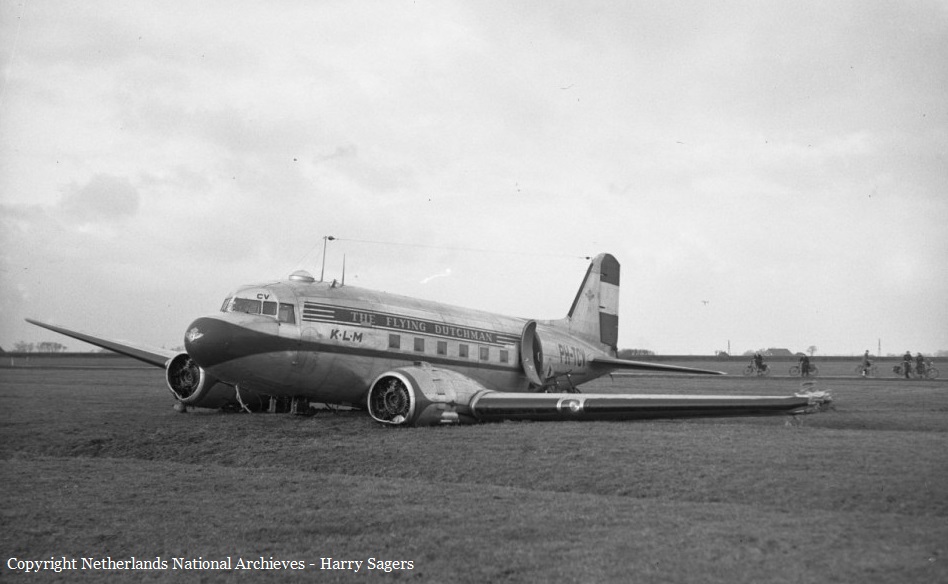
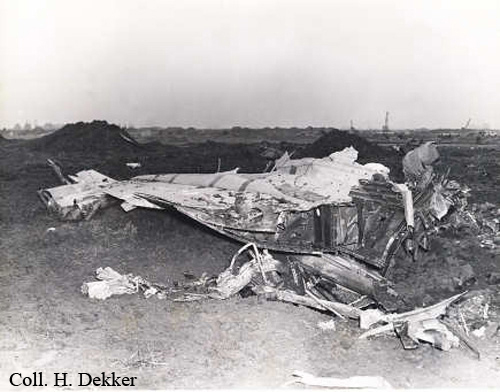
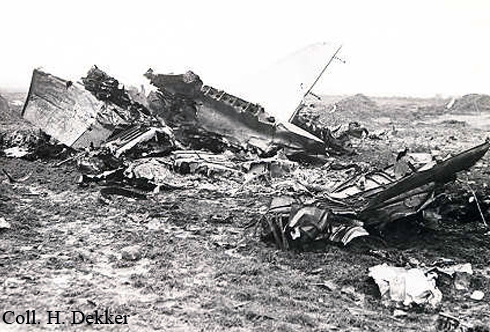
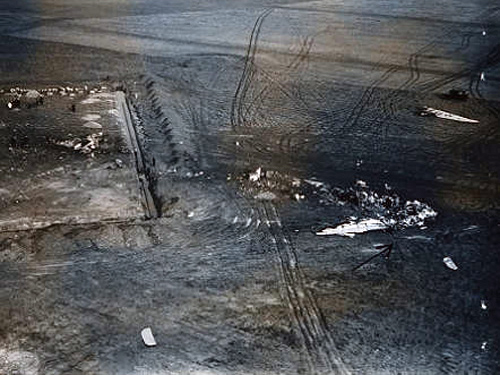
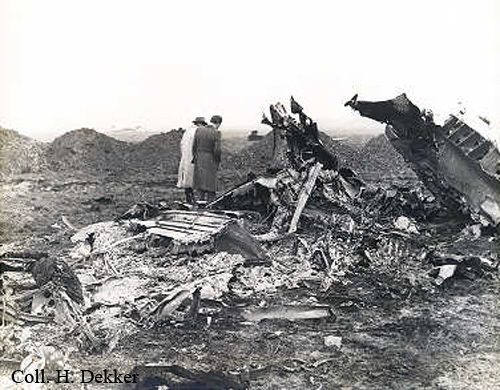
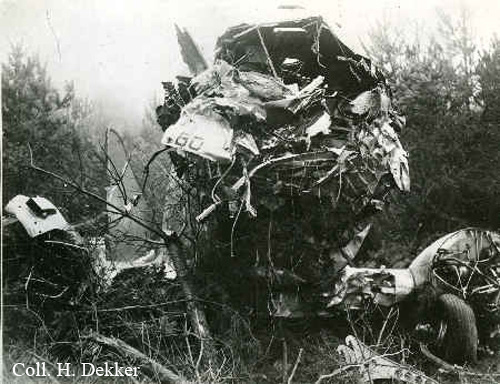
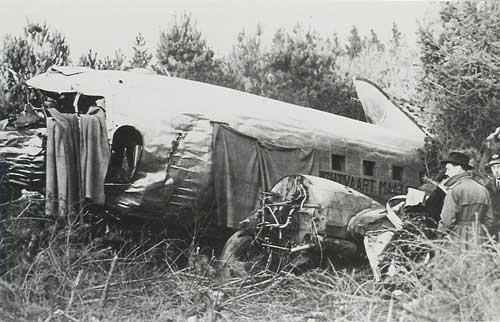
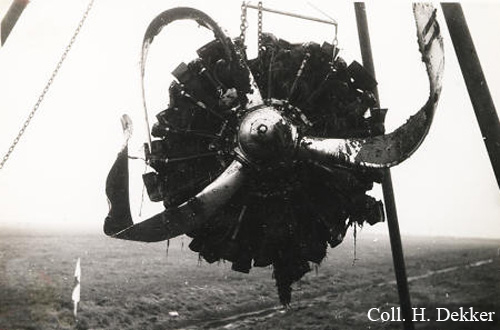
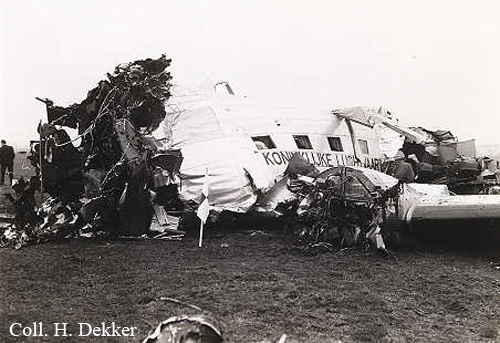
While approaching Leeuwarden, the crew encountered poor weather conditions with heavy rain falls and a cloud base at 100 meters. Unable to locate the airport, the captain decided to make a go around and increased engine power. Shortly later, while flying over the city of Leeuwarden, the aircraft hit with its left wing the church of Saint Bonifatius which is 70 meters high. Three meters of the left wing were sheared off. The captain reduced his altitude in an attempt to make an emergency landing and completed a belly landing in a field. The aircraft skidded for several yards and hit three successive ditches before coming to rest with both propellers sheared off. All 15 occupants were unhurt while the aircraft was damaged beyond repair.

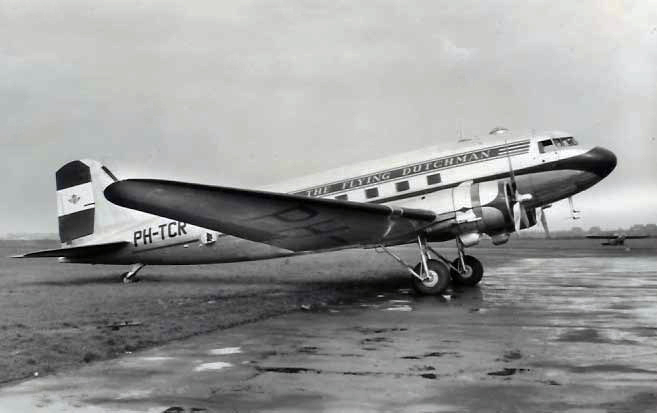
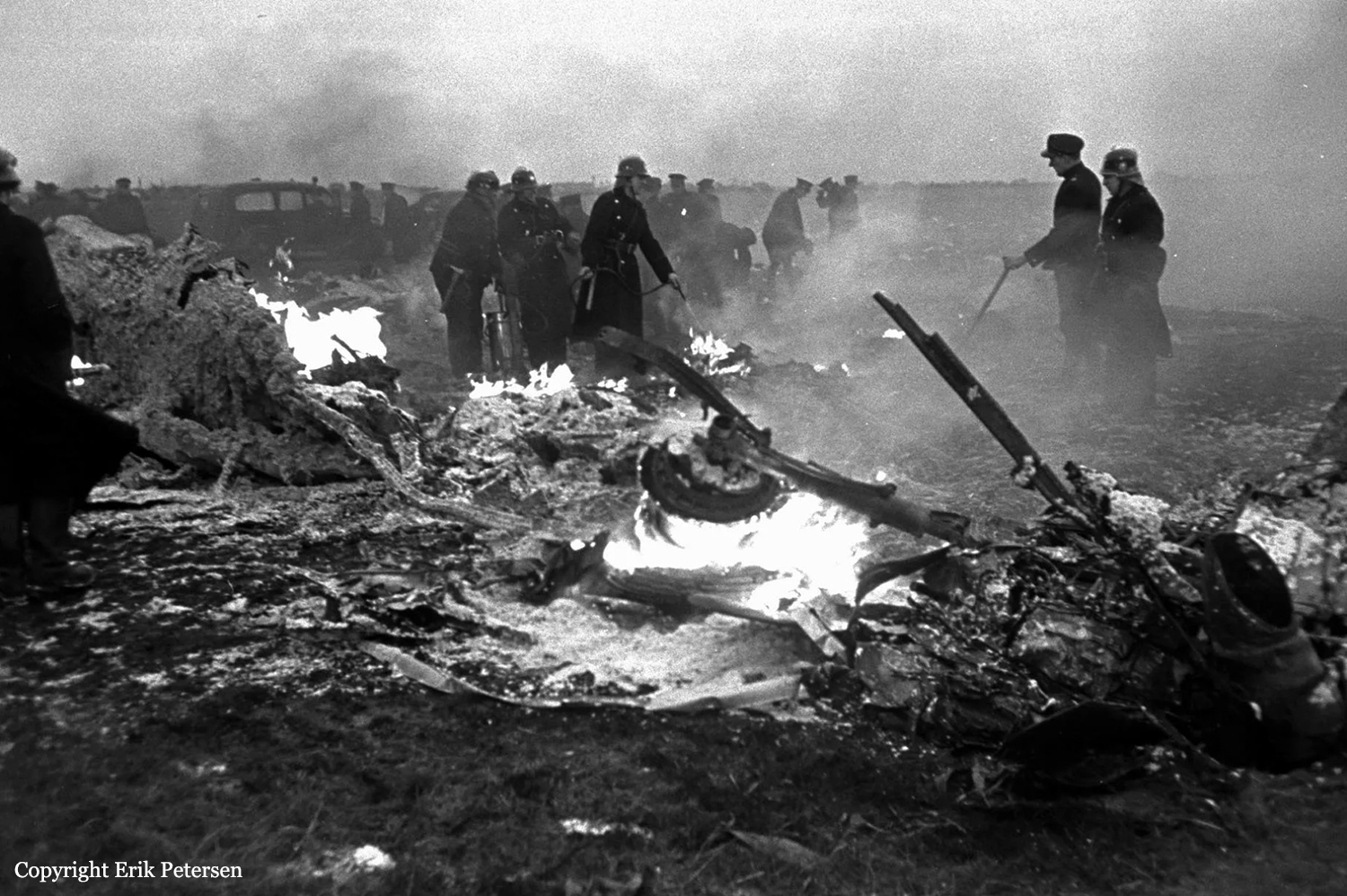
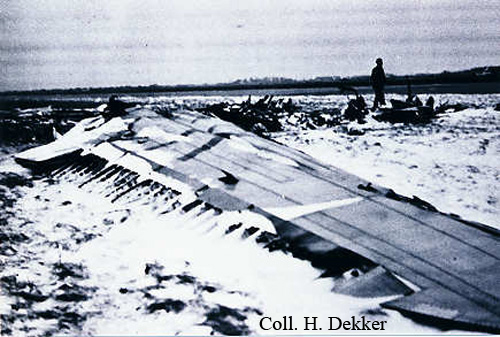
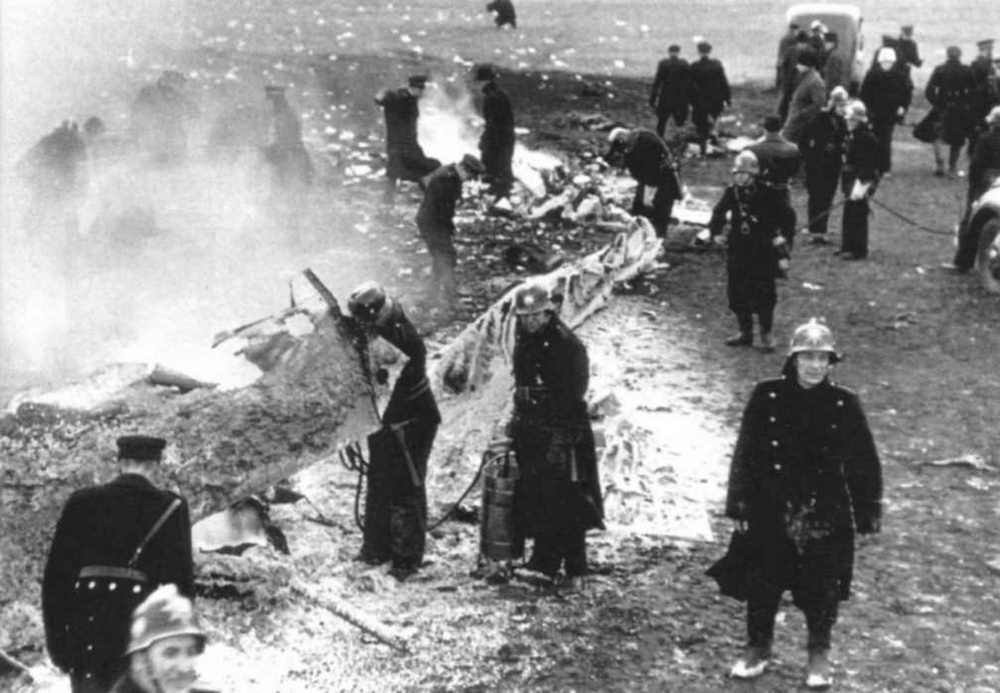
Crash of a Douglas DC-3C in Copenhagen: 22 killed

Date & Time: Jan 26, 1947 at 1532 LT
Type of aircraft:
Operator:
Registration:
PH-TCR
Flight Phase:
Survivors:
No
Schedule:
Amsterdam – Copenhagen – Stockholm
MSN:
14034/25479
YOM:
1944
Country:
Region:
Crew on board:
6
Crew fatalities:
Pax on board:
16
Pax fatalities:
Other fatalities:
Total fatalities:
22
Aircraft flight hours:
1686
Circumstances:
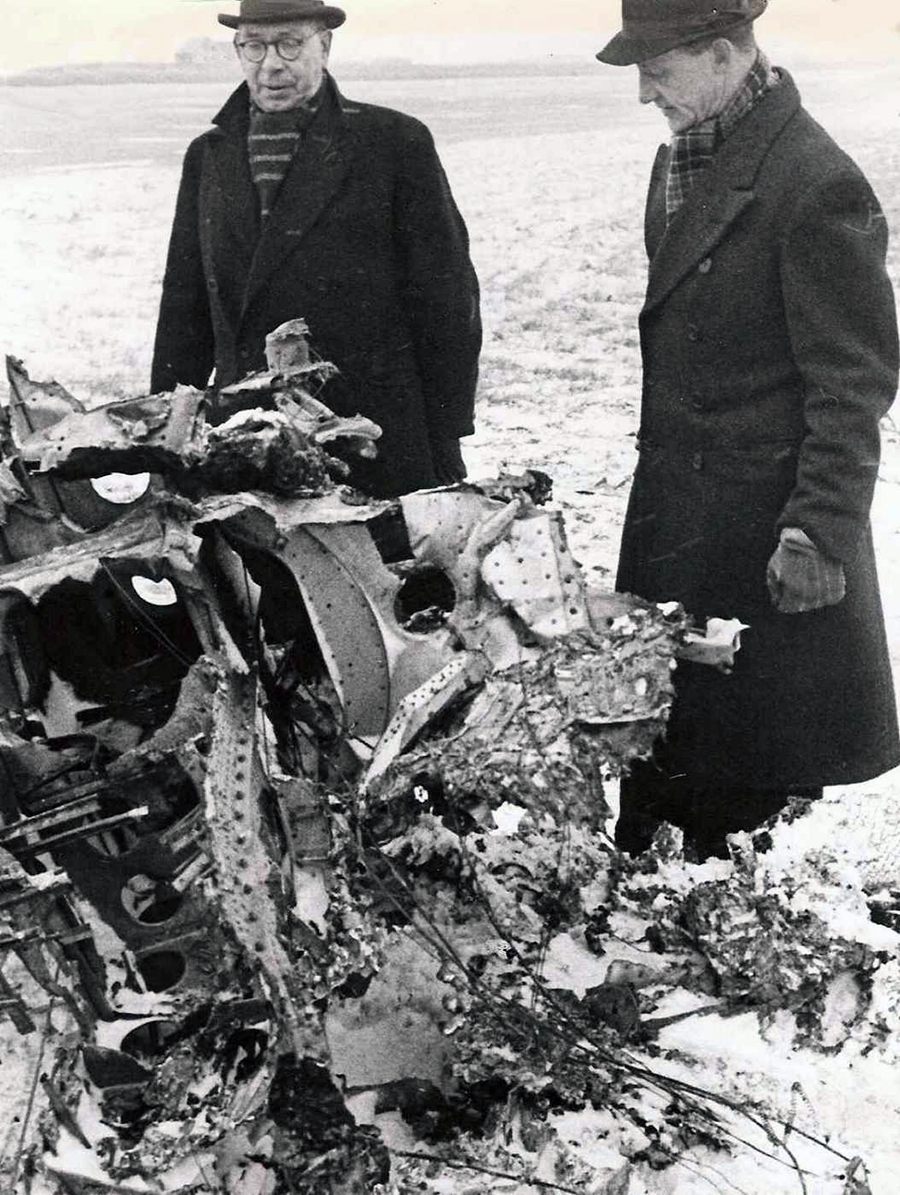
Less than one minute after takeoff from Kastrup Airport, while climbing to a height of 200 feet with a 40 km/h wind from the northeast, the aircraft nosed down and crashed in a huge explosion in a snow covered field located 1,000 meters from the airport. The aircraft was destroyed by impact forces and a post crash fire and all 22 occupants were killed, among them Prince Gustaf Adolf of Sweden, grandson of the King Gustaf V, and the US singer Grace Moore.
Crew:
G. J. Geysendorffer, pilot,
G. J. Rietman, copilot,
S. M. A. Pijnenburg, radio operator,
W. Brandenburg, radio operator,
W. A. van Bommel, flight engineer,
H. Hoek, steward.
Probable cause:
It was determined that the loss of control during initial climb was caused by stabilizers blocked by a wooded lock pin. During the stopover in Copenhagen-Kastrup, a ground technician decided to put a wooded lock pin in the rudder and the stabilizer as well to avoid unnecessary movements that could cause damages as there were moderate winds in Copenhagen at that time. Before takeoff, one technician removed the wooded lock pin on the rudder but did remove the one on the stabilizer as this wooded lock pin was put by another ground technician and he was not aware of this. Furthermore, none of the crew member proceeded to a walk around check before departure and the pilots failed to check the stabilizers prior to takeoff.

Crash of a Douglas C-47A-90-DL in Amsterdam: 26 killed

Date & Time: Nov 14, 1946 at 0715 LT
Operator:
Registration:
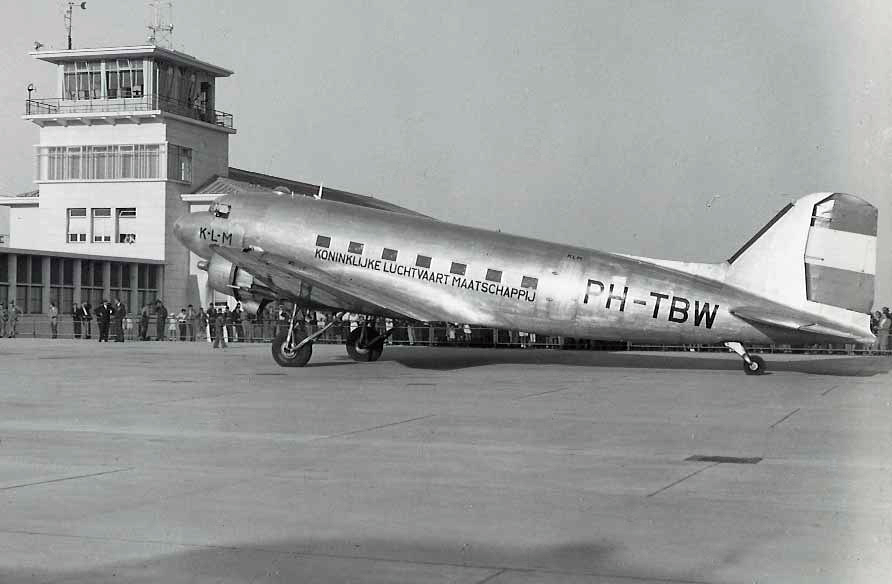
PH-TBW
Survivors:
No
Schedule:
Croydon – Amsterdam
MSN:
20122
YOM:
1944
Country:
Region:
Crew on board:
5
Crew fatalities:
Pax on board:
21
Pax fatalities:
Other fatalities:
Total fatalities:
26
Circumstances:
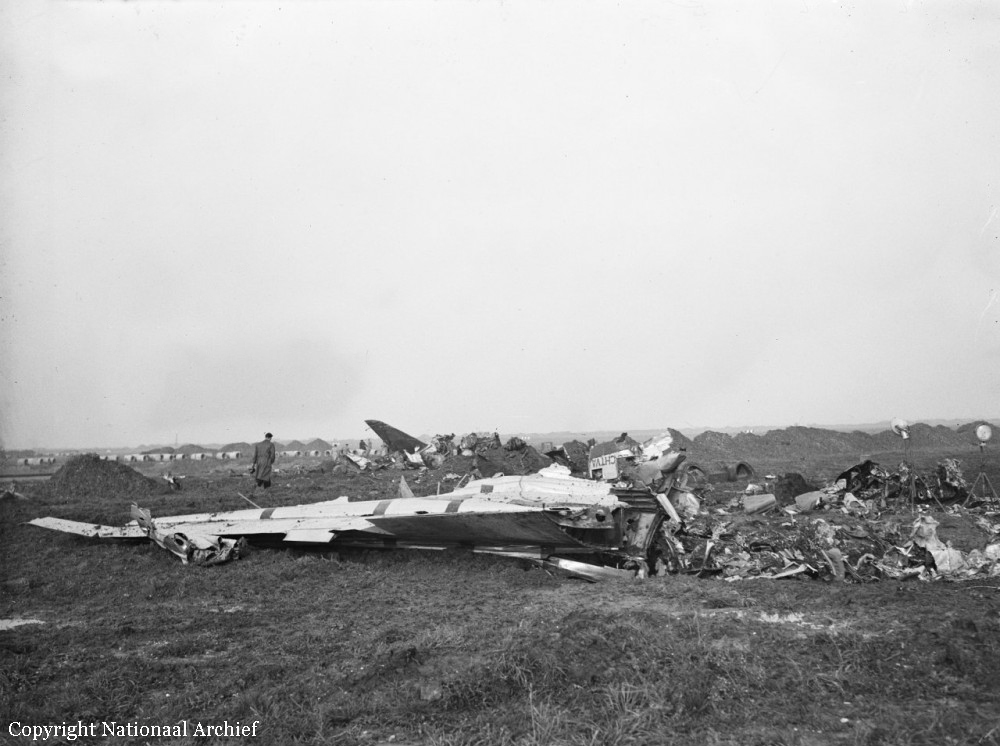
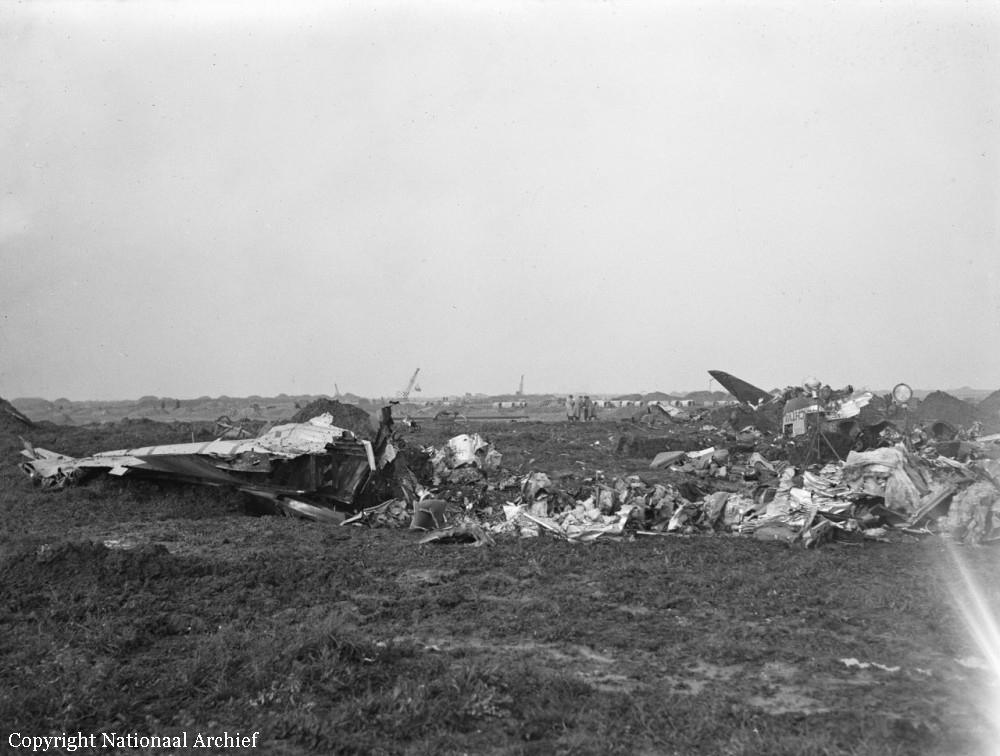
On approach to Amsterdam-Schiphol Airport, the crew was forced to make a go around due to poor visibility caused by night and bad weather conditions. A second attempt to land was abandoned as well. During the third attempt to land, the captain realized that his position to the runway was wrong and initiated a sharp turn to the left when the aircraft impacted the runway surface and crashed, bursting into flames. The aircraft was destroyed by impact forces and a post crash fire and all 26 occupants were killed.
Probable cause:
It is believed that the approach configuration was wrong. Poor weather conditions were considered as a contributory factor.

Crash of a Douglas C-47A-25-DK in Shere

Date & Time: Nov 6, 1946 at 0845 LT
Operator:
Registration:
PH-TBO
Survivors:
Yes
Schedule:
Amsterdam – Croydon
MSN:
13638
YOM:
1944
Location:
Region:
Crew on board:
5
Crew fatalities:
Pax on board:
15
Pax fatalities:
Other fatalities:
Total fatalities:
0
Circumstances:
The aircraft entered the London Control Zone when QBI conditions (compulsory IFR conditions) were in force. When the pilot estimated that he flew over the Croydon MF beacon, he had actually passed it two or three minutes earlier. He continued to fly on a westerly course for three or four minutes until receiving instructions that he was next to land, and that the landing direction was 120 degrees M. The aircraft then began to descend again and after receiving several QDM's the pilot turned on to the course for Croydon. The pilot levelled out at an indicated altitude of 1,200 feet and the undercarriage was lowered. Almost immediately after, whilst still flying in cloud, the aircraft struck the tops of trees and crashed. The pilot had set the altimeter to the sea level pressure instead of airfield pressure. Consequently the aircraft's height would be about 230 feet lower than that indicated by the altimeter.
Source:
http://aviation-safety.net/database/record.php?id=19461106-0
Probable cause:
Flying into high ground in conditions of low cloud and poor visibility. This must be attributed to errors on the part of the pilot who, preparatory to landing at Croydon Airport in QBI conditions.
Failed to navigate his aircraft with sufficient degree of care to avoid high ground when descending through cloud.
During the descent misinterpreted the height of the aircraft as indicated by his altimeter.

Crash of a Lockheed 14-WF62 Super Electra in Port of Spain: 13 killed

Date & Time: Aug 22, 1942 at 1300 LT
Type of aircraft:
Operator:
Registration:
PJ-AIP
Flight Phase:
Survivors:
No
Schedule:
Willemstad – Port of Spain – Paramaribo
MSN:
1410
YOM:
1938
Crew on board:
3
Crew fatalities:
Pax on board:
10
Pax fatalities:
Other fatalities:
Total fatalities:
13
Circumstances:
Ten minutes after takeoff from Port of Spain-Piarco Airport, while climbing in marginal weather conditions, the twin engine airplane went out of control and crashed in a wooded area located few km from the airport. The airplane named 'Parkiet' was destroyed upon impact and all 13 occupants were killed.
Crew:
P. Badings, pilot,
N. H. de Bruyn, flight engineer,
C. van Oyen, radio operator.
Passengers:
A. C. Alwart,
P. van Eeten,
O. Elmont,
K. Hakhof,
H. Kinds,
P. M. Mosterdijk,
G. E. van Notten,
W. A. Verboog,
L. A. Vijzelman,
M. Waaldijk.
Probable cause:
The exact cause of the accident could not be determined. Nevertheless, the weather conditions were marginal with storm activity and turbulence at the time of the accident.

Crash of a Koolhoven FK.43 in Vlissingen: 3 killed

Date & Time: Jun 10, 1939 at 1620 LT
Type of aircraft:
Operator:
Registration:
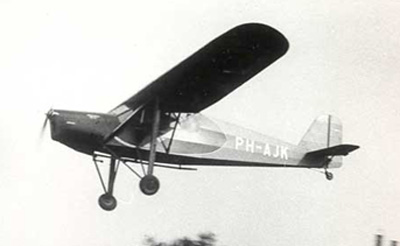
PH-AJK
Flight Phase:
Flight Type:
Survivors:
No
Site:
Schedule:
Haamstede - Amsterdam
MSN:
4305
YOM:
1933
Country:
Region:
Crew on board:
2
Crew fatalities:
Pax on board:
1
Pax fatalities:
Other fatalities:
Total fatalities:
3
Circumstances:
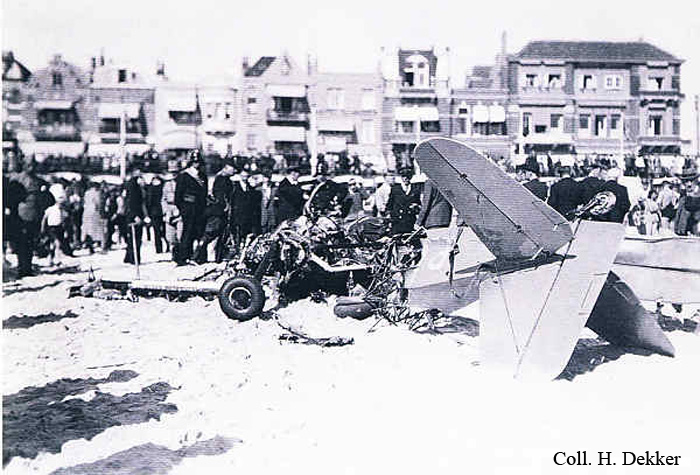
Two student pilots and one instructor departed Haamstede Airfield on a training flight to Amsterdam-Schiphol Airport. While flying over the city of Vlissingen at a very low height, the pilot-in-command initiated a turn when the airplane stalled and crashed on a boulevard, bursting into flames. All three occupants were killed.
Probable cause:
It is believed that the airplane stalled while flying at low height and low speed. According to witnesses, the engine sound seems to be very low.

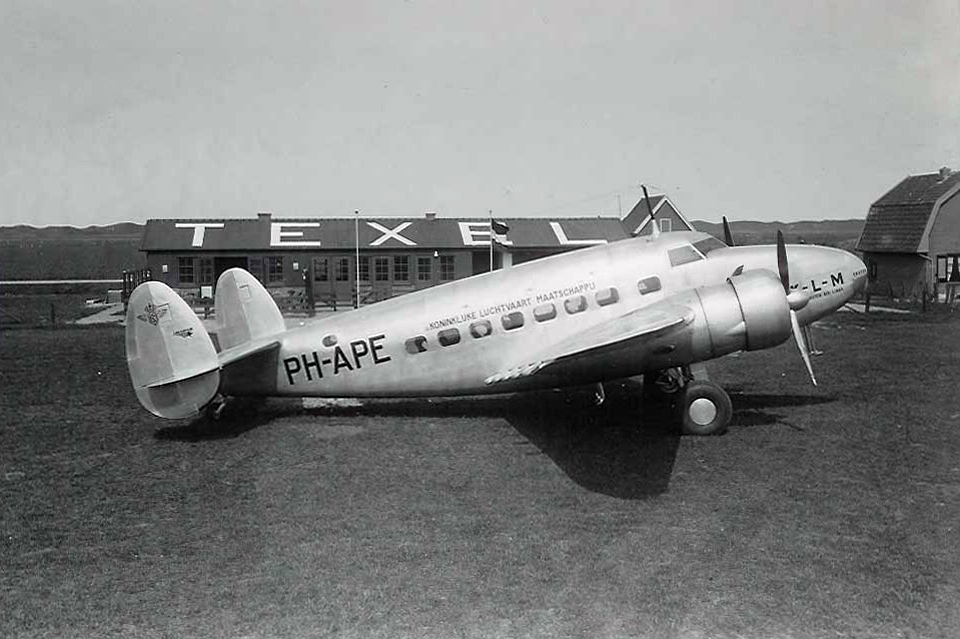
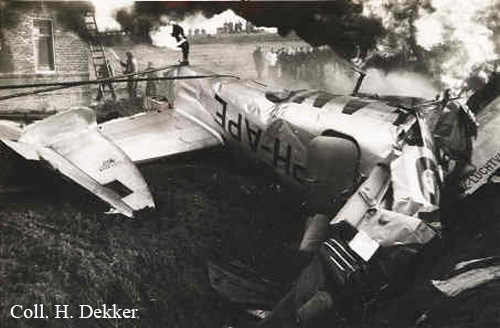
Crash of a Lockheed 14-WF62 Super Electra in Amsterdam: 4 killed

Date & Time: Dec 9, 1938 at 1120 LT
Type of aircraft:
Operator:
Registration:
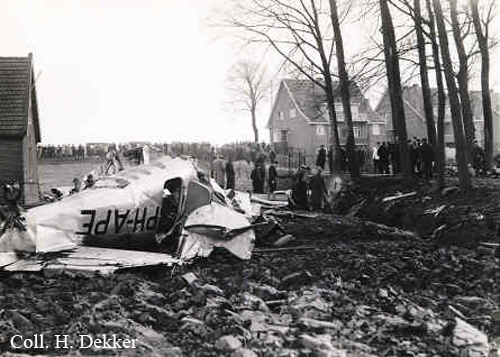
PH-APE
Flight Phase:
Flight Type:
Survivors:
No
Schedule:
Amsterdam - Amsterdam
MSN:
1413
YOM:
1938
Country:
Region:
Crew on board:
4
Crew fatalities:
Pax on board:
0
Pax fatalities:
Other fatalities:
Total fatalities:
4
Aircraft flight hours:
323
Circumstances:
The crew was engaged in a training mission around Amsterdam-Schiphol Airport. Shortly after takeoff from runway 01/19, while climbing, the twin engine aircraft named 'Ekster' stalled and crashed in a garden located some 1,500 metres from the runway end, bursting into flames. The aircraft was destroyed by impact forces and a post crash fire and all four crew members were killed. Delivered last 15 of March, it totalized 323 flying hours.
Crew:
Arie van der Sijde, instructor,
Cornelius Menne Schreij, pilot,
Antony Albert Garrit Bekking, flight engineer,
Karl Leo Hans Jaedicke, radio operator.
Probable cause:
Failure of the right engine shortly after rotation, most probably due to a wrong handle on part of the pilot in command.

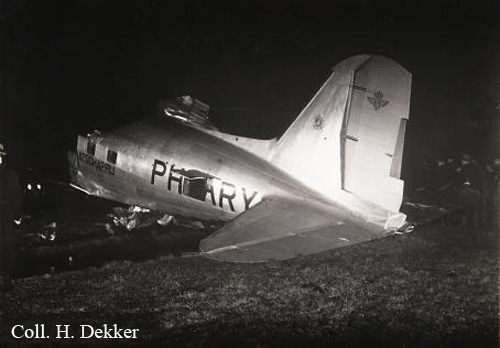
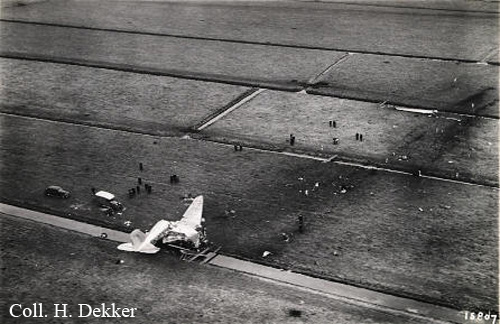
Crash of a Douglas DC-3-194D in Amsterdam: 6 killed

Date & Time: Nov 14, 1938 at 1841 LT
Type of aircraft:
Operator:
Registration:
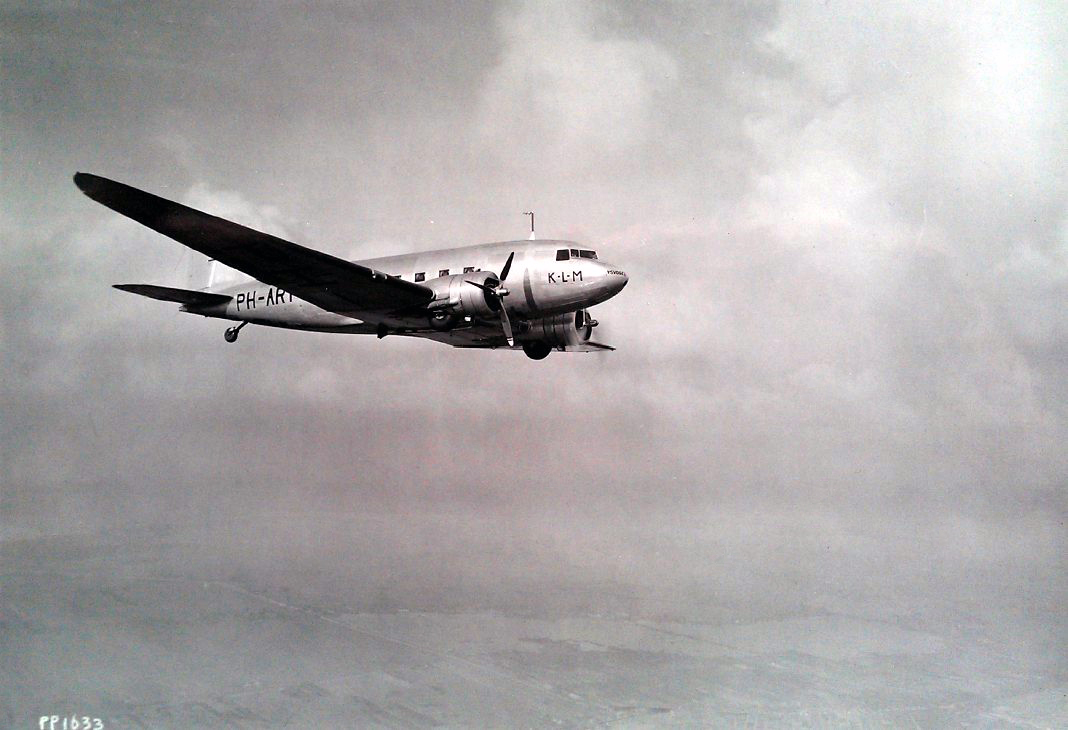
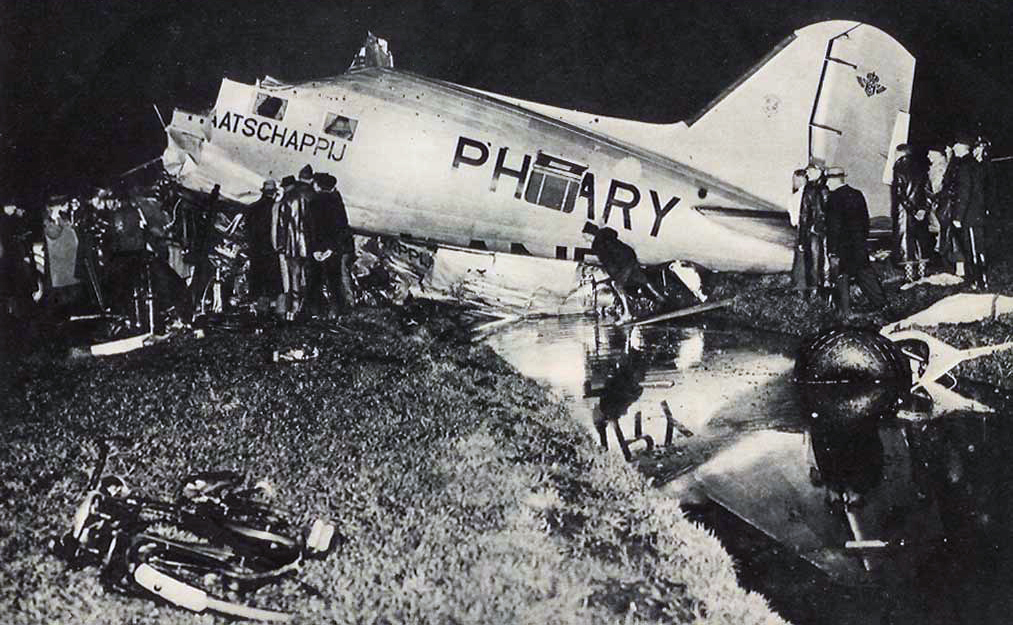
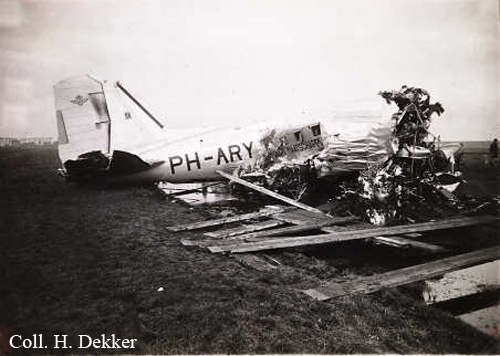
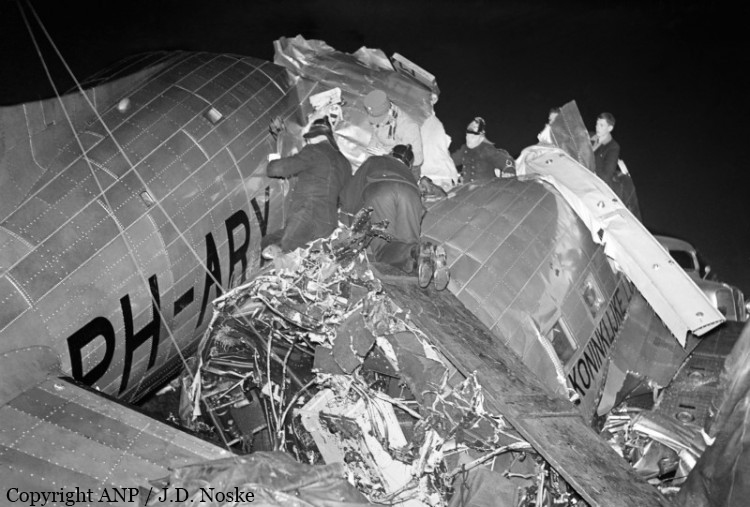
PH-ARY
Survivors:
Yes
Schedule:
Berlin – Amsterdam
MSN:
2021
YOM:
1938
Country:
Region:
Crew on board:
5
Crew fatalities:
Pax on board:
14
Pax fatalities:
Other fatalities:
Total fatalities:
6
Circumstances:
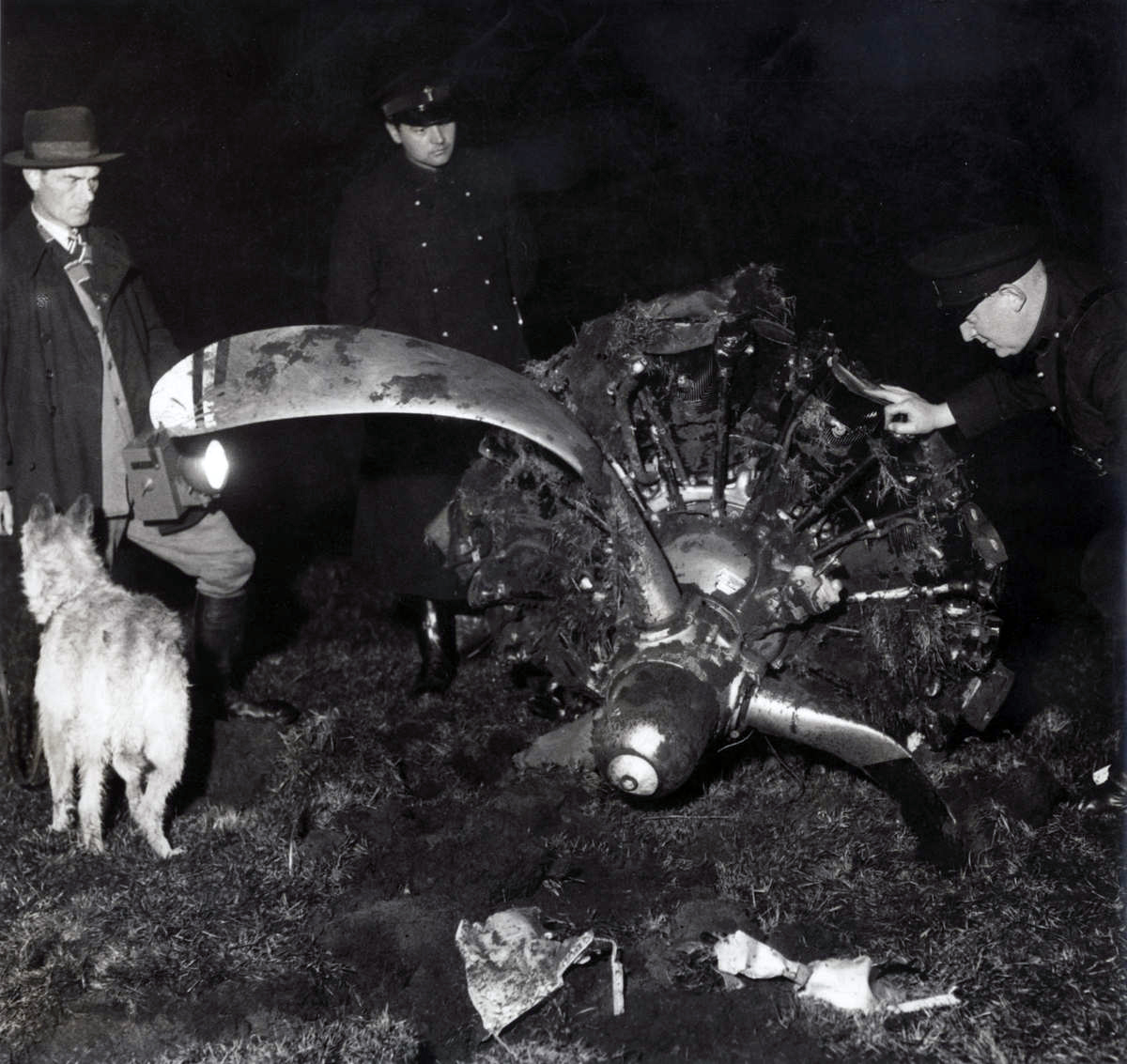
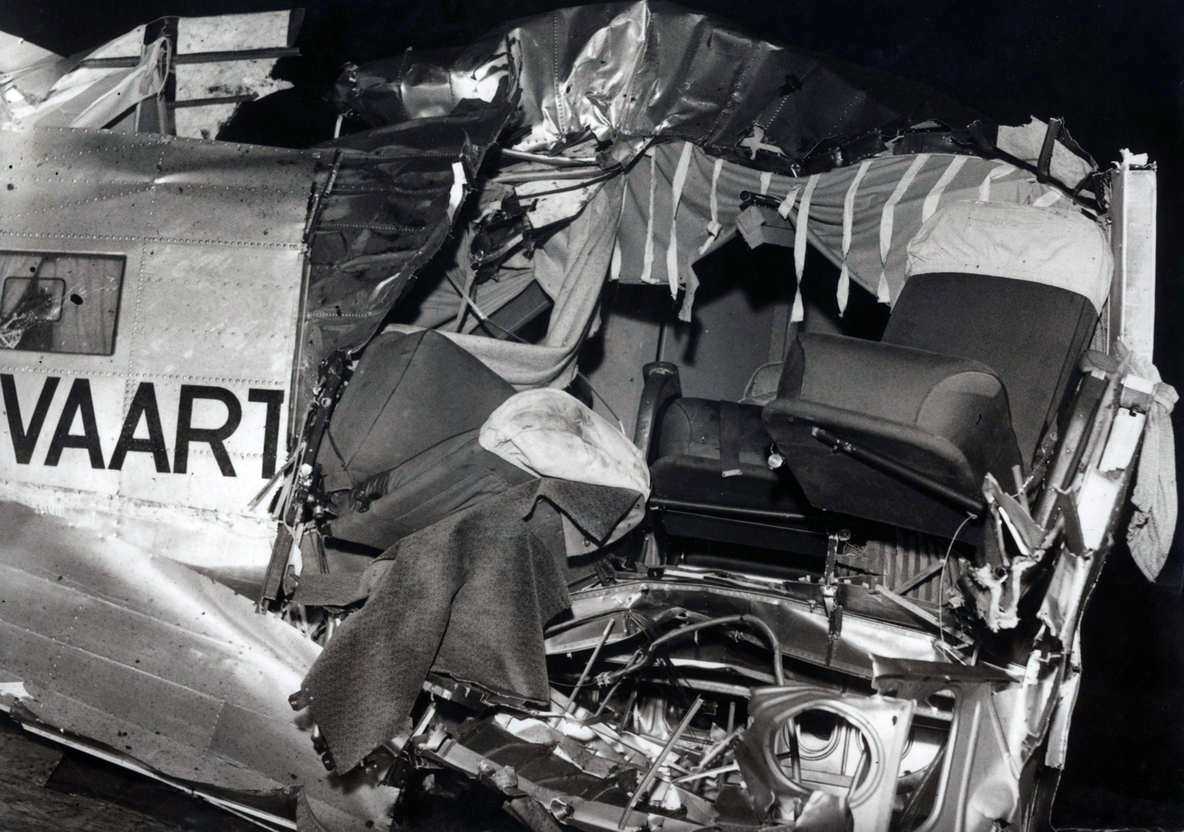
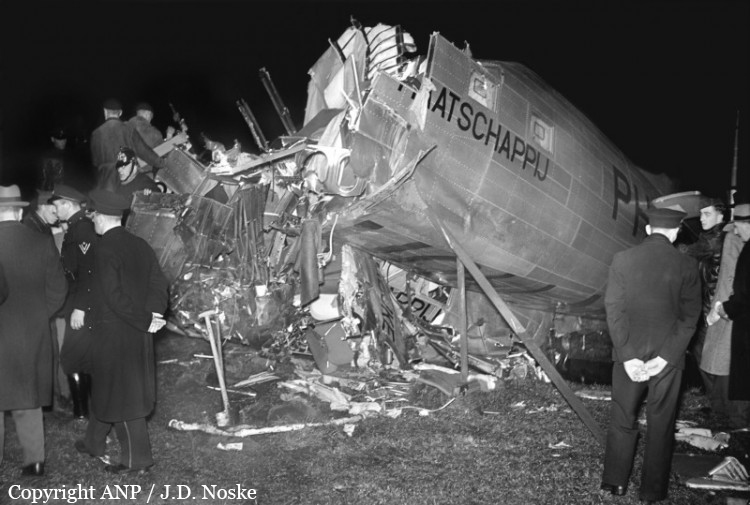
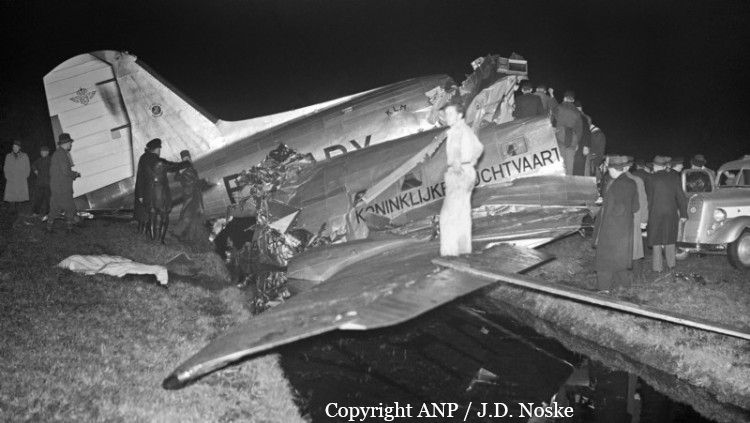
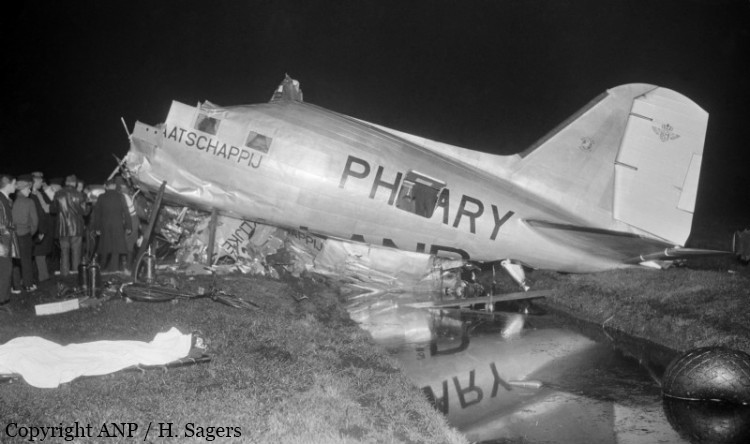
On approach to Amsterdam-Schiphol Airport at night, the aircraft named 'Ijsvogel' impacted the ground at full power, slid for 125 metres and came to rest across a ditch. The aircraft was destroyed. Four crew members and two passengers were killed while 13 other occupants were injured.
Crew:
J. J. E. Duimelaar, pilot, †
A. van Gemeren, copilot, †
A. J. van Huut, engineer, †
C. J. W. Surber, radio operator, †
B. Eys, steward.
Passengers:
R. G. Clyman,
W. A. Fairclough,
L. St. C. Ingrams,
J. Miller,
M. Schneider Desnitzky-Kirchbach, †
A. Silberstein,
M. Silberstein,
I. V. Weideman,
P. O. H. Weideman,
B. Weideman-Marx, †
F. Winter,
M. Winter,
F. Zimmerman.
Probable cause:
Investigations were unable to determine the exact cause of the accident. No evidence was found of any preimpact mechanical failure and the weather conditions were not considered as a contributory factor. The crash may have been caused by a crew 'error'.

Crash of a Koolhoven FK.43 in Groningen

Date & Time: Dec 17, 1937 at 1130 LT
Type of aircraft:
Operator:
Registration:
PH-AKC
Flight Phase:
Flight Type:
Survivors:
Yes
Schedule:
Amsterdam – Groningen – Teuge – Amsterdam
MSN:
4308
YOM:
1933
Country:
Region:
Crew on board:
2
Crew fatalities:
Pax on board:
0
Pax fatalities:
Other fatalities:
Total fatalities:
0
Circumstances:
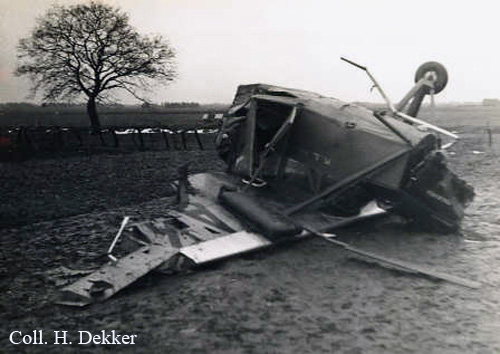
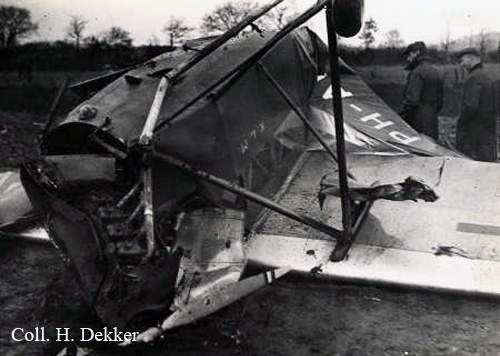
The crew was performing a training flight. Shortly after takeoff from Groningen-Eelde Airport, while climbing to a height of some 15 metres, the crew initiated a sharp turn when the single engine aircraft stalled and crashed in a field. Both occupants were unhurt while the aircraft was destroyed.
Probable cause:
It was determined that the airplane stalled while completing a sharp turn at an altitude that did not allow the crew to expect a stall recovery.

Crash of a Douglas DC-3-194B in Palembang: 4 killed

Date & Time: Oct 6, 1937 at 1225 LT
Type of aircraft:
Operator:
Registration:
PH-ALS
Flight Phase:
Survivors:
Yes
Schedule:
Batavia – Palembang – Singapore – Bangkok – Ruţbah Wells – Cairo – Amsterdam
MSN:
1940
YOM:
1937
Country:
Region:
Crew on board:
4
Crew fatalities:
Pax on board:
7
Pax fatalities:
Other fatalities:
Total fatalities:
4
Circumstances:
Shortly after takeoff from Palembang-Talang Airport, while in initial climb, the left engine failed. The crew elected to return for a safe landing when the aircraft named 'Specht' stalled, impacted trees and crashed nose first. The cockpit was destroyed and three crew members were killed instantly, only the copilot survived. A passenger was killed as well.
Crew:
F.M. Stork, pilot, †
H. J. Groeneveld, copilot,
J. J. Ruben, engineer, †
J. J. Stodieck, radio. †
Passengers:
T. Bouwman,
B. Huberman,
I. Ibbeken,
A. E. Munroe,
H. C. Schoch,
F. Smissaert,
G. A. van Steenbergen. †
Probable cause:
Failure of the left engine after takeoff due the failure of a connecting rod.