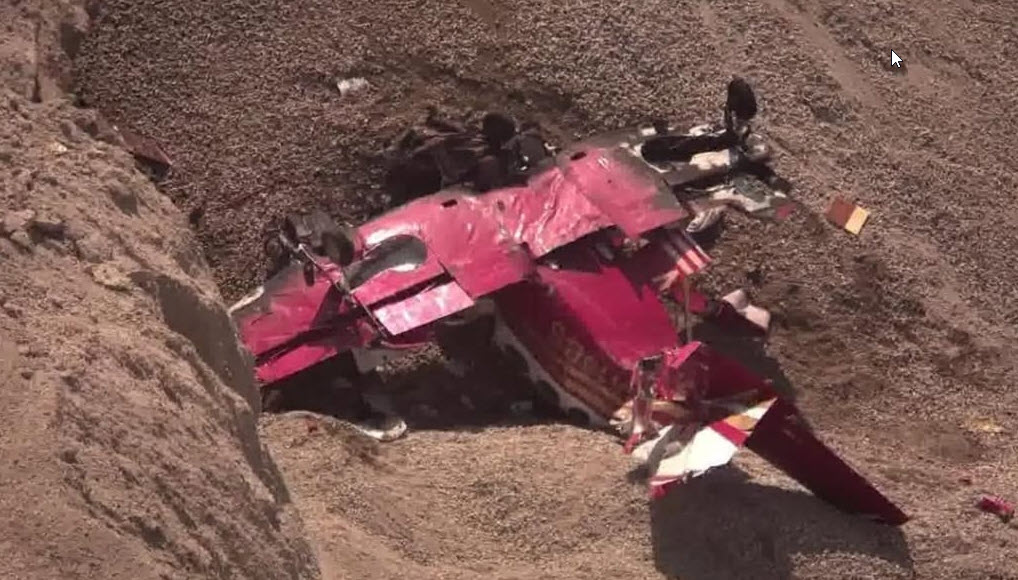
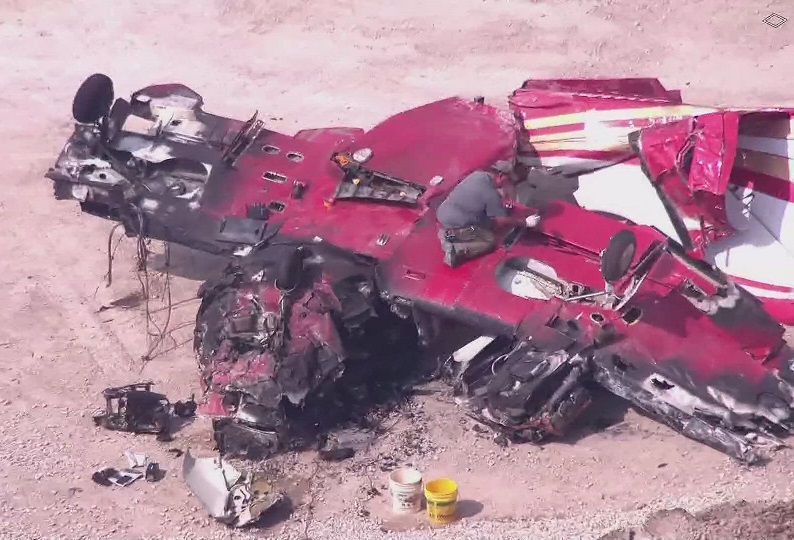
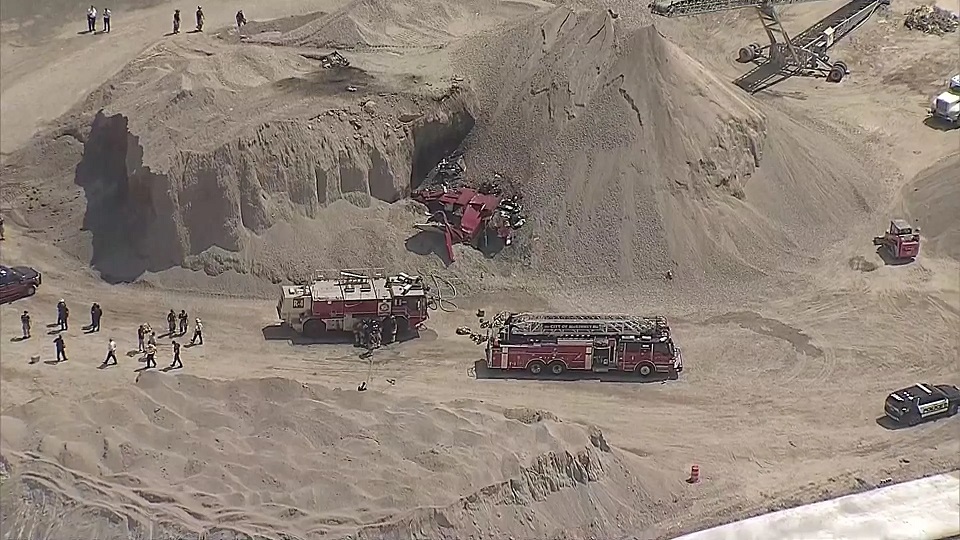
Crash of a Hawker 800XP near Bath: 3 killed

Date & Time: Oct 16, 2025 at 1727 LT
Type of aircraft:
Registration:
XA-JMR
Flight Phase:
Flight Type:
Survivors:
No
Schedule:
Battle Creek - Battle Creek
MSN:
258530
YOM:
2001
Location:
Crew on board:
3
Crew fatalities:
Pax on board:
0
Pax fatalities:
Other fatalities:
Total fatalities:
3
Circumstances:
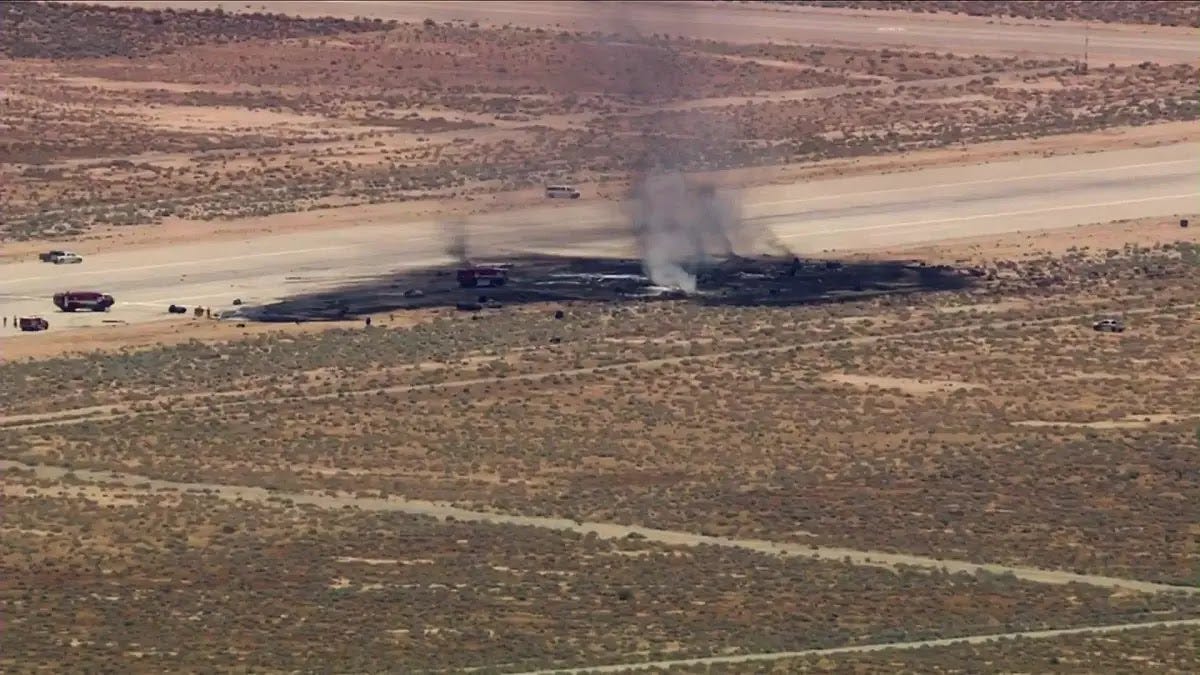
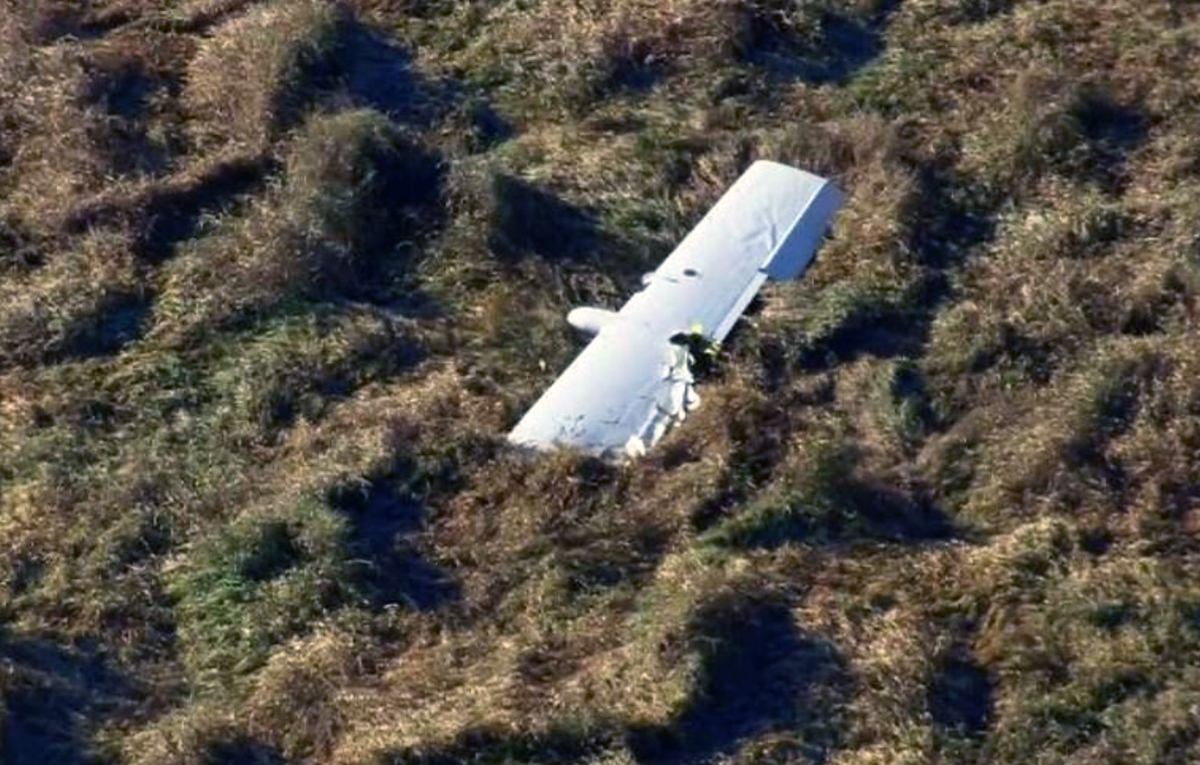
The airplane departed Battle Creek-Kellogg Field-Executive Airport Runway 23R at 1708LT on a post maintenance test flight, carrying three crew members. After takeoff, the airplane bounded to the northeast then reached the assigned altitude of 15,000 feet before proceeding over Lansing. Apparently while performing stall maneuvers, the crew lost control of the airplane that entered a spin and crashed about a minute later in a field located near Bath. The airplane exploded on ground and was totally destroyed. All three occupants were killed. It was reported that the airplane arrived at Battle Creek Airport on 25 March 2025 and the present flight was the first since this date.

Crash of a De Havilland DHC-6 Twin Otter 400 off Hua Hin: 6 killed

Date & Time: Apr 25, 2025 at 0810 LT
Operator:
Registration:
36964
Flight Phase:
Flight Type:
Survivors:
No
Schedule:
Hua Hin - Hua Hin
MSN:
964
YOM:
2017
Flight number:
RTP964
Country:
Region:
Crew on board:
3
Crew fatalities:
Pax on board:
3
Pax fatalities:
Other fatalities:
Total fatalities:
6
Circumstances:
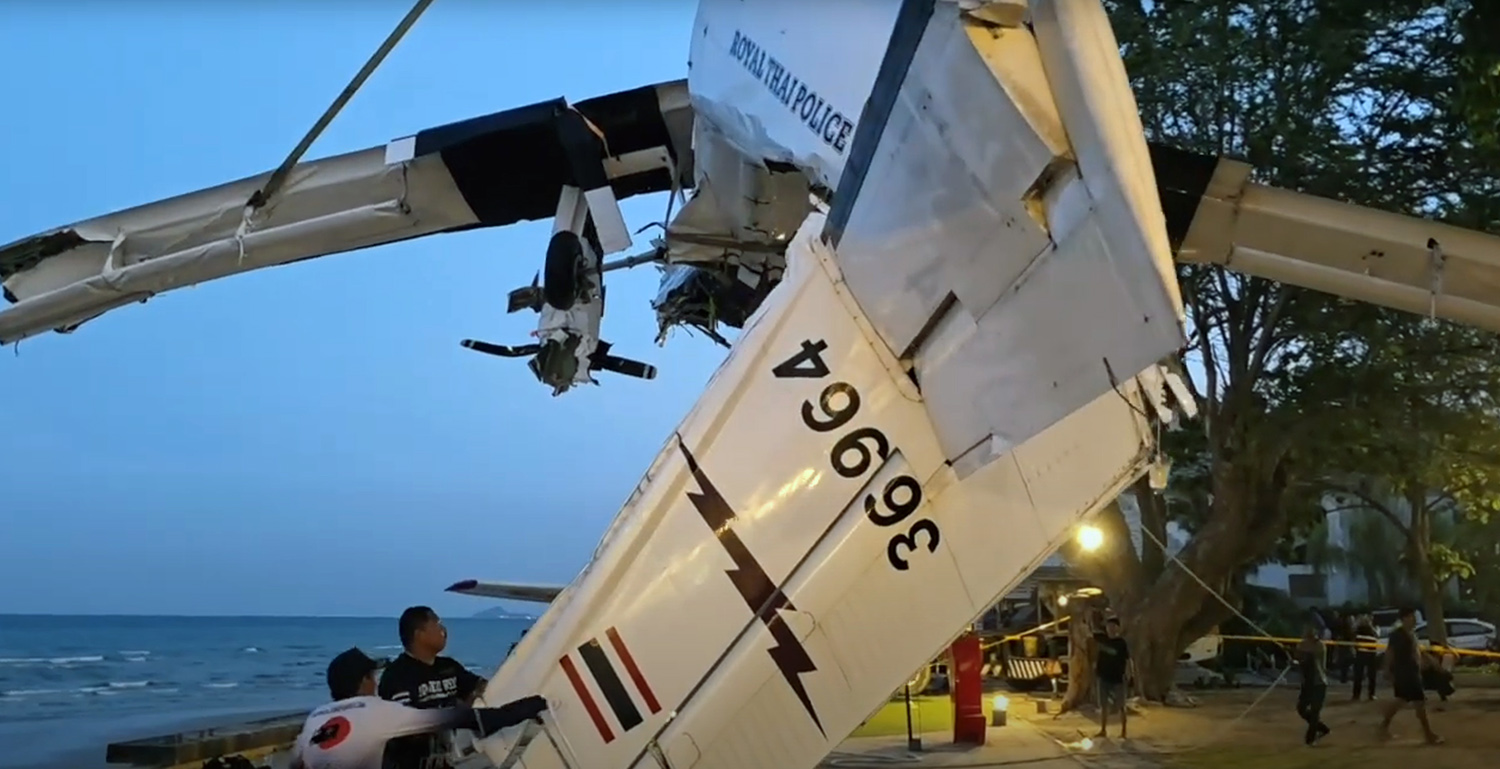
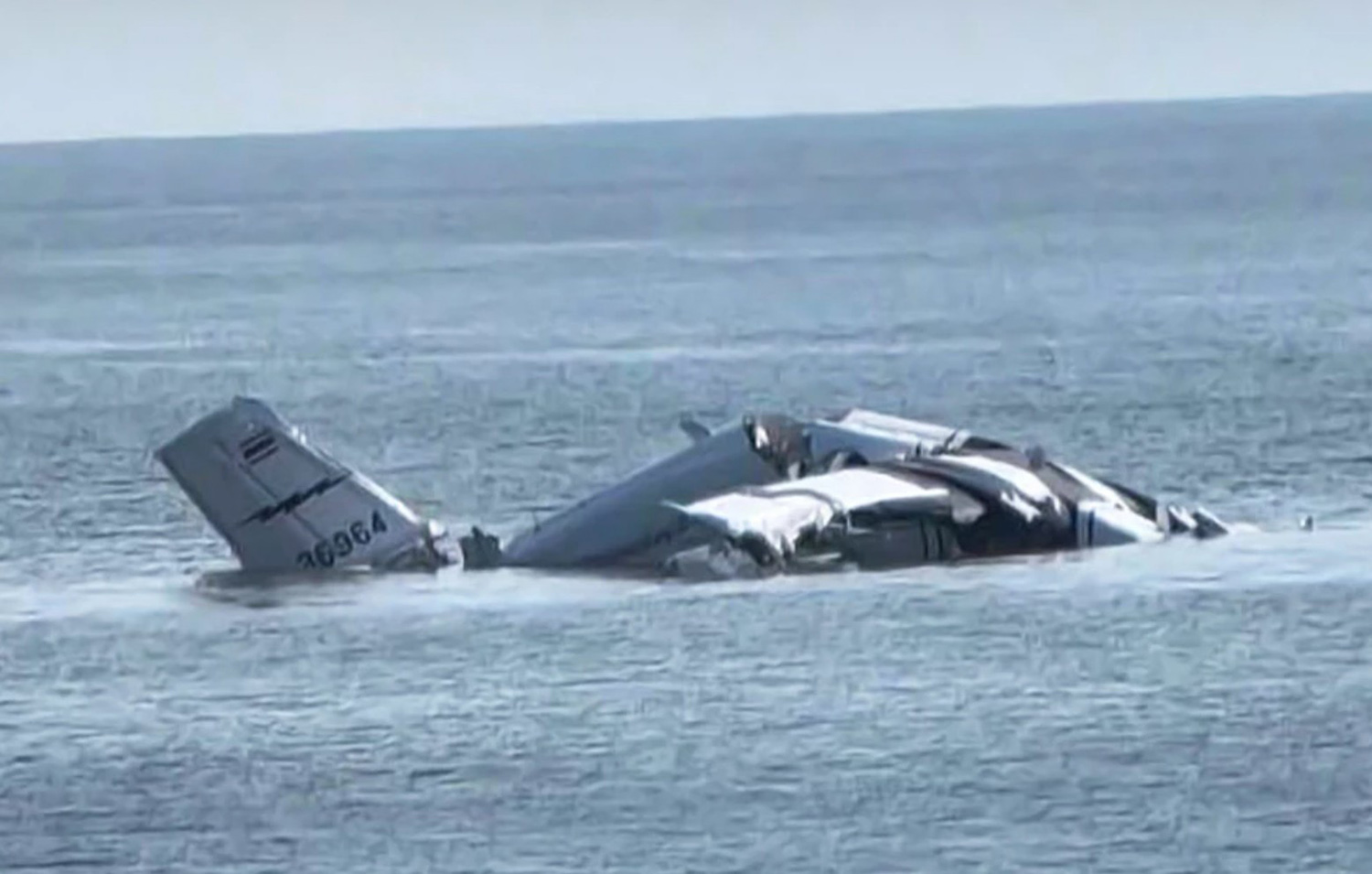
The airplane was engaged in a local test flight at Hua Hin Airport, carrying three passengers and three crew members. After takeoff from runway 16, while climbing, it entered an uncontrolled descent and crashed in shallow water. The airplane was destroyed and all six occupants were killed, among them three pilots, two mechanics and one engineer.
Probable cause:
It was reported that the right engine failed during initial climb.

Crash of a PZL-Mielec AN-2R in Derzhavinsk

Date & Time: Jul 21, 2024 at 1854 LT
Type of aircraft:
Operator:
Registration:
UP-A0141
Flight Phase:
Flight Type:
Survivors:
Yes
Schedule:
Derzhavinsk - Derzhavinsk
MSN:
1G218-41
YOM:
1986
Country:
Region:
Crew on board:
1
Crew fatalities:
Pax on board:
0
Pax fatalities:
Other fatalities:
Total fatalities:
0
Circumstances:
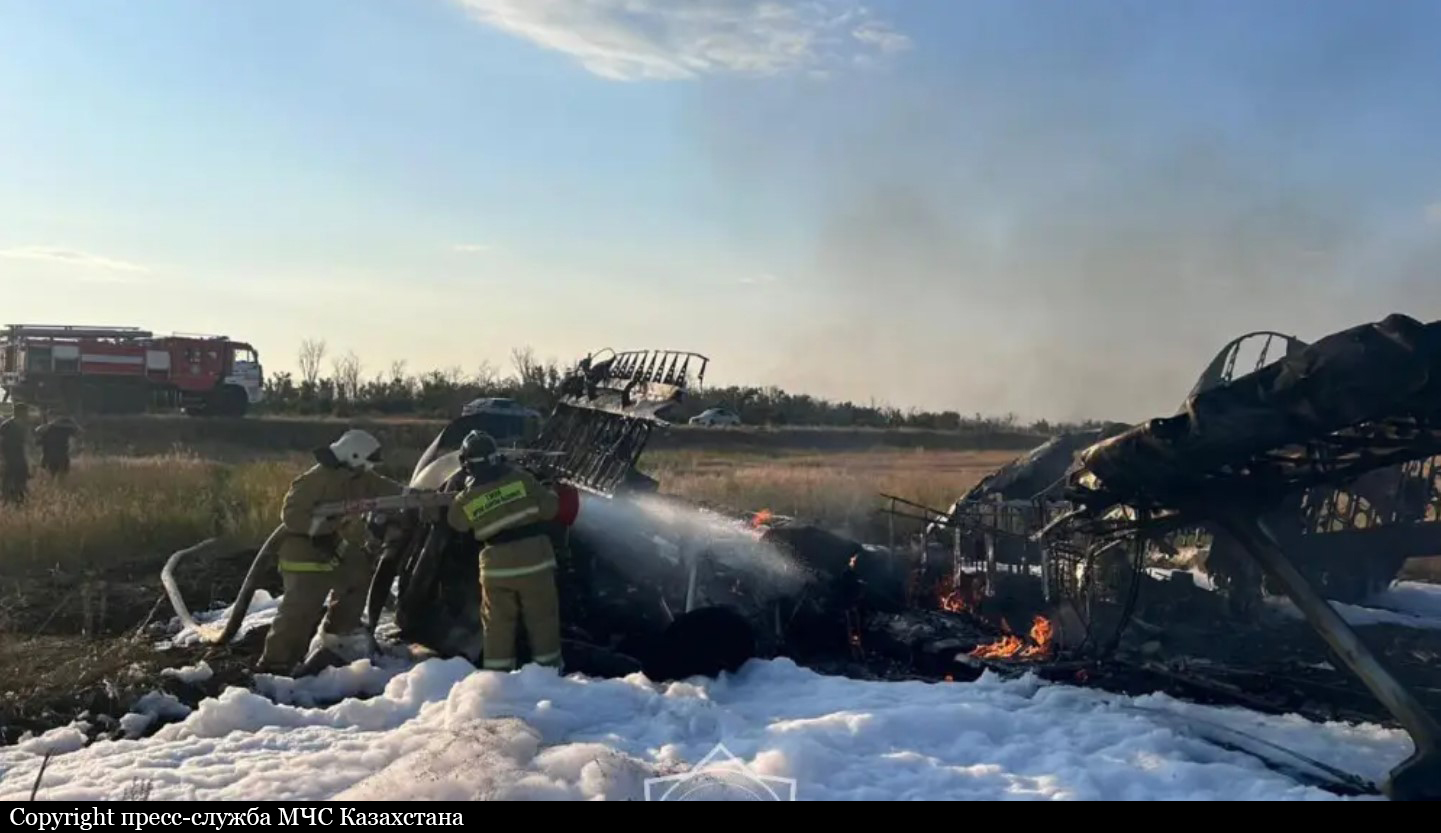
Shortly after takeoff from Derzhavinsk, the pilot was forced to attempt an emergency landing due to technical reasons. The airplane crash landed in a field and came to rest, bursting into flames. The pilot escaped uninjured and the airplane was totally destroyed by fire. The pilot, sole on board, was completing a technical flight.

Crash of a Cessna 402B in Aguadilla: 1 killed

Date & Time: Jul 11, 2024 at 0924 LT
Type of aircraft:
Registration:
N4167G
Flight Phase:
Flight Type:
Survivors:
No
Site:
Schedule:
Aguadilla - Aguadilla
MSN:
402B-1214
YOM:
1976
Country:
Crew on board:
1
Crew fatalities:
Pax on board:
0
Pax fatalities:
Other fatalities:
Total fatalities:
1
Circumstances:
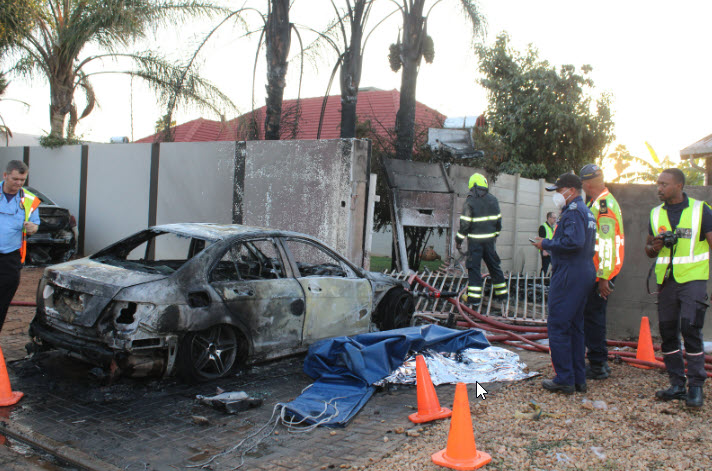
The pilot, sole on board, was completing a local post maintenance test flight out from Aguadilla-Rafael Hernández Airport. After takeoff, the twin engine airplane climbed to an altitude of about 1,600 feet when the pilot encountered an unexpected situation and elected to return. Following a 180 turn, the airplane entered an uncontrolled descent and crashed in a residential area located near the airport, bursting into flames. The airplane was destroyed and the pilot was killed.

Crash of a Cessna 406 Caravan II in Windhoek: 3 killed

Date & Time: May 3, 2024 at 1708 LT
Type of aircraft:
Operator:
Registration:
V5-ASB
Flight Type:
Survivors:
No
Site:
Schedule:
Windhoek - Windhoek
MSN:
406-0031
YOM:
1989
Country:
Region:
Crew on board:
2
Crew fatalities:
Pax on board:
1
Pax fatalities:
Other fatalities:
Total fatalities:
3
Circumstances:
The twin engine airplane departed Windhoek-Eros Airport on a local post maintenance test flight, carrying two pilots and one technician. After takeoff, the crew encountered an unexpected situation and elected to return for an emergency landing. On final approach to runway 19, the airplane went out of control and crashed in a street located in the suburb of Pioneerspark, bursting into flames. All three occupants were killed.

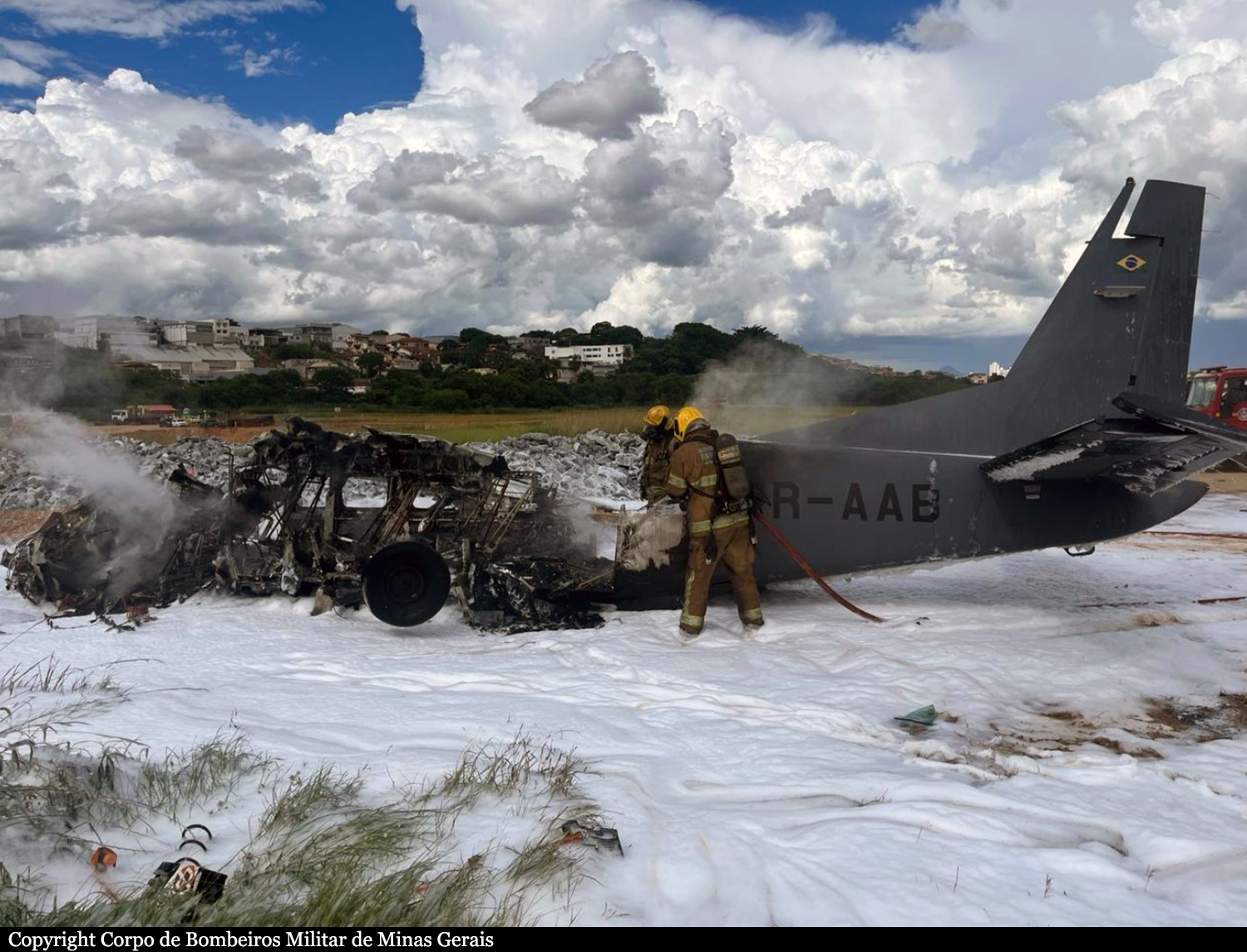
Crash of a Cessna 208B Grand Caravan in Belo Horizonte: 2 killed

Date & Time: Mar 6, 2024 at 1416 LT
Type of aircraft:
Operator:
Registration:
PR-AAB
Flight Phase:
Flight Type:
Survivors:
Yes
Schedule:
Belo Horizonte - Belo Horizonte
MSN:
208B-0903
YOM:
2001
Country:
Crew on board:
2
Crew fatalities:
Pax on board:
1
Pax fatalities:
Other fatalities:
Total fatalities:
2
Circumstances:
After takeoff from runway 31 at Belo Horizonte-Pampulha-Carlos Drummond de Andrade Airport, the single engine airplane followed a steep climb then entered a right turn when it started to lose altitude. It continued in a right turn descent configuration, apparently to reach runway 13, when it rolled to the left, impacted the ground and crashed in a grassy area located south of runway 13 threshold, bursting into flames. The passenger, a technician external to the Police Department, was injured while both pilots were killed. The airplane was totally destroyed by a post impact fire.
Crew:
Guilherme de Almeida Irber, pilot, †
José Moraes Neto, copilot. †
Passenger:
Walter Luís Martins.

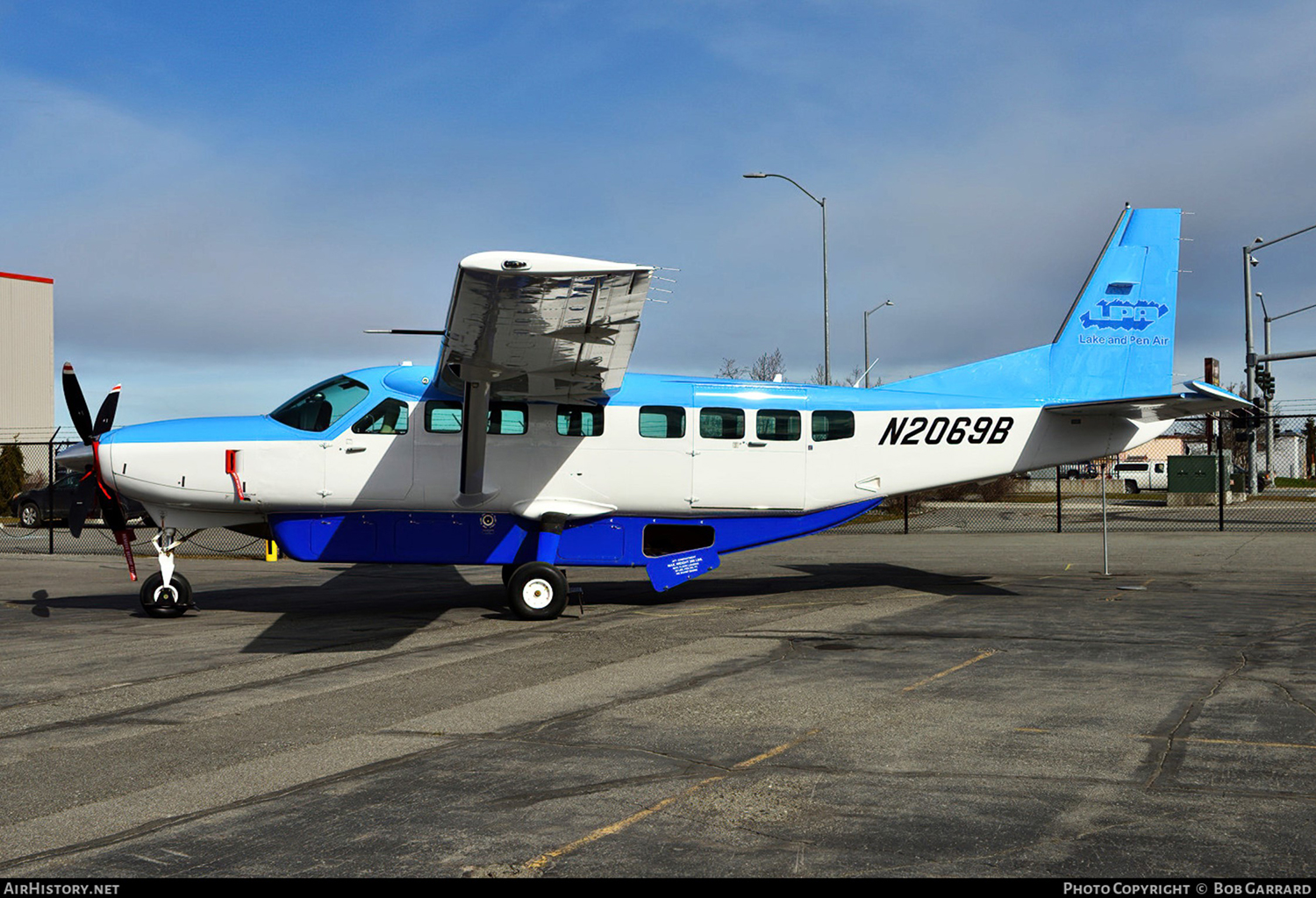
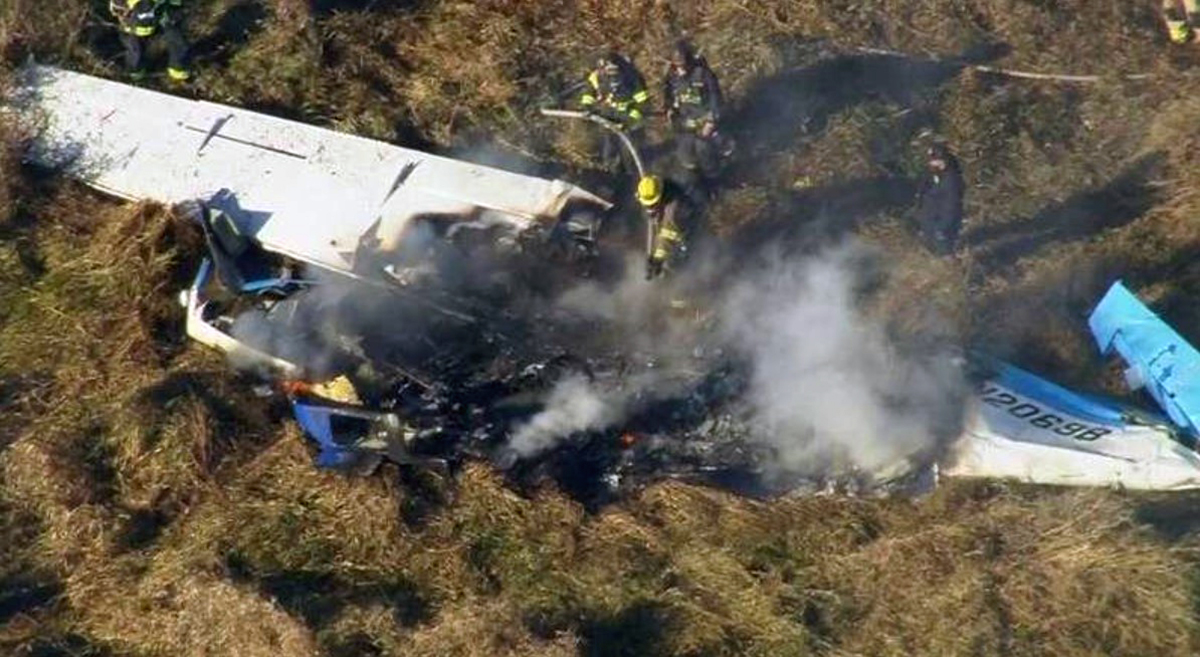
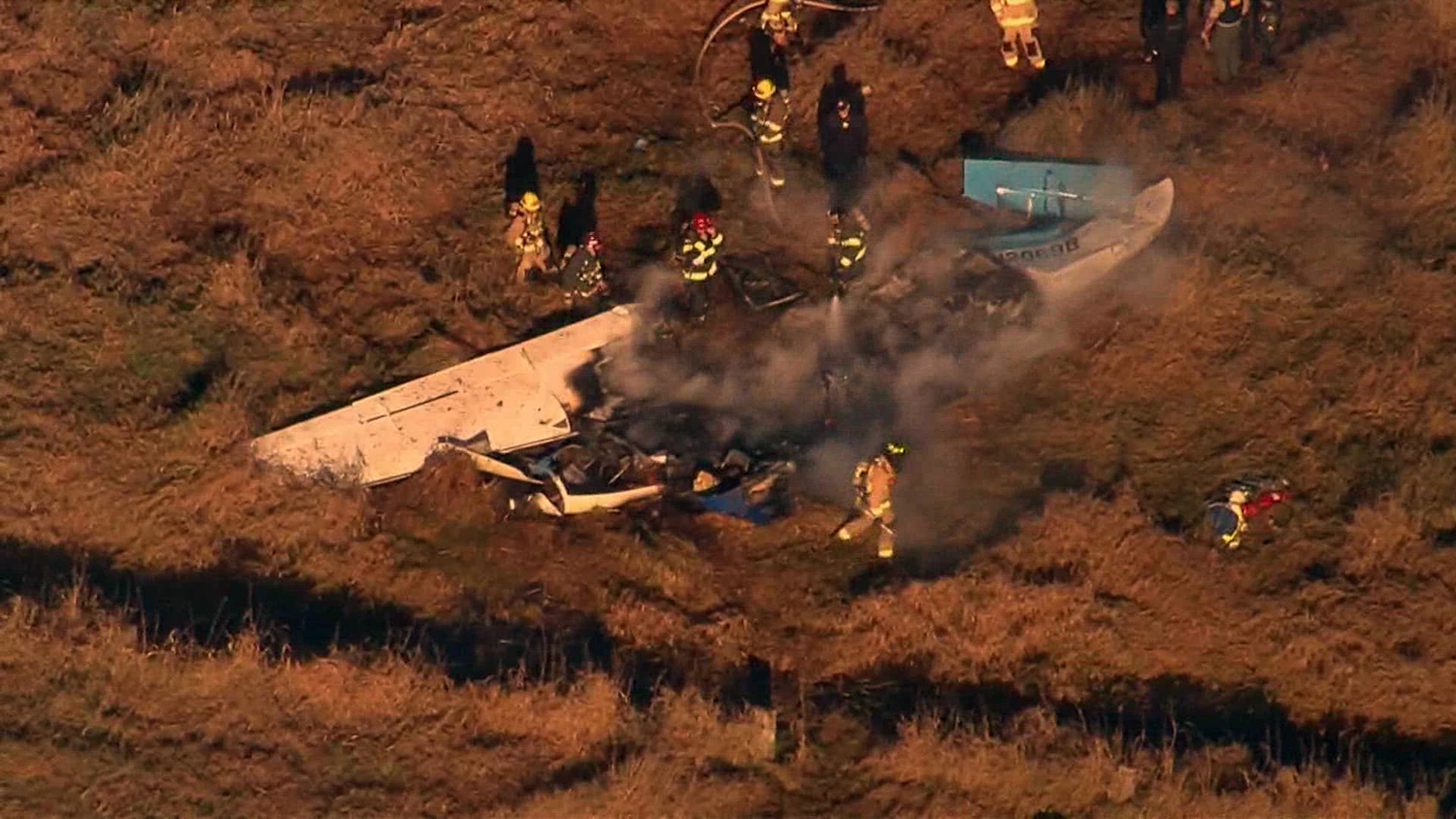
Crash of a Cessna 208B Grand Caravan EX in Snohomish: 4 killed

Date & Time: Nov 18, 2022 at 1019 LT
Type of aircraft:
Registration:
N2069B
Flight Phase:
Flight Type:
Survivors:
No
Schedule:
Renton - Renton
MSN:
208B-5657
YOM:
2021
Crew on board:
4
Crew fatalities:
Pax on board:
0
Pax fatalities:
Other fatalities:
Total fatalities:
4
Circumstances:
The pilot and three other crew members were performing flight testing for a new Supplemental Type Certificate (STC) for the single-engine turboprop-powered airplane. After departure, the pilot performed several maneuvers from the test card, then configured the airplane with the flaps extended for an intentional accelerated stall in a 30° left bank with the engine torque set to 930 ft-lb. Analysis of ADS-B data combined with a simulation matching the recorded trajectory of the accident maneuver revealed that, after the stall, the airplane rapidly rolled to the left, reaching a roll angle of 120° while the pitch angle decreased to 60° nose down. The airspeed rapidly increased, exceeding both the maximum flaps-extended speed (Vfe) and the airplane’s maximum operating speed (Vmo). Recorded engine data indicated that, after the stall, the engine torque increased. ADS-B data was lost at an altitude about 7,000 ft above ground level; the final track data indicated an approximate 8,700 ft/min rate of descent. Witnesses observed the airplane break up in flight and subsequently spiral to the ground. The wreckage was found in a rural field distributed over a distance of about 1,800 ft. Analysis of the aerodynamic loads in an overspeed condition showed that the wing design stress limit loads would be exceeded at high speeds with full flaps. The simulation of the stall maneuver indicated that reducing engine power to idle after the nose dropped could have reduced the rate at which the airspeed and associated aerodynamic loads increased, and would have likely given the pilot more time to recover. The airplane was equipped with an Electronic Stability and Protection (ESP) system, which was designed to deter attitude and airspeed exceedances during hand-flying and maintain stable flight by applying an opposite force to the direction of predetermined travel. It was designed to provide a light force that can be overcome by the pilot. To deactivate the ESP, the pilot needed to navigate to a specific page in the primary function display (PFD). Although the accident pilot was an experienced test pilot and qualified to operate the airplane, his experience with the accident airplane’s avionics system could not be determined. Videos of his previous flights in the airplane suggested that he was unfamiliar with the ESP system, as he did not deactivate it before the flight nor discuss the forces it was applying during the flight. Onboard video recording from a test flight the day before the accident indicated that, while performing a turning stall at idle power and 30° of left bank with the wing flaps extended, the airplane rapidly entered a left roll to a maximum of 83° before the pilot recovered to a wingslevel attitude. After recovery, the pilot pitched the airplane’s nose down about 25° in order to “get some airspeed back,” during which the ESP activated the autopilot to effect recovery to a level attitude. The airplane continued to gain airspeed, exceeding the Vmo of 175 knots and reaching 183 knots indicated airspeed, before pilot arrested the airplane’s acceleration and disconnected the autopilot. These two exceedances illustrated shortcomings in the test execution. First, although the 83° roll exceeded the allowable roll limit during this maneuver, the crew failed to identify this exceedance even though they discussed what angle had been reached and had a data acquisition system on board, which they could have consulted to determine the maximum roll angle reached during the maneuver. Correctly identifying the roll exceedance would have resulted in a “failed” test. In accordance with risk mitigation procedures for the test plan, the test buildup should have been stopped after roll limits were exceeded in order to determine the reasons for the exceedance and to implement corrective actions before proceeding with higher-risk conditions in the test plan. Secondly, after exceeding Vmo, the crew did not remark upon the exceedance, and even though the exceedance met the requirements for an overspeed inspection as described in the airplane’s maintenance manual, there was no indication that this inspection was completed. The accident flight simulation indicated that, during the stall immediately preceding the accident, it is likely that the ESP activated as the airplane pitched in excess of 19° nose-up. This would have required the pilot to apply more aft force on the control column in order to induce the stall. After the stall, the ESP would have activated at 45° bank, then deactivated as the airplane quickly exceeded 75°. The extent to which the control forces from the ESP, or the potential distraction due to the system’s engagement and disengagement, may have contributed to the pilot’s failure to recover from the nose-low attitude following the stall could not be determined. FAA guidance warns of the risks associated with upset events during stall maneuvers and advises against performing accelerated stalls with flaps deployed due to the increased risk of exceeding the airplane’s limitations in this configuration. Following a nose-low departure from controlled flight, reducing the power to idle immediately is crucial to avoid exceeding airspeed limitations and overstressing the airplane. The circumstances of the accident flight are consistent with the pilot’s improper recovery from a nose-low attitude following an intentional aerodynamic stall. Whether the increase in torque following the stall was the result of intentional application of power by the pilot could not be determined; however, the pilot’s failure to reduce engine power to idle following the airplane’s departure from controlled flight was contrary to published guidance as well as test flight hazard mitigation procedures. It is likely that this resulted in the airplane’s rapid exceedance of its airspeed limitations, and subsequently, a structural failure and inflight breakup.
Probable cause:
The pilot’s improper recovery following a departure from controlled flight after an intentional aerodynamic stall, which resulted in an exceedance of airspeed limitations, airframe overstress, and a subsequent inflight breakup.
Final Report:

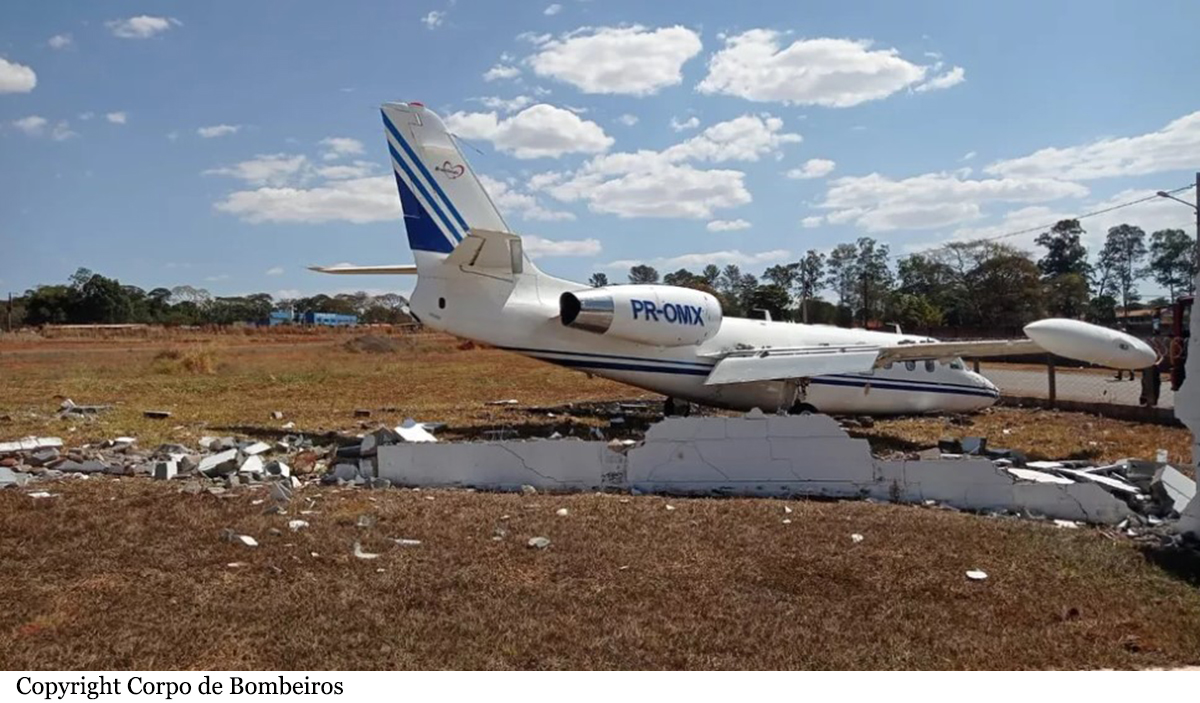
Crash of a IAI 1124 Westwind in Goiânia

Date & Time: Aug 7, 2022 at 1050 LT
Type of aircraft:
Operator:
Registration:
PR-OMX
Flight Type:
Survivors:
Yes
Schedule:
Goiânia - Goiânia
MSN:
363
YOM:
1981
Country:
Crew on board:
3
Crew fatalities:
Pax on board:
0
Pax fatalities:
Other fatalities:
Total fatalities:
0
Circumstances:
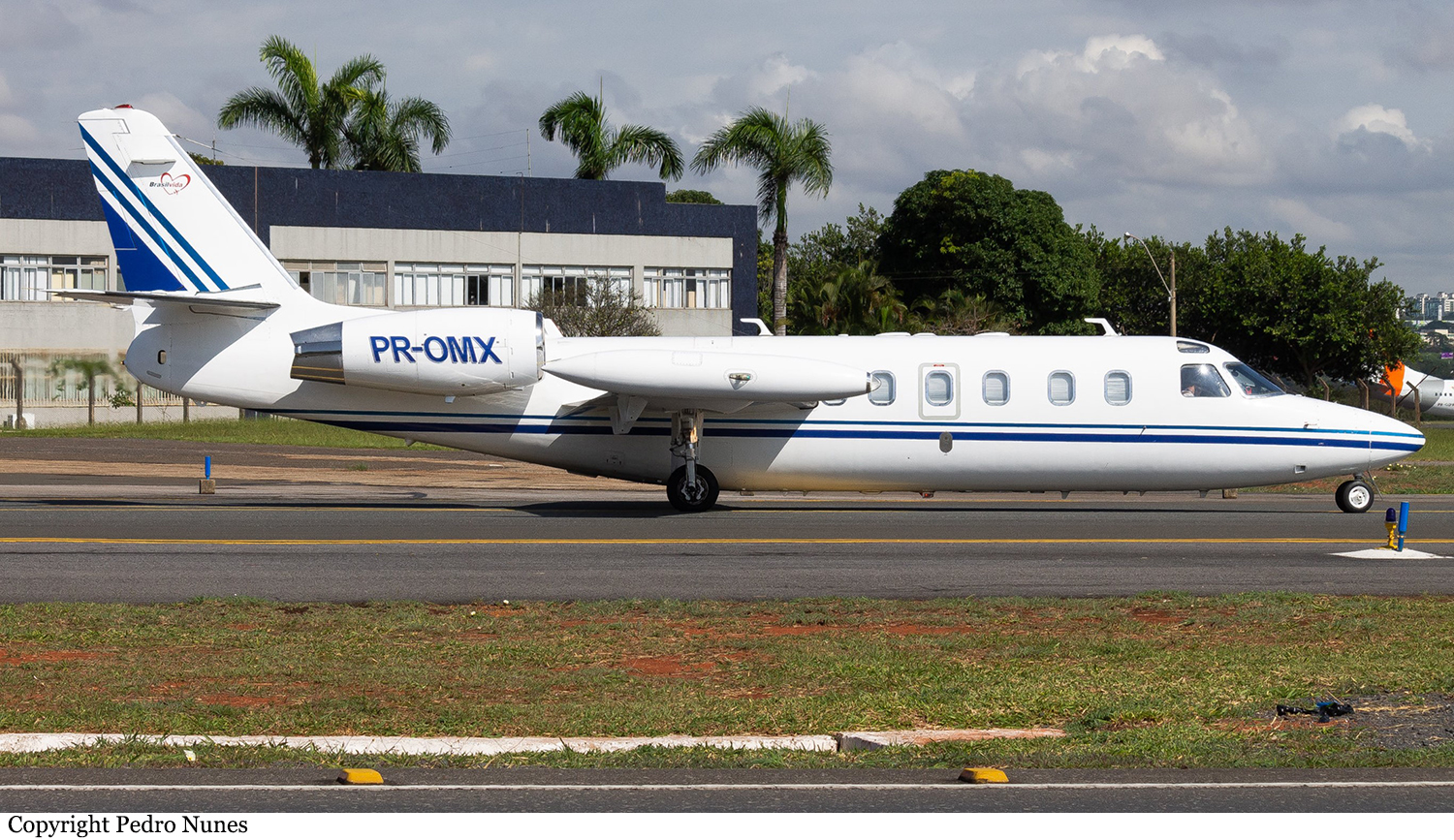
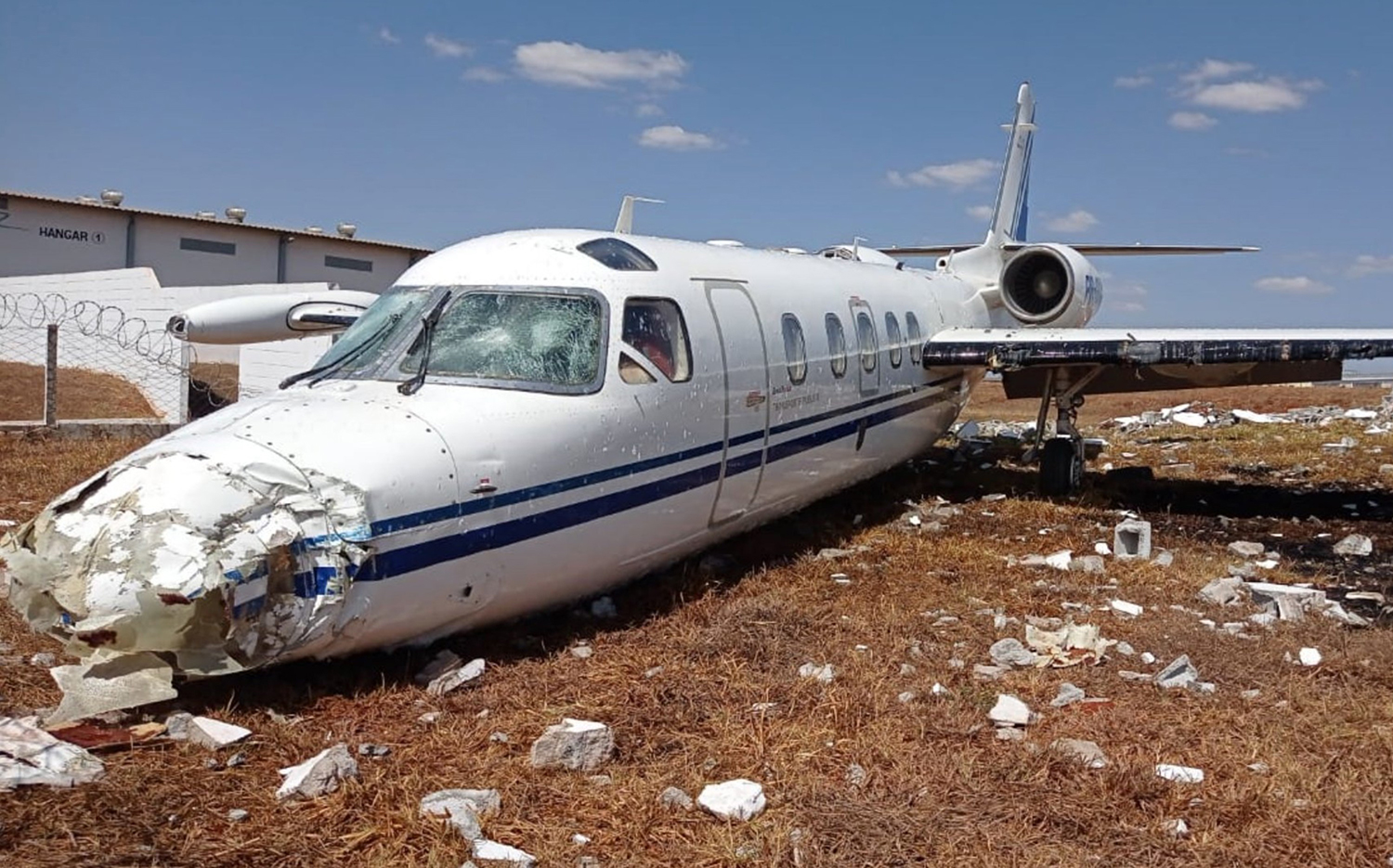
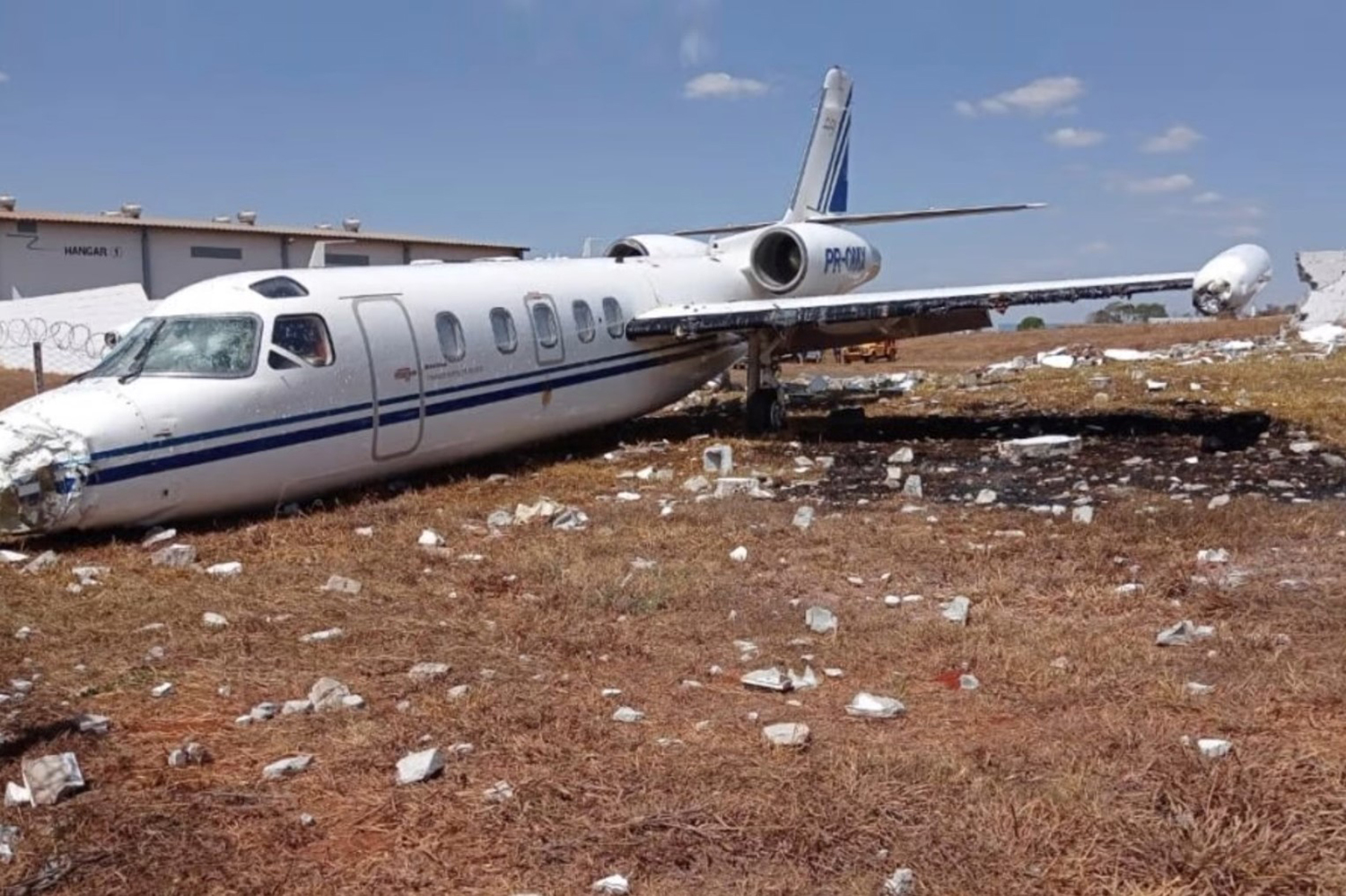
The aircraft departed Goiânia-Nacional de Aviação Airport Runway 14 at 1012LT on a local test flight with three crew members on board. After reaching FL340, several tests were completed then the crew made a high speed descent before landing on runway 32. After touchdown and a course of about 700 metres, the airplane veered off runway to the right, collided with a concrete wall, lost its nose gear and came to rest near the perimeter fence. All three occupants evacuated safely.

Crash of a Beechcraft 3NMT Expeditor in Bastia

Date & Time: Sep 14, 2021 at 1025 LT
Type of aircraft:
Registration:
G-BKGL
Flight Type:
Survivors:
Yes
Schedule:
Bastia - Bastia
MSN:
A-764
YOM:
1952
Country:
Region:
Crew on board:
1
Crew fatalities:
Pax on board:
2
Pax fatalities:
Other fatalities:
Total fatalities:
0
Captain / Total flying hours:
4000
Captain / Total hours on type:
15.00
Circumstances:
On August 19, 2021, the airplane was acquired by a British citizen in Saudi Arabia and repatriated to UK via Egypt, Crete, Greece, Croatia and France. On August 25, en route from Croatia to France, the right engine suffered a loss of hydraulic pressure after the cylinder n°5 failed. The crew diverted to Bastia-Poretta Airport where he landed safely. On September 13, the cylinder n°5 was replaced by a qualified technician and a post maintenance control flight was scheduled for September 14, despite the pilot was slightly ill. The airplane departed Bastia-Poretta Airport at 1010LT and six minutes later, the pilot informed ATC that the control was completed and that he wanted to return to the airport. Due to departure traffic, the pilot was asked to fly along the mountain for a left hand circuit to land on runway 34. Seven minutes later, the right engine failed, followed 20 seconds later by a loss of power on the left engine. With a rate of descent between 900 and 1,500 feet per minute, the pilot was unable to reach the airport and attempted an emergency landing when the airplane impacted trees and crashed in an orchard, bursting into flames. All three occupants escaped the airplane by their own and were injured. The airplane was totally destroyed by a post crash fire.
Probable cause:
Most likely, the fuel selectors were in the 'Nose' position at start-up. The pilot thought that the main tanks were selected. He probably took off and flew on the 'Nose' tank, common to both engines, without realizing it. At the end of the downwind leg, having probably consumed all the fuel available in the 'Nose' tank, the right engine stopped. In this hypothesis, the left engine would also have suffered the effects of a fuel supply failure. This hypothesis is consistent with the observation of the position of the left and right fuel selectors on 'Nose' in the wreckage, and the pilot's initial testimony that the selectors had not been manipulated. The pilot, who was no longer able to hold the landing and was too far from the runway to reach it, was unable to avoid colliding with trees during the forced landing. His attention was focused on the aircraft's path, and he didn't think to switch off the battery, magnetos or the fuel supply system. During the collision with trees, the right engine and wing were torn off, and a fire broke out.
It is considered that the following factors may have contributed to the probable selection of fuel selectors on the 'Nose' instead of the main tanks:
- The pilot's lack of experience on type, which could have exposed him to a selection error and which was not conducive to his detection during the pre-start-up and pre-takeoff checks;
- The ergonomics of the fuel tank selector levers, which could have led him to think that they were positioned on 'Front';
- The pilot's state of health and fatigue at the time he undertook the flight, which was likely to have impaired his cognitive abilities.
- A form of objective-destination linked to the accumulated delay in repairing the cylinder may have contributed to the pilot's decision not to postpone the flight, despite his altered general state;
- A misrepresentation of the position of the fuel selectors may have led the pilot not to change their position when the engine problem occurred.
Final Report:

Crash of an Ilyushin II-112V in Kubinka: 3 killed

Date & Time: Aug 17, 2021 at 1118 LT
Type of aircraft:
Operator:
Registration:
RF-41400
Flight Type:
Survivors:
No
Schedule:
Kubinka - Kubinka
MSN:
01-01
YOM:
2008
Country:
Region:
Crew on board:
3
Crew fatalities:
Pax on board:
0
Pax fatalities:
Other fatalities:
Total fatalities:
3
Circumstances:
On August 13, the aircraft (first prototype of this new model) departed the aviation plant at Voronezh Airport on a flight to Moscow-Zhukovsky, preparing for a demonstration flight at the 7th Military Technical Forum. On August 17, the crew departed Zhukovsky for a test flight to Kubinka Airport where the aircraft landed at 1109LT. Four minutes after takeoff at 1114LT, while flying at low altitude in a flat attitude, the right engine caught fire. 35 seconds later, while the crew elected to reach the airport, the aircraft rolled to the right, got inverted and crashed in a wooded area located 2,5 km short of runway 22. The aircraft was totally destroyed and all three crew members were killed. This first exemple was dedicated to the Russian Aerospace Forces (Vozdushno-kosmicheskiye sily) and was also registered 01 yellow.
Crew:
Nikolay Dmitrievich Kuimov, test pilot,
Dmitry Komarov, test pilot,
Nikolai Khludeyev, flight engineer.