code

CA

Crash of a Cessna 414 Chancellor of Point Loma: 6 killed

Date & Time: Jun 8, 2025 at 1230 LT
Type of aircraft:
Operator:
Registration:
N414BA
Flight Phase:
Flight Type:
Survivors:
No
Schedule:
San Diego - Phoenix
MSN:
414-0047
YOM:
1970
Crew on board:
1
Crew fatalities:
Pax on board:
5
Pax fatalities:
Other fatalities:
Total fatalities:
6
Circumstances:
The twin engine airplane departed San Diego-Lindbergh Field International Airport Runway 27 at 1225LT on a flight to Phoenix-Sky Harbor Airport, carrying five passengers and one pilot. After takeoff, while climbing, the pilot was instructed for heading 180 when he reported controllability problems. Shortly later, the airplane showed erratic altitude, speed and heading data before crashing into the Pacific Ocean off Point Loma. Few debris were found floating on water and all six occupants were killed.

Crash of a Cessna S550 Citation S/II in San Diego: 6 killed

Date & Time: May 22, 2025 at 0347 LT
Type of aircraft:
Operator:
Registration:
N666DS
Flight Type:
Survivors:
No
Site:
Schedule:
Teterboro - Wichita - San Diego
MSN:
S550-0056
YOM:
1985
Crew on board:
1
Crew fatalities:
Pax on board:
5
Pax fatalities:
Other fatalities:
Total fatalities:
6
Circumstances:
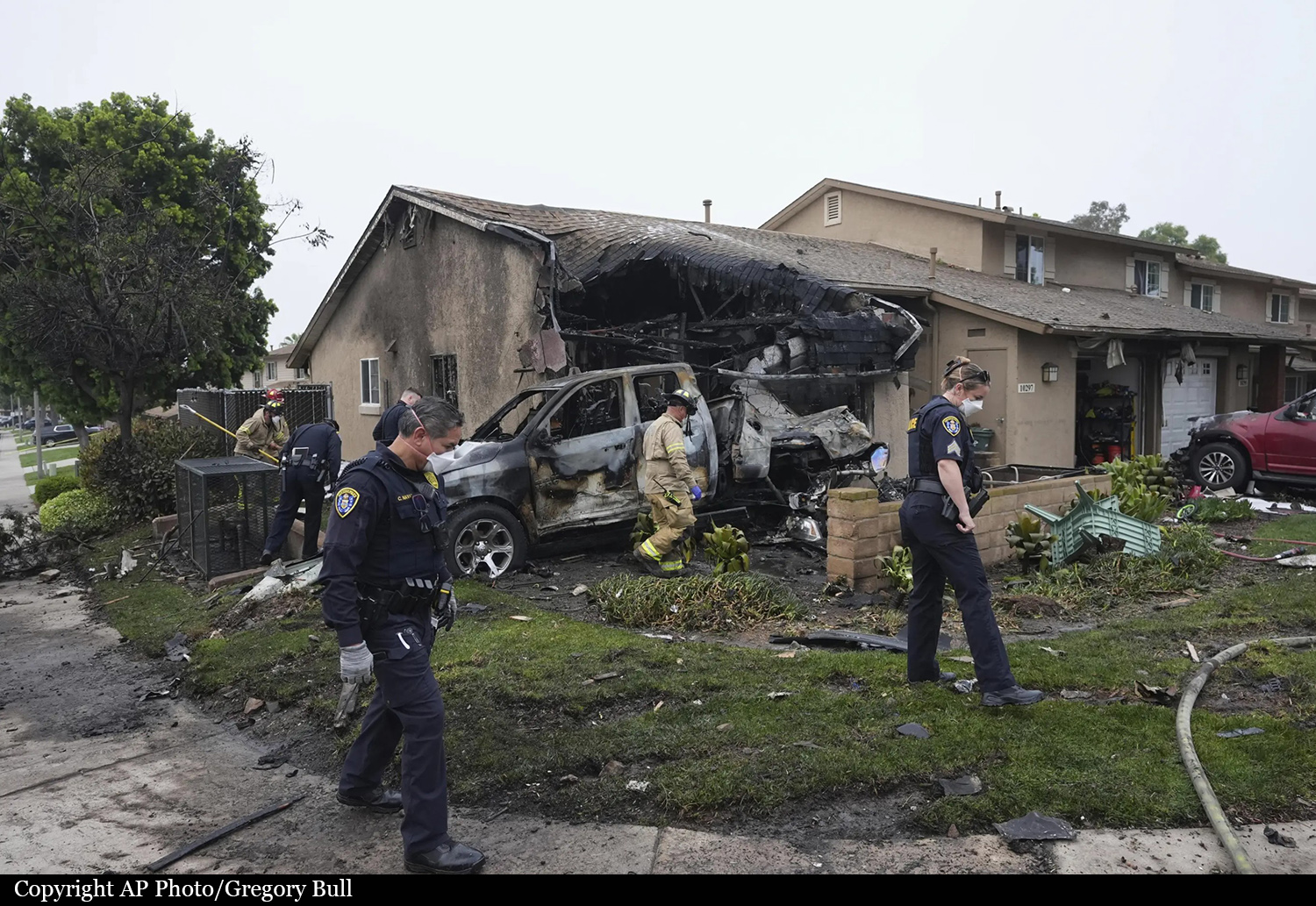
The airplane departed Teterboro on a flight to San Diego with an intermediate stop at Wichita-Colonel James Jabara Airport. The crew initiated a night approach to San Diego-Montgomery-Gibbs Airport Runway 28R in marginal weather conditions. On final, the airplane descended below the minimum descent altitude, collided with power lines and crashed at 3100 Salmon Street, Terriasanta, about 3 km short of runway 28R threshold, bursting into flames. The airplane as well as several vehicles on the ground were destroyed. Runway 28R is 1,000 metres long.

Crash of a Lockheed 12A Electra Junior in Chino: 2 killed

Date & Time: Jun 15, 2024 at 1235 LT
Type of aircraft:
Registration:
N93R
Flight Phase:
Flight Type:
Survivors:
No
Schedule:
Chino - Chino
MSN:
1257
YOM:
1939
Crew on board:
2
Crew fatalities:
Pax on board:
0
Pax fatalities:
Other fatalities:
Total fatalities:
2
Circumstances:
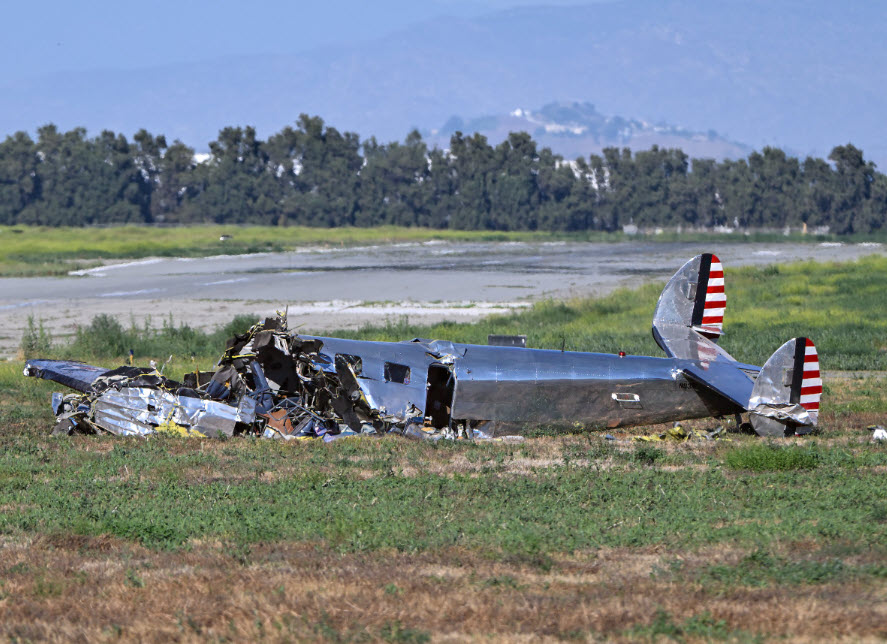
Shortly after takeoff from Chino Airport runway 21, while climbing, the twin engine airplane rolled to the left, descended to the ground and crashed in a grassy area, bursting into flames. Both occupants were fatally injured. The airplane was operated on behalf of the Yanks Air Museum.

Crash of a Rockwell Gulfstream 695A Jetprop 1000 in San Bernardino: 1 killed

Date & Time: Apr 13, 2024 at 2019 LT
Operator:
Registration:
N965BC
Flight Type:
Survivors:
No
Site:
Schedule:
Stockton - Chino
MSN:
96071
YOM:
1984
Crew on board:
1
Crew fatalities:
Pax on board:
0
Pax fatalities:
Other fatalities:
Total fatalities:
1
Circumstances:
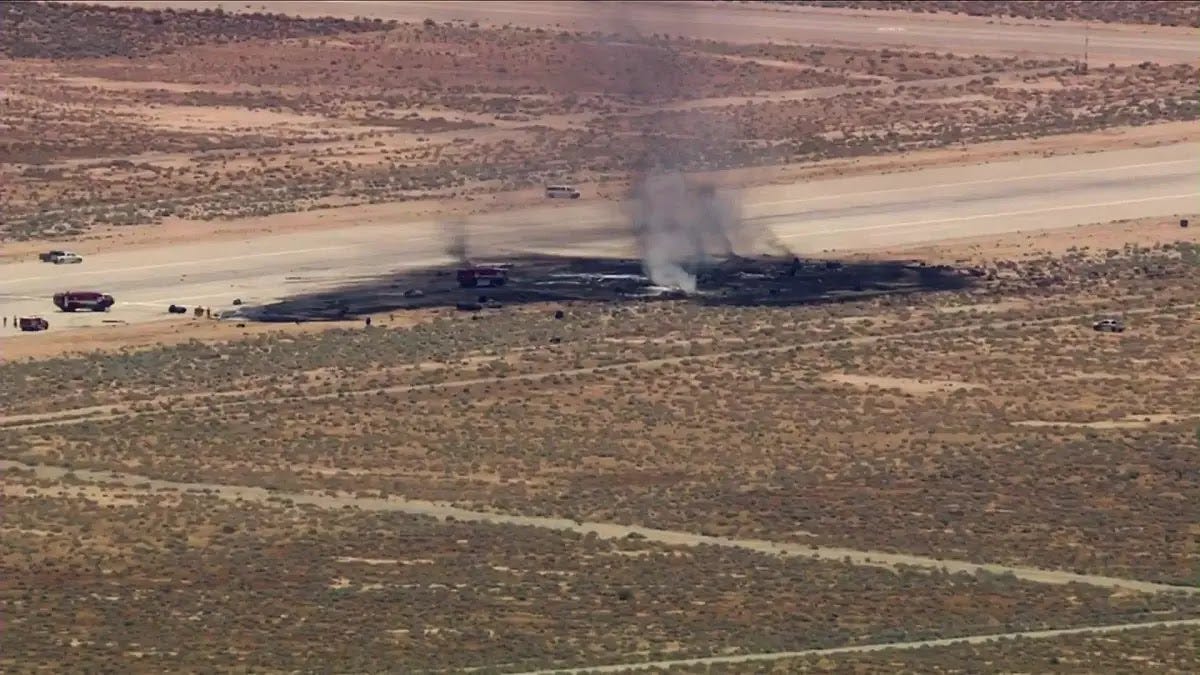
The pilot departed Stockton Airport on a solo flight to Chino. On a standard approach in rainy conditions, the airplane suffered two altitude deviations which the pilot attributed to a problem with the autopilot. Towards the end of the flight, the airplane descended past the Minimum Vectoring Altitude (MVA) of 7,400 feet and was issued an altitude alert by the controller, but there was no response from the pilot. The airplane entered an uncontrolled descent with a rate of about 10'000 feet per minute until it crashed in mountainous terrain. The airplane was destroyed by impact forces and the pilot was killed.

Crash of a Socata TBM-960 in Truckee: 2 killed

Date & Time: Mar 30, 2024 at 1838 LT
Type of aircraft:
Registration:
N960LP
Flight Type:
Survivors:
No
Schedule:
Denver - Truckee
MSN:
1441
YOM:
2022
Crew on board:
1
Crew fatalities:
Pax on board:
1
Pax fatalities:
Other fatalities:
Total fatalities:
2
Circumstances:
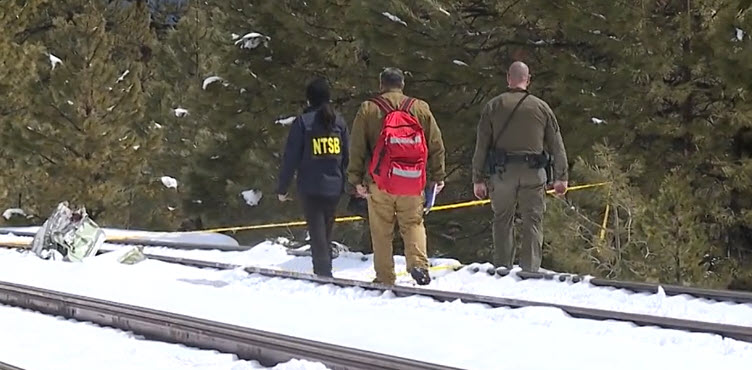
On final approach to Truckee-Tahoe Airport runway 20 in marginal weather conditions, it is believed that the pilot initiated a go around procedure. While climbing to an altitude of 7,200 feet, control was lost. The airplane entered a dive and crashed in a snow covered forest located near the airport, bursting into flames. Both occupants, Liron and Naomi Petrushka, were killed. At the time of the accident, visibility was limited due to snow showers.

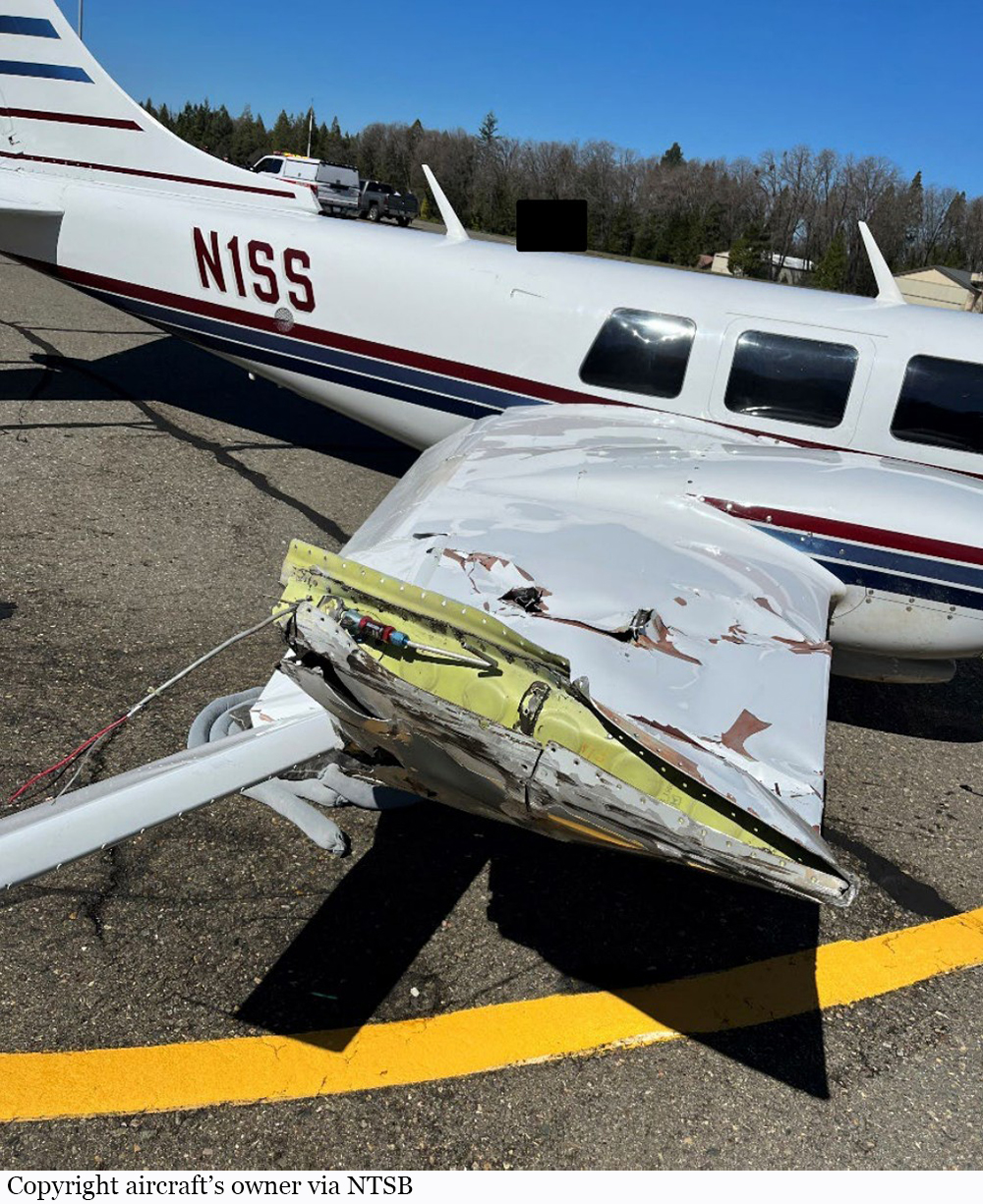
Crash of a PA-61-601P Aerostar (Ted Smith 601) in Grass Valley

Date & Time: Mar 14, 2024 at 1148 LT
Operator:
Registration:
N1SS
Flight Type:
Survivors:
Yes
Schedule:
Brigham City – Grass Valley
MSN:
61-0694-7963331
YOM:
1979
Crew on board:
1
Crew fatalities:
Pax on board:
0
Pax fatalities:
Other fatalities:
Total fatalities:
0
Captain / Total flying hours:
22323
Captain / Total hours on type:
104.00
Aircraft flight hours:
2730
Circumstances:
The pilot reported that the AWOS weather reported strong gusts of 15 up to 25 kts straight down the runway. At approximately 20 ft agl, he experienced moderate turbulence and elected to abort the landing and attempted to climb. However, as the airspeed was decreasing the airplane was not gaining altitude. The pilot experienced another strong wind gust which put the airplane into a nose down and right wing low attitude, which he was unable to control and collided with the runway substantially damaging the right wing. The pilot stated that there were no preimpact mechanical malfunctions or failures that would have precluded normal operations.
Probable cause:
The pilot’s failure to maintain directional control in a gusting wind condition.
Final Report:

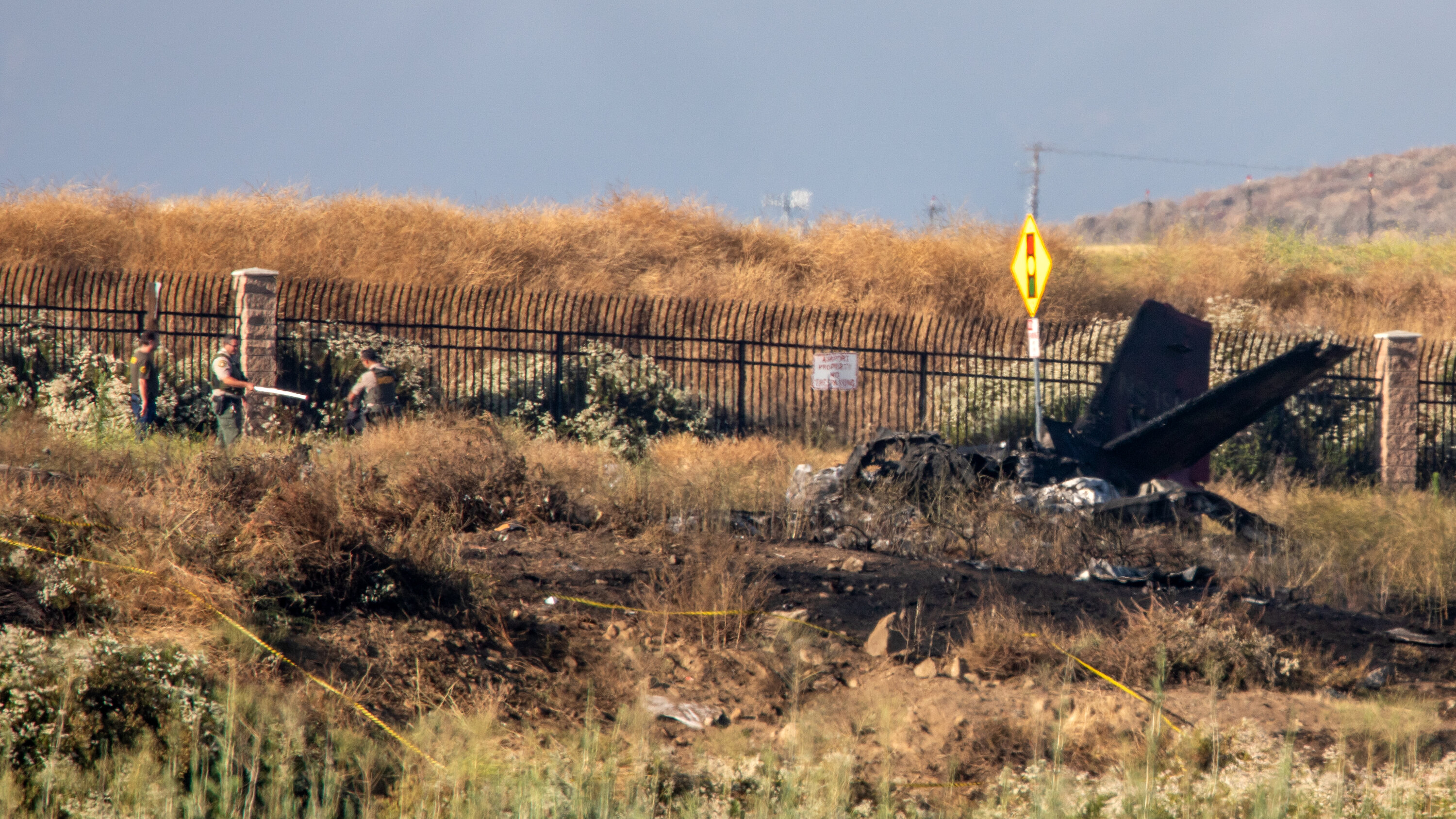
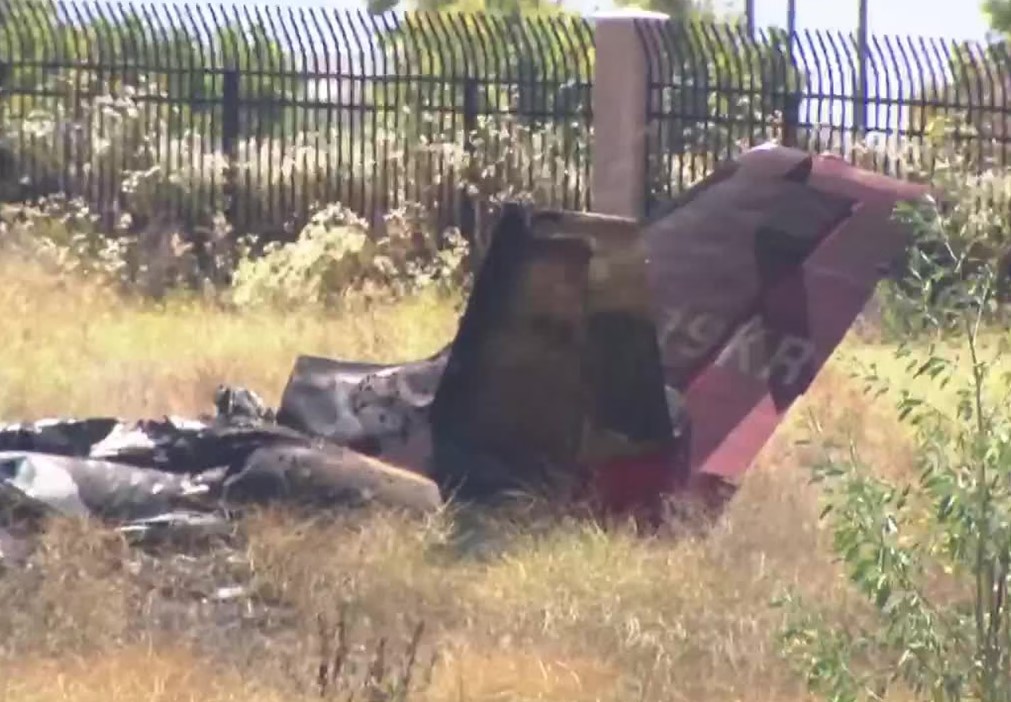
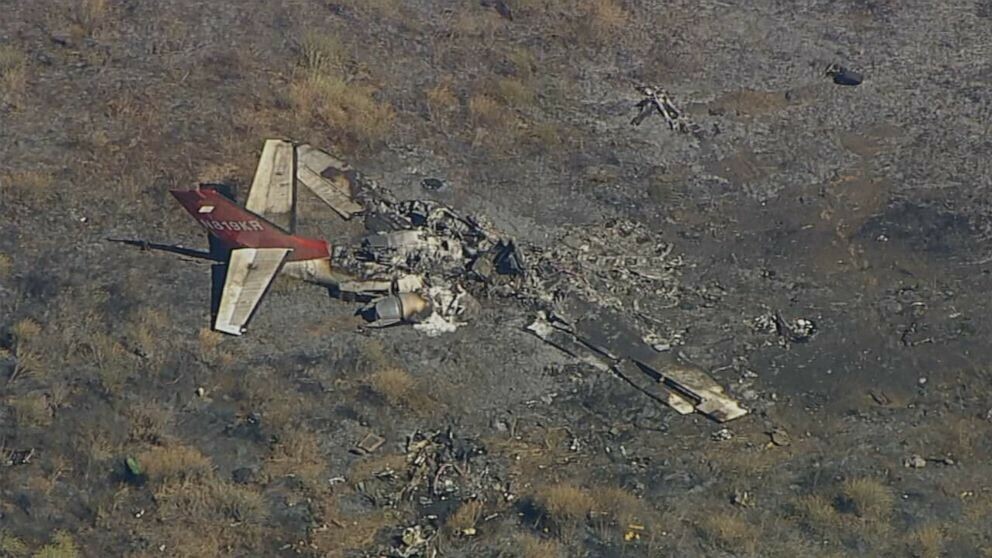
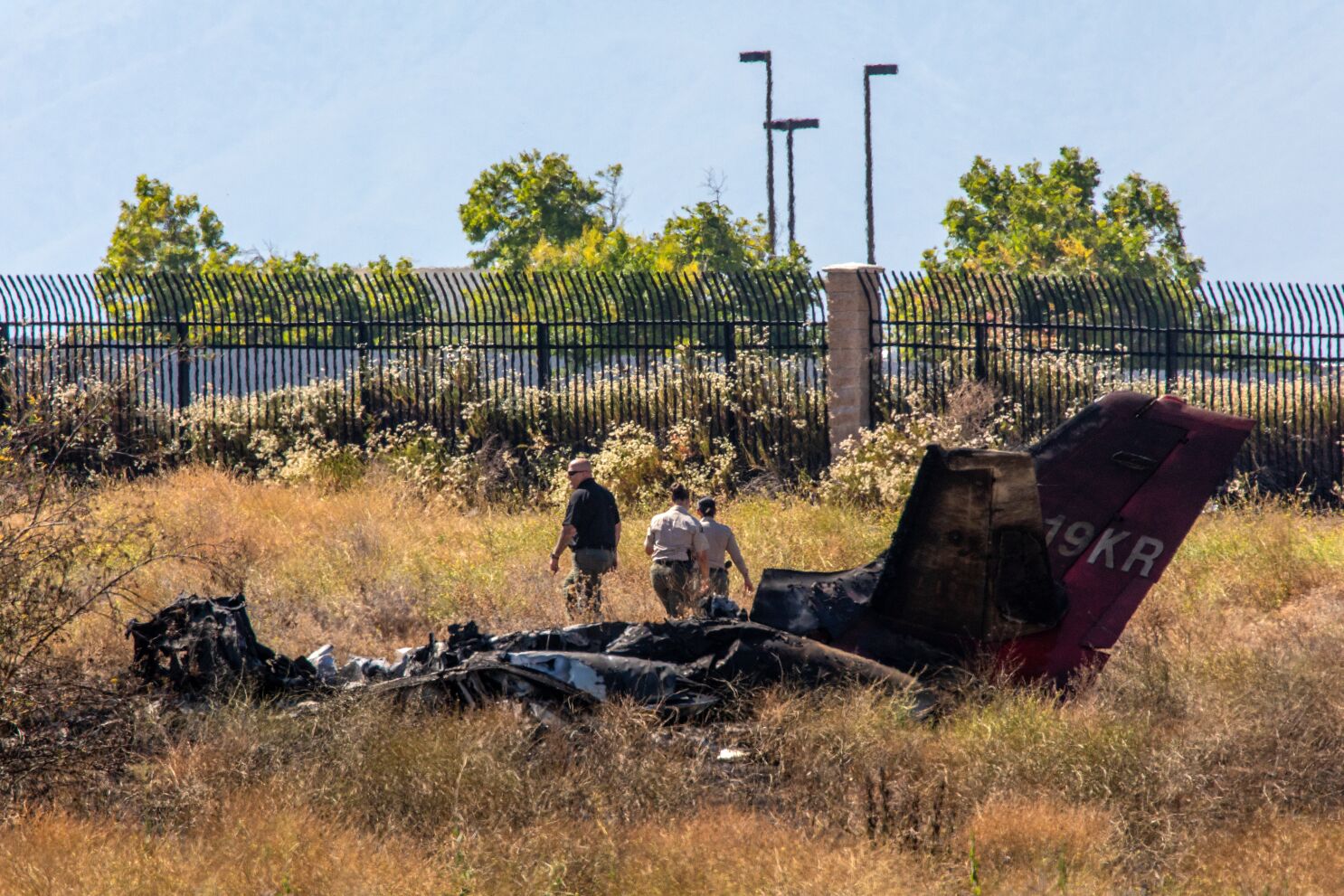
Crash of a Cessna 550 Citation II in Temecula: 6 killed

Date & Time: Jul 8, 2023 at 0414 LT
Type of aircraft:
Registration:
N819KR
Flight Type:
Survivors:
No
Schedule:
Las Vegas - Temecula
MSN:
550-0114
YOM:
1979
Crew on board:
2
Crew fatalities:
Pax on board:
4
Pax fatalities:
Other fatalities:
Total fatalities:
6
Captain / Total flying hours:
950
Copilot / Total flying hours:
1600
Aircraft flight hours:
14569
Circumstances:
During an early morning night flight, the flight encountered deteriorating weather conditions with a low overcast ceiling and rapidly decreasing visibility at the destination due to fog. A few minutes before the flight’s arrival time at the destination airport, the weather had changed from being clear with 10 statute miles (sm) visibility to 300 ft overcast with 3/4 sm visibility. Additionally, in the next 20 minutes, the visibility further decreased to about 1/2 sm with fog. The airplane was cleared for the RNAV (GPS) Runway 18 instrument approach to the airport. The lowest visibility requirement on the approach was 7/8 of a mile. During the final approach, the pilot executed a missed approach and asked to try another instrument approach. During the second instrument approach, while on final approach, the pilot failed to fly a stabilized approach as the airplane’s descent rate and airspeed were excessive. Subsequently, the airplane descended below the decision altitude of the approach without appropriate visual references and impacted terrain about 810 ft short of the runway threshold. The circumstances of the accident flight were consistent with controlled flight into terrain (CFIT). The postaccident examination of the airplane and engines revealed no evidence of mechanical failures or malfunctions that would have precluded normal operation of the airplane. The pilot had very low levels of ethanol detected in postmortem vitreous fluid and cavity blood. Some or all of this small amount of ethanol may have been from sources other than alcohol consumption. Although it is uncertain whether the pilot had consumed alcohol overnight, the toxicology results indicate that it is unlikely that the pilot’s performance would be significantly affected by ethanol. The copilot’s ethanol levels were high in all tested postmortem specimens. Based on the toxicology results and the circumstances of the event, it is likely that the copilot had consumed alcohol. However, based on the extent of his injuries, the presence of indicators of microbial decomposition, and the relative differences in ethanol levels across specimens, it also is likely that some of the detected ethanol was from sources other than alcohol consumption. The copilot’s blood alcohol level at the time of the crash cannot be reliably determined from available evidence. Overall, alcohol-related impairment may have limited the copilot’s ability to make a positive contribution to flight safety (such as by helping to monitor the approach); however, whether the effects of alcohol use by the copilot contributed to the accident outcome could not be determined.
Probable cause:
The flight crew’s decision to descend below the decision altitude of an instrument approach without having the appropriate runway visual reference(s) distinctively identified and with the visibility below the minimum that was prescribed for the approach, which resulted in controlled flight into terrain.
Final Report:

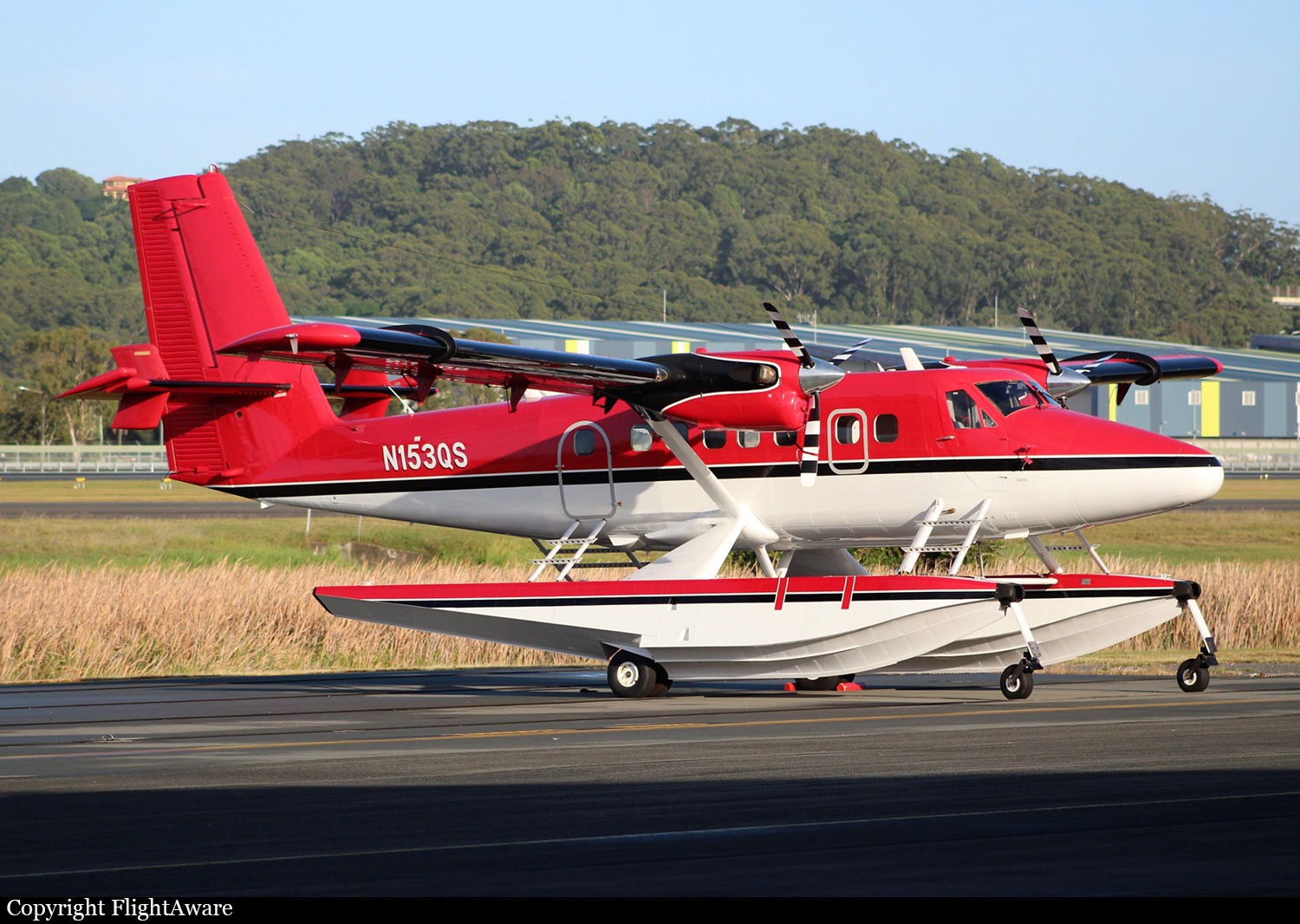
Crash of a Viking Air DHC-6 Twin Otter 400 off Half Moon Bay: 2 killed

Date & Time: May 20, 2023 at 1400 LT
Operator:
Registration:
N153QS
Flight Phase:
Flight Type:
Survivors:
No
Schedule:
Santa Rosa - Honolulu
MSN:
869
YOM:
2013
Crew on board:
2
Crew fatalities:
Pax on board:
0
Pax fatalities:
Other fatalities:
Total fatalities:
2
Captain / Total flying hours:
7140
Copilot / Total flying hours:
20000
Aircraft flight hours:
1641
Circumstances:
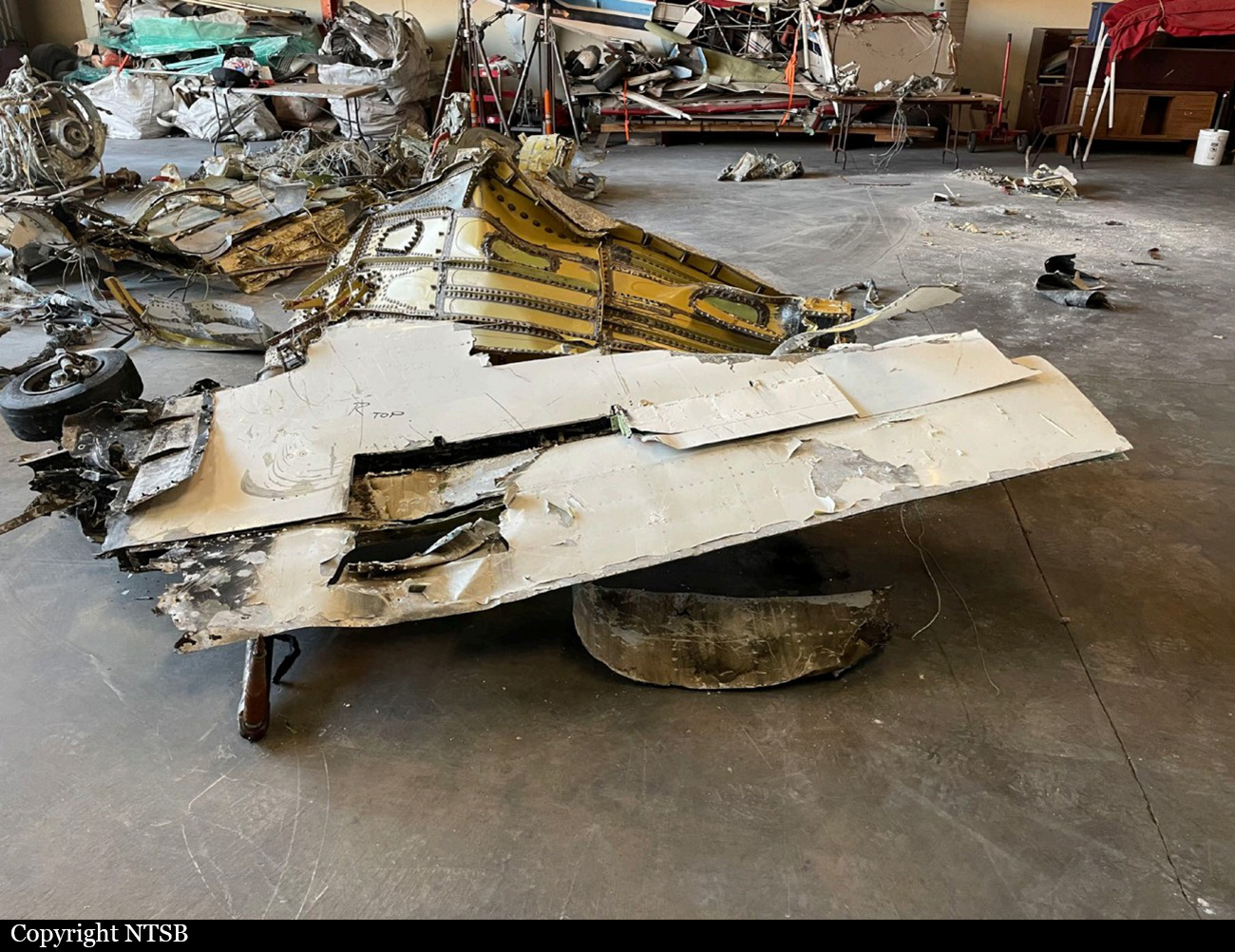
The airplane was conducting a trans-Pacific flight when the accident occurred. A ferry fuel tank system was installed on the airplane and 1,189 gallons of fuel was added for the flight. About 4 hours into the flight over the Pacific Ocean, the crew contacted air traffic control (ATC) and reported that they were having a fuel transfer problem and were thinking of turning around. The crew then reported they were declaring an emergency and had 10 hours of fuel remaining but could only access about 2 hours of fuel. Satellite flight track data showed the airplane reversed course when it was about 356 miles from the California coast. About 132 miles from the coast the flight track decreases in altitude to about 4,000 ft above mean sea level (msl). The last few minutes of the data shows the altitude decrease from about 3,600 ft msl to about 240 ft msl. The last track data point was located about 33 miles off the California coast. The United States Coast Guard (USCG) responded to the accident location and reported the fuselage was inverted in the water. They reported the wings and engines were separated from the fuselage. The pilots were still strapped in their seats and unresponsive. The occupants were not recovered. Search efforts resulted in finding the nose landing gear, right wing, and right engine. A fuel bladder tank had washed ashore in southern California. Postaccident examination of the recovered components revealed no evidence of any preimpact mechanical malfunctions or failures that would have precluded normal operation. A mechanic reported that he was instructed to set up the ferry fuel tank system in the accident airplane. He installed but did not fill the system with fuel, as he did not know when the flight would take place and it would have been unsafe to have the bladders contain fuel for several days before the flight. After installing the ferry fuel tank system, he contacted the copilot (who was also a mechanic), who was then to complete the installation. The mechanic understood that the copilot would be responsible for the final installation of the ferry fuel tank system and complete the appropriate logbook entries. The mechanic was not present when the copilot completed the installation and was not sure if the copilot had signed off on it.
Probable cause:
The failure of the ferry fuel tank system to transfer fuel during a trans-Pacific flight for reasons that could not be determined, which resulted in fuel starvation and a subsequent ditching into the water.
Final Report:

Crash of a Learjet 36A off San Clemente NAS: 3 killed

Date & Time: May 10, 2023 at 0749 LT
Type of aircraft:
Operator:
Registration:
N56PA
Flight Phase:
Flight Type:
Survivors:
No
Schedule:
Point Mugu - Point Mugu
MSN:
36-023
YOM:
1976
Flight number:
Fenix 01
Crew on board:
3
Crew fatalities:
Pax on board:
0
Pax fatalities:
Other fatalities:
Total fatalities:
3
Captain / Total flying hours:
10300
Captain / Total hours on type:
5700.00
Copilot / Total flying hours:
1013
Copilot / Total hours on type:
844
Aircraft flight hours:
18807
Circumstances:
The accident airplane took off as the lead airplane in formation with a second Lear Jet airplane flying as wingman in a close formation position. The purpose of the flight was to participate in an exercise with the United States Navy in an over-water training area. Shortly after entering the training area at 15,000 ft mean sea level (msl) the wingman positioned on the right side of the accident airplane, observed the flaps on the accident airplane were partially extended. They notified the pilot of the accident airplane who acknowledged the radio call. The wingman then observed the flaps retract and observed white or gray colored “smoke or gas” coming from the left aft side of the airplane. The pilot in the accident airplane then radioed that they detected an odor in the cabin. Seconds later, the wingman observed red fluid on the underside of the tail cone followed by flames coming from around the aft equipment bay (tail cone) access door. They informed the accident pilots that their airplane was on fire and the accident pilot declared an emergency along with their intentions to land at a nearby airfield on the island. The wingman took over leading the formation and maneuvered in front of the accident airplane. The wingman last observed and heard radio transmissions from the accident airplane a short time later as they descended through about 7000 ft msl. The flight was above an overcast cloud layer that obstructed the view of the island at that time. Recorded ADS-B data showed that the accident airplane subsequently made a series of descending turns before the data ended. The airplane wreckage was located underwater about 4 miles northwest of the last ADS-B data point. The wreckage was highly fragmented, and the debris field extended several hundred feet along the ocean floor. Salvage operations were able to recover about 40 percent of the airplane wreckage. Examination of the wreckage showed areas of smoke and fire damage in portions of the airplane from the center wing fuselage outboard through the left- and right-wing roots and aft throughout the empennage. The aft equipment bay forward bulkhead, which also served as the fuselage fuel tank aft bulkhead, exhibited damage on the upper left side consistent with exposure to a focused heat source such as a fire from a leak in a pressurized fuel or hydraulic line. Additional evidence of focused fire damage was identified in the left engine pylon, which was located outboard and adjacent to the aft equipment bay. The effected area of the pylon contained engine fire detection circuits. Examination of the hydraulic shutoff valves attached to the hydraulic reservoir found that the left hydraulic shutoff valve was closed and the right valve was in the open position. The position of the left hydraulic shutoff valve indicates the aircrew likely shut down the left engine due to a fire indication (A hydraulic valve will close if the FIRE PULL tee-handle switch is activated by the flight crew in the event an engine fire is detected). Investigators were unable to determine if the witnessed flap extension and retraction was initiated by activation of the flap selector switch or induced by fire damage. The aft equipment bay houses electrical equipment capable of providing an ignition source for a fire, and hydraulic and fuel system components capable of providing fuel for a fire in the event of a leak. The left fuel motive flow line was intact from the fuel pump up to the fuselage fitting, where the line passes through the fuselage skin into the aft equipment bay near the aft left engine mount. The fuselage fitting had the stainless-steel fuel line and b-nut attached on the outboard, engine side. The inboard, aft equipment bay side of the fitting did not have an aluminum b-nut attached or the line that connects the fitting to the motive flow valve. The left engine hydraulic pressure line and PT2 line, which pass through the fuselage into the aft equipment bay adjacent to the motive fuel line, each had aluminum b-nuts present on the interior side of their respective fuselage fittings and the interior lines for each was sheared at the fitting. The left fuel motive flow fuselage fitting and the hydraulic fluid return fitting were examined. No thermal damage was observed on the outboard nuts and attached portions of tubing. Examination of the threads on the inboard side of the motive flow fitting did not exhibit evidence of thread stripping and comparison between the two fittings did not reveal any physical differences to explain why one nut remained attached and the other did not. The reason the motive flow nut was missing from the fitting could not be determined. Observed fire and heat damage patterns indicate the fire likely started in proximity to the where the pressurized fuel motive flow line connected to the firewall fitting where the missing b-nut was located. A leak from the pressurized motive flow line would have sustained and allowed an uncontrollable fire to develop. The sustained fire likely affected controllability of the airplane and resulted in the pilots’ loss of control of the airplane.
Probable cause:
The pilots’ loss of airplane control following a catastrophic fire that started on the left side of the aft equipment bay (tail cone). The fire likely initiated from a leak from the left fuel motive flow line due to a b-nut that loosened for reasons that could not be determined based on available evidence.
Final Report:


Crash of a Cessna 414 Chancellor in Modesto: 1 killed

Date & Time: Jan 18, 2023 at 1307 LT
Type of aircraft:
Registration:
N4765G
Flight Type:
Survivors:
No
Schedule:
Modesto – Concord
MSN:
414-0940
YOM:
1977
Crew on board:
1
Crew fatalities:
Pax on board:
0
Pax fatalities:
Other fatalities:
Total fatalities:
1
Captain / Total flying hours:
4506
Captain / Total hours on type:
9.00
Aircraft flight hours:
3574
Circumstances:
Shortly after taking off, the pilot was instructed to change from the airport tower frequency to the departure control frequency. Numerous radio transmissions followed between tower personnel and the pilot that indicated the airplane’s radio was operating normally on the tower frequency, but the pilot could not change frequencies to departure control as directed. The pilot subsequently requested and received approval to return to the departure airport. During the flight back to the airport, the pilot made radio transmissions that indicated he continued to troubleshoot the radio problems. The airplane’s flight track showed the pilot flew directly toward the runway aimpoint about 1,000 ft from, and perpendicular to, the runway during the left base turn to final and allowed the airplane to descend as low as 200 ft pressure altitude (PA). The pilot then made a right turn about .5 miles from the runway followed by a left turn towards the runway. A pilot witness near the accident location observed the airplane maneuvering and predicted the airplane was going to stall. The airplane’s airspeed decreased to about 53 knots (kts) during the left turn and video showed the airplane’s bank angle increased before the airplane aerodynamically stalled and impacted terrain. Post accident examination of the airframe, engines, and review of recorded engine monitoring data revealed no evidence of any preimpact mechanical malfunctions or failures that would have precluded normal operation. Toxicology testing showed the pilot had diphenhydramine, a sedating antihistamine, in his liver and muscle tissue. While therapeutic levels could not be determined, side effects such as diminished psychomotor performance from his use of diphenhydramine were not evident from operational evidence. Thus, the effects of the pilot’s use of diphenhydramine was not a factor in this accident. The accident is consistent with the pilot becoming distracted by the reported non-critical radio anomaly and turning base leg of the traffic pattern too early during his return to the airport. The pilot then failed to maintain adequate airspeed and proper bank angle while maneuvering from base leg to final approach, resulting in an aerodynamic stall and impact with terrain.
Probable cause:
The pilot’s exceedance of the airplane’s critical angle of attack and failure to maintain proper airspeed during a turn to final, resulting in an aerodynamic stall and subsequent impact with terrain. Contributing to the accident was the pilot’s distraction due to a non-critical radio anomaly.
Final Report: