Country
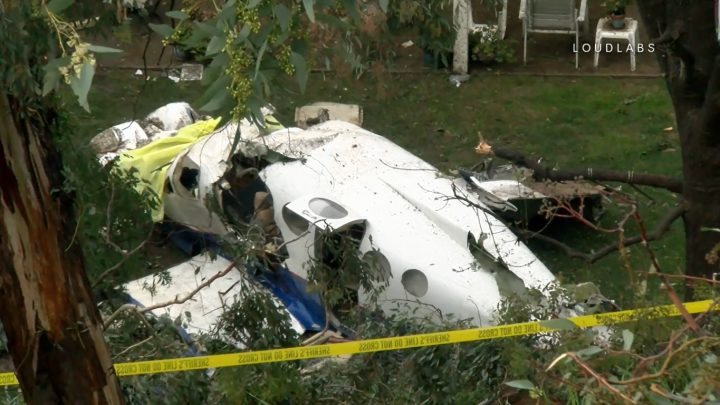
Crash of a Cessna 414 Chancellor of Point Loma: 6 killed
Date & Time:
Jun 8, 2025 at 1230 LT
Operator:

Registration:
N414BA
Survivors:
No
Schedule:
San Diego - Phoenix
MSN:
414-0047
YOM:
1970
Crew on board:
1
Crew fatalities:
Pax on board:
5
Pax fatalities:
Other fatalities:
Total fatalities:
6
Circumstances:
The twin engine airplane departed San Diego-Lindbergh Field International Airport Runway 27 at 1225LT on a flight to Phoenix-Sky Harbor Airport, carrying five passengers and one pilot. After takeoff, while climbing, the pilot was instructed for heading 180 when he reported controllability problems. Shortly later, the airplane showed erratic altitude, speed and heading data before crashing into the Pacific Ocean off Point Loma. Few debris were found floating on water and all six occupants were killed.

Crash of a Cessna 414A chancellor in McKinney: 2 killed
Date & Time:
Jun 27, 2024 at 1028 LT
Operator:

Registration:
N414BS
Survivors:
Yes
Schedule:
McKinney - McKinney
MSN:
414A-0504
YOM:
1980
Crew on board:
1
Crew fatalities:
Pax on board:
2
Pax fatalities:
Other fatalities:
Total fatalities:
2
Aircraft flight hours:
7223
Circumstances:
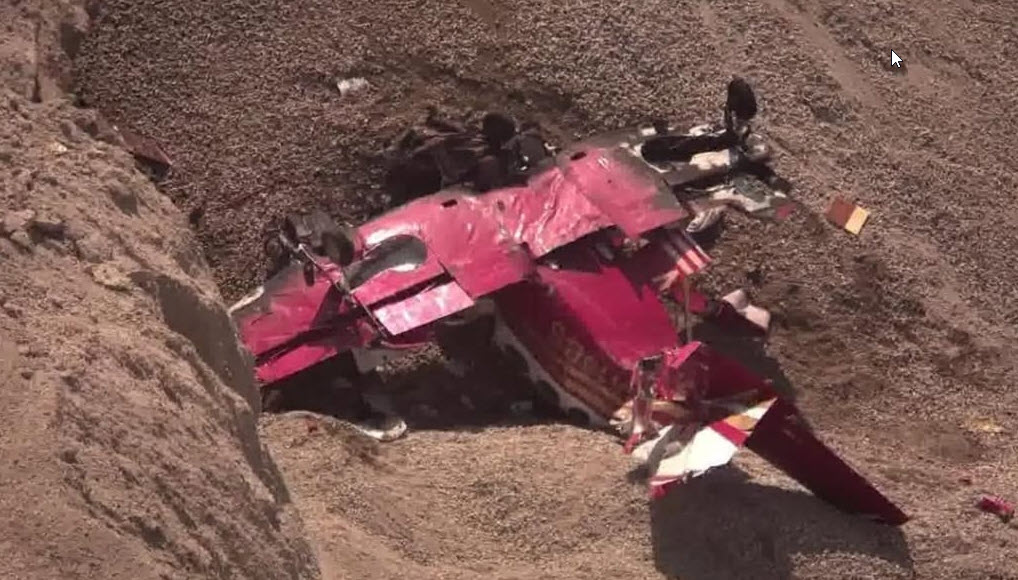
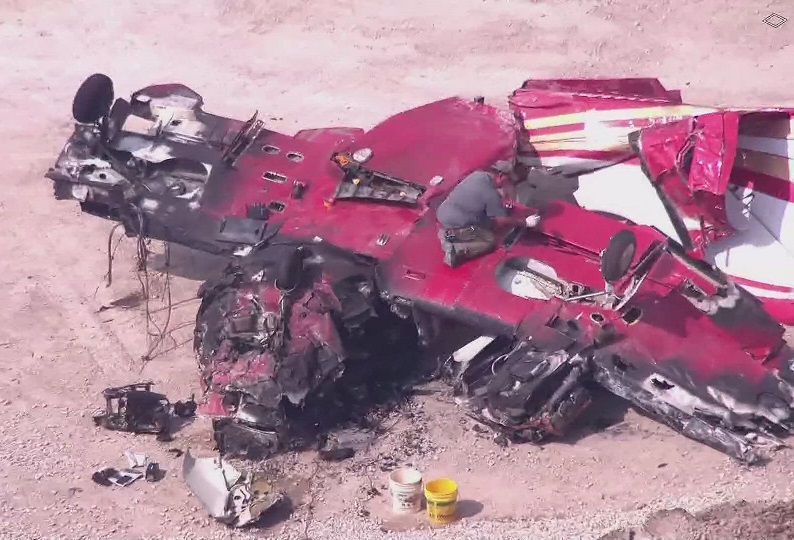
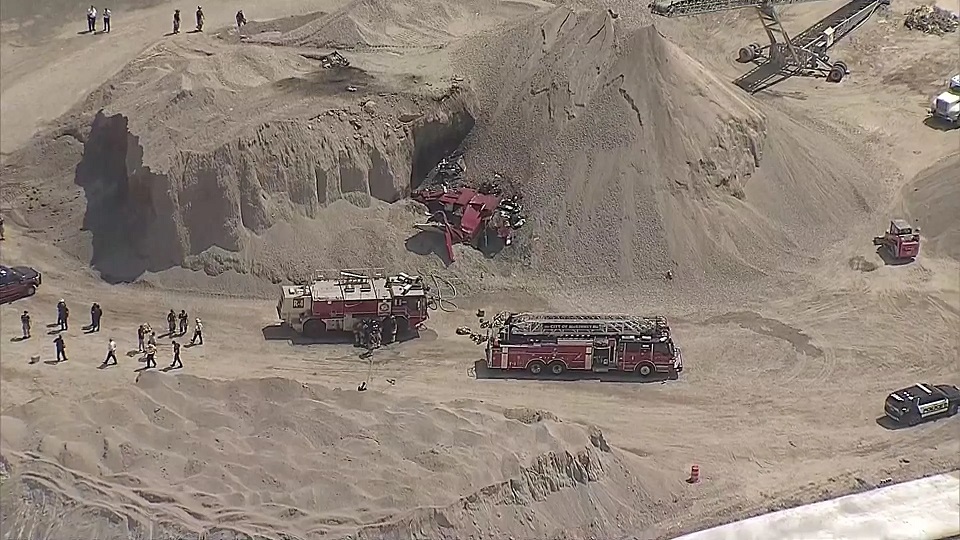
The pilot was departing on a local flight to check newly installed avionics on the airplane. During takeoff, the airplane lifted off within the performance specifications cited in the airplane flight manual. Shortly after liftoff, the pilot reported to air traffic control (ATC) that he had lost left engine power. The pilot continued the takeoff with the landing gear still extended. A witness stated that the airplane seemed to lose left engine power during the takeoff before reaching taxiway B4, and “yawed left quite a bit.” The remaining runway distance from the B4 taxiway to the departure end of the runway was about 2,600 to 2,700 ft. The witness stated that the airplane was not far past the departure end of runway when it began to turn left. As the pilot continued the takeoff and attempted the climb out, ATC instructed the pilot to turn right. The pilot responded that he was going to turn left, which was a turn into the inoperative engine and in the improper direction due to the greater left rolling tendency and increased likelihood of a loss of control. As the flight progressed, the airplane ground speed slowed to the airplane’s air minimum control speed (Vmc) when it rolled left and impacted terrain in an inverted attitude. The airplane was destroyed. A passenger was injured and two other occupants were killed.
Probable cause:
The pilot's improper decision to attempt continued flight after a loss of left engine power with usable runway remaining and his subsequent failure to follow the emergency procedures and maintain air minimum control speed, which resulted in a loss of control. Contributing to the accident was the pilot's improper fuel tank selection that resulted in a loss of left engine power due to fuel starvation.
Final Report:
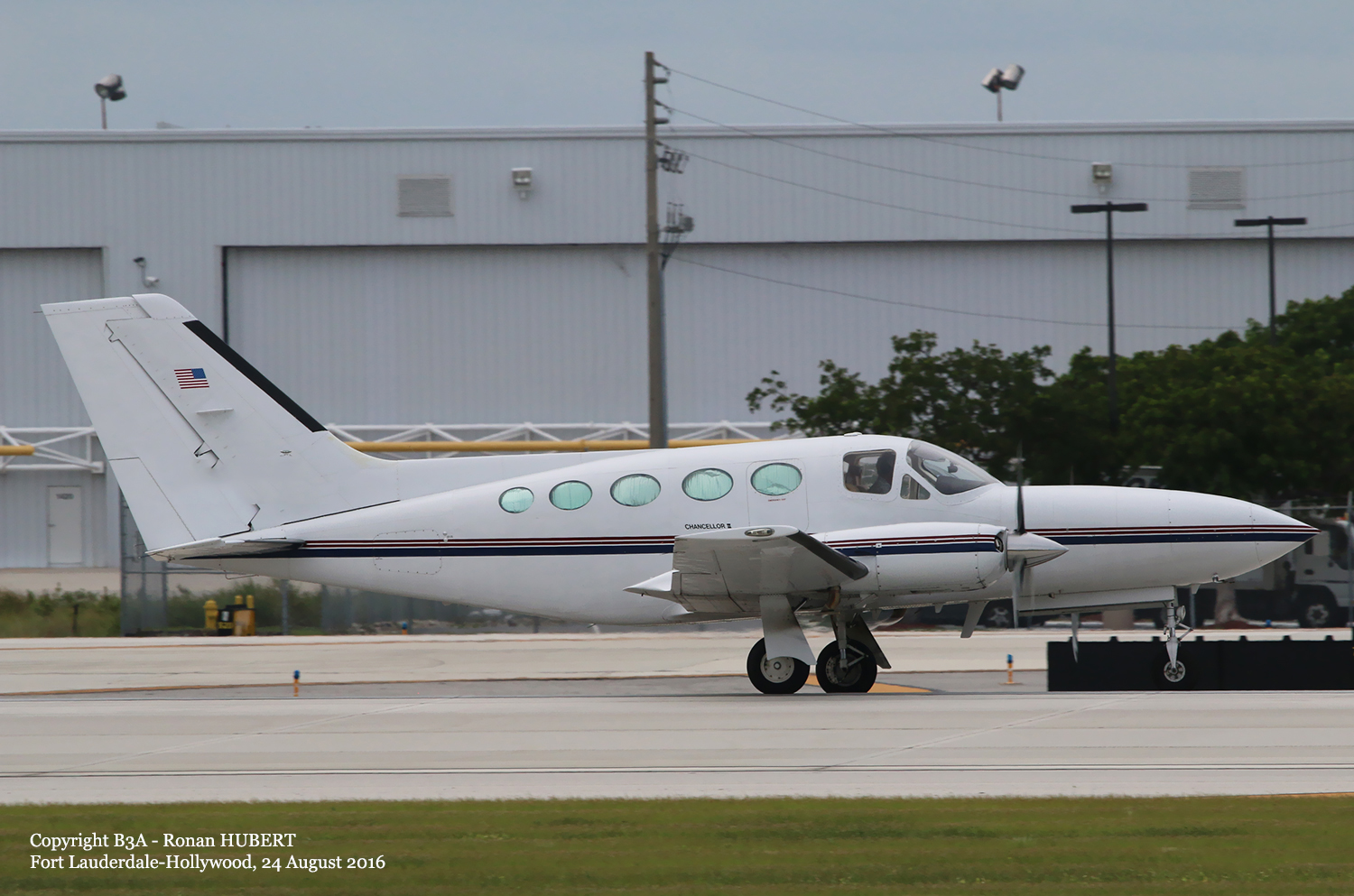
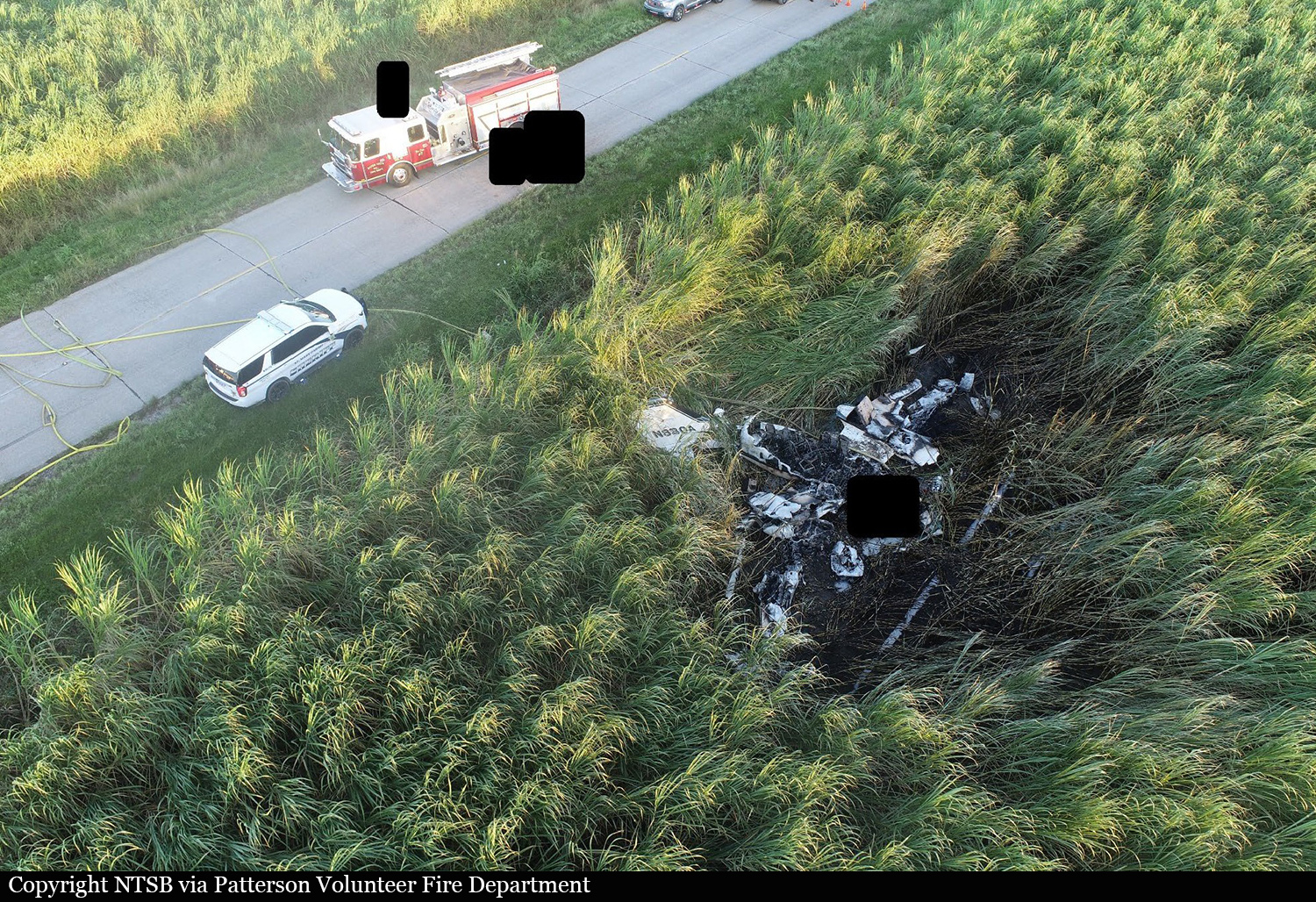
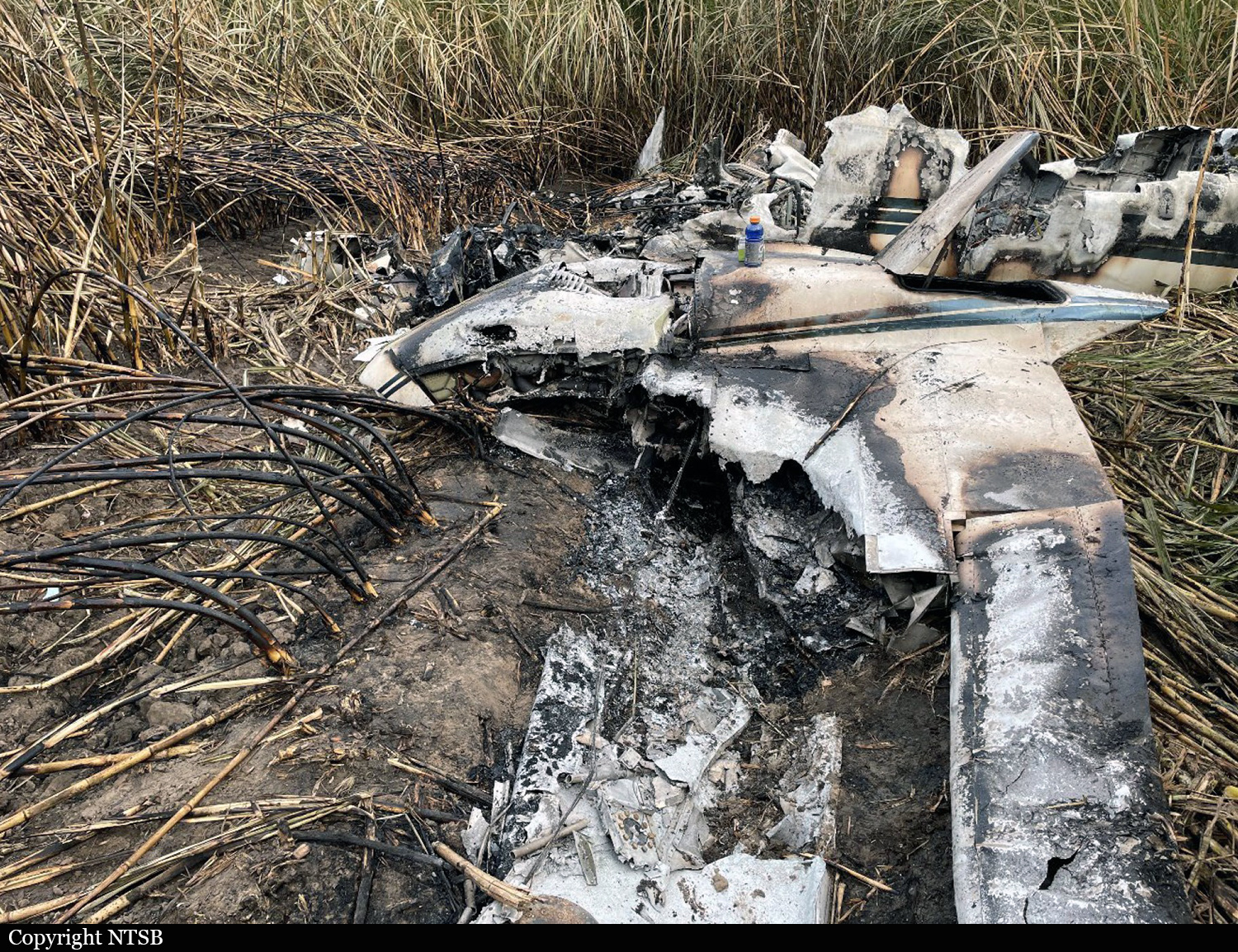
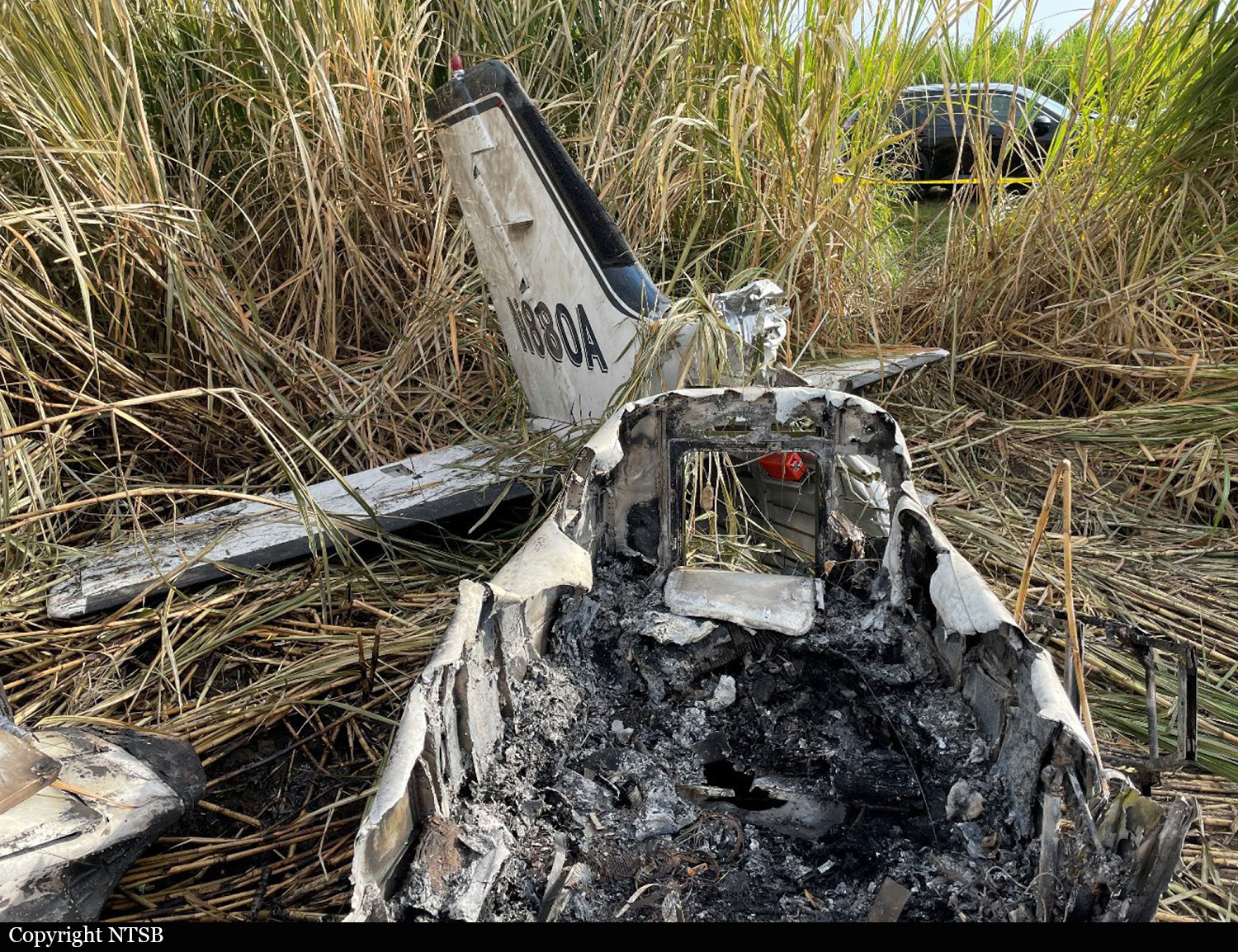
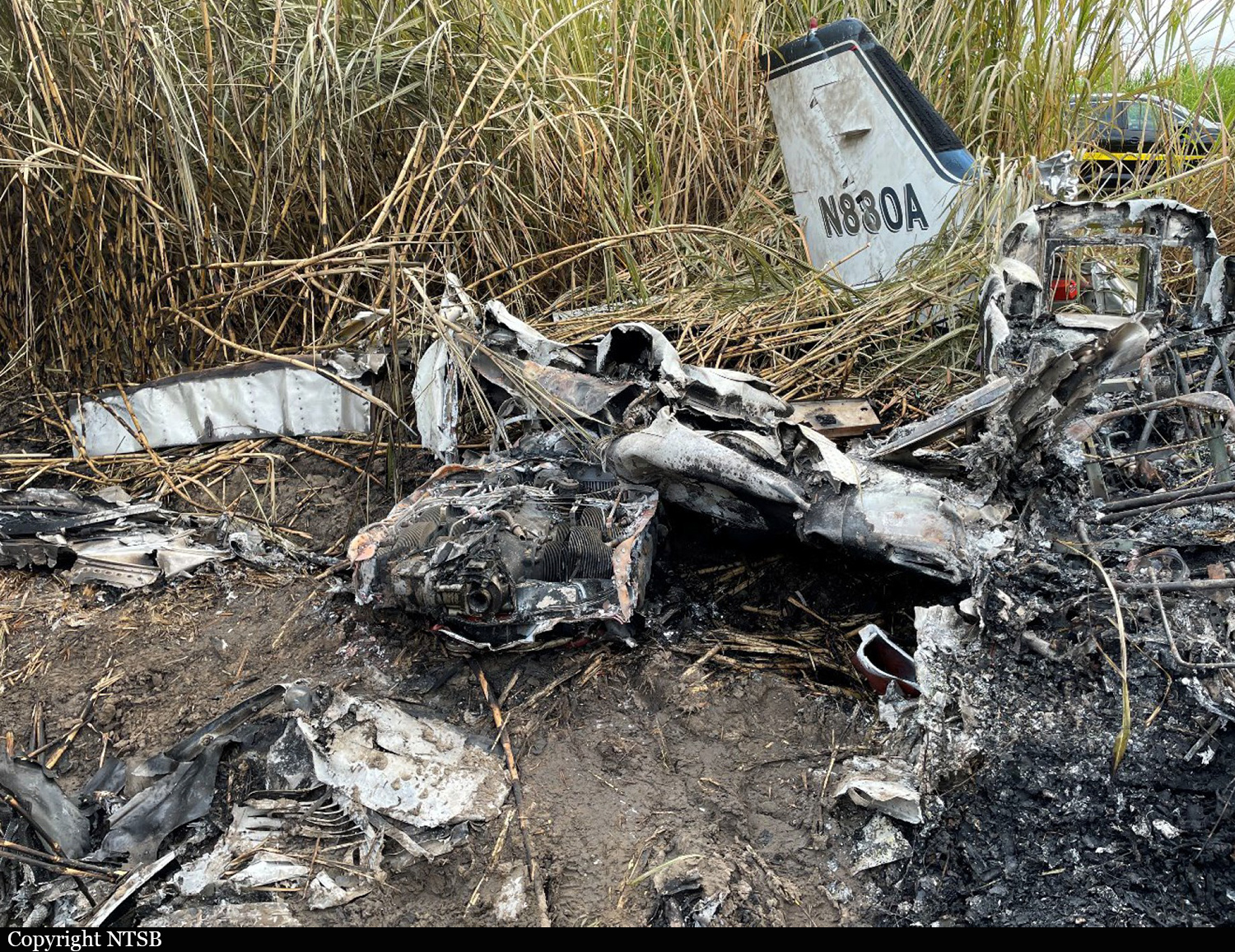
Crash of a Cessna 414 Chancellor in Patterson: 2 killed
Date & Time:
Oct 12, 2023 at 1521 LT
Registration:
N880A
Survivors:
No
Schedule:
Gonzales – Patterson - Houston
MSN:
414-0397
YOM:
1973
Crew on board:
1
Crew fatalities:
Pax on board:
1
Pax fatalities:
Other fatalities:
Total fatalities:
2
Aircraft flight hours:
8787
Circumstances:
According to the pilot’s family, the purpose of the flight was to transport the passenger to the Sugarland Regional Airport (SGR), Houston, Texas, where a family member would pick him up. According to the passenger’s family, the purpose of the flight was for the passenger to travel to Houston for a medical appointment. A review of ADS-B data showed that the airplane departed from the Gonzales Regional Airport (REG), Gonzales, Louisiana, at 1456 and landed at 1511 at the Harry P. Williams Memorial Airport (PTN), Patterson, Louisiana. According to the PTN airport manager, the airplane taxied over to the fixed-base operator and remained at idle while the passenger boarded the airplane. Video footage showed that the passenger pulled a rolling suitcase out to the airplane. Once the passenger boarded, the pilot then got out of the airplane and walked over to the left side, where he appeared to look at something on the airplane. The pilot then boarded the airplane and taxied to runway 24 for departure. The pilot announced on the airport common traffic advisory frequency that the airplane was departing runway 24, and no further radio transmissions were heard from the airplane. No ADS-B data were available for the airplane’s takeoff. Video footage captured part of the accident sequence, showing the airplane in an extreme, nose-low attitude while rolling through inverted and impacting a field near the departure end of runway 24. A witness, who was driving in her vehicle near an intersection just to the west of PTN, observed the airplane shortly after it departed from runway 24. She observed that the airplane was “tilted to the left,” turned on its side, and then entered a nosedive. She observed the airplane impact a field, explode, and both the wreckage and surrounding area caught fire. She could not tell if the airplane’s engines sounded abnormal before impact, as she was driving at the time, nor did she observe any smoke or flames emitting from the airplane before impact. She said that, from her position, it did not appear that the airplane was trying to turn back to the airport. The airplane was destroyed by a post crash fire and both occupants were killed.
Probable cause:
The pilot’s failure to properly set the elevator trim before takeoff, which resulted in an exceedance of the airplane’s critical angle of attack and an aerodynamic stall during takeoff.
Final Report:
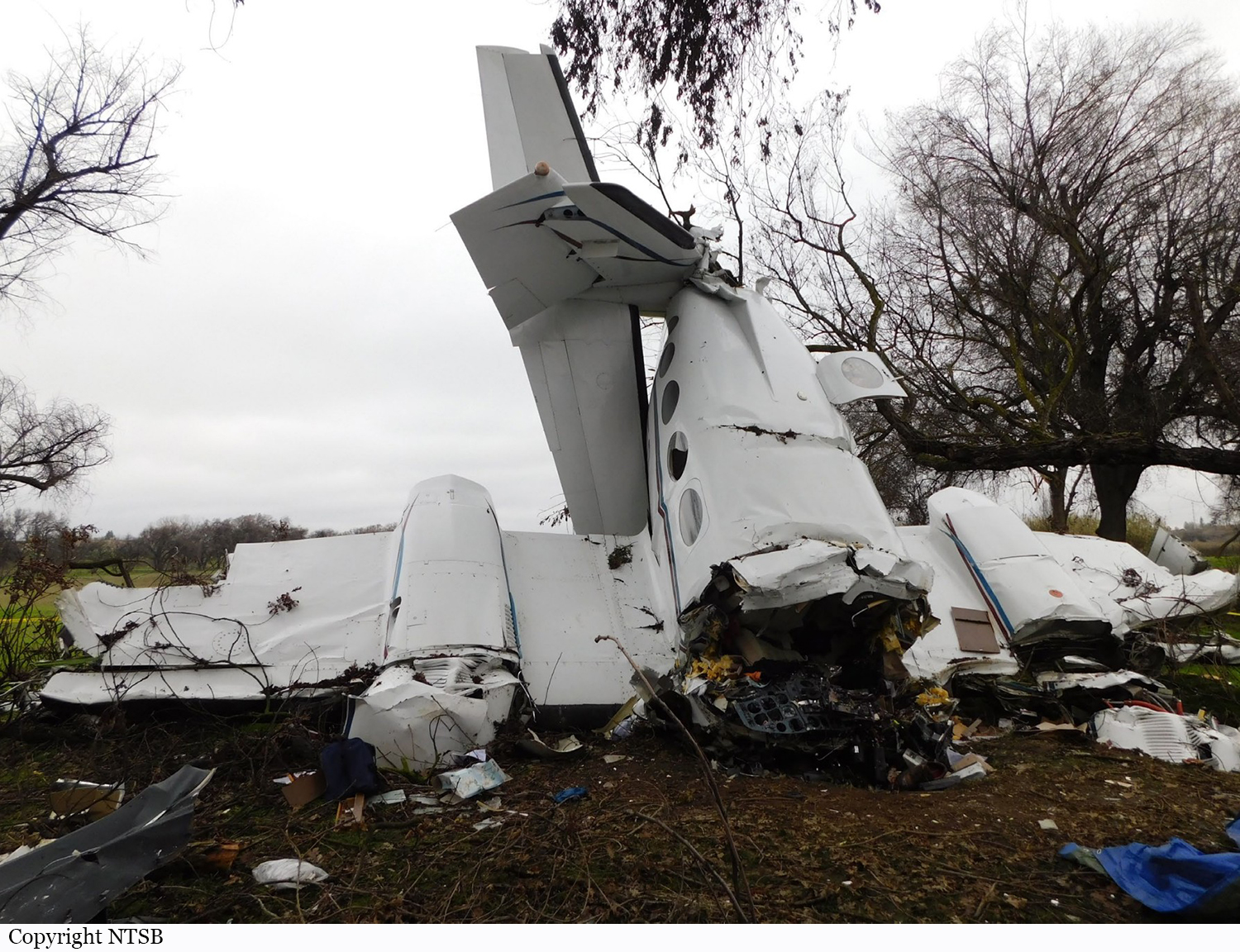
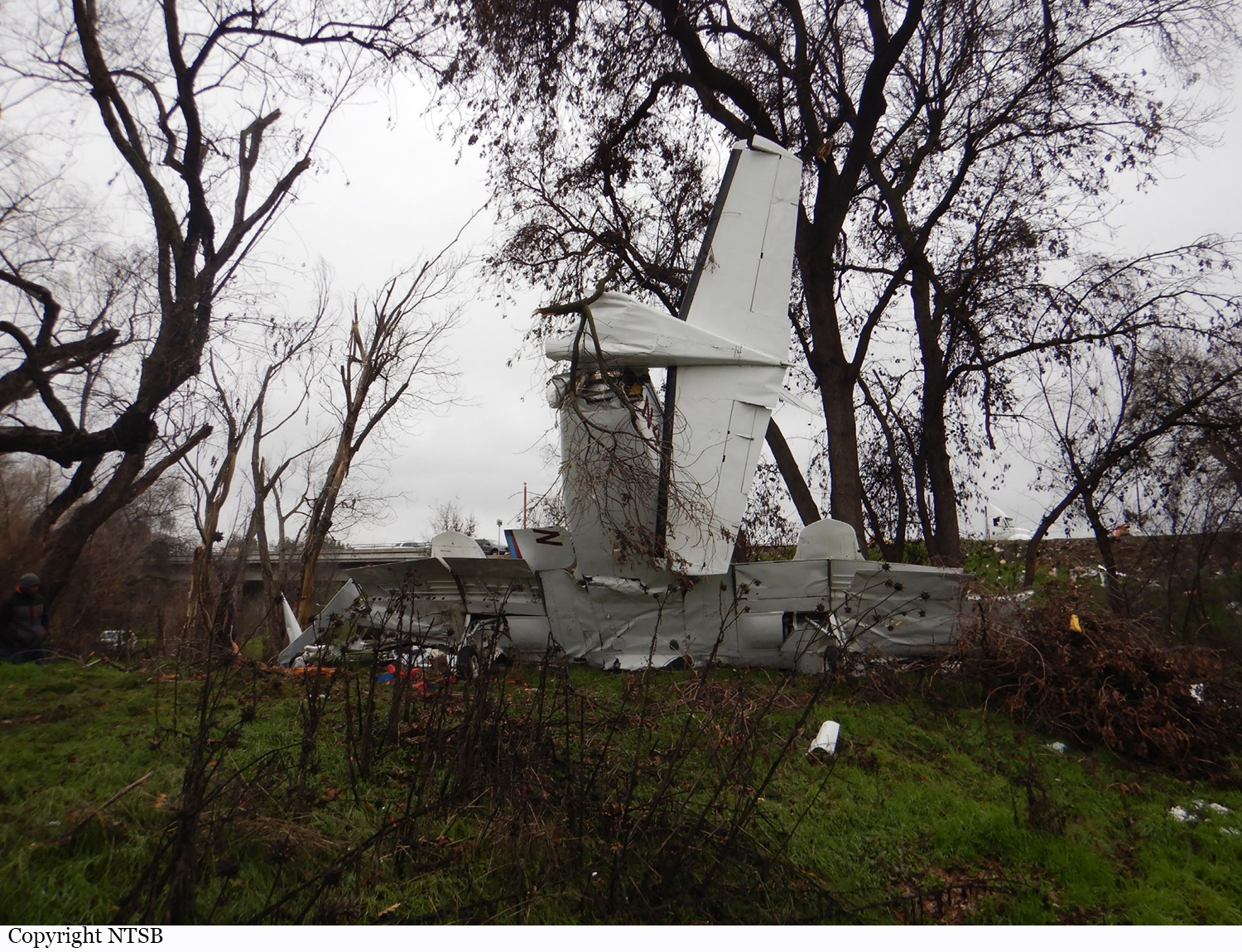
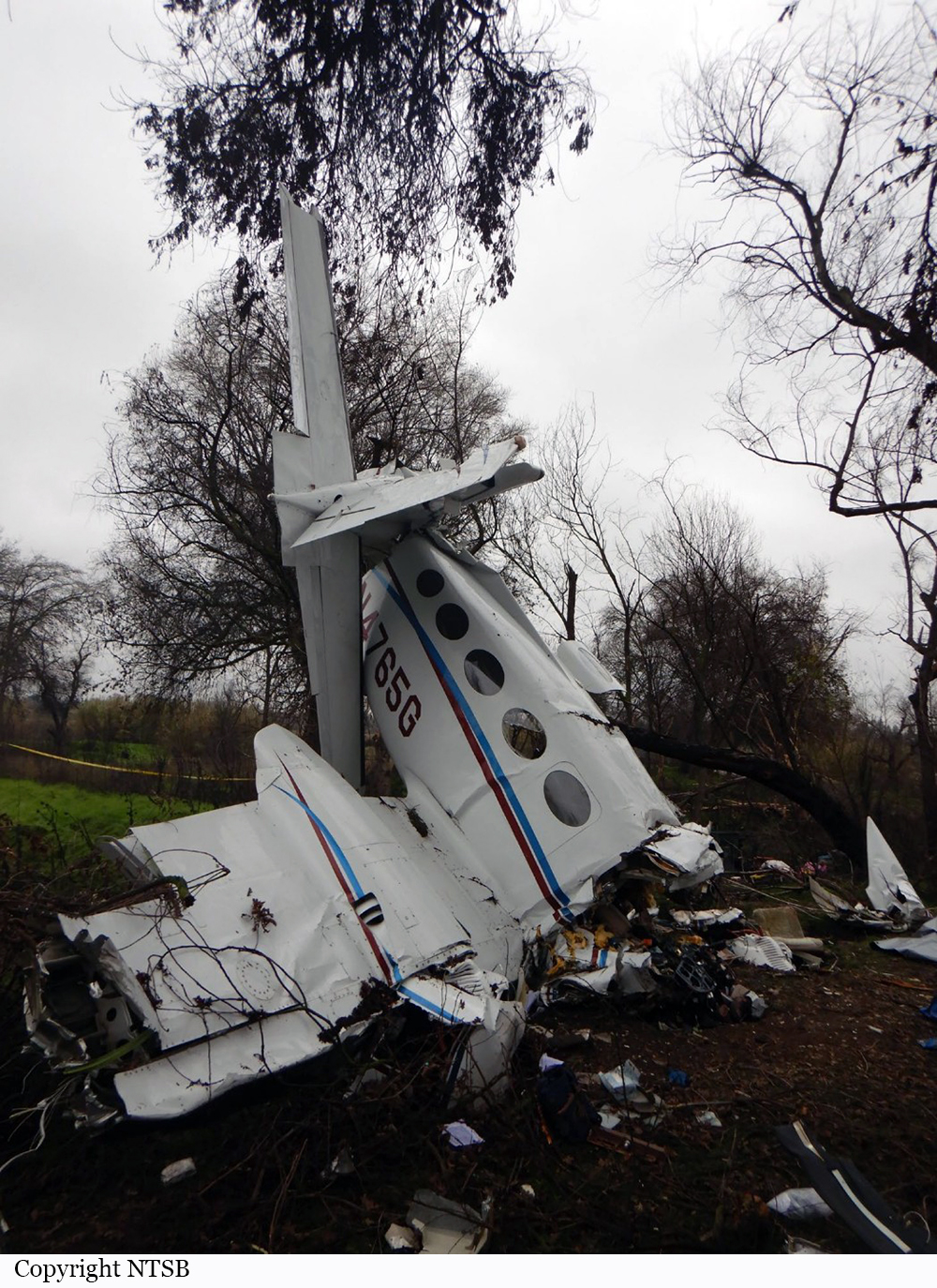
Crash of a Cessna 414 Chancellor in Modesto: 1 killed
Date & Time:
Jan 18, 2023 at 1307 LT
Registration:
N4765G
Survivors:
No
Schedule:
Modesto – Concord
MSN:
414-0940
YOM:
1977
Crew on board:
1
Crew fatalities:
Pax on board:
0
Pax fatalities:
Other fatalities:
Total fatalities:
1
Captain / Total hours on type:
9.00
Aircraft flight hours:
3574
Circumstances:
Shortly after taking off, the pilot was instructed to change from the airport tower frequency to the departure control frequency. Numerous radio transmissions followed between tower personnel and the pilot that indicated the airplane’s radio was operating normally on the tower frequency, but the pilot could not change frequencies to departure control as directed. The pilot subsequently requested and received approval to return to the departure airport. During the flight back to the airport, the pilot made radio transmissions that indicated he continued to troubleshoot the radio problems. The airplane’s flight track showed the pilot flew directly toward the runway aimpoint about 1,000 ft from, and perpendicular to, the runway during the left base turn to final and allowed the airplane to descend as low as 200 ft pressure altitude (PA). The pilot then made a right turn about .5 miles from the runway followed by a left turn towards the runway. A pilot witness near the accident location observed the airplane maneuvering and predicted the airplane was going to stall. The airplane’s airspeed decreased to about 53 knots (kts) during the left turn and video showed the airplane’s bank angle increased before the airplane aerodynamically stalled and impacted terrain. Post accident examination of the airframe, engines, and review of recorded engine monitoring data revealed no evidence of any preimpact mechanical malfunctions or failures that would have precluded normal operation. Toxicology testing showed the pilot had diphenhydramine, a sedating antihistamine, in his liver and muscle tissue. While therapeutic levels could not be determined, side effects such as diminished psychomotor performance from his use of diphenhydramine were not evident from operational evidence. Thus, the effects of the pilot’s use of diphenhydramine was not a factor in this accident. The accident is consistent with the pilot becoming distracted by the reported non-critical radio anomaly and turning base leg of the traffic pattern too early during his return to the airport. The pilot then failed to maintain adequate airspeed and proper bank angle while maneuvering from base leg to final approach, resulting in an aerodynamic stall and impact with terrain.
Probable cause:
The pilot’s exceedance of the airplane’s critical angle of attack and failure to maintain proper airspeed during a turn to final, resulting in an aerodynamic stall and subsequent impact with terrain. Contributing to the accident was the pilot’s distraction due to a non-critical radio anomaly.
Final Report:

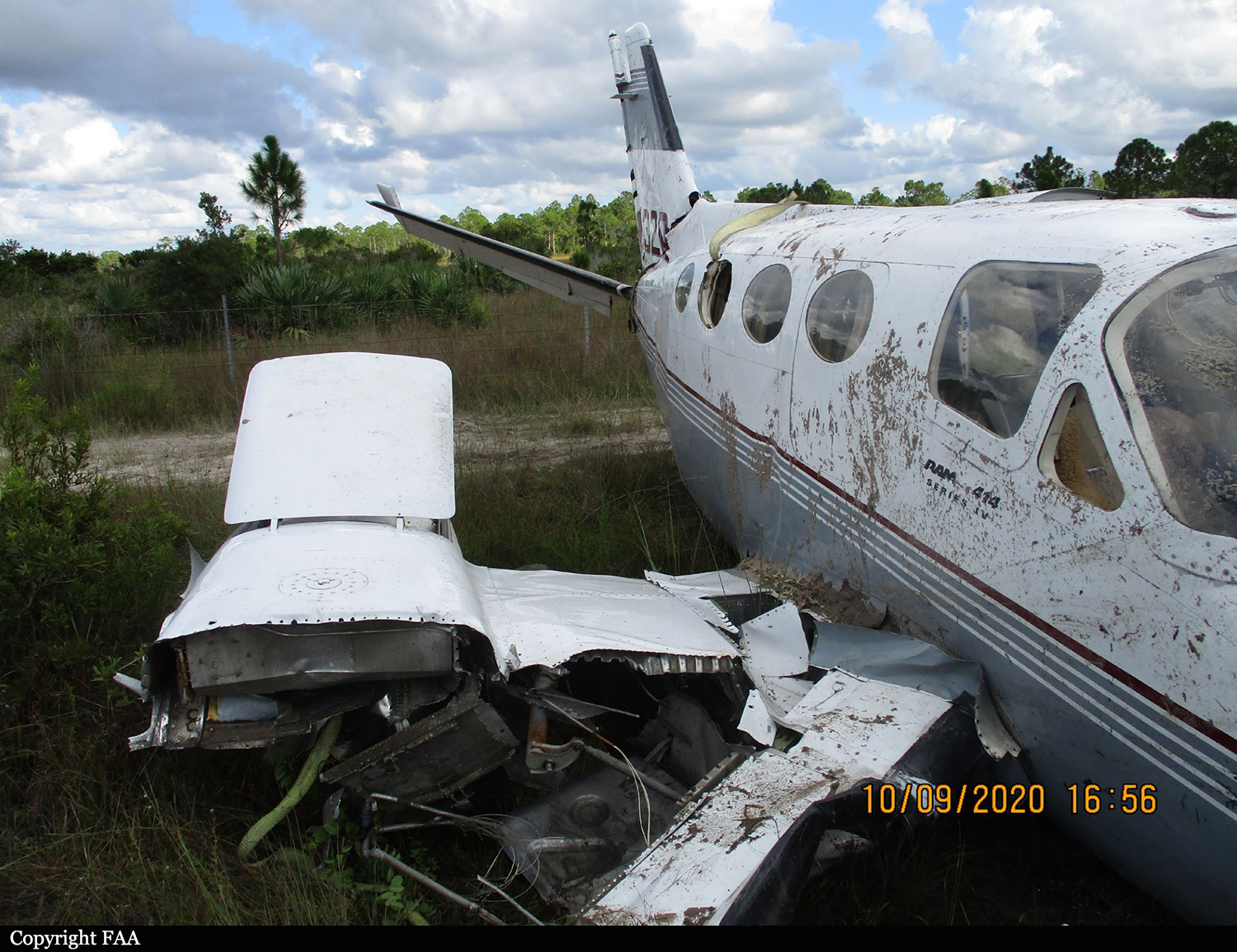
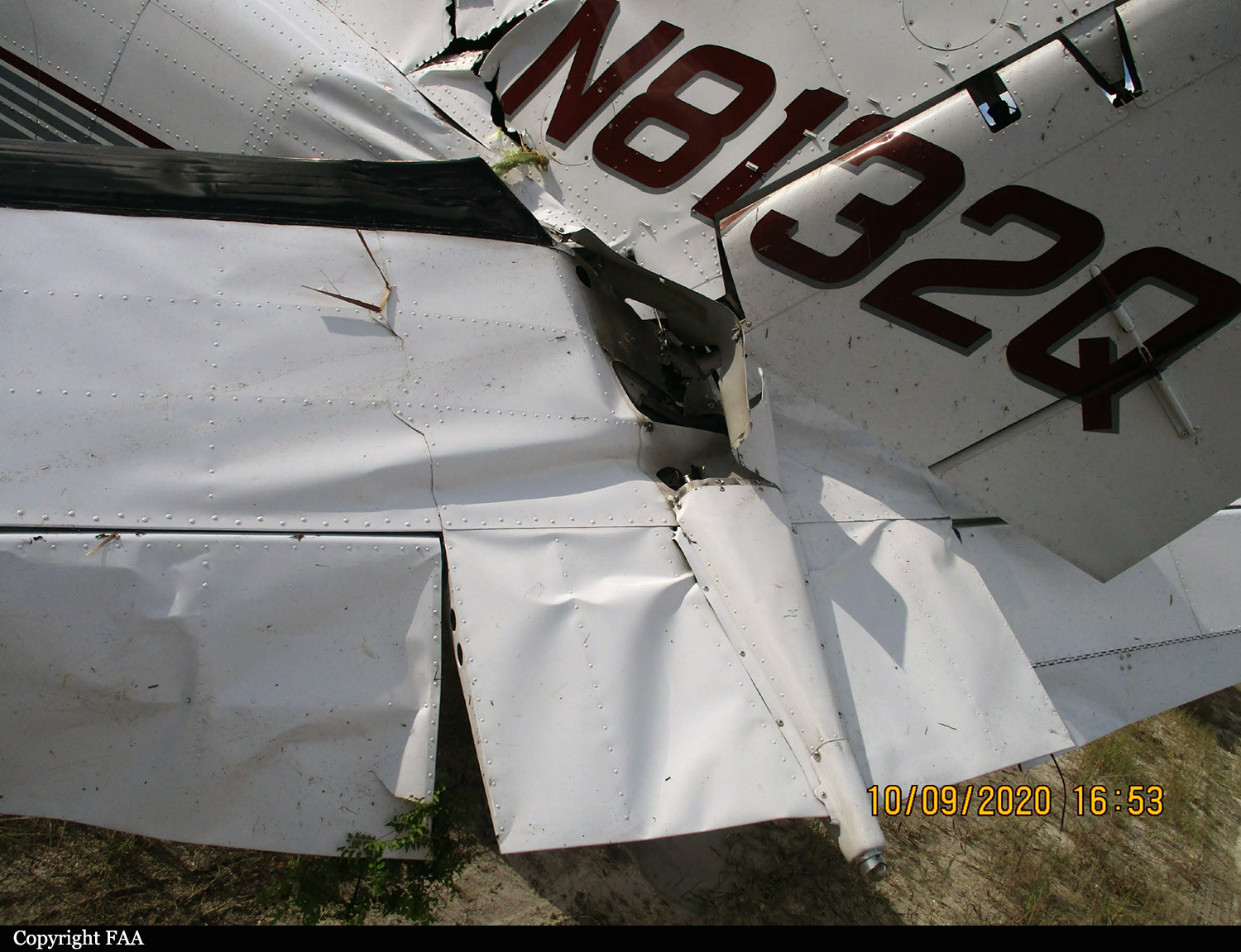
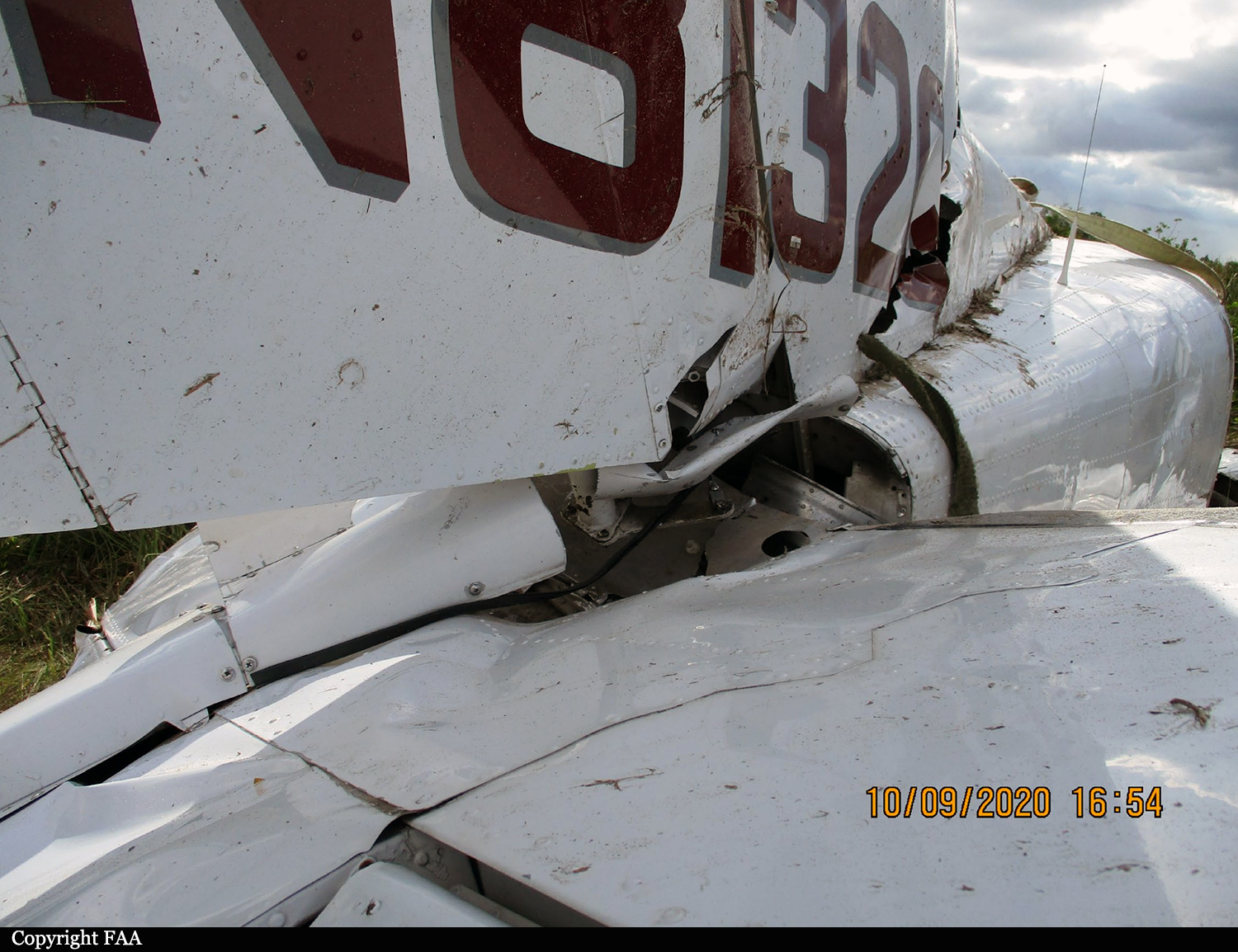
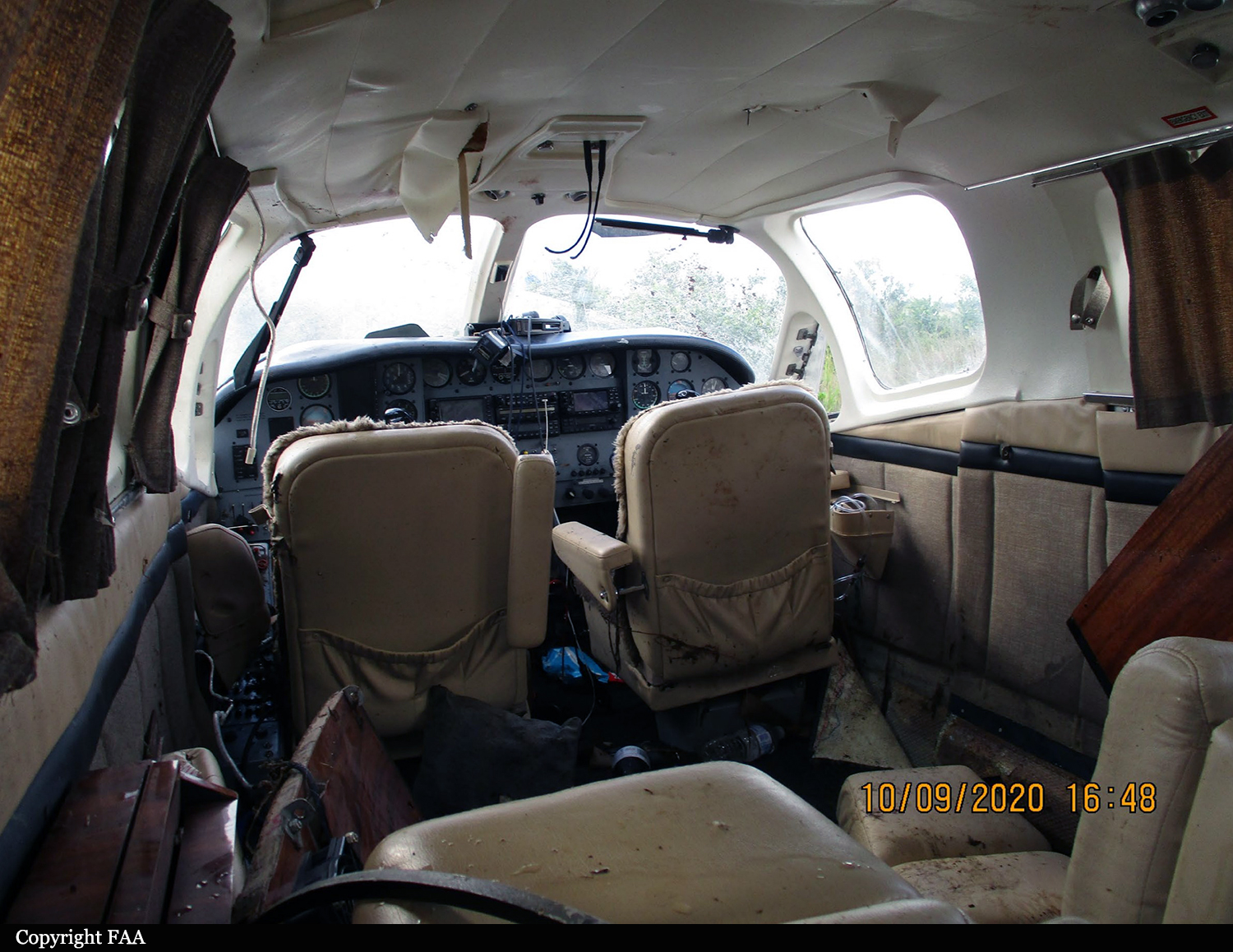
Crash of a Cessna 414 Chancellor in North Palm Beach
Date & Time:
Oct 8, 2020 at 1115 LT
Registration:
N8132Q
Survivors:
Yes
Schedule:
North Palm Beach - Claxton
MSN:
414-0032
YOM:
1969
Crew on board:
2
Crew fatalities:
Pax on board:
5
Pax fatalities:
Other fatalities:
Total fatalities:
0
Captain / Total hours on type:
897.00
Copilot / Total hours on type:
5
Aircraft flight hours:
6377
Circumstances:
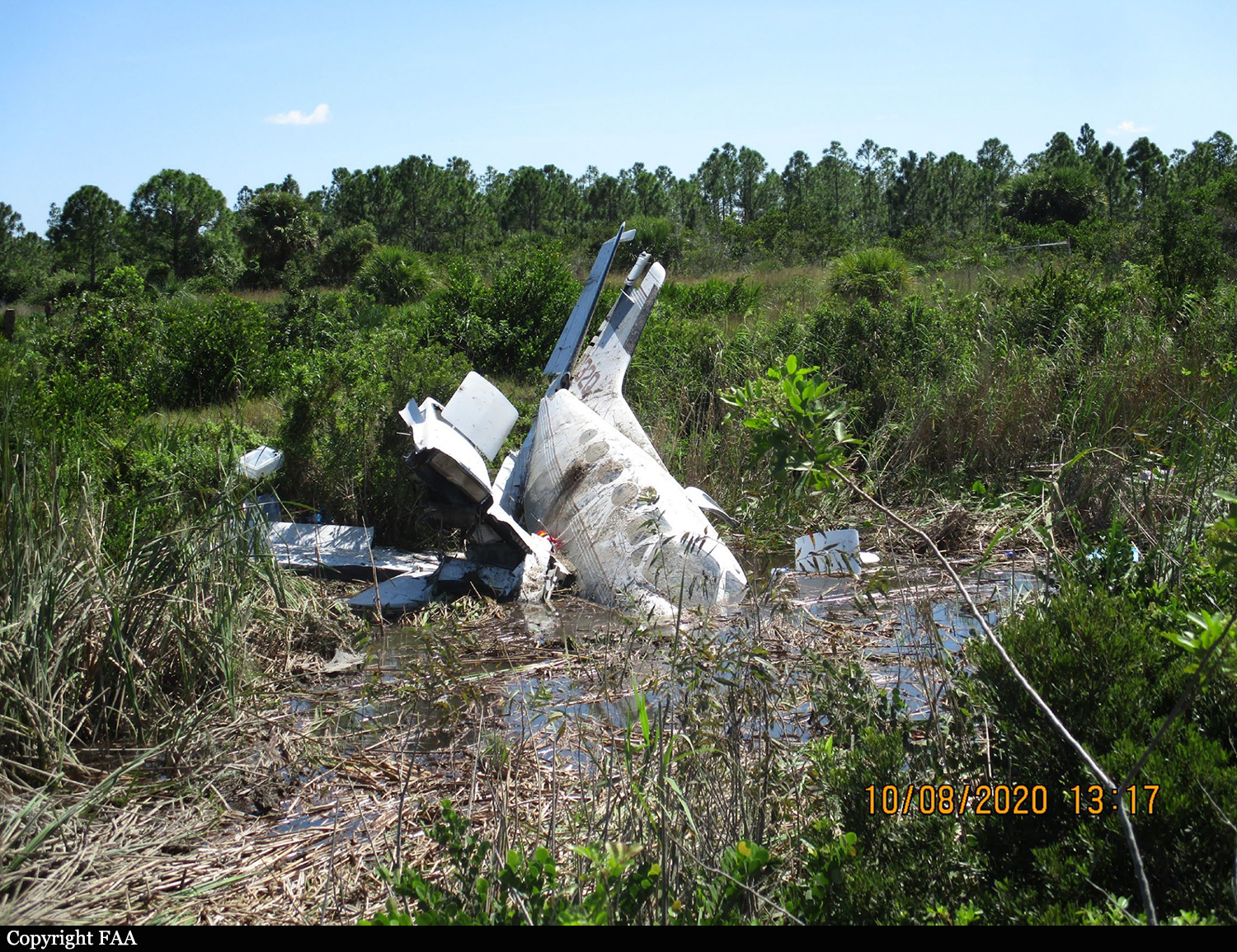
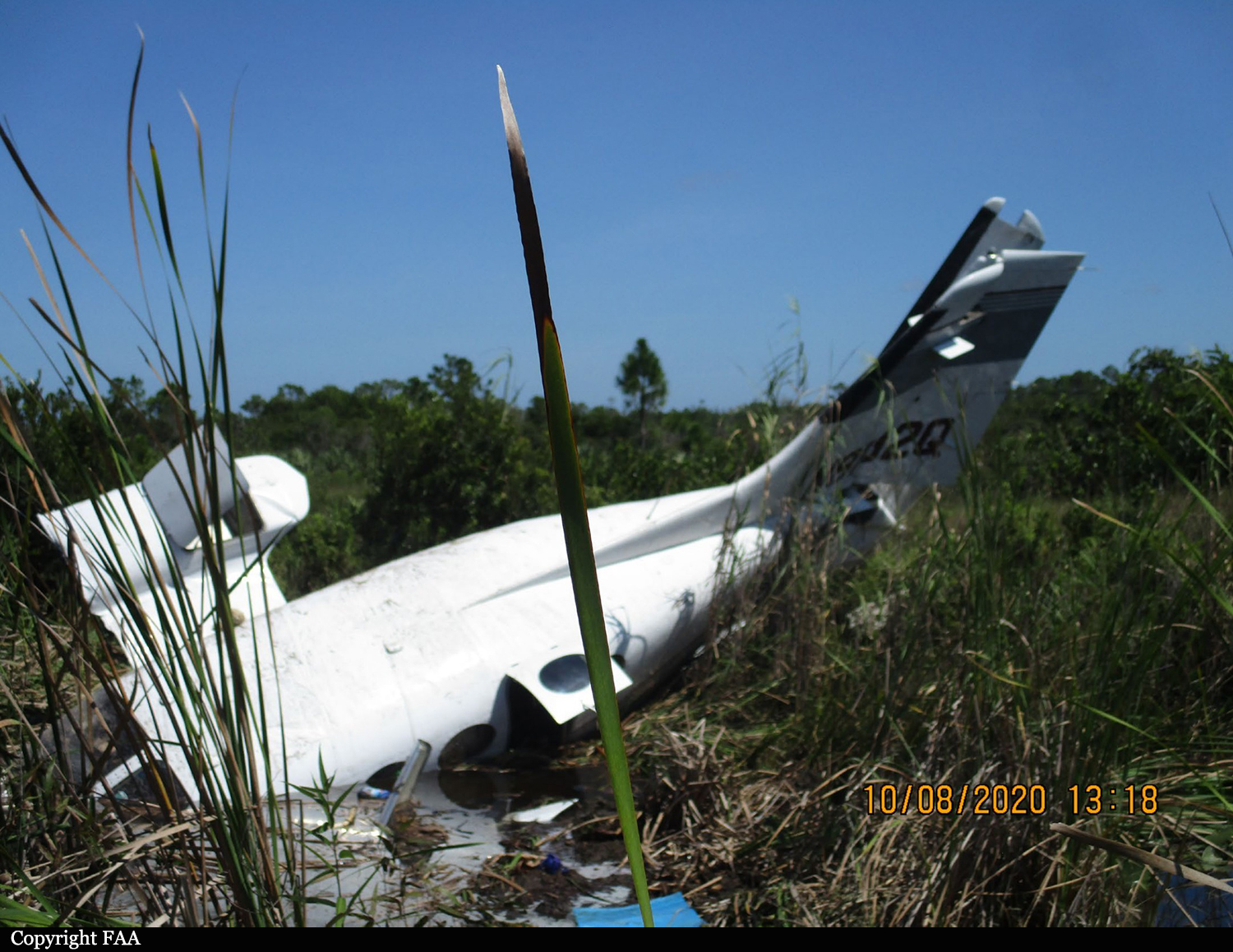
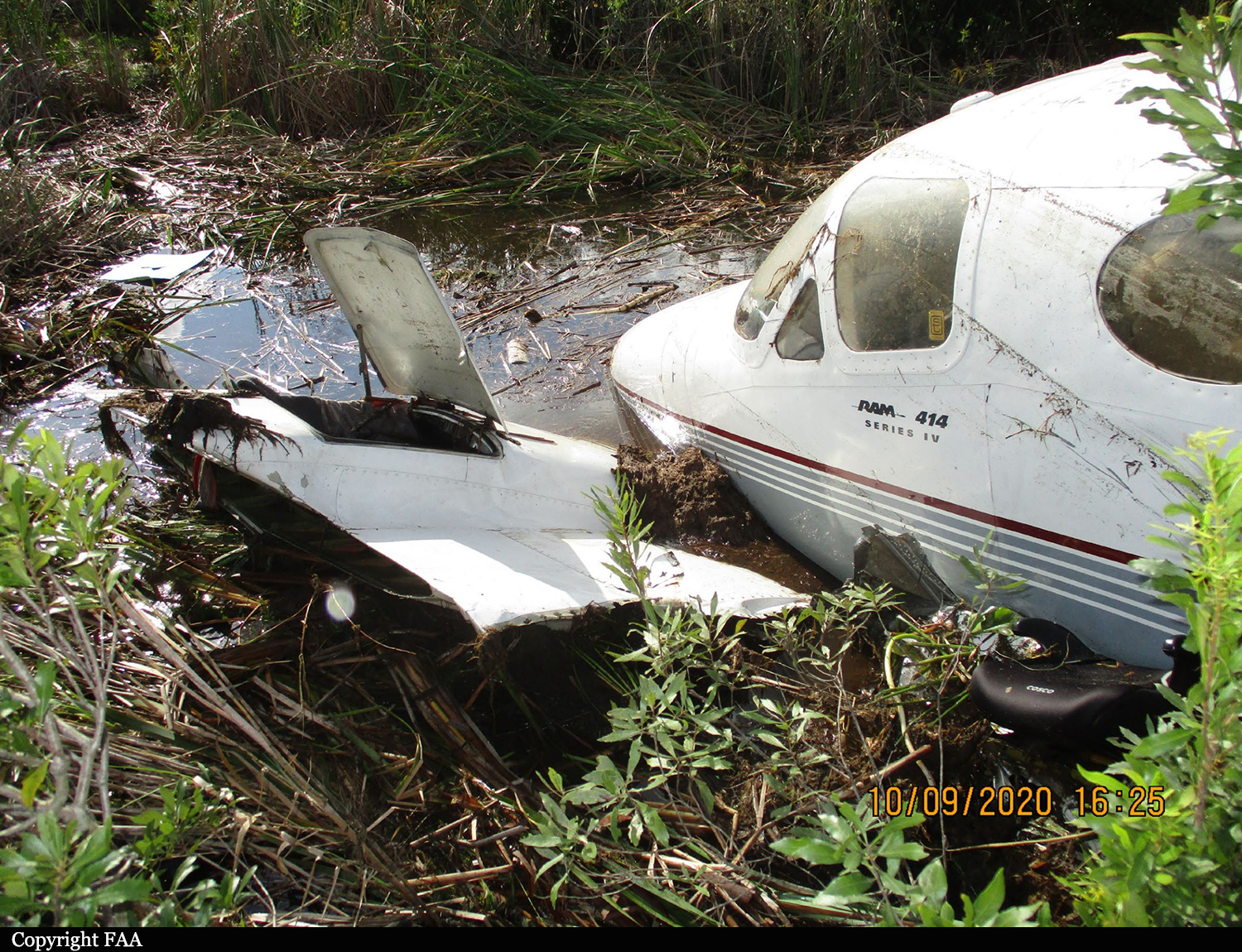
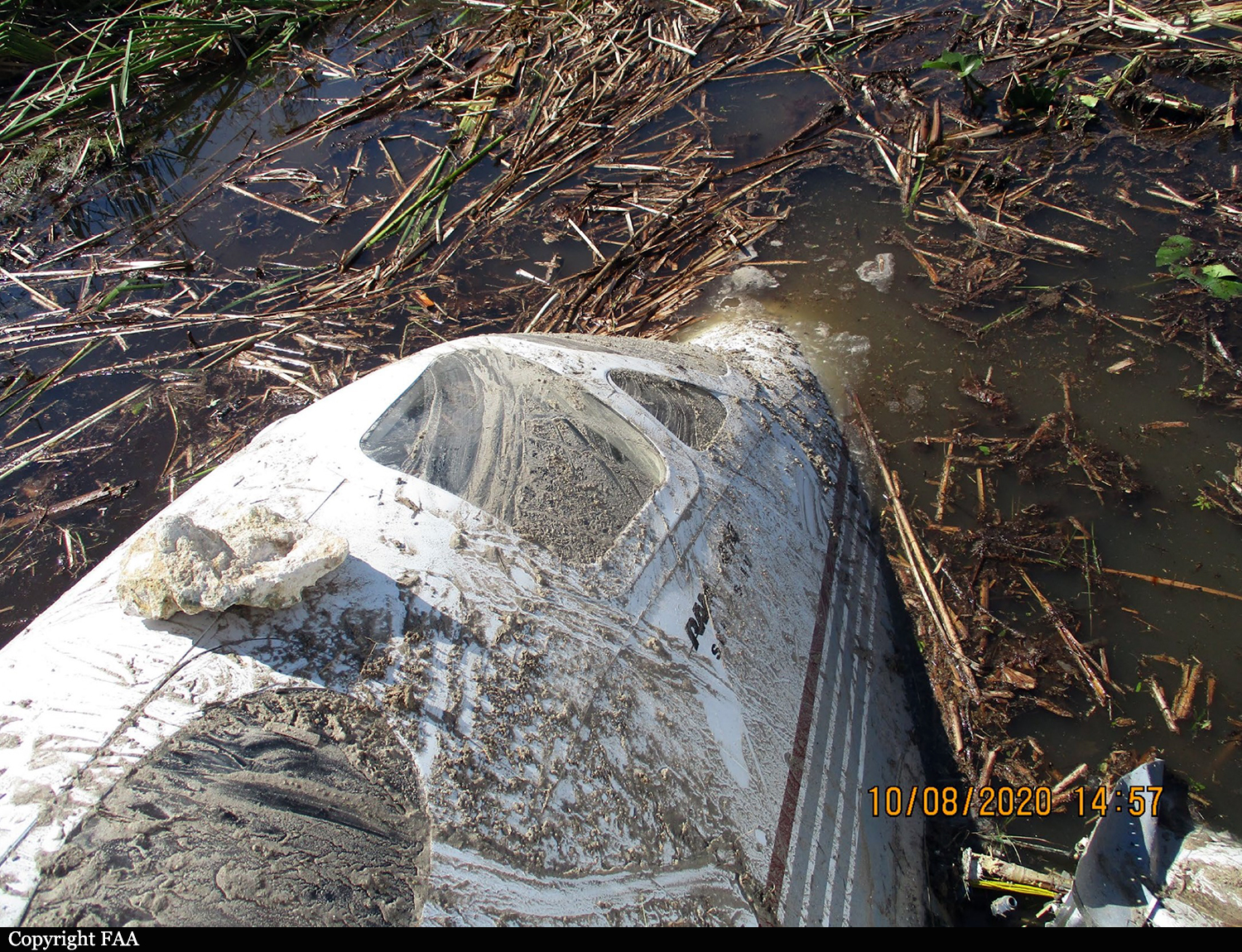
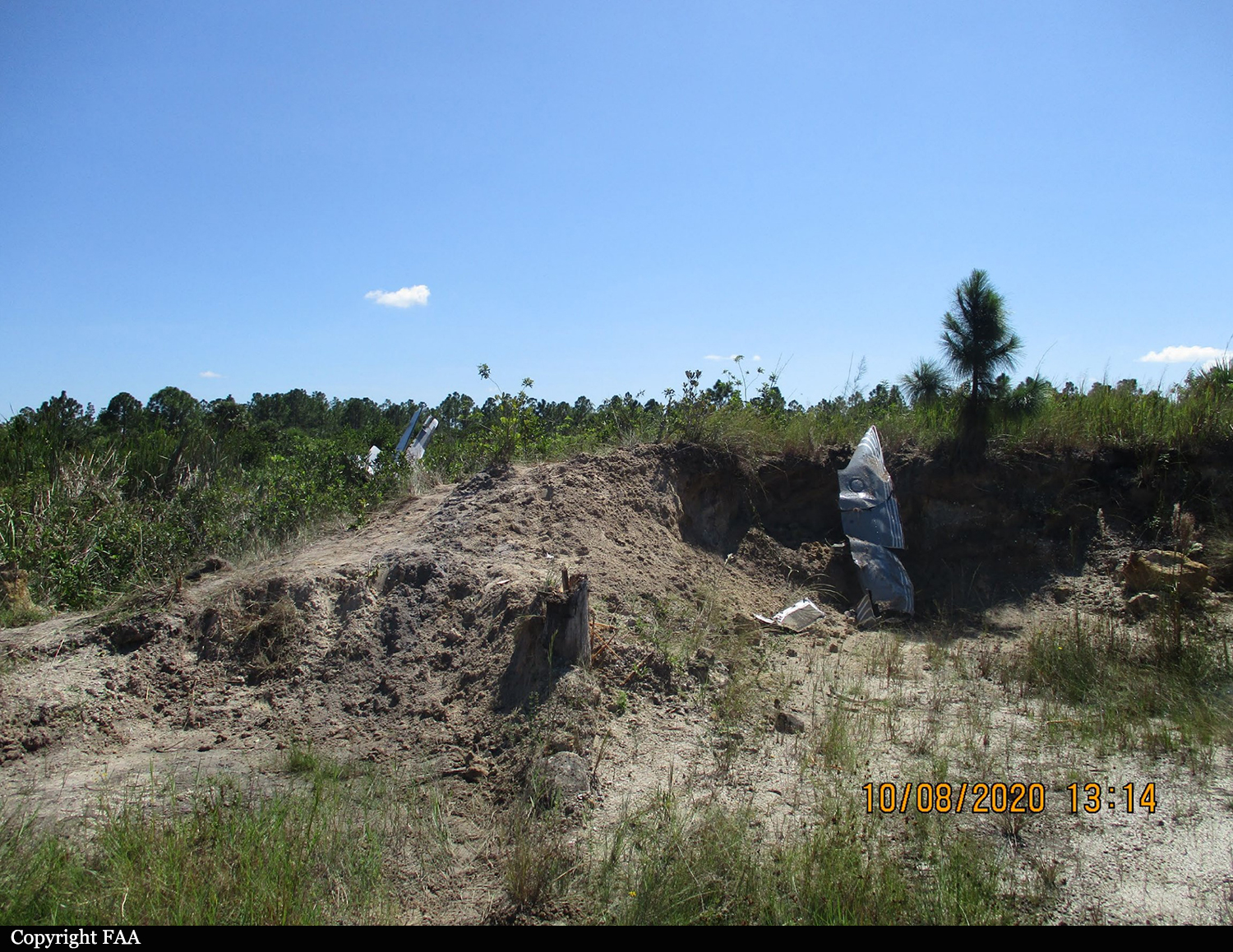
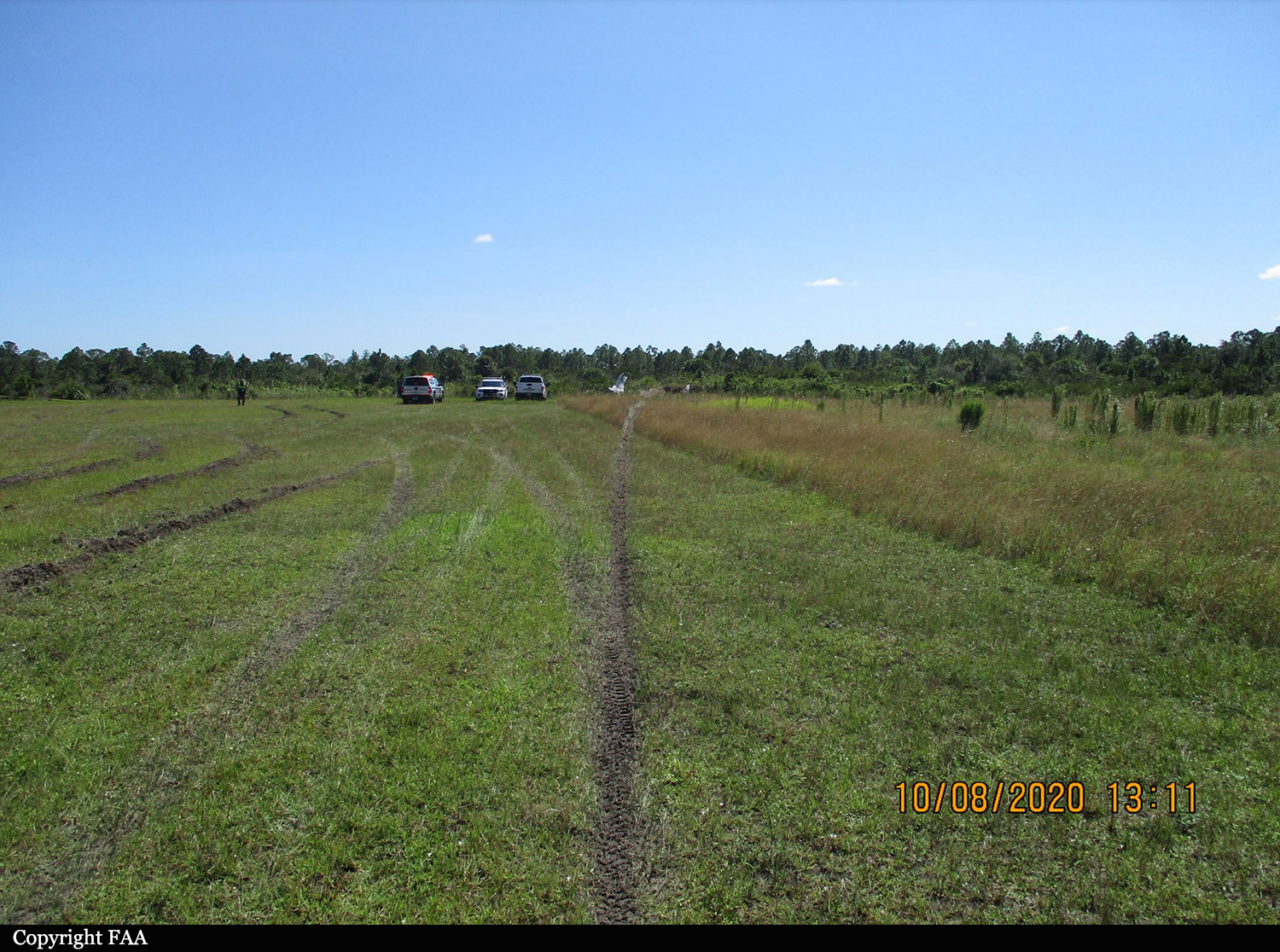
The copilot, who was seated in the right seat, reported that after an uneventful run-up and taxi, the pilot, who was seated in the left seat, initiated the takeoff. The airplane remained on the runway past the point at which takeoff should have occurred and the copilot observed the pilot attempting to pull back on the control yoke but it would not move. The copilot then also attempted to pull back on the control yoke but was also unsuccessful. Observing that the end of the runway was nearing, the copilot aborted the takeoff by reducing the throttle to idle and applying maximum braking. The airplane overran the runway into rough and marshy terrain, where it came to rest partially submerged in water. Postaccident examination of the airplane and flight controls found no evidence of preimpact mechanical malfunctions or failures that would have precluded normal operation. Specifically, examination of the elevator flight control rigging, in addition to functional checks of the elevator, confirmed continuity and normal function. Additionally, the flight control lock was found on the floor near the rudder pedals on the left side of the cockpit. Due to a head injury sustained during the accident, the pilot was unable to recall most of the events that transpired during the accident. The pilot did state that he typically removed the control lock during the preflight inspection and that he would place it in his flight bag. He thought that a shoulder injury may have led to the control lock missing the flight bag, and why it was found behind the rudder pedals after the accident. Review and analysis of a video that captured the airplane during its taxi to the runway showed that the elevator control position was similar to what it would be with the control lock installed. While the pilot and copilot reported that they did not observe the control lock installed during the takeoff, the position of the elevator observed on the video, the successful postaccident functional test of elevator, and the unsecured flight control lock being located behind the pilot’s rudder pedals after the accident suggest that the control anomaly experienced by the pilots may have been a result of the control lock remaining inadvertently installed and overlooked by both pilots prior to the takeoff. According to the airframe manufacturer’s preflight and before takeoff checklists, the flight control lock must be removed during preflight, prior to engine start and taxi, and the flight controls must be checked prior to takeoff. Regardless of why the elevator control would not move during the takeoff, a positive flight control check prior to the takeoff should have detected any such anomaly. It is likely that the pilot failed to conduct a flight control check prior to takeoff. Further, the pilot failed to abort the takeoff at the first indication that there was a problem. Although delayed, the copilot’s decision to take control of the airplane and abort the takeoff likely mitigated the potential for more severe injury to the occupants and damage to the airplane.
Probable cause:
The pilot’s inadequate preflight inspection during which he failed to detect a flight control abnormality, and his failure to expediently abort the takeoff, which resulted in the co-pilot performing a delayed aborted takeoff and the subsequent runway overrun.
Final Report:

Crash of a Cessna 414A Chancellor in Colonia: 1 killed
Date & Time:
Oct 29, 2019 at 1058 LT
Registration:
N959MJ
Survivors:
No
Schedule:
Leesburg - Linden
MSN:
414A-0471
YOM:
1980
Crew on board:
1
Crew fatalities:
Pax on board:
0
Pax fatalities:
Other fatalities:
Total fatalities:
1
Captain / Total hours on type:
1384.00
Aircraft flight hours:
7712
Circumstances:
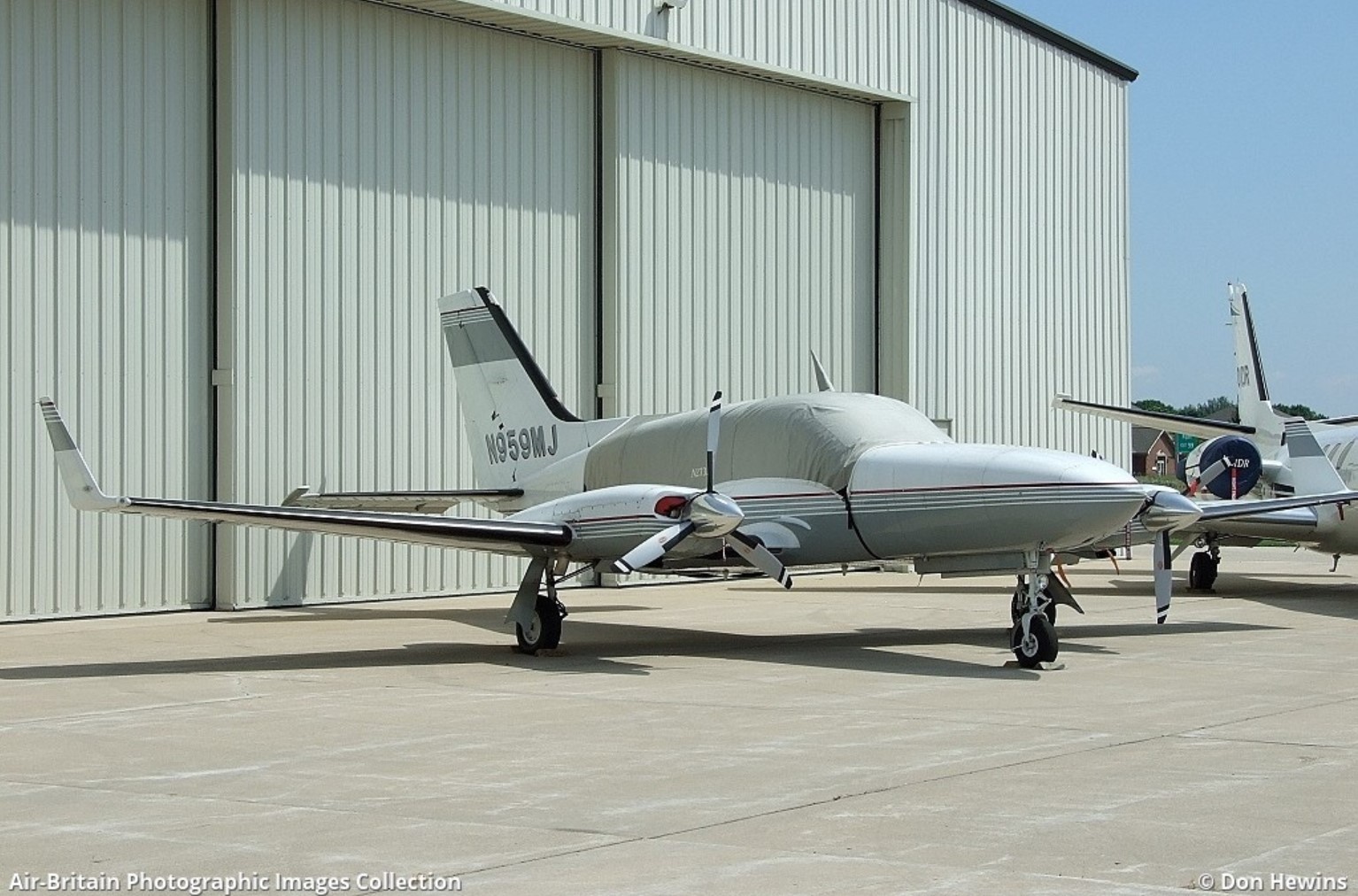
The pilot was conducting a GPS circling instrument approach in instrument meteorological conditions to an airport with which he was familiar. During the final minute of the flight, the airplane descended to and leveled off near the minimum descent altitude (MDA) of about 600 ft mean sea level (msl). During this time, the airplane’s groundspeed slowed from about 90 knots to a low of 65 knots. In the few seconds after reaching 65 knots groundspeed, the flight track abruptly turned left off course and the airplane rapidly descended. The final radar point was recorded at 200 ft msl less than 1/10 mile from the accident site. Two home surveillance cameras captured the final few seconds of the flight. The first showed the airplane in a shallow left bank that rapidly increased until the airplane descended in a steep left bank out of camera view below a line of trees. The second video captured the final 4 seconds of the flight; the airplane entered the camera view already in a steep left bank near treetop level, and continued to roll to the left, descending out of view. Both videos showed the airplane flying below an overcast cloud ceiling, and engine noise was audible until the sound of impact. Postaccident examination of the airplane revealed no evidence of preimpact mechanical malfunctions that would have precluded normal operation. The propeller signatures, witness impact marks, audio recordings, and witness statements were all consistent with the engines producing power at the time of impact. The pilot likely encountered restricted visibility of about 2 statute miles with mist and ceilings about 700 ft msl. When the airplane deviated from the final approach course and descended below the MDA, the destination airport remained 3.5 statute miles to the northeast. Although the airplane was observed to be flying below the overcast cloud layer, given the restricted visibility, it is likely that the pilot was unable to visually identify the airport or runway environment at any point during the approach. According to airplane flight manual supplements, the stall speed likely varied from 76 to 67 knots indicated airspeed. The exact weight and balance and configuration of the airplane could not be determined. Based upon surveillance video, witness accounts, and automatic dependent surveillance-broadcast data, it is likely that, as the pilot leveled off the airplane near the MDA, the airspeed decayed below the aerodynamic stall speed, and the airplane entered an aerodynamic stall and spin from which the pilot was unable to recover. Based on a readout of the pilot’s cardiac monitoring device and autopsy findings, while the pilot had a remote history of arrhythmia, sudden incapacitation was not a factor in this accident. Autopsy findings suggested that the pilot’s traumatic injuries were not immediately fatal; soot material in both the upper and lower airways provided evidence that the pilot inhaled smoke. This autopsy evidence supports that the pilot’s elevated carboxyhemoglobin level was from smoke inhalation during the postcrash fire. In addition, there were no distress calls received from the pilot and there was no evidence found that would indicate there was an in-flight fire. Thus, carbon monoxide exposure, as determined by the carboxyhemoglobin level, was not a contributing factor to the accident.
Probable cause:
The pilot’s failure to maintain airspeed during a circling instrument approach procedure, which resulted in an exceedance of the airplane’s critical angle of attack and an aerodynamic stall and spin.
Final Report:
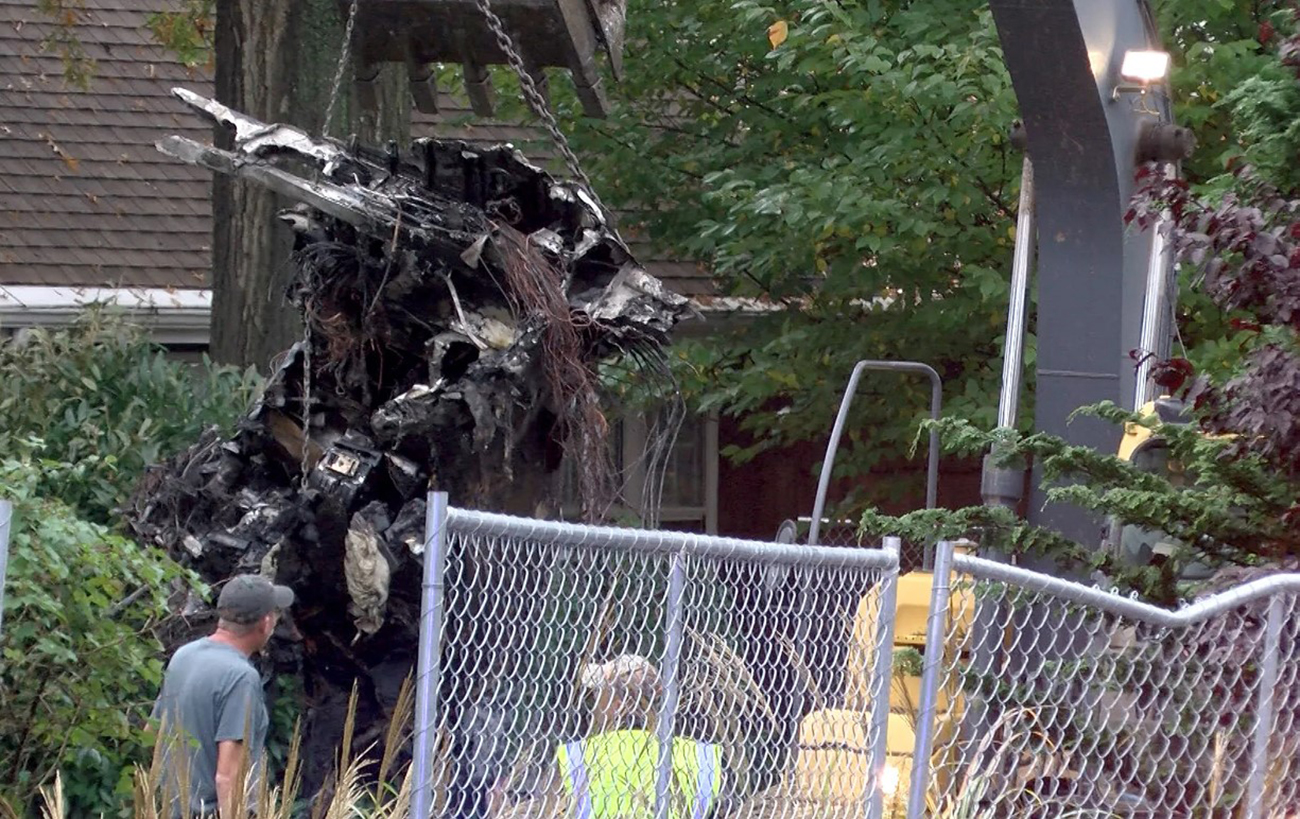
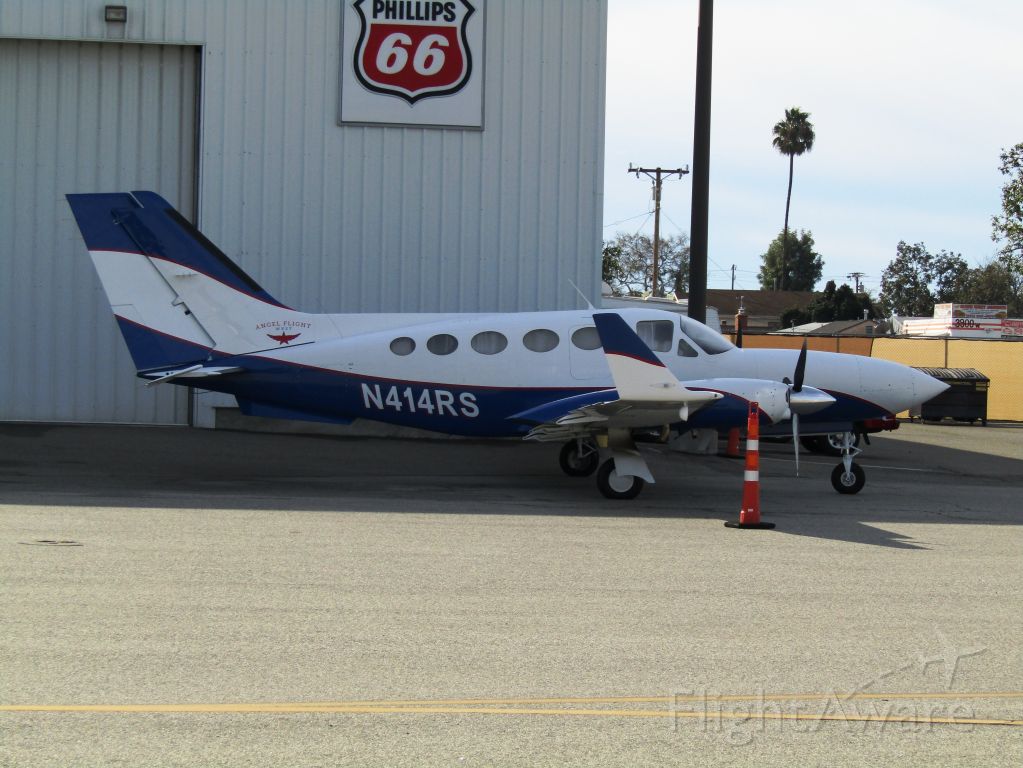
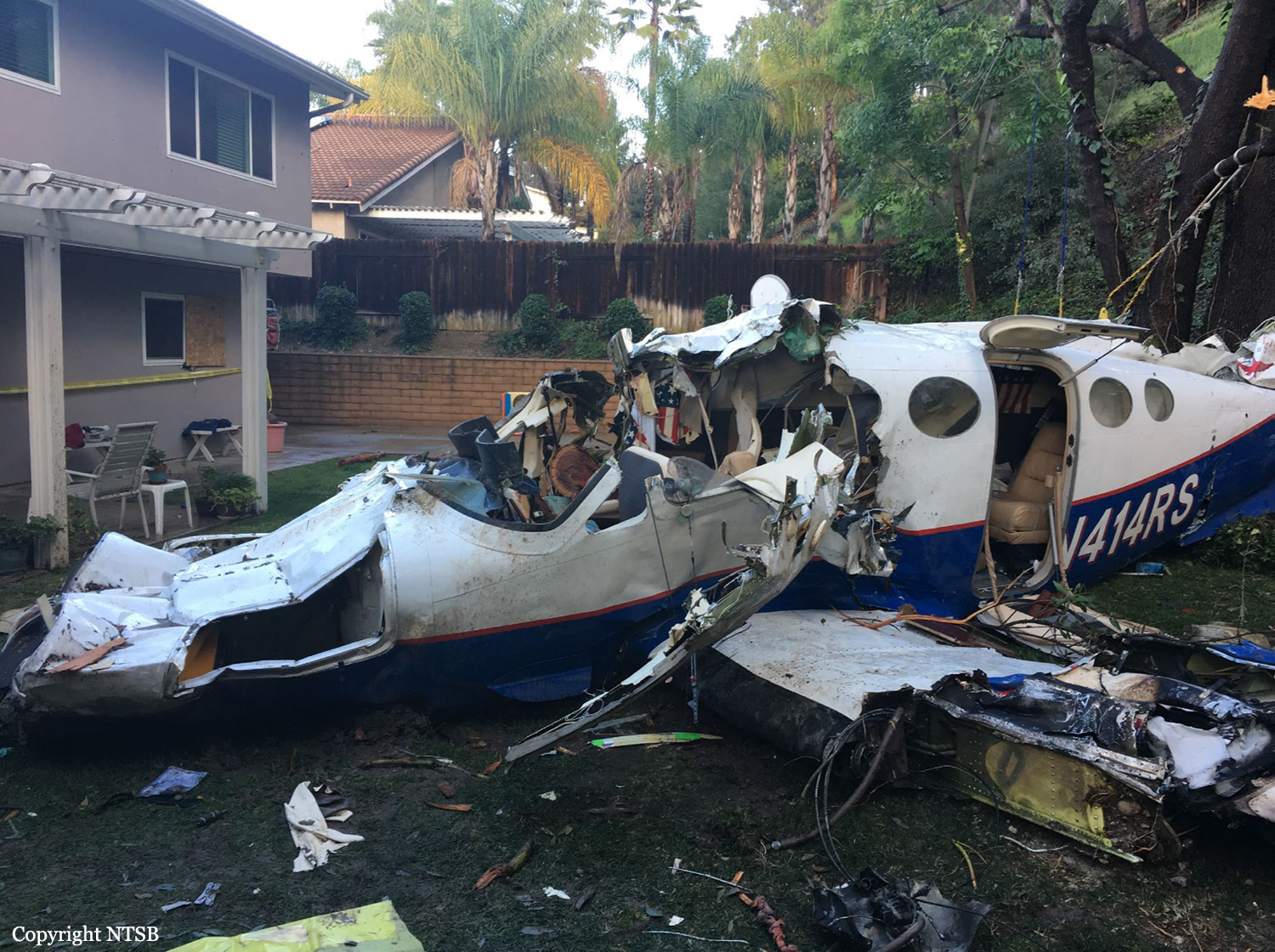
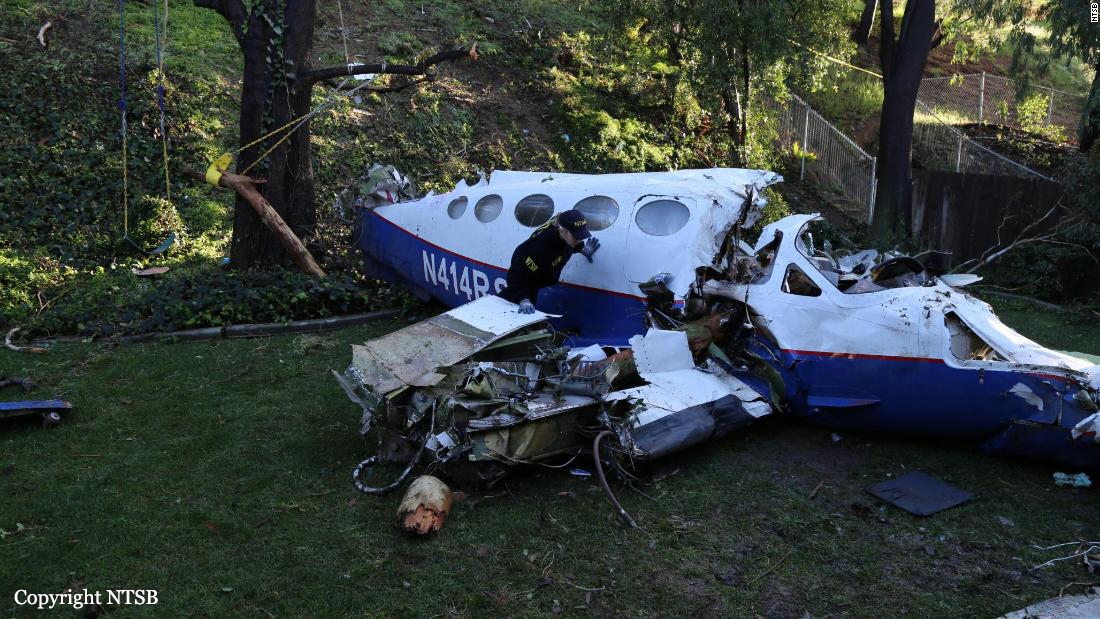
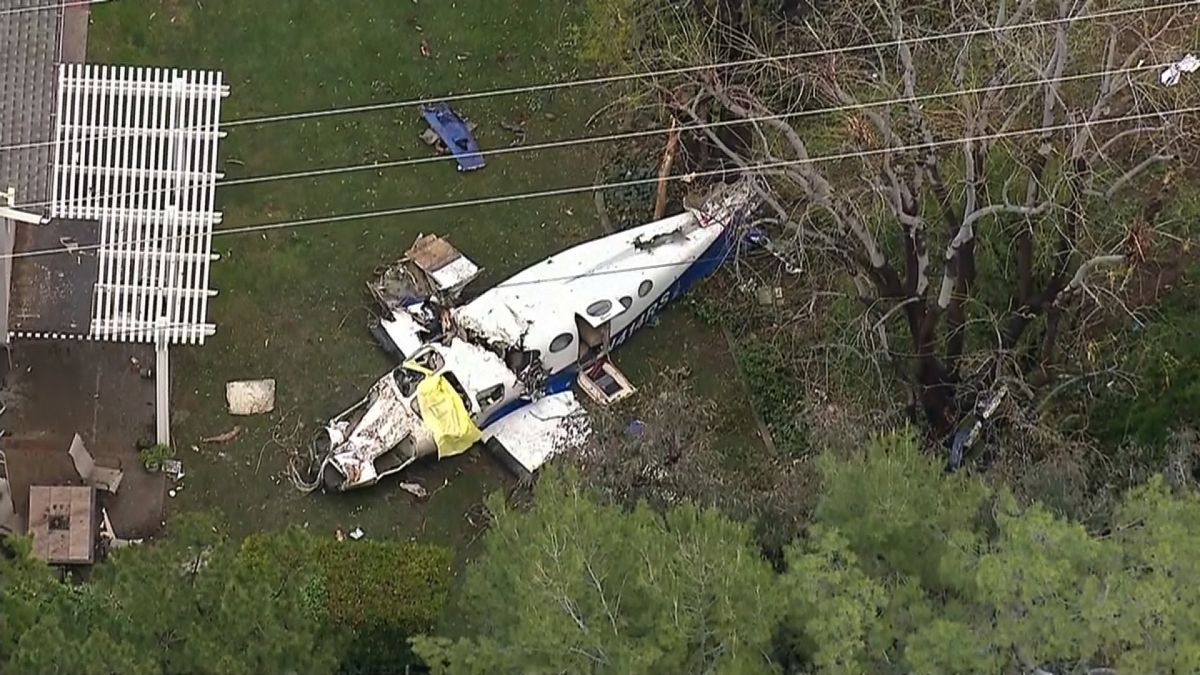
Crash of a Cessna 414A Chancellor in Yorba Linda: 5 killed
Date & Time:
Feb 3, 2019 at 1345 LT
Registration:
N414RS
Survivors:
No
Schedule:
Fullerton – Minden
MSN:
414A-0821
YOM:
1981
Crew on board:
1
Crew fatalities:
Pax on board:
0
Pax fatalities:
Other fatalities:
Total fatalities:
5
Aircraft flight hours:
9610
Circumstances:
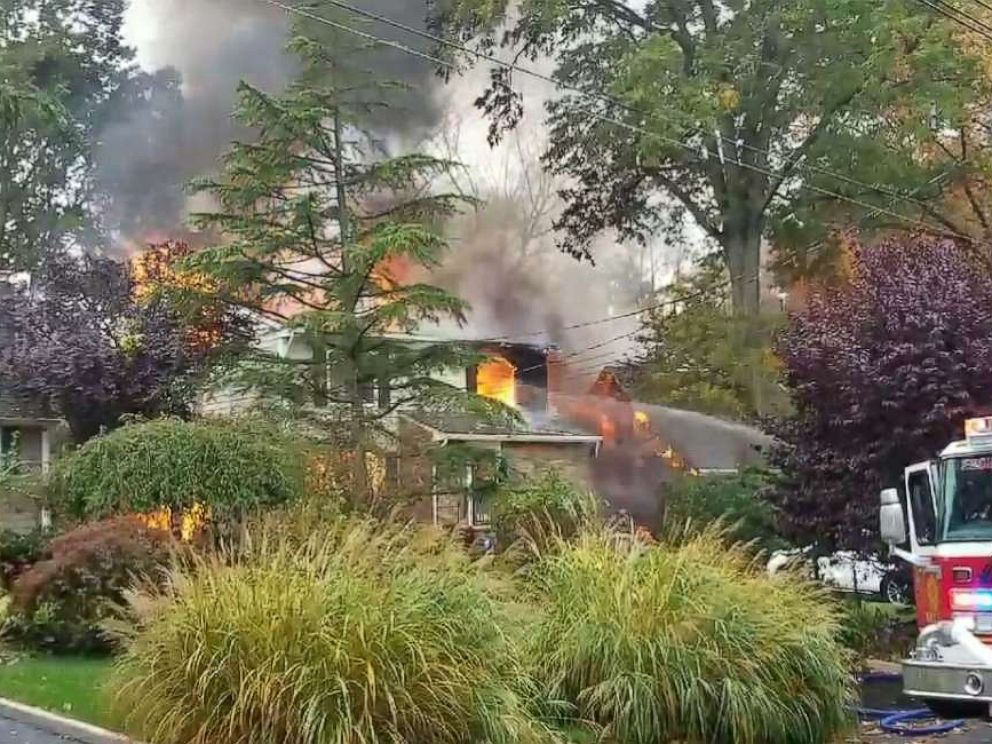
The commercial pilot departed for a cross-country, personal flight with no flight plan filed. No evidence was found that the pilot received a preflight weather briefing; therefore, it could not be determined if he checked or received any weather information before or during the accident flight. Visual meteorological conditions existed at the departure airport; however, during the departure climb, the weather transitioned to instrument meteorological conditions (IMC) with precipitation, microburst, and rain showers over the accident area. During the takeoff clearance, the air traffic controller cautioned the pilot about deteriorating weather conditions about 4 miles east of the airport. Radar data showed that, about 5 1/2 minutes after takeoff, the airplane had climbed to about 7,800 ft above ground level before it started a rapid descending right turn and subsequently impacted the ground about 9.6 miles east of the departure airport. Recorded data from the airplane’s Appareo Stratus 2S (portable ADS-B receiver and attitude heading and reference system) revealed that, during the last 15 seconds of the flight, the airplane’s attitude changed erratically with the pitch angle fluctuating between 45° nose-down and 75°nose-up, and the bank angle fluctuating between 170° left and 150° right while descending from 5,500 to 500 ft above ground level, indicative of a loss of airplane control shortly after the airplane entered the clouds. Several witnesses located near the accident site reported seeing the airplane exit the clouds at a high descent rate, followed by airplane parts breaking off. One witness reported that he saw the airplane exit the overcast cloud layer with a nose down pitch of about 60°and remain in that attitude for about 4 to 5 seconds “before initiating a high-speed dive recovery,” at the bottom of which, the airplane began to roll right as the left horizontal stabilizer separated from the airplane, immediately followed by the remaining empennage. He added that the left wing then appeared to shear off near the left engine, followed by the wing igniting. An outdoor home security camera, located about 0.5 mile north-northwest of the accident location, captured the airplane exiting the clouds trailing black smoke and then igniting. Examination of the debris field, airplane component damage patterns, and the fracture surfaces of separated parts revealed that both wings and the one-piece horizontal stabilizer and elevators were separated from the empennage in flight due to overstress, which resulted from excessive air loads. Although the airplane was equipped with an autopilot, the erratic variations in heading and altitude during the last 15 seconds of the flight indicated that the pilot was likely hand-flying the airplane; therefore, he likely induced the excessive air loads while attempting to regain airplane control. Conditions conducive to the development of spatial orientation existed around the time of the in-flight breakup, including restricted visibility and the flight entering IMC. The flight track data was consistent with the known effects of spatial disorientation and a resultant loss of airplane control. Therefore, the pilot likely lost airplane control after inadvertently entering IMC due to spatial disorientation, which resulted in the exceedance of the airplane’s design stress limits and subsequent in-flight breakup. Contributing to accident was the pilot’s improper decision to conduct the flight under visual flight rules despite encountering IMC and continuing the flight when the conditions deteriorated. Toxicology testing on specimens from the pilot detected the presence of delta-9-tetrahydrocanninol (THC) in heart blood, which indicated that the pilot had used marijuana at some point before the flight. Although there is no direct relationship between postmortem blood levels and antemortem effects from THC, it does undergo postmortem redistribution. Therefore, the antemortem THC level was likely lower than detected postmortem level due to postmortem redistribution from use of marijuana days previously, and it is unlikely that the pilot’s use of marijuana contributed to his poor decision-making the day of the accident. The toxicology testing also detected 67 ng/mL of the sedating antihistamine diphenhydramine. Generally, diphenhydramine is expected to cause sedating effects between 25 to 1,120 ng/mL. However, diphenhydramine undergoes postmortem redistribution, and the postmortem heart blood level may increase by about three times. Therefore, the antemortem level of diphenhydramine was likely at or below the lowest level expected to cause significant effects, and thus it is unlikely that the pilot’s use of diphenhydramine contributed to the accident.
Probable cause:
The pilot’s failure to maintain airplane control after entering instrument meteorological conditions (IMC) while climbing due to spatial disorientation, which resulted in the exceedance of the airplane’s design stress limits and subsequent in-flight break-up. Contributing to accident was the pilot's improper decision to conduct the flight under visual flight rules and to continue the flight when conditions deteriorated.
Final Report: