Crash of a Cessna 441 Conquest II in Ascheberg: 2 killed

Date & Time: Apr 2, 2000 at 1440 LT
Type of aircraft:
Operator:
Registration:
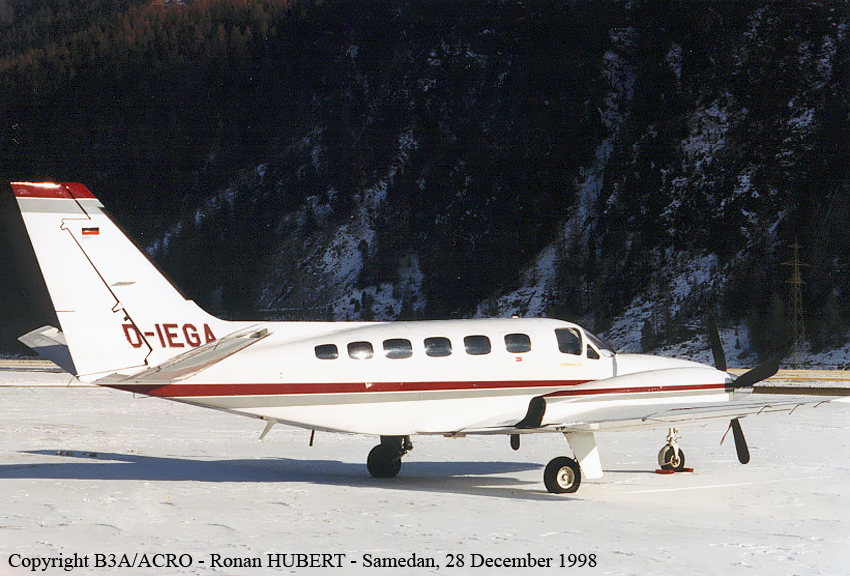
D-IEGA
Flight Phase:
Flight Type:
Survivors:
No
Schedule:
Dortmund - Dortmund
MSN:
441-0193
YOM:
1980
Country:
Region:
Crew on board:
2
Crew fatalities:
Pax on board:
0
Pax fatalities:
Other fatalities:
Total fatalities:
2
Circumstances:
The crew (one instructor and one pilot under training) departed Dortmund-Wickede Airport for a training mission. At an altitude of 3,200 feet, while completing stall exercises, the crew lost control of the airplane that crashed in a flat attitude in a sandy field located near Ascheberg, bursting into flames. Both occupants were killed.

Crash of a Cessna 441 Conquest II in Lakeland

Date & Time: Jan 2, 1997 at 1121 LT
Type of aircraft:
Registration:
N441MS
Flight Phase:
Flight Type:
Survivors:
Yes
Schedule:
Lakeland - Lakeland
MSN:
441-0056
YOM:
1978
Crew on board:
2
Crew fatalities:
Pax on board:
0
Pax fatalities:
Other fatalities:
Total fatalities:
0
Captain / Total flying hours:
6511
Captain / Total hours on type:
533.00
Aircraft flight hours:
4697
Circumstances:
During the takeoff roll the pilot stated the right engine had an over torque condition and he was unable to control the aircraft. The aircraft went off the runway to the left and crashed coming to rest upright. A post crash fire erupted and destroyed the aircraft. The mechanic rated passenger stated he was observing the right engine gauges during this maintenance test flight and did not observe any over torque indications. When he looked up from the instruments at about the time the aircraft should lift off, the aircraft was drifting to the left. The pilot, who was looking at the engine instruments, looked up, saw the aircraft was about to drift off the runway, and retarded both power levers. The passenger/mechanic (who was also a pilot) reported that the pilot placed the propellers in reverse. Six thousand feet of runway remained at the abort point. The aircraft pitched up and then crashed on the left wing and nose. Cessna Service Newsletter SLN99-15 and AlliedSignal Operating Information Letter OI 331-17 report an abnormality that may affect the model engine in which an uncommanded engine fuel flow increase or fluctuation may occur, resulting in an unexpected high torque and asymmetric thrust. The condition is associated with an open torque motor circuit within the engine fuel control. A system malfunction resulting in engine acceleration to maximum power would produce an overtorque of about 2,288 foot-pounds (ft-lb). This power output is restricted by a fuel flow stop in the engine fuel control. Normal takeoff power is 1,669 ft-lbs; therefore, one engine accelerating to the stop limit while one engine continued to operate normally would cause a torque differential of 619 ft-lbs. The total loss of power in one engine during takeoff while one engine continued to operate normally would result in a torque differential of 1,669 ft-lbs. The Cessna 441 Flight Manual states that at 91 knots indicated airspeed, the airplane is controllable with one engine inoperative (that is, with a torque differential between engines of up to 1,669 ft-lbs). However, if an electronic engine control failure occurs on one engine and the other engine is retarded to idle, the fuel flow to the failed engine will not be reduced, and a torque differential of about 2,288 ft-lbs will occur, at which point the airplane is uncontrollable by the pilot.
Probable cause:
Failure of the electronic engine control, which caused an overtorque condition in the right engine that made directional control of the airplane not possible by the pilot when the power to the left engine was retarded to idle during the takeoff roll.
Final Report:


Crash of a Cessna 441 Conquest II in Walker's Cay

Date & Time: Apr 20, 1996 at 1315 LT
Type of aircraft:
Registration:
N441W
Flight Type:
Survivors:
Yes
Schedule:
Destin – Walker’s Cay
MSN:
441-0052
YOM:
1978
Country:
Crew on board:
1
Crew fatalities:
Pax on board:
3
Pax fatalities:
Other fatalities:
Total fatalities:
0
Circumstances:
On April 20, 1996, about 1215 Atlantic standard time, N441W, a Cessna 441, crashed on landing in Walkers Cay, Bahamas, while on a 14 CFR Part 91 personal flight. Visual meteorological conditions prevailed at the time and a VFR flight plan had been filed. The airplane was substantially damaged and the private pilot and three passengers reported no injuries. The flight originated from Destin, Florida, about 2 hours 30 minutes earlier. The pilot stated that on final approach he landed short of the runway. The main landing gear sheared off the airplane and the nose gear collapsed.

Crash of a Cessna 441 Conquest II in Saint Louis: 2 killed

Date & Time: Nov 22, 1994 at 2203 LT
Type of aircraft:
Operator:
Registration:
N441KM
Flight Phase:
Flight Type:
Survivors:
No
Schedule:
Saint Louis - Iron Mountain
MSN:
441-0196
YOM:
1981
Crew on board:
2
Crew fatalities:
Pax on board:
0
Pax fatalities:
Other fatalities:
Total fatalities:
2
Captain / Total flying hours:
7940
Captain / Total hours on type:
2060.00
Circumstances:
During the takeoff roll on runway 30R, the MD-82, N954U, collided with the Cessna 441, N441KM, which was positioned on the runway waiting for takeoff clearance. The pilot of the Cessna acted on an apparently preconceived idea that he would use his arrival runway, runway 30R, for departure. After receiving taxi clearance to back-taxi into position and hold on runway 31, the pilot taxied into a position at an intersection on runway 30R, which was the assigned departure runway for the MD-82. The ATIS current at the time the Cessna pilot was operating in the Lambert-St. Louis area listed runways 30R and 30L as the active runways for arrivals and departures; there was no mention of the occasional use of runway 31. Air traffic control personnel were not able to maintain visual contact with the Cessna after it taxied from the well lighted ramp area into the runway/taxiway environment of the northeast portion of the airport. An operational ASDE-3, particularly ASDE-3 enhanced with AMASS, could be used to supplement visual scan of the northeast portion of the airport.
Probable cause:
The Cessna 441 pilot's mistaken belief that his assigned departure runway was runway 30R, which resulted in his undetected entrance onto runway 30R, which was being used by the MD82 for its departure. Contributing to the accident was the lack of Automatic Terminal Information Service and other air traffic control (ATC) information regarding the occasional use of runway 31 for departure. The installation and utilization of Airport Surface Detection Equipment (ASDE-3), and particularly ASDE-3 enhanced with the Airport Movement Area Safety System (AMASS), could have prevented this accident.
Final Report:

Crash of a Cessna 441 Conquest in Fort Frances

Date & Time: Jun 18, 1994 at 0425 LT
Type of aircraft:
Operator:
Registration:
N441CA
Flight Phase:
Survivors:
Yes
Schedule:
Milwaukee – Fort Frances – God’s Lake Narrows
MSN:
441-0046
YOM:
1978
Country:
Crew on board:
1
Crew fatalities:
Pax on board:
5
Pax fatalities:
Other fatalities:
Total fatalities:
0
Captain / Total flying hours:
4800
Captain / Total hours on type:
40.00
Aircraft flight hours:
2447
Circumstances:
The pilot of the Cessna 441 Conquest was conducting an international charter flight from General Mitchell International Airport in Milwaukee, Wisconsin, to Gods Lake Narrows, Manitoba. The pilot landed the aircraft at Fort Frances, Ontario, to clear customs and refuel, and then continued his visual flight rules (VFR) flight to Gods Lake Narrows. During the take-off at Fort Frances, the aircraft experienced a power loss in the left engine. The pilot elected to continue the take-off but was unable to control the aircraft after it became airborne. The aircraft veered to the left and crashed on the airfield. The accident occurred at 0425 central daylight time (CDT), at night, on the Fort Frances Municipal Airport. All seven occupants sustained minor injuries and the aircraft was damaged beyond repair.
Probable cause:
The pilot lost control of the aircraft during take-off when the left engine lost power as a result of bird ingestion. Contributing to the loss of aircraft control were a take-off weight in excess of the maximum allowable, and a centre of gravity aft of the centre of gravity limit.
Final Report:

Crash of a Cessna 441 Conquest in Gainesville

Date & Time: Aug 10, 1992 at 1750 LT
Type of aircraft:
Registration:
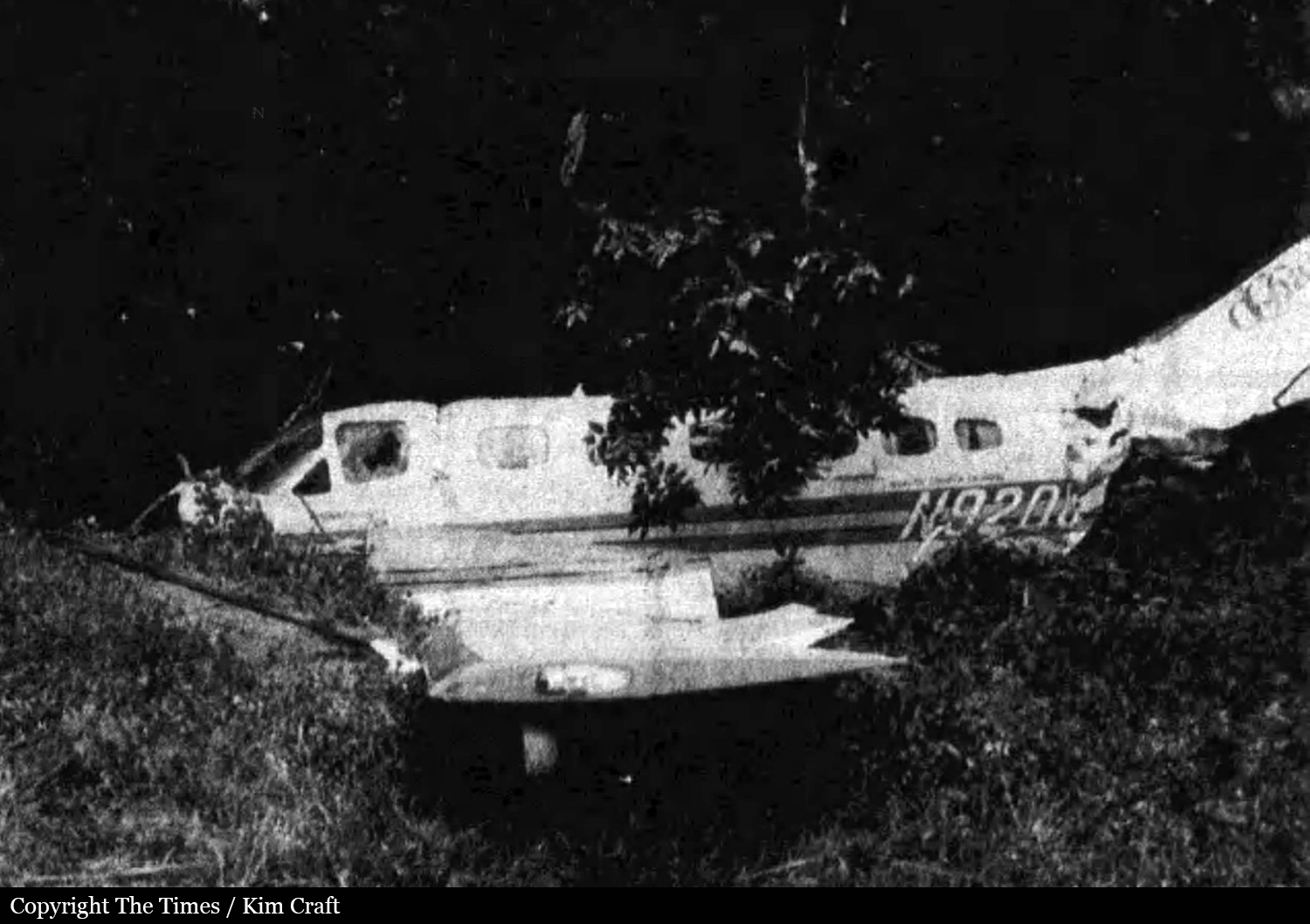
N920C
Flight Phase:
Survivors:
Yes
Schedule:
Gainesville - Nashville
MSN:
441-0020
YOM:
1978
Crew on board:
1
Crew fatalities:
Pax on board:
0
Pax fatalities:
Other fatalities:
Total fatalities:
0
Captain / Total flying hours:
8000
Captain / Total hours on type:
305.00
Circumstances:
The pilot reported that immediately after takeoff, he had a collision with a flight of birds. He stated that the right engine immediately had a partial loss of power. He stated that he did not attempt to raise the landing gear nor the flaps following the loss of engine power, and the aircraft would not maintain altitude. Examination of the aircraft engines revealed that there was rotational scratching of the turbine housings on the right engine, and no rotational scratching on the turbine housing of the left engine.
Probable cause:
The poor inflight decision by the pilot in command in that after a partial loss of power, he shut down the wrong engine, did not follow the emergency checklist, did not raise the flaps, and did not retract the landing gear. A factor in the accident was the inflight collision with birds during the takeoff climb.
Final Report:

Crash of a Cessna 441 Conquest II off Papeete: 3 killed

Date & Time: Dec 5, 1990
Type of aircraft:
Registration:
F-ODUK
Flight Type:
Survivors:
No
Schedule:
Papeete - Maupiti
MSN:
441-0270
YOM:
1983
Location:
Region:
Crew on board:
1
Crew fatalities:
Pax on board:
2
Pax fatalities:
Other fatalities:
Total fatalities:
3
Circumstances:
The twin engine aircraft departed Papeete-Faaa Airport on an ambulance flight to Maupiti, carrying two doctors and one pilot. After takeoff, while climbing by night, the pilot informed ATC about minor problems with the engine but preferred to return for a safe landing. On final approach, the aircraft went out of control and crashed in the sea few km from the airport. All three occupants were killed. At the time of the accident, it was dark but weather conditions were excellent.

Crash of a Cessna 441 Conquest in Greenland: 8 killed

Date & Time: Sep 12, 1990 at 1745 LT
Type of aircraft:
Operator:
Registration:
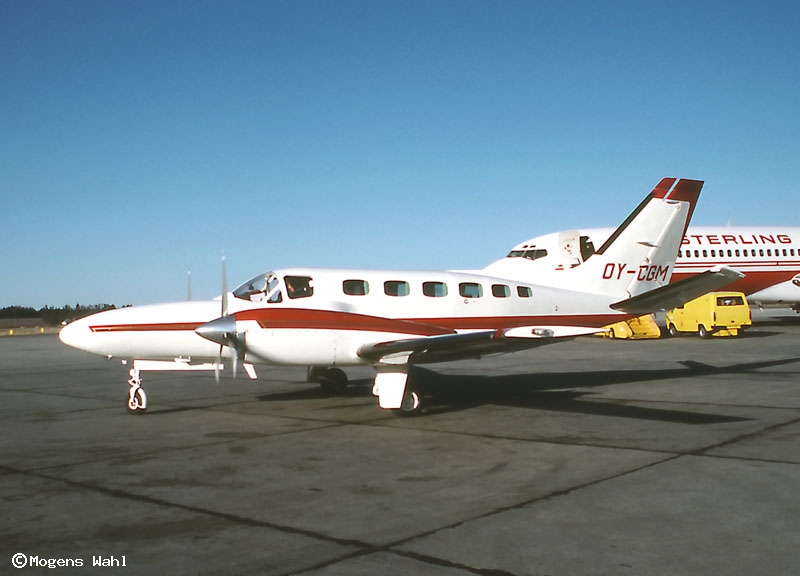
OY-CGM
Flight Phase:
Survivors:
No
Schedule:
Söndreströmfjord - Goose Bay
MSN:
441-0229
YOM:
1982
Country:
Region:
Crew on board:
2
Crew fatalities:
Pax on board:
6
Pax fatalities:
Other fatalities:
Total fatalities:
8
Circumstances:
The twin engine aircraft departed Sondreströmfjord on a charter flight to Goose Bay, carrying six sailors and two pilots. Seventeen minutes after takeoff, while cruising at FL220, the aircraft entered an uncontrolled descent and the crew did not send any distress call. At an altitude of 7,000 feet, the aircraft disintegrated and debris scattered on a wide area. The wreckage was found about 148 southwest of Sondreströmfjord and all eight occupants were killed.
Probable cause:
The exact cause of the accident could not be determined with certainty. However, the following findings were reported:
- There was no evidence from the post-mortem examination which suggests a contributory factor in this accident.
- There was no radio transmission from the crew indicating that they were concerned of any problem.
- There was no evidence of fire, engine failure, explosion, structural or mechanical defect prior to the in-flight break-up.
- The evaluation of the ATC tape indicates that an impairment of the crew was present, consistent with, but not confirmatory of hypoxia.