code

FL

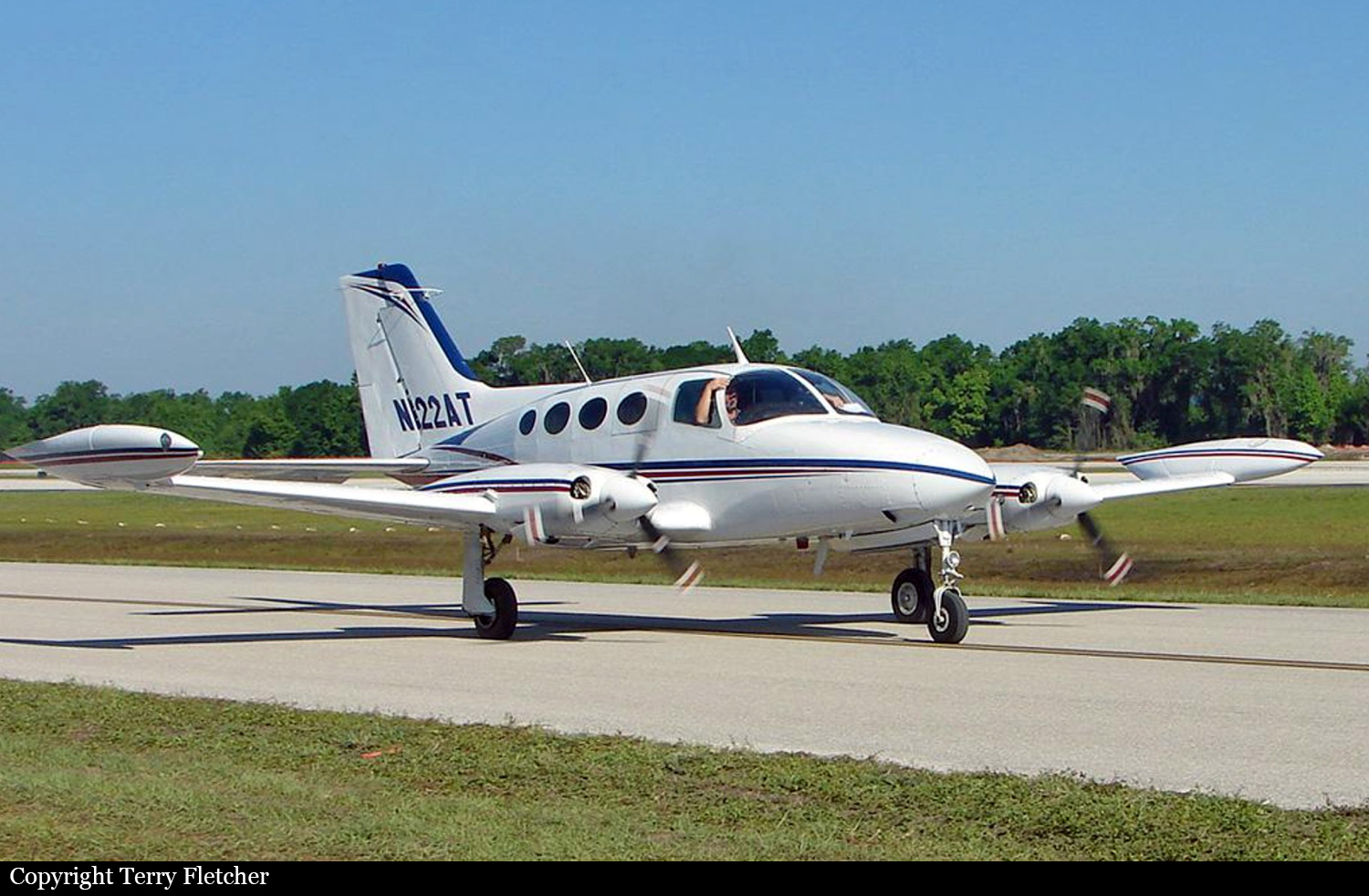
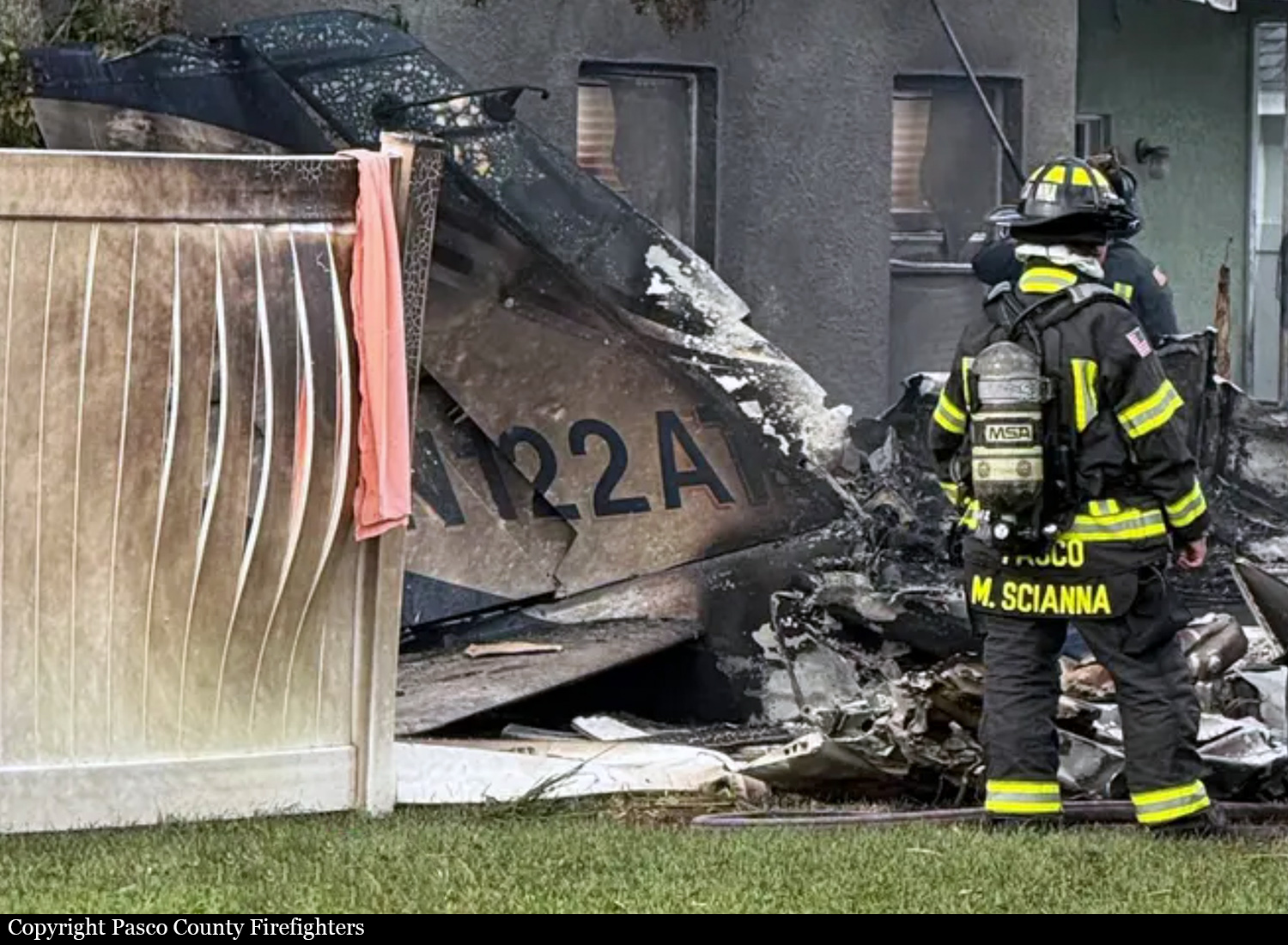
Crash of a Beechcraft 100 King Air in Coral Springs: 2 killed

Date & Time: Nov 10, 2025 at 1018 LT
Type of aircraft:
Operator:
Registration:
N30HG
Flight Phase:
Flight Type:
Survivors:
No
Schedule:
Fort Lauderdale – Montego Bay
MSN:
BE-14
YOM:
1976
Crew on board:
1
Crew fatalities:
Pax on board:
1
Pax fatalities:
Other fatalities:
Total fatalities:
2
Circumstances:
The twin engine airplane departed Fort Lauderdale-Executive Airport Runway 27 at 1014LT on a cargo flight to Montego Bay, carrying one passenger and one pilot. The goal of the flight was to deliver first aid to the victims of the recent hurricane 'Melissa'. After departure, the pilot completed a turn to the right and climbed to the altitude of 4,000 feet. While in a right hand turn, the airplane entered an uncontrolled descent and crashed in a pond located in a residential area in Coral Springs, some 11 km north northwest from the departure airport. The airplane was destroyed and both occupants were killed.

Crash of a Cessna 208A Cargomaster in Codys Corner: 1 killed

Date & Time: Feb 14, 2025 at 1840 LT
Type of aircraft:
Operator:
Registration:
N40EA
Flight Phase:
Flight Type:
Survivors:
No
Schedule:
Sebastian – Palatka
MSN:
208-0065
YOM:
1985
Crew on board:
1
Crew fatalities:
Pax on board:
0
Pax fatalities:
Other fatalities:
Total fatalities:
1
Circumstances:
While on a ferry flight from Sebastian to Palatka, the single engine airplane went out of control and crashed in a dense wooded area located in Codys Corner, Florida. The airplane was totally destroyed and the pilot, sole on board, was killed.

Crash of a Beechcraft 200 Super King Air in Buckingham

Date & Time: May 20, 2024 at 1103 LT
Operator:
Registration:
N762MC
Flight Phase:
Flight Type:
Survivors:
Yes
Schedule:
Buckingham - Buckingham
MSN:
BJ-16
YOM:
1980
Crew on board:
2
Crew fatalities:
Pax on board:
0
Pax fatalities:
Other fatalities:
Total fatalities:
0
Circumstances:
While taking off from runway 32 at Buckingham Airport, the twin engine airplane went out of control, veered off runway to the left, lost its nose gear and left main gear and came to rest. Both crew members evacuated safely.

Crash of a Canadair CL-600-2B16 Challenger 604 in Naples: 2 killed

Date & Time: Feb 9, 2024 at 1517 LT
Type of aircraft:
Operator:
Registration:
N823KD
Survivors:
Yes
Site:
Schedule:
Columbus - Naples
MSN:
5584
YOM:
2004
Flight number:
HPJ823
Location:
Crew on board:
3
Crew fatalities:
Pax on board:
2
Pax fatalities:
Other fatalities:
Total fatalities:
2
Captain / Total flying hours:
10525
Captain / Total hours on type:
2808.00
Copilot / Total flying hours:
24618
Copilot / Total hours on type:
138
Aircraft flight hours:
9763
Circumstances:
On February 9, 2024, about 1517 eastern standard time, a Bombardier Inc CL-600-2B16, N823KD, was destroyed when it was involved in an accident near Naples, Florida. The two airline transport pilots were fatally injured. The cabin attendant and the two passengers sustained minor injuries, and one person on the ground suffered minor injury. The airplane was operated by Ace Aviation Services (doing business as Hop-A-Jet) as a Title 14 Code of Federal Regulations Part 135 on-demand passenger flight. The airplane was returning to Naples Municipal Airport (APF), Naples, Florida, from Ohio State University Airport (OSU), Columbus, Ohio, where it had flown earlier in the day. The airplane was serviced with 350 gallons of fuel before departure from OSU. Preliminary Automatic Dependent Surveillance – Broadcast (ADS-B) flight track and air traffic control (ATC) data revealed that the flight crew contacted the ATC tower at APF while on a right downwind leg of the approach to the airport and maneuvering for a 5-mile final approach to runway 23. At 1508, the tower controller cleared the flight to land. The airplane was about 6.5 miles north of APF, about 2,000 ft geometric altitude (GEO) and 166 knots groundspeed, as it turned for the base leg of the traffic pattern. A preliminary review of the data recovered from the airplane’s flight data recorder revealed that the first of three Master Warnings was recorded at 1509:33 (L ENGINE OIL PRESSURE), the second immediately following at 1509:34 (R ENGINE OIL PRESSURE), and at 1509:40 (ENGINE). The system alerted pilots with illumination of a “Master Warning” light on the glareshield, a corresponding red message on the crew alerting system page and a triple chime voice advisory (“Engine oil”). Twenty seconds later, at 1510:05, about 1,000 ft msl and 122 kts, on a shallow intercept angle for the final approach course, the crew announced, “…lost both engines… emergency… making an emergency landing” (see figure 1). The tower controller acknowledged the call and cleared the airplane to land. At 1510:12, about 900 ft and 115 knots, the crew replied, “We are cleared to land but we are not going to make the runway… ah… we have lost both engines.” There were no further transmissions from the flight crew and the ADS-B track data ended at 1510:47, directly over Interstate 75 in Naples, Florida. Dashcam video submitted to the National Transportation Safety Board captured the final seconds of the flight. The airplane descended into the camera’s view in a shallow left turn and then leveled its wings before it touched down aligned with traffic travelling the southbound lanes of Interstate 75. The left main landing gear touched down first in the center of the three lanes, and then the right main landing gear touched down in the right lane. The airplane continued through the break-down lane and into the grass shoulder area before impacting a concrete sound barrier. The airplane was obscured by dust, fire, smoke, and debris until the video ended. This information is preliminary and subject to change. After the airplane came to rest, the cabin attendant stated that she identified that the cabin and emergency exits were blocked by fire and coordinated the successful egress of her passengers and herself through the baggage compartment door in the tail section of the airplane.

Crash of a Quest Kodiak 100 in Lorida

Date & Time: Jan 19, 2024 at 1713 LT
Type of aircraft:
Operator:
Registration:
N5799
Flight Type:
Survivors:
Yes
Schedule:
LaBelle – Lakeport
MSN:
100-0277
YOM:
2019
Crew on board:
1
Crew fatalities:
Pax on board:
4
Pax fatalities:
Other fatalities:
Total fatalities:
0
Captain / Total flying hours:
80
Captain / Total hours on type:
80.00
Circumstances:
The pilot reported, “upon touchdown, the plane jumped back up as I reduced power all the way back.” He said that the airplane bounced twice on the grass runway, resulting in the nose wheel separating from the airplane. Subsequently, the nose landing gear strut dug into the ground, and the airplane nosed over. The airplane’s fuselage, wings, and empennage were substantially damaged. The pilot reported that there were no preimpact mechanical malfunctions or failures of the airplane that would have precluded normal operation.
Probable cause:
The improper recovery from a bounced landing, which resulted in a hard landing and subsequent noseover.
Final Report:

Crash of a Rockwell Shrike Commander 500S off Key West

Date & Time: Aug 13, 2023 at 1020 LT
Operator:
Registration:
N62WE
Flight Phase:
Flight Type:
Survivors:
Yes
Schedule:
Orlando - Key West
MSN:
500-3317
YOM:
1978
Crew on board:
1
Crew fatalities:
Pax on board:
0
Pax fatalities:
Other fatalities:
Total fatalities:
0
Captain / Total flying hours:
975
Captain / Total hours on type:
338.00
Aircraft flight hours:
3997
Circumstances:
The pilot was enroute to the destination airport and overflying the Gulf of Mexico when about 15 nautical miles from the airport and at an altitude of 3,000 ft, the right engine suddenly lost power. The pilot described that about that time, the fuel totalizers indicated that 48 gallons of fuel were onboard, and his fuel quantity gauge indicated similarly. He then contacted air traffic control and declared an emergency. Shortly thereafter, the left engine also suddenly lost power. The pilot attempted to troubleshoot the issue and restart both engines but was unsuccessful. He subsequently ditched the airplane and was rescued from the water without injury. The airplane was not recovered and could not be examined after the accident, therefore the reason for the loss of engine power could not be determined.
Probable cause:
A total loss of engine power for reasons that could not be determined.
Final Report:

Crash of a Dassault Falcon 10 in Panama City

Date & Time: Jun 6, 2023 at 2017 LT
Type of aircraft:
Operator:
Registration:
N87RT
Flight Type:
Survivors:
Yes
Schedule:
Cobb County – Panama City
MSN:
106
YOM:
1977
Crew on board:
2
Crew fatalities:
Pax on board:
3
Pax fatalities:
Other fatalities:
Total fatalities:
0
Captain / Total flying hours:
29000
Captain / Total hours on type:
86.00
Copilot / Total flying hours:
441
Copilot / Total hours on type:
33
Aircraft flight hours:
10014
Circumstances:
Upon arriving at the destination airport, the business jet touched down about 2,500 ft beyond the threshold of the 10,000-ft-long runway. The pilot extended the airplane’s flight spoilers and attempted to activate the thrust reversers, but the airplane did not decelerate as expected and a warning horn sounded. The pilots then attempted to apply normal followed by emergency braking, both of which were ineffective in slowing the airplane. The airplane subsequently overran the runway and struck several approach lighting stanchions, coming to rest after the landing gear collapsed. The airplane’s occupants were uninjured, but the airplane was substantially damaged during the accident sequence. Following the accident, the captain noticed he had forgotten to move the thrust reverser emergency stow switches to their normal operating position after completing a preflight check. The warning horn heard during the landing was an indication of the stowed thrust reverser switches. The ineffective braking likely occurred because of the engines’ increased thrust output due to the attempted application of the thrust reversers with the switches in the stowed position. A postaccident examination of the wreckage confirmed that there was no evidence of any preimpact mechanical malfunctions or failures that would have precluded normal operation of the airplane. The airplane checklist found in the cockpit was marked “For Training Purposes Only” and for an airplane that was not equipped with thrust reversers.
Probable cause:
The flight crew’s failure to appropriately configure the airplane for landing, which resulted in a failed attempt to utilize the thrust reversers during landing and the inability to stop the airplane using its brakes due to increased forward thrust. Contributing to the accident was the flight crew’s failure to utilize the appropriate checklist for the thrust reverser equipped airplane.
Final Report:

Crash of a Piper PA-46-350P Malibu Mirage in Saint Augustine

Date & Time: Mar 23, 2023 at 1644 LT
Registration:
N280KC
Flight Phase:
Flight Type:
Survivors:
Yes
Schedule:
Saint Augustine – Jacksonville
MSN:
46-36219
YOM:
1999
Crew on board:
1
Crew fatalities:
Pax on board:
1
Pax fatalities:
Other fatalities:
Total fatalities:
0
Captain / Total flying hours:
2000
Aircraft flight hours:
3896
Circumstances:
The pilot reported that the airplane did not gain sufficient airspeed during the takeoff roll. He stated that, to avoid overrunning the runway onto a busy road he lifted the airplane off the runway when it reached rotation speed near the end of the runway. He was able to clear the highway, but the airplane contacted trees on the far side of the highway. The airplane descended to the ground and postimpact fire ensued. Witnesses who heard and saw the airplane taking off reported the engine sounded strong, as if it was running at full power. One witness observed the airplane pitch up into a steep nose-up attitude, climb to an estimated altitude of 100 ft, then start settling, barely clearing the streetlights along the side of a road. The airplane then began a slight roll to the left and struck trees. A large fireball erupted almost immediately upon impact with the trees. The climb and impact sequence were later verified by review of airport security camera video. The pilot contacted air traffic control (ATC) and requested to take off from a runway that was 2,700 ft in length, had an uphill gradient, and obstacles off the departure end. In addition, the pilot did not use the entire runway for the takeoff; instead, he initiated the takeoff with 2,301 ft of runway available. The requested runway also resulted in him departing with a tailwind component of about 3 knots, and an 11-knot crosswind component. The primary runway in use was 8,001 ft long and would have resulted in the airplane taking off downhill, with a headwind and no obstacles off the departure end. The runway selected by the pilot was closer to his hangar than the available longer runway. Examination of the wreckage did not reveal any evidence of preimpact failure of the engine or airplane that would have precluded normal operation. As the postimpact fire consumed many of the items onboard, the investigation was unable to establish the actual weight of the items that were loaded onto the airplane. However, the weights of the recovered cargo, in addition to the weights of the occupants (the pilot, his wife, and their dog), and the fuel onboard, indicated that at a minimum the total weight was in excess of the airplane’s maximum takeoff weight by about 14 pounds and the center of gravity (CG) was outside of the forward limit of the operating envelope. Based on this information, it is most likely that the overweight condition and exceedance of the CG limitations resulted in performance degradation that prevented the pilot from gaining sufficient airspeed and altitude to clear the trees off the end of the runway. The performance degradation was compounded by the pilot’s runway selection, which resulted in a takeoff tailwind component and obstacles.
Probable cause:
The pilot's inadequate preflight planning, which resulted in a takeoff above the airplane’s maximum gross weight, a CG forward of the limit, and a tailwind component that prevented the airplane from climbing above trees.
Final Report:

Crash of a Piper PA-46-310P Malibu in Port Orange

Date & Time: Feb 2, 2023 at 1200 LT
Registration:
N864JB
Flight Phase:
Flight Type:
Survivors:
Yes
Schedule:
Port Orange – Bluffton
MSN:
46-08009
YOM:
1986
Crew on board:
1
Crew fatalities:
Pax on board:
1
Pax fatalities:
Other fatalities:
Total fatalities:
0
Captain / Total flying hours:
469
Captain / Total hours on type:
19.00
Circumstances:
The pilot reported, and airport security video confirmed, that during a takeoff attempt, the right wing contacted the runway and the pilot pulled back excessively on the yoke. The airplane pitched up, stalled, and descended back on to the runway. It subsequently traveled off the end of the runway and impacted trees, before coming to rest on its side. The pilot added that in retrospect, he should have rejected the takeoff when the right wing contacted the runway. Examination of the wreckage by a Federal Aviation Administration inspector did not reveal any preimpact mechanical malfunctions, nor did the pilot report any. The inspector noted that both wings separated, and the fuselage was substantially damaged.
Probable cause:
The pilot’s failure to maintain aircraft control during a takeoff attempt, which resulted in an aerodynamic stall, runway excursion, and collision with trees.
Final Report:

Crash of an Antonov AN-2 in the Everglades National Park

Date & Time: Nov 14, 2022 at 1330 LT
Type of aircraft:
Operator:
Registration:
CU-A1885
Flight Phase:
Flight Type:
Survivors:
Yes
Schedule:
Dade-Collier - Miami-Opa Locka
MSN:
1G200-25
YOM:
1982
Crew on board:
2
Crew fatalities:
Pax on board:
0
Pax fatalities:
Other fatalities:
Total fatalities:
0
Captain / Total flying hours:
16000
Captain / Total hours on type:
0.00
Copilot / Total flying hours:
3000
Copilot / Total hours on type:
0
Aircraft flight hours:
7190
Circumstances:
The single engine airplane landed last October at Dade-Collier Airport, in the center of the Everglades National Park, following a flight from Sancti Spíritus, Cuba. The pilot defected Cuba and landed safely in the US. On November 14, the pilot and copilot were hired to relocate the radial engine-equipped biplane as a public flight from Dade-Collier Airport to Miami-Opa Locka. The pilot stated that, while enroute, the airplane began to smoke and the engine lost power. The pilot performed a forced landing to a levee; however, the airplane’s main landing gear were wider than the levee, and after touchdown, the airplane traveled off the left side,
nosed over, and came to rest inverted, resulting in substantial damage. Both crew members were highly experienced but none of them have any flight hours in the accident airplane make and model.
Probable cause:
The pilot's failure to properly configure the cowl flaps and oil cooler shutters, which resulted in a total loss of engine power due to overheating of the engine. Contributing to the accident was the pilot's decision to operate the airplane in with an inoperative cylinder head temperature gauge.
Final Report: