Crash of a Bombardier CL-600-2B16 Challenger 650 in Bangor: 6 killed

Date & Time: Jan 25, 2026 at 1944 LT
Type of aircraft:
Operator:
Registration:
N10KJ
Flight Phase:
Survivors:
No
Schedule:
Houston - Bangor - Châlons-Vatry
MSN:
6155
YOM:
2020
Location:
Crew on board:
3
Crew fatalities:
Pax on board:
3
Pax fatalities:
Other fatalities:
Total fatalities:
6
Circumstances:
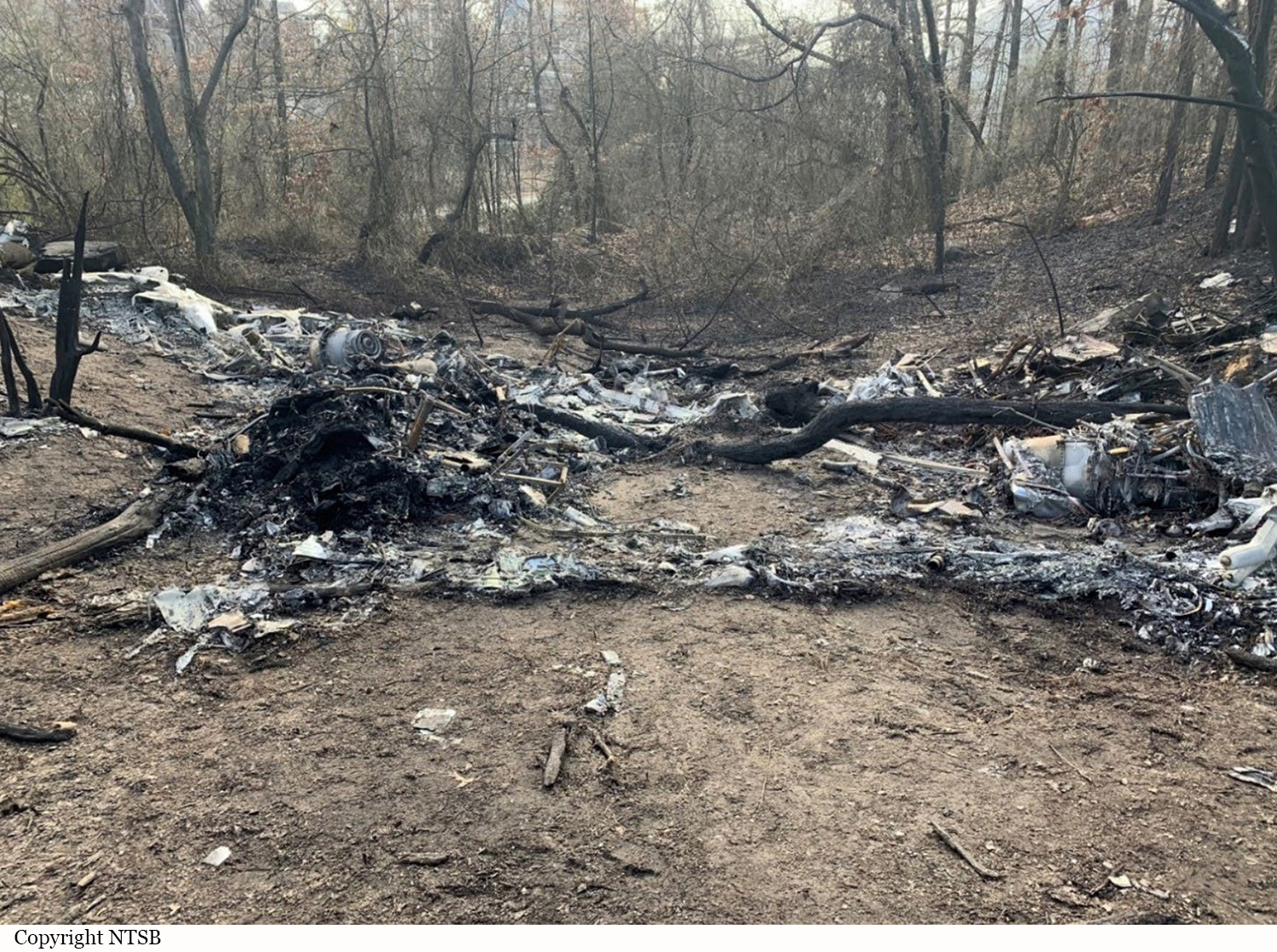
Following an uneventful flight from Houston, the airplane landed at Bangor Airport at 1809LT, first leg of an international flight to Châlons-Vatry. It remained parked on apron for about an hour then was taxied to the deicing pad where it remained from 1917LT to 1936LT. Following the deicing procedure, the crew taxied to runway 33 and was cleared for takeoff at 1944LT. After a course of about 1,700 metres and at a speed of 152 knots, the airplane was apparently on initial climb when control was lost. It rolled to the right, flipped over and crashed in a snow covered terrain, coming to rest upside down. The wreckage was partially consumed by a post crash fire. All six occupants were killed. At the time of the accident, weather conditions were poor with snow falls, limited visibility and an OAT of -17°. First Challenger 650 destroyed in an accident.
Crew:
Jacob Hosmer, pilot +2.
Passengers:
Tara Arnold,
Shawna Collins,
Nick Mastrascusa.

Crash of a Piper PA-31-325 Navajo C/R near Villa Mendoza

Date & Time: Nov 17, 2025 at 1400 LT
Type of aircraft:
Registration:
XB-AXM
Flight Phase:
Survivors:
Yes
Schedule:
Puebla – Guadalajara
MSN:
31-7512040
YOM:
1975
Country:
Crew on board:
1
Crew fatalities:
Pax on board:
4
Pax fatalities:
Other fatalities:
Total fatalities:
0
Circumstances:
En route from Puebla to Guadalajara, the pilot encountered engine problems and was forced to attempt an emergency landing. The twin engine airplane crash landed in a pasture located near Villa Mendoza and was destroyed by a post crash fire. All five occupants escaped with various injuries.

Crash of a Beechcraft C90 King Air in Lancaster

Date & Time: Apr 28, 2025 at 1537 LT
Type of aircraft:
Registration:
N501MS
Flight Phase:
Survivors:
Yes
Schedule:
Mexico City - Dallas
MSN:
LJ-626
YOM:
1974
Location:
Crew on board:
2
Crew fatalities:
Pax on board:
1
Pax fatalities:
Other fatalities:
Total fatalities:
0
Captain / Total flying hours:
764
Captain / Total hours on type:
194.00
Copilot / Total flying hours:
300
Copilot / Total hours on type:
20
Aircraft flight hours:
14250
Circumstances:
The twin engine airplane departed Mexico City-Felipe Ángeles Airport at 1018LT on a flight to Dallas-Love Field Airport with three people on board. The duration of flight was 4 hours and 23 minutes. While descending to the destination airport, the right engine failed, followed shortly later by the left engine. The crew reduced his altitude and attempted an emergency landing in a corn field located in Lancaster, 31 km southeast of Dallas-Love Field Airport. The airplane landed with its undercarriage down, rolled for few dozen metres then contacted a concrete road, causing the landing gear to be sheared off. The airplane then slid for another 150 metres before coming to rest. All three occupants were rescued, among them two were injured, one seriously.
Probable cause:
The pilot’s improper fuel planning, which resulted in fuel exhaustion and a total loss of power to both engines.
Final Report:

Crash of a Gulfstream GV in Cabo San Lucas

Date & Time: Apr 10, 2025 at 1624 LT
Type of aircraft:
Operator:
Registration:
N1948Z
Survivors:
Yes
Schedule:
Teterboro – Cabo San Lucas
MSN:
600
YOM:
2000
Flight number:
TFF966
Country:
Crew on board:
3
Crew fatalities:
Pax on board:
9
Pax fatalities:
Other fatalities:
Total fatalities:
0
Circumstances:
After landing on runway 29 at Cabo San Lucas Airport, the crew initiated the breaking procedure when the airplane started to deviate to the right. It veered off runway, impacted a ditch, lost its undercarriage and made an almost 180 turn before coming to rest on its belly. All occupants were quickly rescued and there were no injuries.

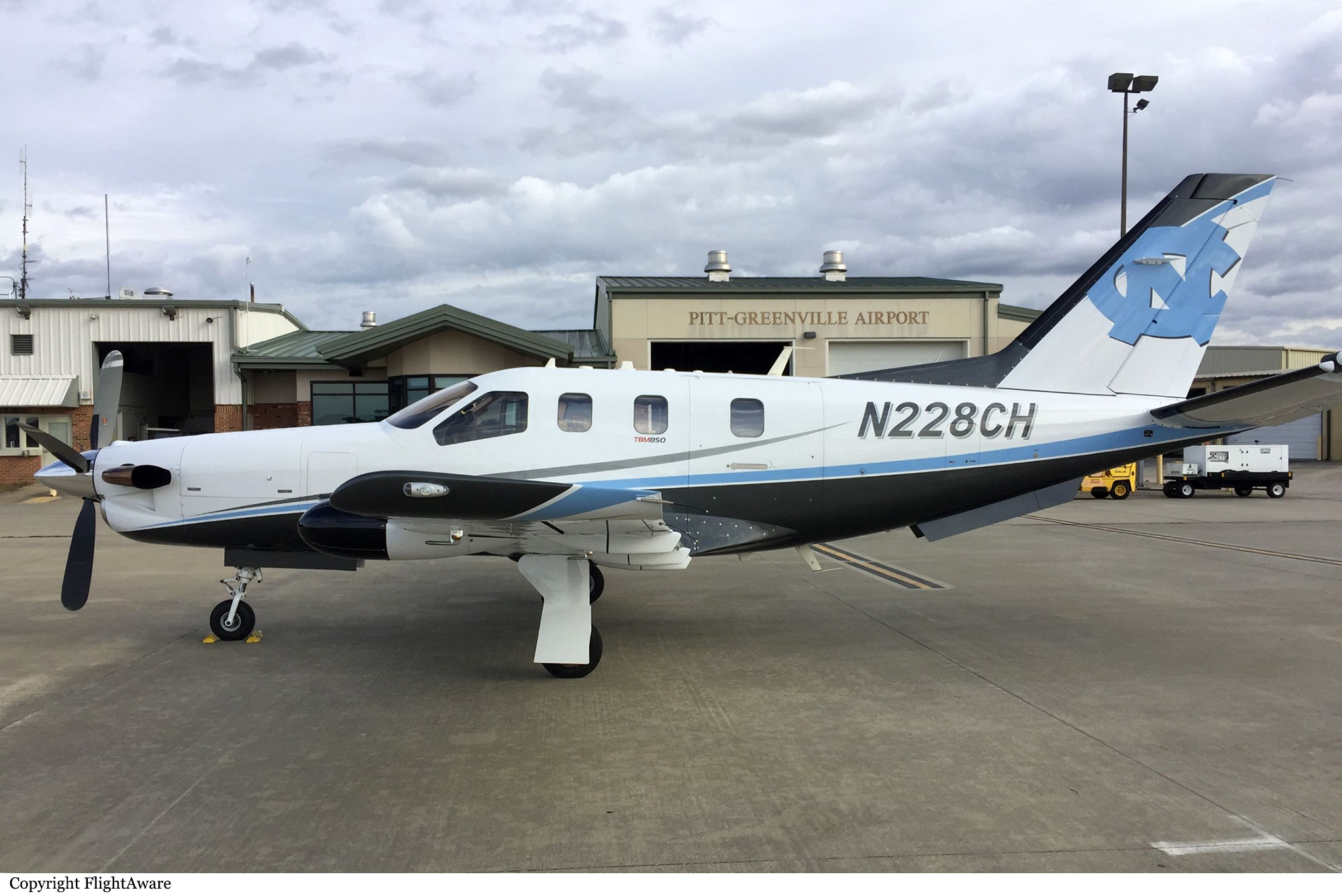
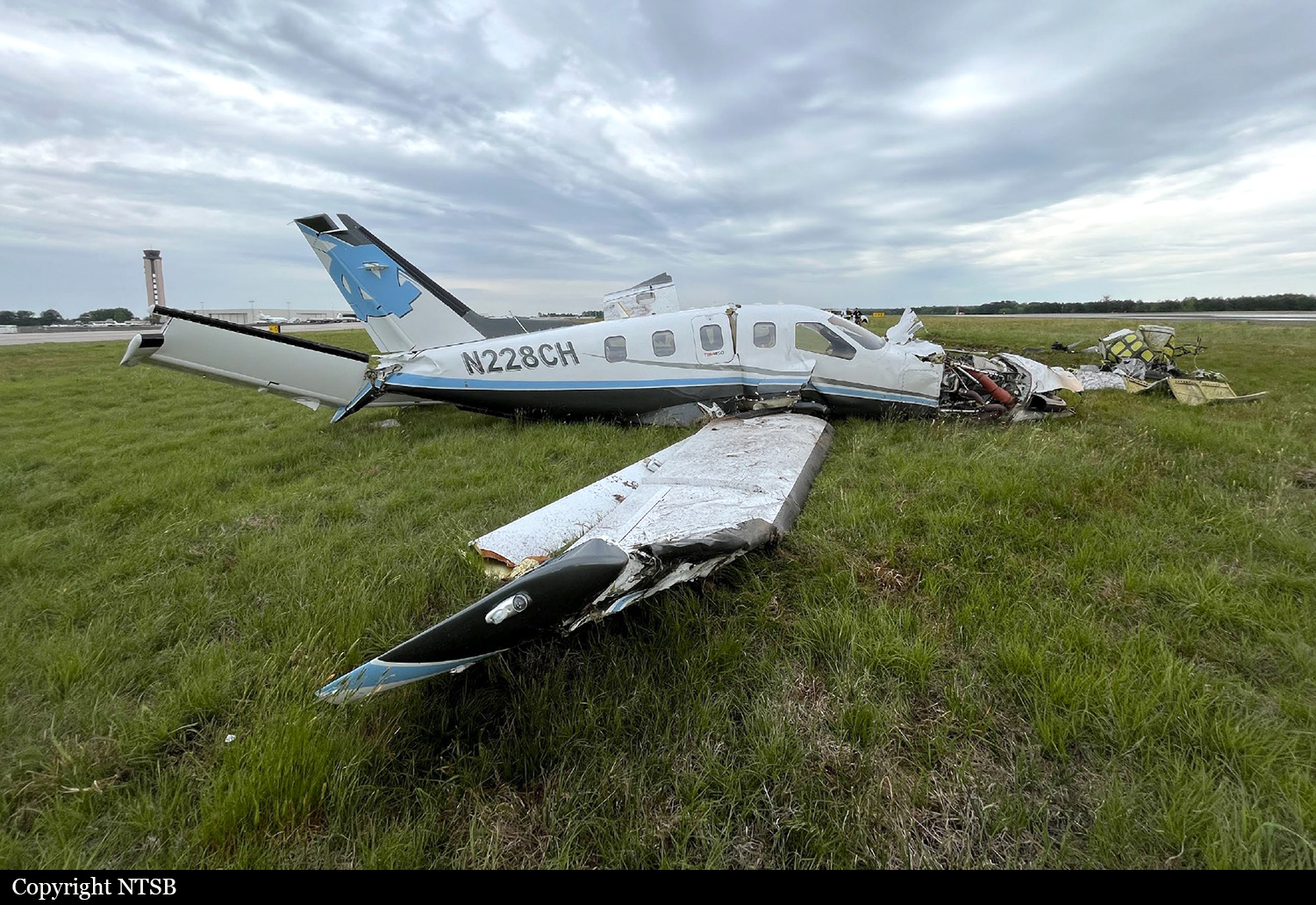
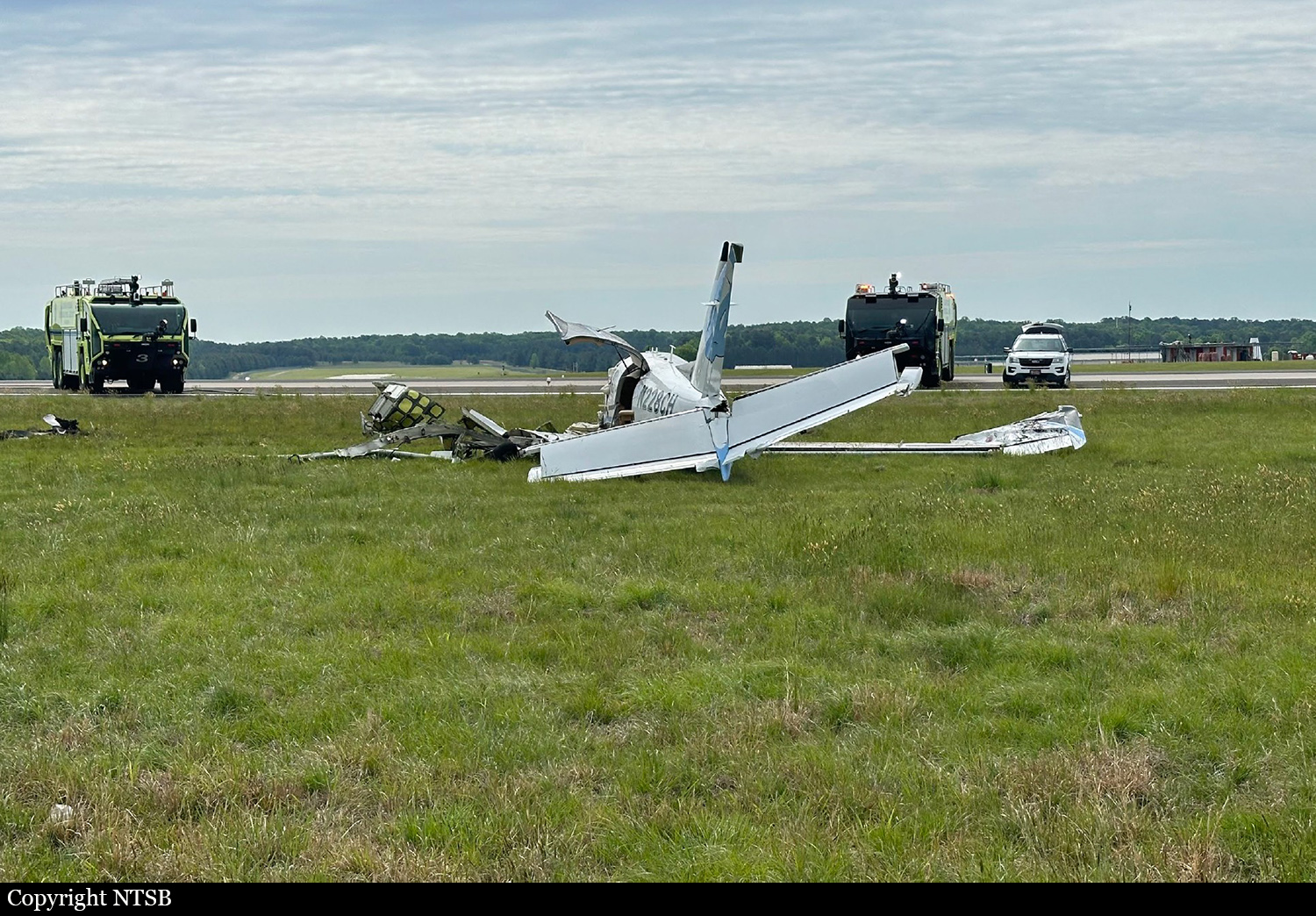
Crash of a Socata TBM-850 in Raleigh

Date & Time: Apr 24, 2024 at 1010 LT
Type of aircraft:
Operator:
Registration:
N228CH
Survivors:
Yes
Schedule:
Wilmington - Raleigh
MSN:
356
YOM:
2006
Crew on board:
1
Crew fatalities:
Pax on board:
1
Pax fatalities:
Other fatalities:
Total fatalities:
0
Captain / Total flying hours:
16000
Captain / Total hours on type:
2500.00
Aircraft flight hours:
4523
Circumstances:
The pilot executed an approach that, based on the passenger’s description, was not stabilized, and the airplane touched down twice during landing. The propeller blades made contact with the runway, and the pilot decided to abort the landing because he did not think he could stop the airplane on the runway. During the subsequent takeoff and initial climb, the pilot made a tight left turn about 100 ft above ground level to avoid traffic on an intersecting runway, and the airplane entered an aerodynamic stall and impacted the ground. Postaccident examination of the airplane revealed no preimpact malfunction or deficiency that would have precluded normal operation. Although the right main landing gear was found in the stowed position and its wheel axle and gear door showed scraping marks, an airport surveillance video showed that all three landing gear appeared to be in the down position during the airplane’s takeoff after the aborted landing.
Probable cause:
The pilot’s decision to continue an unstabilized approach, which resulted in a bounced landing, and his failure to maintain proper airspeed and climb attitude after aborting the landing, which led to the airplane exceeding its critical angle of attack and resulting in an aerodynamic stall.
Final Report:

Crash of a Beechcraft BeechJet 400A in Bentonville

Date & Time: Feb 14, 2024 at 1410 LT
Type of aircraft:
Operator:
Registration:
N95GK
Flight Phase:
Survivors:
Yes
Schedule:
Bentonville – Concord
MSN:
RK-027
YOM:
1991
Crew on board:
2
Crew fatalities:
Pax on board:
7
Pax fatalities:
Other fatalities:
Total fatalities:
0
Captain / Total flying hours:
20000
Captain / Total hours on type:
2000.00
Copilot / Total flying hours:
961
Copilot / Total hours on type:
227
Aircraft flight hours:
11062
Circumstances:
During the takeoff the pilot pulled the airplane’s control yoke aft to rotate and the airplane lifted off the runway as normal. The nose of the airplane dropped, and the pilot applied additional backpressure on the yoke. The pilot reported he felt a “snap” followed by a lack of tension on the control yoke. The airplane pitched down and settled back on the runway. The pilot applied maximum braking and full thrust reverse; however, the airplane continued off the end of the runway. The pilot applied left rudder and brake to turn the airplane to avoid contacting a gas station. The landing gear collapsed during the turn, which resulted in substantial damage to the right wing when it struck the ground. Two passengers escaped with minor injuries and seven others occupants were unarmed. The airplane was damaged beyond repair. A postaccident examination of the airplane revealed the elevator control cable was fractured at a pulley bracket near the aft portion of the fuselage where the cable transitioned from a horizontal to a vertical orientation. A metallurgical examination found nearly all the wires of the cable had rubbing damage to varying extents around the sides of the wires near the fracture. The upper guard pin exhibited wear, scratch marks, and gouges. The pulley contained several isolated wire fragments. The damage on the cable, upper guard pin on the pulley, and the pulley assembly was consistent with the cable having been improperly routed on the wrong side of the upper guard pin. Over time, the cable likely rubbed against the upper guard pin until the cable was sufficiently damaged to produce failure under normal operating loads. A review of the maintenance logbook entries found that the elevator cable was replaced about a year before the accident and that the airplane flew about 316.5 hours before the cable separated.
Probable cause:
Improper rigging of the elevator cable over the upper guard pin, which resulted in a cable separation and loss of elevator control.
Final Report:

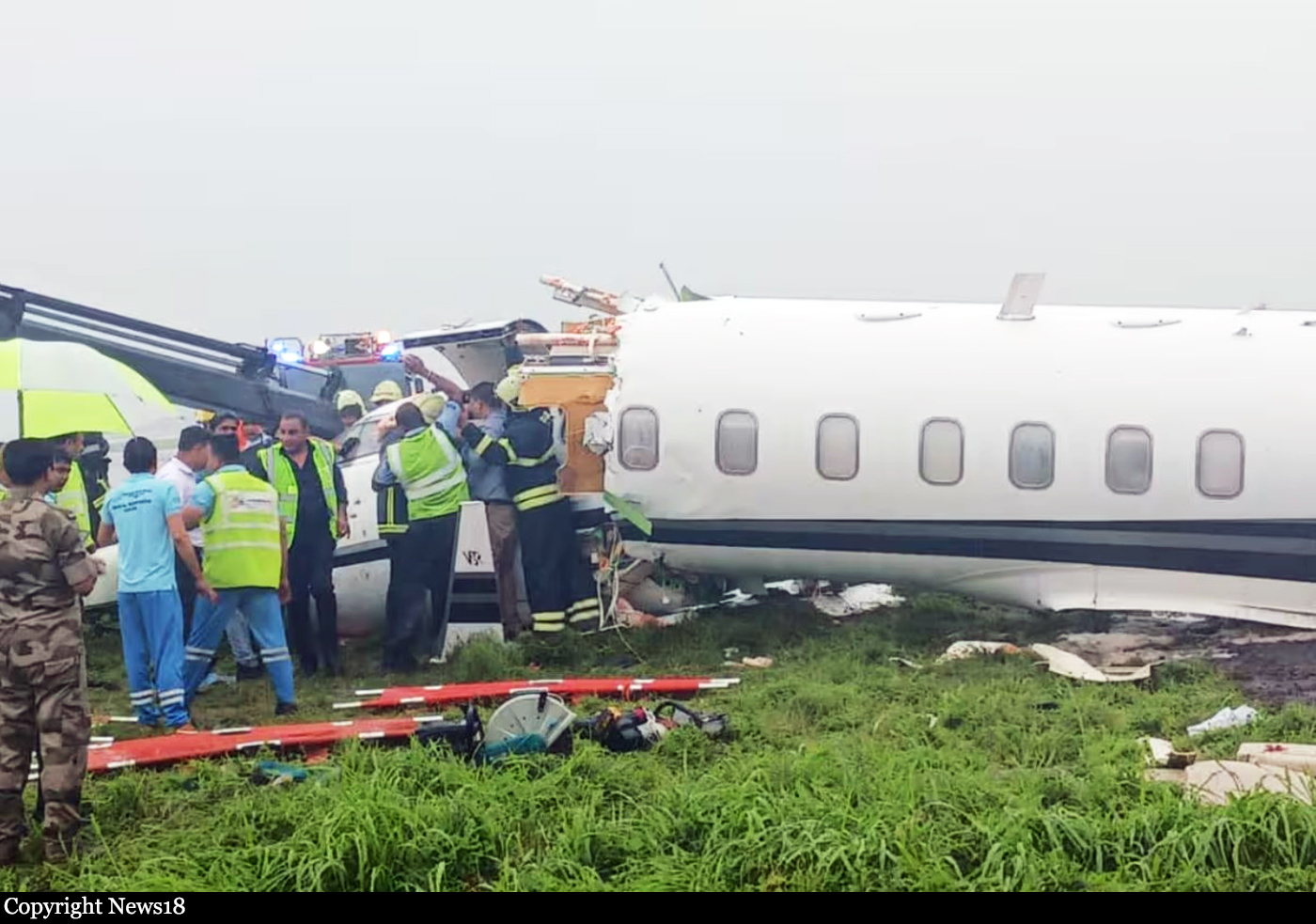
Crash of a Learjet 45 in Mumbai

Date & Time: Sep 14, 2023 at 1705 LT
Type of aircraft:
Operator:
Registration:
VT-DBL
Survivors:
Yes
Schedule:
Visakhapatnam – Mumbai
MSN:
45-404
YOM:
2009
Country:
Region:
Crew on board:
2
Crew fatalities:
Pax on board:
6
Pax fatalities:
Other fatalities:
Total fatalities:
0
Captain / Total flying hours:
6100
Captain / Total hours on type:
430.00
Copilot / Total flying hours:
540
Copilot / Total hours on type:
340
Circumstances:
The approach to Mumbai-Chhatrapati Shivaji Airport was completed in poor weather conditions with reduced visibility due to heavy rain falls. On short final, the airplane was in a nose down attitude and rolling to the right when it impacted the runway surface. It went out of control, veered off runway and came to rest in a grassy area, broken in two. A small fire was quickly extinguished. All eight occupants were injured.

Crash of a Beechcraft B200 Super king Air in Little Rock: 5 killed

Date & Time: Feb 22, 2023 at 1156 LT
Operator:
Registration:
N55PC
Flight Phase:
Survivors:
No
Schedule:
Little Rock - Columbus
MSN:
BB-1170
YOM:
1983
Crew on board:
1
Crew fatalities:
Pax on board:
4
Pax fatalities:
Other fatalities:
Total fatalities:
5
Captain / Total flying hours:
10196
Captain / Total hours on type:
195.00
Aircraft flight hours:
10784
Circumstances:
The pilot and four passengers were departing in the multi-engine turbopropeller-powered airplane when the accident occurred. Surveillance video indicated that the takeoff and initial climb appeared normal, however, the airplane than began to lose airspeed and altitude until the airplane entered a left roll and descended toward the ground. Just after the airplane went out of sight, the camera recorded a rising plume of smoke about 1 mile from of the departure end of the runway. Shortly after the plume of smoke appeared, the camera appeared to shake from wind, and recorded blowing debris and heavy rain on the ramp where the camera was located. Just before and during takeoff, the camera showed that the ramp was dry with no rain or noticeable wind. No radio or distress calls were heard from the pilot. Several witnesses saw the airplane’s takeoff and initial climb and they described the airplane as struggling to climb and reported that it entered a steep bank and descent toward the ground shortly after takeoff. The witnesses characterized the weather conditions as stormy and windy, with a weather front passing through the area. The wreckage of the airplane was found amidst heavily wooded terrain adjacent to a factory about 1 mile south of the departure end of runway 18 and a post-impact fire consumed most of the airplane. Detailed examinations of the airframe, engines, flight controls, and propellers did not reveal any pre-impact mechanical anomalies that would have precluded normal operations. Both engines and propellers exhibited evidence of rotation at the time of impact, and several large diameter tree branches at the accident site were found cut consistent with propeller blade strikes, also indicating that the engines were producing power at the time of impact. A performance study indicated that the airplane climbed to a maximum altitude of about 386 ft above ground level before it began to descend. Review of airplane performance from previous takeoffs from the same runway indicated that the airplane’s climb performance during the accident initial climb takeoff was diminished. The reason for the diminished performance could not be determined. Review of weather information indicated that the airplane departed about the time a line of extreme intensity precipitation was approaching, and weather reporting equipment at the airport indicated a wind shift associated with this oncoming line of precipitation. A wind shear alert was active in the control tower advising of 15 to 20 kt gains about 1 mile from the runway. Based on the observation weather data, it is likely that, during the initial climb, the airplane encountered wind with magnitudes between 20 and 30 kts that likely varied in direction about 50°, from a quartering headwind to a crosswind condition. In the minutes following the accident time, this wind continued to shift to a quartering tailwind condition for the departure runway and increased in magnitude to 30 to 40 kts. There was no evidence to suggest that the airplane encountered a microburst or downdraft. Based on available information, the performance study could not conclude why the airplane had diminished performance during the initial climb after takeoff. Although there was diminished performance during the initial climb, it could not be attributed to a airframe, engine, or system anomaly. Although the weather was deteriorating at the time of the accident, and there were wind shifts in the area, a weather study determined that the wind shifts likely contributed to, but did not cause the accident. The pilot’s autopsy was limited by injury but identified severe coronary artery disease. Within the limits of the autopsy, there was no evidence that a medical event contributed to the accident. The pilot’s toxicology testing detected a low level of ethanol in cavity blood only; however, the small amount of ethanol may have been produced postmortem. It is unlikely that the effects of ethanol contributed to the accident.
Probable cause:
The loss of control during initial climb for undetermined reasons. Contributing to the accident were the sudden wind shifts during the initial climb.
Final Report:

Crash of a Cessna 340A on Mt Mayon: 4 killed

Date & Time: Feb 18, 2023 at 0650 LT
Type of aircraft:
Operator:
Registration:
RP-C2080
Flight Phase:
Survivors:
No
Site:
Schedule:
Legazpi - Manila
MSN:
340A-0917
YOM:
1979
Location:
Country:
Region:
Crew on board:
2
Crew fatalities:
Pax on board:
2
Pax fatalities:
Other fatalities:
Total fatalities:
4
Circumstances:
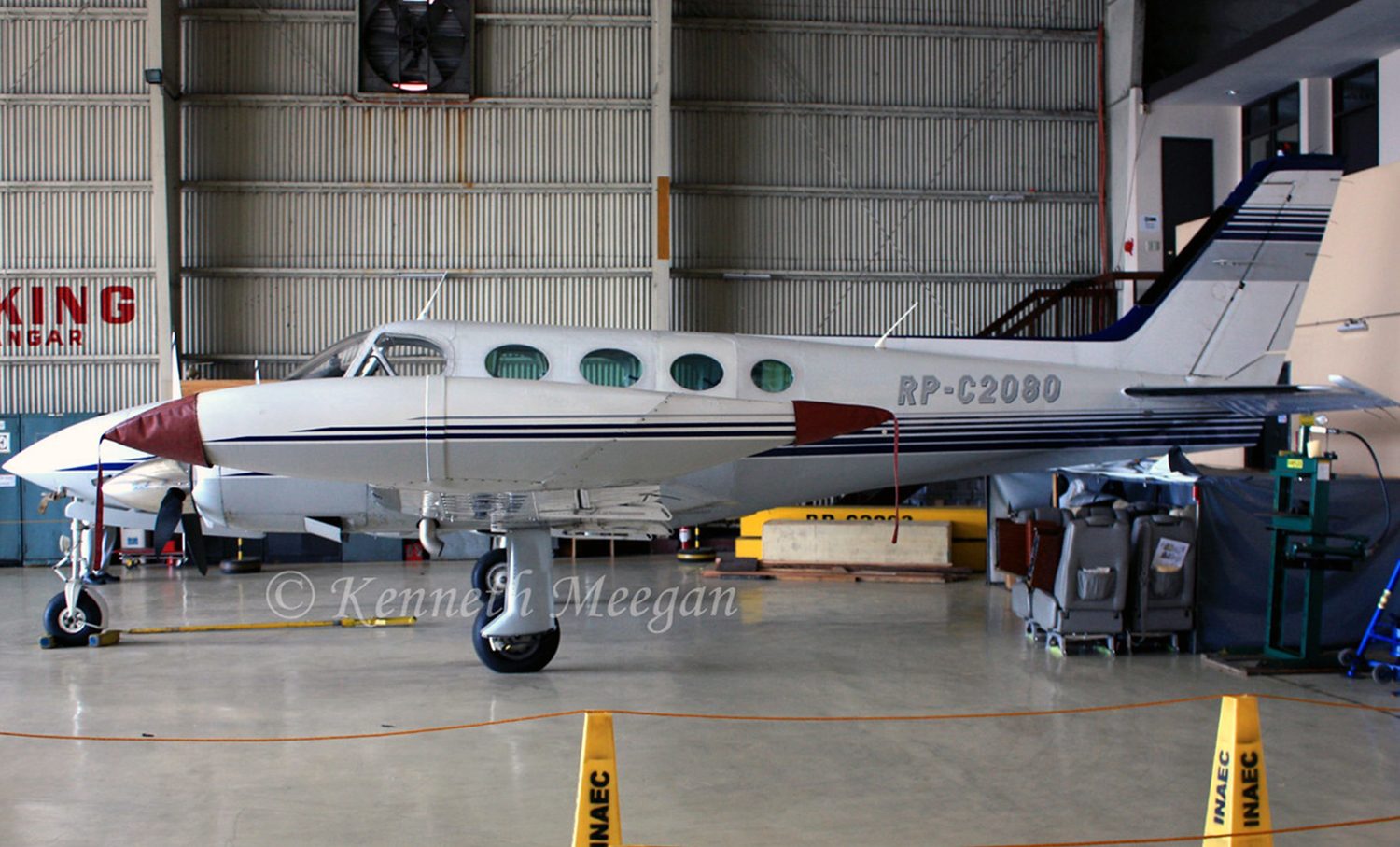
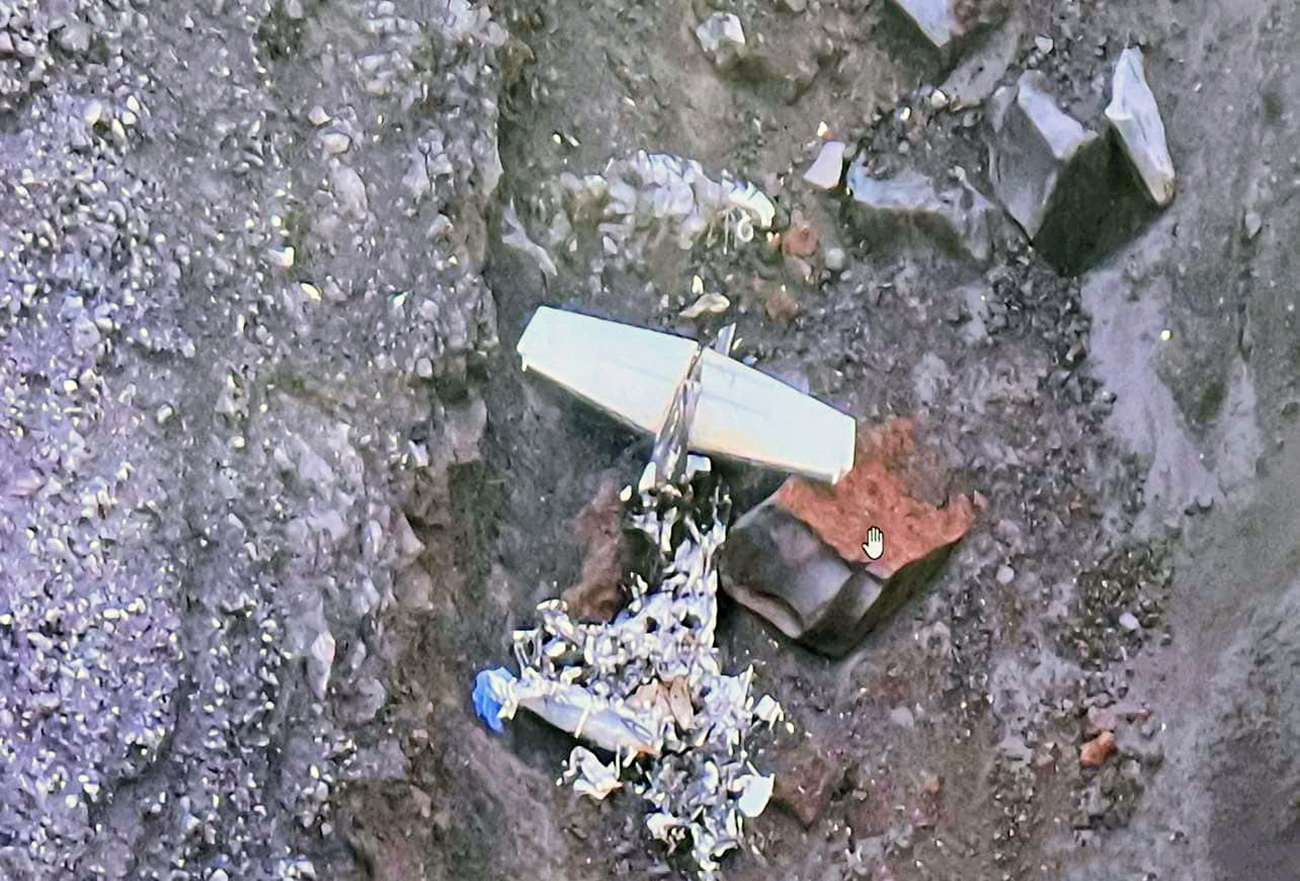
The flight was bound for Manila with one pilot, one aircraft mechanic, and two passengers on board. The aircraft was reported missing after it took off from Bicol International Airport (RPLK) at Daraga, Albay. The aircraft is being operated by the Energy Development Corporation (EDC) and was on a routine general aviation flight. All aircraft occupants were fatally injured in this accident. The pilot submitted a VFR to IRF flight plan that will utilize standard departure on RWY 05 of RPLK. According to the flight plan, it will be transitioning to IFR and intercepting NAGA VOR. It will further continue W9 airway and proceed to ALABAT for the arrival procedure in Manila. The flight departed from RWY 05, made a procedural right upwind turn, and crossed the final approach of RWY 05. At 0647LT, ATC established contact with the aircraft while passing 2,600 ft. The ATC inquired if the flight had already passed Camalig by-pass, and the pilot responded "We're passing Camalig by-pass now". The pilot was instructed by ATC to continue climbing and report twenty nautical miles out of RPLK, which was acknowledged by the pilot. At 0650LT, no position report was received from the aircraft. The ATC initiated contact with the aircraft several times, but no response was received. The duty ATC contacted the Manila Area Control Center (MACC) for any signatures of the aircraft that they might have picked up. The MACC informed the ATC that there was an initial signature contact that later disappeared on the radar monitor. At about 0900LT, the Philippine Aeronautical Rescue Coordinating Center (PARCC) elevated the alert to a DETRESFA on the missing aircraft. On the next day, February 19, 2023, the operator launched their own search operation using an AW139 helicopter, which was able to locate the missing aircraft at about 6,300 feet on the south-west slope of Mt Mayon Volcano with grid coordinates of 13°14'56.45 N and 123°40'57.79 E. An aerial reconnaissance by CAAP-AAIIB investigators and EDC using a helicopter was conducted on 20 February 2023. The general impact area shows the scattered wreckage of aircraft debris and signs of post-impact fire. All four occupants were killed.
Probable cause:
The pilot failed to follow the flight plan and made an unauthorized deviation. The pilot lack of situational awareness was considered as a contributing factor.
Final Report:

Crash of a Piper PA-31-310 Navajo in Beatrice

Date & Time: Feb 13, 2023
Type of aircraft:
Operator:
Registration:
Z-DAL
Flight Phase:
Survivors:
Yes
MSN:
31-218
YOM:
1968
Country:
Region:
Crew on board:
1
Crew fatalities:
Pax on board:
4
Pax fatalities:
Other fatalities:
Total fatalities:
0
Circumstances:
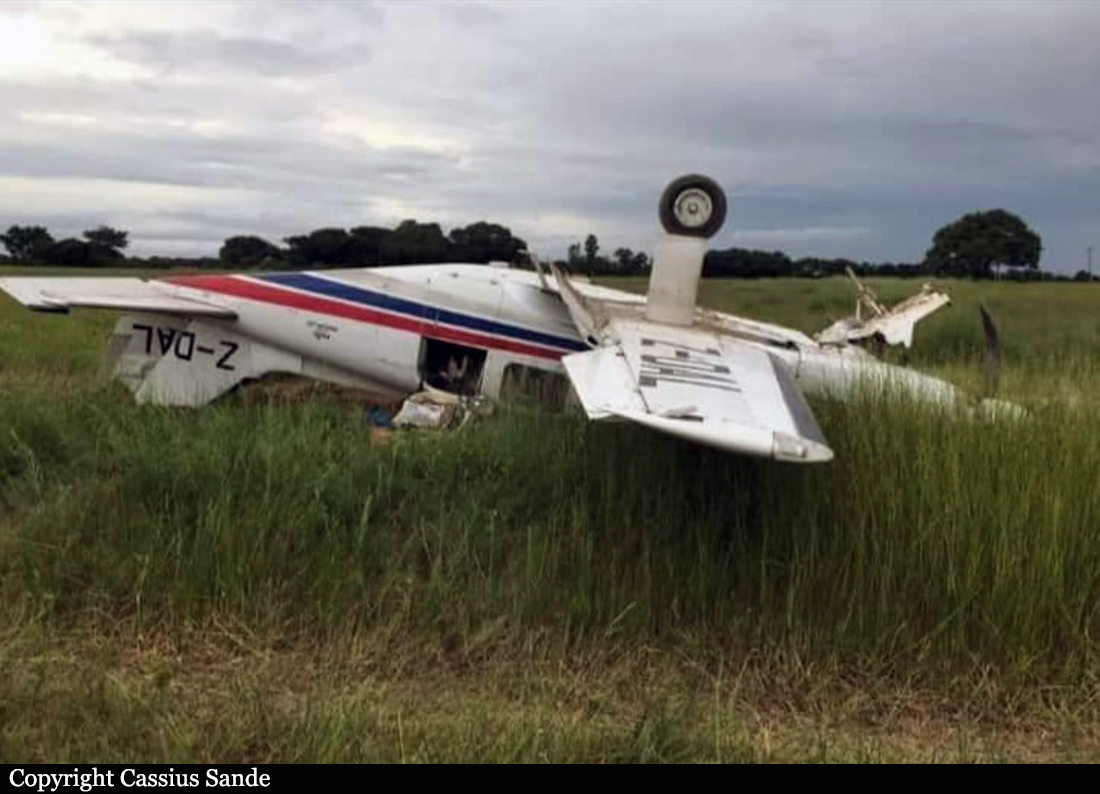
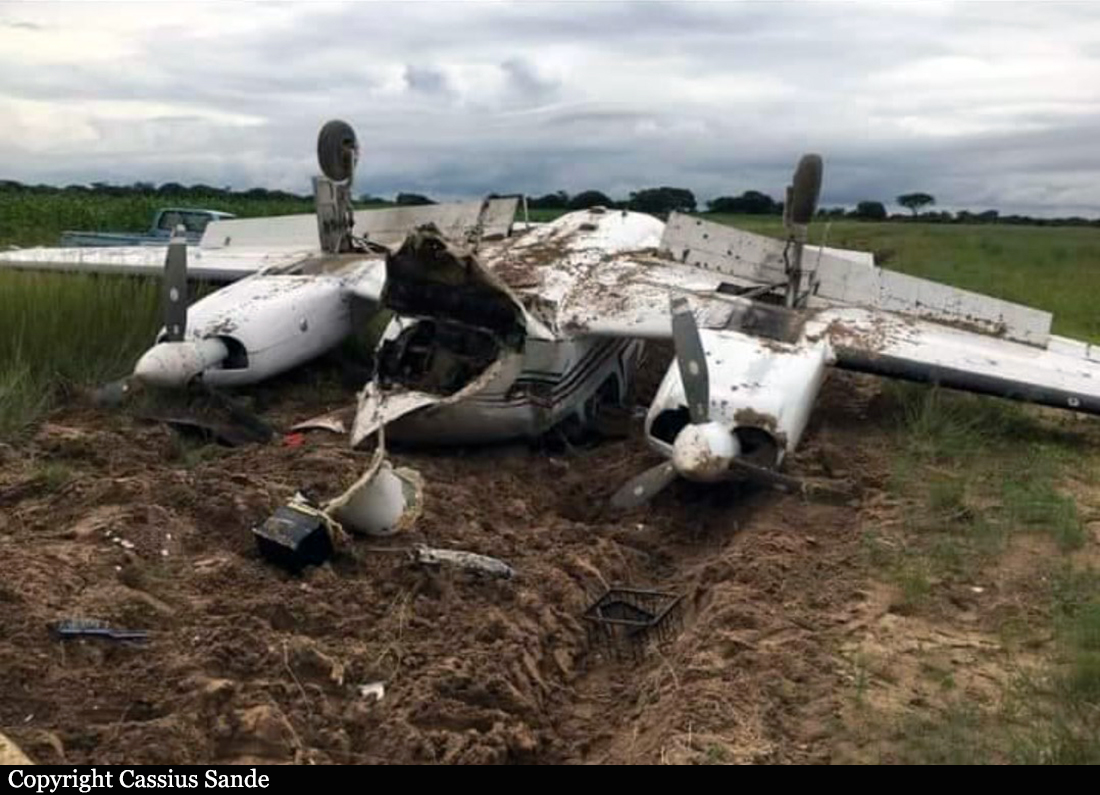
The pilot encountered an unexpected situation and elected to make an emergency landing in an open muddy field. He lowered the landing gear and upon touchdown, the airplane overturned and came to rest upside down. All five occupants were rescued and the airplane was destroyed.
Crew:
Zvikomborero Nyamakura, pilot,
Passengers:
Salfina Karimazondo, Murowa Diamonds’ security officer,
Obey Mabvundwi, constable of CID Minerals Flora and Fauna Unit,
Petros Chaguruka, Fawcett's guard,
Fredrick Maroyi, Fawcett's guard.