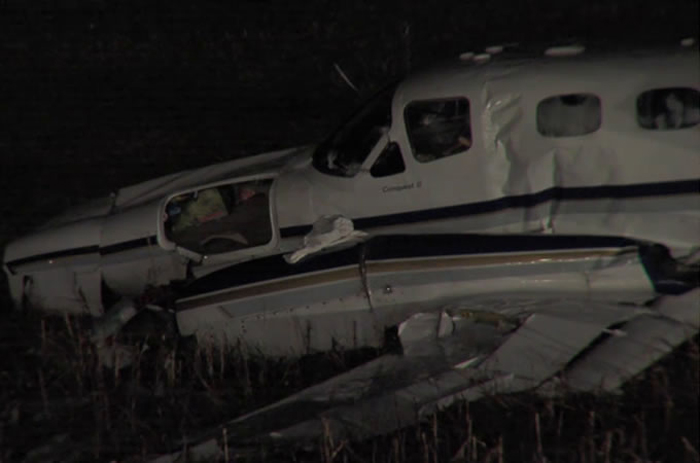
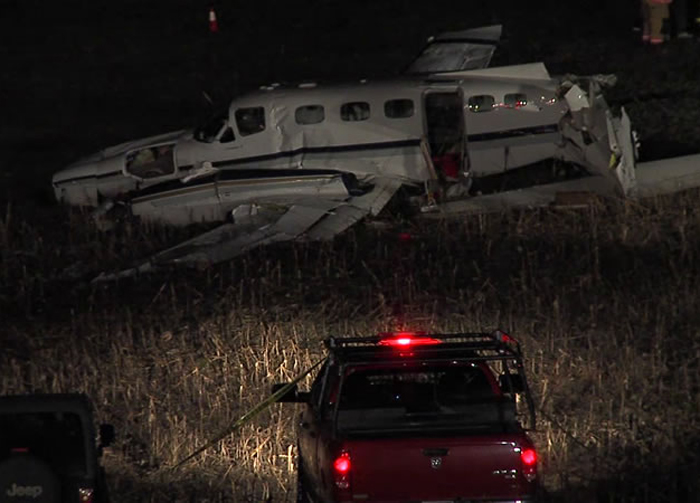
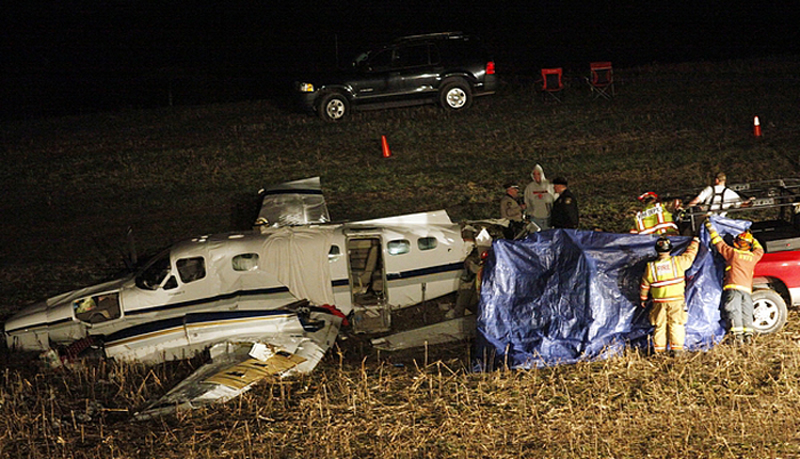
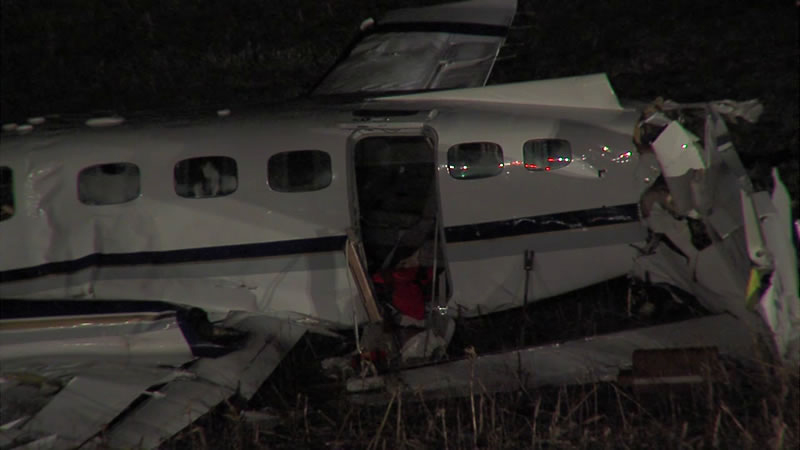
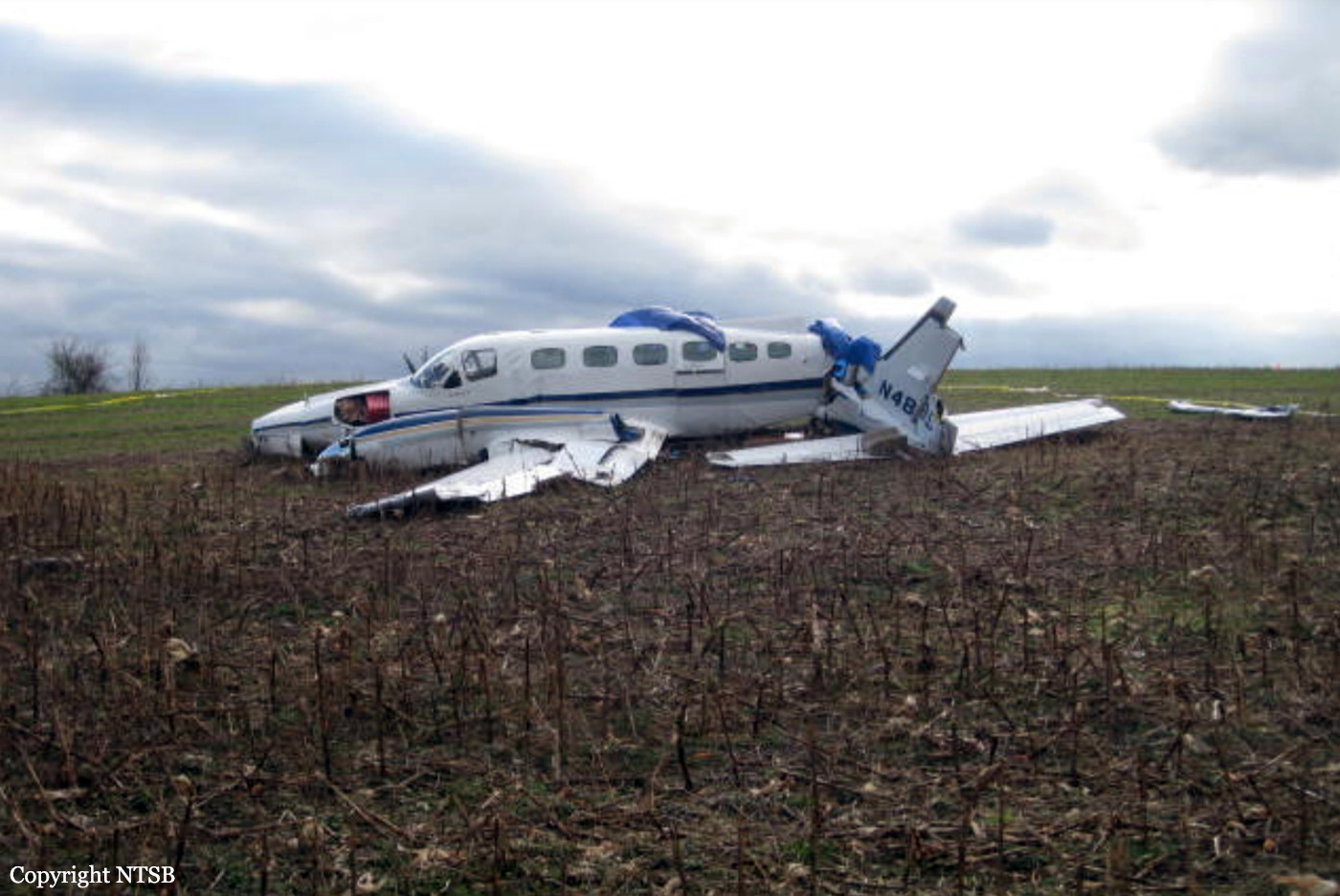
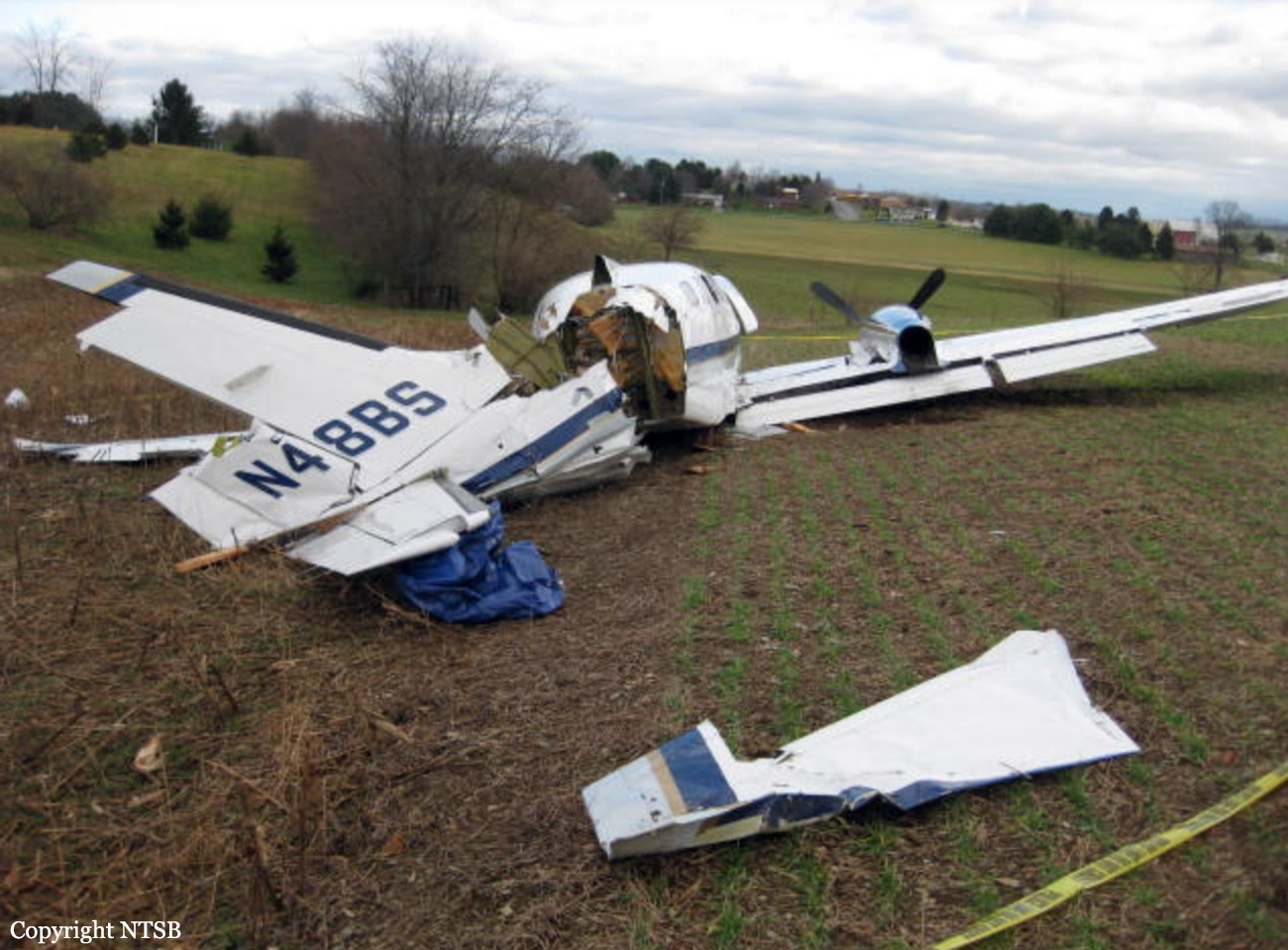
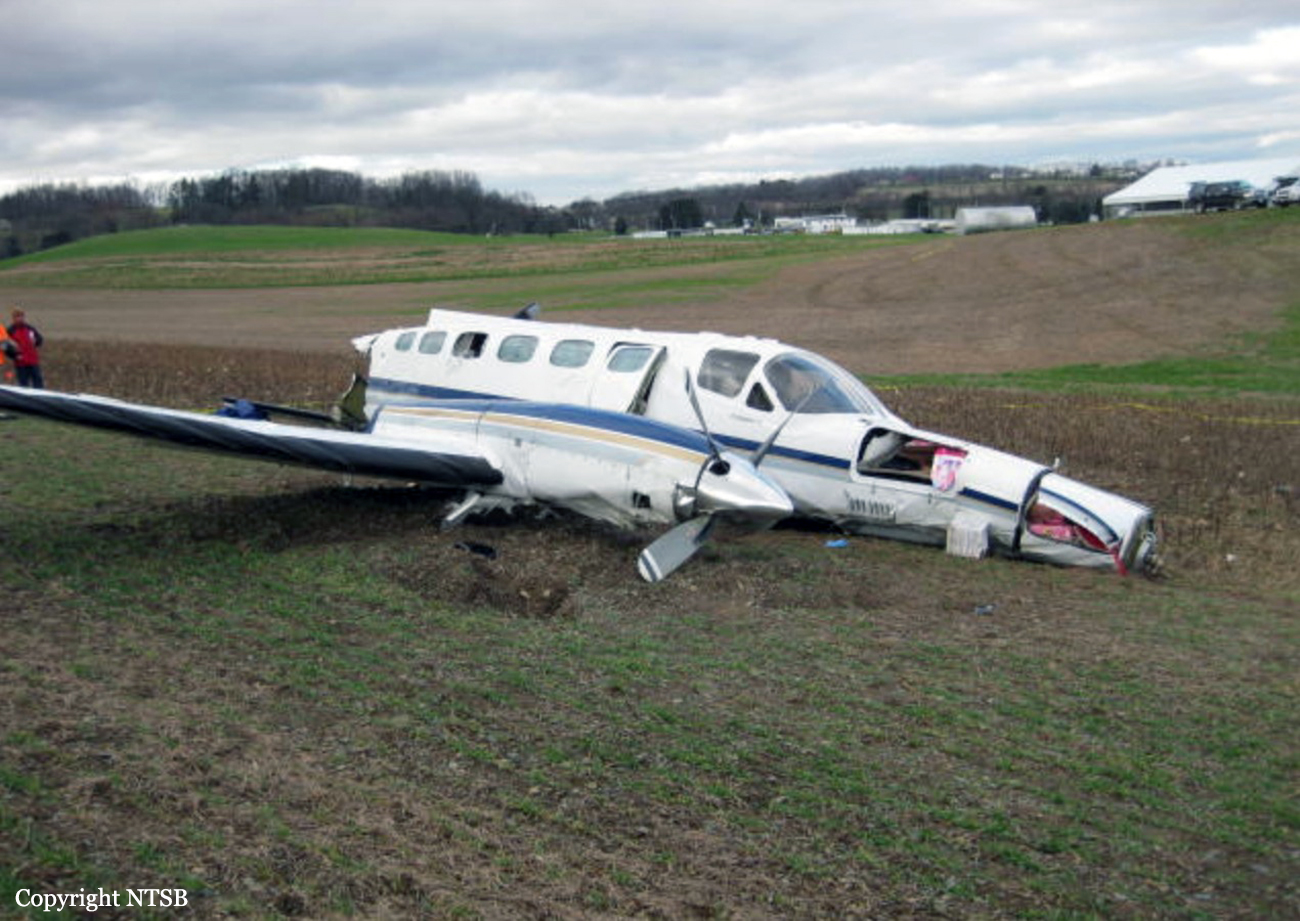
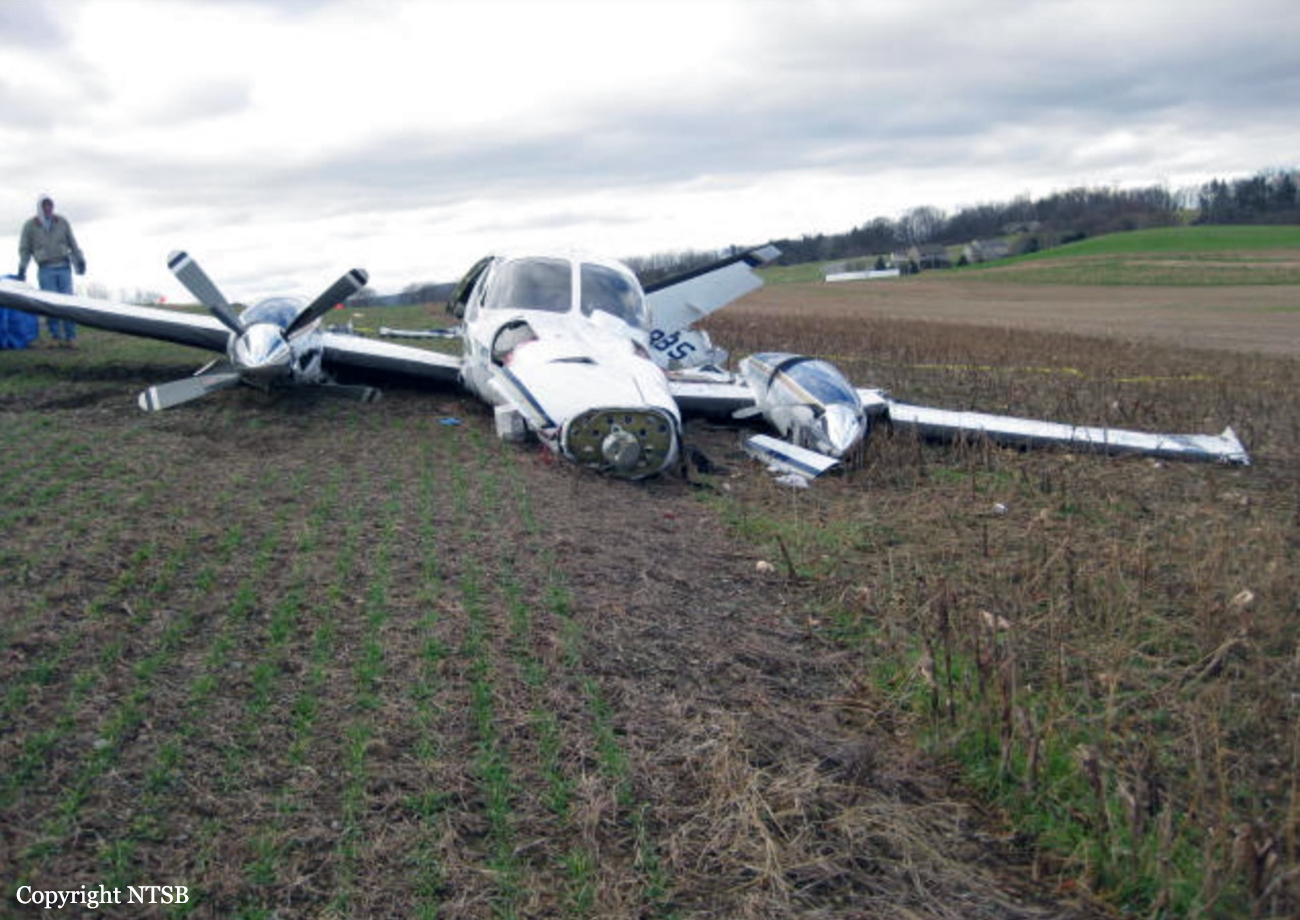
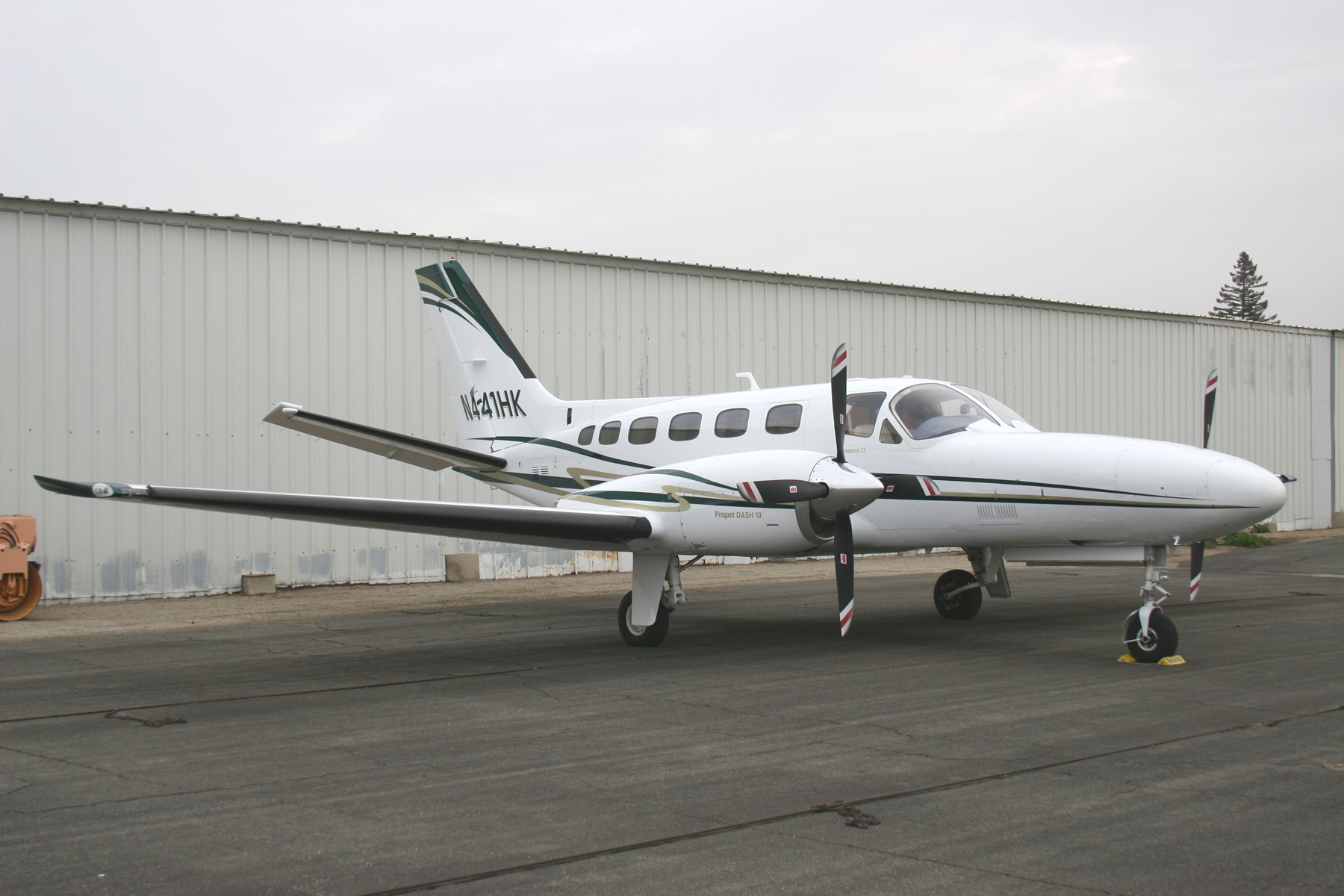
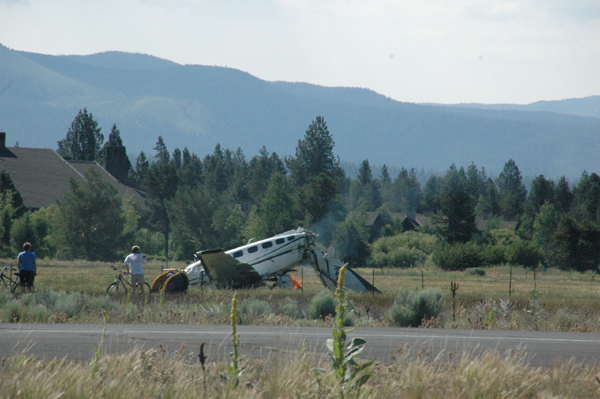
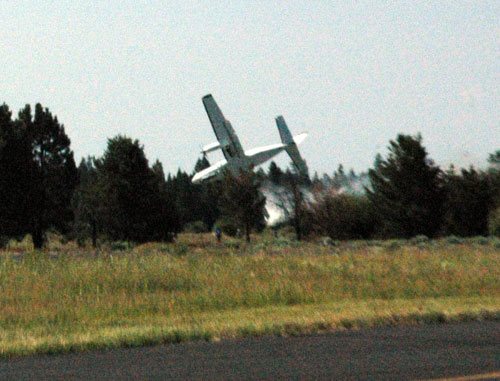
Crash of a Cessna 441 Conquest in York: 1 killed

Date & Time: Dec 22, 2011 at 1725 LT
Type of aircraft:
Operator:
Registration:
N48BS
Flight Type:
Survivors:
No
Schedule:
Long Beach - York
MSN:
441-0125
YOM:
1980
Crew on board:
1
Crew fatalities:
Pax on board:
0
Pax fatalities:
Other fatalities:
Total fatalities:
1
Captain / Total flying hours:
1409
Captain / Total hours on type:
502.00
Aircraft flight hours:
5995
Circumstances:
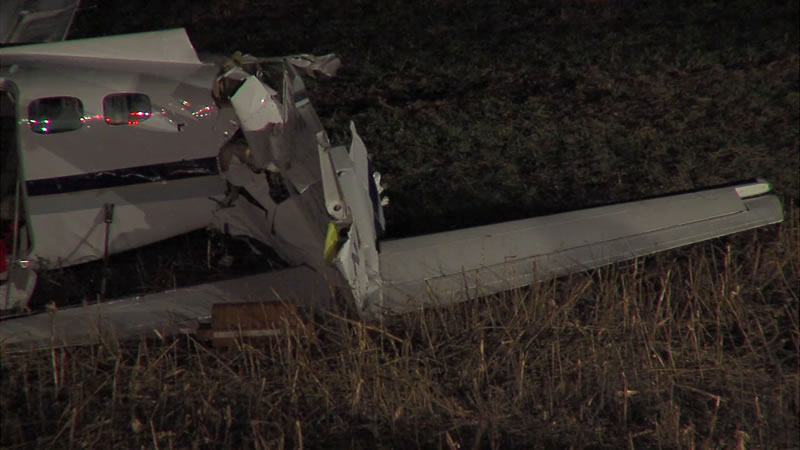
Toward the end of a 6 hour, 20 minute flight, during a night visual approach, the pilot flew the airplane to a left traffic pattern downwind leg. At some point, he lowered the landing gear and set the flaps to 30 degrees. He turned the airplane to a left base leg, and after doing so, was heard on the common traffic frequency stating that he had an "engine out." The airplane then passed through the final leg course, the pilot called "base to final," and the airplane commenced a right turn while maintaining altitude. The angle of bank was then observed to increase to where the airplane's wings became vertical, then inverted, and the airplane rolled into a near-vertical descent, hitting the ground upright in a right spin. Subsequent examination of the airplane and engines revealed that the right engine was not powered at impact, and the propeller from that engine was not in feather. No mechanical anomalies could be found with the engine that could have resulted in its failure. The right fuel tank was breeched; however, fuel calculations, confirmed by some fuel found in the right fuel tank as well as fuel found in the engine fuel filter housing, indicated that fuel exhaustion did not occur. Unknown is why the pilot did not continue through a left turn descent onto the final approach leg toward airport, which would also have been a turn toward the operating engine. The pilot had a communication device capable of voice calls, texting, e-mail and alarms, among other functions. E-mails were sent by the device until 0323, and an alarm sounded at 0920. It is unknown if or how much pilot fatigue might have influenced the outcome.
Probable cause:
The pilot's failure to maintain minimum control airspeed after a loss of power to the right engine, which resulted in an uncontrollable roll into an inadvertent stall/spin. Contributing to the accident was the failure of the airplane's right engine for reasons that could not be determined because no preexisting mechanical anomalies were found, and the pilot's subsequent turn toward that inoperative engine while maintaining altitude.
Final Report:

Crash of a Cessna 441 Conquest in Sunriver: 1 killed

Date & Time: Jul 16, 2008 at 1015 LT
Type of aircraft:
Operator:
Registration:
N441HK
Flight Type:
Survivors:
No
Schedule:
Bakersfield - Sunriver
MSN:
441-0336
YOM:
1984
Location:
Crew on board:
1
Crew fatalities:
Pax on board:
0
Pax fatalities:
Other fatalities:
Total fatalities:
1
Captain / Total flying hours:
965
Captain / Total hours on type:
277.00
Aircraft flight hours:
5643
Circumstances:
The pilot was executing a day visual flight rules full-stop landing and touched down on the main landing gear near the approach end of the runway. Soon after the initial touchdown, the airplane became airborne again. Instead of initiating a go-around, the pilot attempted to continue the landing sequence. During that attempt, the airplane bounced on the runway three or four times, each time the rebound back into the air and the runway contact was more severe. During the last contact the airplane impacted the runway with sufficient force to result in the failure of the right main landing gear actuator rod, and in the right propeller contacting the runway surface multiple times. The pilot then initiated a go-around, but since the right engine had failed due to the multiple propeller strikes, the airplane produced asymmetrical thrust and began to roll to the right, veering off the right side of the runway. Soon thereafter its right wing collided with a tree and the airplane impacted terrain in an open field. The airplane was consumed by fire shortly after the collision. Post crash inspection found no evidence of mechanical failure or malfunction with the airframe or either engine.
Probable cause:
The pilot's misjudged landing flare and improper recovery from a bounced landing, and the pilot's failure to maintain directional control during the go-around after one of the airplane's propellers struck the runway.
Final Report:

Crash of a Cessna 441 Conquest in Anchorage

Date & Time: Aug 28, 2005 at 2129 LT
Type of aircraft:
Operator:
Registration:
N77SA
Flight Type:
Survivors:
Yes
Schedule:
Cordova - Anchorage
MSN:
441-0329
YOM:
1983
Crew on board:
1
Crew fatalities:
Pax on board:
1
Pax fatalities:
Other fatalities:
Total fatalities:
0
Captain / Total flying hours:
17000
Captain / Total hours on type:
50.00
Aircraft flight hours:
11049
Circumstances:
The airline transport pilot was landing a retractable landing gear-equipped turboprop airplane on a 10,900 foot long, by 150 foot wide paved runway. According to the pilot, while on approach to land, he selected 10 degrees of wing flaps, and then selected the landing gear selector switch to the down position, which was followed by "three greens", indicating the landing gear was down, locked, and safe for landing. He said that after touchdown, during the initial landing roll, the landing gear retracted, and the airplane slid on the underside of the fuselage. The airplane veered to the right of the runway centerline, and the right wing collided with numerous runway edge lights. A post crash fire ensued when the right wing's fuel tank was breached. The airplane received structural damage to the underside of the fuselage, and the right wing was destroyed. Propeller strike marks originated in the vicinity of the accident airplane's touchdown point, and extended to the airplane's final resting point, about 2,200 feet from initial contact. A postaccident inspection of the airplane by the IIC and another NTSB air safety investigator, disclosed no evidence of any pre accident mechanical malfunction of the landing gear assembly or its associated operating systems. The airplane was placed on jack stands and hydraulic pressure was supplied to the airplane's hydraulic system using a hydraulic ground power unit. The airplane's landing gear retraction system was cycled numerous times, with no mechanical anomalies noted.
Probable cause:
The pilot's failure to lower the airplane's landing gear during landing, which resulted in an inadvertent wheels up landing.
Final Report:

Crash of a Cessna 441 Conquest in Greenacres City: 1 killed

Date & Time: Dec 30, 2003 at 1115 LT
Type of aircraft:
Operator:
Registration:
N111RC
Flight Type:
Survivors:
No
Schedule:
Boca Raton – West Palm Beach
MSN:
441-0188
YOM:
1981
Crew on board:
1
Crew fatalities:
Pax on board:
0
Pax fatalities:
Other fatalities:
Total fatalities:
1
Captain / Total flying hours:
5832
Aircraft flight hours:
4036
Circumstances:
The airplane, flown by an airline transport pilot, departed in day visual meteorological conditions for an 18-nautical mile flight from the home base airport to another airport where the pilot planned to conduct a practice instrument approach. The pilot contacted approach control and requested a practice ILS approach. The controller instructed the pilot to proceed northwest bound and maintain 2,500 feet msl. Radar indicated the airplane tracked a northerly heading instead of a northwesterly heading as instructed. The airplane continued on a northerly heading until 1113:48 when it was about 5 miles southwest of the destination airport at 1,900 feet msl with a ground speed of 172 knots. At this point, the controller instructed the pilot to turn southbound and remain clear of Class C airspace. Radar coverage for the next 50 seconds was intermittent. At 1114:29, radar picked up the airplane about 4 miles southwest of the destination airport at 1,800 feet msl, a ground speed of 106 knots, and a heading of 101 degrees. The airplane continued heading east-southeast for about 30 seconds and its ground speed continued to decay. At 1114:58, it entered an abrupt descent, going from 1700 feet to 200 feet in 15 seconds. The last radar return was recorded at 1115:13 and showed the airplane at 200 feet msl, a ground speed of 64 knots, and a heading of 093 degrees. Several witnesses observed the airplane descend in a "flat spin" and impact a shallow canal in a residential area. Examination of the accident site revealed that the airplane impacted the canal in a nearly flat and level attitude. No evidence of any pre-impact mechanical discrepancies with the airframe or engines was found that would have prevented normal operation. Testing of the electronic engine controls revealed that both units were functional, but under some conditions would trip to manual mode. Further investigation determined that the units tripping to manual mode was due to an electrical overstress that failed the same thermistor within each unit. The reason for the electrical overstress or when it occurred could not be determined; however, it is probable it occurred at impact when the units were submerged in water. Even if the units tripped to manual mode in flight, this would only result in the loss of the torque and temperature limiting and propeller synchrophaser systems, meaning the pilot would have to manually adjust the power levers as required to maintain the proper torque and exhaust gas temperature. Post accident toxicology testing of the pilot's blood revealed chlorpheniramine, an over-the-counter sedating antihistamine, at more than ten times higher than the level expected with a typical maximum over-the-counter dose. It is probable that the pilot's performance and judgment were substantially impaired by his very high blood level of chlorpheniramine.
Probable cause:
The pilot's failure to maintain aircraft control, which resulted in an inadvertent stall/spin and subsequent uncontrolled descent into a canal. A factor was the pilot's impairment by the drug
chlorpheniramine.
Final Report:

Crash of a Cessna 441 Conquest II near Birmingham: 2 killed

Date & Time: Dec 10, 2003 at 1420 LT
Type of aircraft:
Registration:
N441W
Flight Phase:
Survivors:
No
Schedule:
Birmingham – Venice
MSN:
441-0181
YOM:
1980
Crew on board:
1
Crew fatalities:
Pax on board:
1
Pax fatalities:
Other fatalities:
Total fatalities:
2
Captain / Total flying hours:
8378
Captain / Total hours on type:
424.00
Aircraft flight hours:
5933
Circumstances:
The flight was climbing from 5,000 to 10,000 feet and the pilot obtained a maximum altitude of 6,300 feet. The airplane then began to lose altitude and deviate off course. The pilot declared a mayday and reported the airplane was in a spin. Several witnesses near the accident site reported hearing airplane engine noises and seeing the airplane descend from the clouds in a nose-down spiral to the ground. Two AIRMETs were valid at the time of the accident and included the accident location: "AIRMET TANGO update 3 for turbulence ... . Occasional moderate turbulence below a flight level of 18,000 feet due to wind shear ... ." "AIRMET ZULU update 2 for ice and freezing level ... . Occasional moderate rime and/or mixed icing in clouds and precipitation below 8,000 feet." Two pilots who departed in separate Beech 200 airplanes about the time of the accident airplane stated they encountered "moderate rime" icing between 5,000 and 6,000 feet, and one pilot reported instrument meteorological conditions and light turbulence between 1,800 to 6,000 feet. Examination of the airplane revealed no evidence of airframe or engine malfunction. The de-ice ejector flow control valves for the left wing, right wing, and empennage pneumatic boots were removed for examination, and all valves functioned when power was supplied.
Probable cause:
The pilot's failure to maintain adequate airspeed during climb in icing conditions, which resulted in an inadvertent stall / spin of the airplane and subsequent uncontrolled descent and collision with terrain. A factor was the accumulation of airframe ice.
Final Report:

Crash of a Cessna 441 Conquest II in Winfield: 2 killed

Date & Time: Jan 30, 2002 at 1359 LT
Type of aircraft:
Operator:
Registration:
N441AR
Flight Phase:
Survivors:
No
Schedule:
Springdale – Rifle
MSN:
441-0148
YOM:
1980
Location:
Crew on board:
1
Crew fatalities:
Pax on board:
1
Pax fatalities:
Other fatalities:
Total fatalities:
2
Captain / Total flying hours:
1500
Aircraft flight hours:
3529
Circumstances:
Impact forces and fire destroyed the airplane when it impacted the terrain after a loss of control during cruise flight. The pilot received a weather brief by AFSS prior to departure concerning the IFR conditions along the route of flight, which included, rain, freezing rain, icing, turbulence, and snow. The cloud tops were forecast to be 25,000 feet. The pilot filed a flight plan with a cruise flight level of 28,000 feet. About 32 minutes after takeoff, at 1345:58, the pilot reported he had an attitude gyro problem and that he was hand flying the airplane. The airplane's altitude remained at about 28,000 feet for the next seven minutes. At 1352:46, the pilot stated he had an emergency, but at 1352:53, the pilot stated, "Uh it came back on never mind." At 1353:26, the pilot stated, "I need to get to uh anywhere I can get a visual." At 1353:56, the airplane was cleared to climb to 31,000 feet, and radar data indicated the airplane was currently at 27,000 feet. The radar data indicated the airplane went into a series of steep descents and climbs over the next 4.5 minutes until radar contact was lost at 2,500 feet. The pilot of a commercial airline who was flying in the same sector as the accident airplane reported that he heard the accident pilot state that he was in a spin. The commercial airline pilot stated they were flying at 33,000 feet and were "barely above the tops" of the clouds. The airplane impacted the terrain in a steep nose down attitude and burst into flames. The engines, flight controls, and flight instruments did not exhibit any pre-existing anomalies. A witness reported that two days prior to the accident, the pilot had advised him that the airplane's attitude gyro was having problems. There was no record that the pilot had the attitude gyro inspected prior to the accident. A witness reported the pilot routinely flew with the autopilot engaged soon after takeoff. He reported that he had never observed the pilot hand-fly the airplane in instrument conditions.
Probable cause:
The pilot's spatial disorientation resulting in a loss of control and collision with the ground. Additional factors included the pilot operating the airplane with known deficiencies and the instrument flight conditions.
Final Report:

Crash of a Cessna 441 Conquest II near Río Grande: 5 killed

Date & Time: Jan 5, 2002 at 1423 LT
Type of aircraft:
Registration:
N441AW
Flight Phase:
Flight Type:
Survivors:
No
Site:
Schedule:
Culebra – San Juan
MSN:
441-0199
YOM:
1981
Country:
Crew on board:
1
Crew fatalities:
Pax on board:
4
Pax fatalities:
Other fatalities:
Total fatalities:
5
Captain / Total flying hours:
3609
Captain / Total hours on type:
1494.00
Aircraft flight hours:
5200
Circumstances:
The pilot was on a visual rules flight from Culebra, Puerto Rico to San Juan, Puerto Rico. No flight plan was filed and a weather briefing was not obtained. The pilot contacted San Juan Radar Approach Control 10 miles east of Fajardo, Puerto Rico and the controller stated the airplane was in radar contact 3 miles east of Fajardo airport. The pilot was instructed to enter a right downwind for runway 10 south of plaza Carolina. The pilot acknowledged the transmission and reported he was at 1,600 feet. Two minutes later the controller stated on the radio frequency, radar contact was lost. The airplane was located by ground personnel on the side of El Yunque Mountain. Review of weather data revealed a weak cold front extended over Puerto Rico. Satellite imagery at the time of the accident revealed a band of low clouds obscuring the accident site. A police helicopter pilot who attempted to reach the crash site reported instrument flight conditions. Examination of the airframe, flight controls, engine assemblies and accessories revealed no anomalies.
Probable cause:
The pilot continued visual flight flight into instrument flight conditions resulting in an in-flight collision with terrain. Low clouds were a factor.
Final Report: