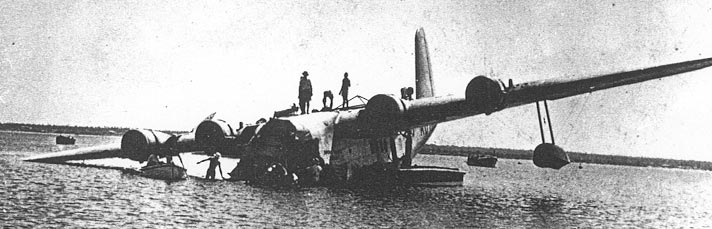
Crash of a Sikorsky S-43B off Rio de Janeiro: 14 killed

Date & Time: Aug 13, 1939 at 1635 LT
Type of aircraft:
Operator:
Registration:
NC16933
Survivors:
Yes
Schedule:
Miami – Santiago de Cuba – Port-au-Prince – Trinidad – Georgetown – Paramaribo – Cayenne – Belém – Sao Luis – Luis Correia – Camocim – Fortaleza – Natal – Joao Pessoa – Recife – Maceió – Aracaju – Salvador – Caravelas – Vitória - Rio de Janeiro
MSN:
4316
YOM:
1936
Country:
Crew on board:
4
Crew fatalities:
Pax on board:
12
Pax fatalities:
Other fatalities:
Total fatalities:
14
Captain / Total flying hours:
4275
Captain / Total hours on type:
830.00
Aircraft flight hours:
3650
Circumstances:
The aircraft named 'Baby Clipper' was circled over Rio and was making a normal approach to the seaplane landing area adjoining the air line's Rio base near Santos Dumont Airport, in accordance with the company's established operating procedure, when it suddenly lost power on the left engine, yawed to the left, and started a descending turn in the same direction. The airplane continued to lose altitude and to turn at a sharper and steeper angle until it struck a caisson anchored at right angles to a small island in the harbor immediately adjacent to its landing approach path. All four members of the crew and 10 passengers were fatally injured, one passenger escaping with serious and another with minor injuries.
Crew:
Addison G. Parsons, pilot,
George B. King, copilot,
Russell Jenkins, radio operator,
Julio Trujillo, steward.
Passengers:
Henrie May Eddy,
James Harvey Rogers,
Robert Landman,
Evaristo Gomes Miranda,
Anton Ommundsen,
Emanuel Valensa,
Pablo Lavin,
Edgar Delly Oliveira,
Alberto Oliveira Santos,
Lucila A. Oliveira Santos,
Osvaldo Hirth,
Mario Souto Lyra.
Probable cause:
Ample evidence was obtained during the Air Safety Board's investigation of the accident that the left engine suffered a sudden loss of power at a critical time during the landing approach, although, since available evidence failed to supply any conclusive explanation for this loss of power, and a detailed examination of the engine, after disassembly, revealed no indication of structural failure or mechanical defects in flight, the report stated that 'the cause of the loss of power from the left engine is unknown'. In conclusion, the accident was caused by a sudden loss of power from the left engine during the landing approach, necessitating an attempted landing under extremely hazardous conditions.
Final Report:

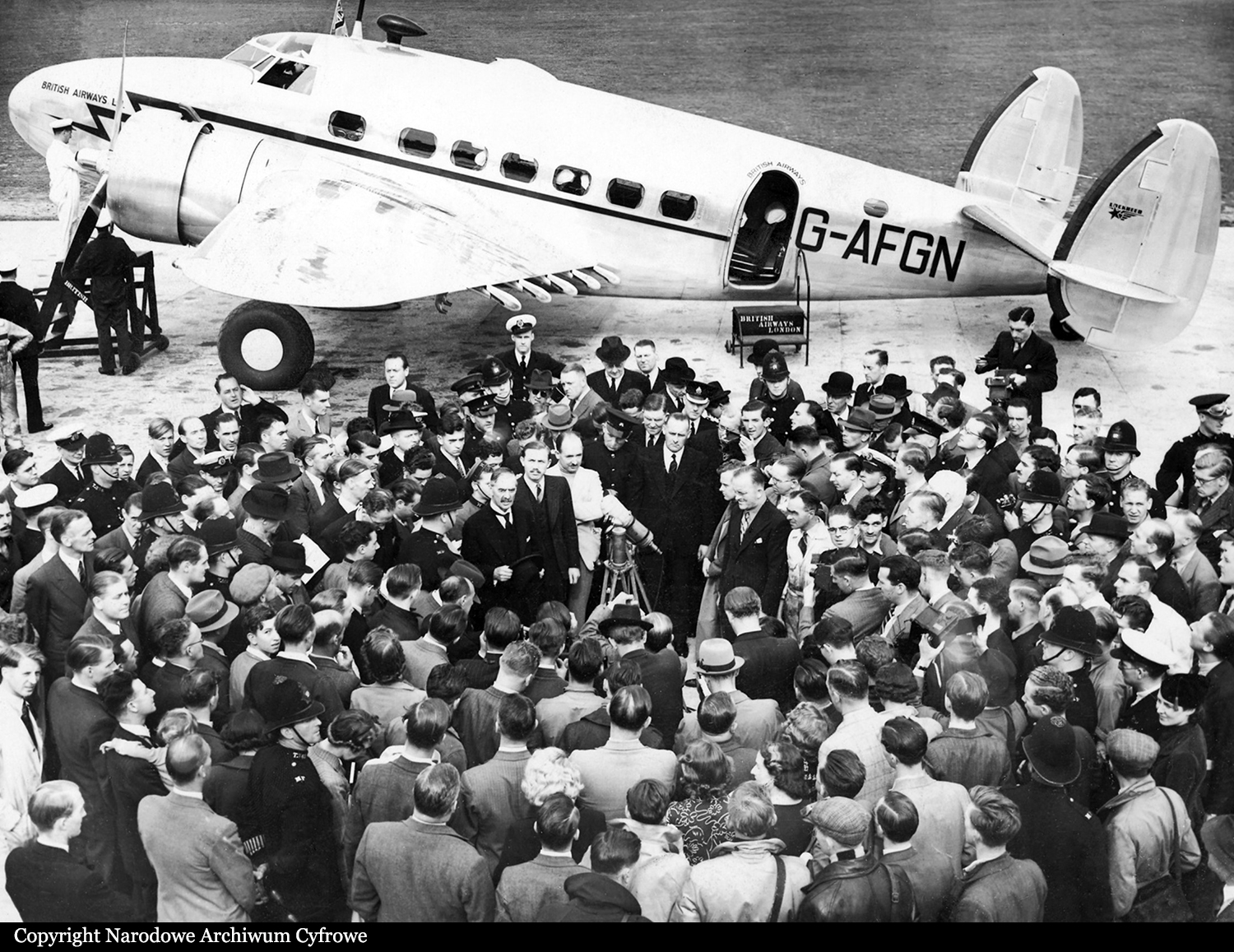
Crash of a Lockheed 14-WF62 Super Electra in Saint-Sauveur

Date & Time: Aug 11, 1939
Type of aircraft:
Operator:
Registration:
G-AFGN
Flight Phase:
Survivors:
Yes
Schedule:
Croydon – Basel – Zurich
MSN:
1467
YOM:
1938
Country:
Region:
Crew on board:
3
Crew fatalities:
Pax on board:
9
Pax fatalities:
Other fatalities:
Total fatalities:
0
Circumstances:
En route from Croydon to Basel, while cruising at an altitude of 10,000 feet over France, the crew encountered technical problems on both engines and reduced his altitude. Few minutes later, one engine fired and the captain attempted to make an emergency landing at Luxeuil-les-Bains AFB. On final, the crew lowered the gear and landed in a wheat field located in Saint-Sauveur, northeast of the airbase. Upon touchdown, the aircraft lost its undercarriage and slid for few dozen metres before coming to rest, bursting into flames. All 12 occupants evacuated safely and the airplane was destroyed by fire.
Probable cause:
Engine failure and fire.

Crash of a Junkers JU.52/3mte near Tivissa: 7 killed

Date & Time: Aug 4, 1939
Type of aircraft:
Operator:
Registration:
D-AUJG
Flight Phase:
Survivors:
No
Site:
Schedule:
Cologne – Toulouse – Barcelona – Casablanca
MSN:
5942
YOM:
1938
Country:
Region:
Crew on board:
3
Crew fatalities:
Pax on board:
4
Pax fatalities:
Other fatalities:
Total fatalities:
7
Circumstances:
En route from Barcelona to Casablanca, while cruising southwest of Tarragona, the three engine aircraft named 'Hans Wende' impacted the slope of a mountain located in the Sierra de Llaberia, near Tivissa. All seven occupants were killed.

Crash of a Junkers JU.52/3mte in Rangoon

Date & Time: Aug 3, 1939
Type of aircraft:
Operator:
Registration:
D-ANJH
Survivors:
Yes
Schedule:
Bangkok - Rangoon
MSN:
5747
YOM:
1938
Country:
Region:
Crew on board:
0
Crew fatalities:
Pax on board:
0
Pax fatalities:
Other fatalities:
Total fatalities:
0
Circumstances:
The three engine aircraft named 'Hans Loeb' crashed upon landing at Rangoon-Mingaladon Airport. There were no casualties.

Crash of a Junkers JU.86z-2 in Constance: 6 killed

Date & Time: Jul 20, 1939 at 1850 LT
Type of aircraft:
Operator:
Registration:
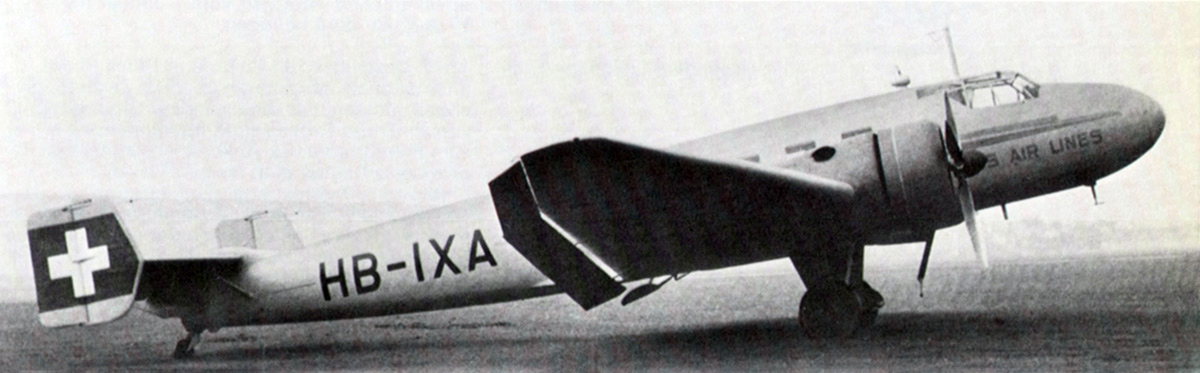
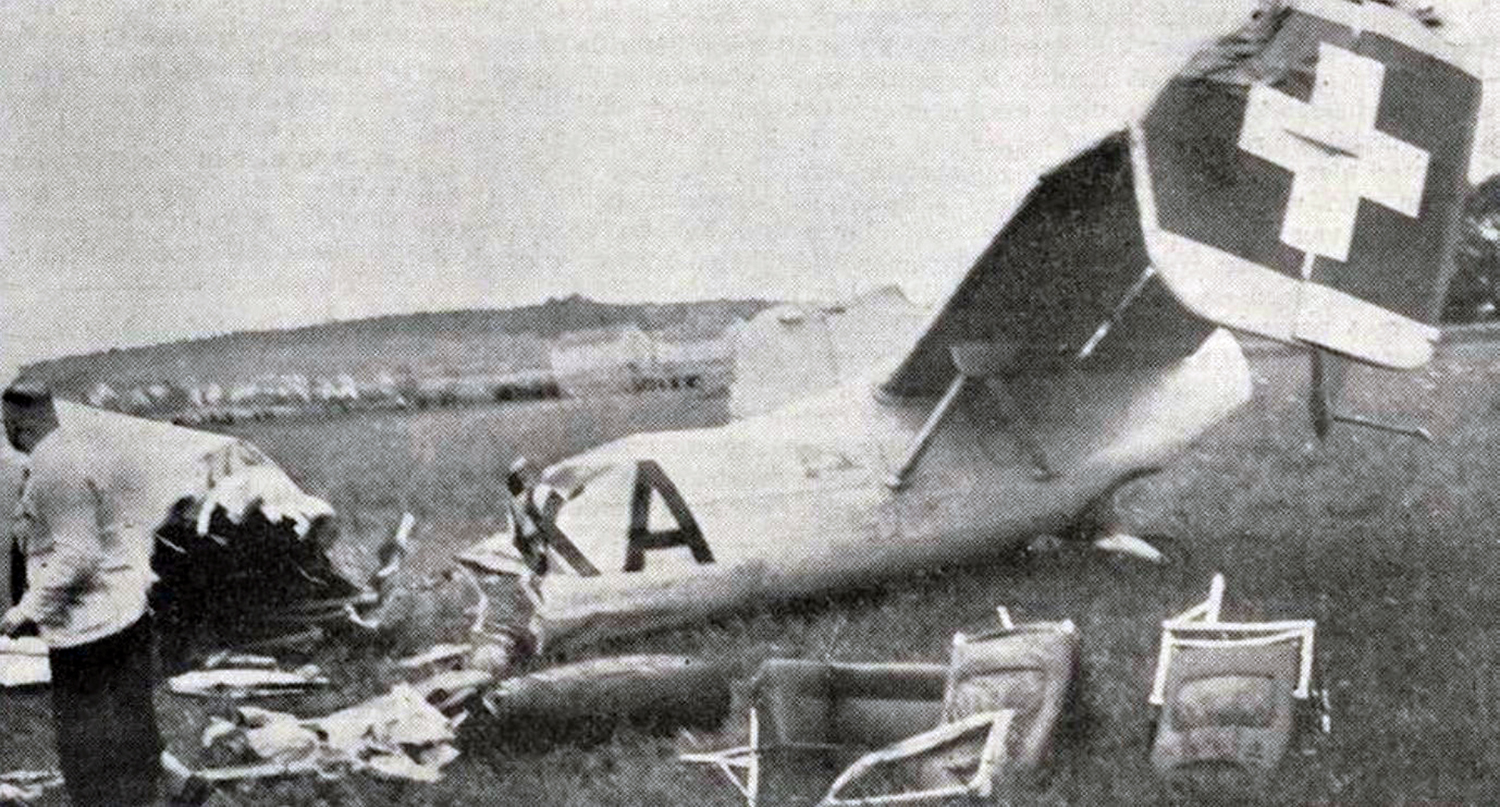
HB-IXA
Flight Phase:
Survivors:
No
Schedule:
Vienna – Zurich
MSN:
951
YOM:
1939
Country:
Region:
Crew on board:
2
Crew fatalities:
Pax on board:
4
Pax fatalities:
Other fatalities:
Total fatalities:
6
Circumstances:
The twin engine airplane departed Vienna-Schwechat Airport on a regular schedule service to Zurich (Dübendorf), carrying four passengers and two crew members. While approaching Constance, the left engine failed. The crew reduced his altitude in an attempt to make an emergency landing. During the last turn completed at a height of some 150 feet, the aircraft banked left, stalled and crashed in an open field. The airplane was destroyed and all six occupants were killed.
Crew:
Walter Ackermann, pilot,
Anton Mannhart, radio navigator.
Probable cause:
Engine failure. The accident apparently resulted from a loss of flying speed during a one-engine operation, and as HB-IXA was making a left turn with its undercarriage extended. A recovery was also impossible due to the low distance separating the aircraft from the ground.

Crash of a De Havilland DH.85 Leopard Moth in Novo Lusitania

Date & Time: Jul 2, 1939
Operator:
Registration:
VP-YAY
Flight Phase:
Survivors:
Yes
MSN:
7101
YOM:
1935
Location:
Country:
Region:
Crew on board:
1
Crew fatalities:
Pax on board:
2
Pax fatalities:
Other fatalities:
Total fatalities:
0
Circumstances:
Crashed in unknown circumstances near Novo Lusitania, in the region of Beira. The aircraft was damaged beyond repair and all three occupants were injured.

Crash of a Short S.23 Empire Flying Boat in Calcutta

Date & Time: Jun 12, 1939
Operator:
Registration:
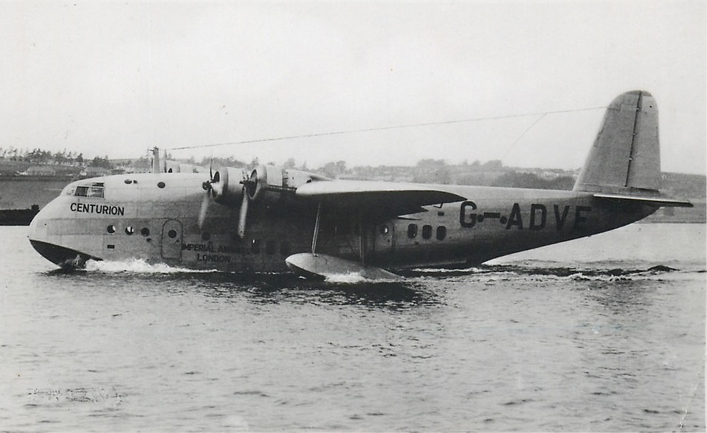
G-ADVE
Survivors:
Yes
Schedule:
Auckland – Singapore – Calcutta – London
MSN:
S.822
YOM:
1936
Country:
Region:
Crew on board:
4
Crew fatalities:
Pax on board:
4
Pax fatalities:
Other fatalities:
Total fatalities:
0
Circumstances:
The seaplane was approaching Hoogly River in Calcutta in strong winds. Upon landing, it went out of control and sank. All eight occupants were rescued and the aircraft was lost.
Probable cause:
Loss of control upon landing due to strong winds.

Crash of a Lockheed 14-WG3B Super Electra in Fukuoka: 6 killed

Date & Time: May 17, 1939
Type of aircraft:
Operator:
Registration:
J-BCOZ
Flight Phase:
Survivors:
Yes
Schedule:
Fukuoka – Seoul
Country:
Region:
Crew on board:
3
Crew fatalities:
Pax on board:
8
Pax fatalities:
Other fatalities:
Total fatalities:
6
Circumstances:
Shortly after liftoff from Fukuoka Airport, the twin engine airplane collided with the perimeter fence and crashed, bursting into flames. The pilot, the mechanic and four passengers were killed while five other occupants were injured.

Crash of a Dewoitine D.338 in Argana: 9 killed

Date & Time: May 2, 1939 at 1540 LT
Type of aircraft:
Operator:
Registration:
F-ARIC
Flight Phase:
Survivors:
No
Site:
Schedule:
Dakar – Casablanca – Paris
MSN:
25
YOM:
1939
Country:
Region:
Crew on board:
3
Crew fatalities:
Pax on board:
6
Pax fatalities:
Other fatalities:
Total fatalities:
9
Circumstances:
The three engine aircraft departed Dakar at 0600LT bound for Casablanca. At 1530LT, the crew was informed by a radio message that weather was deteriorating ahead with clouds and negative temperatures. Few minutes later, the aircraft went out of control and crashed in a mountainous area located near Argana, some 50 km northeast of Agadir. All nine occupants were killed.
Crew:
Yves Ripault, pilot,
Roger Perrot, radio navigator,
Eugène Courson, engineer.
Probable cause:
Loss of control in flight following sudden icing conditions caused by unpredictable weather.

Crash of a Short S.23 Empire Flying Boat off Lumbo: 2 killed

Date & Time: May 1, 1939
Operator:
Registration:
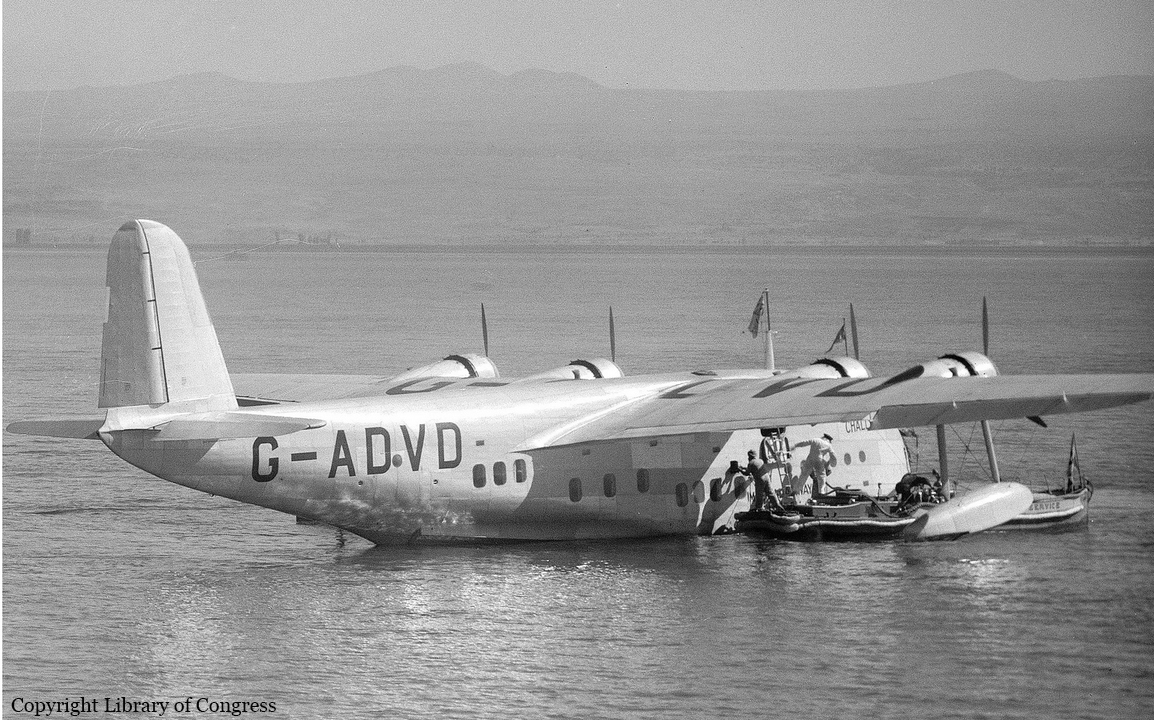
G-ADVD
Survivors:
Yes
Schedule:
London – Cairo – Mombasa – Dar es-Salaam – Lumbo – Maputo – Johannesburg
MSN:
S.821
YOM:
1935
Location:
Country:
Region:
Crew on board:
4
Crew fatalities:
Pax on board:
2
Pax fatalities:
Other fatalities:
Total fatalities:
2
Circumstances:
The crew was forced to abandon a first landing attempt off Lumbo for unknown reason. During the second attempt, the seaplane named 'Challenger' impacted the water surface and came to rest off the Ilha de Mocambique Island. Two crew members, the radio officer Tom Webb and the flight clerc George Knight were killed while all four other occupants were injured. The cockpit separated from the fuselage upon impact.