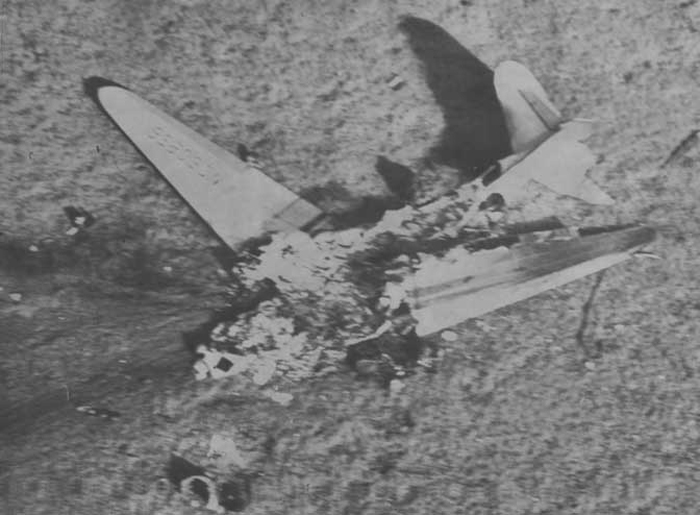
Crash of an Avro 691 Lancastrian in Dakar

Date & Time: Dec 23, 1949
Type of aircraft:
Operator:
Registration:
I-AHBX
Survivors:
Yes
Schedule:
Buenos Aires – Rio de Janeiro – Natal – Dakar – Algiers – Rome
MSN:
1292
YOM:
1946
Country:
Region:
Crew on board:
5
Crew fatalities:
Pax on board:
8
Pax fatalities:
Other fatalities:
Total fatalities:
0
Circumstances:
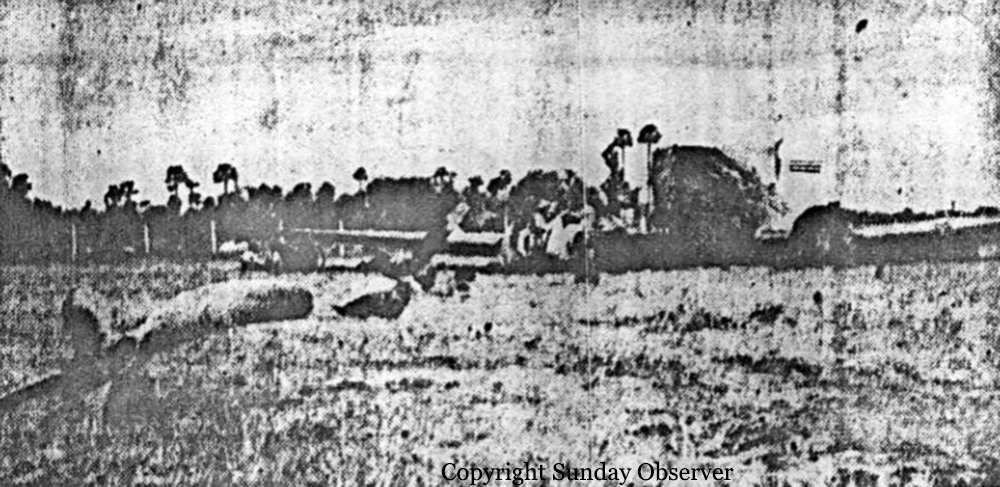
After touchdown, the four engine aircraft christened 'Maestrale' went out of control, veered off runway and came to rest in flames. All 13 occupants were rescued while the aircraft was destroyed by fire.

Crash of a Douglas C-47A-1-DK in Tiruchirapalli

Date & Time: Dec 21, 1949 at 1330 LT
Operator:
Registration:
VP-CAT
Survivors:
Yes
Schedule:
Jaffna – Tiruchirapalli
MSN:
11927
YOM:
1943
Country:
Region:
Crew on board:
3
Crew fatalities:
Pax on board:
21
Pax fatalities:
Other fatalities:
Total fatalities:
0
Circumstances:
Somewhere between KKS and Trichy, the hitherto even tenor of Sunetra Devi's flight seemingly began to go amiss. According to press reports following the crash, a passenger claimed that one of the engines "gave trouble soon after the plane took off from Jaffna". This seemed to corroborate Capt. Kotelawala's subsequent statement that "the engine stalled just before the plane was to land". Whatever the cause, as Sunetra Devi commenced its descent into Trichy around 1.30 p.m., it was obvious that all was not right with the DC-3. Another passenger, Dr. G. Wignarajah, a regular traveller on that route, noticed that the plane was being flown erratically. He watched in consternation as the aircraft narrowly escaped collision with Trichy Rock, a landmark some 7 miles from the airport. At Trichy airfield itself, some observers said the DC-3 appeared to come in too fast. Others noted that the left wing was tilted downwards, and not in a level altitude. But all eyewitnesses agreed that the plane touched down heavily, then bounced before crashing nose first onto the grass surrounding the runway. The left landing gear also slammed into the ground with a fearsome thud, the wheel collapsing under the force of impact. Missing one of its two main wheels, the lopsided Dakota careered along the grass until the drooping left wing dug in and spun the plane around in a sharp left-hand turn through 180 degrees. Meanwhile, the left propeller had broken away. Now, as the crippled aircraft swung around, the right wheel and engine too were wrenched off and flung some distance from the fuselage. Finally, after what seemed an eternity, a battered and broken Sunetra Devi slowed to a halt. A small fire broke out but was quickly extinguished by the airport fire brigade. The second heavy impact had inflicted horrendous damage on the nose section and cockpit area. Rescuers rushing up to the wreck expected the worst. But, mercifully, the crew were alive. Dixon Kotelawala had superficial injuries to his head, chin and ribs, although Simon Rasiah, the co-pilot, was not so lucky. He had suffered a fractured skull and broken a forearm. Back in the passenger cabin, stewardess Ranee Ranawake sustained a broken collarbone when she unwisely unbuckled her seatbelt after the first bounce to look out at what was happening, and was thrown on her side. Also injured was passenger C.V. Ramaswamy Reddiar, who fractured his nasal bone.
Source: Roger Thiedeman

Crash of a Douglas C-47A-60-DL in Aulnay-sous-Bois: 8 killed

Date & Time: Dec 18, 1949 at 2030 LT
Operator:
Registration:
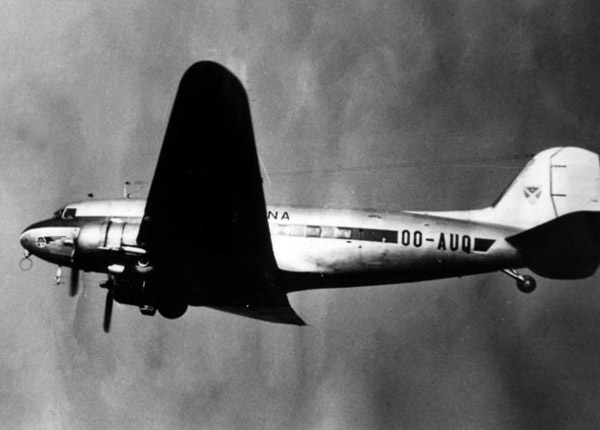
OO-AUQ
Flight Phase:
Survivors:
No
Schedule:
Paris – Brussels
MSN:
10241
YOM:
1943
Country:
Region:
Crew on board:
4
Crew fatalities:
Pax on board:
4
Pax fatalities:
Other fatalities:
Total fatalities:
8
Circumstances:
Shortly after takeoff from Paris-Le Bourget Airport, while climbing, the aircraft went out of control and crashed onto a house located in Aulnay-sous-Bois, about 4 km southeast of the airfield. All eight occupants were killed while there were no casualties on the ground. It appears that control was lost following the failure of a wing.

Crash of an Avro 652A Anson I in Beyrouth

Date & Time: Dec 18, 1949
Type of aircraft:
Operator:
Registration:
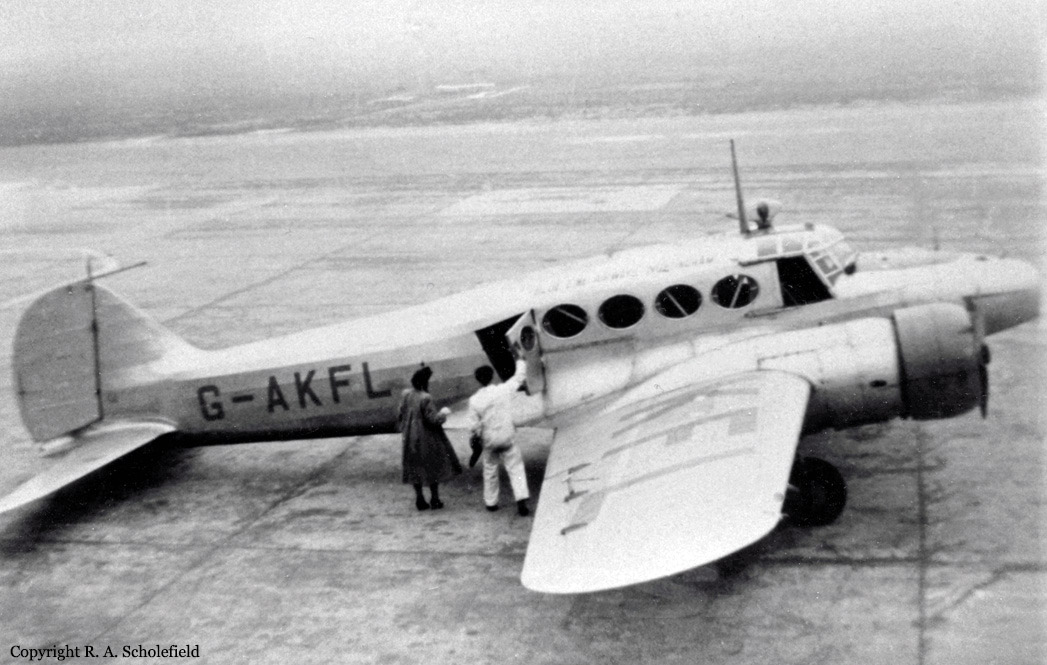
G-AKFL
Flight Phase:
Survivors:
Yes
Schedule:
Beirut – Amman
Country:
Region:
Crew on board:
2
Crew fatalities:
Pax on board:
8
Pax fatalities:
Other fatalities:
Total fatalities:
0
Circumstances:
Shortly after takeoff from Beirut Airport, while climbing by night, the aircraft suffered engine problems. The captain completed an emergency landing on a beach near the airport. While the aircraft was considered as damaged beyond repair, all 10 occupants were uninjured.

Crash of a Douglas DC-3A in Orizaba: 17 killed

Date & Time: Dec 16, 1949 at 0600 LT
Type of aircraft:
Operator:
Registration:
XA-DUK
Flight Phase:
Survivors:
No
Site:
Schedule:
Mexico City – Puebla – Mérida
MSN:
11721
YOM:
1943
Country:
Crew on board:
4
Crew fatalities:
Pax on board:
13
Pax fatalities:
Other fatalities:
Total fatalities:
17
Circumstances:
While cruising by night, the crew did not realize he was flying too low and did not distinguish the mountain. At 0600LT, the twin engine aircraft hit the slope of Cerro del Borrego located near Orizaba. All 17 occupants were killed.

Crash of a Douglas C-53 in Jungshahi: 26 killed

Date & Time: Dec 12, 1949 at 2150 LT
Operator:
Registration:
AP-ADI
Flight Phase:
Survivors:
No
Site:
Schedule:
Lahore – Karachi
MSN:
4841
YOM:
1941
Country:
Region:
Crew on board:
4
Crew fatalities:
Pax on board:
22
Pax fatalities:
Other fatalities:
Total fatalities:
26
Circumstances:
The crew just started the descent by night to Karachi when the aircraft hit the slope of a mountain (1,185 feet high) located about 80 km east of Karachi-Mauripur Airport, near the village of Jungshahi. The airplane was destroyed by impact forces and a post crash fire and all 26 occupants were killed. Two days after the tragedy, the Operator's AOC was suspended for an undetermined period of time.
Probable cause:
An error of navigation on the part of the pilot in that the aircraft was not as near to Karachi Airport as he reported it to be in his last "position report", which, had it been correct, would have placed the aircraft past the last range of hills. It is apparent, however, that the pilot continued to descend further after having reported last at 2,500 feet at 2147LT in contravention of the 'standard letdown procedure at Karachi Airport' which he was practicing. The lack of visibility caused by night was considered as a contributory factor.

Crash of a Douglas DC-3-313A in Washington DC: 6 killed

Date & Time: Dec 12, 1949 at 2041 LT
Type of aircraft:
Operator:
Registration:
NC25691
Survivors:
Yes
Schedule:
Memphis – Norfolk – Newport News – Washington DC
MSN:
2556
YOM:
1940
Flight number:
CA500
Crew on board:
3
Crew fatalities:
Pax on board:
20
Pax fatalities:
Other fatalities:
Total fatalities:
6
Captain / Total flying hours:
6476
Captain / Total hours on type:
5296.00
Copilot / Total flying hours:
6590
Copilot / Total hours on type:
2559
Aircraft flight hours:
27396
Circumstances:
Capital Airlines Flight 500 originated in Memphis, Tenn., December 12, 1949, and proceeded in a routine manner to Norfolk, Va. No difficulties of any kind were experienced. At Norfolk a new crew consisting of Captain William J. Davis, Copilot Lloyd L. Porter, and Flight Attendant Joseph W. Buell were assigned to the flight for the remainder of the trip to Newport News, Va., and Washington, D. C. Before takeoff from Norfolk, Captain Davis studied all weather data in the Capital Airlines office, and called the company’s dispatcher in Washington who advised him that weather conditions would remain above landing limits until after midnight. Flight 500 took off from Norfolk at 1816; arrived at Newport News, Va., at 1836; and seven minutes later, at 1843, was again in the air en route to Washington by way of Richmond, Va., at a cruising altitude of 4,000 feet. On board were 20 passengers, the crew of three, 792 pounds of cargo and 3,000 pounds of fuel. Total aircraft weight was 25,472 pounds, which was 126 pounds in excess of the certificated aircraft weight. The load was distributed so that the center of gravity of the aircraft was within the certificated limits. The trip continued without incident. It reported over Richmond at 1910, and was then cleared by Air Route Traffic Control to proceed at 8,000 feet to the Clifton Intersection, which is 32 miles southwest of the Washington National Airport. By the time that the flight arrived over Clifton, however, ceiling and visibility at Washington were below landing minimums, so instructions were given to the flight to “hold.” Approximately 410 gallons of fuel remained on board, and weather conditions at the al-ternate airports of Richmond and Norfolk were remaining well above landing minimums. At 2025, a weather observer stationed at the south end of runway 36 at the National Airport reported that the ceiling was 400 feet variable, and that the visibility was 3/4 of a mile. Since landing minimums were now indicated, the control tower cleared one aircraft to land and the Capital flight to descend to 3,500 feet in the holding pattern. The air-craft which had been cleared to land completed its landing at 2033 without incident using the instrument landing system (ILS). At 2033 another runway observation was made, reporting the ceiling to be 400 feet variable, and the visibility 1 1/2 miles restricted by light rain and fog. Immediately following the transmission of this observation, clearance was given to Capital’s Flight 500 to descend to 1,500 feet and to commence its landing approach. Flight 500 acknowledged. Five minutes later, at 2038, the flight reported leaving the outer marker, five miles south of the end of runway 36, at which time it was cleared by the tower to land. From the holding pattern to the outer marker the aircraft was observed in the ground control approach (GCA) radar scopes which are in the Washington National Tower. Nothing unusual was noted. As the flight passed over the outer marker at 1,500 feet, entering its ILS approach, the GCA operator advised that the approach would be monitored. This message, as is customary, was not acknowledged, so it is not known whether either the pilot or the copilot was listening to GCA. In the GCA radar scopes, the flight path and descent at first appeared to be normal. When the aircraft was 4 1/2 miles from its point of landing, it was 200 feet to the right of the intended track, an extended center line of the runway, and the glide was good. When it was three miles from intended point of touchdown, it was 50 feet to the right and the glide was still good. When two miles out, the aircraft was on the center line, and only 25 feet above the glide path. One and one-half miles out, it was on the center line, and on the glide path. Then, the flight began to deviate to the right from the center line. The GCA operator in his monitoring conversation advised the flight that it was drifting sharply to the right, and followed by saying that it had gone 1,500 feet off course. The flight then appeared to turn left, proceeding back to the center line, but when within 1,000 feet of the center line and only 1/2 mile from the end of the runway, it disappeared entirely from the scopes. The aircraft was neither seen nor heard by any of the control tower operators, nor by the weather observer stationed at the end of runway 36. A few minutes after the accident, the runway observer reported the ceiling to be 400 feet variable and visibility to be 3/4 of a mile. There was light rain and fog, and the wind was from the south-southwest at nine miles per hour. The aircraft struck the water, left wing and nose first, in a steep nose down, left turning attitude. Both pilots and four passengers were killed. The aircraft was lost.
Probable cause:
The Board determines that the probable cause of this accident was the stalling of the aircraft at an altitude too low to permit a recovery.
The following findings were noted:
- At the time of the accident the ceiling was 400 feet, variable and the visibility was 3/4 of a mile to the north of point of observation,
- Immediately before the accident, and during the execution of an instrument approach, the aircraft was stalled at too low an altitude to effect recovery,
- The aircraft struck the Potomac River in a steep, nose down, turning attitude, 1,875 feet southeast from the approach end of runway 36.
Final Report:

Crash of a Curtiss C-46D-20-CU in Haikou: 17 killed

Date & Time: Dec 10, 1949
Type of aircraft:
Operator:
Registration:
XT-814
Survivors:
Yes
Schedule:
Chengdu – Haikou
MSN:
22347
YOM:
1945
Location:
Country:
Region:
Crew on board:
5
Crew fatalities:
Pax on board:
45
Pax fatalities:
Other fatalities:
Total fatalities:
17
Circumstances:
Crashed on final approach to Haikou Airport. Ten people were unhurt, 23 were wounded and 17 were killed.

Crash of a Curtiss C-46D-20-CU in Lanzhou: 38 killed

Date & Time: Dec 9, 1949
Type of aircraft:
Operator:
Registration:
XT-820
Flight Phase:
Survivors:
No
Schedule:
Lanzhou – Hong Kong
MSN:
22354
YOM:
1945
Location:
Country:
Region:
Crew on board:
5
Crew fatalities:
Pax on board:
33
Pax fatalities:
Other fatalities:
Total fatalities:
38
Circumstances:
Shortly after takeoff from Lanzhou Airport, while in initial climb, the aircraft went out of control, dove into the ground and crashed in a huge explosion. All 38 occupants were killed.

Crash of a Douglas C-47A-1-DL near Vallejo: 9 killed

Date & Time: Dec 7, 1949 at 1715 LT
Registration:
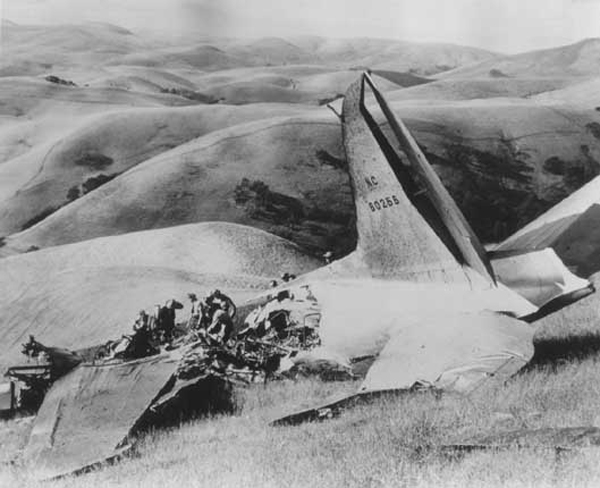
NC60256
Flight Phase:
Survivors:
No
Site:
Schedule:
Burbank – Oakland – Sacramento
MSN:
9201
YOM:
1943
Crew on board:
3
Crew fatalities:
Pax on board:
6
Pax fatalities:
Other fatalities:
Total fatalities:
9
Aircraft flight hours:
7722
Circumstances:
The flight departed Burbank, California, at 1420, bound for Oakland and Sacramento, with a crew consisting of James S. Garnett, pilot, Joseph Dillon, copilot and Susan DeVore, stewardess. Takeoff was accomplished from Oakland at 1656 at which time the aircraft carried six passengers, out no cargo. Total aircraft weight was within the certificated limits and the load was properly distributed. The aircraft carried fuel sufficient for a flight of two hours and thirty minutes and the estimated flight time to Sacramento was thirty minutes. Following take off, the flight cruised five miles northwest of the Oakland Airport for seven minutes while waiting for receipt of an instrument flight clearance which provided for a cruising altitude of 4,000 feet to Sacramento. The flight then proceeded on course, and at 1708 reported over the Richmond Radio flange Intersection, 16 miles northwest of Oakland, stating that it would be over the Fairfield Radio flange Station, 41 miles northeast of Richmond, at 1723. Since there was no routine mention of altitude, Air Route Traffic Control immediately requested the information, and the flight replied that at was at 4,000 feet. This was the last communication received from the flight. Approximately one hour after the position report over Richmond, CAA Communications received a report that the flight had crashed six miles east of Vallejo. All occupants were killed and the aircraft was destroyed.
Probable cause:
The Board determines that the probable cause of this accident was failure of the flight to fly at the assigned altitude on an instrument flight plan, which resulted in the aircraft striking a hill obscured by clouds.
Final Report: