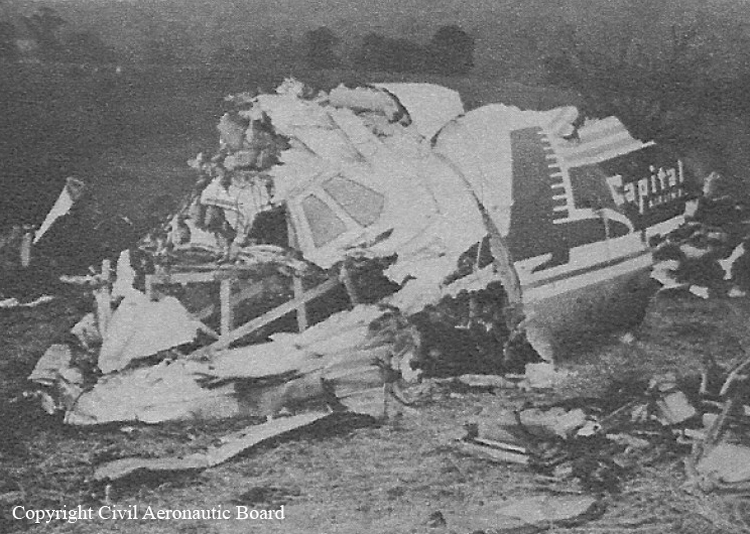
Crash of a Vickers 745D Viscount near Brunswick: 11 killed

Date & Time: May 20, 1958 at 1129 LT
Type of aircraft:
Operator:
Registration:
N7410
Flight Phase:
Survivors:
No
Schedule:
Chicago – Pittsburgh – Baltimore
MSN:
108
YOM:
1956
Flight number:
CA300
Crew on board:
4
Crew fatalities:
Pax on board:
7
Pax fatalities:
Other fatalities:
Total fatalities:
11
Captain / Total flying hours:
12719
Captain / Total hours on type:
1432.00
Copilot / Total flying hours:
2467
Copilot / Total hours on type:
1596
Circumstances:
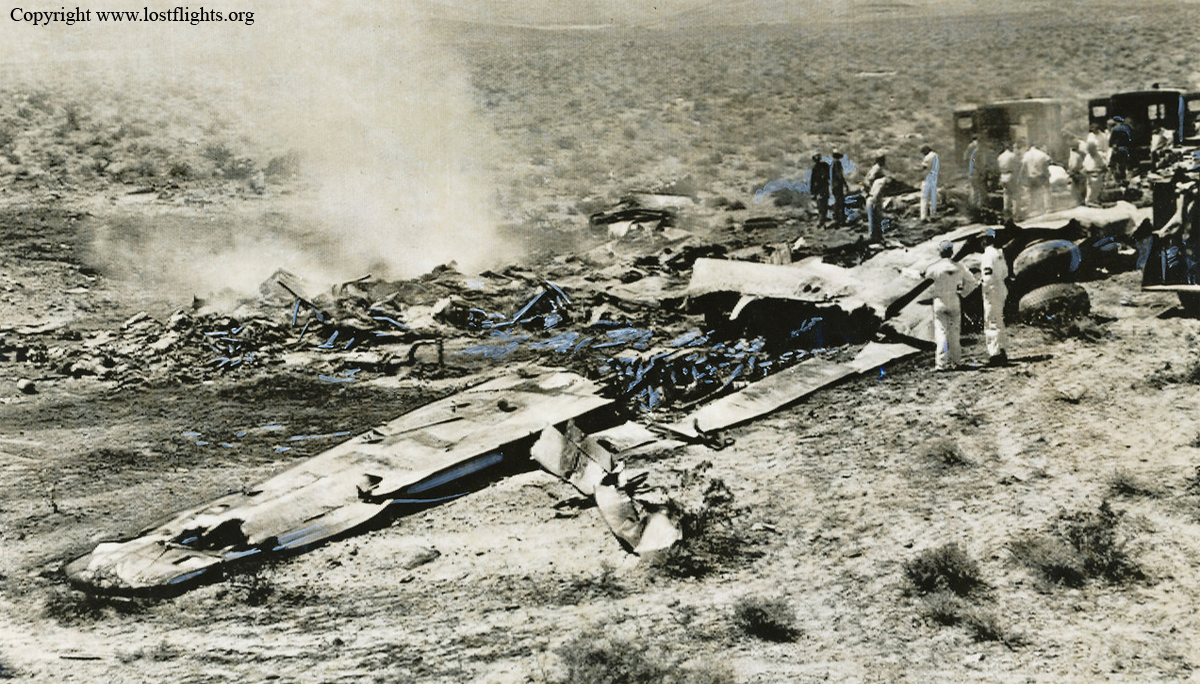
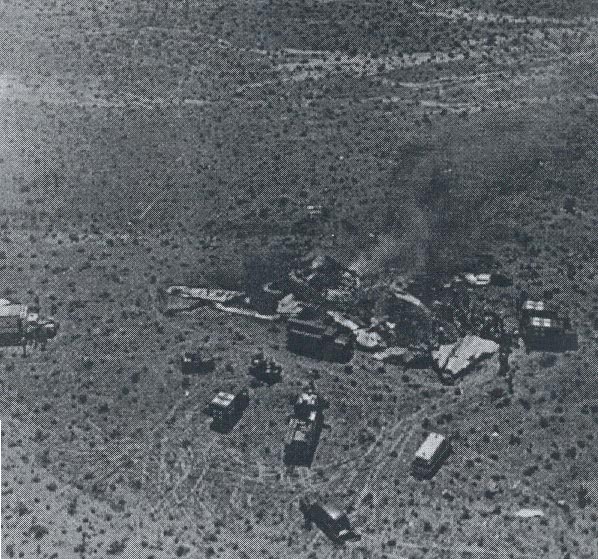
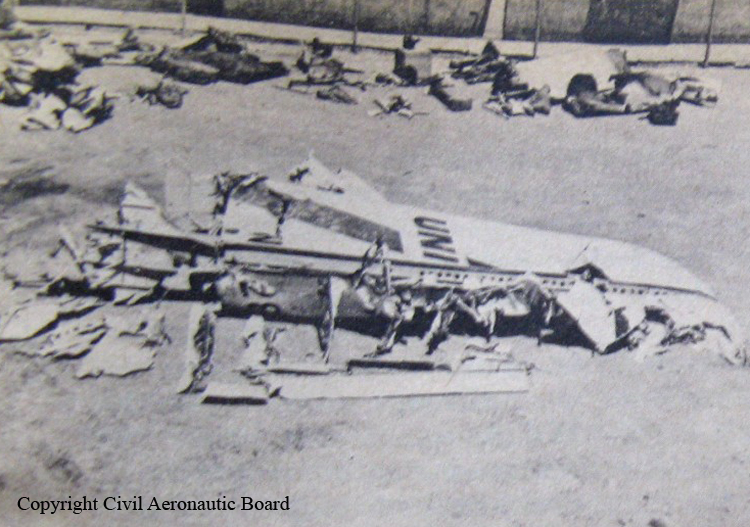
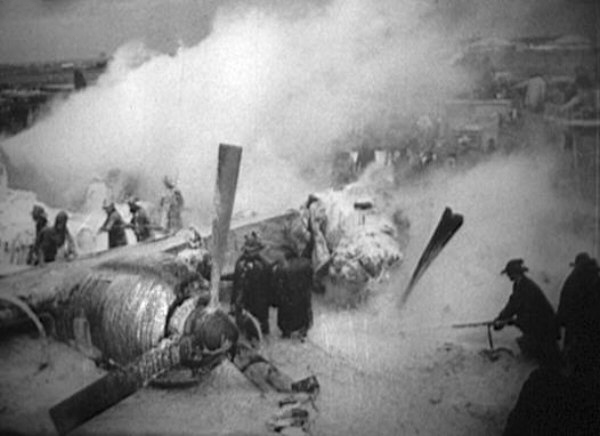
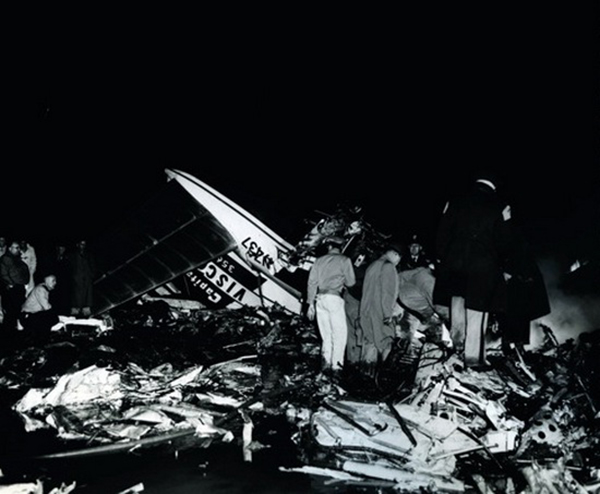
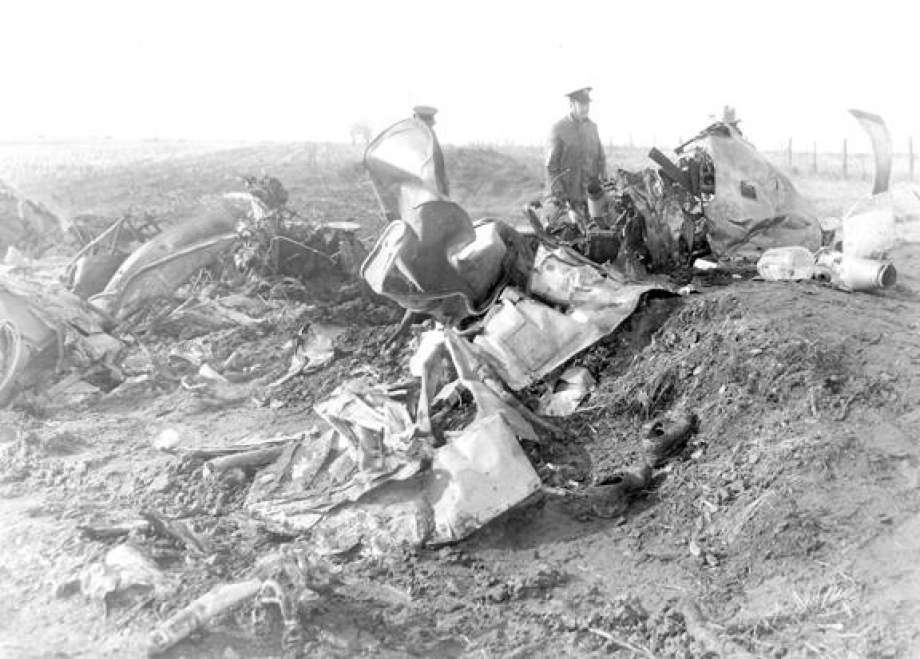
On may 20, 1958, about 1129 e. d. t., a Capital Airlines Viscount, N 7410 and a Maryland Air National. Guard T-33, 35966, collided in the air about four miles east-northeast of Brunswick, Maryland. Seven passengers and the crew of four aboard the Viscount were killed. A passenger in the T-33 was killed but the pilot, although severely burned, parachuted safely. Both aircraft were totally destroyed by in-flight collision, ground impact, and the ensuing fire. The collision occurred at an altitude of about 8,000 feet on Victor Airway lilt while the Viscount was descending en route from Pittsburgh to Baltimore-Friendship Airport. It was operating on an instrument flight rules flight plan but in visual flight rules weather conditions. The T-33 pilot was on a VFR proficiency flight from Martin Airport, Baltimore, Maryland. Just before the collision the aircraft were observed in the area west of Brunswick flying parallel easterly courses with the T-33 some distance behind and to the left of the Viscount. The T-33 quickly overtook the Viscount and made a gentle right turn, during which it struck the forward left side of the fuselage of the Viscount. Both aircraft were being operated in visual flight rules weather conditions and it was therefore the responsibility of each crew to provide separation from other aircraft by visual reference. The right-of-way rules contained in the Civil Air Regulations clearly set out the pilot's responsibility in the overtaking situation. It is the Board's aim to provide for a positive control system of air-craft separation which will not depend upon the "see and be seen" principle to prevent the occurrence of collision accidents. The Board has been actively engaged for some time in the development of such a program. Its full implementation is several years away and will be dependent on additional technical improvements in equipment and on the expansion of the air traffic control facilities to accommodate the ever increasing amount of traffic. Since the accident the USAF and Capital Airlines, along with other carriers, in an effort to reduce collision hazards, have required, in general, that all aircraft on airways above 10,000 feet be operated in accordance with IFR.
Probable cause:
The Board determines the probable cause of this accident was the failure of the T-33 pilot to exercise a proper and adequate vigilance to see and avoid other traffic.
Final Report:
Crash of a Douglas DC-7C in Casablanca: 65 killed

Date & Time: May 18, 1958 at 0425 LT
Type of aircraft:
Operator:
Registration:
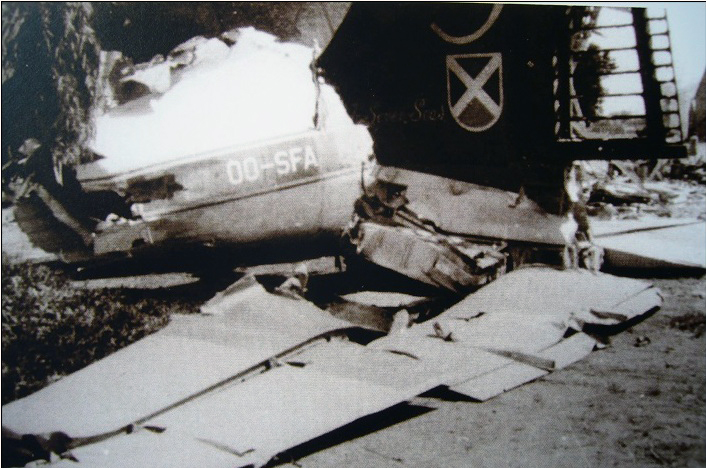
OO-SFA
Survivors:
Yes
Schedule:
Brussels – Lisbon – Léopoldville
MSN:
45157
YOM:
1956
Country:
Region:
Crew on board:
9
Crew fatalities:
Pax on board:
60
Pax fatalities:
Other fatalities:
Total fatalities:
65
Circumstances:
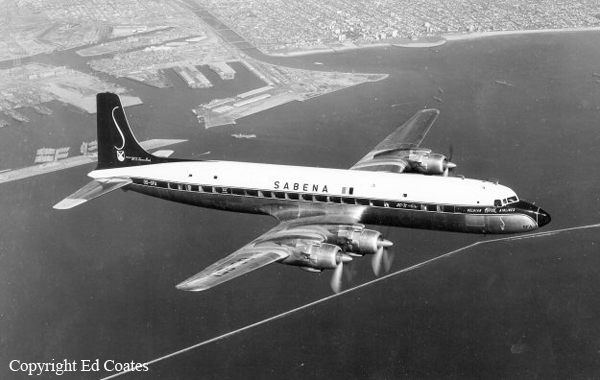
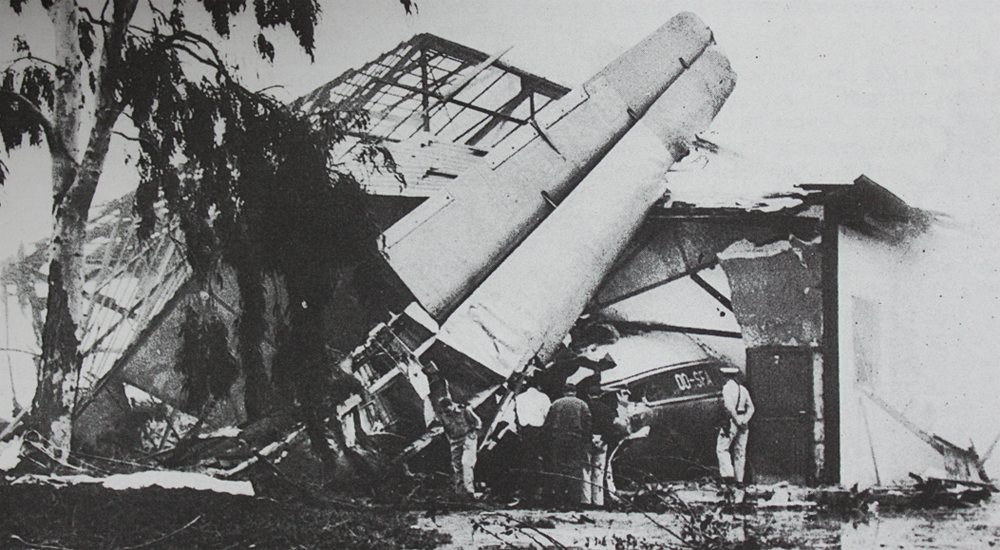
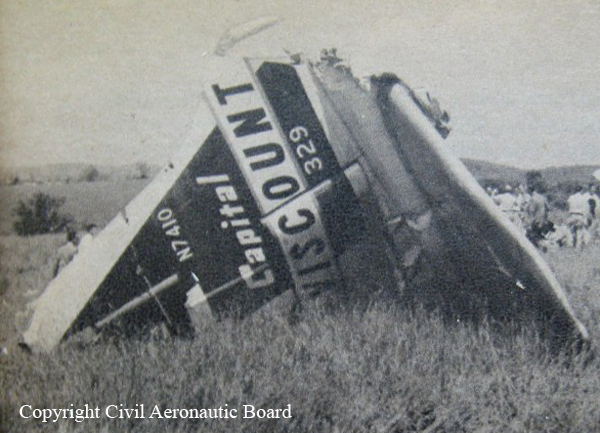
The Sabena flight, originating at Brussels, Belgium had departed Lisbon following an intermediate stop on a flight to Leopoldville (now Kinshasa), Belgian Congo. Vibration in the no. 1 engine forced the crew to shut it down. Casablanca ACC was advised that the flight wanted to make an emergency landing there. At 04:19 a runway 21 approach was attempted, but the aircraft did not touch down. Some 600 m past the runway threshold at a height of 5 m and with landing gear down and full flaps, full power was applied. The DC-7 then climbed in a sharp left turn. Reaching a height of 25 m, the plane stalled, crashed into buildings and caught fire. The correct procedure for going around would have been to apply full throttle only gradually attaining V2 speed; retracting the landing gear; and, at 115 kt, retracting the flaps from 50 to 20°.
Probable cause:
An error of judgement in re-application of power when the aircraft was neither in the appropriate configuration nor at a sufficient speed to carry out the attempted safety manoeuvre.

Crash of a Convair CV-240-7 in New Delhi: 23 killed

Date & Time: May 15, 1958 at 2018 LT
Type of aircraft:
Operator:
Registration:
AP-AEH
Flight Phase:
Survivors:
Yes
Schedule:
New Delhi – Karachi
MSN:
52
YOM:
1949
Flight number:
PK205
Country:
Region:
Crew on board:
6
Crew fatalities:
Pax on board:
32
Pax fatalities:
Other fatalities:
Total fatalities:
23
Captain / Total flying hours:
4775
Captain / Total hours on type:
324.00
Aircraft flight hours:
12668
Circumstances:
The aircraft had landed at Palam at 1902 hours following an uneventful flight from Karachi. A thorough service check was carried out, and it was refuelled and loaded for the return flight to Karachi. The total take-off weight indicated on the load sheet was 41 589 lbs. The investigation revealed an error in the empty weight of the aircraft and the actual gross take-off weight was determined to be 41 319 lbs, which is 1 181 lbs less than the maximum permissible all-up weight. At 2018 hours the aircraft commenced its take-off run and was airborne at the latter half of the runway. Soon afterwards flames were observed at the western boundary of the airfield. The crash crew chief had watched the aircraft take-off. He saw the aircraft becoming airborne and then climbing to a height estimated by him to be 50 ft. He then noticed the landing lights pointing downwards and the aircraft losing height. He feared that a crash was imminent and immediately instructed the crew to proceed in that direction. At about this time the crash siren was sounded. The crash tender reached the site of the accident in about 7 to 8 minutes by which time the fire had reached large proportions. Fatal injuries were sustained by 4 members of the crew, 17 passengers and 2 others who were in the vicinity of the crash. Nine passengers and one other were seriously injured. The aircraft was destroyed by impact and fire.
Probable cause:
The captain did not properly observe and Interpret his flight instruments and thus inadvertently permitted the aircraft to descend to the ground immediately after a night take-off during which no visual reference was possible. A contributory factor may have been the slow reactions of the captain due to his state of health.
Final Report:

Crash of a Douglas C-54A-1-DO Skymaster in In Salah

Date & Time: Apr 30, 1958
Type of aircraft:
Operator:
Registration:
F-BELK
Survivors:
Yes
Schedule:
Algiers – In-Salah – Tamanrasset
MSN:
7451
YOM:
1943
Country:
Region:
Crew on board:
0
Crew fatalities:
Pax on board:
0
Pax fatalities:
Other fatalities:
Total fatalities:
0
Circumstances:
The crew encountered a sand storm while approaching In Salah Airport. On final, in limited visibility, the aircraft was too low and struck a sand dune short of runway. On impact, the undercarriage were sheared off and the airplane belly landed in sand before coming to rest. Both engines number two and three detached. There were no casualties.

Crash of a Douglas DC-7 near Las Vegas: 47 killed

Date & Time: Apr 21, 1958 at 0830 LT
Type of aircraft:
Operator:
Registration:
N6328C
Flight Phase:
Survivors:
No
Site:
Schedule:
Los Angeles – Denver – New York
MSN:
45142
YOM:
1956
Flight number:
UA736
Crew on board:
5
Crew fatalities:
Pax on board:
42
Pax fatalities:
Other fatalities:
Total fatalities:
47
Circumstances:
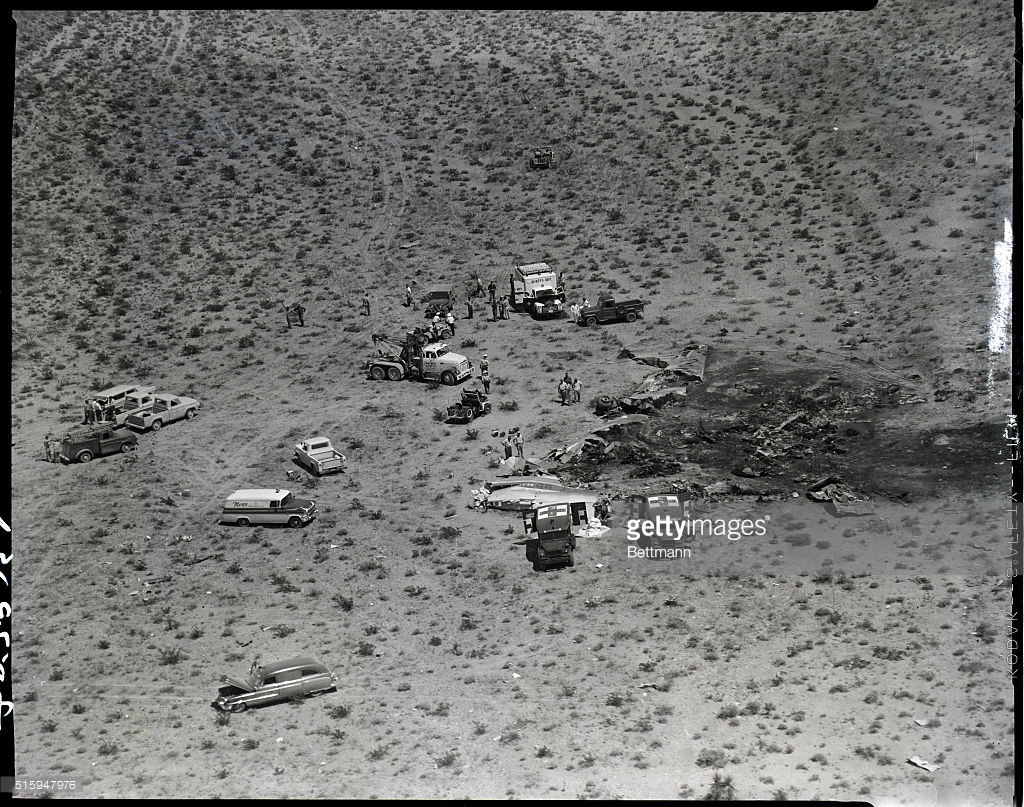
United Airlines Flight 736 departed Los Angeles International Airport at 0737 hours Pacific standard time with 42 passengers and 5 crew aboard. It was a scheduled passenger flight to New York, which was proceeding normally in accordance with an IFR flight plan along Victor Airway 16 to Ontario, California, and Victor Airway 8 to Denver. The aircraft was cleared to a cruising altitude of 21 000 ft msl and advised to climb in VFR weather conditions. At 0735 the flight reported to Aeronautical Radio that it was over Ontario at 12 000 ft and was climbing in VFR conditions. Then at 081 1 it reported over Daggett at its cruising altitude of 21 000 ft and estimated that it would reach Las Vegas (omni range station) at 0831, This was the last position report made by the flight. At approximately 0745 hours that morning F-100F, 56-3755, took off from Nellis Air Force Base, Las Vegas, Nevada on an instrument training flight carrying an instructor and a trainee pilot. The flight was in accordance with a VFR local flight plan filed with Nellis Operations and the local traffic control tower. At approximately 0823, 755 called Nellis VFR Control and reported that it was "inbound on KRAM" ( a local commercial radio broadcast station). The flight requested an altitude assignment from which it would conduct a simulated ADF instrument jet penetration utilizing KRAM. The VFR controller assigned 755, 28 000 ft and advised it to report over the radio station. At approximately 0828, the flight reported that it was over KRAM requesting a penetration. The VFR controller cleared it for an immediate penetration and requested that it report the penetration turn. 755 then reported leaving 28 000 ft. There were no &her reports from the flight in connection with this procedure. At 0830 the offices of Aeronautical Radio at Los Angeles, Denver and Salt Lake City heard an emergency message from the United flight.. . . . " United 736, Mayday, midair collision, over Las Vegas. " At the same time, as nearly as can be determined, there was an unrecorded emergency transmission from the F-1 00F. This message was heard by the VFR controller and by the two pilots of another F-100F. All were agreed that the first portion of the emergency transmission was "Mayday, Mayday, this is 755. " The last part of the message was either, "We've had a flameout" or 'We're bailing out." The aircraft collided at 21 000 ft over a position later determined to be about 9 miles southwest of the Las Vegas VOR station, on Victor Airway 8, approximately 1-3/4 miles to the right (southeast) of the centerline. Both aircraft fell out of control and crashed killing the 47 persons on board the DC-7 and both pilots of the F-100F.
Probable cause:
The probable cause of this collision was a high rate of near head-on closure at high altitude; human and cockpit limitations; and the failure of Nellis Air Force Base and the Civil Aeronautics Administration to take every measure to reduce a known collision exposure.
Final Report:

Crash of a De Havilland DH.114 2D Heron off Barcelona: 16 killed

Date & Time: Apr 14, 1958 at 2107 LT
Type of aircraft:
Operator:
Registration:
EC-ANJ
Survivors:
No
Schedule:
Zaragoza – Barcelona
MSN:
14113
YOM:
1957
Country:
Region:
Crew on board:
2
Crew fatalities:
Pax on board:
14
Pax fatalities:
Other fatalities:
Total fatalities:
16
Circumstances:
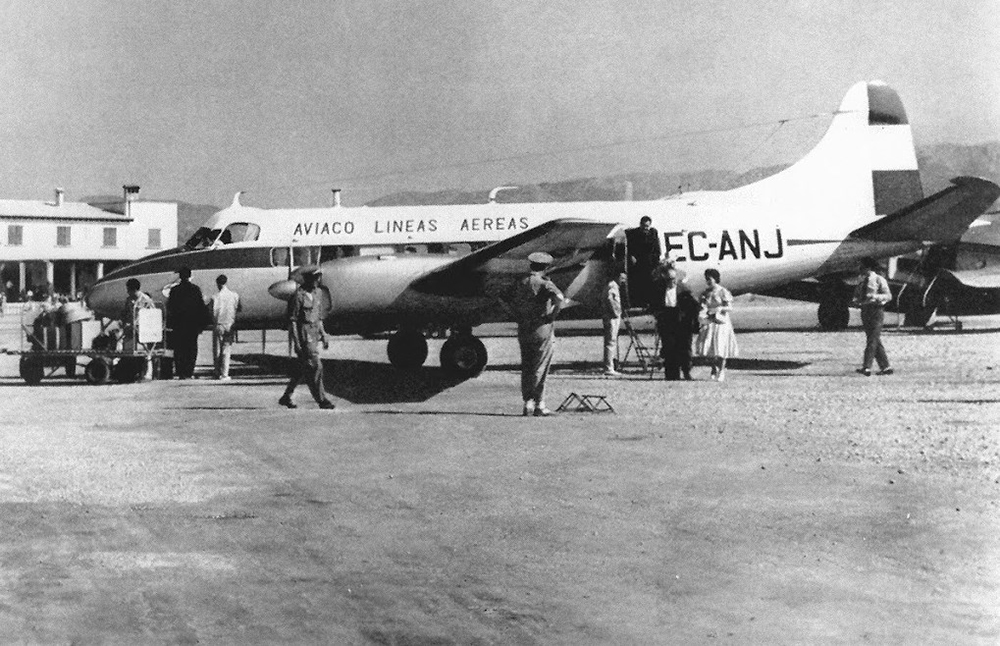
The Aviaco flight departed Zaragoza at 1919LT for a flight to Barcelona. At 2006LT the aircraft reported on a wide base leg and asked visibility data. Another aircraft (EC-AEJ) was ready for departure from Barcelona at that moment, but takeoff permission had been refused. When the Aviaco Heron reported 5 minutes away, the EC-AEJ aircraft was cleared for takeoff. Shortly thereafter both planes were flying at 150 m altitude on intersecting tracks. The Heron was forced to take a sudden avoidance manoeuvre and lost control. The plane crashed into the sea off Castelldefels and was lost. All 16 occupants have been killed.
Probable cause:
The fact that EC-AEJ was permitted to takeoff without the exact position of EC-ANJ being known. During avoidance action taken by EC-ANJ, loss of control occurred, and the aircraft fell into the sea.

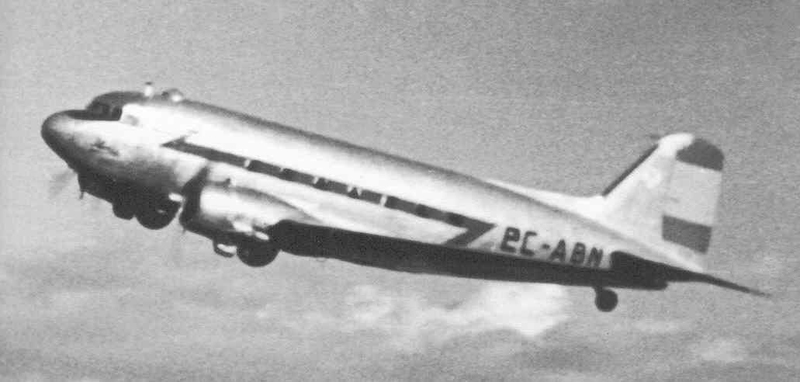
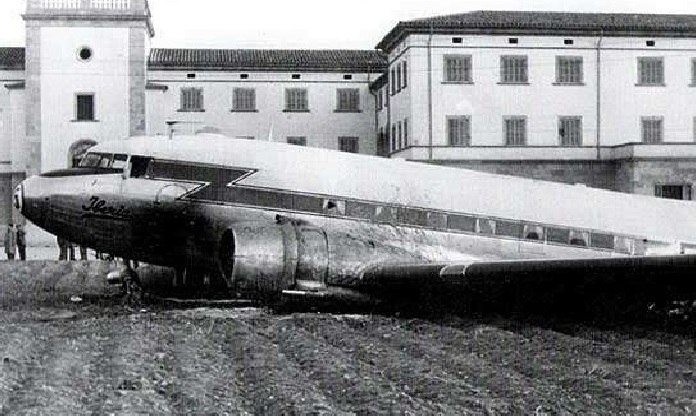
Crash of a Douglas C-53-DO at Palma de Majorca

Date & Time: Apr 10, 1958
Type of aircraft:
Operator:
Registration:
EC-ABN
Flight Phase:
Survivors:
Yes
Schedule:
Palma de Majorca – Barcelona
MSN:
7346
YOM:
1942
Country:
Region:
Crew on board:
4
Crew fatalities:
Pax on board:
27
Pax fatalities:
Other fatalities:
Total fatalities:
0
Circumstances:
After takeoff from Palma de Mallorca-Son Bonet Airport, while climbing to a height of 1,000 feet, the right engine lost hydraulic pressure. The captain decided to land immediately back onto runway. With its landing gear still retracted, the airplane belly landed less than 100 meters from the runway end. Unable to stop within the remaining distance, the airplane overran and came to rest. All 31 occupants were evacuated safely while the airplane was damaged beyond repair.

Crash of a Douglas C-47A-80-DL on Mt Illiniza: 32 killed

Date & Time: Apr 7, 1958 at 0900 LT
Operator:
Registration:
HC-ACL
Flight Phase:
Survivors:
No
Site:
Schedule:
Guayaquil – Quito
MSN:
19779
YOM:
1944
Flight number:
AR222
Country:
Crew on board:
3
Crew fatalities:
Pax on board:
29
Pax fatalities:
Other fatalities:
Total fatalities:
32
Captain / Total flying hours:
7402
Circumstances:
Flight 222 left Guayaquil at 0806 hours on a scheduled non-stop flight to Quito. The aircraft carried 32 persons, including 3 crew members and an infant. It was cleared to climb IFR on the Guayaquil-Esmeraldas track on a heading of 358°, then to continue in visual contact to Quito, after cancellation of the IFR flight. At 0819 the pilot contacted ATC and gave his estimated arrival over Manta radio beacon at 0841. One minute later the pilot reported at 4,000 feet, maintaining this altitude. At 0830 clearance was requested for a further IFR climb and the aircraft was told to wait. At 0836 clearance to climb was again requested and at 0840 clearance was given to climb IFR to 5,000 feet on the Guayaquil-Esmeraldas track. The pilot reported at 0841 as being over Manta beacon at 5,000 feet and estimated arrival at Quito at 0916. Clearance was granted for a climb to above the clouds on the same track. This was the last contact with the aircraft which, presumably, continued to fly in cloud without breaking through on top until it crashed at an altitude of 2,300 metres ( 7,500 feet) in the western mountains of the Chugchilán Range, killing all occupants.
Probable cause:
The probable cause of the accident is that the pilot did not follow the 358° Guayaquii-Esmeraldas track, authorized for instrument flight, until clear of cloud, but probably assumed a heading of 250° as soon as he left Guayaquil, in order to fly the most direct route between Guayaquil and Quito. In so doing while on instruments, he deviated from the Guayaquil-Esmeraldas track at too low an altitude to clear the Chugchilán Range before him with an adequate safety margin.
Final Report:

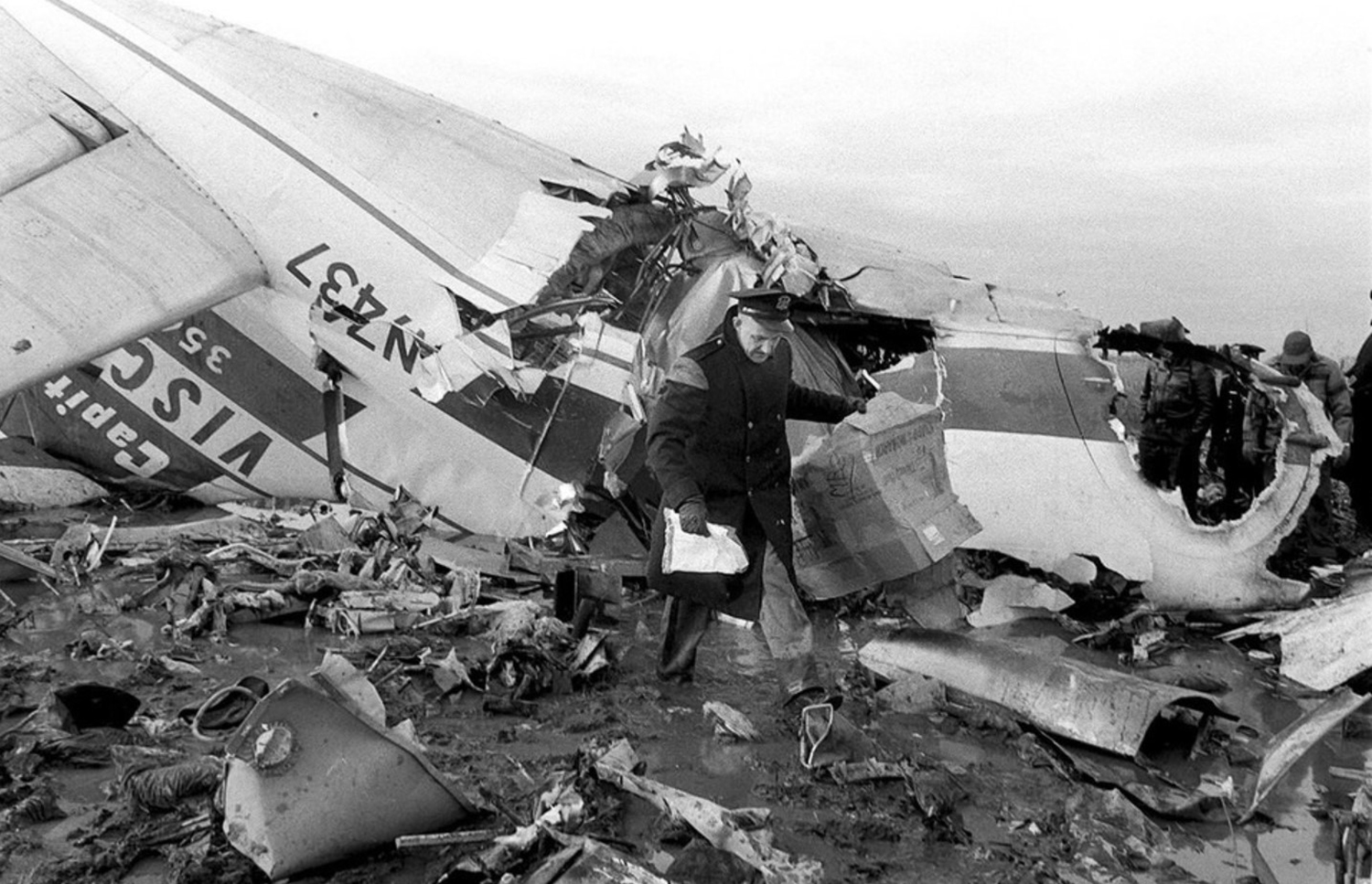
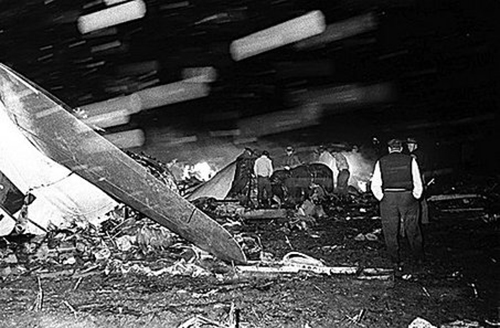
Crash of a Vickers 745D Viscount in Saginaw: 47 killed

Date & Time: Apr 6, 1958 at 2319 LT
Type of aircraft:
Operator:
Registration:
N7437
Survivors:
No
Schedule:
New York – Detroit – Flint – Saginaw – Chicago
MSN:
135
YOM:
1956
Flight number:
CA067
Crew on board:
3
Crew fatalities:
Pax on board:
44
Pax fatalities:
Other fatalities:
Total fatalities:
47
Captain / Total flying hours:
16050
Captain / Total hours on type:
1702.00
Copilot / Total flying hours:
2030
Copilot / Total hours on type:
975
Circumstances:
At 2306, four minutes after takeoff, the flight, pursuant to clearance instructions, reported to Flight tower that it was at 3,600 feet and was departing the Flint outer marker. At this time the tower requested the estimated time of arrive at Tri-City and was advised that it was 2315. Flight 67 was then given the following clearance: "ARTC (Air Route Traffic Control) clears Capital 67 to hold north of the Saginaw omni range, one minute pattern, right turn, maintain 3,600 feet. Expect further clearance 2320, change to company frequency for this clearance." This clearance was acknowledged and, as per instructions, the frequency was changed to that of the company at Detroit. At 2310, Capital at Detroit relayed the following clearance to the flight: "ARTC clears Flight 67 for approach at Saginaw (Tri-City) Airport. Report time on the ground to Saginaw radio." These instructions were verified. The flight then called Saginaw ATCS (Air Traffic Communication Station) and was given the local 2300 weather observation and the runway in use, No. 5. The Tri-City Airport does not have a traffic control tower. The 2300 Saginaw weather was reported as: Measured ceiling 900 feet, overcast, visibility 3 miles, light snow showers, temperature 34; dewpoint 33; wind north-northeast 18, peak gusts to 27 knots; altimeter 29.48, comments--drizzle ended and snow showers began at 2225. At 2316 Trip 67 advised Saginaw radio that it was over the airport. A short time later, ground witnesses observed the lights of the aircraft when it was on the downwind leg of the traffic pattern. The aircraft was seen to make a left turn onto base leg and at this time the landing lights of the aircraft were observed to come on. During this portion of the approach the aircraft was flying beneath the overcast, estimated to be 900 feet, and appeared to be descending. When turning on final, Trip 67 flew a short distance beyond the extended centerline of the runway and the turf was seen to steepen for realignment with the runway. Soon after this the aircraft was observed to level off and then to descend steeply and strike the ground. A large fire immediately erupted. The aircraft was totally destroyed and all 47 occupants have been killed.
Probable cause:
The Board determines that the probable cause of this accident was an undetected accretion of ice on the horizontal stabilizer which, in conjunction with a specific airspeed and aircraft configuration, caused a loss of pitch control.
Final Report:

Crash of an Ilyushin II-14 near Xi'an: 14 killed

Date & Time: Apr 5, 1958
Type of aircraft:
Operator:
Registration:
632
Flight Phase:
Survivors:
No
Site:
Schedule:
Chengdu – Beijing
Location:
Country:
Region:
Crew on board:
5
Crew fatalities:
Pax on board:
9
Pax fatalities:
Other fatalities:
Total fatalities:
14
Circumstances:
En route from Chengdu to Beijing, the airplane went out of control and crashed in unknown circumstances in a mountainous area located 70 km from Xi'an. All 14 occupants were killed.