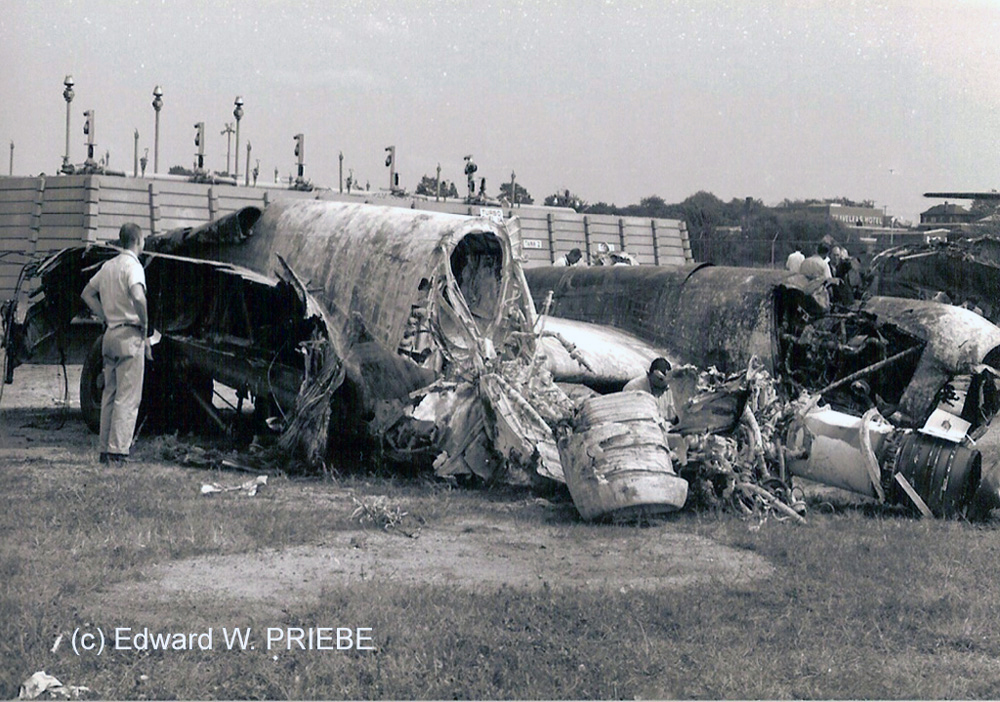
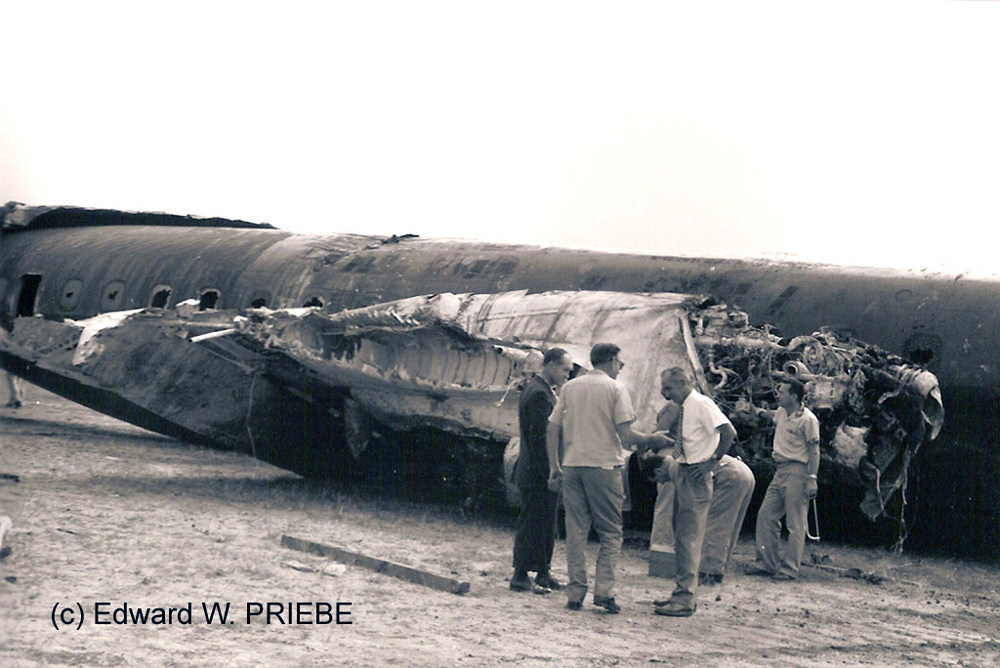
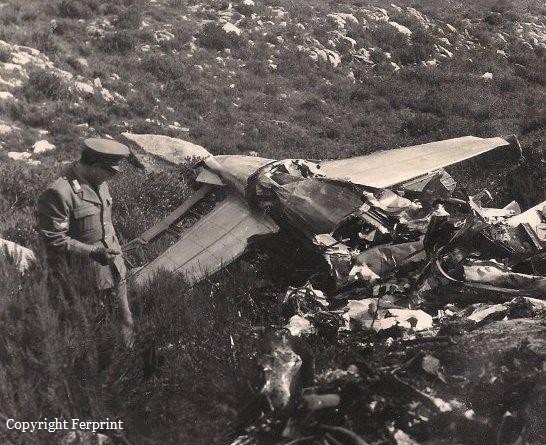
Crash of a De Havilland DH.114 Heron 2 on Mt Capanne: 11 killed

Date & Time: Oct 14, 1960 at 1550 LT
Type of aircraft:
Operator:
Registration:
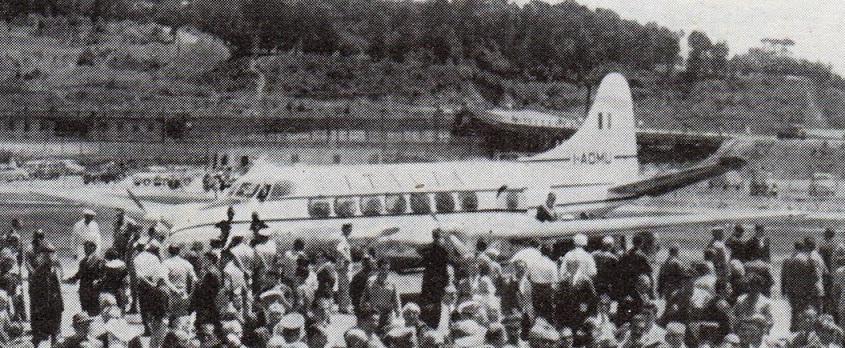
I-AOMU
Flight Phase:
Survivors:
No
Site:
Schedule:
Rome – Genoa
MSN:
14090
YOM:
1955
Flight number:
IT115
Country:
Region:
Crew on board:
4
Crew fatalities:
Pax on board:
7
Pax fatalities:
Other fatalities:
Total fatalities:
11
Circumstances:
While flying in marginal weather conditions between the Tyrrhenian Sea and the Ligurian Sea, the twin engine aircraft struck the slope of Mt Capanne located in the west part of Elbe Island, at an altitude of 728 meters. The aircraft was destroyed and all 11 occupants were killed. At the time of the accident, the visibility was poor due to clouds and the crew was unable to distinguish the mountain.
Crew:
Ennio Scipione, pilot,
Francesco Cossu, copilot,
Giovanna Pertusio, stewardess,
Grazia Candeloro, stewardess.
Passengers:
Giorgio Bracci,
Ernesto Cuomo Ulloa,
Maria Pia Dalmau,
Adelaide Rocca Dalmau,
Elio Perugi,
Silvio Sciunnach,
Naomichi Takashima.
Probable cause:
For unknown reason, the crew was flying under VFR mode in IMC conditions.
Crash of a Lisunov LI-2 in Mironeasa

Date & Time: Oct 8, 1960
Type of aircraft:
Operator:
Registration:
YR-TAX
Flight Phase:
Survivors:
Yes
MSN:
184 238 03
YOM:
1951
Location:
Country:
Region:
Crew on board:
0
Crew fatalities:
Pax on board:
0
Pax fatalities:
Other fatalities:
Total fatalities:
0
Circumstances:
Crashed in unknown circumstances at Mironeasa. The airplane was damaged beyond repair but there were no injuries.

Crash of a De Havilland DH.89A Dragon Rapide in Molegbe

Date & Time: Oct 6, 1960
Operator:
Registration:
OO-CJT
Survivors:
Yes
Schedule:
Léopoldville – Gbadolite
MSN:
6925
YOM:
1945
Region:
Crew on board:
1
Crew fatalities:
Pax on board:
5
Pax fatalities:
Other fatalities:
Total fatalities:
0
Circumstances:
On approach to Gbadolite Airport, a fuel exhaustion forced the pilot to attempt an emergency landing. The twin engine aircraft crash landed in Molegbe, about 7 km west of the airport and came to rest. All six occupants were rescued while the aircraft was damaged beyond repair.
Probable cause:
Fuel exhaustion.

Crash of a Lockheed L-188A Electra in Boston: 62 killed

Date & Time: Oct 4, 1960 at 1740 LT
Type of aircraft:
Operator:
Registration:
N5533
Flight Phase:
Survivors:
Yes
Schedule:
Boston – Philadelphia – Atlanta
MSN:
1062
YOM:
1959
Flight number:
EA375
Crew on board:
5
Crew fatalities:
Pax on board:
67
Pax fatalities:
Other fatalities:
Total fatalities:
62
Captain / Total flying hours:
23195
Captain / Total hours on type:
1053.00
Copilot / Total flying hours:
5820
Copilot / Total hours on type:
201
Aircraft flight hours:
3526
Circumstances:
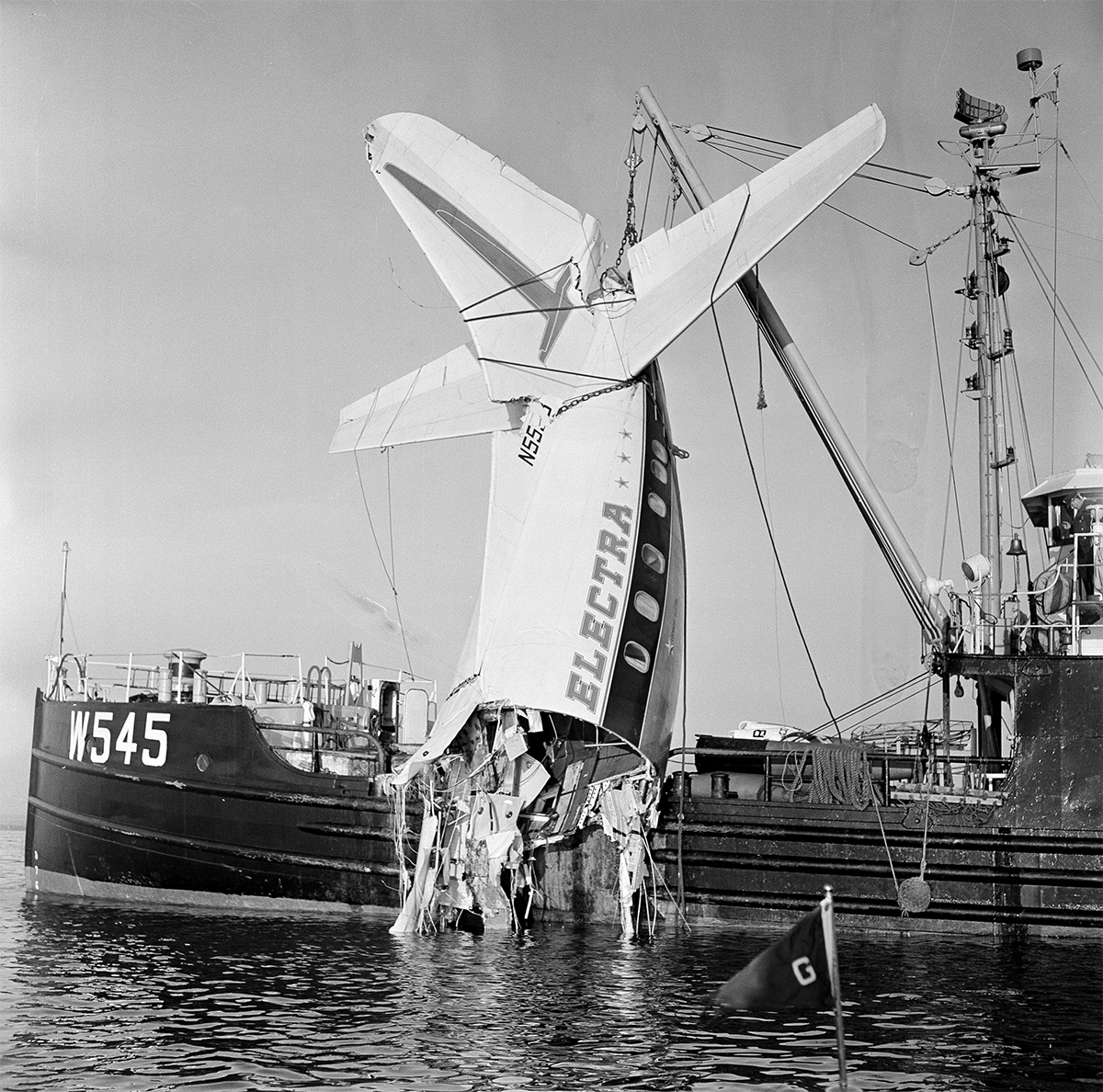
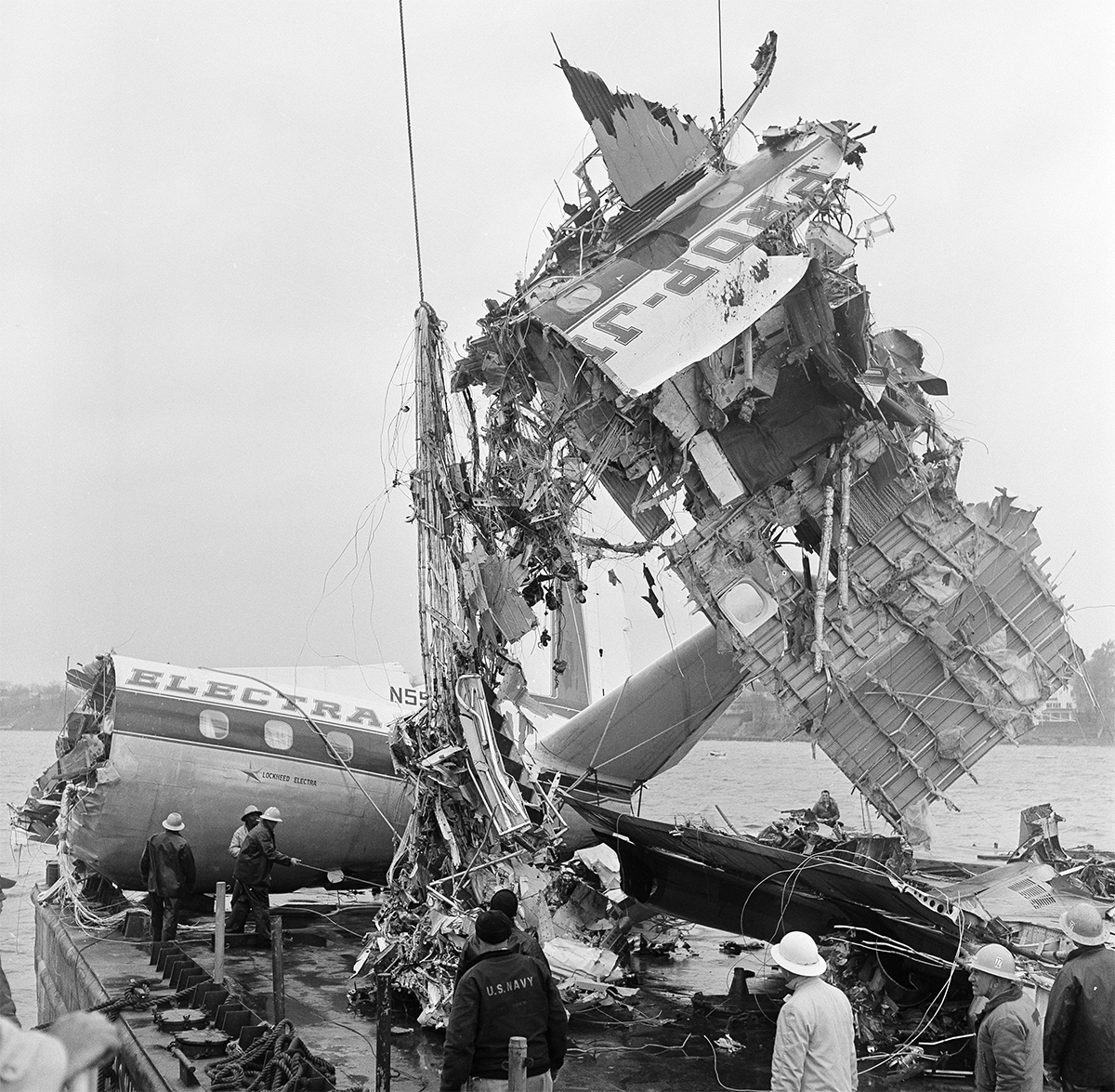
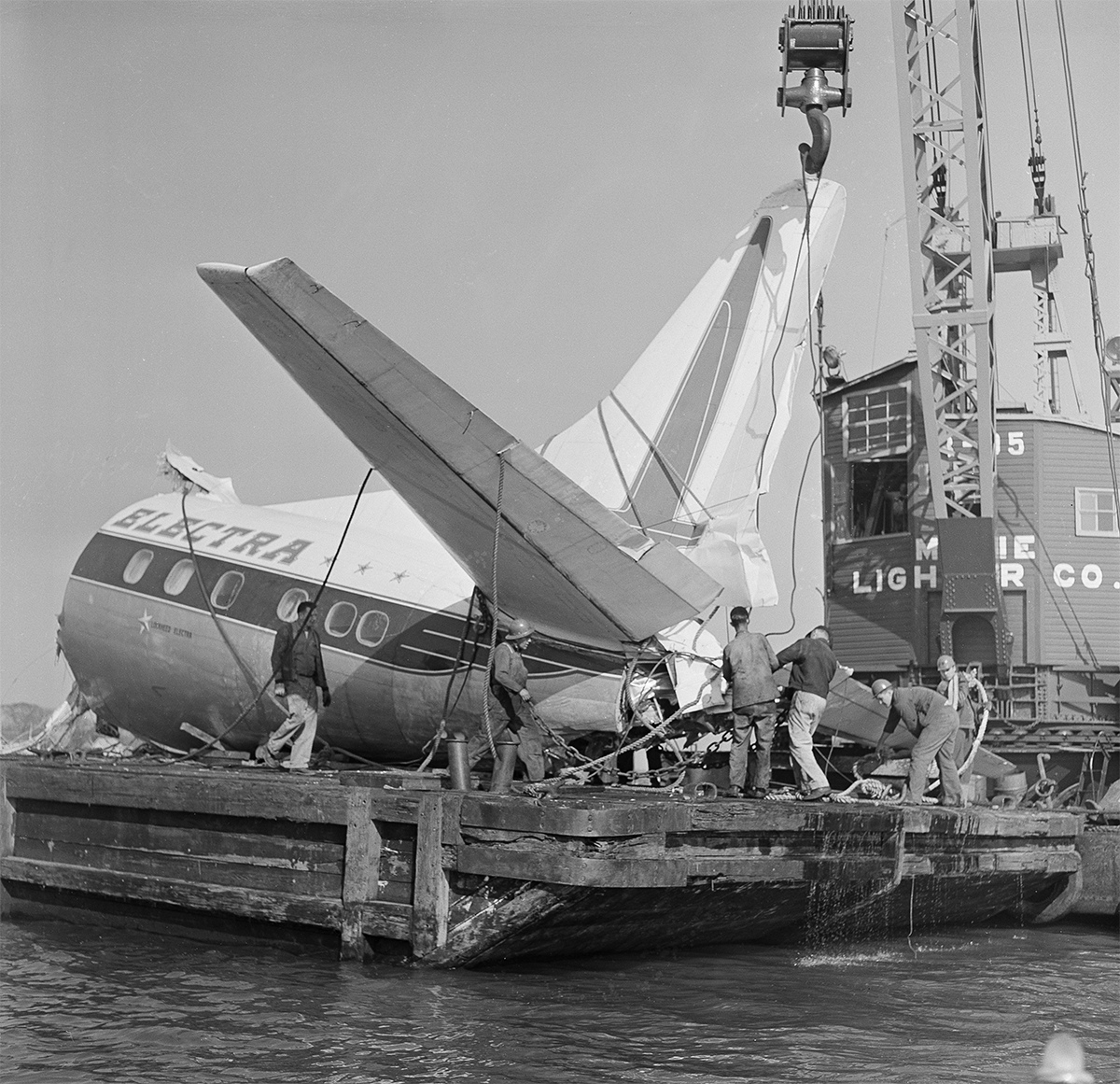
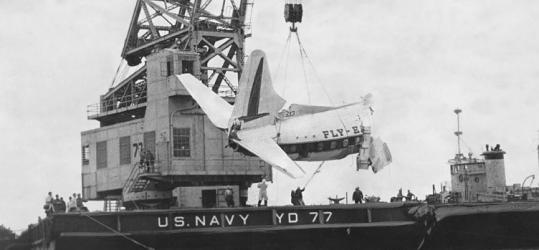
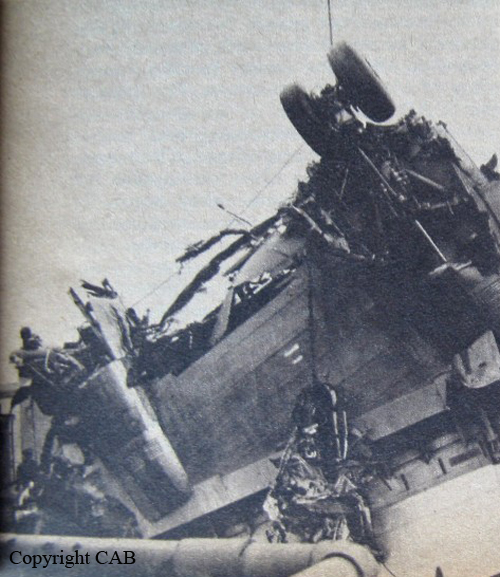
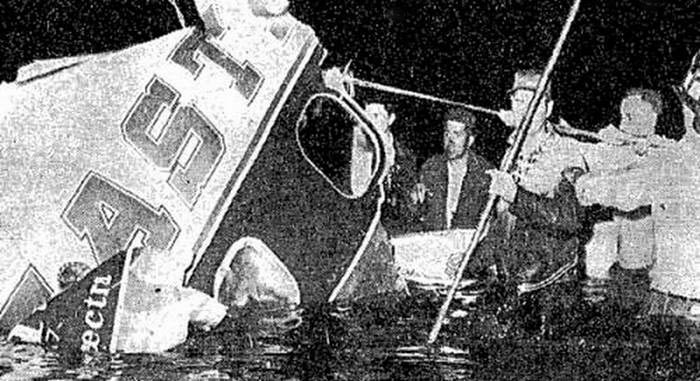
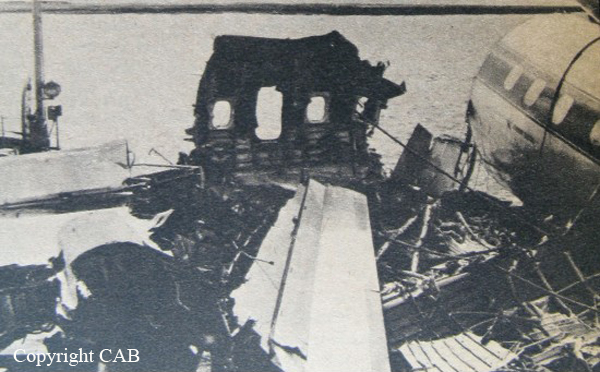
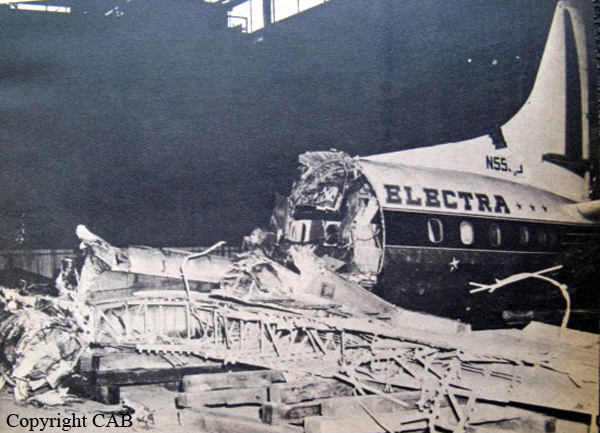
On October 4, 1960, at 1740 e.d.t., an Eastern Air Lines Lockheed Electra, N 5533, crashed into Winthrop Bay immediately following takeoff from runway 9 at Logan International Airport, Boston, Massachusetts. Ten of the 72 persons aboard survived the crash. The aircraft was totally destroyed. A few seconds after becoming airborne, the aircraft struck a flock of starlings. A number of these birds were ingested In engines Nos. 1, 2, and 4. Engine No. 1 was shut down and its propeller was feathered. Nos. 2 and 4 experienced a substantial momentary loss of power. This abrupt and intermittent loss and recovery of power resulted in the aircraft yawing to the left and decelerating to the stall speed. As speed decayed during the continued yaw and skidding left turn, the stall speed was reached; the left wing dropped, the nose pitched up, and the aircraft rolled left into a spin and fell almost vertically into the water. An altitude of less than 150 feet precluded recovery. The Board determines that the probable cause of this accident was the unique and critical sequence of the loss and recovery of engine power following bird ingestion, resulting in loss of airspeed and control during takeoff.
Probable cause:
The Board determines that the probable cause of this accident was the unique and critical sequence of the loss and recovery of engine power following bird ingestion, resulting in loss of airspeed and control during takeoff.
Final Report:

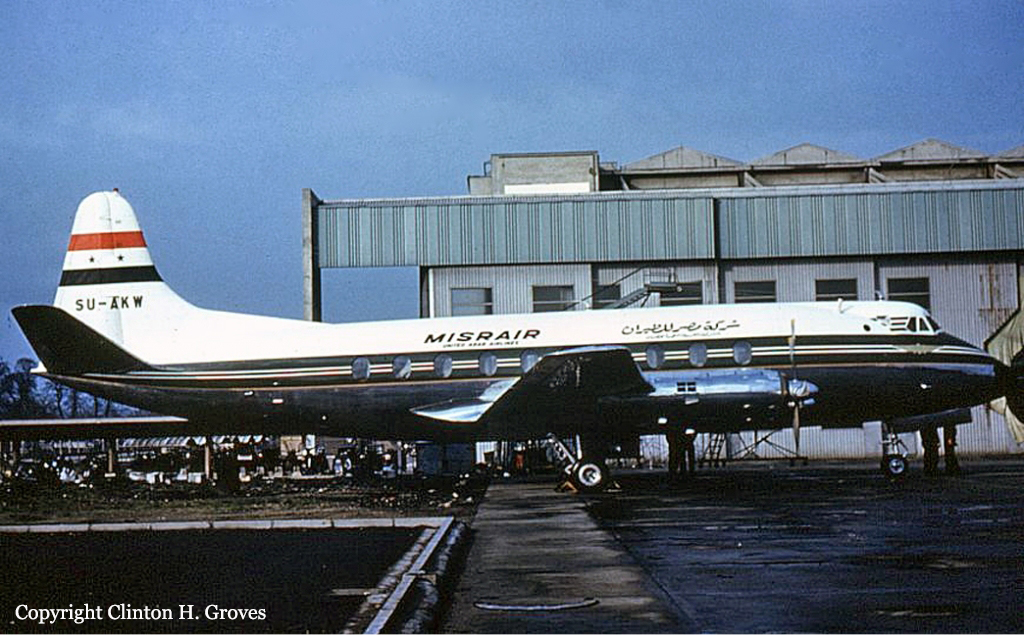
Crash of a Vickers 739B Viscount off Elba Island: 23 killed

Date & Time: Sep 29, 1960 at 1215 LT
Type of aircraft:
Operator:
Registration:
SU-AKW
Flight Phase:
Survivors:
No
Schedule:
Geneva – Rome – Athens – Cairo
MSN:
427
YOM:
21
Flight number:
MS738
Country:
Region:
Crew on board:
6
Crew fatalities:
Pax on board:
17
Pax fatalities:
Other fatalities:
Total fatalities:
23
Aircraft flight hours:
1230
Aircraft flight cycles:
535
Circumstances:
The four engine aircraft departed Geneva-Cointrin Airport at 1105LT bound for Rome-Fiumicino Airport. While cruising on airway A3 at an altitude of 21,000 feet, the crew requested permission to ATC to modify his route due to the presence of a low pressure area. Permission was granted and the crew modified his route when contact was lost. The airplane entered a dive and crashed into the Ligurian Sea, about 27 km north of Elbe Island. SAR operations were conducted but no trace of the airplane nor the 23 occupants was found. On October 3, tourists on their sailing ship found a wheel floating on water and the Italian Authorities confirmed it was part of the Egyptian airplane. Unfortunately, only few pieces were recovered.
Probable cause:
Due to lack of evidences, the exact cause of the accident could not be determined with certainty. However, it is believed that the loss of control was the result of severe turbulences encountered in a thunderstorm area which caused the failure of certain components of the aircraft and a eventual structural failure.

Crash of a Douglas C-53-DO in Juchitepec: 8 killed

Date & Time: Sep 28, 1960
Operator:
Registration:
XA-HUS
Survivors:
Yes
Site:
Schedule:
Tapachula – Mexico City
MSN:
7388
YOM:
1942
Country:
Crew on board:
3
Crew fatalities:
Pax on board:
15
Pax fatalities:
Other fatalities:
Total fatalities:
8
Circumstances:
The crew encountered thick fog while approaching Mexico City Airport. The airplane struck a hill located near Juchitepec, about 40 km south of Mexico City Airport, and crashed. All three crew members and five passengers were killed while ten other occupants were rescued.

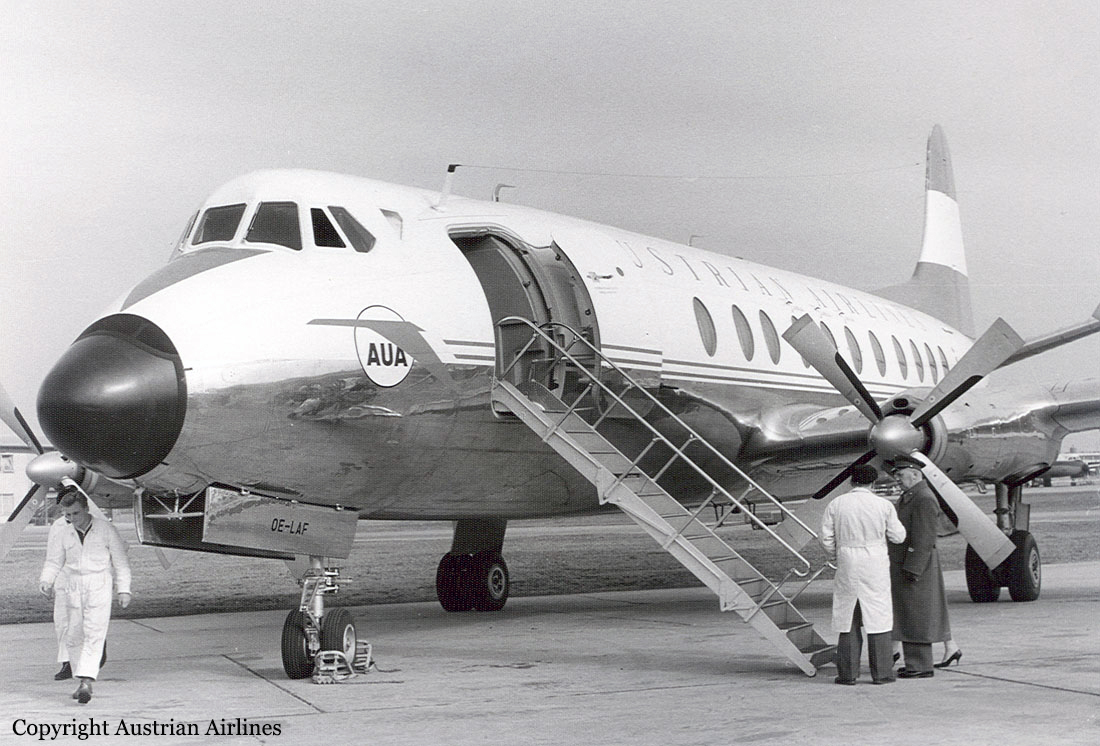
Crash of a Vickers 837 Viscount in Moscow: 31 killed

Date & Time: Sep 26, 1960 at 2140 LT
Type of aircraft:
Operator:
Registration:
OE-LAF
Survivors:
Yes
Schedule:
Vienna – Warsaw – Moscow
MSN:
437
YOM:
1960
Flight number:
OS901
Country:
Region:
Crew on board:
6
Crew fatalities:
Pax on board:
31
Pax fatalities:
Other fatalities:
Total fatalities:
31
Captain / Total flying hours:
2395
Captain / Total hours on type:
1752.00
Copilot / Total flying hours:
2088
Copilot / Total hours on type:
458
Aircraft flight hours:
1272
Aircraft flight cycles:
872
Circumstances:
The approach to Moscow-Sheremetyevo Airport was completed by night and in poor weather conditions. After its four turn on approach, the crew continued the descent below the glide when the airplane struck trees and crashed in a wooded area located 11 km short of runway 07. The aircraft was destroyed, five crew members and 26 passengers were killed while six other occupants were seriously injured. At the time of the accident, the visibility was limited due to the night, foggy conditions and rain falls.
Probable cause:
The investigations revealed that there were no technical deficiencies in the aircraft itself or a meteorological phenomenon involved in the accident. The Austrian observers participating in the investigation of the accident were of the opinion that the accident was related to altitude measurement, inasmuch as it was apparent from radio communications as well as from the examination of the wreckage that that the crew believed that they were flying at the normal approach altitude. The erroneous altitude measurement may be attributed to:
- A technical deficiency of either of the two altimeters,
- The divergent settings of the altimeters or,
- Omission of altimeter reading or erroneous reading of altimeters.
The internal mechanism of both altimeters was so heavily damaged that it could no longer be ascertained whether, at the time of the accident, the altimeters were functioning accurately. Both altimeters were set to the correct atmospheric pressure but their settings differed, namely the left altimeter was set at QFE 990 millibars and the right altimeter at 1013 millibars, which in view of the prevailing atmospheric pressure conditions, could have corresponded both to QNH and to the standard pressure setting. Such divergent settings are at variance with the usual procedure of Austrian Airlines. The reasons prompting the flight captain to depart from the usual practice could not be ascertained. It was not possible to reach a categorical conclusion as to which of the three causes were responsible for an approach below the minimum flying altitude.

Crash of an Ilyushin II-14P in Brest: 1 killed

Date & Time: Sep 26, 1960
Type of aircraft:
Operator:
Registration:
CCCP-41866
Survivors:
Yes
Schedule:
Moscow – Moguilev – Minsk – Brest
MSN:
1460 007 04
YOM:
1956
Flight number:
SU607
Country:
Region:
Crew on board:
6
Crew fatalities:
Pax on board:
21
Pax fatalities:
Other fatalities:
Total fatalities:
1
Aircraft flight hours:
6363
Circumstances:
The airplane departed Minsk Airport at 1245LT bound for Brest. While cruising at an altitude of 9,000 feet, the crew noted that the oil temperature on the right engine increased while the temperature of the second breech dropped. In such situation, the captain decided to shot down the right engine, feathered its propeller and continued to Brest. At 1405LT, he notified his situation to ATC and started the descent to Brest Airport in marginal weather conditions. On final approach, at an altitude of 40 meters, the undercarriage and flaps were lowered when the captain was instructed to go around. For unknown reason, he continued the approach and the right main gear touched down 390 meters past the runway threshold. The left main gear touched down 73 meters farther and after a course of 930 meters, the airplane overran and collided with the ILS antenna before coming to rest in flames. All 21 passengers were injured while five crew members were seriously wounded. The board mechanic died from his injuries five hours later. The aircraft was destroyed.
Probable cause:
The right engine has to be shut down in flight because of the failure of the second cylinder due to a manufacture defect. Following poor techniques on part of the captain, the approach configuration on one engine was wrong and the third turn on final was completed too late. Marginal weather conditions, a wet runway surface and a limited visibility were considered as contributing factors.

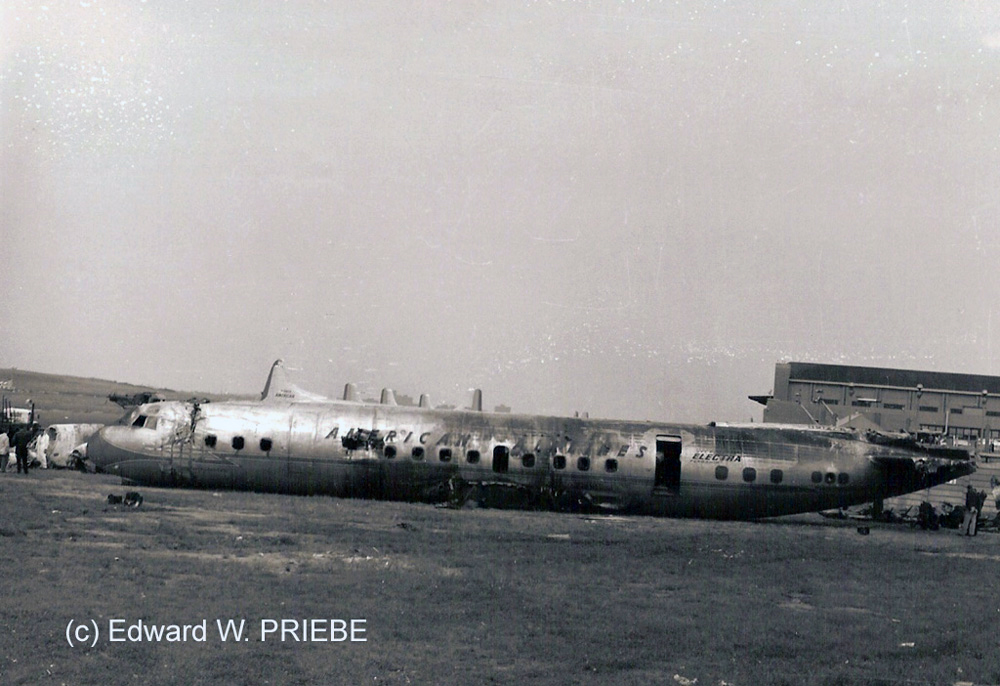
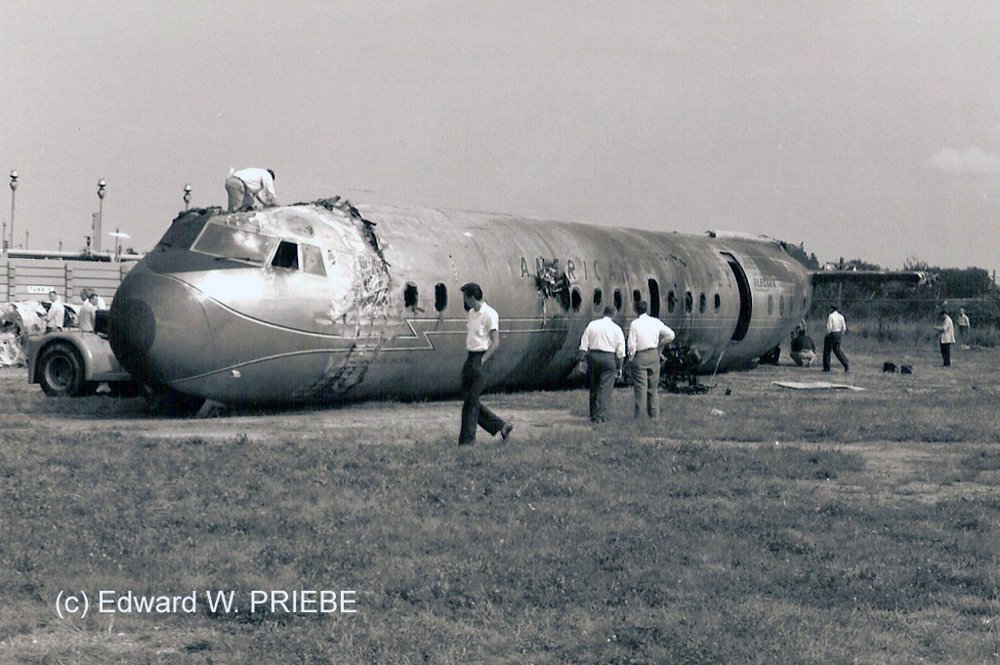
Crash of a Lockheed L-188A Electra in LaGuardia

Date & Time: Sep 14, 1960 at 0800 LT
Type of aircraft:
Operator:
Registration:
N6127A
Survivors:
Yes
Schedule:
Boston – New York – Saint Louis
MSN:
1117
YOM:
1960
Flight number:
AA361
Crew on board:
6
Crew fatalities:
Pax on board:
70
Pax fatalities:
Other fatalities:
Total fatalities:
0
Captain / Total flying hours:
14082
Captain / Total hours on type:
279.00
Copilot / Total flying hours:
18310
Copilot / Total hours on type:
460
Aircraft flight hours:
1573
Circumstances:
The Electra scheduled as Flight 361 departed Boston at 0716LT with its destination St Louis, Missouri, and with a planned intermediate stop at LaGuardia Airport. About ten minutes prior to departure a crew change was made when a check pilot boarded the aircraft to flight-check the flight engineer. This check pilot, by mutual agreement with the crew and in accordance with existing company policy, took over the left or pilot-in-command seat with the previously assigned captain moving to the jump seat. The trip was routine until final approach at LaGuardia. On final approach, the airplane aircraft was too low and struck a dyke with its main landing gear and crash landed. Approximately half of the 76 persons on board suffered minor injuries or shock; no one was killed. The aircraft was severely damaged by impact forces and fire.
Probable cause:
The Board determines that the probable cause of this accident was the failure of the pilot to properly plan and execute the approach to a landing. Factors which may have contributed were the shortened runway and the unmarked upper portion of the dike.
Final Report:

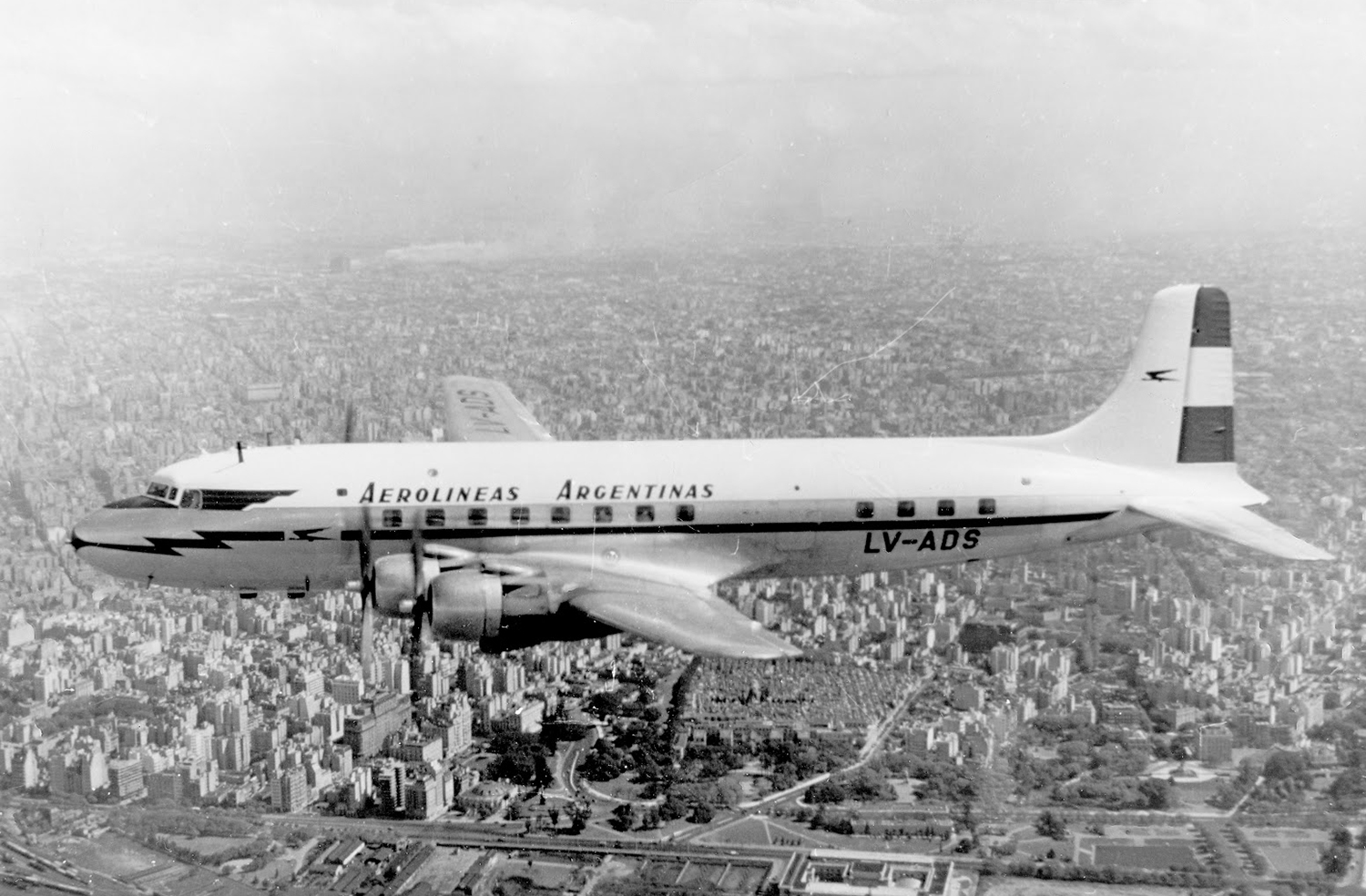
Crash of a Douglas DC-6 near Salto: 31 killed

Date & Time: Sep 7, 1960 at 0940 LT
Type of aircraft:
Operator:
Registration:
LV-ADS
Flight Phase:
Survivors:
No
Schedule:
Asunción – Buenos Aires
MSN:
43031
YOM:
1947
Flight number:
AR205
Location:
Country:
Crew on board:
6
Crew fatalities:
Pax on board:
25
Pax fatalities:
Other fatalities:
Total fatalities:
31
Aircraft flight hours:
19229
Aircraft flight cycles:
5314
Circumstances:
While in cruising altitude on a flight from Asunción to Buenos Aires, the airplane christened 'Mariano Moreno' suffered a major issue on engine number three. Shortly later, the airplane disintegrated in the air, dove into the ground and crashed in an open field located 12 km northeast of Salto. The aircraft was totally destroyed and all 31 occupants were killed. Debris were scattered on more than five km.
Probable cause:
The immediate cause of the accident was overspeeding of No.3 propeller caused by irregular operation of the propeller governor, detachment of that propeller and impact with that of No.4 engine, followed by disintegration of the aircraft. The remote cause of the accident was insufficiently strict observance of engine maintenance conditions, because, while Pratt and Whitney Service Bulletins Nos. 1666 and 1680, dated 5 November 1957 and 15 May 1958 respectively, are not mandatory, the company should have taken account of the special circumstances in the history of No.3 engine, which resulted in the destruction of LV-ADS.