Crash of a Douglas C-47B-5-DK in Santiago del Estero

Date & Time: Jun 25, 1964
Operator:
Registration:
T-30
Flight Type:
Survivors:
Yes
Schedule:
Tartagal – Salta – San Miguel de Tucumán – Santiago del Estero
MSN:
14426/25871
YOM:
1944
Country:
Crew on board:
0
Crew fatalities:
Pax on board:
0
Pax fatalities:
Other fatalities:
Total fatalities:
0
Circumstances:
The airplane swerved on landing, went out of control and came to rest, losing its undercarriage and both engines. There were no casualties.

Crash of a Vickers 607 Valetta C.1 in Labuan

Date & Time: Jun 11, 1964
Type of aircraft:
Operator:
Registration:
VW863
Flight Type:
Survivors:
Yes
MSN:
421
YOM:
1949
Country:
Region:
Crew on board:
7
Crew fatalities:
Pax on board:
0
Pax fatalities:
Other fatalities:
Total fatalities:
0
Circumstances:
While approaching Labuan, the crew was unable to extend the undercarriage so a belly landing was completed. There were no injuries but the aircraft was damaged beyond repair.

Crash of a Douglas C-47A-DL in Çanakkale: 5 killed

Date & Time: Jun 9, 1964
Operator:
Registration:
ETI-51
Flight Phase:
Flight Type:
Survivors:
No
MSN:
13867
YOM:
1943
Country:
Region:
Crew on board:
5
Crew fatalities:
Pax on board:
0
Pax fatalities:
Other fatalities:
Total fatalities:
5
Circumstances:
Shortly after takeoff from Çanakkale Airport, while climbing, the airplane stalled and crashed, killing all five crew members.
Probable cause:
Loss of control caused by an engine failure.

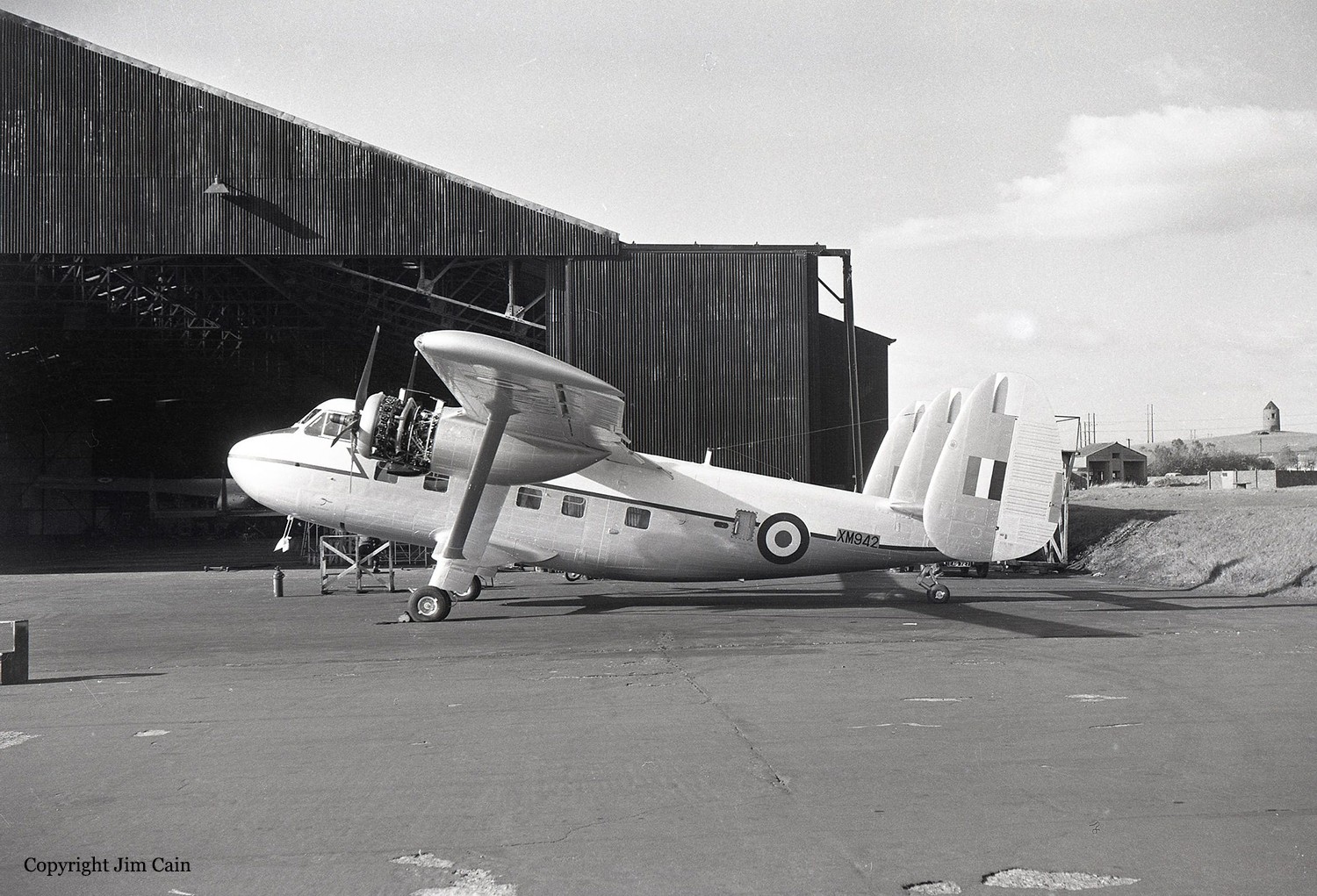
Crash of a Scottish Twin Pioneer CC.1 in Long Akah

Date & Time: May 29, 1964
Operator:
Registration:
XM942
Flight Type:
Survivors:
Yes
MSN:
551
YOM:
1958
Country:
Region:
Crew on board:
3
Crew fatalities:
Pax on board:
0
Pax fatalities:
Other fatalities:
Total fatalities:
0
Circumstances:
Upon landing, the airplane struck an irregularity on the ground, lost an undercarriage and came to rest. All three crew members of the 209th Squadron were uninjured while the aircraft was damaged beyond repair.

Crash of a De Havilland DHC-3 Otter near Luvungi

Date & Time: May 22, 1964
Type of aircraft:
Operator:
Registration:
O-AC
Flight Phase:
Flight Type:
Survivors:
Yes
MSN:
20
YOM:
1953
Region:
Crew on board:
2
Crew fatalities:
Pax on board:
4
Pax fatalities:
Other fatalities:
Total fatalities:
0
Aircraft flight hours:
4389
Circumstances:
On 22nd May '64 the Scandinavian personnel at the Lemera mission station were to be evacuated by an army convoy of trucks coming from Bukavu. The Otter was tasked with overseeing the operation from above. 303 took off, piloted by Gunnar Elg, with Gosta Kersmark as flight engineer in the right seat and four passengers (one radio operator and three observers) in the cabin. They followed the road southwards at an altitude of 1,200 feet, which they believed to be a safe height. They overflew Luvungi airstrip, and five kilometres further on were taking a look at a parked lorry when one of its occupants took a shot at them with an automatic weapon. The bullet struck the Otter with a loud bang and seemingly severed an oil line, as the oil pressure fell to zero. The engineer throttled back but the RPM remained the same, indicating that the oil pressure system connected to the propeller adjustment had been affected. As the Otter had a hydromatic propeller, he could neither reduce the RPM nor stop the oil leak. They headed down following the road, which was straight but narrow. The pilot decided he would try and land on the road. After some two minutes, the engine failed, accompanied by violent vibrations. They were then 30 feet over the road. Take-off flap had been selected during the descent, but just before landing the pilot pumped the flaps to the landing position. The Otter touched down on the road at a speed of 70 knots and rolled about 150 feet until the starboard wing was torn away on striking a tree. The aircraft left the road and lost the landing gear going over a ditch, before coming to rest. The engine was knocked off and thrown thirty feet forward. 303 was a complete wreck, but its occupants miraculously escaped with only a few cuts and bruises. The six crew congregated on the road and then set off at a brisk pace towards the convoy. The group was over-flown by a Piper Apache aircraft, whose pilot waved and notified Kamembe Tower of the mishap. At times, the six hid in the undergrowth when rebel troops were encountered. Eventually they met up with the convoy and were taken to safety, after a most frightening ordeal. At the time of the crash, the Otter had 4,389 hours on the airframe. On 25th May '64 United Nations C-47 serial 215 took off from Bukavu and flew over the downed Otter, which was judged to be beyond economical repair. A salvage attempt was not made due to the presence of hostile forces in the area. The Board of Inquiry into the incident recommended that the Otter be written off the UN inventory and the remains handed over to the Congolese government.
Source: http://www.dhc3otter.com/20.htm
Probable cause:
Shot down by enemy fire.

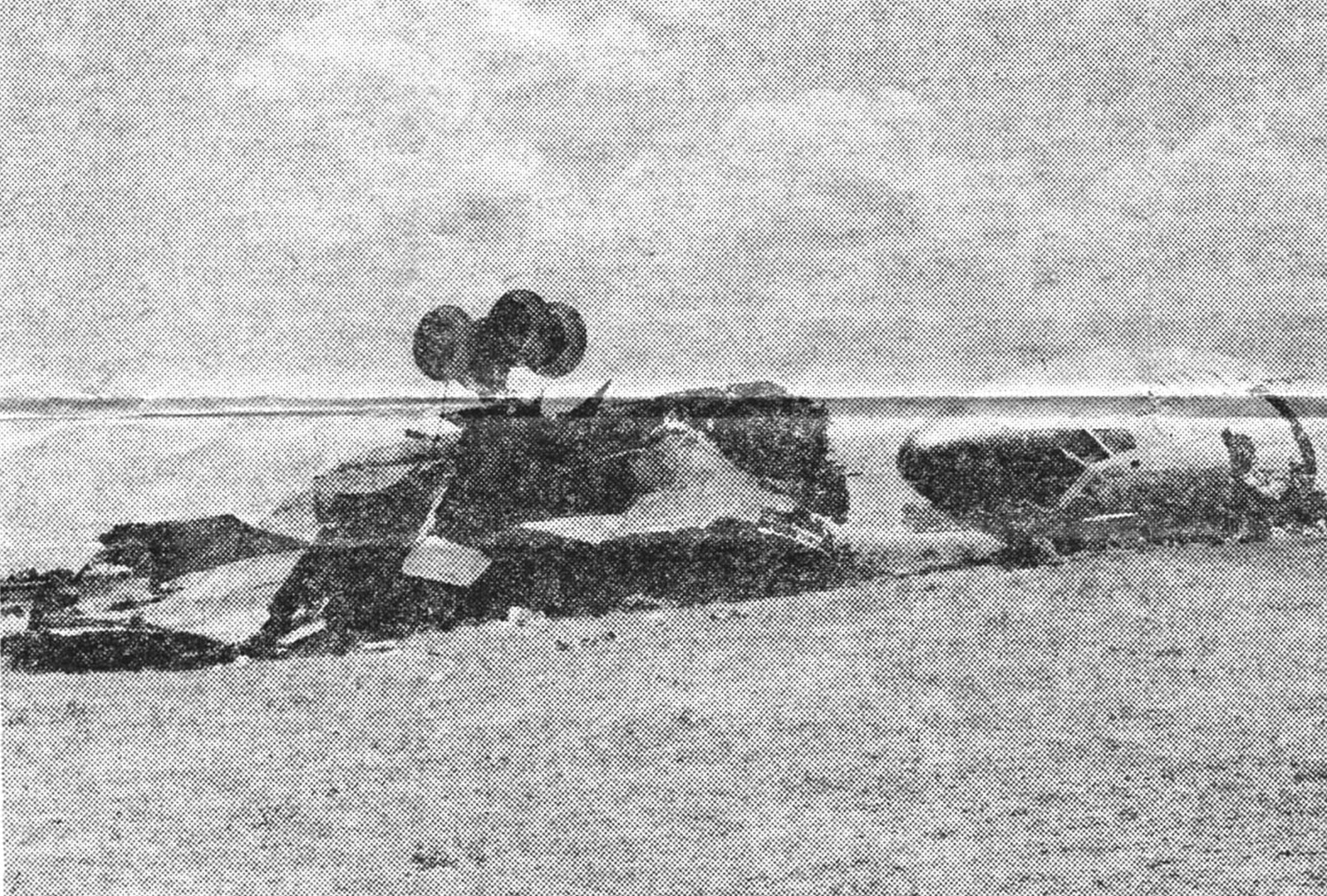
Crash of a Boeing C-135B stratolifter at Clark AFB: 80 killed

Date & Time: May 11, 1964 at 1920 LT
Type of aircraft:
Operator:
Registration:
61-0332
Flight Type:
Survivors:
Yes
Schedule:
Travis – Hickam – Clark
MSN:
18239
YOM:
1962
Country:
Region:
Crew on board:
10
Crew fatalities:
Pax on board:
74
Pax fatalities:
Other fatalities:
Total fatalities:
80
Circumstances:
The aircraft was completing a flight from Travis AFB to Clark AFB with an intermediate stop at Hickam Field, Honolulu, carrying US soldiers and their family members. While descending to Clark AFB runway 02, the crew encountered poor weather conditions with low clouds, rain falls and a limited visibility to one mile. Five km from the runway threshold, the crew passed below the glide and the ATC in charge of the approach sent three warnings to the crew. Despite this, the pilot-in-command continued the approach and at three km from the runway threshold, the crew was instructed to go around. As the captain had the runway in sight, he neglected this order and decided to continue the approach, changed his frequency and contacted the tower when he was cleared to land. At a distance of 1,050 meters short of runway threshold, the nose gear struck a fence and the left wing struck the TACAN (Tactical Air navigation) antenna. The airplane stalled, hit the ground and slid for several yards, crossed a road where it struck a taxi and came to rest in flames 600 meters short of runway and 100 meters to the left of the extended centerline. Five crew members, among them both pilots, were injured, while all 74 passengers, five others crew members and the taxi driver were killed. Both taxi's passengers were injured as well.
Probable cause:
Wrong approach configuration on part of the flying crew who decided to continue the approach despite he was instructed by ATC to abandon the approach and to go around. Marginal weather conditions were considered as a contributing factor as well as the lack of ATC coordination as the ATC in charge of the approach instructed the crew to go around and the ATC by the Tower cleared the crew to land.

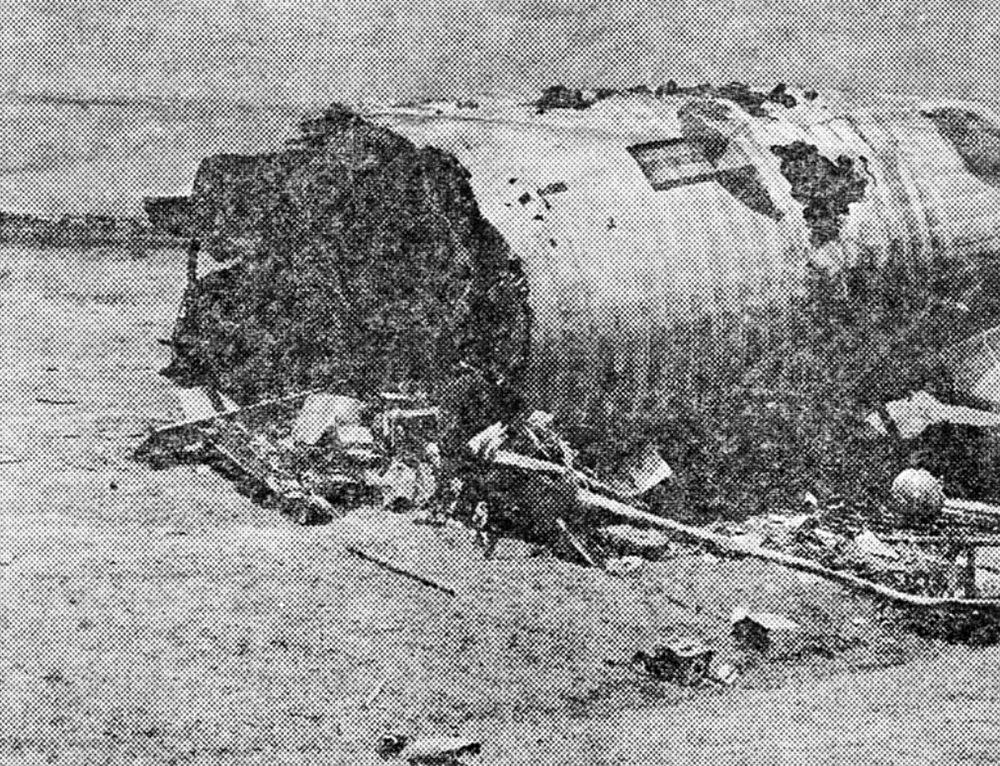
Crash of a Douglas C-124C Globemaster II in Cooperton: 6 killed

Date & Time: May 9, 1964 at 1900 LT
Operator:
Registration:
52-1008
Flight Phase:
Flight Type:
Survivors:
No
Schedule:
Clovis – Dover
MSN:
43917
YOM:
1952
Crew on board:
6
Crew fatalities:
Pax on board:
0
Pax fatalities:
Other fatalities:
Total fatalities:
6
Circumstances:
En route, the crew encountered poor weather conditions with thunderstorm activity. The airplane went out of control, dove into the ground and crashed in an uninhabited area located near Cooperton, OK. The debris were found on a large area and all six crew members were killed.
Probable cause:
It is believed the loss of control was caused by severe turbulences while flying in a thunderstorm.

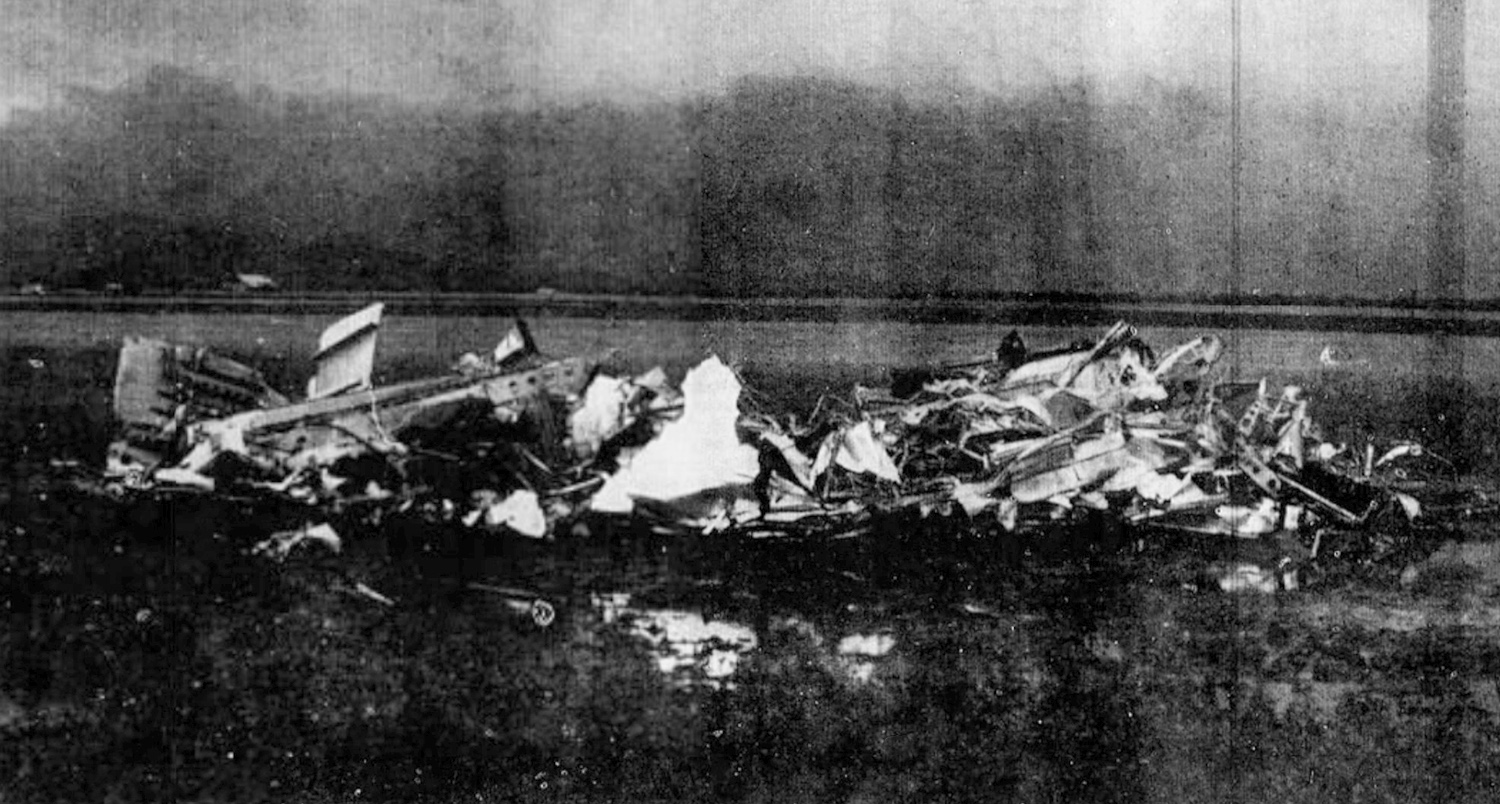
Crash of a Douglas C-54A-DO Skymaster in Lima: 46 killed

Date & Time: May 8, 1964 at 2020 LT
Type of aircraft:
Operator:
Registration:
T-47
Flight Type:
Survivors:
Yes
Schedule:
Buenos Aires – Mendoza – Antofagasta – Lima
MSN:
3082
YOM:
1943
Country:
Crew on board:
7
Crew fatalities:
Pax on board:
42
Pax fatalities:
Other fatalities:
Total fatalities:
46
Circumstances:
While approaching Lima-Callao Airport by night, the crew encountered poor visibility due to foggy conditions. The four engine aircraft was too low and struck a sand dune located 15 km short of runway threshold. Two children and a crew member survived while 46 other occupants were killed. The flight was operated by the Argentinian Air Force on behalf of the Correo Aéreo Militar al Exterior (CAME).
Probable cause:
For unknown reason, the pilot-in-command continued the approach below the glide.

Crash of a De Havilland CV-2B Caribou in Tân Hiệp: 15 killed

Date & Time: May 5, 1964
Type of aircraft:
Operator:
Registration:
61-2593
Flight Phase:
Flight Type:
Survivors:
No
Schedule:
Tân Hiệp – Saigon
MSN:
71
YOM:
1962
Country:
Region:
Crew on board:
4
Crew fatalities:
Pax on board:
11
Pax fatalities:
Other fatalities:
Total fatalities:
15
Circumstances:
Shortly after takeoff, while climbing, the left engine failed. The crew was able to feather the propeller and elected to return for an emergency landing. While turning to the left, the airplane stalled and crashed in a rice paddy field. All 15 occupants were killed.
Probable cause:
Failure of the left engine after takeoff.

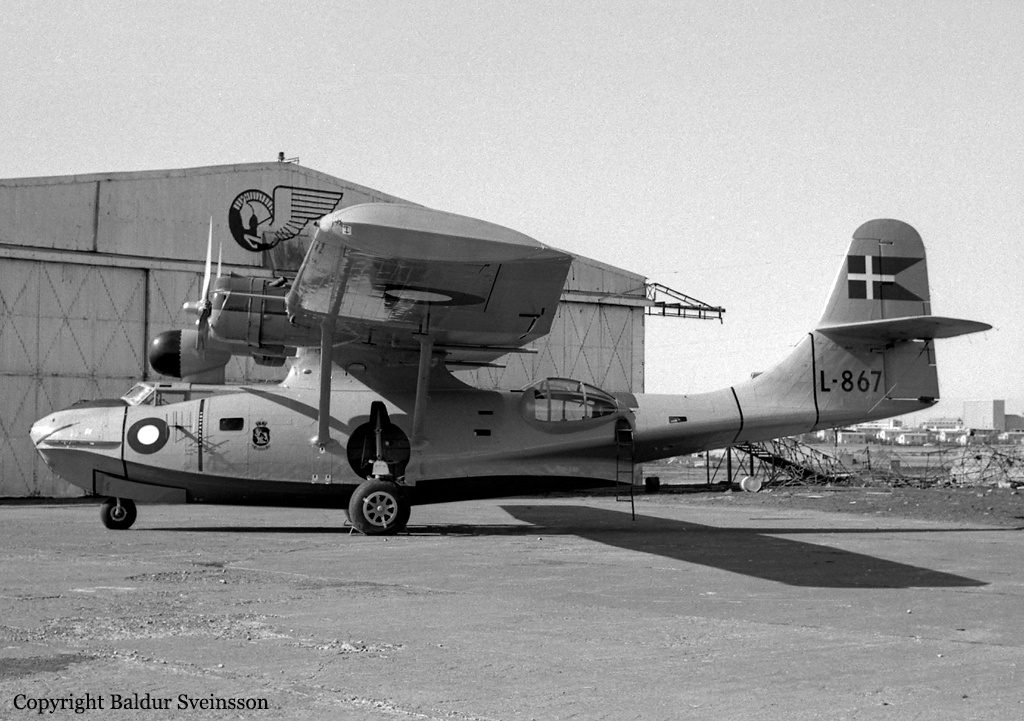
Crash of a Consolidated PBY-6A Catalina off Upernavik

Date & Time: May 3, 1964
Type of aircraft:
Operator:
Registration:
L-867
Flight Phase:
Flight Type:
Survivors:
Yes
Schedule:
Thule – Søndre Strømfjord
Country:
Region:
Crew on board:
9
Crew fatalities:
Pax on board:
5
Pax fatalities:
Other fatalities:
Total fatalities:
0
Circumstances:
The Catalina operated on a trip from Air Station Værløse via Keflavik, Reykjavik, Mestersvig, Station North, Thule, Sonderstrom and back to Værløse. The flyinbg boat departed Værløse, Denmark on 20 April 1964. On 3 May 1964, en route from Thule to Sonderstrom, the airplane suffered an no. 1 engine failure. Due to the Catalina’s single engine performance, the captain decided to make a precautionary landing when they discovered open water about 10 km south west from Upernavik. The crew was later rescued by a USAF SA-16 and brought to Sonderstrom. Two days later the Catalina was damaged beyond repair by the ice which had crushed the it.