Crash of a Douglas C-47B-15-DK in Gustavus: 4 killed

Date & Time: Nov 23, 1957 at 2000 LT
Operator:

Registration:
43-49403
Flight Type:
Survivors:
Yes
Schedule:
San Francisco – McChord – Annette Island – Anchorage
MSN:
15219/26664
YOM:
1944
Location:
Crew on board:
4
Crew fatalities:
Pax on board:
7
Pax fatalities:
Other fatalities:
Total fatalities:
4
Circumstances:
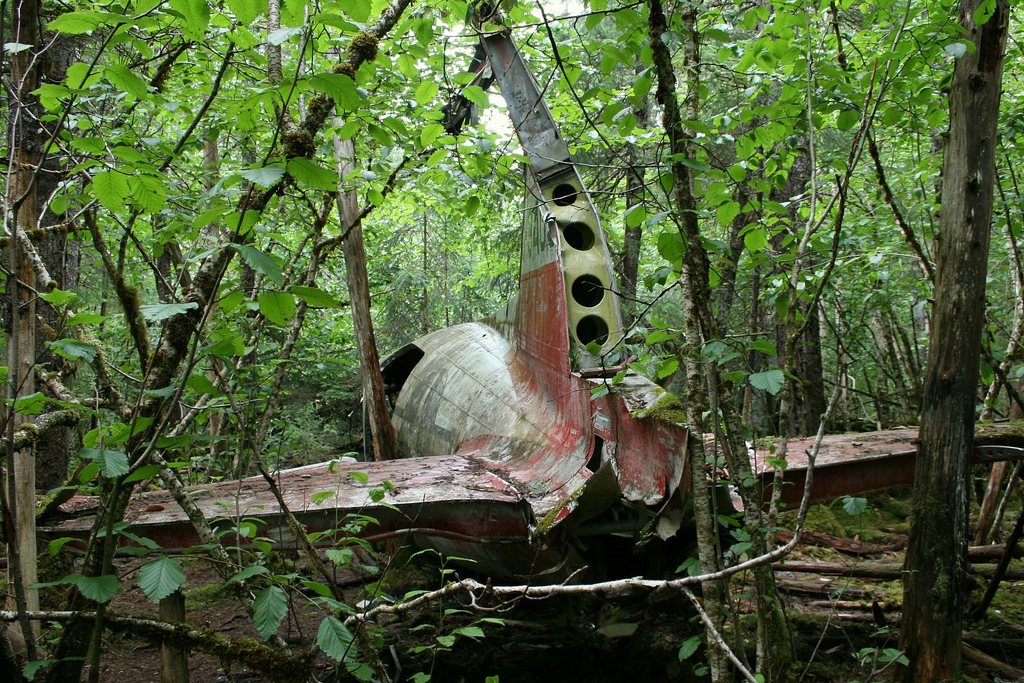
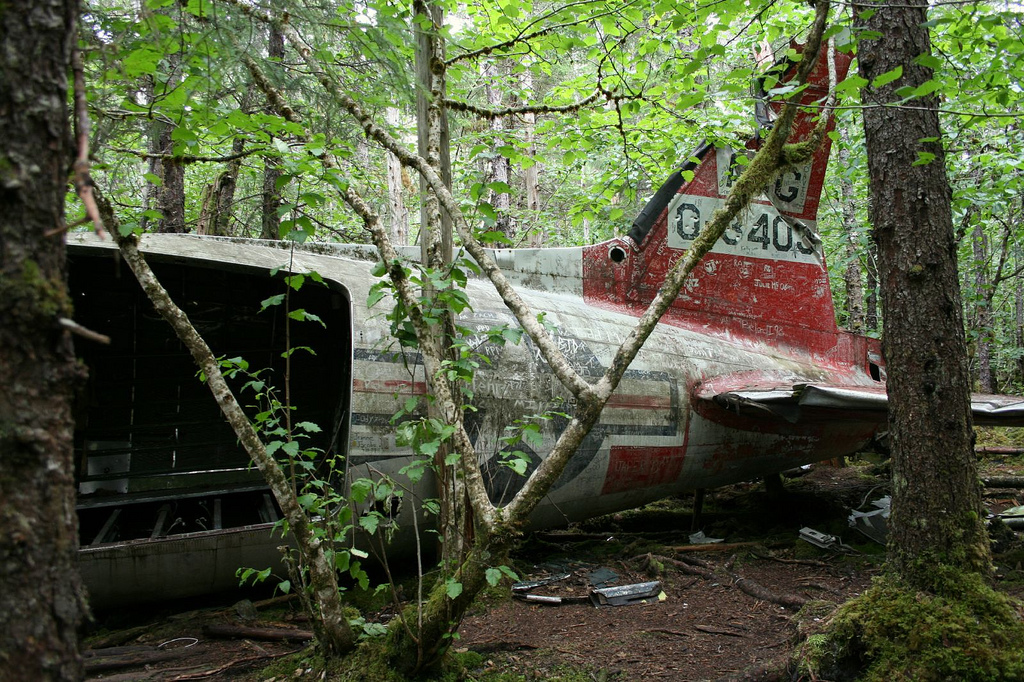
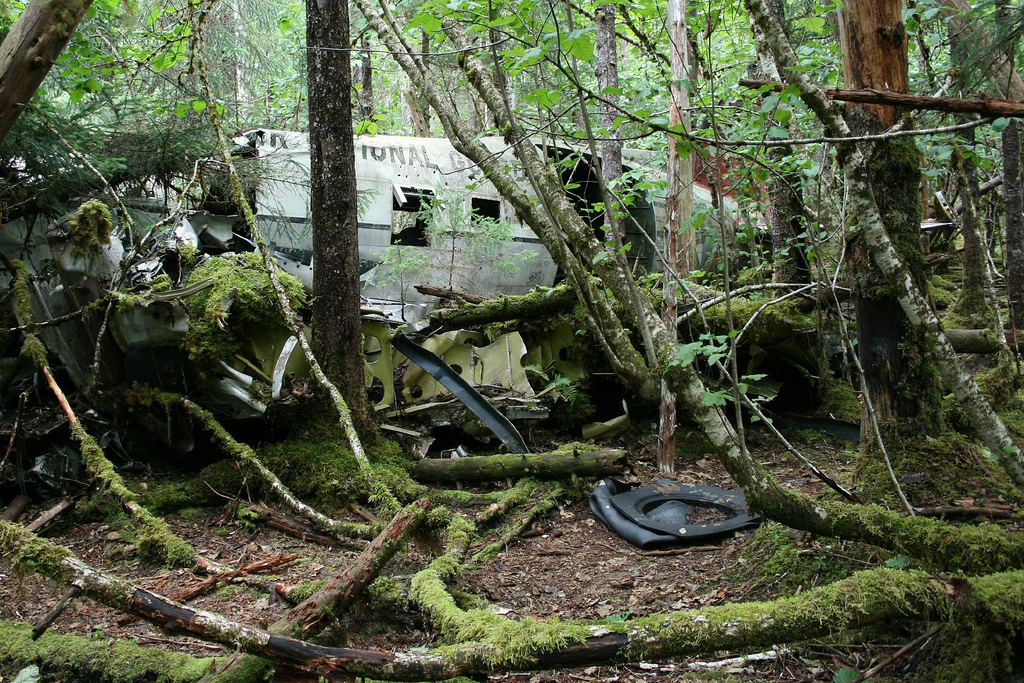
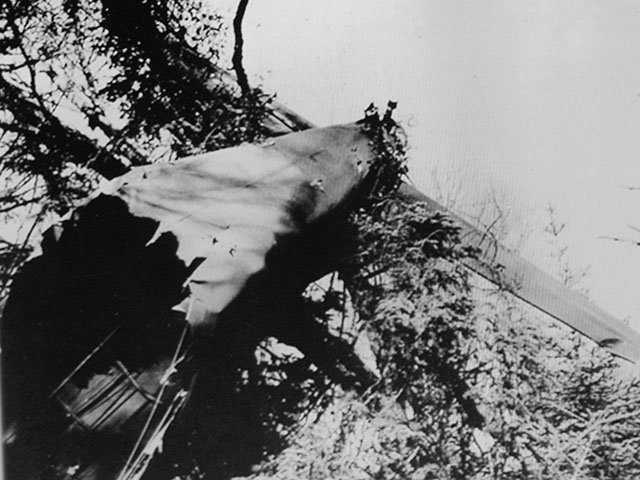
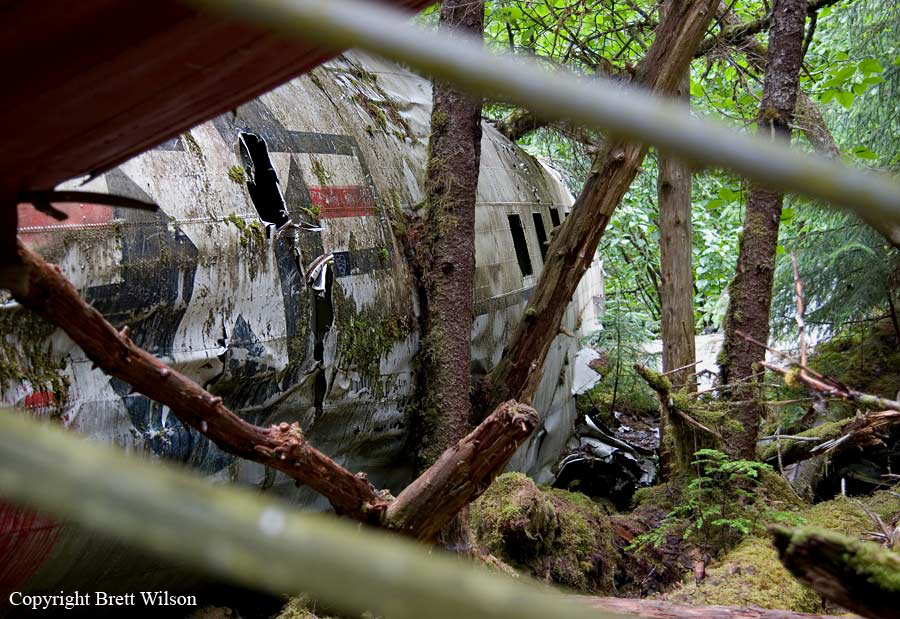
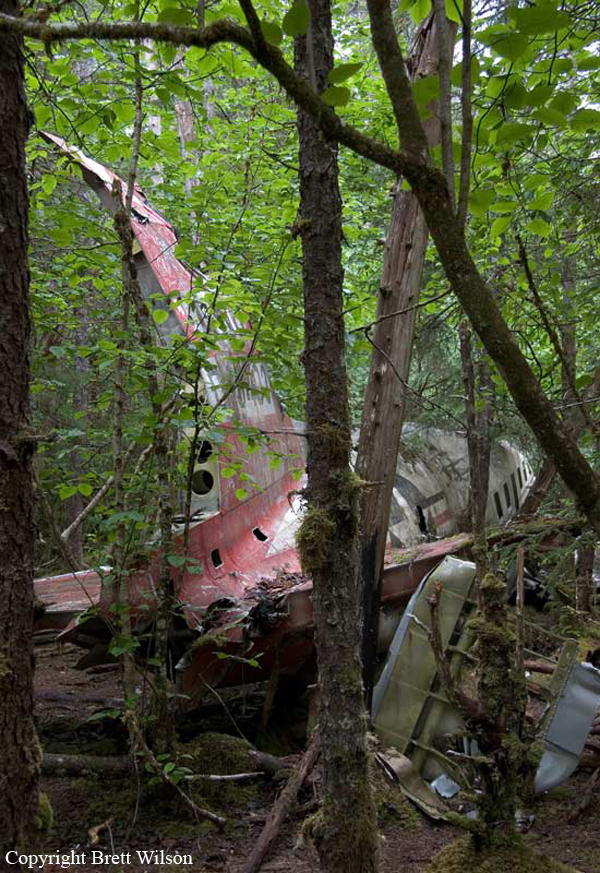
The morning of the crash, the crew departed from McChord Air Force Base near Tacoma, Washington, where they had picked up “hitchhiker” Corporal Timmons and then flew northward. Radio difficulties developed necessitating a return to McChord. Soon remedied, they departed once more for their first fuel stop, Annette Island, near Ketchikan, Alaska, enroute to their final destination, Anchorage, Alaska. High winds and severe turbulence prevented them from landing at Annette Island. The crew was given a choice – either return to a Canadian airport behind them or proceed north to Gustavus where runway lights and equipment for instrument landings offered better facilities for night landings than even Juneau in those days. The weather in Gustavus was reported as “clear and no winds” to “very slight winds”. The crew elected to go to Gustavus. Although the California pilot was well-trained in multi-engine instrument approaches, he was relatively new to Alaskan conditions. As the plane approached Gustavus, it was dark and beginning to snow. The passengers on the plane realized they had arrived in the Gustavus area, momentarily spotting lights through the dark and snow as they anxiously looked out the windows. The fuel supply was very low, so there were no options of returning to Annette or proceeding to Anchorage. The captain was leery of making the standard instrument approach to Gustavus because it would have required him to fly well beyond the airfield, far out over Glacier Bay with an aircraft that was running precariously low on fuel. On the next attempt – now the third time over the airport area in what the locals described as a snow squall, Mr. Aase reported that, “The pilot was in line for the runway, but got a bit low and the right wing caught a tall tree that made the aircraft start to spin and (it) nosed into the ground. “The front of the plane was badly damaged. At the same time the plane was twisting, the tail slowly lowered into the trees which cushioned it. It set down gently into the trees so that the fuselage from the wall aft was just about in perfect condition. So apparently, while attempting to keep the airfield in sight, he elected to circle and make a “short” visual approach to the runway. All four crew members were killed and the seven passengers were injured.
Crew:
Cpt Robert E. Kafader,
1st Lt Dennis V. Stamey,
S/Sgt Floyd S. Porter,
S/Sgt David A. Dial.
Passengers:
Lloyd Timmons,
2nd Lt Harry S. Aase,
Cpt Robert D. Ellis,
W/O Richard J. Mueller,
M/Sgt James E. O’Rourke,
1st Lt Wallace J. Harrison,
2nd Lt William W. Caldwell.
Source and text by Rita Wilson via
http://www.gustavushistory.org/articles/view.aspx?id=10000
Crash of a Boeing TB-29 Super Fortress near Talkeetna: 6 killed

Date & Time: Nov 15, 1957 at 1822 LT
Type of aircraft:
Operator:
Registration:
44-70039
Flight Phase:
Flight Type:
Survivors:
Yes
Site:
Schedule:
Elmendorf AFB - Elmendorf AFB
MSN:
10871
YOM:
1944
Crew on board:
10
Crew fatalities:
Pax on board:
0
Pax fatalities:
Other fatalities:
Total fatalities:
6
Circumstances:
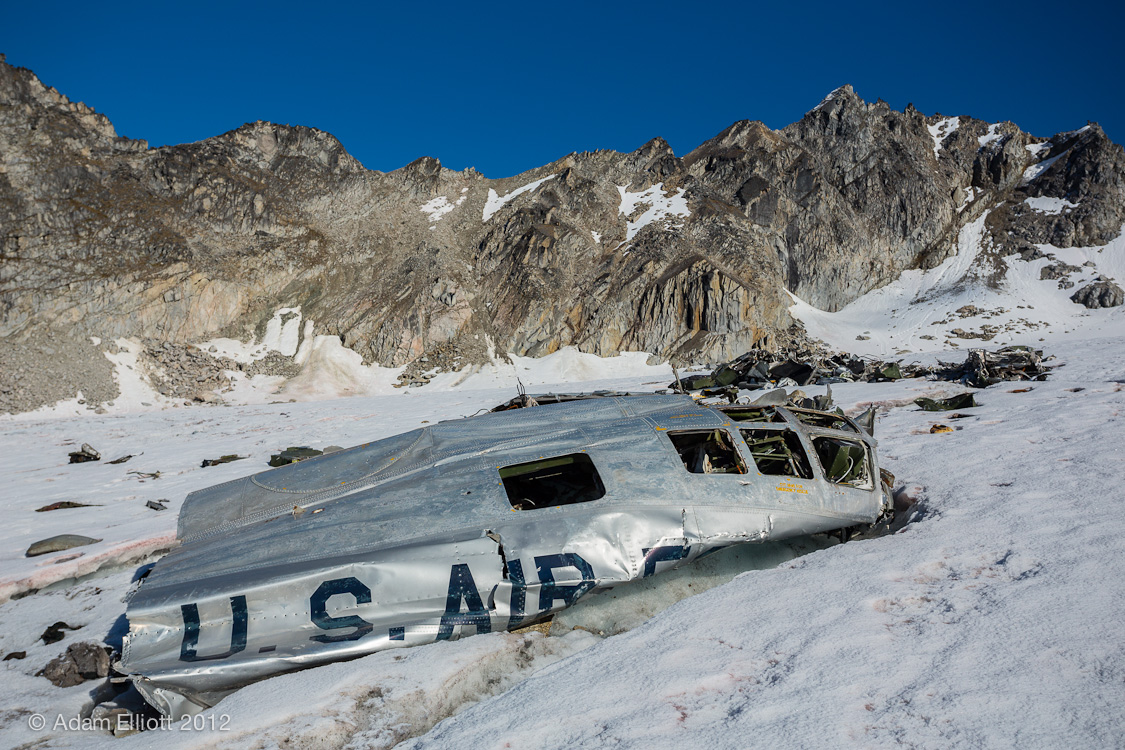
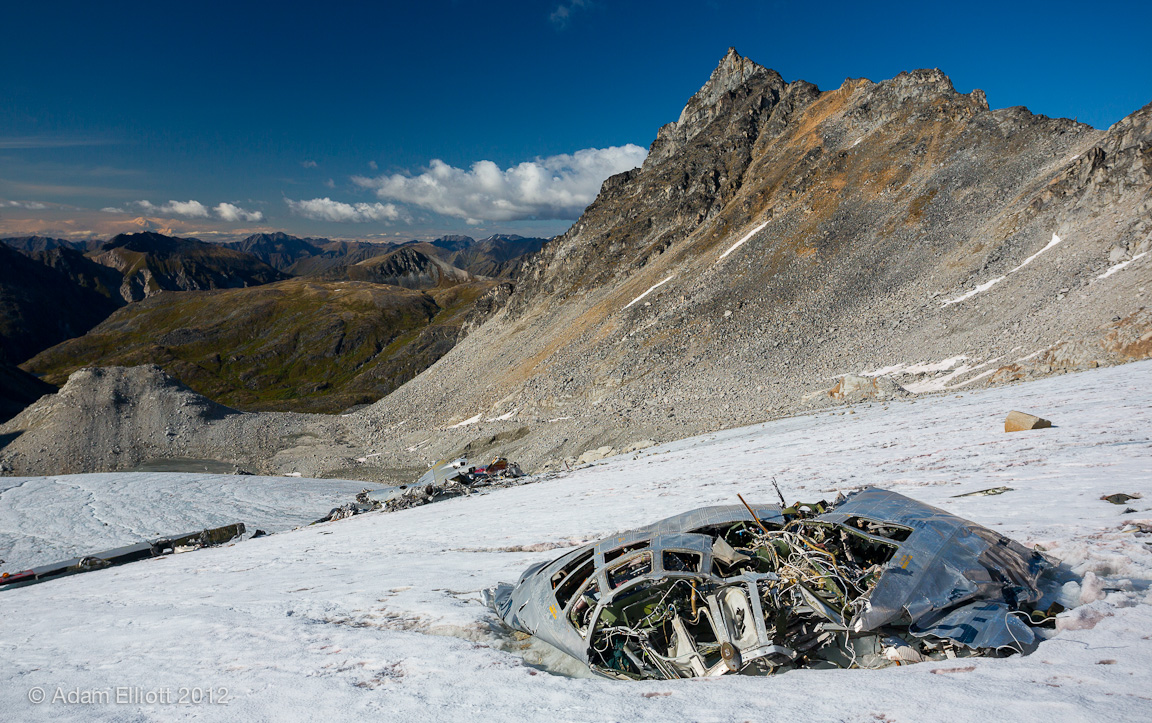
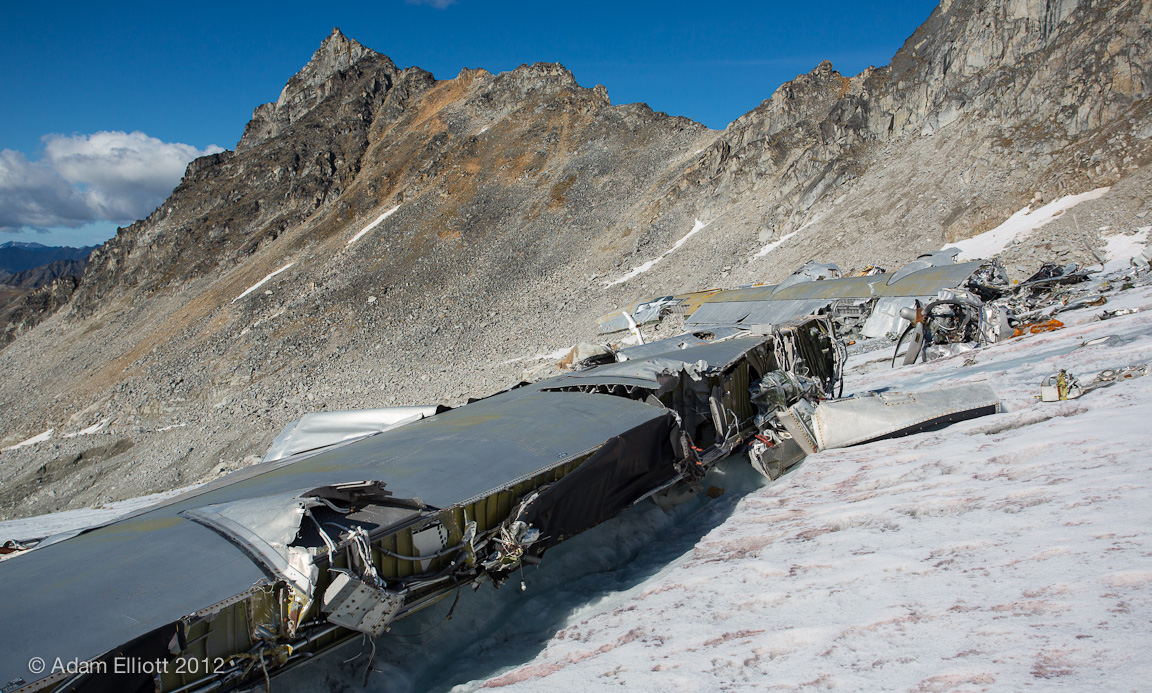
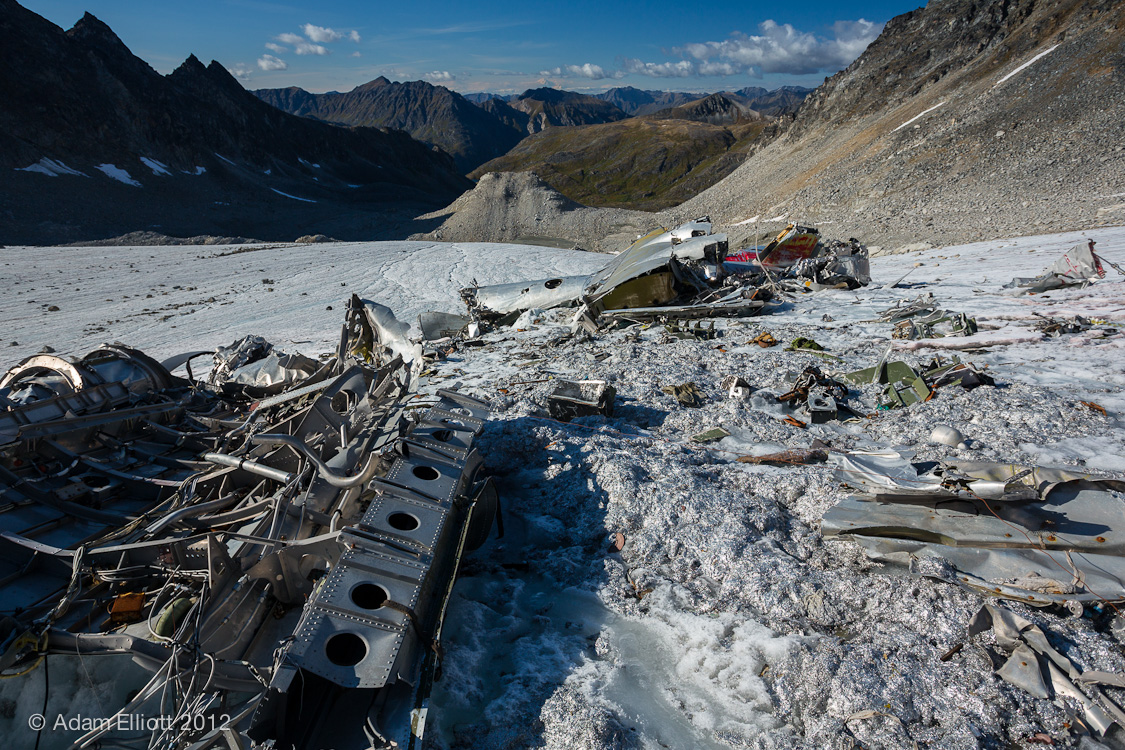
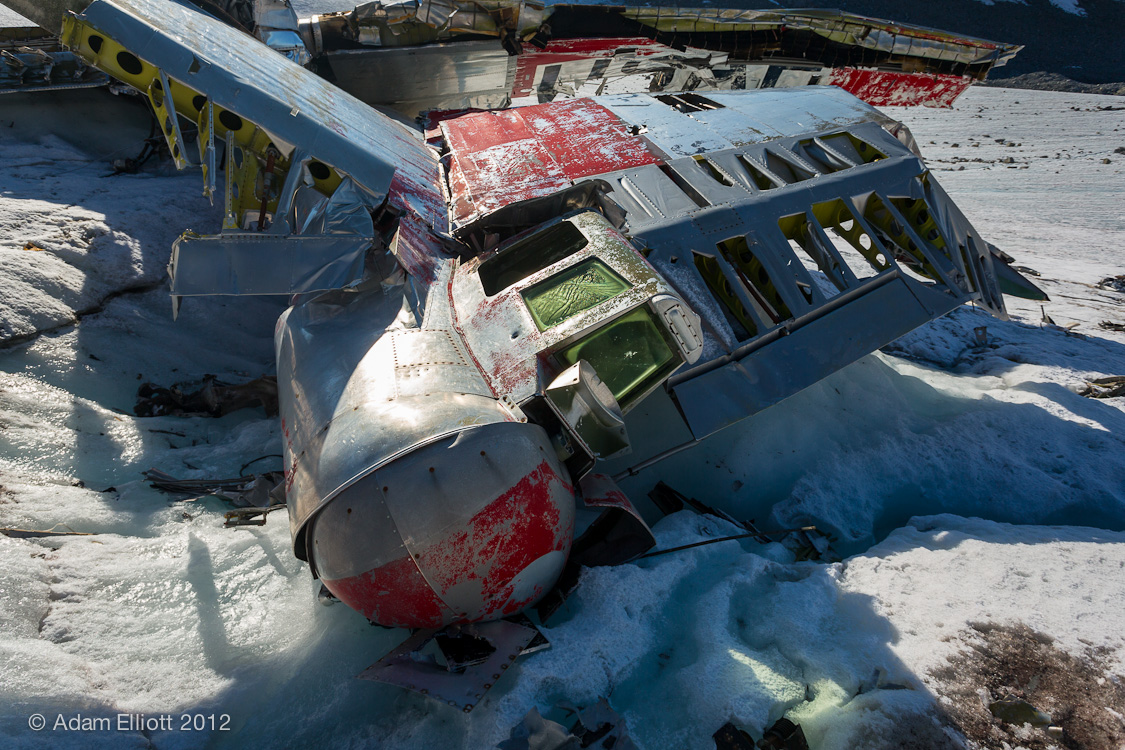
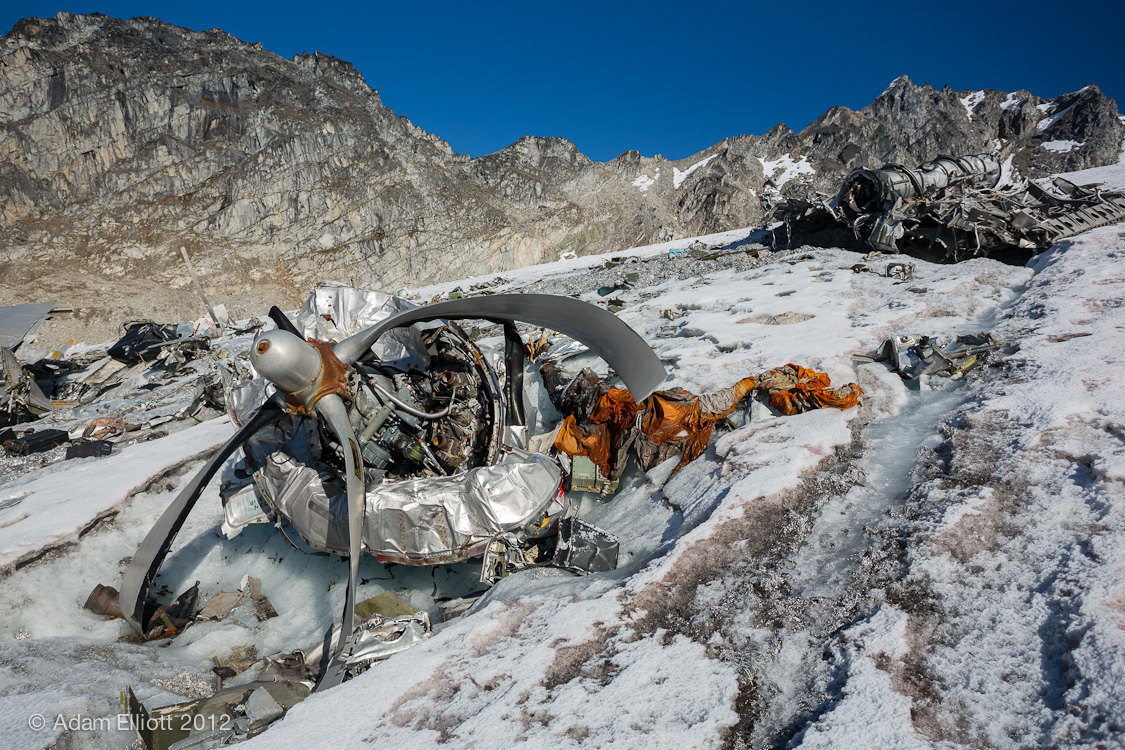
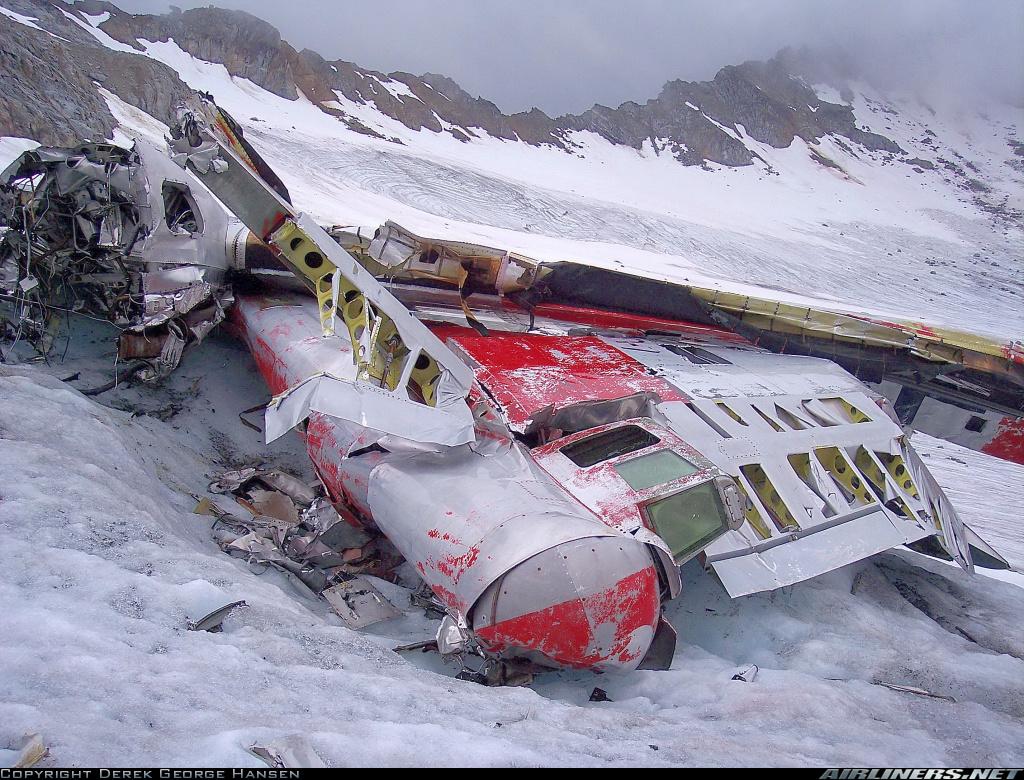
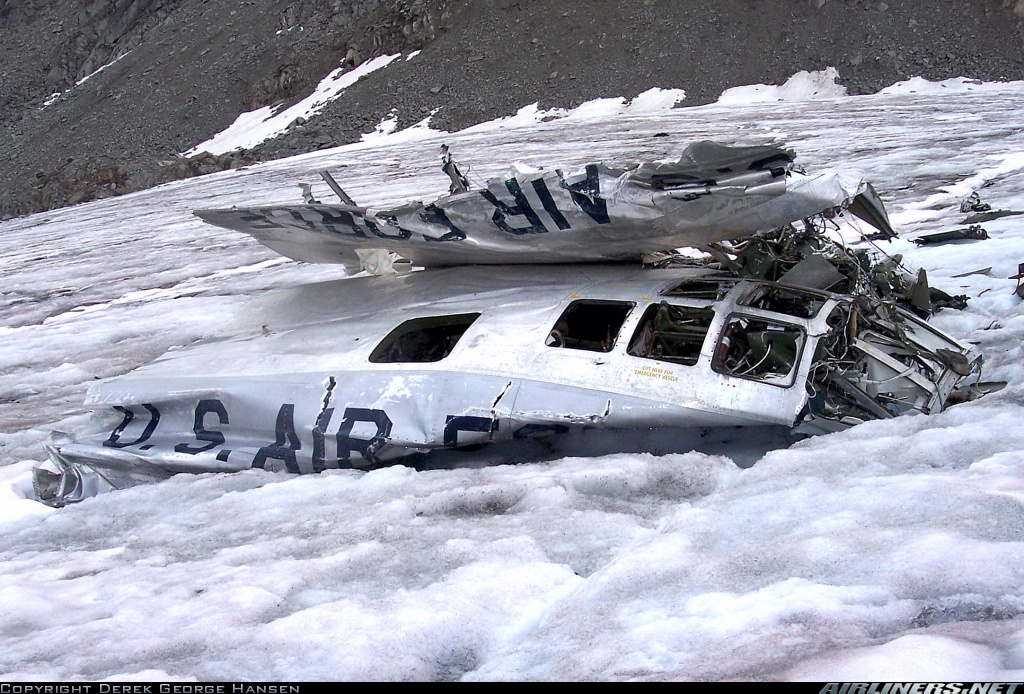
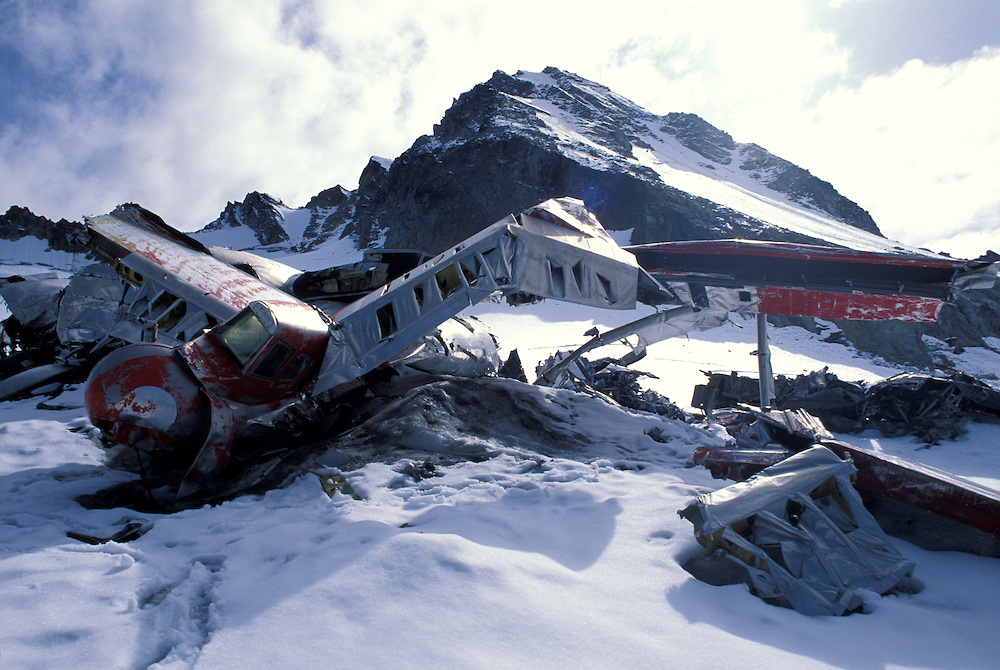
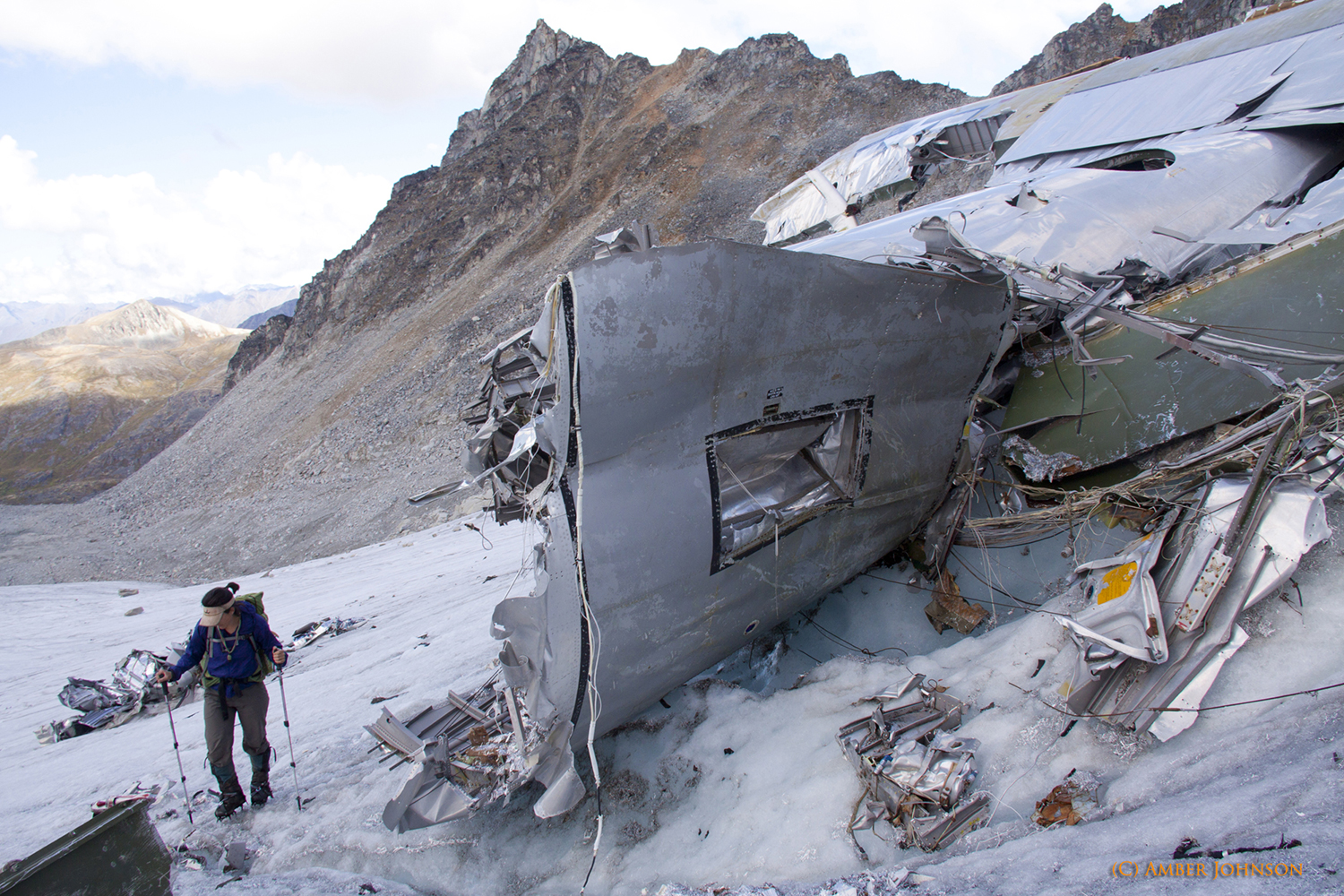
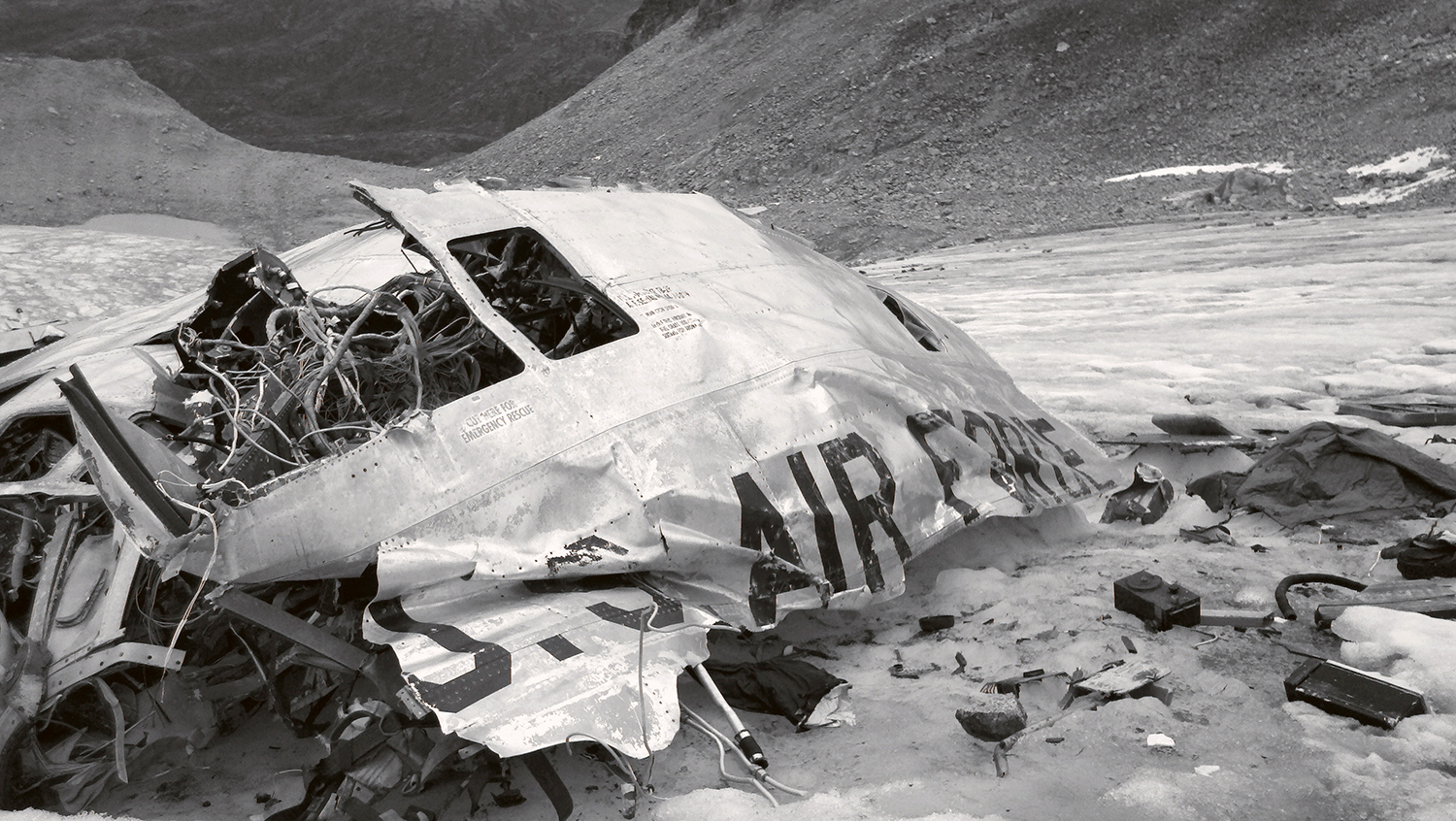
The aircraft, a trainer conversion of a B-29 four engine bomber, and its crew were with the 5040th Radar Evaluation Squadron based at Elmendorf Air Force Base near Anchorage. On this day, they were on a routine radar-calibration training mission that was to last about 10 hours. Flying south down the Susitna Valley in bad weather, however, they strayed 27 miles off course into the Talkeetna Mountains. At 1822LT, the aircraft crashed into an unnamed glacier at an altitude of 5,600 feet and some 39 miles southeast of Talkeetna, just northeast of the Hatcher Pass. Six crew were killed while four others were injured.
Crew:
Major Robert A. Butler, †
Captain Richard O. Seaman, †
Captain Erwin Stolfich, †
Captain Edward A. Valiant, †
1st Lieutenant William J. Schreffler, †
Airman Basic James R. Roberson, †
Staff Sergeant Calvin K. Campbell,
Staff Sergeant Robert J. McMurray,
Technical Sergeant Manuel Garza,
1st Lieutenant Claire W. Johnson.
Thanks to Adam Elliott for his wonderful website and history: http://adamspictureblog.blogspot.ch/2013/02/bomber-glacier.html
Probable cause:
At the time of the accident, the aircraft was about 27 miles east of its planned course into Elmendorf. A report indicated that the aircraft had strayed off course due to a combination of factors including deteriorating weather and pilot error.

Crash of a Martin 404 in Massena

Date & Time: Nov 14, 1957 at 1530 LT
Type of aircraft:
Operator:
Registration:
N492A
Survivors:
Yes
Schedule:
New York – Albany – Plattsburgh – Malone – Massena
MSN:
14240
YOM:
1952
Flight number:
EA0183
Crew on board:
3
Crew fatalities:
Pax on board:
2
Pax fatalities:
Other fatalities:
Total fatalities:
0
Captain / Total flying hours:
11870
Captain / Total hours on type:
535.00
Copilot / Total flying hours:
738
Copilot / Total hours on type:
155
Aircraft flight hours:
15617
Circumstances:
Eastern Air Lines Flight 18 is a scheduled operation serving the carrier's route between New York City and Massena, New York, and its intermediate stops at Albany, Plattsburg, and Malone, New York. On November 14, at 1245, the flight originated on schedule, its flight crew consisting of Captain Joseph W. Harpham, First Officer Robert Casper and Flight Attendant Nancy A. Price. The flight followed routine preparation and was in accordance with an IFR (Instrument Flight Rules) flight plan. The general weather conditions over most of the route were forecast to be good. The flight proceeded through the intermediate stops in a routine manner, with most passengers deplaning at Albany and Flattsburg. Just prior to reaching Malone the instrument flight plan was canceled in good weather conditions. The flight landed at Malone at 1502. Continuing uneventfully, Flight 18 departed Malone at 1510. The gross takeoff weight of the Martin 404 was 35,977 pounds, 8,923 pounds under the maximum allowable. According to the load manifest the load was properly distributed within the center of gravity limitations. The first officer made the takeoff, climbed the aircraft approximately 2,500 feet, and flew it to Massena. Captain Harpham from his left seat, supervised the flight and performed the duties of copilot. At 1516, when about eight miles east of Richards Field, Captain Harpham reported the flight's position, then asked for and received landing information, which included the surface wind as “northeast 5 to 10 knots," and the active runway 4 (150 feet wide and 4,000 feet long). First Officer Casper established a downwind leg at 1,200 feet to execute a rectangular left-hand pattern for landing on runway 4. The flight was viewed briefly by ground observers during the pattern before reaching the final landing approach and it seemed entirely normal. As the aircraft drew closer to the threshold it seemed high and thereafter assumed an abnormally steep descent. As it approached the runway surface the aircraft assumed a flareout attitude, however, the rate of descent continued with little visible abatement. Consequently, N492A contacted the runway surface with great force at which time the right powerplant separated from the aircraft. The aircraft rebounded and again contacted with great force. It then rolled forward and gradually off the runway to the right. Before stopping it crossed a taxiway and the left powerplant fell free, accompanied by a small fire in the engine and the empty nacelle area. As the aircraft stopped Captain Harpham shut off the fuel and electrical services and ordered the loading ramp lowered. The passengers and crew quickly evacuated by this exit without difficulty or reported injury. At 1522, two minutes after the accident, weather conditions were reported as: Ceiling 4,000 feet broken, 10,000 feet, overcast; visibility 3 miles; haze; wind northeast 6 knots.
Probable cause:
The Board determines that the probable cause of this accident was the captain's incorrect technique during the final approach which resulted in an abnormally steep nose-down attitude and high rate of descent, the latter not being sufficiently arrested before touchdown. The following findings were reported:
- The first officer operated the aircraft in the traffic pattern,
- During the turn to the base leg and while on base leg, an overriding was allowed to drift the aircraft closer to the airport,
- From a higher and closer than normal position on final approach, the captain took control of the aircraft and continued the approach,
- The throttles were closed, landing flap was extended, and the aircraft was slowed to 95 knots,
- The aircraft descended in an abnormally steep nose-down attitude and at a high rate of descent,
- The altitude remaining was insufficient for the aircraft in its existing configuration to regain adequate flareout speed,
- The flareout attitude was accomplished; however, the rate of descent continued with little abatement,
- The aircraft contacted the runway with great force causing major structural damage,
- Important limits in the approach technique were not included as part of company pilot training,
- There was no malfunction or failure of the aircraft prior to the runway contact.
Final Report:

Crash of a Boeing B-52B-30-BO Stratofortress at Castle AFB

Date & Time: Nov 6, 1957
Type of aircraft:
Operator:
Registration:
53-0382
Flight Type:
Survivors:
Yes
Schedule:
Castle - Castle
MSN:
16861
YOM:
1953
Crew on board:
0
Crew fatalities:
Pax on board:
0
Pax fatalities:
Other fatalities:
Total fatalities:
0
Circumstances:
The crew was completing a local training sortie at Castle AFB, consisting of touch and go manoeuvre. After touchdown, the undercarriage failed and the airplane slid on the runway before coming to rest. There were no injuries but the aircraft was damaged beyond repair.
Probable cause:
Failure of the landing gear lever latch after landing, causing the aircraft to sink on runway.

Crash of a Boeing KC-97G-27-BO Stratotanker near Gray Mountain: 16 killed

Date & Time: Oct 29, 1957 at 0830 LT
Type of aircraft:
Operator:
Registration:
52-2711
Flight Phase:
Survivors:
No
Site:
Schedule:
Walker - Walker
MSN:
16733
YOM:
1952
Crew on board:
4
Crew fatalities:
Pax on board:
12
Pax fatalities:
Other fatalities:
Total fatalities:
16
Circumstances:
The crew left Walker AFB at 0630LT for a nine hours training mission consisting of a low level survey flight. After it overflew the small town of Gray Mountain at a height of about 60 feet in marginal weather conditions, the four engine aircraft hit the slope of a mountain and crashed about 35 miles of Flagstaff. The aircraft disintegrated on impact and all 16 occupants were killed. At the time of the accident, the visibility was limited due to low clouds.

Crash of a Lockheed P2V-7 Neptune off Kodiak: 9 killed

Date & Time: Oct 10, 1957
Type of aircraft:
Operator:
Registration:
135566
Survivors:
No
MSN:
726-7022
Location:
Crew on board:
9
Crew fatalities:
Pax on board:
0
Pax fatalities:
Other fatalities:
Total fatalities:
9
Circumstances:
On final approach to Kodiak Airport, the airplane crashed into the sea for unknown reason, killing all nine crew members. The airplane was returning to Kodiak following a maritime patrol flight.

Crash of a Lockheed 18-56-23 LodeStar near Uniontown: 6 killed

Date & Time: Oct 6, 1957 at 1655 LT
Type of aircraft:
Operator:
Registration:
N80G
Flight Phase:
Survivors:
No
Site:
Schedule:
Cleveland – Hot Springs – Johnstown
MSN:
2351
YOM:
1943
Crew on board:
2
Crew fatalities:
Pax on board:
4
Pax fatalities:
Other fatalities:
Total fatalities:
6
Captain / Total flying hours:
10000
Captain / Total hours on type:
3000.00
Copilot / Total flying hours:
3600
Copilot / Total hours on type:
200
Aircraft flight hours:
4608
Circumstances:
N80G departed Cleveland, Ohio, at approximately 1208LT for Ingalls Field Airport, Hot Springs, Virginia. The crew consisted of Captain Warren F. Noonan and Copilot Theodore O. Krauss. The purpose of the flight was to pick up passengers at Hot Springs, then fly to Johnstown, Pennsylvania, for an additional passenger, and return to Cleveland. The flight landed at Ingalls Field Airport sometime between 1300 and 1400 without incident. No records of aircraft arrival times are kept at this airport. N80G departed Hot Springs at approximately 1545LT with four passengers on board. The aircraft was observed to take off on the northeast runway and to climb to an altitude below the clouds. It was then observed to fly in a northwesterly direction for approximately four or five miles. About 1650, over an hour after takeoff and just before the aircraft struck the mountain, it was heard by a number of persons who lived within a radius of 10 miles of the accident scene; none saw it. The airplane hit trees and crashed in a wooded area, killing all six occupants.
Probable cause:
The Board determines that the probable cause of this accident was the action of the pilot in attempting VFR flight under instrument conditions over mountainous terrain. The following findings were reported:
- The crew was probably briefed by the U. S. Weather Bureau for the trip to Hot Springs and return, prior to departure from Cleveland,
- The VFR flight from Cleveland to Hot Springs was routine,
- The weather conditions north and east of Hot Springs at the time of the return required flight in accord with instrument flight rules; this was not done,
- No telephone or aircraft radio contacts wore made by the crew with any CAA communications station, either to file a flight plan or request weather information,
- The aircraft was heard but not seen flying a northeasterly heading in the overcast near the accident site,
- The aircraft was equipped for instrument flight.
Final Report:

Crash of a De Havilland L-20A Beaver near Brandon: 4 killed

Date & Time: Oct 2, 1957
Type of aircraft:
Operator:
Flight Phase:
Flight Type:
Survivors:
No
Site:
Schedule:
Governors Island – Burlington
Location:
Crew on board:
1
Crew fatalities:
Pax on board:
3
Pax fatalities:
Other fatalities:
Total fatalities:
4
Circumstances:
The single engine aircraft left Governors Island, New York, in the morning, bound for Burlington, Vermont. After passing over the Hudson River, the crew encountered poor weather conditions. Off course, the plane hit trees and crashed on the east side of the Bloodfoot mountain, about 7 miles east of Brandon. As the aircraft failed to arrive at Burlington, SAR operations were conducted but the wreckage was found ten days later only. The aircraft was destroyed and all four occupants have been killed. It was reported that one of the occupant survived the crash but died from his injuries three days later.
Crew:
Cpt Eual Cathey.
Passengers:
Col David M. Perkins,
Col Emery Hyde,
Lt Col Clinton Merrill.

Crash of a Douglas A-26 Invader in East Dayton: 4 killed

Date & Time: Sep 24, 1957 at 1659 LT
Type of aircraft:
Operator:
Flight Type:
Survivors:
No
Site:
Schedule:
Wright Patterson - Wright Patterson
Location:
Crew on board:
2
Crew fatalities:
Pax on board:
0
Pax fatalities:
Other fatalities:
Total fatalities:
4
Circumstances:
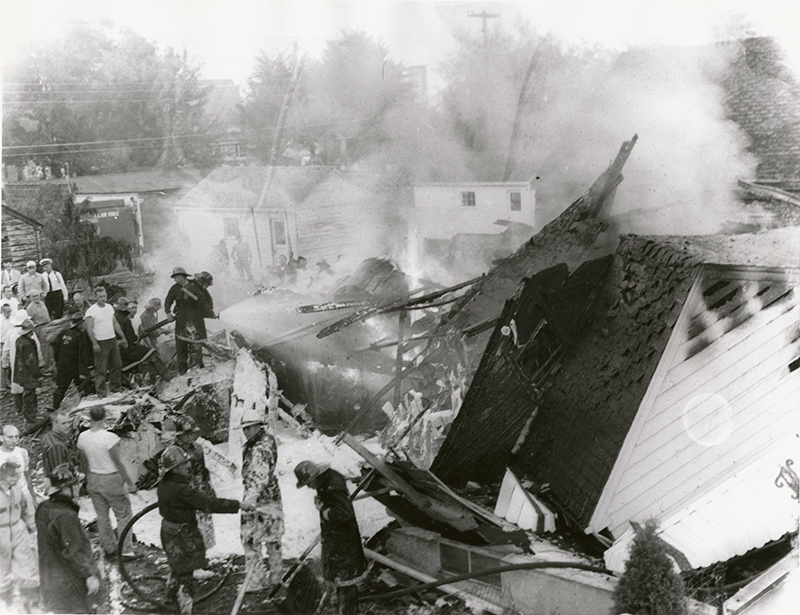
The crew was performing a local training flight and departed Wright-Patterson AFB in the day. On approach, the twin engine aircraft went out of control and crashed in flames into several houses located in 1843 Tuttle Avenue, East Dayton. At least four houses were destroyed. Both pilots as well as two people on the ground were killed.
Crew:
Maj James Melancon, pilot,
Cpt Wilho R. Heikkinen, copilot.
Both civilians killed were Mildred VanZant and Walter Geisler.
Probable cause:
An investigation determined that a loose engine cowling moved forward into the propeller.

Crash of a Lockheed P2V-7 Neptune at Alameda NAS

Date & Time: Sep 23, 1957
Type of aircraft:
Operator:
Registration:
135619
Flight Type:
MSN:
726-7051
Crew on board:
0
Crew fatalities:
Pax on board:
0
Pax fatalities:
Other fatalities:
Total fatalities:
0
Circumstances:
Crashed in unknown circumstances at or near Alameda NAS. Crew fate remains unknown.