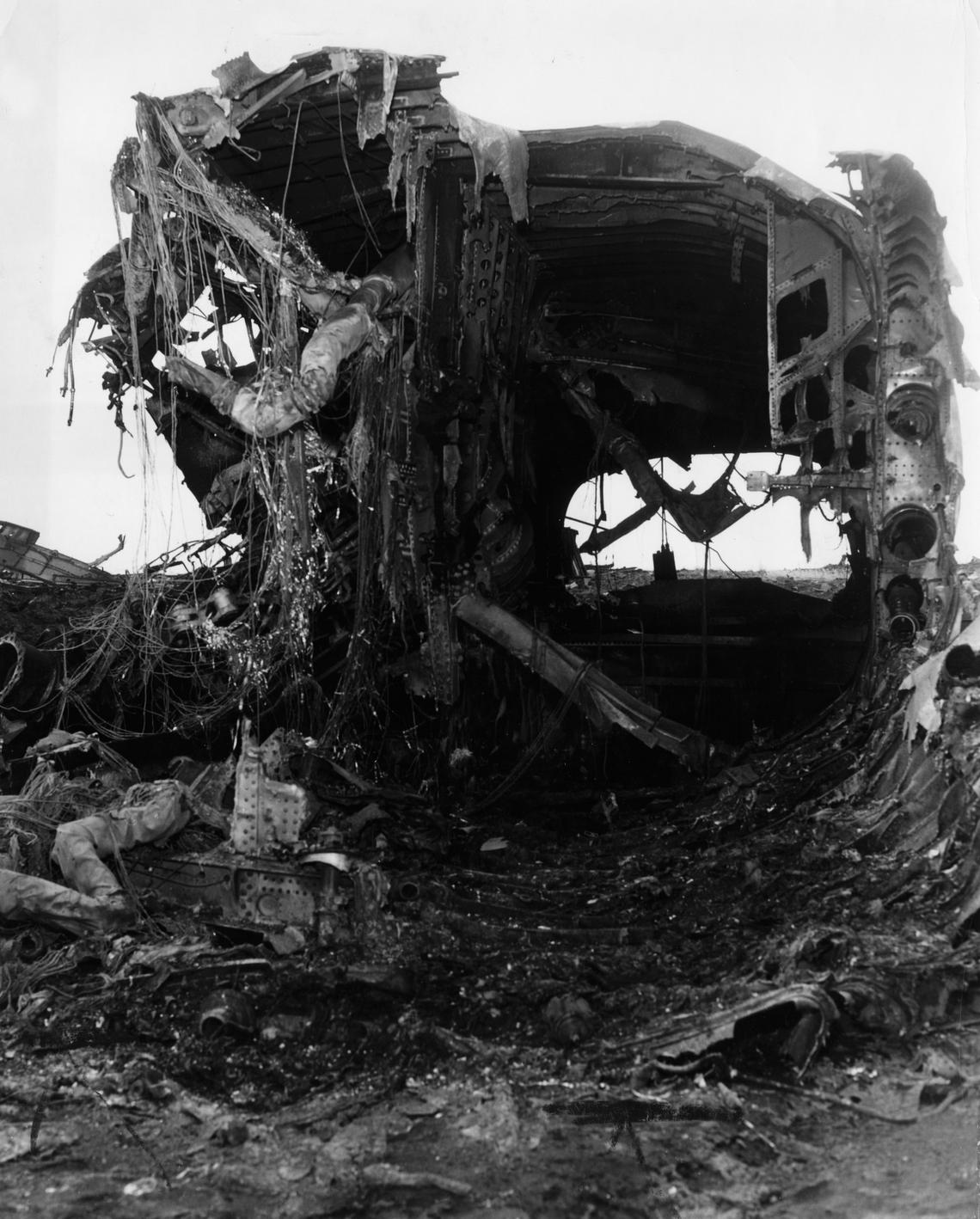
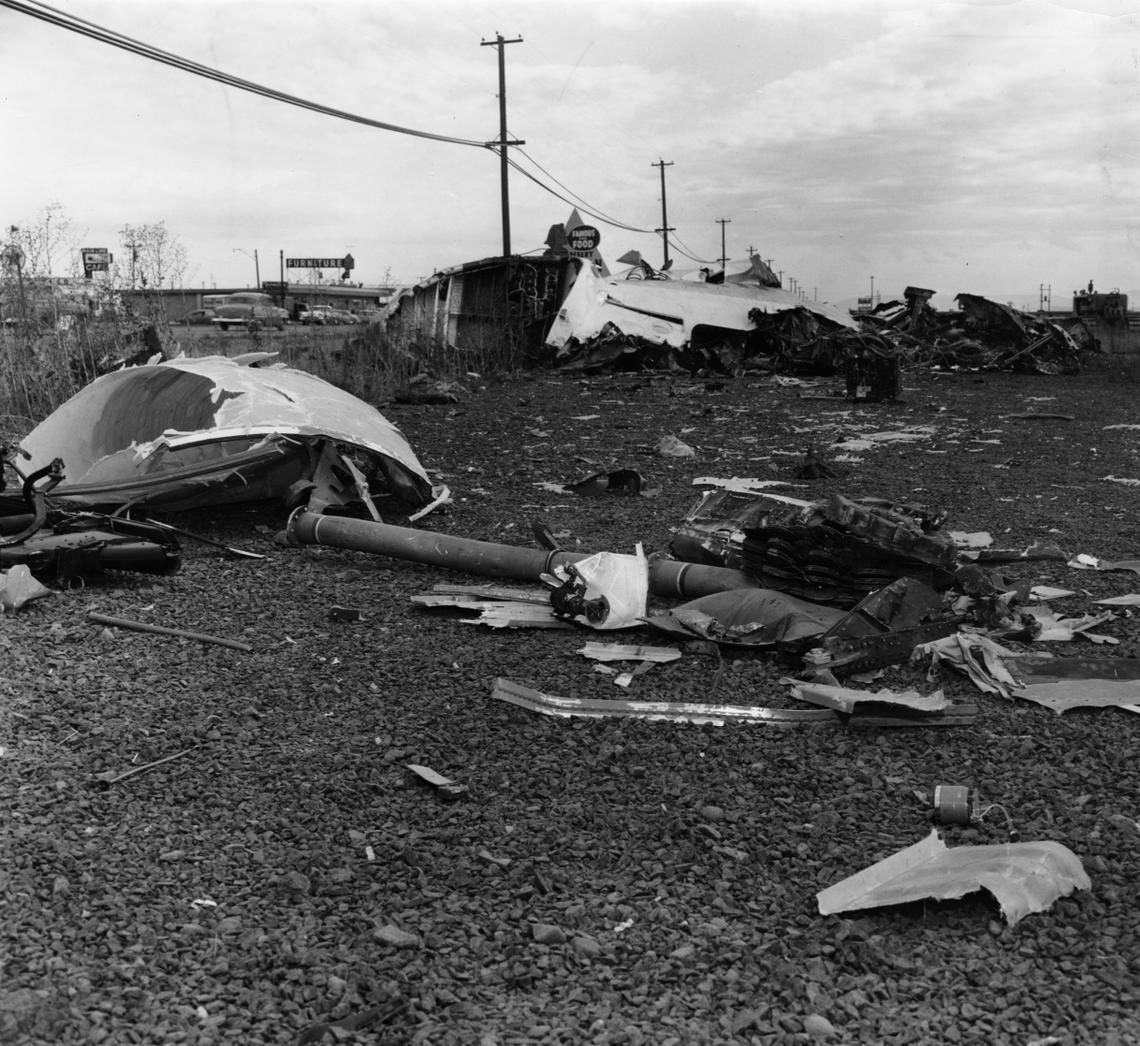
Crash of a Fairchild C-123B-12-FA Provider near Payette: 19 killed

Date & Time: Oct 9, 1958 at 1825 LT
Type of aircraft:
Operator:
Registration:
55-4521
Flight Phase:
Flight Type:
Survivors:
No
Schedule:
Ogden-Hill - McChord
MSN:
20182
YOM:
1954
Location:
Crew on board:
5
Crew fatalities:
Pax on board:
14
Pax fatalities:
Other fatalities:
Total fatalities:
19
Circumstances:
The crew was returning to his base in McChord after he took part to an airshow at Ogden-Hill AFB, supplying the Thunderbird's team. While flying in cruising altitude, the airplane went out of control, dove into the ground and crashed in a field located seven miles east of Payette. The airplane was totally destroyed upon impact and all 19 occupants were killed, among them two civilians.
Probable cause:
It is believed that the loss of control was the consequence of an in-flight collision with a flock of birds, maybe goose.

Crash of a Lockheed P2V-5F Neptune off Key West: 10 killed

Date & Time: Sep 29, 1958 at 1530 LT
Type of aircraft:
Operator:
Registration:
131461
Flight Phase:
Flight Type:
Survivors:
No
Schedule:
Key West - Key West
MSN:
426-5342
Crew on board:
10
Crew fatalities:
Pax on board:
0
Pax fatalities:
Other fatalities:
Total fatalities:
10
Circumstances:
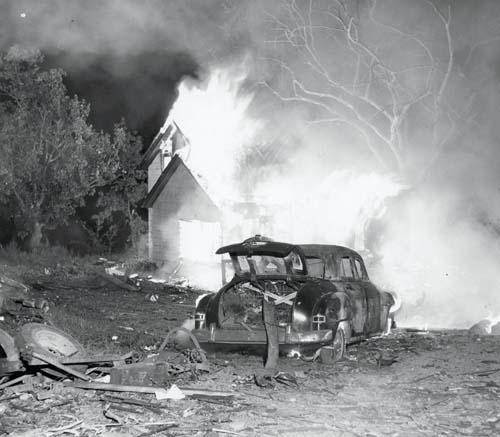
The crew was engaged in a training sortie out from Key West NAS when the patrol crashed in unknown circumstances into the gulf of Mexico about 22 miles north of Key West. All ten crew members were killed.

Crash of a De Havilland L-20A Beaver in Phoenix: 4 killed

Date & Time: Sep 19, 1958
Type of aircraft:
Operator:
Flight Phase:
Flight Type:
Survivors:
No
Crew on board:
1
Crew fatalities:
Pax on board:
3
Pax fatalities:
Other fatalities:
Total fatalities:
4
Circumstances:
Shortly after takeoff from Phoenix-Papago Park Airfield, the single engine aircraft hit power cables and crashed in flames, killing all four occupants.

Crash of a Douglas C-124A-DL Globemaster II at Tinker AFB: 1 killed

Date & Time: Sep 17, 1958
Operator:
Registration:
51-0165
Flight Type:
Survivors:
Yes
MSN:
43499
YOM:
1951
Crew on board:
8
Crew fatalities:
Pax on board:
0
Pax fatalities:
Other fatalities:
Total fatalities:
1
Circumstances:
The crew was involved in a liaison flight out from Donaldson AFB, Greenville, South Carolina. En route, a fuel leak forced the crew to divert to Tinker AFB for a safe landing. On final approach, the airplane went out of control and crashed few miles short of runway threshold. A crew member was killed while seven others were seriously injured.

Crash of a Boeing B-52D-20-BW Stratofortress in Inver Grove Heights: 7 killed

Date & Time: Sep 16, 1958 at 2016 LT
Type of aircraft:
Operator:
Registration:
55-0065
Flight Phase:
Flight Type:
Survivors:
Yes
Schedule:
Loring - Loring
MSN:
464017
YOM:
1955
Crew on board:
8
Crew fatalities:
Pax on board:
0
Pax fatalities:
Other fatalities:
Total fatalities:
7
Circumstances:
The crew was engaged in a routine cold war training mission out from Loring AFB, Maine. While cruising by night at an altitude of 36,400 feet over Minnesota State, the tail broke off and the airplane went into a dive. In 108 seconds, the heavy bomber descended at high speed to the altitude of 8,000 feet before crashing in a huge explosion in Inver Grove Heights, about 7,5 miles south of Saint Paul. The aircraft was totally destroyed but one crew member survived while seven others were killed.
Crew:
Cpt G. Horstman, pilot, †
Cpt Richard J. Cantwell, navigator, †
Maj S. O. Gillespie Jr., radar observer, †
1st Lt F. Huskey, flight engineer, †
T/Sgt Leon R. Lew, tail gunner, †
Cpt James D. Taylor, instructor, †
Cpt Bernard D. Lanois, instructor, †
Cpt Jack Douglas Craft.
Probable cause:
It is believed that control cables failed in flight, causing the aircraft to adopt an unusual attitude that caused the tail to be sheared off. The exact cause of this technical remains however unclear.

Crash of a Douglas SC-47 at Elmendorf AFB: 13 killed

Date & Time: Sep 9, 1958
Operator:
Registration:
43-15345
Flight Phase:
Flight Type:
Survivors:
Yes
Schedule:
Elmendorf – Eielson
MSN:
19811
YOM:
1944
Crew on board:
2
Crew fatalities:
Pax on board:
18
Pax fatalities:
Other fatalities:
Total fatalities:
13
Circumstances:
Shortly after takeoff from Elmendorf AFB, while in initial climb, the airplane stalled and crashed in flames. Seven passengers were rescued while 13 other occupants were killed. It is believed the accident was the consequence of an engine failure shortly after rotation.

Crash of a Boeing B-52D-40-BW Stratofortress in Fairchild AFB: 5 killed

Date & Time: Sep 8, 1958 at 1920 LT
Type of aircraft:
Operator:
Registration:
56-0681
Flight Type:
Survivors:
Yes
Schedule:
Fairchild - Fairchild
MSN:
464052
YOM:
1956
Crew on board:
7
Crew fatalities:
Pax on board:
0
Pax fatalities:
Other fatalities:
Total fatalities:
5
Circumstances:
The crew was engaged in a local training flight at Spokane AFB, consisting of visual and instruments approaches and landings. While approaching runway 23, at a distance of about three miles from the threshold, the crew cancelled his instruments approach to continue on visual mode. In the mean time, the second B-52 registered 56-0661 which was on second position must switch from visual mode to instruments approach procedures. To follow the approach procedures and as both crews were not coordinated, the approach controller instructed the first crew to gain altitude while turning to the right and instructed the second crew to reduce his altitude while turning to the left. Few seconds later, at an altitude of 900 feet, both aircraft collided and crashed. On board 56-0681, five crew members were killed while two others were seriously injured. On board 56-0661, only one crew survived, all eight others have been killed.
Probable cause:
The collision was the result of the approach procedures not being followed by the crew. The two bombers were practicing landing and takeoff maneuvers that included using instrument rules for parts of their flights and visual rules for other parts. The B-52 closer to the runway had just switched off its instrument maneuvers the B-52 farther away had not yet switched on its instruments. The control tower didn’t pick up the more distant B-52 until it was about three miles from the runway, when the closer bomber was on its final approach. The tower ordered the first plane to go up and to the right – a standard breakaway maneuver – while the closer one should have followed procedures to go down and to the left, to land. Instead, both planes pulled up and to the right, and into each other. Investigations were unable to determine the reason why the crew failed to follow the standard procedures and ATC instructions.

Crash of a Boeing B-52D-30-BW Stratofortress in Fairchild AFB: 8 killed

Date & Time: Sep 8, 1958 at 1920 LT
Type of aircraft:
Operator:
Registration:
56-0661
Flight Type:
Survivors:
Yes
Schedule:
Fairchild - Fairchild
MSN:
464033
YOM:
1956
Crew on board:
9
Crew fatalities:
Pax on board:
0
Pax fatalities:
Other fatalities:
Total fatalities:
8
Circumstances:
The crew was engaged in a local training flight at Spokane AFB, consisting of visual and instruments approaches and landings. While approaching runway 23, at a distance of about three miles from the threshold, the crew switched from visual mode to instruments. In the mean time, another B-52 registered 56-0681 which was on first position must switch from instruments to visual mode. To follow the approach procedures and as both crews were not coordinated, the approach controller instructed the first crew to gain altitude while turning to the right and instructed the second crew to reduce his altitude while turning to the left. Few seconds later, at an altitude of 900 feet, both aircraft collided and crashed. On board 56-0681, five crew members were killed while two others were seriously injured. On board 56-0661, only one crew survived, all eight others have been killed.
Probable cause:
The collision was the result of the approach procedures not being followed by the crew. The two bombers were practicing landing and takeoff maneuvers that included using instrument rules for parts of their flights and visual rules for other parts. The B-52 closer to the runway had just switched off its instrument maneuvers the B-52 farther away had not yet switched on its instruments. The control tower didn’t pick up the more distant B-52 until it was about three miles from the runway, when the closer bomber was on its final approach. The tower ordered the first plane to go up and to the right – a standard breakaway maneuver – while the closer one should have followed procedures to go down and to the left, to land. Instead, both planes pulled up and to the right, and into each other. Investigations were unable to determine the reason why the crew failed to follow the standard procedures and ATC instructions.

Crash of a Consolidated PBY-5A Catalina in Pozo: 2 killed

Date & Time: Sep 8, 1958
Type of aircraft:
Operator:
Flight Phase:
Flight Type:
Survivors:
No
Location:
Crew on board:
2
Crew fatalities:
Pax on board:
0
Pax fatalities:
Other fatalities:
Total fatalities:
2
Circumstances:
The crew was engaged in a fire fighting mission in the region of Pozo (16 miles east of San Luis Obispo) when the tanker crashed in unknown circumstances. Both pilots were killed.
Crew:
Arnel James Talbot Jr.,
Stuart Ashburn Kilgour.

Crash of a Douglas DC-6B in Minneapolis

Date & Time: Aug 28, 1958 at 0329 LT
Type of aircraft:
Operator:
Registration:
N575
Flight Phase:
Survivors:
Yes
Schedule:
Washington DC – Pittsburgh – Cleveland – Detroit – Milwaukee – Minneapolis – Portland – Seattle
MSN:
45200
YOM:
1957
Flight number:
NW537
Crew on board:
4
Crew fatalities:
Pax on board:
58
Pax fatalities:
Other fatalities:
Total fatalities:
0
Captain / Total flying hours:
12376
Captain / Total hours on type:
572.00
Copilot / Total flying hours:
9089
Copilot / Total hours on type:
148
Aircraft flight hours:
4471
Circumstances:
At approximately 0329LT, the airplane crashed on takeoff from Wold-Chamberlain Field, Minneapolis, Minnesota. A number of the 62 persons (including 2 infants) aboard suffered serious injuries but there were no fatalities. Fire, which broke out a short time after all occupants were evacuated, consumed the aircraft. The aircraft took off normally and climbed to a height of about 100 feet. It then gradually nosed over and entered a descent which continued until it struck the ground. Sky conditions were clear; however, the prevailing visibility was about three miles in fog, and in localized areas around the airport it was reduced to lens than a mile by patches of denser fog. Takeoff was made on runway 22 and the climbout was a from a lighted, built-up section toward an open, unlighted area. The Board believes that the pilot while trying to remain contact in reduced visibility allowed the nose of the aircraft to drop when flaps were retracted because of inattention to flight instruments. The darkness and reduced visibility during climbout contributed to a sensory illusion which completely obscured the fact of descent from the pilot.
Probable cause:
The Board determines that the probable cause of this accident was the pilot's inattention to flight instruments during takeoff in conditions of reduced visibility.
Final Report: