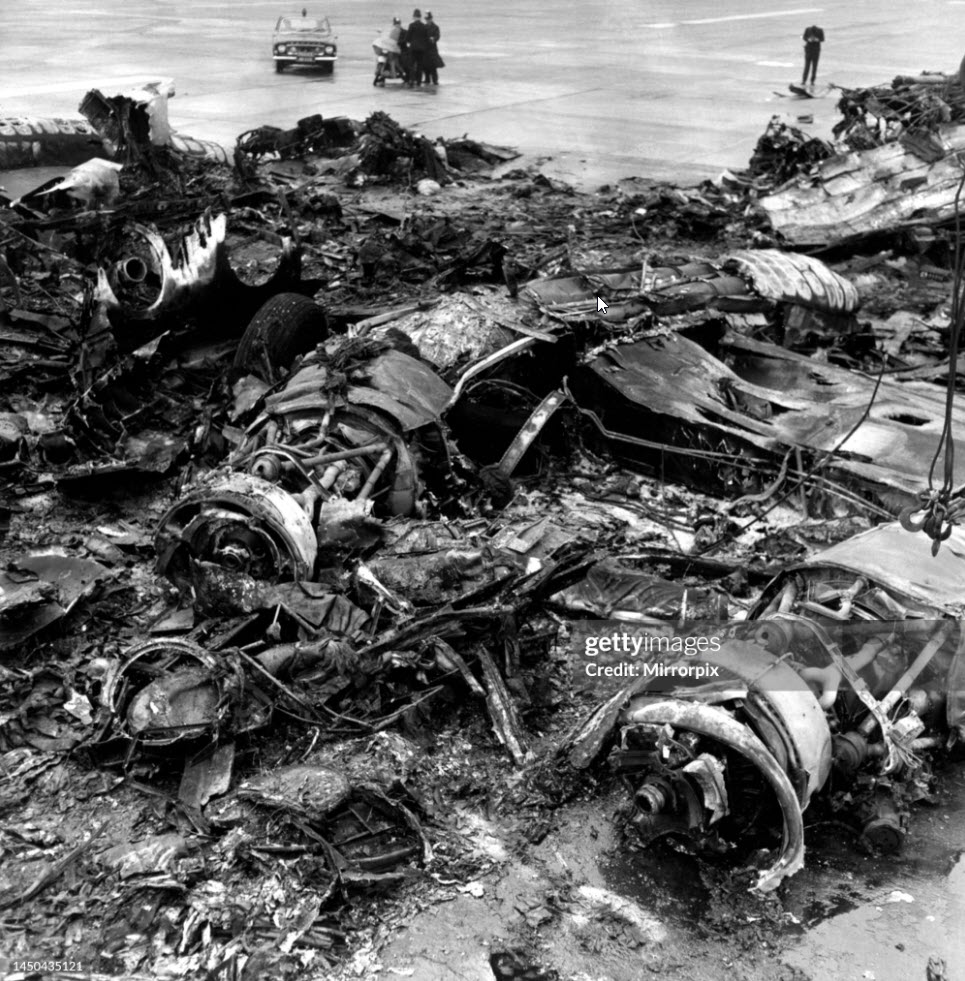
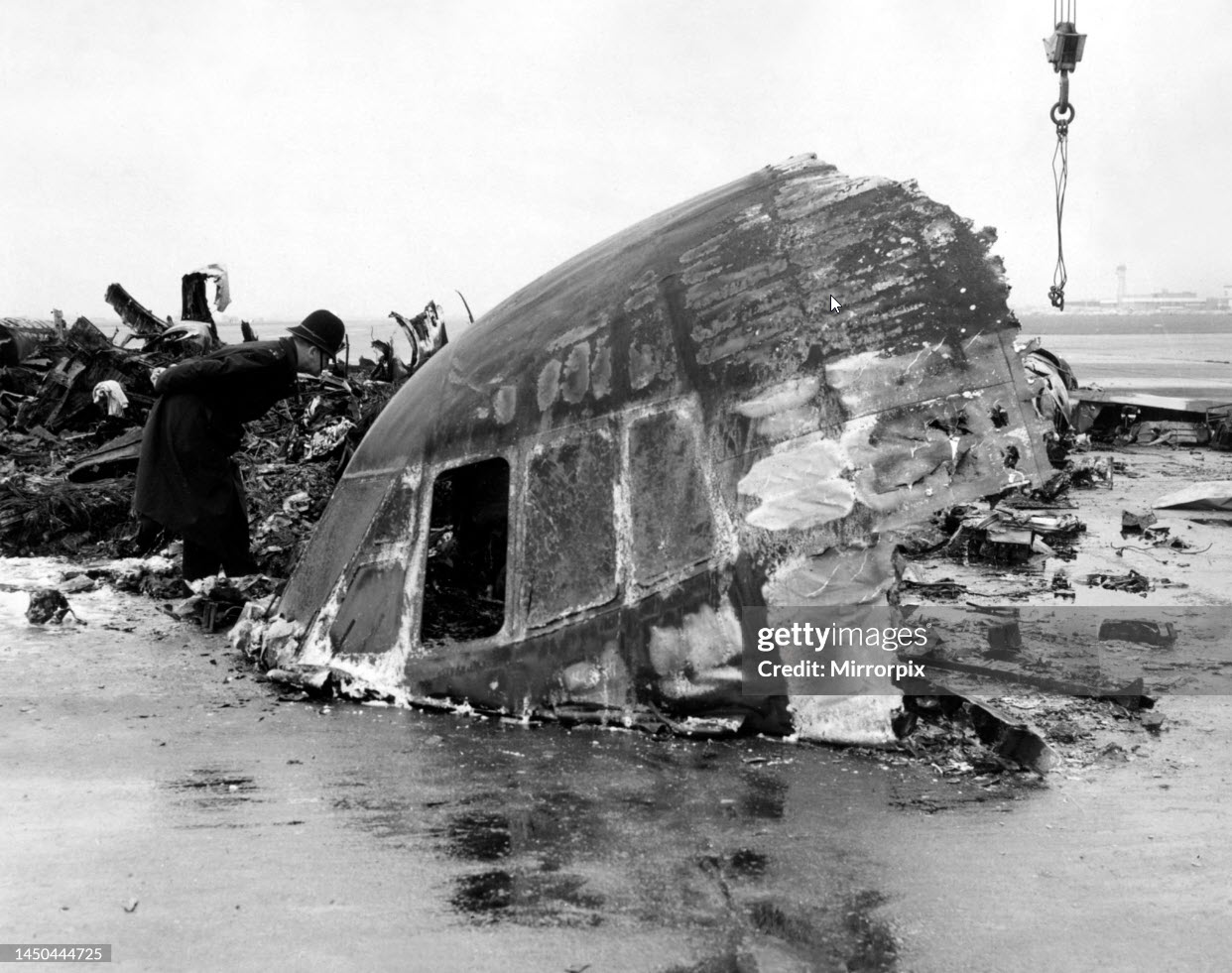
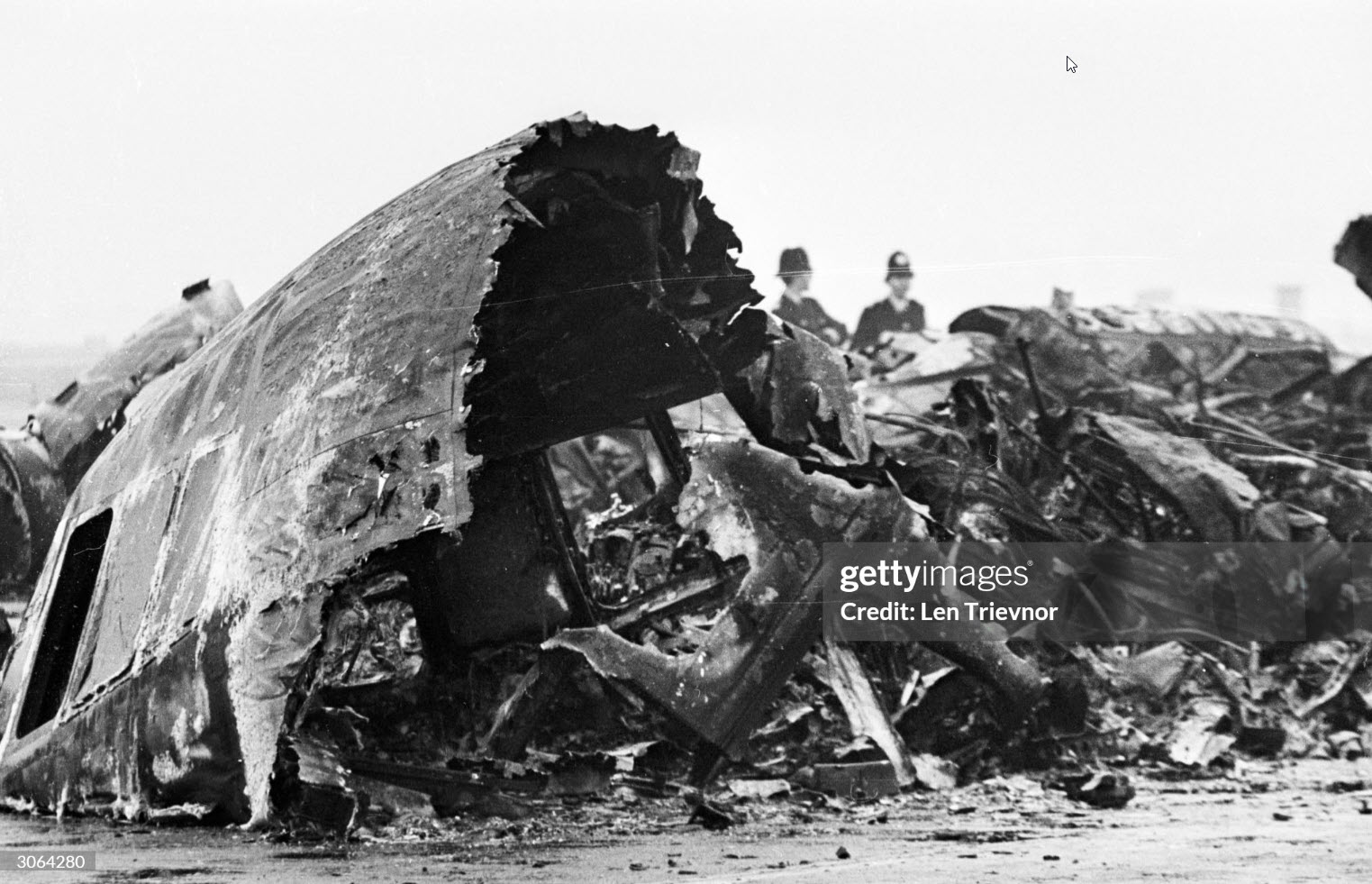
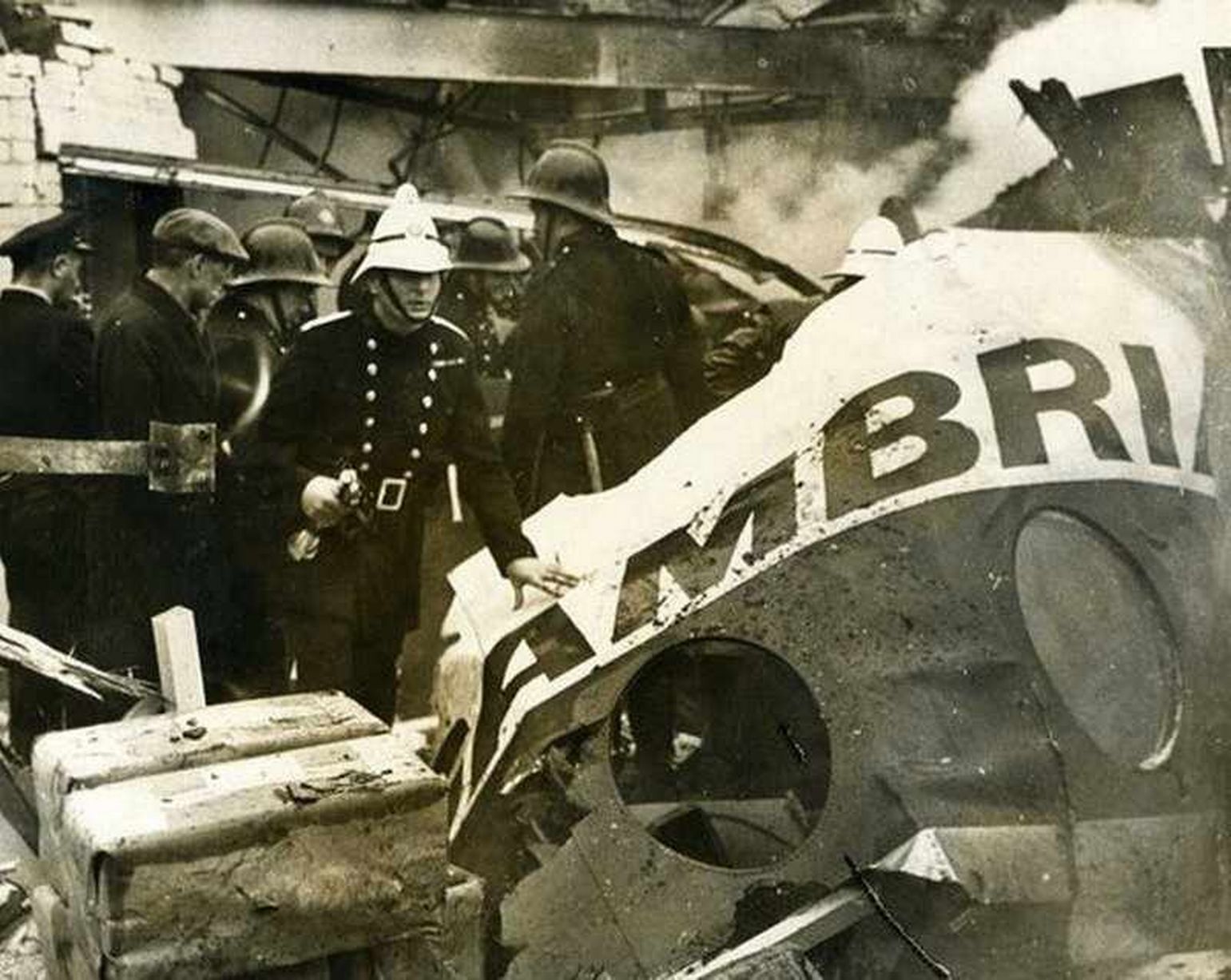
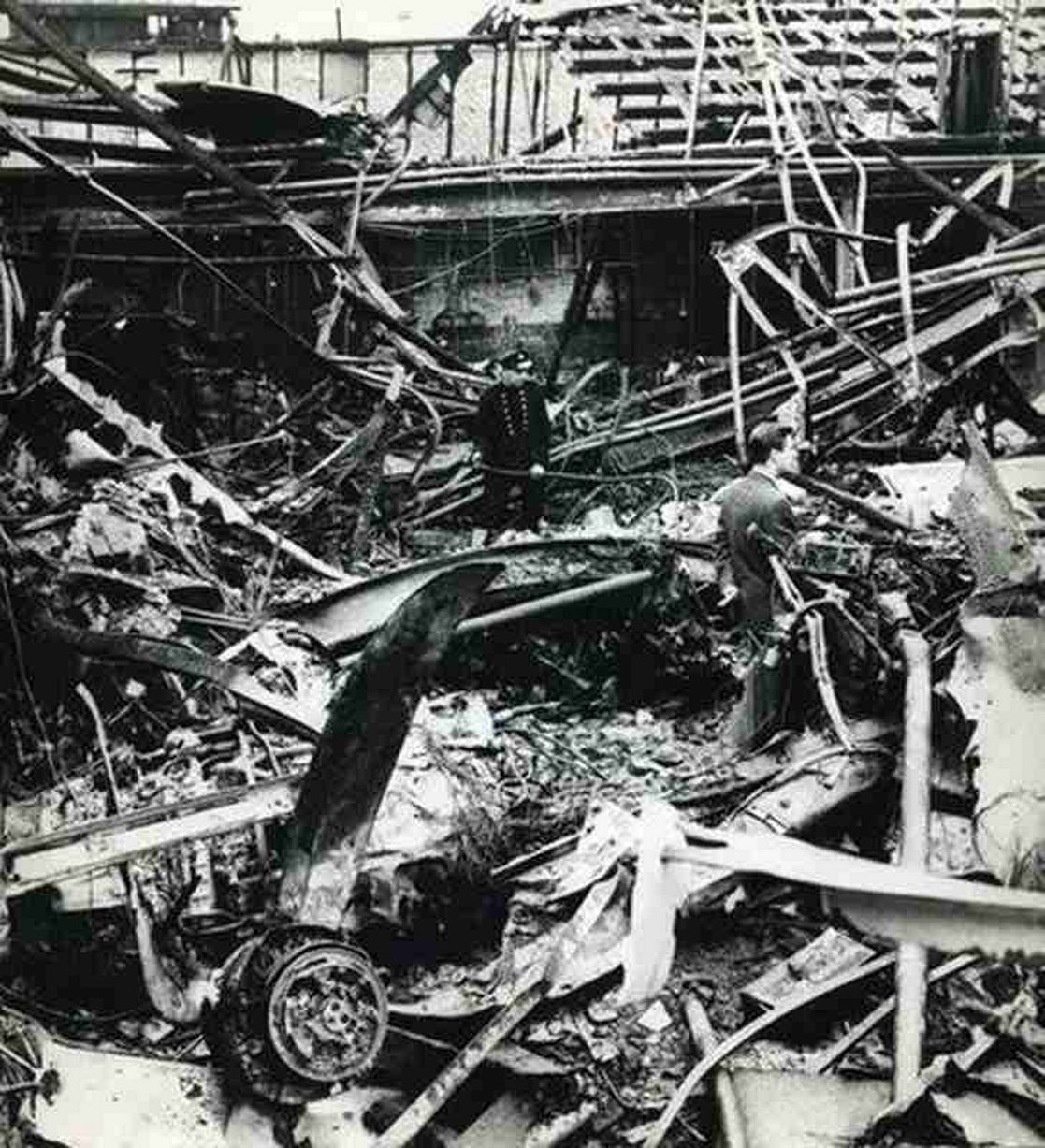
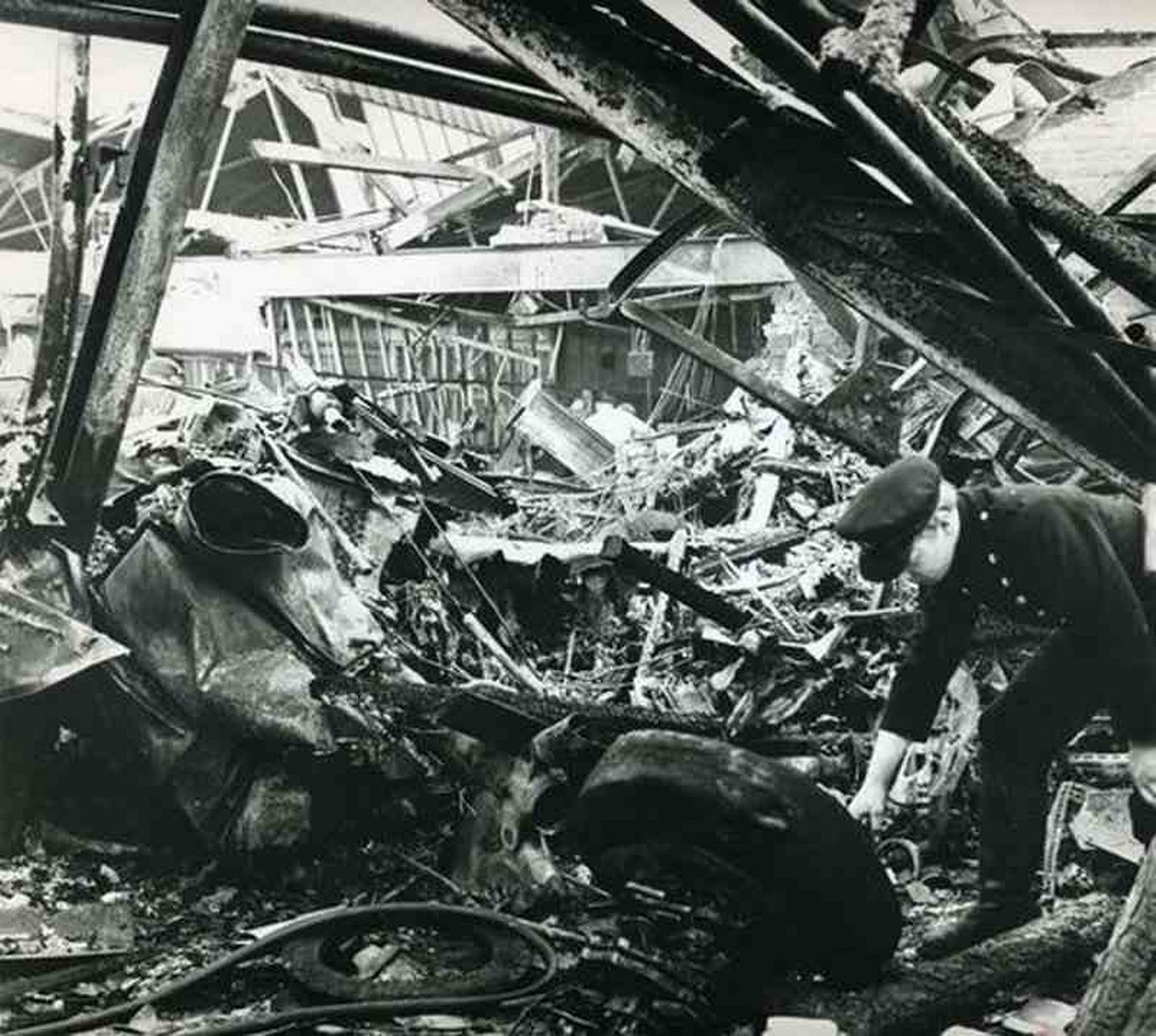
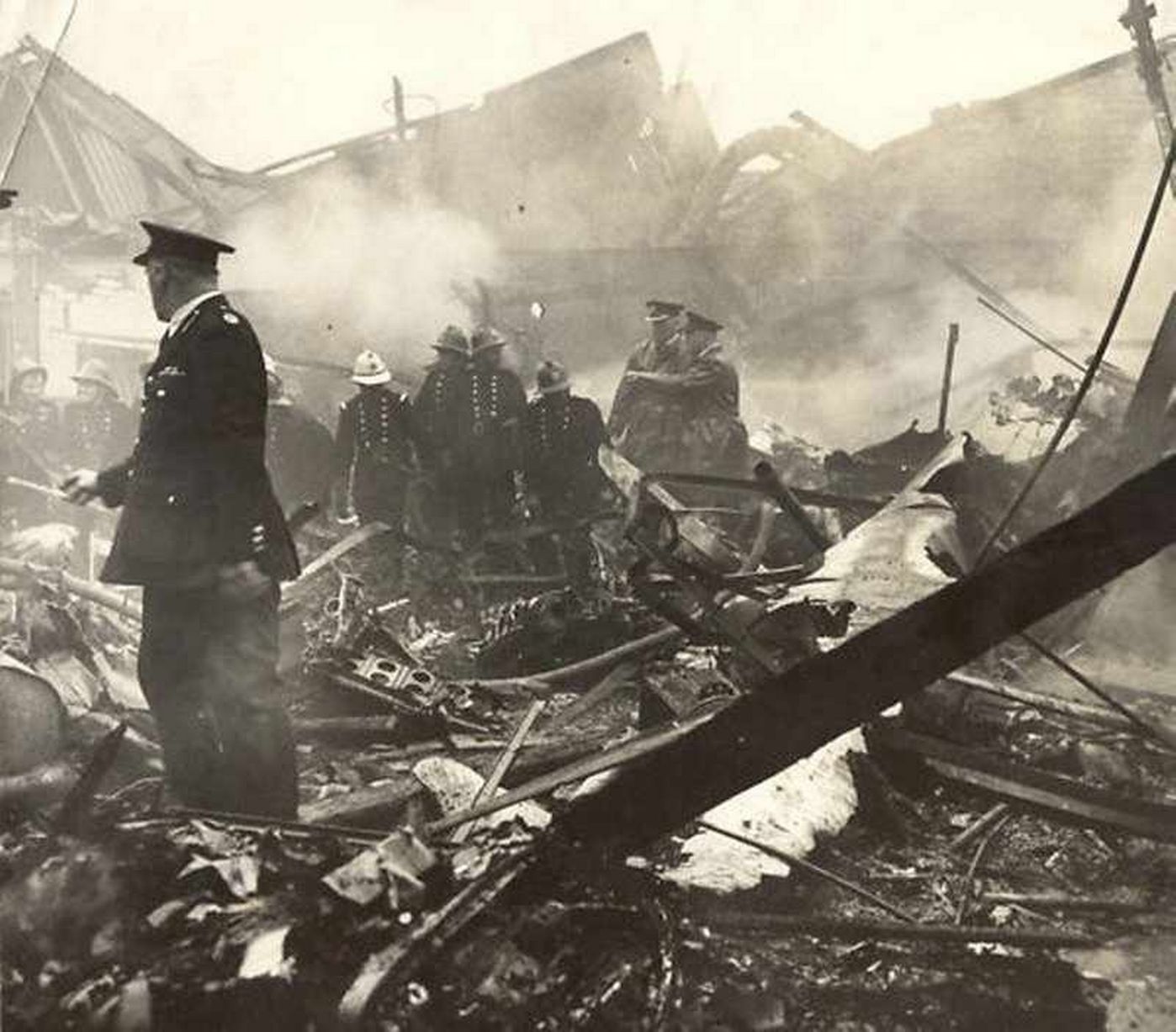
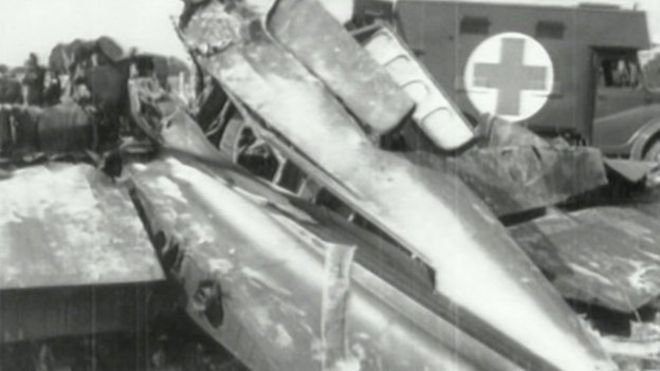
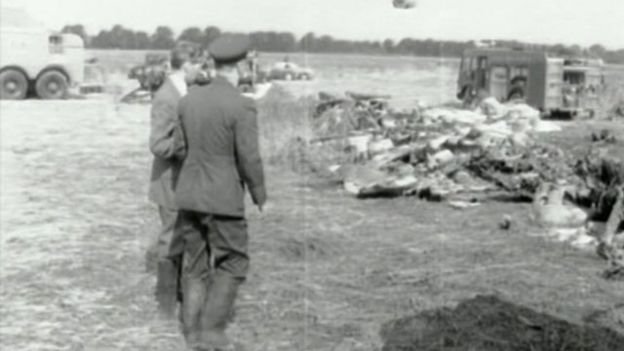
Crash of a Vickers 951 Vanguard in London: 36 killed

Date & Time: Oct 27, 1965 at 0223 LT
Type of aircraft:
Operator:
Registration:
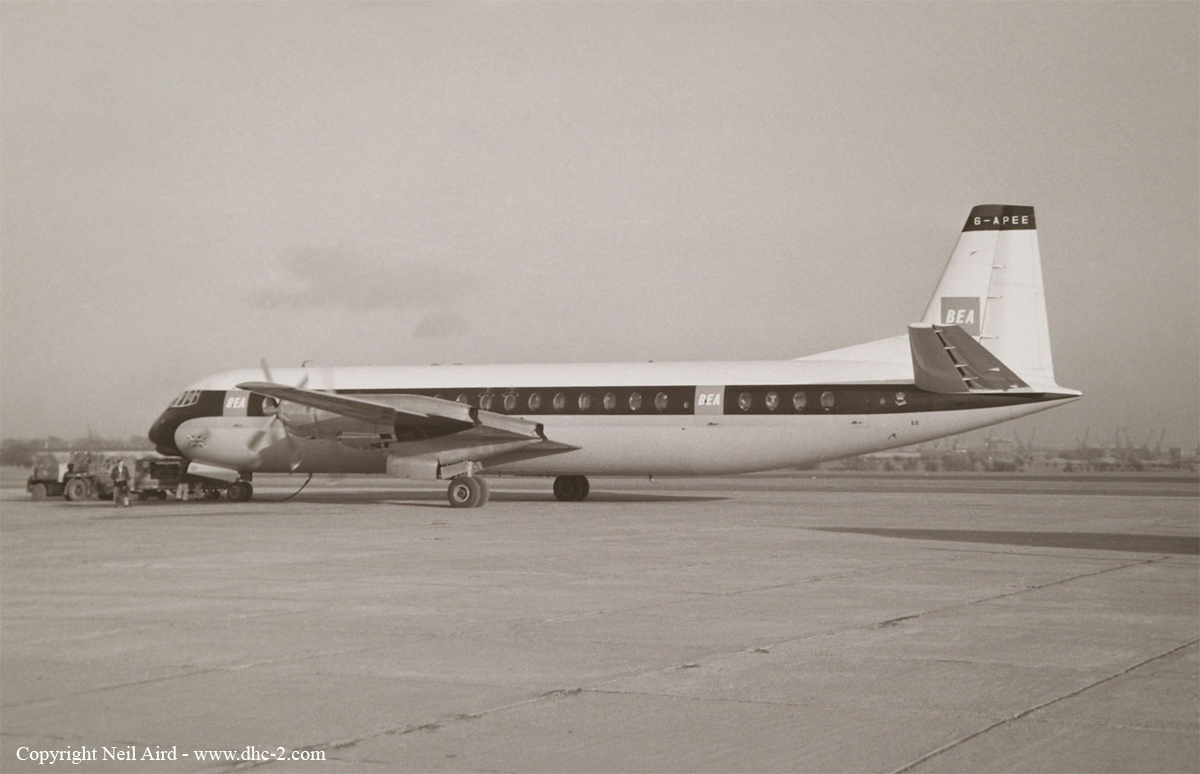
G-APEE
Survivors:
No
Schedule:
Edinburgh - London
MSN:
708
YOM:
1960
Region:
Crew on board:
6
Crew fatalities:
Pax on board:
30
Pax fatalities:
Other fatalities:
Total fatalities:
36
Captain / Total flying hours:
12000
Captain / Total hours on type:
1049.00
Copilot / Total flying hours:
1381
Copilot / Total hours on type:
1155
Circumstances:
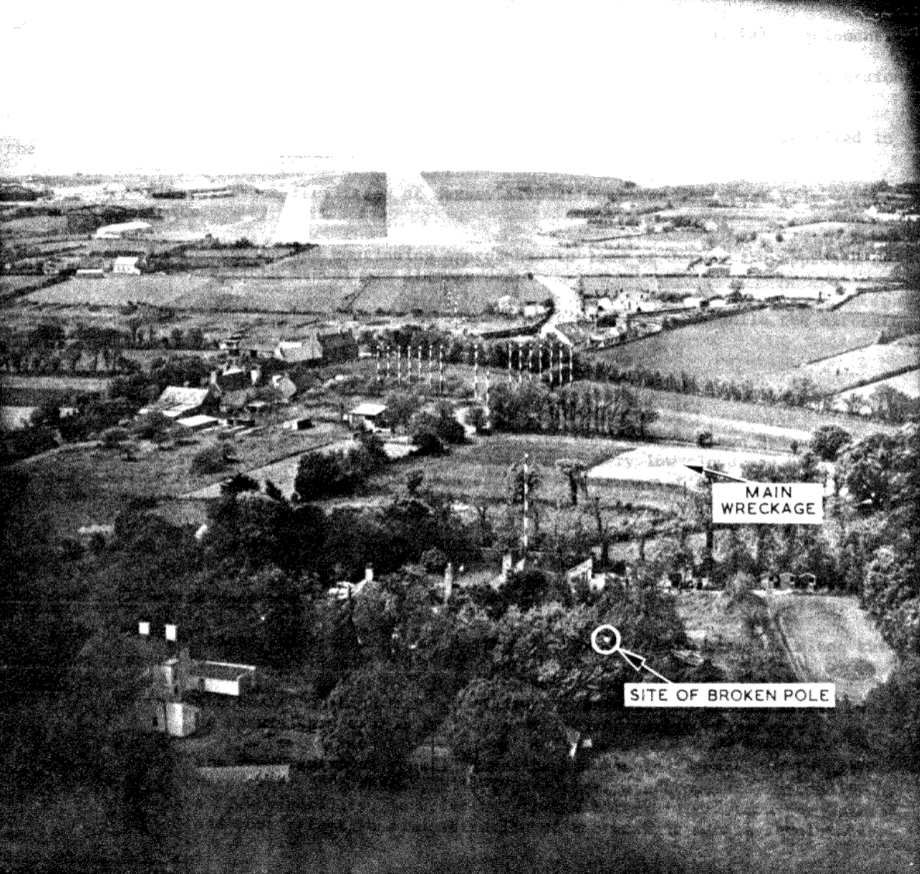
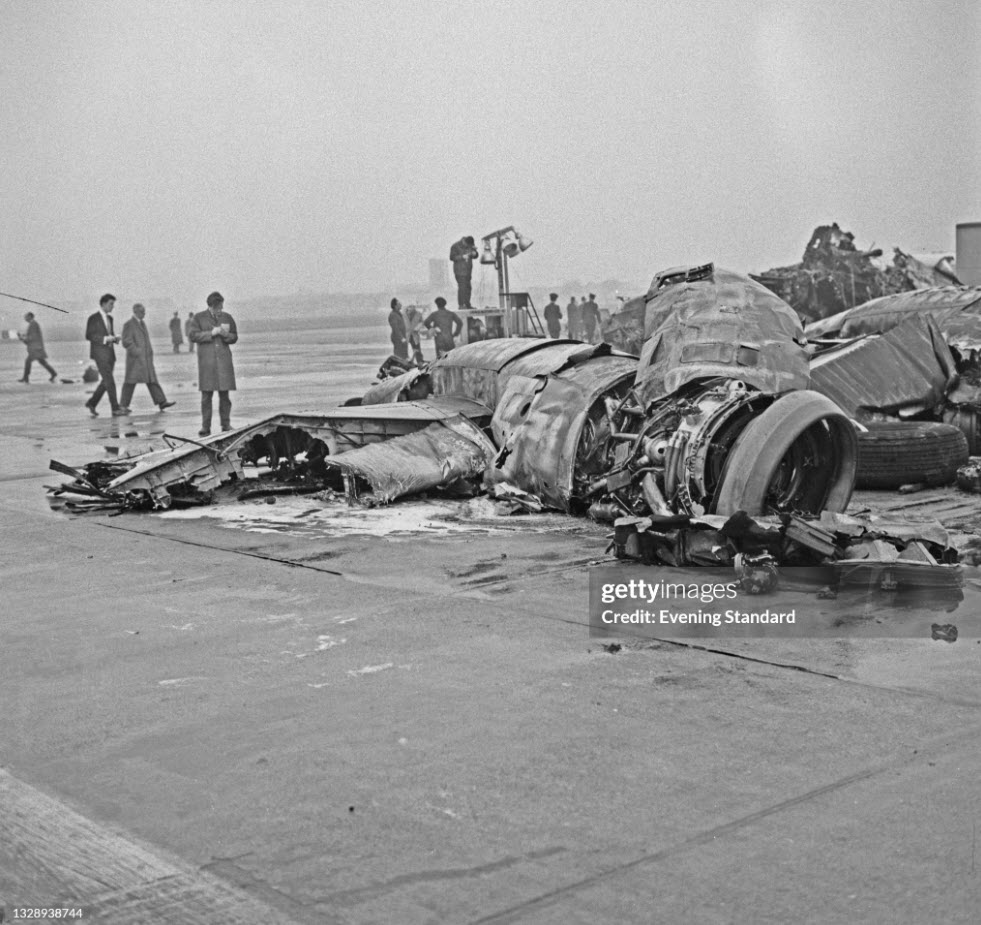
The aircraft was on a scheduled domestic flight from Turnhouse Airport, Edinburgh to Heathrow Airport, London. The flight departed Edinburgh at 23:17 hours UTC on October 26 for an domestic flight to London. The flight was uneventful until Garston VOR, the holding point. At 00:15 the captain decided to attempt a landing on runway 28R. The co-pilot was probably making the ILS approach, monitored on PAR by the air traffic control officer, while the pilot-in-command would be seeking a visual reference to enable him if possible to take over control and land. RVR on this runway was reported as 350 m (1140 feet). At 00:23 the captain informed ATC that he was overshooting. He then decided to make a second attempt, this time on runway 28L for which the RVR was reported as 500 m (1634 feet). Since the ILS was operating on glide path only and not in azimuth, ATC provided a full taIkdown. At half a mile from touchdown the PAR Controller was not entirely satisfied with the positioning of the aircraft in azimuth and was about to give instructions to overshoot when he observed that the pilot had in fact instituted na overshoot procedure. At 00:35 hours the pilot-in-command reported that they overshot because they did not see anything. He then requested to join one of the stacks and hold for a little while. This request was granted. The pilot-in-command decided to wait for half an hour at the Garston holding point. At 00:46 another Vanguard landed successfully on runway 28R. At 01:11, although there had been no improvement in the weather conditions, the pilot-in-command probably stimulated by the other aircraft's success, asked permission to make another attempt to land on runway 28R. Meanwhile another Vanguard aircraft had overshot on 28R. However, the captain started another monitored ILS final approach on runway 28R at 01:18. At 01:22 the PAR controller passed the information that the aircraft was 3/4 of a mile from touchdown and on the centre line. Twenty-two seconds later the pilot-in-command reported they were overshooting. The copilot rotated the airplane abruptly and the captain raised the flaps. Instead of selecting the flaps to 20 degrees, he selected 5 degrees or fully up. Because the speed was not building up, the copilot relaxed pressure on the elevator. Speed increased to 137 kts and the vertical speed indicator showed a rate of climb of 850 feet/min. The copilot therefore put the aircraft's nose further down. At four seconds before impact the VSI was probably showing a substantial rate of climb and the altimeter a gain in height, although the airplane was in fact losing height. The copilot was misled into continuing his down pressure on the elevator. The vanguard had by then entered a steep dive. The aircraft hit the runway about 2600 feet from the threshold.
Probable cause:
The cause of the accident was attributed to pilot error due to the following combination of events:
- low visibility (less than 50 meters),
- tiredness,
- anxiety,
- disorientation,
- lack of experience of overshooting in fog,
- over-reliance on pressure instruments,
- position error in pressure instruments,
- lacunae in training,
- unsatisfactory overshoot procedure,
- indifferent flap selector mechanism design,
- wrong flap selection.
Final Report:
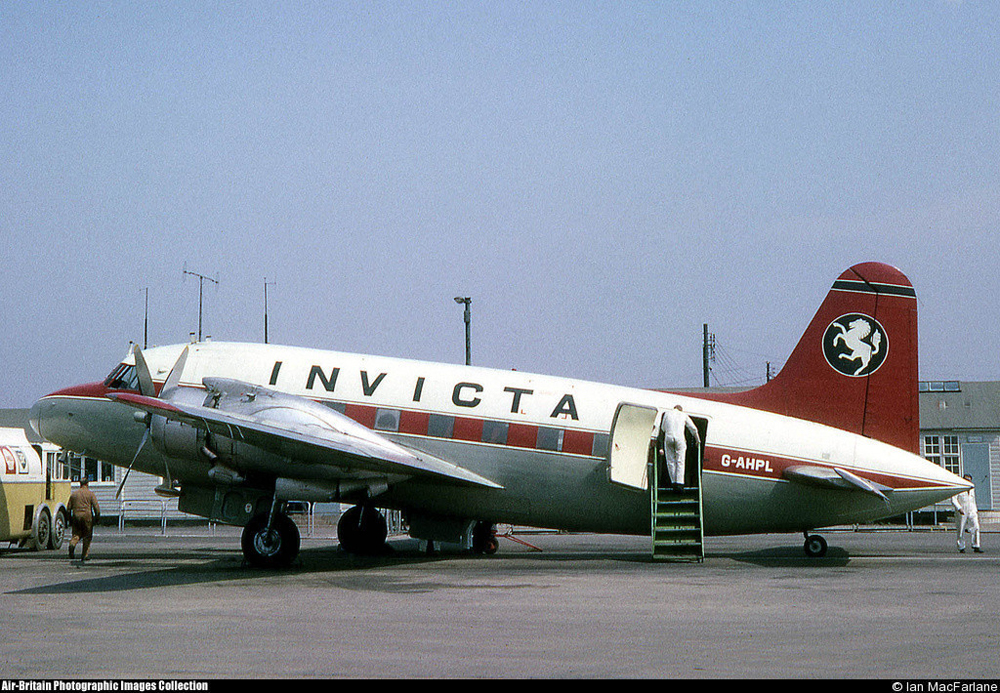
Crash of a Vickers 610 Viking 1B in Manston

Date & Time: Aug 2, 1965
Type of aircraft:
Operator:
Registration:
G-AHPL
Flight Phase:
Flight Type:
Survivors:
Yes
Schedule:
Manston - Manston
MSN:
149
YOM:
1947
Location:
Region:
Crew on board:
3
Crew fatalities:
Pax on board:
0
Pax fatalities:
Other fatalities:
Total fatalities:
0
Circumstances:
The crew was involved in a local training flight at Manston-Kent Airport. During the takeoff roll, the captain decided to abandon the takeoff procedure for unknown reason. Unable to stop within the remaining distance, the twin engine aircraft overran, lost its undercarriage and came to rest on its belly. All three crew members were rescued while the aircraft was damaged beyond repair. The reason why the captain decided to interrupt the takeoff roll remains unknown.

Crash of a Vickers 701 Viscount in Liverpool: 4 killed

Date & Time: Jul 20, 1965 at 1710 LT
Type of aircraft:
Operator:
Registration:
G-AMOL
Flight Type:
Survivors:
No
Site:
Schedule:
Douglas - Liverpool
MSN:
25
YOM:
1953
Region:
Crew on board:
2
Crew fatalities:
Pax on board:
0
Pax fatalities:
Other fatalities:
Total fatalities:
4
Aircraft flight hours:
20694
Circumstances:
Viscount G-AMOL departed Ronaldsway at 16:49 for a flight to Liverpool. The flight was made at flight level 70 and at 17:08 hours the aircraft was identified by Liverpool radar over Wallasey and positioned for a PPI continuous descent radar approach to runway 26. Half a mile from touchdown the radar approach was completed and the aircraft was then seen (on radar) to be just discernibly to the right of the centreline. No radio messages were received from the aircraft after the start of the talk-down. At 550 metres from the threshold, it was estimated to be at a height between 30 and 60 metres and about 40 metres to the right of the centre line. At this point witnesses saw the aircraft bank and turn to the right. The fuselage was level and the aircraft was banked almost vertically for part of the turn. When heading in approximately the opposite direction to the runway it rolled on to its back and crashed into the roof of a factory about 365 metres to the right of the extended centre line of the runway and about 550 metres from the threshold. After penetrating the roof, the aircraft had struck a heavy steel girder which had caused it to tip "tail-over-nose". It had then come to rest the right way up on the floor of the workshop with the tail resting on the steel roof trusses. An intense fire broke out which consumed almost the whole structure of the fuselage. Both crew members and two employees of the factory were killed.
Probable cause:
The aircraft went out of control during the final stage of an approach to land but the reason for this has not been determined.

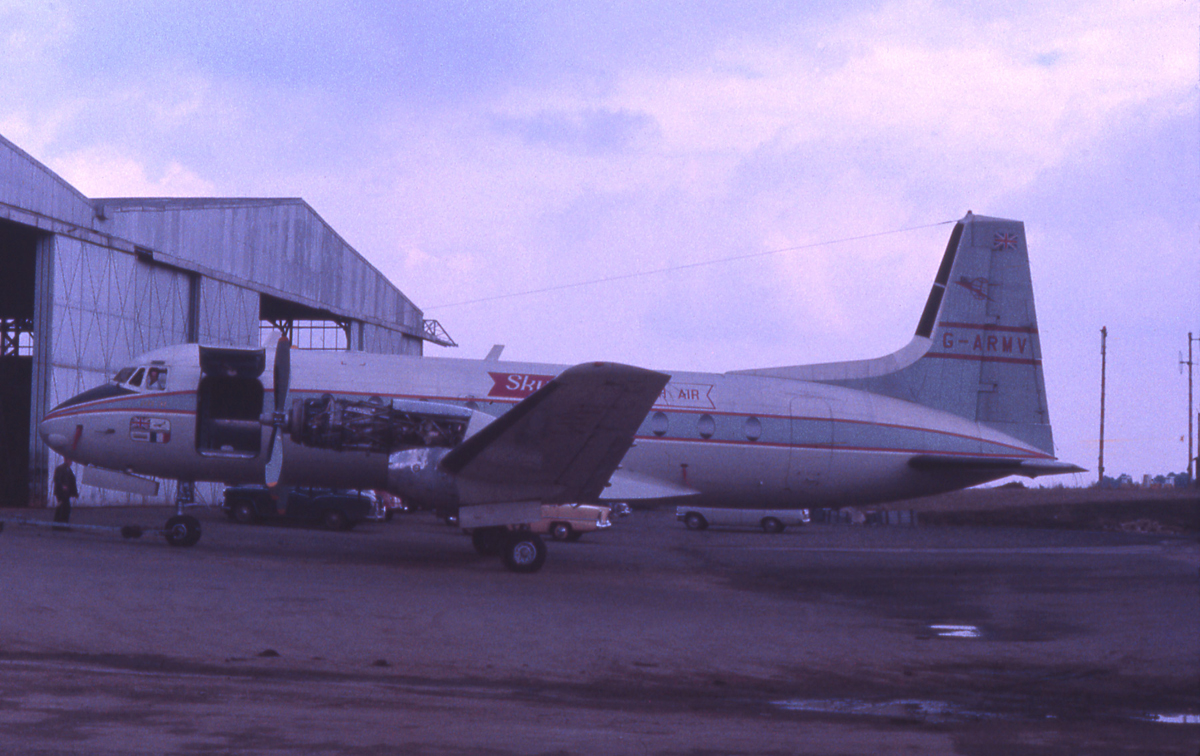
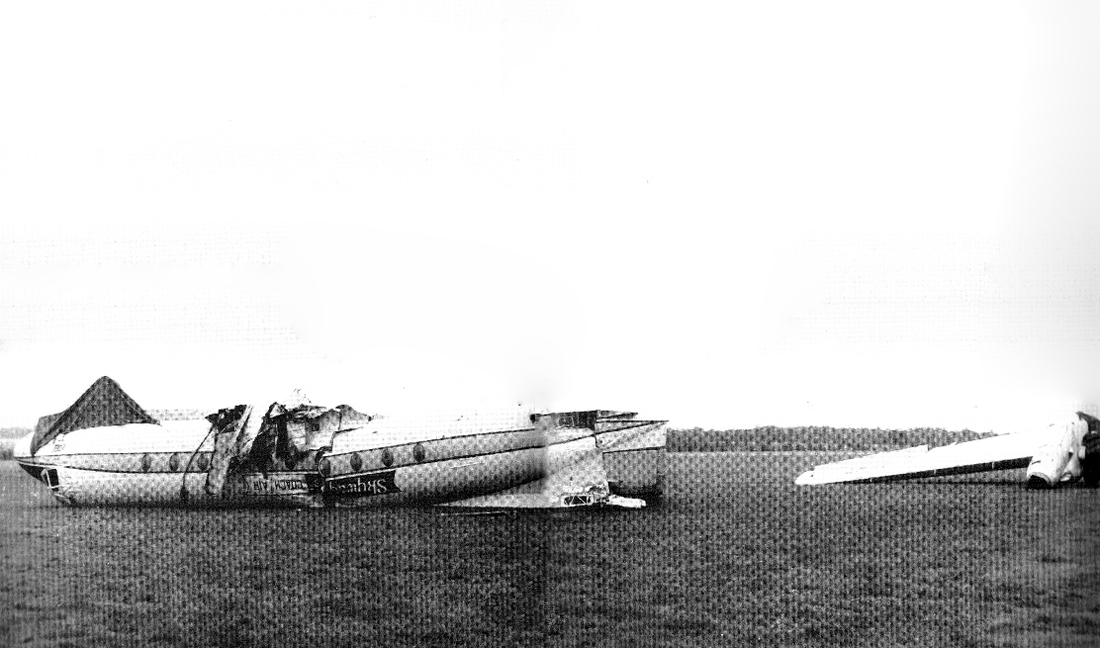
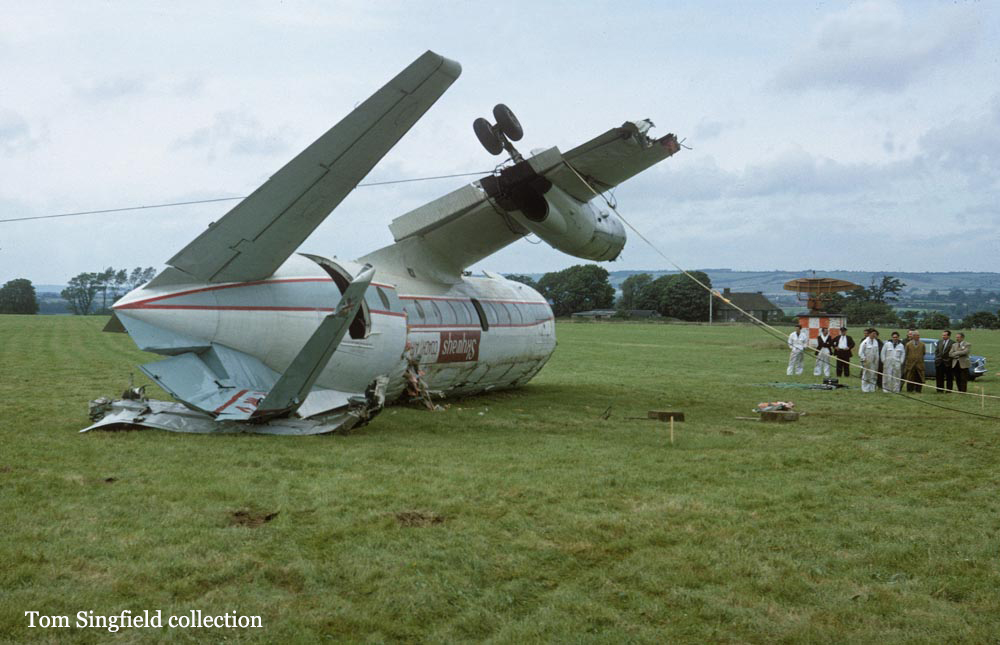
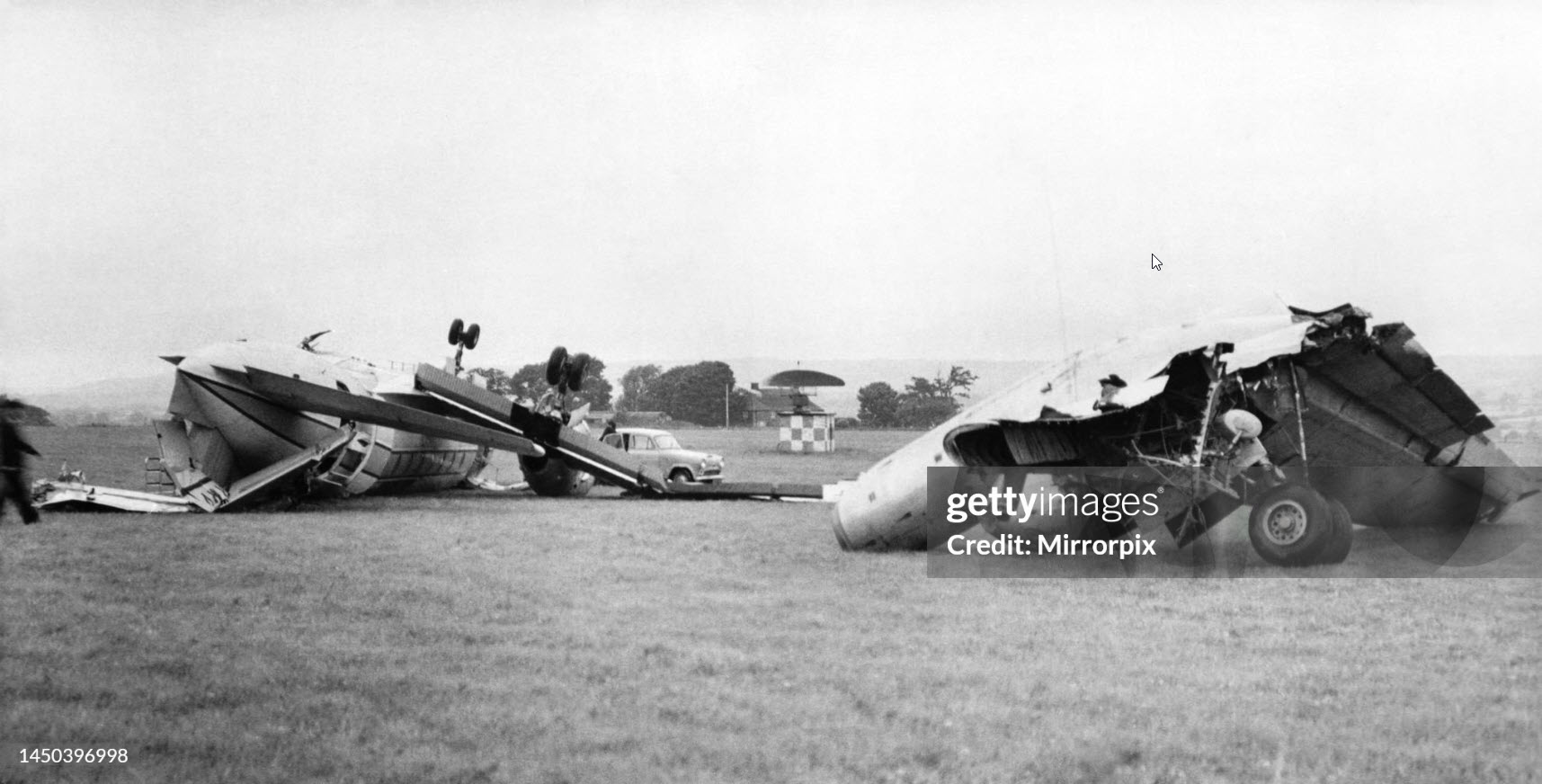
Crash of an Avro 748-1-101 in Lympne

Date & Time: Jul 11, 1965 at 1633 LT
Type of aircraft:
Operator:
Registration:
G-ARMV
Survivors:
Yes
Schedule:
Beauvais – Lympne
MSN:
1536
YOM:
1961
Location:
Region:
Crew on board:
4
Crew fatalities:
Pax on board:
48
Pax fatalities:
Other fatalities:
Total fatalities:
0
Captain / Total flying hours:
6799
Captain / Total hours on type:
1096.00
Copilot / Total flying hours:
980
Copilot / Total hours on type:
192
Aircraft flight hours:
3432
Circumstances:
The aircraft was on a scheduled flight from Beauvais, France to Lympne, England. Before taking off the pilot-in-command obtained a weather report from Lympne as follows: Cloud ceiling : 250 ft . Visibility : 2000 m . Surface wind : 220 degrees at 18 kts. It departed Beauvais at 15:51 hours UTC on an IFR flight plan. As the aircraft passed Abbeville, radio contact was established with Lympne and a weather report was obtained which gave a visibility of 1000 m in drizzle, cloud ceiling of 250 ft and surface wind 220/18 kts gusting to 26 kts. The airline's limits for landing on runway 20 were 1100 m RVR and a cloud ceiling of 200 ft. The pilot-in-command again checked landing conditions at Lympne before commencing an instrument approach and, although conditions had not altered significantly since the previous report, he was informed of a "slight improvement" but the wind was still gusting. The final instrument approach to runway 20 using radar began at 4 miles from touchdown; the aircraft was in cloud, flying at 1100 ft, in turbulent conditions. Three and a half miles from touchdown the pilot-in-command began to descend at 350 to 400 ft/min, the equivalent of a 3° glide path in the prevailing conditions. As there was no radar glide path the Lympne radar controller advised the pilots of the height at which the aircraft should have been at each mile before touchdown. When the aircraft was about 5/8 of a mile from touchdown the radar controller gave a final heading correction and at half a mile, when the talkdown finished, he told the pilots that the aircraft was lined up with the right-hand edge of the runway. The rest of the approach was made visually but the radar controller continued to track the aircraft. He observed it deviate further to the right of the extended centre line as it neared the touchdown point. The pilot-in-command stated that he could see the ground from 250 ft, and at 220ft when half a mile from touchdown he could see the far boundary of the aerodrome through heavy drizzle. Height was maintained at 220 ft for 3 or 4 seconds, then the descent was resumed and at a quarter of a mile from touchdown and at 150 to 200 ft, full flap was selected and power reduced to 10600 rpm. At this stage turbulence became severe. The pilot-in-command realized that the aircraft was going to the right of the runway but he decided not to try to regain the centre line as this would require a turn at low altitude. As the aircraft approached the aerodrome boundary the airspeed indicator was fluctuating and an attempt was made to maintain 92 kts the starboard wing was held down slightly to compensate for port drift. The pilot-in-command stated that he began the flare-out 30 to 40 ft above the ground at an IAS of 88 kt but as he closed the throttles the starboard wing went down suddenly. Although he was aware that the aircraft was descending rapidly, he was initially more concerned about restoring lateral level ; only at the last moment did he attempt to check the rate of descent with elevator control but the aircraft struck the ground heavily on its starboard undercarriage. After the impact, the starboard wing, engine nacelle and undercarriage became separated from the main structure, the aircraft rolled over to starboard and slid along the grass inverted, coming to rest after having swung through approximately 180°.
Probable cause:
A heavy landing following an incomplete flare from a steeper than normal approach.
Final Report:
Crash of a Handley Page H.P.67 Hastings C.1A in Little Baldon: 41 killed

Date & Time: Jul 6, 1965 at 1609 LT
Operator:
Registration:
TG577
Flight Phase:
Flight Type:
Survivors:
No
Schedule:
Abingdon - Abingdon
MSN:
68
YOM:
1949
Region:
Crew on board:
6
Crew fatalities:
Pax on board:
35
Pax fatalities:
Other fatalities:
Total fatalities:
41
Circumstances:
The four engine aircraft departed RAF Abingdon with six crew members and 35 paratroopers for an exercise over the Weston-on-the-Green area. Shortly after takeoff, while climbing, the pilot reported control problems to ATC and requested permission to return for an emergency landing. Clearance was given and the crew started a circuit to return to RAF Abingdon when the aircraft climbed steeply to a height of 2,000 feet then banked left, dove into the ground and crashed in a field located in Little Baldon, about 10 km east of the airbase. The aircraft was totally destroyed and all 41 occupants have been killed.
Probable cause:
The elevator jammed in an inappropriate position following the failure of two bolts due to metal fatigue.

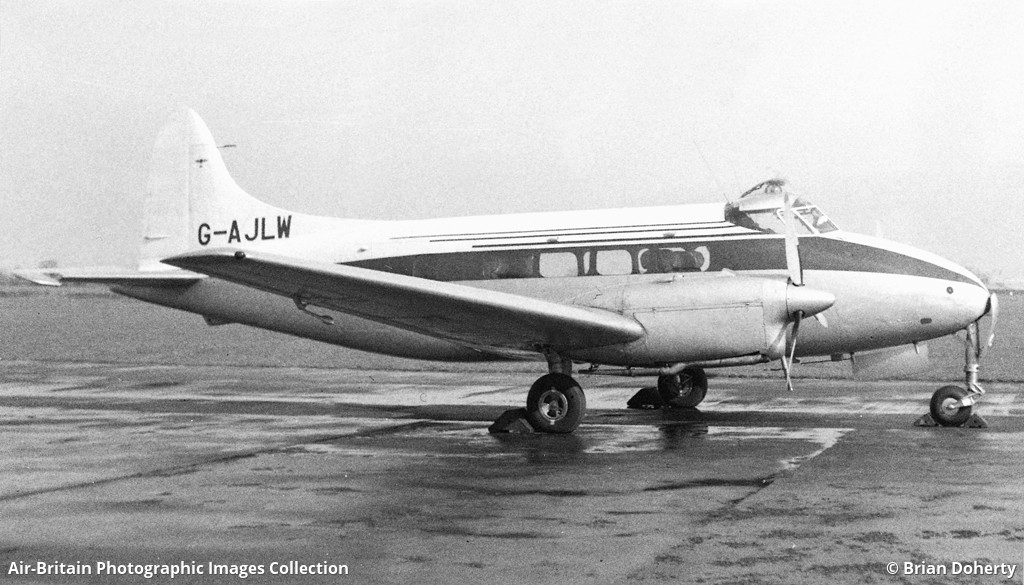
Crash of a De Havilland DH.104 Dove 2B in Pershore

Date & Time: Apr 26, 1965
Type of aircraft:
Operator:
Registration:
G-AJLW
Flight Phase:
Survivors:
Yes
Schedule:
Yeovil – Hucknall
MSN:
04033
YOM:
1947
Region:
Crew on board:
0
Crew fatalities:
Pax on board:
0
Pax fatalities:
Other fatalities:
Total fatalities:
0
Circumstances:
While cruising in sleet showers, the left engine failed. The pilot reduced his altitude and completed a wheels-up landing in an open field. There were no casualties and the airplane was damaged beyond repair.
Probable cause:
Failure of the left engine in flight.

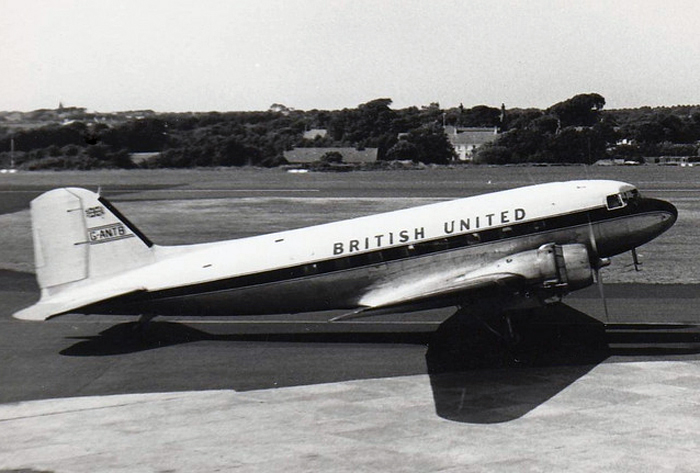
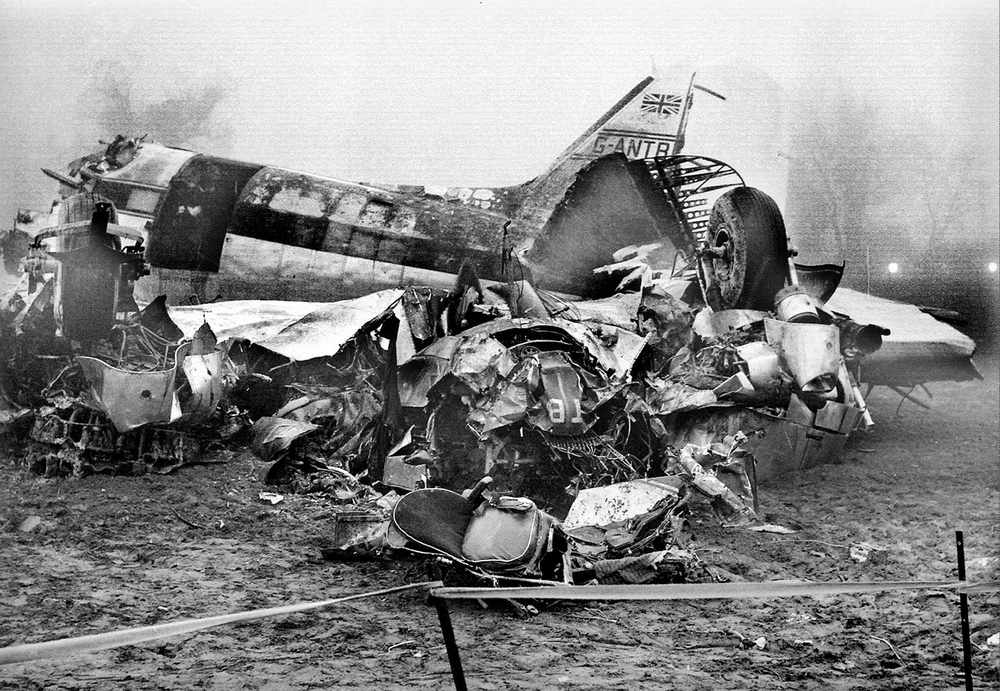
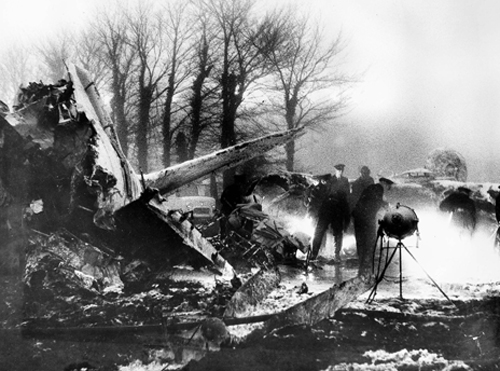
Crash of a Douglas C-47B-20-DK in Jersey: 26 killed

Date & Time: Apr 14, 1965 at 1806 LT
Operator:
Registration:
G-ANTB
Survivors:
Yes
Schedule:
Paris – Jersey
MSN:
15762/27207
YOM:
1945
Flight number:
BR1030X
Region:
Crew on board:
4
Crew fatalities:
Pax on board:
23
Pax fatalities:
Other fatalities:
Total fatalities:
26
Captain / Total flying hours:
4750
Captain / Total hours on type:
1227.00
Copilot / Total flying hours:
1188
Copilot / Total hours on type:
730
Aircraft flight hours:
18544
Circumstances:
Flight 1030X was an extra scheduled international flight from Paris (Orly), France, to Jersey, Channel Islands. It took off from Orly at 1626 hours GMT. At 1706 hours, when about 100 miles from Jersey, the pilot made his first radio contact with Jersey zone concerning the Jersey weather. At 1742 hours he informed Jersey zone that he was descending to 1 500 ft and estimated Jersey at 1755 hours. He was then given the 1720 hours Jersey weather report, which included visibility 80 m, RVR 200 m and 818 cloud at the surface, after which the aircraft was cleared to Jersey Approach Control. In response to the approach controller's question as to his intentions concerning diversion, the pilot replied: "We'll come down the ILS and then overshoot and go to Dinard." The controller then cleared the aircraft to 1 000 ft and passed the QFE as 1 007 mb. The aircraft arrived at the Jersey beacon at 1753 hours and began an approach to runway 27, during which the guidance provided from the ILS was supplemented by distance information provided by the controller from the indications of the Decca 424 radar. The approach, the subsequent overshoot and the climb to 1 000 ft appear to have been without incident, following which the pilot informed the controller of his intention to make another approach and requested radar guidance back to the ILS outer marker. After directing the aircraft into position for a second approach to runway 27, the controller advised the pilot to take up his own headings on the ILS and informed him at 1803 hours that the aircraft was 5 miles from touchdown. Just after being given a distance of 4 miles, the pilot reported passing the outer marker and also that he was established, thus indicating that guidance was being received from the ILS and being used for the approach. Subsequent distance information was given by the controller at 1.5 mile, which was not acknowledged by the pilot, and again at 1 mile (at 1806:13 hours). Both these transmissions were clipped and are recorded as "... and a half miles now" and "... mile from touchdown". The latter transmission provoked an immediate "how many?" from the pilot, to which the controller replied by giving "three quarters of a mile now and left of the centre line." The pilot acknowledged this at 1806:24* hours with "TB" (the final two letters of the aircraft's registration). This was the last communication received from the aircraft. According to the air hostess, (the sole survivor), the flight was uneventful up to the time of the accident. She did not have any feeling of descending at any time. There was a bump which she attributed to the starboard undercarriage wheels having hit something; this was followed by a momentary roll to the right and a much greater roll back to the left. Subsequently, it was established that the aircraft had hit with its starboard wing the outermost approach light pole, which was 3 000 ft from the runway threshold, at a height 58 ft above runway level. After climbing slightly,'it rolled to an inverted attitude, at which time the starboard wing folded rearwards and separated as the aircraft dived to the ground, still inverted. It crashed at about 1806:27 hours. The stewardess survived while all 26 other occupants were killed.
Probable cause:
The aircraft struck the approach lighting when it was flown below the safe approach path during an approach to land in conditions of very low cloud and poor visibility, the pilot having disregarded the approach ban applied by his operations manual.
Final Report:
Crash of a Vickers 648 Varsity T.1 at RAF Manby

Date & Time: Mar 4, 1965 at 1953 LT
Type of aircraft:
Operator:
Registration:
WL680
Flight Type:
Schedule:
Manby - Manby
Region:
Crew on board:
3
Crew fatalities:
Pax on board:
0
Pax fatalities:
Other fatalities:
Total fatalities:
0
Circumstances:
The crew was completing a local training at RAF Manby, Lincolnshire. On final approach with an engine voluntarily inoperative, the crew decided to make a go around when the airplane stalled and crashed in a field located 2,2 km east of Louth, short of the airbase. All three crew members were evacuated safely while the aircraft was damaged beyond repair.
Probable cause:
It was determined that the remaining engine lost power when the crew elected to make a go around with one engine already inoperative. In such conditions, the airplane stalled and crashed.

Crash of a De Havilland DH.104 Dove 2B in Old

Date & Time: Jan 20, 1965
Type of aircraft:
Registration:
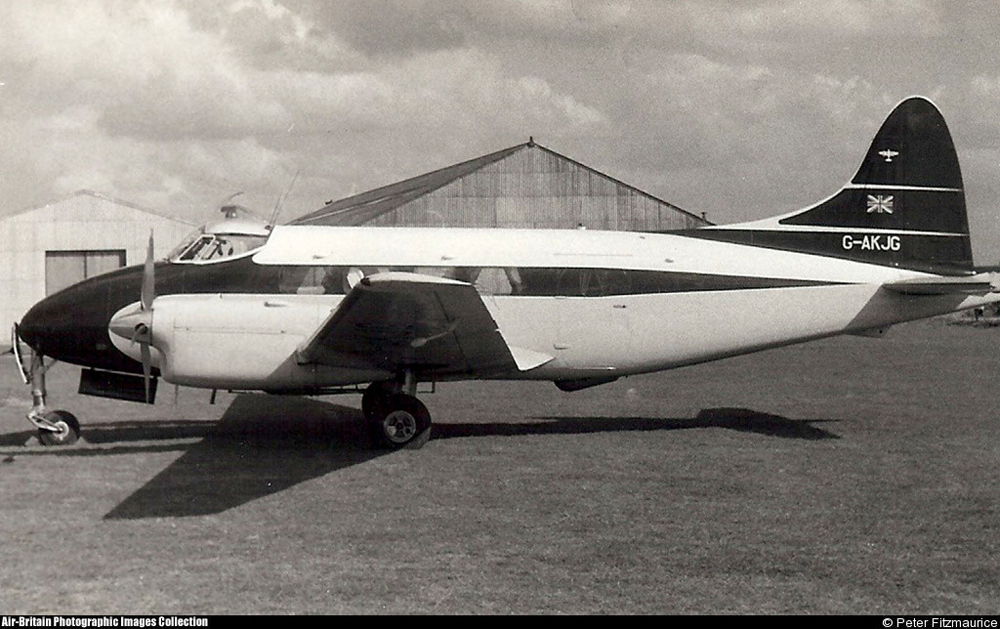
G-AKJG
Flight Phase:
Flight Type:
Survivors:
Yes
Schedule:
Sywell – Bristol
MSN:
04071
YOM:
1947
Region:
Crew on board:
1
Crew fatalities:
Pax on board:
0
Pax fatalities:
Other fatalities:
Total fatalities:
0
Circumstances:
The pilot was in charge to deliver the aircraft from Sywell to Bristol. En route, one of the engine caught fire and the pilot reduced his altitude in an attempt to make an emergency landing. The aircraft crash landed in a field and came to rest. While the pilot was uninjured, the aircraft was damaged beyond repair.
Probable cause:
Engine fire in flight.

Crash of a Vickers 648 Varsity T.1 at RAF Topcliffe: 2 killed

Date & Time: Aug 25, 1964
Type of aircraft:
Operator:
Registration:
WF329
Flight Type:
Survivors:
No
Schedule:
Topcliffe - Topcliffe
MSN:
521
YOM:
1951
Region:
Crew on board:
2
Crew fatalities:
Pax on board:
0
Pax fatalities:
Other fatalities:
Total fatalities:
2
Circumstances:
The crew was completing a local training flight at RAF Topcliffe. Following several manoeuvres performed uneventfully, the crew was approaching the airbase with an engine voluntarily off to simulate an engine failure. On short final by night, the airplane stalled and crashed in a field short of runway threshold. Both pilots were killed.