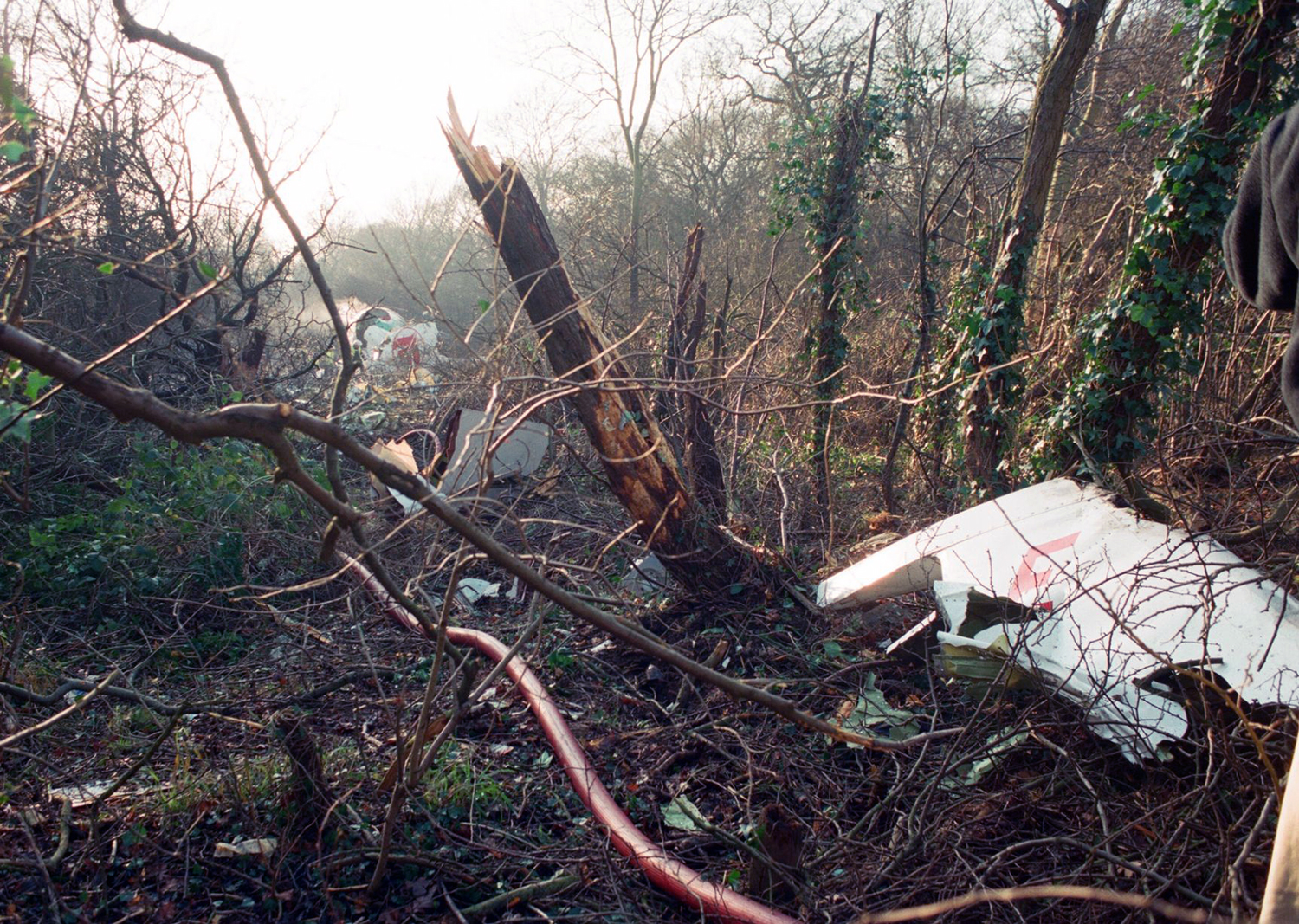
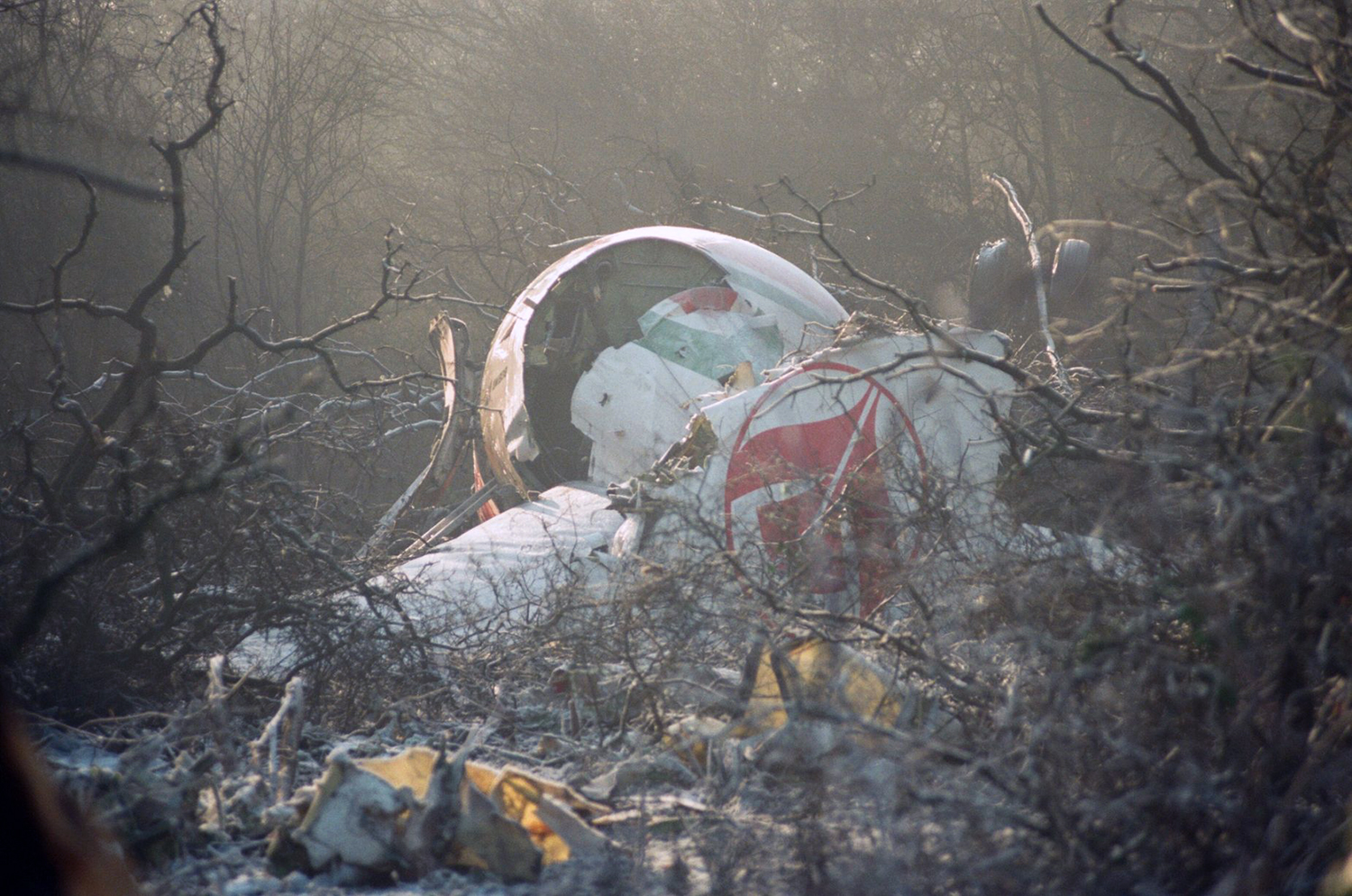
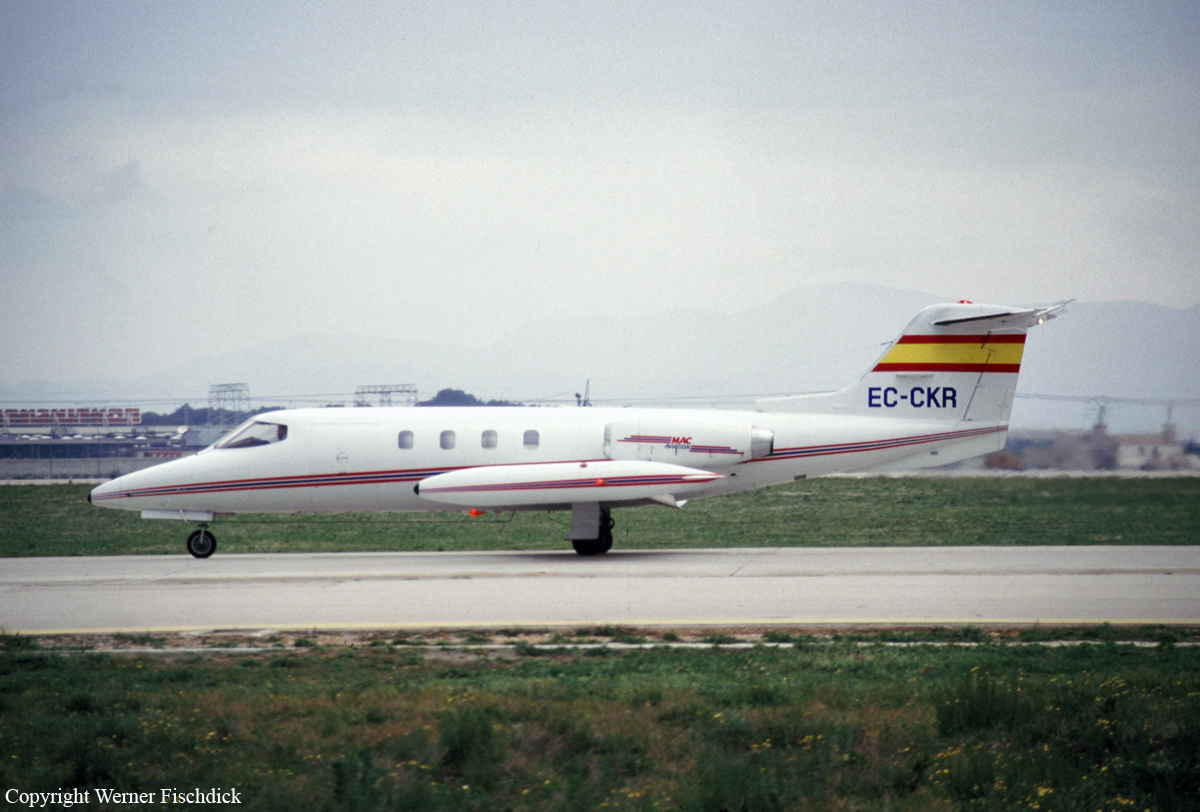
Crash of a Learjet 25B in Northolt

Date & Time: Aug 13, 1996 at 0957 LT
Type of aircraft:
Operator:
Registration:
EC-CKR
Survivors:
Yes
Schedule:
Palma de Mallorca - Northolt
MSN:
25-184
YOM:
1974
Flight number:
MAQ123
Region:
Crew on board:
2
Crew fatalities:
Pax on board:
1
Pax fatalities:
Other fatalities:
Total fatalities:
0
Captain / Total flying hours:
5200
Captain / Total hours on type:
1900.00
Copilot / Total flying hours:
5340
Copilot / Total hours on type:
1700
Aircraft flight hours:
4396
Circumstances:
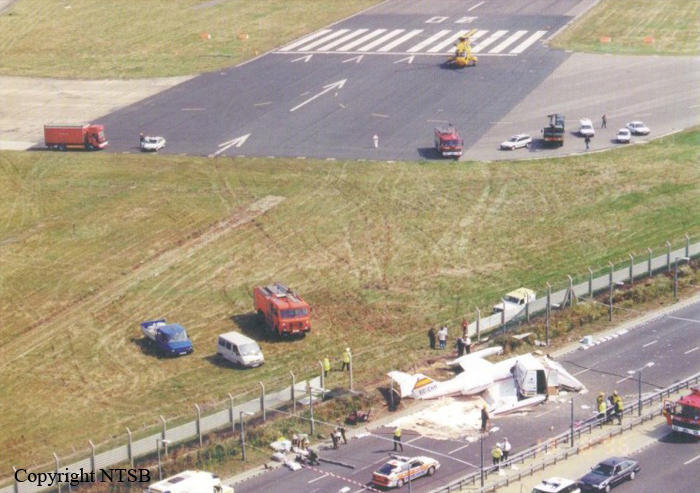
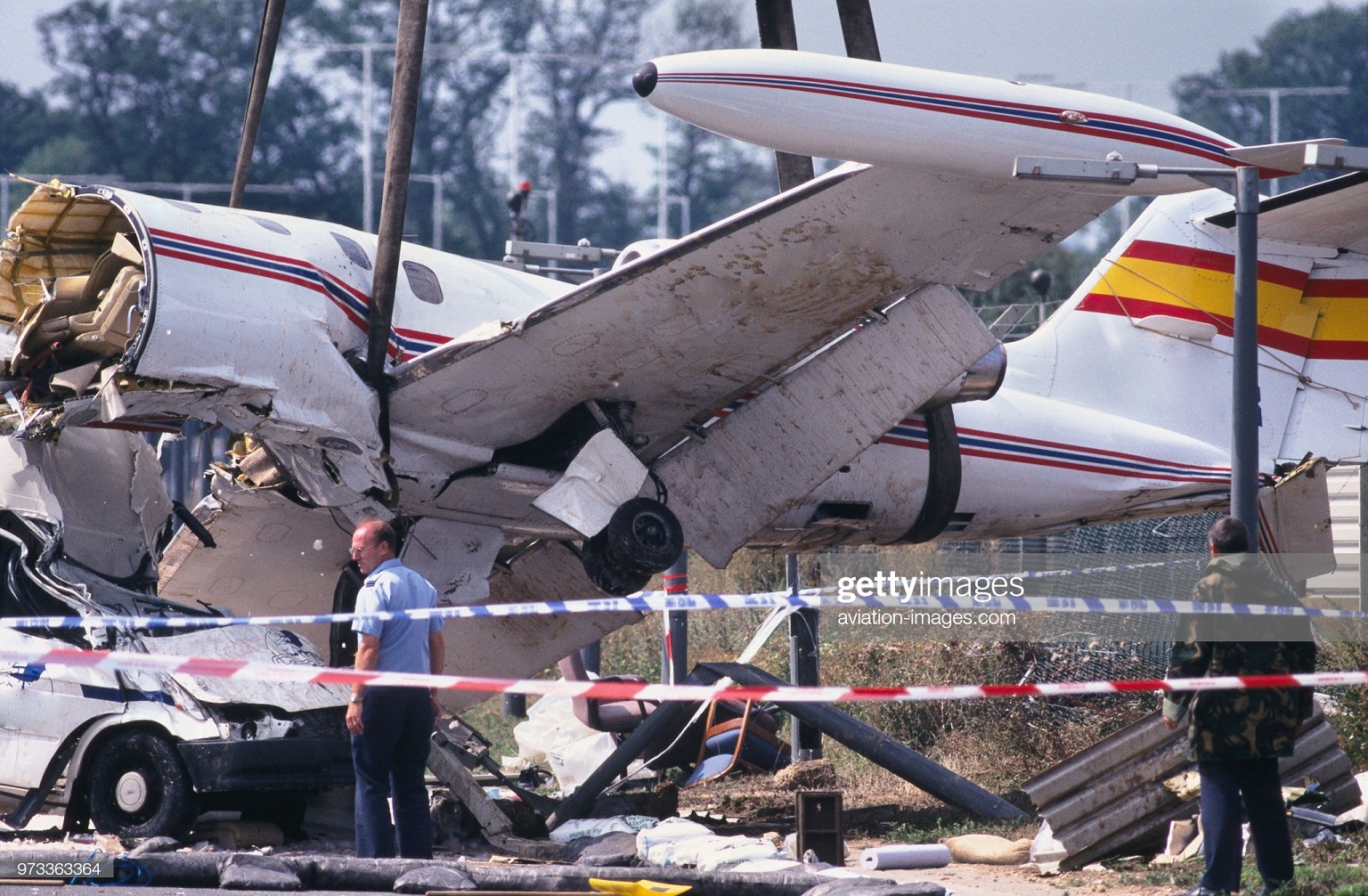
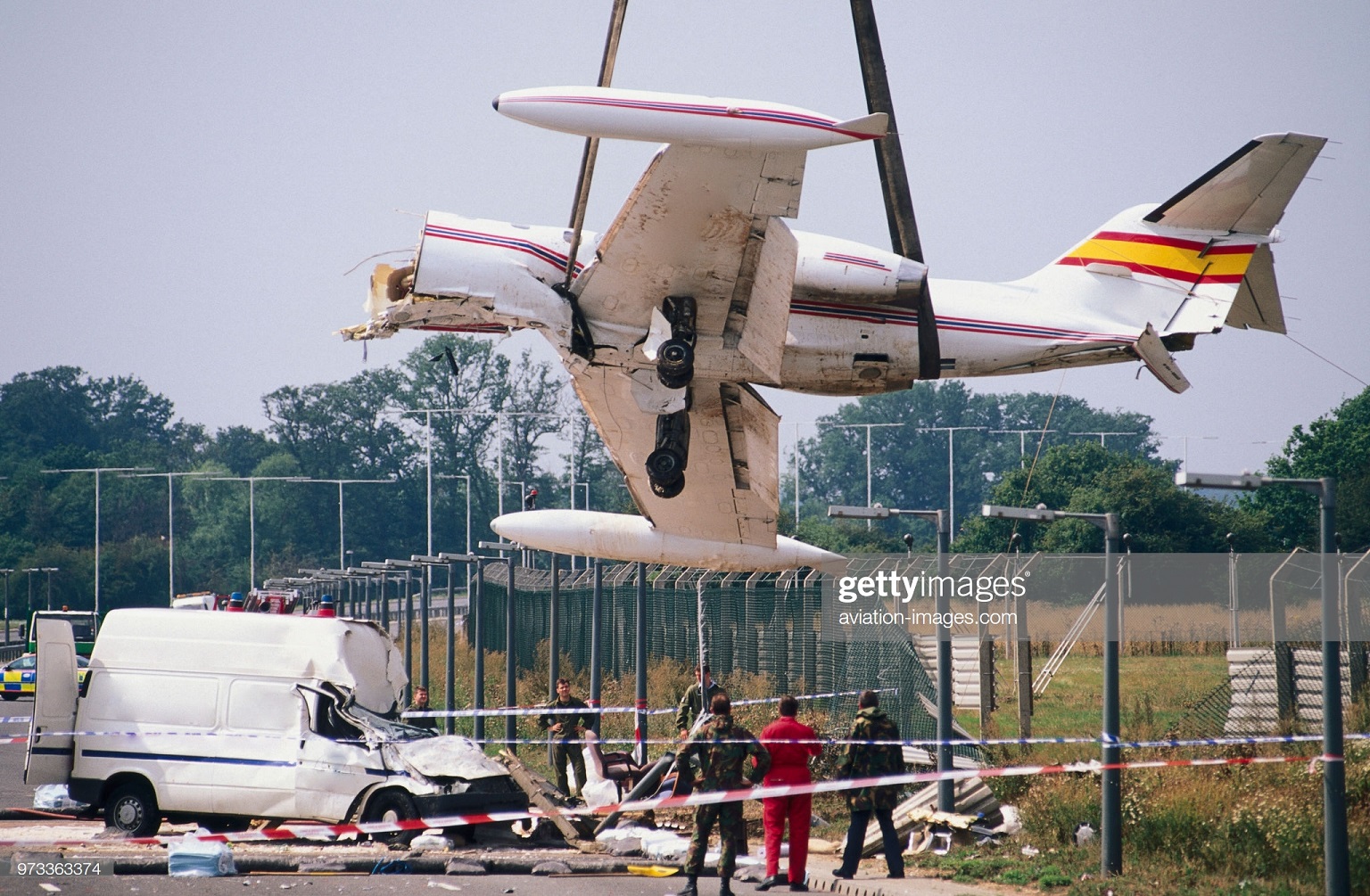
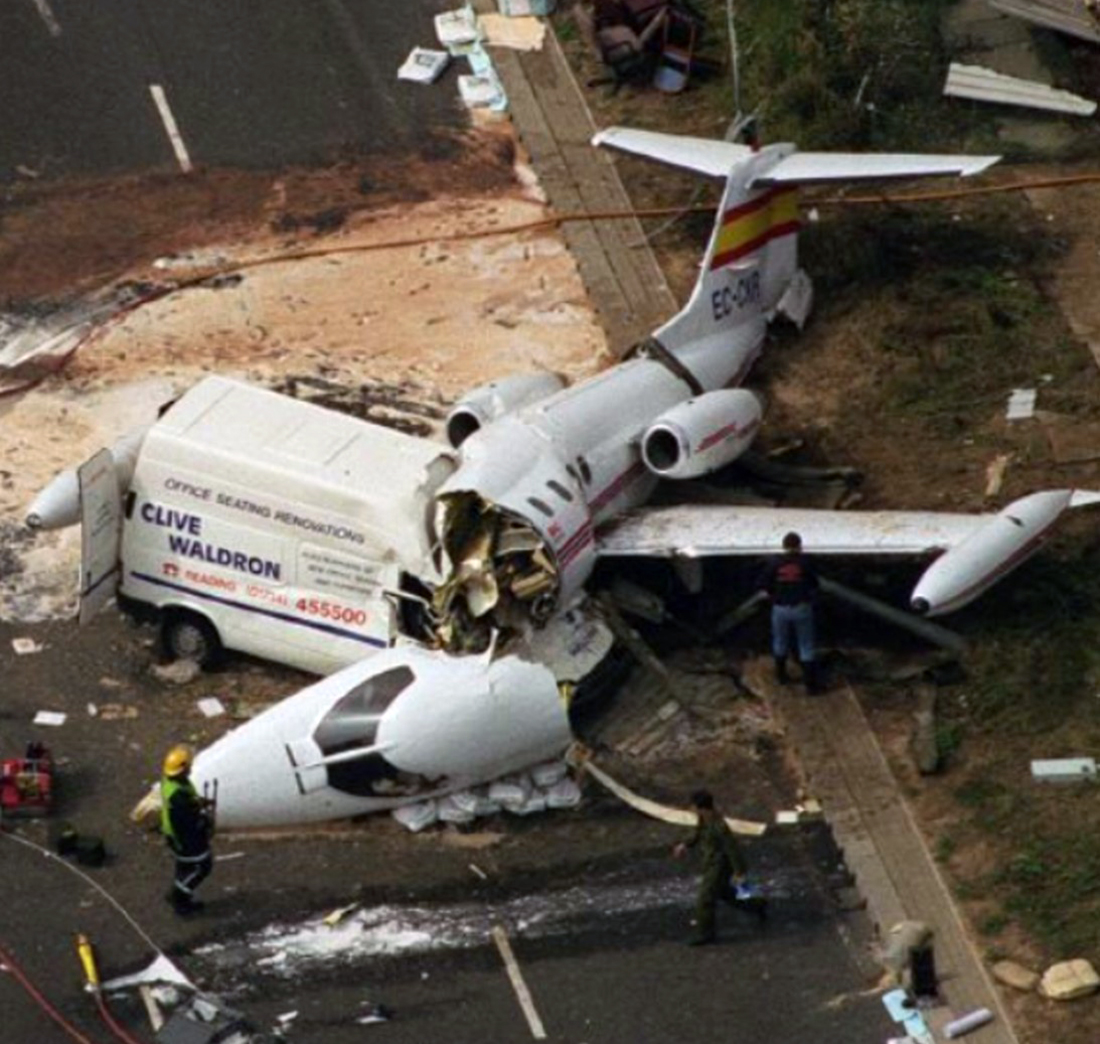
Learjet 25B EC-CKR arrived near Northolt following a flight from Palma de Mallorca. Due to the presence of priority traffic which was due to depart Northolt at that time, the flight was extended down wind to a distance of 10 nm before the crew received vectors and descent instructions for the final approach to runway 25. At 3.5nm short of the runway the pilot was asked to confirm that his landing gear was down and locked as is normal procedure at Northolt. After some rephrasing of this question, the landing gear was confirmed down, however during this exchange the aircraft was seen to deviate above the glidepath. At 2.5 nm, landing clearance was confirmed and the aircraft was advised of the surface wind and the fact that there was a 4 kt tailwind. The aircraft was also advised that it was above the glide path. At the decision altitude which was at approximately half a mile from the runway the aircraft was still above the glidepath although seen to be correcting to it. On arrival at the runway the aircraft was observed to land some distance beyond the normal touchdown point. Towards the end of the landing roll it veered to the right and then swerved to the left and overran the end of the runway. It collided with three lighting stanchions and continued in a south-westerly direction towards the airfield boundary which is marked by a high chain-link fence. After bursting through the boundary fence the aircraft ran onto the A40 trunk road and was almost immediately in collision with a Ford Transit van on the east bound carriageway, and seriously injuring its driver. The aircraft came to rest in the left hand lane of the road with the van embedded in the right side of the fuselage immediately forward of the right wing.
Probable cause:
The following causal factors were identified:
(1) The commander landed the aircraft at a speed of 158 (+/- 10 kt) and at a point on the runway such that there was approximately 3,125 feet (952 metres) of landing run remaining;
(2) The commander did not deploy the spoilers after touchdown;
(3) The first officer did not observe that the spoilers had not been deployed after touchdown;
(4) At a speed of 158 (+/- 10 kt) with spoilers retracted and given the aircraft weight and atmospheric conditions prevailing, there was insufficient landing distance remaining from the point of touchdown within which to bring the aircraft to a standstill;
(5) The commander allowed himself to become overloaded during the approach and landing. The safeguards derived from a two crew operation were diminished by the first officer’s lack of involvement with the final approach.
Final Report:
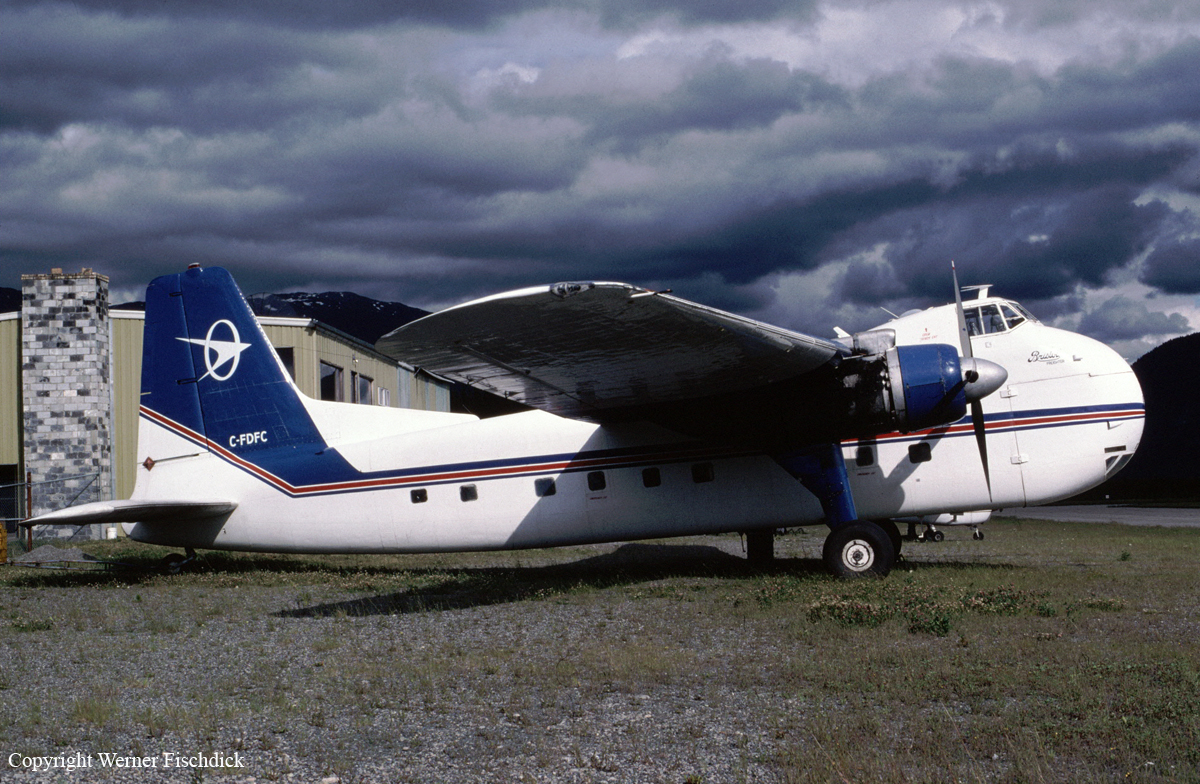
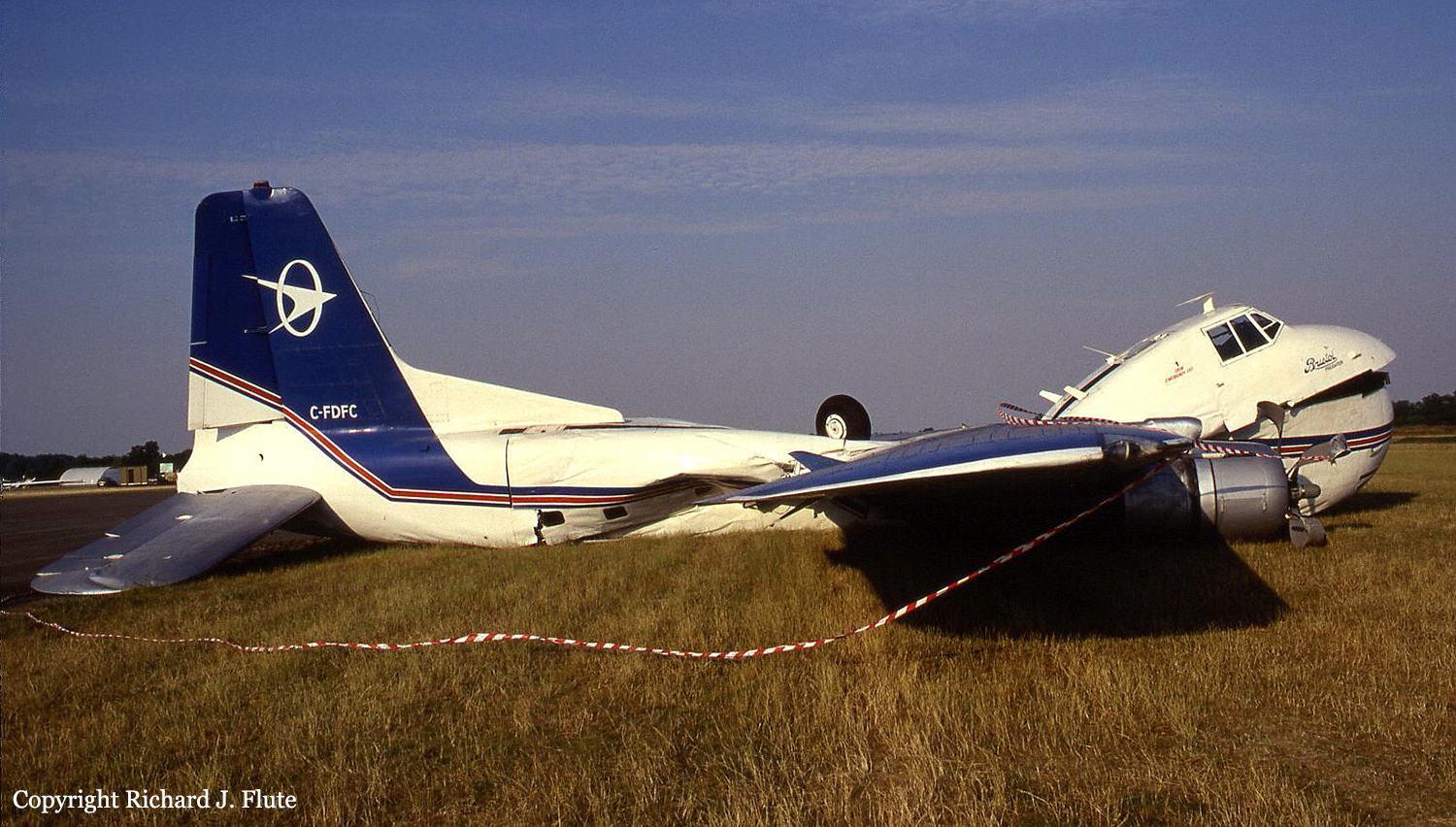
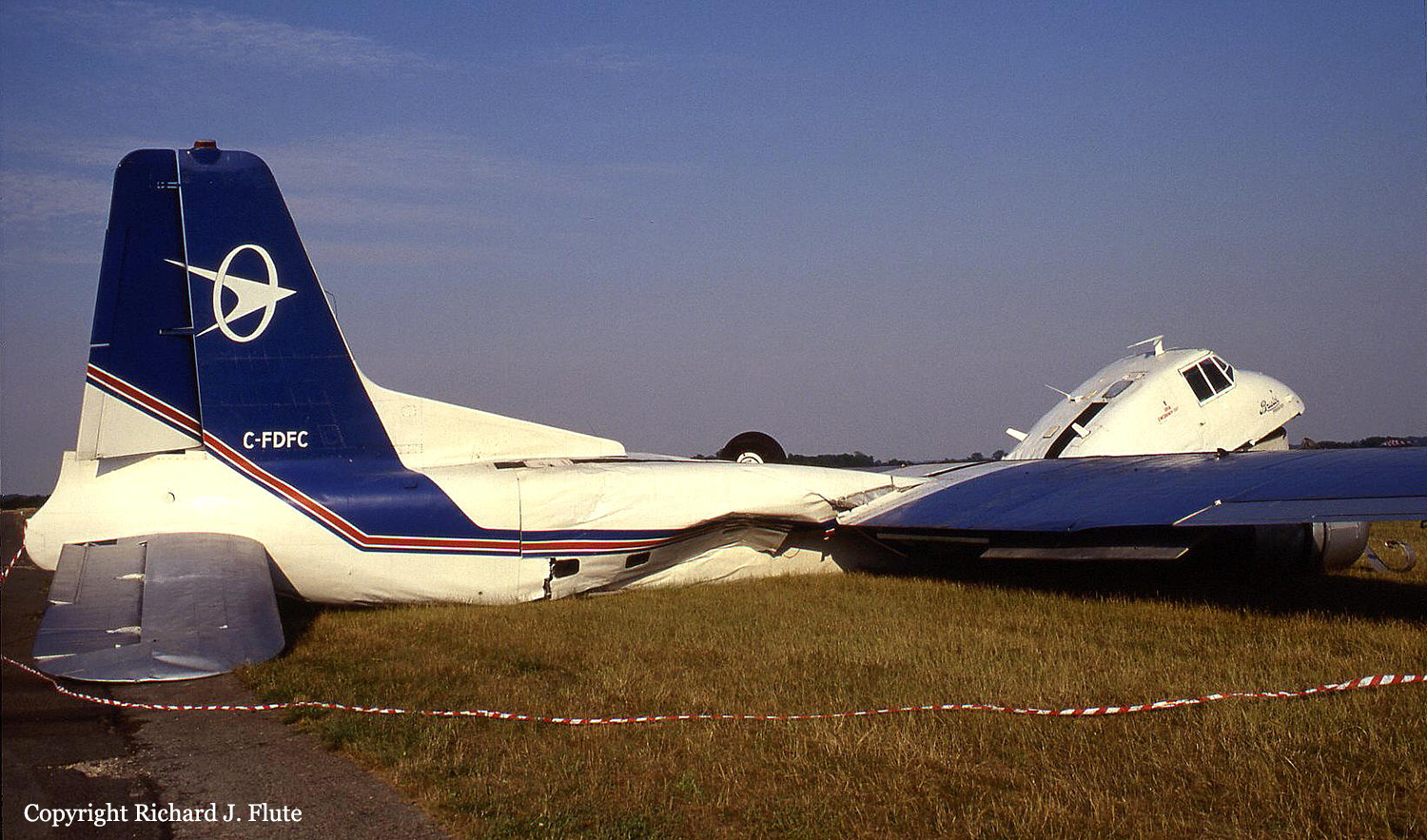
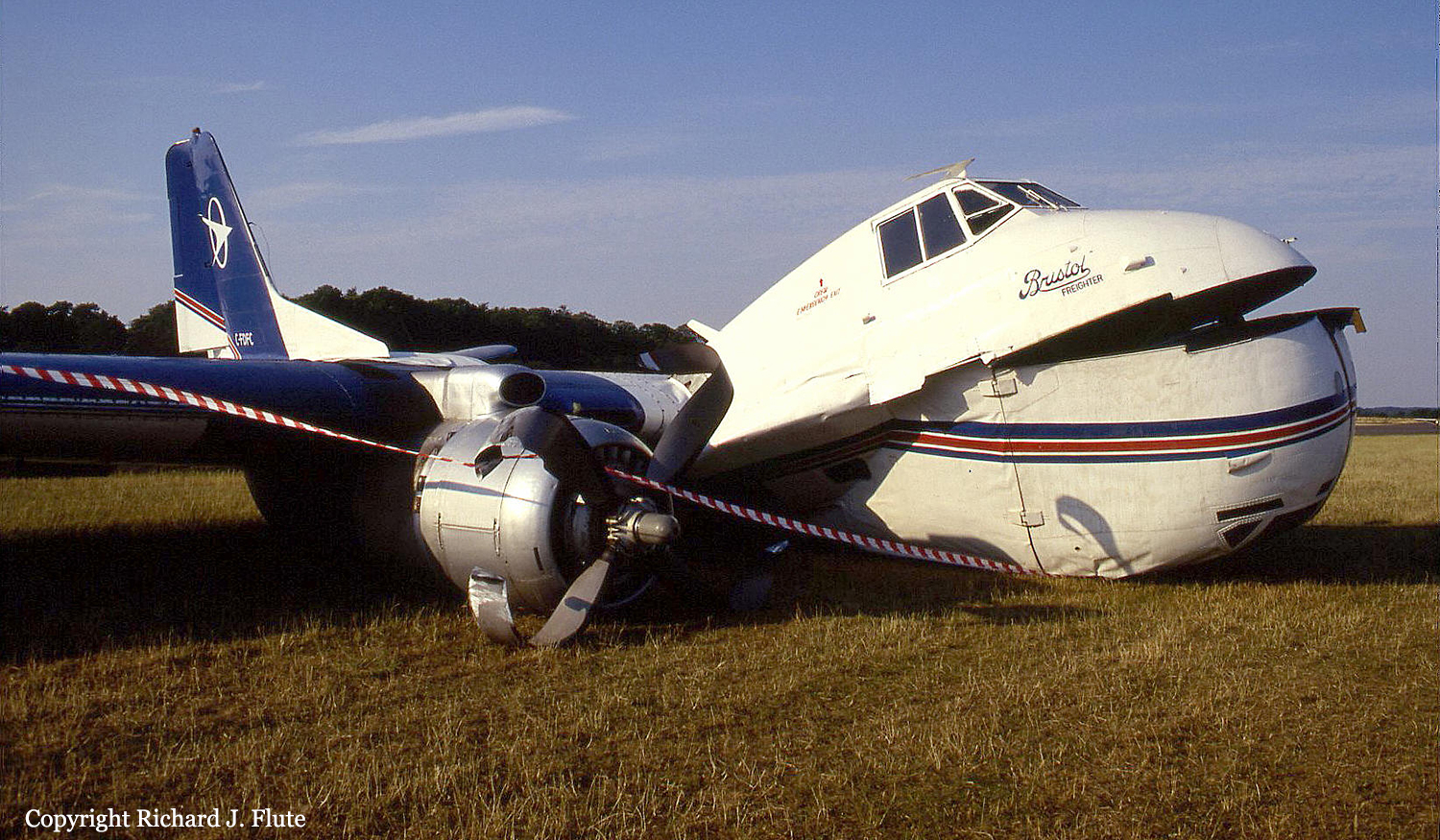
Crash of a Bristol 170 Freighter Mk 31M in Enstone

Date & Time: Jul 18, 1996 at 1135 LT
Type of aircraft:
Registration:
C-FDFC
Flight Phase:
Flight Type:
Survivors:
Yes
Schedule:
Enstone - Bristol
MSN:
13218
YOM:
1954
Region:
Crew on board:
2
Crew fatalities:
Pax on board:
6
Pax fatalities:
Other fatalities:
Total fatalities:
0
Captain / Total flying hours:
11000
Captain / Total hours on type:
1300.00
Copilot / Total hours on type:
60
Circumstances:
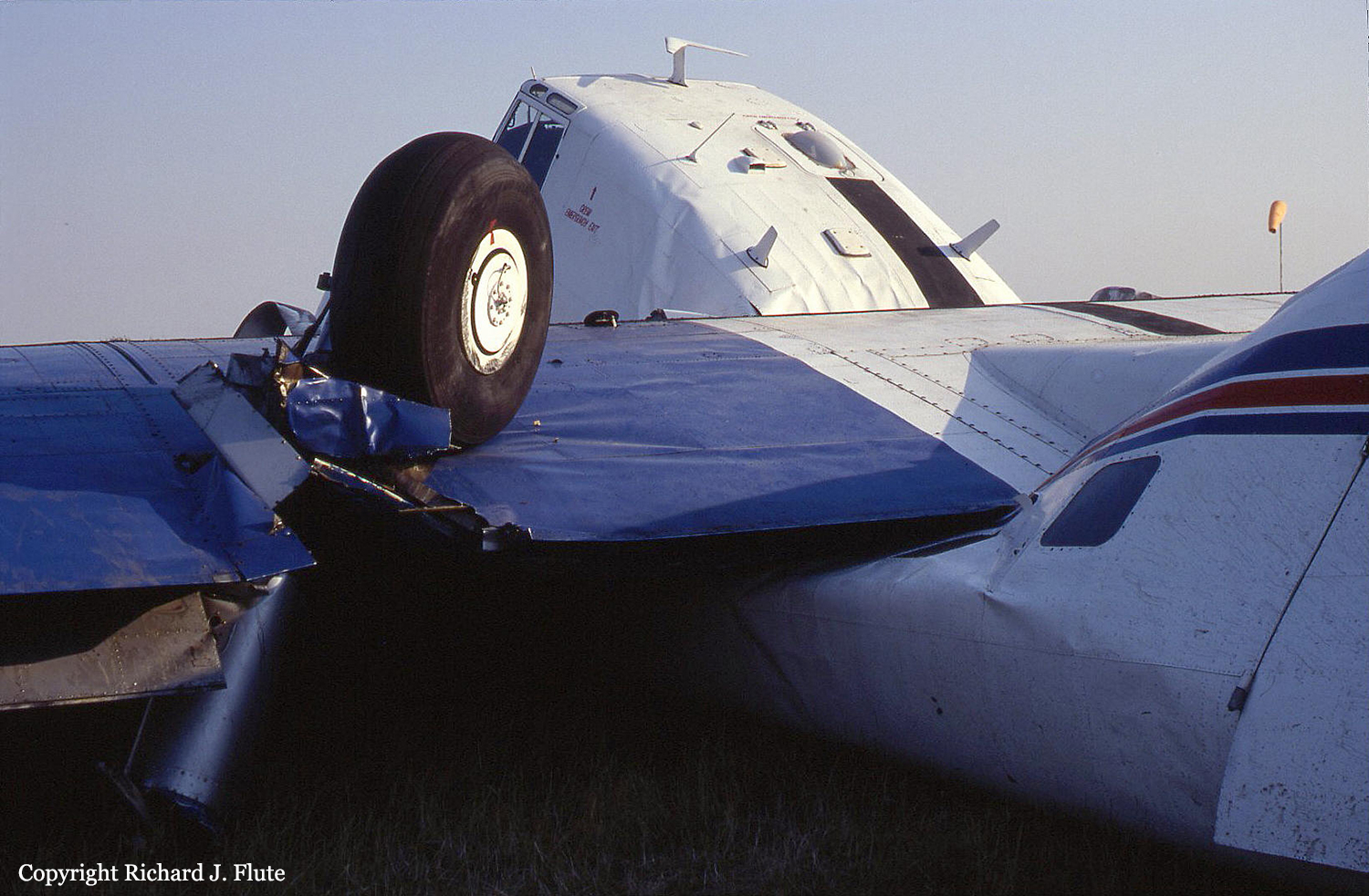
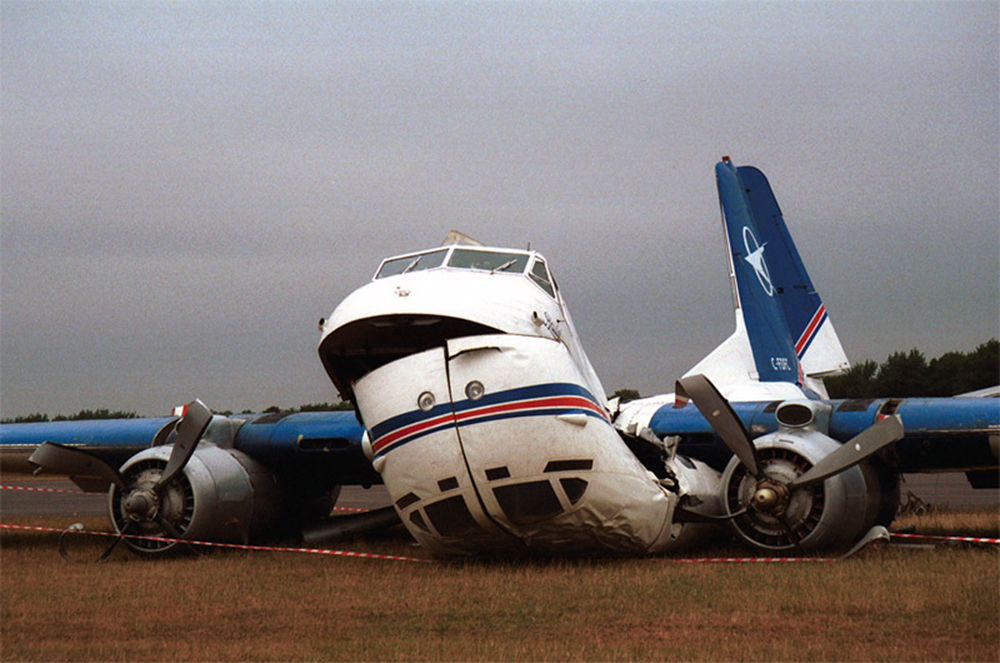
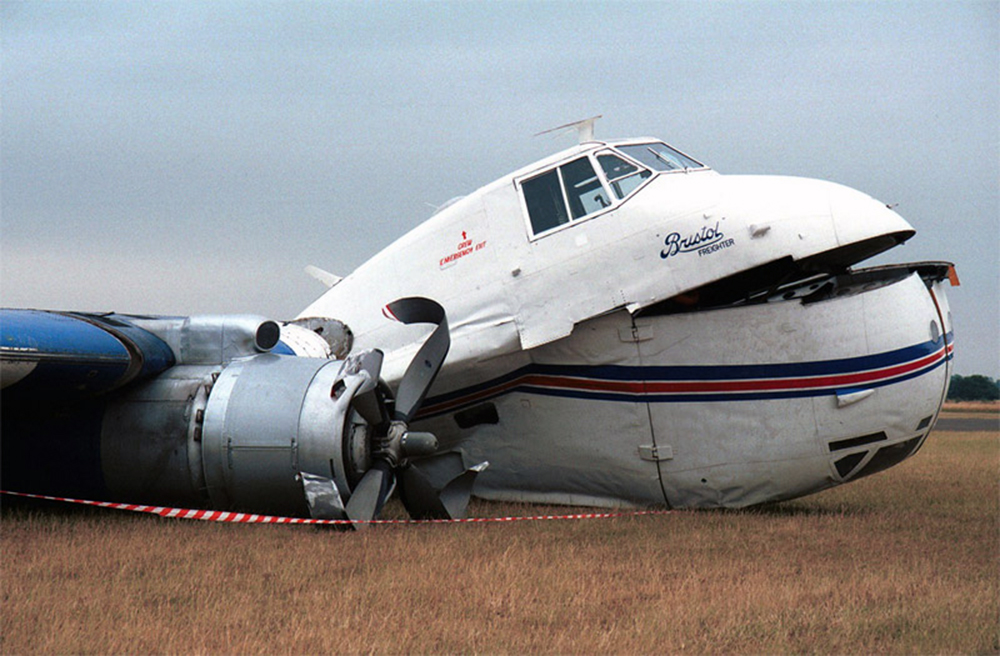
The weather at the departure airfield consisted of a light and variable wind, good visibility and a temperature of 20ºC. At the start of the take-off run the aircraft, which was being flown by the copilot, who is also an experienced pilot with some 60 hours on type, began to swing to the right. Corrective action caused it to swing to the left but, after further correction,the aircraft continued accelerating and swing to the right. The Bristol Freighter is well known for its tendency to swing on takeoff. The commander joined the co-pilot on the controls and attempted to assist in correcting the right-hand swing. It became apparent to the pilots that they would be unable to prevent the aircraft running over the edge of the runway and, as there were people standing by the edge and a small control tower building behind them, they applied full up-elevator in an effort to avoid a collision. Because of the low airspeed at which this occurred, the aircraft stalled and the left wing tip hit the ground. This caused the aircraft to turn so that it was then travelling sideways which resulted in the landing gear collapsing as it touched the runway. The aircraft then slid off the runway onto the grass. There was no fire and the only injuries were sustained by three of the aircraft passengers.
Final Report:
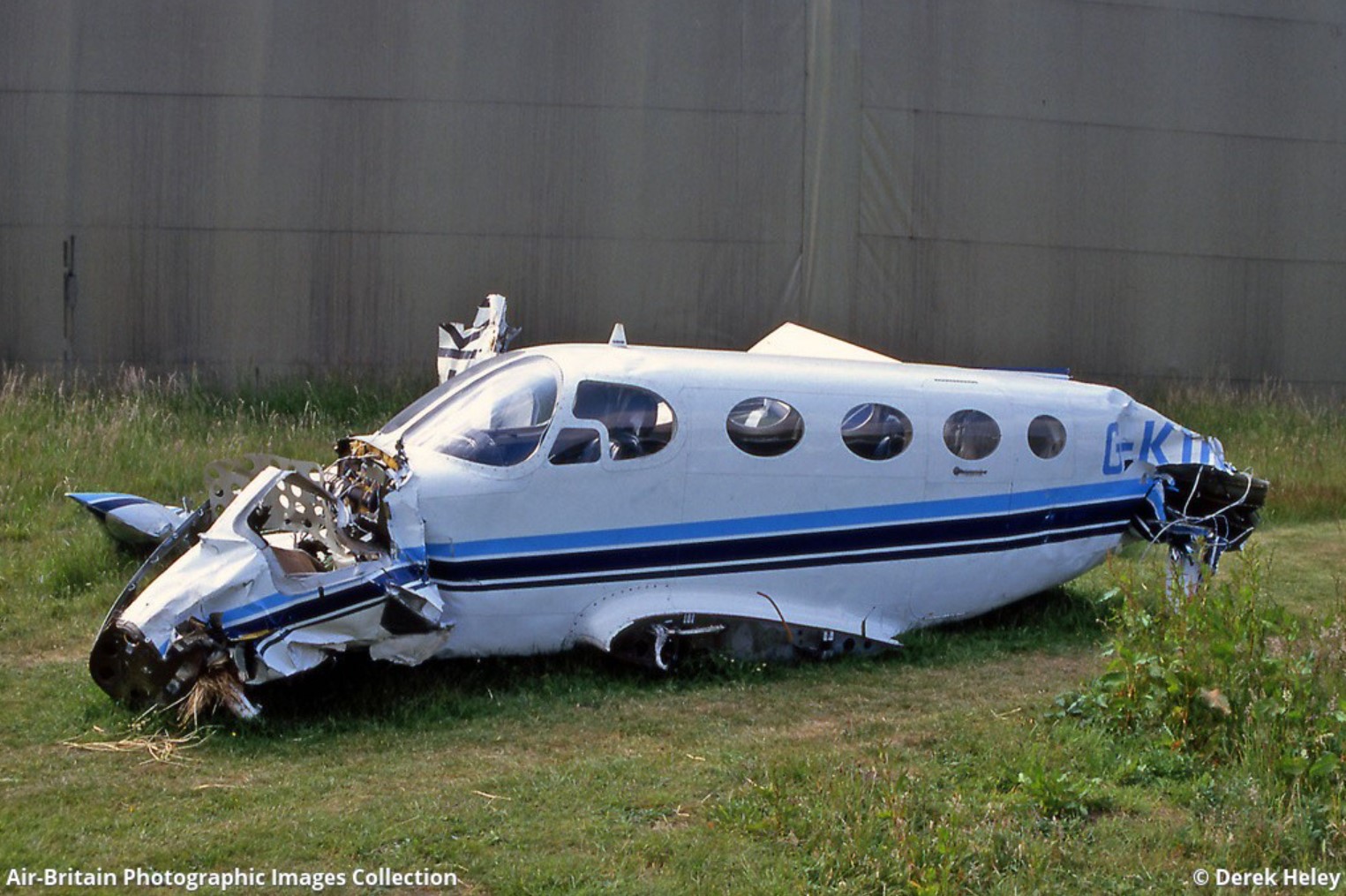
Crash of a Cessna 340 in Halfpenny Green

Date & Time: May 30, 1996 at 1603 LT
Type of aircraft:
Operator:
Registration:
G-KINK
Flight Type:
Survivors:
Yes
Schedule:
Halfpenny Green - Halfpenny Green
MSN:
340-0045
YOM:
1972
Region:
Crew on board:
1
Crew fatalities:
Pax on board:
2
Pax fatalities:
Other fatalities:
Total fatalities:
0
Captain / Total flying hours:
605
Captain / Total hours on type:
289.00
Circumstances:
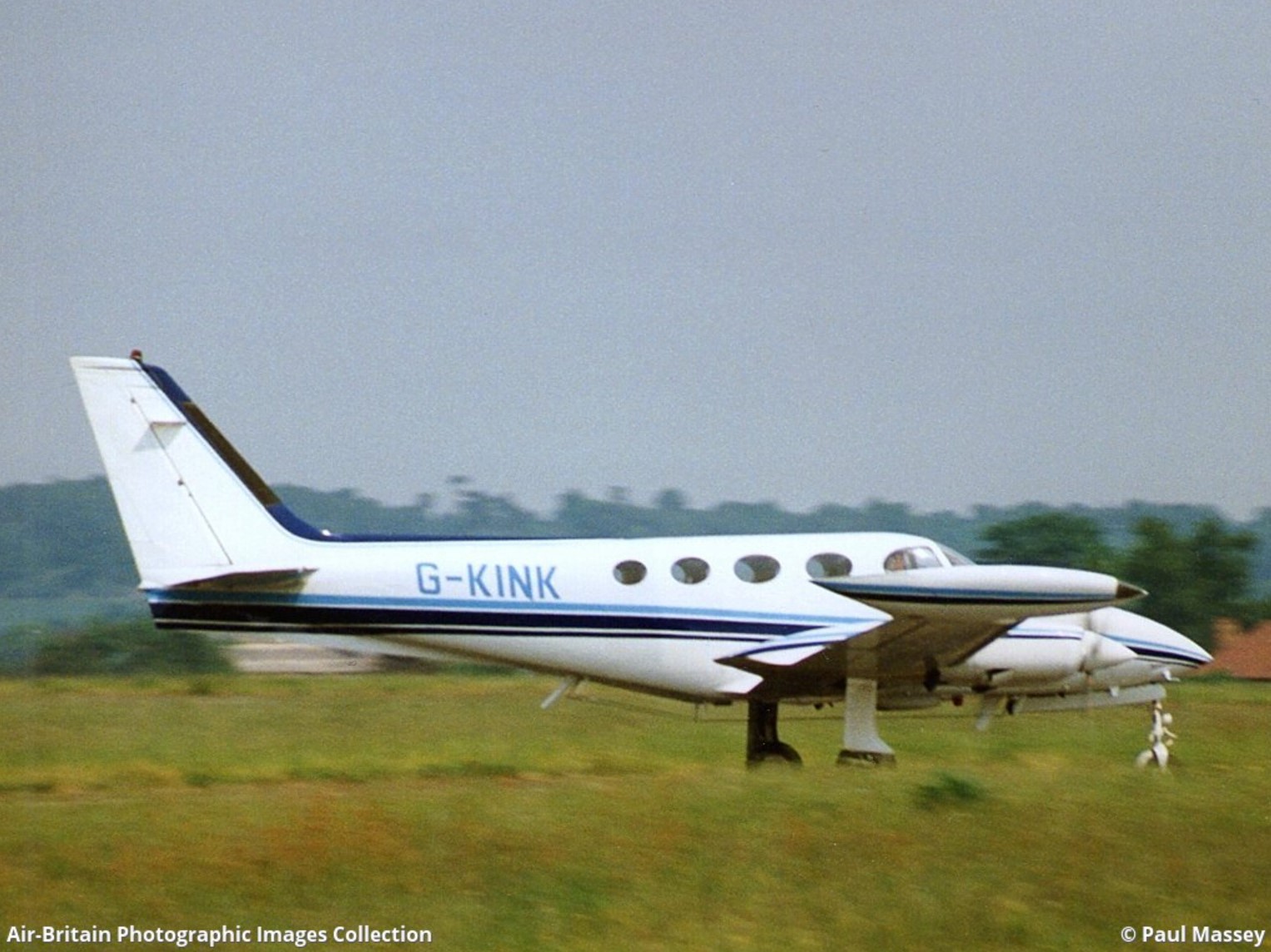
The pilot carried out extensive pre-flight checks of G-KINK which had been little used during the preceding six months. During these checks he established visually that the left main (tip) fuel tank was 30% full and the right main fuel tank was 40% full(the tanks can each hold 51 US gallons which equates to approximately 306 lb per side). Both wing (auxiliary) tanks were full but the locker tanks were empty. At 1539 hrs the aircraft departed Halfpenny Green in CAVOK weather conditions for a brief local flight to the west of the airfield. After climbing to an altitude of 2,500 feet and establishing cruise power conditions, the pilot changed the fuel valve selectors from main to auxiliary tanks on both engines. A few minutes later,he set course for a return to Halfpenny Green and changed the fuel selectors back to main tanks on both engines. At this stage the left tank indicated 50 lb remaining and the right tank indicated 70 lb remaining but the pilot had established during his pre-flight checks that these tank gauges were over-reading. About 13 nm from the airport the pilot lowered one stage of flapand obtained 'clearance' from Halfpenny Green Information foran overhead join for landing on Runway 16 from a left-hand circuit. The aircraft overflew the airport and after reducing engine power to 20 inches manifold pressure and 2,200 RPM, the pilot manoeuvred to the west of Runway 16 where he descended on the 'dead side' in preparation for the downwind leg. In his report to the AAIB, the pilot stated that on throttling back, both engines faltered whereupon he checked that all thethrottle, pitch and mixture levers were fully forward, the fuel pumps were switched on and that main tanks were selected on both engines. He then declared an emergency on the AFIS frequency and requested an immediate left orbit with the intention of landing on Runway 16. Initially power was restored on both engines and the pilot lowered the landing gear in preparation for a shortfield landing on Runway 16. However, at approximately 300 ft agl, whilst still travelling downwind, the left engine stopped. There was no time to feather the propeller but the pilot applied right rudder and, with the aircraft descending rapidly, he decided to force-land straight ahead into a field of standing crop to the north west of the airfield. Unfortunately, whilst manoeuvring to avoid farm buildings, the aircraft's left wing tip struck electricity power lines. During the subsequent crash landing the aircraft slid about 50 yards and latterly it 'cartwheeled' in the standing crop and came to rest upside down. There was no fire and all three occupants remained suspended by their seat harnesses. The pilot noticed a strong smell of fuel which was dripping from the region of the fuel valve selectors. He switched off the battery master and engine magneto switches; he also attempted to select both fuel valves to the OFF position but initially he was unsuccessful. After some difficulty, probably due to the weight of the now inverted boarding steps, the pilot succeeded in opening the main cabin door and together with his passengers, he vacated the aircraft and moved to a safe distance to await the arrival of the emergency services. However, before long, when he was convinced there was no longer any danger of fire, he returned to the aircraft to recover documents and valuables. At the same time he confirmed that the electrical switches were off and he succeeded in turning the left engine fuel valve selector to OFF. However, the right fuel valve selector could not be moved to the OFF position.
Probable cause:
Post accident checks of the wreckage revealed that both propellers were bent rearwards in a manner consistent with low power or windmilling. All the fuel tanks were disrupted and it was not possible to reconstruct the disposition of fuel in the various tanks. Nevertheless,there was fuel between the flow divider and the fuel injectors of the right engine but no fuel in the corresponding locations on the left engine indicating that it had stopped due to fuel starvation. The aircraft maintenance organisation which recovered the wreckage stated that the fuel valves on the Cessna 340 must be operated with great care. The selectors have indicating bands which maybe wider than the selectable range and the valves must be carefully placed in the correct detent by feel as well as by sight. Moreover,during an investigation into a similar accident to Cessna 340A,GXGBE reported in AAIB Bulletin 11/93, it was noted that both valve selectors are positioned athwartships whichever of the two main tanks is selected. Therefore, it is possible inadvertently to run both engines off the same main fuel tank resulting in near simultaneous engine failure when the fuel in the tank is exhausted. The senior fireman who attended the accident scene also attempted to move the right engine fuel valve selector to the OFF position without success. He reported that the selector was stuck and would not move in either direction. He remembered, although he could not be absolutely certain, that the selector was pointing to the "9 o'clock" position when viewed from the normal aspect which corresponds to selecting the right engine to feed from the left main tank. If this was indeed the case, and the left main tank ran dry, it is likely that the left engine would stop slightly before the right engine because its fuel lines from the left tank are shorter. This sequence of events is consistent with the sum of the evidence.
Final Report:
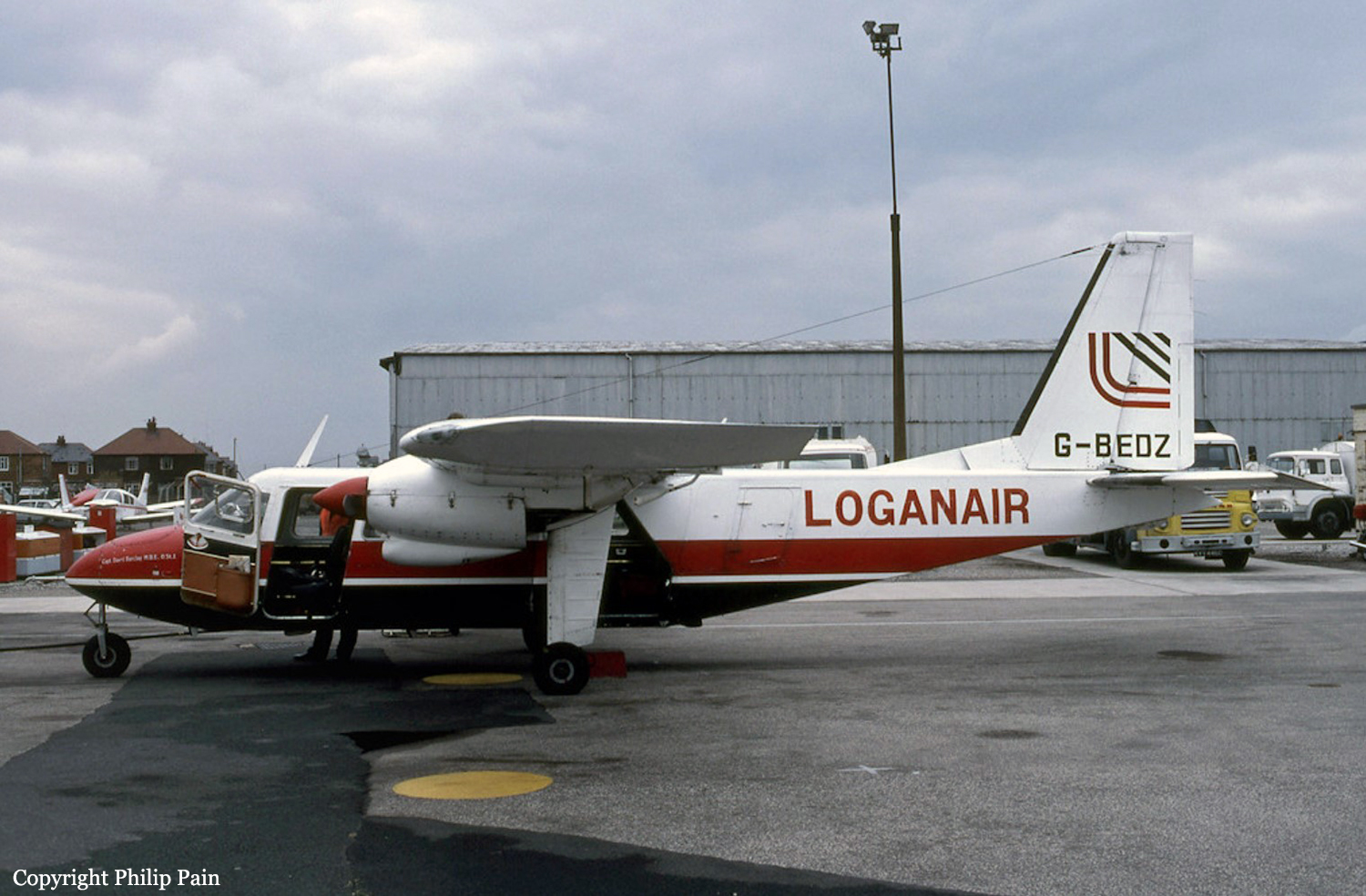
Crash of a Britten-Norman BN-2A-26 Islander in Tingwall: 1 killed

Date & Time: May 19, 1996 at 2336 LT
Type of aircraft:
Operator:
Registration:
G-BEDZ
Flight Type:
Survivors:
Yes
Schedule:
Inverness - Tingwall
MSN:
544
YOM:
1977
Region:
Crew on board:
1
Crew fatalities:
Pax on board:
2
Pax fatalities:
Other fatalities:
Total fatalities:
1
Captain / Total flying hours:
3879
Captain / Total hours on type:
305.00
Aircraft flight hours:
14700
Aircraft flight cycles:
39900
Circumstances:
At 2300 hrs the two Tingwall fire attendants opened the airstripfor the returning flight. The airstrip lights were turned on and the fire appliance made ready. The firemen reported that,sometime later, the pilot radioed Tingwall asking for the wind speed and direction. This was passed as 090° to 120°/20 kt. One of the firemen also reported that at the time there was veryfine drizzle but the visibility was good. Analysis of recorded radar data from the radar head at Sumburgh confirmed that the aircraft routed over Lerwick and then flew north turning west inland over Kebister Ness. The doctor reported that, on approaching Lerwick he could see the lights of the town and the visibility was good enough for him to identify his house. The aircraft then turned southwards to join downwind right hand for Runway 02. The doctor stated that there were not many lights on the ground to the north of the airstrip but some to the south in the vicinity of Veensgarth. He also stated that the ride at this stage was moderately turbulent. At the end of the downwind leg the aircraft banked 'sharply' to the right to position on finals. It had, however, been blown through the centreline by the gusty easterly wind and was to the left of the required approach. The doctor confirmed that although the aircraft appeared to be at the correct height for its position he could see that when they were lined up the airfield lights were to the right of the windscreen. The pilot, unable to complete the approach, carried out a go-around to the left of the runway,climbed to 550 feet and turned right to enter the downwind leg again. The doctor reported that the engines sounded normal throughout this manoeuvre and the runway lights were clearly visible again as the aircraft became established on the downwind track. Several witnesses saw the aircraft fly downwind and turn onto the final approach. One witness, positioned on higher ground to the east of the runway threshold, stated that the aircraft flew downwind along the line of the houses at Veensgarth and 'asit turned it descended all the while'. Radar information shows that for this second attempt the pilot extended the downwind legby approximately 800 metres before turning towards the airfield. The rapid turn onto finals was described by the doctor as being very steep but without the increase in 'g' that he would have expected for such an steep angle of bank. The nurse described the sensation as 'the aircraft dropped, with my cheeks and whole body being forced upwards'. Throughout the turn the pilot was seen by the passengers to be generally looking to the right, presumably for the airfield. Seconds later the aircraft hit the ground. After the impact the nurse found herself still in her seat with the aircraft in an upright position. She was relatively uninjured and soon released her seatbelt, released her trapped right foot and struggled clear of the wreckage through the open right rear aircraft window. She ran around the tail section to the doctor and released debris from around his head. Unable to move him because of his injuries, she ran to a nearby house to summon the emergency services. The doctor, although seriously injured, remained conscious throughout and managed to clamber clear of the aircraft to lie on the round some ten feet from the wreckage. The pilot had received fatal injuries at impact.
Final Report:
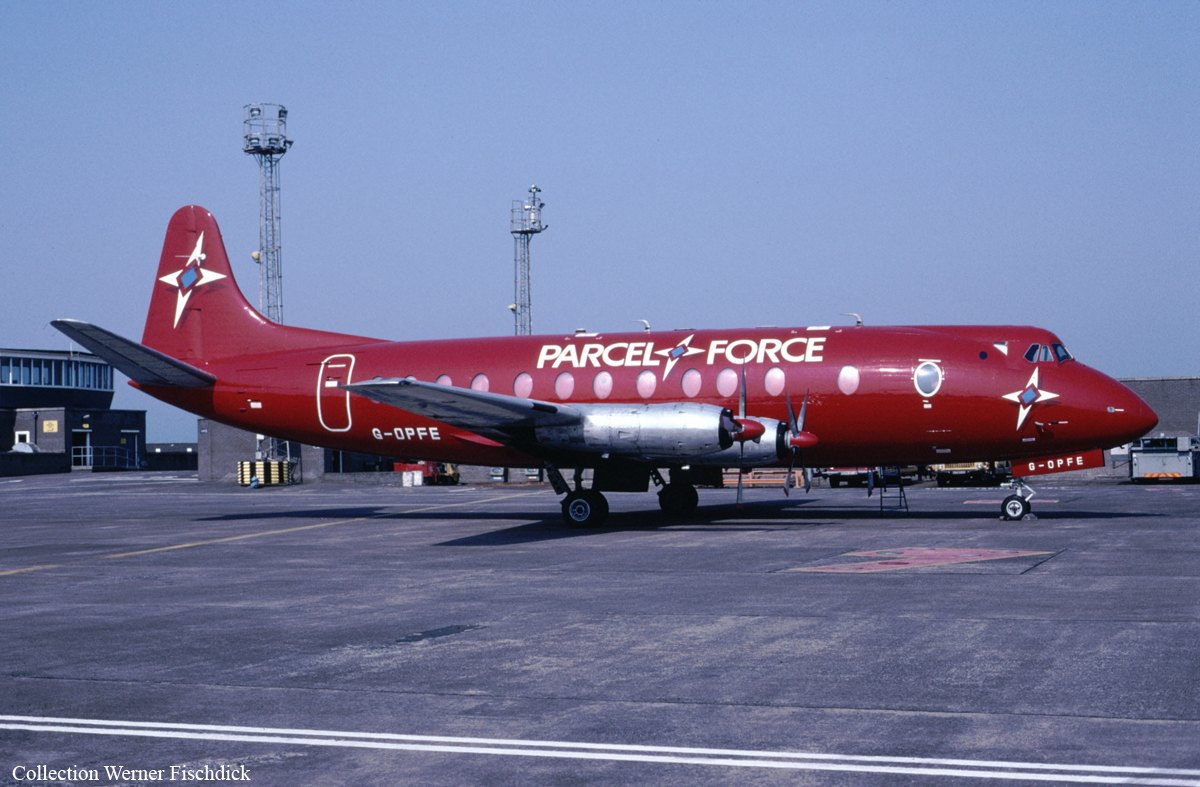
Crash of a Vickers Viscount 808 in Belfast

Date & Time: Mar 24, 1996 at 2135 LT
Type of aircraft:
Operator:
Registration:
G-OPFE
Flight Type:
Survivors:
Yes
Schedule:
Belfast - Belfast
MSN:
291
YOM:
1958
Region:
Crew on board:
2
Crew fatalities:
Pax on board:
0
Pax fatalities:
Other fatalities:
Total fatalities:
0
Captain / Total flying hours:
15601
Captain / Total hours on type:
3918.00
Circumstances:
The two crew members had reported at Stansted at 1130 hrs to catch a passenger flight to Belfast where they were rostered for a training detail; immediately prior to this duty day, they both had two days off. The first officer had completed a command course on the simulator the previous week and this training detail was part of his conversion to the left hand seat; the training captain had also been involved in the simulator the previous week. The detail was planned to involve two flights; the first would cover the mandatory items for the type rating test (1179) and the second would complete the first officer's base check and initial line check. On arrival at Belfast, the crew checked in to the airport hotel,changed into uniform and went to the meteorological office at approximately 1600 hrs for a weather briefing. This briefing indicated that the weather was close to the limits required for the completion of the type rating test items but, with a forecast of a suitable area to the north of the airfield, the crew decided to carry on with the detail. For the first flight, G-OPFE left the stand at 1815 hrs and took off at 1827 hrs. All the necessary items were completed successfully, albeit with some difficulty because of the variable cloud base, and the crew landed at 2010 hrs. By 2015 hrs, G-OPFE was back on stand and the crew kept the engines running while they had a short brief for the second flight. At 2025 hrs,they taxied off stand and positioned for a departure off Runway 07. On this second flight, following a take off at 2031 hrs, the training captain initiated an outboard engine failure just after VR by retarding the associated throttle. The appropriate remedial actions were simulated andthe first officer carried out a 3 engine ILS approach and go-around to Runway 17; there had been no abnormal switch positions required because of the simulated engine failure. The go-around was followed by a 3 engine VOR approach to landon Runway 07. The different runways were used because there is no ILS on Runway 07, the runway in use. After landing,the first officer repositioned G-OPFE and made a full power take-off from Runway 07, commencing his roll at the intersection with Runway 17. The aircraft was climbed to 4,000 feet amsl and established in the cruise at 200 kt IAS. During this cruise, there were no unserviceabilities noted with G-OPFE. The crew continued in a north-westerly direction until approximately 5 nm from Eglinton Airport when they requested, and were given, permission to turn back towards Belfast International Airport. For the subsequent approach, the surface wind was 090°/15 kt,visibility was 2,500 metres and the cloud was scattered at 1,000 feet and overcast at 4,200 feet agl. After establishing contact with Aldergrove radar, the crew were cleared to commence a VOR/DME approach to Runway 07 for afinal landing. It was confirmed from the CVR that the 'Initial Approach' checks were completed 'down to the line'. However,although the first officer at one stage commented that it was a bit early to complete the rest of the 'Initial Approach' checks,there was no evidence that these or the 'Finals' checks were subsequently requested or actioned. The landing gear would normally be selected down during the 'Initial Approach, below the line' checks and confirmed during the 'Finals' checks. The final approach profile was closely monitored by the commander and, from comments on the CVR, the approach appeared very stable. In the later stages of approach, the first officer was heard asking for 85% flap andthe training captain was heard confirming this selection. These were the only comments heard referring to flap selection or position,although it is acceptable company practice for crews to request flap changes by visual means. The final flap position (100%)is used to decrease ground roll and is selected during the flare or after touchdown. Other relevant comments which were heardon the CVR included a reference to landing lights; this is the last item on the "Finals" checks. As the throttles were retarded in the flare, the gear warning horn was heard on the CVR, followed within 23 seconds by sounds of the propellers contacting the runway surface. After coming to a stop on the runway, the crew secured and evacuated the aircraft. The airport Rescue and Fire Fighting Service were on the scene inless than one minute.
Probable cause:
Subsequent runway and aircraft examination showed that G-OPFE had made a gentle touchdown on Runway 07 close to the PAPI position, somewhat left of the centreline. Initial contact wason both inboard propeller tips. After a few metres, both outboard propellers contacted the runway, progressively followed by radio aerials mounted beneath the fuselage, the fuselage undersurface, the inboard part of both inboard flaps and the No 3 engine nacelle. The aircraft continued down the left side of the runway,across the intersecting Runway 17/35, and came to rest on Runway 07 after a ground slide of approximately 480 metres. Damage consisted of severe bending and scraping of all propeller blades, abrasion of much of the undersurface of the fuselage and the No 3 engine nacelle lower cowl, and abrasion and moderate distortion of the inboard flaps A very small quantity of fuel was reportedly released from the No 3 engine nacelle. There was no fire. Examination showed that the flaps had been in the fully deployed position (100%, 47°) at touchdown and the flap lever was found selected at 47°. All three landing gear legs had been fully retracted at touchdown and throughout the ground slide. After the aircraft had been lifted, the three legs deployed into downlock without difficulty using the emergency lowering procedure. The landing gear selector was found with the 'Down' button pushed in, but the electric actuator that is switched by the selector was found in the fully up position; this actuator had not been disturbed during recovery operations. The landing gear indicator was found in the 'Day' (ie bright) setting. Examination and testing of relevant systems was carried out, except for the hydraulic generation system; this indicated that the landing gear operating and indication systems functioned normally.
Final Report:

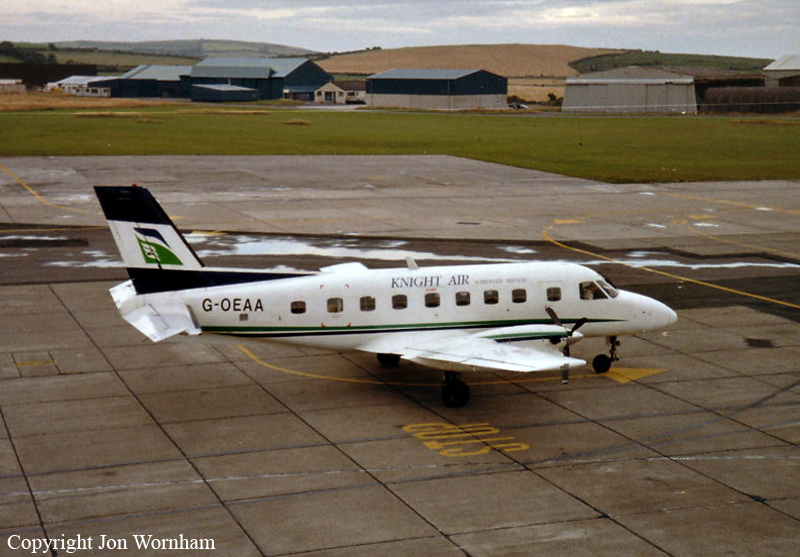
Crash of an Embraer EMB-110P1 Bandeirante near Leeds: 12 killed

Date & Time: May 24, 1995 at 1751 LT
Operator:
Registration:
G-OEAA
Survivors:
No
Schedule:
Leeds - Aberdeen
MSN:
110-256
YOM:
1980
Flight number:
NE816
Region:
Crew on board:
3
Crew fatalities:
Pax on board:
9
Pax fatalities:
Other fatalities:
Total fatalities:
12
Captain / Total flying hours:
3257
Captain / Total hours on type:
1026.00
Copilot / Total flying hours:
302
Copilot / Total hours on type:
46
Aircraft flight hours:
15348
Circumstances:
On the morning of 24 May 1995 the aircraft had returned to its base at Leeds/Bradford from Aberdeen, U.K. on a scheduled passenger flight landing at 09:44 local time. The crew, which was not the one later involved in the accident, stated that all of the aircraft's systems and equipment had been serviceable during the flight. Some routine maintenance was performed on the aircraft which was later prepared for a scheduled passenger flight, NE816, to Aberdeen. It was positioned at the passenger terminal where it was taken over by the crew which was to operate the service, comprising the commander, who occupied the left hand seat, the first officer and a flight attendant. Nine passengers were boarded. The weather at Leeds/Bradford Airport was poor with Runway Visual Range (RVR) reported as 1,100 metres; scattered cloud at 400 feet above the aerodrome elevation of 682 feet and a light south-easterly wind. It was raining and the airfield had recently been affected by a thunderstorm. The freezing level was at 8,000 feet and warnings of strong winds and thunderstorms were in force for the Leeds/Bradford area. The crew called ATC for permission to start the engines at 17:41 hrs. Having backtracked the runway to line up, the aircraft took-off from runway 14 at 17:47 hrs and the crew was instructed by ATC to maintain the runway heading (143°M). The aircraft began to turn to the left shortly after becoming airborne. One minute and fifty seconds after the start of the take-off roll and as the aircraft was turning through a heading of 050° and climbing through 1,740 feet amsl, the first officer transmitted to Leeds/Bradford aerodrome control: "Knightway 816 we've got a problem with the artificial horizon sir and we'd like to come back." The aerodrome controller passed instructions for a radar heading of 360° and cleared the aircraft to 3,000 feet QNH. These instructions were read back correctly but the aircraft continued its left turn onto 300° before rolling into a right hand turn with about 30° of bank. About 20 seconds before this turn reversal, the aircraft had been instructed to call the Leeds/Bradford approach controller. The aircraft was now climbing through an altitude of 2,800 feet in a steep turn to the right and the approach controller transmitted: "I see you carrying out an orbit just tell me what i can do to help". The first officer replied: "Are we going straight at the moment sir" The controller informed him that the aircraft was at that time in a right hand turn but after observing further radar returns he said that it was then going straight on a south-easterly heading. The first officer's response to this transmission was: "Radar vectors slowly back to one four then sir please". The controller then ordered a right turn onto a heading of 340°. This instruction was correctly acknowledged by the first officer but the aircraft began a left hand turn with an initial angle of bank between 30° and 40°. This turn continued onto a heading of 360° when the first officer again asked "Are we going straight at the moment sir" to which the controller replied that the aircraft looked to be going straight. Seconds later the first officer asked: "Any report of the tops sir". This was the last recorded transmission from the aircraft, although at 17:52 hrs a brief carrier wave signal was recorded but it was obliterated by the controller's request to another departing aircraft to see if its pilot could help with information on the cloud tops. At this point, the aircraft had reached an altitude of 3,600 feet, having maintained a fairly constant rate of climb and airspeed. The ATC clearance to 3000 feet had not been amended. After the controller had confirmed that the aircraft appeared to be on a steady northerly heading, the aircraft immediately resumed its turn to the left and began to descend. The angle of bank increased to about 45° while the altitude reduced to 2,900 feet in about 25 seconds. As the aircraft passed a heading of 230° it ceased to appear on the secondary radar. There were four further primary radar returns before the aircraft finally disappeared from radar. There had been a recent thunderstorm in the area and it was raining intermittently with a cloud base of about 400 feet and a visibility of about 1,100 metres. Residents in the vicinity of the accident site reported dark and stormy conditions. Several witnesses described the engine noise as pulsating or surging and then fading just prior to impact. Other witnesses saw a fireball descending rapidly out of the low cloud base and one witness saw the aircraft in flames before it stuck the ground. All of the occupants died at impact. From subsequent examination it was apparent that, at a late stage in the descent, the aircraft had broken up, losing a large part of the right wing outboard of the engine, and the right horizontal stabiliser. There was some disruption of the fuselage before it struck the ground. The airborne structural failure that had occurred was the result of flight characteristics which were beyond the design limits of the aircraft following the loss of control shortly before impact.
Probable cause:
The following causal factors were identified:
- One or, possibly, both of the aircraft's artificial horizons malfunctioned and, in the absence of a standby horizon, for which there was no airworthiness requirement, there was no single instrument available for assured attitude reference or simple means of determining which flight instruments had failed.
- The commander, who was probably the handling pilot, was initially unable to control the aircraft's heading without his artificial horizon, and was eventually unable to retain control of the aircraft whilst flying in IMC by reference to other flight instruments.
- The aircraft went out of control whilst flying in turbulent instrument meteorological conditions and entered a spiral dive from which the pilot, who was likely to have become spatially disoriented, was unable to recover.
Final Report:
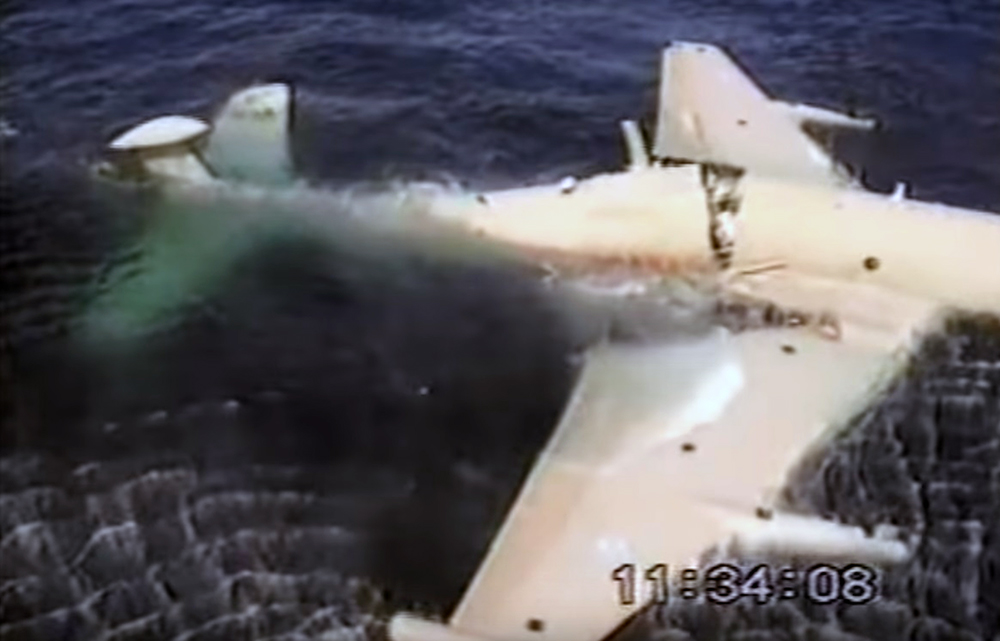
Crash of a BAe Nimrod MR.2 off RAF Lossiemouth

Date & Time: May 16, 1995
Type of aircraft:
Operator:
Registration:
XW666
Flight Phase:
Flight Type:
Survivors:
Yes
Schedule:
Kinloss - Kinloss
MSN:
8041
YOM:
1970
Region:
Crew on board:
7
Crew fatalities:
Pax on board:
0
Pax fatalities:
Other fatalities:
Total fatalities:
0
Circumstances:
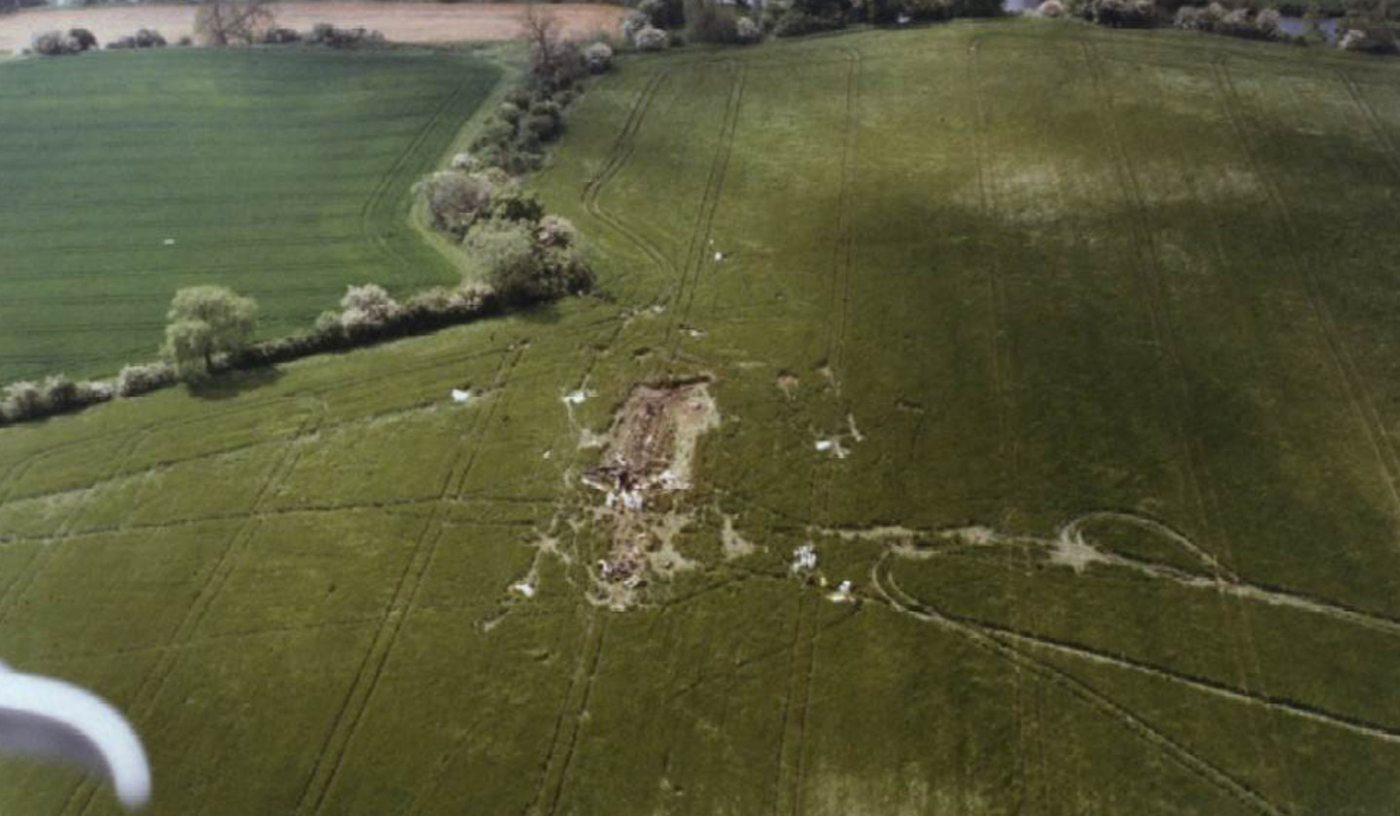
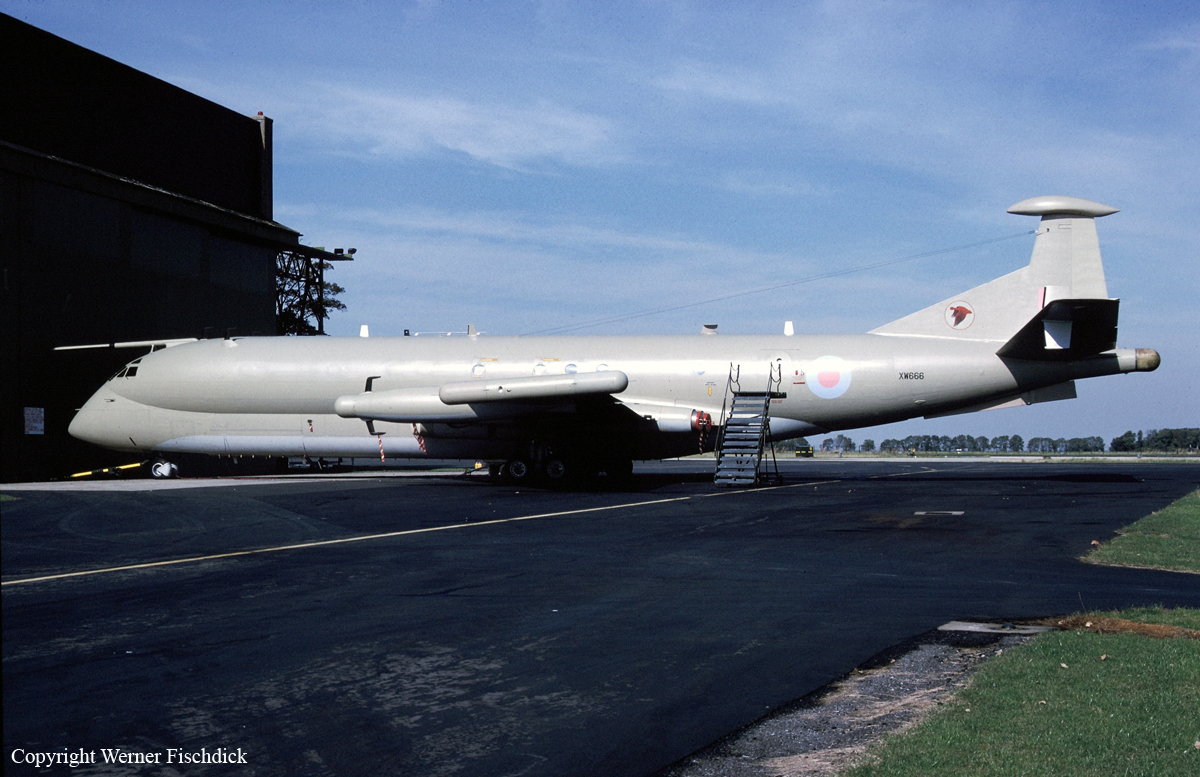
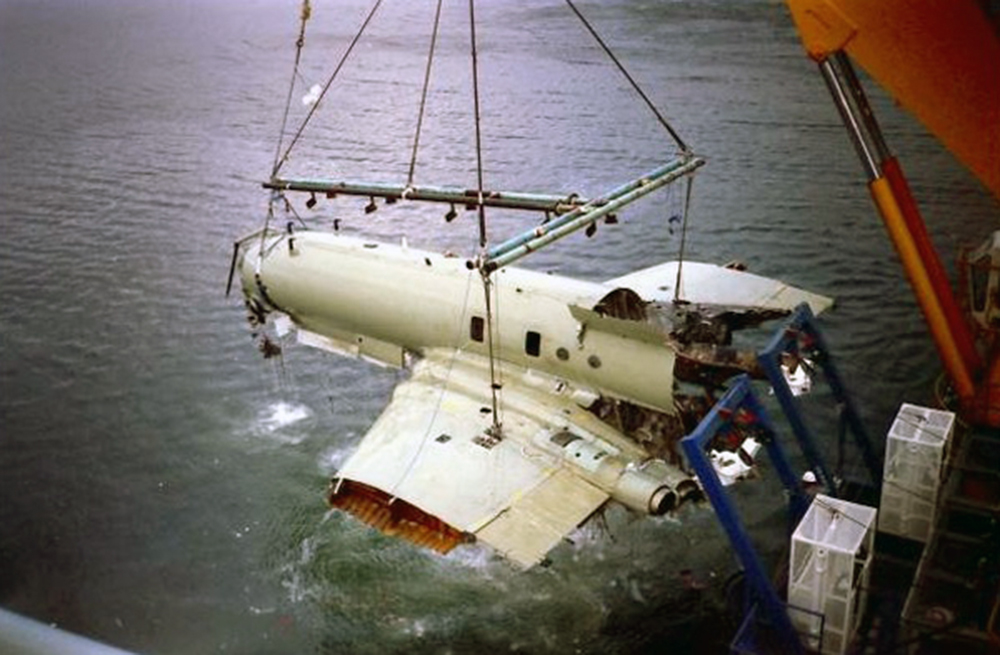
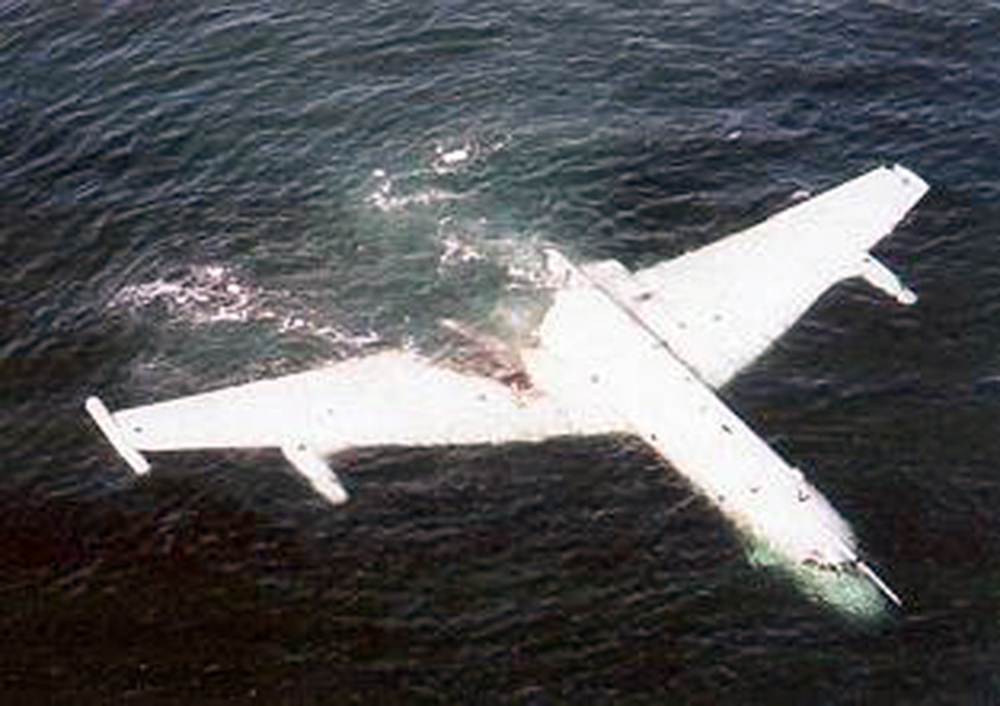
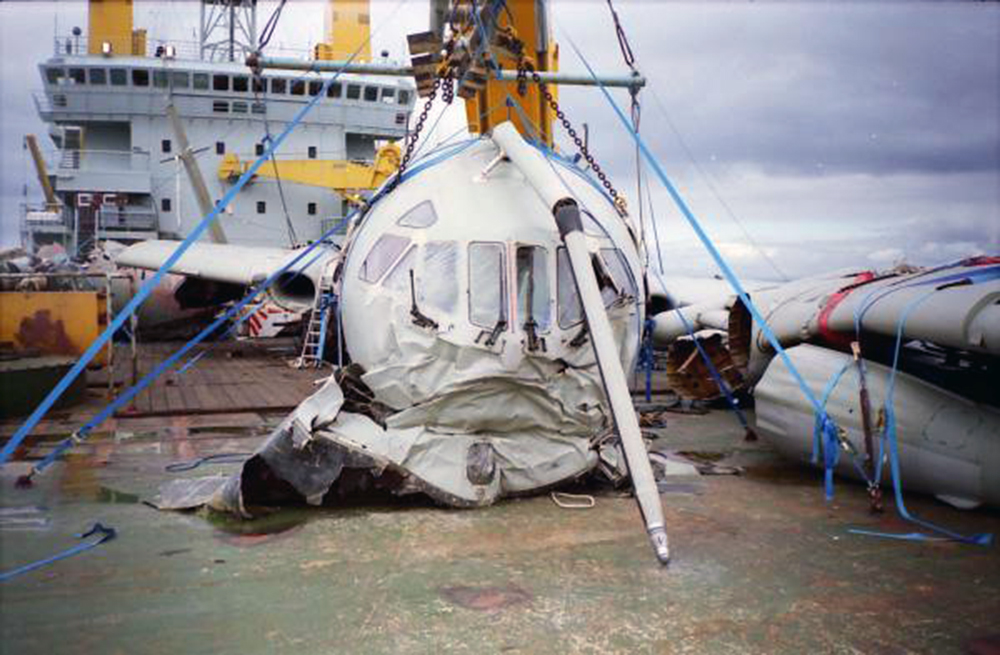
The aircraft was one of three Nimrod reconnaissance variants and had just undergone a major servicing at the Nimrod Major Servicing Unit (NMSU), RAF Kinloss by RAF maintenance personnel. Nimrod XW666 departed on a routine post-servicing airtest. After approximately 35 minutes of flight, following a test of the aircraft's anti-icing system, the No 4 engine fire warning illuminated. Whilst the crew were carrying out the fire drill, the No 3 engine fire warning also illuminated. A rear crew member confirmed that the aircraft was on fire and advised the captain that panels were falling away from the starboard wing. After two explosions, the captain feared for the structural integrity of the aircraft and decided to ditch before he lost control authority. Without the aid of flaps, which failed to operate because of a fire/associated hydraulic failure, he completed a controlled ditching into the Moray Firth. The aircraft bounced twice onto the sea before settling. The fuselage broke into two and the aircraft subsequently sank. Parts were salvaged and the cockpit section is now on display at AeroVenture South Yorkshire Aircraft Museum in Doncaster.
Probable cause:
With the assistance of the Department of Transport's Air Accident Investigation Branch, the Inquiry established that despite the correct application of maintenance procedures, the DC electrical loom attached to No 4 engine had sustained mechanical damage, although it could not be positively determined how or when. Arcing occurred when the engine anti-icing system was switched on and this led to initiation of the air starter system. With the No 4 engine already running at idle as part of the overall airtest there was no load on the starter turbine, which quickly ran up to high speed. The nut holding the turbine disk in place failed, allowing the disk to move back on its shaft and out of its protective housing. It then struck the engine bypass casing and the No 2 fuel tank, puncturing both. The resultant fuel leak was ignited either by electrical arcing within the faulty DC loom or by the heat of the engine. The fire spread rapidly to the wing area and forward to the engine intake area. The Inquiry concluded that a sequence of technical difficulties led to the uncontained fire.

Crash of a Boeing 737-200 in Coventry: 5 killed

Date & Time: Dec 21, 1994 at 0953 LT
Type of aircraft:
Operator:
Registration:
7T-VEE
Flight Type:
Survivors:
No
Schedule:
Algiers - Amsterdam - Coventry
MSN:
20758
YOM:
1973
Flight number:
AH702P
Region:
Crew on board:
3
Crew fatalities:
Pax on board:
2
Pax fatalities:
Other fatalities:
Total fatalities:
5
Captain / Total flying hours:
10686
Captain / Total hours on type:
2187.00
Copilot / Total flying hours:
2858
Copilot / Total hours on type:
2055
Aircraft flight hours:
45633
Circumstances:
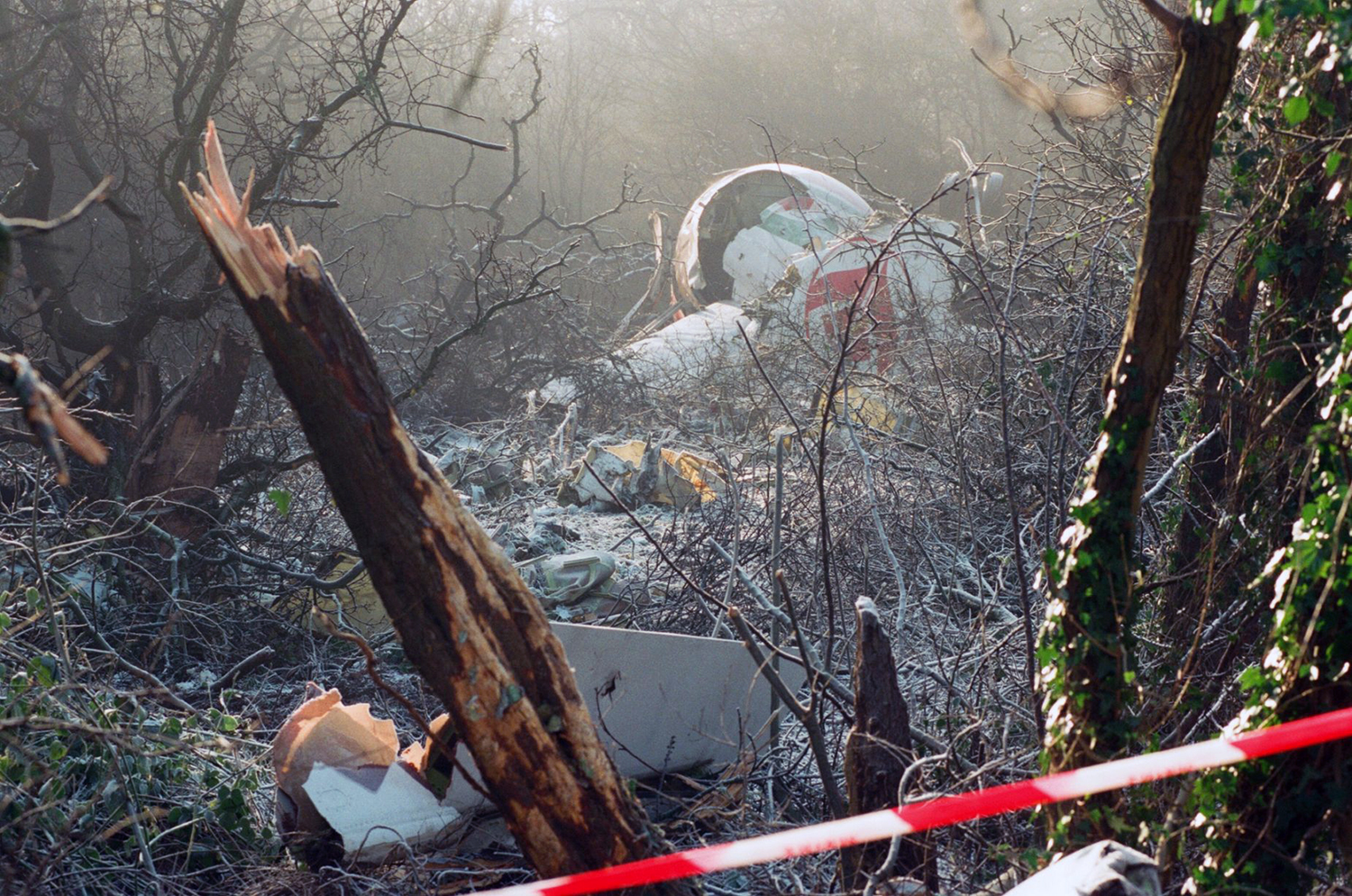
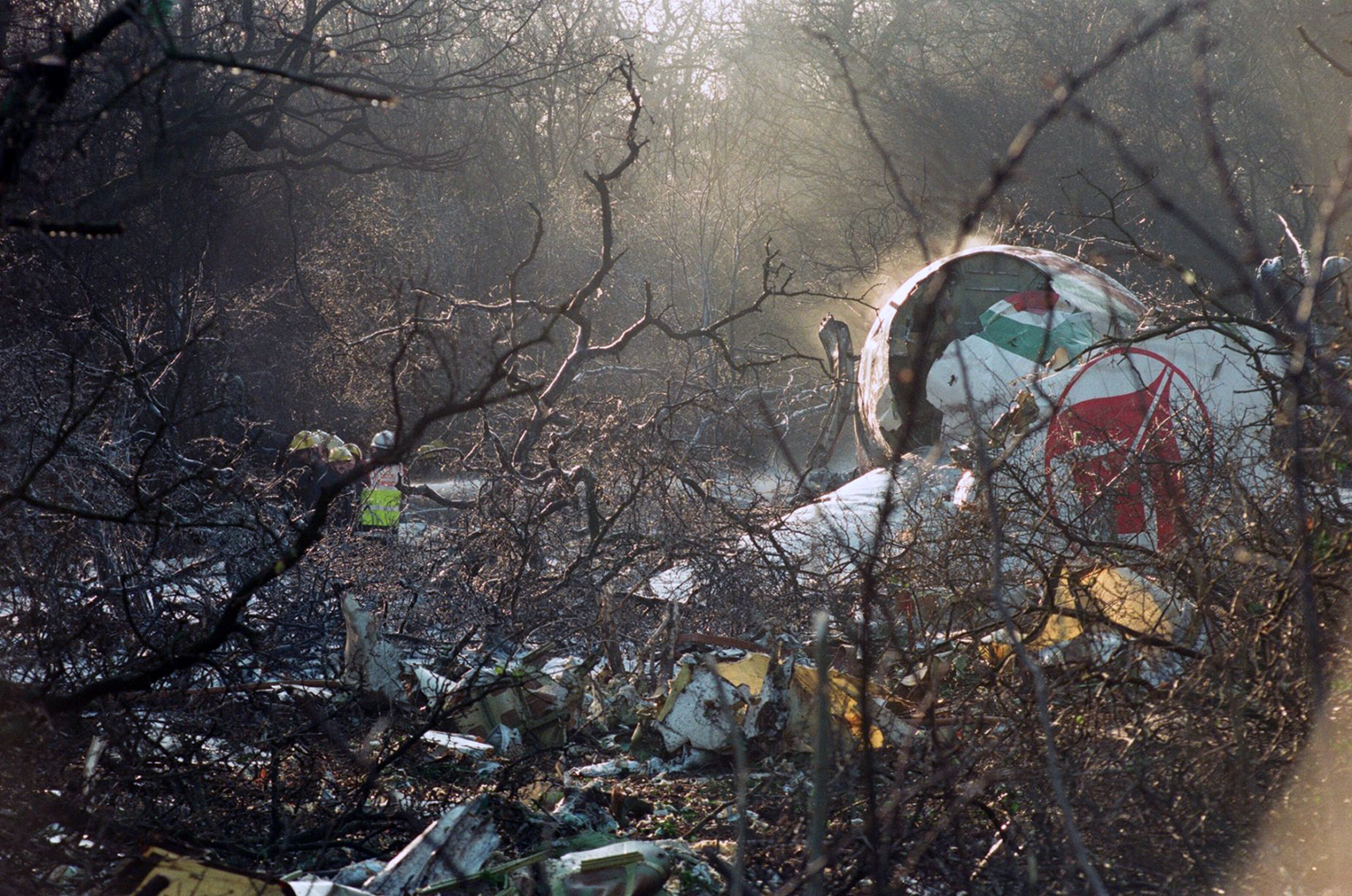
The Boeing 737, named "Oasis" was owned and operated by Air Algerie and had been leased by Phoenix Aviation in order to operate a series of live animal export flights from the UK to France and the Netherlands. On December 21, at 06:42 the plane departed from Amsterdam for a flight to Coventry. Weather at Coventry worsened and when arriving near Coventry, the RVR for runway 23 was 700 metres. The aircraft was not able to receive the Coventry runway 23 ILS as its dual navigation receiver system was not to an updated 40 channel ILS standard, so an SRA approach was flown. The radar guidance was completed at 0,5 miles from touchdown; the commander decided to discontinue the approach and execute a go-around. A holding pattern was then taken up at 07:44. When holding, the RVR further reduced to 600 m and the flight diverted to East Midlands to wait on the ground for weather improvement. The aircraft landed there at 08:08. At around 09:00 weather conditions improved to 1200 m visibility and an overcast cloud base at 600 feet. The flight departed East Midlands at 09:38 and climbed to FL40. Approaching Coventry, the crew received radar vectors for a runway 23 approach. After some initial confusion about the heading (the controller wanted the crew to turn left for 010°, while the crew understood 100°) the turn was continued to 260° and the SRA approach started at 12 miles from touchdown. The aircraft descended below the Minimum Descent Height (MDH) for the approach procedure and collided with an 86 feet high (291 feet ams) electricity transmission tower (pylon) which was situated on the extended centreline of the runway, some 1.1 miles from the threshold. The collision caused major damage to the inboard high lift devices on the left wing and the left engine. The consequent loss of lift on the left wing and the thrust asymmetry, caused the aircraft to roll uncontrollably to the left. When passing through a wings vertical attitude, the left wingtip impacted the gable end of a house. The aircraft continued rolling to an inverted attitude and impacted the ground in an area of woodland close to the edge of the housing conurbation. An intense fire ensued.
Probable cause:
The following factors were reported:
- The flight crew allowed the aircraft to descend significantly below the normal approach glide path during a Surveillance Radar Approach to runway 23 at Coventry Airport, in conditions of patchy lifting fog. The descent was continued below the promulgated Minimum Descent Height without the appropriate visual reference to the approach lighting or the runway threshold.
- The standard company operating procedure of cross-checking altimeter height indications during the approach was not observed and the appropriate Minimum Descent Height was not called by the non handling pilot.
- The performance of the flight crew was impaired by the effects of tiredness, having completed over 10 hours of flight duty through the night during five flight sectors which included a total of six approaches to land.
Final Report:

Crash of a Vickers 813 Viscount in Uttoxeter: 1 killed

Date & Time: Feb 25, 1994 at 1946 LT
Type of aircraft:
Operator:
Registration:
G-OHOT
Flight Phase:
Flight Type:
Survivors:
Yes
Schedule:
Edinburgh - Coventry
MSN:
349
YOM:
1958
Flight number:
BWL4272
Region:
Crew on board:
2
Crew fatalities:
Pax on board:
0
Pax fatalities:
Other fatalities:
Total fatalities:
1
Captain / Total flying hours:
5121
Captain / Total hours on type:
1121.00
Copilot / Total flying hours:
3334
Copilot / Total hours on type:
2181
Aircraft flight hours:
50995
Circumstances:
While on a cargo from Edinburgh to Coventry, cruising at FL150, the crew encountered severe icing conditions when engines n°2 and 3 failed. The crew was cleared to initiate an emergency descent to FL070 and FL050 and elected to divert to Birmingham Airport. Shortly later, he was able to restart the engine n°2 when the engine n°4 failed as well. The aircraft entered an uncontrolled descent and crashed in a wooded area located in Uttoxeter, about 45 km north of Birmingham Airport. The copilot was seriously injured and the captain was killed.
Probable cause:
The following causal factors were identified:
- Multiple engine failures occurred as a result of flight in extreme icing conditions,
- Incomplete performance of the emergency drills by the crew, as a result of not referring to the Emergency Checklist, prejudiced the chances of successful engine re-starts,
- Crew actions for securing and re-starting the failed engines, which were not in accordance with the operator's procedures, limited the power available. The drag from two unfeathered propellers of the failed engines and the weight of the heavily iced airframe resulted in a loss of height and control before the chosen diversion airfield could be reached,¨
- Poor Crew Resource Management reduced the potential for emergency planning, decision making and workload sharing. Consequently, the crew had no contingency plan for the avoidance of the forecast severe icing conditions, and also was unaware of the relative position of a closer diversion airfield which could have been chosen by making more effective use of air traffic services.
Final Report:
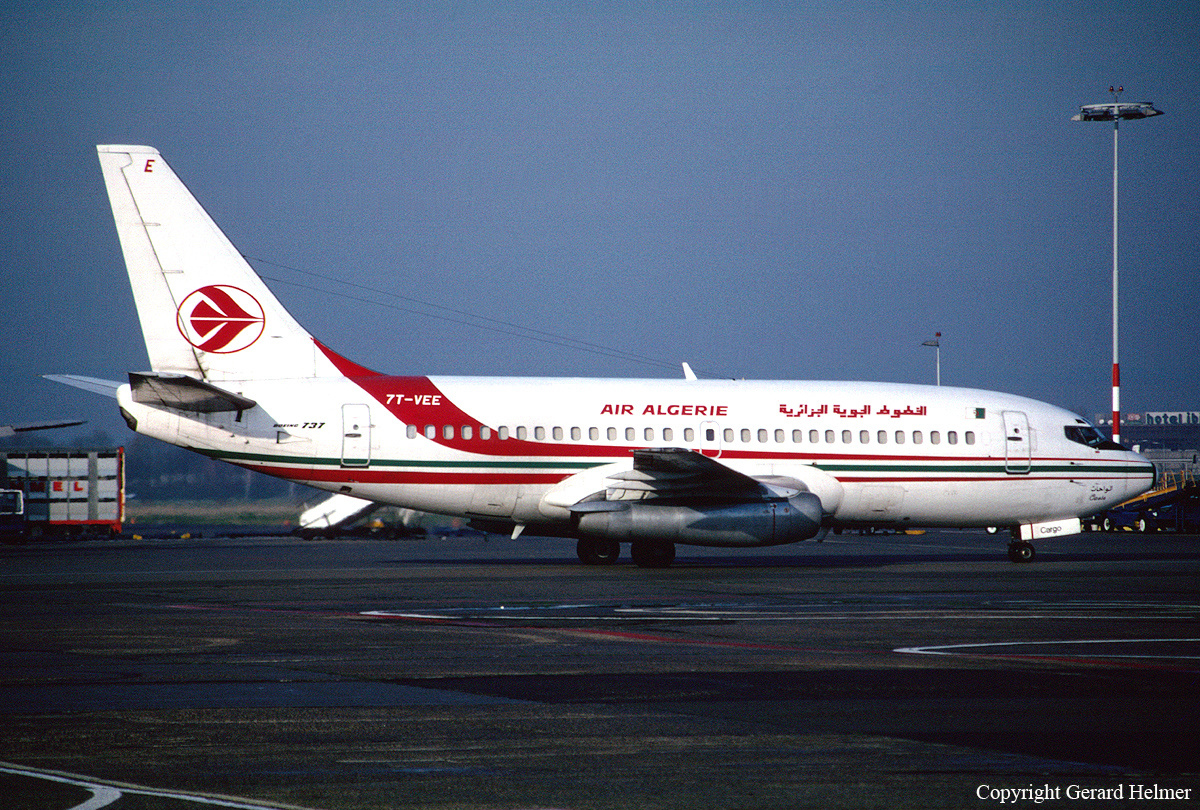
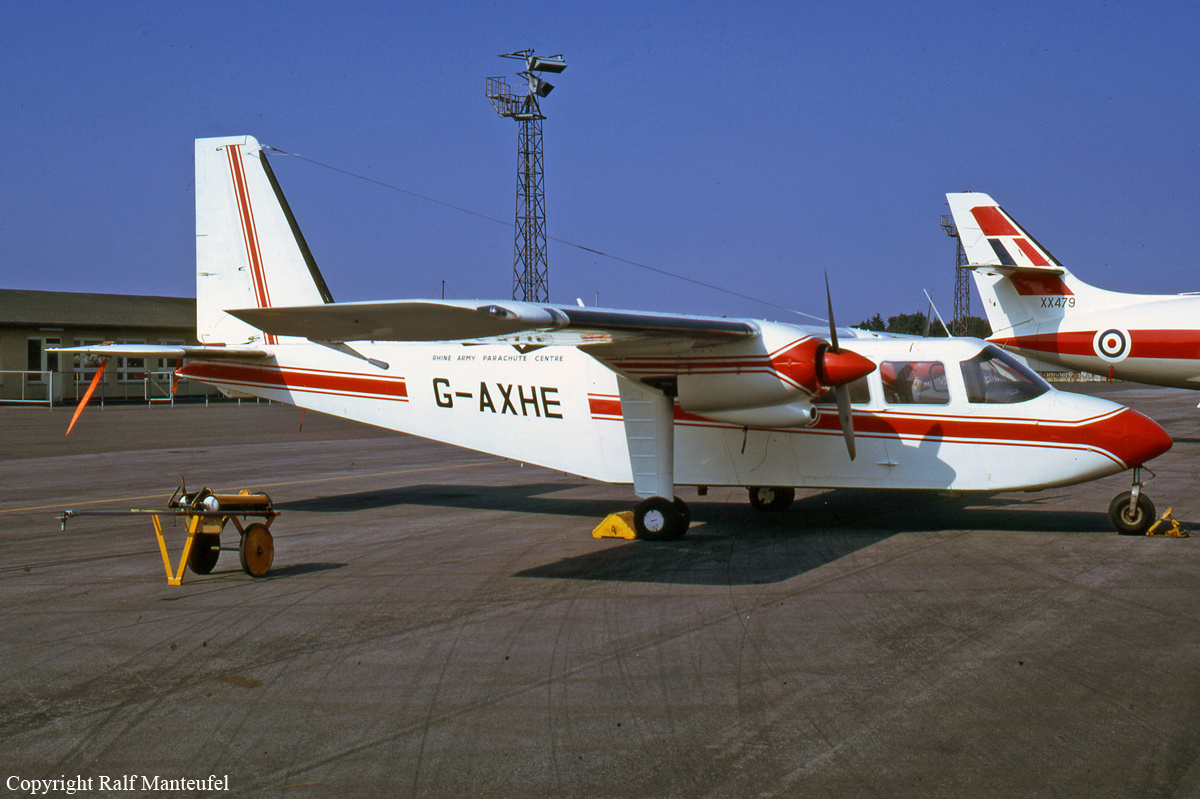
Crash of a Britten-Norman BN-2A-26 Islander in Cark

Date & Time: Feb 5, 1994 at 1725 LT
Type of aircraft:
Registration:
G-AXHE
Survivors:
Yes
Schedule:
Cark - Cark
MSN:
86
YOM:
1969
Location:
Region:
Crew on board:
1
Crew fatalities:
Pax on board:
0
Pax fatalities:
Other fatalities:
Total fatalities:
0
Captain / Total flying hours:
2159
Captain / Total hours on type:
777.00
Circumstances:
At 1705 hrs, the aircraft took off from Cark Airfield with nine parachutists and the pilot on board. The parachutists left the aircraft at about 6,500 feet and the pilot started the descent to land. A low level, left-hand circuit to runway 24 was carried out, the surface wind was less than 5 knots from the south west. It was twilight, however, the sky to the west was still bright from the setting sun and the runway was visible; there was no runway lighting. The pilot had selected the red cockpit lighting to full intensity and both landing lights were on. At 50 feet on final approach the pilot had sufficient visual reference to continue the approach; the aircraft was aligned slightly to the right of the centerline, however, the pilot was able to correct this before touchdown. It was as the main wheels touched down that the pilot realized he no longer had adequate visual reference. Before he could take any corrective action the aircraft started to decelerate and contact was made with an obstruction on the left side. The nosewheel was still clear of the ground when the deceleration became rapid and the aircraft went through a fence, to the left of the runway, and came to rest against a pile of concrete rubble. The pilot who was wearing lap and diagonal upper torso restraint escaped without injury. Shortly afterwards, when he deemed it safe to do so, he returned to the aircraft to complete the shutdown drills. Two sheep were killed in the accident; the pilot recalled seeing a light area on the threshold, and initially thought that the aircraft may have struck the sheep as it touched down. In hindsight he considered that the aircraft probably struck the sheep after it left the runway, and that what he saw was a reflection from the landing light seen through a missed windscreen. He reported that the windscreen has misted up earlier on this flight and on previous flights; no demiser was fitted to the aircraft. He considered that this may have happened again and reduced the already marginal forward visibility.
Final Report: