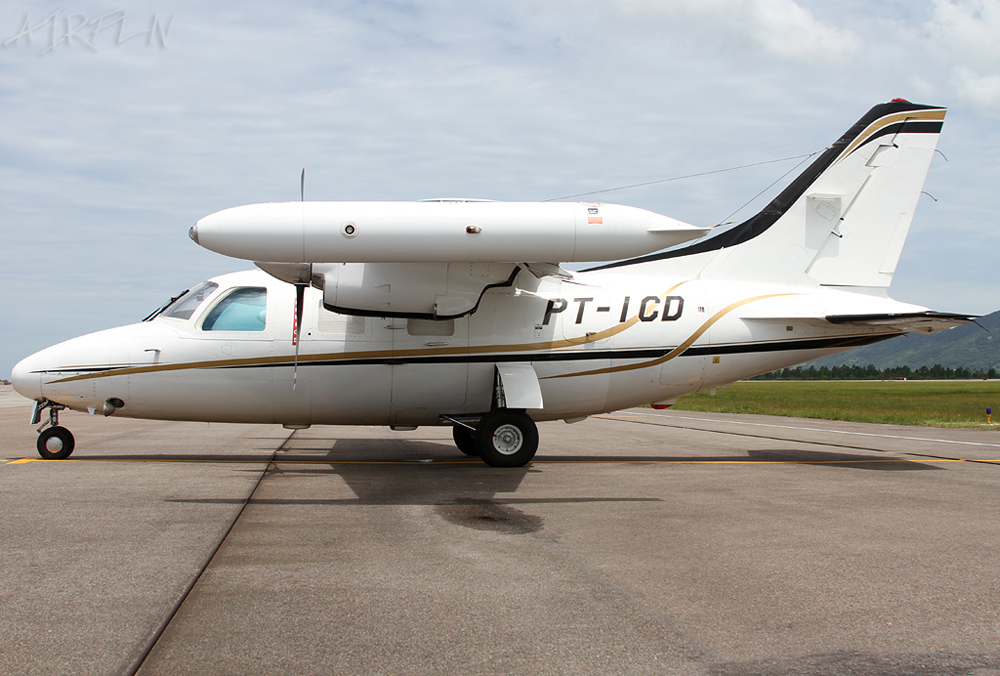
Crash of a Mitsubishi MU-2B-20 Marquise in Araxá

Date & Time: Mar 13, 1993 at 1700 LT
Type of aircraft:
Operator:
Registration:
PT-ICD
Survivors:
Yes
Schedule:
Nova Ponte - Araxá
MSN:
215
YOM:
1972
Country:
Crew on board:
2
Crew fatalities:
Pax on board:
5
Pax fatalities:
Other fatalities:
Total fatalities:
0
Circumstances:
On final approach to Araxá-Romeu Zema Airport runway 33, the twin engine aircraft touched down few dozen metres short of the new displaced threshold as there were construction road in the pre-threshold area. The left main gear struck an excavation and was torn off. The left wing and the left engine struck the ground and the aircraft veered off to the left and came to rest 200 metres further. All seven occupants evacuated safely and the aircraft was damaged beyond repair.
Probable cause:
It was determined that the crew landed prior to the new displaced threshold following a visual approach to runway 33. The new displaced threshold was Notamed and the crew was aware of it but for unknown reasons, there were no markings indicating the position of the new threshold.

Crash of a Beechcraft 100 King Air in Foz do Iguaçu: 6 killed

Date & Time: Feb 7, 1993
Type of aircraft:
Registration:
PT-OQP
Survivors:
No
Schedule:
Curitiba - Foz do Iguaçu
MSN:
B-7
YOM:
1969
Country:
Crew on board:
2
Crew fatalities:
Pax on board:
4
Pax fatalities:
Other fatalities:
Total fatalities:
6
Circumstances:
On approach to Foz do Iguaçu Airport, the crew encountered limited visibility and failed to realize his altitude was too low when the twin engine aircraft struck tree tops and a powerline before crashing in a wooded area located one km short of runway. The aircraft was destroyed and all six occupants were killed. At the time of the accident, the visibility was poor due to heavy rain falls.

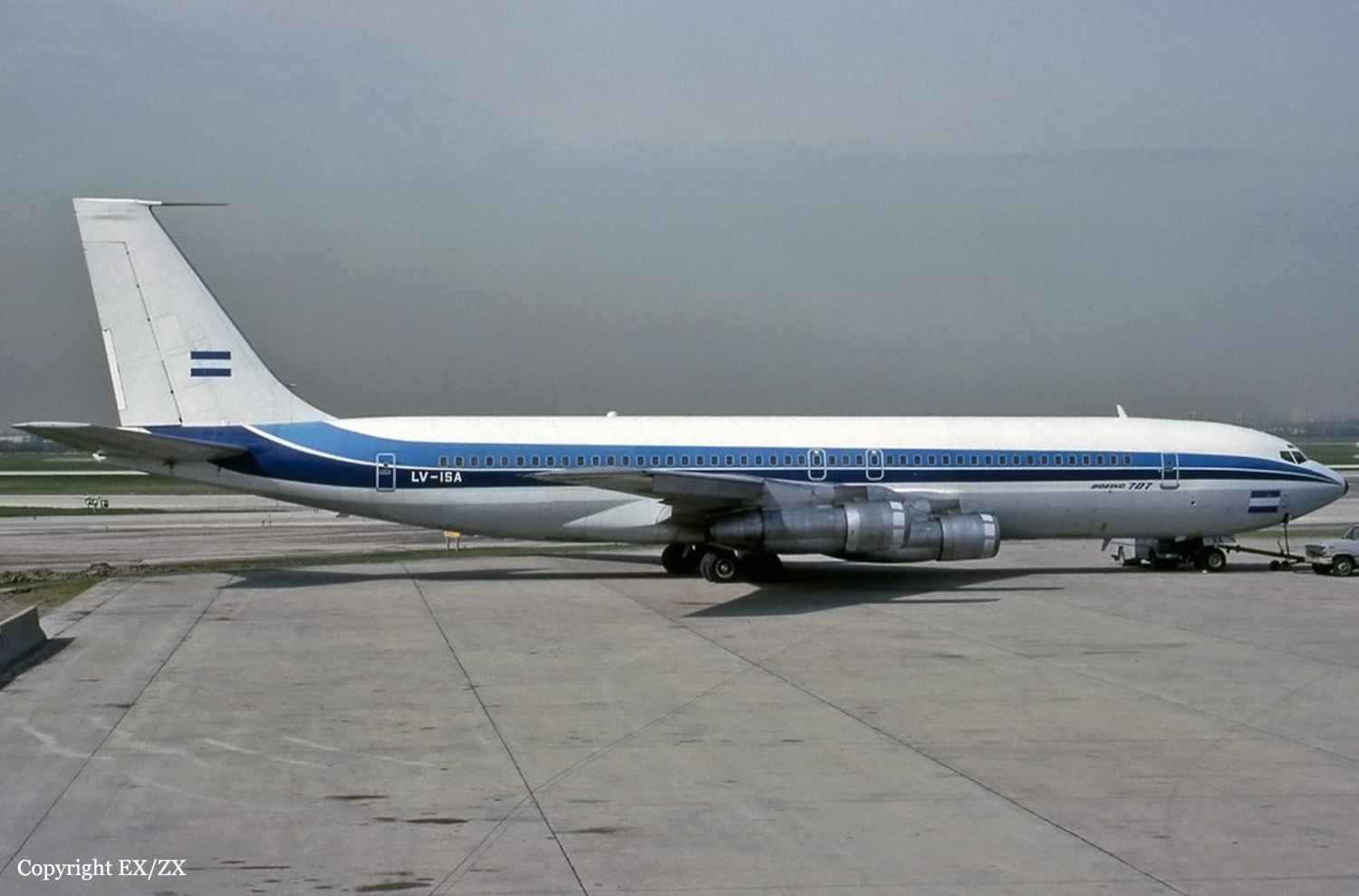
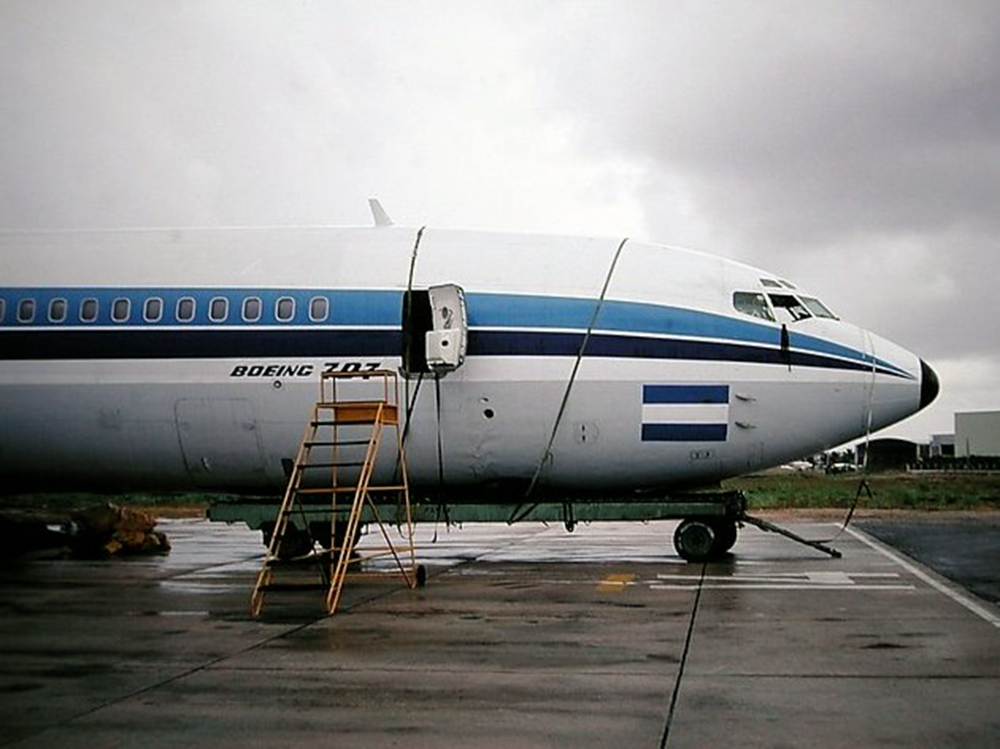
Crash of a Boeing 707-387B in Recife

Date & Time: Jan 31, 1993
Type of aircraft:
Operator:
Registration:
LV-ISA
Survivors:
Yes
Schedule:
Maceió – Fortaleza
MSN:
19238
YOM:
1966
Country:
Crew on board:
12
Crew fatalities:
Pax on board:
156
Pax fatalities:
Other fatalities:
Total fatalities:
0
Circumstances:
En route from Maceió to Fortaleza, while in cruising altitude, the crew reported hydraulic problems and was cleared to divert to Recife-Guararapes Airport for an emergency landing. On approach, the crew was forced to lower the gear manually but it was not possible to establish if they were locked down or not. In accordance with ATC, the crew completed a low pass over the airport and ATC confirmed all three gear were down. A second approach was completed and the aircraft landed smoothly. Nevertheless, following a course of few dozen metres, the right main gear 'collapsed' and entered its wheel well. The aircraft rolled to the right, veered off runway then struck a concrete block, causing the nose gear to collapse. All 168 occupants were evacuated safely while the aircraft was damaged beyond repair.

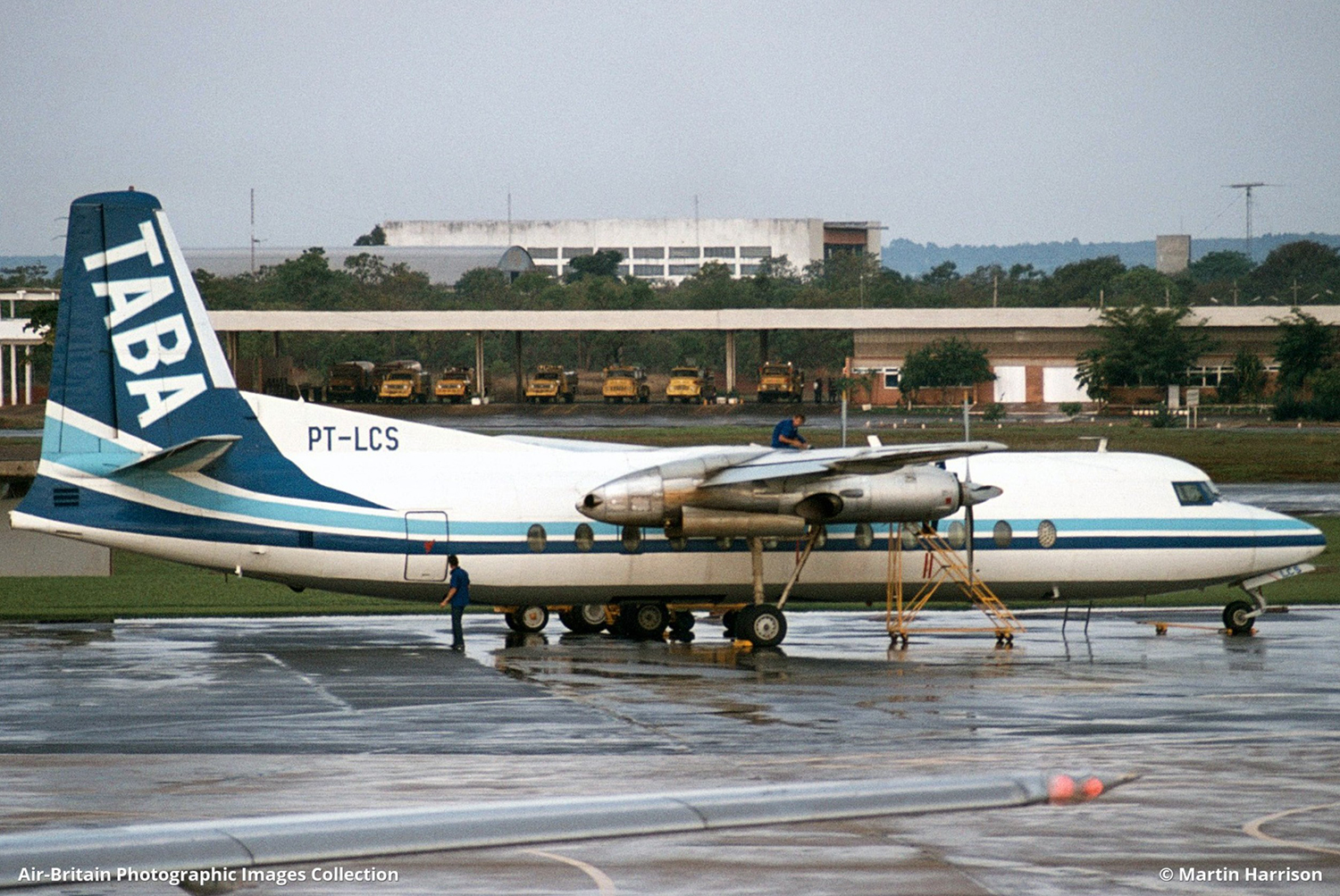
Crash of a Fairchild-Hiller FH-227B near Altamira: 3 killed

Date & Time: Jan 25, 1993
Type of aircraft:
Operator:
Registration:
PT-LCS
Flight Phase:
Flight Type:
Survivors:
No
Schedule:
Belém - Altamira
MSN:
522
YOM:
1966
Location:
Country:
Crew on board:
3
Crew fatalities:
Pax on board:
0
Pax fatalities:
Other fatalities:
Total fatalities:
3
Circumstances:
While in cruising altitude on a cargo flight from Belém, the crew lost control of the airplane that entered a dive and crashed in a jungle. The aircraft was destroyed upon impact and all three crew members were killed. It was reported that several elements of the airplane were not found at the point of impact and that the aircraft may have suffered a in-flight break up following possible multiple structural failures.

Crash of a Cessna 550 Citation S/II in São Paulo

Date & Time: Dec 1, 1992 at 1205 LT
Type of aircraft:
Operator:
Registration:
PT-LKT
Flight Type:
Survivors:
Yes
Schedule:
São Paulo - São Paulo
MSN:
550-0117
YOM:
1986
Country:
Crew on board:
2
Crew fatalities:
Pax on board:
2
Pax fatalities:
Other fatalities:
Total fatalities:
0
Circumstances:
The aircraft departed São Paulo-Congonhas Airport for a local training flight, carrying two pilots under supervision and two instructors. Weather conditions were marginal with ceiling down to 300 metres, horizontal visibility 3 km with rain. After touchdown on wet runway 17R, the aircraft was unable to stop within the remaining distance. It overran, went down an embankment and came to rest. All four occupants escaped uninjured while the aircraft was destroyed.

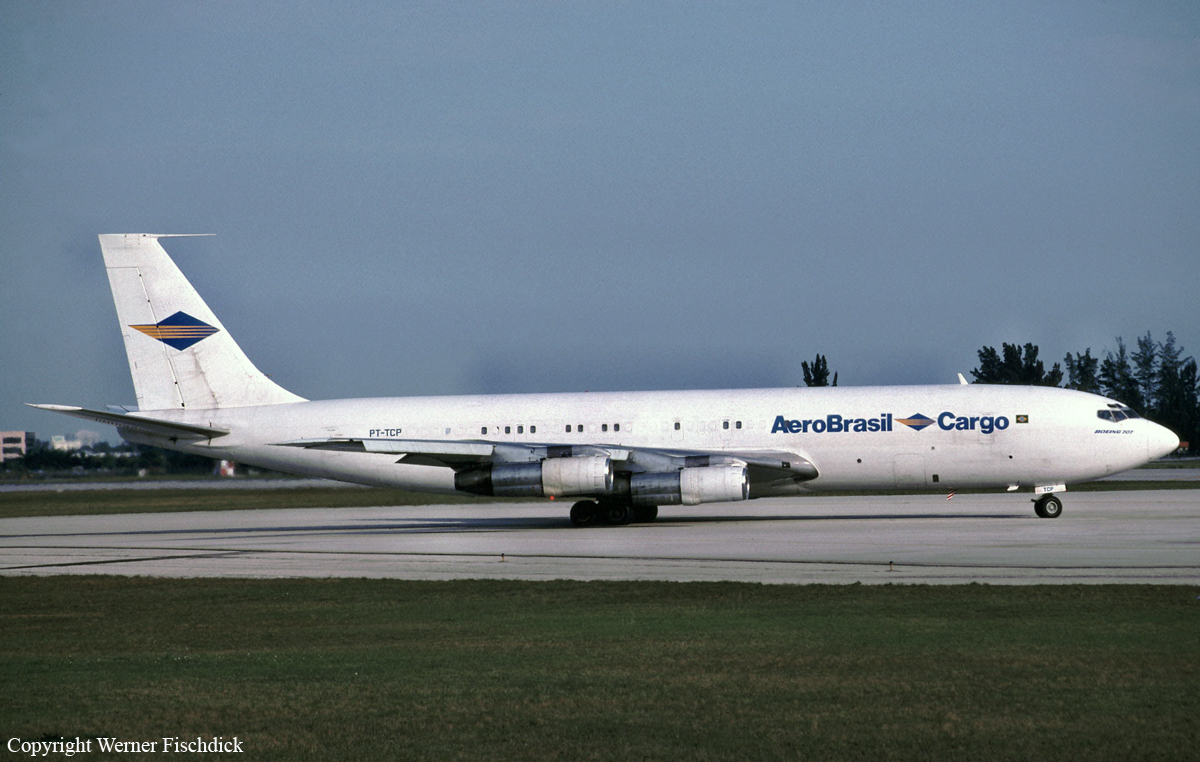
Crash of a Boeing 707-365C in Manaus

Date & Time: Nov 26, 1992 at 0226 LT
Type of aircraft:
Operator:
Registration:
PT-TCP
Flight Type:
Survivors:
Yes
Schedule:
Manaus - Miami
MSN:
19416
YOM:
1967
Country:
Crew on board:
4
Crew fatalities:
Pax on board:
0
Pax fatalities:
Other fatalities:
Total fatalities:
0
Circumstances:
After liftoff from Manaus-Eduardo Gomes Airport runway 28, while in initial climb, the right main gear struck an element of the approach light system. An alarm sounded in the cockpit, informing the crew about landing gear problems. As the crew was unable to raise the landing gear, the captain informed ATC about the situation and was cleared to return for an emergency landing. Upon touchdown on runway 28, the right main gear collapsed. The aircraft slid for few dozen metres then veered off runway and came to rest in a ravine. All five occupants escaped uninjured while the aircraft was damaged beyond repair.
Probable cause:
It was reported that the crew adopted a wrong takeoff configuration and that the rate of climb and gradient were too low after takeoff (positive but insufficient vario), causing the aircraft to collide with an equipment of the approach light system.

Crash of an Embraer R-95 Bandeirante in Recife: 5 killed

Date & Time: Oct 23, 1992 at 1015 LT
Type of aircraft:
Operator:
Registration:
2243
Flight Type:
Survivors:
No
Schedule:
Recife - Recife
MSN:
110-138
YOM:
1977
Country:
Crew on board:
2
Crew fatalities:
Pax on board:
3
Pax fatalities:
Other fatalities:
Total fatalities:
5
Circumstances:
The crew was taking part to the Aviation Day and was involved in a demonstration mission on behalf of the 2nd Regional Air Command. On approach, the aircraft crashed in unknown circumstances in the garden of a military hospital located about 2 km from the airport. All five occupants were killed.

Crash of a Beechcraft F90-1 King Air in Navegantes: 4 killed

Date & Time: Aug 18, 1992 at 1020 LT
Type of aircraft:
Registration:
PT-OLP
Survivors:
No
Schedule:
Itumbiara – Ituverava – Blumenau
MSN:
LA-220
YOM:
1984
Country:
Crew on board:
2
Crew fatalities:
Pax on board:
2
Pax fatalities:
Other fatalities:
Total fatalities:
4
Captain / Total flying hours:
8609
Copilot / Total flying hours:
6330
Circumstances:
While descending to Blumenau Airport, the crew encountered poor weather conditions and decided to divert to Navegantes-Itajaí Airport. On approach to runway 25, at low height, the captain initiated a left turn when the twin engine aircraft struck the top of a hill and crashed, bursting into flames. All four occupants were killed.
Probable cause:
On final approach in limited visibility due to poor weather conditions, the pilot-in-command lost control of the airplane after suffering a spatial disorientation.
Final Report:

Crash of a Learjet 25C near Iguape: 6 killed

Date & Time: Jul 28, 1992 at 0911 LT
Type of aircraft:
Registration:
PT-LHU
Flight Phase:
Survivors:
No
Schedule:
Curitiba - Rio de Janeiro
MSN:
25-099
YOM:
1972
Country:
Crew on board:
2
Crew fatalities:
Pax on board:
4
Pax fatalities:
Other fatalities:
Total fatalities:
6
Captain / Total flying hours:
6520
Captain / Total hours on type:
9.00
Copilot / Total flying hours:
1950
Copilot / Total hours on type:
9
Aircraft flight hours:
5655
Circumstances:
The twin engine aircraft departed Curitiba-Afonso Pena Airport at 0850LT on an 'on demand' taxi flight to Rio de Janeiro, carrying four passengers and two pilots. Once the assigned altitude of 33,000 feet was reached, the crew failed to reduce the engine power when, 3 minutes and 10 seconds later, the stick puller activated. The aircraft climbed to 33,900 feet then entered an uncontrolled descent. With a rate of descent of 18,000 feet per minute, the aircraft crashed in a near vertical attitude in a field. All six occupants were killed.
Probable cause:
The exact cause of the accident could not be determined with certainty. However, the following findings were reported:
- a. Human Factor
(1) Undetermined Physiological Aspect
Given the characteristics of the accident, which resulted in the destruction of the bodies, making it impossible to carry out examinations, it cannot be specified whether it contributed or not. However one cannot rule out the possibility that one of the crew members has been affected by a sudden illness (2nd Hypothesis of the Analysis).
(2) Psychological Aspect - Undetermined
It may have influenced, to the extent that the commander was operating an aircraft in which he had little experience and little knowledge, and which was demonstrated by the insecurity in the operation, reported to other pilots.
b. Material Factor
(1) Design Deficiency - Undetermined
Despite the information provided by representatives of Learjet Corp. who participated in the investigations, that the compensator engine ('pitch trim') with which this aircraft was equipped, had already undergone the modifications determined by the Federal Aviation Administration (FAA), one cannot help but wonder about a possible firing and locking of the 'pitch trim' engine in the extreme position (3rd Hypothesis of the Analysis). This aspect was hampered as the destruction suffered by the aircraft made a detailed analysis of the pitch trim system impossible.
c. Operational Factor
(1) Disabled Instruction - Contributed.
The commander and the co-pilot received a less than desired instruction, in quantitative and qualitative terms. As a result, the pilots did not acquire the full technical conditions necessary for the proper operation of the aircraft. The failure to perform the standard procedure to be followed in the emergency that led to the accident, i.e. the lowering of the landing gear, attests to the poor instruction given.
(2) Deficient Application of Controls: - Contributed
The pilots did not adjust the engine power properly after leveling and, after the aircraft started to abruptly descend, as a result, the 'overspeed' occurred, they could not avoid the loss of control.
(3) Weak Cockpit Coordination - Contributed.
The pilots made inadequate use of the aircraft's resources for its operation.
(4) Forgetfulness - Contributed.
This aspect is in accordance with the previous one, since the lowering of the undercarriage is part of the standard procedure to be performed in cases of overspeed.
(5) Little Flight Experience in the Aircraft - Contributed
The captain, despite having 6,500 hours of flight time, had already intended to fly another jet plane, but had flown little on Learjet. The other pilot, in turn, had had less experience in jet flying as a co-pilot, and in the Learjet, specifically, flew less than the commander.
As a result, when they were faced with an emergency that required rapid identification in order to take the necessary measures to remedy it, they lacked the necessary experience.
(6) Deficient Supervisor - contributed.
The air taxi company, to which the pilots belonged, was in a hurry to train this new crew. This resulted in inadequate operational training for the pilots, which demonstrates poor supervision of the company. The Civil Aviation System, through the regional body that deals directly with general aviation, failed to carry out proper oversight, as it did not detect the errors in the statements of instruction, and allowed the checks of the captain and the co-pilot to be carried out without reaching the minimum amount of flight hours and landings on that aircraft.
Final Report:

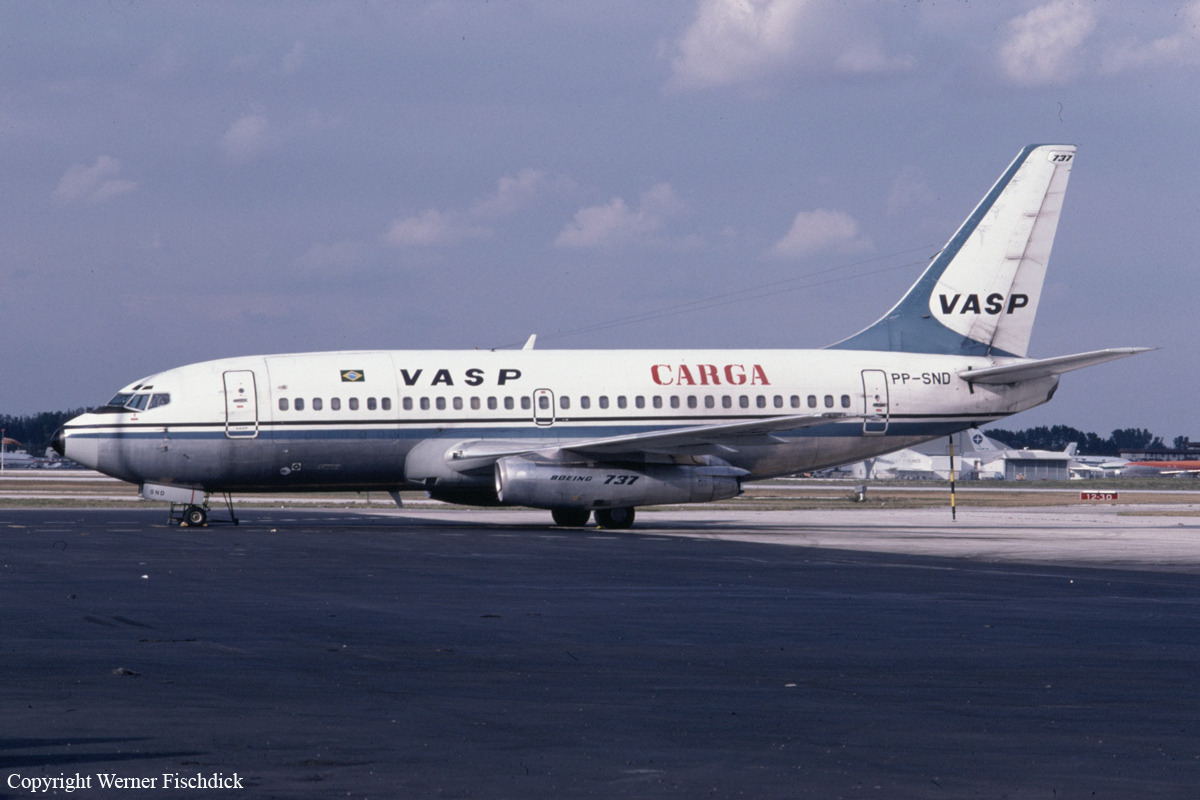
Crash of a Boeing 737-2A1C in Cruzeiro do Sul: 3 killed

Date & Time: Jun 22, 1992 at 0605 LT
Type of aircraft:
Operator:
Registration:
PP-SND
Flight Type:
Survivors:
No
Schedule:
Rio Branco - Cruzeiro do Sul
MSN:
21188
YOM:
1975
Country:
Crew on board:
2
Crew fatalities:
Pax on board:
1
Pax fatalities:
Other fatalities:
Total fatalities:
3
Captain / Total flying hours:
4581
Captain / Total hours on type:
3081.00
Copilot / Total flying hours:
2437
Copilot / Total hours on type:
337
Aircraft flight hours:
31980
Circumstances:
While descending to Cruzeiro do Sul Airport by night and good weather conditions, the crew encountered problems with the intermittent activation of a warning light in the instrument panel, warning them of a fire in the cargo compartment. On final approach, the aircraft struck trees and crashed in a dense wooded area located in hilly terrain. The wreckage was found 15 km from runway 10 threshold and all three occupants were killed.
Probable cause:
The following findings were reported:
a. Human Factor
(1) Physiological Aspect
- There was no evidence of this aspect contributing to the occurrence of the accident.
(2) Psychological Aspect - Contributed
- The psychological aspect contributed through the generation of a high level of anxiety to perform the landing and in the diversion of the focus of attention during the approach manoeuvres to land.
- The psychological aspect was influenced by the activation of the smoke alarm which generated an increase in the workload on board.
b. Material Factor
- There were no indications that this factor contributed to the accident.
c. Operational Factor
(1) Deficient Instruction
- Although the instruction was carried out in accordance with what the standards recommend, the failures that contributed to the accident are characteristic of lack of experience in facing abnormalities simultaneously with the maintenance of flight control. Such failures could be avoided with more adequate simulator instructions and training involving the cockpit management aspects.
(2) Poor Maintenance - Undetermined .
- It was not possible to determine the cause of the activation of the 'Aft Cargo Smoke' alarm and whether the maintenance services contributed to this occurrence.
(3) Deficient Cockpit Coordination
- Inadequate performance of the duties assigned to each crew member. The procedures foreseen for the execution of descent by instrument have been modified and some have been deleted depending on the appearance of a complicator element (smoke alarm).
(4) Influence of the environment
- The dark night contributed to the creation of the 'black hole' phenomenon, or 'background figure', making it difficult to perceive external references for a possible identification of the vertical distance of the aircraft from the ground.
(5) Deficient Oversight
- The supervision, at cockpit level, contributed to the accident by the inadequate management of the resources available for the flight in the cockpit.
- Company level supervision contributed to the accident by not identifying the need for cockpit management training and providing it to the crew involved.
- Supervision, at company level, was also inadequate when climbing to the same mission, two pilots unfamiliar with the airplane to be used and in night operation.
(6) Other Operational Aspects
- The failure to comply with several 'Callouts', the non-use of the radio altimeter and the inadequate use of the 'altitude alert', as an aid to the accomplishment of the descent procedure, contributed to the occurrence of the accident.
Final Report: