


Region
Crash of a Piper PA-61P Aerostar (Ted Smith 601) in Antwerp: 4 killed
Date & Time:
Jun 2, 1990 at 1911 LT
Registration:
N4PC
Survivors:
No
Schedule:
Antwerp - Antwerp
MSN:
61-0743-8063365
YOM:
1980
Crew on board:
1
Crew fatalities:
Pax on board:
3
Pax fatalities:
Other fatalities:
Total fatalities:
4
Captain / Total hours on type:
160.00
Circumstances:
Delta Air Transport of Belgium arranged a Piper 601P Aerostar, N4PC, to shoot a promotion film. It was to fly in formation with an DAT Embraer 120 Brasilia near Antwerp Airport (ANW). The Brasilia, OO-DTH, departed Liège-Bierset Airport (LGG) at 17:57 and headed for Antwerp. Piper Aerostar N4PC took off from Antwerp at 18:43 and headed for Kallo, were both aircraft would join formation. It was agreed that the Aerostar would be on the left hand side of the EMB-120 because the camera crew was sitting on the right hand side of the Aerostar. After circling the city of Antwerp, the crew of OO-DTH contacted the Antwerp air traffic controller, stating his intentions to carry out a low pass over runway 29, followed by a high speed pass. The Aerostar would be alongside OO-DTH on both occasions. After that they would break and continued to Brussels. Antwerp Tower issued clearance at 19:06. At 19:08 OO-DTH radioed their plans to N4PC: "I am starting approach and descent. I am going over the runway. I will not make a touch and go, I will just pull up, left and then back high speed." The pilot of N4PC replied: "OK... I will go straight ahead". At 19:11 both aircraft made a low pass over runway 29 at a speed of 140 kts. OO-DTH was climbing away in a left turn when a mid-air collision occurred with N4PC. The tail of the Piper was sheared off and the aircraft crashed out of control near a railway line. All four occupants were killed. The Brasilia was able to make a safe emergency landing at Antwerp Airport.
Probable cause:
The collision was the consequence of the following factors:
- Misunderstanding between both crew due to a poor flight preparation, especially regarding the end of the mission and the evacuation of the area,
- The captain of the Embraer indicated he would pull up for climb then initiate a left turn while the pilot of the Piper indicated he would continue straight ahead, which caused the Piper to cut the trajectory of the Embraer that was flying on the right side of the Piper,
- The pilot of the Piper was seating in the left front seat in his cockpit so his position did not allow him to have a good overview of the situation and the exact position of the Embraer.
- Misunderstanding between both crew due to a poor flight preparation, especially regarding the end of the mission and the evacuation of the area,
- The captain of the Embraer indicated he would pull up for climb then initiate a left turn while the pilot of the Piper indicated he would continue straight ahead, which caused the Piper to cut the trajectory of the Embraer that was flying on the right side of the Piper,
- The pilot of the Piper was seating in the left front seat in his cockpit so his position did not allow him to have a good overview of the situation and the exact position of the Embraer.
Final Report:
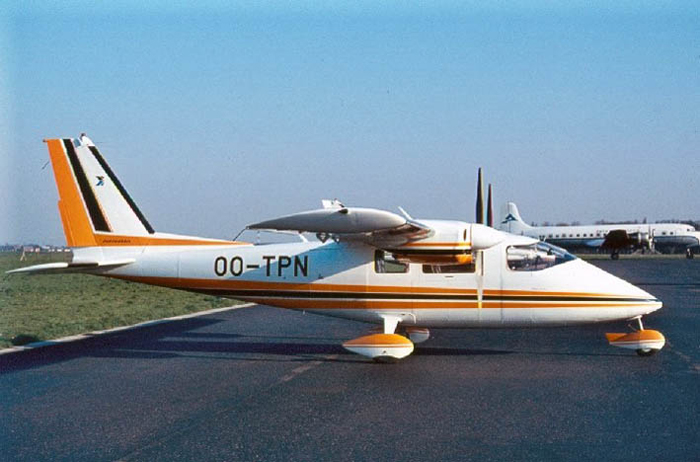
Crash of a Partenavia P.68 in Breendonk: 5 killed
Date & Time:
Oct 18, 1982 at 1942 LT
Operator:

Registration:
OO-TPN
Survivors:
No
Schedule:
Avignon - Brussels
MSN:
88
YOM:
1977
Crew on board:
2
Crew fatalities:
Pax on board:
3
Pax fatalities:
Other fatalities:
Total fatalities:
5
Captain / Total hours on type:
13.00
Copilot / Total hours on type:
0
Aircraft flight hours:
1981
Circumstances:
The twin engine airplane departed Avignon at 1631LT on a VFR flight to Brussels with three passengers and two pilots en board. Approaching the destination at an altitude of 7,000 feet, the crew was cleared to descend to 2,000 feet. While passing 6,400 feet on descent, the airplane entered a left spiral when the airframe broke due to aerodynamic overload. The tail, the upper left wing and both wings leading edges broke off. Out of control, the airplane dove into the ground and crashed near Breendonk. All five occupants were killed.
Probable cause:
The accident resulted from a loss of control of the aircraft during a descent under instrument flight conditions, and from exceeding the airframe structural limits. Weather conditions posing a risk of icing, on the one hand, and the crew’s lack of experience and qualifications in flying a twin engine aircraft and in instrument flight conditions, on the other hand, contributed to the accident.
The following factors were identified:
- The crew did not have the licenses or qualifications required to conduct the flight.
- The Pitot tube heating system was found in the OFF position.
- During the descent, the pilot lost control of the aircraft which entered a left-hand spiral.
- The airframe failed in flight due to aerodynamic loads exceeding structural limits, which developed during a high-speed pull-up.
- Two onboard systems were out of order since five days: the autopilot and the wing leading edge de-icing system.
The following factors were identified:
- The crew did not have the licenses or qualifications required to conduct the flight.
- The Pitot tube heating system was found in the OFF position.
- During the descent, the pilot lost control of the aircraft which entered a left-hand spiral.
- The airframe failed in flight due to aerodynamic loads exceeding structural limits, which developed during a high-speed pull-up.
- Two onboard systems were out of order since five days: the autopilot and the wing leading edge de-icing system.
Final Report:
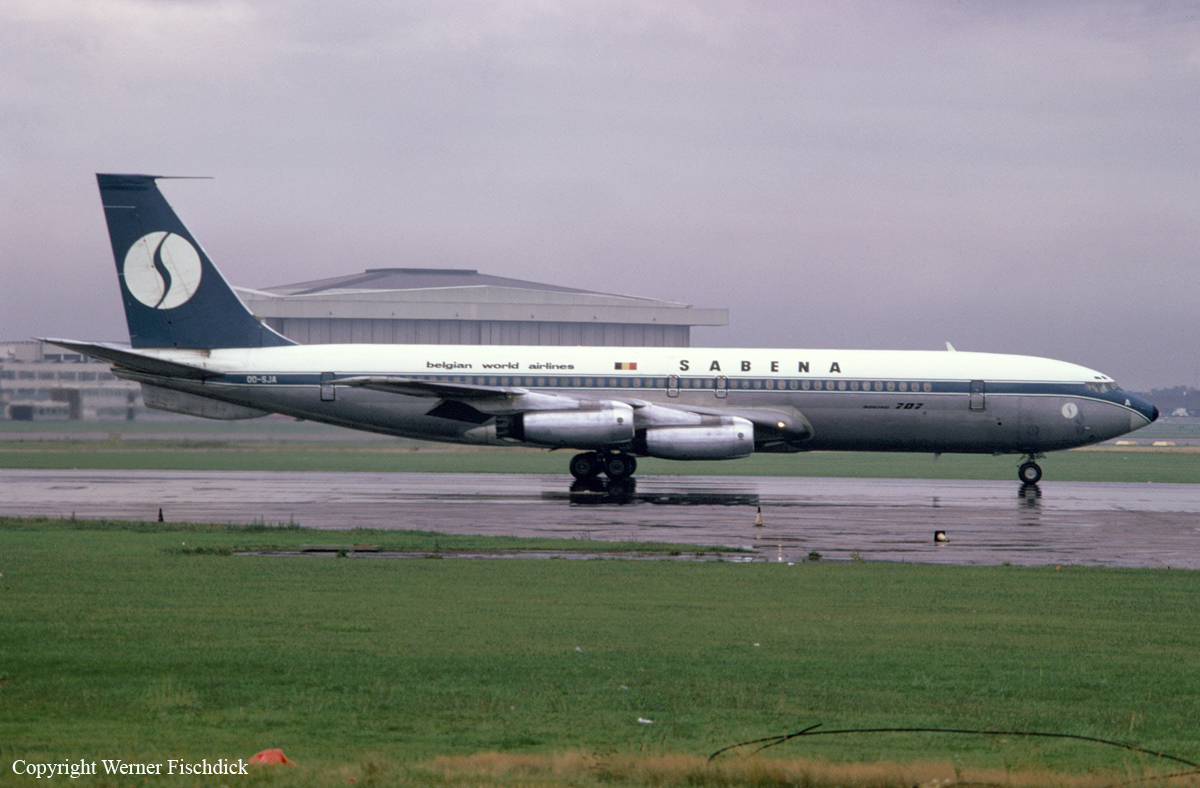
Crash of a Boeing 707-329 in Brussels
Date & Time:
Mar 29, 1981 at 0940 LT
Operator:

Registration:
OO-SJA
Survivors:
Yes
Schedule:
Brussels - Tenerife
MSN:
17623/78
YOM:
1959
Flight number:
SLR1915
Crew on board:
7
Crew fatalities:
Pax on board:
110
Pax fatalities:
Other fatalities:
Total fatalities:
0
Captain / Total hours on type:
3400.00
Copilot / Total hours on type:
2000
Aircraft flight hours:
64462
Circumstances:
The four engine airplane departed Brussels-Zavantem Airport runway 02 at 0929LT on a charter flight to Tenerife-Sur Reina Sofia with 110 passengers and a crew of seven on board. After takeoff, while climbing to an altitude of 7,000 feet, the engine n°3 exploded and caught fire. The crew declared an emergency and was cleared to return for a landing on runway 25L. longer than runway 02. After the fire was contained and while completing a last turn on final, the airplane was approaching too fast and overshot so the pilot decided to land onto wet runway 25R. After touchdown, reversers on engine n°1 and 4 were activated and the crew initiated an emergency braking procedure. At a speed of about 80 knots, the captain considered the remaining distance as insufficient and decided to steer the aircraft to the left of the runway. The airplane veered off runway, entered a loose soil and came to rest. All 117 occupants were quickly evacuated and there were no casualties. The airplane was damaged beyond repair.
Probable cause:
It was determined that the explosion of the engine n°3 was the consequence of the disintegration of a blade located on the 10th stage of the compressor due to fatigue cracks.
The following contributing factors were identified:
- The approach was completed with one engine inoperative.
- The total weight of the aircraft was above the max allowable weight upon landing.
- The approach speed was too high.
- The crew failed to use the brakes properly.
- Not all available braking options were used.
The following contributing factors were identified:
- The approach was completed with one engine inoperative.
- The total weight of the aircraft was above the max allowable weight upon landing.
- The approach speed was too high.
- The crew failed to use the brakes properly.
- Not all available braking options were used.
Final Report:
Crash of a Cessna T207 Skywagon in Leopoldsburg
Date & Time:
Mar 31, 1979 at 1130 LT
Operator:

Registration:
OO-LPC
Survivors:
Yes
Schedule:
Leopoldsburg - Leopoldsburg
MSN:
207-0418
YOM:
1978
Crew on board:
1
Crew fatalities:
Pax on board:
6
Pax fatalities:
Other fatalities:
Total fatalities:
0
Captain / Total hours on type:
3.00
Circumstances:
The single engine airplane was engaged in a local skydiving flight at Leopoldsburg Airfield. On board were six skydivers and one pilot. During the takeoff roll, the pilot noticed that something was abnormal but decided to continue the procedure. After takeoff, the airplane encountered difficulties to gain altitude, collided with trees located past the runway end and crashed, bursting into flames. All seven occupants were rescued, among them two passengers were injured. The airplane was destroyed by fire.
Probable cause:
The accident was caused by the aircraft failing to clear the obstacle located in line with the runway. No technical cause could be identified for the failure to clear the obstacle. However, it is true that during the takeoff roll, the pilot noticed that the aircraft was not behaving normally, and he might have been better off aborting the takeoff roll. The pilot’s limited experience with this type of aircraft can be considered as a contributing factor.
Final Report:
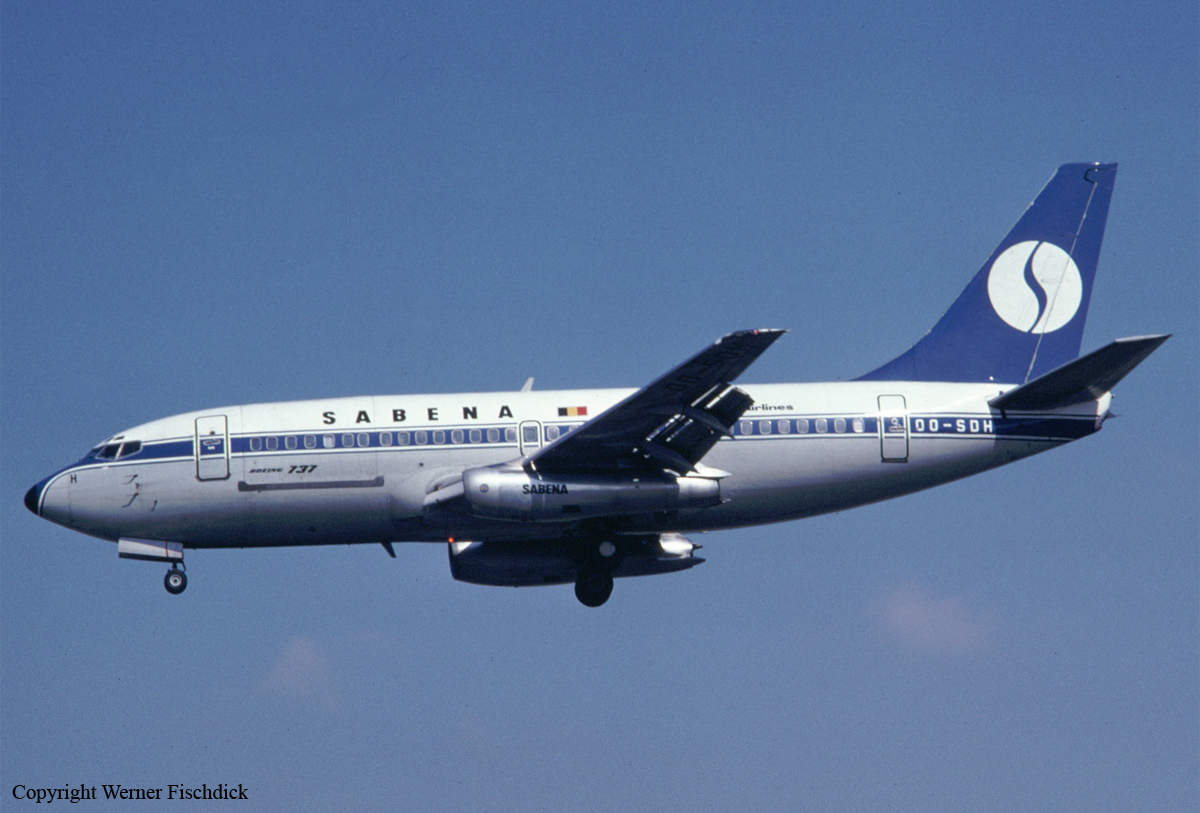
Crash of a Boeing 737-229C in Charleroi
Date & Time:
Apr 4, 1978 at 1807 LT
Operator:

Registration:
OO-SDH
Survivors:
Yes
Schedule:
Charleroi - Charleroi
MSN:
20914/396
YOM:
1975
Crew on board:
3
Crew fatalities:
Pax on board:
0
Pax fatalities:
Other fatalities:
Total fatalities:
0
Captain / Total hours on type:
3720.00
Copilot / Total hours on type:
9
Aircraft flight hours:
6983
Aircraft flight cycles:
7424
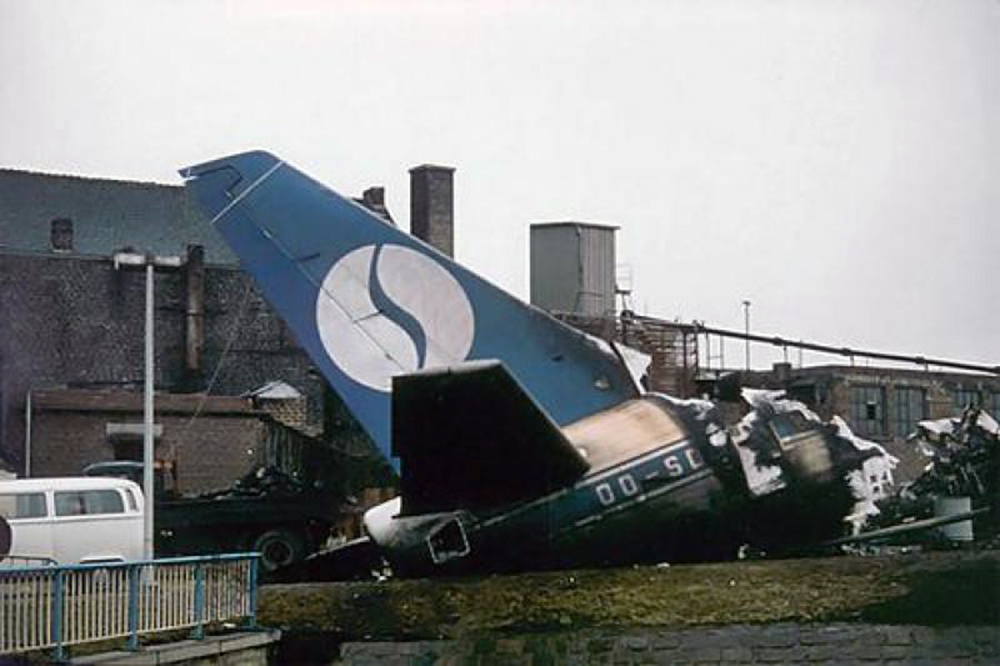
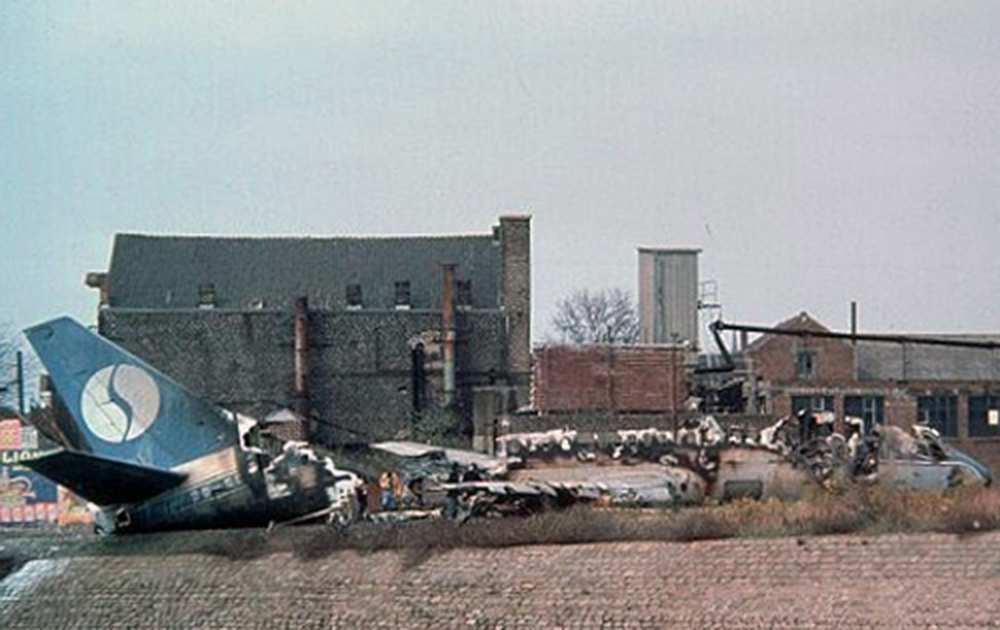
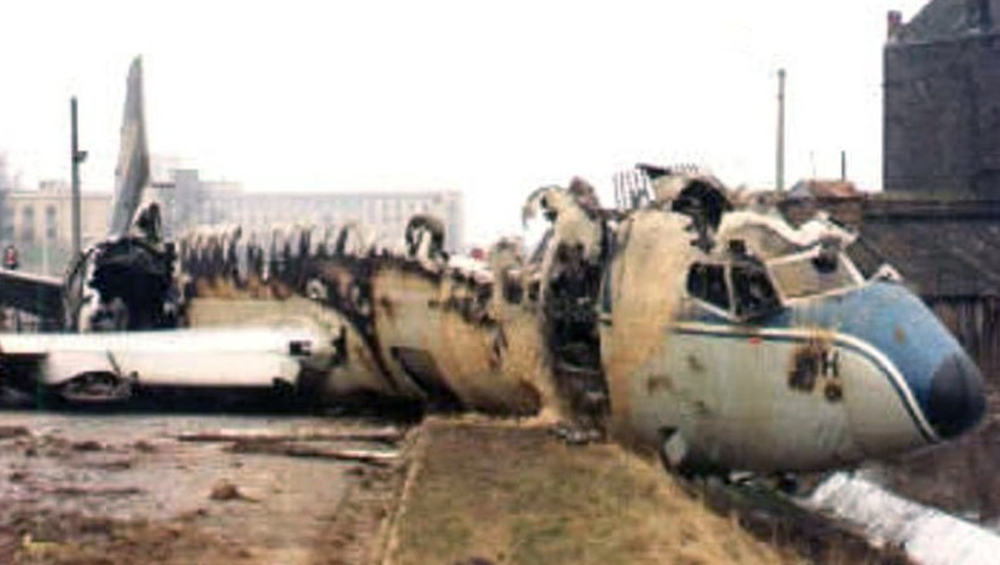
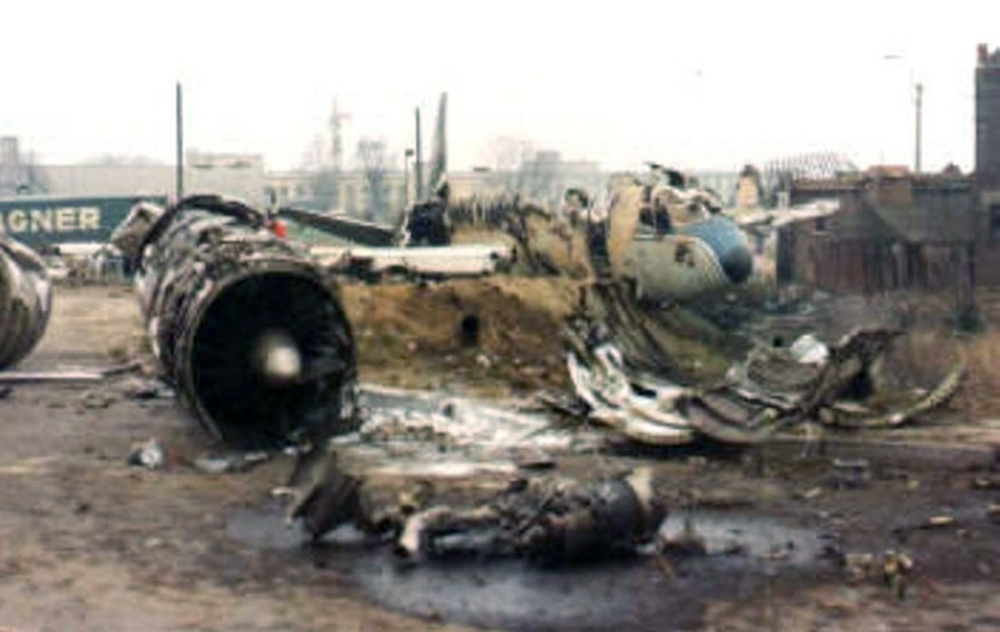
Circumstances:
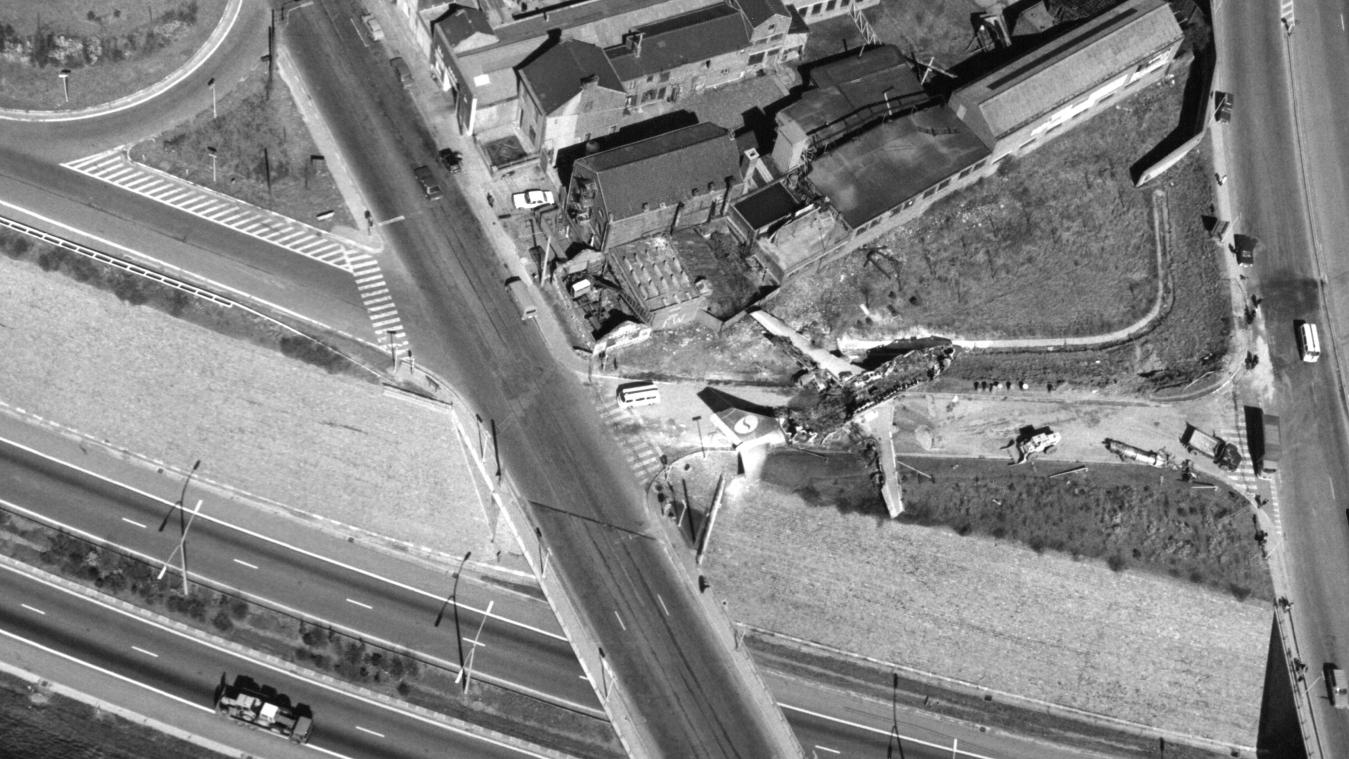
The aircraft was engaged in a local training flight at Charleroi-Gosselies Airport and was carrying a crew of three (one instructor and two student pilots) who just landed from Brussels. Both students were going to practice ILS approaches to runway 25 at Charleroi-Gosselies Airport (CRL) followed by a touch-and-go. The initial six approaches were uneventful. The students then changed seats. The second student's first approach and touch-and-go were uneventful. During the second touch-and-go a flock of birds (ring doves) were observed crossing the runway. Several birds were ingested as the airplane was rotating. The instructor took over control and attempted to continue takeoff. The airplane failed to respond to his control inputs and seemed to decelerate. He then decided to abort the takeoff. There was insufficient runway length available so the Boeing overran, struck localizer antennas and skidded. It lost its undercarriage and came to rest in flames on a road located about 320 meters past the runway end. All three occupants evacuated safely while the aircraft was destroyed by fire.
Probable cause:
The probable cause of the accident was the interruption of the takeoff maneuver at the time of the impact of birds, followed by a stop for undetermined reasons. The deceleration due to braking prevented the aircraft to respond to the action of the pilot-instructor using the ailerons. The takeoff was interrupted while the remaining runway length was insufficient to stop the aircraft.
The following findings were identified:
- When the bird strike occurred, the flight instructor took control without informing the copilot, in an attempt to continue the takeoff procedure.
- The aircraft, which was decelerating at that moment, did not respond normally to the pilot’s control inputs.
- The aircraft’s deceleration was due to the application of the brakes. It was not possible to determine who applied the brakes.
- The flight instructor decided to abort the takeoff despite the high speed, and the remaining runway length was insufficient to bring the aircraft to a stop within the runway limits.
- The tailwind component caused the aircraft to travel a longer distance down the runway.
The following findings were identified:
- When the bird strike occurred, the flight instructor took control without informing the copilot, in an attempt to continue the takeoff procedure.
- The aircraft, which was decelerating at that moment, did not respond normally to the pilot’s control inputs.
- The aircraft’s deceleration was due to the application of the brakes. It was not possible to determine who applied the brakes.
- The flight instructor decided to abort the takeoff despite the high speed, and the remaining runway length was insufficient to bring the aircraft to a stop within the runway limits.
- The tailwind component caused the aircraft to travel a longer distance down the runway.
Final Report:

Crash of a Cessna 207 Skywagon in Spa
Date & Time:
Aug 8, 1976
Registration:
OO-SPW
Survivors:
Yes
MSN:
207-0211
YOM:
1972
Crew on board:
0
Crew fatalities:
Pax on board:
0
Pax fatalities:
Other fatalities:
Total fatalities:
0
Circumstances:
Crashed in unknown circumstances. No casualties.

