Crash of a Beechcraft B200 Super King Air in Spanish Cay

Date & Time: Aug 12, 2000 at 1115 LT
Registration:
N3199A
Flight Type:
Survivors:
Yes
Schedule:
Fort Lauderdale – Spanish Cay
MSN:
BB-1499
YOM:
1995
Country:
Crew on board:
1
Crew fatalities:
Pax on board:
2
Pax fatalities:
Other fatalities:
Total fatalities:
0
Circumstances:
On August 12, 2000, about 1115 eastern daylight time, a Beechcraft B200, N3199A, registered to and operated by Great Texas Food Inc. as a Title 14 CFR Part 91 personal flight, ran off the side of the runway during landing in Spanish Cay, Bahamas. Visual meteorological conditions prevailed at the time and a visual flight rules flight plan was filed. The private-rated pilot and the two passengers received no injuries. The flight originated from Fort Lauderdale, Florida, the same day, about 1030. The pilot stated that he made an uneventful landing and as he applied the brakes, the left brake did not respond. He stated that he lost control of the aircraft and exited the runway from the right side and impacted a berm. The right landing gear collapsed, the left wing and the front fuselage incurred substantial damage.
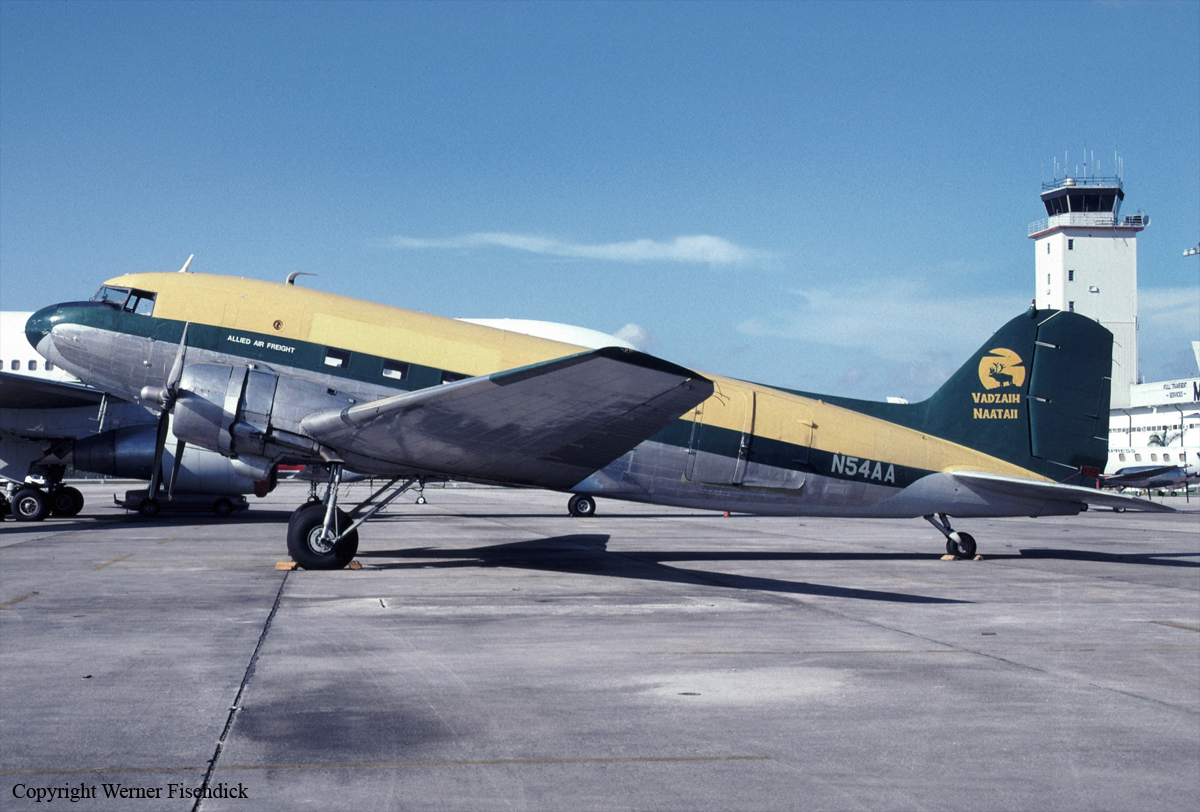
Crash of a Douglas C-47A-10-DK in Nassau: 2 killed

Date & Time: Jul 20, 2000 at 1312 LT
Registration:
N54AA
Flight Phase:
Flight Type:
Survivors:
No
Schedule:
Nassau - Freeport
MSN:
12475
YOM:
1944
Country:
Crew on board:
2
Crew fatalities:
Pax on board:
0
Pax fatalities:
Other fatalities:
Total fatalities:
2
Circumstances:
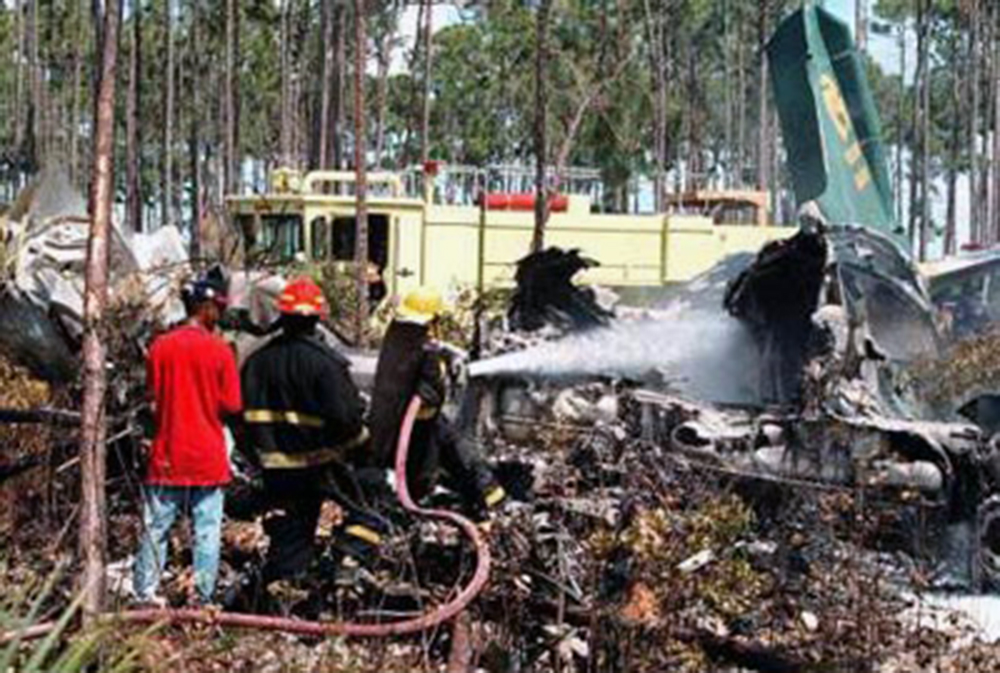
On July 20, 2000, about 1312 eastern daylight time, a Douglas DC-3, N54AA, registered to Allied Air Freight, Inc., operating as a Title 14 CFR Part 135 cargo charter flight, crashed after takeoff from Nassau International Airport, New Providence Island, Bahamas. Visual meteorological conditions prevailed and a VFR flight plan was filed. The airplane was destroyed by post crash fire and the ATP-rated pilot and commercially-rated copilot were fatally injured. The flight originated about 6 minutes before the accident. According to initial reports, after takeoff from runway 14, the pilot advised the tower that he would have to shut down the right engine and return for an emergency landing on runway 14. The airplane was observed to lose altitude and crash about 2 miles from the airport, east of the extended centerline of runway 14.

Crash of a Beechcraft D18S off Bimini

Date & Time: Feb 2, 2000 at 1407 LT
Type of aircraft:
Operator:
Registration:
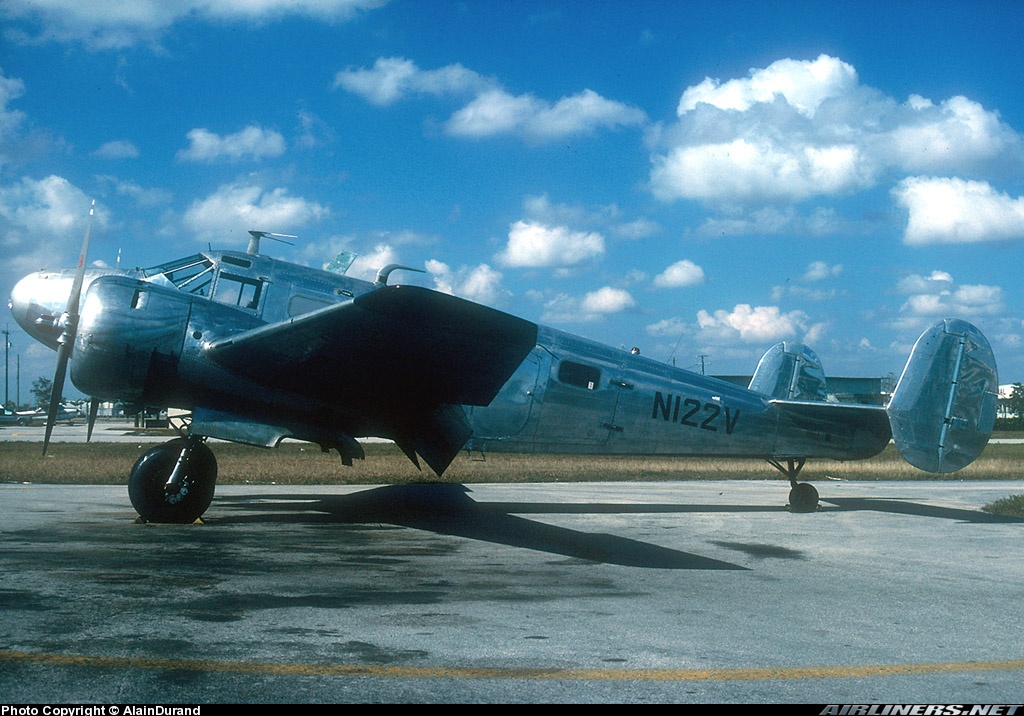
N122V
Flight Phase:
Flight Type:
Survivors:
Yes
Schedule:
Miami - Nassau
MSN:
A-828
YOM:
1952
Location:
Country:
Crew on board:
1
Crew fatalities:
Pax on board:
1
Pax fatalities:
Other fatalities:
Total fatalities:
0
Circumstances:
On February 2, 2000, about 1407 eastern standard time, a Beech D18S, N122V, registered to South Florida Aircraft Leasing, Inc., operated by Florida Air Cargo, Inc., was ditched in the Atlantic Ocean, approximately 47 miles east of Bimini, Bahamas. Visual meteorological conditions prevailed at the time and a visual flight rules (VFR) flight plan was filed for the 14 CFR Part 135 non-scheduled, international, cargo flight. The airplane was substantially damaged and the commercial-rated pilot was not injured, one passenger sustained minor injuries. The flight originated about 1305 from the Opa Locka Airport, Opa Locka, Florida. The pilot stated that the flight departed with all five fuel tanks full of fuel and departed with the left fuel selector positioned to the "main tank" position. The flight continued and approximately 10 minutes after takeoff, he switched the left fuel selector to the auxiliary position and remained on that tank for approximately 35 minutes. When the flight was approximately 20 miles east of Bimini, he switched the left fuel selector to the main tank position where it remained for 5 minutes before he added climb power. While about 45 miles east of Bimini, climbing through 2,300 feet with a good rate of climb, the left manifold pressure dropped to 27 inches and the propeller rpm dropped to 1,300. He turned to fly to Bimini, broadcast a mayday call, and reported no unusual vibration; the fuel pressure and oil pressure gauges indicated normal. He repositioned the fuel selector but the left engine would not restart. He then feathered the left propeller and secured the engine but was unable to maintain altitude with full power applied to the right engine. The airplane was ditched in a slight left wing low attitude and the left engine separated from the airframe. Both occupants exited the airplane, remained in the water for 47 minutes, then were spotted by a U.S. Coast Guard Falcon airplane. They were rescued by a pleasure boat and transported to the east coast of Florida.

Crash of a Beechcraft 200 Super King Air off Bimini: 2 killed

Date & Time: Sep 19, 1999 at 1115 LT
Registration:
YV-385CP
Flight Phase:
Flight Type:
Survivors:
No
Schedule:
Fort Lauderdale - Caracas
MSN:
BB-740
YOM:
1981
Location:
Country:
Crew on board:
1
Crew fatalities:
Pax on board:
1
Pax fatalities:
Other fatalities:
Total fatalities:
2
Aircraft flight hours:
1841
Circumstances:
A Beechcraft 200 Super King Air, YV-385CP, crashed into the Atlantic Ocean about 9 miles southwest of Bimini, Bahamas, while on personal flight. Visual meteorological conditions prevailed in the area at the time, and an instrument flight rules flight plan was filed. The aircraft was destroyed, and the commercial-rated flight instructor and a pilot-rated passenger were both fatally injured. The flight originated from Fort Lauderdale International Airport, the same day, about 10:53. At 11:14, the pilot of YV-385CP told FAA ARTCC that he was experiencing an emergency, and he asked for immediate directions to Bimini. There were no further communications. According to radar information, at 11:13:33, the altitude was about 23,600 feet, and at 11:14:58 it had descended to 2,800 feet. Sound spectrum analysis of an FAA re-recording of communications between the pilot and ATC, indicated there were electronic signatures present, attributable to propeller noise, at cruise setting, for that type of aircraft. Records obtained from Venezuela indicated that earlier, YV-385CP had been involved in an accident, and had incurred extensive structural damage. The aircraft had been repaired in Venezuela, and was subsequently flown to the Unites States for additional repairs. Records obtained from the U.S. repair station indicated that the airplane incurred an extensive maintenance history, with needed repairs including damaged wiring, and leaks in the fuel system, as well as structural leaks, which had lead to several pressurization difficulties.
Probable cause:
Due to lack of evidences, the exact cause of the accident could not be determined.

Crash of a Piper PA-31-310 Navajo C in San Andros

Date & Time: Sep 9, 1999 at 1915 LT
Type of aircraft:
Operator:
Registration:
N6579L
Flight Type:
Survivors:
Yes
Schedule:
Nassau – San Andros
MSN:
31-504
Country:
Crew on board:
1
Crew fatalities:
Pax on board:
6
Pax fatalities:
Other fatalities:
Total fatalities:
0
Circumstances:
On September 9, 1999, about 1915 eastern daylight time, a Piper PA-31-310, N6579L, registered to Webs Planes, Inc., operating as a 14 CFR Part 91 personal flight, crashed about 50 yards east of San Andros Airport, Andros Island, Bahamas, following an inflight explosion and cockpit fire. Visual meteorological conditions prevailed, and a VFR flight plan was filed. The airplane was destroyed by ground fire and the commercially-rated pilot and six passengers were not injured. The flight originated from Nassau, New Providence, about 1910. According to the pilot, at about 15 miles from his destination, San Andros, he heard a loud explosion from under the floor, and then experienced fire in the cockpit. Attempts at extinguishing the fire were negative and he began to lose engine power. He tried to make the runway at San Andros, but impacted mangrove growth east of the airport, instead. He stated he thought the problem may have been a short circuit in electrical wiring under the airplane's floorboards.

Crash of a Rockwell Aero Commander 500B off Nassau: 1 killed

Date & Time: May 12, 1999 at 0859 LT
Registration:
N6138X
Flight Type:
Survivors:
No
Schedule:
Miami - Nassau
MSN:
500-927-10
YOM:
1960
Country:
Crew on board:
1
Crew fatalities:
Pax on board:
0
Pax fatalities:
Other fatalities:
Total fatalities:
1
Captain / Total flying hours:
1000
Circumstances:
The flight was on approach, and the pilot was in radio contact with approach control. For unknown reasons the pilot performed a 360-degree turn, without permission from the controller, and was then vectored to a different runway. After acknowledging the clearance to the new runway, the controller lost all contact with the flight. None of the radio communications indicated that the pilot was having mechanical or medical problems. A search was initiated by air and a debris field was located. Five yellow life jackets, 1 six man life raft, several unidentified pieces of white and gold airframe were recovered. The pilot and the wreckage were never recovered from the water. At the time of the accident the pilot's license had been suspended by the FAA.
Probable cause:
An in-flight collision with water for undetermined reasons, due to the wreckage never being recovered from the water.
Final Report:

Crash of a Cessna 421B Golden Eagle II in Nassau

Date & Time: May 11, 1998 at 1349 LT
Registration:
N17BN
Survivors:
Yes
Schedule:
Charlotte Amalie – Nassau
MSN:
421B-0396
YOM:
1973
Country:
Crew on board:
1
Crew fatalities:
Pax on board:
2
Pax fatalities:
Other fatalities:
Total fatalities:
0
Circumstances:
On May 11, 1998, about 1349 eastern daylight time, a Cessna 421B, N17BN, registered to Quinn Industries, Inc., operating as a 14 CFR 91 personal flight, crashed into Lake Killarney, New Providence Island, Bahamas, while on approach for landing to Nassau International Airport. Visual meteorological conditions prevailed and no flight plan was filed. The airplane received unknown damage, the pilot suffered serious injuries, and two passengers suffered minor injuries. The flight originated about 26 minutes before the accident. According to initial reports, the flight originated earlier that day from St. Thomas, Virgin Islands, with a stop at Governor's Harbour, Eleuthera, for refueling. Upon landing at Governor's Harbour, the pilot was advised no fuel was available and elected to proceed to Nassau for refueling. Some time during the straight-in approach the pilot transmitted he was "low on fuel", and N17BN crashed about 400 yards short of the runway into a swamp.

Crash of a Douglas C-47A-45-DL in George Town

Date & Time: Feb 3, 1998 at 1200 LT
Registration:
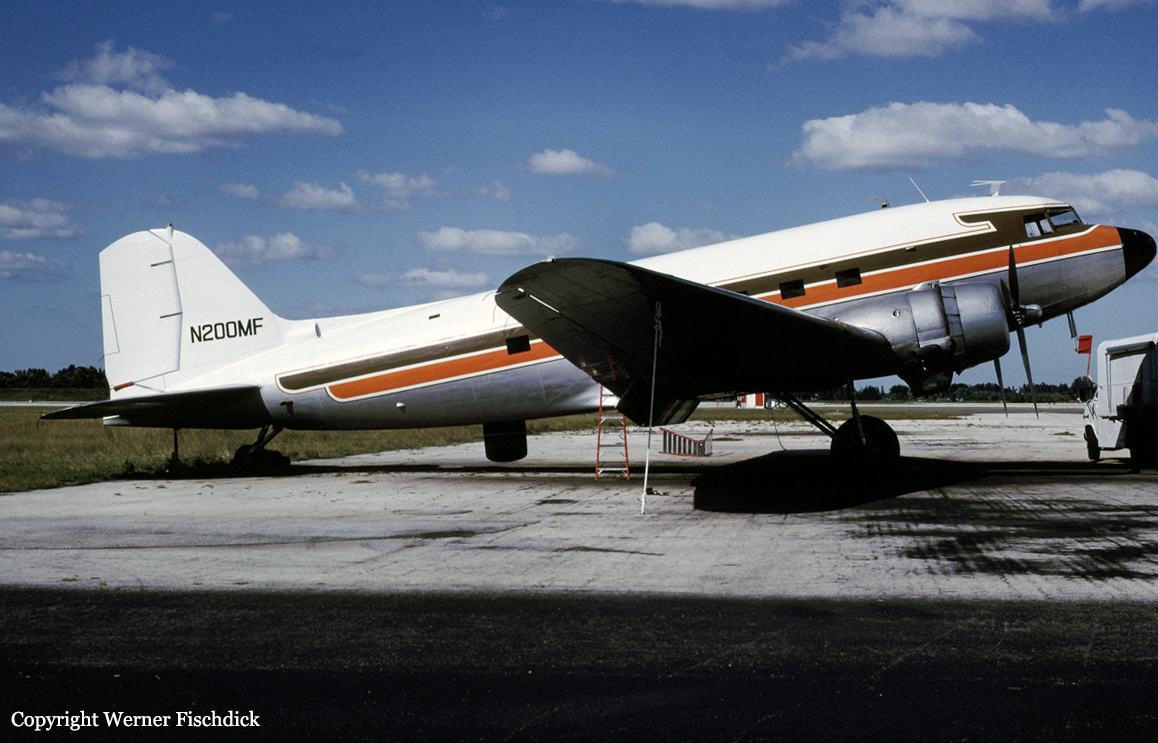
N200MF
Flight Type:
Survivors:
Yes
Schedule:
George Town – Cap Haïtien
MSN:
9990
YOM:
1943
Country:
Crew on board:
3
Crew fatalities:
Pax on board:
24
Pax fatalities:
Other fatalities:
Total fatalities:
0
Circumstances:
On February 3, 1998 at about 1200 eastern standard time, a Douglas DC3C, N200MF, registered to Missionary Flights International, as a 14 CFR Part 91 passenger flight experienced a total loss of engine power on both engines and made a forced landing 1 mile from the Greater Exuma Airport, Moss Town, Bahamas. Visual meteorological conditions prevailed and an IFR flight plan was filed. The airplane sustained substantial damage. The airline transport pilot-in-command (PIC), commercial pilot first officer, and 24 passengers reported no injuries. The flight originated from Moss Town about 1 hour 52 minutes before the accident.

Crash of a Britten-Norman BN-2A-III-2 Trislander off Little Farmer's Cay

Date & Time: Nov 9, 1997
Type of aircraft:
Operator:
Registration:
F-OGOR
Flight Phase:
Survivors:
Yes
MSN:
1049
YOM:
1977
Country:
Crew on board:
0
Crew fatalities:
Pax on board:
0
Pax fatalities:
Other fatalities:
Total fatalities:
0
Circumstances:
Crashed in unknown circumstances in the sea off Little Farmer's Cay. There were no casualties.

Crash of a Cessna 402C in Great Harbour Cay

Date & Time: Jul 10, 1997 at 1700 LT
Type of aircraft:
Registration:
N2717Y
Survivors:
Yes
Schedule:
Nassau - Great Harbour Cay
MSN:
402C-0226
YOM:
1979
Country:
Crew on board:
1
Crew fatalities:
Pax on board:
8
Pax fatalities:
Other fatalities:
Total fatalities:
0
Circumstances:
The aircraft ran off the runway and collided with a ditch at Great Harbour Airport, Great Harbour Cay, Bahamas, while on a foreign air taxi flight. Visual meteorological conditions prevailed at the time and no flight plan was filed. The aircraft was destroyed. The commercial-rated pilot and seven passengers received minor injuries. One passenger received serious injuries. The flight originated from Nassau, Bahamas, the same day, about 1630. The pilot reported the brakes failed during the landing roll. While approaching the end of the runway he elected to steer the aircraft off the left side of the runway to avoid a steep drop off at the end of the runway. The aircraft collided with a ditch and a post crash fire erupted and destroyed the aircraft.