
Crash of a Piper PA-31-350 Navajo Chieftain in Stony Rapids

Date & Time: Feb 27, 2000 at 2200 LT
Operator:

Registration:
C-FATS
Survivors:
Yes
Schedule:
Edmonton - Stony Rapids
MSN:
31-7952072
YOM:
1979
Country:
Crew on board:
1
Crew fatalities:
Pax on board:
6
Pax fatalities:
Other fatalities:
Total fatalities:
0
Captain / Total flying hours:
7850
Captain / Total hours on type:
1450.00
Circumstances:
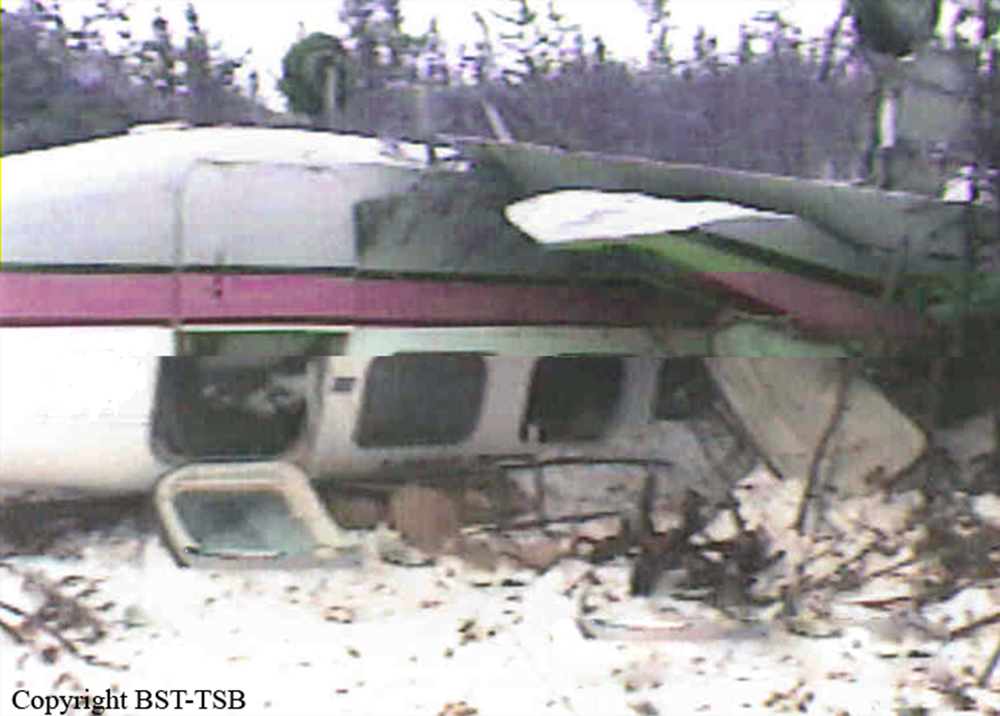
The Piper Navajo Chieftain PA-31-350, serial number 31-7952072, departed Edmonton, Alberta, on an instrument flight rules charter flight to Stony Rapids, Saskatchewan, with one pilot and six passengers on board. The pilot conducted a non-directional beacon approach at night in Stony Rapids, followed by a missed approach. He then attempted and missed a second approach. At about 2200 central standard time, while manoeuvring to land on runway 06, the aircraft struck trees 3.5 nautical miles west of the runway 06 button and roughly one quarter nautical mile left of the runway centreline, at an altitude of 1200 feet above sea level. The aircraft sustained substantial damage, but no fire ensued. The pilot and one passenger were seriously injured, and the remaining five passengers sustained minor injuries. Canadian Forces search and rescue specialists were air-dropped to the site at 0300 and provided assistance to the pilot and passengers. Local ground search parties later assisted with the rescue.
Probable cause:
Findings as to Causes and Contributing Factors:
1. The pilot executed a missed approach on his first NDB approach, and, during the second missed approach, after momentarily seeing the runway, he decided to conduct a visual approach, descending below MDA in an attempt to fly under the cloud base.
2. In flying under the cloud base during the visual portion of his approach, the pilot likely perceived the horizon to be lower on the windscreen than it actually was.
3. There was no indication that there was any form of pressure from management to influence the pilot to land at the destination airport. However, the pilot may have chosen to land in Stony Rapids because he had an early flight the following day, and he did not have the keys for the accommodations in Fond-du-Lac.
Findings as to Risk:
1. No scale was available to the pilot in Edmonton for weighing aircraft loads.
2. The maximum allowable take-off weight of the aircraft was exceeded by about 115 pounds, and it is estimated that at the time of the crash, the aircraft was 225 pounds below maximum landing weight. The aircraft's centre of gravity was not within limits at the time of the crash.
3. The rear baggage area contained 300 pounds of baggage, 100 pounds more than the manufacturer's limitation.
4. Two screws were missing from each section of the broken seat track to which the anchor points were attached.
5. Cargo net anchorage system failure contributed to passenger injuries.
6. The stitching failed on the seat belt's outboard strap that was mounted on the right, middle, forward-facing cabin seat.
Other Findings:
1. Hand tools were required to access the ELT panel, since the cockpit remote switch could not be accessed.
Final Report:
Crash of a Piper PA-31-350 Navajo Chieftain in Williston Lake

Date & Time: Feb 7, 2000 at 1055 LT
Operator:
Registration:
C-GBFZ
Flight Phase:
Flight Type:
Survivors:
Yes
Schedule:
Mackenzie – Bear Valley – Tsay Keh – Mackenzie
MSN:
31-7752151
YOM:
1977
Country:
Crew on board:
1
Crew fatalities:
Pax on board:
0
Pax fatalities:
Other fatalities:
Total fatalities:
0
Captain / Total flying hours:
4500
Captain / Total hours on type:
1500.00
Circumstances:
The pilot of a Piper PA-31-350 Navajo Chieftain, serial number 31-7752151, encountered an area of heavy snow and reduced visibility while on a visual flight rules flight from Bear Valley, British Columbia, logging camp to Tsay Keh. The pilot was unable to maintain visual references and executed a 180-degree turn in an attempt to regain visual flight. Shortly after completing the turn, at about 1055 Pacific standard time, the aircraft collided with the ice on the Peace Reach Arm of Williston Lake, British Columbia. The pilot was the sole occupant of the aircraft and received serious injuries. There was no fire. The aircraft was destroyed during the collision.
Probable cause:
Findings as to Causes and Contributing Factors:
1. Weather conditions at the time and location of the occurrence were not suitable for visual flight.
2. While the pilot was attempting to regain visual flight, he allowed the aircraft to descend and it struck the ice surface. The weather and surface conditions were such that it would have been virtually impossible to visually detect the ice surface.
Other Finding:
1. In the absence of en route weather reporting facilities, the pilot could only estimate weather conditions based on the area forecast and informal reports received from lay personnel.
Final Report:

Crash of a Piper PA-31-350 Navajo Chieftain in Johannesburg: 10 killed

Date & Time: Dec 6, 1999 at 0706 LT
Registration:
ZS-OJY
Flight Phase:
Survivors:
No
Schedule:
Johannesburg - Oranjemund
MSN:
31-7405210
YOM:
1974
Flight number:
FC350
Country:
Region:
Crew on board:
1
Crew fatalities:
Pax on board:
9
Pax fatalities:
Other fatalities:
Total fatalities:
10
Captain / Total flying hours:
1444
Captain / Total hours on type:
445.00
Aircraft flight hours:
8422
Circumstances:
The charter operator was involved in a weekly operation to transport computer programmers and training staff, from a Johannesburg company, from Rand Airport to Oranjemund in Namibia. The outward leg of the flights to Oranjemund took place on the Monday morning and the pilot and aircraft stayed at Oranjemund for the week. The return flight to Johannesburg usually took place on the Friday afternoon. On the morning of the accident flight the set time of departure was 0500z. The passengers were assisted through the process of passport control, boarding and settling in by the operator's staff. The baggage was put next to the aircraft. According to a witness the pilot carried out the loading of the baggage. An instrument flight plan was filed and the pilot obtained departure clearance before the aircraft was taxied to the holding point. According to the air traffic controller, the take-off run was normal for this type of aircraft. Shortly after take-off the pilot declared an engine failure and requested to be routed back to land on the runway. Seconds later the pilot communicated they were going to crash. Several witnesses stated that the aircraft was very low when it passed over the highway close to the accident site. One of the witnesses stated that he noticed the right-hand engine stopped and he could see the blades of the propeller. The fire fighting services were alerted. It was apparent by the smoke that the aircraft crashed on an extended line of Runway 29. The accident took place at 0506z in daylight conditions. All 10 occupants were killed.
Probable cause:
The following findings were identified:
- The precipitative cause of this accident was the failure of the exhaust pipe segment, which caused the right–hand engine to lose power/fail.
- The overloaded condition of the aircraft was thus a highly significant contributory factor.
- The pilot operating the aircraft in an overloaded condition is regarded as a significant contributing factor.
- The company’s lack of flight operations management experience, professional flight standards supervision and an operational safety management program are regarded as significant contributing factors.
- The anomalies noted in regulatory oversight of the operator (airworthiness and flight operations surveillance) by the CD:CAA and CAA are regarded as possible contributing factors.
Final Report:

Crash of a Piper PA-31-350 Navajo Chieftain on Gass Peak: 1 killed

Date & Time: Oct 14, 1999 at 1946 LT
Operator:
Registration:
N1024B
Flight Phase:
Flight Type:
Survivors:
No
Site:
Schedule:
North Las Vegas – Sacramento
MSN:
31-7652107
YOM:
1976
Flight number:
AMF121
Crew on board:
1
Crew fatalities:
Pax on board:
0
Pax fatalities:
Other fatalities:
Total fatalities:
1
Captain / Total flying hours:
2103
Captain / Total hours on type:
250.00
Aircraft flight hours:
14048
Circumstances:
The airplane collided with mountainous terrain during climb to cruise on a night departure. The pilot of the on-demand cargo flight was brought in off reserve to replace the scheduled pilot who was ill. The flight was behind schedule because the cargo was late. When the instrument flight release created further delay, the pilot opted to depart into the clear, dark night under visual flight rules (VFR) with the intention of picking up his instrument clearance when airborne. When clearing the flight for takeoff, the tower controller issued a suggested heading of 340 degrees, which headed the aircraft toward mountainous terrain 11 miles north of the airport. The purpose of the suggested heading was never stated to the pilot as required by FAA Order 7110.65L. After a frequency change to radar departure control, the controller asked the pilot 'are you direct [the initial (route) fix] at this time?' and the pilot replied, 'we can go ahead and we'll go direct [the initial fix].' A turn toward the initial fix would have headed the aircraft away from high terrain. The controller then diverted his attention to servicing another VFR aircraft and the accident aircraft continued to fly heading 340 degrees until impacting the mountain. ATC personnel said the 340-degree heading was routinely issued to departing aircraft to avoid them entering Class B airspace 3 miles from the airport. The approach control supervisor said this flight departs daily, often VFR, and routinely turns toward the initial fix, avoiding mountainous terrain. When the pilot said that he would go to the initial fix, the controller expected him to turn away from the terrain. Minimum Safe Altitude Warning (MSAW) was not enabled for the flight because the original, instrument flight plan did not route the aircraft through this approach control's airspace and the controller had not had time to manually enter the flight data. High terrain was not displayed on the controller's radar display and no safety alert was issued.
Probable cause:
The failure of the pilot-in-command to maintain separation from terrain while operating under visual flight rules. Contributing factors were the improper issuance of a suggested heading by air traffic control personnel, inadequate flight progress monitoring by radar departure control personnel, and failure of the radar controller to identify a hazardous condition and issue a safety alert.
Final Report:

Crash of a Piper PA-31-350 Navajo Chieftain on Mt Mauna Loa: 10 killed

Date & Time: Sep 25, 1999 at 1726 LT
Operator:
Registration:
N411WL
Flight Phase:
Survivors:
No
Site:
Schedule:
Kona - Kona
MSN:
31-8352039
YOM:
1983
Flight number:
BIA058
Crew on board:
1
Crew fatalities:
Pax on board:
9
Pax fatalities:
Other fatalities:
Total fatalities:
10
Captain / Total flying hours:
11500
Aircraft flight hours:
4523
Circumstances:
On September 25, 1999, about 1726 Hawaiian standard time, Big Island Air flight 58, a Piper PA-31-350 (Chieftain), N411WL, crashed on the northeast slope of the Mauna Loa volcano near Volcano, Hawaii. The pilot and all nine passengers on board were killed, and the airplane was destroyed by impact forces and a postimpact fire. The sightseeing tour flight was operating under 14 Code of Federal Regulations Part 135 as an on-demand air taxi operation. A visual flight rules flight plan was filed, and visual meteorological conditions existed at the Keahole-Kona International Airport, Kona, Hawaii, from which the airplane departed about 1622. The investigation determined that instrument meteorological conditions prevailed in the vicinity of the accident site.
Probable cause:
The pilot's decision to continue visual flight into instrument meteorological conditions (IMC) in an area of cloud-covered mountainous terrain. Contributing to the accident were the pilot's failure to properly navigate and his disregard for standard operating procedures, including flying into IMC while on a visual flight rules flight plan and failure to obtain a current preflight weather briefing.
Final Report:

Crash of a Piper PA-31-350 Navajo Chieftain in Newnan: 2 killed

Date & Time: Sep 21, 1999 at 0522 LT
Registration:
N27343
Flight Type:
Survivors:
No
Schedule:
Charlotte - Newnan
MSN:
31-7752163
YOM:
1977
Crew on board:
1
Crew fatalities:
Pax on board:
1
Pax fatalities:
Other fatalities:
Total fatalities:
2
Captain / Total flying hours:
2000
Captain / Total hours on type:
250.00
Aircraft flight hours:
8340
Circumstances:
The flight was cleared for a localizer approach to runway 32 at Newnan-Coweta County Airport during dark night conditions. About 8 minutes later the pilot reported to air traffic control that he had missed approach and would like to try another approach. The flight was radar vectored to the final approach course and again cleared for the localizer runway 32 approach. The flight was observed on radar to continue the approach until a point about 4 nautical miles from the airport, at which time radar contact was lost. The last observed altitude was 1,600 feet msl. The aircraft collided with 80-foot tall trees, while established on the localizer for runway 32, about 1.3 nautical miles from the runway. About the time of the accident the weather at the airport was reported as a cloud ceiling 200 feet agl, and visibility .75 statute miles. Post crash examination of the aircraft structure, flight controls, engines, propellers, and systems showed no evidence of pre-crash failure or malfunction.
Probable cause:
The pilot's failure to maintain the minimum descent altitude while executing a localizer approach. Contributing factors were low ceilings and dark night conditions as well as the trees.
Final Report:

