Crash of a Lockheed L-382E-26C Hercules in Tarapoto: 4 killed

Date & Time: Feb 19, 1978
Type of aircraft:
Operator:
Registration:
FAP395
Flight Phase:
Flight Type:
Survivors:
No
Schedule:
Tarapoto - Lima
MSN:
4364
YOM:
1970
Country:
Crew on board:
4
Crew fatalities:
Pax on board:
0
Pax fatalities:
Other fatalities:
Total fatalities:
4
Circumstances:
Shortly after takeoff from Tarapoto-Comandante Guillermo del Castillo Paredes Airport, while climbing, the airplane lost height, stalled and crashed. All four crew members were killed. The airplane was completing a cargo flight to Lima on behalf of Servicio Aéreo de Transportes Comerciales (SATCO) and had a dual registration FAP395 and OB-R-1004.
Probable cause:
It is believed that the accident was the consequence of an engine failure, maybe a multiple engine failure.

Crash of a Lockheed EC-130Q Hercules off Wake Island: 16 killed

Date & Time: Jun 21, 1977 at 2230 LT
Type of aircraft:
Operator:
Registration:
156176
Flight Phase:
Flight Type:
Survivors:
No
Schedule:
Wake - Agana
MSN:
4280
YOM:
1968
Crew on board:
4
Crew fatalities:
Pax on board:
12
Pax fatalities:
Other fatalities:
Total fatalities:
16
Circumstances:
Shortly after takeoff from Wake Island Airport runway 10, while climbing by night to an altitude of 400 feet, the four engine airplane went out of control and crashed into the sea about 1,500 meters offshore. Two engines and few debris were found while the aircraft sank and was lost. All 16 occupants were killed.
Probable cause:
It is believed that the pilot-in-command lost control of the airplane during initial climb after he suffered a spatial disorientation while flying over the ocean without any visual references. The accident occurred while there was no ATC at airport.

Crash of a Lockheed C-130H Hercules near Pisa: 44 killed

Date & Time: Mar 3, 1977 at 1500 LT
Type of aircraft:
Operator:
Registration:
MM61996
Flight Phase:
Flight Type:
Survivors:
No
Site:
Schedule:
Pisa - Livorno
MSN:
4492
YOM:
1973
Flight number:
Vega 10
Country:
Region:
Crew on board:
5
Crew fatalities:
Pax on board:
39
Pax fatalities:
Other fatalities:
Total fatalities:
44
Circumstances:
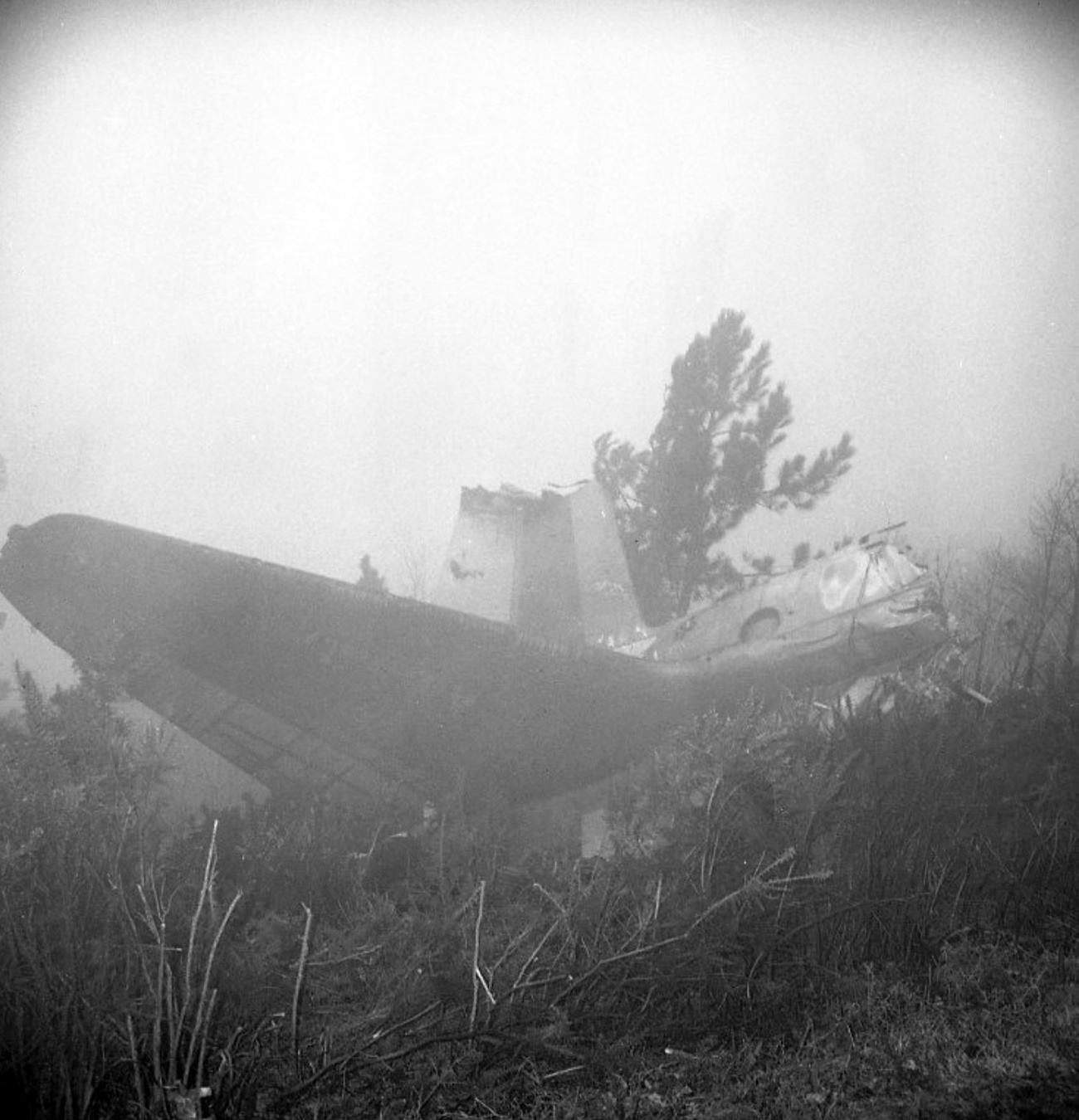
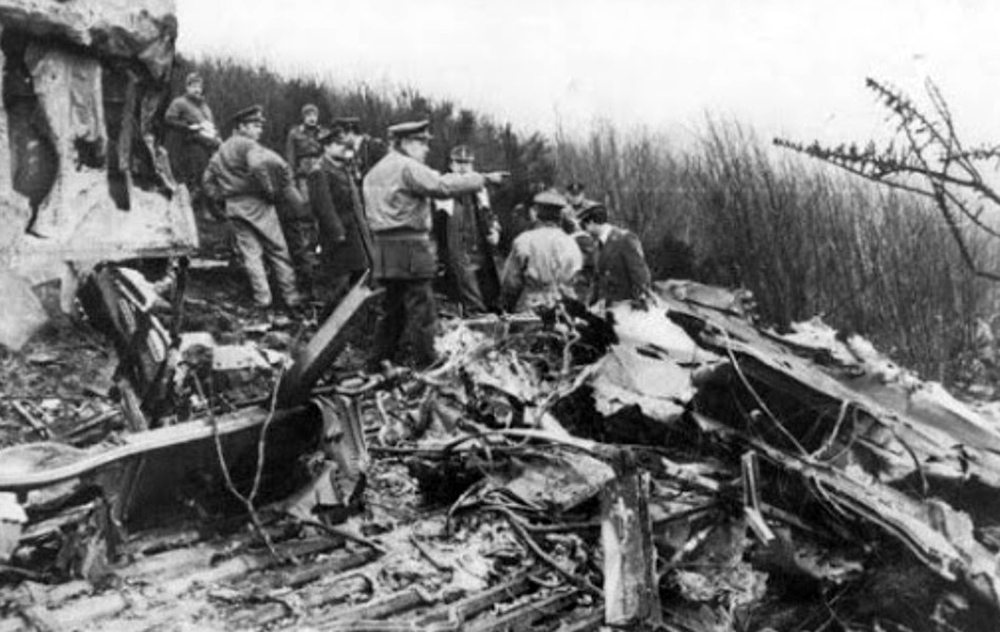
The airplane was engaged in a flight from Pisa to Livorno, carrying 38 cadets, one instructor and five crew members. Four minutes after takeoff from runway 04, while climbing in marginal weather conditions, the airplane struck the slope of Mt Serra (3,200 feet high) located 15 km northeast of the airport. The wreckage was found about 180 metres from the summit and all 44 occupants were killed. At the time of the accident, the horizontal visibility was estimated to be six km in haze with stratocumulus at 2,500 feet and altocumulus at 800 feet.
Probable cause:
The exact cause of the accident could not be determined with certainty. However, it was reported that the aircraft was not following the correct track after departure. Due to clouds, the crew was unable to see the mountain and the assumption that the pilot-in-command suffered a spatial disorientation was not ruled out.

Crash of a Lockheed C-130H Hercules in Shiraz: 9 killed

Date & Time: Dec 21, 1976
Type of aircraft:
Operator:
Registration:
5-8536
Flight Type:
Survivors:
No
Schedule:
Tehran - Shiraz
MSN:
4463
YOM:
1972
Location:
Country:
Region:
Crew on board:
5
Crew fatalities:
Pax on board:
4
Pax fatalities:
Other fatalities:
Total fatalities:
9
Circumstances:
On approach to Shiraz in bad weather conditions, the airplane struck a mountain and crashed. All nine occupants were killed.

Crash of a Lockheed C-130H Hercules in Laayoune

Date & Time: Dec 4, 1976
Type of aircraft:
Operator:
Registration:
CNA-OB
Flight Phase:
Flight Type:
MSN:
4537
YOM:
1974
Region:
Crew on board:
0
Crew fatalities:
Pax on board:
0
Pax fatalities:
Other fatalities:
Total fatalities:
0
Circumstances:
After takeoff from Laayoune Airport, the airplane went out of control and crashed. The occupant's fate remains unknown. It is reported the aircraft has been shot down by rebels from the Polisario Front.

Crash of a Lockheed L-382E-18C Hercules in Okasa: 5 killed

Date & Time: Nov 21, 1976 at 0520 LT
Type of aircraft:
Operator:
Registration:
C-FPWX
Flight Phase:
Flight Type:
Survivors:
Yes
Schedule:
Ostend – Algiers – Tamanrasset – N’Djamena – Kisangani – Lubumbashi
MSN:
4361
YOM:
1969
Location:
Region:
Crew on board:
5
Crew fatalities:
Pax on board:
1
Pax fatalities:
Other fatalities:
Total fatalities:
5
Circumstances:
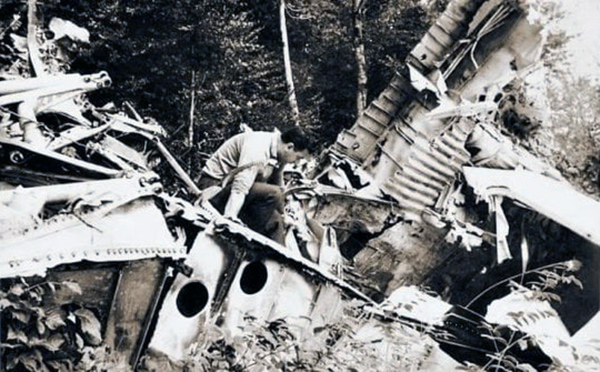
The airplane departed Ostend on November 19 on a cargo flight to Lubumbashi, carrying one passenger, five crew members and two machines for a total weight of 20,2 tons. Intermediate stops were scheduled in Algiers, Tamanrasset, N’Djamena and Kisangani. After the fuel stop in Tamanrasset, the crew flew to Kano instead of N'Djamena. Had Kisangani been identified on radar, the captain would not have initiated descent 38 NM southeast of the city and then continued to the southwest for 140 NM. Due to fuel exhaustion, the airplane descended to ground, collided with trees and crashed in a dense wooded area located near the village of Okasa, some 205 km southwest of Kisangani. The aircraft maintenance engineer survived while five other occupants were killed.
Probable cause:
The following findings were identified:
- The flight departed Ostend before overflight clearances and landing permits had been obtained for the route. The captain believed that authorizations had been received by the London office, after speaking to the London representative.
- There is no effective dispatch of flight watch system established by the carrier for overseas cargo operations.
- The flight proceeded directly from Tamanrasset to Kano rather than following its planned routing to N'Djamena.
- In order to justify landing at Kano the crew had to declare a false fuel emergency.
- The crew had insufficient time in Kano to fully plan the leg to Kisangani, taking into account all of the factors affecting the safety of the flight.
- The aircraft did not carry enough fuel to comply with the minimum alternate requirements.
- The selected alternate (Bunia) was not suitable.
- The selected route depended on enroute radio aids which were published as being unlikely to be available. This information was available to the crew during the planning and conduct of the flight.
- There was no evidence available to the crew that the KGI VOR and the KW NDB, the navigation and approach aids at Kisangani, would be off the air.
- The aircraft’s flight plan was not passed to Kisangani, and so the flight was not expected on the morning of the accident.
- Prior permission to use Kisangani was not requested nor received on the night of the accident.
- The crew did not use radar for navigation during the last leg of the flight.
- The weather conditions which existed at Kisangani upon arrival would have permitted a landing using the Jeppesen published approach procedure.
- The crew was misled by a bearing indication from the LU NDB at Luanda, whose frequency almost coincided with that of the KW NDB at Kisangani. This led them to descend to low altitude and to continue predominately southwest for the remainder of the flight.
- The weather during the last hour of flight would have been suitable for celestial navigation. The aircraft did not carry a navigator, VLF or INS navigation systems.
- The carrier’s marketing and sales literature overstates the payload capability of the aircraft.
- Due to a lack of operational expertise, the carrier’s marketing and sales managers are overselling the aircraft for the stage lengths involved.
- Hercules Captains are knowingly exceeding MTOW limitations.
- Hercules Captains are knowingly flying with insufficient fuel for standoff and alternate requirements.
- There is direct and indirect pressure on the crews to exceed aircraft limitations and to take off without sufficient fuel to meet normal standoff and alternate requirements.
- The airplane departed Kano approximately 6,600 lbs over the MTOW.
- Company representatives scheduled cargo flight crews to exceed flight duty time limitations on charter operations out of Stansted.
- The Captain knowingly exceeded duty time limitations on the accident flight and on a number of prior occasions.
- The crew duty time on the accident flight was at least 34 hours and probably 42 hours.
- There was evidence of crew fatigue 14 hours before the accident.
- Crew fatigue was evident 2 hours before the accident.
- The flight plan and ETA of the aircraft were not forwarded to the Kisangani ATS unit due to lack of adequate communication between Kinshasa and Kisangani tower.
- Navigation Aids (GEM NDB, LIS NDB) along the last 439 NM of planned route from Libenge to Kisangani were published in Republic of Zaire AIP as not being available during the time of flight.
- The VOR and NDB’s at Kisangani are normally in operation on a 24 hours basis.
- Use of the Kisangani aerodrome is restricted to VFR only.
- Use of the Bunia aerodrome (filed alternate) is restricted to VFR only.
- Communications with radio operators at significant points along the route of flight in Zaire are published as not available during night.
- The aircraft was unable to maintain radio contact either directly or indirectly with the Kinshasa FIC due to inadequate HF signal reception.
- The aircraft did not communicate with any aeronautical ground station in Zaire.
- No air traffic services (Control Service, Flight Information Service or Alerting Servic) were provided for the aircraft by Zaire ATS authorities during the aircraft’s flight due to inadequate communications facilities.
- Alerting Service for the aircraft was begun by Kinshasa FIC at 0440Z on 21 November, 2 hours 52 minutes after entering the uncertainty phase – 20 minutes after the aircraft had crashed.
- Alerting service for the flight did not conform to International Standards and Recommended Practices as detailed in ICAO Annex 11, Chapter 5.
- The aircraft was within reception range of VHF, VOR and NDB facilities at Kisangani for 53 minutes between 0224Z and 0317Z on the morning of the accident.
- The crew of the aircraft attempted unsuccessfully to contact Kisangani Tower on 118.1 MHz while within reception range. One other aircraft failed to make contact during the same period. Both aircraft had functional VHF transceivers at the time.
- C-FPWX and the other aircraft attempted unsuccessfully to receive navigational signals from the KGI VOR, KE NDB and KGI NDB while within reception range. C-FPWX had functional ADF receivers during this time. The other aircraft had functional VOR receivers.
- The VHF receiver (118.1 MHz) and the HF/CW receiver at Kisangani were either unserviceable or unmanned during the 6 hour and 40 minute period between 2255Z on November 20 and 0535Z on November 21.
- None of the navigational radio aids at Kisangani was functioning on the morning of the accident.
- The crew did not make full use of available HF/SSB facilities in an emergency situation.
- The crew delayed their declaration of an emergency unnecessarily. The aircraft was beyond VHF reception range of Kisangani during all VHF emergency calls. They did not manually activate their ELT or select the emergency transponder code.
Final Report:

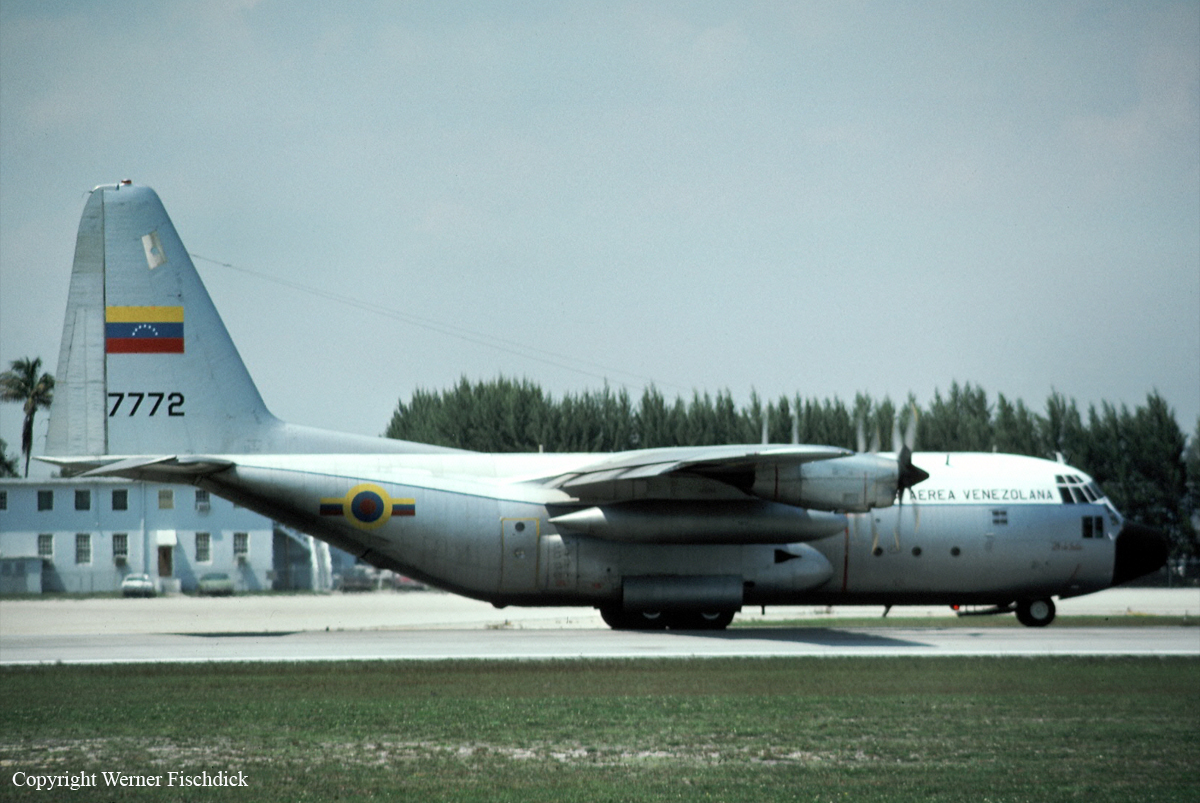
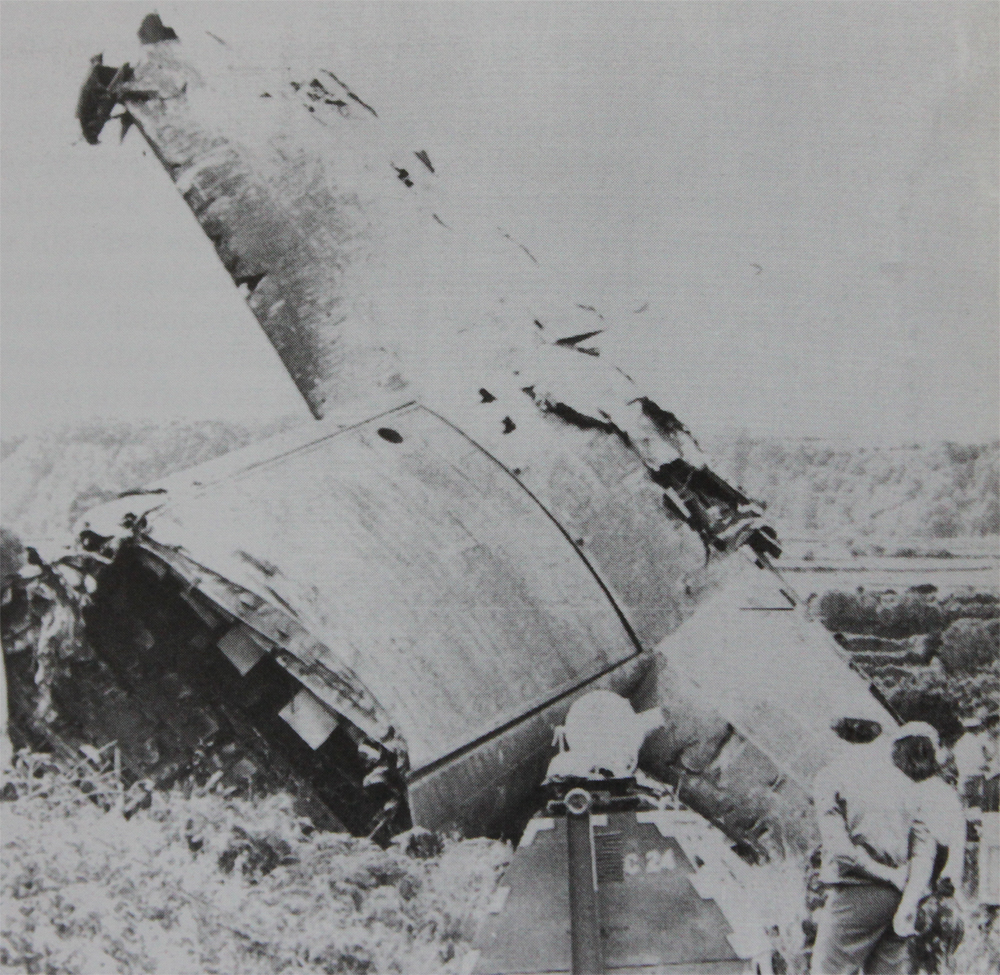
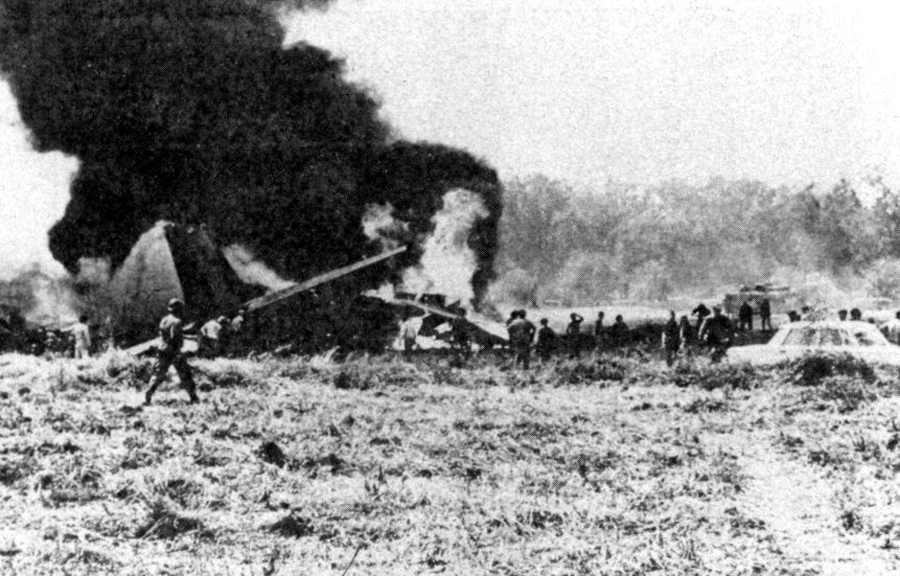
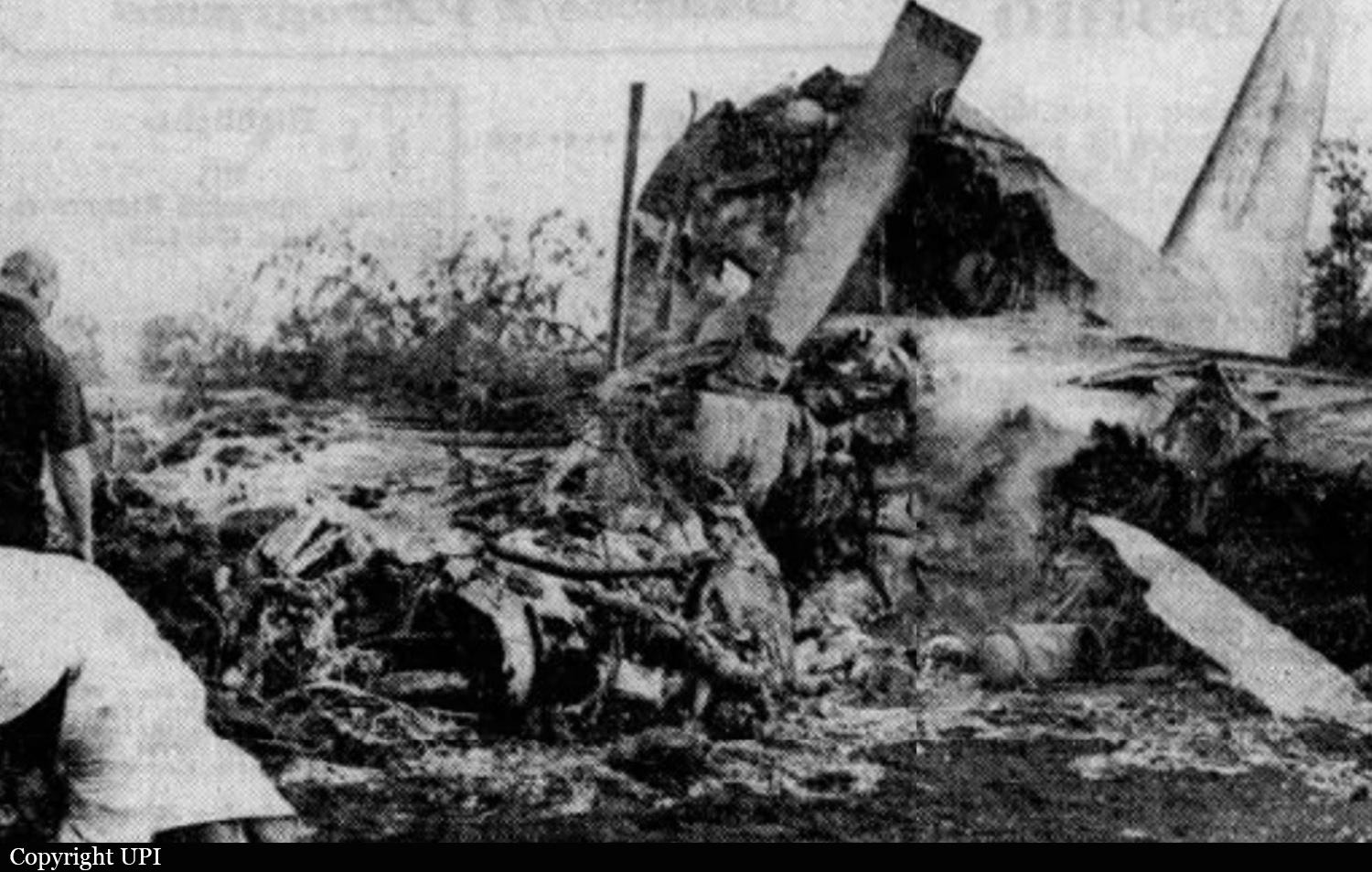
Crash of a Lockheed C-130H Hercules in Lajes: 68 killed

Date & Time: Sep 3, 1976 at 2145 LT
Type of aircraft:
Operator:
Registration:
7772
Survivors:
No
Schedule:
Caracas - Lajes - Barcelone
MSN:
4408
YOM:
1971
Country:
Region:
Crew on board:
10
Crew fatalities:
Pax on board:
58
Pax fatalities:
Other fatalities:
Total fatalities:
68
Circumstances:
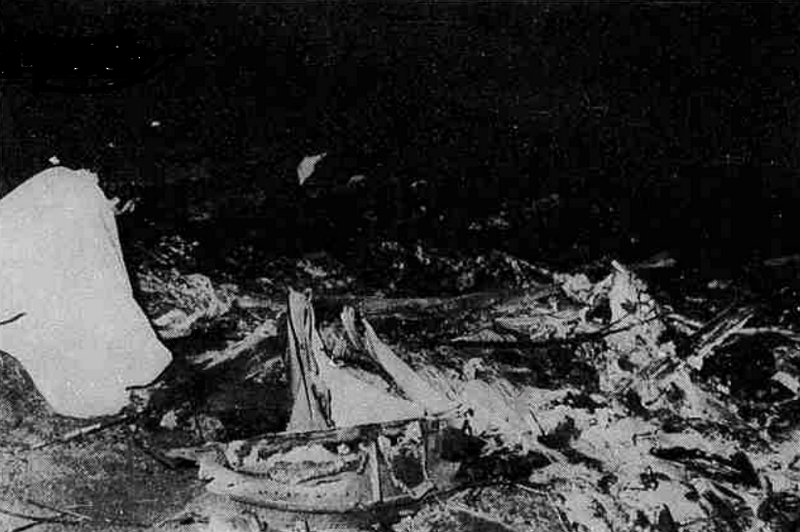
While descending to Lajes Airport, the crew encountered very poor weather conditions and limited visibility due to the night, low clouds and heavy rain falls. On short final, the pilot failed to realize his altitude was too low when the airplane struck the top of a hill located 1,500 metres short of runway 16 threshold and crashed in flames. The aircraft was destroyed and all 68 occupants were killed, among them members of the Venezuelan choir Orfeón Universitario who were flying to Barcelona, Spain, to take part to an international festival. At the time of the accident, weather conditions were poor with heavy rain falls and winds gusting to 30 knots after the hurricane 'Emmy' passed over the Azores Islands that day.

Crash of a Lockheed C-130H Hercules near el-Arīsh: 20 killed

Date & Time: Nov 25, 1975 at 1850 LT
Type of aircraft:
Operator:
Registration:
4X-FBO/203
Flight Phase:
Flight Type:
Survivors:
No
Site:
Schedule:
el-Arīsh - el-Arīsh
MSN:
4530
YOM:
1974
Country:
Region:
Crew on board:
9
Crew fatalities:
Pax on board:
11
Pax fatalities:
Other fatalities:
Total fatalities:
20
Circumstances:
The crew was returning to el-Arīsh Airport following a night exercice. At an altitude of 3,000 feet, while cruising in limited visibility, the airplane struck the slope of Mt Jebel Halal located about 49 south of el-Arīsh Airport. The wreckage was found five meters below the summit and all 20 occupants were killed.
Probable cause:
The accident was the consequence of a controlled flight into terrain. The lack of visibility was considered as a contributing factor.

Crash of a Lockheed C-130E Hercules in San Miguel de Tucumán: 6 killed

Date & Time: Aug 28, 1975 at 1305 LT
Type of aircraft:
Operator:
Registration:
TC-62
Flight Phase:
Flight Type:
Survivors:
Yes
Schedule:
San Miguel de Tucumán – La Rioja – San Juan – El Palomar
MSN:
4309
YOM:
1968
Country:
Crew on board:
7
Crew fatalities:
Pax on board:
114
Pax fatalities:
Other fatalities:
Total fatalities:
6
Circumstances:
The airplane was flying back to El Palomar Airbase in Buenos Aires with intermediate stops in La Rioja and San Juan, carrying 114 policemen (Argentine Federal Police) who were returning to their base after an intervention in the Tucumán Province. During the takeoff roll, after a course of 800 meters and at a speed of 200 km/h, the pilot started the rotation when an explosion occurred on the runway surface approximately 100 meters in front of him. While climbing to a height of some 12-15 meters, the aircraft was hit by debris and the denotation. Control was lost and the airplane crashed in flames 400 meters further. 115 occupants were evacuated, 29 of them were injured. Six policemen were killed and the aircraft was destroyed.
Probable cause:
Loss of control during takeoff following a bomb explosion that was placed on the runway pavement. Investigations determined that a plan was to set off an explosive charge in the form of a conical tip placed below the runway when the C-130 was to be at full throttle during takeoff. Named 'Operation Gardel', the action was planned by the Peronist guerilla organization 'Montoneros'. Near the middle of the runway some 1,100 meters away from the northern end and 1,000 from the southern, a disused sewer led to a storm drain. A cable was laid through the 250 meter tunnel, emerging from the storm drain and connecting the charge to the 12V battery of a parked vehicle. The switch would be activated from a nearby pit.

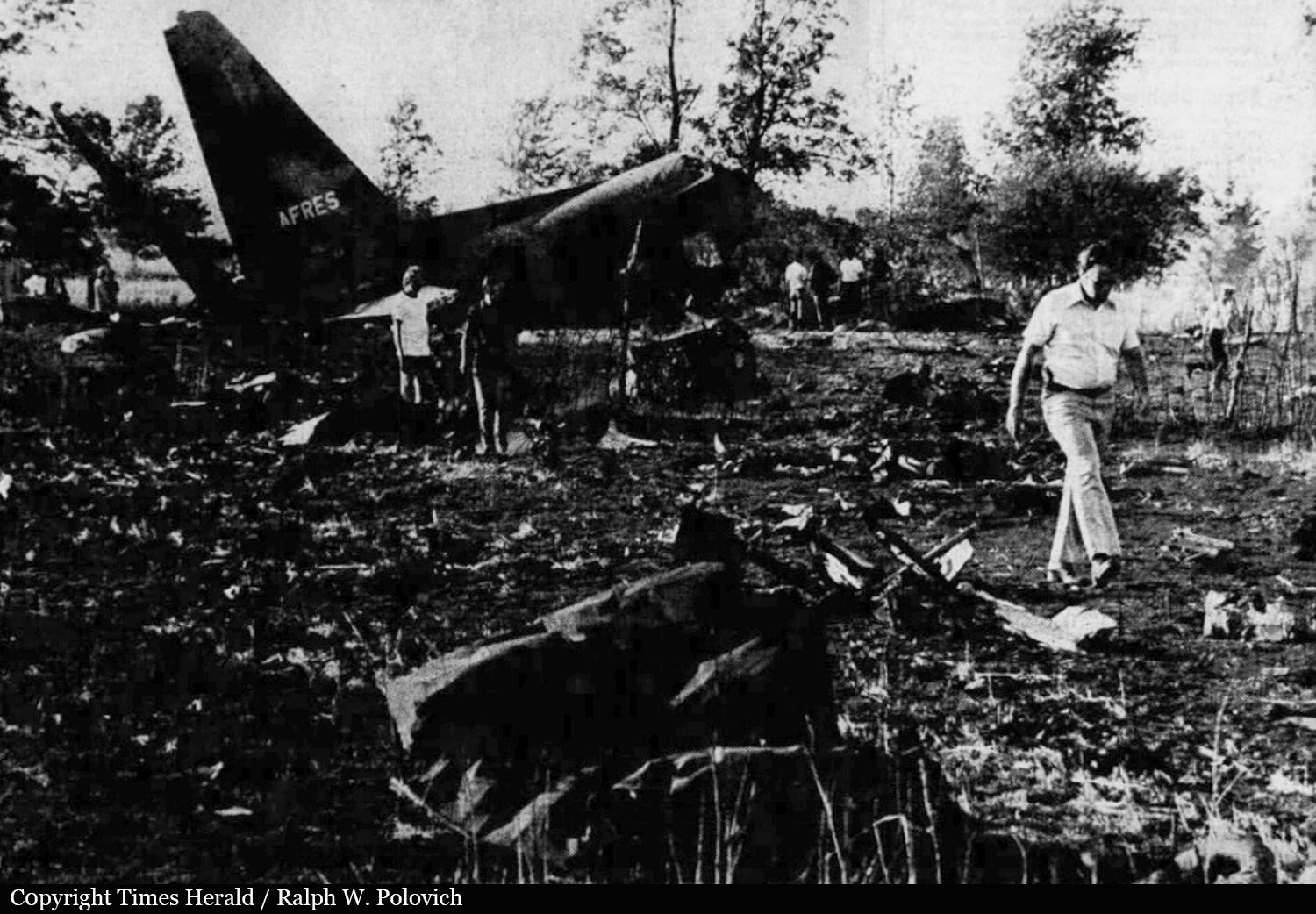
Crash of a Lockheed C-130A Hercules in Imlay City: 6 killed

Date & Time: Jul 26, 1975
Type of aircraft:
Operator:
Registration:
57-0454
Flight Phase:
Flight Type:
Survivors:
No
Schedule:
Selfridge - Selfridge
MSN:
3161
YOM:
1958
Crew on board:
6
Crew fatalities:
Pax on board:
0
Pax fatalities:
Other fatalities:
Total fatalities:
6
Circumstances:
The crew departed Selfridge AFB (ANG) for a training mission. While cruising about 45 miles north of Detroit, the crew lost control of the airplane that crashed in an open field located in Imlay City. The aircraft was destroyed and all six crew members were killed.
Probable cause:
A propeller blade separated from the engine n°3 in flight and struck the engine n°4. Control was lost.