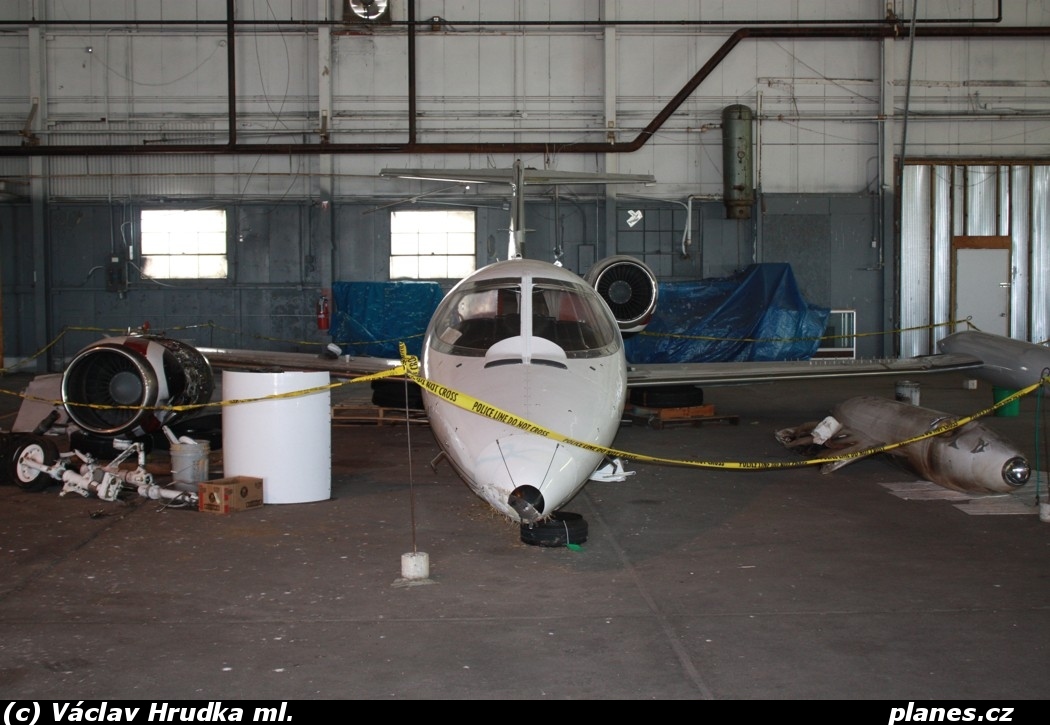
Crash of a Learjet 35A in Tamanrasset

Date & Time: Oct 25, 2014 at 1513 LT
Type of aircraft:
Operator:
Registration:
D-CFAX
Flight Phase:
Flight Type:
Survivors:
Yes
Schedule:
Tamanrasset – Bata
MSN:
35-135
YOM:
1977
Country:
Region:
Crew on board:
2
Crew fatalities:
Pax on board:
2
Pax fatalities:
Other fatalities:
Total fatalities:
0
Circumstances:
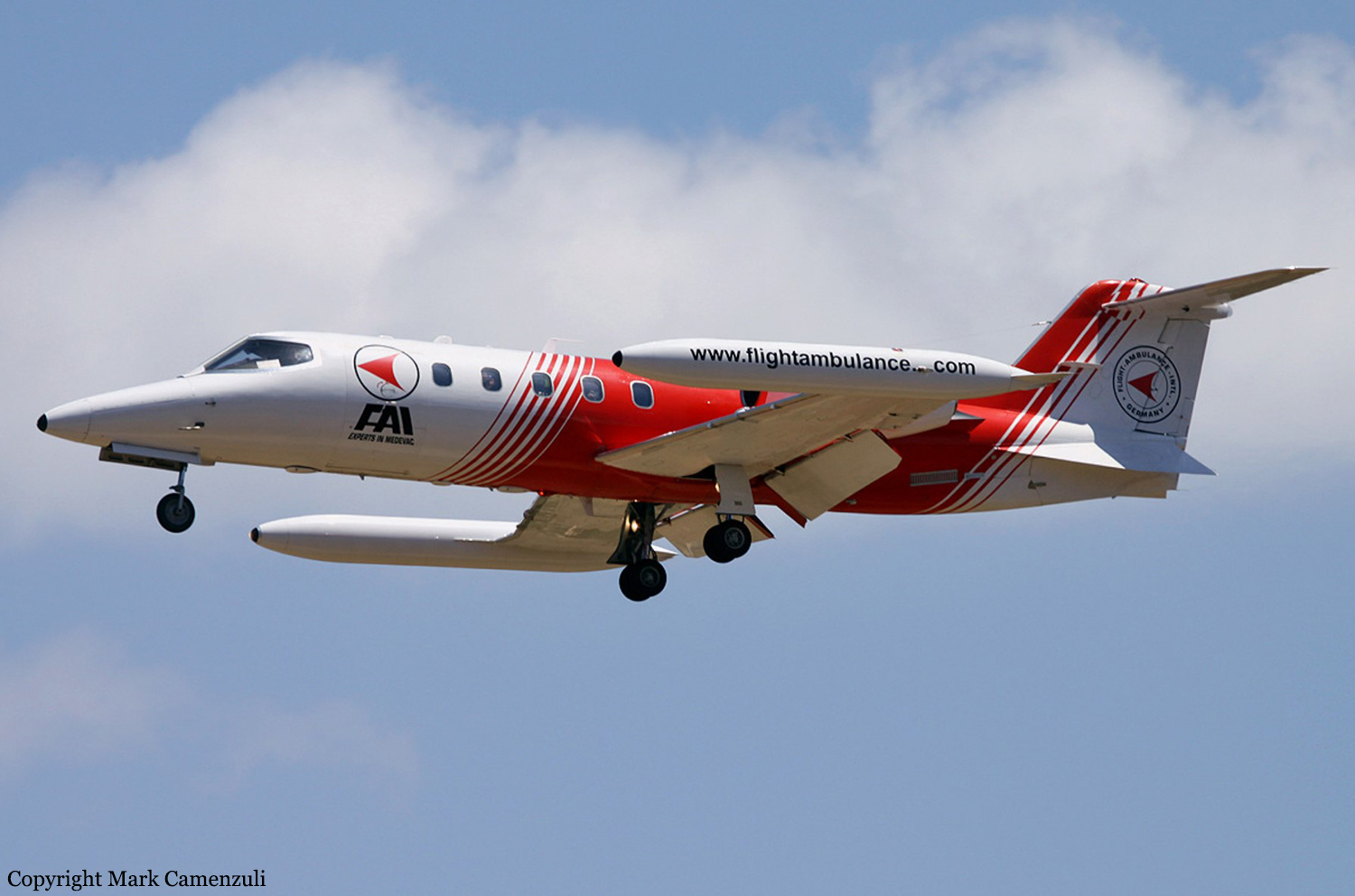
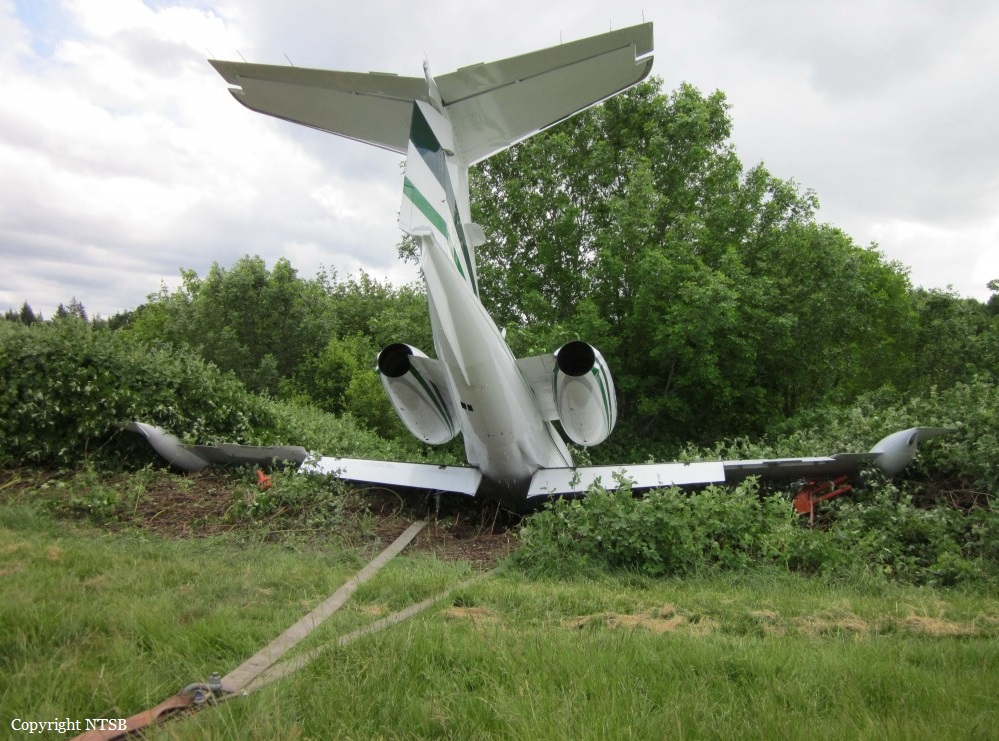
The airplane was completing an ambulance flight (positioning) from Europe to Bata, Equatorial Guinea, with an intermediate stop in Tamanrasset, carrying a medical team of two doctors and two pilots. During the takeoff roll from Tamanrasset-Aguenar Airport, the crew heard a loud noise and decided to abort. Unable to stop within the remaining distance, the aircraft overran and came to rest. All four occupants escaped uninjured and the aircraft was damaged beyond repair.

Crash of a Learjet 35A near Olsberg: 2 killed

Date & Time: Jun 23, 2014 at 1438 LT
Type of aircraft:
Operator:
Registration:
D-CGFI
Flight Phase:
Flight Type:
Survivors:
No
Schedule:
Hohn - Hohn
MSN:
35A-612
YOM:
1985
Country:
Region:
Crew on board:
2
Crew fatalities:
Pax on board:
0
Pax fatalities:
Other fatalities:
Total fatalities:
2
Captain / Total flying hours:
7505
Captain / Total hours on type:
3554.00
Copilot / Total flying hours:
3560
Copilot / Total hours on type:
745
Aircraft flight hours:
8259
Circumstances:
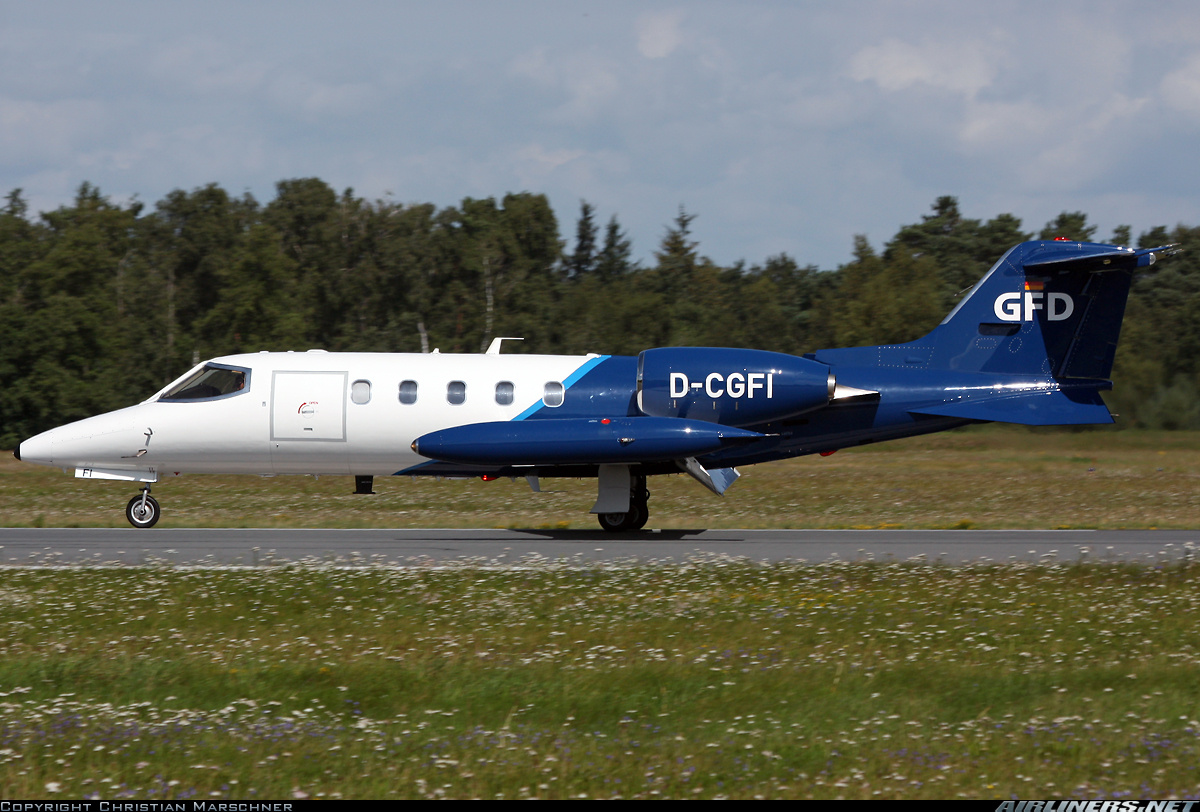
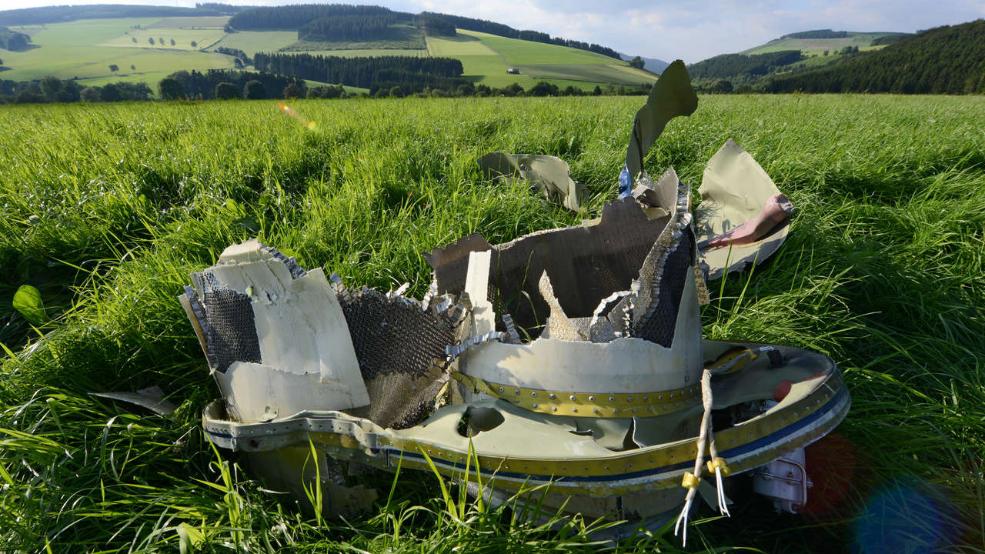
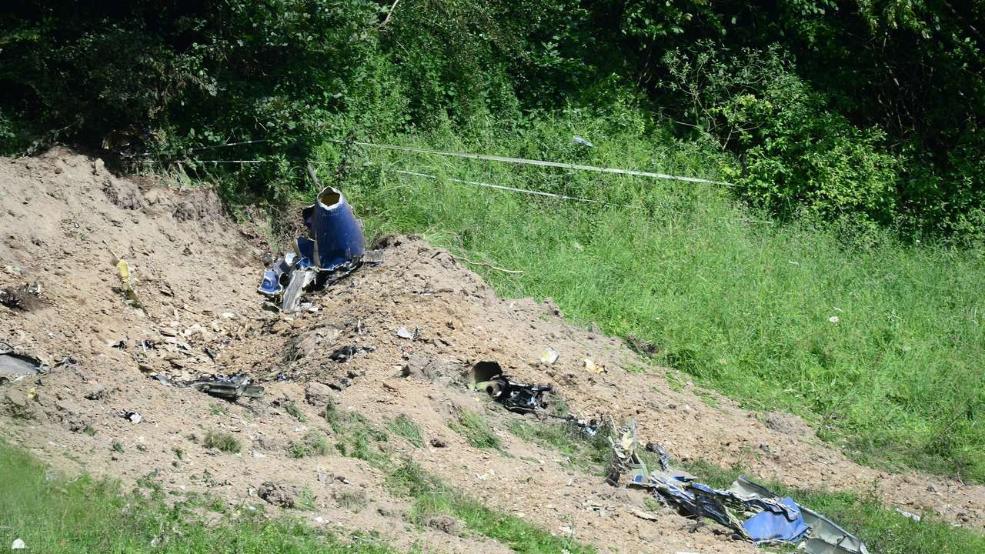
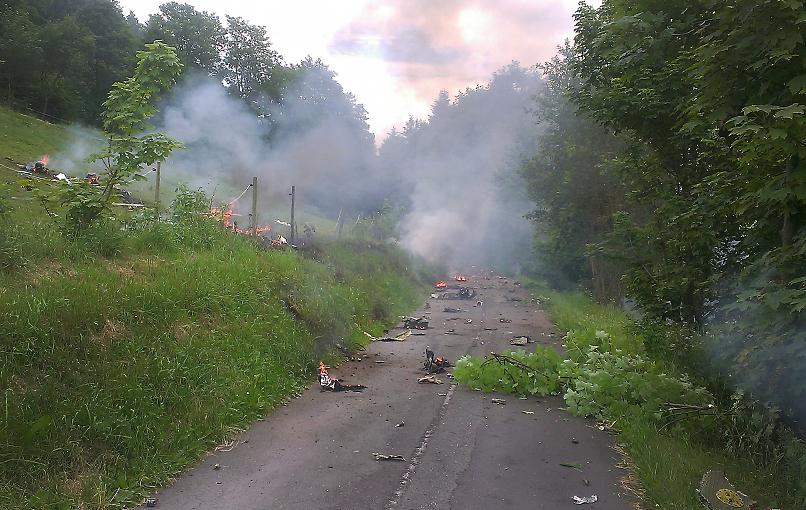
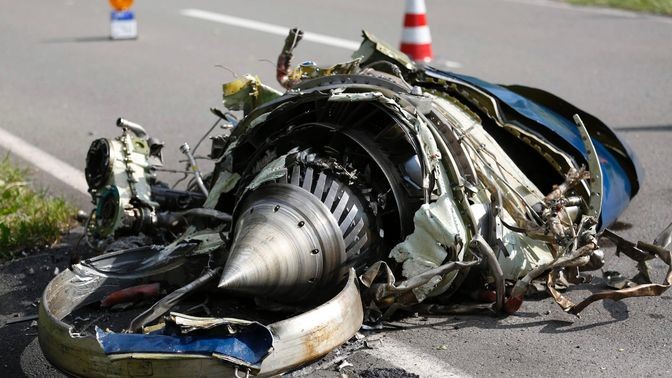
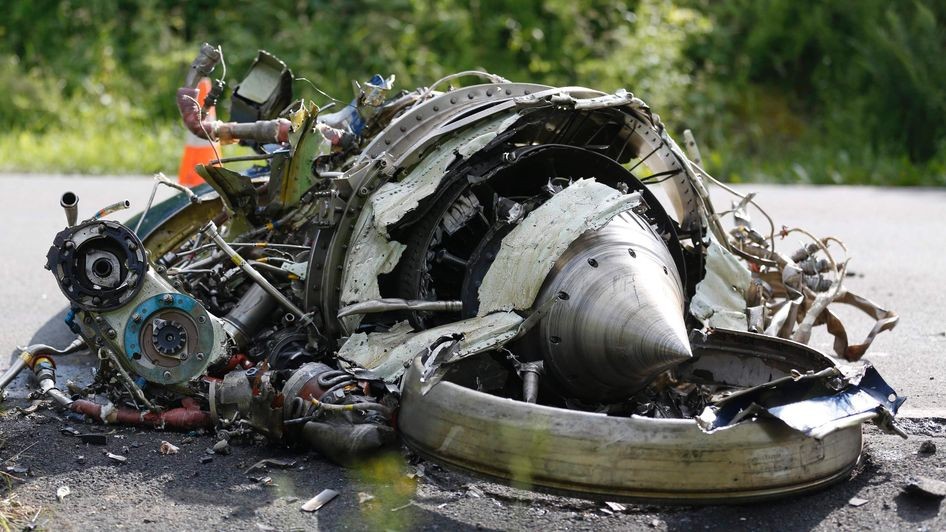
On 23 June 2014 at 1522 hrs the Bundeswehr (German Armed Forces) informed the German Federal Bureau of Aircraft Accident Investigation (BFU) that a collision involving a civil Learjet 35A (Learjet) and a German Air Force Eurofighter had occurred during aerial target demonstrations. According to the Law Relating to the Investigation into Accidents and Incidents Associated with the Operation of Civil Aircraft (FlUUG) accidents and incidents involving civil and military aircraft will be investigated under the responsibility of the BFU. The BFU immediately deployed a team of five investigators to the accident site. The BFU was supported by the Directorate Aviation Safety of the German Armed Forces (AbtFlSichhBw). The Learjet, operated by a civil operator specializing in manned aerial target demonstrations, had taken off at Hohn Airport and had initially been flying with a southern heading in accordance with Instrument Flight Rules (IFR). At the time of the accident the Learjet had changed to Visual Flight Rules (VFR) and was flying in airspace E with a northern heading. A formation consisting of two Eurofighters had taken off from Nörvenich Air Base with the order to conduct a so-called Renegade mission, i.e. the unknown civil aircraft had to be intercepted, identified, and accompanied to a military airport. After the collision with a Eurofighter, the Learjet crashed to the ground. The pilots of the Learjet suffered fatal injuries and the aircraft was destroyed. The pilot of the Eurofighter could land the severely damaged airplane at Nörvenich Air Base.
Probable cause:
The causes of the flight accident were:
Immediate Causes:
- During positioning for the intervention the collision risk due to unexpected manoeuvres of the intercepted airplane was not sufficiently taken into consideration.
- The Learjet crew did not take into account the risks due to possible limitations of the field of vision and the distraction by using the computer when deciding about the task distribution. Due to insufficient situational awareness during the intervention, the Learjet crew continued the turn with an excessive bank angle despite the loss of visual contact with the Eurofighter flying at the inside of the turn.
Systemic Causes:
- The operator had not specified in detail how the crew should distribute their tasks during Renegade exercises.
- Neither the operator commissioned to conduct the aerial target demonstration nor the Air Force had sufficiently described the Renegade training nor had a commensurate risk analysis been done.
Final Report:

Crash of a Learjet 35A off Fort Lauderdale: 4 killed

Date & Time: Nov 19, 2013 at 1956 LT
Type of aircraft:
Operator:
Registration:
XA-USD
Flight Phase:
Flight Type:
Survivors:
No
Schedule:
Fort Lauderdale - Cozumel
MSN:
35A-255
YOM:
1979
Crew on board:
2
Crew fatalities:
Pax on board:
2
Pax fatalities:
Other fatalities:
Total fatalities:
4
Captain / Total flying hours:
10091
Captain / Total hours on type:
1400.00
Copilot / Total flying hours:
1235
Copilot / Total hours on type:
175
Aircraft flight hours:
6842
Circumstances:
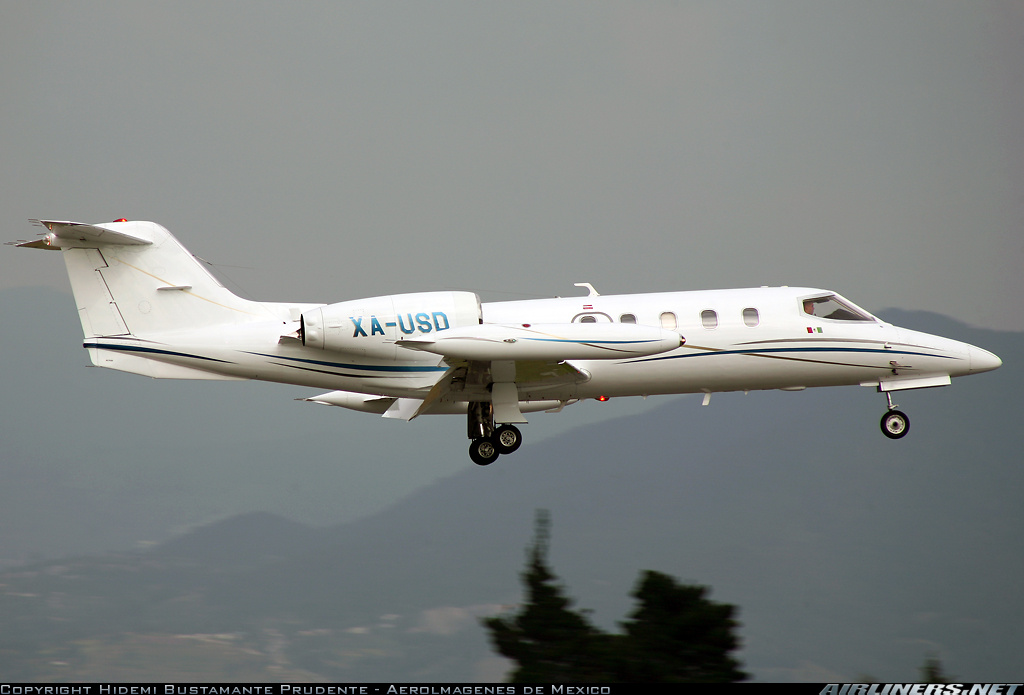
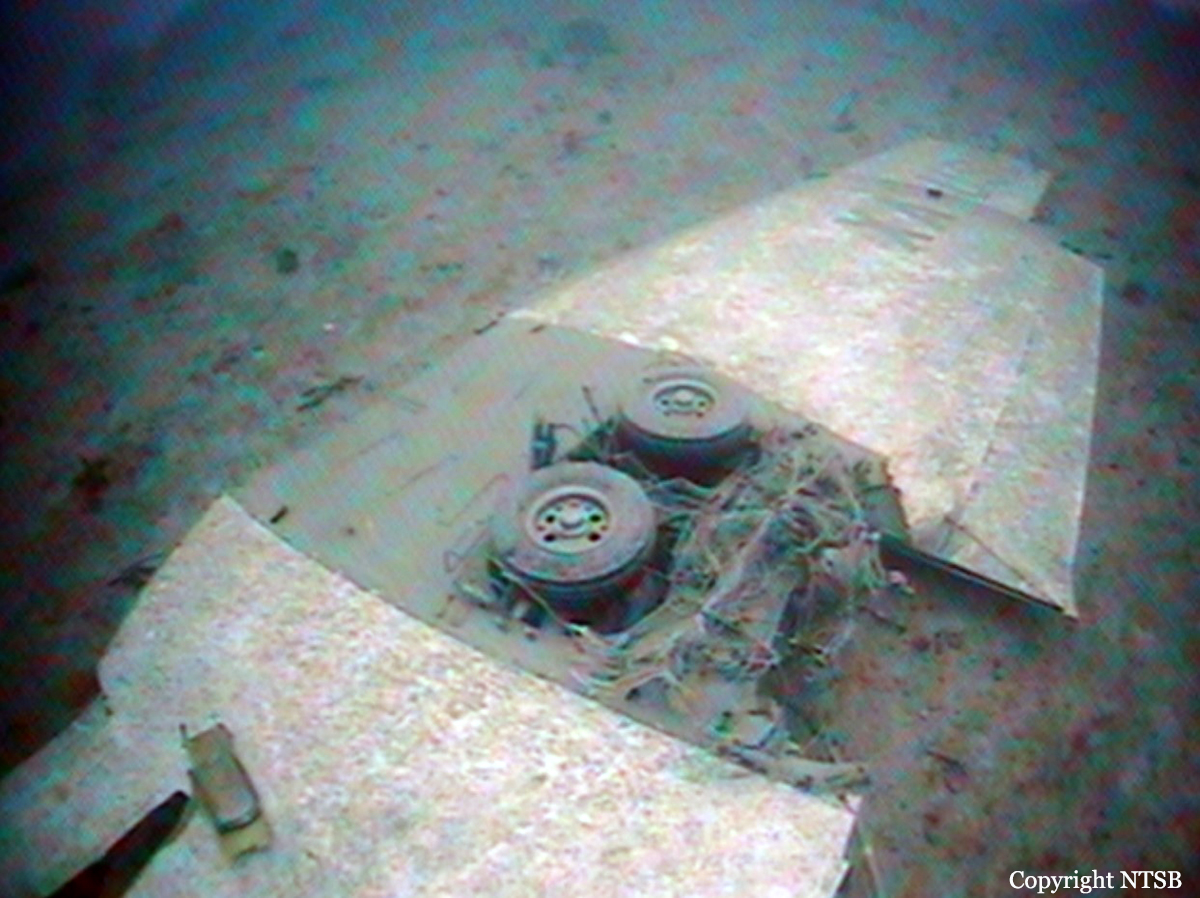
During takeoff to the east over the ocean, after the twin-engine jet climbed straight ahead to about 2,200 ft and 200 knots groundspeed, the copilot requested radar vectors back to the departure airport due to an "engine failure." The controller assigned an altitude and heading, and the copilot replied, "not possible," and requested a 180-degree turn back to the airport, which the controller acknowledged and approved. However, the airplane continued a gradual left turn to the north as it slowed and descended. The copilot subsequently declared a "mayday" and again requested vectors back to the departure airport. During the next 3 minutes, the copilot requested, received, and acknowledged multiple instructions from the controller to turn left to the southwest to return to the airport. However, the airplane continued its slow left turn and descent to the north. The airplane slowed to 140 knots and descended to 900 ft as it flew northbound, parallel to the shoreline, and away from the airport. Eventually, the airplane tracked in the direction of the airport, but it continued to descend and impacted the ocean about 1 mile offshore. According to conversations recorded on the airplane's cockpit voice recorder (CVR), no checklists were called for, offered, or used by either flight crewmember during normal operations (before or during engine start, taxi, and takeoff) or following the announced in-flight emergency. After the "engine failure" was declared to the air traffic controller, the pilot asked the copilot for unspecified "help" because he did not "know what's going on," and he could not identify the emergency or direct the copilot in any way with regard to managing or responding to the emergency. At no time did the copilot identify or verify a specific emergency or malfunction, and he did not provide any guidance or assistance to the pilot. Examination of the recovered wreckage revealed damage to the left engine's thrust reverser components, including separation of the lower blocker door, and the stretched filament of the left engine's thrust reverser "UNLOCK" status light, which indicated that the light bulb was illuminated at the time of the airplane's impact. Such evidence demonstrated that the left engine's thrust reverser became unlocked and deployed (at least partially and possibly fully) in flight. Impact damage precluded testing for electrical, pneumatic, and mechanical continuity of the thrust reverser system, and the reason the left thrust reverser deployed in flight could not be determined. No previous instances of the inflight deployment of a thrust reverser on this make and model airplane have been documented. The airplane's flight manual supplement for the thrust reverser system contained emergency procedures for responding to the inadvertent deployment of a thrust reverser during takeoff. For a deployment occurring above V1 (takeoff safety speed), the procedure included maintaining control of the airplane, placing the thrust reverser rocker switch in the "EMER STOW" position, performing an engine shutdown, and then performing a single-engine landing. Based on the wreckage evidence and data recovered from the left engine's digital electronic engine control (DEEC), the thrust reverser rocker switch was not placed in the "EMER STOW" position, and the left engine was not shut down. The DEEC data showed a reduction in N1 about 100 seconds after takeoff followed by a rise in N1 about 35 seconds later. The data were consistent with the thrust reverser deploying in flight (resulting in the reduction in N1) followed by the inflight separation of the lower blocker door (resulting in the rise in N1 as some direct exhaust flow was restored). Further, the DEEC data revealed full engine power application throughout the flight. Although neither flight crewmember recognized that the problem was an inflight deployment of the left thrust reverser, certification flight test data indicated that the airplane would have been controllable as it was configured on the accident flight. If the crew had applied the "engine failure" emergency procedure (the perceived problem that the copilot reported to the air traffic controller), the airplane would have been more easily controlled and could have been successfully landed. The airplane required two fully-qualified flight crewmembers; however, the copilot was not qualified to act as second-in-command on the airplane, and he provided no meaningful assistance to the pilot in handling the emergency. Further, although the pilot's records indicated considerable experience in similar model airplanes, the pilot's performance during the flight was highly deficient. Based on the CVR transcript, the pilot did not adhere to industry best practices involving the execution of checklists during normal operations, was unprepared to identify and handle the emergency, did not refer to the appropriate procedures checklists to properly configure and control the airplane once a problem was detected, and did not direct the copilot to the appropriate checklists.
Probable cause:
The pilot's failure to maintain control of the airplane following an inflight deployment of the left engine thrust reverser. Contributing to the accident was the flight crew's failure to perform the appropriate emergency procedures, the copilot's lack of qualification and capability to act as a required flight crewmember for the flight, and the inflight deployment of the left engine thrust reverser for reasons that could not be determined through postaccident investigation.
Final Report:

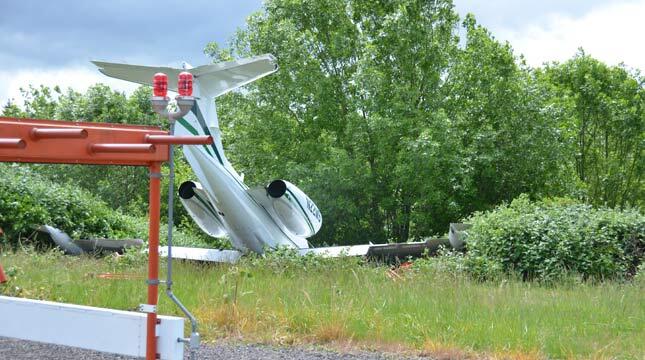
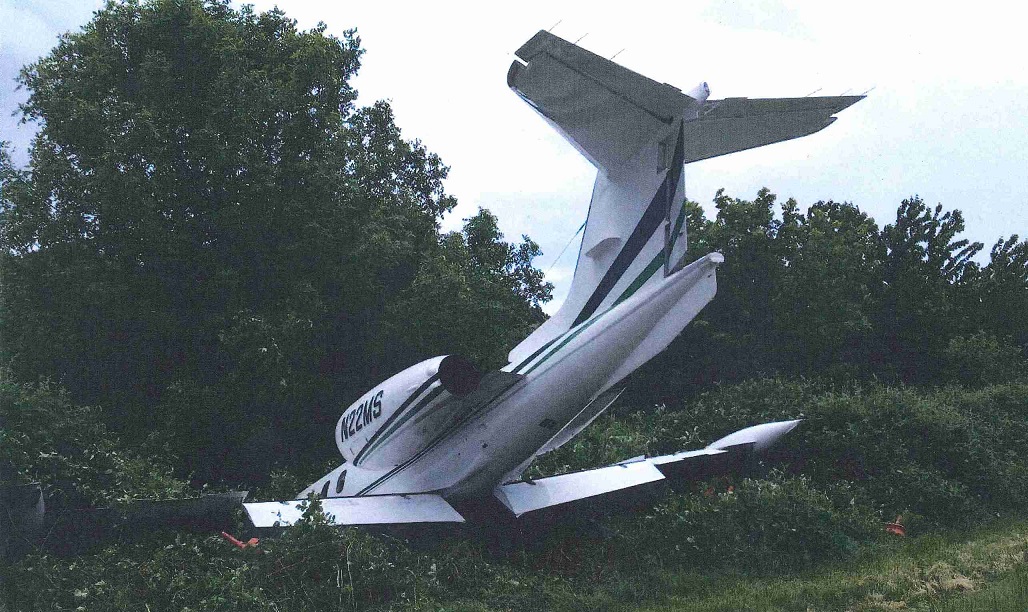
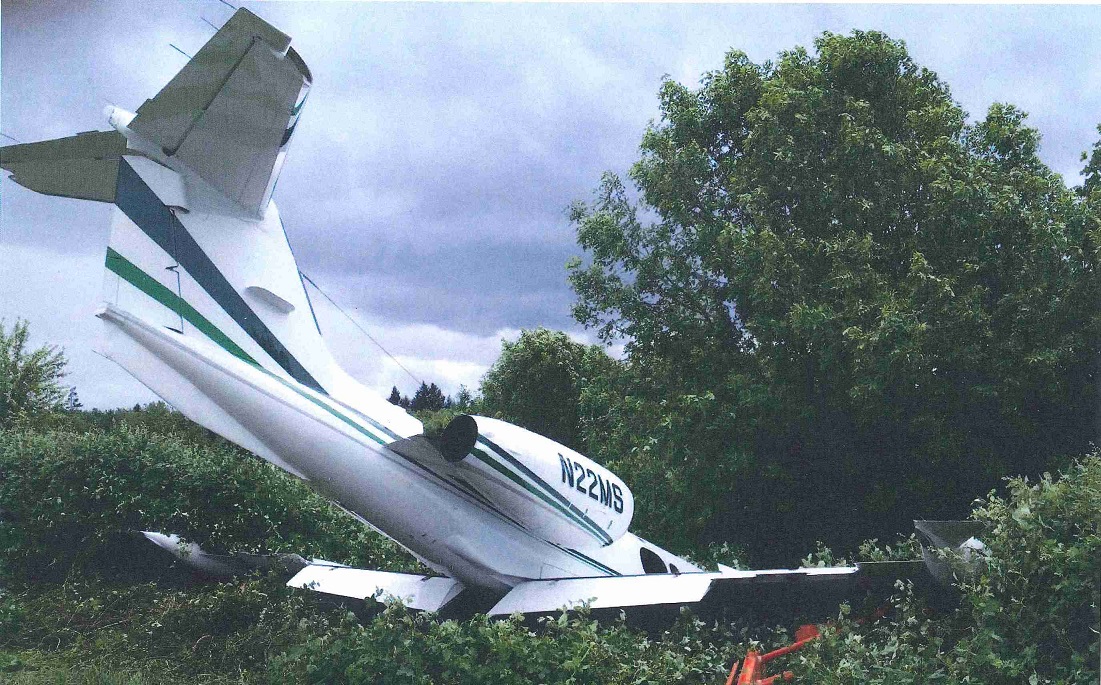
Crash of a Learjet 35A in McMinville

Date & Time: May 13, 2013 at 1245 LT
Type of aircraft:
Operator:
Registration:
N22MS
Flight Type:
Survivors:
Yes
Schedule:
Grand Junction - McMinville
MSN:
209
YOM:
1978
Crew on board:
2
Crew fatalities:
Pax on board:
1
Pax fatalities:
Other fatalities:
Total fatalities:
0
Captain / Total flying hours:
17563
Captain / Total hours on type:
996.00
Copilot / Total flying hours:
2553
Copilot / Total hours on type:
94
Aircraft flight hours:
15047
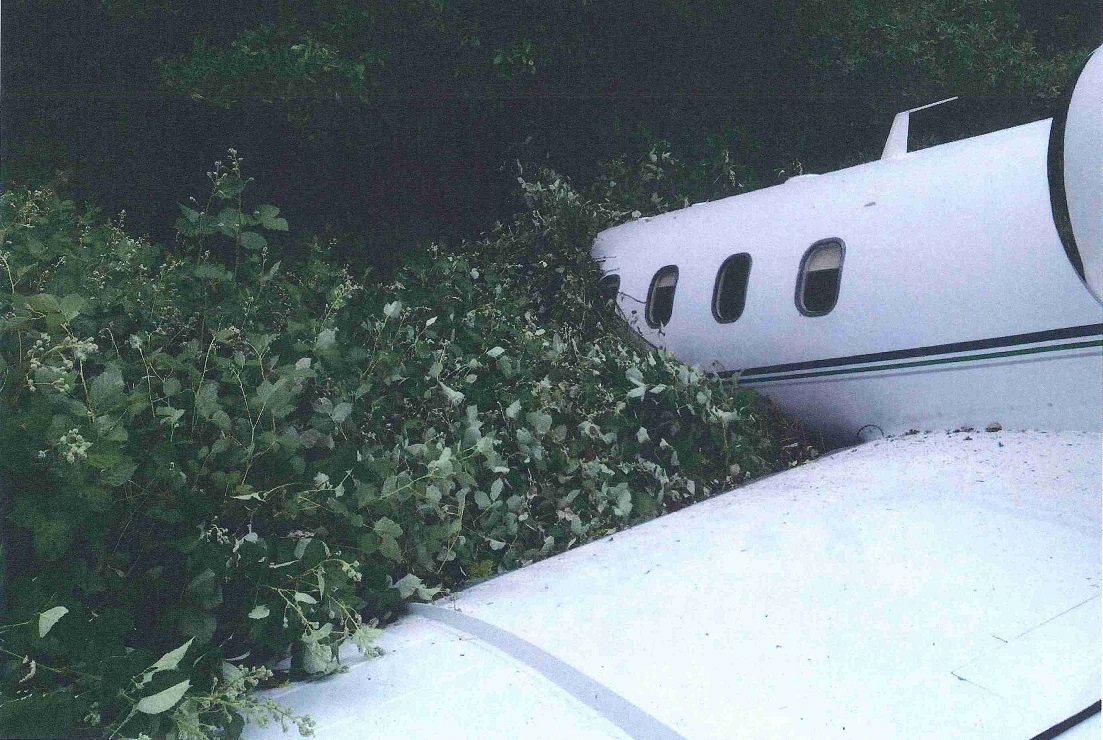
Circumstances:
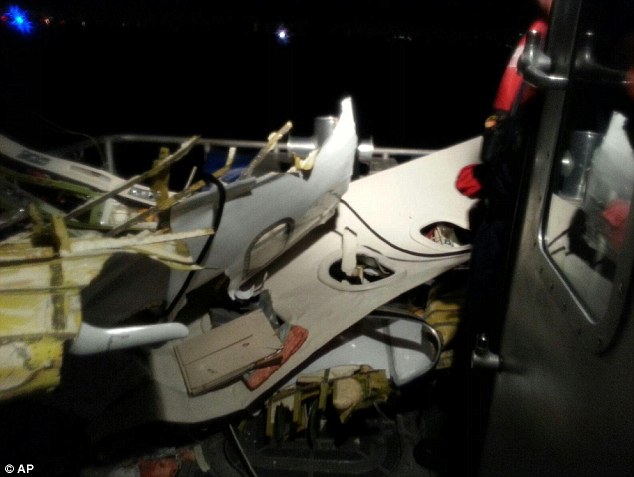
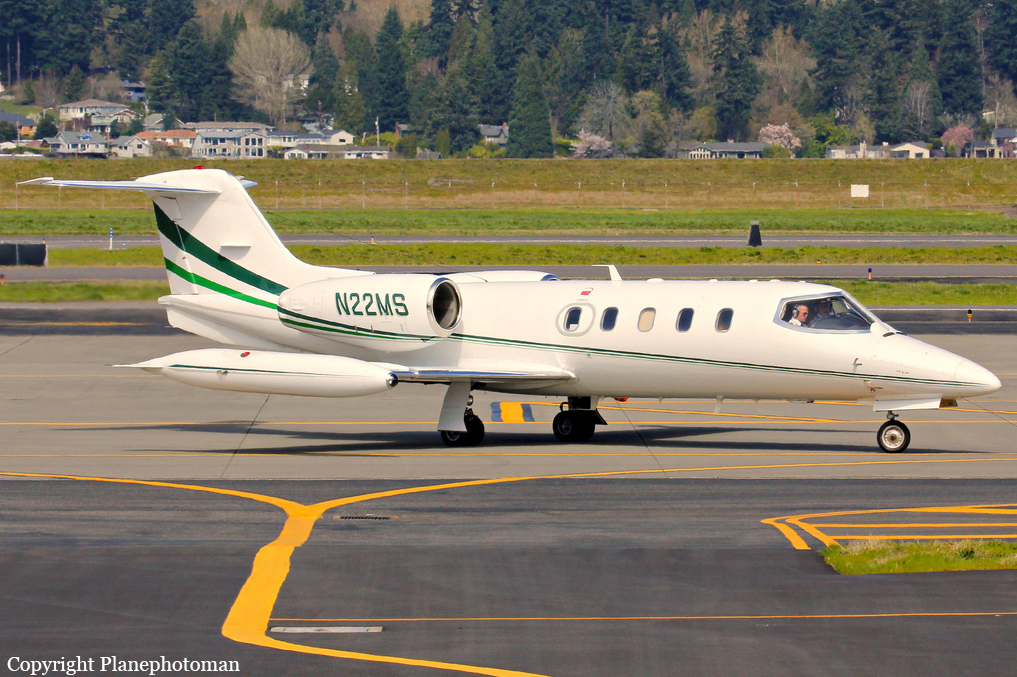
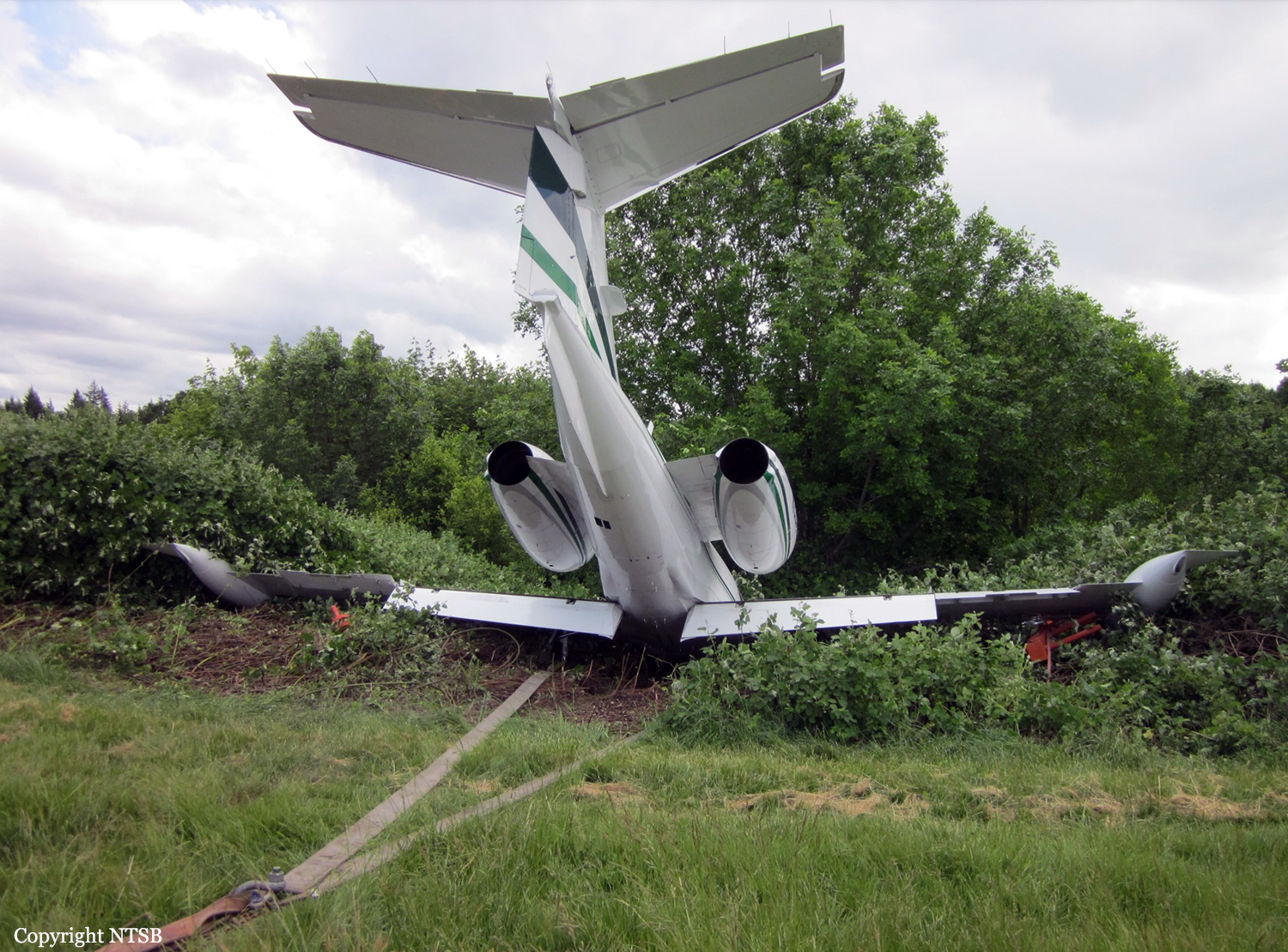
The crew of the twinjet reported that the positioning flight after maintenance was uneventful. However, during the landing roll at their home base, the thrust reversers, steering, and braking systems did not respond. As the airplane approached the end of the runway, the pilot activated the emergency braking system; however, the airplane overran the end of the runway, coming to rest in a ditch. None of the three occupants were injured, but the airplane sustained substantial damage to both wings and the fuselage. Two squat switches provided redundancy within the airplane’s electrical system and were configured to prevent inadvertent activation of the thrust reversers and nosewheel steering during flight and to prevent the airplane from landing with the brakes already applied. Because postaccident examination revealed that the squat switch assemblies on the left and right landing gear struts were partially detached from their mounting pads such that both switches were deactivated, all of these systems were inoperative as the airplane landed. The switch assemblies were undamaged, and did not show evidence of being detached for a long period of time. The brakes and steering were working during taxi before departure, but this was most likely because either one or both of the switches were making partial contact at that time. Therefore, it was most likely that the squat switch assemblies were manipulated on purpose during maintenance in an effort to set the airplane’s systems to “air mode.” Examination of the maintenance records did not reveal any recent procedures that required setting the airplane to air mode, and all mechanics involved in the maintenance denied disabling the switches. Mechanics did, however, miss two opportunities to identify the anomaly, both during the return-to-service check and the predelivery aircraft and equipment status check. The anomaly was also missed by the airplane operator’s mechanic and flight crew who performed the preflight inspection. The airplane’s emergency braking system was independent of the squat switches and appeared to operate normally during a postaccident test. Prior to testing, it was noted that the emergency brake gauge indicated a full charge; therefore, although evidence suggests that the emergency brake handle was used, it was not activated with enough force by the pilot. The pilot later conceded this fact and further stated that he should have used the emergency braking system earlier during the landing roll. The airplane was equipped with a cockpit voice recorder (CVR), which captured the entire accident sequence. Analysis revealed that the airplane took just over 60 seconds to reach the runway end following touchdown, and, during that time, two attempts were made by the pilot to activate the thrust reversers. The pilot stated that as the airplane approached the runway end, the copilot made a third attempt to activate the thrust reversers, which increased the engine thrust, and thereby caused the airplane to accelerate. Audio captured on the CVR corroborated this statement.
Probable cause:
Failure of maintenance personnel to reattach the landing gear squat switches following maintenance, which rendered the airplane's steering, braking, and thrust reverser systems inoperative during landing. Contributing to the accident were the failure of both the maintenance facility mechanics and the airplane operator's mechanic and flight crew to identify the error during postmaintenance checks, a failure of the airplane's pilot to apply the emergency brakes in a timely manner, and the copilot's decision to attempt to engage the thrust reversers as the airplane approached the runway end despite multiple indications that they were inoperative and producing partial forward, rather than reverse, thrust.
Final Report:

Crash of a Learjet 35A in Springfield

Date & Time: Jan 6, 2011 at 1100 LT
Type of aircraft:
Operator:
Registration:
N800GP
Survivors:
Yes
Schedule:
Chicago - Springfield
MSN:
35A-158
YOM:
1978
Flight number:
PWA800
Crew on board:
2
Crew fatalities:
Pax on board:
4
Pax fatalities:
Other fatalities:
Total fatalities:
0
Captain / Total flying hours:
5932
Captain / Total hours on type:
827.00
Aircraft flight hours:
16506
Circumstances:
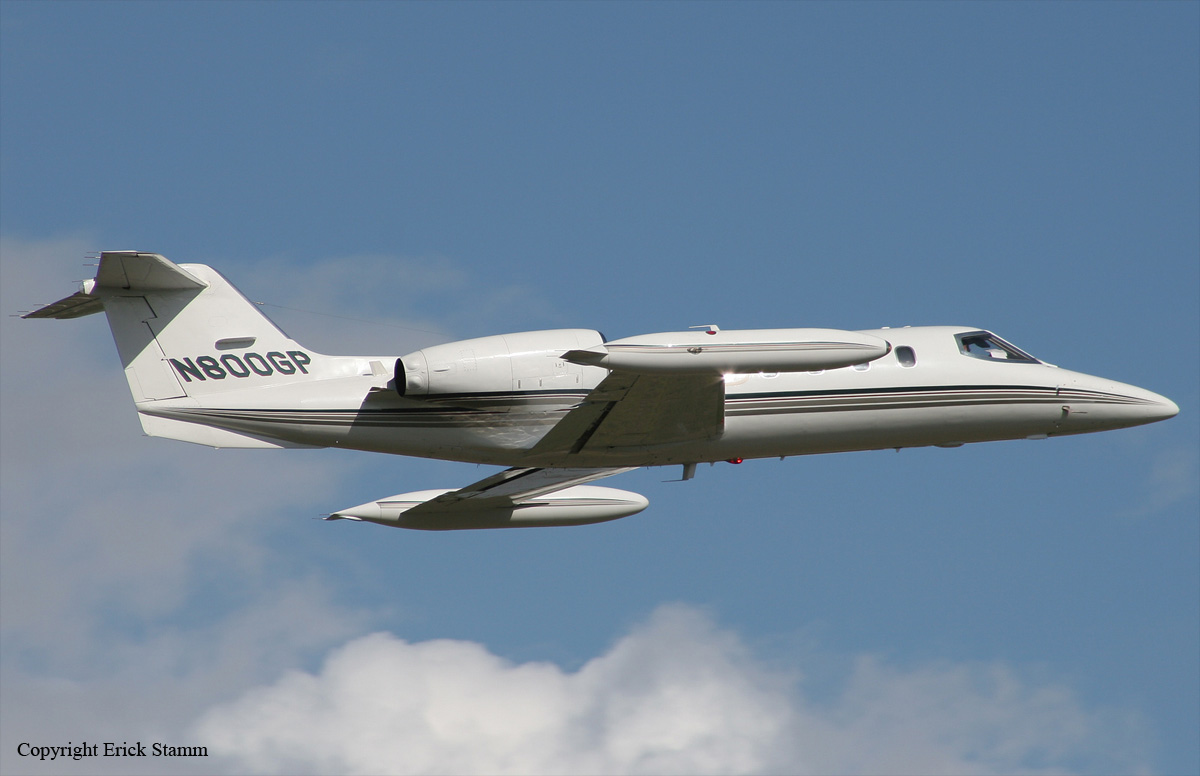
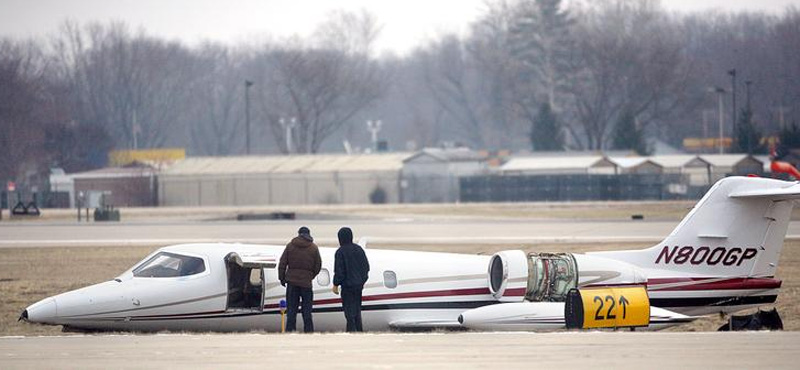
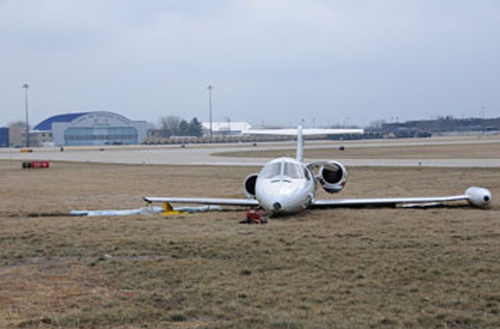
The flight encountered light rime icing during an instrument approach to the destination airport. The copilot was the pilot flying at the time of the accident. He reported that the airframe anti-icing system was turned off upon intercepting the instrument approach glide slope, which was shortly before the airplane descended below the cloud layer. He recalled observing light frost on the outboard wing and tip tank during the approach. The stick shaker activated on short final, and the airplane impacted left of the runway centerline before it ultimately departed the right side of the runway pavement and crossed a slight rise before coming to rest in the grass. The cockpit voice recorder transcript indicated that the pilots were operating in icing conditions without the wing anti- ice system activated for about 4 1/2 minutes prior to activation of the stick shaker. A postaccident examination of the airplane did not reveal any anomalies consistent with a preimpact failure of the flight control system or a loss of anti-ice system functionality. A performance study determined that the airplane’s airspeed during the final 30 seconds of the flight was about 114 knots and that the angle of attack ultimately met the stick shaker threshold. The expected stall speed for the airplane was about 93 knots. The airplane flight manual stated that anti-ice systems should be turned on prior to operation in icing conditions during normal operations. The manual warned that even small accumulations of ice on the wing leading edge can cause an aerodynamic stall prior to activation of the stick shaker and/or stick pusher.
Probable cause:
The pilot’s decision to conduct an instrument approach in icing conditions without the anti-ice system activated, contrary to the airplane flight manual guidance, which resulted in an inadvertent aerodynamic stall due to an in-flight accumulation of airframe icing.
Final Report: